Crinum species c-j are found on this wiki page.
Crinum species a-b - Crinum species l-n - Crinum species o-z - Crinum species Index - Crinum hybrids Index
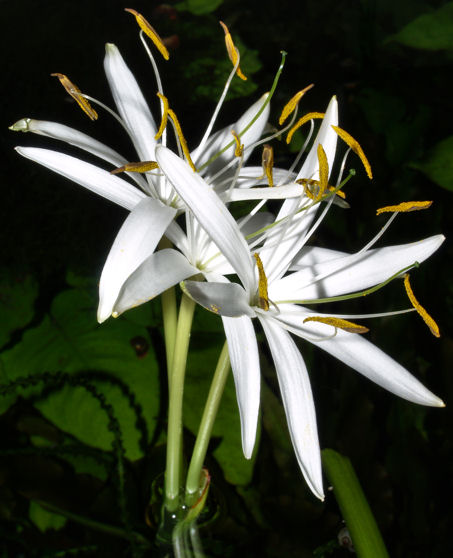
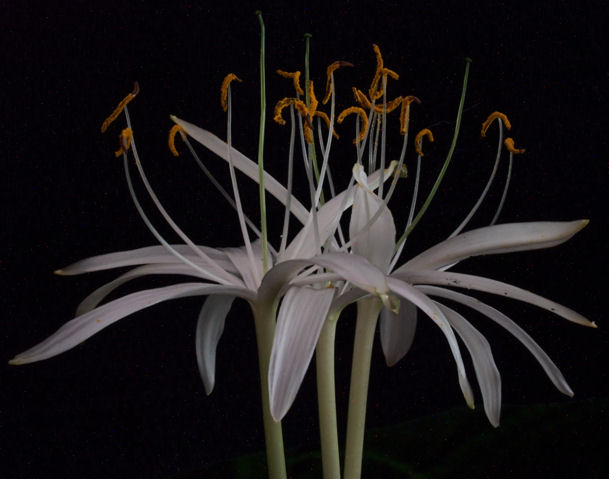
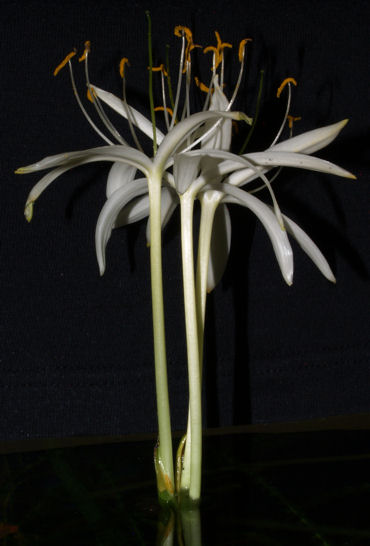
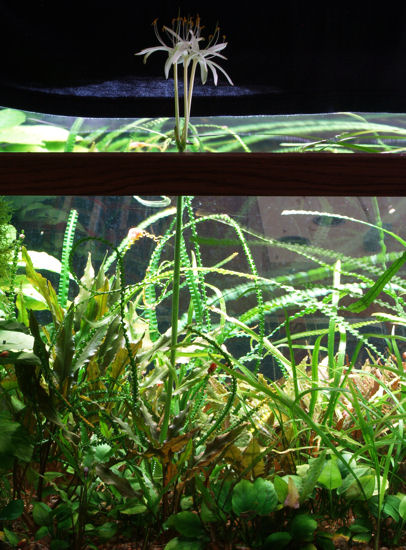
Crinum calamistratum Bogner & Heine is an aquatic central African species. It is not temperately hardy and is grow here in an aquarium indoors with artificial lighting. Height range: 3-4 ft. Photos by Alani Davis.

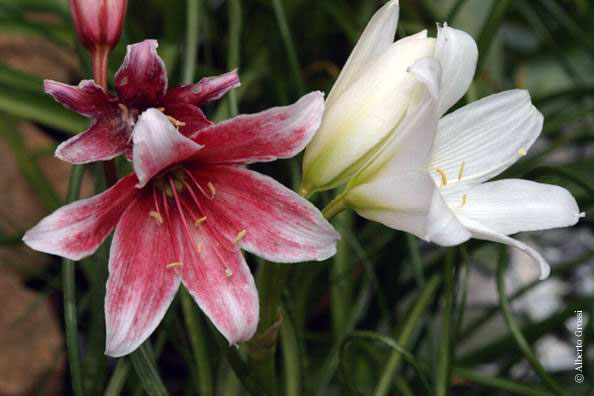
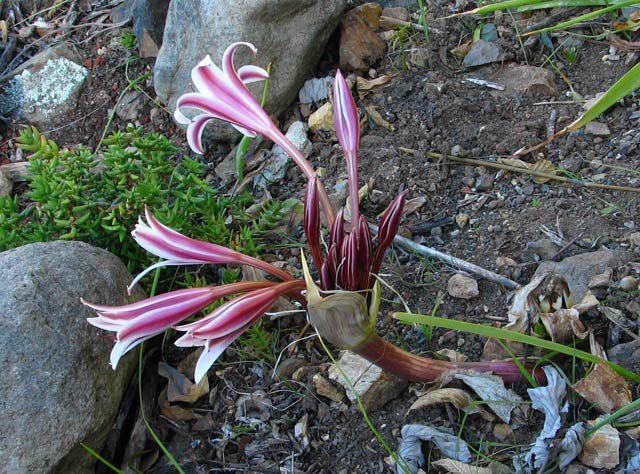
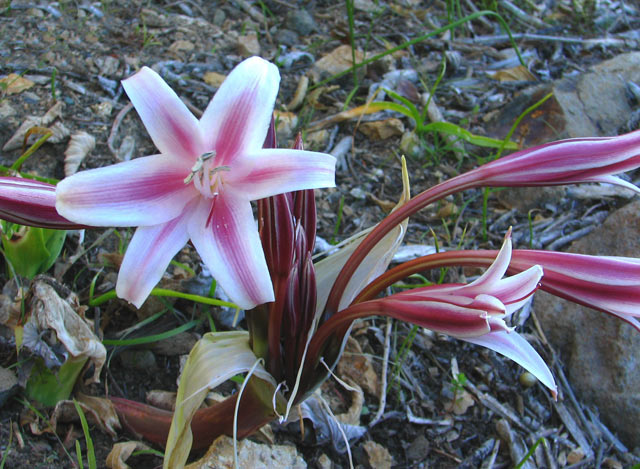
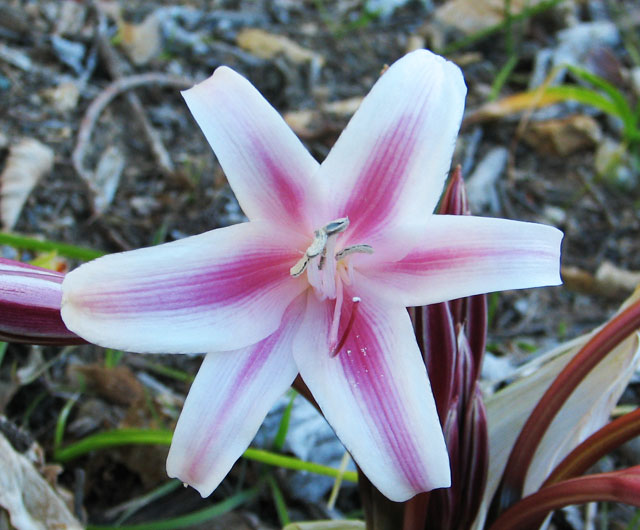
Crinum campanulatum Herb. is a southern African species. Alberto Grossi grows it in a pot and at the beginning of spring he completely dips the clay pot in a little pond. After a few weeks strong stalks sprout from the base of the bulbs. The red clone has a red stalk and red spathe, and in the white one both are white. When the red flowers open, they are rose and flush red with age (3 days). The flowers are autofertile and make a few large seeds or a lot of small seeds. In winter he keeps the pots almost dry; no difference in blooming with the pot stored at 10 °C or 0 °C. He reports that the flowers have a odor that's much like that of C. bulbispermum. Height range: 2-4 ft. The first two photos were taken by Alberto Grossi. The third is from Uluwehi Knecht who writes: first bloom on our plant in Santa Barbara, California - March 2008. After many years of growing it in a pot submerged in water without ever blooming, it bloomed following a period when the water basin it had sat in went dry a few months in the winter. Perhaps this is the trick! It had a pleasant fragrance with darker pink stripes on the back side of the sepals.

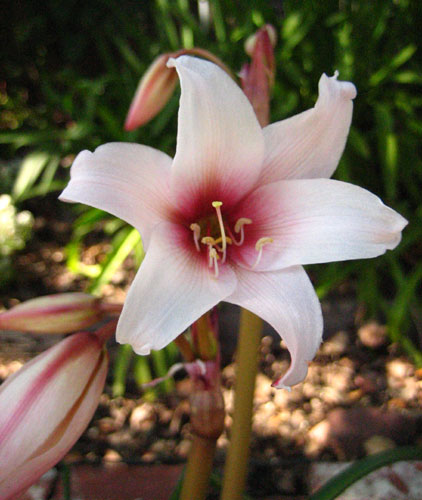
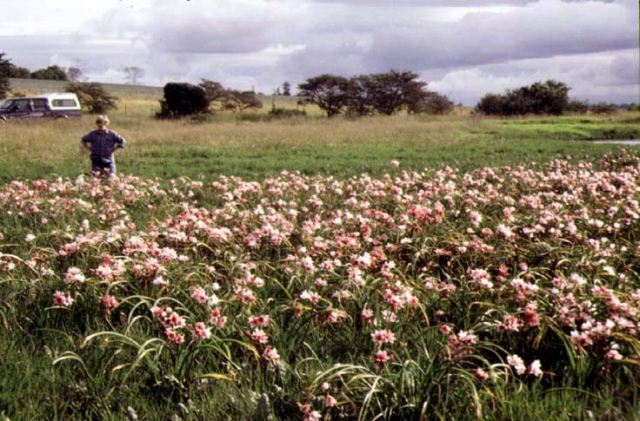
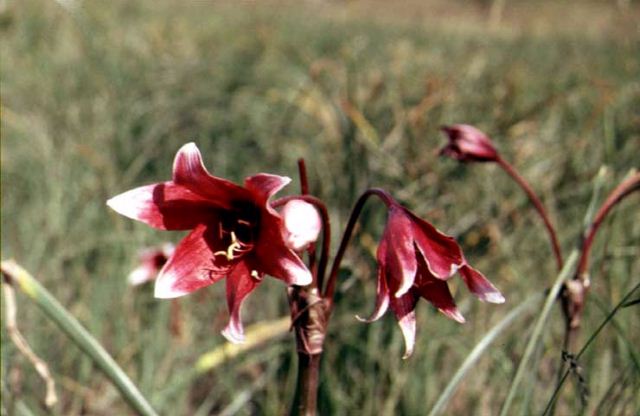
Additional photos by Cameron McMaster.
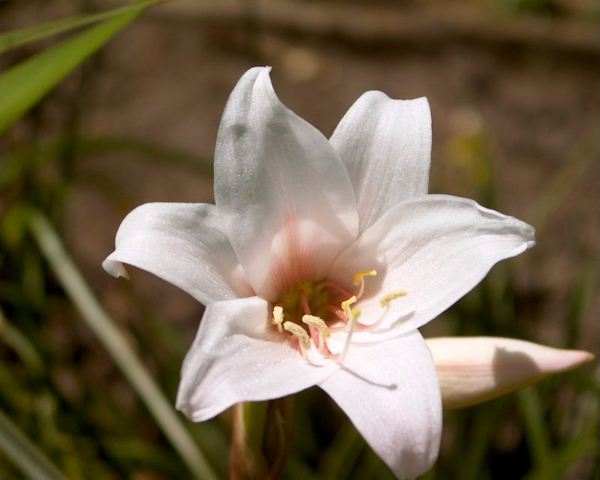
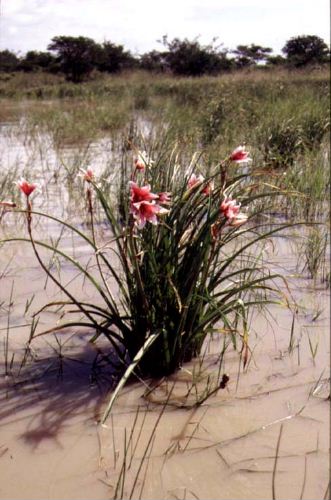
Crinum caribaeum Baker is a unclear species and the history of this one will not instill you with confidence, however the characteristics I can find about this species do match this plant, so I call it that for lack of a better name for what seems to be a distinct form. (Note: In 2021 authorities say it is a synonym for Crinum americanum). It is definitely related to the neotropical Crinum species like C. americanum, C. erubescens, & C. oliganthum. In many ways, it is like a more robust C. oliganthum with slightly wider foliage to 18" in drier conditions and more robust foliage to 24" in bog or pond conditions. The scapes are typically two flowered, though sometimes 4-flowered & though the scapes may have a slight copper blush, they are typically green & never pigmented as much as C. erubescens. This is one of the most adaptable crinums I have ever grown. If there was a crinum to be able to withstand the harshest dry Caribbean dunes to a interdunal swale wetland with submersion this would be the plant. The tolerances of this plant are remarkable. The problem is this: this plant was "rediscovered" growing around a military housing complex in Montgomery, Alabama & the point of origination cannot be determined. If I was not so fond of Crinum erubescens Type 2, this would clearly be my choice clone of the group. Thought the scapes are only two flowered, typically, the plant produces large numbers of them & when the plant is established it makes the comparison between the two still a challenge, but this "Crinum caribaeum" is a truly durable form. Height: 30 cm. Photos by Alani Davis.
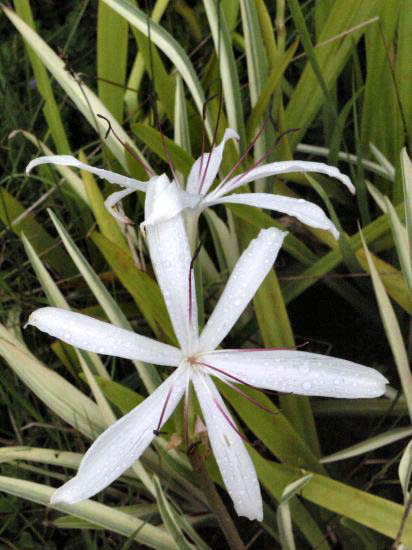
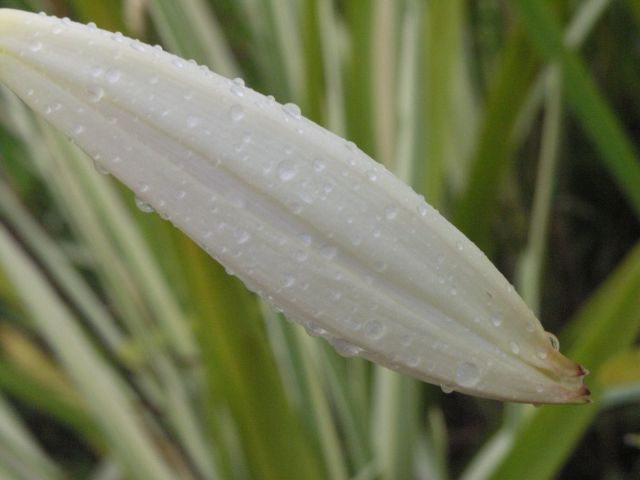
Crinum distichum Herb. is native to Chad, where it reportedly blooms in the dry season. (Note: According to one authority in 2021 it is a synonym for Crinum ornatum (Aiton) Herb. which is native range from Tropical Africa to Namibia and to another it is a synonym of Crinum biflorum Rottb. with a native range of W. Tropical Africa to South Sudan.) It is said to grow in middle- to low-altitude grasslands, some of them heavy clay. Height range: 3-5 ft. The photo below shows a plant photographed by Joseph Theunissen and tentatively identified by Al Sisk as C. distichum.
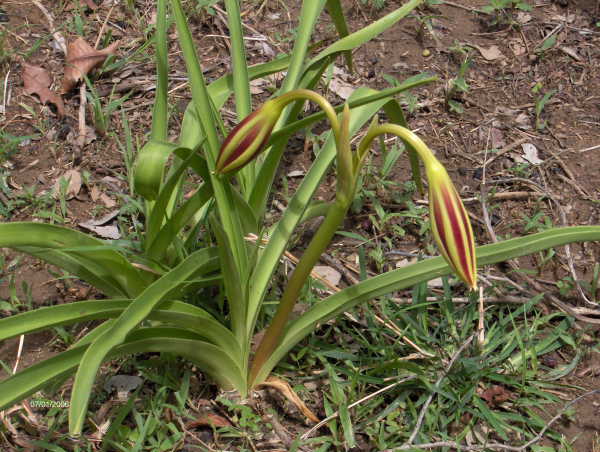
Crinum erubescens L.f. ex Aiton is native to Central and South America. Also called C. americanum forma erubescens and C. americanum var. robustum. This plant is usually larger and more tolerant of dry soils than the closely related, swamp loving C. americanum. The name erubescens is a reference to its reddish scapes. It can spread by long stoloniferous rhizomes, so give it space or keep it in a container. Like C. amoenum, all of the very fragrant flowers open over a short period. Height range: 2-4 ft. Photos by Jay Yourch & Alani Davis.
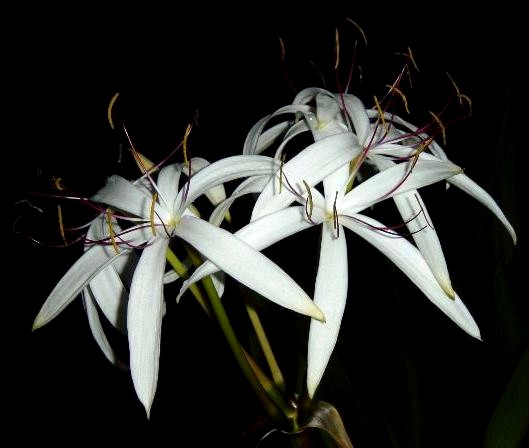
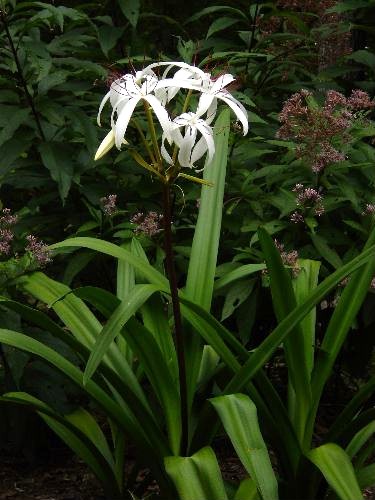
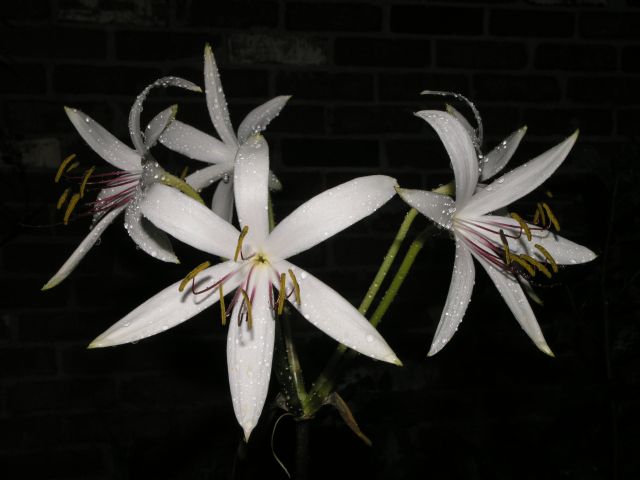
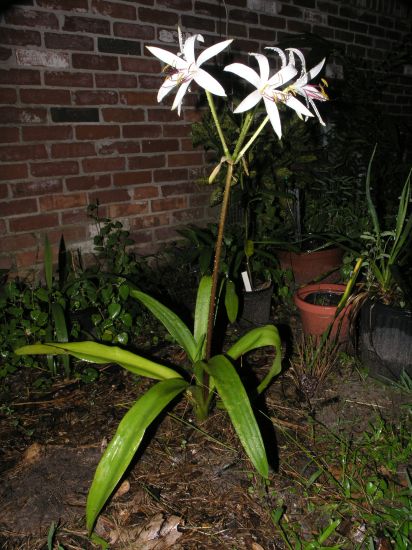
This is a variant of unknown origins that has been found in a number of locations, cemeteries, & gardens in southern Georgia & northern & panhandle Florida. It is a slightly shorter form with a more spreading rosette of foliage and shorter scapes usually not over 18". Blossoms have particularly broad tepals in general with scapes red to burgundy depending on sun exposure and temperatures. The origins of this form and whether it is a different species are unclear, but it is a distinct recognizable form with a distribution that suggests old roots & heirloom heritage. Photos by Alani Davis.
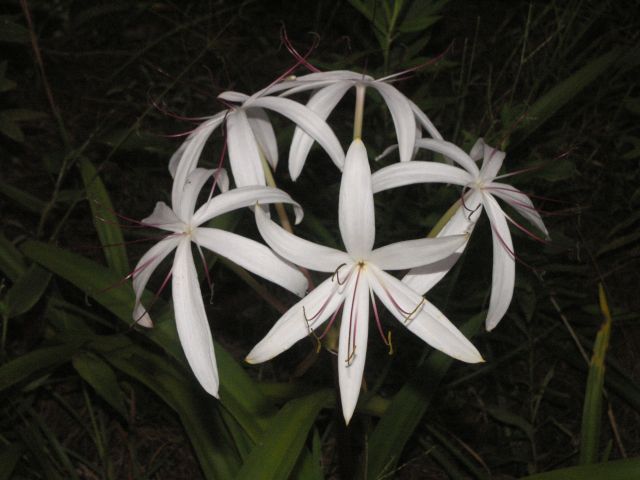

Crinum fimbriatulum Baker is native to Angola. Height range: 2-4 ft. Photos taken July 2010 by Alani Davis.
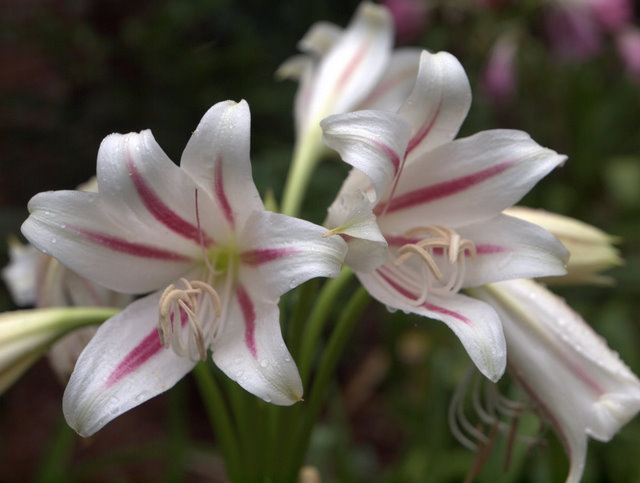
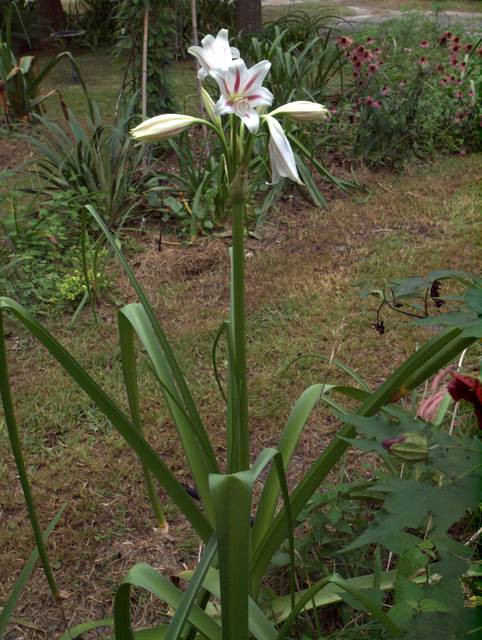
Crinum flaccidum Herb., commonly known as the Darling Lily, is found primarily on flood plains of inland rivers in Eastern Australia, with scattered occurrences across northern Australia. Leaves and flowers emerge after heavy rain. Leaves are linear, dark green, strongly folded with a coarsely fringed margin. Scapes of 5 to 20 flowers are borne on individual pedicels. Flowers last about a day, opening in the afternoon and closing before the next night. Flowers are usually white, large and sweetly scented, but smaller pale to rarely dark pink flowers can be found near the headwaters of the Macquarie, Castlereagh and Namoi Rivers. In the southern Flinders Range there are plants with pale yellow flowers and in Queensland there is a form known for its pungent smelling flowers, reportedly strong enough to induce vomiting if walking through a colony (once known as Crinum pestilentis F.M.Bailey). Yellow flowered versions have been known as Crinum luteolum Traub & L.S.Hannibal or Crinum pestilentis var. luteolum (Traub & L.S.Hannibal) L.S.Hannibal. According to an article by Robert Gibson in Australian Plants written in 1999 that provided much of the above information this species is easy to grow in a sunny location, but is a greedy feeder and responds well to being mulched. Propagation is best from seed. Bulbs may take up to 5 years to reach flowering size. Height range: to about 2 ft. Photographs by Alessandro Marinello who described his flowers as slightly scented of sodium hypochlorite (bleach).

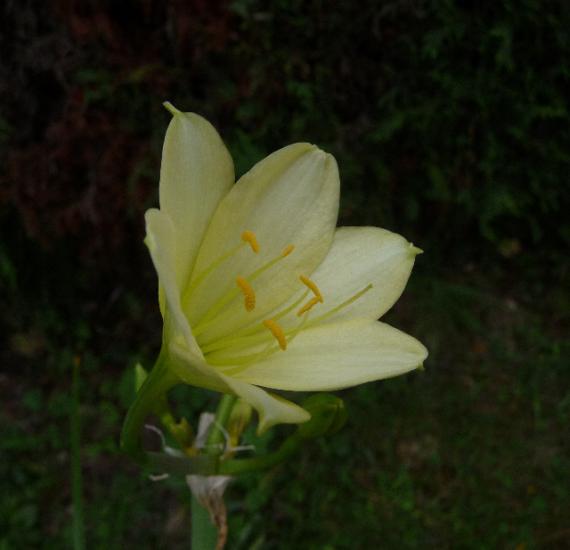
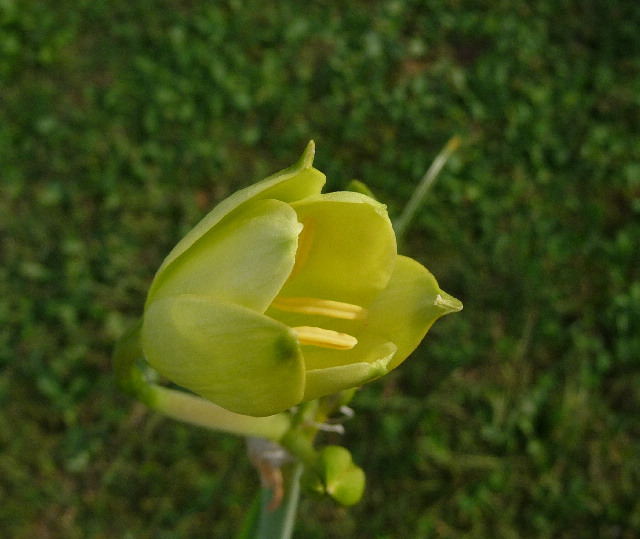
Crinum hanitrae Lehmiller & Sisk is a solitary species with a rounded bulb to at least 10 cm diameter, with a very short neck. The rather soft-textured leaves appear in spring-summer. They have a distinctive fine "reptilian" texture that is visible in the photos. The fragrant white flowers may have the style barely exserted from the perianth tube or hidden well down inside. A warm grower that should be kept at a minimum of 55 °F all year. This material is from the type locality in Madagascar. Height range: 30-45 cm. Photos by Dylan Hannon.
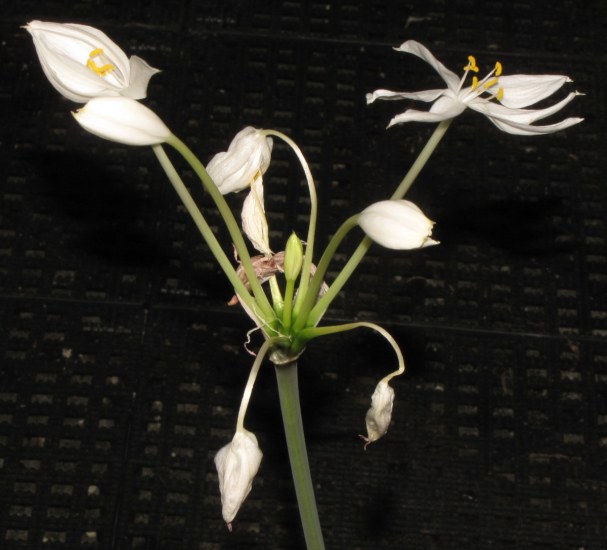
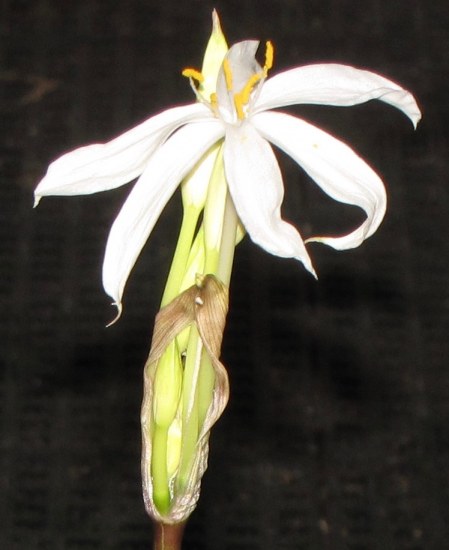
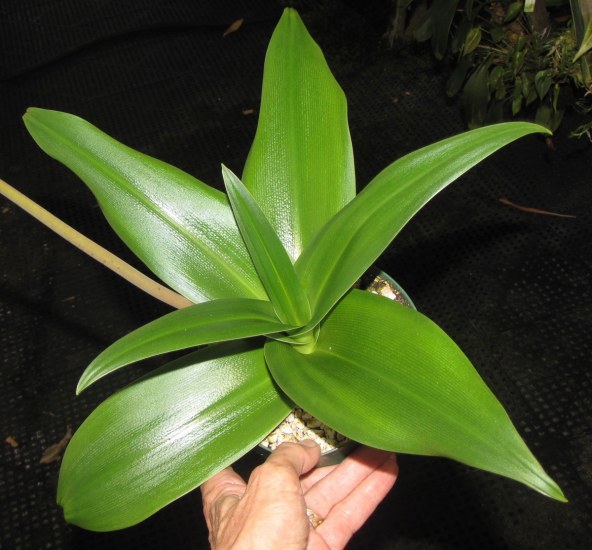
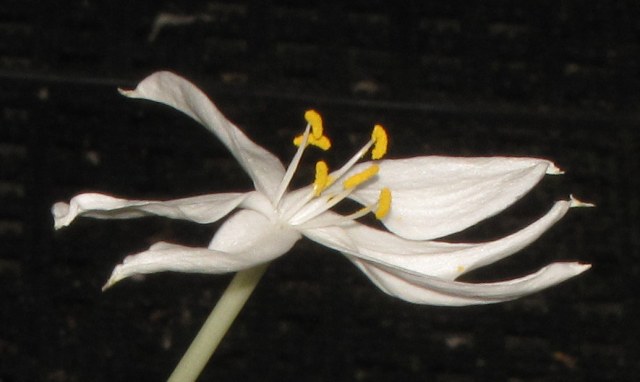
Crinum jagus (J.Thomps.) Dandy is native to tropical Africa. There are many forms, sometimes given variety names, although these variety names have not been published. Height range: 2-3 ft.
The variety called rattrayi has very attractive rigid, wide, upright foliage & typical C. jagus-type fragrant white flowers. Photos taken June 2007 by Alani Davis and Jay Yourch.

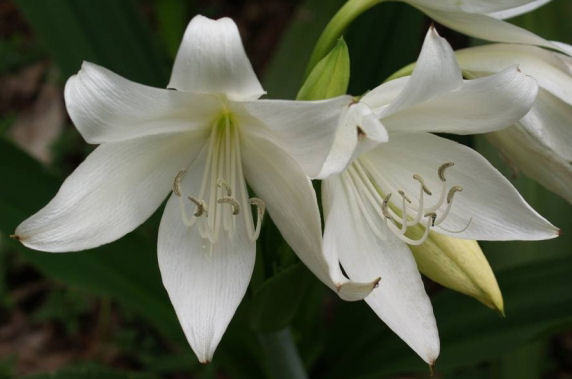
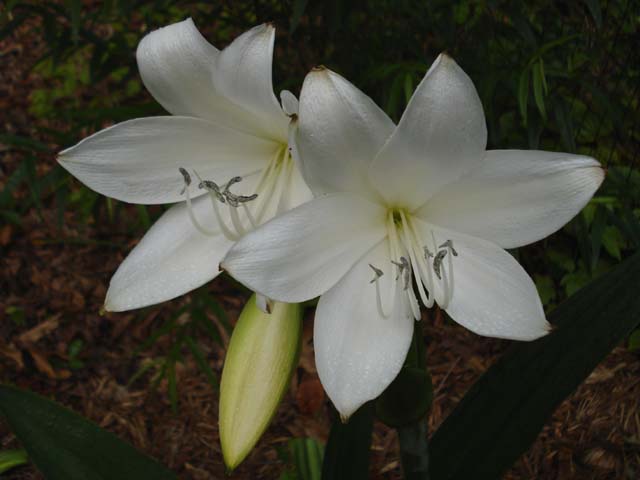
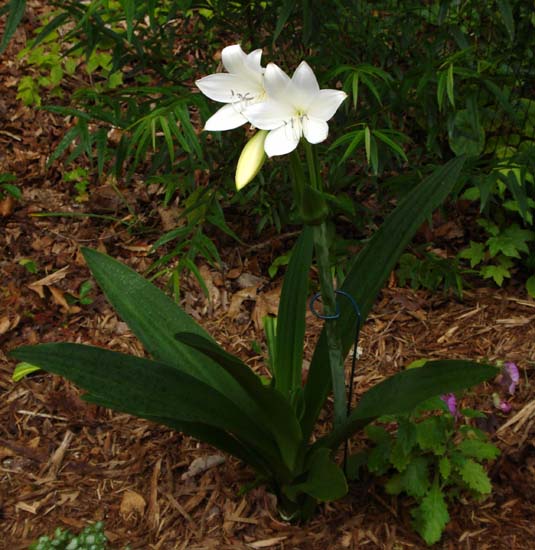
The variety known as scillafolia is native to Africa. It has rigid, narrow, upright foliage and white flowers. Photos by Alani Davis.
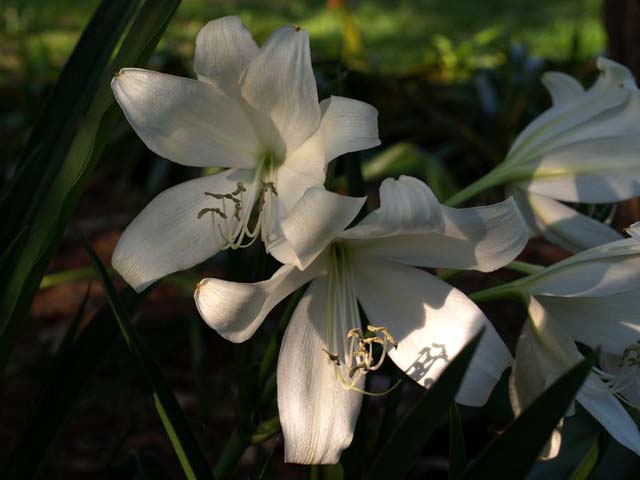
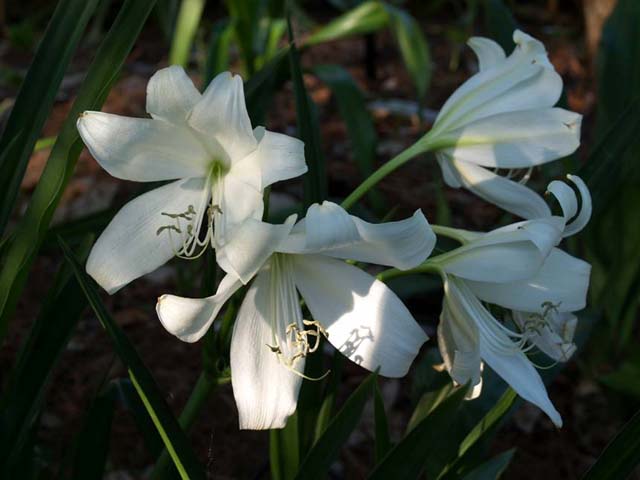

The variety known as vanillodorum has very attractive, broad, wavy foliage & grows best in moist soils with some protection from hot sun. The very fragrant flowers smell similar to vanilla which is not entirely unique amongst C. jagus types, however this is strongly so. I have also seen a similar form of this species listed as C. jagus Fairchild form. This plant is a descendant from a seed of a plant stolen from Fairchild Tropical Gardens by my source's grandmother at least in the 1960's if not earlier. Whether this name is correct or not, I cannot say. Though this may be one of the most attractive Crinums for its foliage, it also has exquisite fragrant flowers, and it is the only C. jagus form I am aware of that easily and readily forms seed. Photos by Alani Davis.
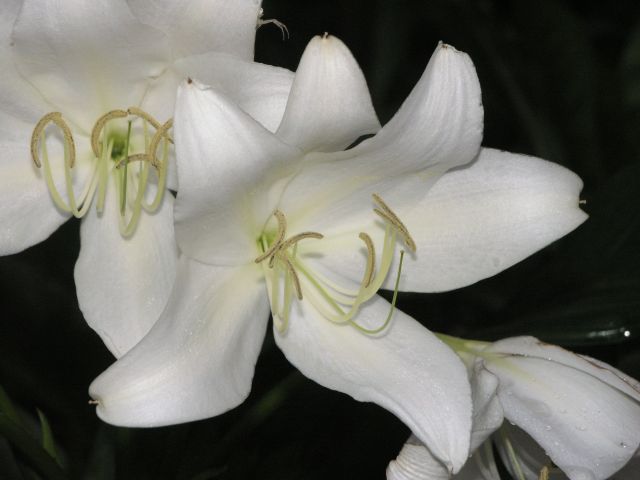
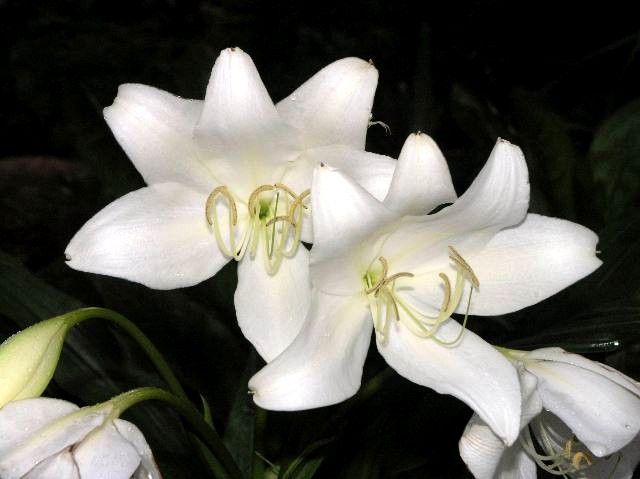
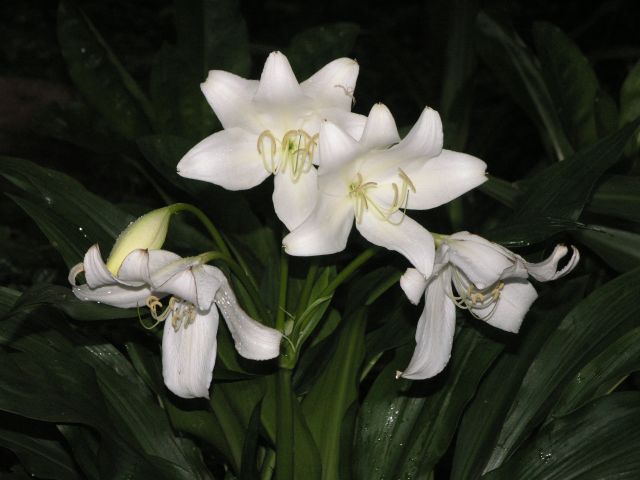
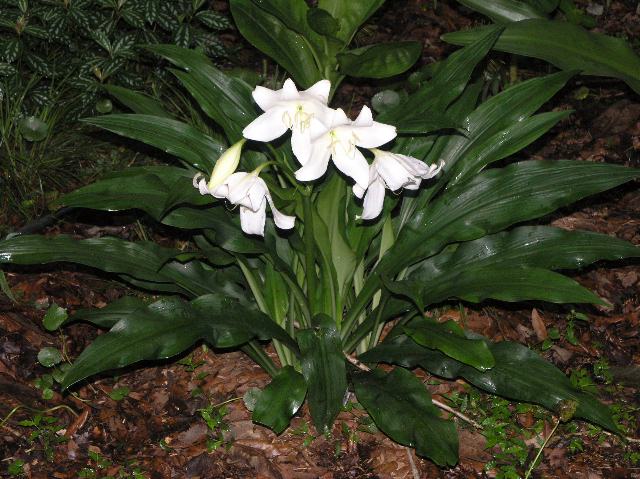
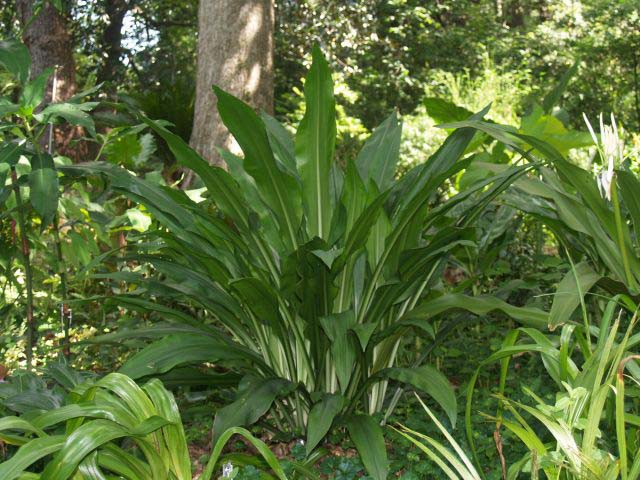
Crinum kirkii Baker has a widespread distribution in eastern tropical Africa from Kenya to Mozambique. Some forms of this species are from higher altitudes and can be grown in cool places like the San Francisco Bay Area. Height range: 30-45 cm. Photos below were taken by Nhu Nguyen at the UC Botanical Garden.
Crinum species a-b - Crinum species l-n - Crinum species o-z - Crinum species Index - Crinum hybrids Index