Cyrtanthus is a large genus of the Amaryllidaceae family native to South Africa. Species are found growing in a wide range of habitats including damp bushy stream-edges, as epiphytes on other plants, and in near desert conditions. A good reference is Graham Duncan's The Amaryllidaceae of Southern Africa written in 2016. Cyrtanthus species p-z are found on this wiki page.
Cyrtanthus Hybrids - Cyrtanthus a-c - Cyrtanthus d-j - Cyrtanthus k-o - Cyrtanthus index
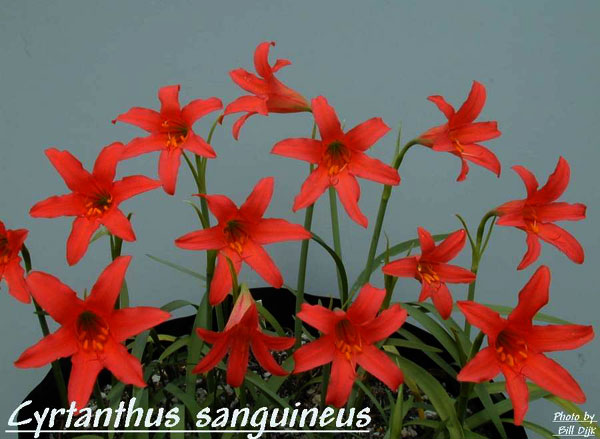
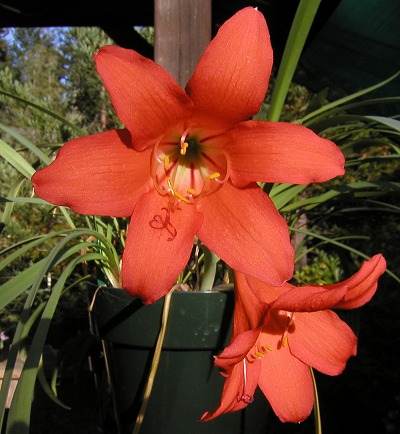
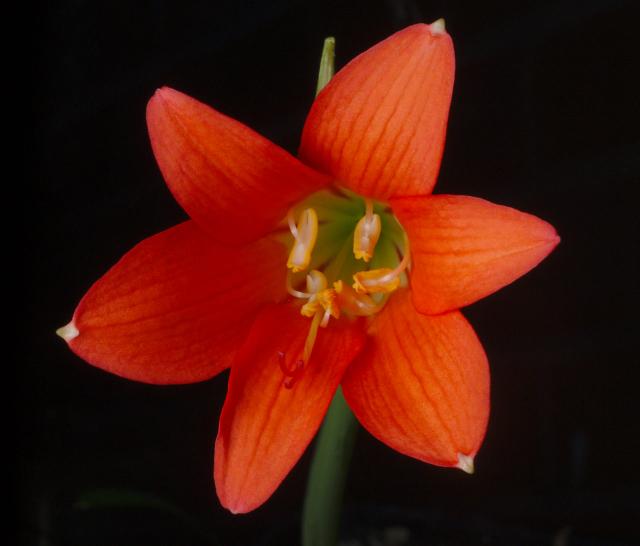
Cyrtanthus sanguineus (Lindl.) Walp. is a species with many subspecies. The ones pictured on this page are all ssp. sanguineus which is distributed from the Eastern Cape to KwaZulu-Natal. It is ideally suited to cultivation. Height is commonly to 36 cm. This variable, very floriferous species is evergreen and blooms in mid-summer. Flower colour varies from bright pink to orange-red; well grown bulbs often produce two stems each. This species is particularly suitable for hanging baskets. It is reported to be easier to get to flower than some of the species. The first two photos were taken by Bill Dijk. The third by Mary Sue Ittner is a close-up of the flower, blooming August 2004 for the first time from seed purchased from Silverhill Seeds. The larger bulbs were later attacked by the Narcissus Bulb Fly leaving behind only small offsets that had yet to bloom even five years later.

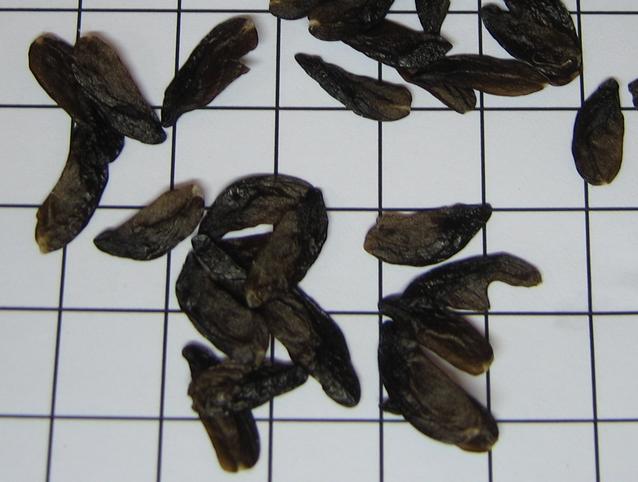
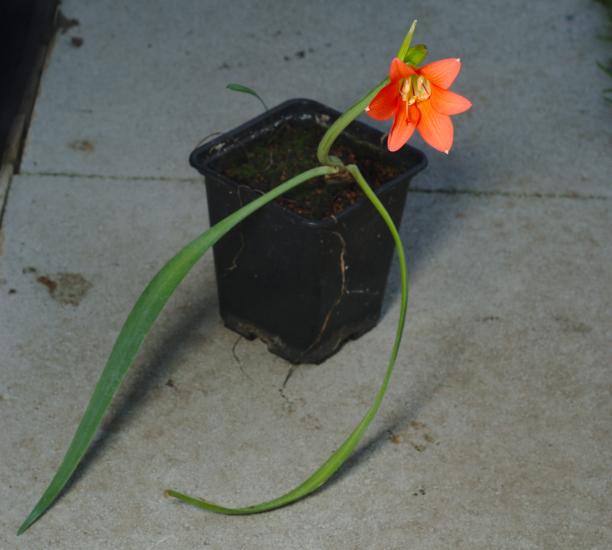
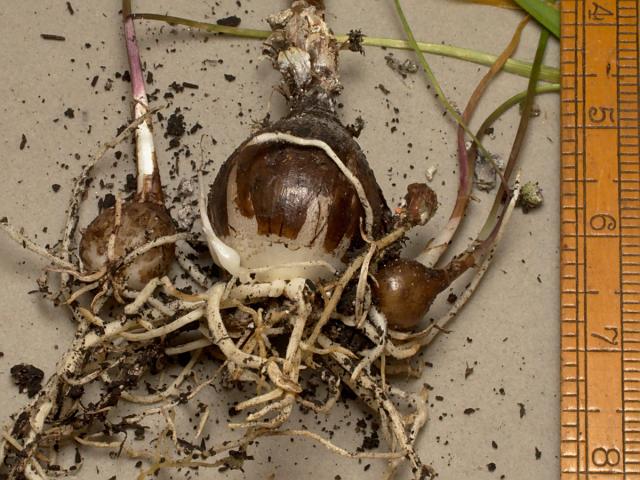
Photographs by David Pilling. Photo 1 is of Silverhill seed on a 10 mm grid in July 2008; 2 and 3 are of the first time the resulting plant bloomed in September 2013, shown in a 4" side pot; although the seed germinated easily, I lost all the plants except the one shown to frost. Photo 4 shows the bulb in October 2014 with two big offsets and some tiny ones; the ruler is marked in inches.
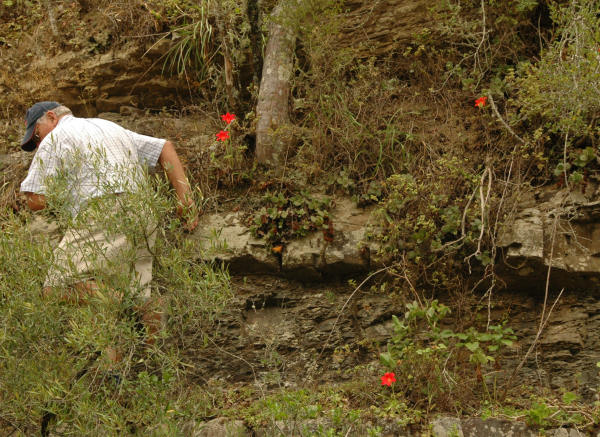
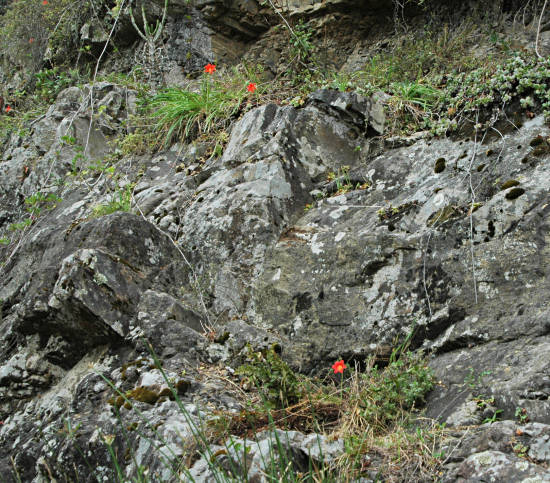
The photos below were taken in habitat by Bob Rutemoeller and Mary Sue Ittner in the Eastern Cape. The first photo shows Cameron McMaster who had climbed up a rock face to photograph the plants.
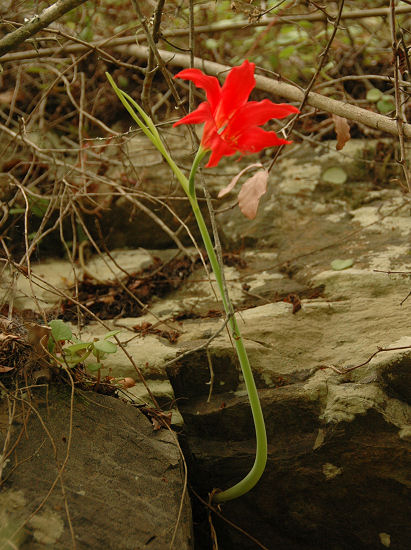

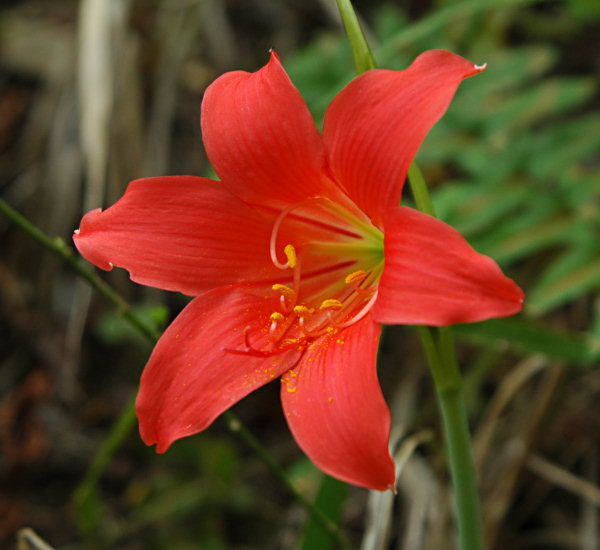
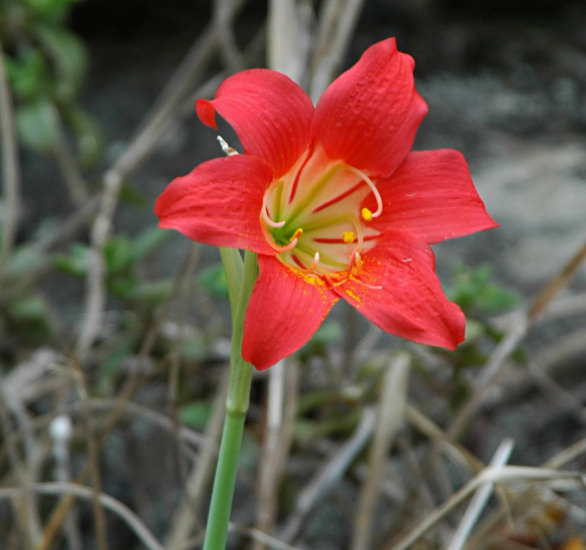
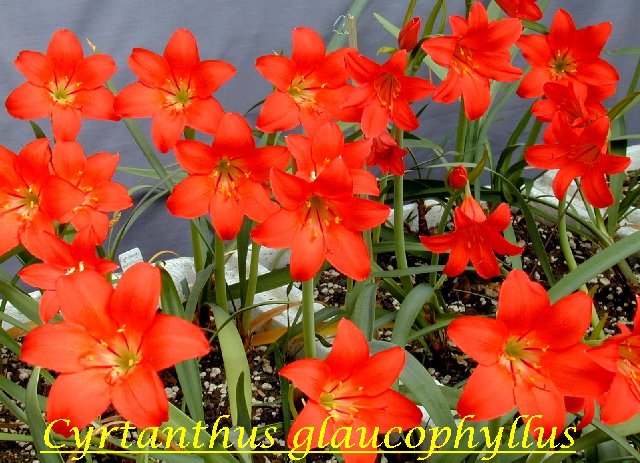
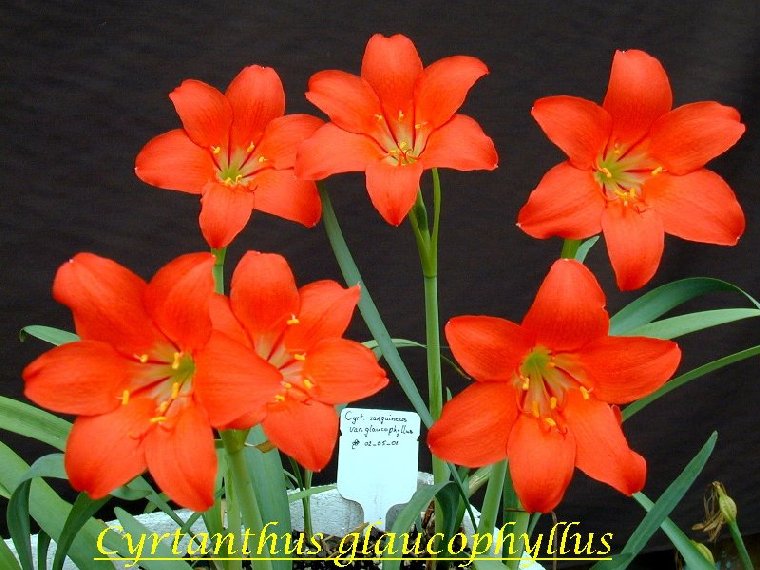
A more robust and larger colour variation form of Cyrtanthus sanguineus, is sometimes called Cyrtanthus sanguineus var. glaucophyllus. (note: This does not seem to be a published botanical name.) Photos by Bill Dijk who had never come across this vigorous and attractive plant before, which was easy to grow. All the plants he grew came true from seed.
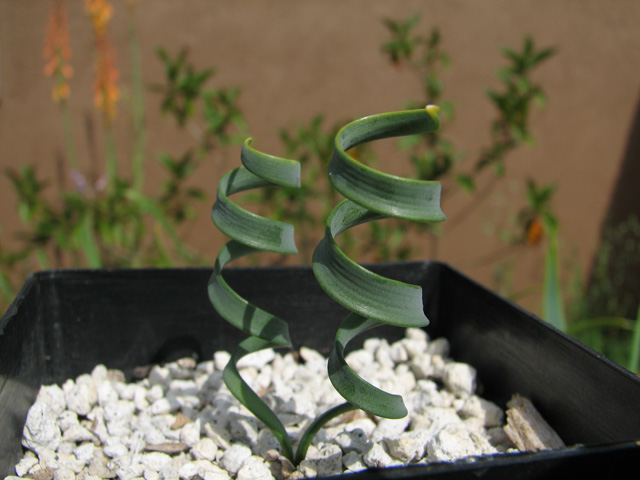
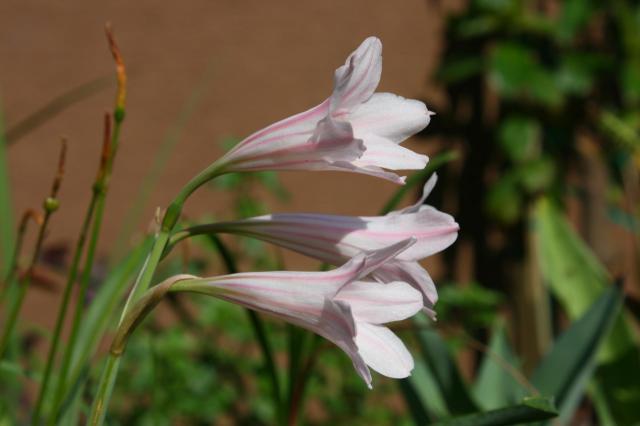
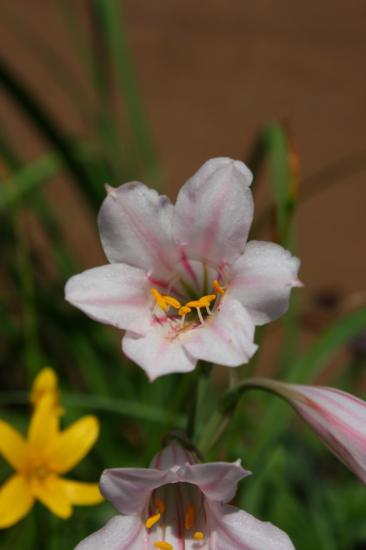
Cyrtanthus smithiae Watt ex Harv. is a deciduous, white or pale pink striped flowered summer-growing plant that has very attractive "corkscrew" foliage. The inflorescence appears promptly in early summer together with the new foliage. Height: to about 30 cm. This is quite an easy species to grow provided it is kept absolutely dry in winter, and watered rather infrequently in summer. Photos by Cameron McMaster in habitat in the Eastern Cape showing variations in different populations, including the fourth one of an especially large plant. The last photo was taken by Mary Sue Ittner January 2010 near Kaboega, a very dry area in the Eastern Cape, of a plant in seed.
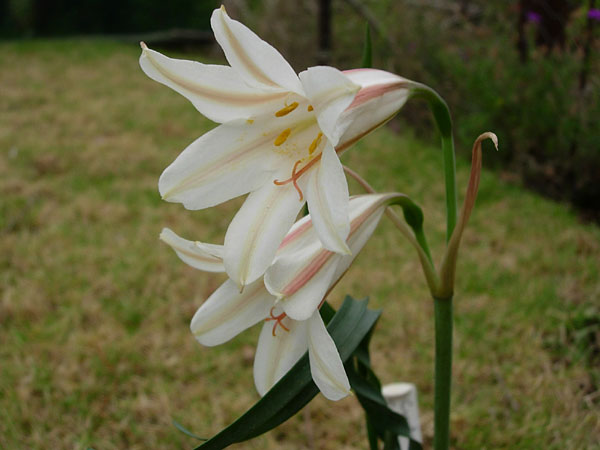
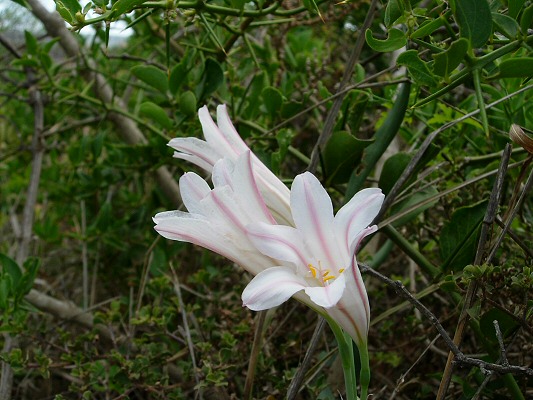
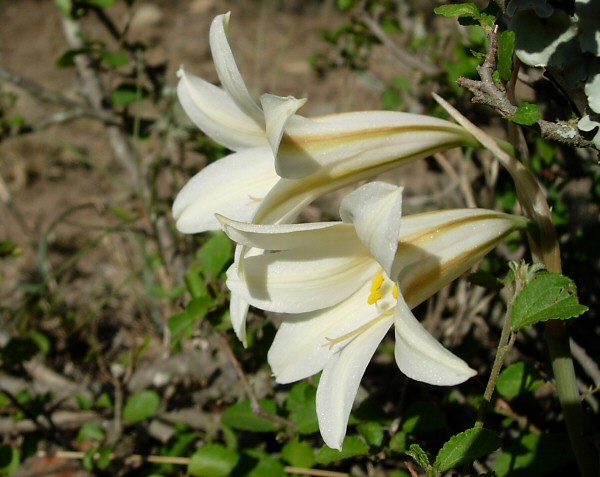
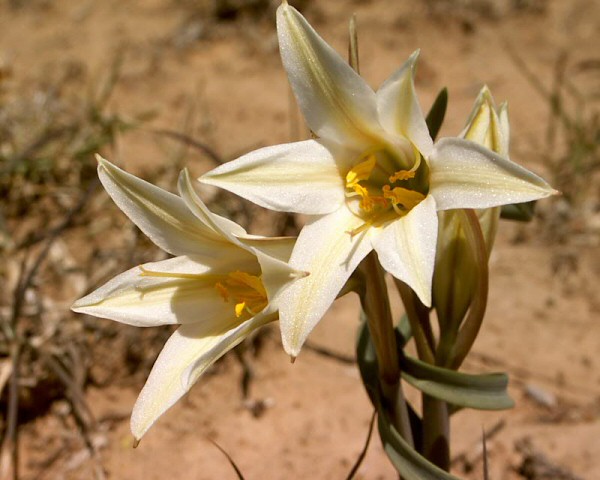
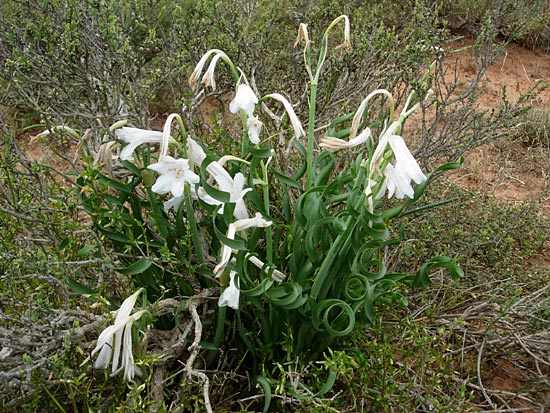
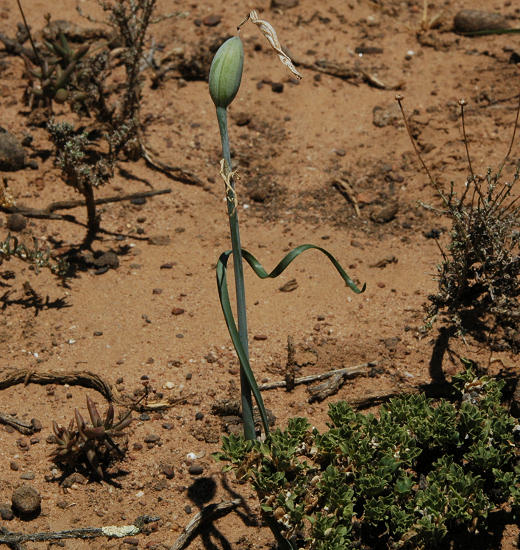
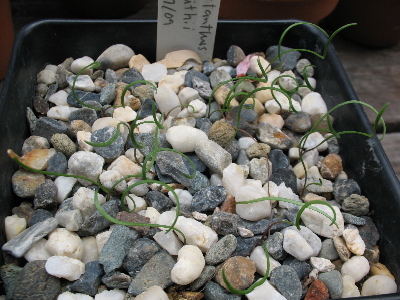
Photo 1 below by Byron Amerson shows 3 month-old seedlings; note that these young plants are already showing the characteristic spiral leaves typical of this species. Photos 2-4 were taken by Nhu Nguyen. Photo 2 shows a 3 year-old seeding with its elegantly spiral leaves. Photos 3-4 shows the flowers in bloom.
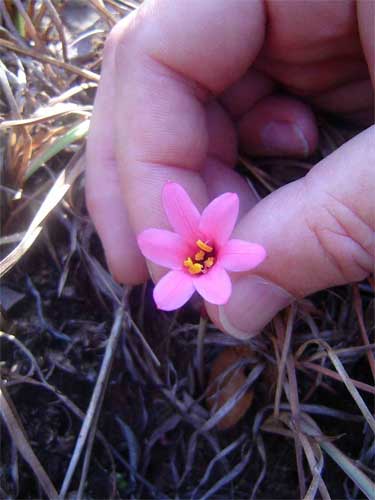
Cyrtanthus sp. Pictures below are apparently of a new species. Text about this from David Victor who writes: I've recently been in contact with Mark Hyde who is producing an online Flora of Zimbabwe. He has recently collected a Cyrtanthus in the Bvumba Mountains of the Eastern Highlands (against the Mozambique border). Whilst there are similar plants in the herbarium marked Cyrtanthus sanguineus (Lindl.) Walp. he does not think that this plant is that species, but does not have any alternative other than the possibility that it is a new species. Can anyone confirm the identity of the plant, please? He says that it is a "small pink flowered herb, with 1 or less often 2 flowers, which appear before the leaves in August or September. Bracts 2, petals 6, style lobes 3. Stamens 6, 3 lower in tube than the other 3. Ovary inferior. It grows on dry rocky slopes in Brachystegia woodland on serpentine hills.

Cyrtanthus spiralis Burch. ex Ker Gawl. is very rare in the wild and one of the most difficult members to cultivate successfully over an extended period. It is usually evergreen in cultivation but needs to be kept almost bone-dry in summer, and given very infrequent waterings in winter. Coarse river sand or gravel must be incorporated into the growing medium. It has nicely coloured red flowers. Plants grows to 30 cm high. The first photo by Bill Dijk; photos 2-4 from Alessandro Marinello.

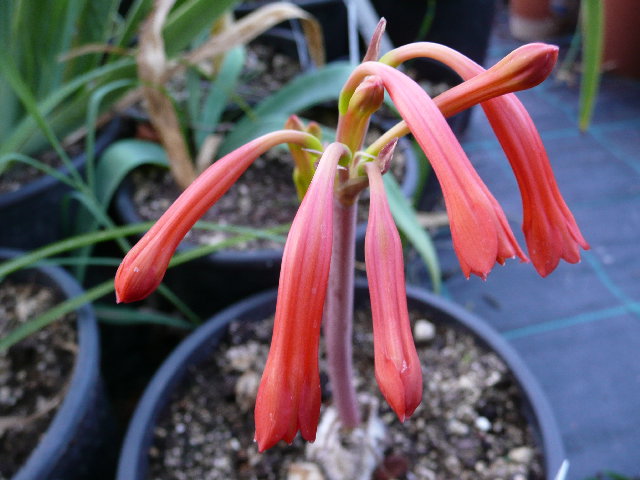
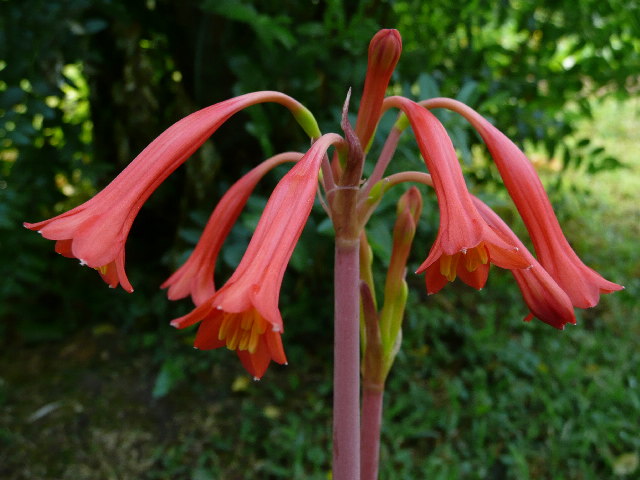
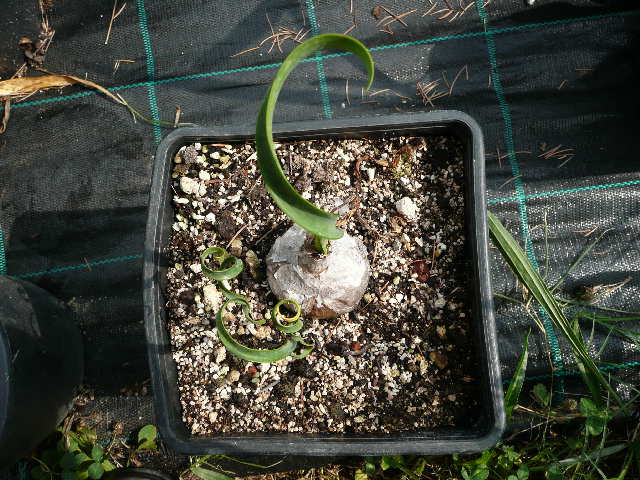
Photos below from Hans Joschko.

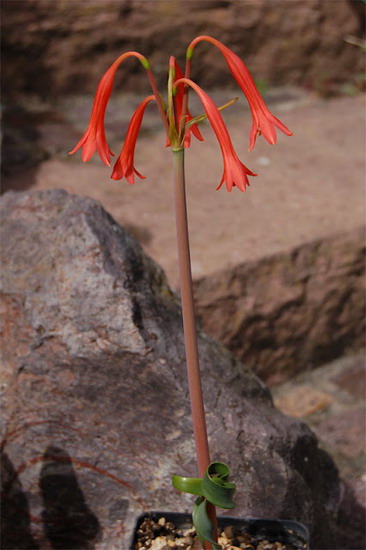

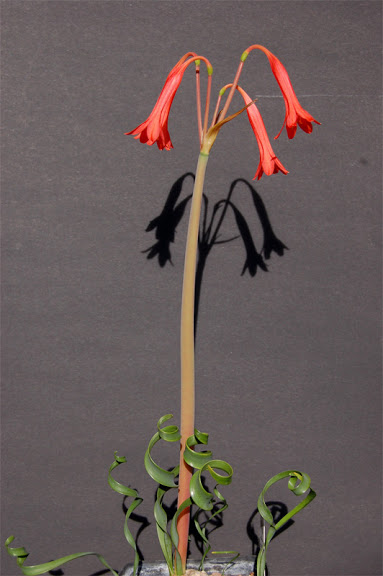
Cyrtanthus staadensis Schönland This rare, floriferous plant deserves wider horticultural attention. Its bright orange-red flowers with their distinctive, dilated perianth tubes are carried on long peduncles or stalks, making it an ideal cut flower. This species prefers a sunny aspect and tends to be evergreen in cultivation. Plants to 40 cm high. Photo by Bill Dijk.
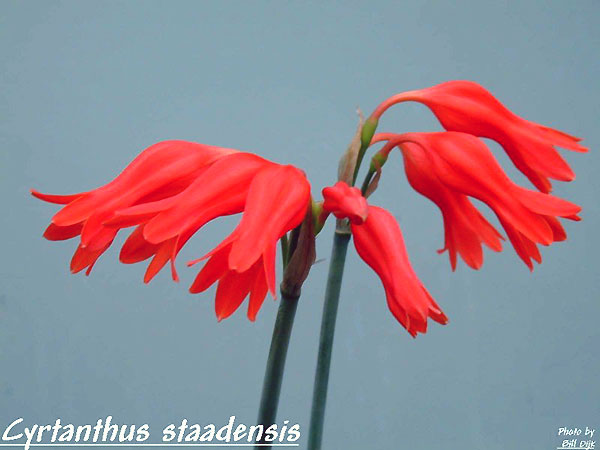
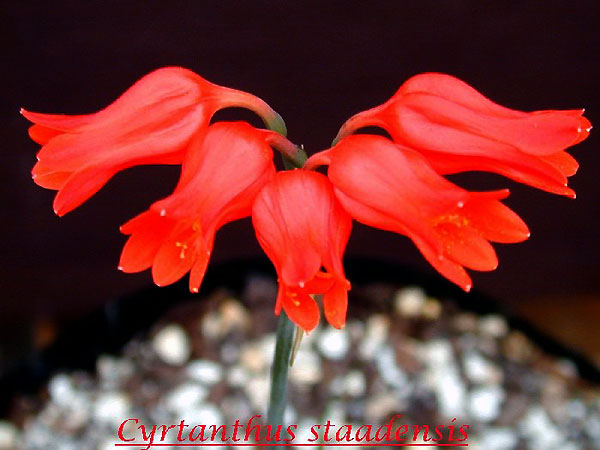
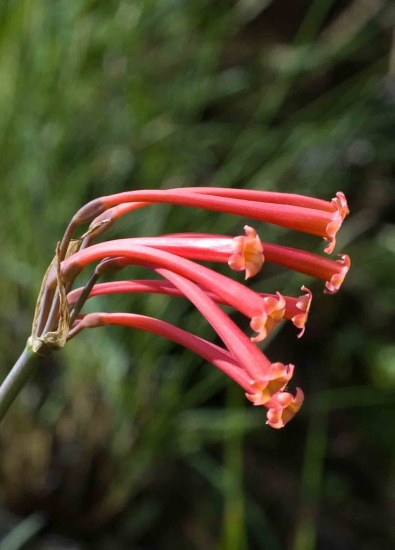
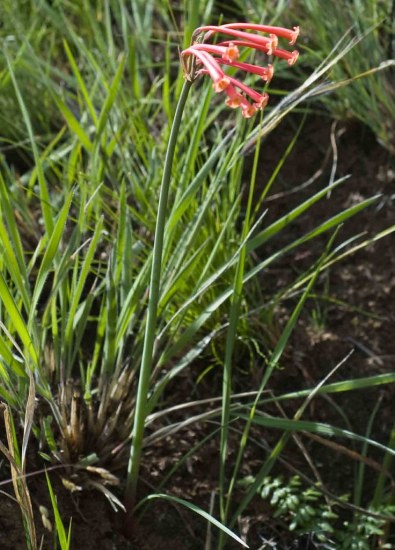
Cyrtanthus stenanthus Baker is found in damp grassland in KwaZulu-Natal, Mpumalanga, and the Free State. Leaves are present or absent at flowering. Flowers are red, orange, or yellow, turned to one side, slender, slightly contracted at the throat. Height: to about 25 cm. Photos from iNaturalist taken by Robert Archer in December in Mpumalanga and by ansell in November in Lesotho and shared under a CC BY-NC license.
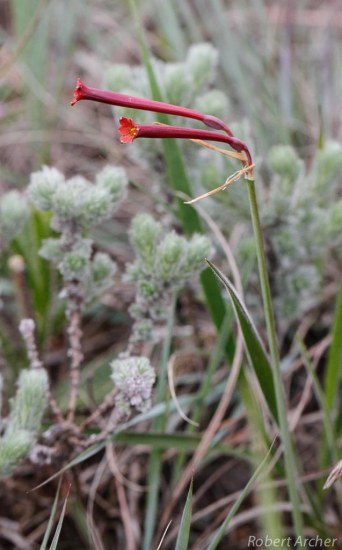
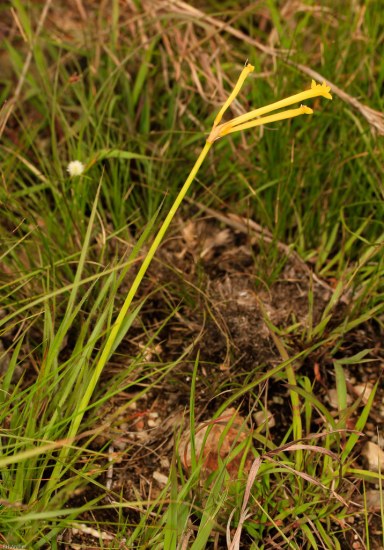
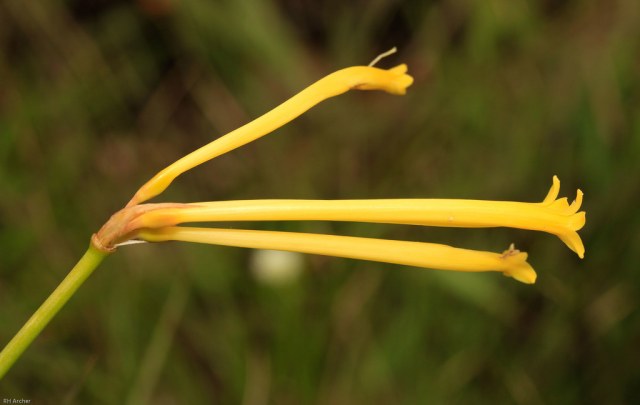
Cyrtanthus stenanthus var. major Dyer This variety has yellow flowers. The first two photos from iNaturalist taken by Robert Archer in November at the Mountainlands Nature Reserve in Mpumalanga and shared under a CC BY-NC license. The last photo from Bill Dijk.
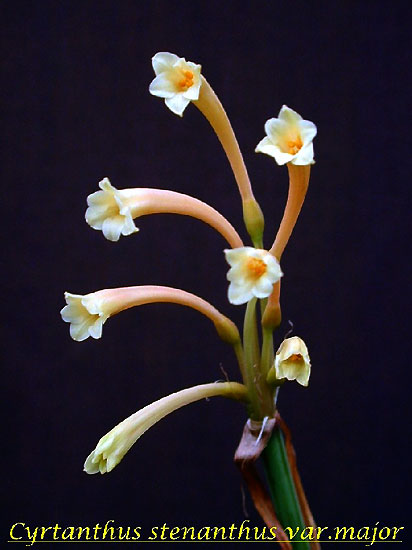
Cyrtanthus stenanthus var. stenanthus has reddish to reddish green flowers. Photos 1-2 were taken by Alessandro Marinello of a form from Southern Sekhukhuneland in South Africa. Photos 3-5 were taken by Nhu Nguyen. These flowers started out the same color as Alessandro's but slowly turned lighter in about a month. It is a long blooming variety and produces a fragrance similar to synthetic banana throughout the blooming time.
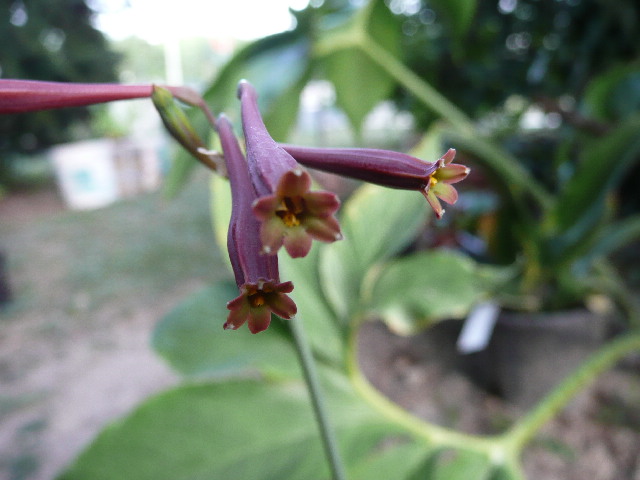
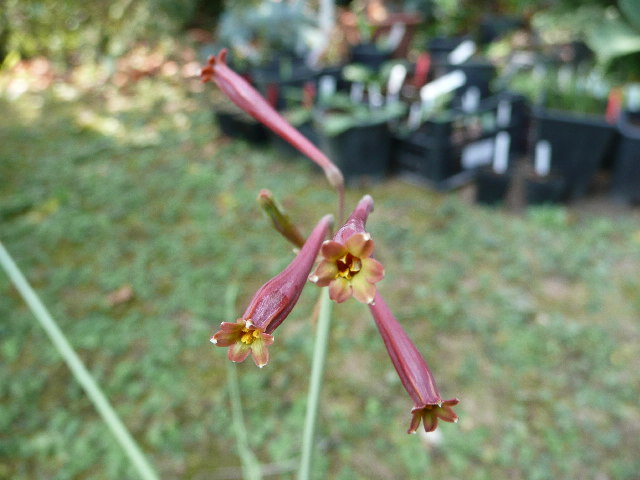
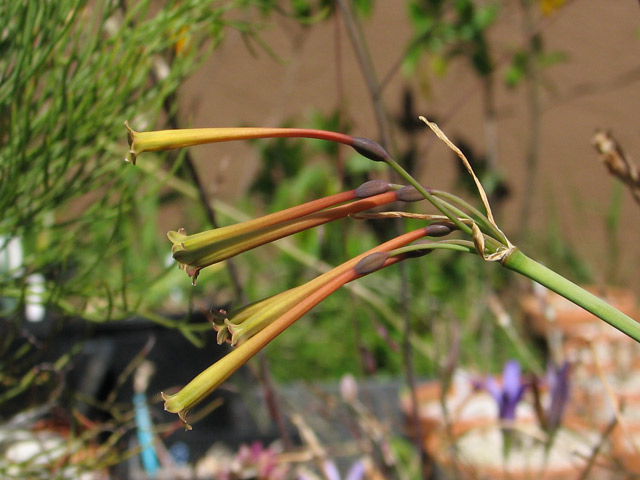

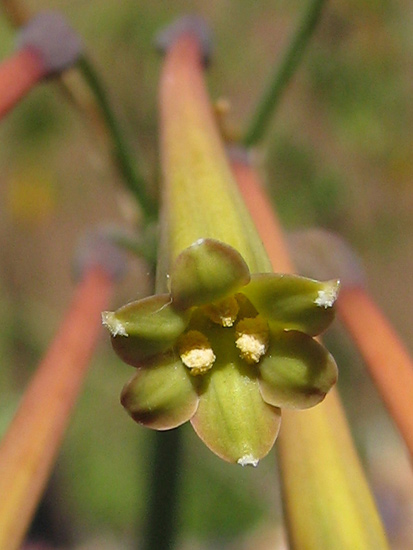
Cyrtanthus suaveolens Schönland is a dainty (to 25 cm tall) maroon species with recurved lobes endemic to the Amatola Mountains of the Eastern Cape and flowering mid October to mid November. It has rather distinctive leaves which are dark green with purplish margins and midribs and the seed capsules when they formed are also tinged with purple. It adapts well to cultivation. Photos by Cameron McMaster.
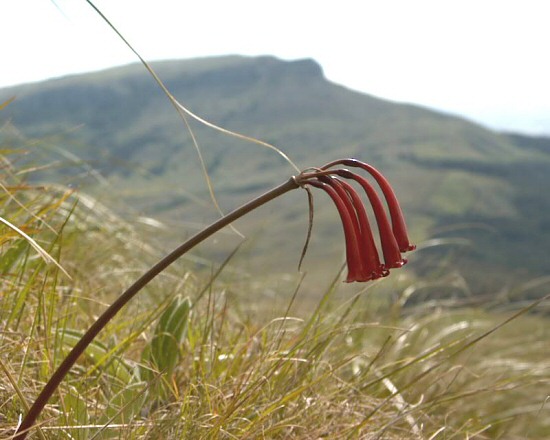
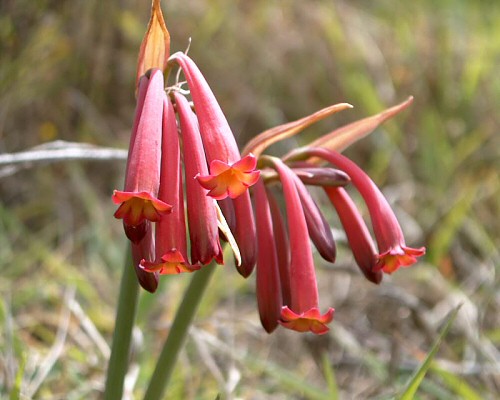
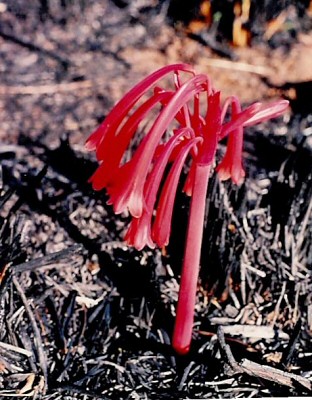
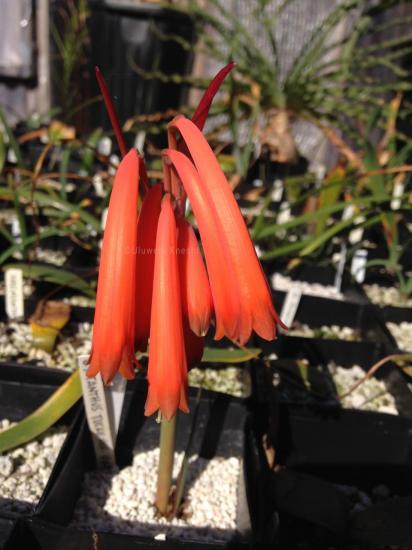
Cyrtanthus tuckii Baker is a species from the Eastern Cape, Mpumalanga, and KwaZulu-Natal and Swaziland that is difficult in cultivation. It is found in grassland and wet areas, flowering August to March, best after fires. Leaves are narrow and appear after the flowers. The flowers are tubular, nodding, red to orange with green to yellow tips. Three varieties are accepted by Plants of the World Online in 2020 so we will include a description of them below. Graham Duncan in The Amaryllidaceae of Southern Africa argued that the forms recognised as varieties differed only by color and since there were intermediate forms varieties should not be recognized. Height: about 25 cm. Photo #1 by Cameron McMaster shows one flowering after a fire. Photos 2-4 were taken January 2010 by Bob Rutemoeller and Mary Sue Ittner at Naude's Nek.
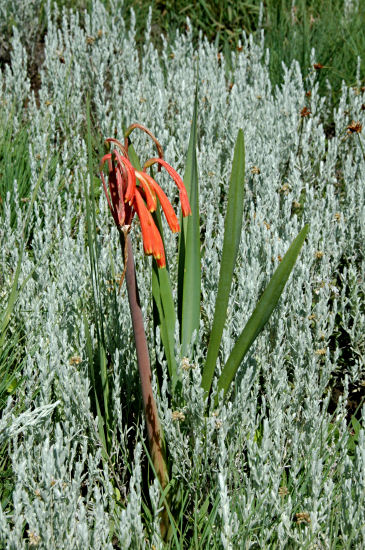
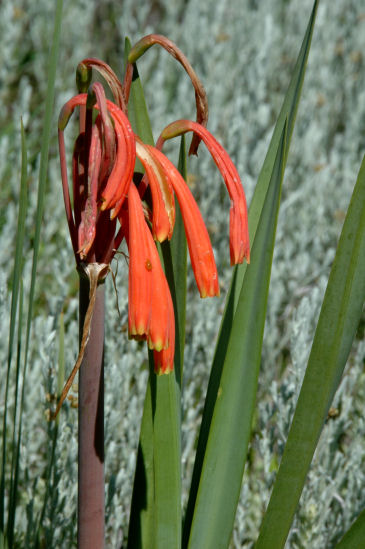
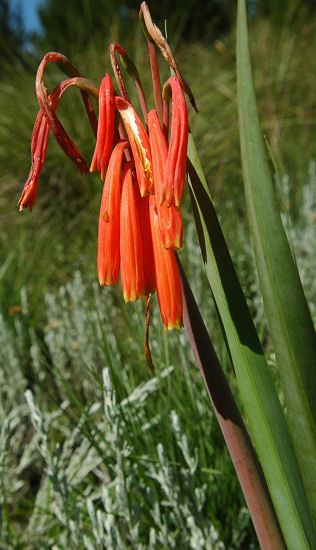
The photos below were taken by Uluwehi Knecht of a plant in cultivation.

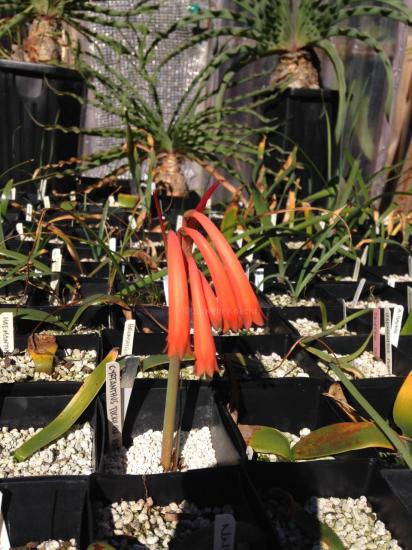
Cyrtanthus tuckii var. transvaalensis I.Verd. is a deep red-flowering form with deeper red tepals distributed from the central Eastern Cape to Mpumalanga and Gauteng. Photos from iNaturalist taken by member riana60riana and Charl Strydom in Mpumalanga September-November and shared under a CC BY-NC license.
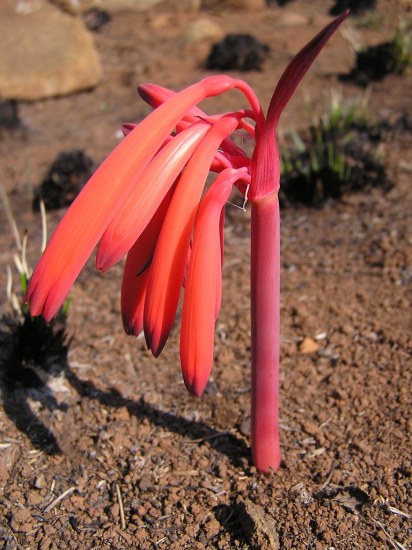

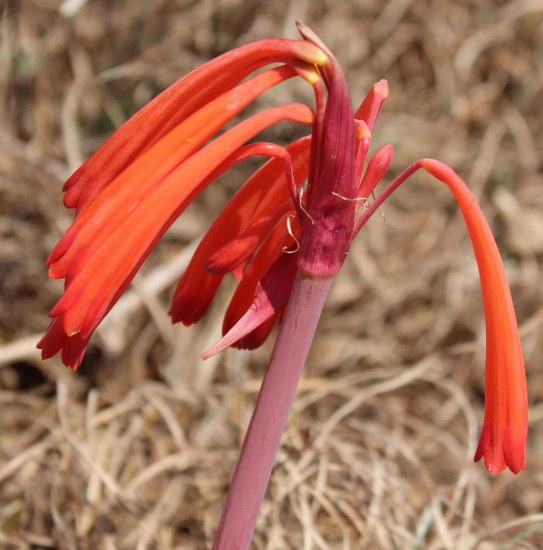
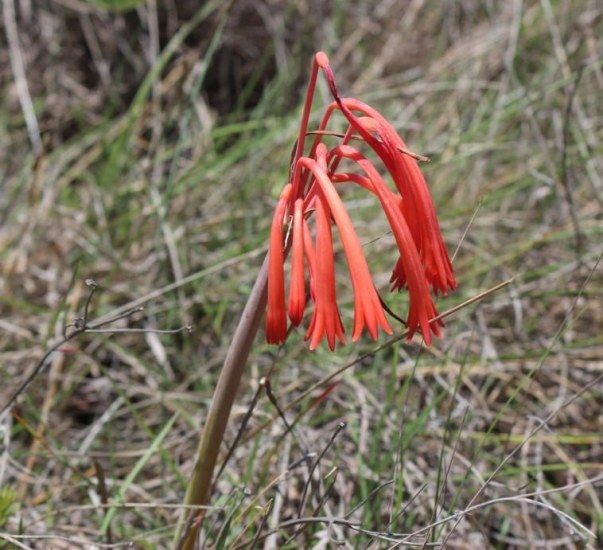
Cyrtanthus tuckii var. tuckii is an orange flowered form, sometimes with green, or yellow and green tips that occurs in KwaZulu-Natal, the Eastern Cape and the Free State. Photos from iNaturalist and in the public domain taken by Peter Warren in KwaZulu-Natal in September.
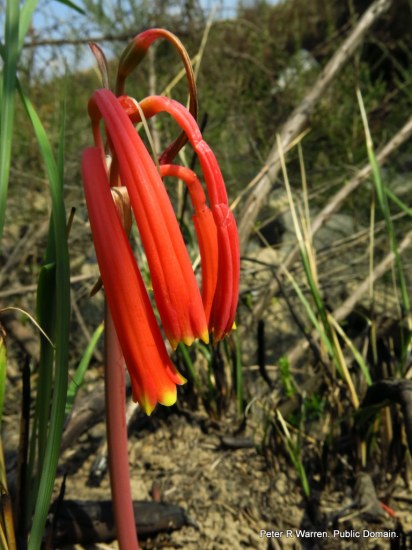
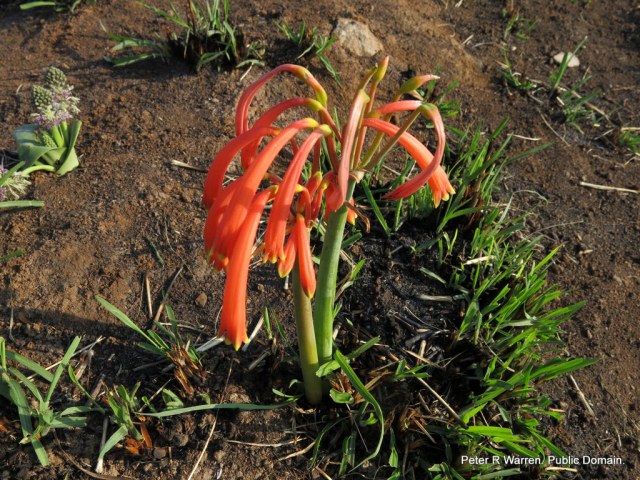
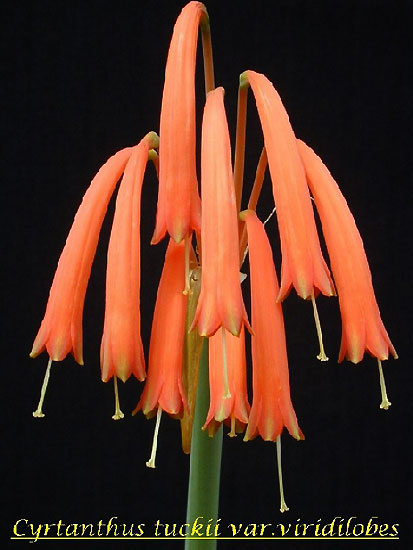
Cyrtanthus tuckii var. viridilobus I.Verd. is a deep red flowering form with purplish apical parts and green tips growing from the Eastern Cape to Limpopo and Mpumalanga. Photo by Bill Dijk.
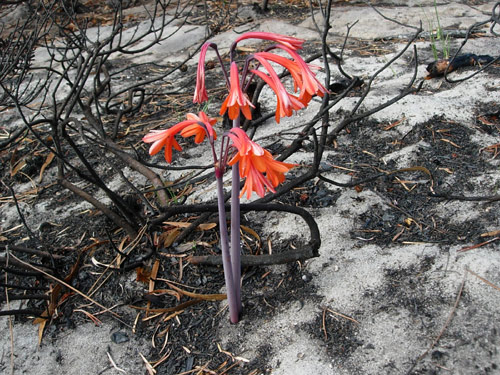
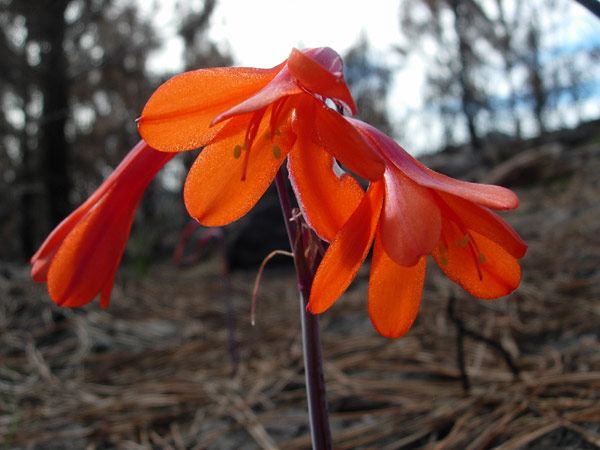
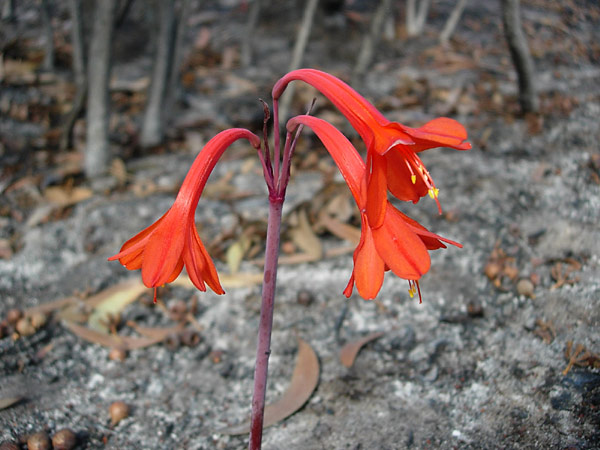
Cyrtanthus ventricosus Willd. is found on south facing sandstone slopes in fynbos from the Cape Peninsula to the Eastern Cape. It has bright shiny red nodding flowers. It flowers December to May in the wild, after fire. Height: 10-25 cm. Blooming in a burned area near Napier in the Overberg and photographed by Cameron McMaster who has captured the sheen of the beautiful flowers.
Some of the information about these species and how to grow them furnished by Bill Dijk and Cameron McMaster.
Cyrtanthus Hybrids - Cyrtanthus a-c - Cyrtanthus d-j - Cyrtanthus k-o - Cyrtanthus index