Fritillaria species originating in Europe are described on this page. Species a-o are found on this page.
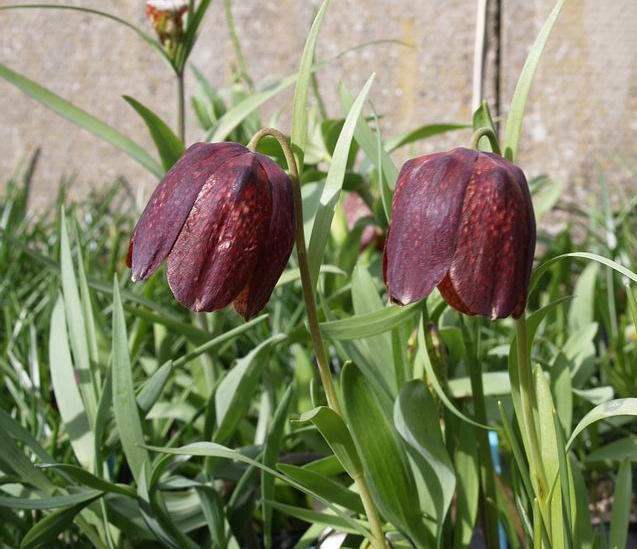
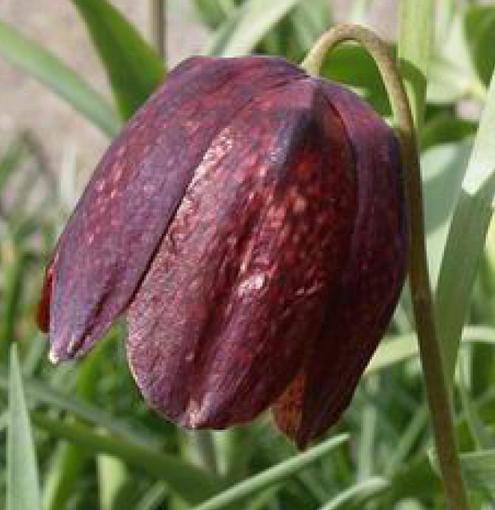
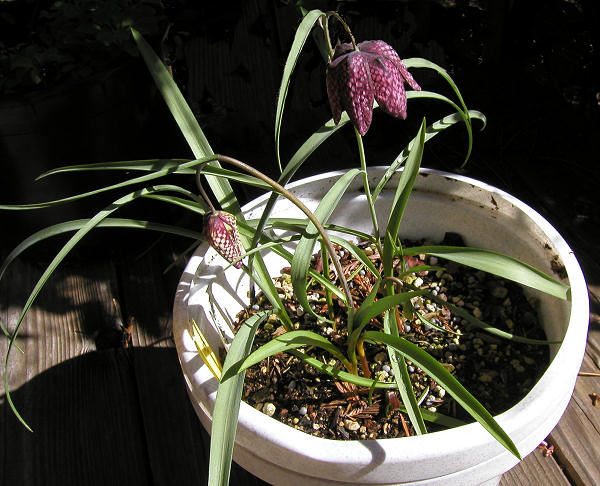
Fritillaria burnatii (Planch.) Backh. was considered by The Plant List in 2012 to be a synonym of Fritillaria meleagris ssp. burnatii (Planch.) Rix. That subspecies was named in 1978. It is described by Plants of the World Online on the Fritillaria meleagris page as having purple perianth-segments, filaments that are smooth or sparsely covered with short, rounded projections, a smooth style, and as found in alpine pastures in France and Italy. However that subspecies is not listed in Plants of the World Online in 2021 and Fritillaria burnatii is listed as a synonym of Fritillaria tubaeformis var. burnatii (Planch.) Rouy (named in 1910.) IPNI and Plants of the World Online have it named under that spelling, but Wikipedia says the correct spelling of that species should be Fritillaria tubiformis. Height range: 15-45 cm. Photographs of examples in cultivation by Ian Young of plants considered at the time to be Fritillaria meleagris ssp. burnatii.
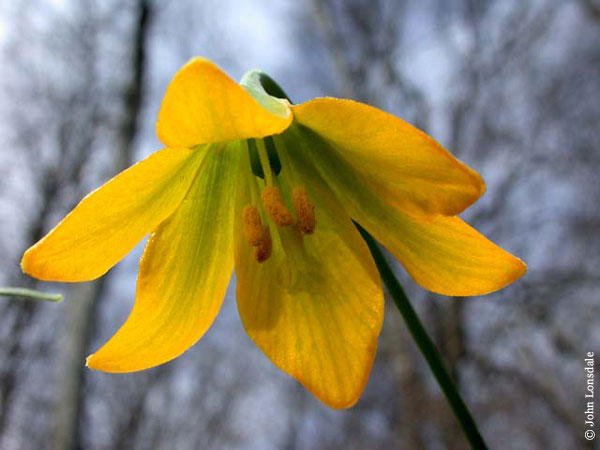
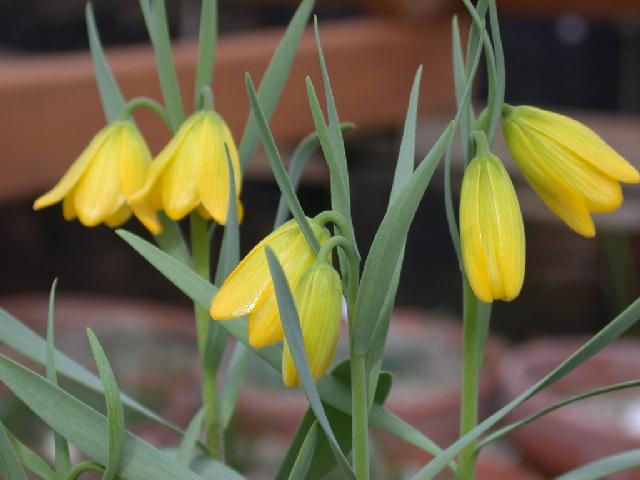
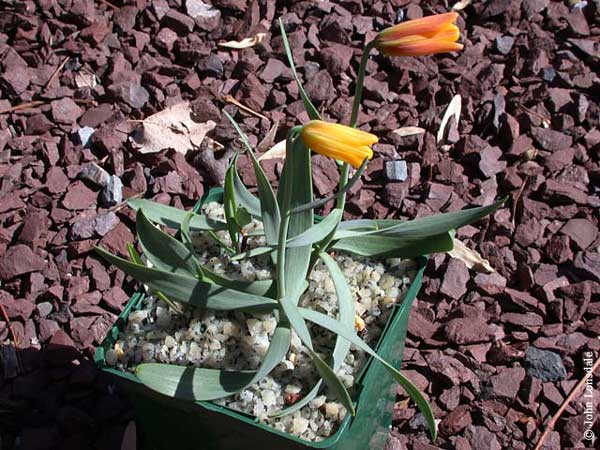
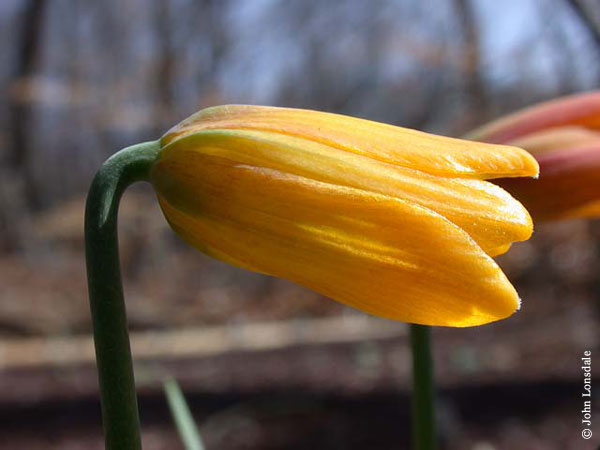
Fritillaria conica Boiss. is endemic to the Peloponnese where it grows in scrub. It has shiny green leaves and deep yellow conical flowers and is one of the easier yellow-flowered species to grow. Height: 12 cm. Flower photos by John Lonsdale. Bulb photo by Peter Taggart.


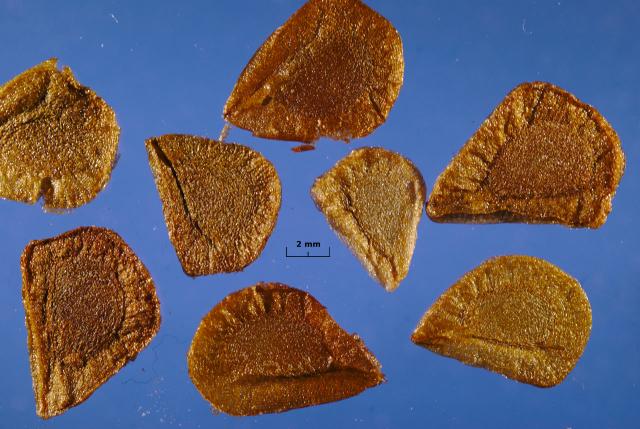
In seed photos by David Pilling where the second of the same seed was taken using transmitted light, embryos are barely visible; see Fritillaria Germination. The last photo taken 63 days later after the seeds had been exposed to cold (32-40 °F) and moisture shows the embryos have developed and germination is taking place.
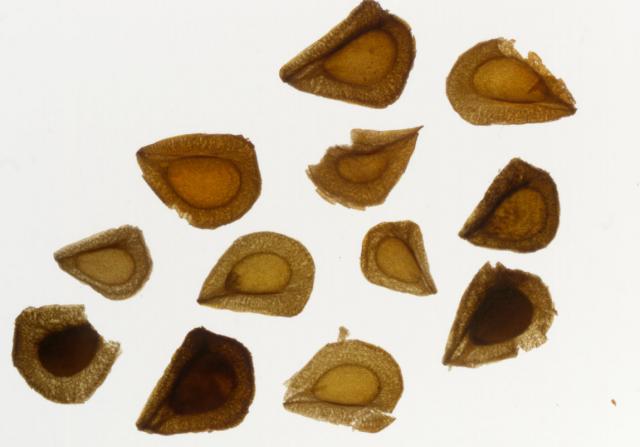
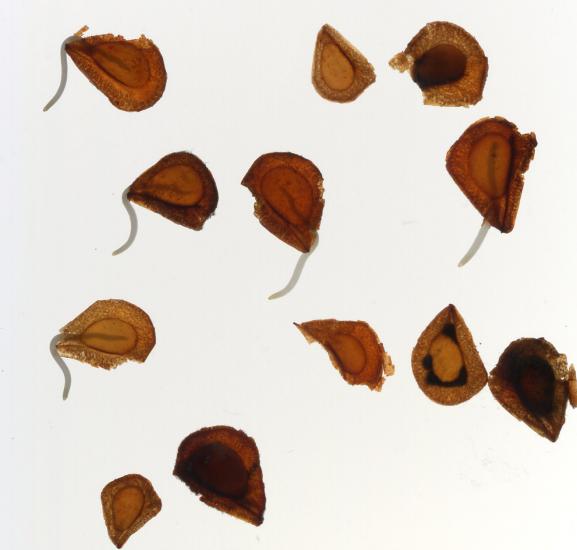
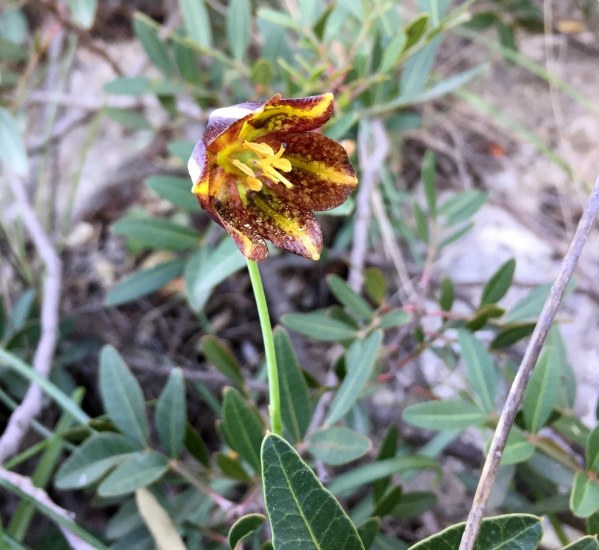
Fritillaria davisii Turrill is found on hillsides, scrub, olive groves and cornfields at low altitudes in the Peloponnese (Greece). This species has two broad leaves that rest on the ground and dark chocolate waxy flowers that are yellowish-green inside. This color shows lightly through to the outside petal tip. This species increases well. Height: 15 cm. First two photos, by Mary Sue Ittner, are of plants blooming in February 2005 in Northern California. Third photo by John Lonsdale.
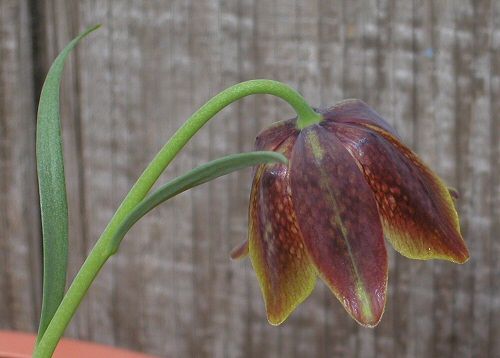
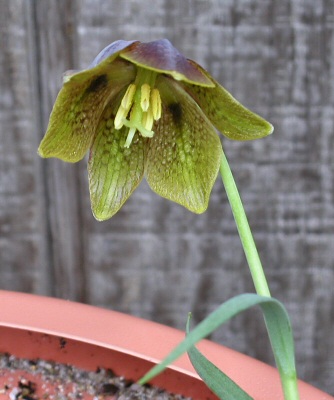
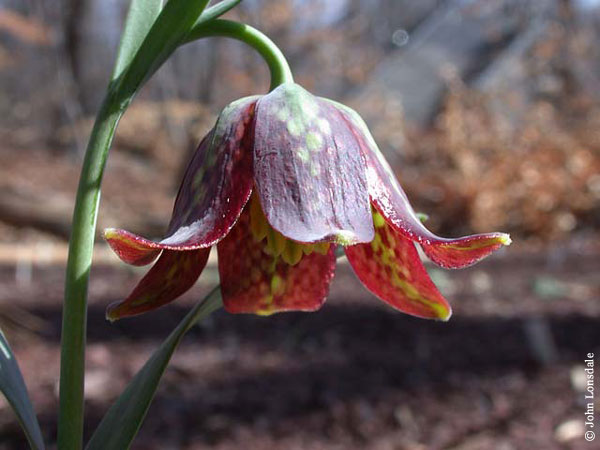
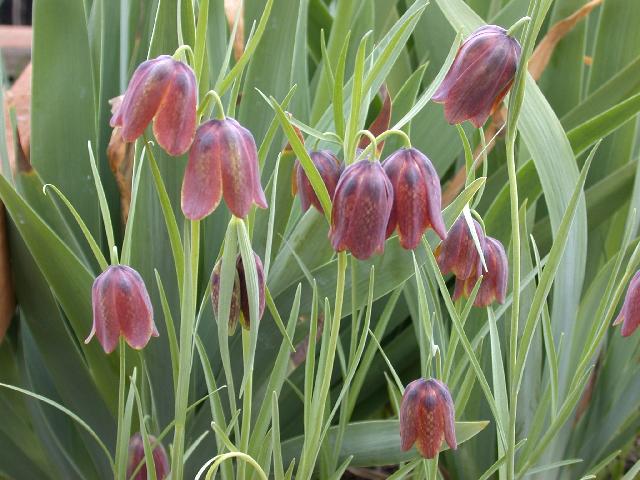
Fritillaria ehrhartii Boiss. & Orph. from the Aegean Islands of Greece, flowering in a bulb frame in Oregon in late March, showing the typical dusky purple flowers with a gray "bloom" on the outer surface and the small golden apices of the tepals. These four-year-old seedlings are in their second flowering year, an easy species to cultivate with a little overhead protection. Height: 18 cm. Photo by Jane McGary.
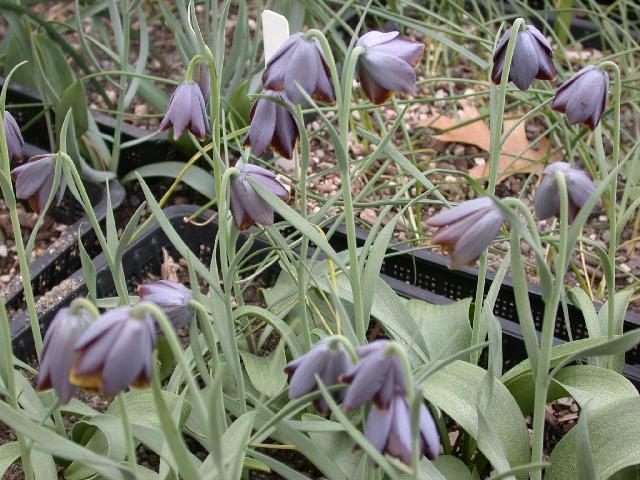
Fritillaria elwesii Boiss. is widespread in southwestern Turkey where it can be found in pine woodlands up to 900 m (3,000 ft). It grows to 40 cm (16 in) and has purple brown flowers with a clear green stripe. It prefers an open sunny situation that dries out in summer. Photos by John Lonsdale.
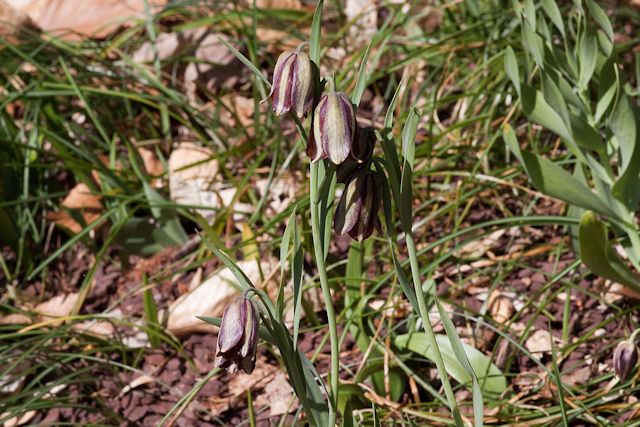
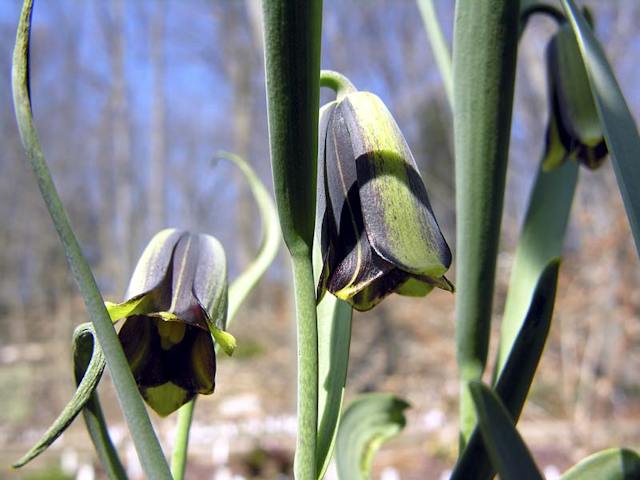
Fritillaria euboeica Rix is native to the Greek island of Evvoia and is closely related to Fritillaria carica and may be a subspecies of it. The flowers, on 5 in/12 cm stems, are large in proportion. Grown from seed purchased from Archibalds. Photos by Jane McGary and John Lonsdale.
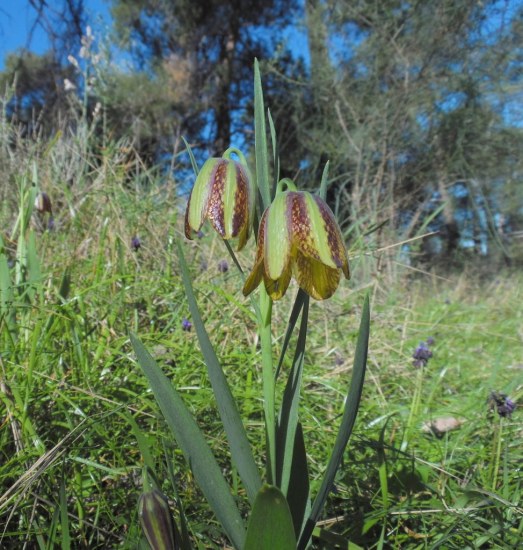
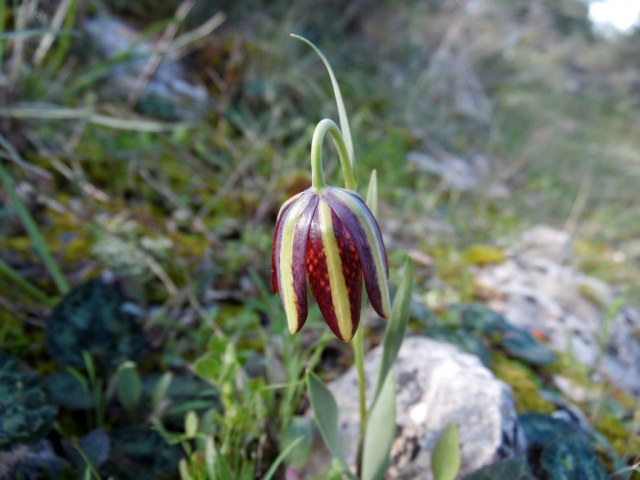
Fritillaria graeca Boiss. & Spruner is native to Albania, Yugoslavia, Greece and Crete; it has brown bells with a green stripe. Height: about 25 cm. Photo from iNaturalist taken by Stavros Apostolou and shared under a CC BY-NC license.
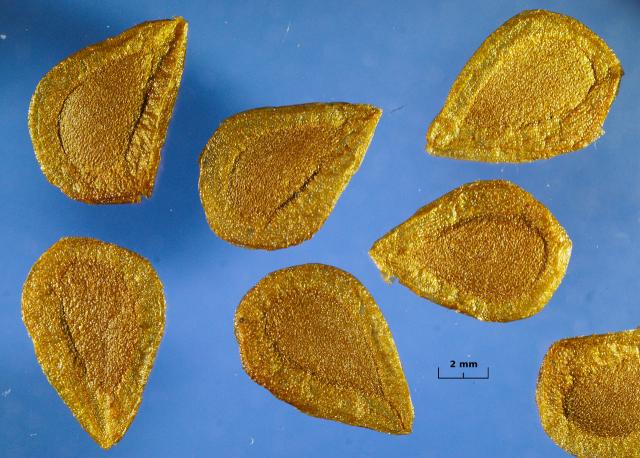
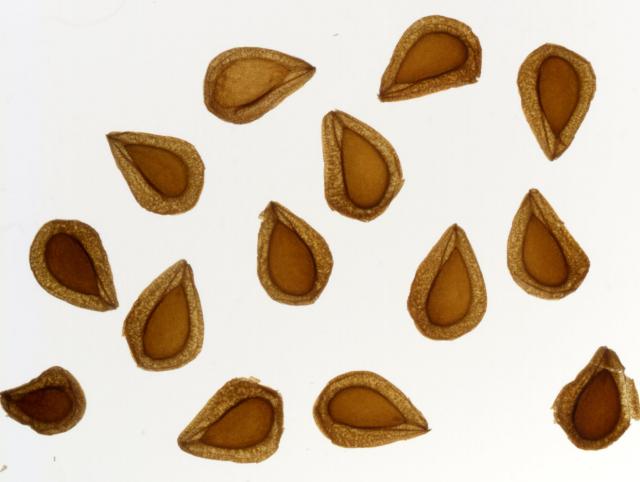
Seed photos by David Pilling, the second was taken using transmitted light, embryos are barely visible, see Fritillaria Germination. The next photo taken 67 days later after the seeds had been exposed to cold (32-40 °F) and moisture shows the embryos have developed and germination is taking place.

Fritillaria gussichiae (Degen & Dörfl.) Rix is native to Bulgaria, Yugoslavia, and Greece where it is found in woodlands and has pale green untessellated flowers flushed brown. Height: about 30 cm. Photo from John Lonsdale.
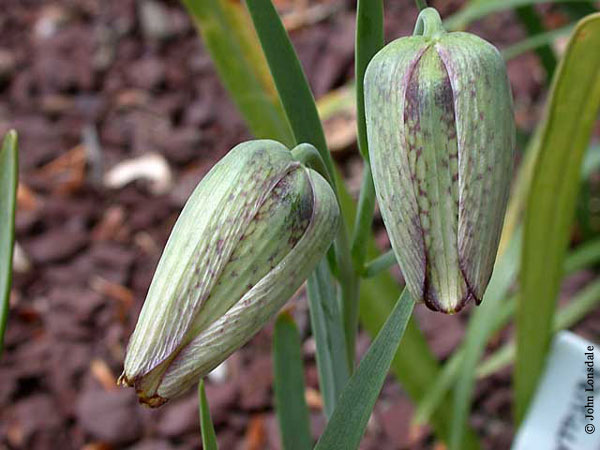
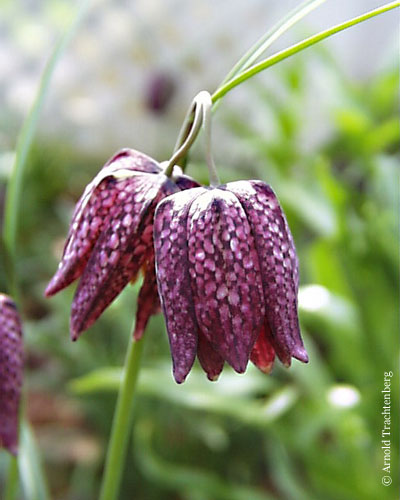
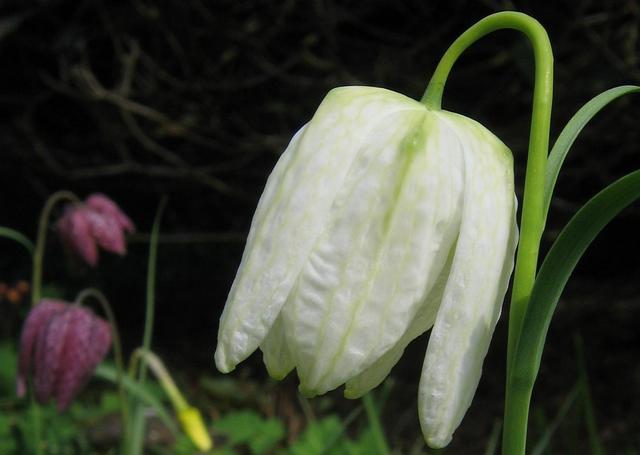
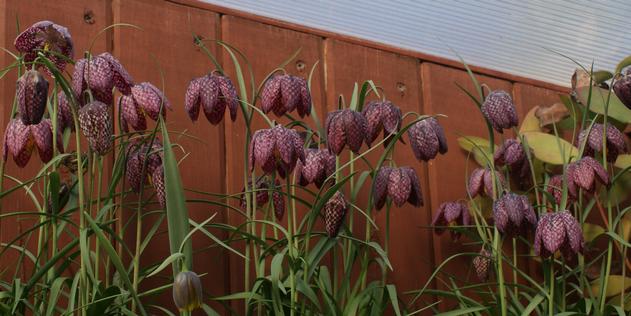
Fritillaria meleagris L. see the Fritillaria meleagris page. Height: 20-30 cm. Representative photos of this species by Arnold Trachtenberg, David Pilling, and Mary Sue Ittner.
Fritillaria messanensis Raf. is a Mediterranean species with flowers that are hanging bells of chequered brown and green with a green stripe down the center of each petal. Blooming for the first time in March 2006 from seed sown in the fall of 1999. Height: about 25 cm. Photo by [Mary Sue Ittner]].
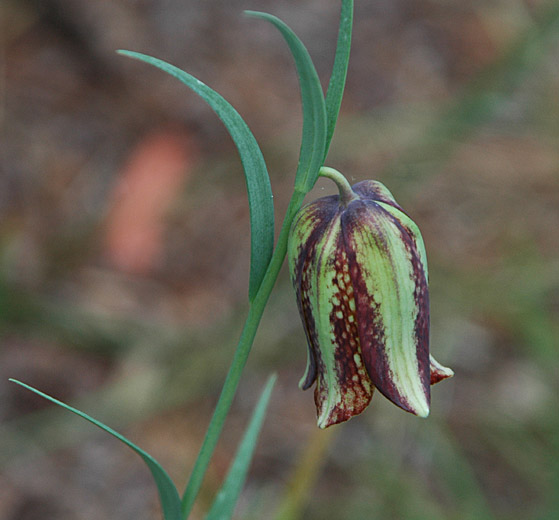
Fritillaria messanensis ssp. gracilis (Ebel) Rix from the northwestern Balkan region is a plant of alpine meadows and light woodland, well adapted to gardens in temperate regions. Shown flowering in Oregon in late March. Photo by Jane McGary.
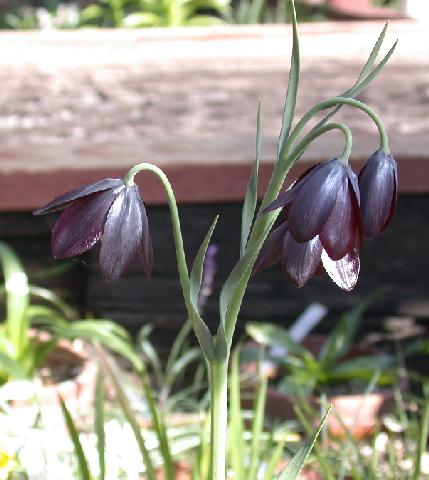
Fritillaria obliqua Ker Gawl. is native to the vicinity of Athens, Greece, where it is endangered owing to loss of habitat to development. The name obliqua refers to the slightly tilted attitude of the flowers, as shown in the photo. The deep purple tepals are satiny in texture, contrasting with the bright golden pollen within. Shown flowering in a bulb frame in Oregon in March. Height: 30 cm. Photo by Jane McGary.
Asian fritillaria a-c - Asian fritillaria d-k - Asian fritillaria l-r - Asian fritillaria s-z - European fritillaria p-z - Fritillaria index - Miscellaneous fritillaria - North American fritillaria a-l - North American fritillaria m-z