Crocus is a genus in the Iridaceae family that is widespread; it is found in Europe, North Africa and in Asia. The standard reference on the genus was Brian Mathew, The Crocus written in 1982, but at least half a dozen taxa, including new species, have been described since its publication. In 2010 Jānis Rukšāns published the book Crocuses: A Complete Guide to the Genus that includes descriptions of species and cultivation information. This PBS wiki page features Crocus species p-z that bloom in the fall.
Crocus index - Fall Blooming crocus a-h - Fall Blooming crocus i-o - Spring Blooming crocus a-b - Spring Blooming crocus c-e - Spring Blooming crocus f-l - Spring Blooming crocus m-s - Spring Blooming crocus t-z
Crocus pallasii Goldb. is from Turkey. Photos by Mark McDonough who writes: "This autumn blooming crocus is perhaps my favorite of the fall blooming crocus, yet it is rarely encountered. The species, flowering late in the season, is particularly weather-resistant, among the few crocus that are able to keep flowers open on dull overcast days, and it is among the most strongly perfumed. Many silvery lilac flowers open into a bunch, each flower with a deep purple eye and bright yellow and orange promiscuous parts. Typically this is the last crocus to show flowers each autumn, withstanding considerable frosts. Here it is November 13, 2005, and it is still sending up fresh flowers." Leaves are barely to well emerged at flowering. Height range: 10-15 cm.

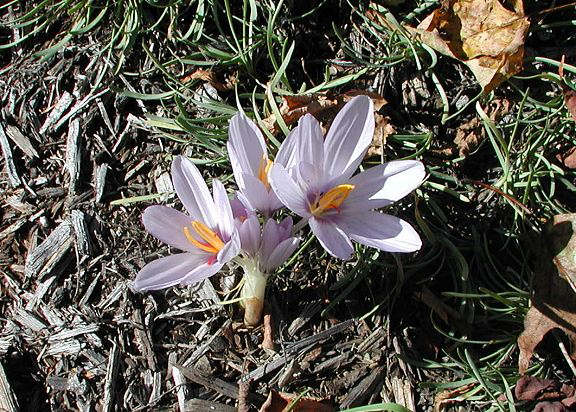
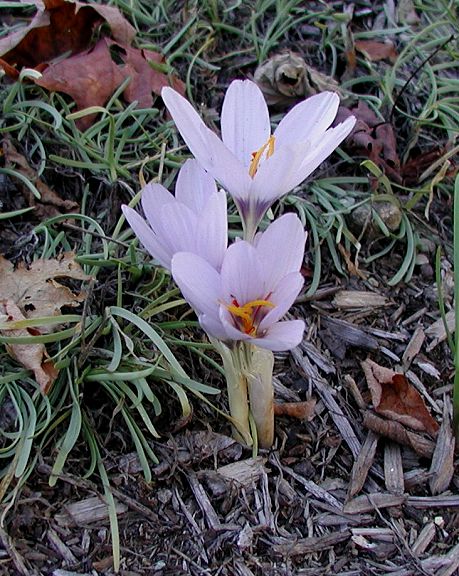
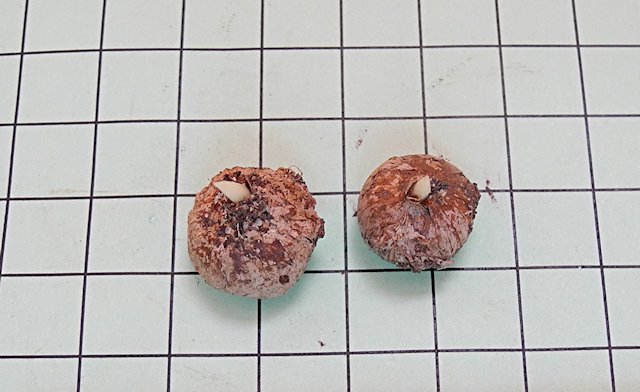
Crocus pulchellus Herb. is an autumn flowering species widely distributed in the Balkans and northwestern Turkey. It is a good garden plant in temperate regions, fairly winter-hardy on the North American west coast. Lavender is the usual color, but white forms are common too. It flowers before the leaves emerge. Height range: 10-15 cm. This first photo from Jane McGary shows the cultivar 'Inspiration' with two deformed flowers, possibly the result of virus, but possibly due to physical injury. The other photos were taken by Mary Sue Ittner. The last shows corms on a 1 cm grid.
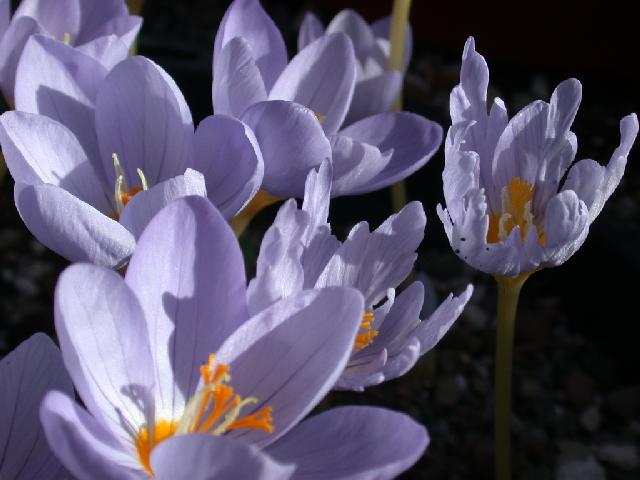


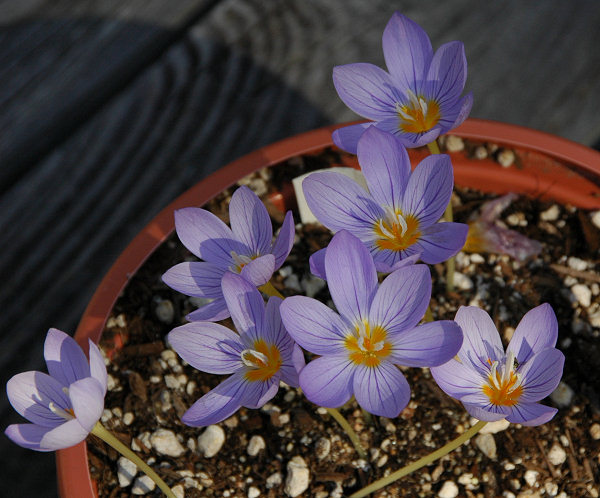
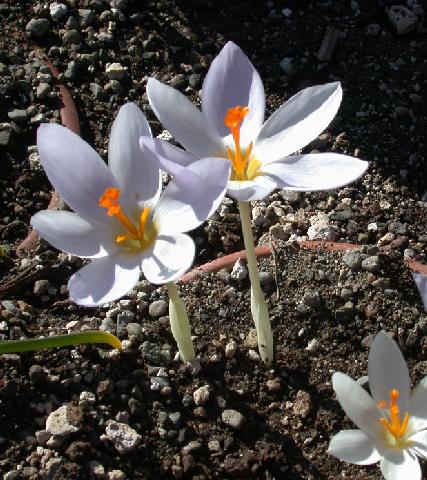
Crocus robertianus C.D.Brickell is native to central and northern Greece. Brian Mathew believes it is most closely related to spring-flowering Crocus sieberi, although C. robertianus blooms in late autumn. This is a good-sized, substantial crocus, shown in the first photo growing in a bulb frame where it receives some summer watering, flowering in early November. The specimens in that photo were grown from seed purchased from Jim and Jenny Archibald. Height range: 10-15 cm. First photo by Jane McGary, second by John Lonsdale.
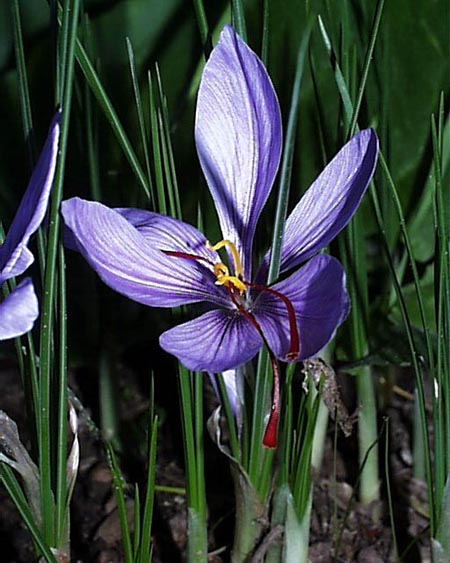
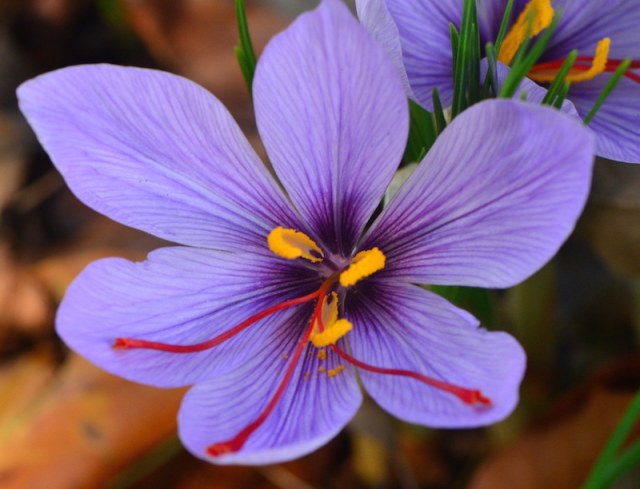
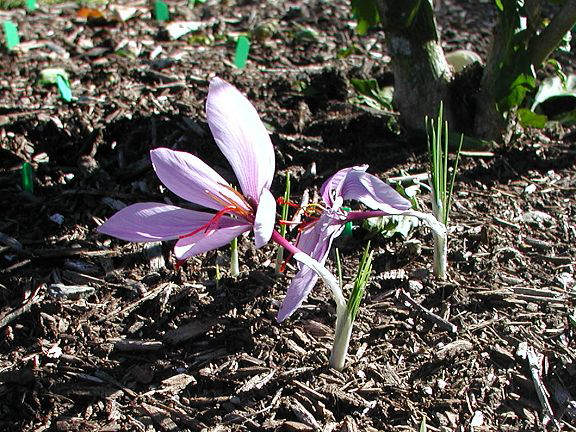
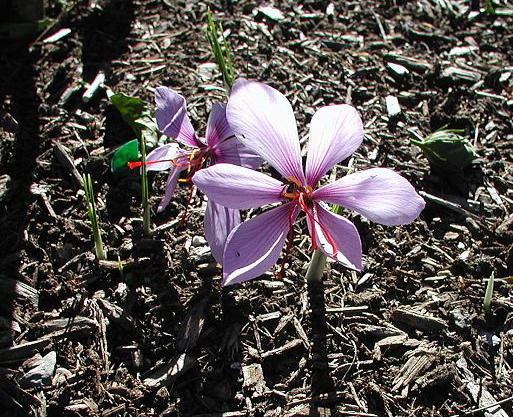
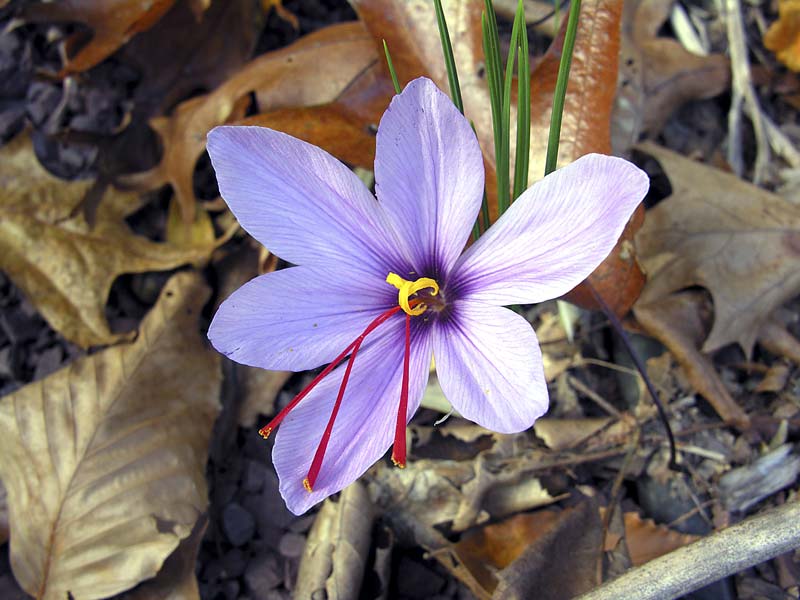
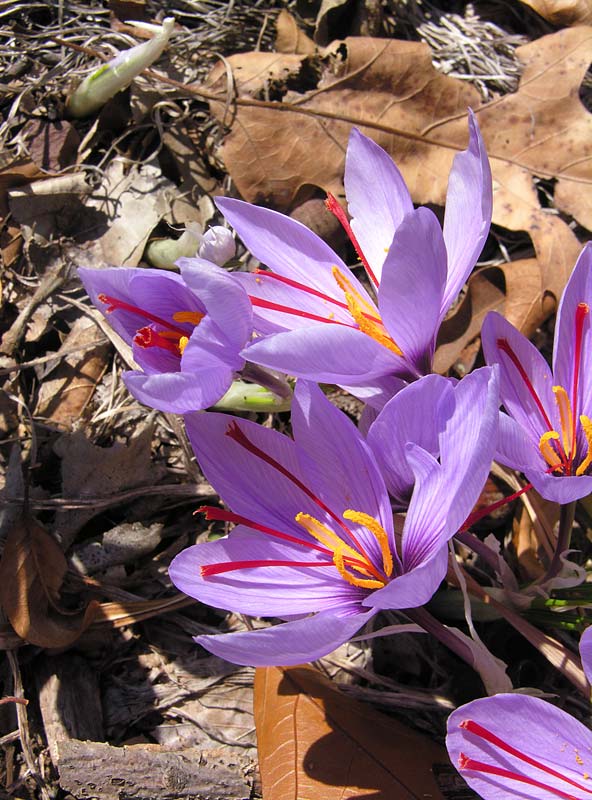
Crocus sativus L. (syn. Crocus orsinii Parl.) is the source of the mysterious spice saffron which is created from the red style. It is lilac-purple with darker purple veins and no yellow in the throat. It is sterile and only increases by corms; it is not found in the wild and may have been a variant of Crocus cartwrightianus. This species has been a source of frustration for many gardeners because it rarely blooms. Deep planting (12-18 cm) in well drained rich soil is helpful to stimulate blooming. This plant was thoroughly discussed by the PBS list in October 2005 under the subject Saffron and again in October 2020 under the same subject. Leaves are well developed at flowering. Height range: 8-15 cm. Photos #1-2 were taken by Arnold Trachtenberg. Photos #3-4 were taken by Mark McDonough highlighting aspects of the plant growing in the garden, a face-on view and a profile view showing the long deep purple tube. Only some of the corms produce flowers, so I would agree that it is shy blooming. The last two photos by John Lonsdale.
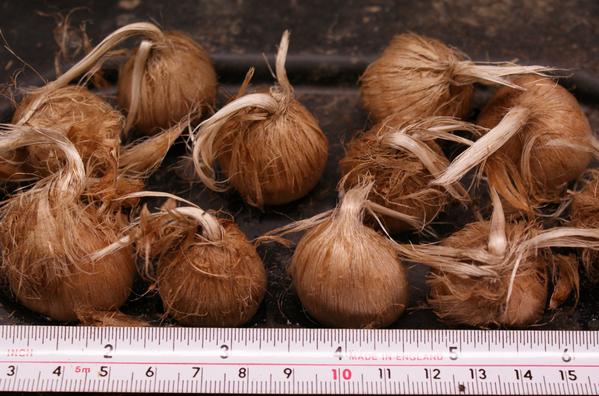
Photographs of corms taken by David Pilling.

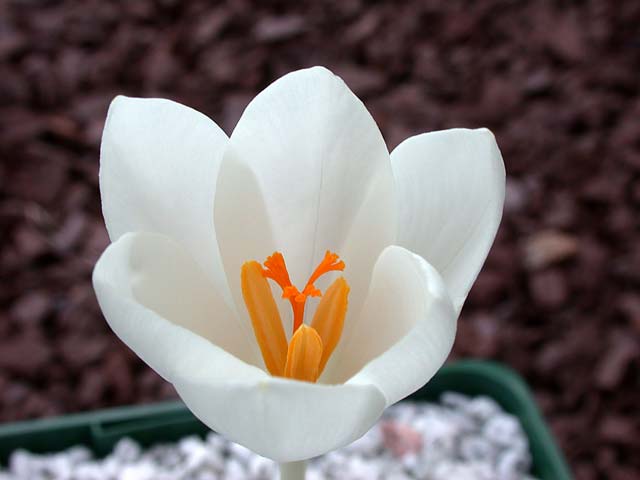
Crocus serotinus Salisb. grows in various spots around Spain, Portugal, and North Africa. Colors are variable, and some of its varieties are known as very good garden crocuses. Height range: 10-12 cm. Photos by John Lonsdale.
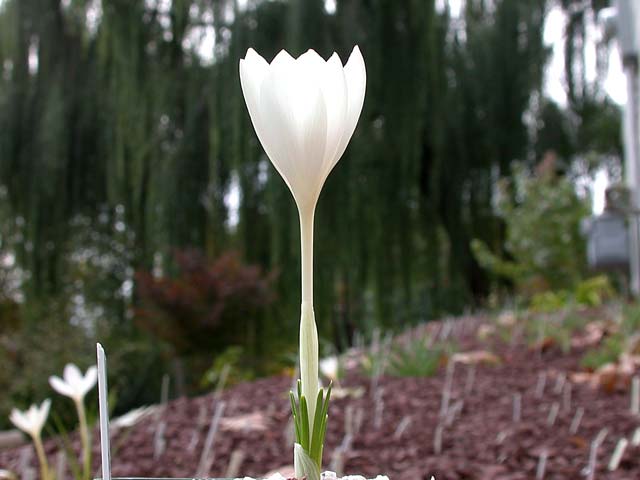
Crocus serotinus ssp. clusii (J.Gay) B.Mathew (syn. Crocus clusii J.Gay), from Portugal, flowers with its leaves. It has finely netted corm tunics. Photos by Mary Sue Ittner

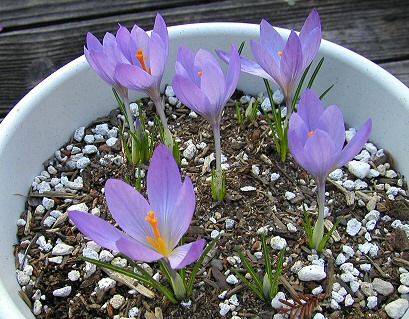
Crocus serotinus ssp. salzmannii (J.Gay) B.Mathew (syn. Crocus salzmannii J.Gay, Crocus asturicus Herb., Crocus granatensis Boiss. ex Maw) from North Africa and Spain is found in grassy or rocky open places, in scrub and thin woodland. It has lilac or purple flowers. It is distinguished from the other subspecies by its corms. This subspecies has a membranous tunic splitting into parallel fibers. It prefers a warm, dry rest in the summer. Photos by Mary Sue Ittner.

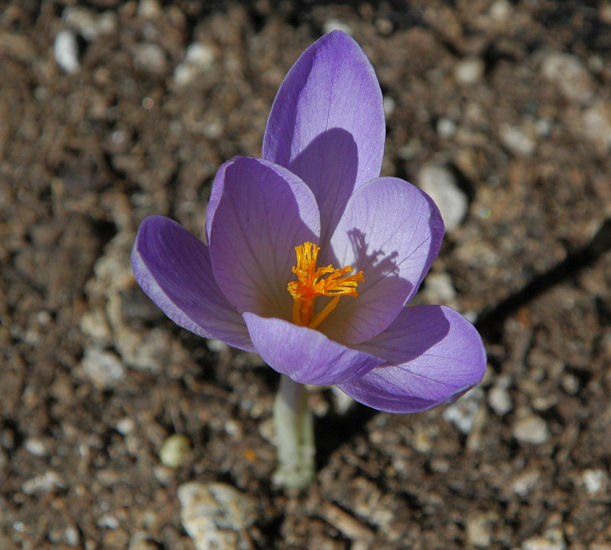
Crocus serotinus 'Poseidon' This named variety has deep colored purple blooms on very short stalks, and also rather fragrant. It flowers later than most other autumn crocus. Height range: 15-30 cm. Photo by Mark McDonough.

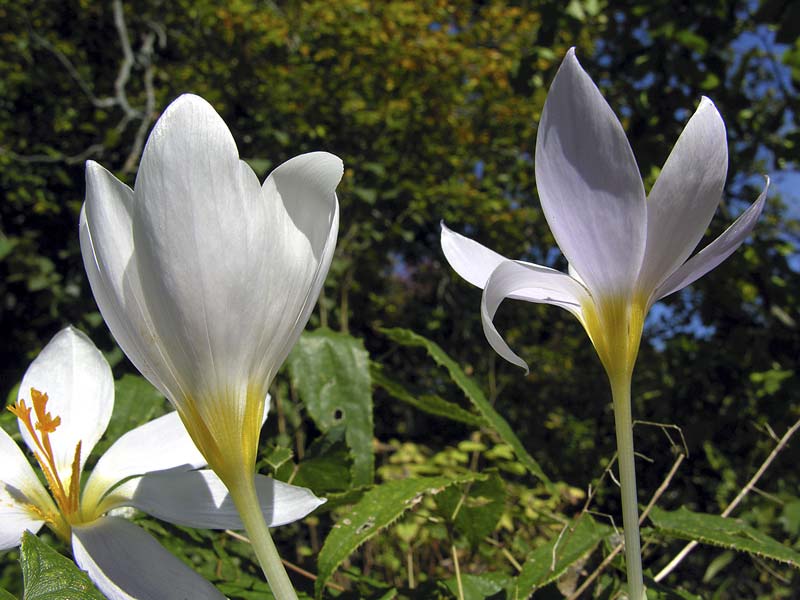
Crocus speciosus M.Bieb. is an autumn blooming species that is native to Turkey, the Caucasus, and Iran, where it grows in woods and open hillsides experiencing cold winters and warm, sometimes rainy (but never soggy) summers. Flowers appear before the leaves and are lilac-purple to deep blue-purple to white with darker veins, much branched orange styles, and yellow anthers. Height range: 7-15 cm. Photo #1 was taken by Arnold Trachtenberg. Photos #2 & 3 were taken by Mark McDonough on October 21, 2005, showing aspects of the plant growing in the garden. The flowers are relatively huge and showy, making a great show if not beaten down by rain. Photo #4 was taken by Mark Wilcox on an overcast day in October 2006, when the flowers remained closed.
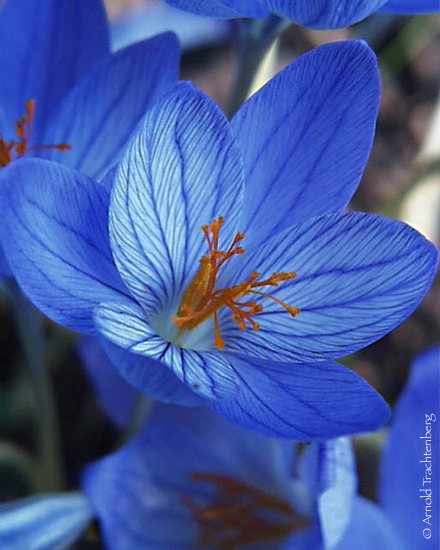
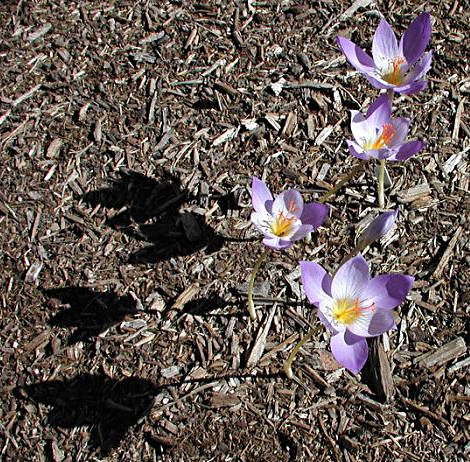
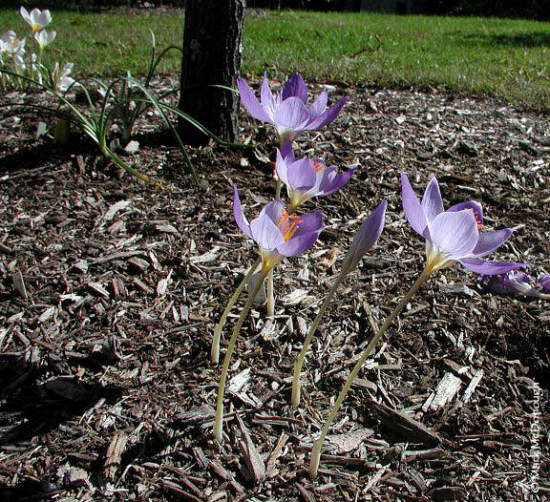
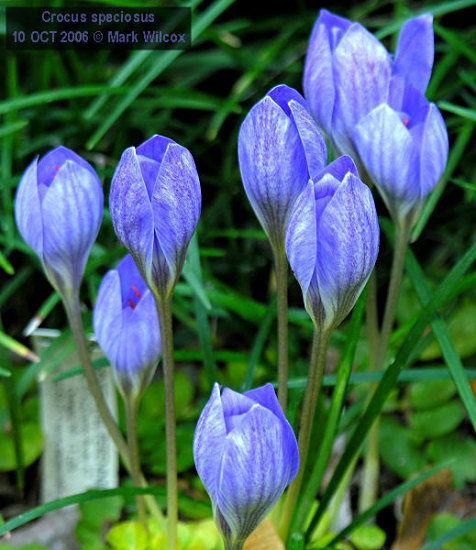
Crocus speciosus spp. xantholaimos B. Mathew seems more prolific than typical C. speciosus, with a long succession of blooms. Two photos by Mark McDonough were taken on October 21. 2005, showing this fine variant with boldly veined flowers.
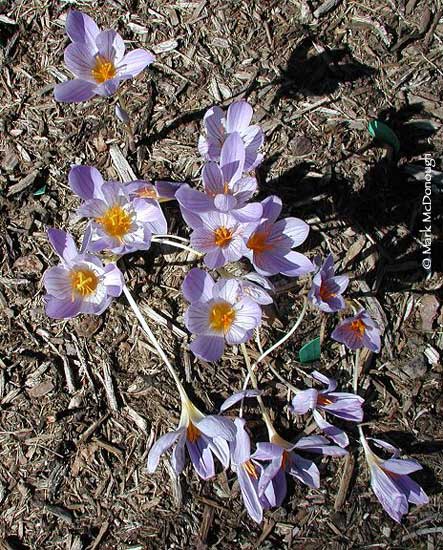
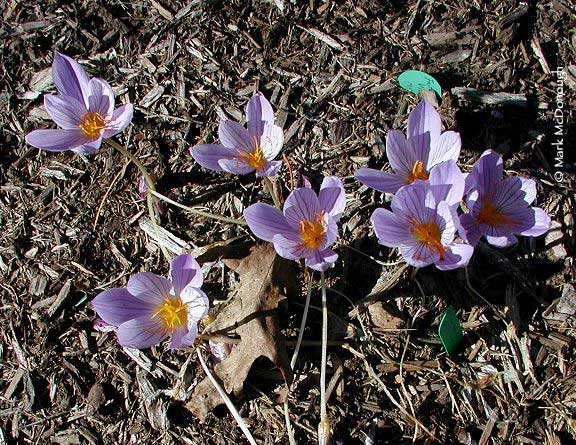
Crocus speciosus 'Aino' is named for the Lithuanian plantswoman Aino Paivel, who collected it in the 1980s in the Crimea near Yalta in mountain meadows at 1000-1200 m (3300-4000'). It received the Award of Merit Trial Grounds, Netherlands Royal General Bulbgrowers' Association (KAVB), 1999. Photo by Paige Woodward.
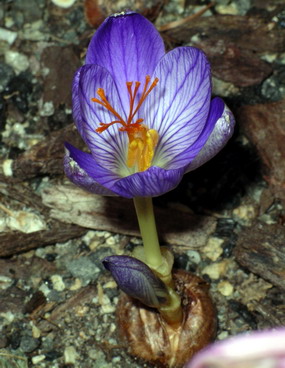
Crocus speciosus 'Artabir' is one of perhaps ten cultivated named clones of C. speciosus and the most widely adapted fall-flowering one for North America. The surrounding magnolia leaves show the large size of the flowers; most cultivars have been selected for large size as well as good color. Photo by Jane McGary.
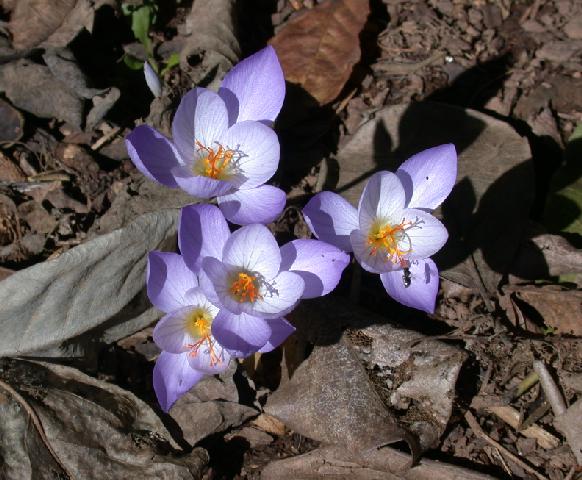
Crocus spp. autumn growing in a raised bed in Norwich UK, photographed by Tony Goode. First photo: C. niveus (tall white left), C. tournefortii (lilac front left), C. goulimyi (lilac top right), C. goulimyi 'Mani White' (white top right). Second photo - left to right: C. serotinus ssp. salzmannii (lilac), C. pulchellus white form, C. niveus , and C. hadriaticus.
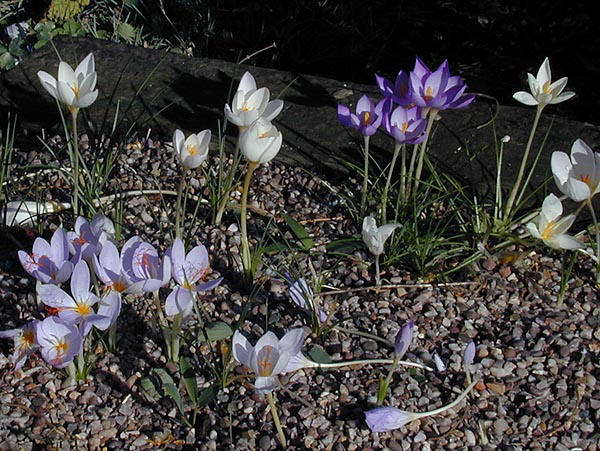
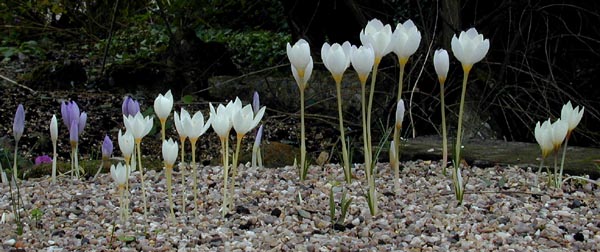
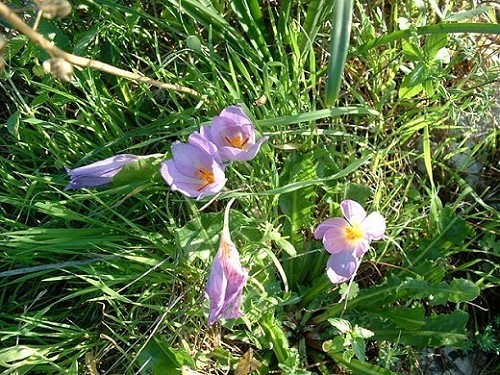
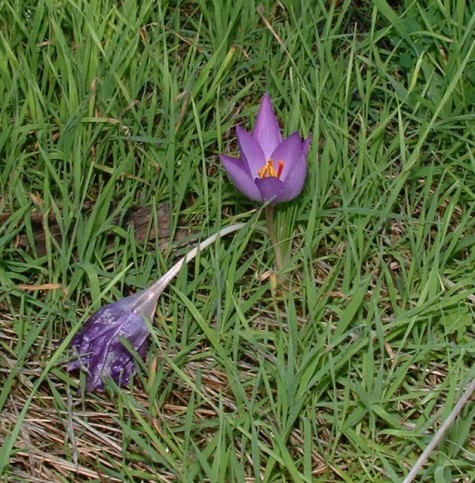
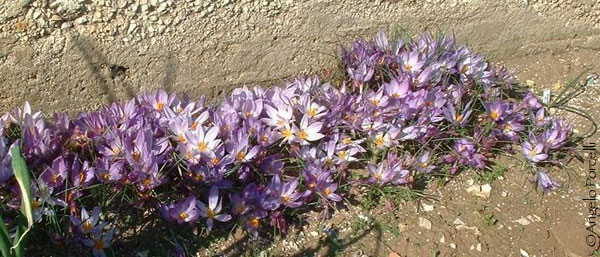
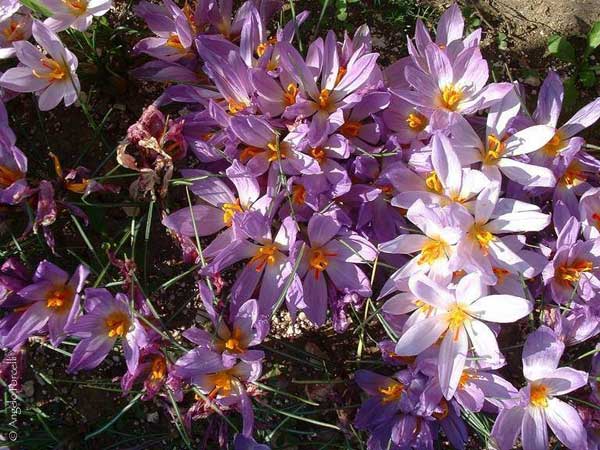
Crocus thomasii Ten. is endemic to Apulia and part of Dalmatia. It is an autumn blooming species, with pale to deep lilac honey scented flowers. Height range: 10-15 cm. Photos 1 & 2 were taken in habitat. Photos 3 & 4 show cultivated plants, which grow larger and more floriferous than wild ones. A good degree of variability is present; some individuals are quite dark, others rather pale, although never white. Photos by Angelo Porcelli.
Crocus tournefortii J.Gay from southern Greece and the Greek Islands is a species that is unusual in that the flowers remain open at night and in bad weather; thus, it is best grown under glass in less mild climates, although it is cold-hardy to at least 25 degrees F. It flowers after the leaves have emerged. Height: 10 cm. The first photo was taken by Jane McGary. Two additional photos by Mark McDonough showing aspects of this, perhaps the most beautiful, of all autumn crocus. I can attest that it is much hardier than Jane indicates, as mine are planted outdoors and never fail to bloom October - November each year, easily surviving winter temperatures well below 0 °F. The flowers too, are weather resilient, surviving freezing temperatures in the mid 20s Fahrenheit. The exquisite flowers are lightly fragrant. The last two photo were taken by Mary Sue Ittner. The last shows corms on a 1 cm grid.
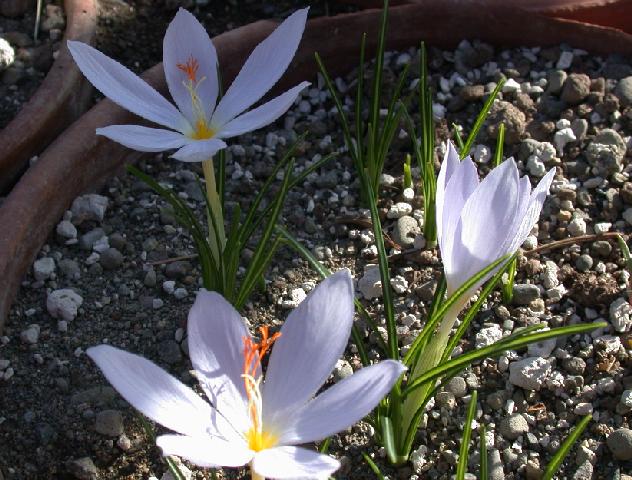
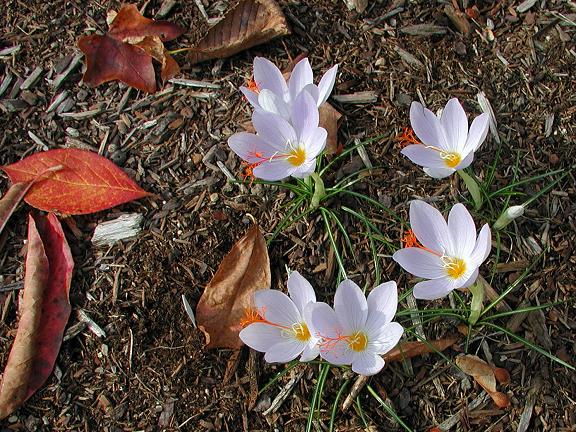
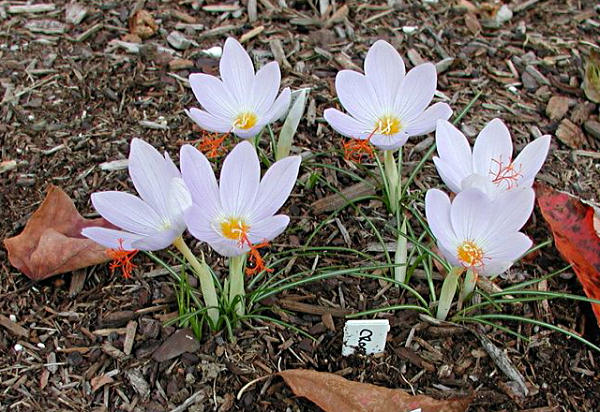
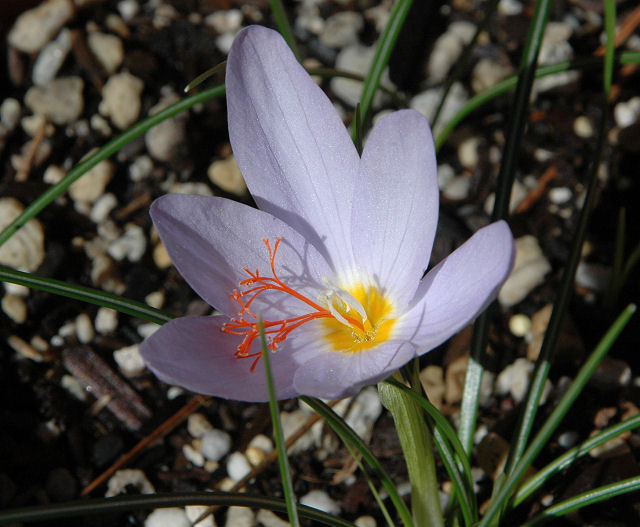
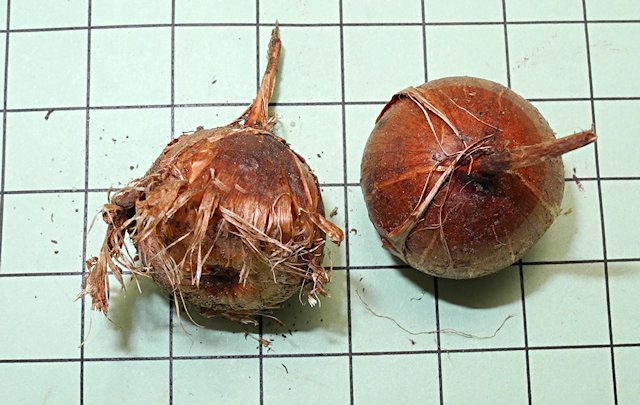
Crocus vallicola Herb. grows in an area ranging from the Caucasus to Turkey, where it grows in subalpine pastures. Tony Goode reports that it's often the first crocus in his collection to bloom in the fall. Leaves emerge long after flowering. Height range: 10-15 cm. Photos by John Lonsdale.
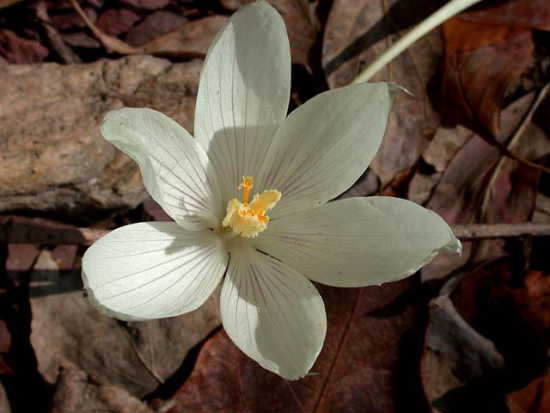
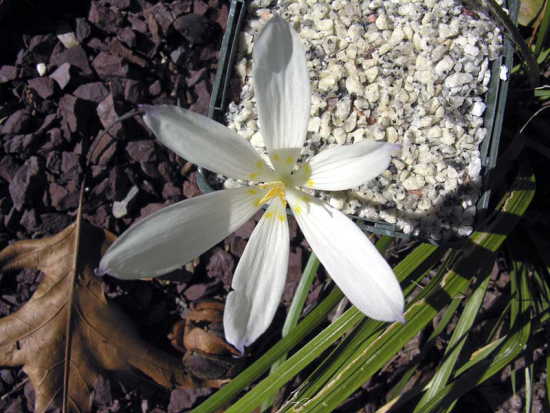
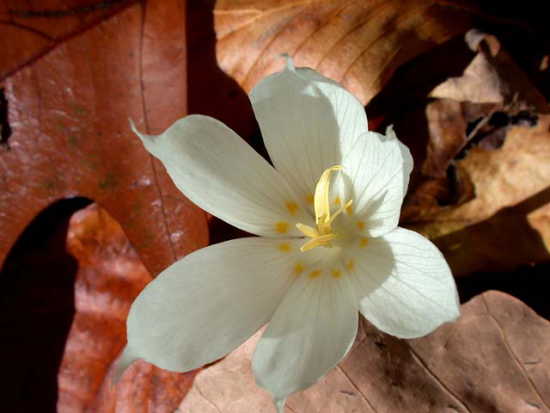
Photos by Rimmer de Vries of this species growing outside in the garden in Michigan. Grown from JJA seeds "Crocus vallicola JJA 0353.803 Turkey, Artvin, Genya Dag above Artvin, 1600 m. Turf in woodland clearing". I have them in a sand: peat mix between sandstone boulders sunk in a pool to keep them moist in full sun. See the Heloniopsis and Shortia behind the crocus.
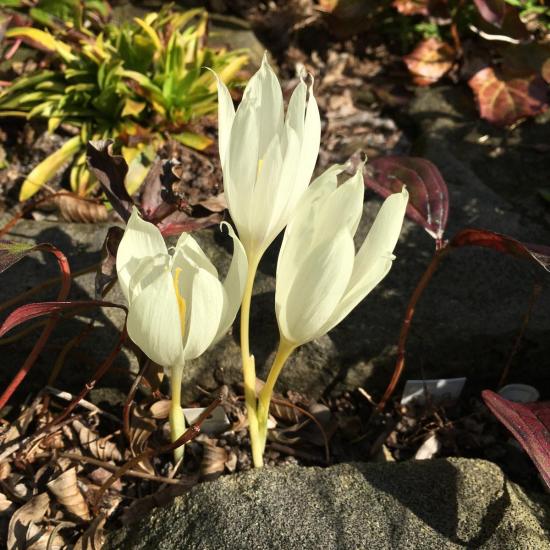
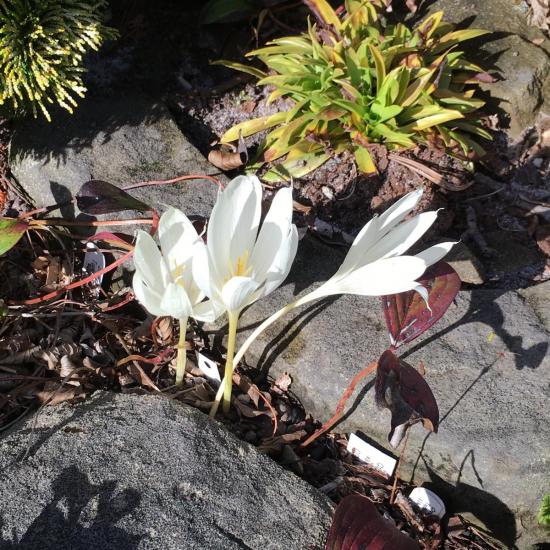
Crocus veneris Tapp. ex Poech is from Cyprus and Crete where it grows in open stony or grassy places and among scrub and in sparse woodland from 120 to 1000 m. This is a small species with white flowers with purple stripes on the outside, a yellow throat, yellow anthers, and a much divided orange style. Flowers appear with the leaves in late autumn or winter. It needs a warm and dry summer. Height: 8 cm. Photos by John Lonsdale.
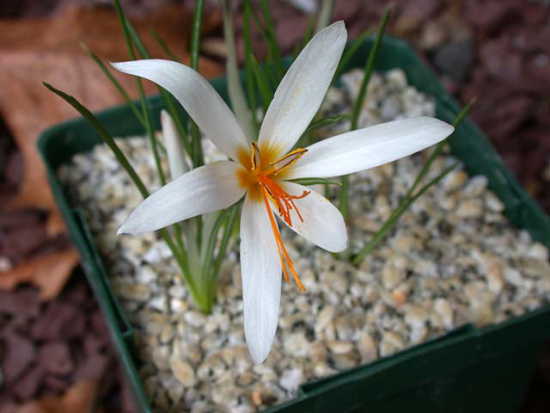
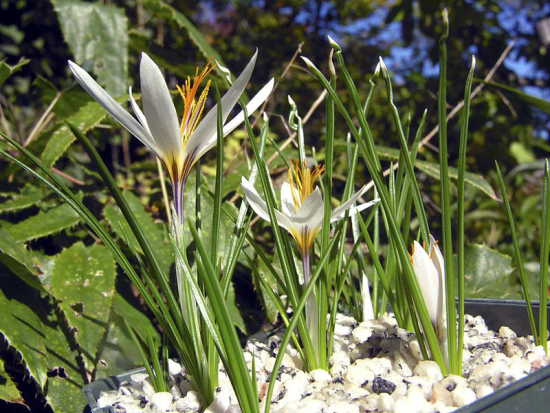
Crocus wattiorum (B.Mathew) B.Mathew is a recently described species from southwestern Turkey, belonging to the series Biflori. It has large, vivid blue-lavender flowers, black anthers, and deep orange-red style and stigma. It has been found in only a few sites, one of which is illustrated in these photos taken by Jane McGary in early November 2006. The crocuses grow in humus-filled crevices among tumbled limestone boulders on steep slopes covered with primarily coniferous trees, receiving sun part of the day. It is a wonderful place. Height range: 7-15 cm.
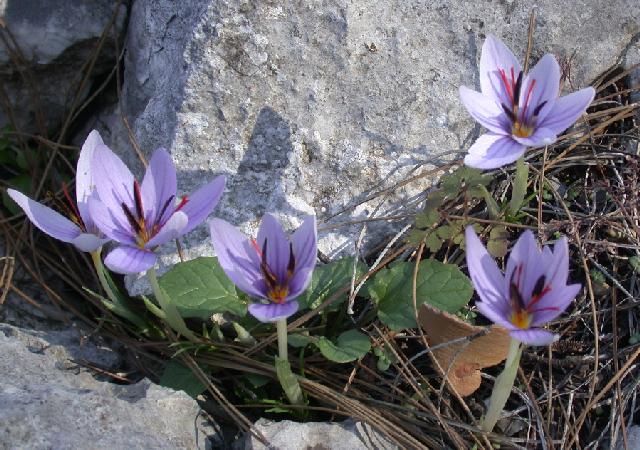
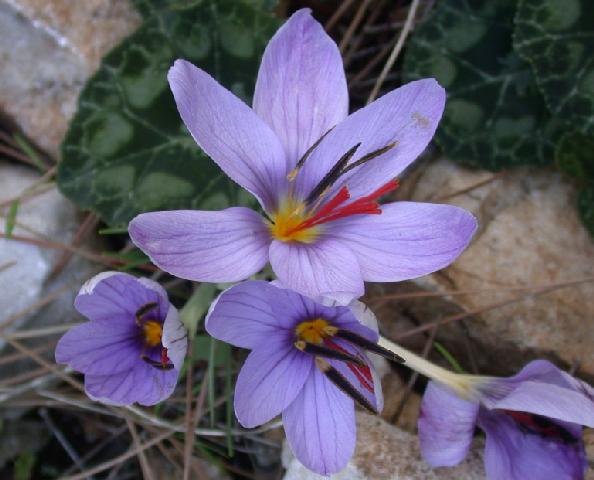
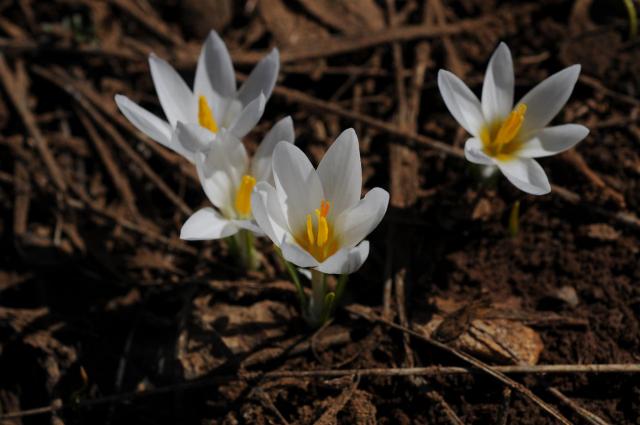
Crocus yakarianus Yildirim & Erol is from eastern Turkey. It is closely related to Crocus biflorus, and very similar to C. biflorus var. tauri except for the following characteristics: the corm tunic is coriaceous; leaves prominent before anthesis; mostly white throat, fine blue stripes down center of perianth. Chromosomal differences also confirm it is a separate species. It was described by Hasan Yildirim. See the publication: Yıldırım & O. Erol Crocus yakarianus sp. nov. from eastern Turkey. Photos shared by Hasan Yildirim of plants in habitat.



Crocus index - Fall Blooming crocus a-h - Fall Blooming crocus i-o - Spring Blooming crocus a-b - Spring Blooming crocus c-e - Spring Blooming crocus f-l - Spring Blooming crocus m-s - Spring Blooming crocus t-z