Haemanthus species m-z are found on this wiki page.
Haemanthus index – Haemanthus a-c – Haemanthus d-l
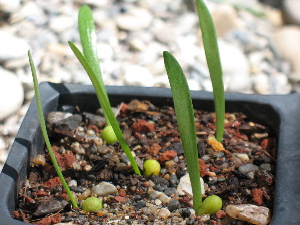
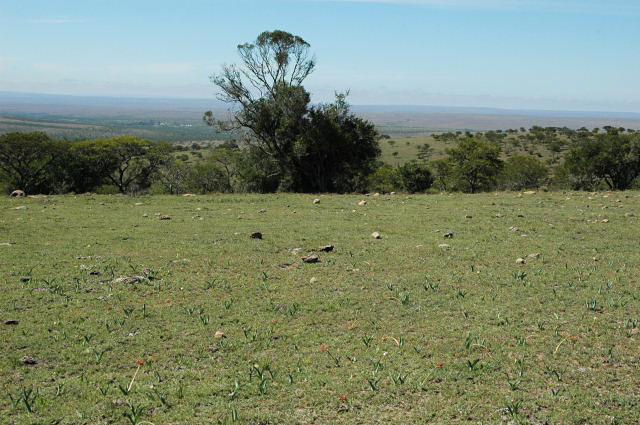
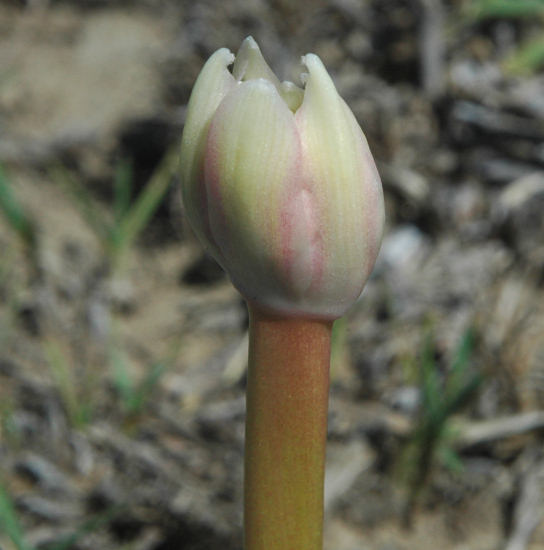
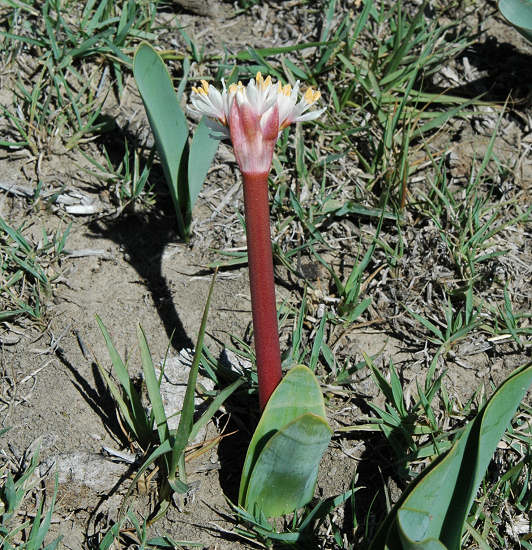
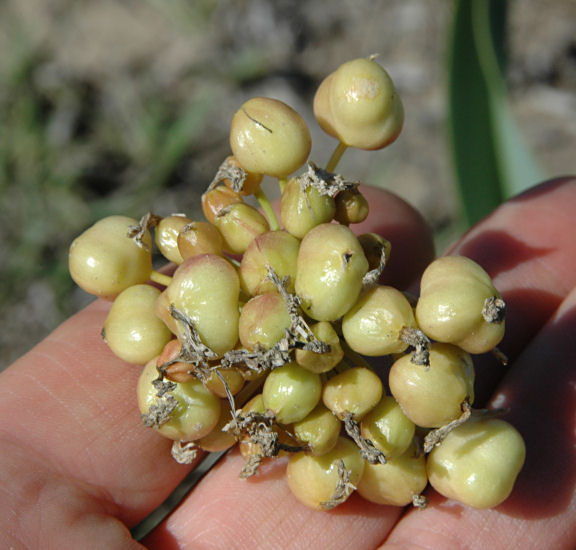
Haemanthus montanus Baker is found in grassland and seasonal wetlands in the eastern region of South Africa. It grows in small areas of poorly drained shallow soil with an impervious substratum. It completes its annual cycle in four to five months, the period during which its fairly hostile habitat remains moist. It occurs in dense stands with large cream flowers appearing from December to January (mid summer), rapidly followed by two upright leaves. The seed ripens by mid-February and germinates rapidly around the parent plants. The leaves dry off and blow away by the end of May when all signs of the bulb population have vanished. Photos by Cameron McMaster of two wild populations and one taken by Liz Waterman August 2004 at the UC Botanical Garden in Berkeley, California. The last photograph is of eight-week-old seedlings from McMaster seeds sown in early 2009 by Byron Amerson.
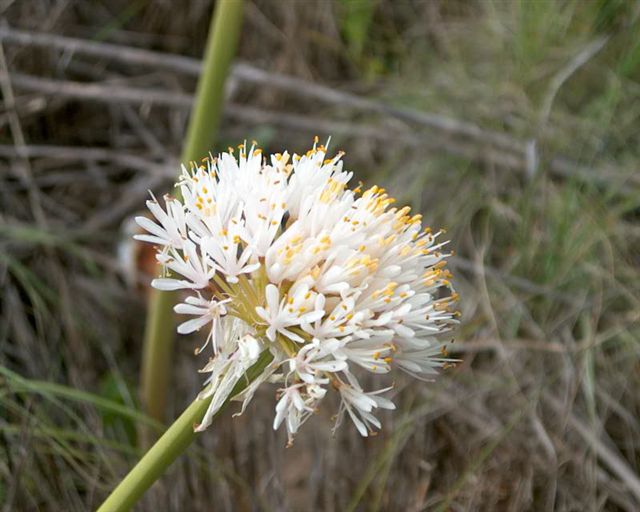
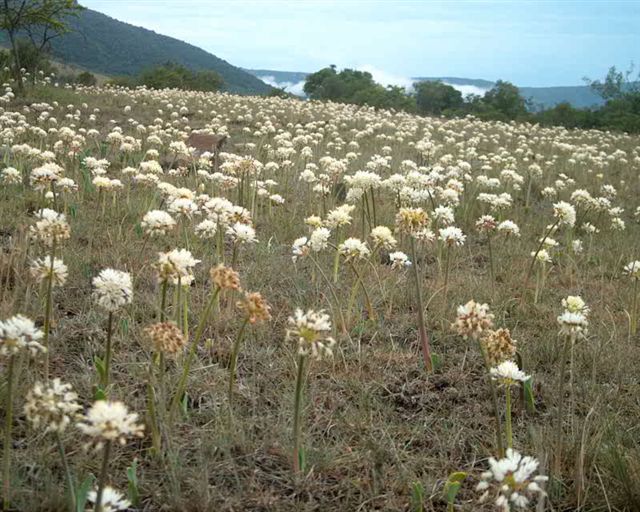
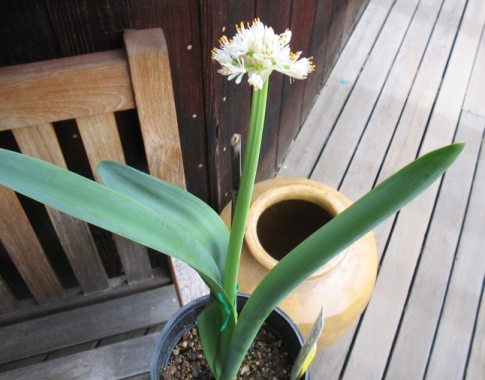
Photos below from Mary Sue Ittner and Bob Rutemoeller of a population in flower in the Eastern Cape January 2010 showing different stages of growth all on the same day.


Haemanthus namaquensis R.A.Dyer is a rare species from Namaqualand, South Africa. The leaves are hard, waxy and blue-green. The form pictured here is from near Steinkopf. It's one of my favourite Haemanthus species. Photos by Uluwehi Knecht.
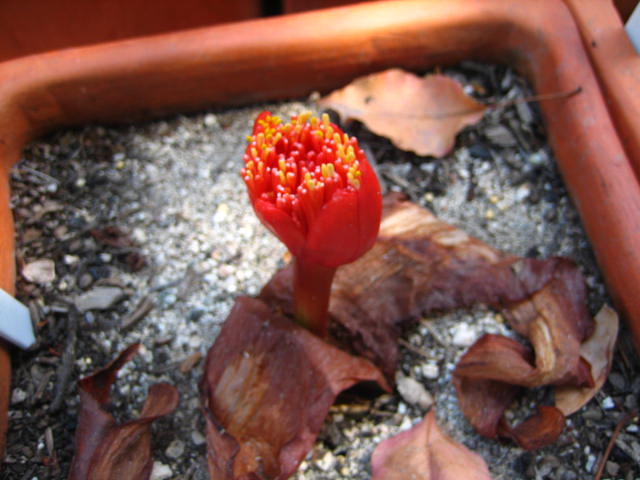
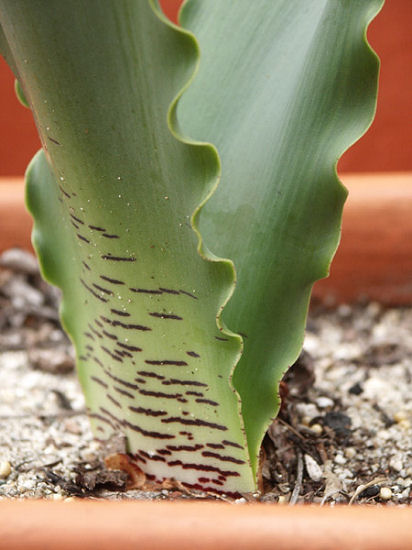
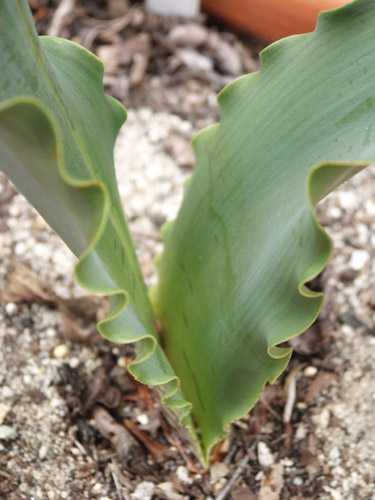
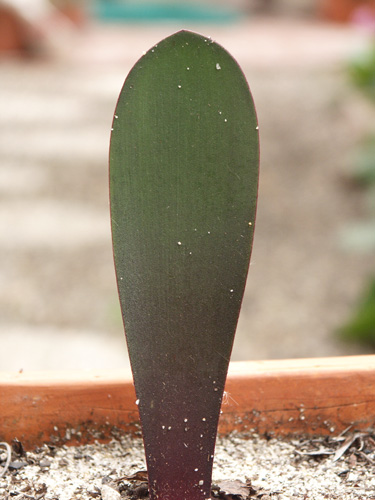
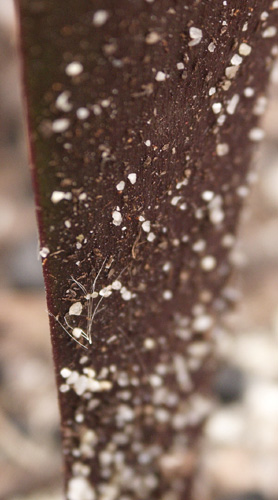
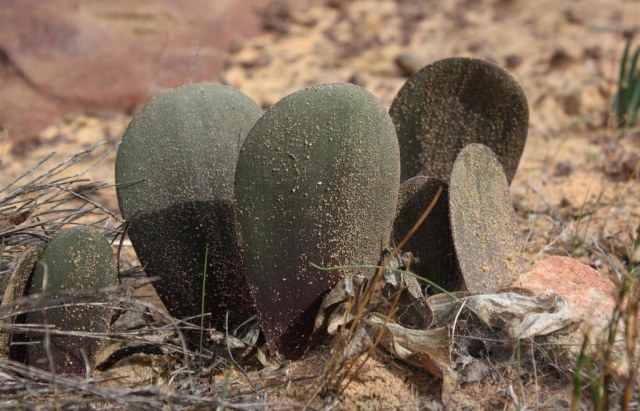
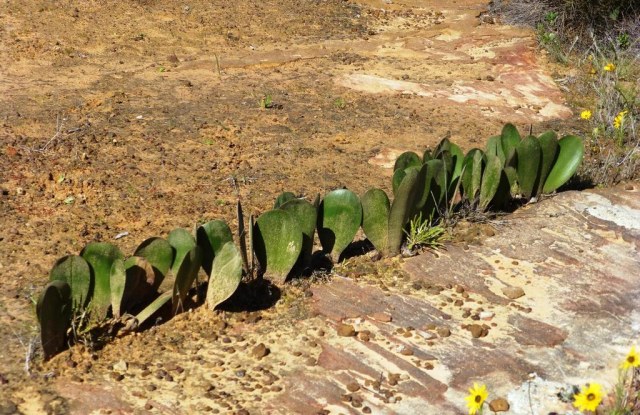
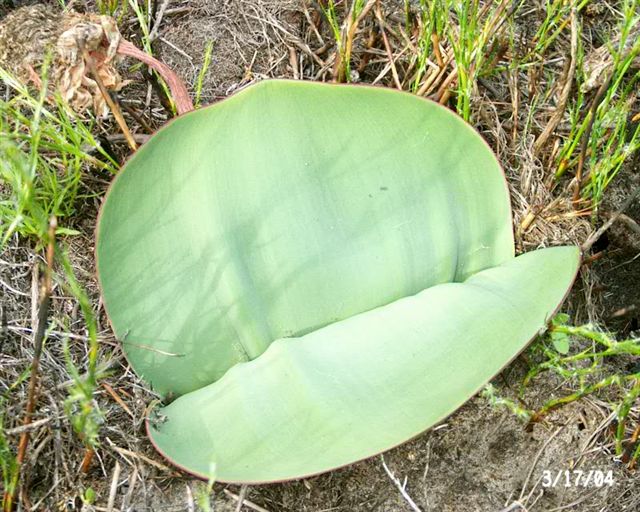
Haemanthus nortieri Isaac is a rare species that produces just one single, sticky, erect paddle-shaped leaf each winter. The third macro shot illustrates this sticky quality. We were very excited to have this bloom for the first time in the summer of 2007. Photos 1-3 by Uluwehi Knecht. The last photo is a habitat photo of plants in seed from Rachel Saunders.
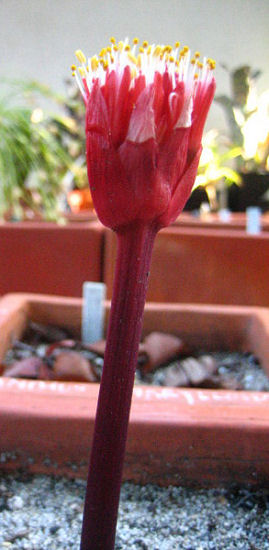
Photos from Alan Horstmann.
Haemanthus pauculifolius Snijman & A.E.van Wyk has only one leaf, but since it is evergreen and the leaf persists it may exhibit two. Similar to H. albiflos, this species also produces photosynthetic bulbs that often position themselves to grow in an elevated fashion atop the surface of the medium in which they grow. It is a newly described (1993) summer rainfall species. Photos from Mary Sue Ittner showing the inflorescence and fruit in different stages. The fruit became a darker orange than in the photo and finally dropped off the plant. When I washed off the outer coating, some of the seeds were already showing signs of a radicle.
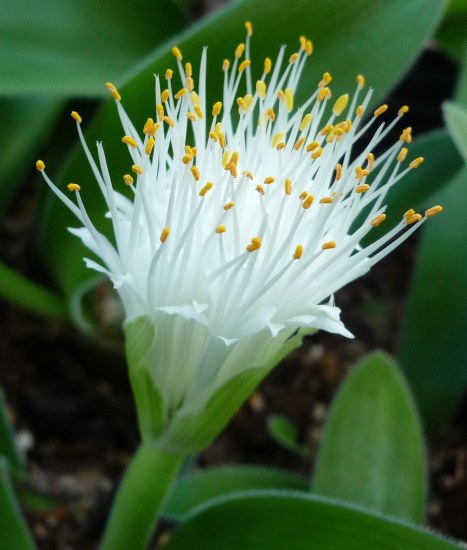
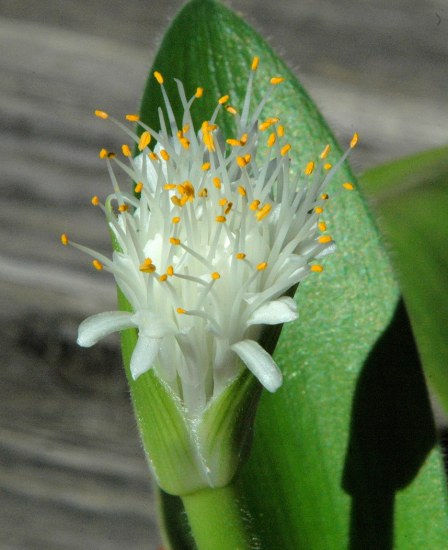
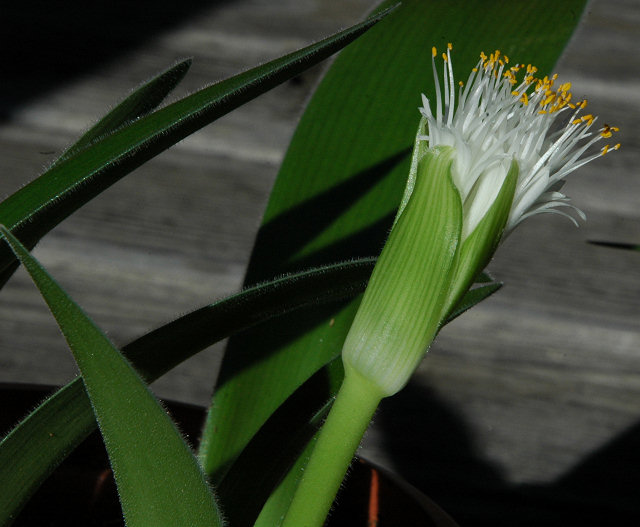
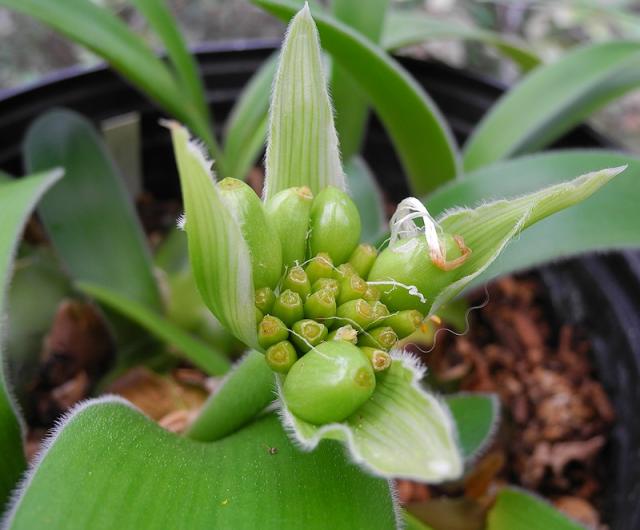

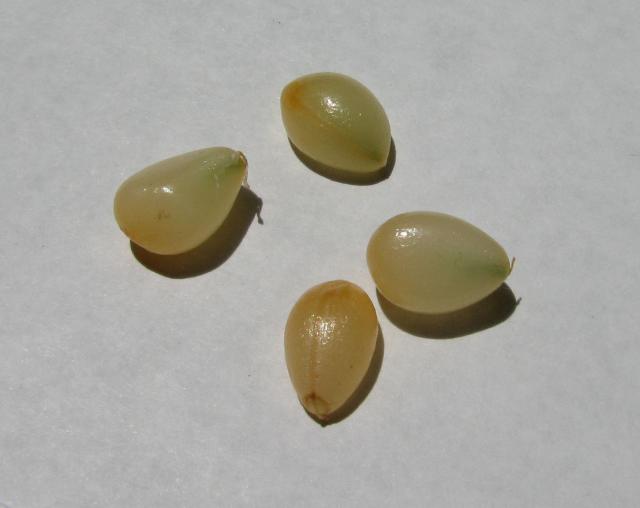
Photo 1-2 were taken by Nhu Nguyen. Photo 1 shows the seeds and photo 2 shows the seedling bulb. Upon germination each seed will produce a small bulb first instead of leaves. These primary bulbs slowly produce only one or two tiny leaves which persist through the first year. Photos 3-4 by Uluwehi Knecht show a Hawai'i-grown specimen in a 10 cm pot that began as 2 (clonal) bulbs and increased to 13 bulbs within 5 years. Uluwehi found that this species grew very well vegetatively in Honolulu but failed to flower. The lack of sufficiently cool temperatures in winter is suspected as the reason. It took readjusting to 2 cool-dry winters before these bulbs got back to a blooming cycle in the third winter. This suggests that flowers are formed in previous winters and only bloom after a year or two of maturity.
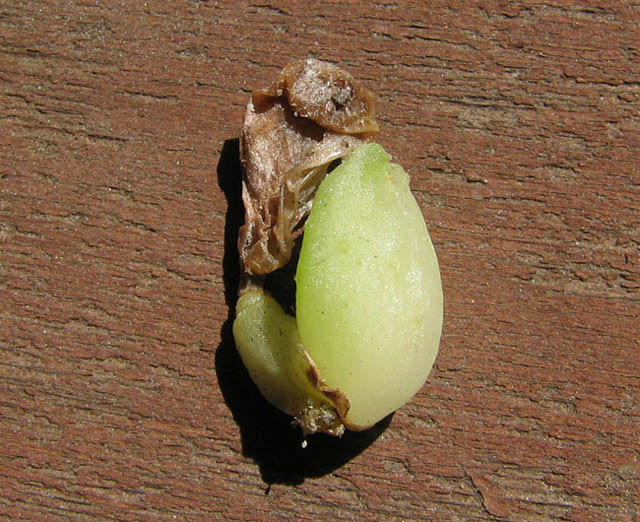
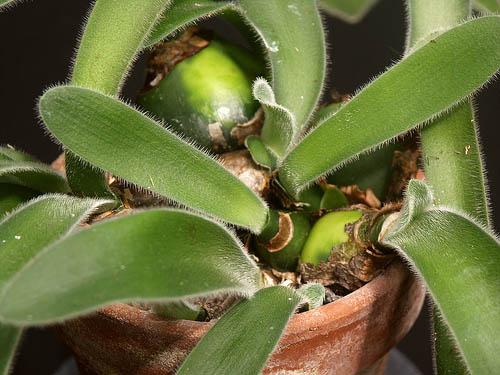
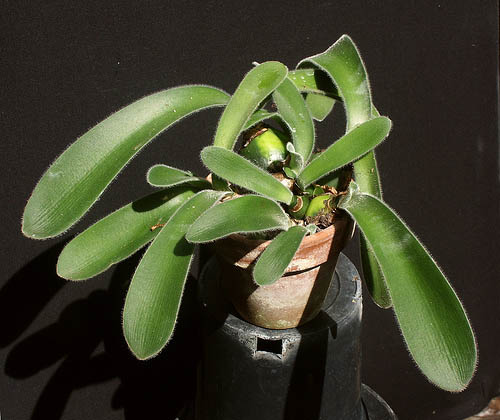
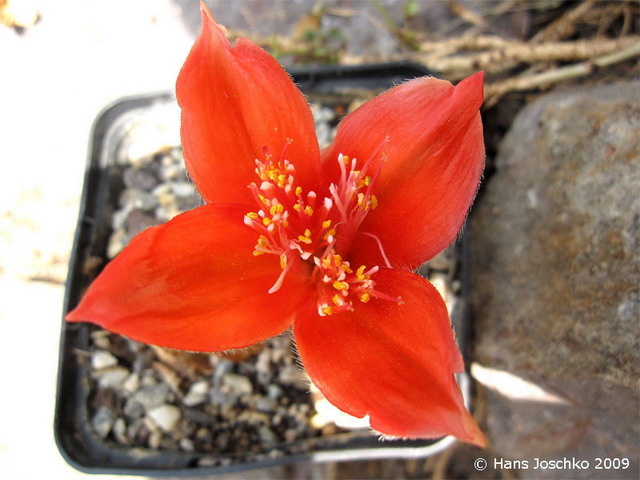
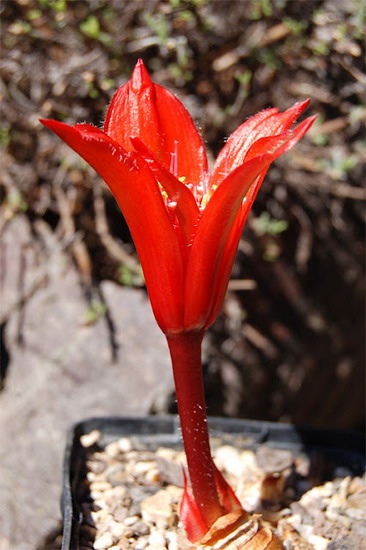
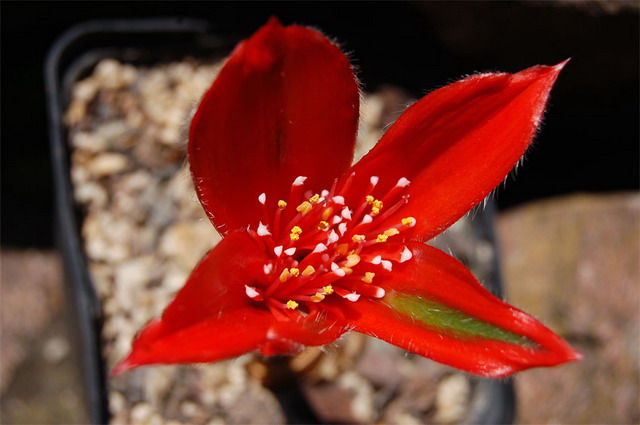
Haemanthus pubescens L.f. see the Haemanthus pubescens page.
Representative photos of this species from Alan Horstmann, Uluwehi Knecht and Hans Joschko.

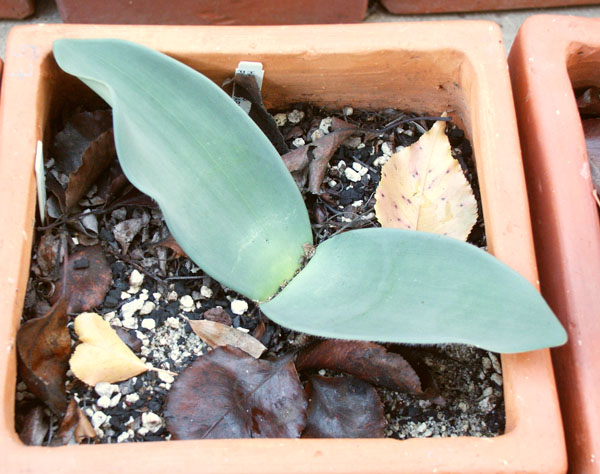

Haemanthus pumilio Jacq. has a small umbel of white flowers, and zebra-striped leaves. It is endangered, growing in only a few seasonally wet sites, the largest colony being at the Duthie Reserve at the University of Stellenbosch. The plants are stimulated to bloom by fire, and need surrounding grass to be cleared away in order to avoid predation by insects and rodents. There is an article on the species here. Photos of flowers from iNaturalist taken by Alex Lansdowne and shared under a CC BY-NC license and of leaves from Paul Emms shared under a CC BY-SA license.
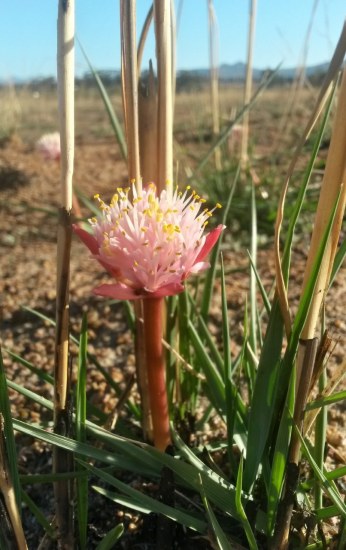
Haemanthus sanguineus Jacq. see the Haemanthus sanguineus page.
Representative photos of this species from Cameron McMaster and Michael Loos.

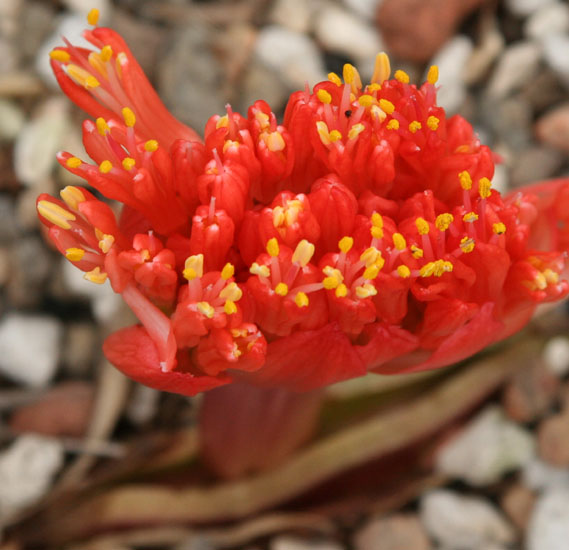
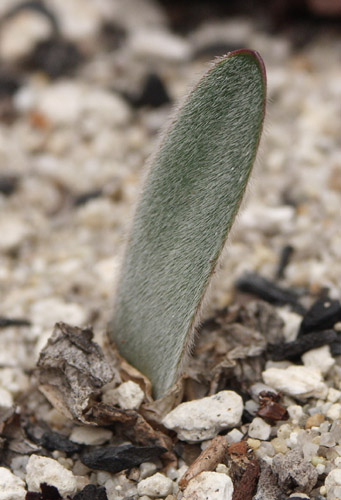
Haemanthus sp. Huib Plateau is from the Huib Plateau in Namibia. Its miniature stature, light leaf colour, and thin leaves combined with its markings and hirsute margins make it very unique. The brown leaves surrounding it are on average 6 cm in length. Photo by Uluwehi Knecht.
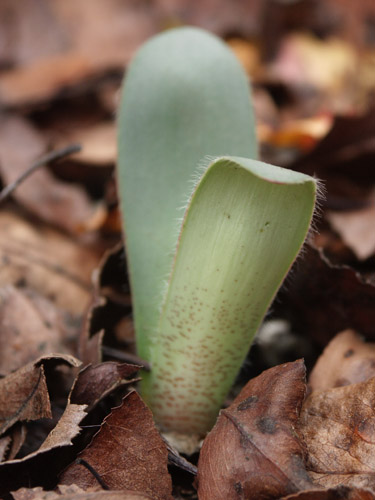
Haemanthus sp. Lüderitz is from the area of Lüderitz, Namibia. Its ovate, glaucous appressed leaves make it unique. Additionally its inflorescence is somewhat diminutive and thin. Photos by Uluwehi Knecht.
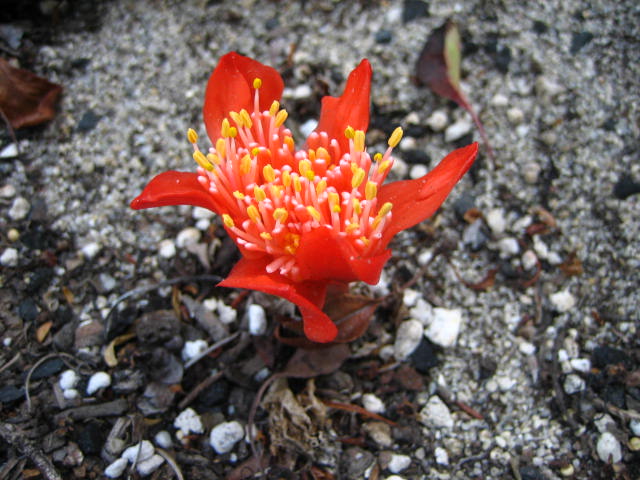
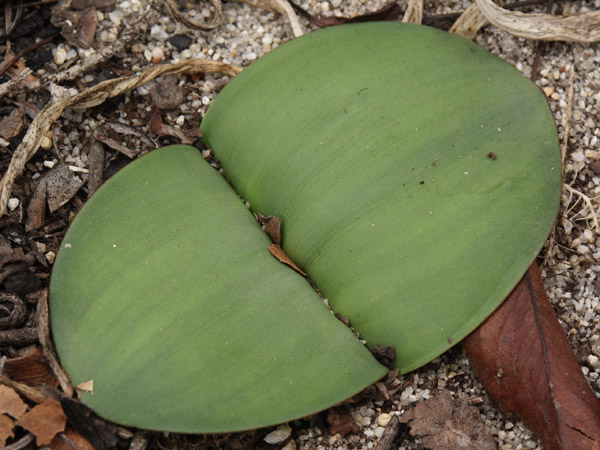
Haemanthus sp. Namuskluft is from the area of Namuskluft, Namibia. It's a miniature species (see finger for scale) with thick appressed leaves that are very densely hirsute. The markings on the leaf undersides, in combination with the aforementioned foliar attributes make this unique. Photos by Uluwehi Knecht.
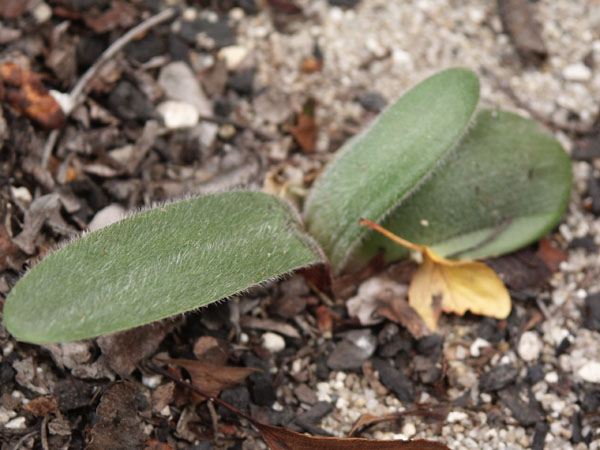
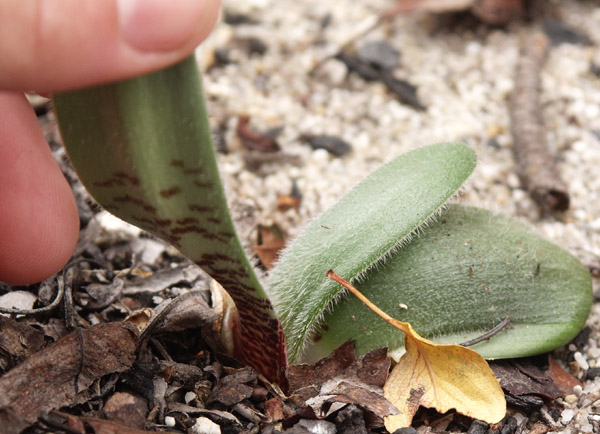
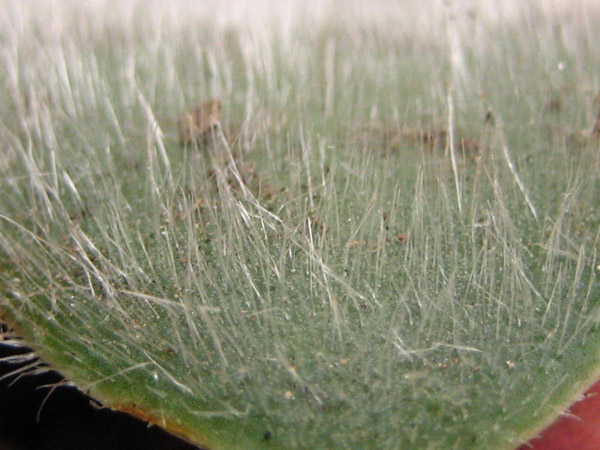
Alessandro Marinello has added pictures of the leaves of a bulb he purchased from a nursery in the USA that has yet to be identified.
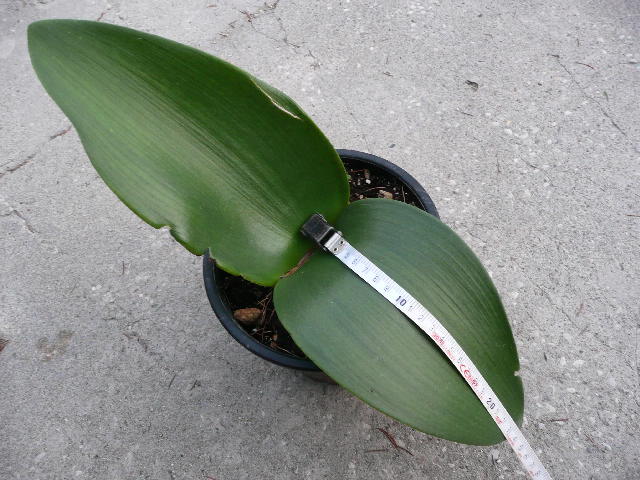
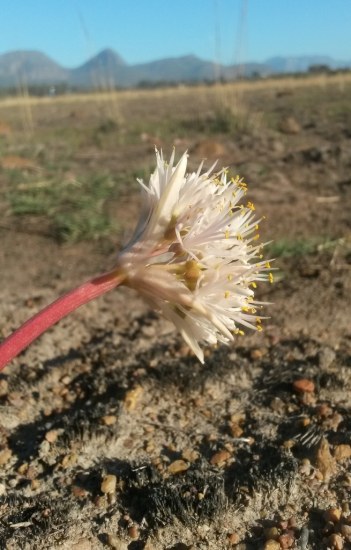
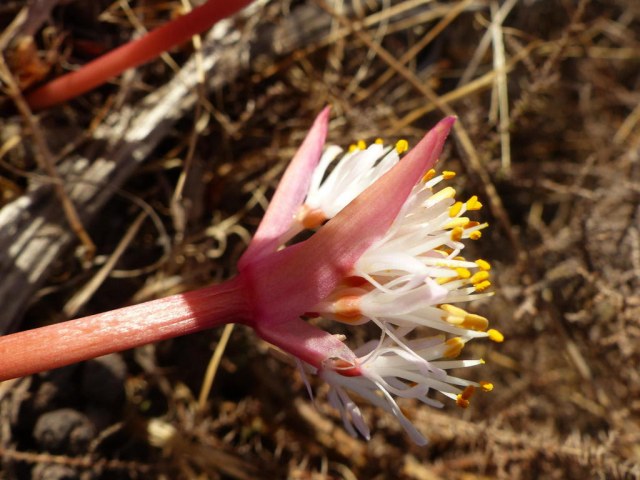
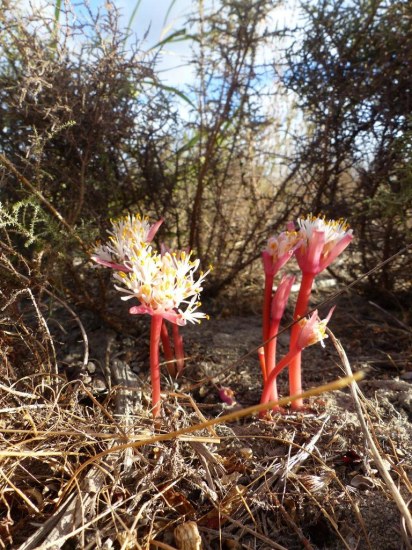
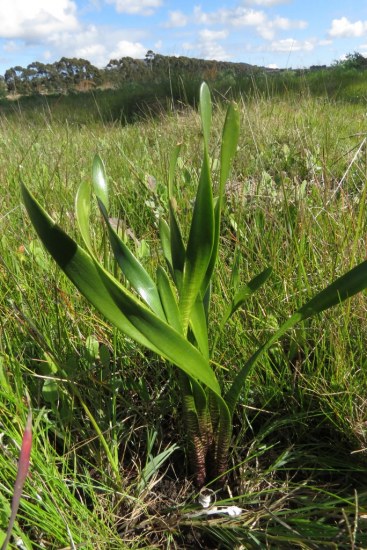
Haemanthus tristis Snijman is a rare species known only from a population in the southeast Tanqua Karoo where it grows in shaley soil in seasonal washes. It flowers in March in habitat in the Southern Hemisphere and is in leaf from April to October. It has two recurved leaves that appear after the inflorescence and white flowers that look cream when young and fade to pink. The first two photos were taken by Alan Horstmann. The last from Margaret Fox was taken on a farm in the Tankwa Karoo August 2022.

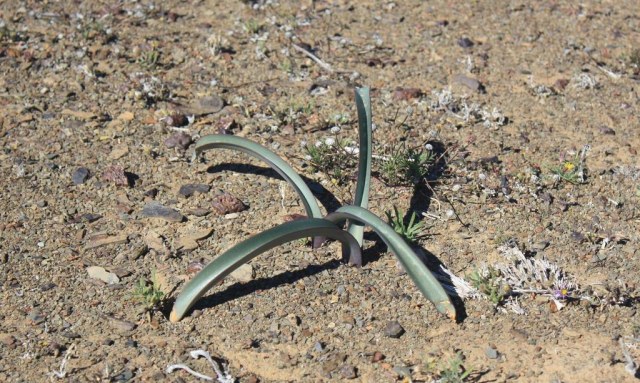
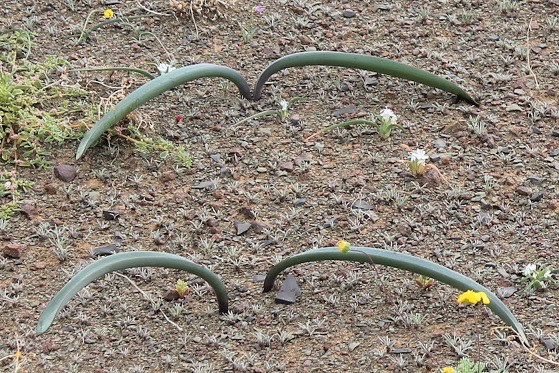
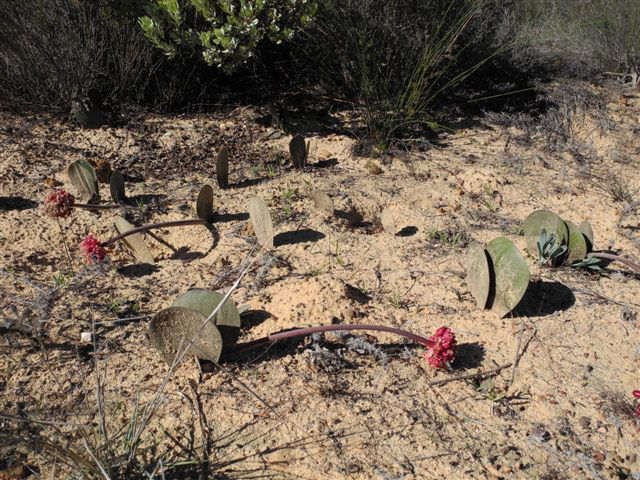
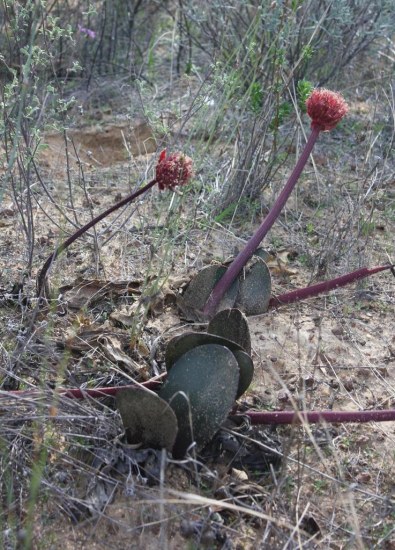
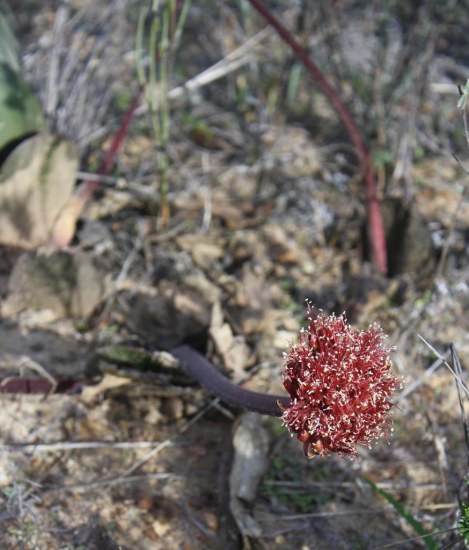
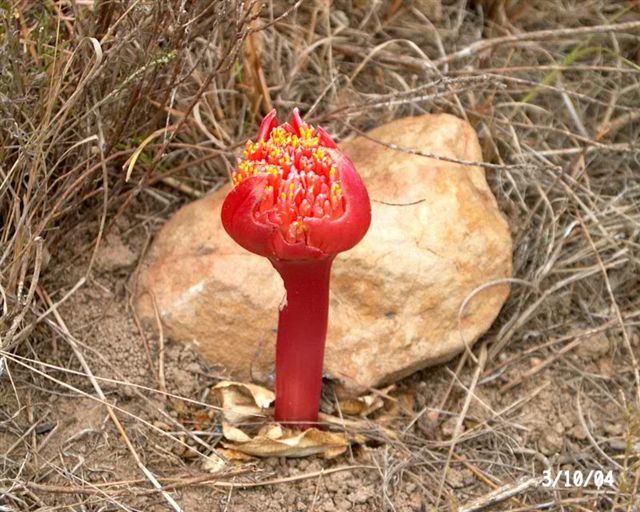
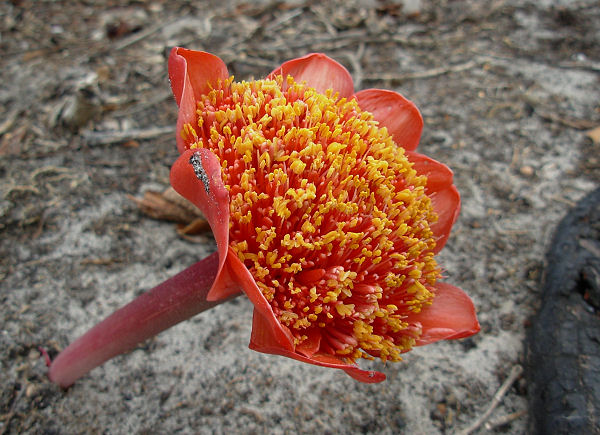
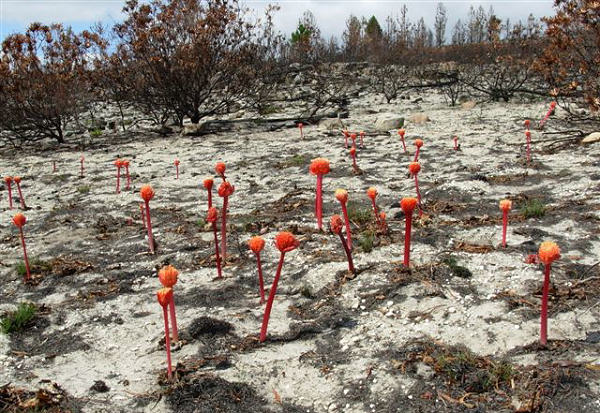
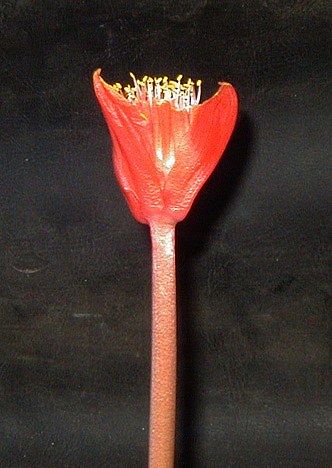
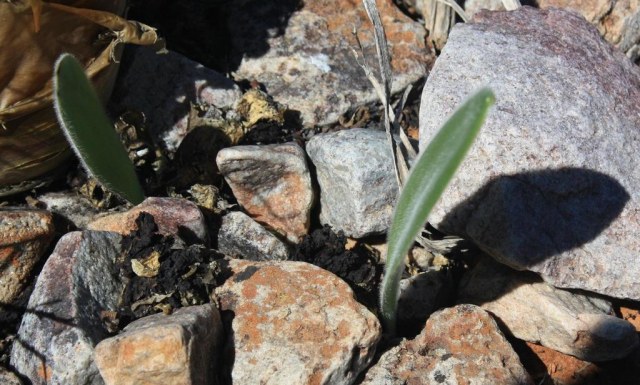
Haemanthus unifoliatus Snijman, found in Cape Province, Namaqualand. It is a solitary bulb and produces a solitary, stiff leaf (just as does H. nortieri). The light scarlet flower is striking, appearing well before the leaf. The first photo was taken by Doug Westfall. The next two photos are from Alan Horstmann. The last leaf photo, Kosies form, by Uluwehi Knecht.

Haemanthus index – Haemanthus a-c – Haemanthus d-l