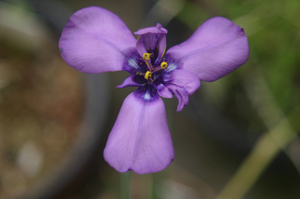
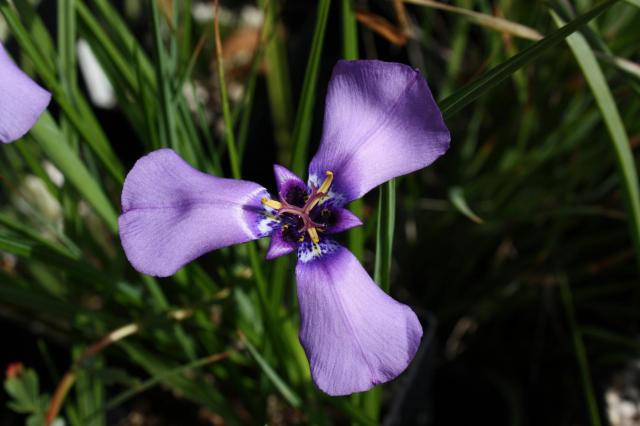
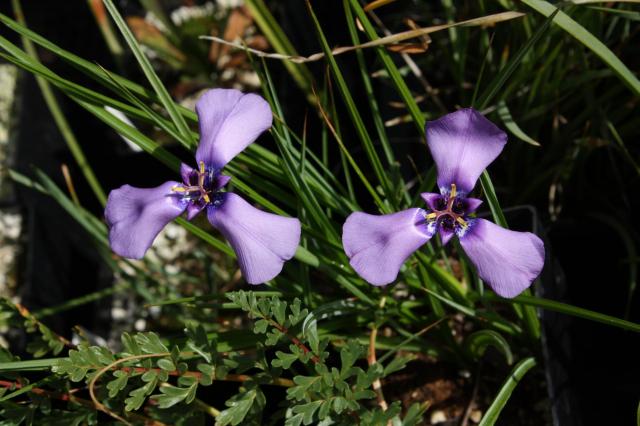
Herbertia Sweet is a small genus of bulbous plants in the Iridaceae family that come from parts of Texas, the South Eastern United States, and South America (Chile, Argentina, Paraguay, Uruguay, and Brazil). They have short-lived iris-shaped blue or violet flowers with three large outer obovate tepals and three comparatively much smaller oblanceolate inner ones. The staminal column is narrower above and they have linear anthers and a bifid style. They are related to Alophia, Cypella, and Tigridia. These bulbs are of easy culture and should be hardy to USDA Zone 8 with proper protection.
These species are easy to grow from seeds. Sow the seeds in a well drained medium in spring and keep moist. During active growth, water the seedlings with a dilute fertilizer, which helps them to increase their size. In the San Francisco Bay Area, these plants can be grown in full sun. They never go completely dormant if the medium stays moist in winter. In some years, the plants may continue to grow, although slowly, in winter. From seeds, the seedlings can mature and bloom in just one year (H. lahue) or two years (H. pulchella).
Herbertia amatorum (C.H. Wright) Goldblatt is now considered to be Herbertia pulchella.
Herbertia crosae Roitman et Castillo is a recently described species that inhabits stony grasslands in Uruguay. Height range: 8-22 cm. Photo by Germán Roitman. Here is the link to the 2004 Brittonia article where it is described.
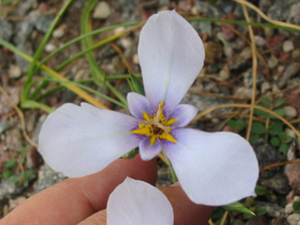
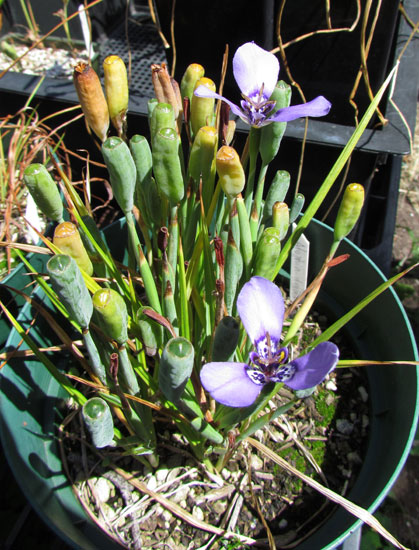
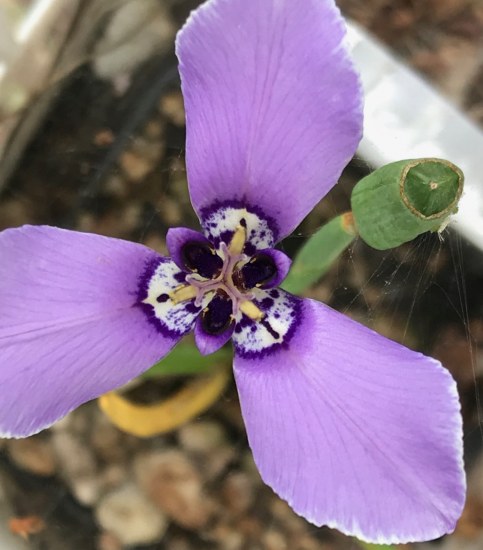
Herbertia lahue (Molina) Goldblatt has three subspecies. Two of the subspecies are from dry areas in Chile and Argentina and bloom in the spring. It prefers full sun, neutral to alkaline well drained soils and is dormant in summer. This species is often offered in seed exchanges under the wrong name (as Alophia drummondii and Herbertia pulchella for example.) It blooms into summer so even though the flowers only are open for a day, new ones appear over a long time. Height range: 10-25 cm. Photos were taken by Mary Sue Ittner of plants grown from seed. Although she no longer grows this species in a pot, every now and then she sees one appear in the ground as illustrated in the last photo.
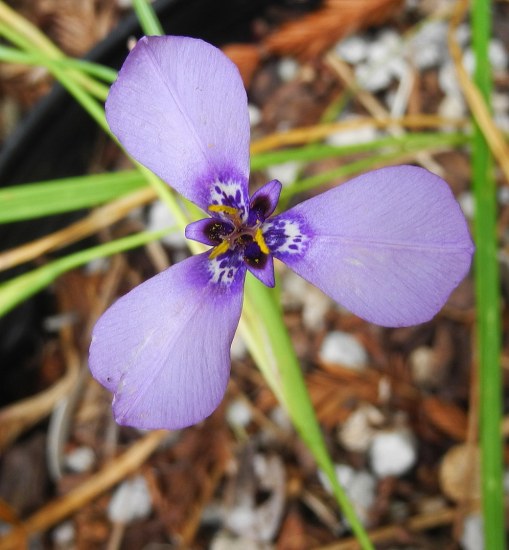
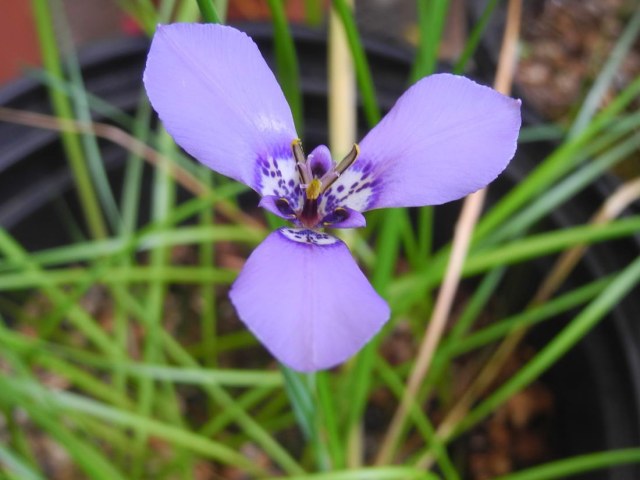
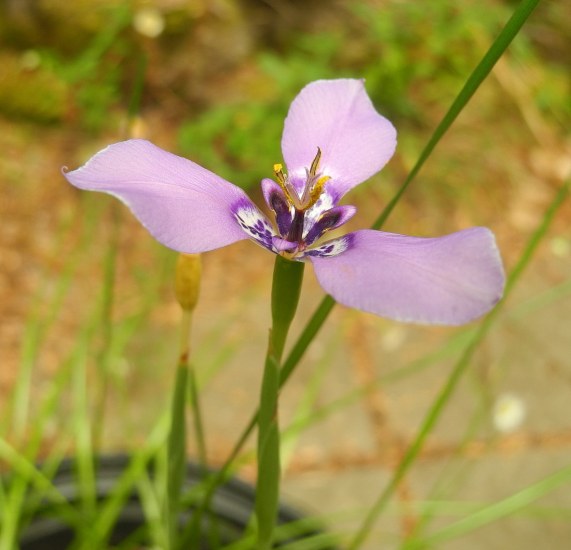
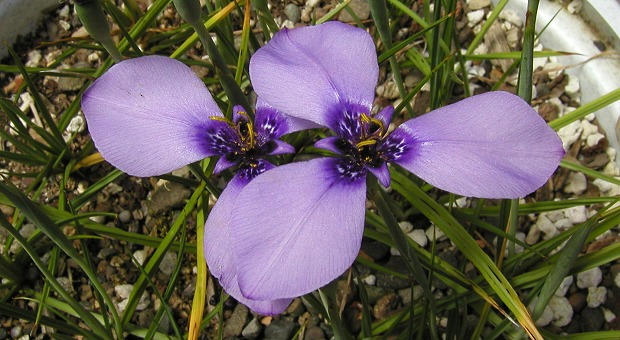
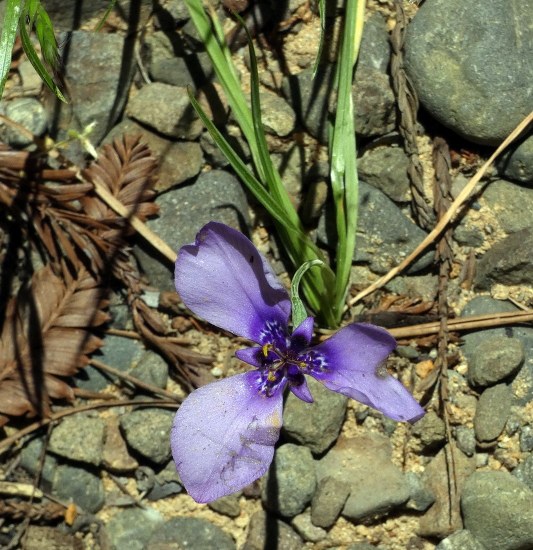
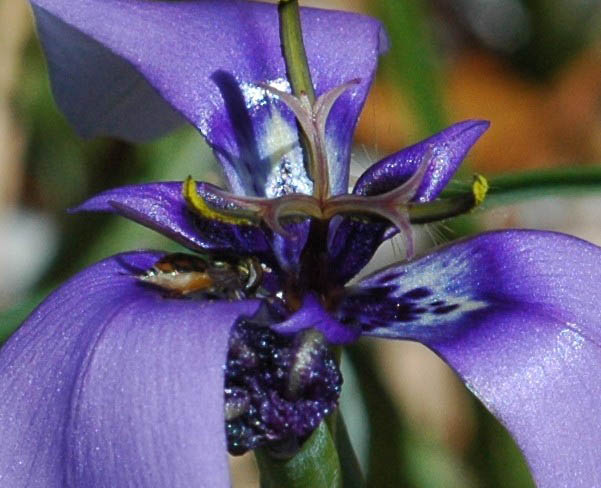
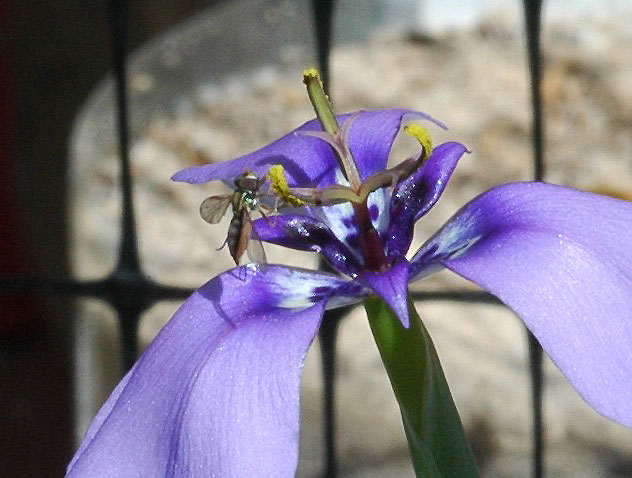
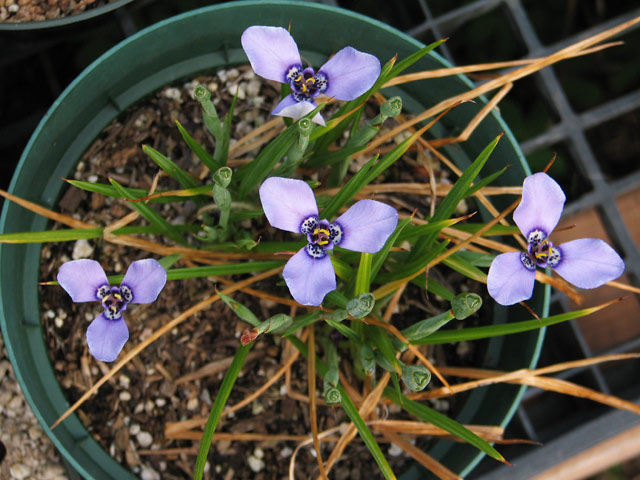
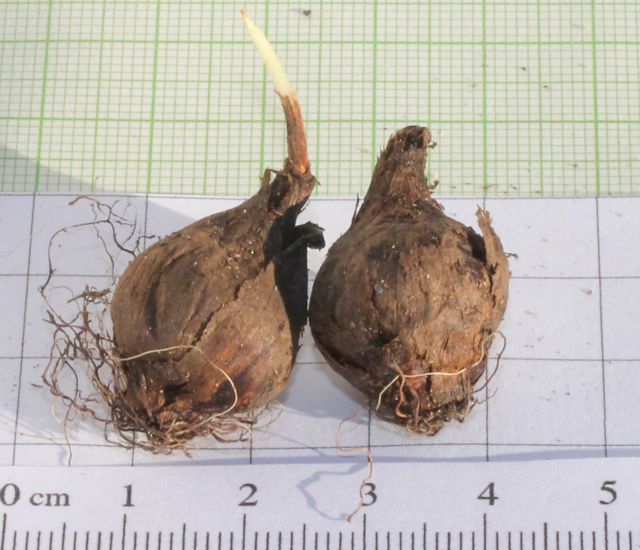
Photos 1-2 were taken by Justin Smith showing a hover fly visiting the flowers for nectar and tasting the pollen. It is most likely a pollinator for this species where he lives. Photos 2-3 were taken by Nhu Nguyen showing a pot of many bulbs and the copious seeds that this species produces. The last two photos show corms grown by Mary Sue Ittner on a 1 cm grid that were received in PBS BX 324 #8 and were photographed by M. Gastil-Buhl.
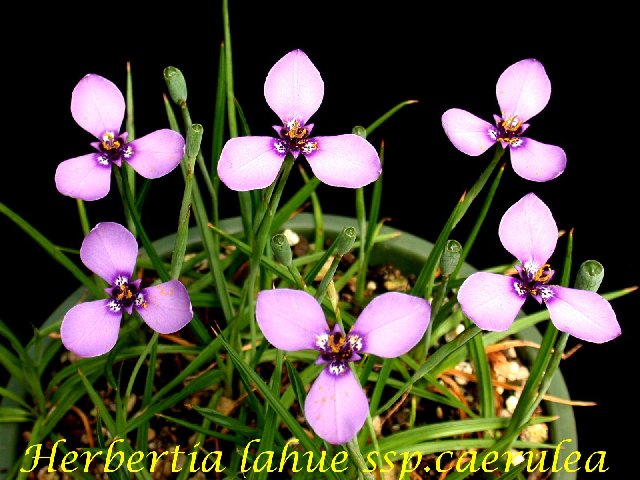
Herbertia lahue ssp. caerulea (Herb.) Goldblatt occurs in the heavy soils of coastal prairies in Louisiana and Texas and has lavender-blue flowers with deeper violet blotches near the bases of the petals. The flowers, although quite beautiful, only last for a few hours before shriveling. Once it has set seed it goes dormant. Height: to about 20 cm. Photo by Bill Dijk.
Herbertia pulchella Sweet is from Uruguay and Southern Brazil. This is a winter growing species that flowers in spring. The flowers have a white stripe that runs down each blue petal. The bulbs prefer not to dry out completely in summer since it comes from an area with year round rains. It needs full sun, and acid soils and probably not very cold temperatures. Seeds from seed exchanges labeled as this species are often really Herbertia lahue. Seeds are not produced very readily and often require hand pollination. Nhu Nguyen grows this species with year-round water and it does very well with that treatment. Height range: 10-30 cm. Photo 1 by Dirk Wallace and 2-3 by Bill Dijk. Photo 3 shows a nice dark blue form. Photos 4-5 were taken by Nhu Nguyen. Photo 6 compares this species with H. lahue.
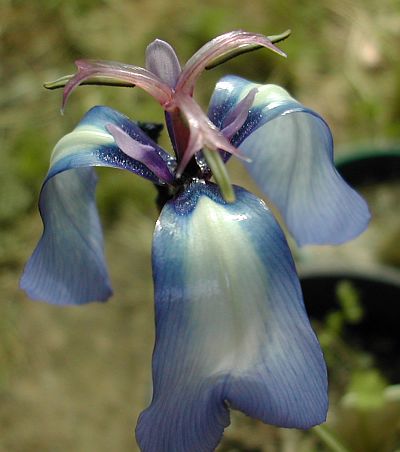
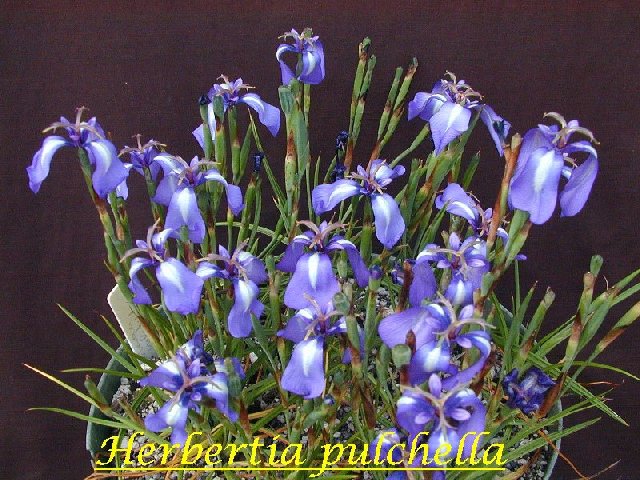
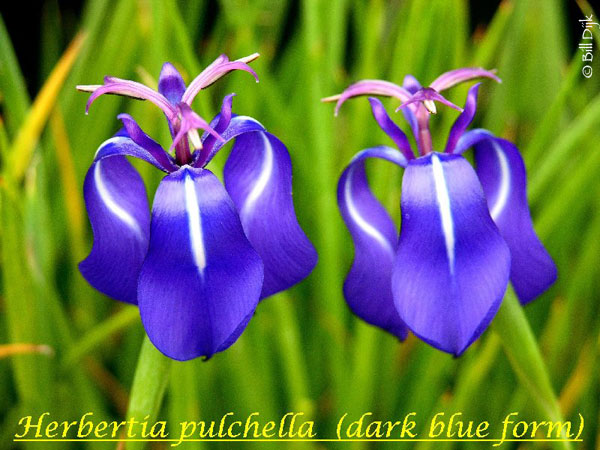

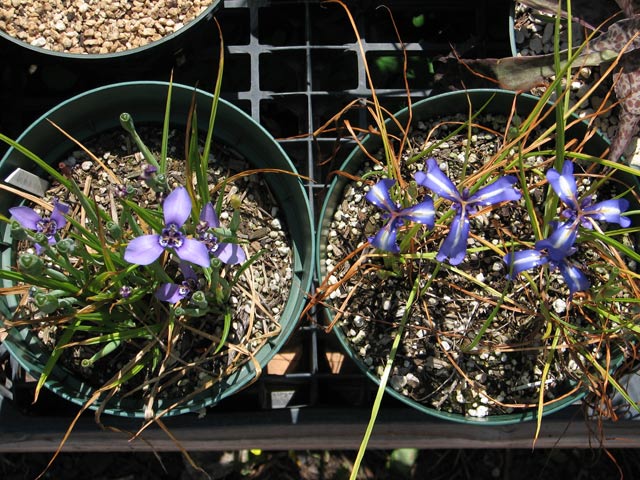
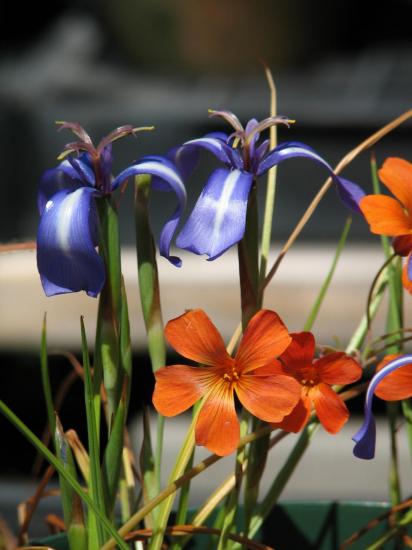
The photos below were from Nhu Nguyen showing various aspects of this plant. The last two photos show this plant next to an orange Oxalis species from Ecuador.

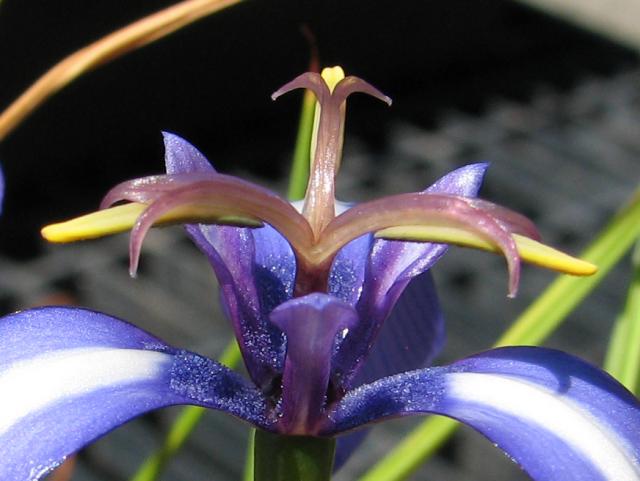
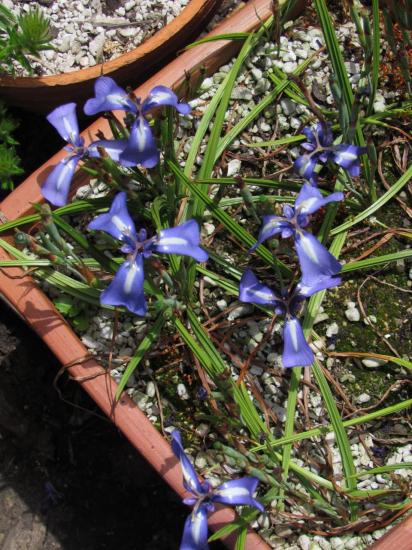
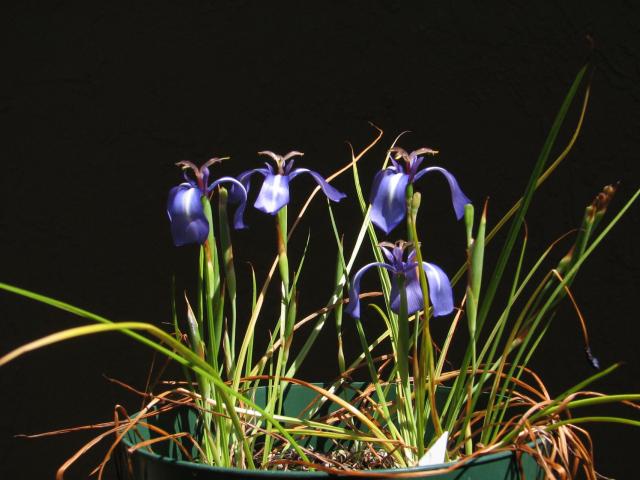
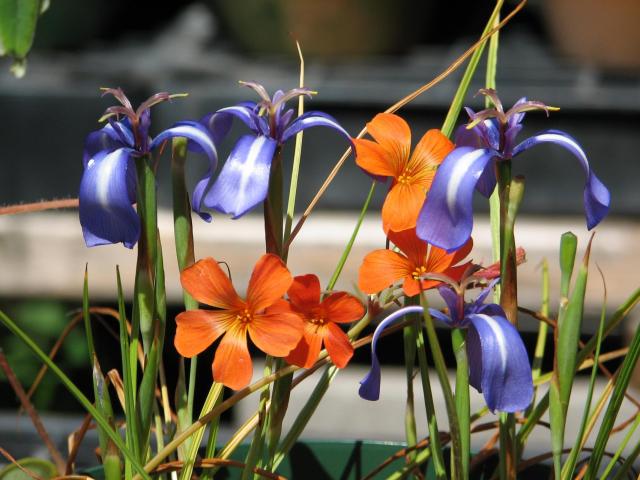
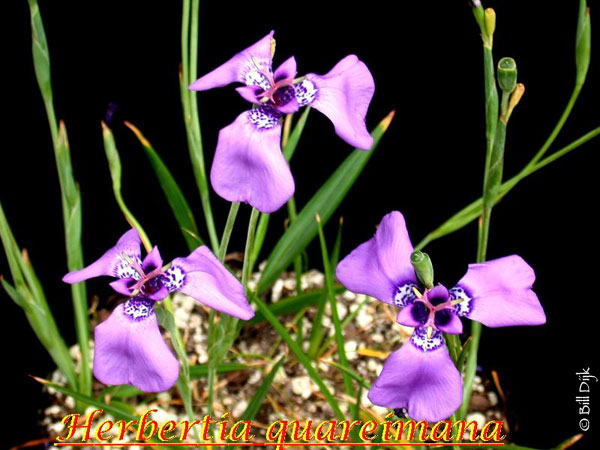
Herbertia quareimana inhabits stony grasslands in Uruguay and Brazil. Although it inhabits places very near the border with Argentina, it has never been found in this country. Height range: 15-35 cm. Photos by Germán Roitman, Bill Dijk, and Mary Sue Ittner. The last photo shows the bulbs on a 1 cm grid.
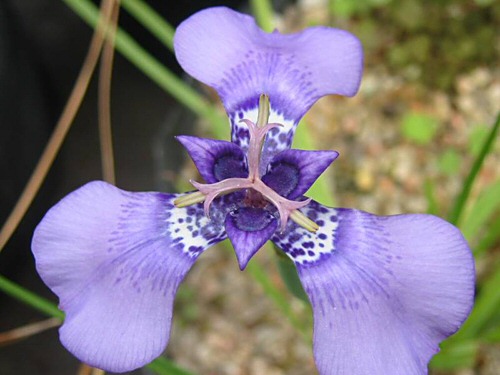
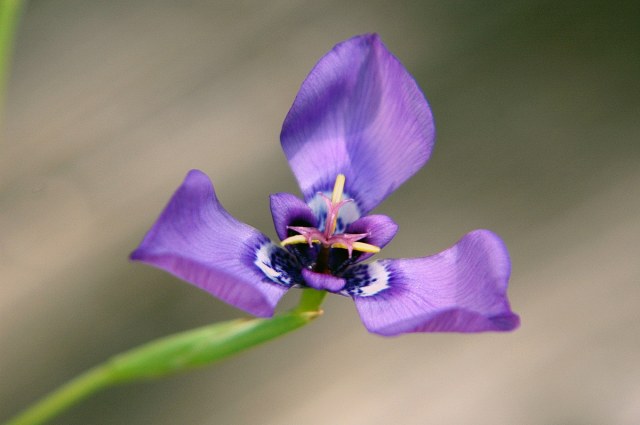
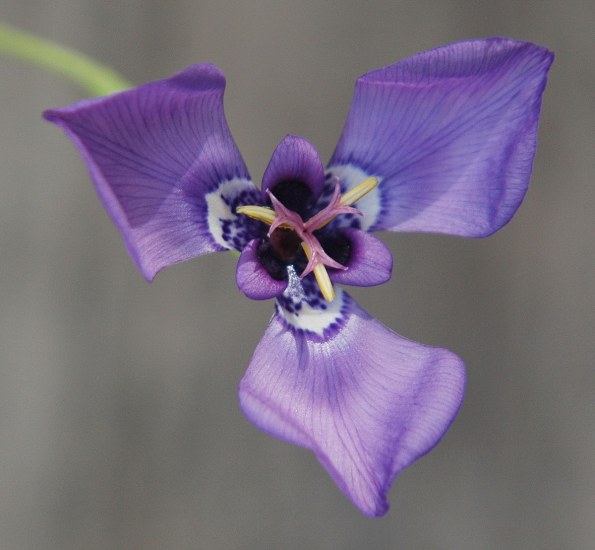

Herbertia tigridioides (Hicken) Goldblatt inhabits humid places in the mountains of northwest Argentina and Bolivia. The plant resembles an Herbertia lahue, but plants are taller and the color is different. The flowers are much more impressive than H. lahue. Height range: 30-60 cm. Photo 1 by Germán Roitman. Photos 2-3 by Nhu Nguyen of plants grown from seeds.