Ipheion is a small genus in the former Alliaceae family (now included in Amaryllidaceae) that is mostly from Argentina and Uruguay. There are conflicting opinions about whether a number of plants, mostly yellow flowered, that have been moved from genus to genus should now be included in Nothoscordum. Nothoscordum species usually have several flowered umbels. We are putting pictures of these plants on our Nothoscordum wiki page and with a link from this page. Since 1800 the species of Ipheion have been treated as Beauverdia, Brodiaea, Milla, Nothoscordum, Tristagma or Triteleia. In 1963 Hamilton P. Traub proposed moving Ipheion to Tristagma. Currently most authorities include three of those species back in Ipheion: Ipheion sessile, Ipheion tweedieanum, and Ipheion uniflorum. Ipheion 'Jessie' and Ipheion 'Rolf Fiedler' in 2019 are considered by many to be cultivars of Ipheion uniflorum.
Ipheion dialystemon Guagl. see Nothoscordum dialystemon (Guagl.) Crosa
Ipheion sellowianum (Kunth) Traub see Nothoscordum felipponei Beauverd
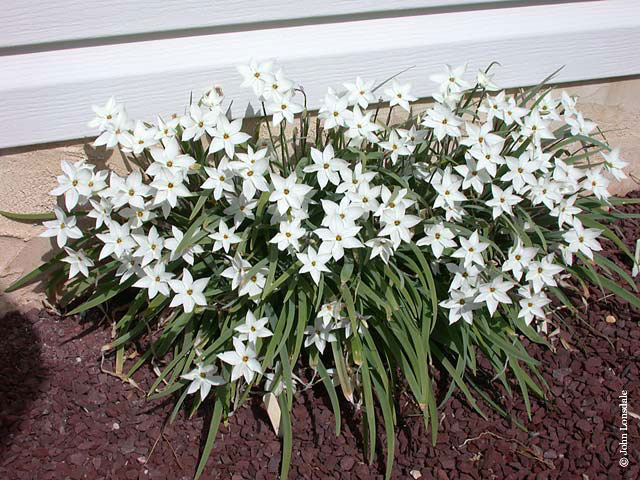
Ipheion sessile (Phil.) Traub, syn. Tristagma recurvifolium (C.H.Wright) Traub, syn. Tristagma sessile (Phil.) Traub, has 14 synonyms listed on Plants of the World Online where it is described as native from Central Chile, Argentina (Chaco) to Uruguay. This species has white flowers and blooms in early winter, increasing well by offsets. Height: about 30 cm. Photos by John Lonsdale.
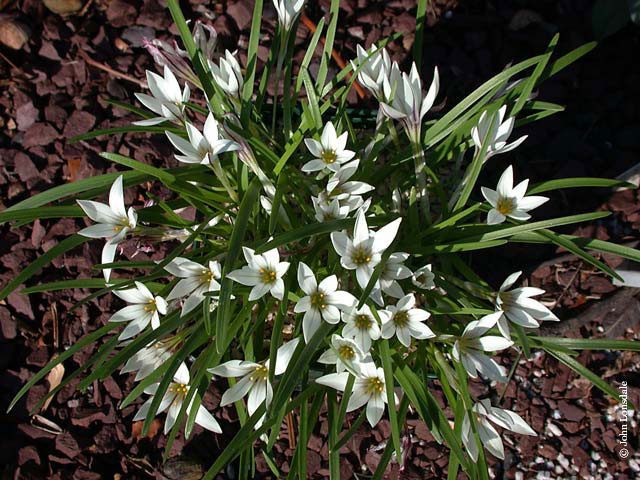
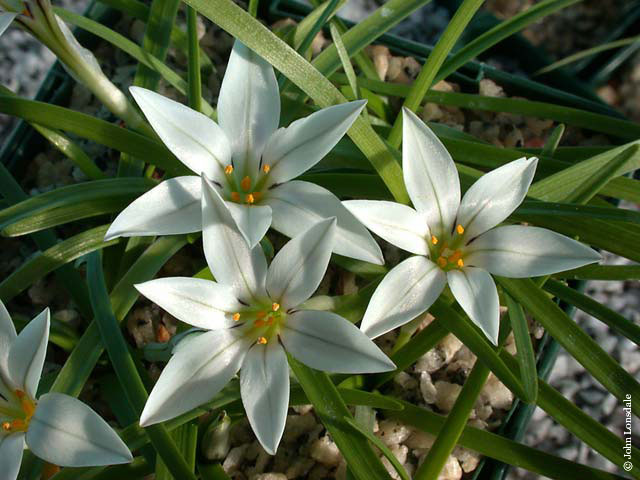
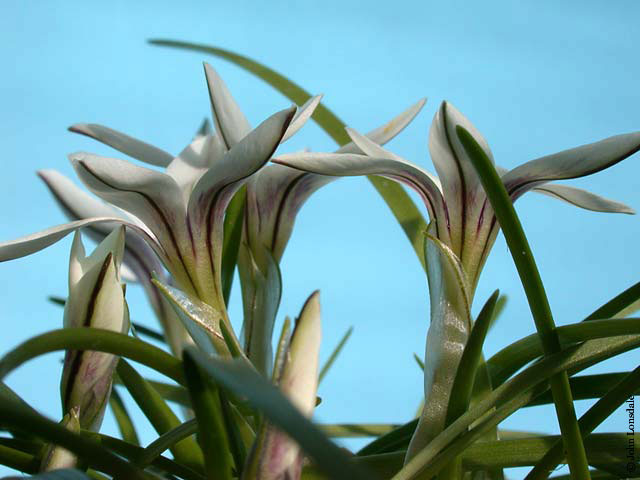
Ipheion tweedieanum (Baker) Traub, syn. Tristagma tweedieanum (Baker) Traub is distributed from northeast Argentina to Uruguay. Height range: 15-30 cm.
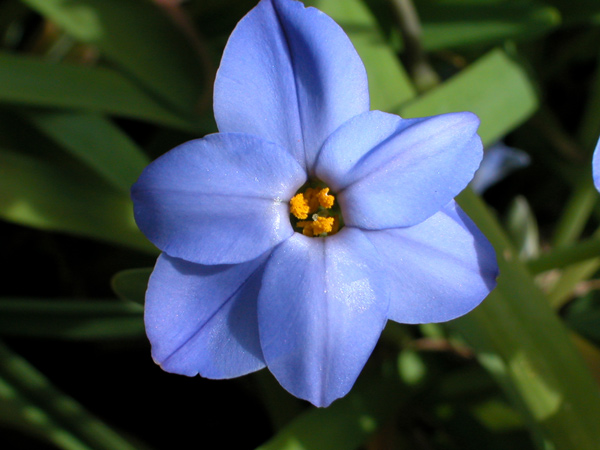
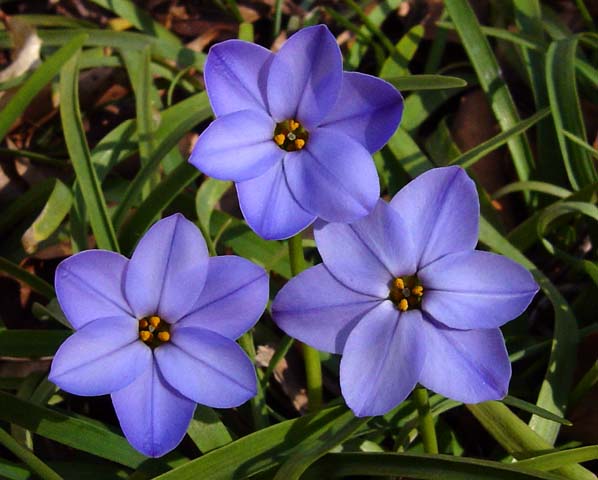
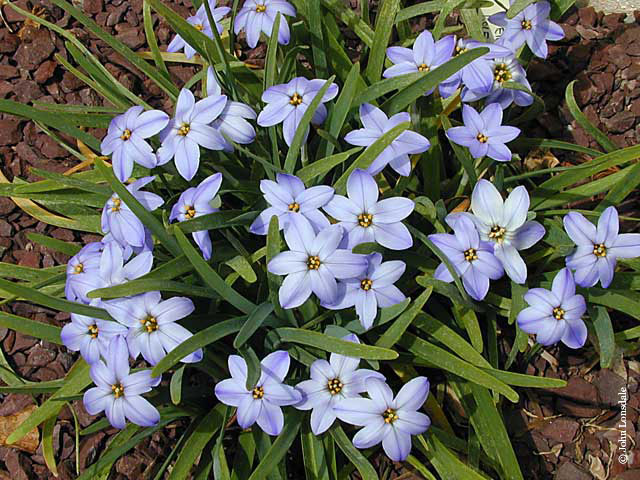
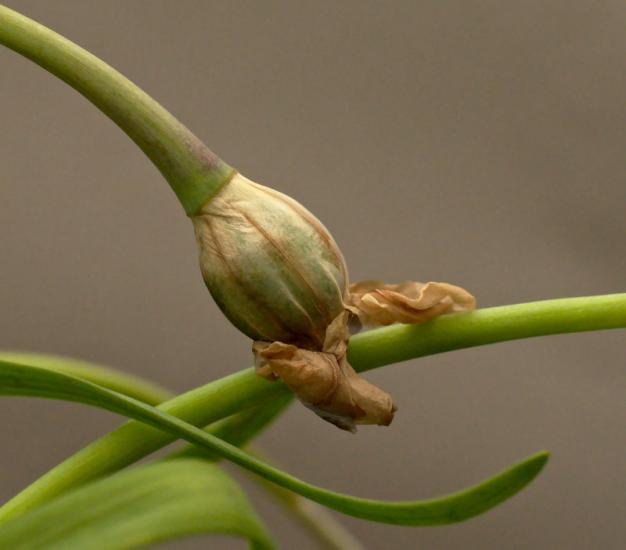
Ipheion uniflorum(Graham) Raf., syn. Tristagma uniflorum (Lindl.) Traub has 24 taxa listed as synonyms on Plants of the World Online. It is native to Argentina and Uruguay and known by the common name spring starflower. It has gray green leaves and starry flowers and blooms over a long period in spring. This plant has naturalized in many parts of the world. Height: about 15 cm. Photos 1-3 taken by Mary Sue Ittner of plants growing in her garden. Photos 4-5 taken by Travis Owen show a form s with dark purple midveins. Photo 4 shows the flower closed at night. Photo 6 of seed by David Pilling.
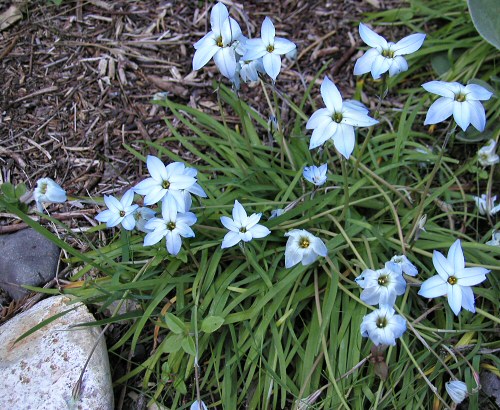
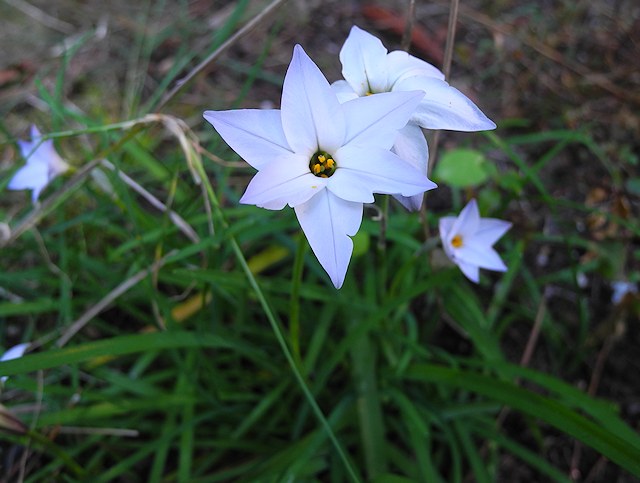

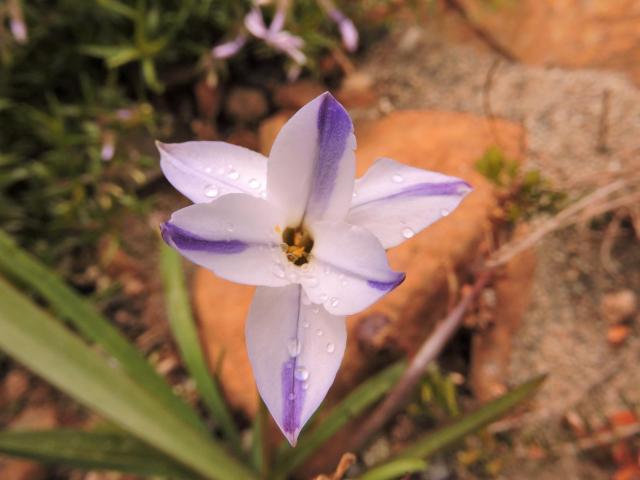
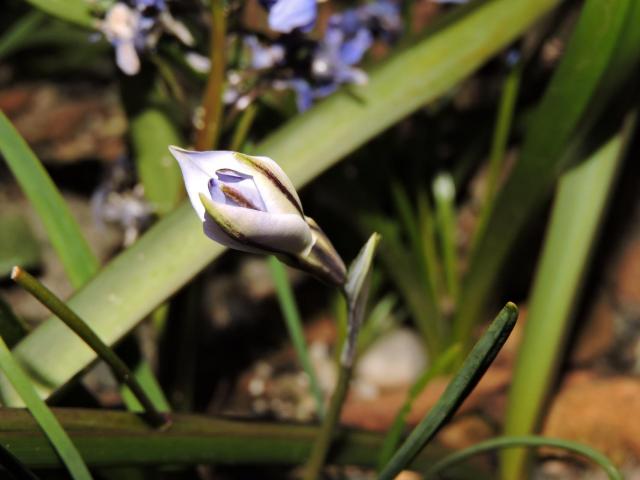
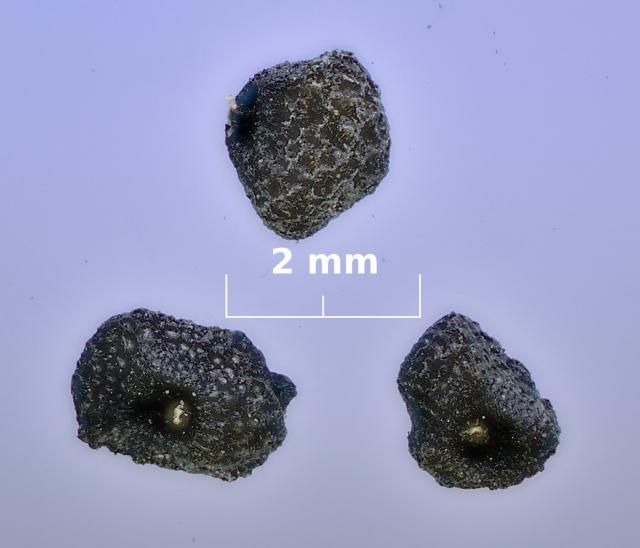
Ipheion uniflorum 'Alberto Castillo' is a large robust white flowered form found in Buenos Aires, Argentina by its namesake. Height: about 15 cm. Photos by Mark Mazer and John Lonsdale. It received a RHS award of garden merit.
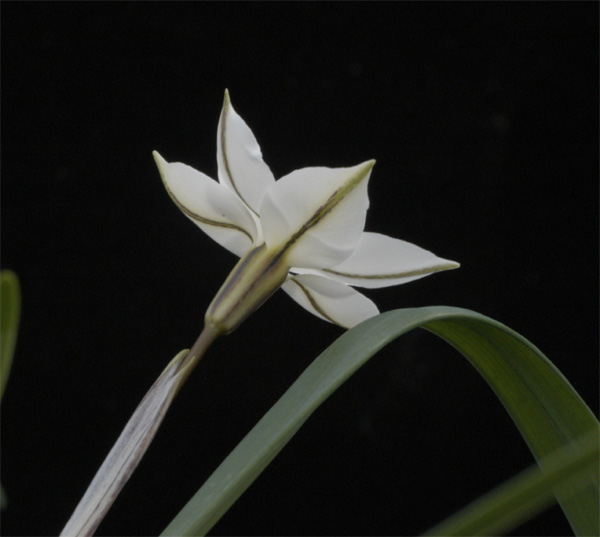
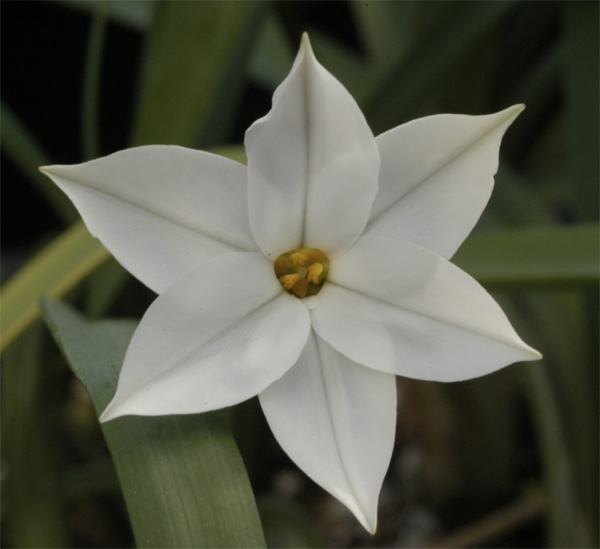
Ipheion uniflorum 'Charlotte Bishop' is a form with large pink flowers. Height: about 15 cm.
Ipheion uniflorum 'Froyle Mill' is a selection with purple flowers. The first two photos by Mark Mazer.
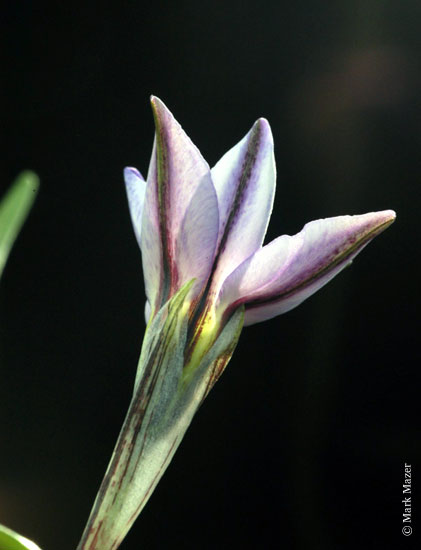
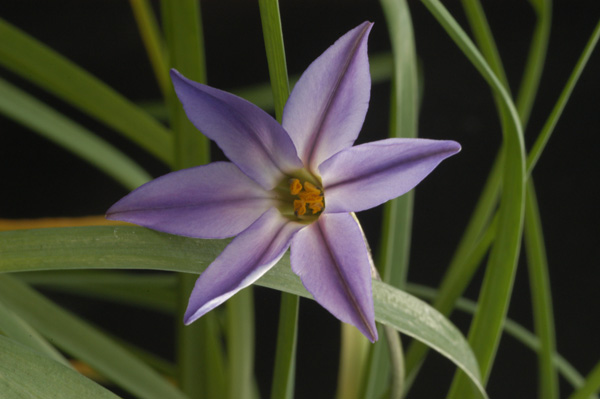
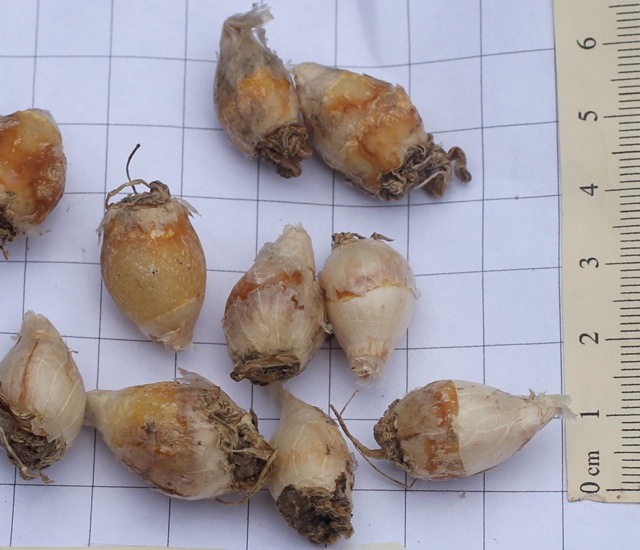
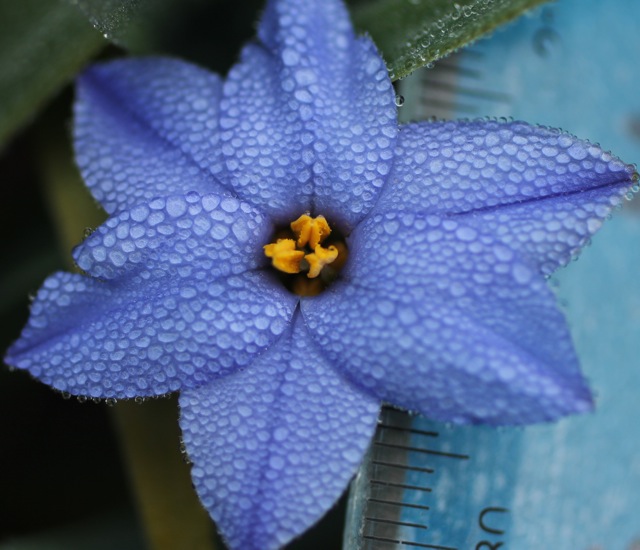
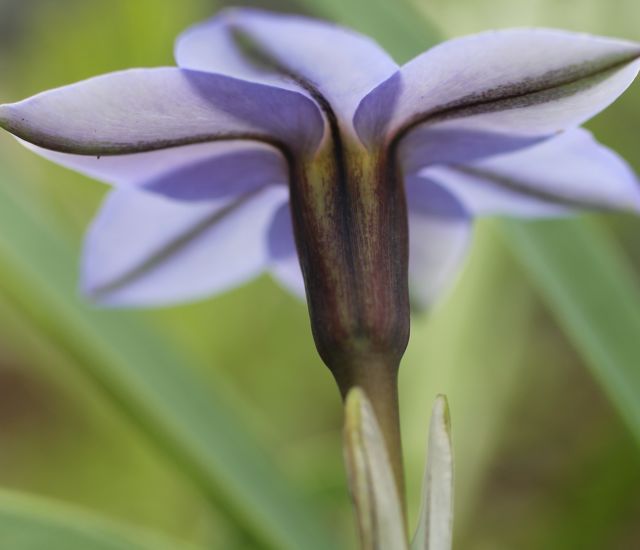
Ipheion uniflorum 'Jessie' is a seedling of 'Rolf Fiedler' obtained by Tony Hall of Kew and named for his late sister, Jessie. 'Jessie' has the deepest blue flowers. Jane McGary writes 'Jessie' is indeed a remarkable color, a real gentian blue, very like the color of Commelina dianthifolia. Height: to about 15 cm. Photo 1 of the flower was taken by Mary Sue Ittner. Photos 2 through 6 from M. Gastil-Buhl show the bulbs on a 1 cm grid, the color compared to blue painters tape, the underside tepal markings and blooms in March 2012. The bulbs multiply with up to a dozen offsets attached as shown in photo 6 on a 1 cm grid.
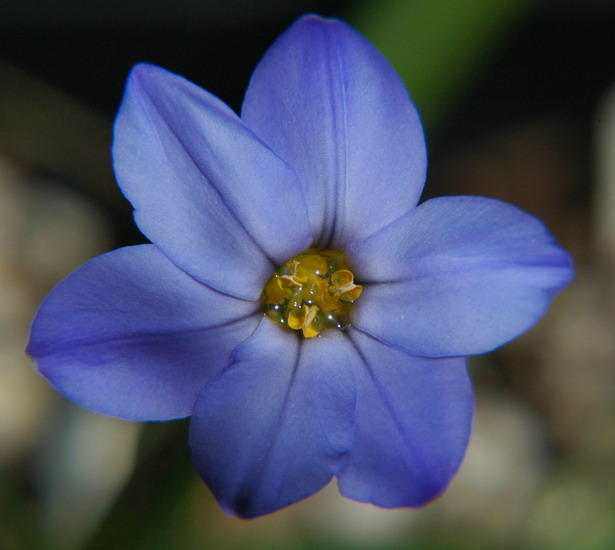
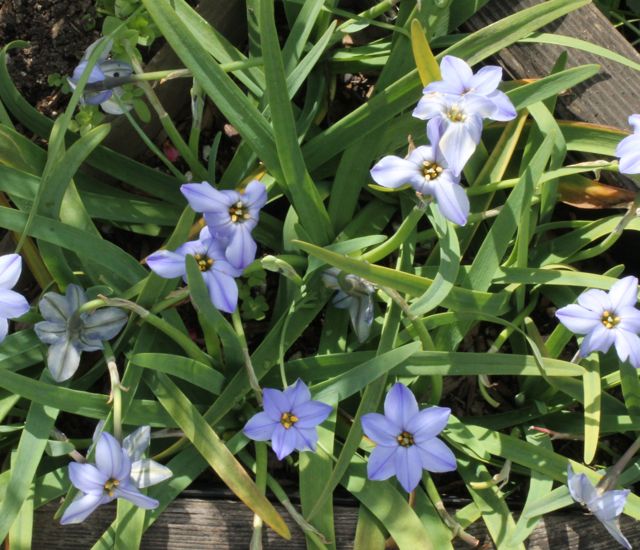

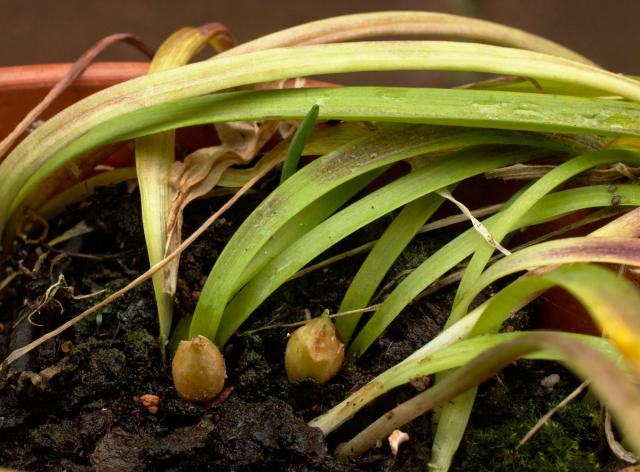
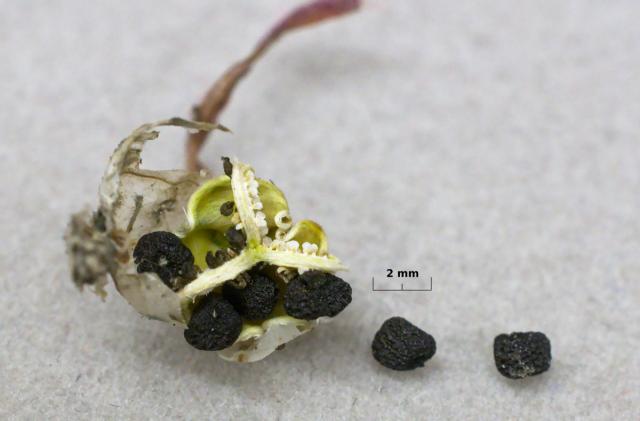
Ipheion uniflorum 'Rolf Fiedler' was considered an unnamed species in the past, but many consider it just to be a form of Ipheion uniflorum. It is a narrow endemic from Uruguay. It was found on two hill tops after many years of being a plant of unknown origin. Although there are some differences like the petals being more rounded, they grow in the same region of Uruguay. This plant has bright blue flowers. Some believed 'Rolf Fiedler' to be Tristagma peregrinans Ravenna but this plant has not been verified by anyone except for the person who named it and is considered by authorities to be a synonym of Ipheion uniflorum. It has not been found and the drawing submitted with the naming of this plant shows bulbs that look very different than the plant in cultivation. Height: about 15 cm. Photos by Sheila Burrow, Jay Yourch, John Lonsdale and David Pilling. Photo 5 shows bulbils appearing at the end of the growing season and photo 6 seed.