Lilium is a large genus in the Liliaceae family. This wiki page is for the Asiatic Section from A-C.
Asiatic Section D-K - Asiatic Section L-O - Asiatic Section P-Z
Other Lilium sections and hybrids are linked below.
American Section A-M - American Section N-Z - Candidum Section - Dauricum Section - Martagon Section - Oriental Section - Trumpet Section - Lilium Hybrids - Lilium Index
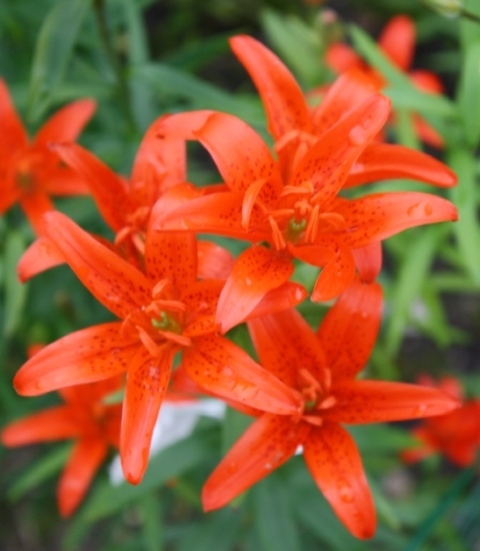
Lilium amabile Palib. is from Korea and can reach 48" in height on slender stems which will carry 6-8 pendant red flowers well spaced in a raceme. They have a fragrance which some gardeners dislike, and the species increases quickly from stem bulblets and seed is produced in quantity. The var. luteum is yellow or orange and will put on a good show in early summer. Another advantage of this species is that once well established it seems to withstand drought. Photo no. 1 shows a plant grown from seed from Ron Moodycliffe. Darm Crook has supplied photos 2-6 to show the variation you might find in this species. Photo #2 shows a light orange flower, photo #3 is a good example of the sheen, photo #4 shows an even lighter orange flower, photo #5 is a typical form, and the last photo shows a flower with only a few spots.
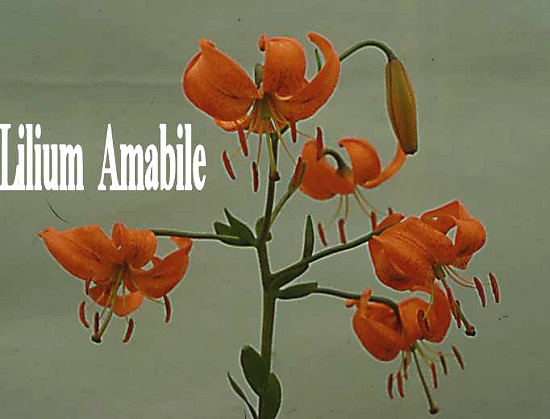

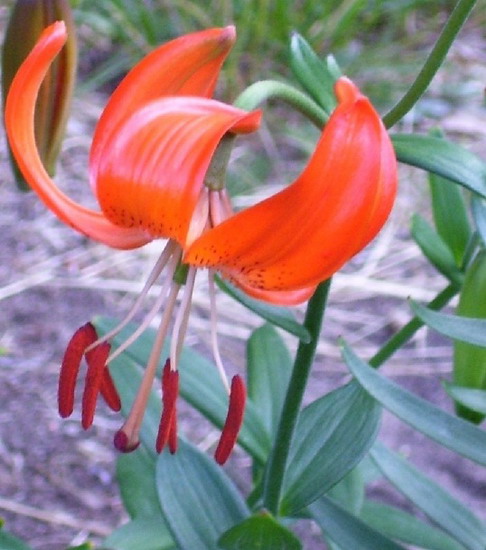
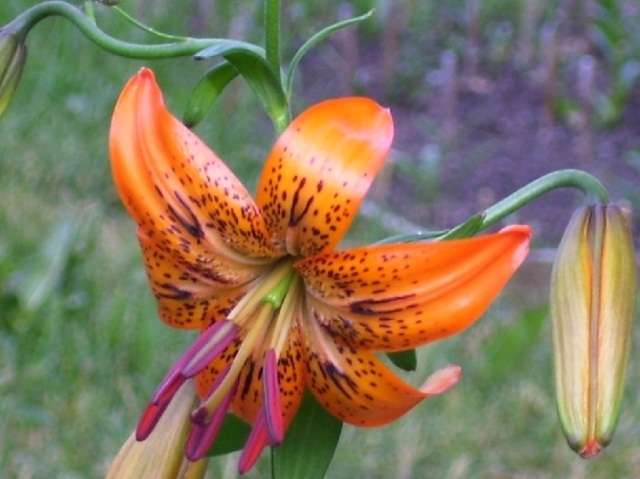
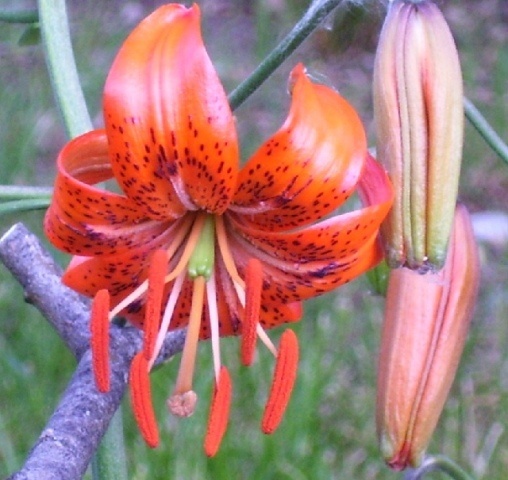
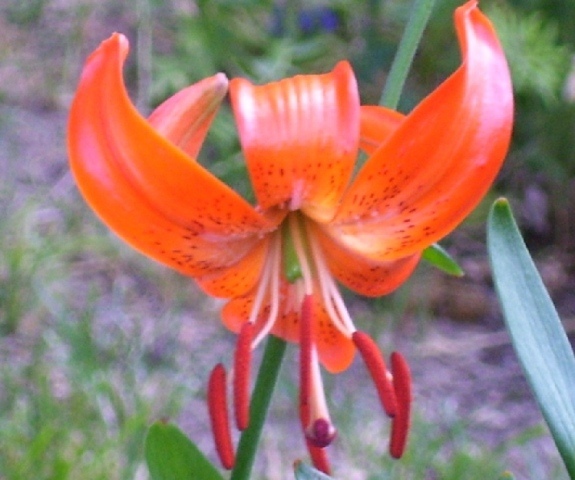
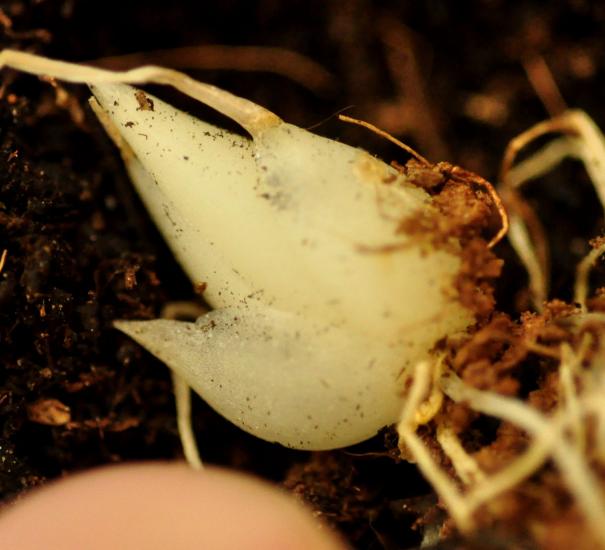
Photo of a seedling bulb by Pontus Wallstén.
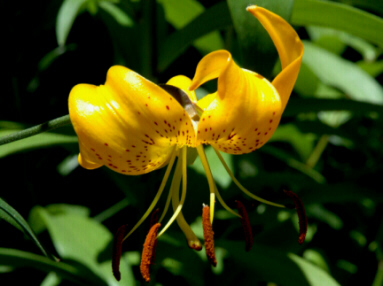
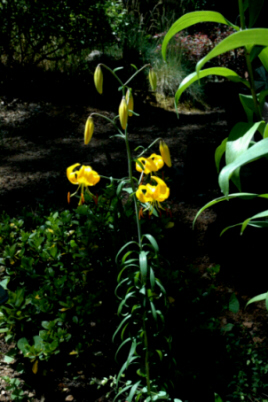
A yellow form is known in cultivation under the name Lilium amabile var. luteum (Constable 1939) or Lilium amabile 'Luteum'. It is not recognized by most authoritative data bases as an accepted variety and was not apparently officially named although there is a published name, Lilium amabile var. flavum Y.N.Lee which may have been a yellow flowered form. The first two photos are of plants in John Longanecker's Placerville, CA garden taken in June 2006 by John Longanecker. Photos three, four and five taken and submitted by Darm Crook.
Lilium amoenum E.H.Wilson ex Sealy (= pleasing) is from Yunnan in China, growing in high valleys (2200 m) in nearly frost free conditions. Bordering on the genus Nomocharis and close to Lilium sempervivoideum. Small bulbs produce a single scented flower in shades from purple-red to pink. Height 6-12 inches. Photos by John Lykkegaard Johansen. Photo 3 of a bulb by Pontus Wallstén.
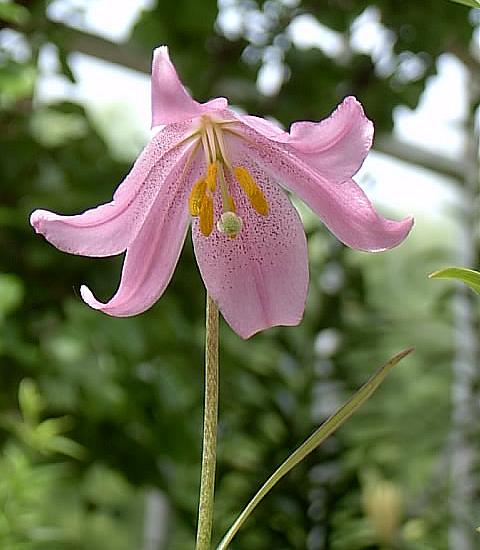
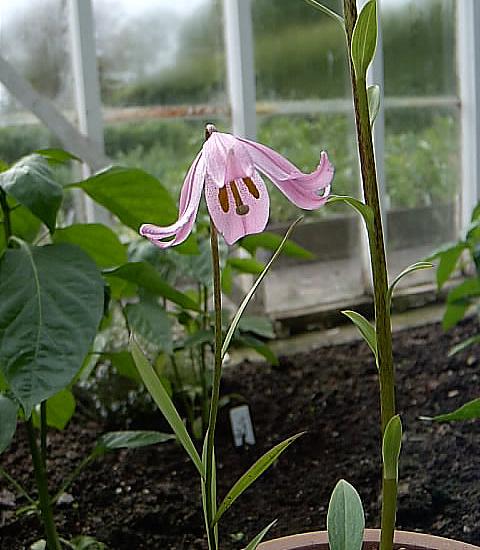
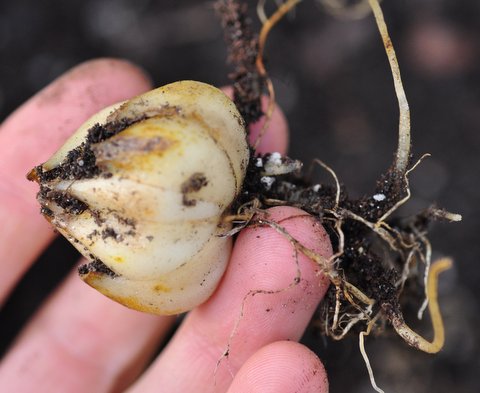
Lilium bakerianum Collett & Hemsl. is from Myanmar (Burma), Nepal and western China growing at up to 3500 metres. There is a wide variation in form. Heights of the type range from 30 cm to 1 m. Variety delavayi is 20 cm high. This species was named in honour of John Gilbert Baker, director of the herbarium at Kew. Photos 1-3 by John Lykkegaard Johansen; the last one shows var. rubrum Stearn. Photo 4 of a bulb by Pontus Wallstén.
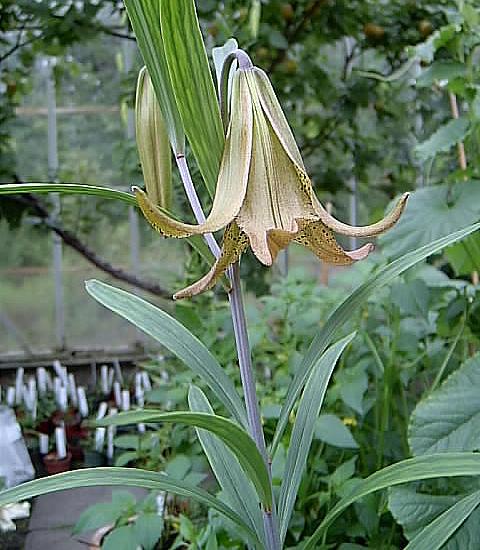
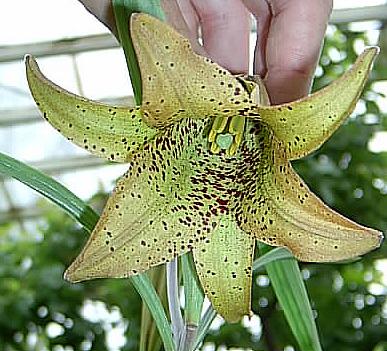
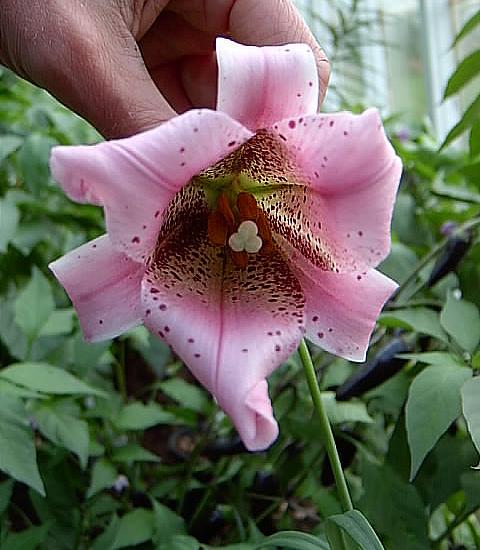
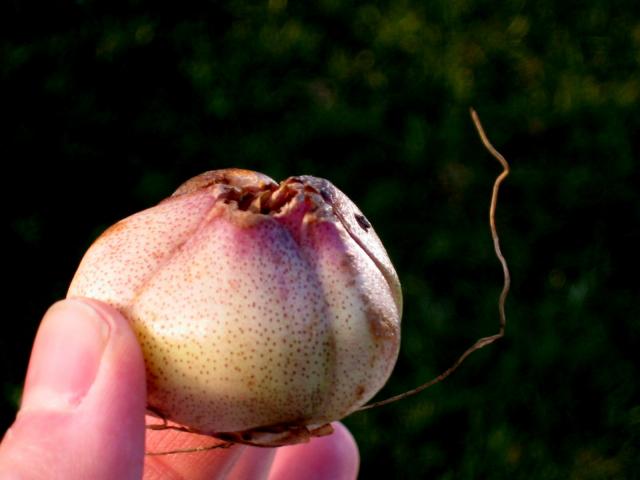
Lilium callosum Siebold & Zucc. is native to eastern Asia from Taiwan to Siberia, northern and central China and Japan, one of the widest ranges of an Asiatic lily. The stem is up to 1 metre and has as many as 12 flowers. Photo 1 by John Lykkegaard Johansen. Photos 2 to 5 by Darm Crook. The colouration of this species ranges from the yellow variety to soft orange to a hard bright orange. Photo 6 of a bulb by Pontus Wallstén.

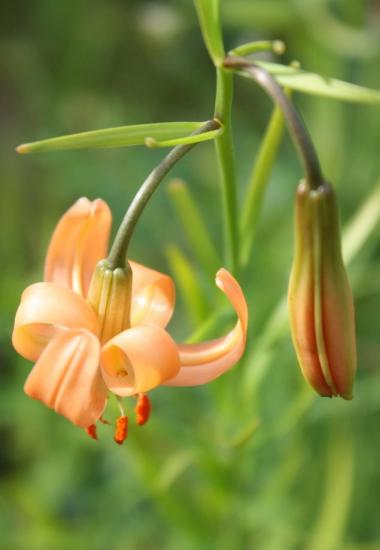
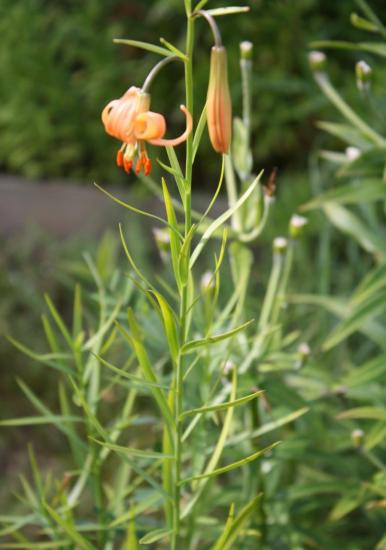
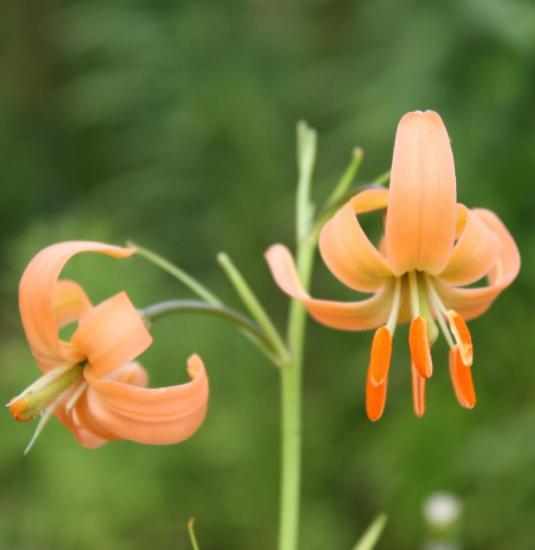

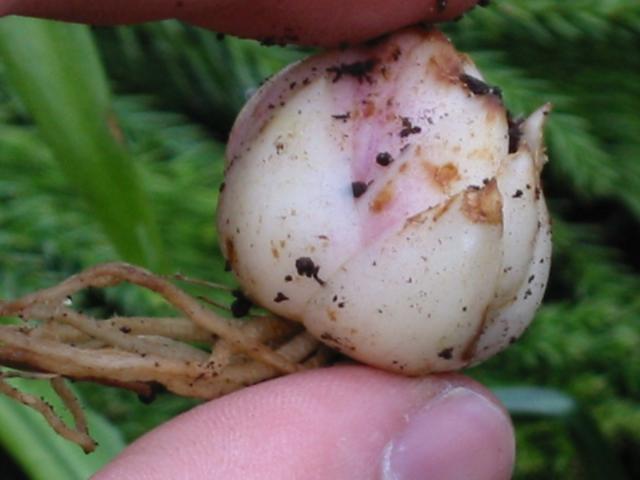
Lilium callosum var. flaviflorum Makino is a yellow form that is indigenous to Okinawa, Japan. It was grown from seed in a pot at Placerville, Ca. El. 2240, zone 7 banana belt and photographed by John Longanecker.

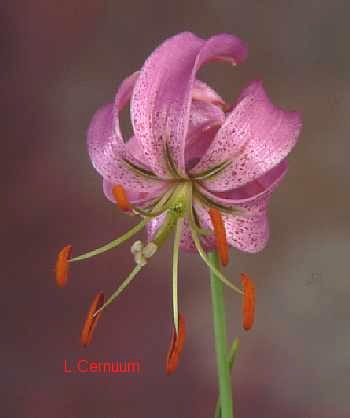
Lilium cernuum Kom. is from Korea and Manchuria. Flowers are pale pink to lilac to pale purple marked with carmine and have a very light mild scent. This lily grows from 33 to 50 cm (16 to 24 inches) tall and can have up to eight buds per stem but usually has three to five down facing fully recurved florets. It is perfectly cold hardy. The foliage is narrow much like Lilium pumilum's but mostly clumped together near the base of the stem. Cernuum derives from the Latin cernuus meaning falling face down; for flowers drooping or nodding. Grown from seed, first photo by Ron Moodycliffe. Photos 2, 3 and 4 submitted by Darm Crook. Photo 5 of a bulb by Pontus Wallstén.
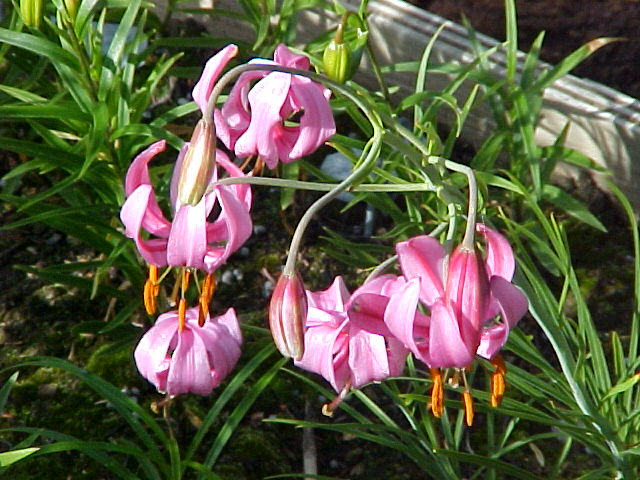
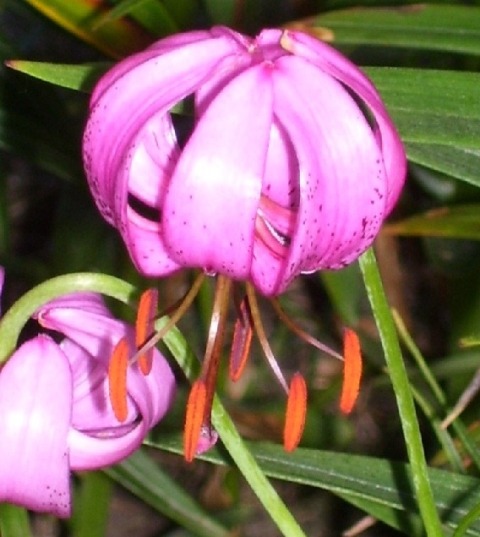
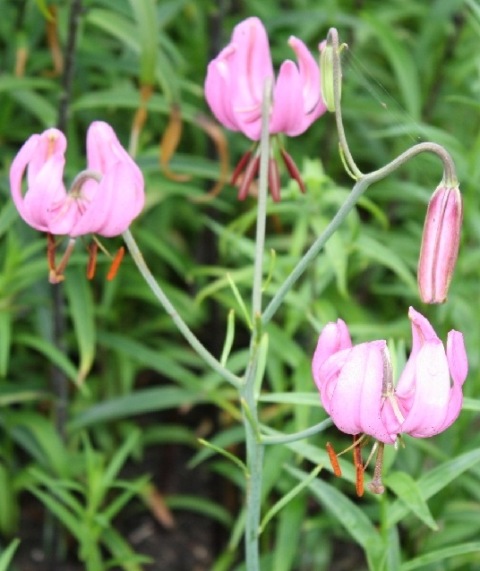
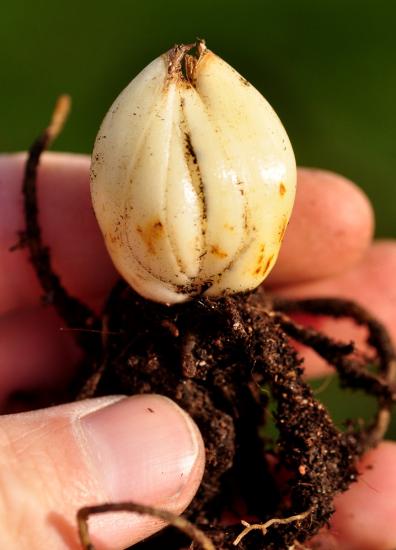
Lilium cernuum v. album This lily was imported into North America and I imagine elsewhere from Holland as L. cernuum v. album. It is currently sold under that name. It can have up to 30 tightly recurved down facing florets which are white with a yellow hue on the face and hints of pink on the tepals backs, plus a green throat extending up into the nectary groove edges. It will accept pollen and set seed from Lilium pumilum and to a lesser degree L. cernuum. Its pollen will not set seed when applied to L. cernuum, and you can't tell if it works with L. pumilum. Its pollen will work on various Asiatic hybrids but most times the resulting offspring will be pollen free and will not set seed; their stigmas remain dry producing no stigmatic fluid to activate pollen grain growth. From observing this lily's performance, I do not believe it is L. cernuum v. album but instead a white form of L. pumilum or a pumilum hybrid. Time will tell us what it is. It grows 62 to 74 cm (30 to 36 inches) tall; the foliage is narrow starting growth at the base and continuing up the stem for at least three quarters of its length. Four photos submitted by Darm Crook.
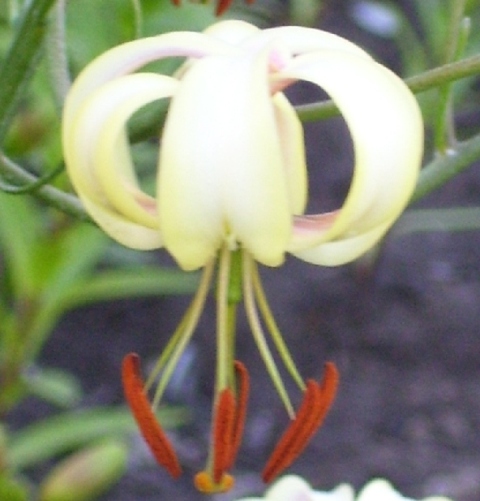

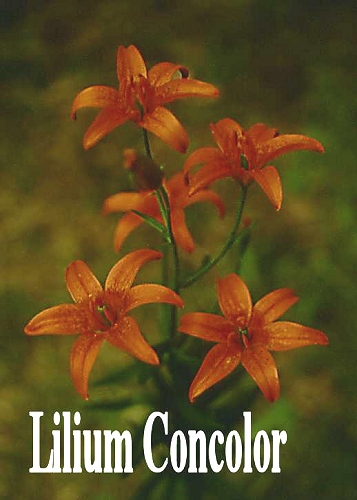
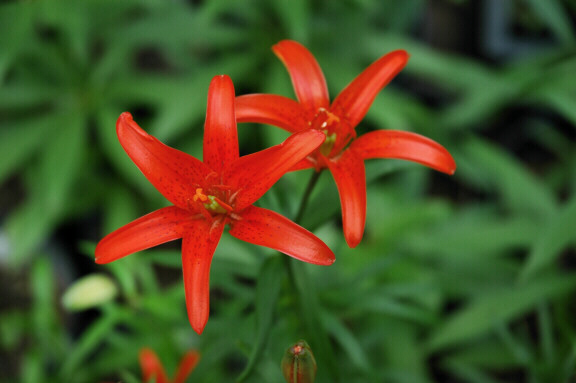
Lilium concolor Salisb. is from China, Japan, Korea and Siberia. It is commonly called the "morning star lily" and has flowers that are scarlet and have an unpleasant scent. Variety coridion has yellow flowers with brown spots; variety partheneion has red flowers streaked in green and yellow and spotted in black; variety pulchellum has unspotted red-orange flowers and variety strictum has scarlet flowers with black spots. Height: 3 ft. First photo by Ron Moodycliffe. Second photo is of a plant grown in a container in Placerville, CA by John Longanecker. Third photo added by Darm Crook. Fourth photo of a bulb by Pontus Wallstén.

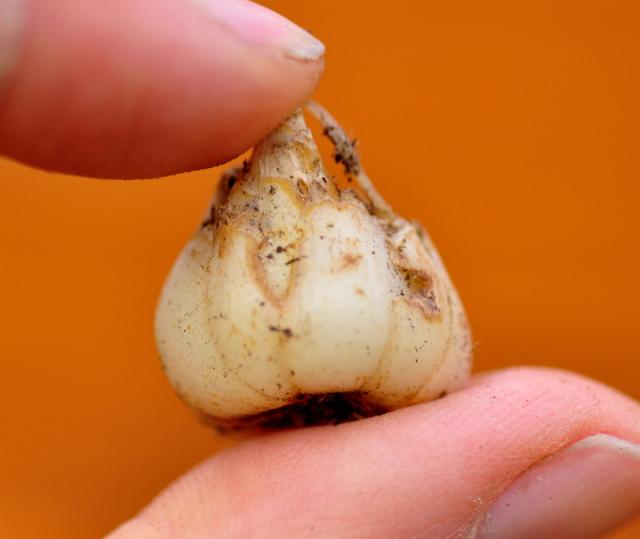
Lilium concolor early form This lily is visually indistinguishable from the type except that it flowers two to two and a half weeks earlier. This feature makes it an excellent L. concolor form for growing in short growing season areas. Two photos submitted by Darm Crook.

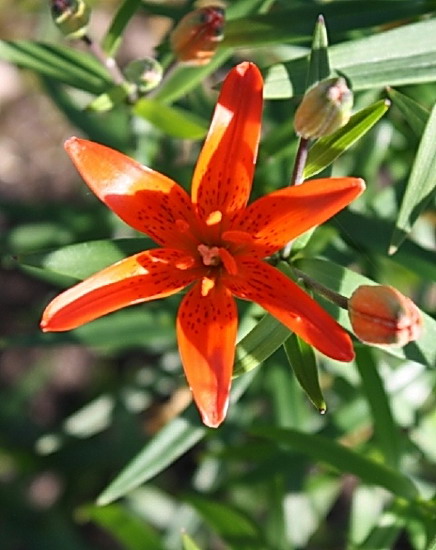
Lilium concolor var. coridion ((Siebold & de Vriese) Baker 1871) This variety has tepals that are a bid wider than the types, thus the florets look larger but are not. The florets can be either upfacing or out facing; many times both forms are on the same stem. This variety is not recognized by Plants of the World Online which considers it to be a synonym of var. concolor. Three photos submitted by Darm Crook
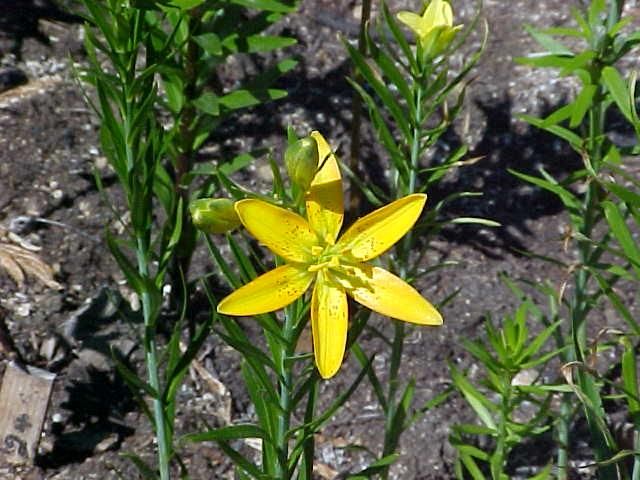
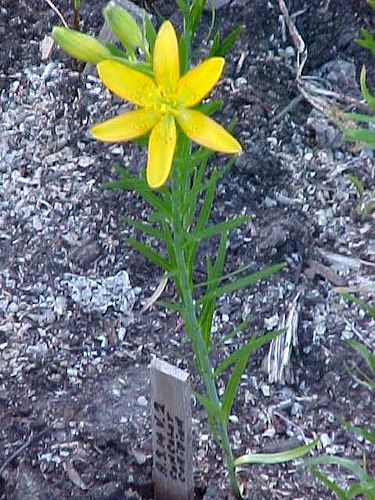
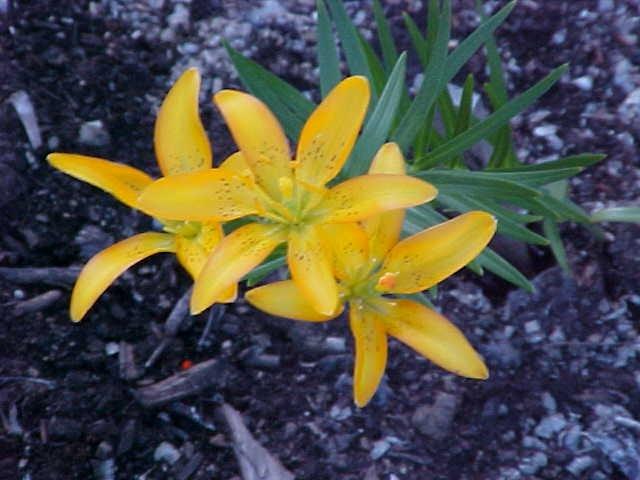
Lilium concolor var. pulchellum ((Fisch.) Baker 1874) This variant has the wider tepals much like V. coridion, and is usually spot free but can have a very light splattering of fine crimson spots. This variety is not listed in IPNI, nor in Plants of the World Online, but is listed in the Flora of China as var. puchellum (Fisch.) Regel (1876) growing in moist places in forests, sunny grasslands from 600-2200 m. Three photos submitted by Darm Crook.


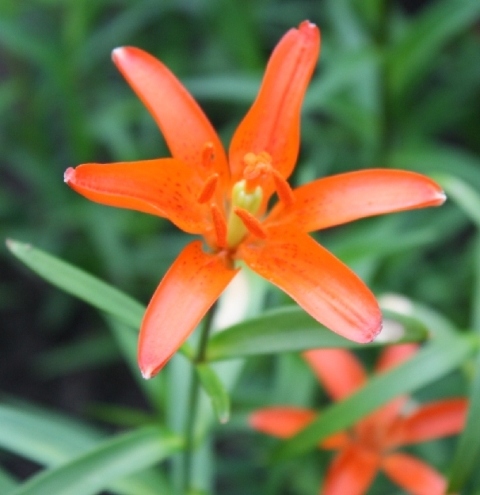
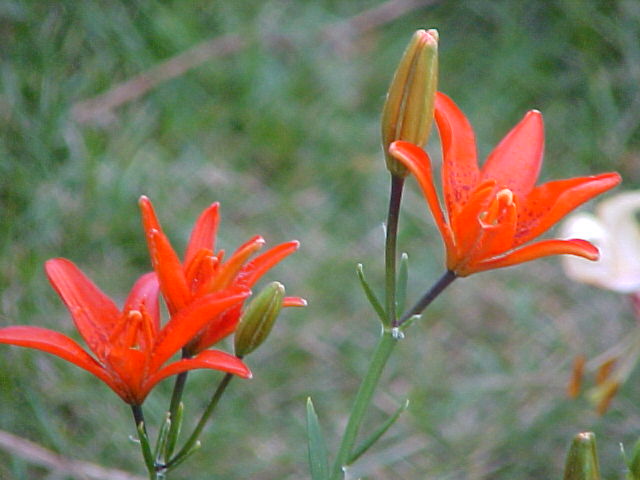
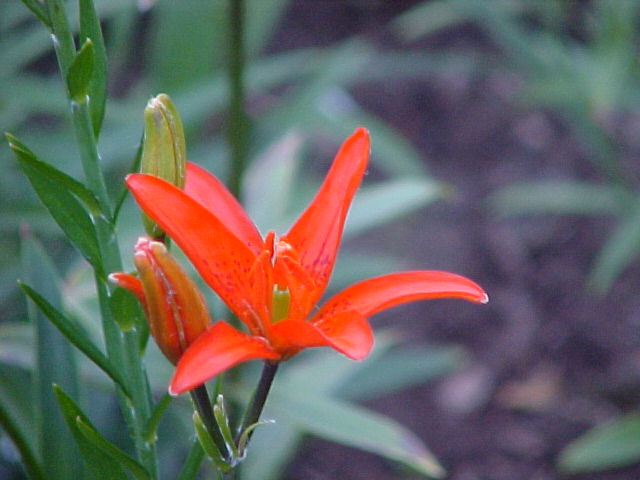
Lilium concolor var. strictum (Stearn 1950) This variety is not listed in IPNI, nor in Plants of the World Online, but is available to purchase. There isn't much difference between this variety and the type, spot colouration only. Three photos submitted by Darm Crook.
American Section A-M - American Section N-Z - Asiatic Section D-K - Asiatic Section L-O - Asiatic Section P-Z - Candidum Section - Dauricum Section - Martagon Section - Oriental Section - Trumpet Section - Lilium Hybrids - Lilium Index