Maianthemum is a genus formerly included in Liliaceae, which was split out into Convallariaceae. This latter family was now considered to belong in either Ruscaceae or Asparagaceae by the Angiosperm Phylogeny II group and is placed in Asparagaceae in APG III. There are 20 species of this genus found in North America, Central America, northern Europe, and eastern Asia. They are perennials with creeping rhizomes. Some are epiphytic. At one time this genus was considered to be limited to species with four tepals. Plants with six tepals were placed in the genus Smilacina. Now a number of taxonomists agree that the six tepaled plants should be included with the four tepaled plants in Maianthemum.
Maianthemum canadense Desf. is found growing in moss or leaf litter in moist aspen and spruce forests. Stems are 5-15 cm tall, rhizome is slender and branching. The berry is pale red, 3-4 mm in diameter. This photo was taken by Linda Foulis.
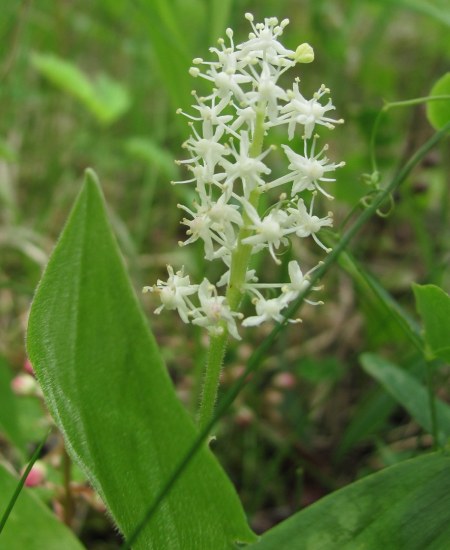
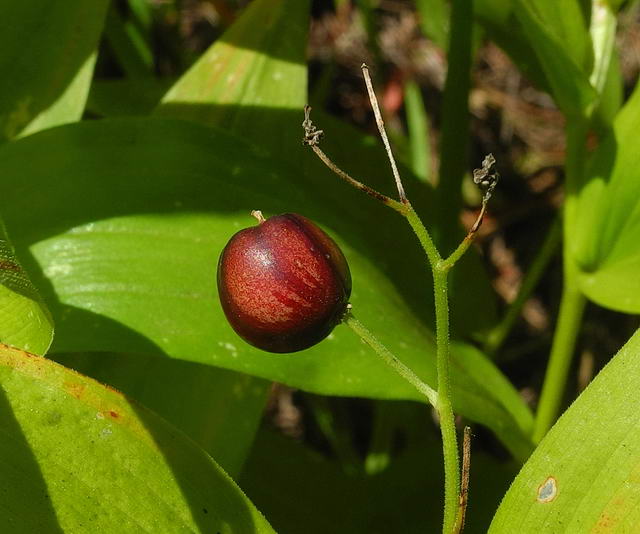
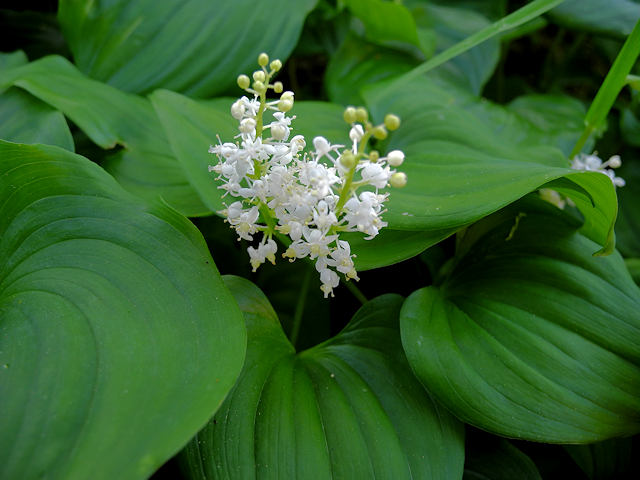
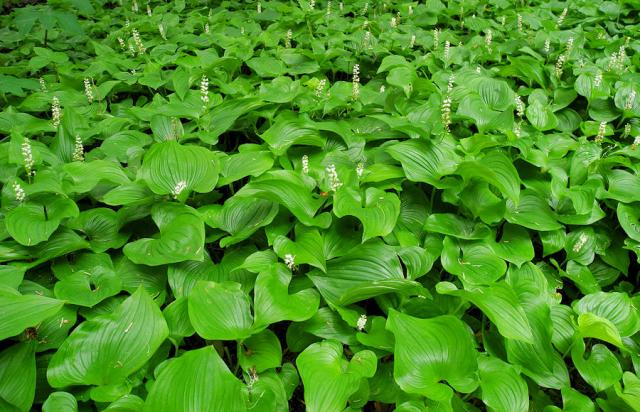
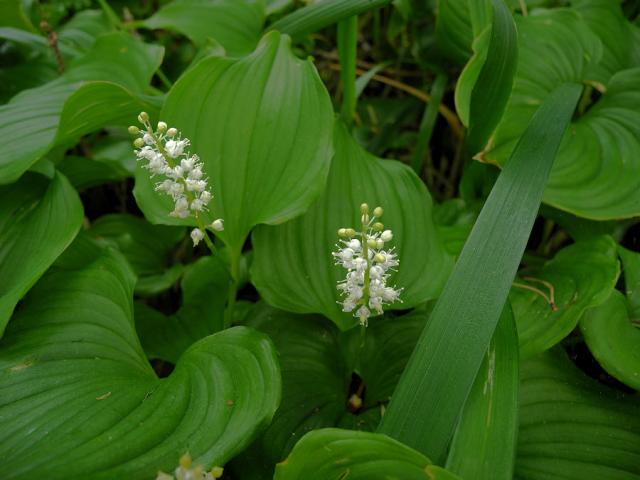
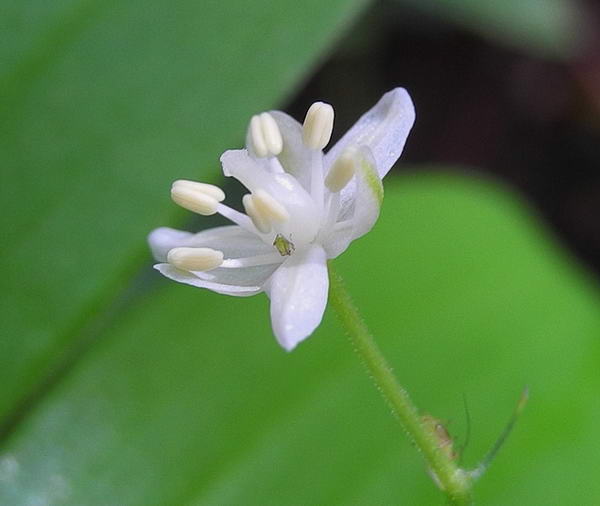
Maianthemum dilatatum (Alph.Wood) A.Nelson & J.F.Macbr. is one of the four tepaled species. It is found in moist shady woods from California's north coast to Alaska where it is often seen in large colonies. It is also found in Asia (Mongolia to Japan). It has parallel-veined heart shaped leaves with tiny white flowers. Height range: 15-35 cm. Photos 1-2 of the leaves taken in Humboldt and Mendocino Counties (California) by Mary Sue Ittner and photos 3-4 of the flowers and berries taken along the Mendocino Sonoma Coast (California) by Bob Rutemoeller. The last photo was taken by Paige Woodward.
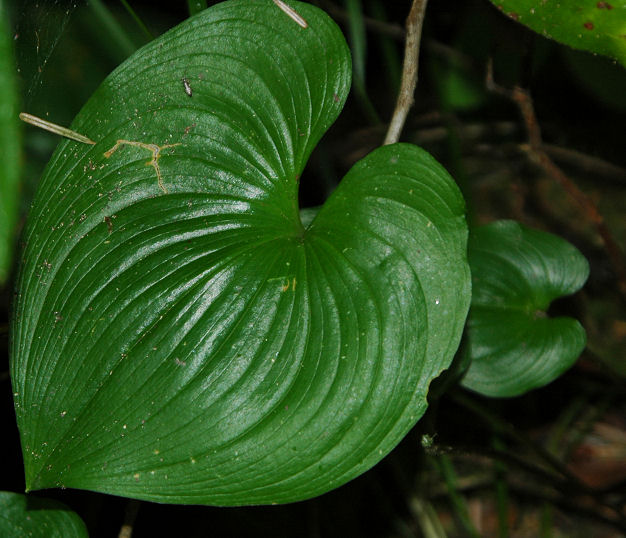
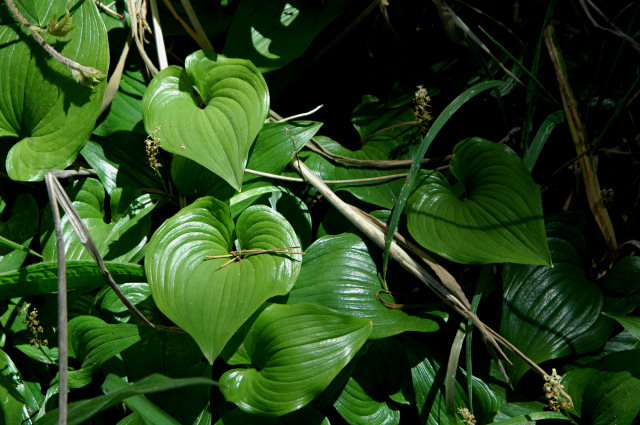
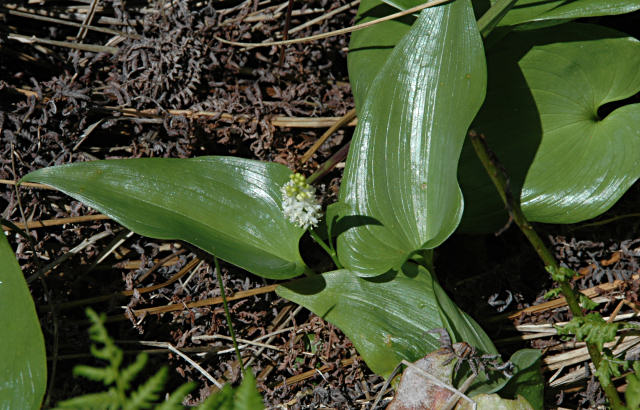
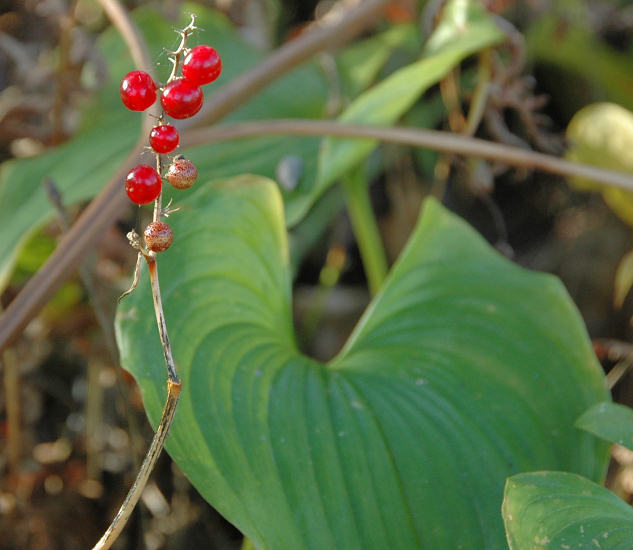
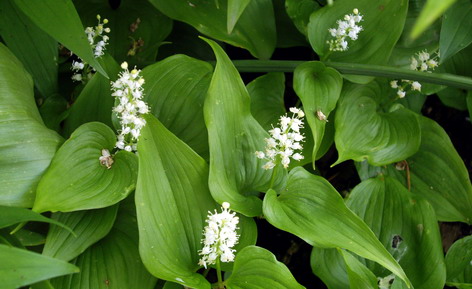
The photos below were taken by Bob Rutemoeller and Mary Sue Ittner May 2016 in Oregon where it was often seen growing in large colonies.
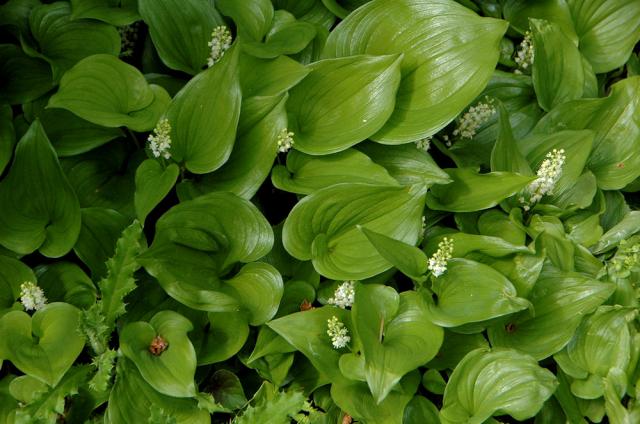
Maianthemum hondoense(Ohwi) LaFrankie, syn. Smilacina hondoensis, photo taken in Japan by Mari Kitama.
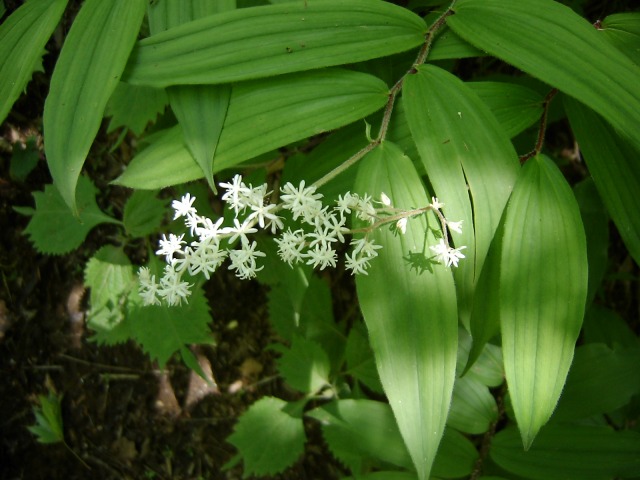
Maianthemum racemosum (L.) Link, syn. Smilacina racemosa (L.) Desf. is found in moist woods and stream banks to open forests in North America. It has a stout fleshy rootstock and in spite of its name a dense panicle of branching white flowers followed by bright red berries. Height range: 1-3 ft. The first three photos by Bob Rutemoeller of plants seen in flower in Scotland and growing wild along the Mendocino Sonoma Coast in California. The last two by Mary Sue Ittner were taken in Sonoma County one month apart in March 2016 and April 2016.

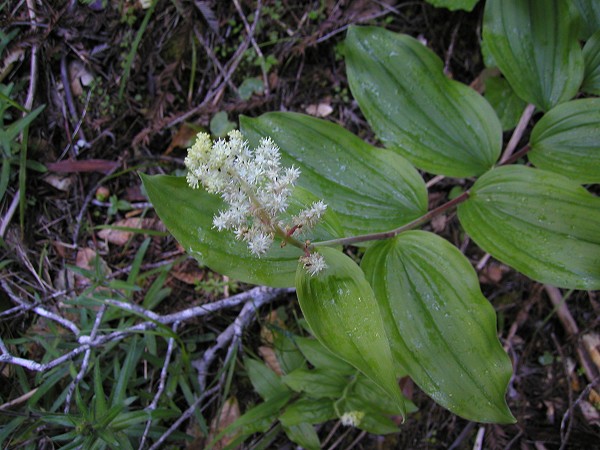
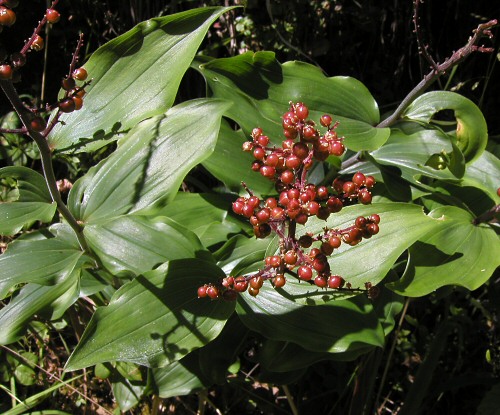
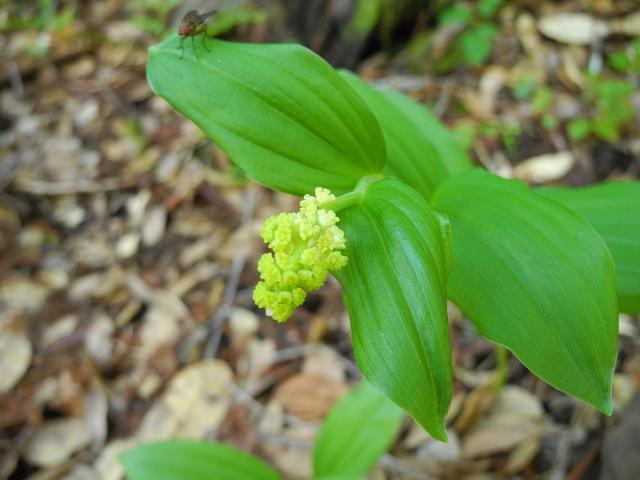
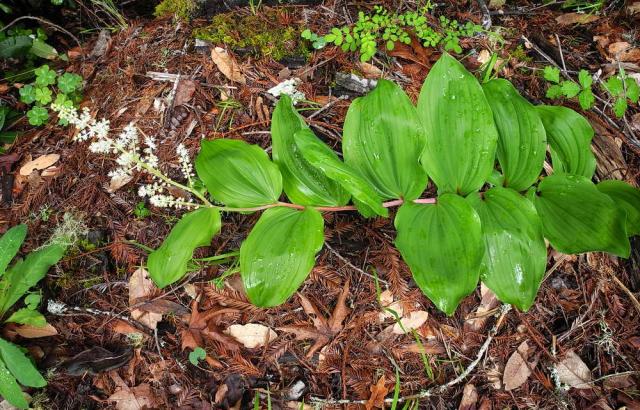
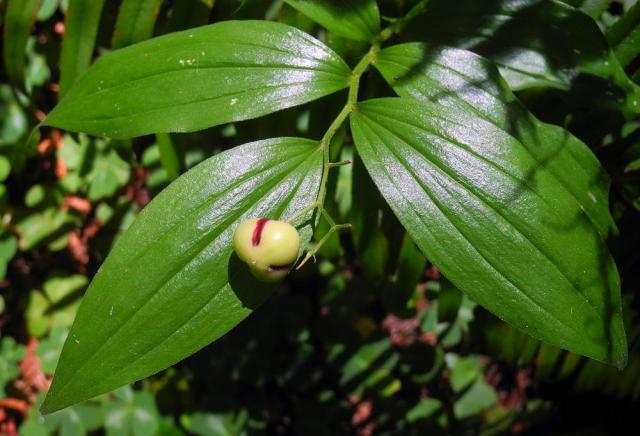
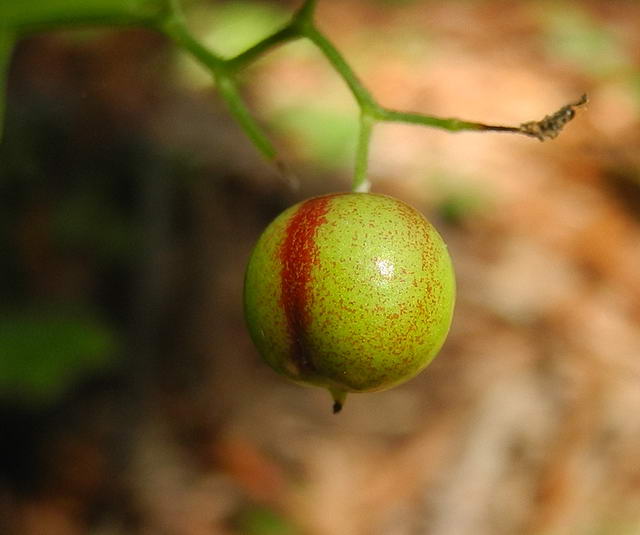
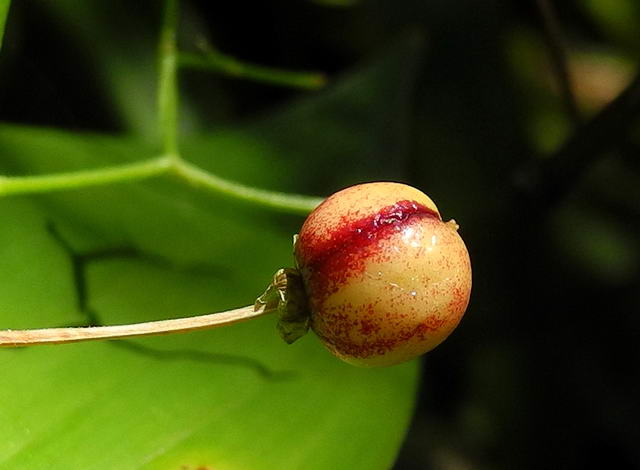
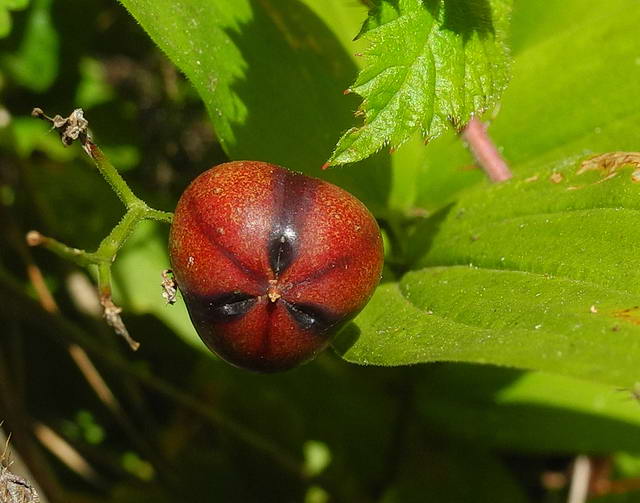
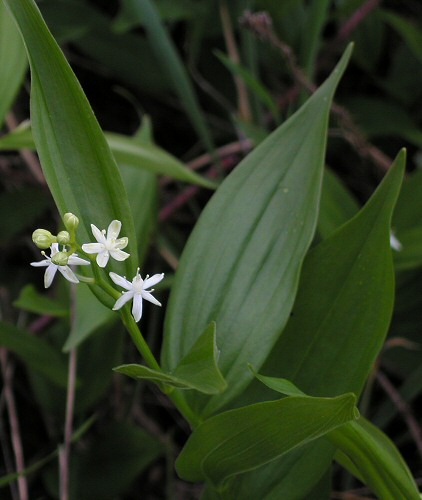
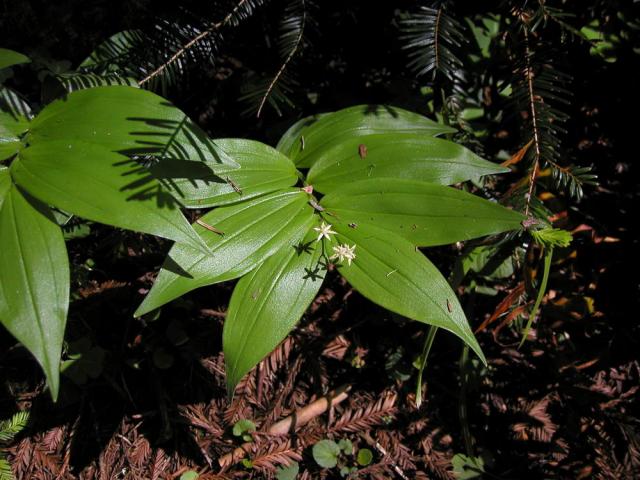
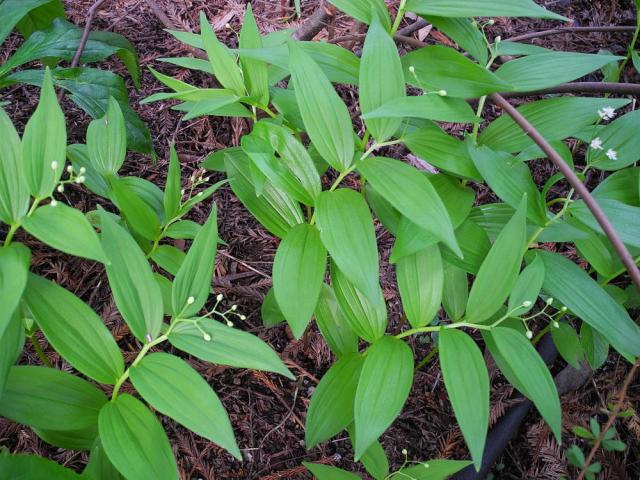
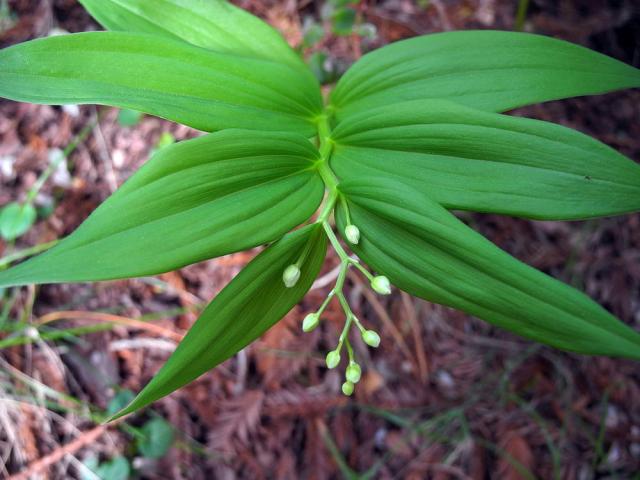
Maianthemum stellatum (L.) Link , syn. Smilacina stellata (L.) Desf. is found in moist woods, along streams and well-drained hillsides in North America. It is a geophyte with a slender fleshy rootstock with many veined alternate green leaves and small creamy white flowers followed by greenish-yellow berries mottled with red to brown spots and 3 or 6 red stripes when young, becoming reddish-black when mature, with a slender point. Where it is happy, it soon forms colonies. These plants go dormant in fall and then reappear late winter and flower in spring. Height range: 20-60 cm. The first two photos are of plants growing wild along the Mendocino Sonoma Coast of California. The next three photos are of plants grown from seed and spreading in her garden. Plants spread more by rhizomes than by seed. Photos from Mary Sue Ittner.
Photos below show the progression of the fruit as the berry changes color.