Namaqualand is an arid area in northwest South Africa. Although it is a winter rainfall area, rainfall is sparse and the plants found in this area are not included in some of the books illustrating South African bulbs since it is not considered to be part of the Cape Floral province. For most of the year the land appears to be a desert and because it has an average annual rainfall of 50-400 mm it could be classified as such. But in a year with adequate rainfall it becomes alive with an amazing floral display of annuals, bulbs, dwarf shrubs, and succulents. Flowering usually occurs in August and September, but dry winds which halt the display can end it sooner. In a year with little rainfall there are few flowers. Summers are hot and dry but there is occasional fog since the ocean is not that far away. Photos on this page were taken in Namaqualand. More information about the plants seen on this page can be found on the wiki genus pages. Links are included to make it easier to go directly to these pages. Species from L-M, Lachenalia to Moraea, are pictured below.
Lachenalia carnosa is a Namaqualand species found growing in rocks and on sandy flats between hills. Pictures 1-4 below from Bob Rutemoeller and Mary Sue Ittner show this species growing in the rocks September 2006. Photo 5 was taken by Cameron McMaster September 2011 near Carolusberg.

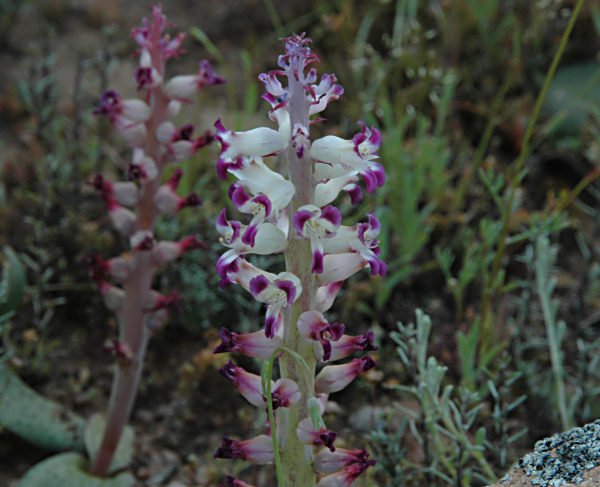
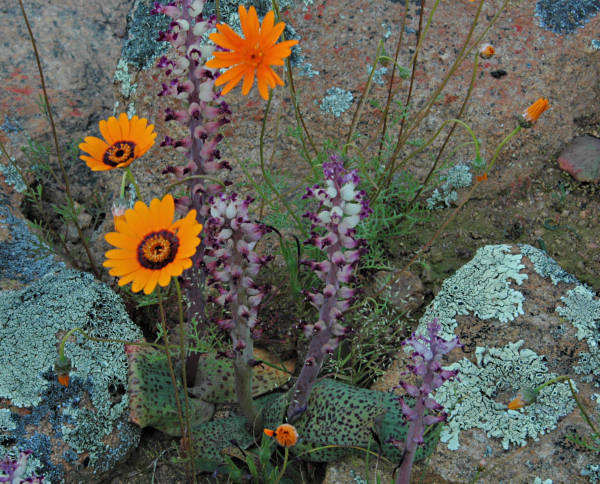
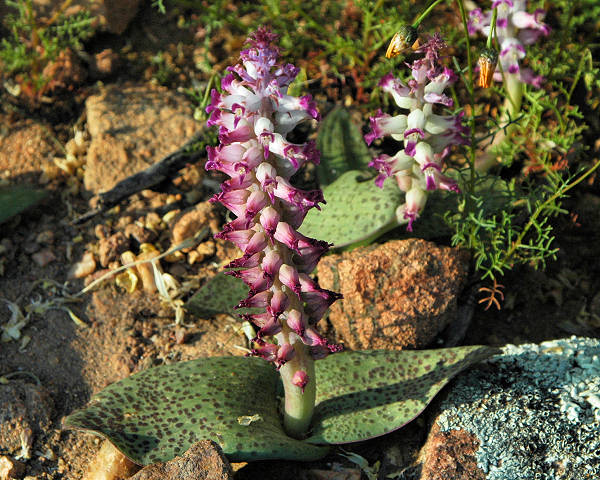
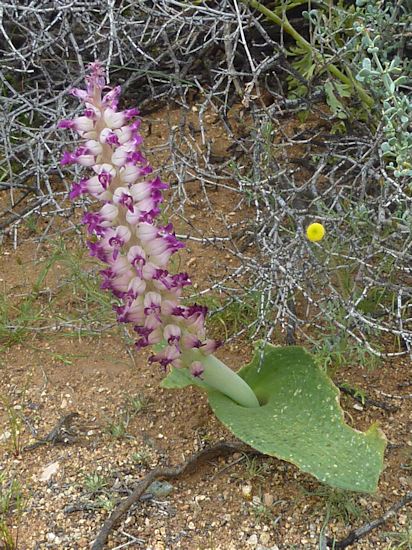
Photos from Alan Horstmann taken near Springbok.
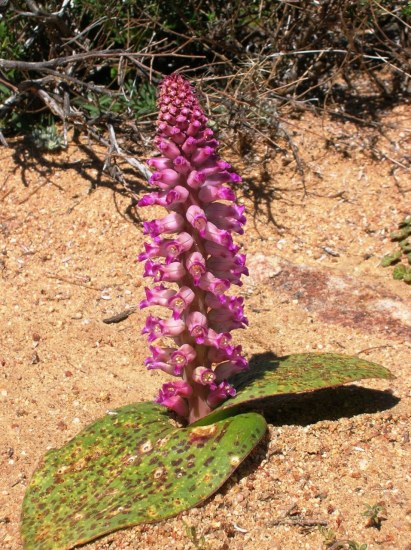
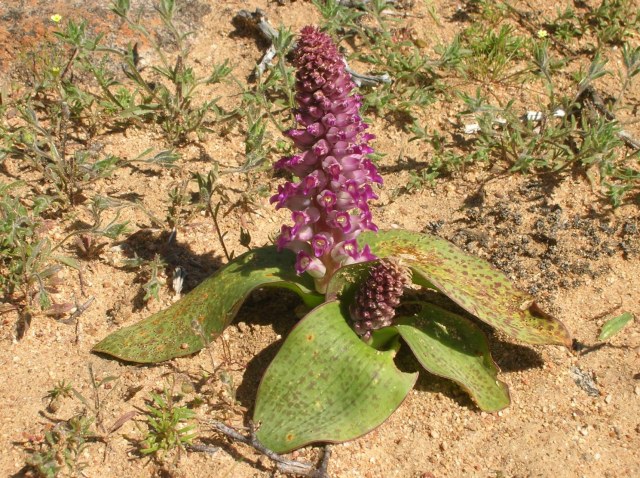
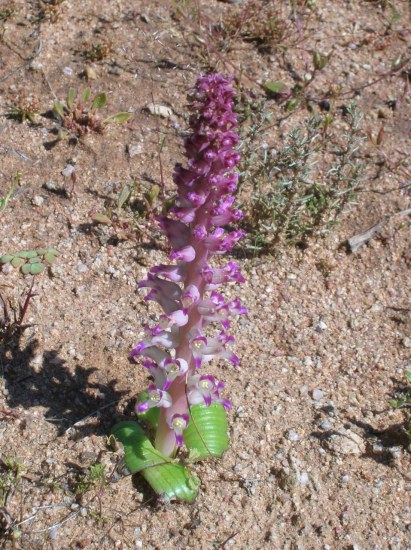
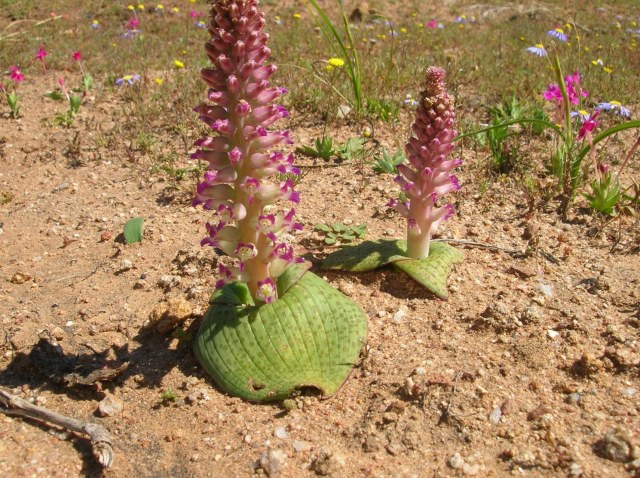
Lachenalia framesii is a Namaqualand species that grows in flat sandy areas, often in large colonies. The photo was taken near Knersvlakte September 2011 by Cameron McMaster.
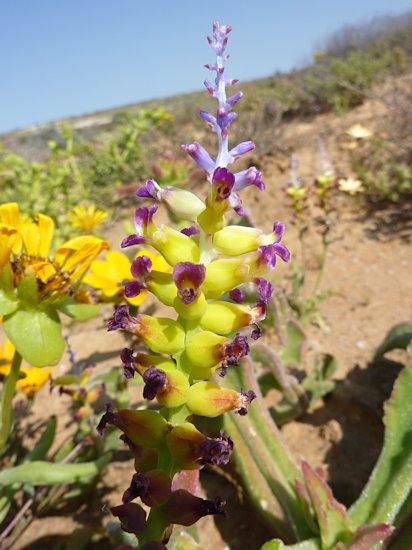
Lachenalia hirta is distributed from Namaqualand to the Western Cape where it grows in sandy soil, often in large colonies. Photos were taken September 2006 by Mary Sue Ittner.
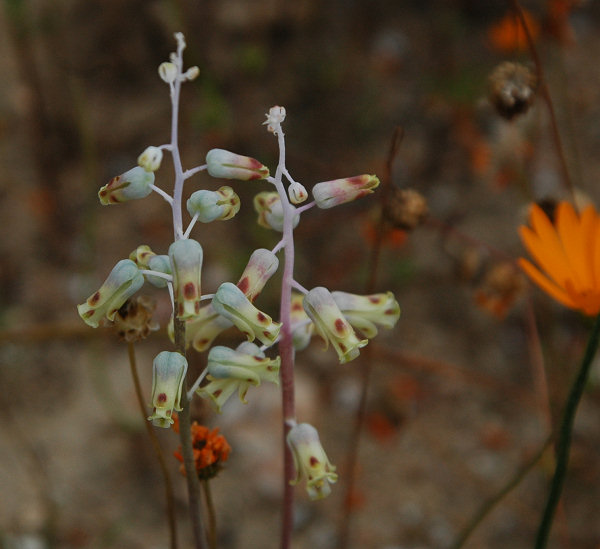
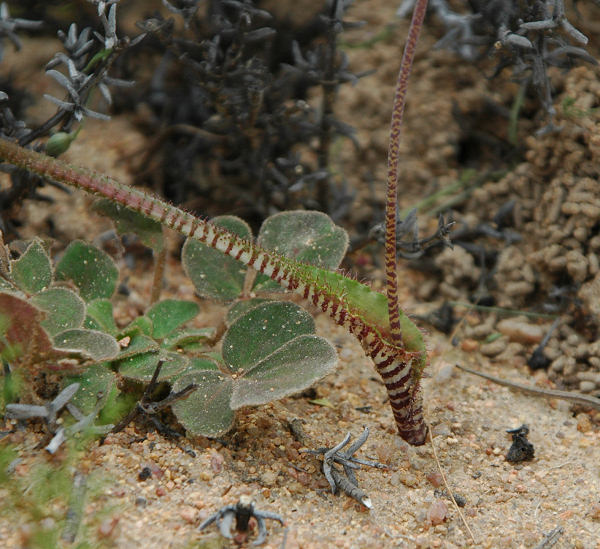
Lachenalia namaquensis is found in exposed rocky habitats. The photo was taken by Andrew Harvie northwest of Steinkopf.
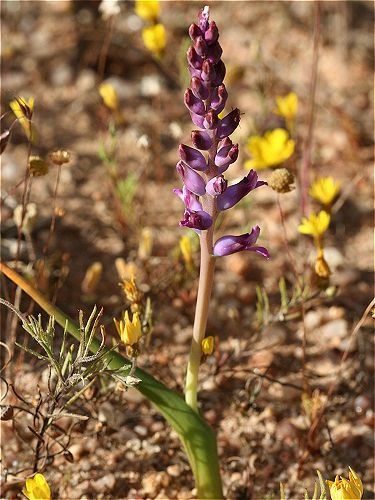
Lachenalia patula is found on quartz hillsides in the northwest Cape. Photos by Andrew Harvie.
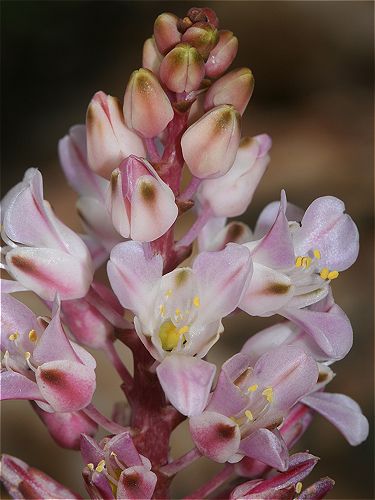
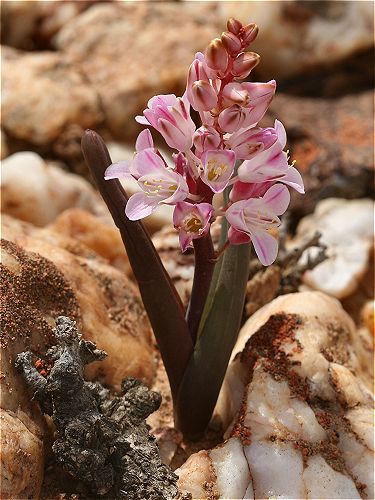
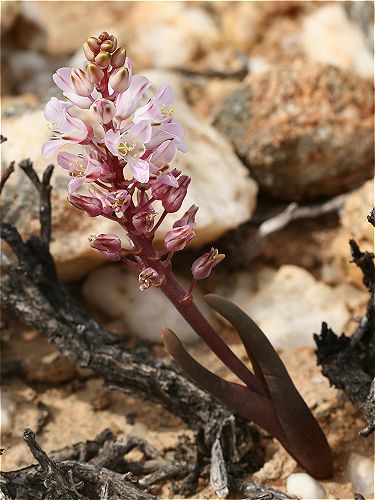
Lachenalia unifolia Jacq. grows on sandy granitic or sandstone soils from Namaqualand to Bredasdorp. Photo from Cameron McMaster taken near Naries.
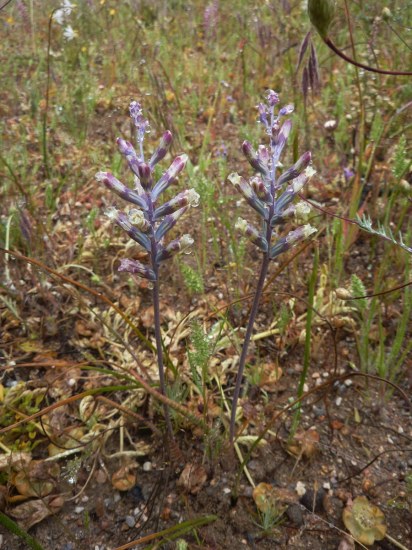
Lachenalia violacea is distributed in the northwest Cape where it is found in various habitats, but often in rocky places. Photos were taken September 2006 by Mary Sue Ittner.
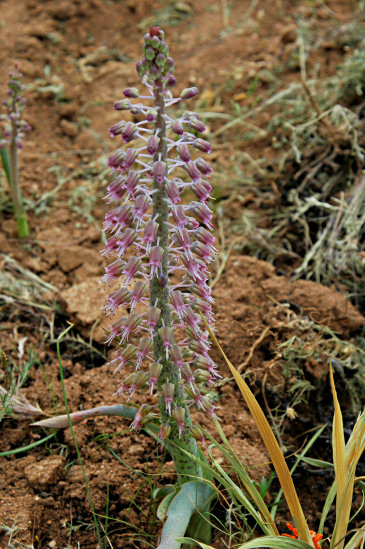


Lapeirousia arenicola is found in deep red sand. Photos were taken September 2006 by Mary Sue Ittner.
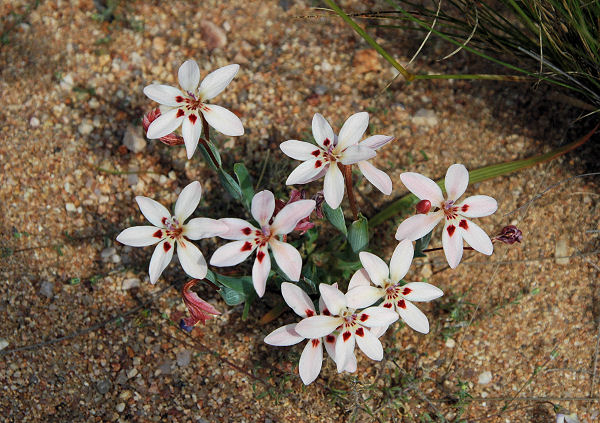
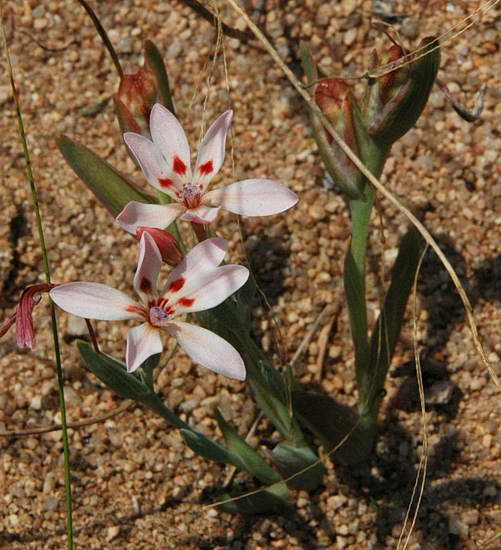
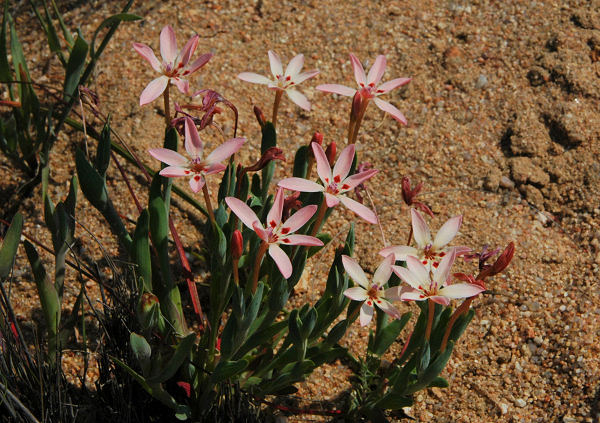
Lapeirousia fabricii is found on stony sandstone and granitic slopes. Photos were taken September 2006 by Bob Rutemoeller and Mary Sue Ittner.
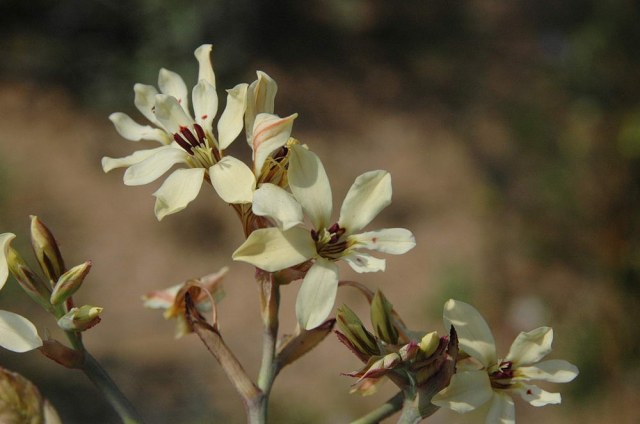
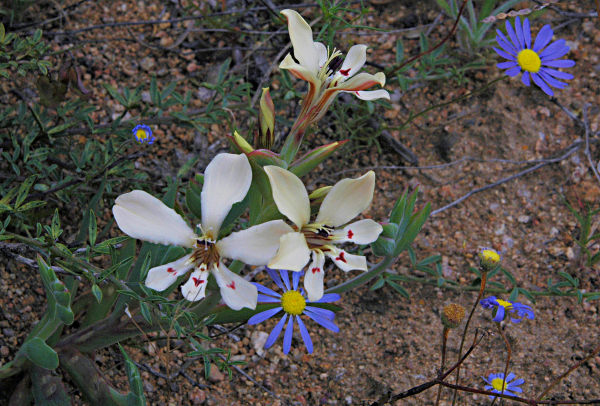
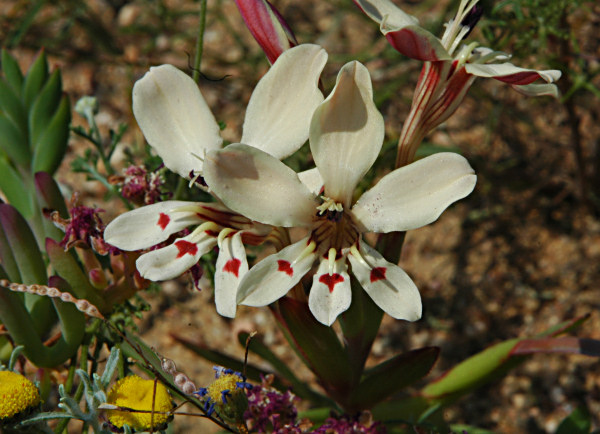
Lapeirousia silenoides is found in coarse granite derived sand and in rocky places, often in the crevices of granite outcrops. Photos from Mary Sue Ittner and Bob Rutemoeller taken August 2001 and September 2006 show it growing in the rocks, the leaves, and the long tube.
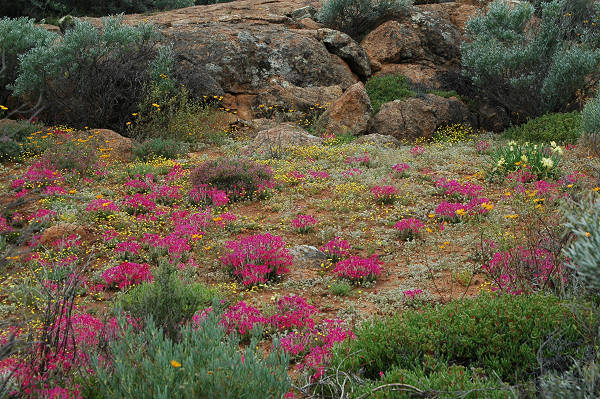

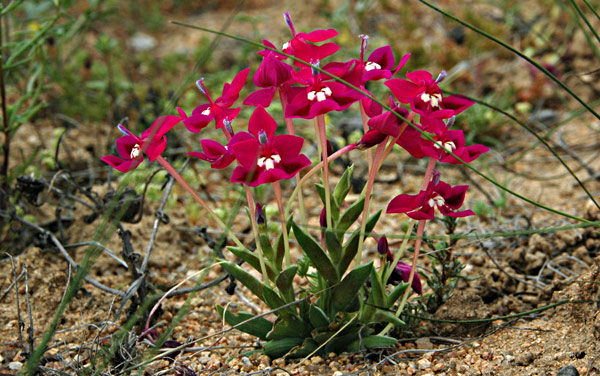
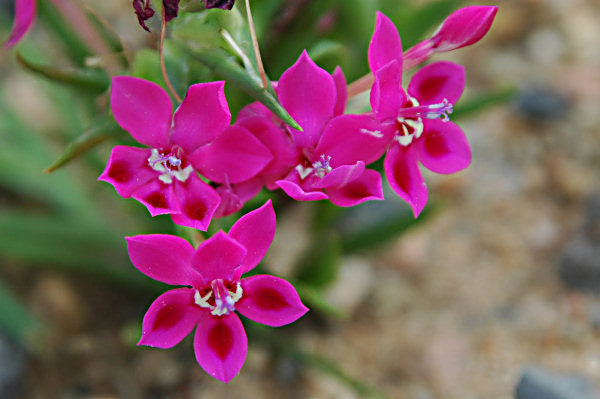
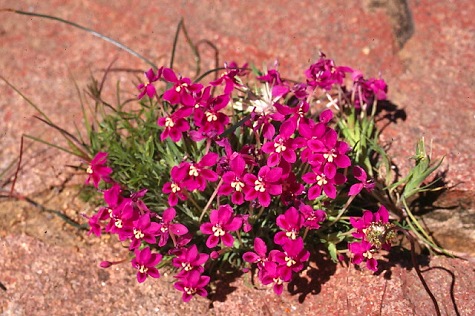
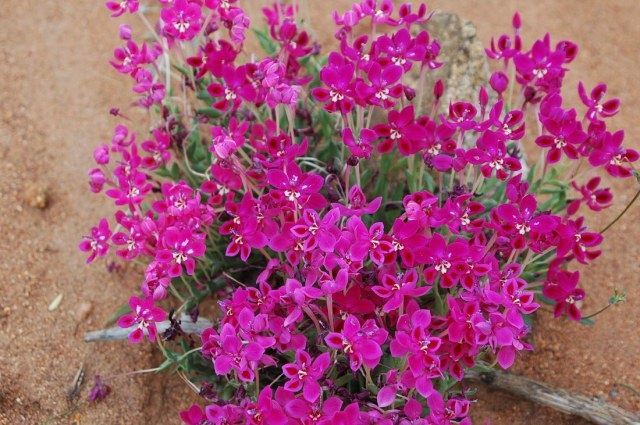
Lapeirousia verecunda is a narrow endemic of the Spektakel Mountains where it grows on stony shale slopes. Photos were taken near Naries by Cameron McMaster.
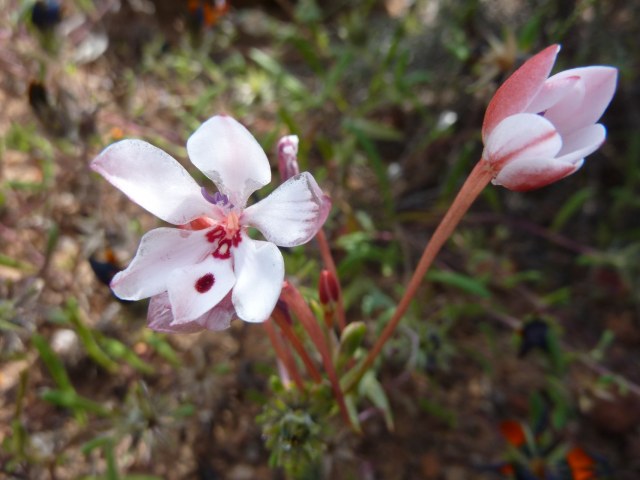
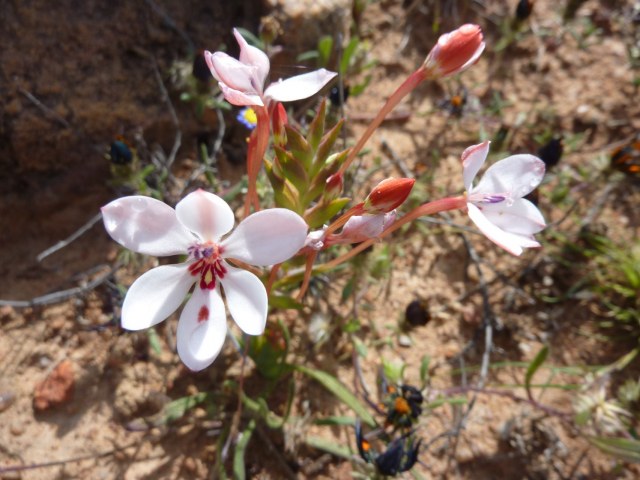
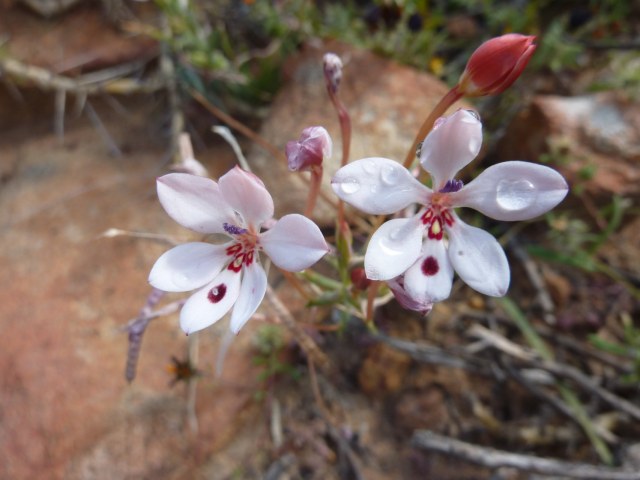
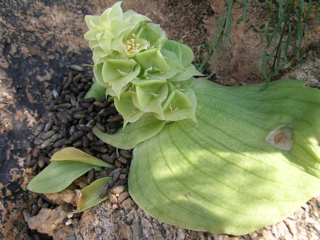
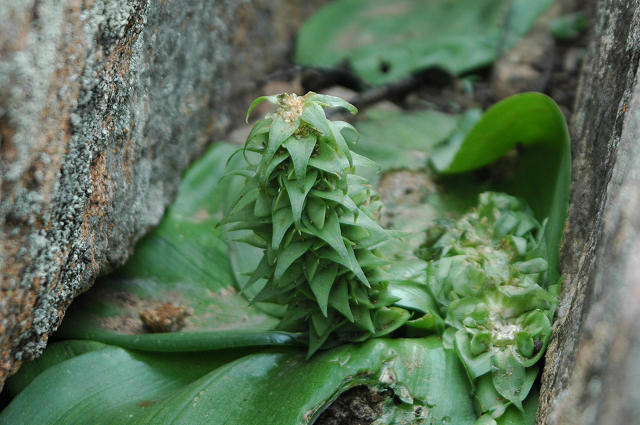
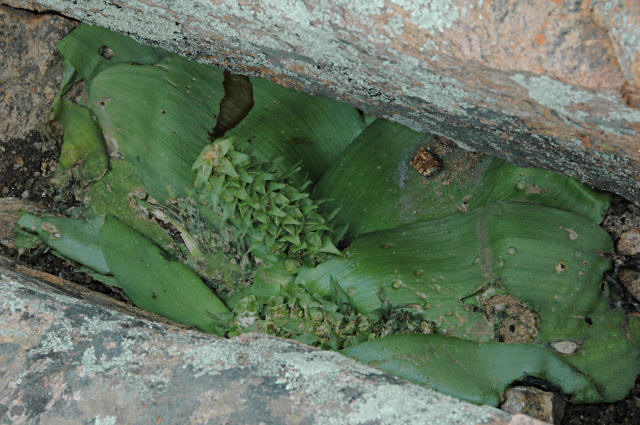
Massonia bifolia syn. Whiteheadia bifolia grows in arid winter-rainfall areas of southwestern Namibia and the Western Cape. Plants are tucked in under rocks to provide shade and bulb protection. Photographed by Diane Whitehead, Mary Sue Ittner and Bob Rutemoeller in early September 2006.
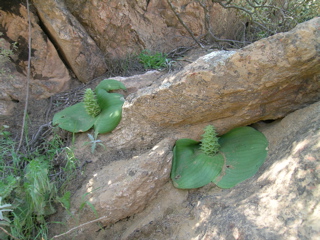
Moraea bolusii grows on rocky flats and hills in thin sandy soils. Photos were taken by Andrew Harvie northeast of Springbok.
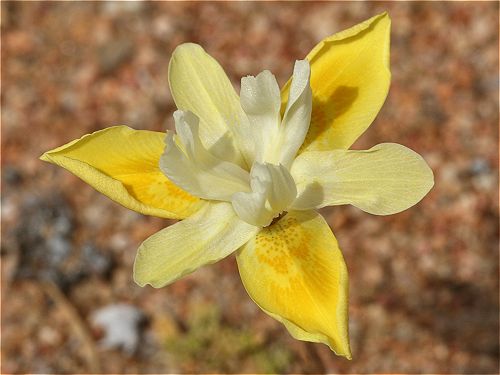
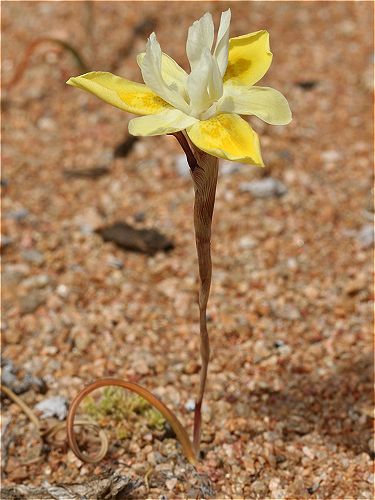
Moraea falcifolia Klatt grows on sandy or clay slopes and flats from southern Namibia to the Karoo and south to the southwestern Cape. Photos taken by Brian du Preez in Namaqualand late July 2021.
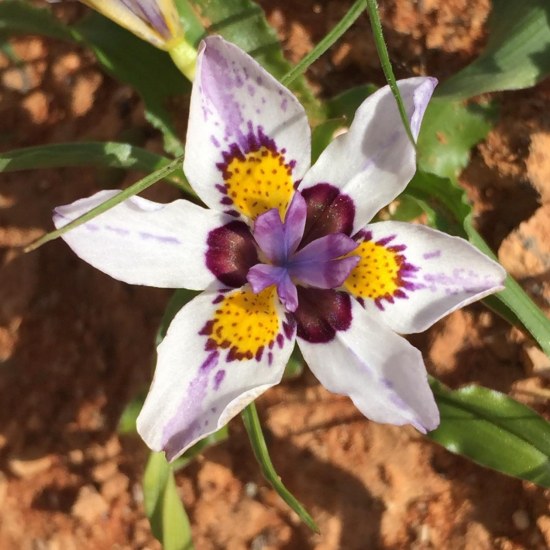
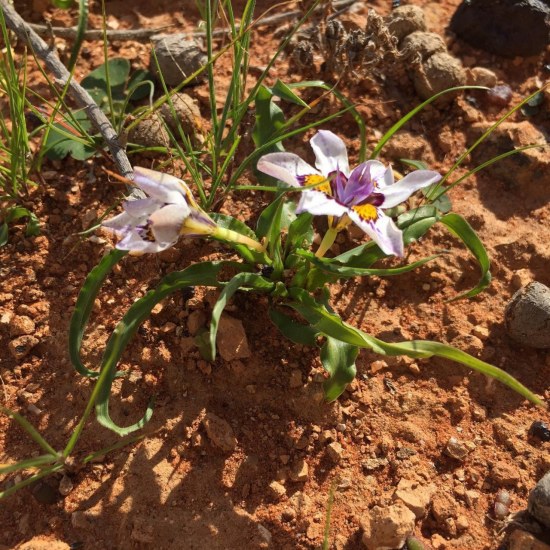
Moraea filicaulis Baker, syn. Moraea fugax ssp. filicaulis (Baker) Goldblatt, grows in rocky ground or deep sand and flowers August to October. Photographed September 2006 in Namaqua National Park by Bob Rutemoeller and Mary Sue Ittner.
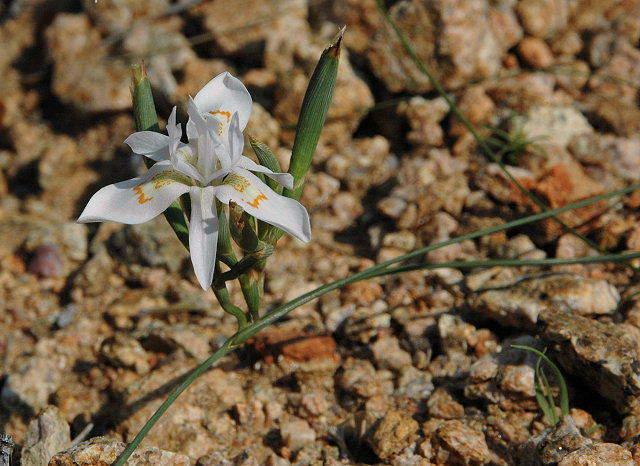
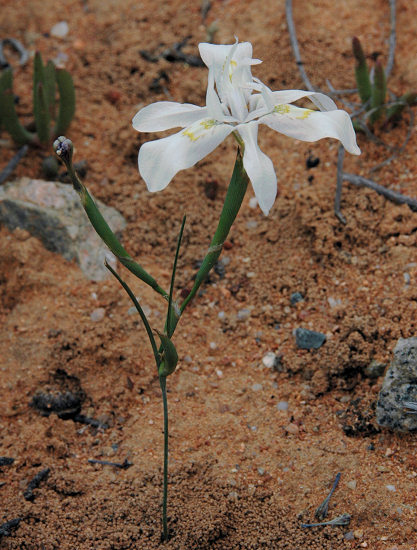
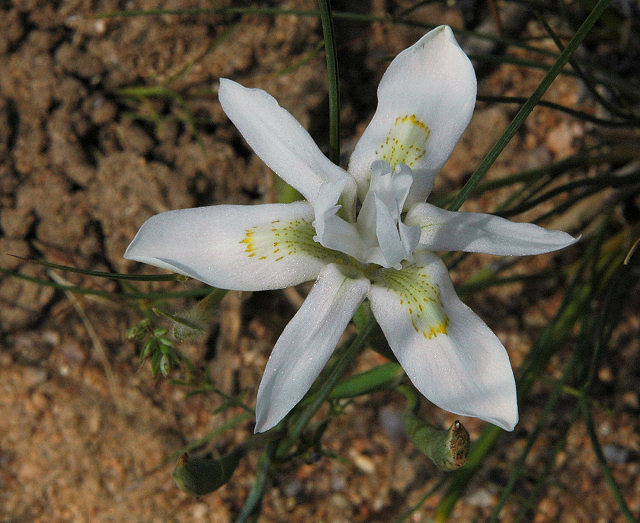
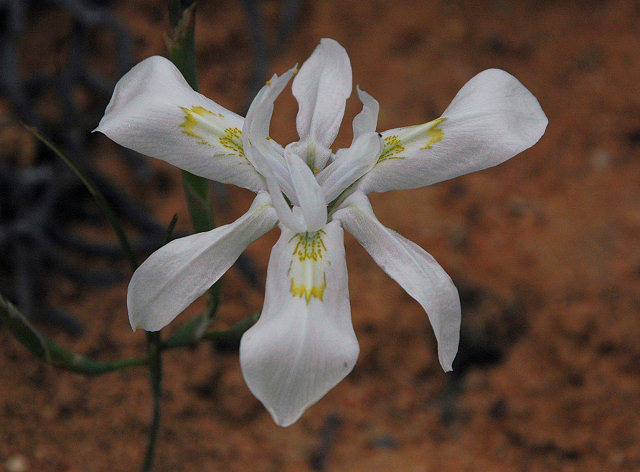
Moraea fugacissima (syn. Galaxia fugacissima) is found on wet sand and clay flats from Namaqualand to Humansdorp. Photo taken by Cameron McMaster near Kamieskroon.
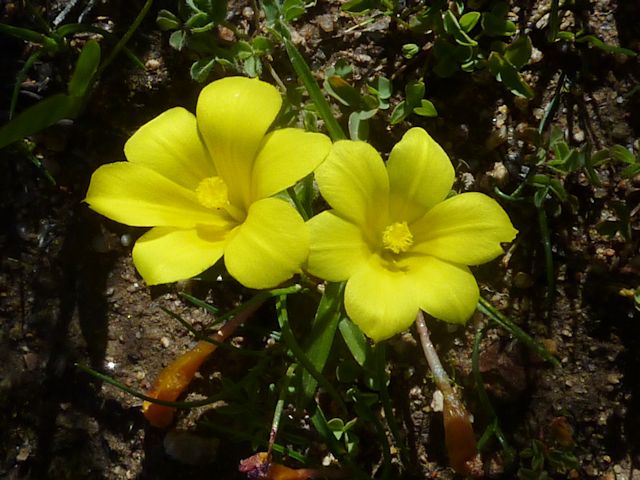
Moraea fugax grows in deep sands and rocky sandstone and granitic soils in the winter rainfall areas of South Africa. Photographs were taken September 2006 in Namaqua National Park by Bob Rutemoeller and Mary Sue Ittner.
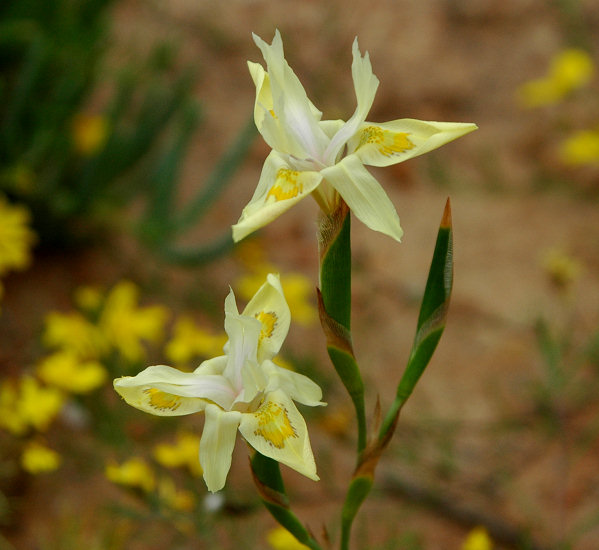
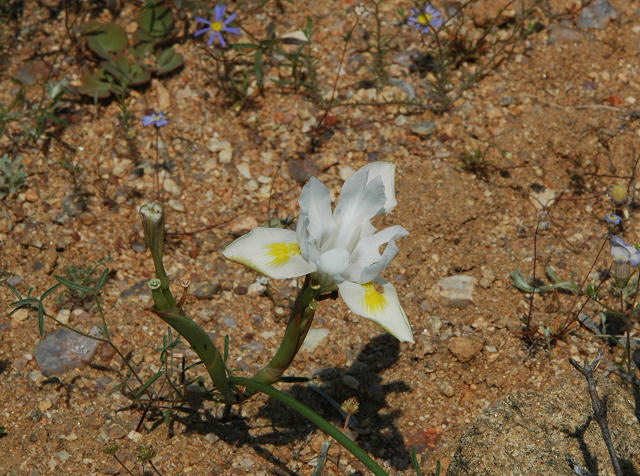
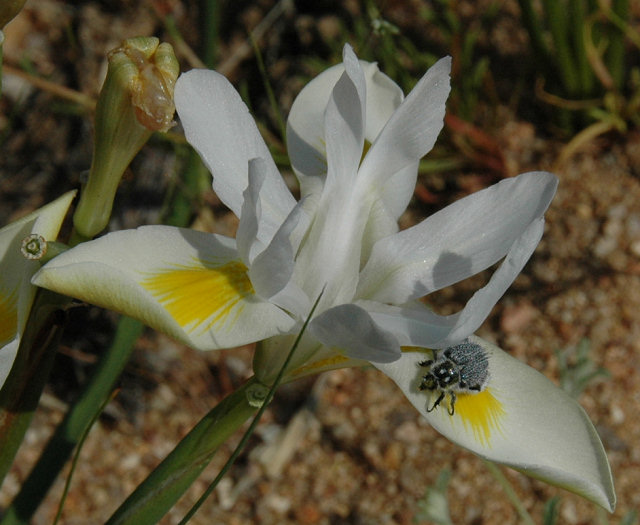
Moraea gawleri is widespread in the Cape province and is found growing on sandy or clay slopes, usually in Renosterveld. Photo taken September 2011 by Cameron McMaster.
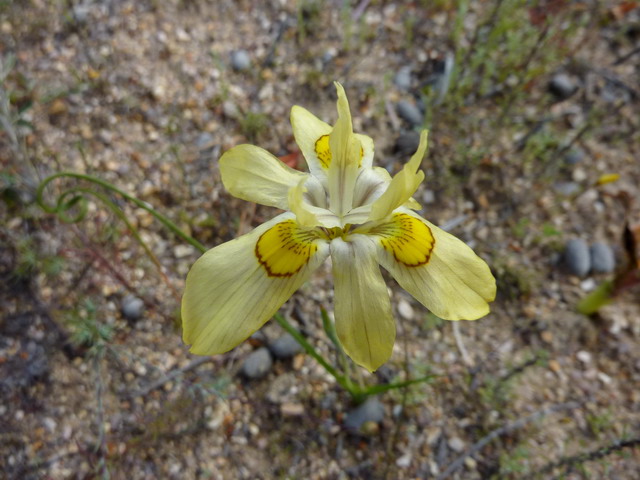
Moraea inconspicua is a widespread species (Namaqualand to the Eastern Cape) found on sandy and clay slopes, flowering in spring. Photographs taken by Bob Rutemoeller and Mary Sue Ittner September 2006.
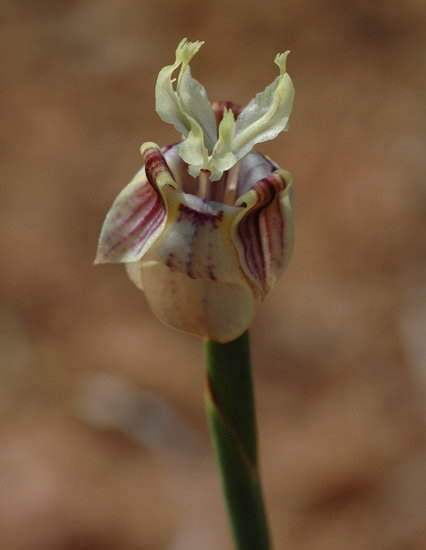
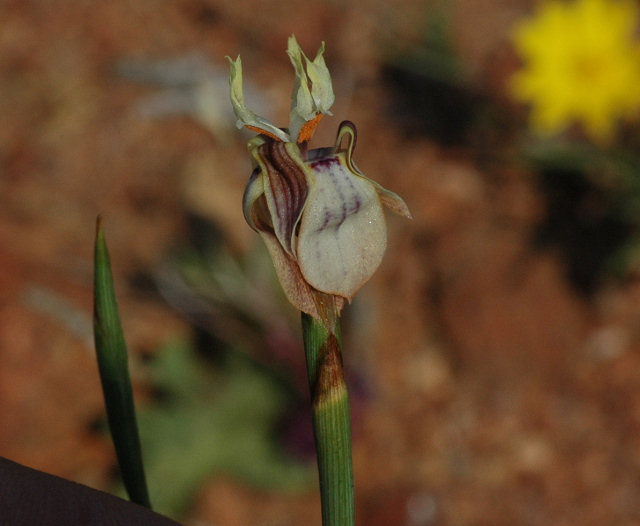
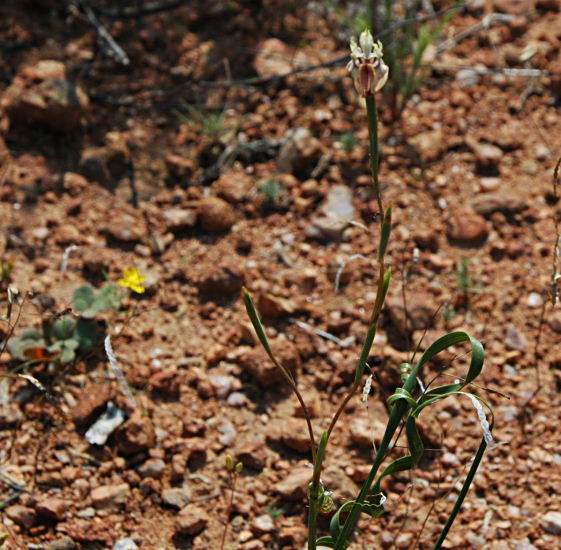
Moraea intermedia is a rare species found in open sandy places among granite outcrops near Springbok. Photos taken by Cameron McMaster.
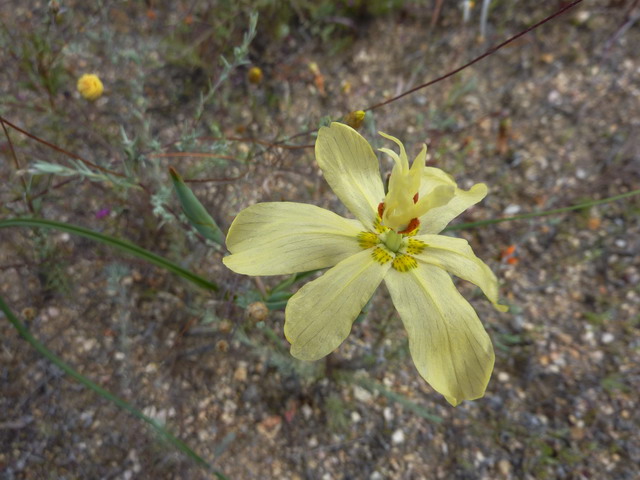
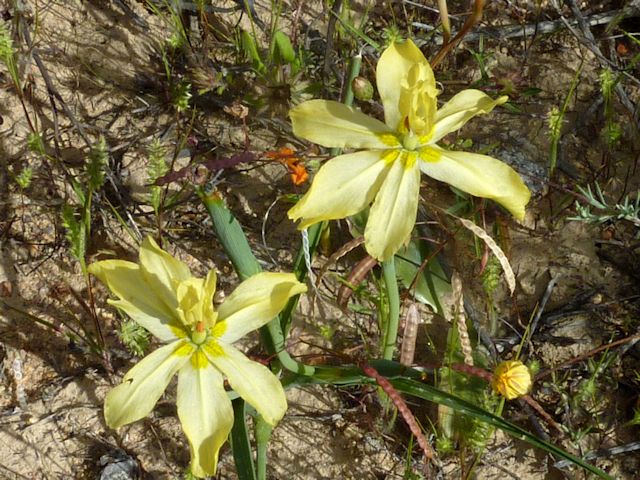
Moraea miniata is widespread (Namaqualand, Roggeveld, northwest, southwest, and southern Cape) and is found growing mainly on clay slopes, renosterveld and karroid scrub. Photos 1-2 from Bob Rutemoeller and Mary Sue Ittner of plants with white flowers blooming September 2006. Photo 3 from Cameron McMaster taken near Kamieskroon September 2011.
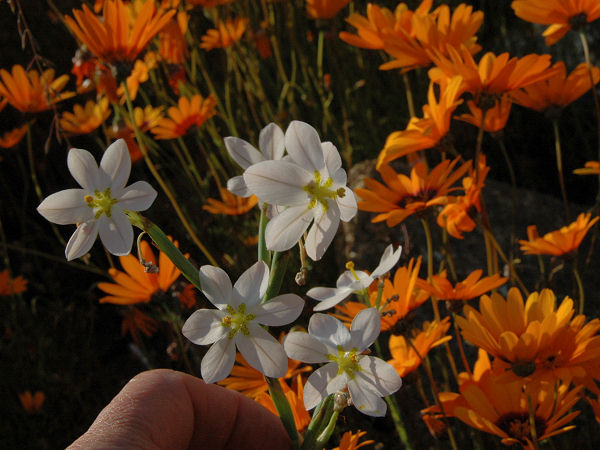
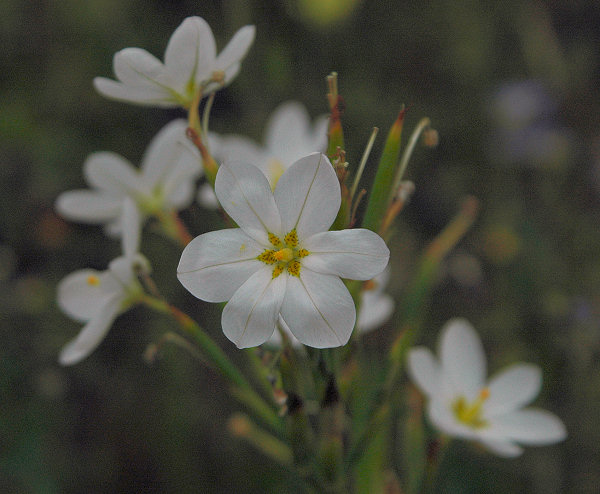
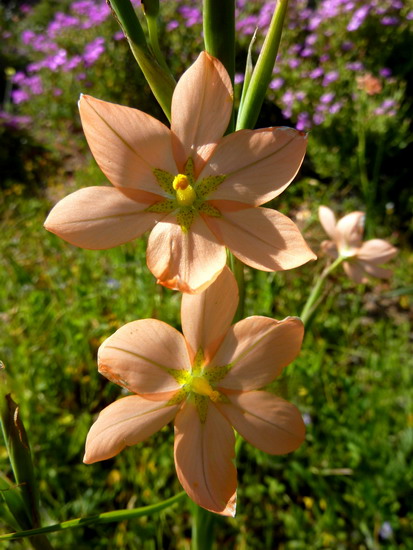
Moraea nana is found on rocky granite and sandstone slopes from Namaqualand to Citrusdal. Photos by Bob Rutemoeller and Mary Sue Ittner of some particularly attractive specimens seen September 2006.
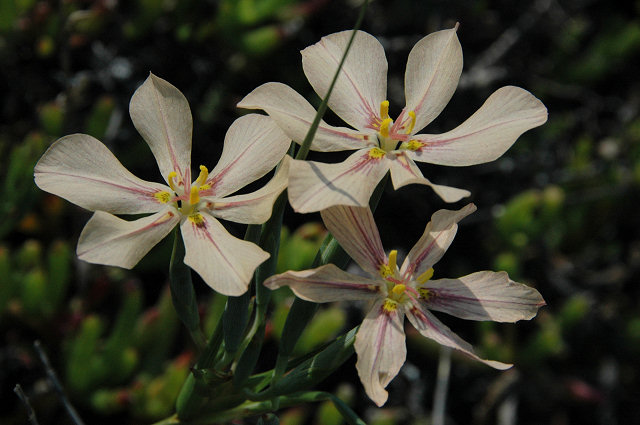
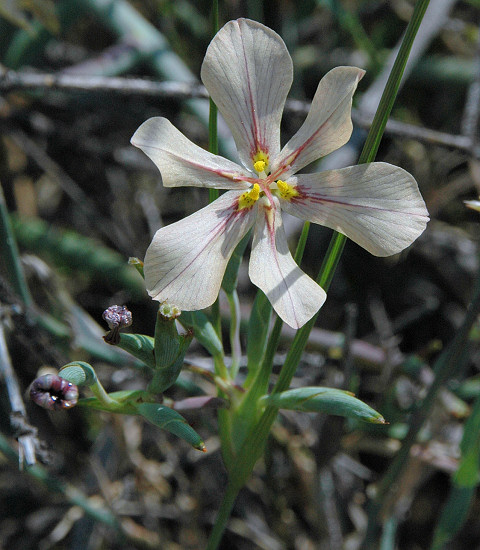
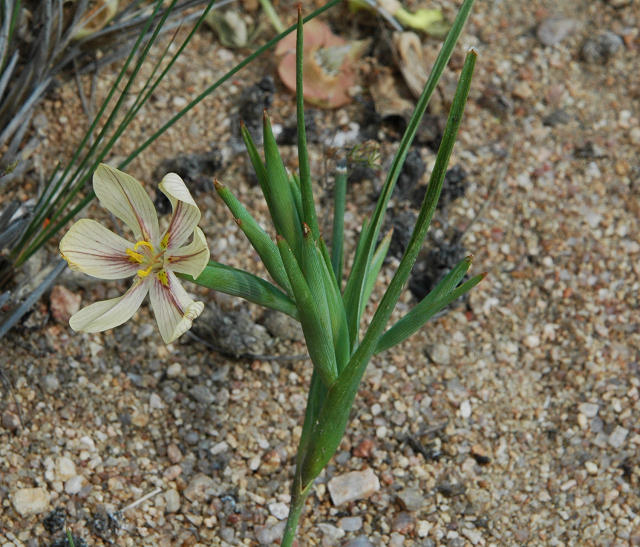
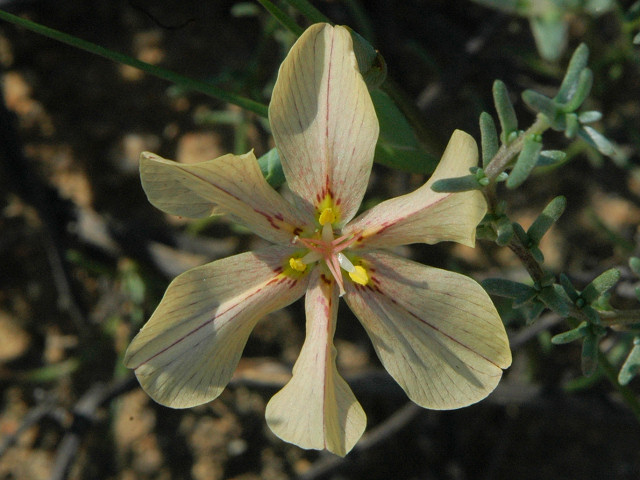
Moraea pilifolia Goldblatt (syn. Galaxia ciliata Pers.) grows on stony slopes from Namaqualand to Gifberg and flowers June-July. Photo from iNaturalist taken by Nick Helme in July where it was growing in granite renosterveld and shared under a CC BY-NC license.
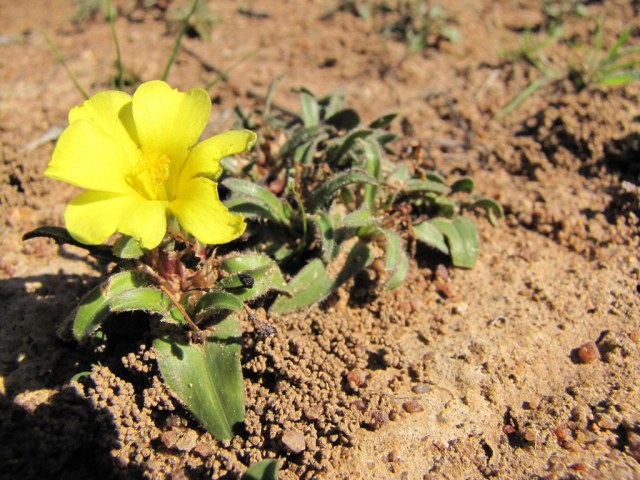
Moraea saxicola grows on rocky granite or clay soils. Photos taken northwest of Steinkopf by Andrew Harvie.
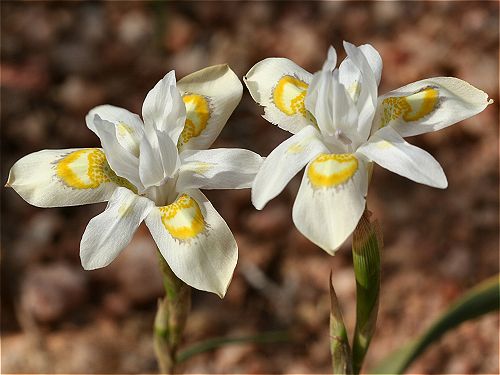
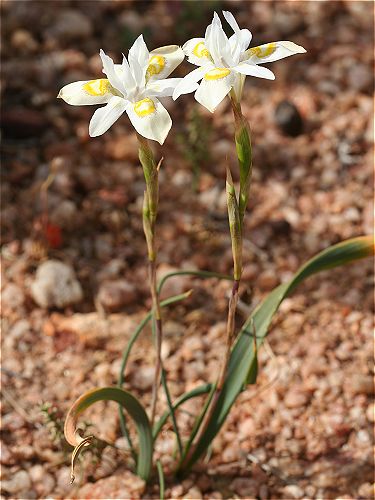
Moraea schlechteri is found in flat sandy places. Photos 1-2 taken September 2007 by Mary Sue Ittner. Photos 3-4 taken by Cameron McMaster September 2011.
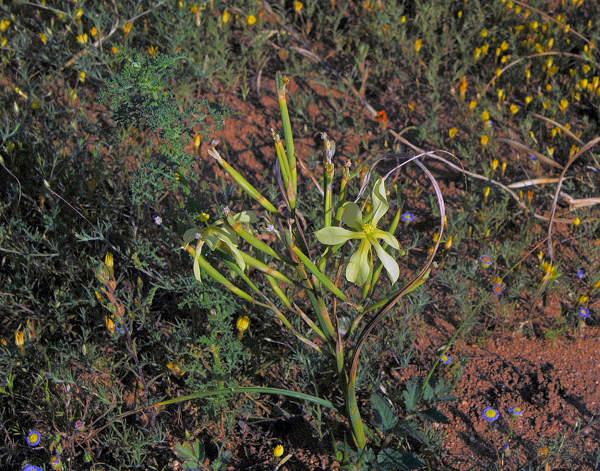

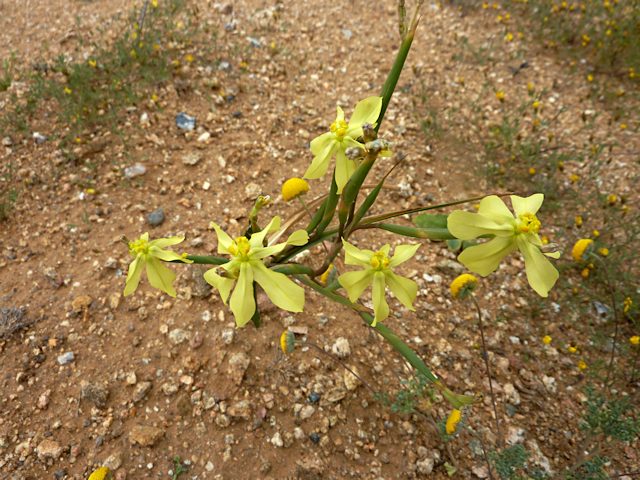
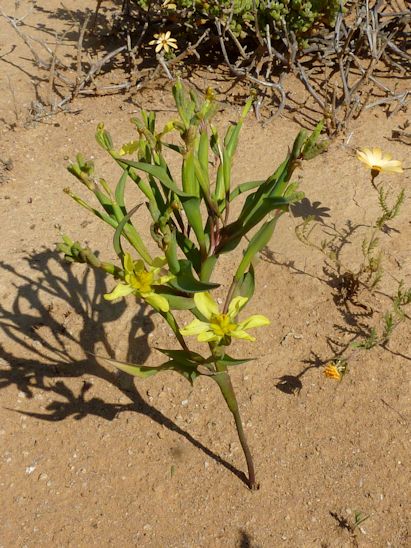
Moraea serpentina is a spring flowering species from arid parts of the interior and the northwestern Cape where it grows on dry stony flats and in crevices in granite rock. Photos were taken by Cameron McMaster September 2011.
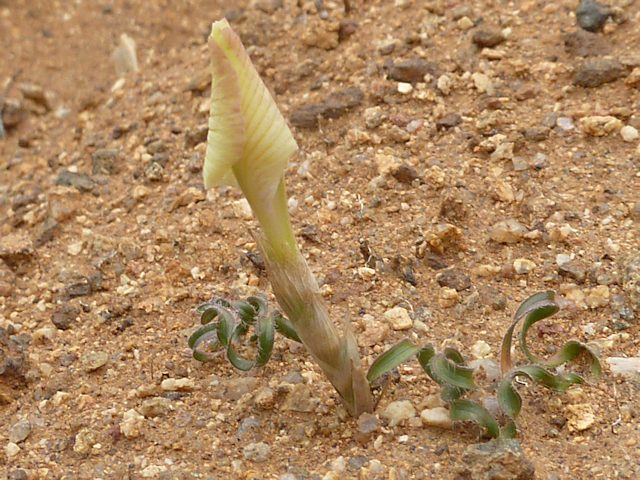
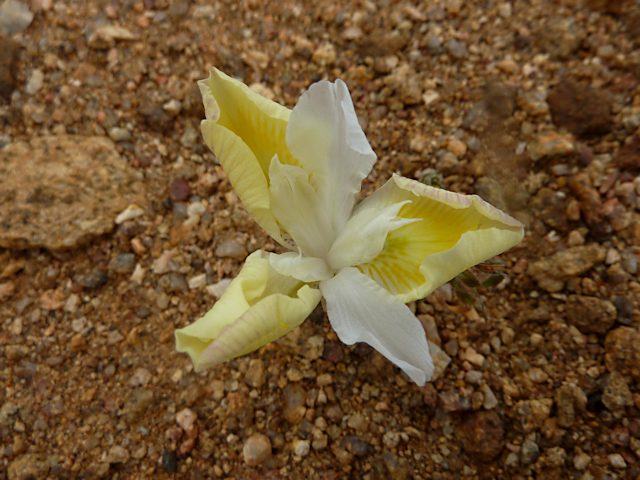
Moraea tortilis Goldblatt is often associated with quartzite outcrops. The first three photos were taken by Alan Horstmann in September.

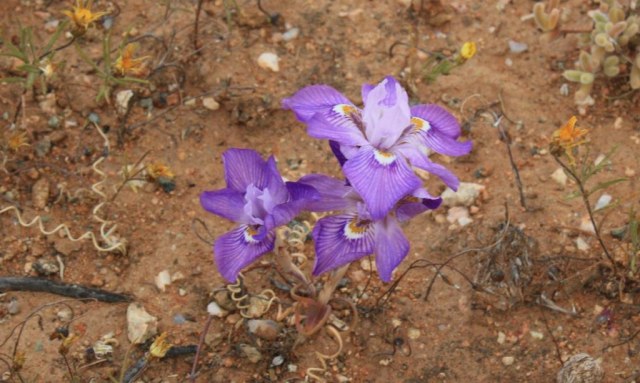
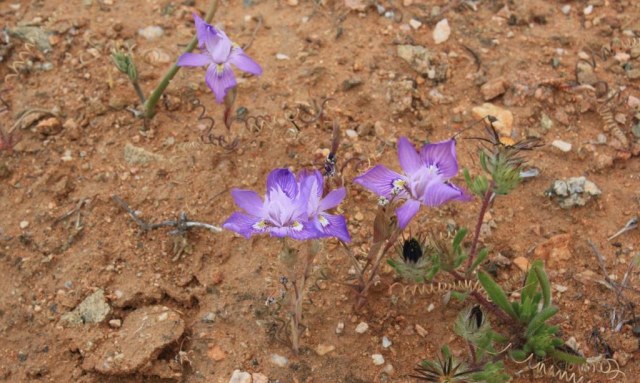
Moraea unguiculata is found on shale slopes in the winter rainfall area. Its range extends into the Eastern Cape where it occurs in drier open thicket environments and Karoo hills. Photo taken September 2011 by Cameron McMaster near Kamieskroon.
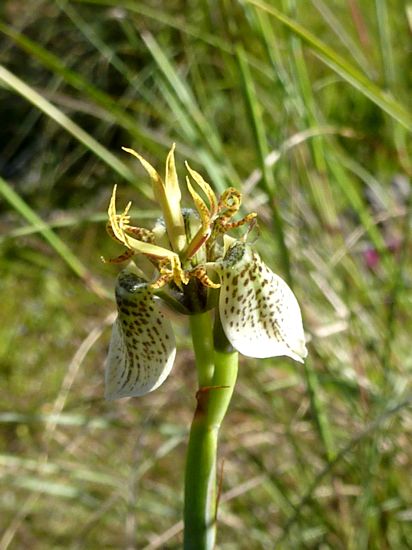
Namaqualand A-F - Namaqualand G-I - Namaqualand O - Namaqualand P-Z - Namaqualand Index