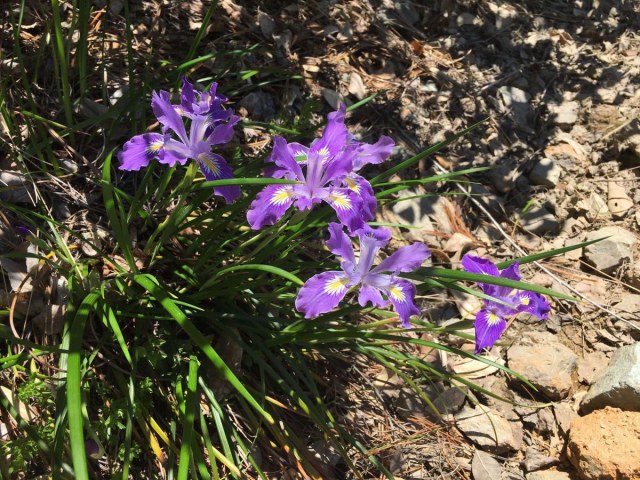
This section of beardless irises, formally named Californicae, contains twelve to fourteen species that are native to the West Coast of North America, from southern California to southwest Washington. Common names for this group include Pacifica Iris, PCI (Pacific Coast Iris) and PCN (Pacific Coast Native Iris). The southernmost populations are in the San Gabriel Mountains, of Iris hartwegii ssp. australis, and the northernmost populations are in the Washington Cascades and Chehalis River Valley, south of Puget Sound, of Iris tenax. There are several areas of high diversity, including southwest Oregon and northern California in the Siskiyous and Coast Range, and Marin and Santa Cruz counties, California. Pacificas are the most colorful, diverse, and striking of all iris groups. Most of them are evergreen and are native to areas with wet winters, relatively dry summers, and moderate temperatures. These irises prefer acidic soils with good drainage, and can tolerate heat when given shade, mulches and deep cool soil conditions. They are not wetland plants, nor are they tolerant of extremely cold winters, or hot, wet summer conditions. Pacificas rightly have a reputation as garden divas, as they die quickly in locations that are too alkaline, too hot, too wet. If you live in a warm to cool Mediterranean climate with acidic soil and neutral to acidic water, give them a try. They flower in the spring to early summer and seem to appreciate occasional summer water. They can be challenging to divide and transplant and this is best done in October, just as they start into growth with the start of the rainy season. New transplants must be watched carefully for fungal infections, and a fungicide drench at planting time can help tide them over. There have been many hybrids between the various species and these are often sold as Pacific Coast hybrids with cultivar names. A helpful "gardener's" monograph by Victor Cohen is A Guide to the Pacific Coast Irises.
The American Iris Society’s Iris Encyclopedia has a section just for Pacificas
The Society for Pacific Coast Native Iris's website has sections on growing, hybridizing, seed starting, and other topics.
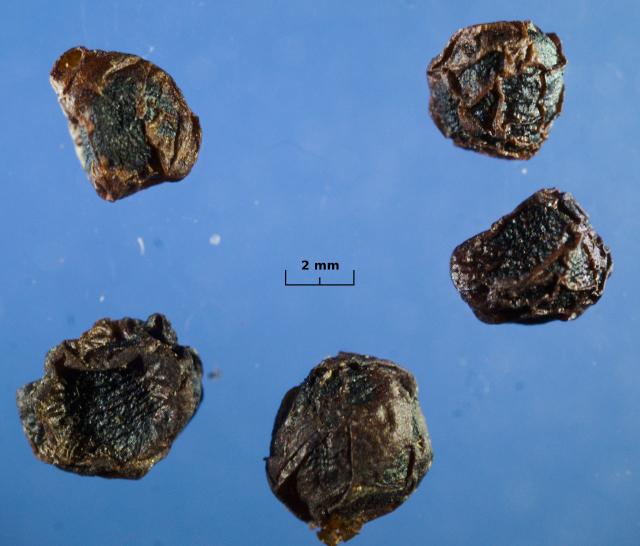
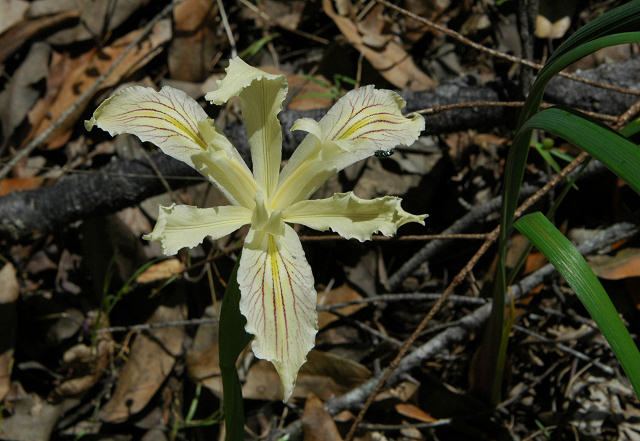
Iris bracteata S. Watson is a species that grows in shaded sites in dry pine forests, or in meadows in the shade of large shrubs or bracken ferns in the Siskiyou Mountains of California and southern Oregon. It is known by the common name of Siskiyou iris. The large flowers are deep cream to golden yellow and are veined or netted with red or purple-brown lines, often with a deep golden zone in the center of the petals. The tube is short and the dark, glossy green evergreen leaves are ribbed, red-tinged at the base, and have a paler underside. Alternate, bract-like leaves clasp the flowering stem, giving it a braided appearance. Height range: 30-60 cm. Photos 1-3 were taken by Paige Woodward. Photos 4-5 were taken by Bob Rutemoeller and Mary Sue Ittner at Tilden Botanic Garden April 2012. The last photo taken by David Pilling is of a seed.
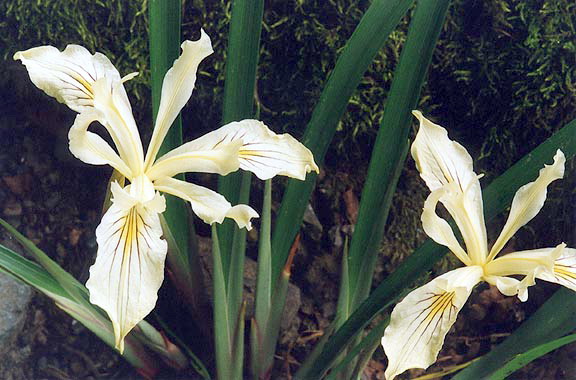

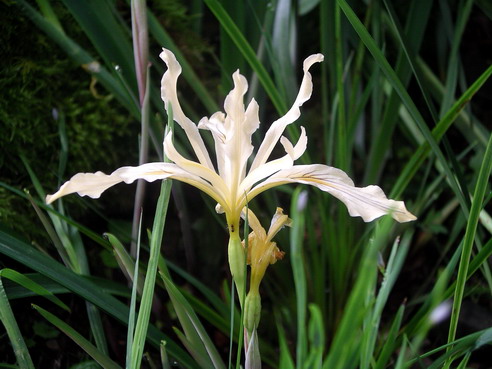
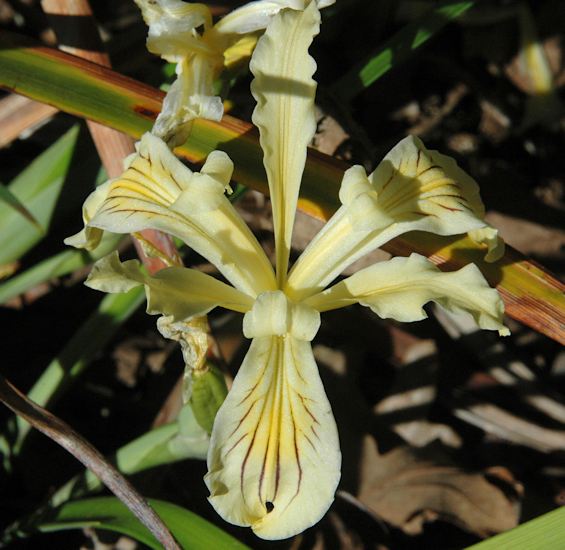
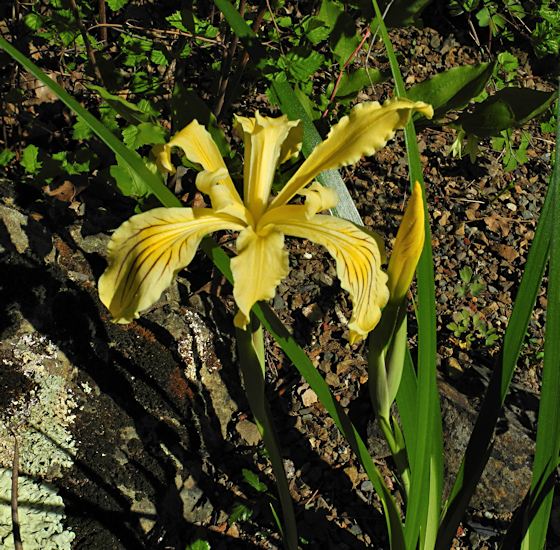
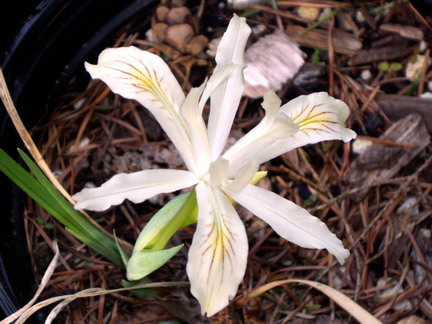
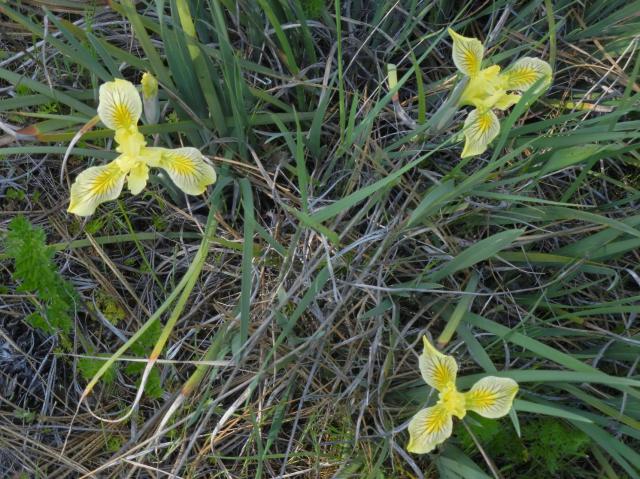
Iris chrysophylla Howell is found in dry, open pine and fir forests of southern and midwestern Oregon (and a small area of northern California). Growing to 20 cm (8") with delicate-looking flowers of cream to white with veins of gold to purple, it has narrow light green leaves that are sometimes glaucous and stained red at the base. The perianth tube is long, emerging from closed spathes. Time of bloom is May to June, or as early as April. This species has hybridized with other species in nature. First photo by Paige Woodward. Following photos of the variation of I. chrysophylla (or possibly hybrids with I. bracteata) by Travis Owen photographed in Rogue River, OR. The last photo shows a small solitary bee entering the flower, likely pollinating the flower.
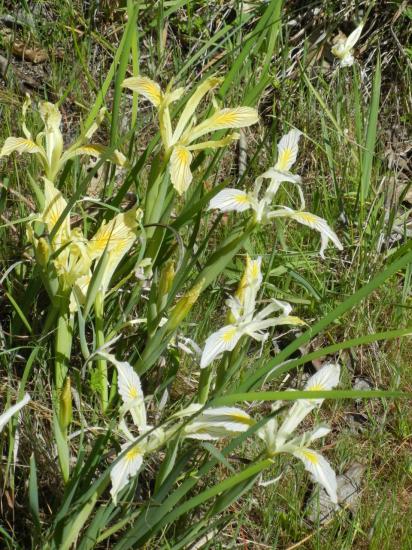
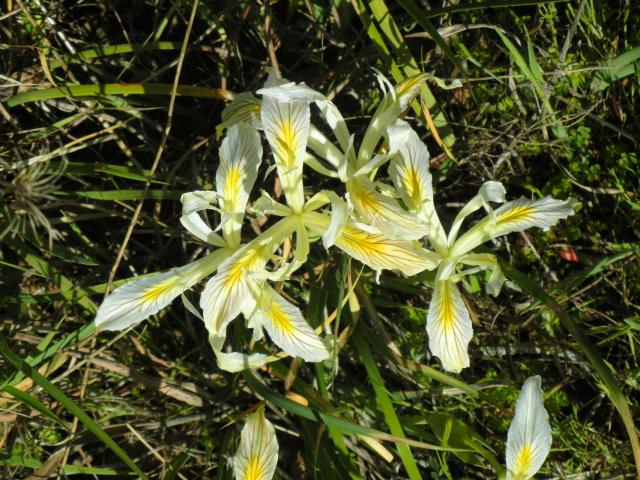

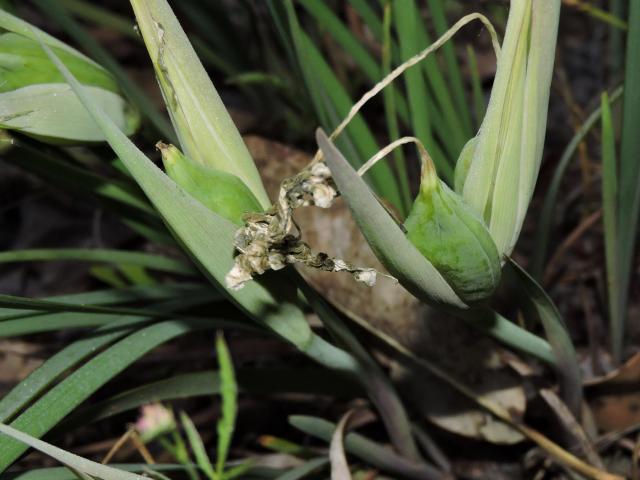
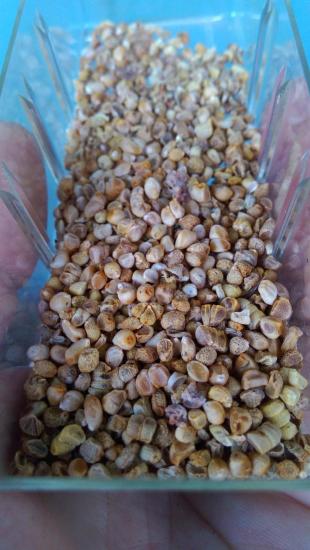
Seed pod and seed photos by Travis Owen.
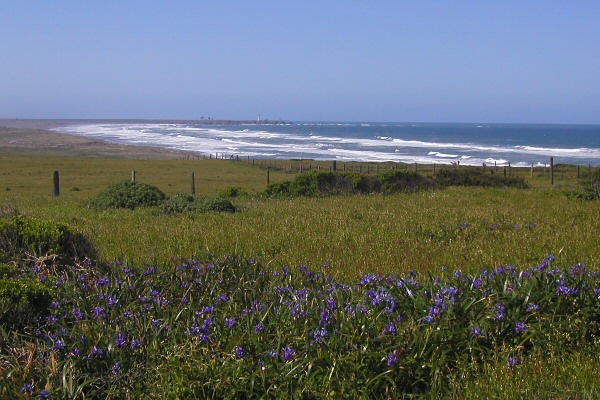
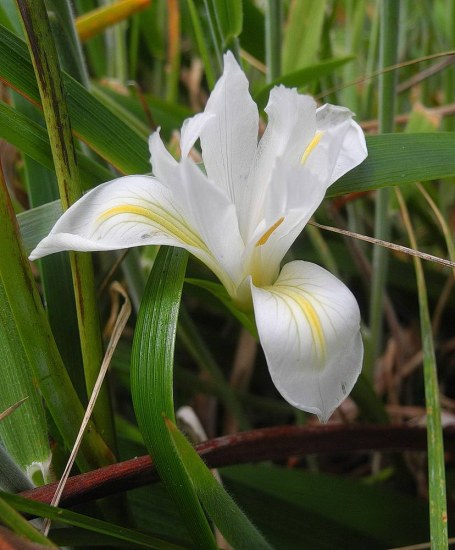
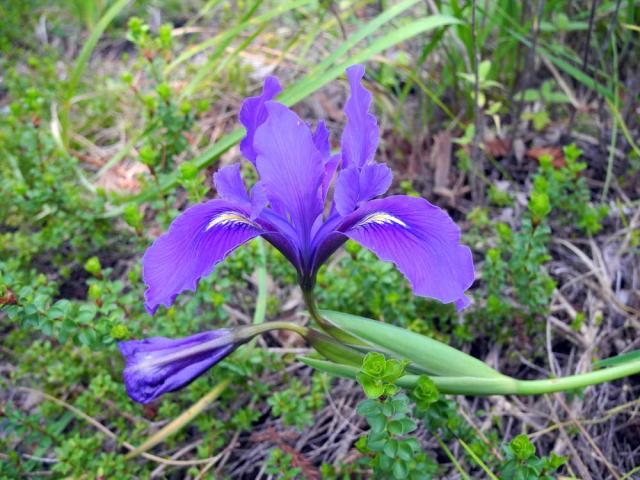
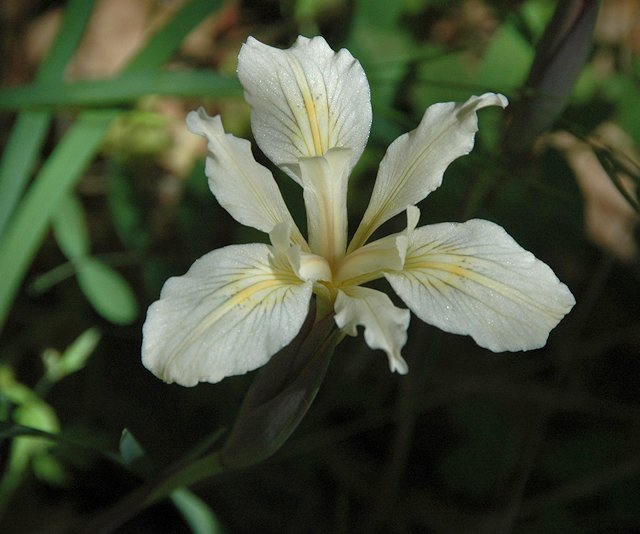
Iris douglasiana Herbert is a native of California and Oregon growing on the edge of coastal forests and on bluffs and prairies overlooking the sea. Flower color ranges from blue to violet to cream and blooming time from late winter into late spring. Height range: 20-40 cm. The first three pictures below were taken at Manchester State Beach (Mendocino County) in the spring. The fourth was taken at Salt Point State Park and the fifth on The Sea Ranch, both in Sonoma County, California. The last photo of a rare white one was taken at the Point Arena-Stornetta Unit of the California Coastal National Monument. Photos by Mary Sue Ittner.
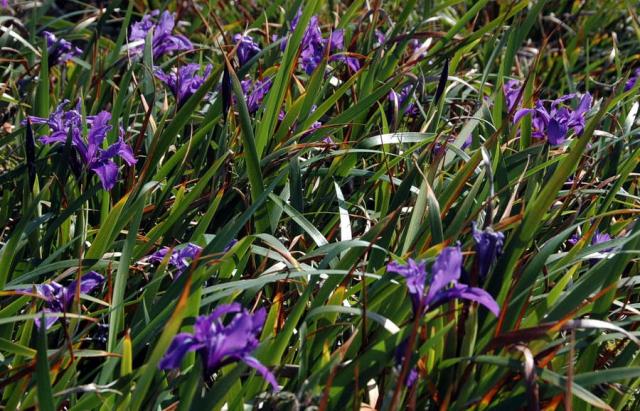
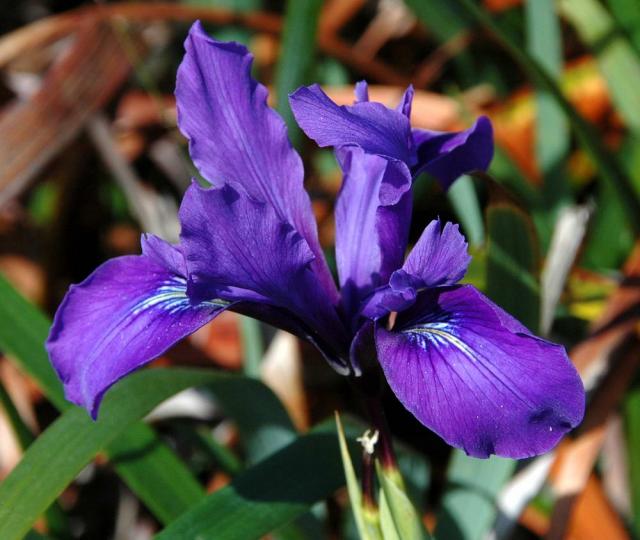
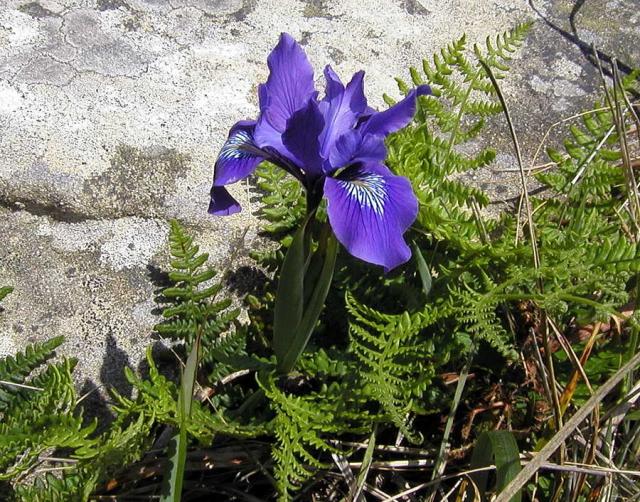
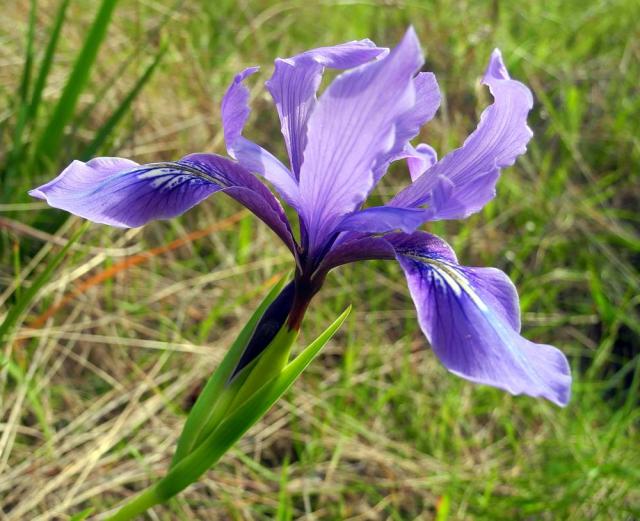
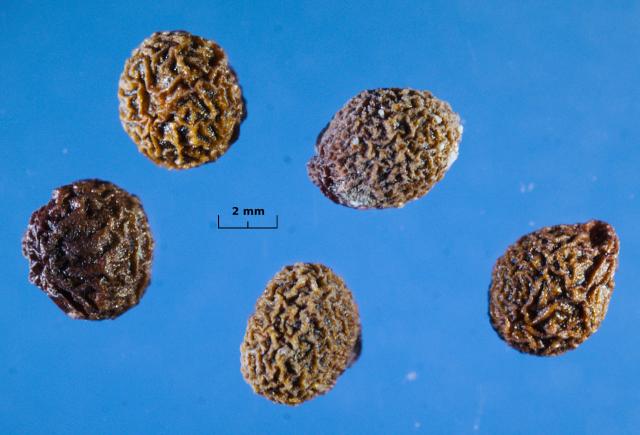
The first two photos were taken at Floras Lake State Park on the Oregon Coast south of Bandon by Mary Sue Ittner. Photos three to five from Mary Sue Ittner and Bob Rutemoeller are of plants flowering in her garden. In the garden she has found that cutting all the leaves back to the ground in early fall every couple of years improves the plants visually as old leaves can sometimes be unattractive. The last photo from David Pilling is of a seed.
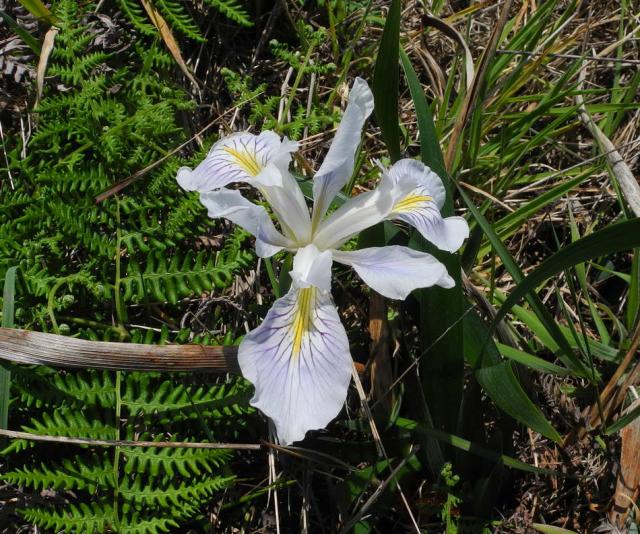
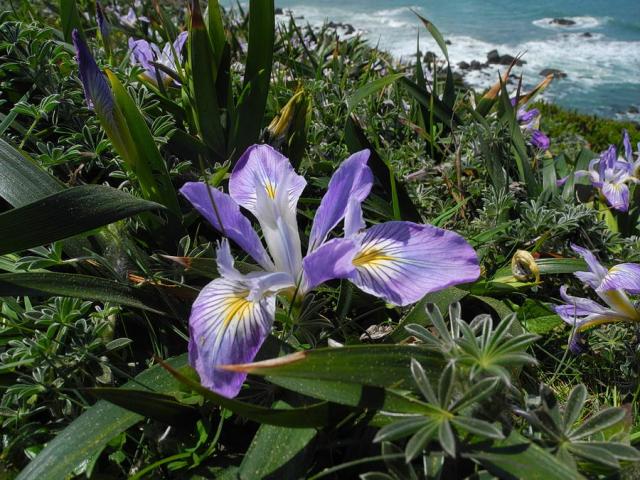
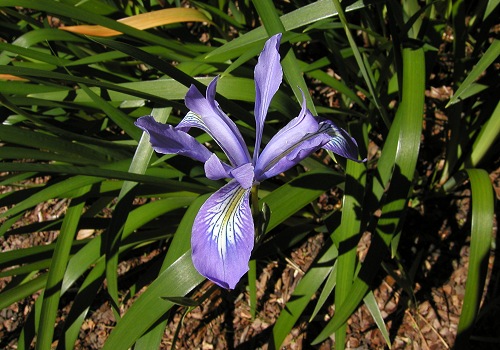
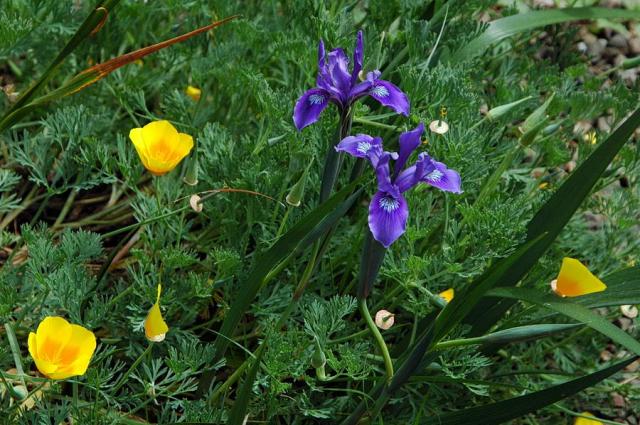
Iris fernaldii R.C. Foster is an evergreen species usually found growing in shade from 50–2000 m in coastal areas, southern inner north coast ranges, and the Sacramento Valley of California. It is often found in tangled undergrowth and in grass under trees. It usually has two flowers to each stem with style crests oblong to spear-shaped, reflexed, and slightly toothed. Flowers are pale creamy-yellow, delicately veined with gold or lavender-grey. The dark grey green narrow leaves are longer than the stems and stained purple-red. Height: to about 45 cm. Photos were taken by Bob Rutemoeller and Mary Sue Ittner inland in Sonoma County, California, May 2012.
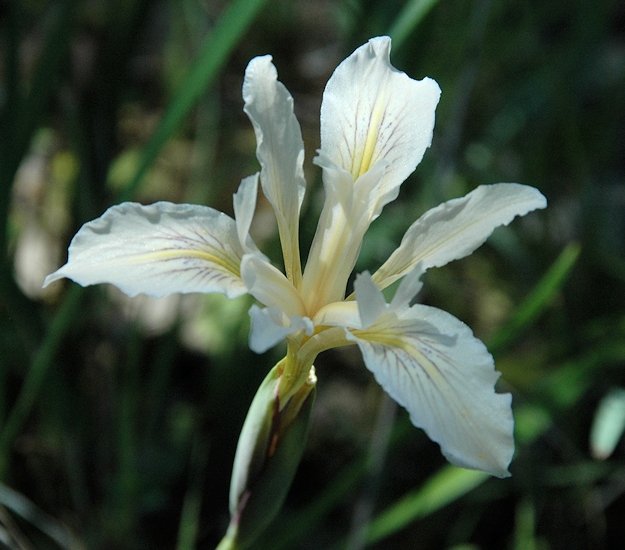
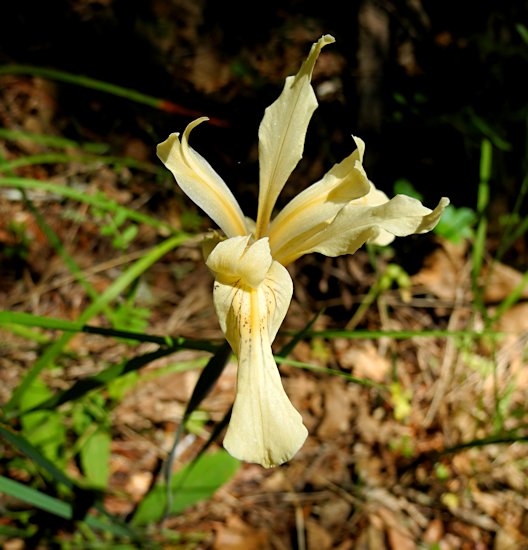
Iris hartwegii Baker grows at relatively high altitudes in the Sierras and Southern California. It can be yellow or purple, and generally grows in open areas in pine woodlands. Height: 30 cm. Because of the altitude at which they grow, these Iris are almost certainly more cold-hardy than many other PCIs, and are worth a try by growers in cold climates. Photos from Paige Woodward.
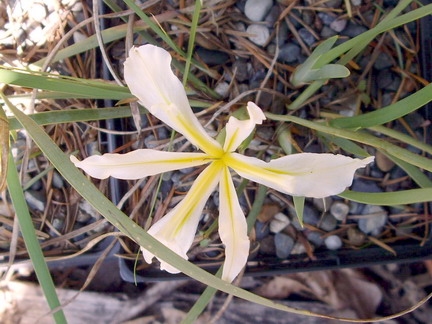
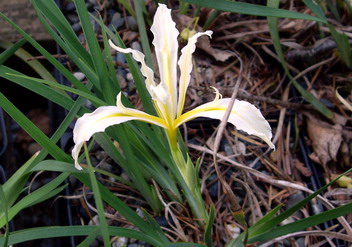
Iris hartwegii ssp. australis (Parish) Lenz is found in the San Benardino Mountains and the San Gabriel Mountains of southern California (San Bernardino and Riverside Counties). It is purple to violet-blue flowers with a short and stout perianth tube and produces two flowers per stem.
Iris hartwegii ssp. columbiana Lenz is endemic to a small area of Tuolumne County near Columbia, California. It has shiny, broader, and wider leaves and pale grey yellow flowers with golden veins. It is considered rare and endangered.
Iris hartwegii ssp. hartwegii is the common form found on slopes in open pine forest at 400 to 2300 m. The flowers are usually light cream to bright yellow with a darker yellow center spot; but are sometimes maroon or lavender, often with darker veins, especially in the southern Sierra Nevadas south of Yosemite Valley. The flowers pictured in the first two photos contributed by Michael Mace were photographed at the end of June along a road near Huntington Lake, CA. He speculated that his photos could be this subspecies, but it has not been found in that location and is probably one of the "sometimes maroon or lavender" flowers. The third photograph from John Walton was taken on the Arnold Rim trail in Calaveras County, California. The last two were photographed in situ by Nhu Nguyen growing under pines and blooming in June 2009 in Yosemite National Park.
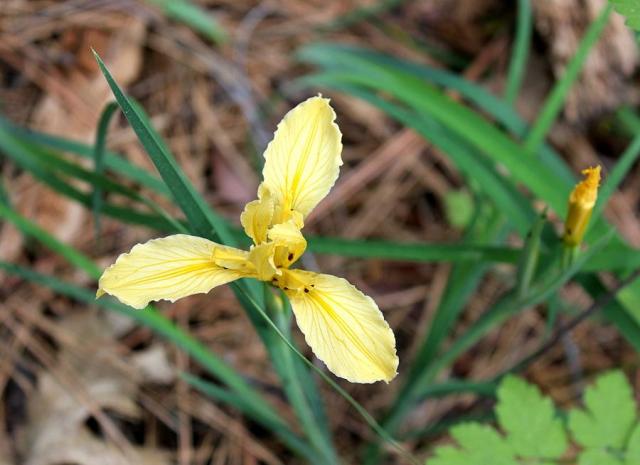
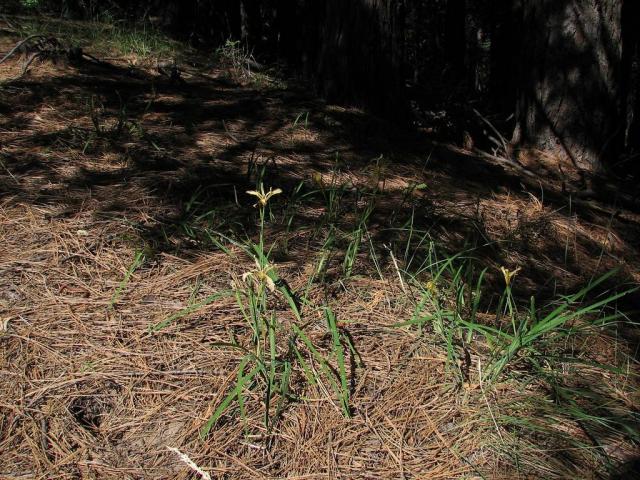
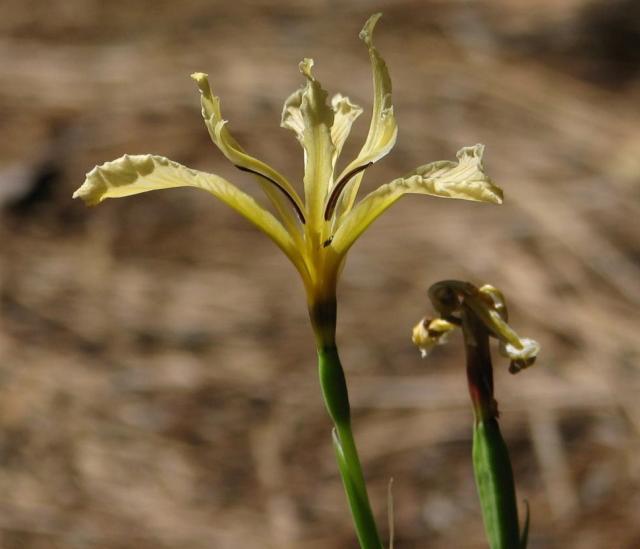
Iris hartwegii ssp. pinetorum (Eastwood) Lenz is found in flats in open pine forests in the northern end of the Sierra Nevada and has two small creamy yellow flowers with a number of golden veins lining the falls. It is unusual as often both flowers are open at the same time. Stems are slim and covered with narrow stem leaves.
Iris innominata Henderson is an evergreen species found in northern California and also in Oregon. It has narrow dark green glossy leaves and forms dense compact tussocks. The usually one, but sometimes two, showy flowers have rounded reflexed style crests and striking red to brown veins on the falls. The most well known color is golden yellow, but there are cream, apricot, bluff, and orange forms. Height: 20 cm. It does very well in shady spots or rock gardens and is often used in hybridizing. The first two photos by Bob Rutemoeller and Mary Sue Ittner are of plants grown from seed. The next three from Mary Sue Ittner and Bob Rutemoeller are of plants on the Stoney Creek Trail just into California from the Oregon border.
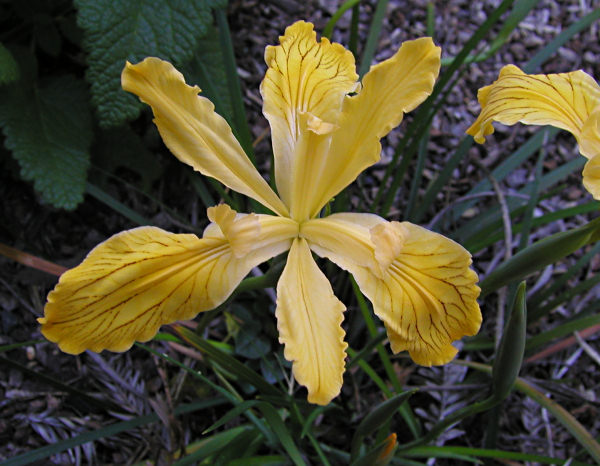
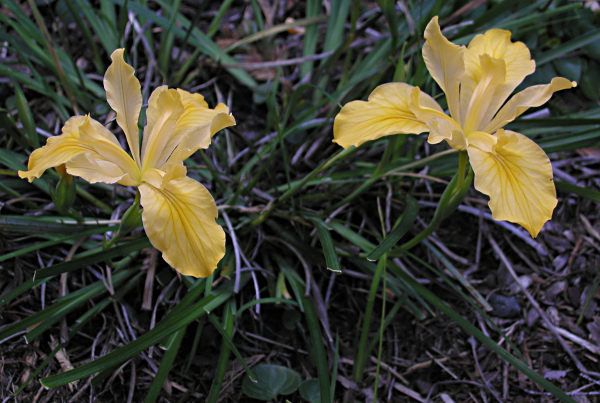
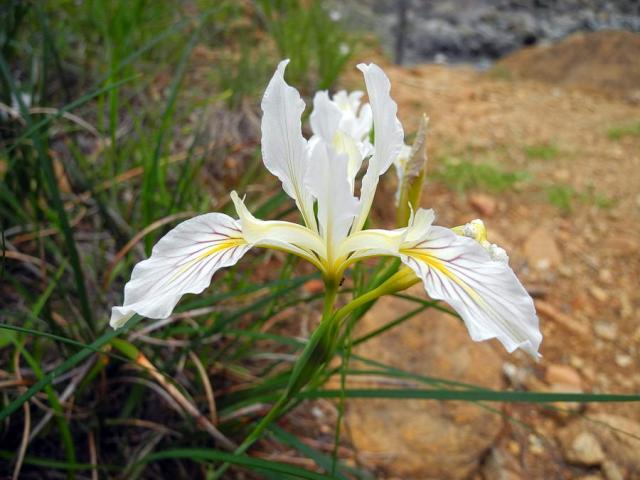
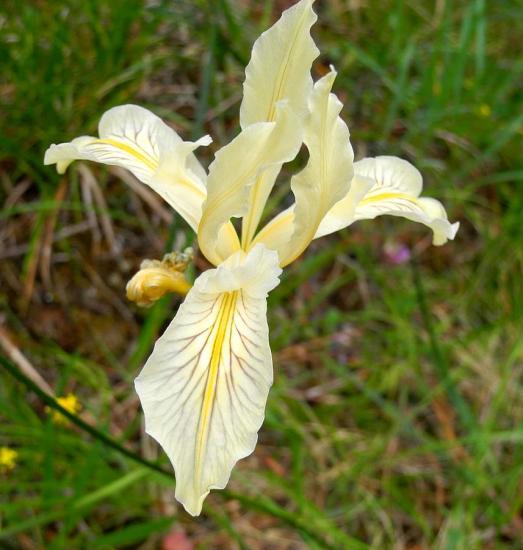
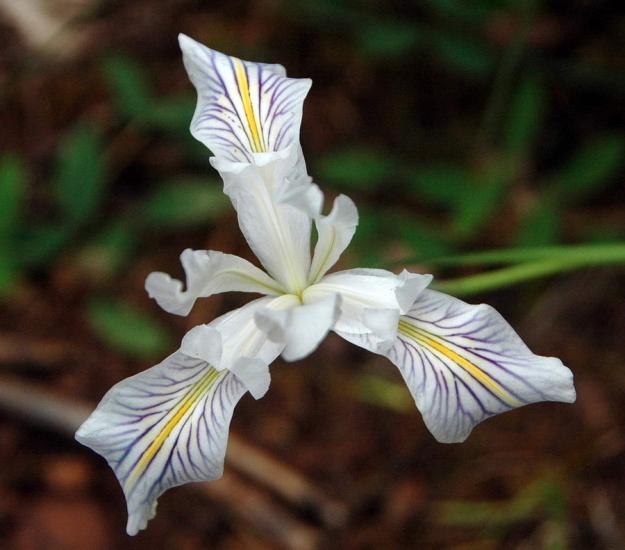
Iris macrosiphon Torrey is found in open woods and has very narrow leaves taller than the flowers and colors of pale purple, pale yellow to white, apricot or blue, or blue-purple. Height: about 40 cm. The first one was grown from seed and photographed by Bob Rutemoeller. It took a number of years before the first flowering. The second one photographed by Mary Sue Ittner was growing along the road near Table Mountain in Butte County, California. The next two photos from Calflora were taken by Suzanne L. Weakley in April in Napa County and shared under a CC BY-NC license.
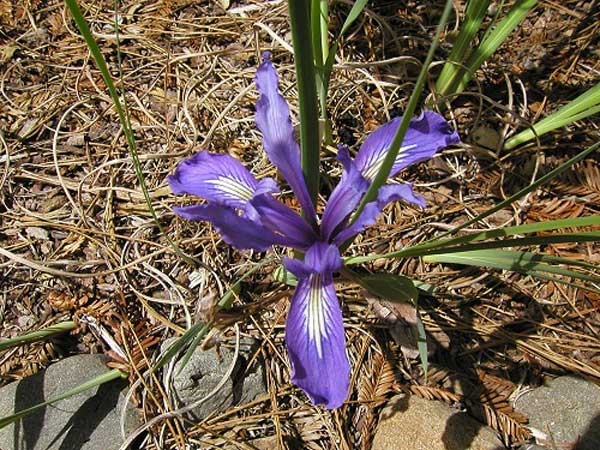
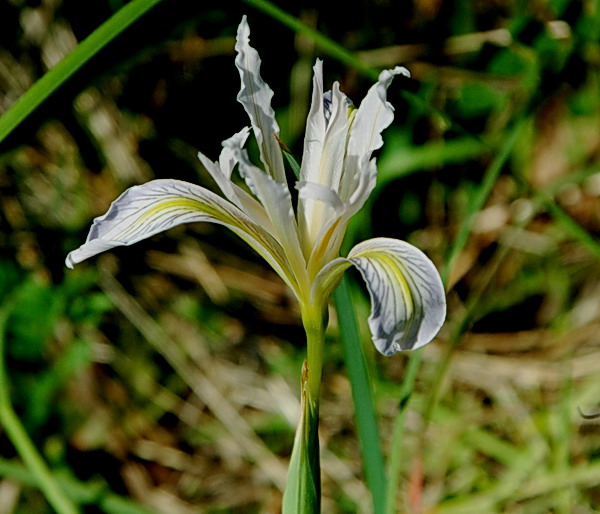
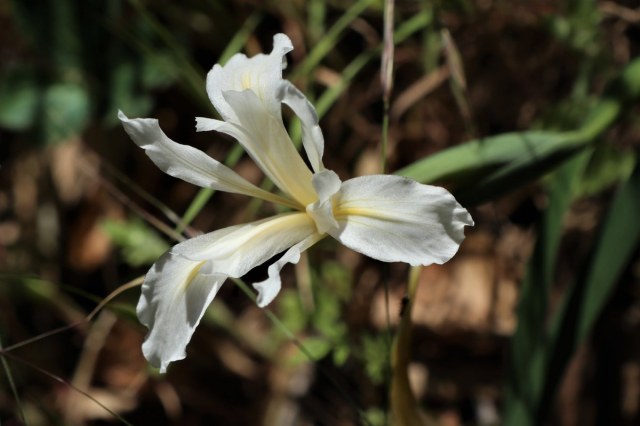
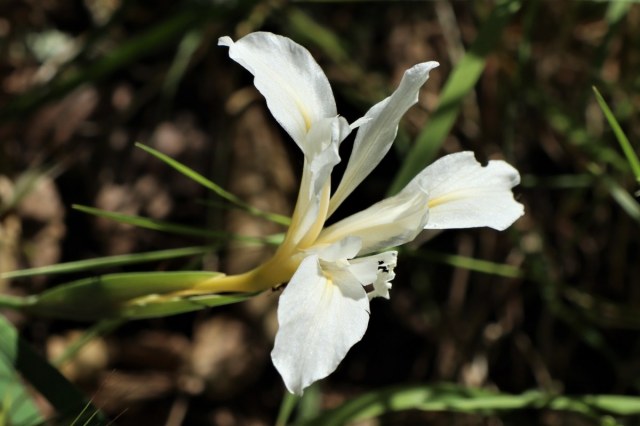
Iris macrosiphon 'Mt. Madonna' - just recently arrived in Riverside, CA. The species is native to California and Oregon. Purchased about to bloom from the UCI winter bulb/plant sale. Height: 25 cm. Photo by Jennifer Hildebrand.

Iris munzii R.C. Foster is found in blue oak woodlands with a thick understory of annual grass. This species is listed as rare threatened or endangered by the California native plant society. The largest of the Pacific Coast Irises, these are tall, straight, and stately plants, growing to about 75 cm. The flowers are pale blue to lavender to purple. Munzi's Iris is endemic to the southern Sierra Nevada foothills in Tulare county, California, where these photos were taken by Mary Gerritsen in April 2008.
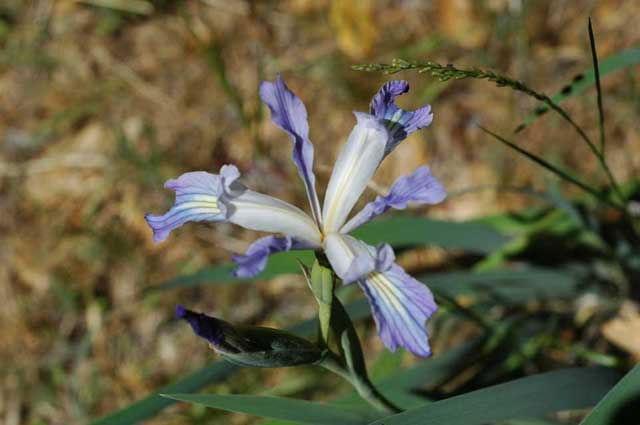
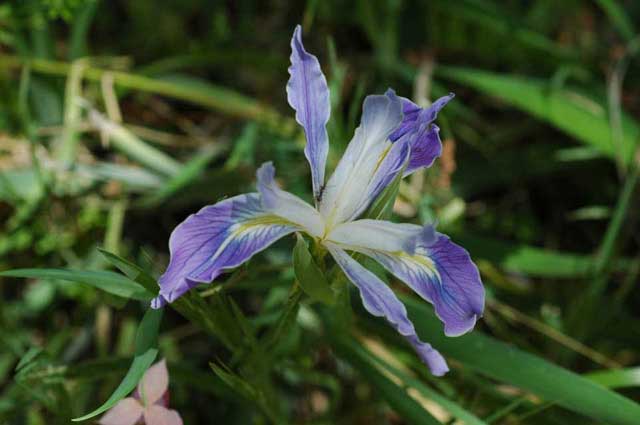
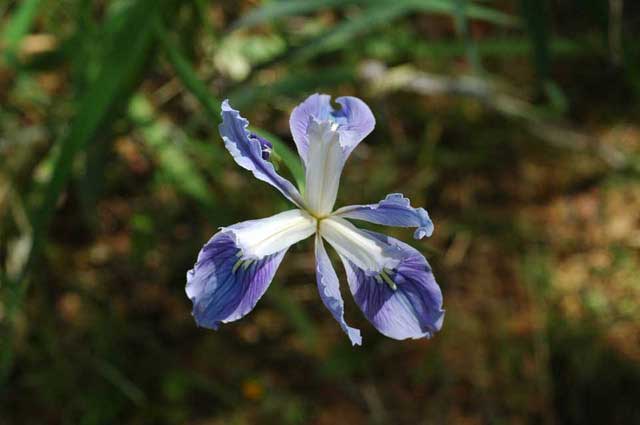
Iris purdyi Eastwood is found in the coastal forests of the North Coast ranges. It has narrow leaves and pale yellow flowers, often tinted purple or veined with purple or brown. Height range: 15-30 cm. The first two photos were taken by Bob Rutemoeller of a plant growing wild along the road in Sonoma County, Northern California. The last two photos were taken by Mary Sue Ittner.
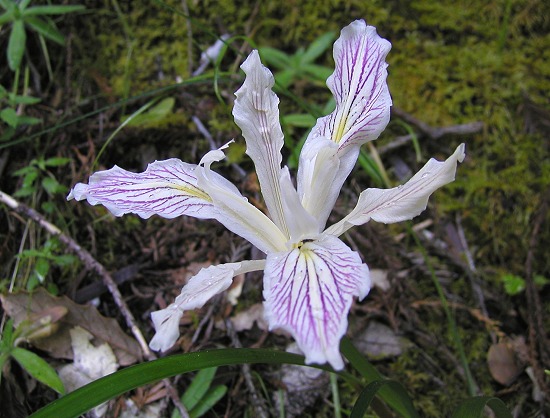
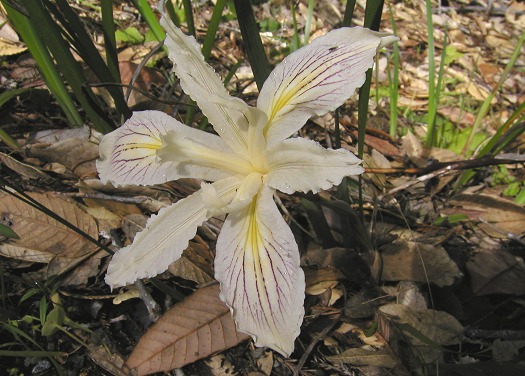
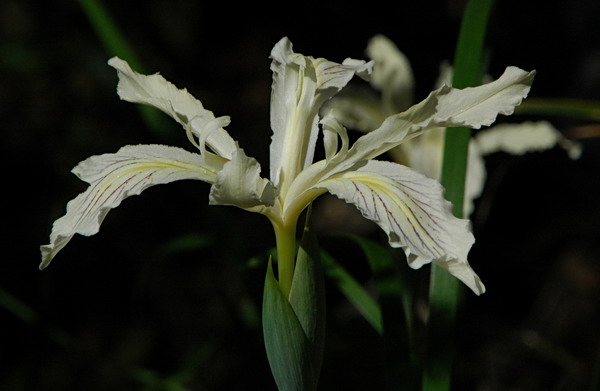
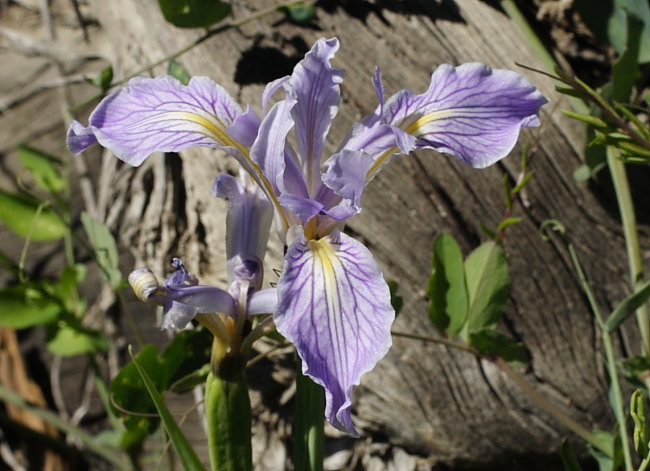
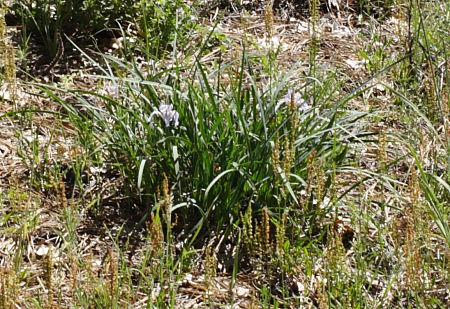
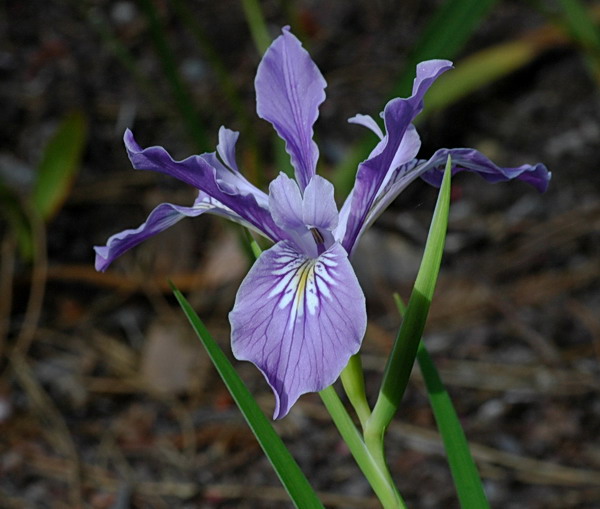
Iris tenax Lenz is found from sea cliffs to Cascade populations (southwestern Washington and western Oregon into California). It has one or two flowers with erect large standards. The flower color is lavender to white, cream and yellow. It has narrow grassy green leaves and is deciduous. Height: 15-30 cm. The first two photos by Mary Sue Ittner of plants grown from seed. The other photos were taken in Cowlitz County, Washington by Paul Raphael Zemanek. They were growing in an area slated for development.
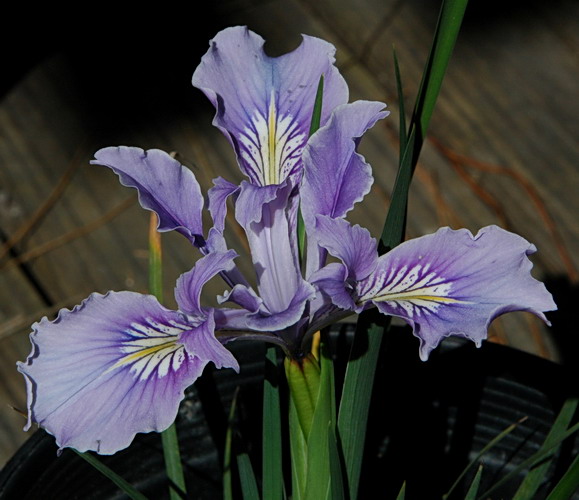
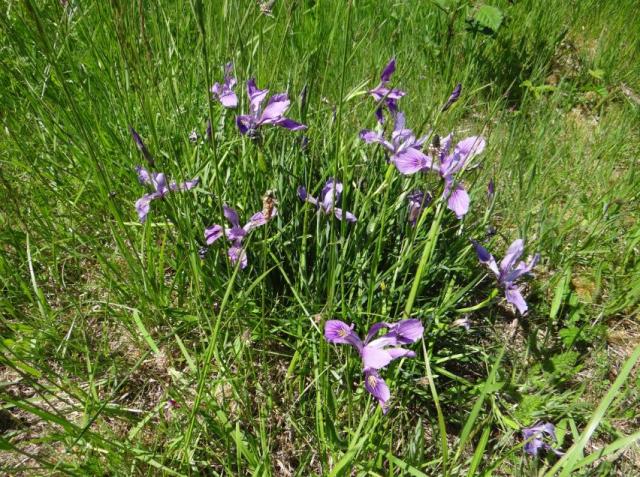
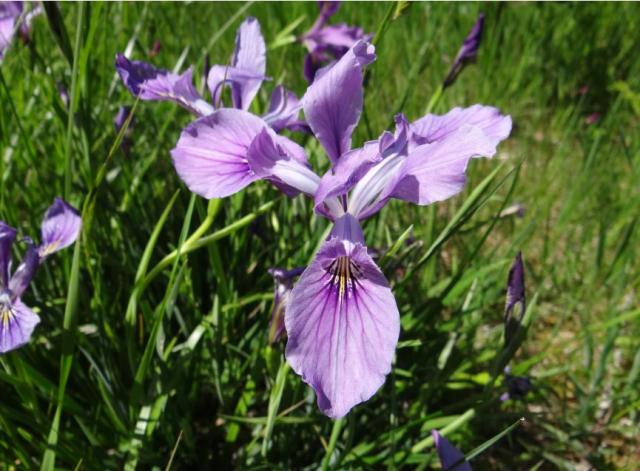

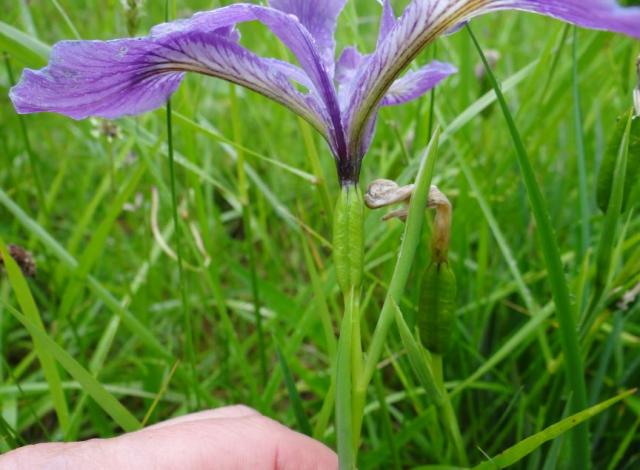
Iris tenuissima Dykes or the Shasta iris is found in the pine forests on the forest floor or in sunny openings of northern California. Flowers are white, cream, or yellow often with darker reddish-brown, lavender or yellow veins and with long style crests and slender, easily broken parts with wavy edges; the flower tube is yellow-green. This species is very similar to Iris chrysophylla, but is distinguished from it by having the diameter of the floral tube abruptly enlarged through most of the upper portion, having a finely toothed (instead of entire) stigma and having a flower stem generally longer than 4 inches. Height: to about 30 cm. The first two photos were taken by Mary Sue Ittner near the Trinity River and Horse Mountain in Humboldt County, California. The next two photos from Calflora were taken by Jamie Spielmann in Shasta County and shared under a CC BY-NC license.
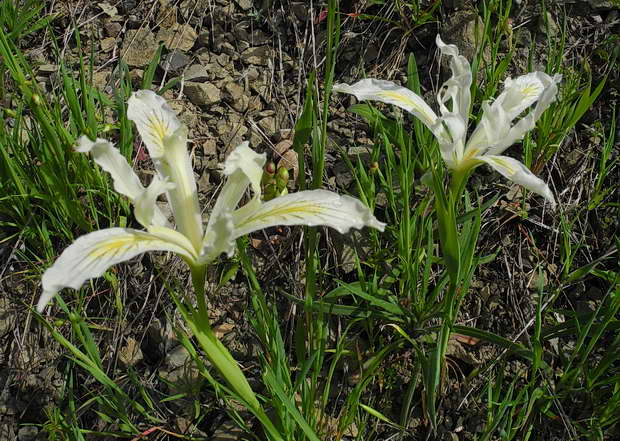
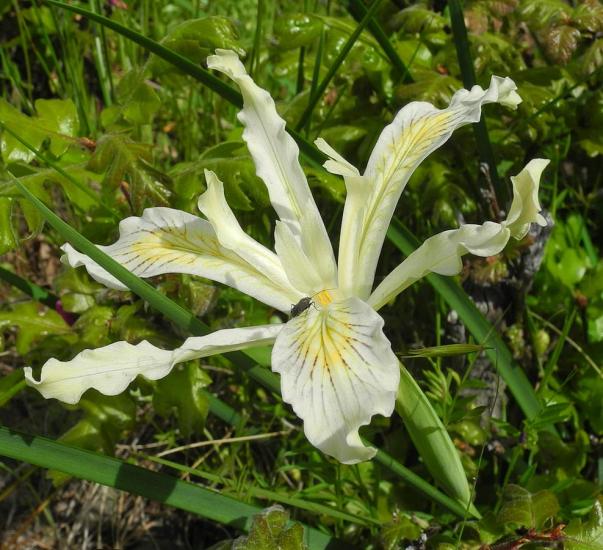
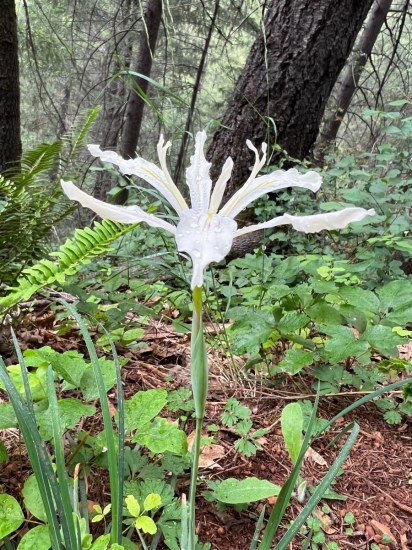

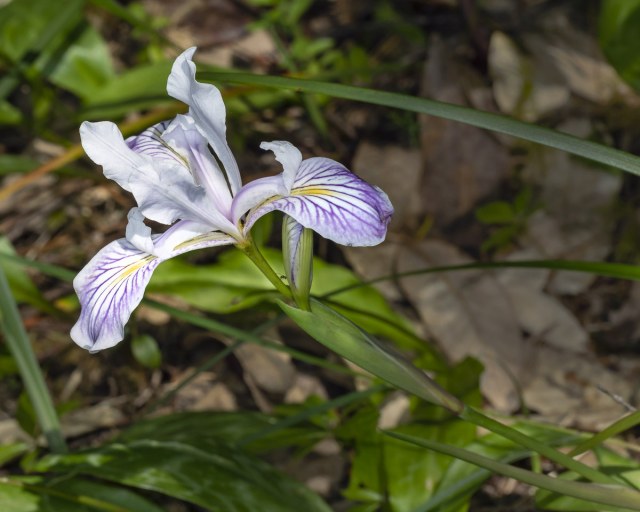
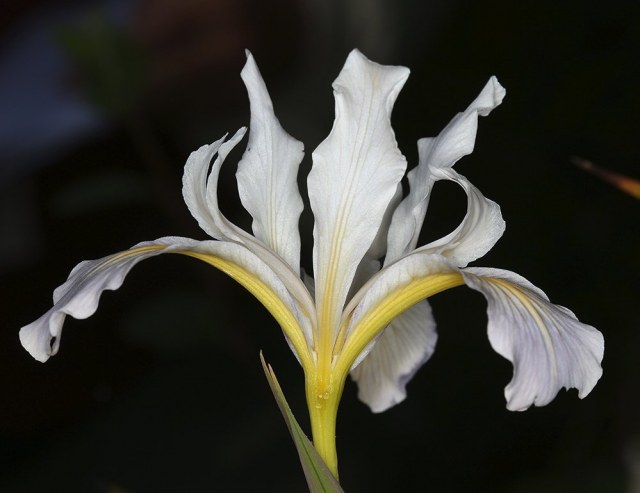
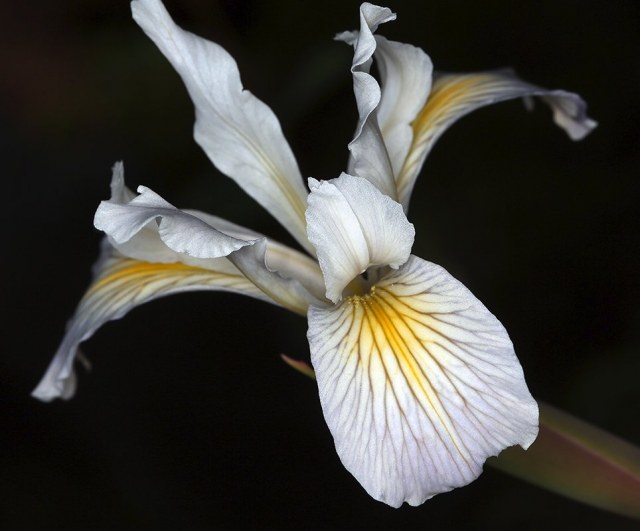
Iris thompsonii R. Foster is a pale to deep blue-purple (occasionally white or gray) species found in the lower regions in the Klamath Range of Del Norte County in northwestern California and southwestern Oregon from 90 to 600 m (300 to 2,000 ft) elevation that was historically considered to be a hybrid between Iris douglasiana and Iris innominata and then lumped with I. innominata by later research. Genetic studies and a reexamination of physical form and habitat have revealed that it is indeed distinct from its golden cousin. The Jepson eFlora in 2022 considers this to be a species and has this note: "Wilson et al. (1990 Madroño 37:113--123) reported no evidence of hybrid origin." Features of this species are a slender floral tube that is funnel-shaped at the top, with short spathes, and broad and rounded flower parts. Leaves are slender and grass-like and mature plants form dense, compact evergreen tussocks with numerous flowers. The photos below from Calflora were taken by John Game, Jonathan Lee, and Steve Matson in Del Norte County and shared under a CC BY-NC license.
Iris index - Beardless iris a-k - Beardless iris l-r - Beardless iris s-z - Crested irises - Garden Bearded irises - Juno iris a-i - Juno iris j-r - Juno iris s-z - Aril Irises - Miscellaneous irises - Pacific Coast hybrids - Reticulata irises - Spanish irises - Belamcanda - Hermodactylus - Pardanthopsis