There are more than 200 species of Oxalis in South Africa and 270 varieties and probably many new species as well. The only handbook on the Southern African species, by Salter, is almost sixty years old and out of print so there are many challenges in identifying them. Cape Plants, a conspectus of the Cape flora of South Africa by Peter Goldblatt and John Manning lists 118 in the Cape Floral Kingdom but there is only a brief botanical description, location sometimes with habitat information, and time of bloom in this book. South African species T-Z are found on this wiki page.
Oxalis index - Miscellaneous Oxalis - Oxalis flava - Oxalis hirta - Oxalis obtusa - Oxalis pes-caprae - Oxalis purpurea - South African oxalis A-B - South African oxalis C - South African oxalis D-E - South African oxalis F-G - South African oxalis H-K - South African oxalis L-M - South African oxalis N-O - South African oxalis P - South African oxalis R-S - South American oxalis
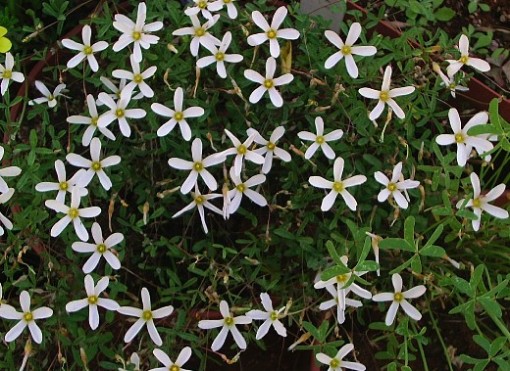
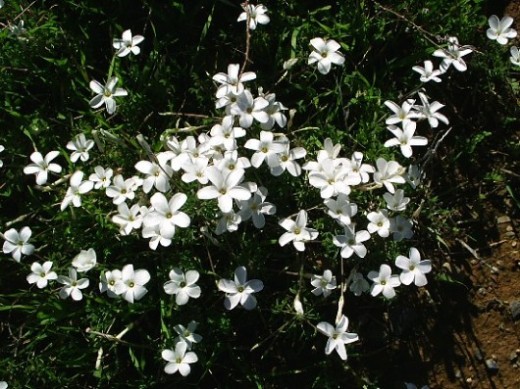
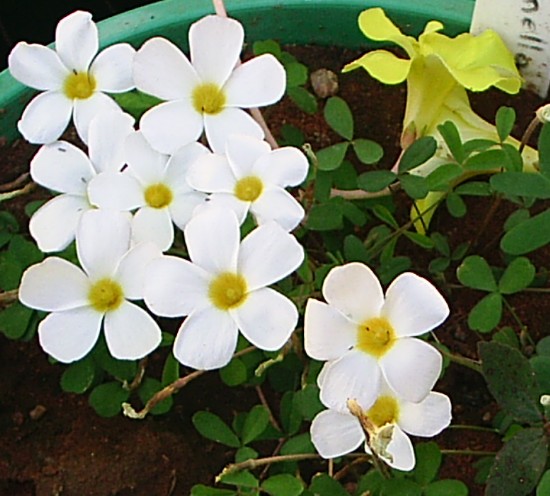
Oxalis tenella is a variable plant with white or rarely yellow flowers. When a few bulbs are planted together they can be quite spectacular. Some forms grow long stems, and might be suitable for hanging baskets. Height range: 2-20 cm. The first of the following plants pictured here appeared through a tuft of Cheiridopsis bought at a nursery, so I do not where it originated. The second is from Nieuwoudtville, and the last from Clanwilliam. Photos by Christiaan van Schalkwyk.
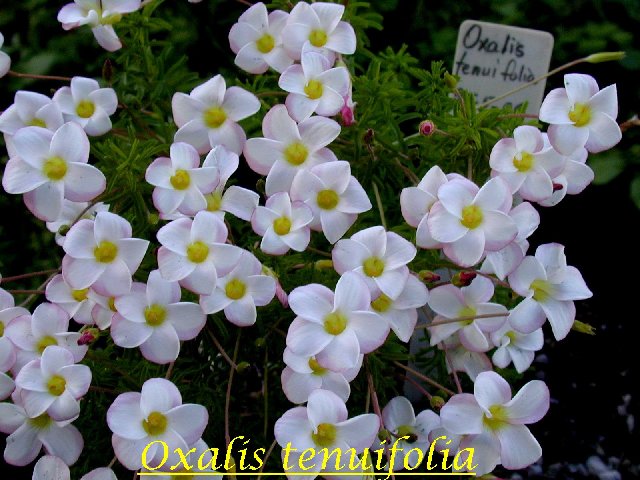
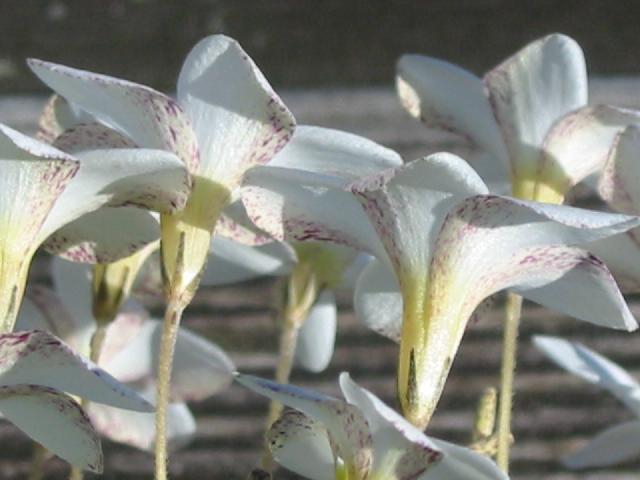
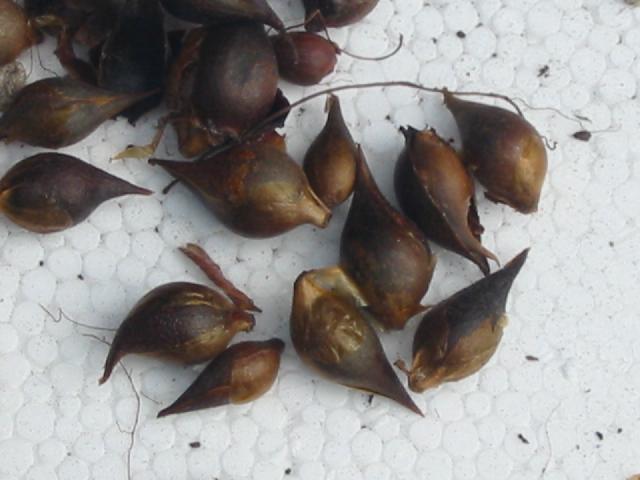
Oxalis tenuifolia.From the SW Western Cape, bulb rounded to ovoid, 5 to 8 in. Flowers white with purple margin; tube sulphur yellow. Height range: 5-25 cm. Winter flowering. The first photo was taken by Bill Dijk and the next two showing the underside of the flowers and the bulbs by Andrew Broome (2005).
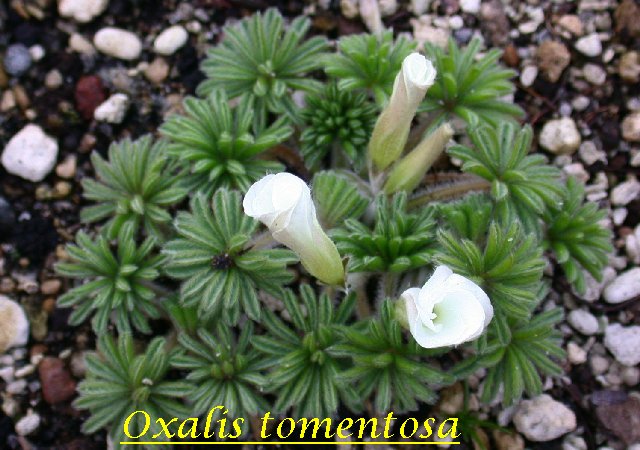
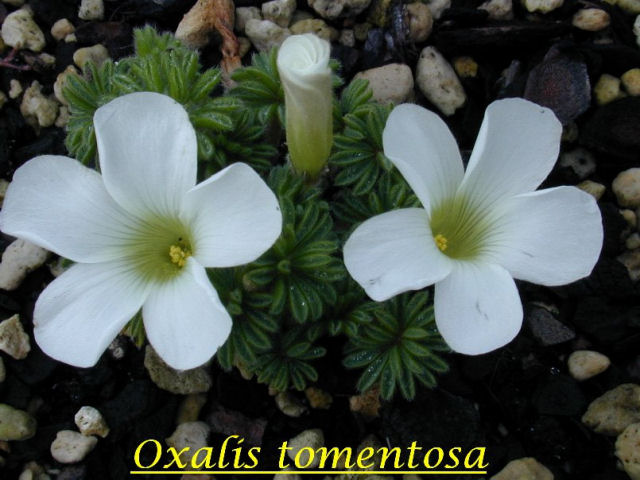
Oxalis tomentosa has hairy leaves with ten to twenty hairy leaflets in a tuft and white flowers with a greenish-yellow tube. Height: 6-12 cm. It is found on grassy flats and stony slopes from Clanwilliam to the Cape Peninsula and flowers from April to June. Photos by Bill Dijk.
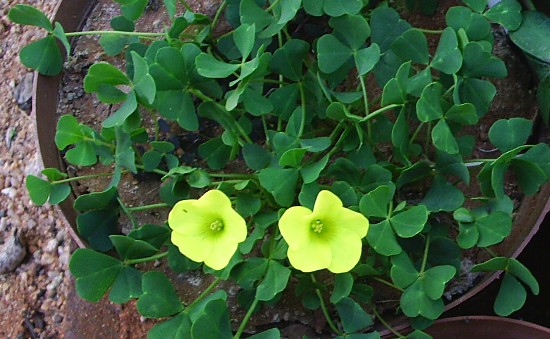
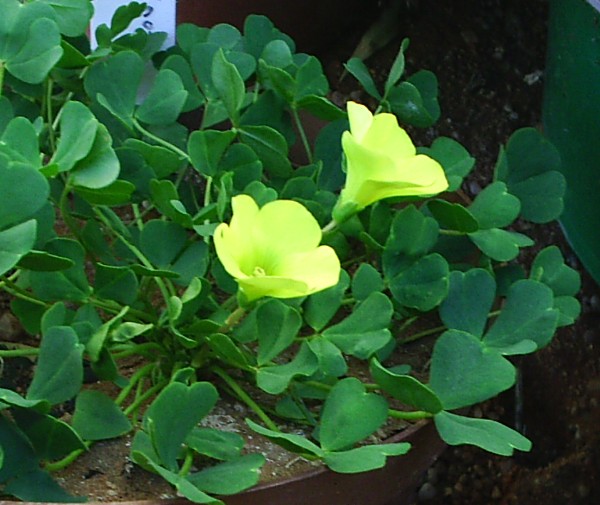
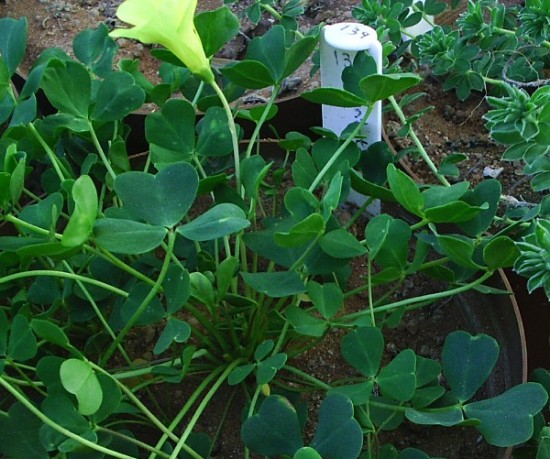
Oxalis uliginosa grows in marshy places or on stream sides. It has beautiful large yellow flowers. It tends to grow lax if given too much shade. Height range: 6-16 cm. The last picture is of a plant I received as Oxalis dentata, which it is obviously not. It is an exact match for my O. uliginosa. Photos by Christiaan van Schalkwyk.
Oxalis versicolor has a common name of candycane sorrel referring to the red and white stripes when the flower is closed. It is a long blooming South African species found on flats and slopes in the northwest and southwest Cape. Height: 5-15 cm. The photo below was taken by Mary Sue Ittner near Tulbagh August 2006 where it was growing in the rocks.

Photos 1-2 by Mary Sue Ittner show the unopened flowers and ones opening in the warmth of the cold frame. Photo 3 from Bill Dijk shows the red backs of the flowers. Photos 4-5 were taken by Nhu Nguyen.
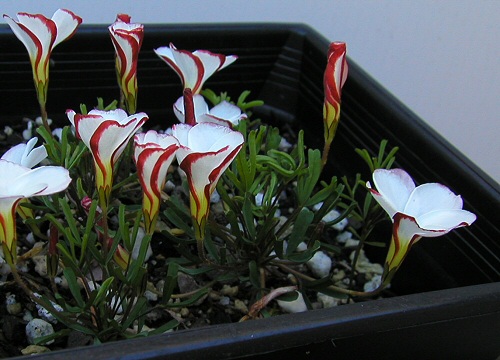

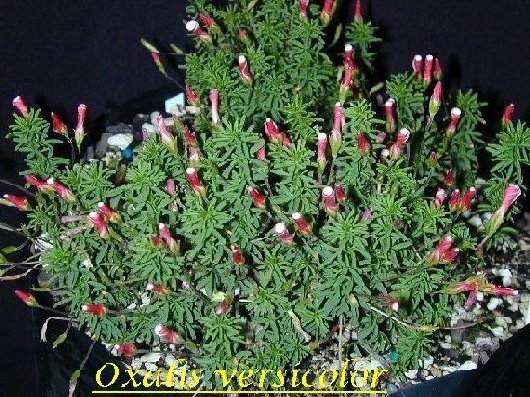
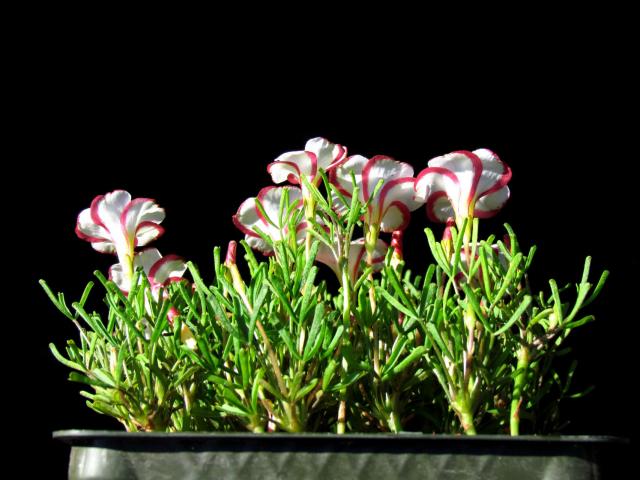
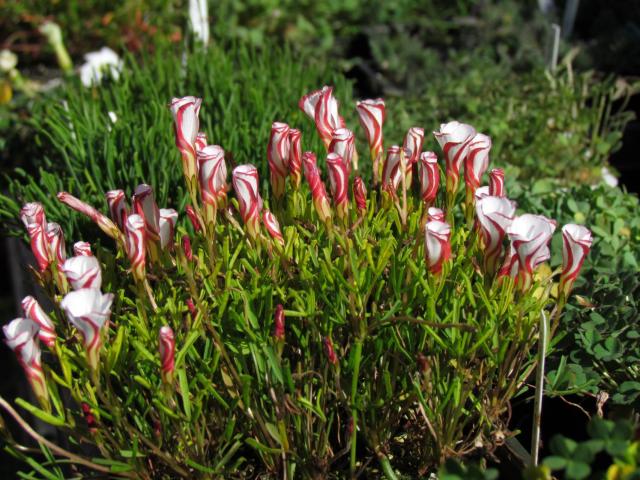
Photos by Aender Quirarte.

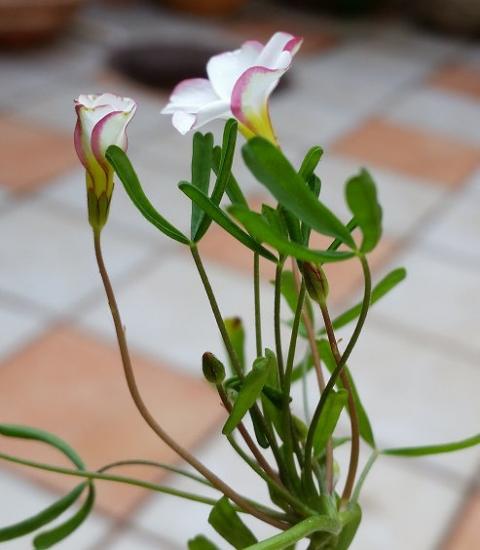
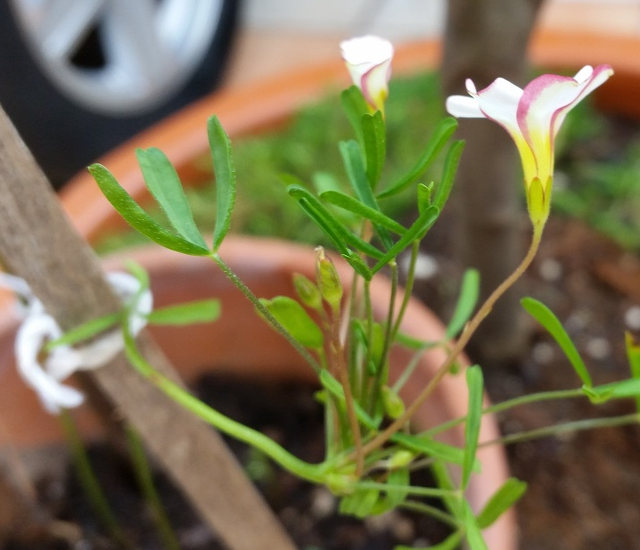
Oxalis virginea is a close relative to Oxalis ambigua. It has a stem which is often branched, and the stem and leaves are hairy. Flowers are white and are borne singly on the peduncles. Height: 4-6 cm. I received this plant as Oxalis anomala, which it is definitely not. Photos by Christiaan van Schalkwyk.
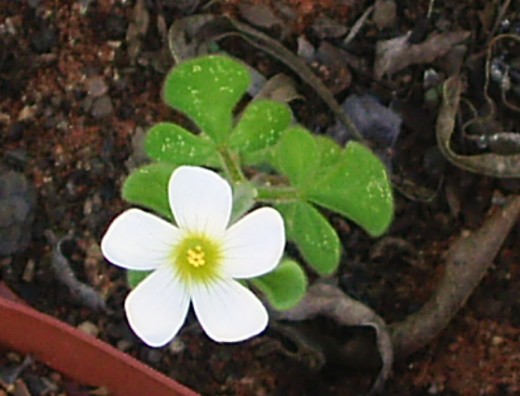
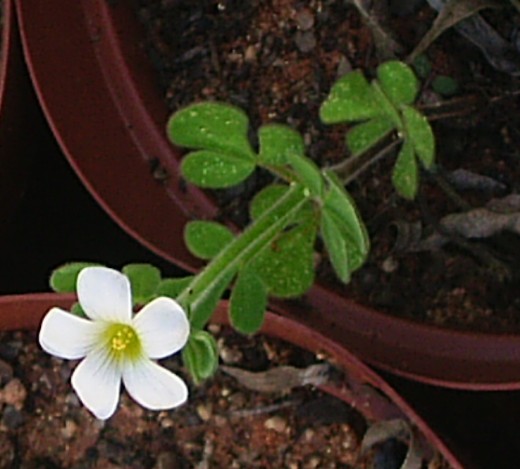
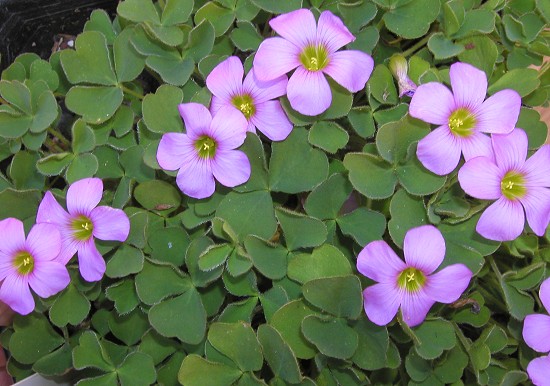
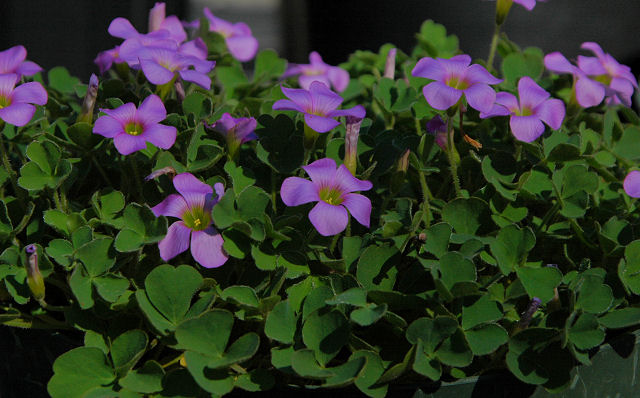
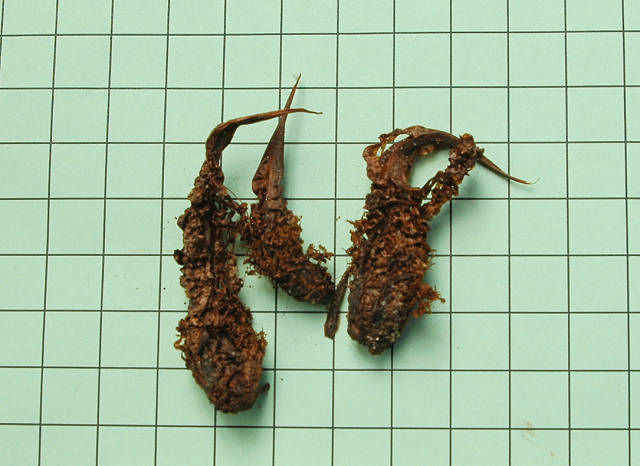
Oxalis zeekoevleyensis is another South African species with trifoliolate leaves and rosy lilac flowers with a yellow tube, growing 1-3 cm high. There are many of us who grow a form in the Northern hemisphere under this name that is a fall bloomer. The South African species reportedly blooms from June to August raising the question of whether what we are growing is really this species. Photos by Bob Rutemoeller and Mary Sue Ittner. The last pictures the very distinctive bulbs on a 1 cm. grid.
Oxalis index - Miscellaneous Oxalis - Oxalis flava - Oxalis hirta - Oxalis obtusa - Oxalis pes-caprae - Oxalis purpurea - South African oxalis A-B - South African oxalis C - South African oxalis D-E - South African oxalis F-G - South African oxalis H-K - South African oxalis L-M - South African oxalis N-O - South African oxalis P - South African oxalis R-S - South American oxalis