Sternbergia is a genus of the Amaryllidaceae family, found along the Mediterranean basin and the Middle East, often growing in rocky places. Although they look a bit like Crocus, they are more closely related to Narcissus. Most of them are yellow and bloom in the fall, but there are a couple of spring flowering species and one that is white. They are winter growing species and summer dormant. Many of the fall blooming species bloom after the first rains and before their leaves are produced.
All trade with Sternbergia is subject to CITES regulations.
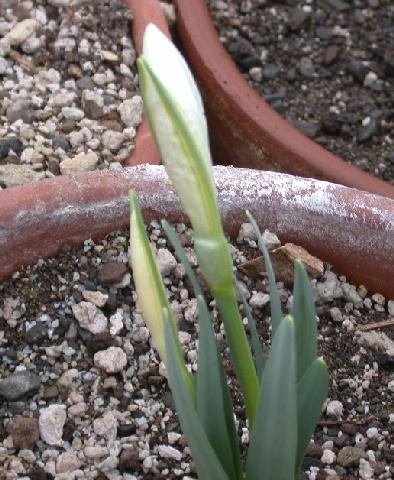
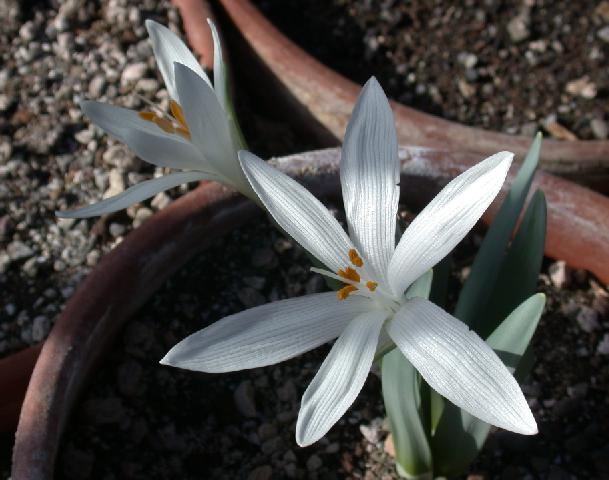
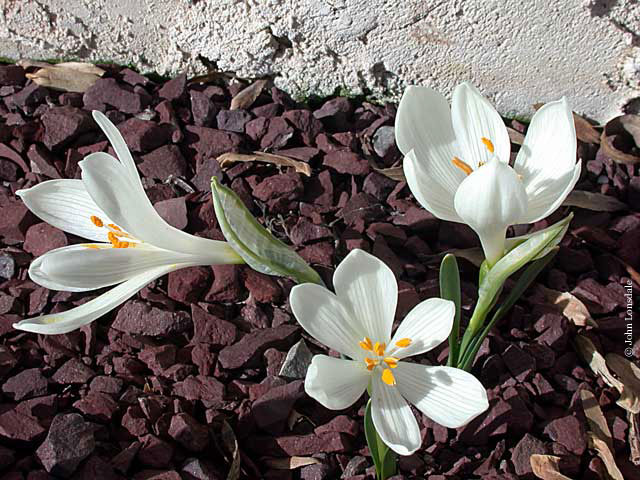
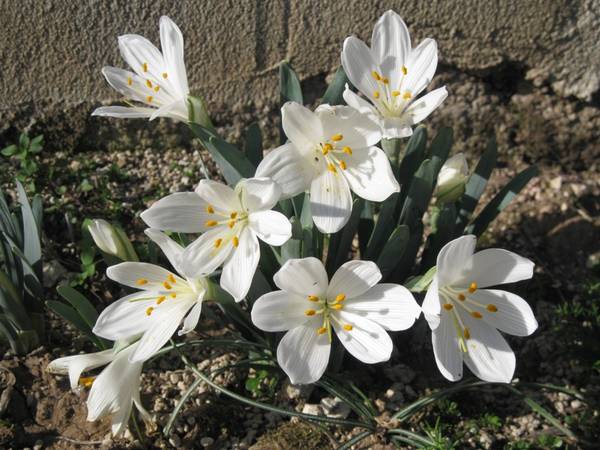
Sternbergia candida B.Mathew & T.Baytop is a rare species of western Turkey, recently described and endangered in the wild, primarily because of collection for the Dutch bulb market along with the more common S. lutea. This is the only white-flowered Sternbergia. Height range: to about 20 cm. The first two photos below from Jane McGary illustrated a plant that was grown from seed purchased from Jim and Jenny Archibald and took 6 years from sowing to flowering. It flowers in late winter to early spring for her (January in a bulb frame in Oregon, USA). The third photo is from John Lonsdale and the final photo is from Angelo Porcelli.
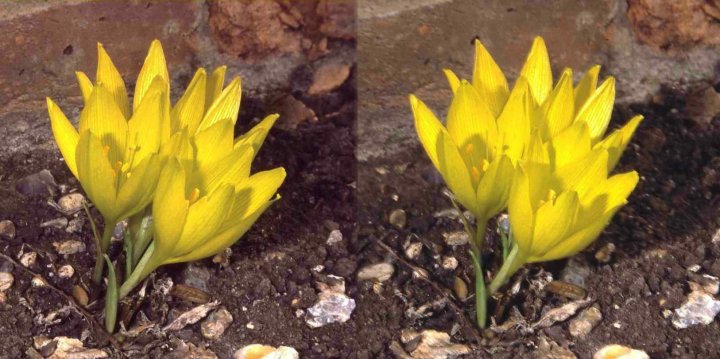
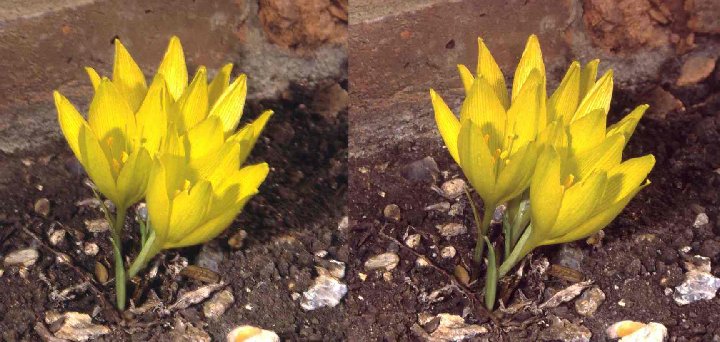
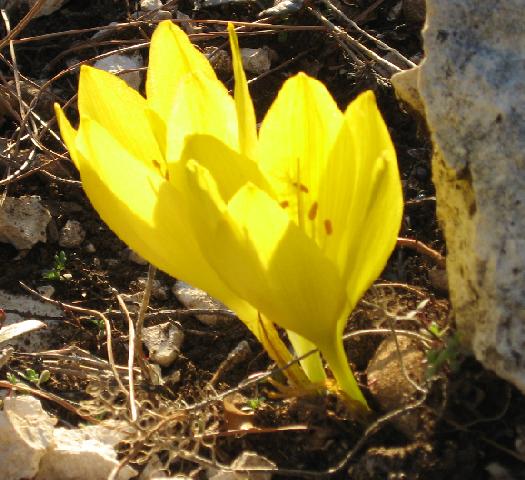
Sternbergia clusiana (Ker Gawl.) Ker Gawl. ex Spreng is found in Jordan, Israel, Turkey to Iran. Height range: to about 20 cm. The first two photos of stereo pairs were taken in an England garden November 2003 by Brian Whyer. The first is a true left/right stereo pair, the second right/left, of the same clump. You should be able to see 1, or maybe both pairs of them in stereo, by crossing your eyes until the 2 images overlap, or a third image appears in the centre, and with practice they will/may suddenly appear in stereo. The flowers of eight bulbs emerge before the leaves through one relatively small hole, presumably taking the route of least resistance through the stony clay chalk soil. The third photo was taken in the wild in southwestern Turkey by Jane McGary in early November 2006. Plants were growing on a steep bank and in rocky soil in scrub. The fifth photo by Angelo Porcelli shows the pod growing at ground level, as this species flowers with the ovary buried in the soil and it appears above the ground only after successful pollination. (The fourth photo, by Jane McGary, is probably S. fischeriana.)
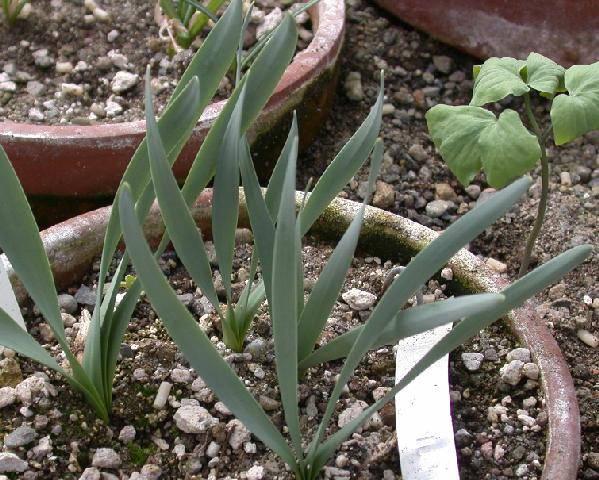
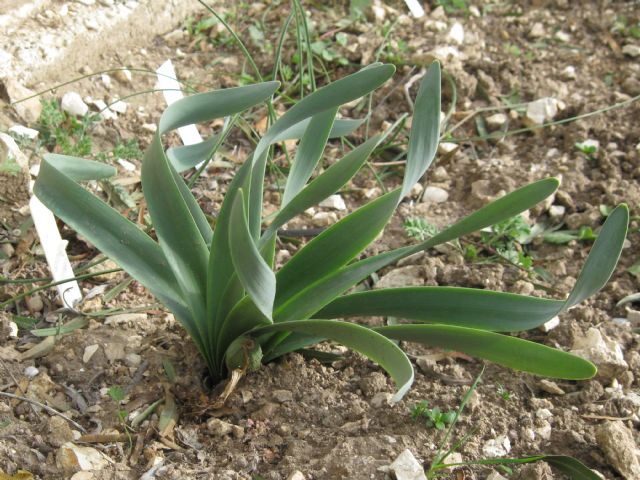
This species grows quite deep in the soil; the 3 years old seedlings below show the yearly 'migration' through the bottom of their pot. A new bulb is formed below the former one, which dries and is absorbed by the new one. The upper part of these bulbs are just dried tunics. Photo by Angelo Porcelli
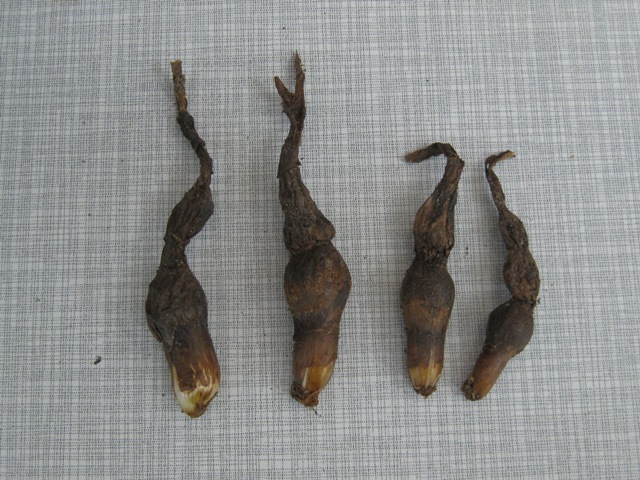
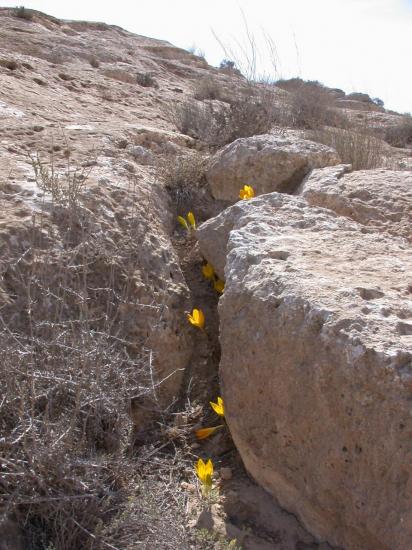
Photos below of Sternbergia clusiana in the wild in Israel by Gideon Pisanty and Shlomit Heymann.

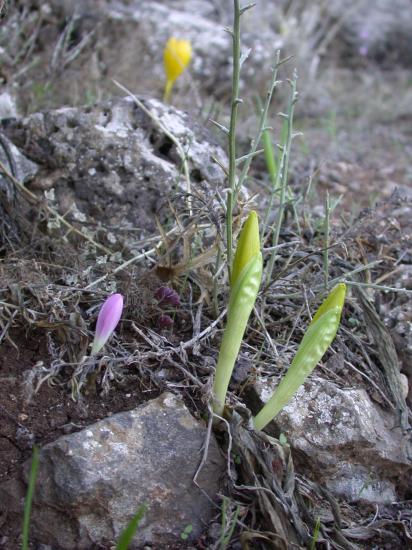
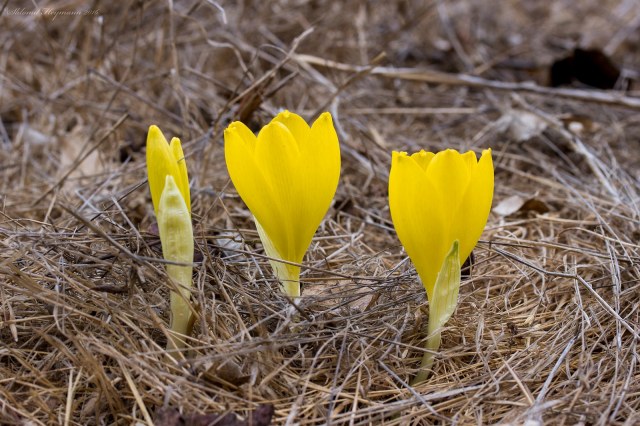
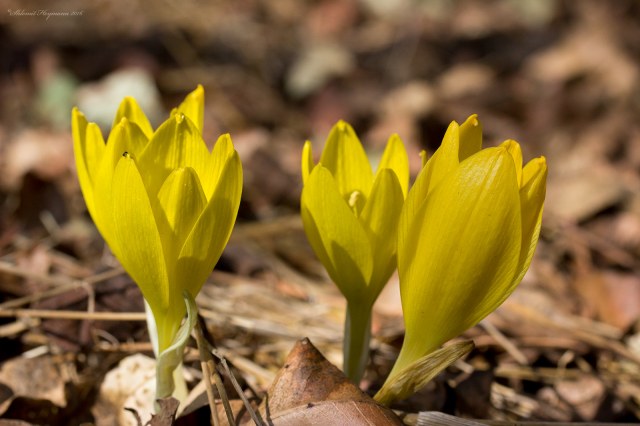

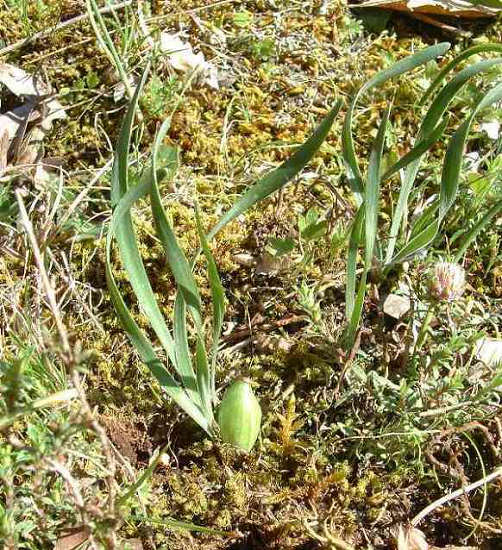
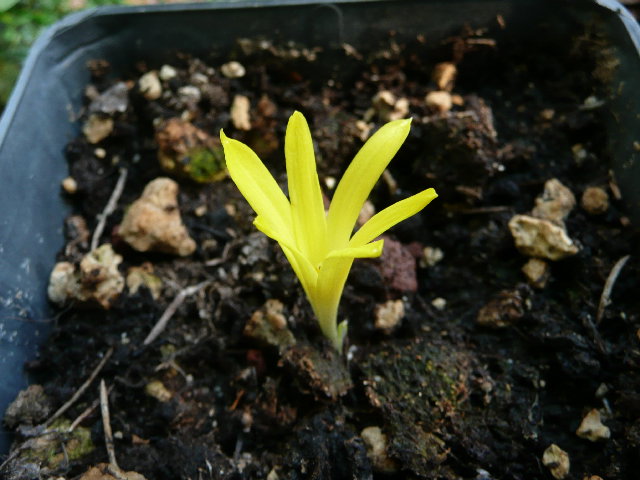
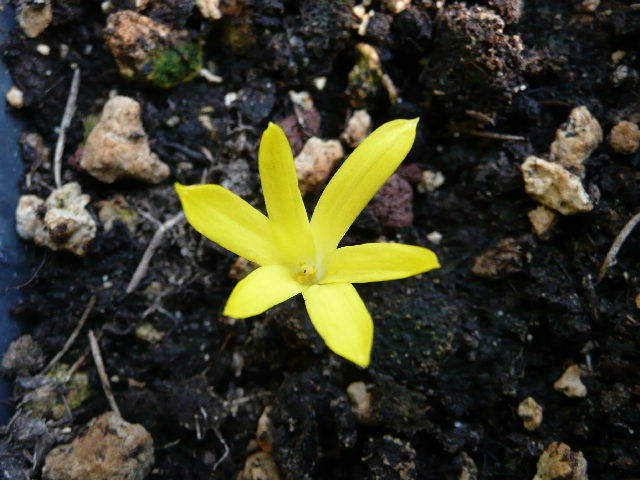
Sternbergia colchiciflora Waldst. & Kit. is a diminutive species occurring in Italy, as well as the Balkans and part of continental Europe, but very difficult to locate for its small stature and fugacious flowering. The plant in leaf and fruit resembles a miniature Sternbergia clusiana with its spirally leaves and the fruit at ground level. Leaves are finely ciliate indeed. Height range: 0-10 cm. The first photo was taken in habitat on the Gargano woodlands in Apulia by Angelo Porcelli. A shy bloomer in warm areas, it needs a cool summer rest. The next two photos were taken by Alessandro Marinello.
Sternbergia fischeriana is now treated as a synonym of Sternbergia vernalis
Sternbergia greuteriana Kamari & R. Artelari, although a published name, is considered by Kew to be a synonym for Sternbergia lutea. This species or form is smaller. Height range: 10-20 cm. The first photo from Jane McGary of plants grown from purchased seed of garden origin includes a flower of S. lutea for comparison. S. greuteriana is easy to grow in an unheated bulb frame, increasing modestly. The second photo was taken by John Lonsdale while third and fourth photos were taken by Angelo Porcelli showing the same plant after one year, increasing and flowering profusely.
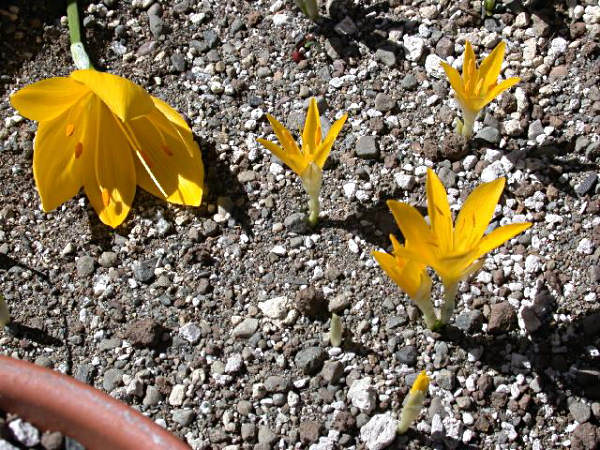
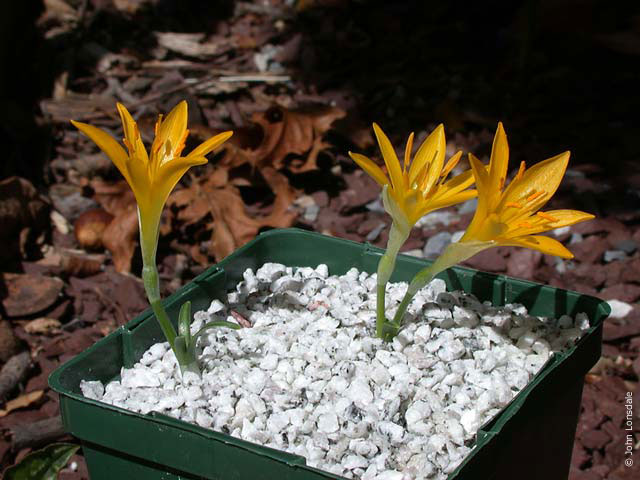
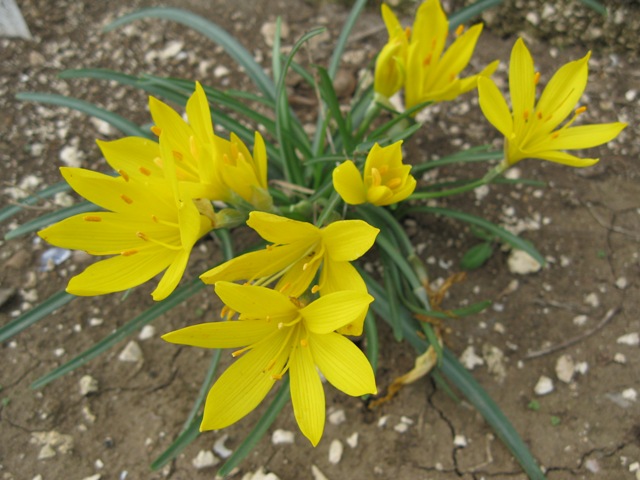
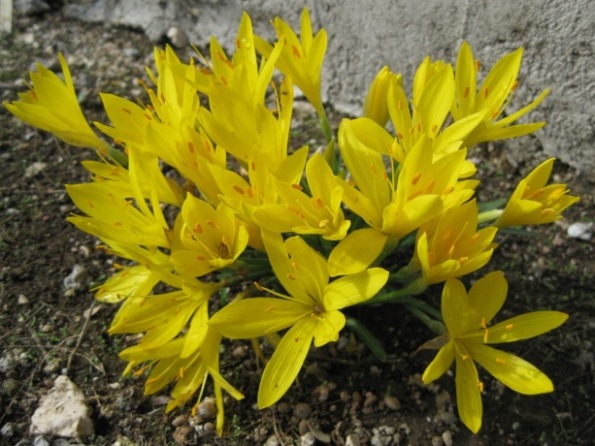
Sternbergia lutea (L.) Ker Gawl. ex Spreng. is the most often grown of the fall blooming species, found in Europe and Asia. In Italy it occurs usually in stony soils, in open areas. It is still rather common in rural areas, along country roads. Height range: 10-20 cm. The first three photos were taken by Angelo Porcelli. The fourth photo was taken in the Mani Peninsula, southern Greece, in late October, by Jane McGary.
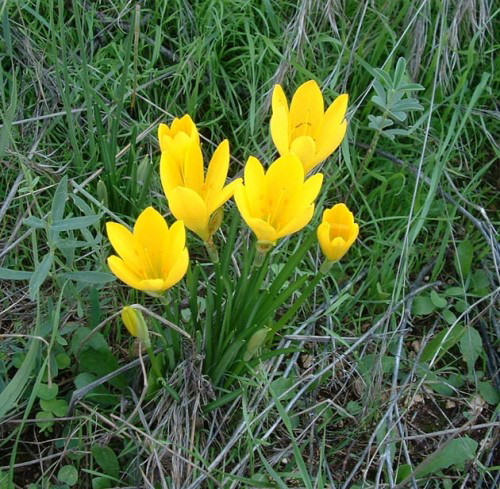
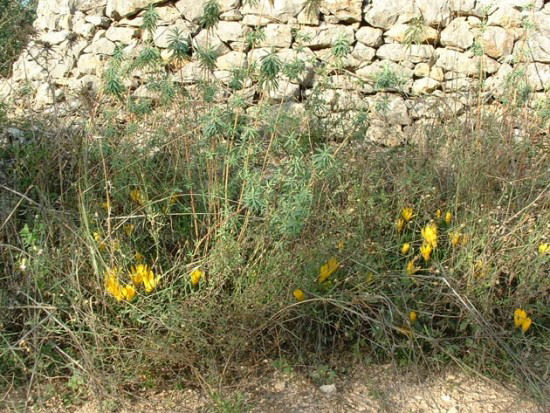
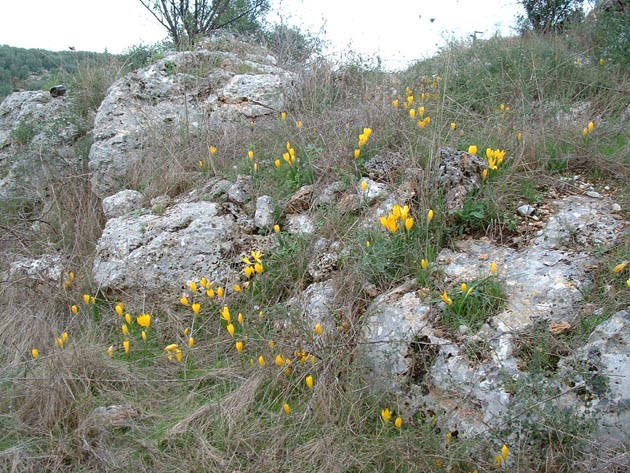
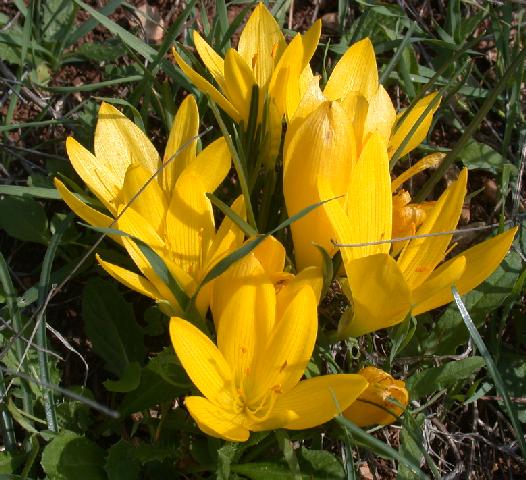
Occasionally, multi-petal forms can occur, as in Zephyranthes. The first photo taken in habitat by Angelo Porcelli in Apulia, Southern Italy, illustrates this. The next two by John Lonsdale show the typical forms.
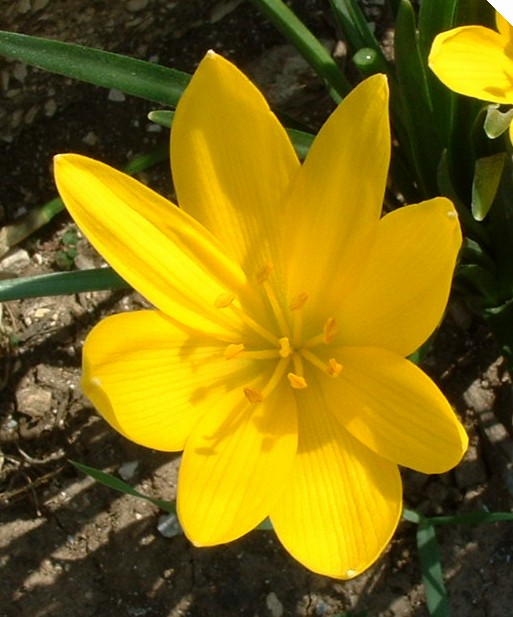
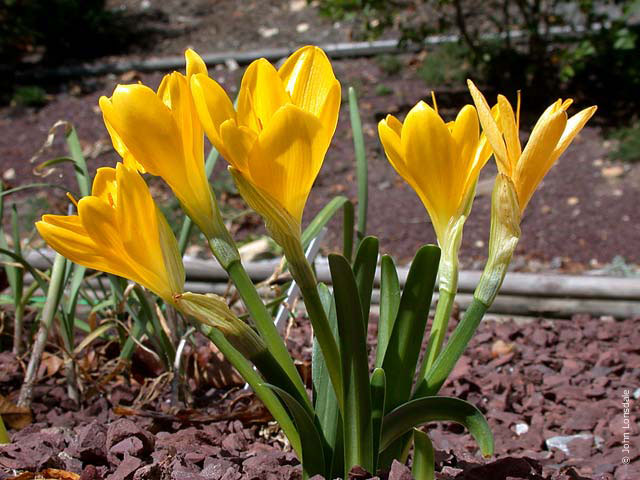
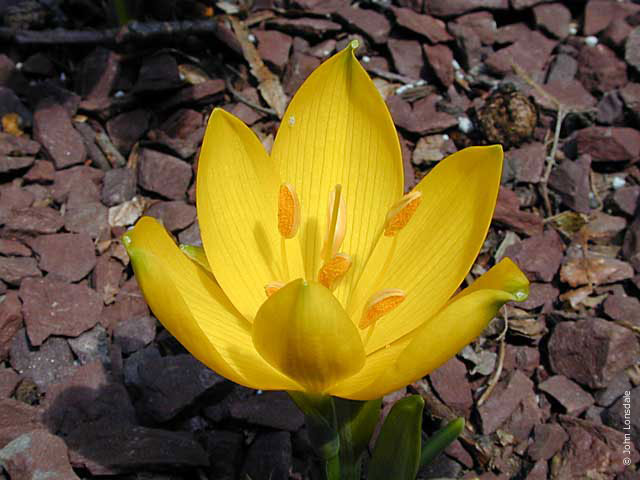
These are forms Angelo Porcelli has selected in habitat. The first photo shows a very floriferous form with flowers of normal size that sprout in mass without leaves. The second and third photos show a form with very large flowers with a nice cup shape. The fourth photo is another large flower form but with straight tepals. The fifth photo is of one referred to as in the 'Angustifolia' group. There was a named species, Sternbergia angustifolia Krelage, but that species is now included in this species. Photos were taken by Angelo Porcelli, who shows his hand for comparison.
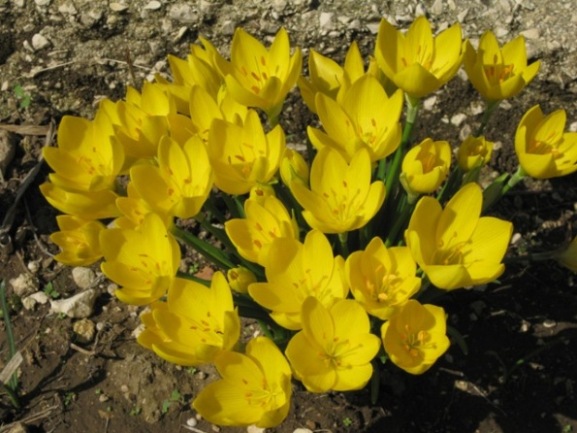
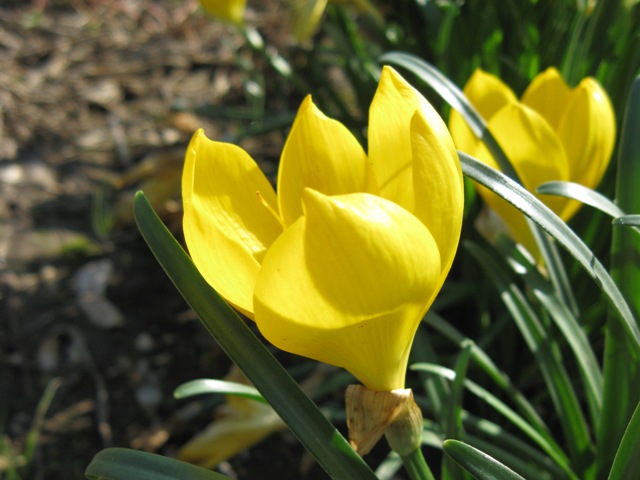
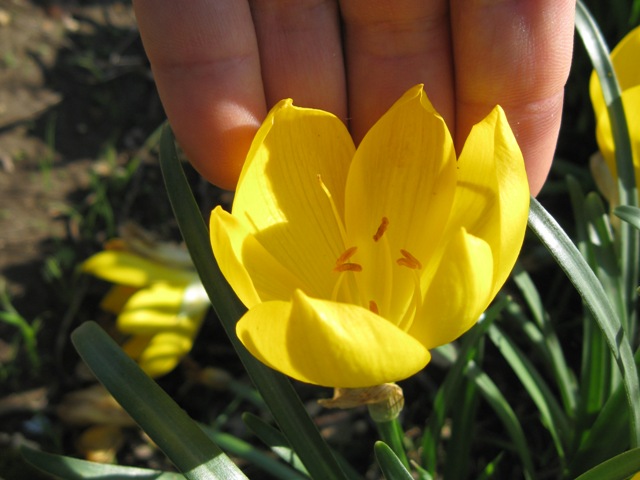
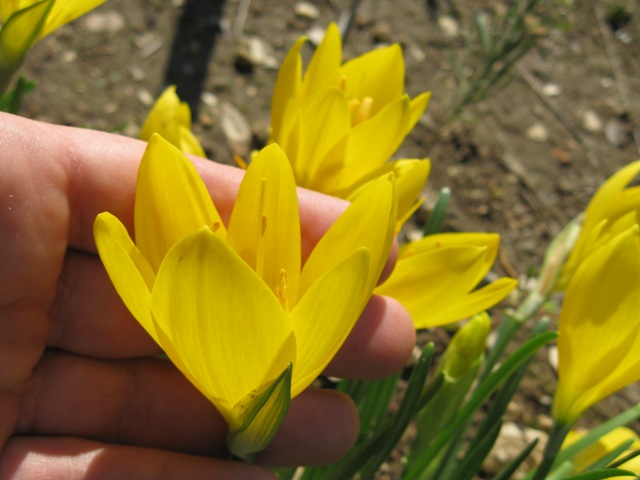
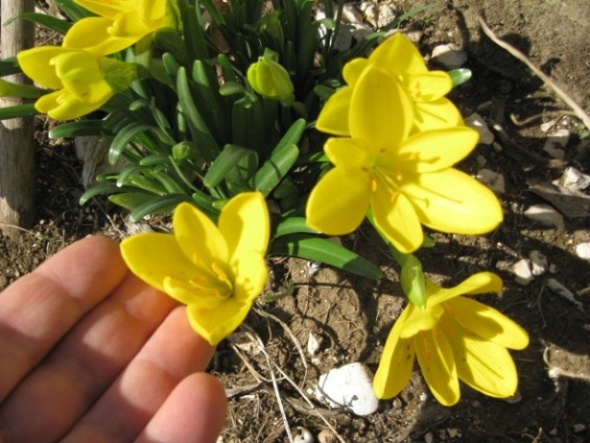
Sternbergia schubertii Schenk is an extremely rare species known only from one location in the area of Izmir in West Turkey. The almost sessile flowers appear in October, with leaves not present or just emerging at flowering time. Seed pods appear soon after to mature in a matter of weeks, in the same way Sternbergia colchiciflora does. It is stoloniferous. Height range: to about 15 cm. Photos taken by Oron Peri of plants in his collection.

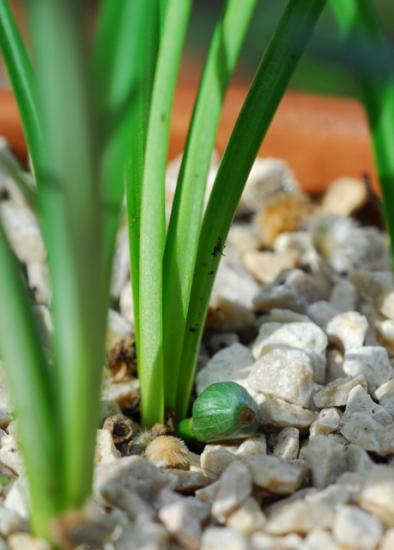
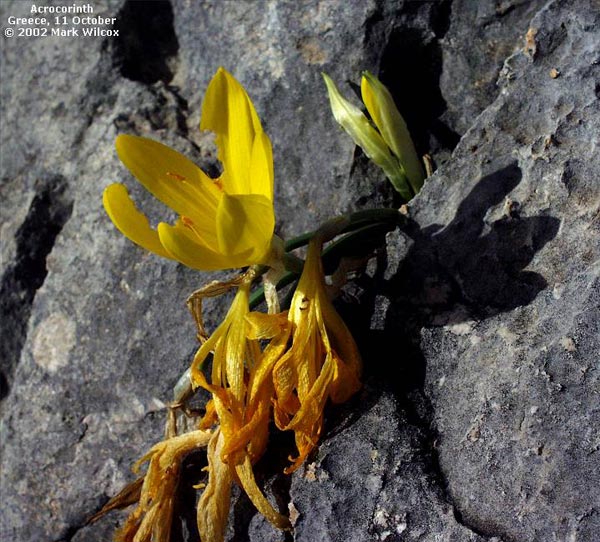
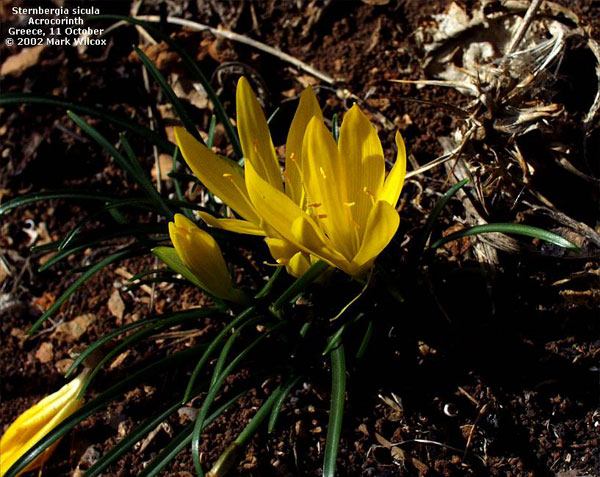
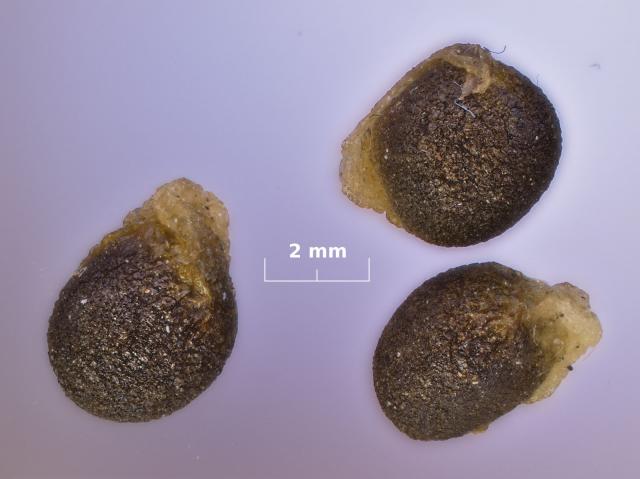
Sternbergia sicula Tineo ex Guss. in 2025 is considered to be a synonym of Sternbergia lutea. This form grows wild on limestone hills in Mediterranean regions and is said to grow in more sharply drained habitats, to have narrower leaves, and to be slightly lighter in flower color. The first two photos by Mark Wilcox were taken at the top of the mountain above Acrocorinth in the Peloponnese region of Greece. Height range: to about 10 cm. The first picture shows a plant that has somehow grown inside a small opening in solid rock. Flowers are shown in bud, bloom, and withered states. The second photo was taken a few feet away, showing another blooming plant with leaves, more typically sited in soil. They had a southern exposure. The third photo by Jane McGary was taken in the Mani Peninsula, Greece, late October. Photo 4 of seed by David Pilling.
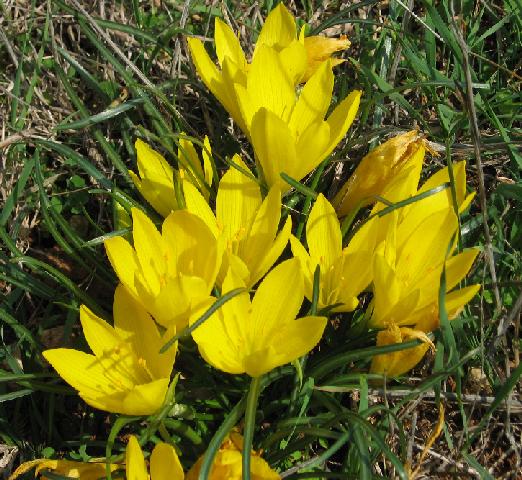
The first four photos below were taken by John Lonsdale. The last two photos, one from John Lonsdale and the second from Angelo Porcelli, show bulbs that are descendants of seed from Rannveig Wallis in Wales collected as Sternbergia sicula ex Crete.
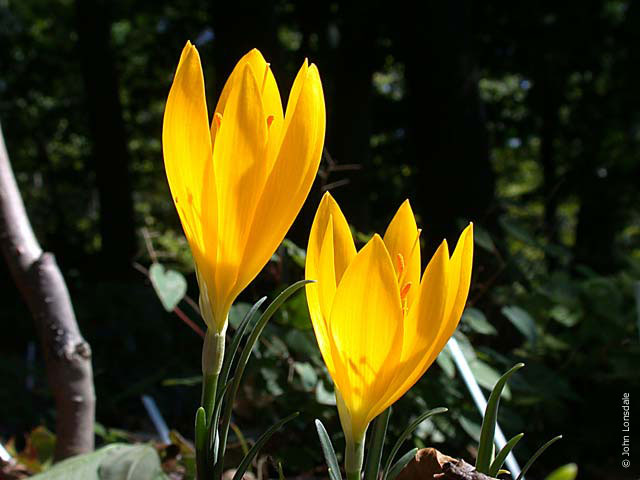
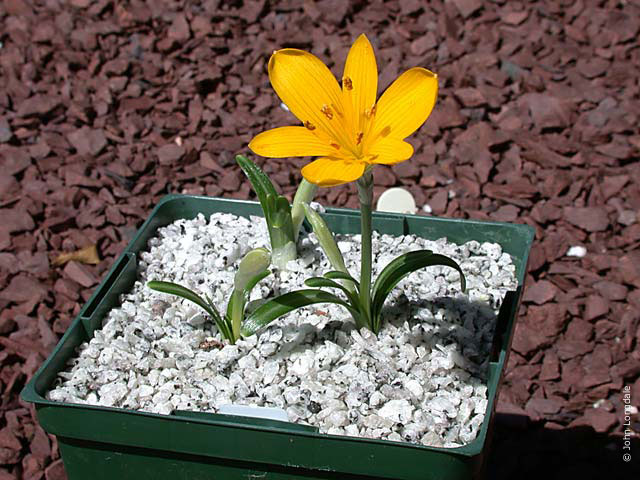
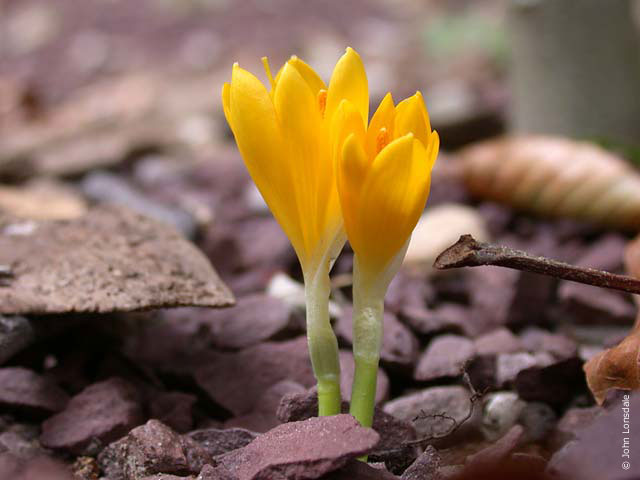

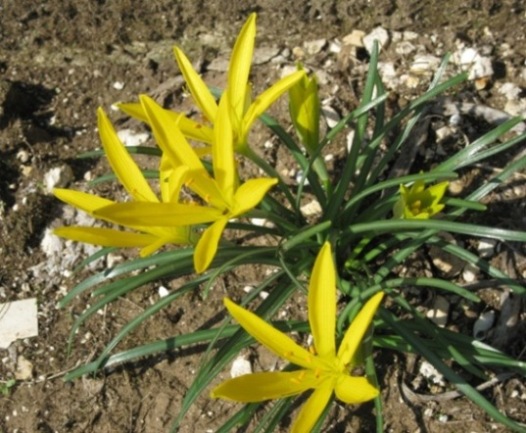
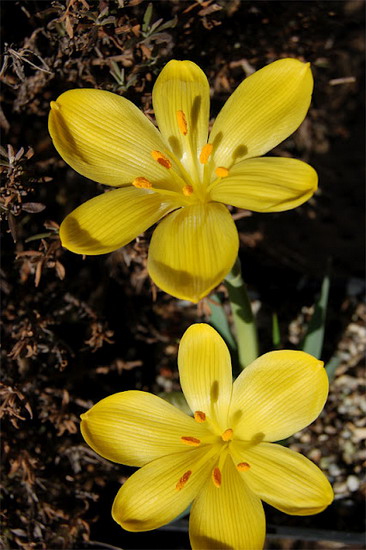
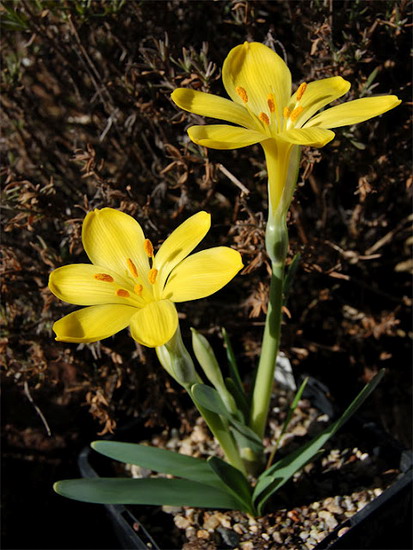
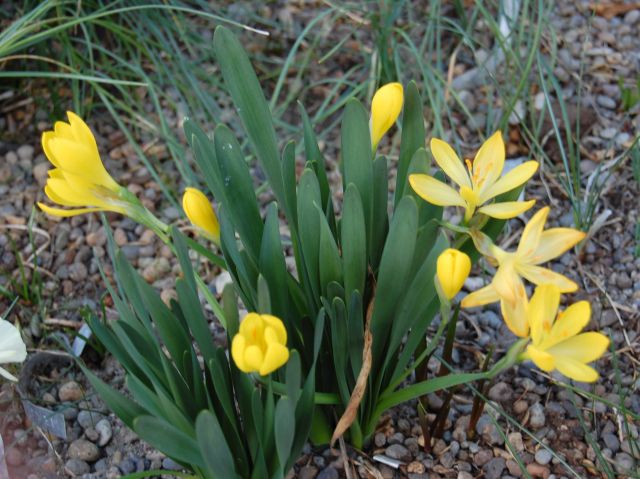
Sternbergia vernalis (Mill.) Gorer & J.H.Harvey is a yellow flowering spring blooming species that occurs in stony places in Turkey, Iran, and Iraq. It may be better known in trade and horticulture by the name of Sternbergia fischeriana, which has been reduced to synonym of this species. It needs deep-planting and a warm dry summer rest to flower well. Height range: 10-20 cm. First two photos by John Lonsdale. The third and fourth photos by Angelo Porcelli shows the glaucous twisted leaves with the seed pods ripening and a clump with over 20 flowers, in early January 2012.
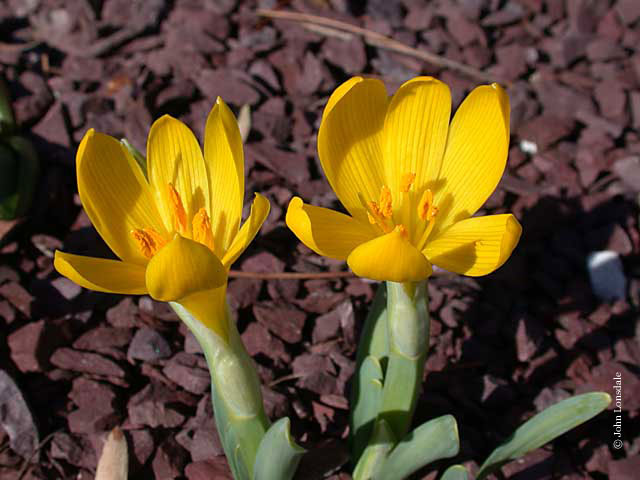
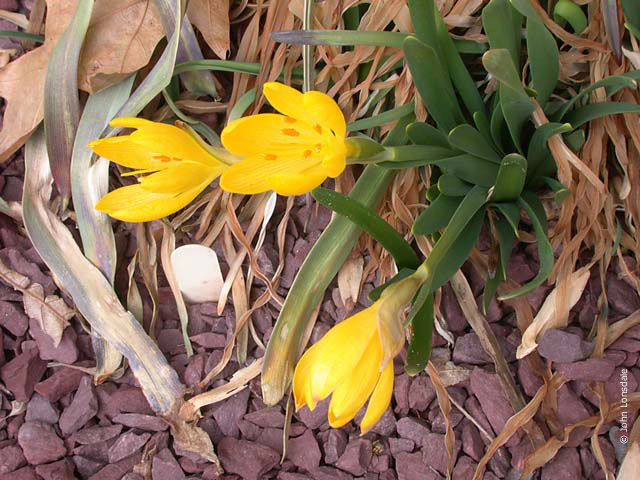
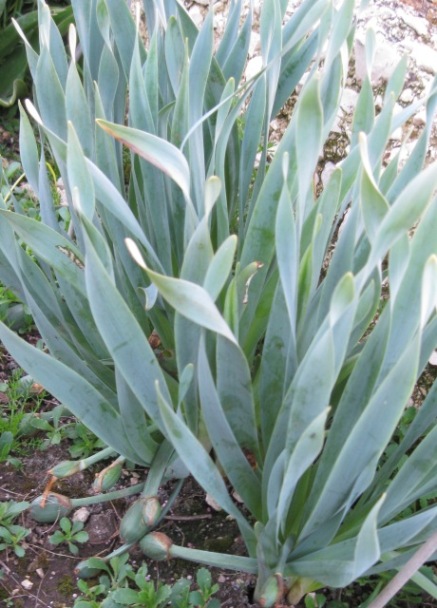
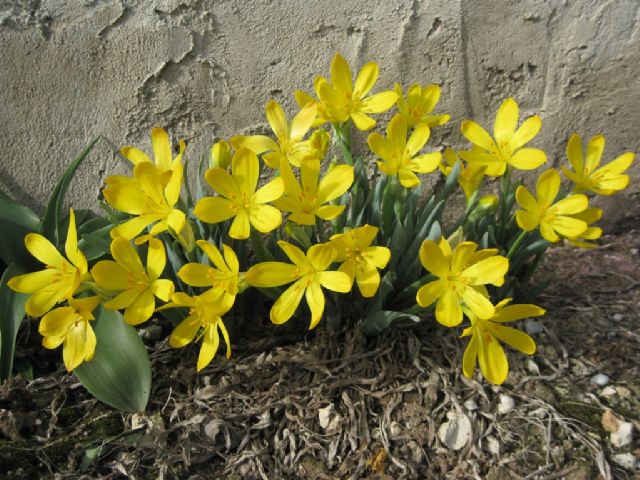
The next two photos are from Hans Joschko. The last photo from Jane McGary shows two plants flowering in January in Portland, Oregon, earlier than expected.