Trillium is a genus in the Trilliaceae family with 43 species, with 38 in North America and 5 in Asia. The leaves, petals, and sepals come in parts of 3 and are indicative of the genus name. Plants grow from thickened rhizomes. They are mostly woodland plants that require shade and humus rich soil. Some of the information on this page supplied by John Lonsdale from his article on Trillium from Bulbs, Bulletin of the International Bulb Society, Spring 2004. The article describes many of the species of trillium found in the eastern USA and includes information on cultivation and propagation. Trillium species a through f are found on this page.
Trillium g-r - Trillium s-z - Trillium index
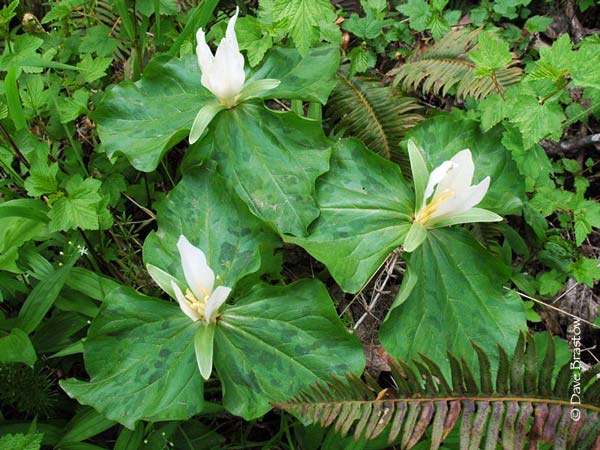
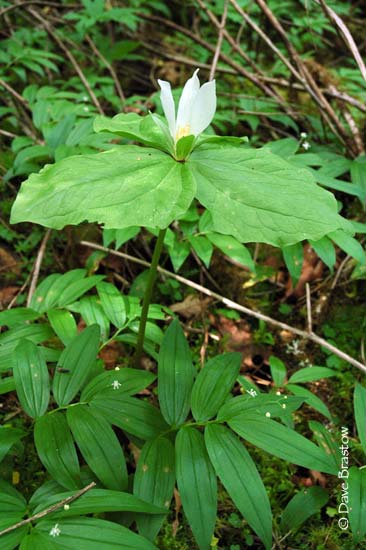
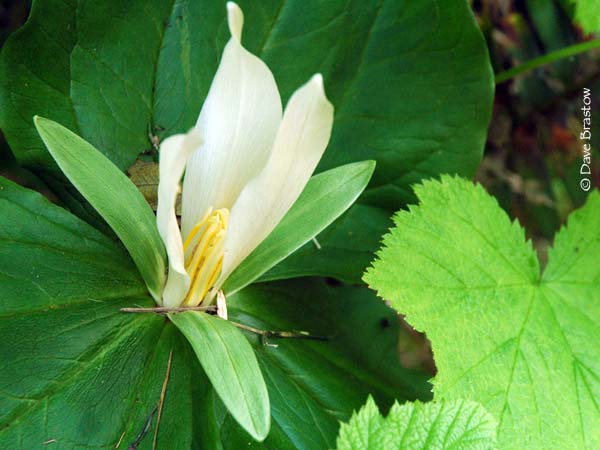
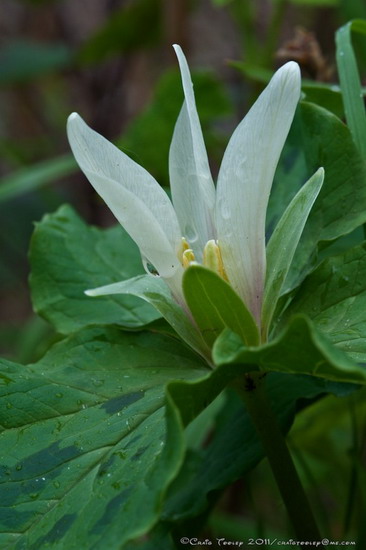
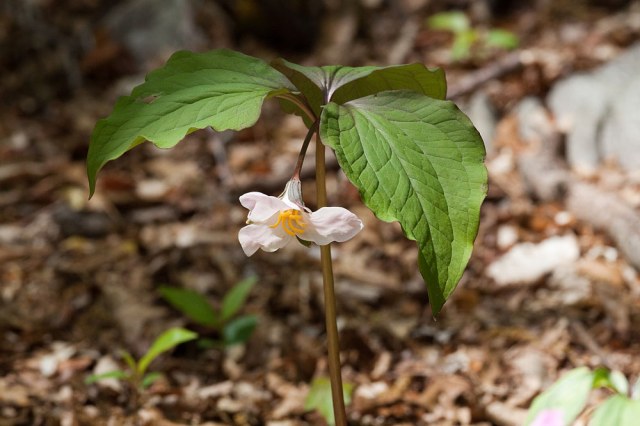
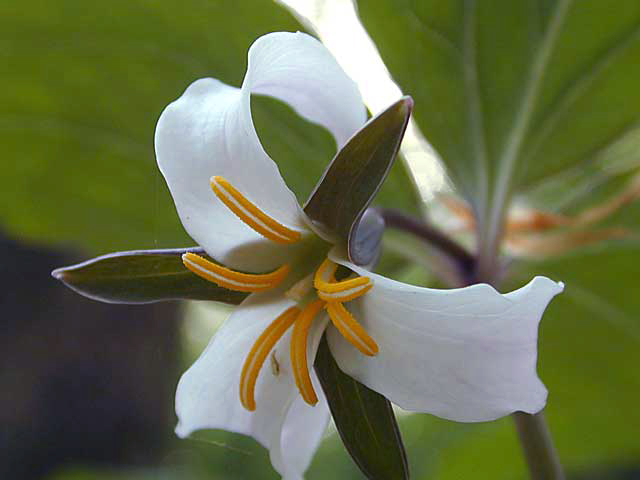
Trillium albidum J.D.Freeman is a species native to Western North America (Washington to California), 20-50 cm tall, with leaves 10-20 cm long. It is found below 2000 m at the edges of redwood or mixed-evergreen forest, coastal scrub, chaparral, moist canyon slopes, and ravine banks. These plants require a moist soil; with this requirement met, they can be found in various sites. The large white to pink flowers (occasionally with a purple base) with a subtle rose to spicy fragrance sit atop dark green weakly spotted leaves. The ovary is green to purple. They often have multiple stems, making them quite showy. Flowering time is February to June depending on location and the fruit is green to purple. Photos 1-3 by Dave Brastow. Photos 4-5 were taken by Craig Tooley on the Mendocino Sonoma Coast.
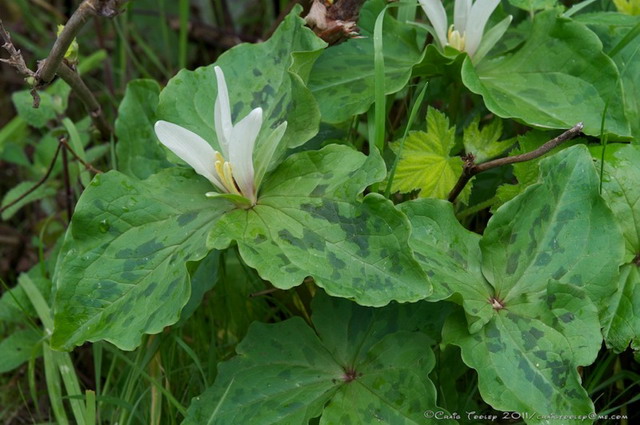
Photos below were taken by Mary Sue Ittner in Sonoma County, California.
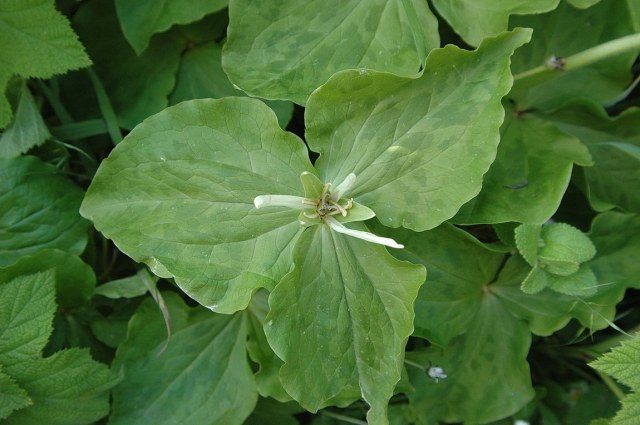
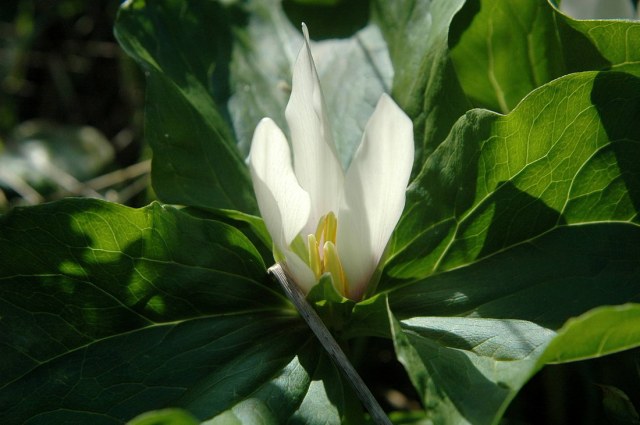
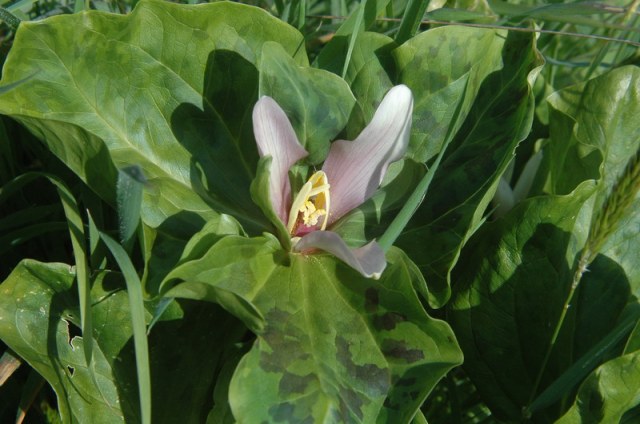
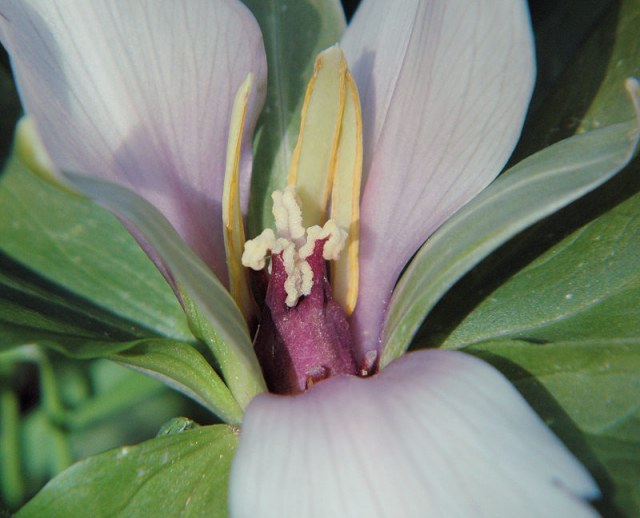
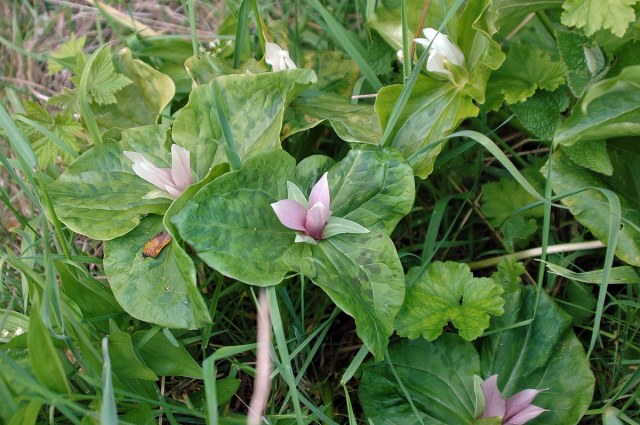
Trillium angustipetalum (Torr.) J.D. Freeman is from the Pacific Northwest; Northern California and Southern Oregon. In California it is found in montane conifer forest, foothill woodland, chaparral, riparian woodland in the Klamath Ranges, Sierra Nevada (except Tehachapi Mountain Area), the south Central Coast, and outer South Coast Ranges. It has a musty or fetid flower odor, sessile dark purple flowers with petals erect or leaning inward. Leaves are rounded to obtuse at tip, weakly light brown or dark-green-spotted. It flowers March to April. Stamens that are generally hidden are less than 1.25 times the pistil. Trillium kurabayashii J.D.Freeman is now considered a synonym for Trillium angustipetalum by the Jepson Manual, but is still considered a distinct species by the Flora of North America based on differences in cytology; bract orientation, color, and texture; and petal shape. Freeman described Trillium kurabayashii as having sessile, usually acuminate bracts, longer and wider sepals, and much wider petals. Height: to about 70 cm. The first four photos were taken in Montaña de Oro State Park. The fifth photo was taken in El Dorado State Forest. All photos were taken by Kjirsten Wayman.
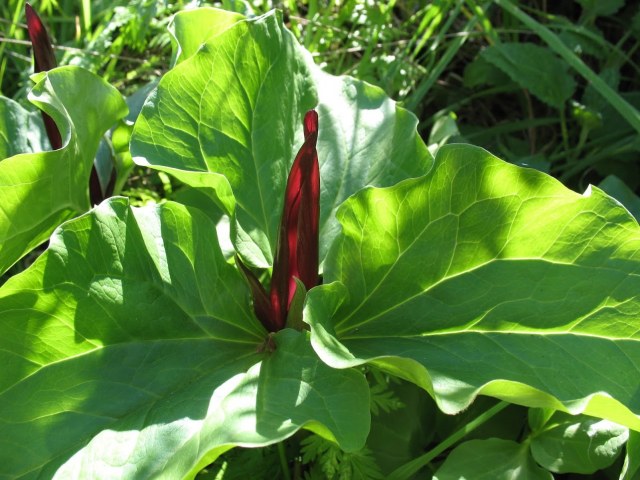
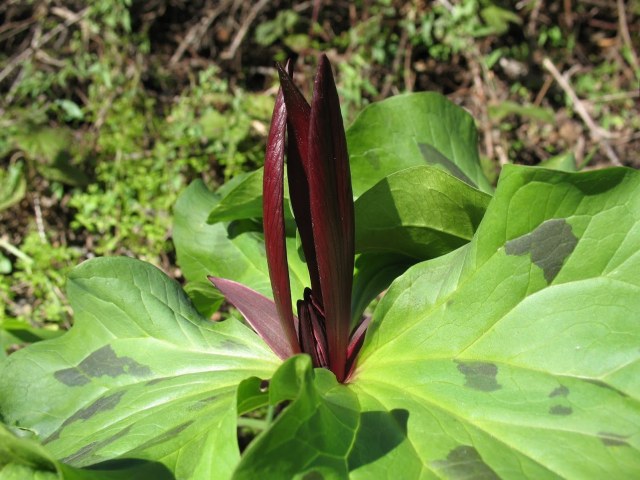
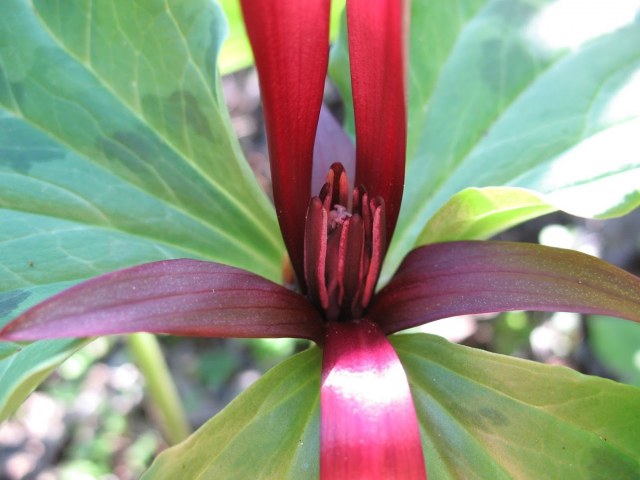
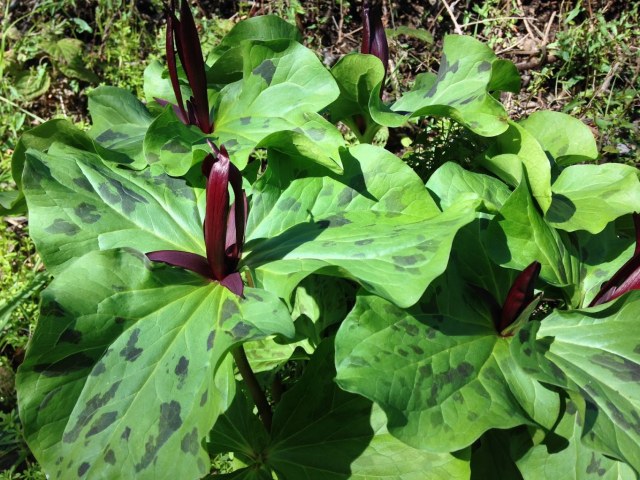
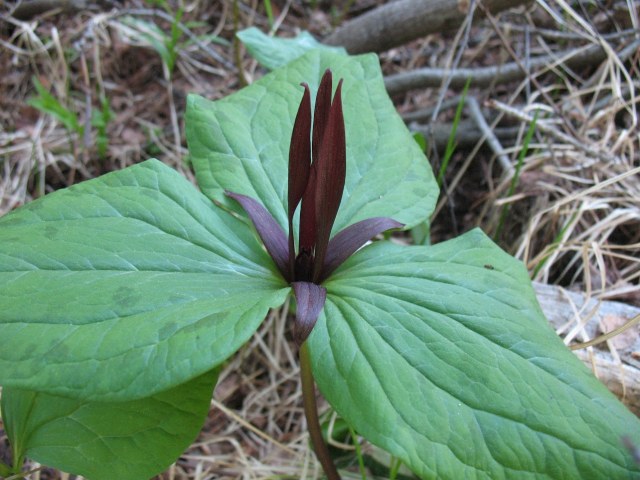
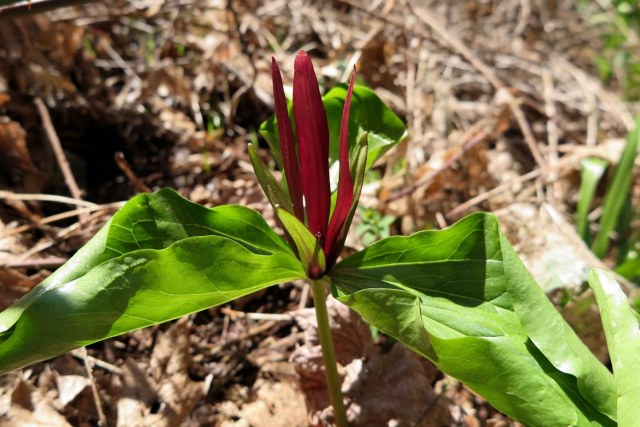
Trillium catesbaei Elliott grows widely in northern Georgia and north western parts of the Carolinas. The leaves appear distinctly petiolate and are plain green and unmarked, as is the case for all of the eastern pedicellate species. The flower can be held above (rarely) or below the leaves and is quite variable in size. The petals can be white or pink, and any shade in between, and some forms have superb deep rose pink petals which are strongly reflexed and perfectly compliment the prominent yellow stamens. The pedicellate species generally flower a month or so later than the sessiles and T. catesbaei is at its best from early April to June, depending upon location. Height: to about 45 cm. Photos by John Lonsdale.

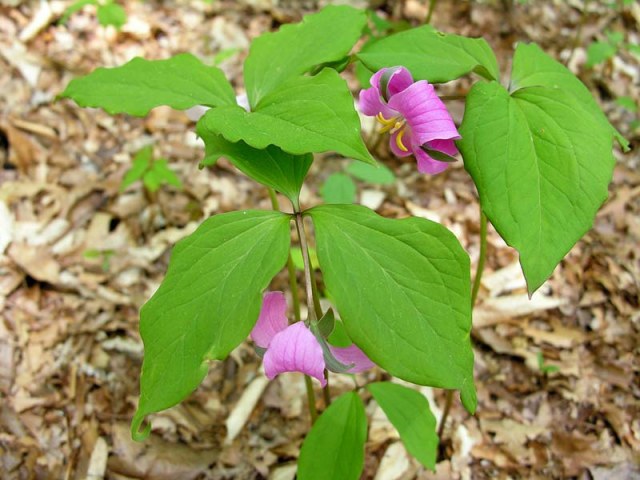
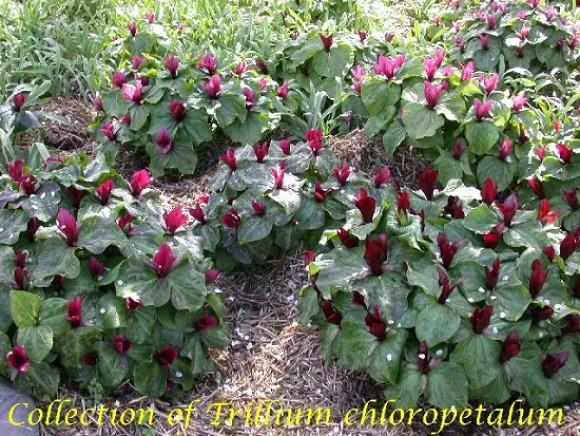
Trillium chloropetalum (Torr.) Howell is native to California where it grows in shady woods and thickets. It has large erect flowers which can be white, white-green, or various shades of red-purple that rest on top of the 3 large oval mottled leaves without a flowering stem; one common name is "giant trillium". Plant in deep rich soil in a shady spot or one with filtered sun. This species will tolerate water all year long, but does not require summer water. Seed is best planted as soon as it is ripe and kept moist until it germinates. Patience is required as it may take 5 to 7 years before plants reach flowering size. Height: to about 45 cm. Photo #1 from Bill Dijk. Photos 2-3 from Ernie O'Byrne including a photo of the cultivar 'Volcano', a taller plant with a dark red flower. The last two photos are from Jessica Sneeden who saw this in Redwood National Park, California, at the end of March. The photos were on the Mystery Bulb page and she wondered if they were this species or Trillium angustipetalum. Based on the location it was felt to be this species which is distributed in Northwestern California, Cascade Range, northern Sierra Nevada, and the San Francisco Bay Area. Other distinguishing characteristics could not be determined from her photos: flower odor generally sweet rose-like or more or less spicy and stamens more or less 2 times the pistil.
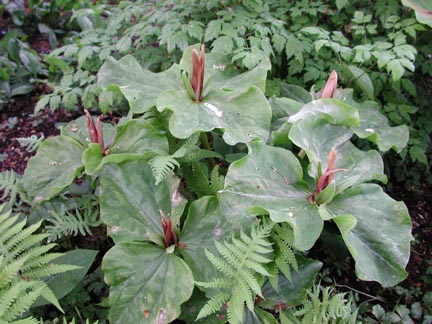
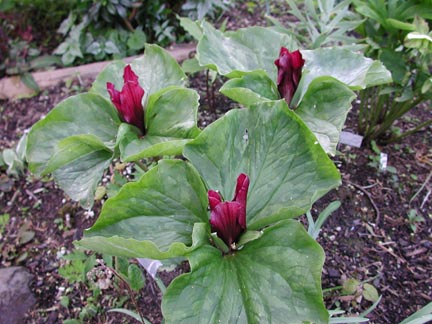
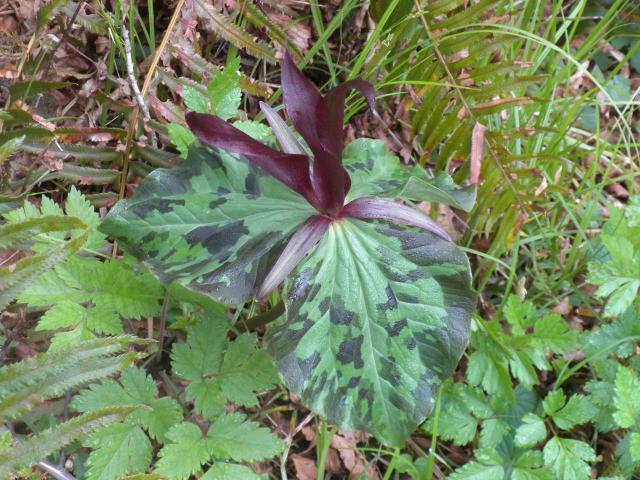
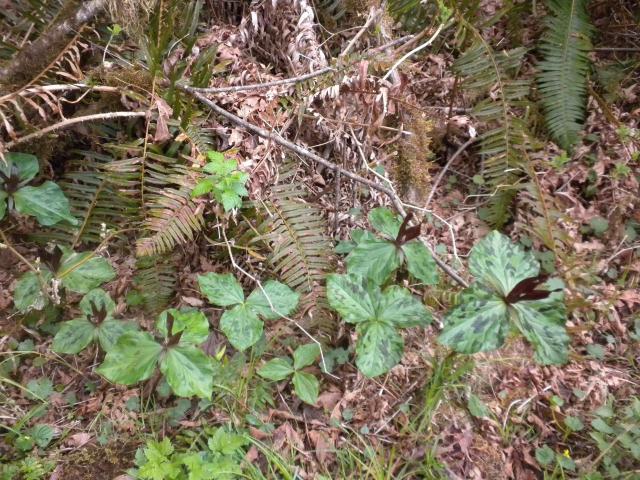
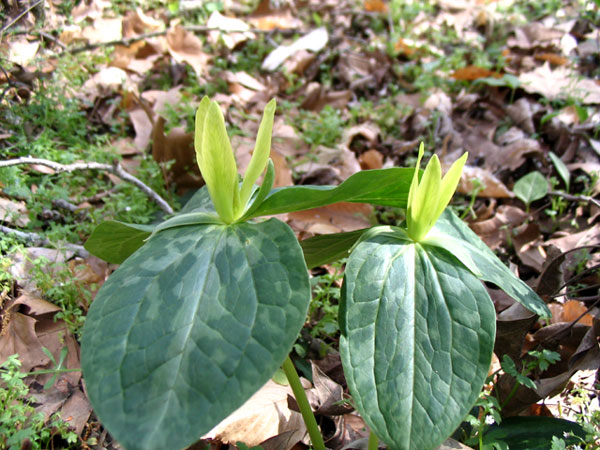
Trillium cuneatum Raf. grows over a vast area in the United States (Alabama, Georgia, Illinois, Kentucky, Mississippi, North Carolina, South Carolina, Tennessee) and is easily the largest of any eastern sessile trillium. Growing mainly in upland slopes and woods, it could be described as coarse when compared with the smaller species but it is particularly spectacular when seen enmasse. Very many different forms occur over this range and these can be confused in cultivation with other species. Petal color varies from yellow through green to brown and deep maroon; leaves can be pure silver, green or strongly mottled. Height: 30-45 cm. Photos by John Lonsdale.
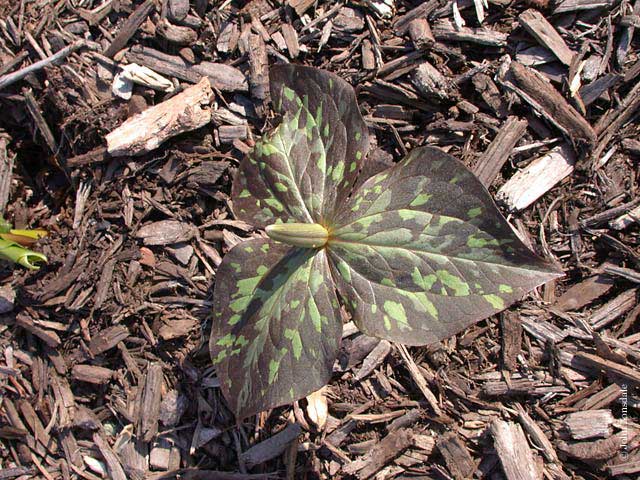
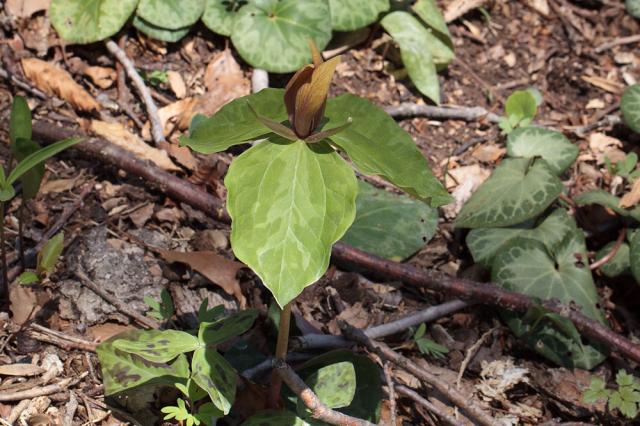
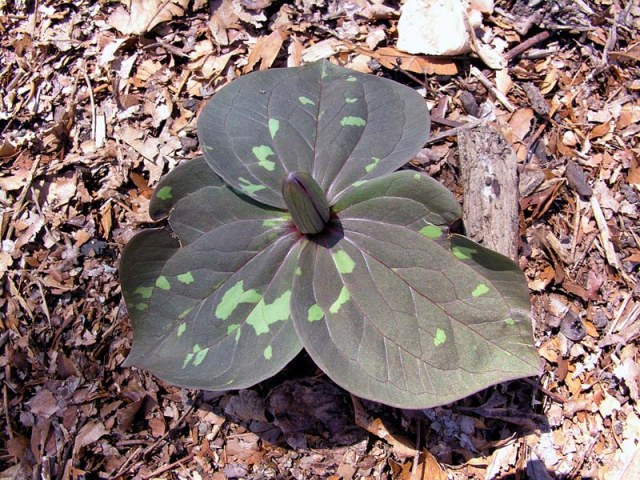
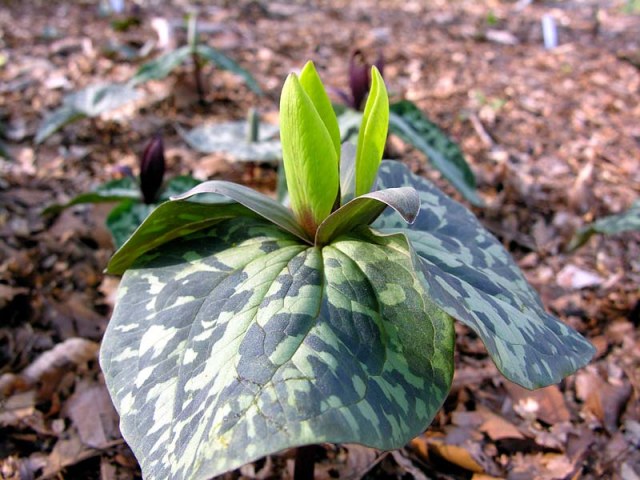
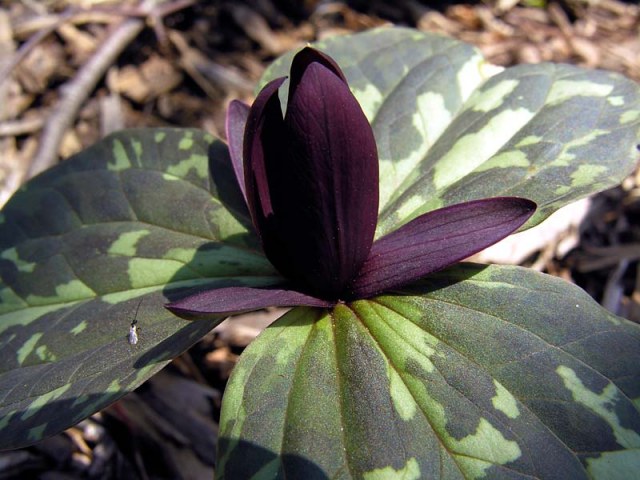
Trillium decipiens J.D. Freeman, commonly called the Chattahoochee River wakerobin, occurs mostly near the Chattahoochee River in Alabama, Florida and Georgia. It has three mottled leaves and purple, brown or green (rarely yellow) stemless flowers. Height: to about 45 cm. Photos by John Lonsdale.
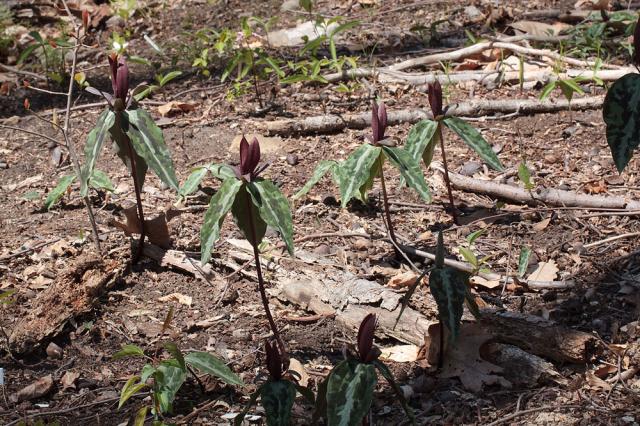
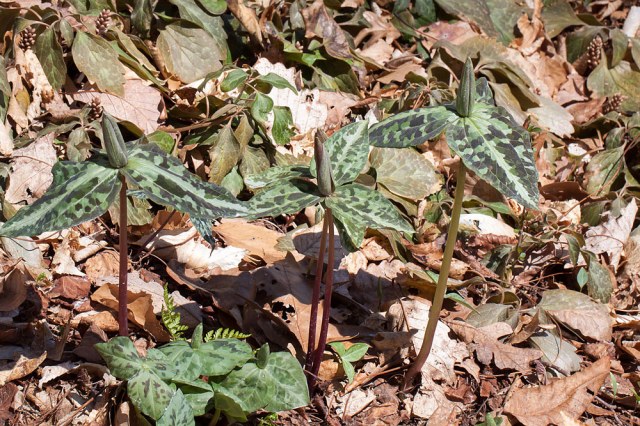
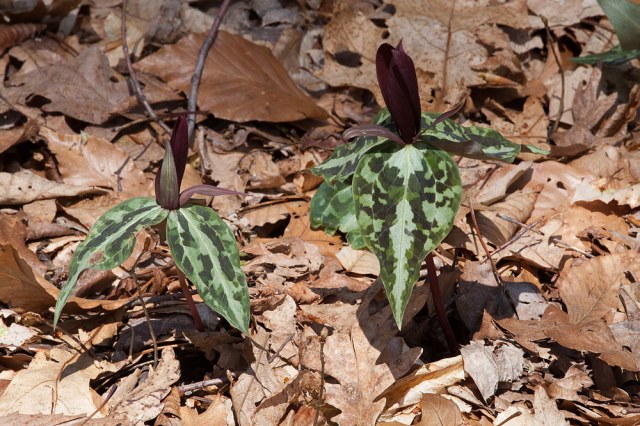
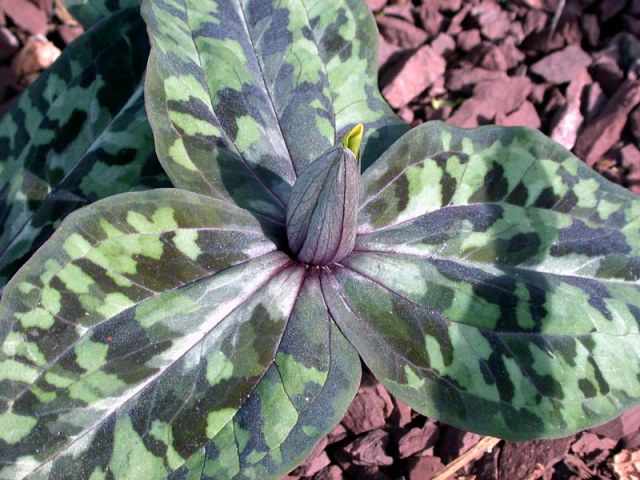
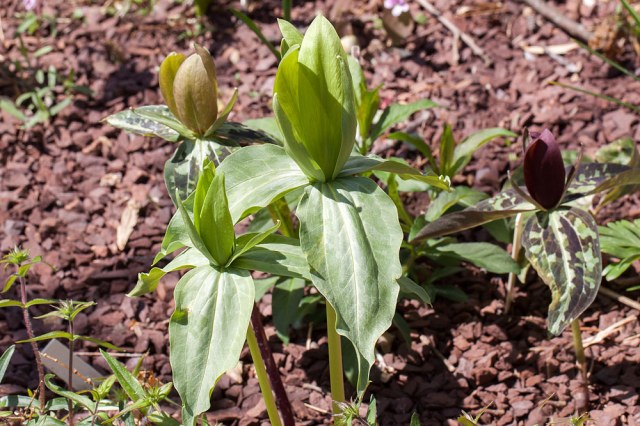
Trillium decumbens Harb. lies flat on the forest floor and possesses a character all of its own. It is found in northern Alabama and northeastern Georgia. The open flowers are a glossy red-maroon and the petals are attractively twisted at the tips. Height: 5-10 cm. Photos by John Lonsdale who says this is probably his favorite sessile trillium.
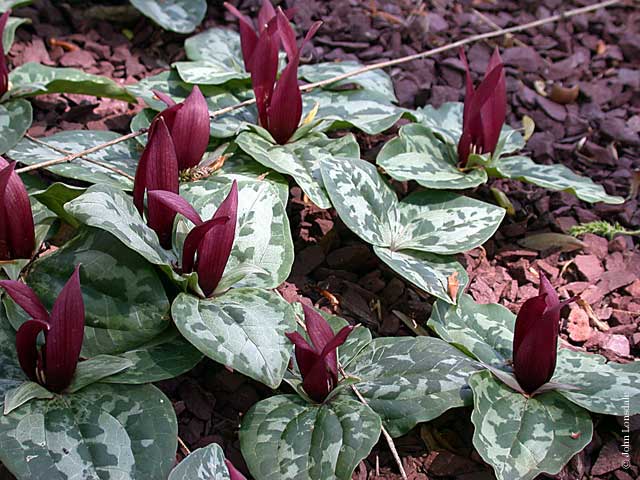
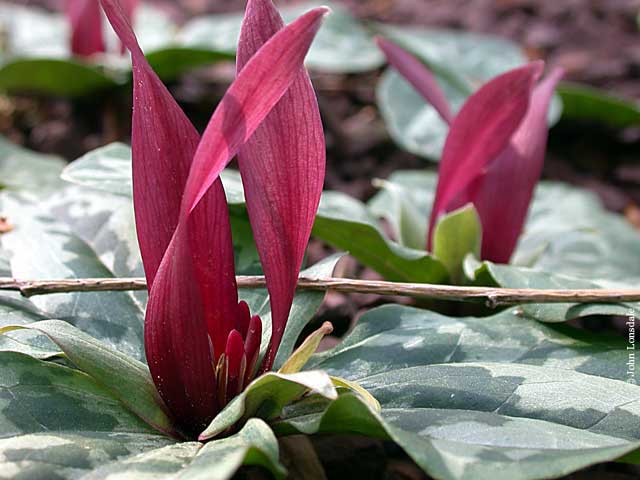
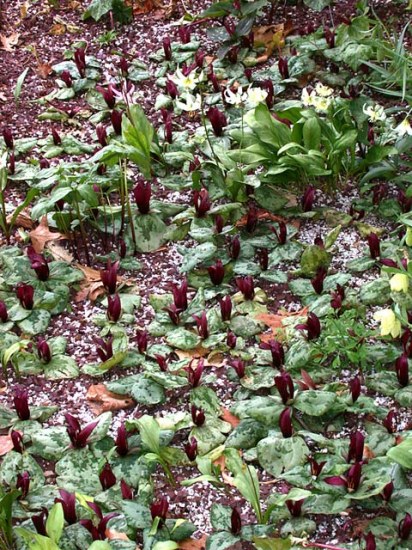
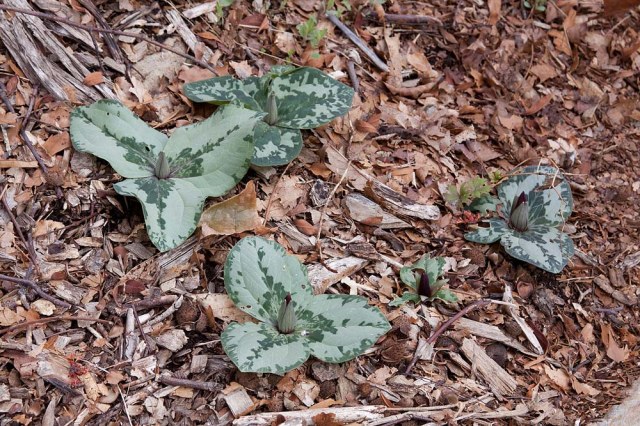

Trillium discolor Hook. hails from the upper drainage of the Savannah River on the border between South Carolina and Georgia. In comparison with the other yellow sessile trillium, Trillium luteum, this is a truly refined species and quite distinct. The petals are a soft creamy yellow and upon seeing large colonies of them, the effect is one of seeing thousands of candles. The petal shape is unique in that they are quite spatulate, much broader at the tip than the base, and the stamens are purple. They can be delightfully but not strongly fragrant of lemons and particularly nice forms may have strong red flares extending up from the base of the petals. Height: 12-30 cm. Photos by John Lonsdale who states this is another favorite.
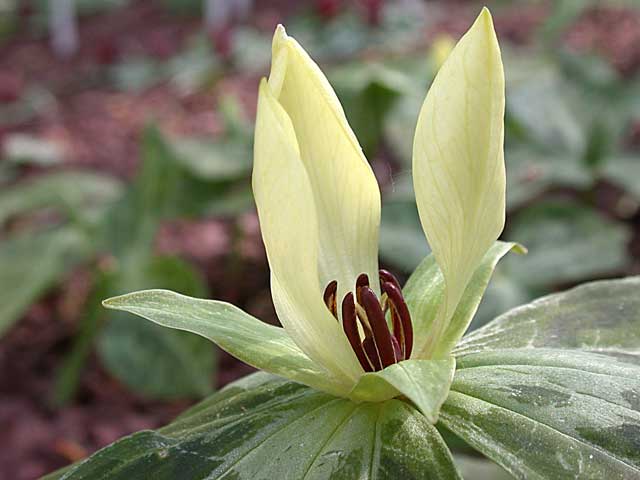
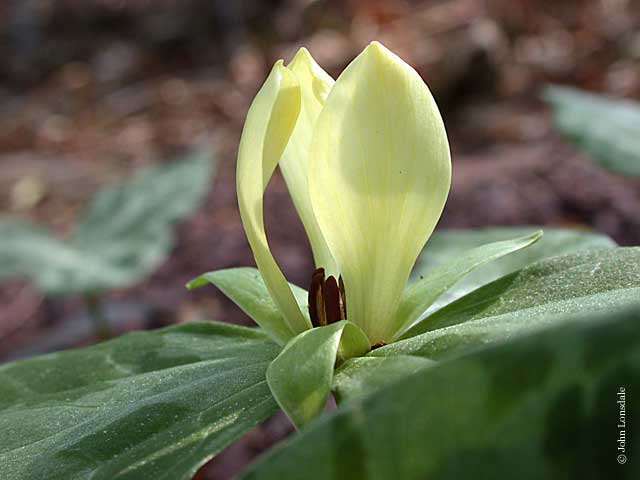
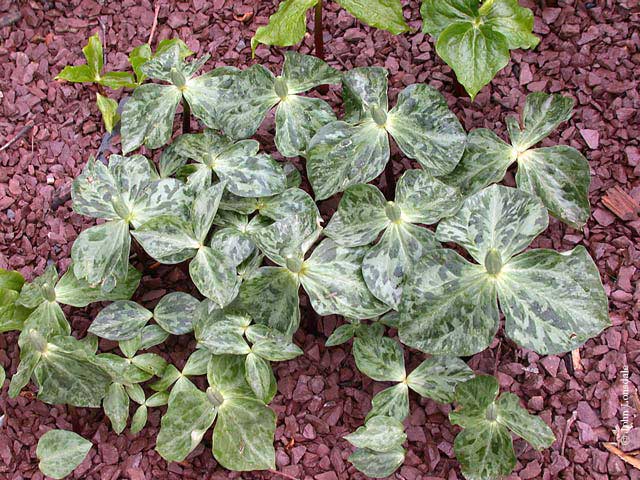

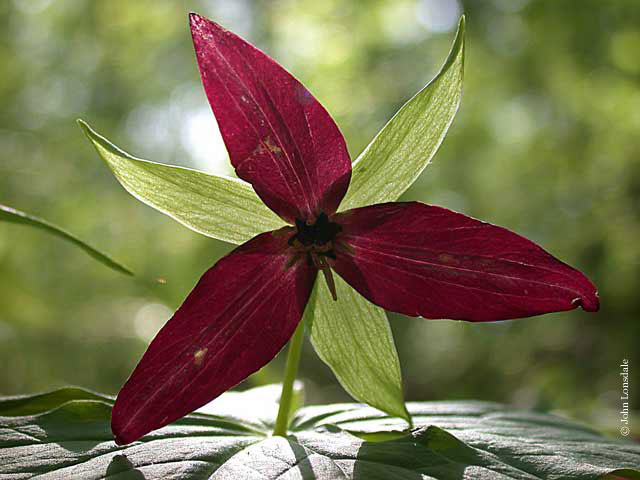
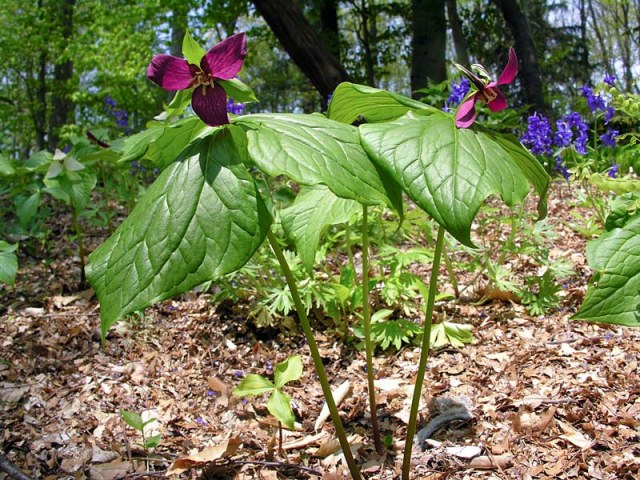
Trillium erectum L. is native to eastern Canada and the United States. It can be anything from 8 – 24" tall, with flowers, flat and wide-spreading in profile, of white, red, maroon, yellow-green or red-brown, the petals frequently tending to be lanceolate in shape. The flowers can be erect, straight out sideways or declining. Leaves are plain green. Photos by John Lonsdale.
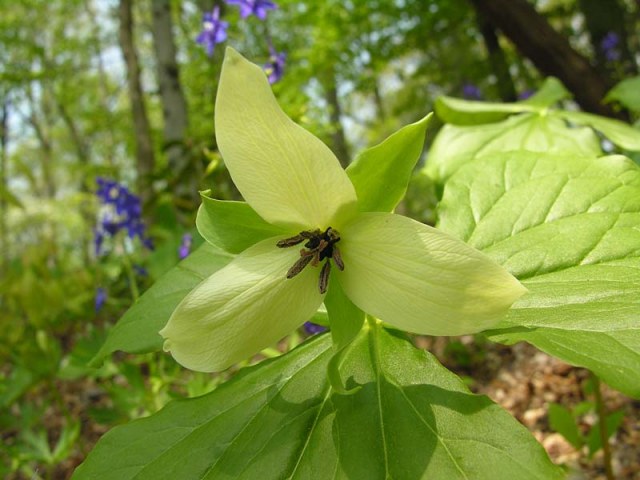
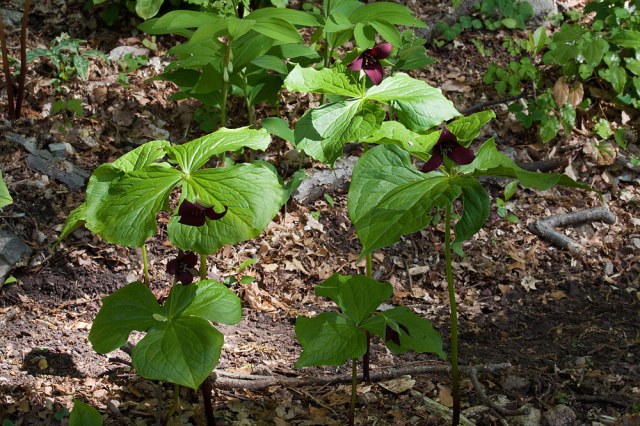
Trillium erectum var. album(Michx.) Pursh has white flowers. Photos from John Lonsdale.
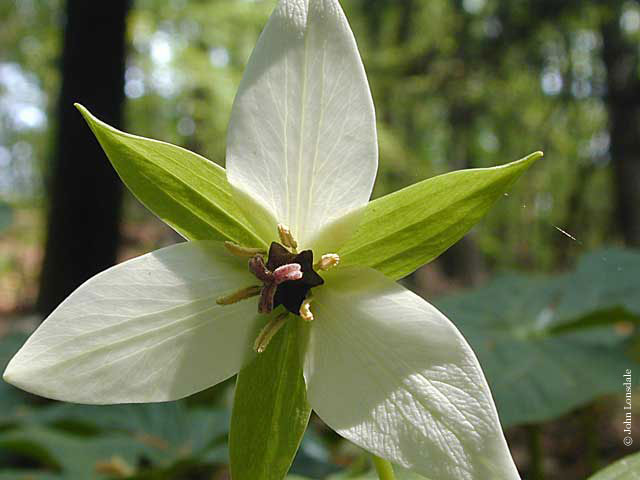
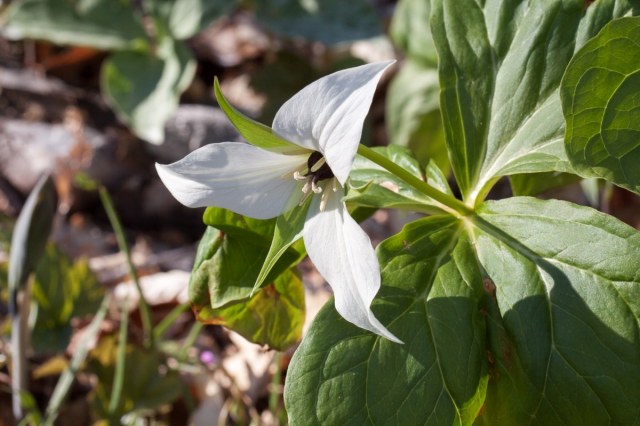
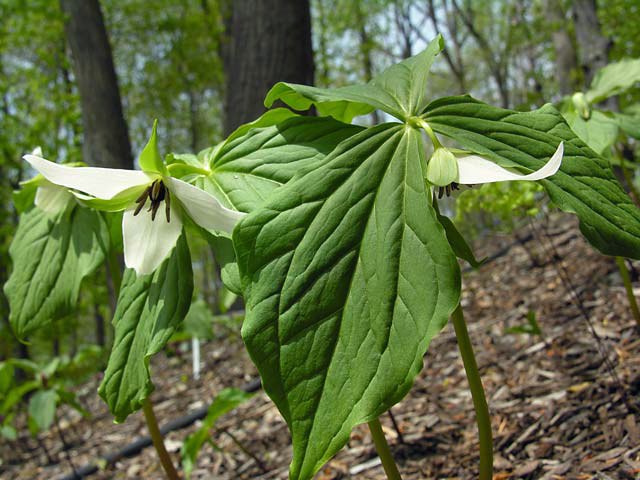
Trillium flexipes Raf. has a native range from southern Ontario in Canada to east central United States. It is usually 15 – 18" tall, traditionally white flowered with broader petals on erect flowers, although red forms have been described, as have forms with declining flowers. The ovary can vary from white through cream to pink-purple. Photo by John Lonsdale.
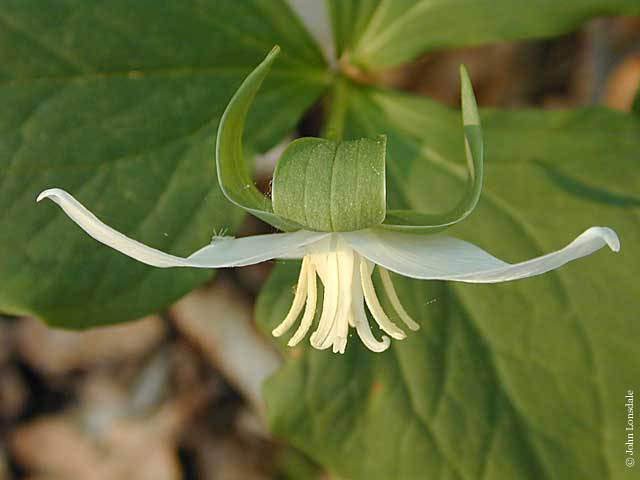
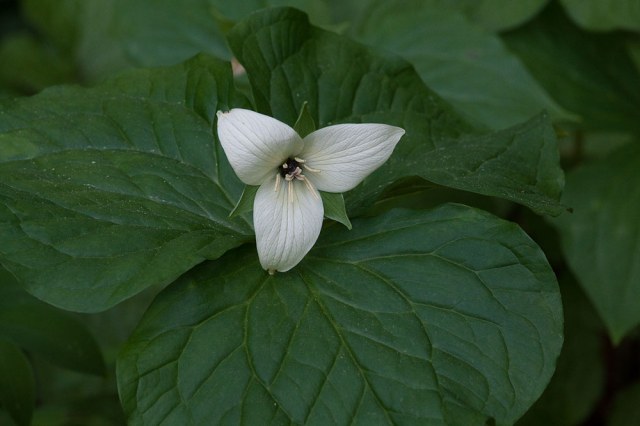
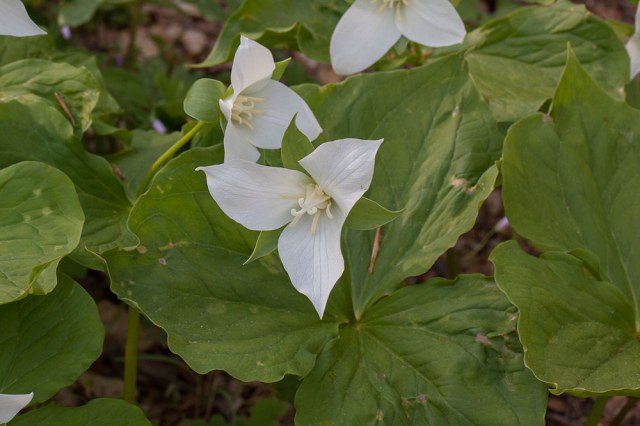
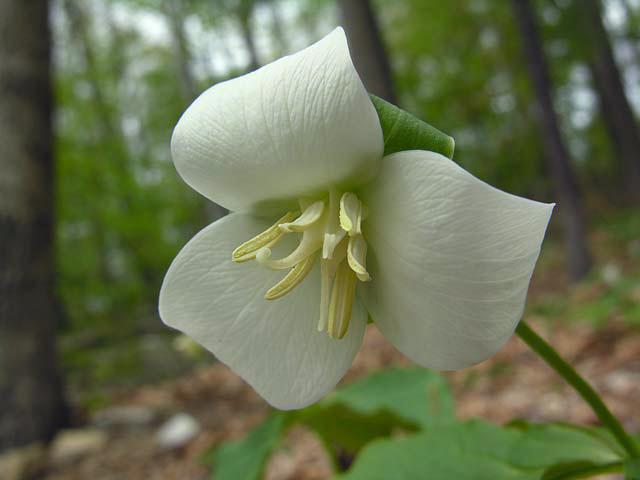
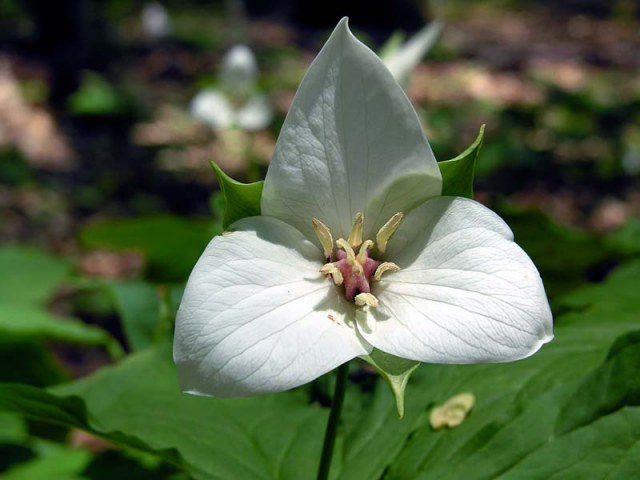
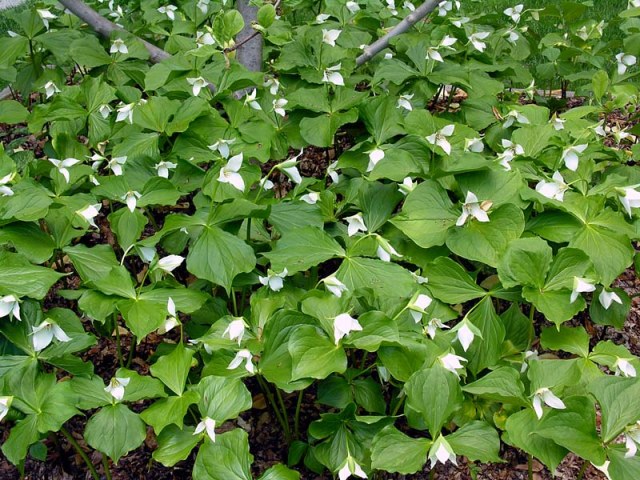
Trillium aff. flexipes 'Susquehanna' Photo by John Lonsdale.

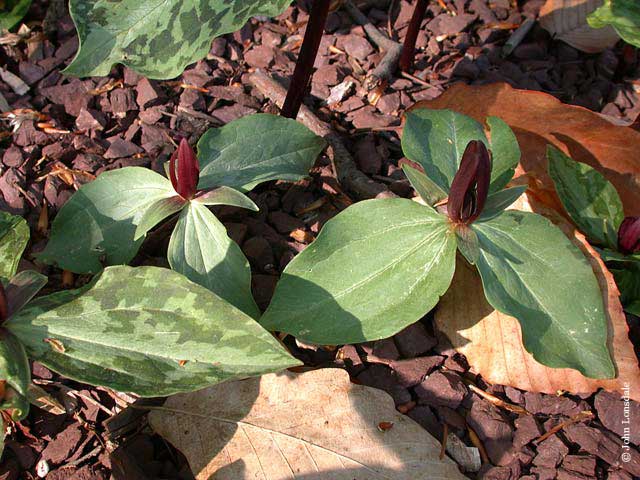
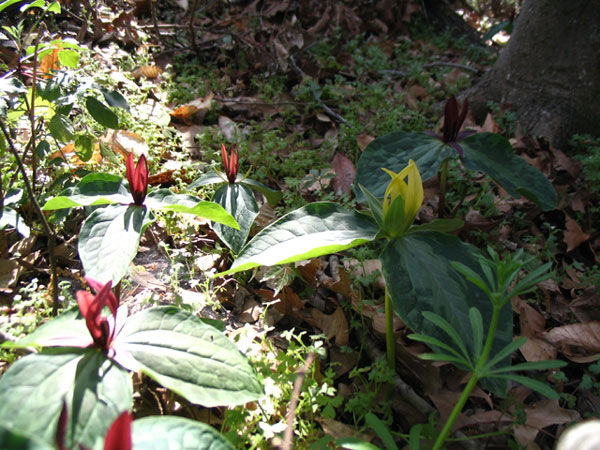
Trillium foetidissimum J.D.Freeman is found in Louisiana, in rich ancient woods east of the Mississippi River. It is relatively invariant in flower and leaf, although as is the case with many red-maroon flowered sessile species, pure yellow forms can very occasionally be found. Similarly, forms also can be rarely found with all-over silver leaves. With dark red-maroon flowers, it has strongly mottled leaves, in flavors of green and bronze. It is true to name, the flowers emitting a fetid odor which is especially noticeable on warm still days. Height: 25-30 cm. The first two photos are by John Lonsdale, the next two are by Nhu Nguyen taken in situ showing a yellow form mixed with the more common maroon form.

Trillium g-r - Trillium s-z - Trillium index