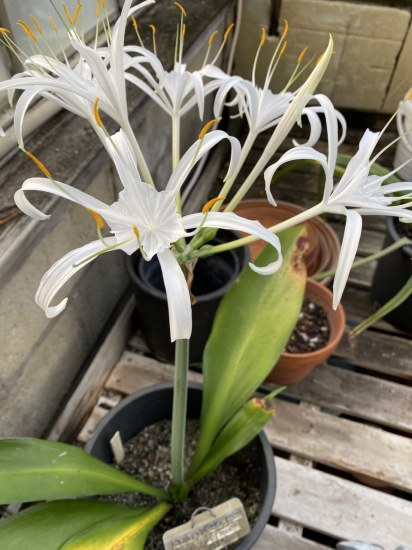
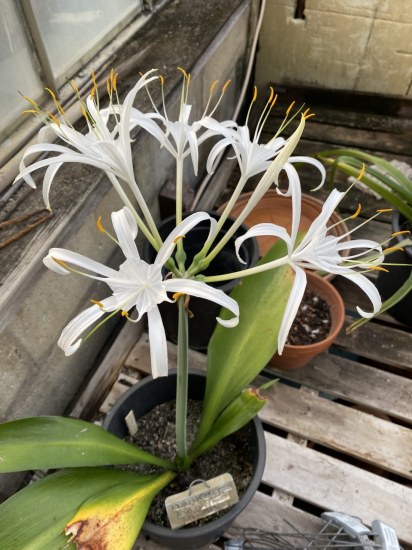
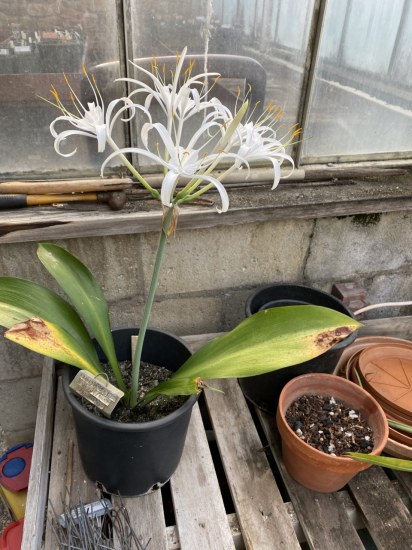
The New World genus Hymenocallis Salisbury (Amaryllidaceae), recognized as a distinct genus since 1812, is composed of roughly 70 to 80 species. The native habitats range in the United States from Indiana, Kentucky, Virginia, south to the Carolinas, Georgia, Florida, Alabama, Louisiana, Texas and Mexico where the genus explodes; the majority of the species occur in Central America and radiate down into the northern portions of South America (Venezuela, Guyana, and Brazil) as well. This genus was the subject of the PBS list topic of the week in April 2004. Kevin Preuss provided the introductions in two parts. This opening paragraph was taken from the beginning of the first post. See Introduction--Part One Introduction--Part Two
The three closely related genera once classified as Hymenocallis are Ismene, Elisena, and Leptochiton. Ismene, Elisena and Pseudostenomesson are now considered subgenera of Ismene. For the description of the difference between Ismene and Hymenocallis consult the Ismene wiki page. Leptochiton (the former Hymenocallis quitoensis and Hymenocallis heliantha) is recognized as a distinct genus. Ismene Hybrids includes hybrid plants that are part of the Hymenocallis complex including the genera Elisena, Ismene, Hymenocallis, and Leptochiton. The plants known as Hymenocallis × festalis and Hymenocallis × spofforthiae 'Sulphur Queen' will be found on this page. Hymenocallis hybrids show cultivars and hybrids in 2026 considered by some authorities to belong in this genus.
Seeds are fleshy and tend to be of odd shape and can vary quite a bit in size on a single pod. When the seeds mature, just toss them on the surface of the pot beneath the parent plants. Keep the potting mix moist. Germination can take up to 3-4 months (Dave Lehmiller, Stephen Hopkins). Some growers prefer to plant the seeds half-way into the mix. Early spring bloomers such as H. liriosme, H. coronaria, H. crassifolia, etc... sprout within a month or so while the late season bloomers may not sprout until the following spring (Stephen Hopkins).
Hymenocallis acutifolia (Herb. ex Sims) Sweet is native to Mexico. It has narrow foliage and blooms from late summer through autumn. Height range: 2-3 ft. Photos taken August 2007 by Jay Yourch.

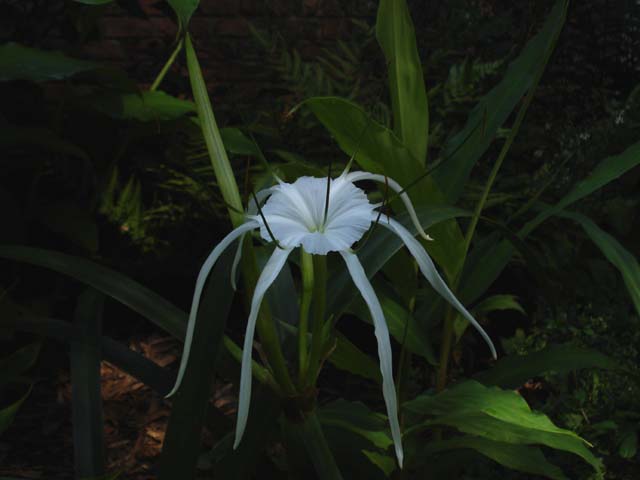

In 2026 Hymenocallis riparia Greenm. is considered to be a synonym of Hymenocallis acutifolia. It's a small plant with narrow, spreading foliage. Height range: 30-60 cm. Photos taken July 2007 by Jay Yourch.
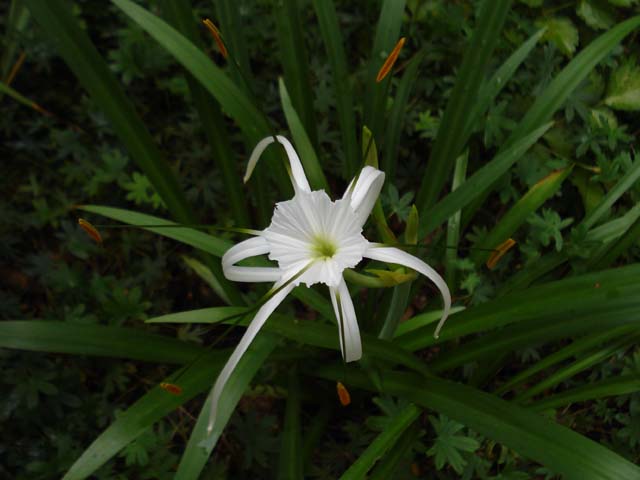


Hymenocallis azteciana Traub is native to western Mexico. Height range: to about 2 ft. Photos from Alessandro Marinello.
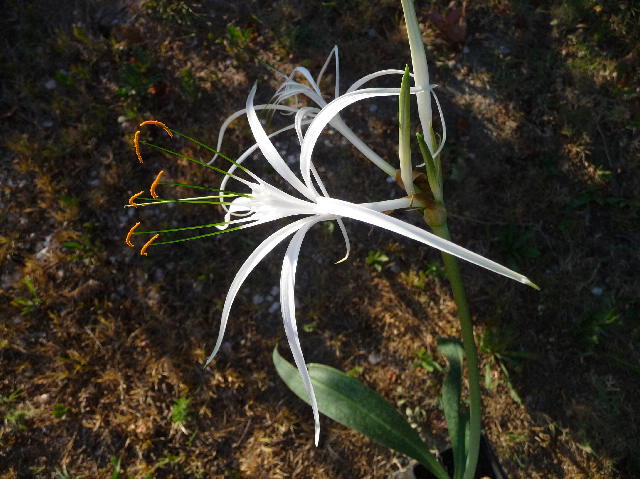
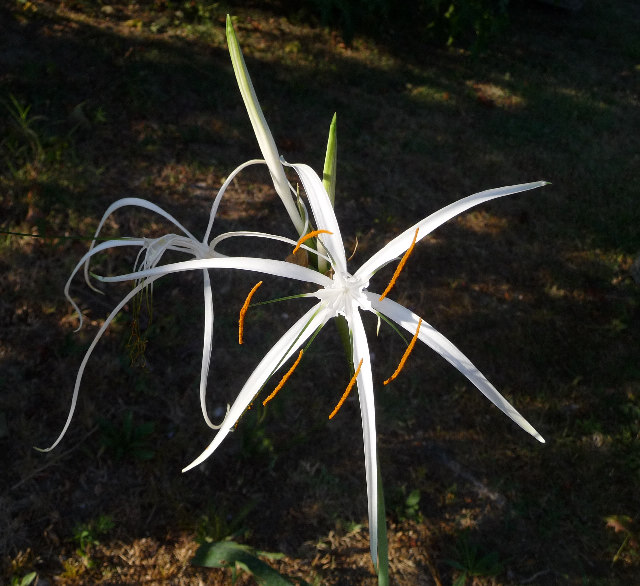
Hymenocallis caribaea (L.) Herb. is native to the Caribbean.
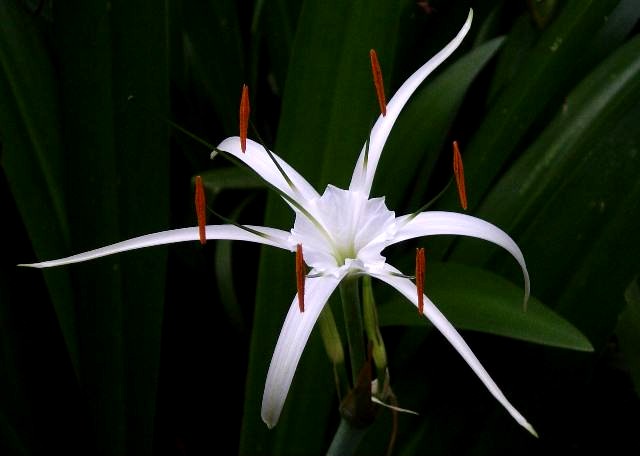
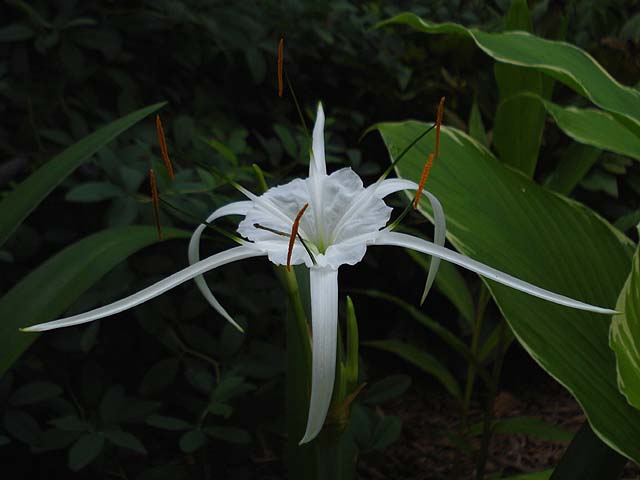
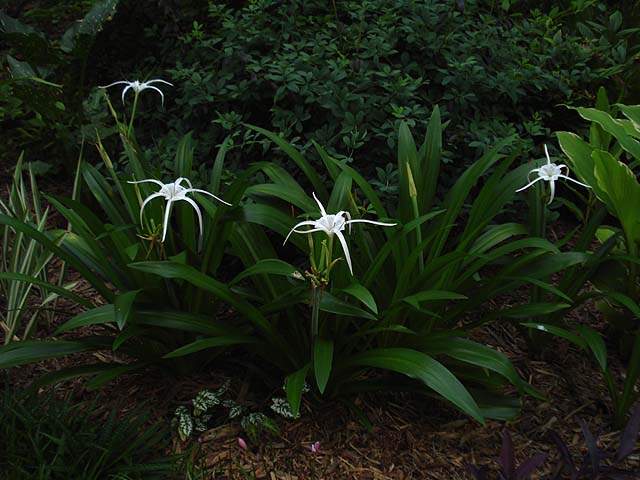
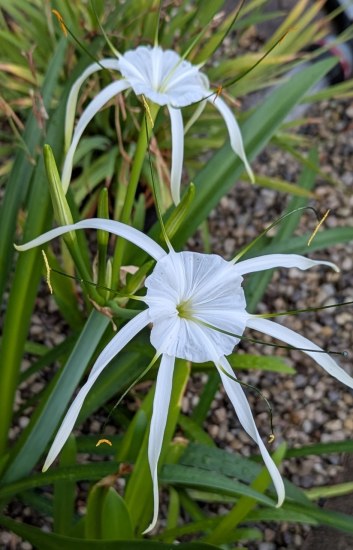
Hymenocallis 'Tropical Giant' is found for sale under both this cultivar name and as Hymenocallis caribaea 'Tropical Giant'. Plant Delights describes it as "an old garden hybrid that inhabits abandoned home sites in the South and is one of the most reliable of the spider lilies." It has broad, glossy, stiff, dark green foliage and nicely proportioned flowers. Note how three of the six segments display more pronounced recurvature. The first four photos taken by Jay Yourch. The last photo was taken by Laura Grant.
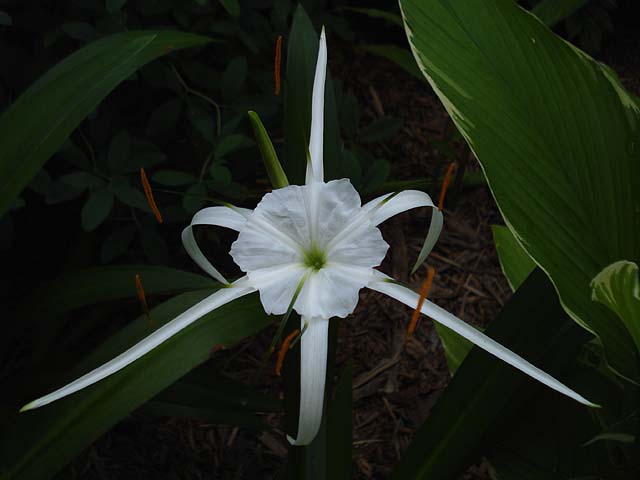
Hymenocallis caribaea 'Variegata' has attractive grayish green foliage with wide creamy white margins. Height range: 30-60 cm. Photos taken August 2007 by Jay Yourch.

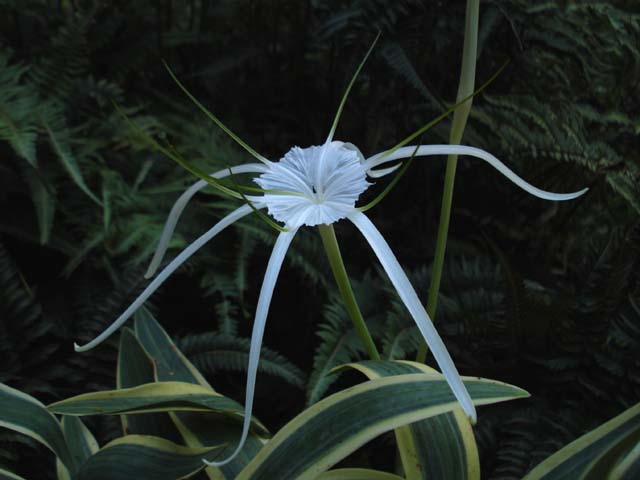
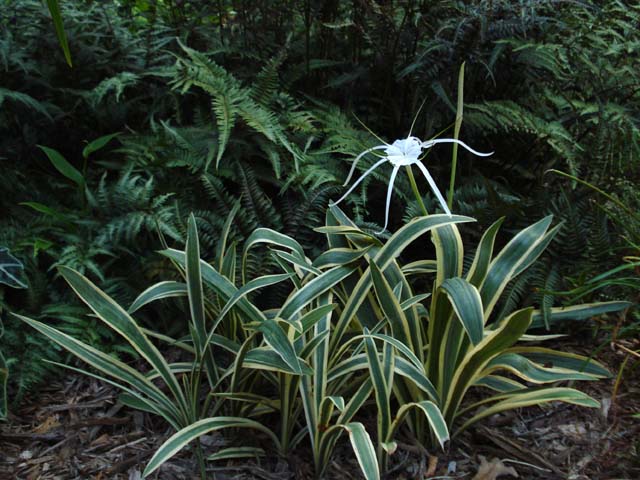
Hymenocallis durangoensis T.M.Howard is a species from Mexico. Height range: 45-60 cm. Photos from Alessandro Marinello.
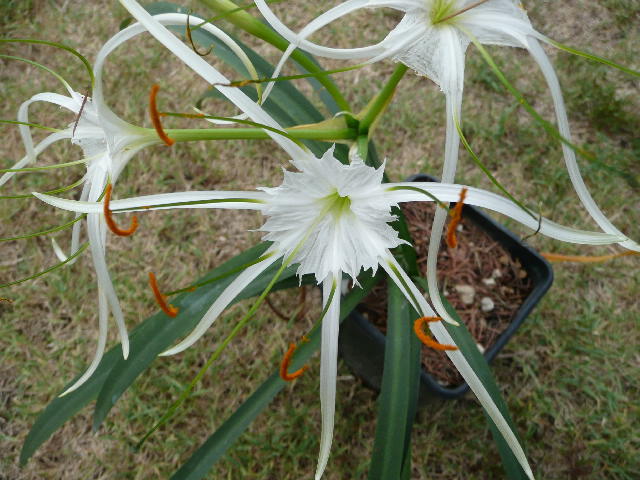
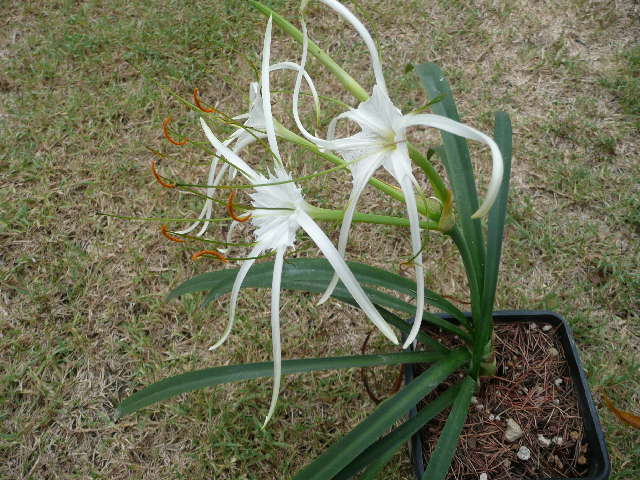
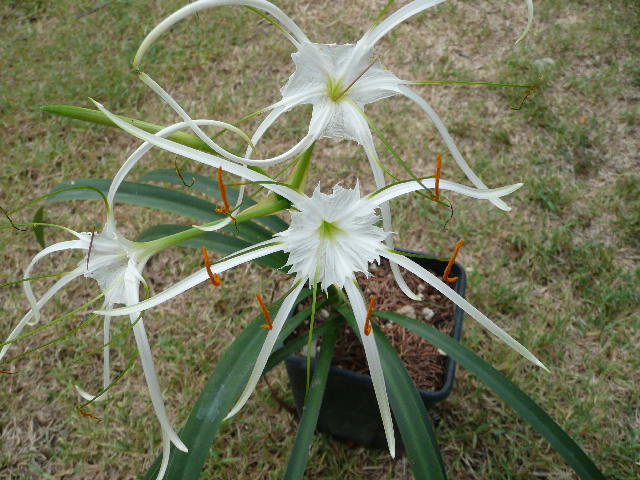
Hymenocallis eucharidifolia Baker is native to Mexico. A beautiful flower on a beautiful plant, it flowered at the same time as Hymenocallis sonorensis. Height range: 45-60 cm. Photos taken September 2004 by Lee Poulsen.
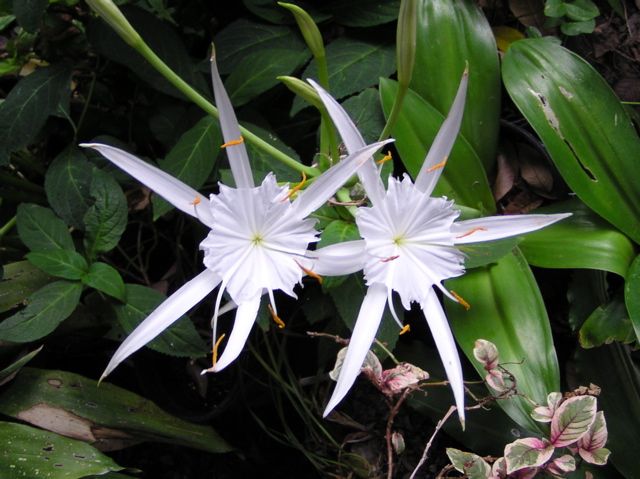
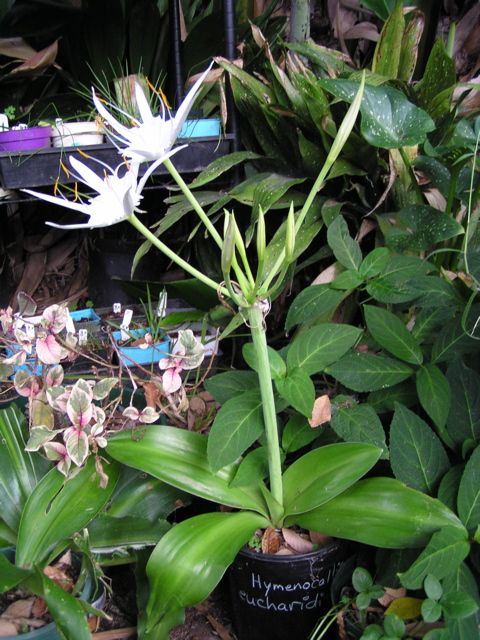
Hymenocallis fragrans (Salisb.) Salisb. is a tropical evergreen species from West Indies, with broad petioled leaves, similar to Hymenocallis speciosa but smaller. It flowers in late summer, together with the appearance of the new leaves. It can be briefly dormant in mid-summer. Height range: 30-60 cm. Photos by Angelo Porcelli.

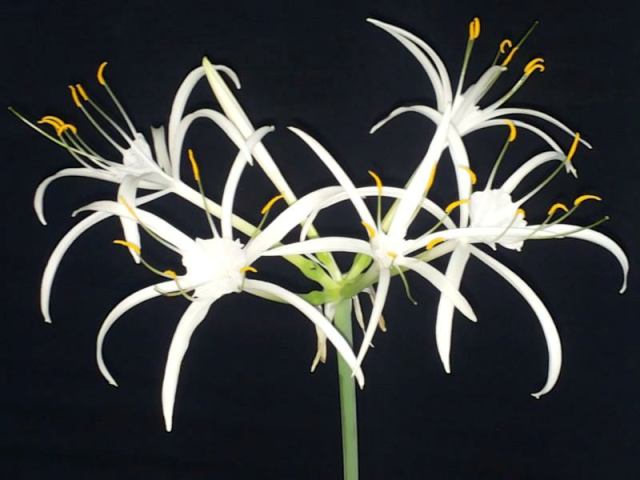
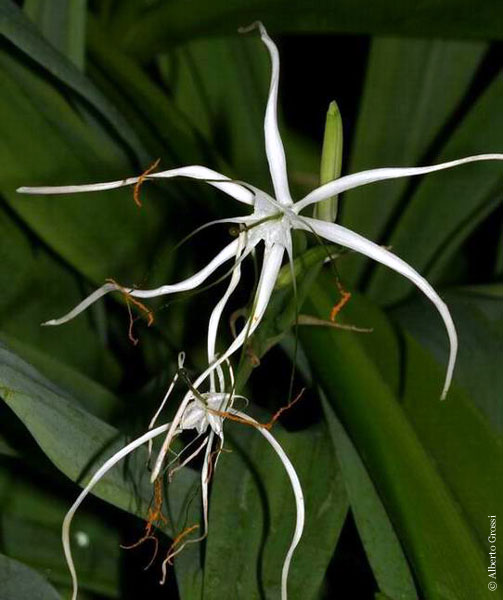
Hymenocallis harrisiana Herb. is a deciduous species from Mexico. The strap shaped leaves are glaucous, as it comes from an arid area. The flower has a small scented corona (crown). Each flower lasts only one night. Height range: 20-30 cm. Photos taken by Alberto Grossi and Jay Yourch.
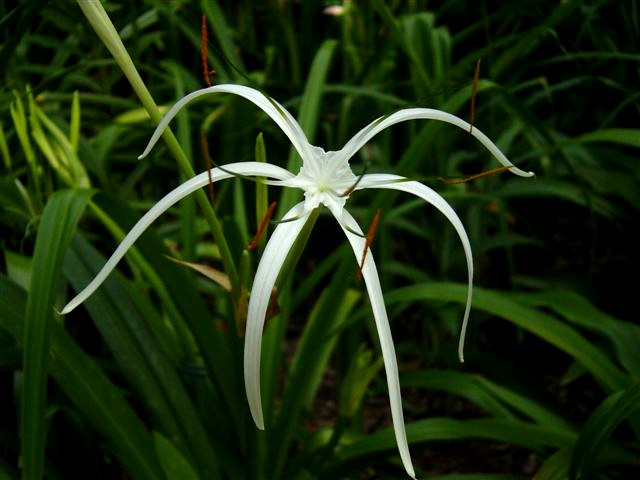
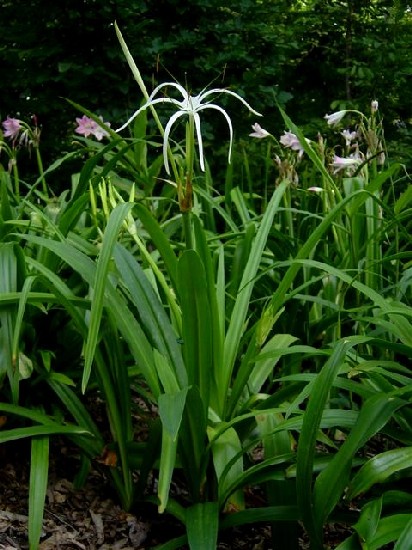
Hymenocallis henryae Traub is native to northwest Florida where it grows primarily in the subtropical biome. It has two varieties. Height range: 2-3 ft.
Hymenocalllis henryae var. henryae has shinier foliage than the other variety and is found in several panhandle counties.
Hymenocallis henryae var. glaucifolia J.N.Henry & Gerald L.Sm. is a very rare subspecies found in just one county in the Florida panhandle. Photo from Charles Hunter who writes: "I snapped this picture a few years ago when I visited the area, and it isn't a perfect looking flower but was the only bloom of it I saw when I visited. It is one of just 2 species of Hymenocallis where the tepals are greenish, as opposed to the all white flowers seen in the rest of the Hymenocallis species." He continues that the other green-tepaled species, Hymenocallis palmeri, is much more common, but has narrower leaves and unlike this species, one flower versus two, per scape.
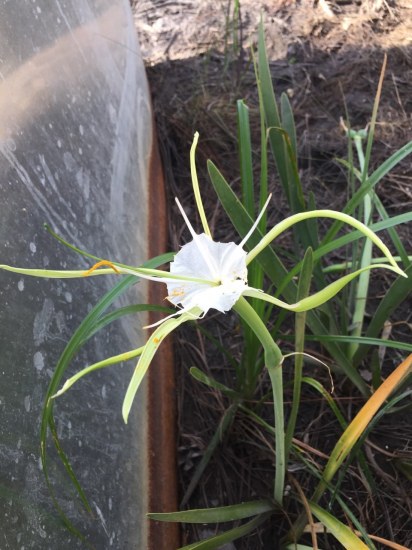
Hymenocallis imperialis T.M.Howard is an evergreen Mexican species from Hidalgo and San Luis Potosì states. It is among the biggest in the genus, with broad leaves and large flowers. In spite of its subtropical origin, it has survived nicely several nights at -4 °C (24-26 °F). Height range: to about 2 ft. Photo by Angelo Porcelli
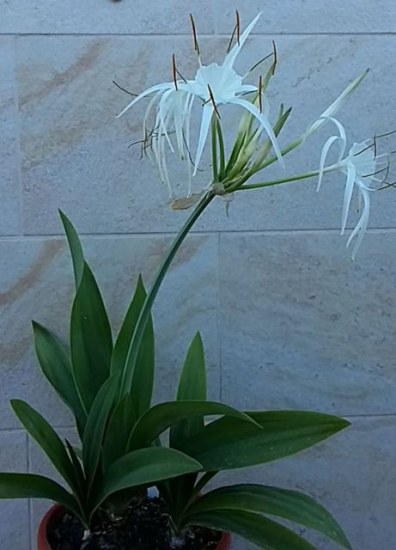
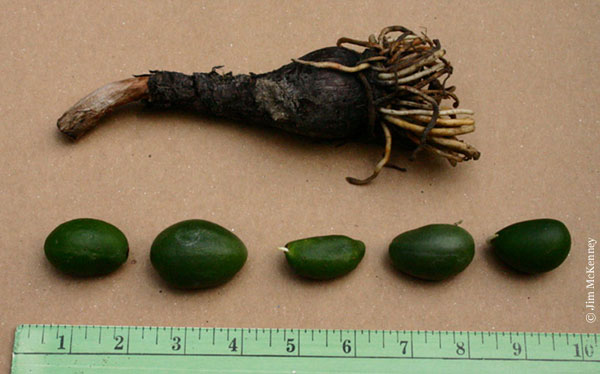
Hymenocallis liriosme (Raf.) Shinners growing in the Lady Bird Johnson Wildflower Center. It is native to the southern US in Texas, Oklahoma, Arkansas, Louisiana, Mississippi, and Alabama. Height range: 30-90 cm. Photos 1-2 of plants in bloom taken April 2004 by Lee Poulsen. Photo 2 of a bulb and seeds supplied by Joe Shaw of Conroe, Texas, was taken by Jim McKenney. Two of the seeds are already germinating.

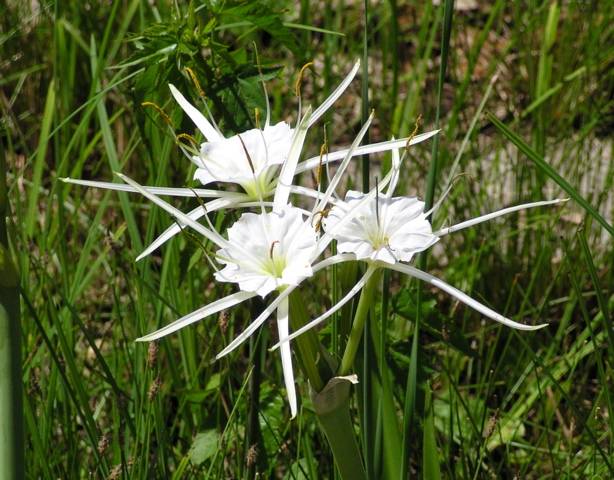
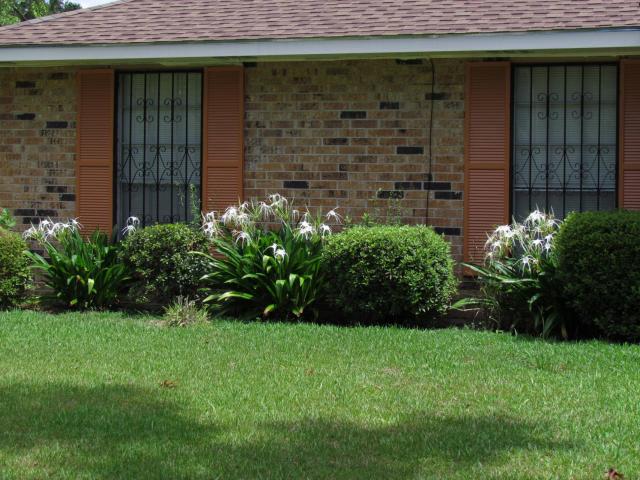
The photos below were taken by Nhu Nguyen of landscaping plants in an otherwise horticulturally bleak area of Baton Rouge, Louisiana.
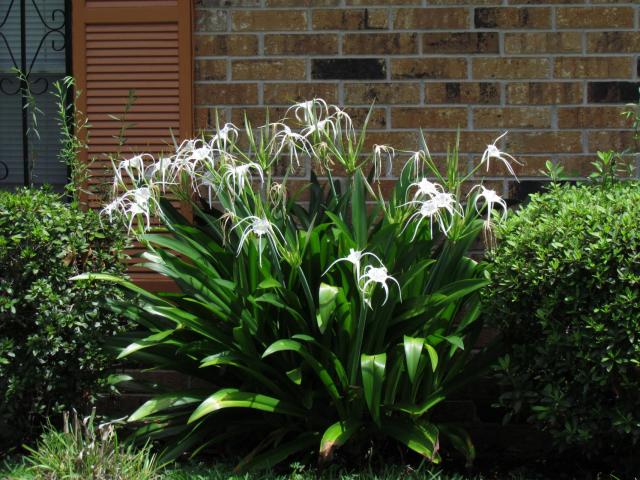
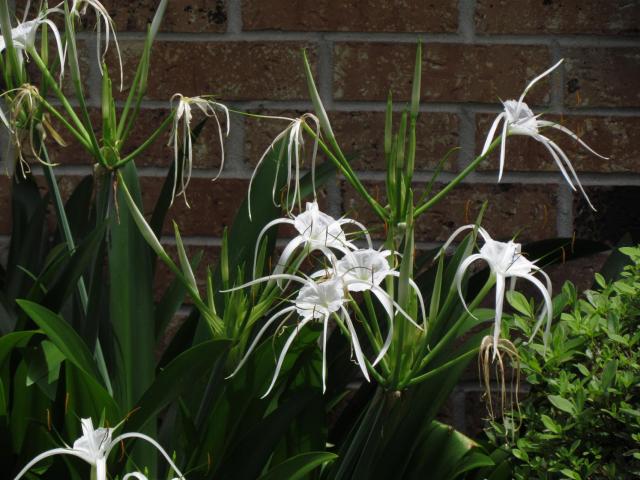
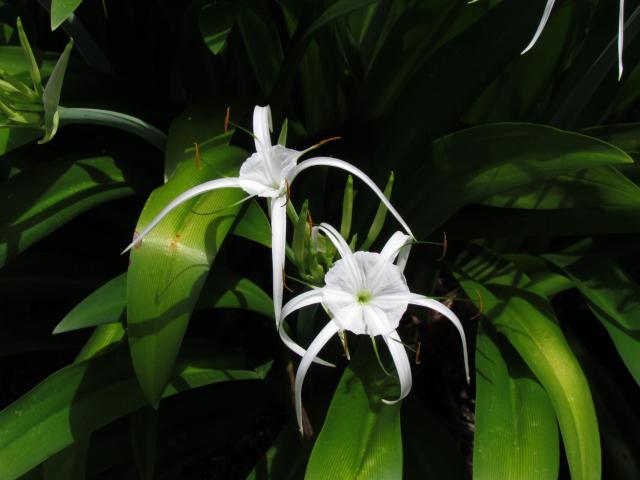
Hymenocallis littoralis (Jacq.) Salisb. is a vigorous evergreen species from Mexico and Guatemala which grows with its roots in the water during the warm growing season, making it a good garden subject in warm climates. It requires protection during cold winters. The lovely white flowers have long narrow reflexed petals behind a central cup. Several flowers are carried on each sturdy 70-90 cm stem. Photos by Bill Dijk and Alberto Grossi.
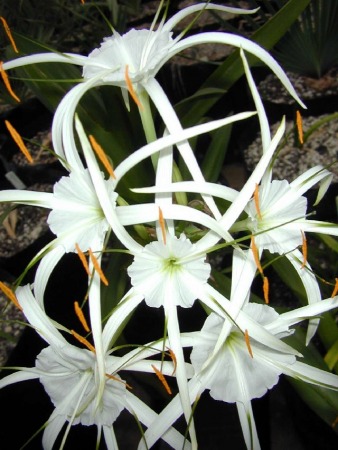
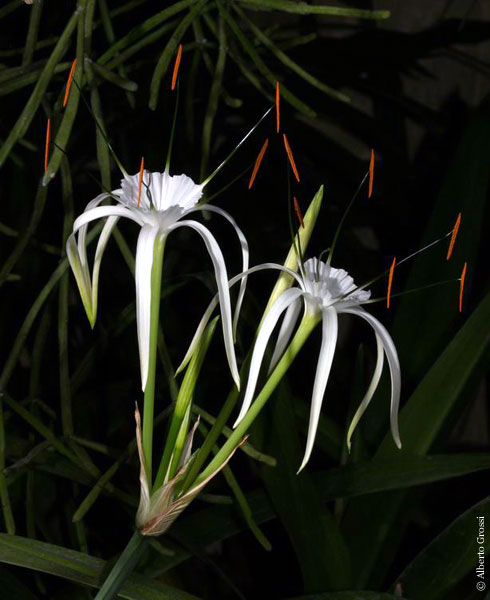
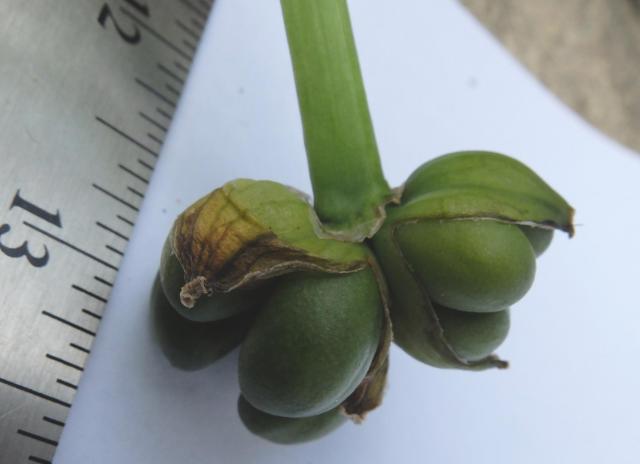
Hymenocallis maximillianii T.M.Howard (syn. Hymenocallis maximiliani T.M.Howard) is native to Mexico. It has compact, narrow, erect, foliage and gracefully proportioned flowers. Height range: to about 3 ft. Photos taken August 2005 by Jay Yourch. Seed photos by Rimmer de Vries; the first one shows a ruler marked in inches; plants flowered in early June in Michigan; seed pictured at the end of June.
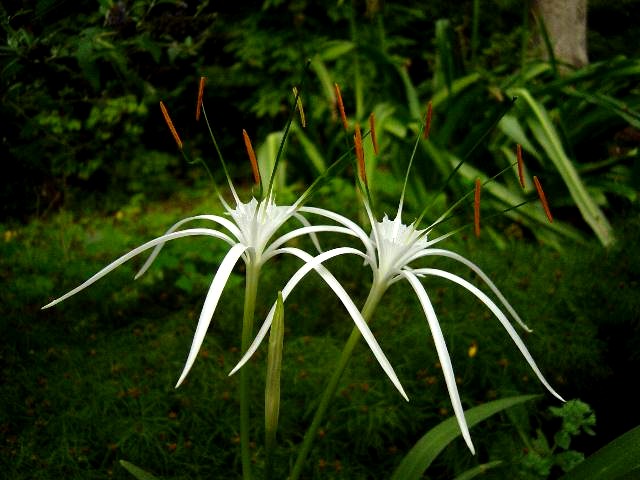
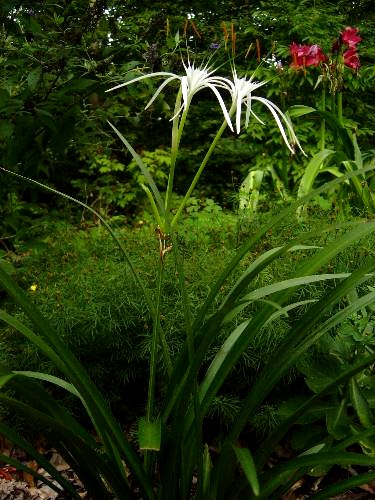
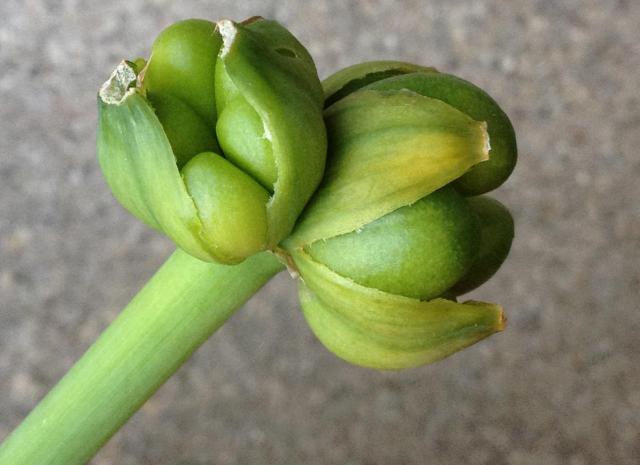
Hymenocallis occidentalis (Leconte) Kunth is native to the Eastern United States and blooms in late summer. Depending on the plant and the growing environment, the leaves may be absent, like a lycoris, or present at bloom time. Height range: 30-90 cm. The first two photos taken August 2006 by Jay Yourch. The last photo from Dennis Kramb.
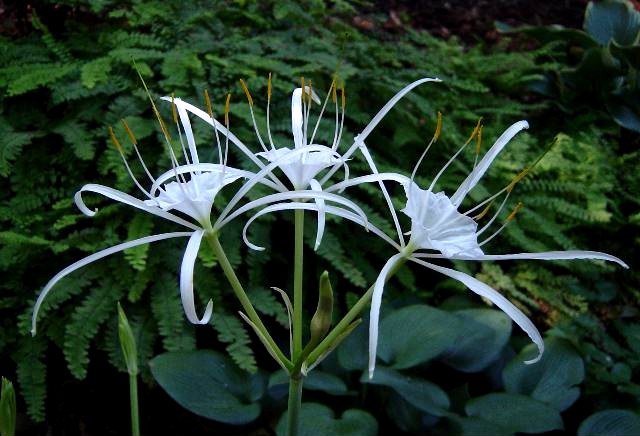
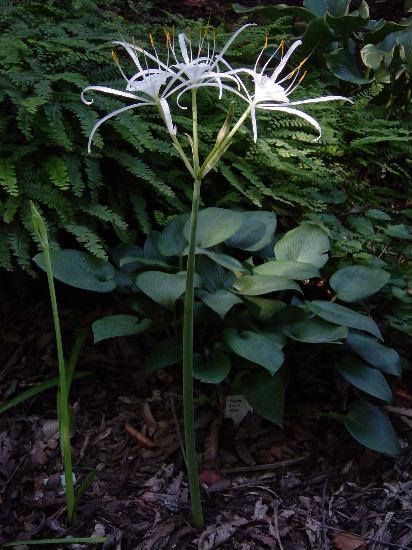
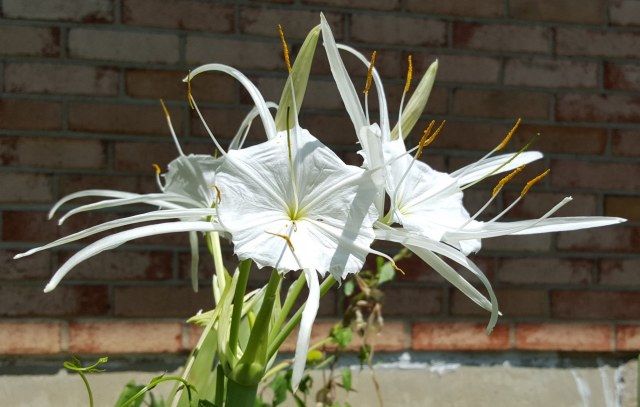
Hymenocallis palmeri S.Watson, Alligator lily, is common in southern Florida. It has green tepals like Hymenocallis henryae but the leaves are much narrower with just a single flower per scape (flower stem) vs. two flowers for H. henryae. Height range: 30-60 cm.
Hymenocallis 'Sister of Tropical Giant' see 'Tropical Giant Sister'.
Hymenocallis sonorensis Standl. is found along streams and valleys throughout Sonora, Mexico. The first photo taken September 2003, but the plant grew even larger and had several scapes in September 2004. Height range: 60-90 cm. Photos by Lee Poulsen.
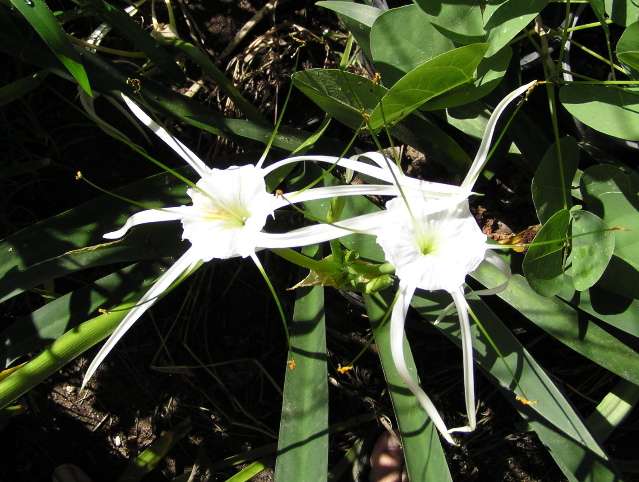

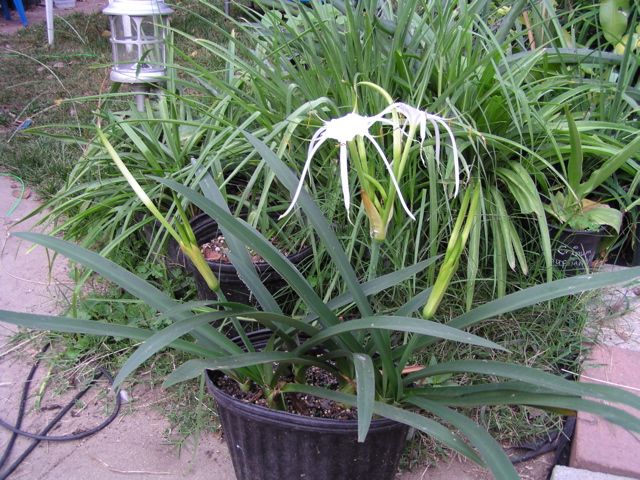
Hymenocallis speciosa (L.f. ex Salisb.) Salisb. is a tropical evergreen species from South America, with broad petioled leaves and a large umbel of flowers in late summer, when new leaves appear. It needs greenhouse conditions, with winter minimum temperature of 10 °C. Height range: 60-90 cm. Photo by Angelo Porcelli
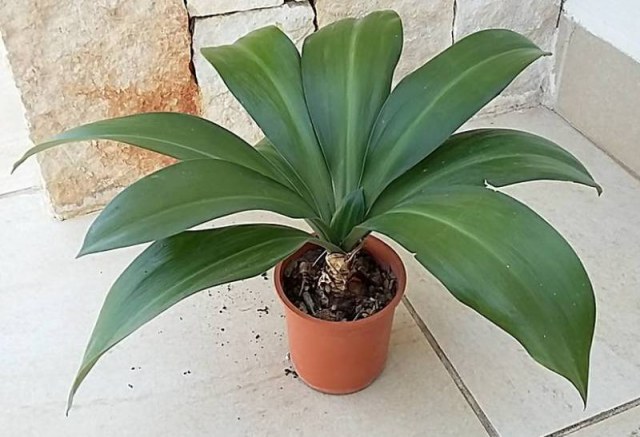
Hymenocallis spp. Below are three unidentified species. Help to identify them would be appreciated.
Hymenocallis sp. , photo by Kevin Preuss of a plant collected in Guatemala by Dr. Robert Dressler.
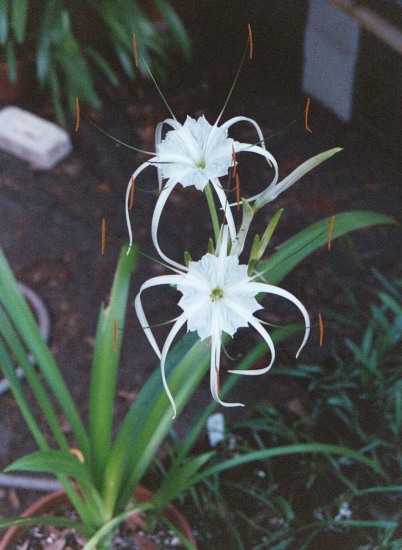
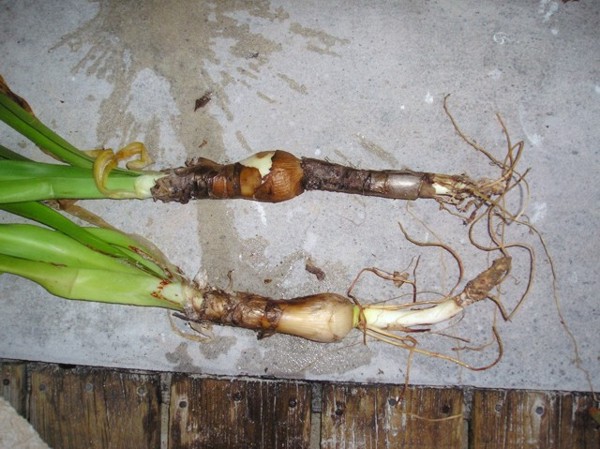
Hymenocallis sp., possibly Hymenocallis littoralis from Out Islands of Bahamas: 26 36' 13.76" N, 77 00' 37.17" W elev. 15' where it was growing on an active dune with up to 6" increase in dune height annually. Note extensions at bottom of the bulb. Out of almost 100 plants rescued from the ocean after hurricane Jeanne, most had these extensions or evidence that they had snapped off. It looks like the extension acts to keep the bulb near the surface as sand builds up on the dune. Interesting that the oldest section resembles a rhizome. Photos by Phil Andrews.
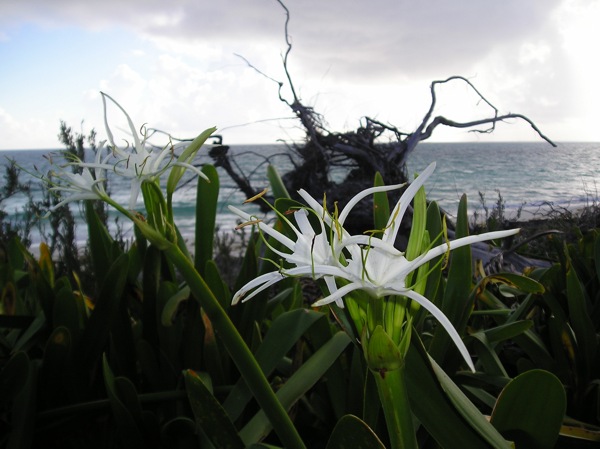
Hymenocallis sp. received as Hymenocallis philipinas by Alessandro Marinello. The bulb measured 9 cm in diameter with leaves 7 cm wide. It bloomed in October. It was suggested to be Hymenocallis littoralis.
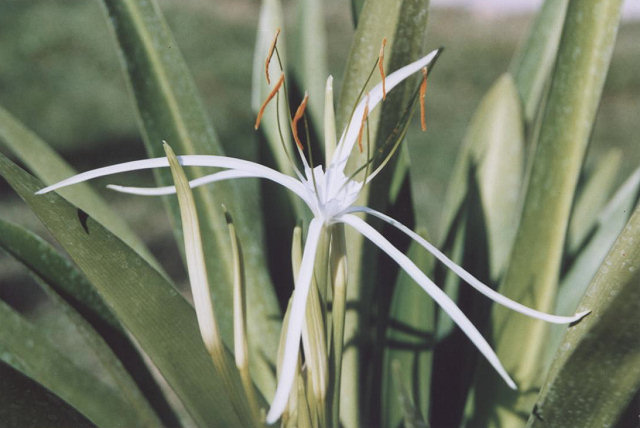
Hymenocallis sp. was originally on the mystery bulb page. Brad M wrote: "this variegated Hymenocallis has been grown in Australia for many years. It's rather tropical in its growth, and stunts in cold weather. I cannot decide if it's Hymenocallis caribaea or Hymenocallis littoralis. Do you know which one is more likely here?" Discussion centered around the lack of good information about the genus. One source from Australia thought it could be Hymenocallis littoralis. Photos on the internet that may or may not be correctly identified show variegated leaves in both of those species.
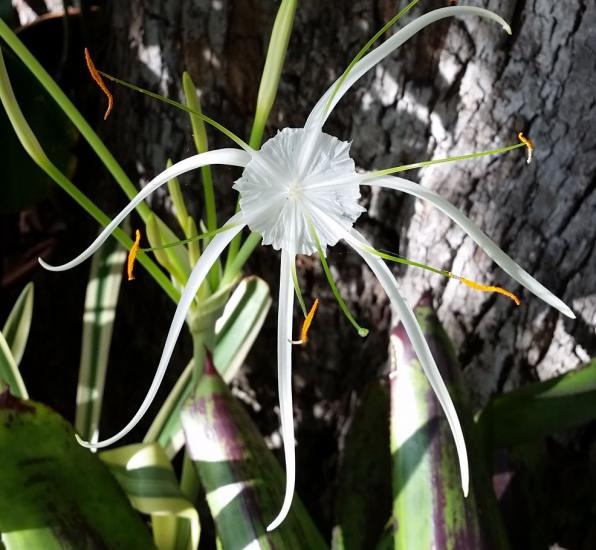
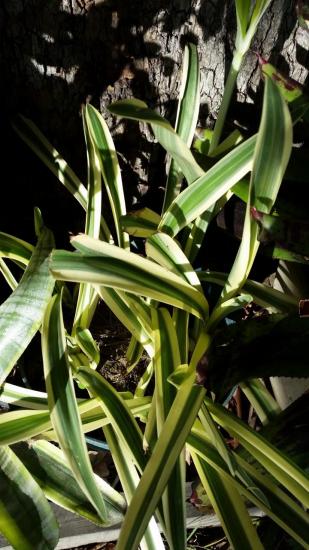
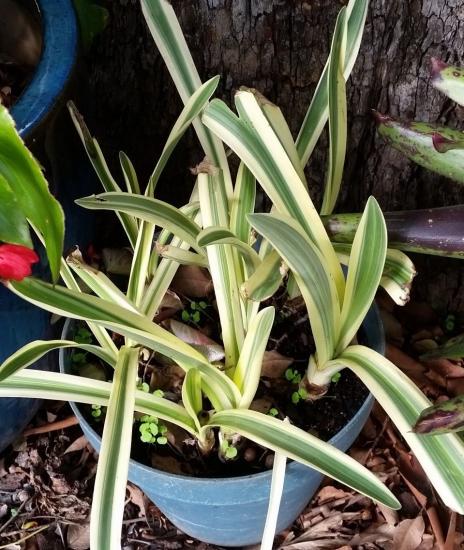
Hymenocallis tridentata Small (syn. Hymenocallis traubii Moldenke) is a spring-blooming species native to Florida. It is a small plant with large flowers. Height range: 60-90 cm. Photo taken May 2006 by Jay Yourch.
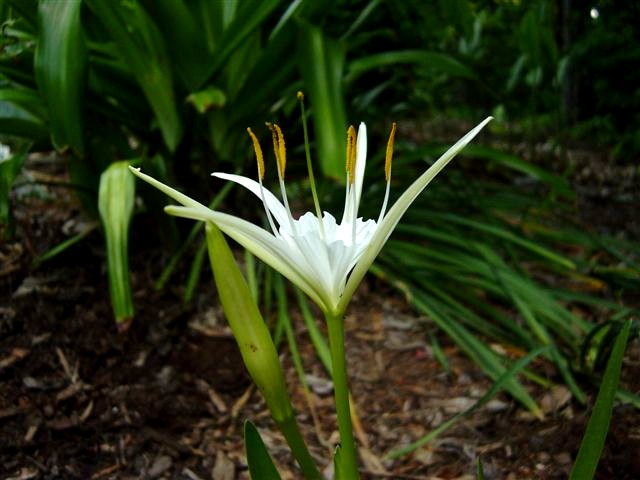
Hymenocallis tubiflora Salisb. is from South America. Height range: 40-60 cm. Photos by Kevin Preuss and Jay Yourch.
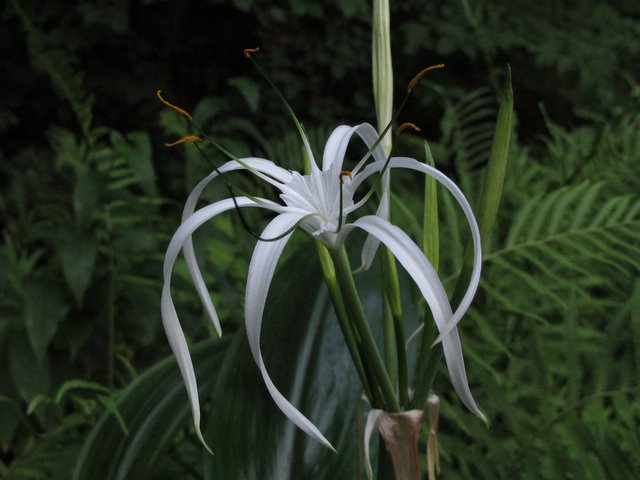
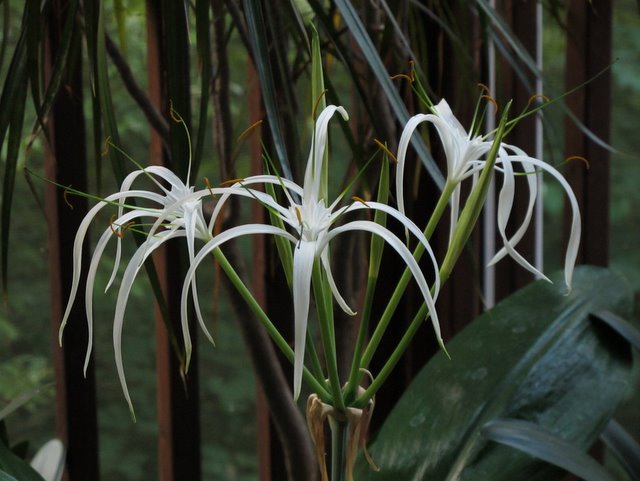
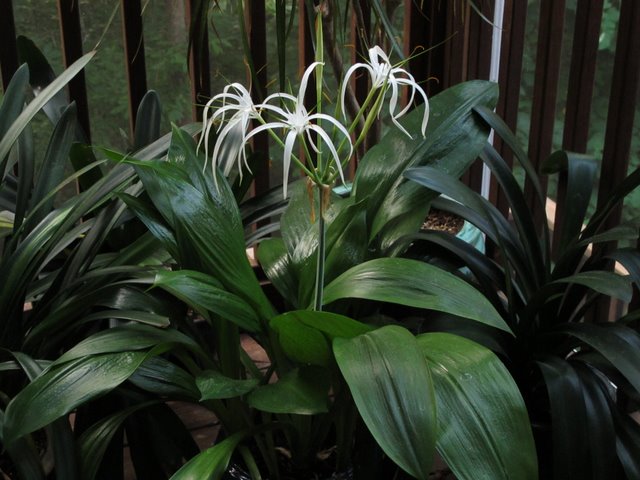
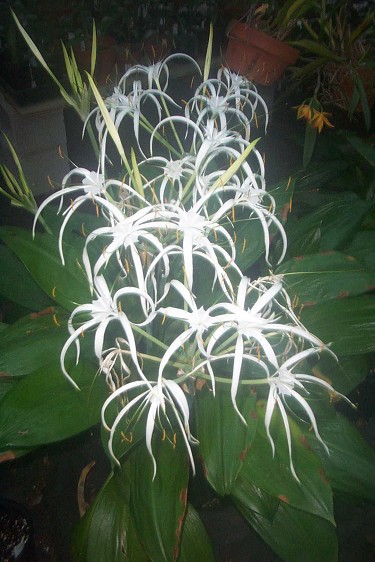
Hymenocallis woelfleana T.M.Howard is native to Mexico. Photos from Jim Shields who wrote August 13, 2022: "I received this plant as a small bulb, in leaf, in November 2003, from Hugh Bollinger. This is the first time this plant has ever bloomed for me and perhaps the first time the species has bloomed in the USA so far as I know. The plant is about the size and shape of Hymenocallis eucharidifolia, with the following exceptions. This species has leaves that are distinctly petiolate, while eucharidifolia leaves are not. This species has smaller floral cups than the flowers of eucharidifolia. Unlike almost all the species of Hymenocallis I am familiar with, which have sessile ovaries, this species has the ovary on a short pedicel." Height range: 45-60 cm.