Several species settle for these clear signal colors, often associated with bird pollination. This may result in very special flower shapes with long perianth tubes.
Though magenta is considered the basic red in printing color systems, we follow the common western color perception. Magenta colored Gladiolus can be found in the Purple Gladiolus index.
Page 1: G. abbreviatus... Page 2: G. engysiphon... Page 3: G. merianellus... Page 5: G. splendens...
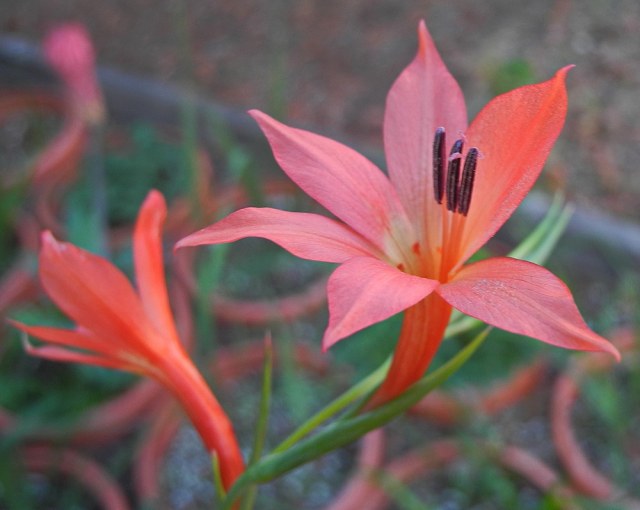
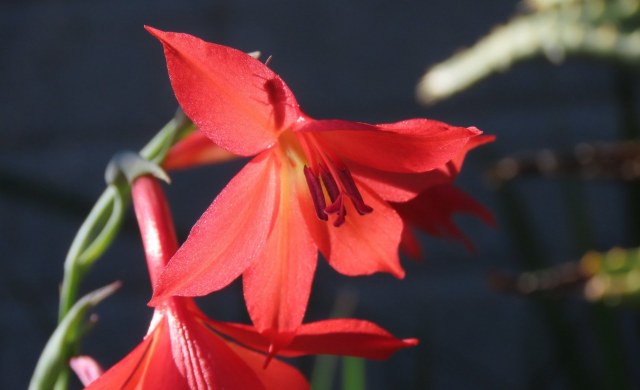
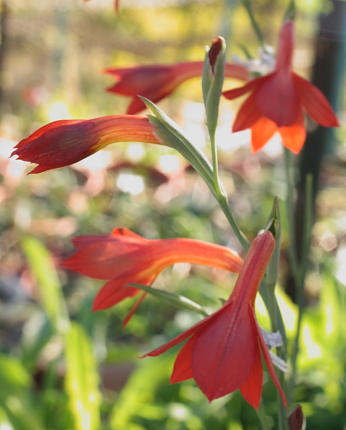
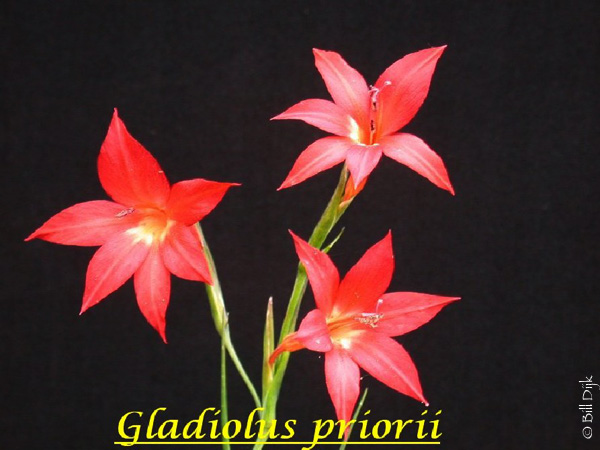
Gladiolus priorii (N.E.Br.) Goldblatt & M.P.de Vos (syn. Homoglossum priorii (N.E.Br.) N.E.Br.) is a fall blooming species (April to June) found on sandstone and granite slopes in the Southwestern Cape, South Africa. Growing from 30 to 40 cm high, it has leathery linear leaves and tubular red flowers with yellow throats in a one to four flowered spike. They droop slightly, making it hard to see the centers unless you crouch down. It is considered relatively easy to grow in captivity, although Mary Sue Ittner has found in her Northern California coastal garden that it is short lived and has to be started regularly from seed. The first photo from Bob Rutemoeller shows a plant growing in the ground, flowering in November. The second photo was taken by Mary Sue Ittner, the third by Alan Horstmann, the fourth by Michael Mace, and the last by Bill Dijk.

The first two photos were taken by Cameron McMaster. The last two photos were taken by Rachel Saunders. The first of these was taken June 2011 of this species blooming on Table Mountain in the southwestern Cape in an area that had previously burned and the second in Hermanus.

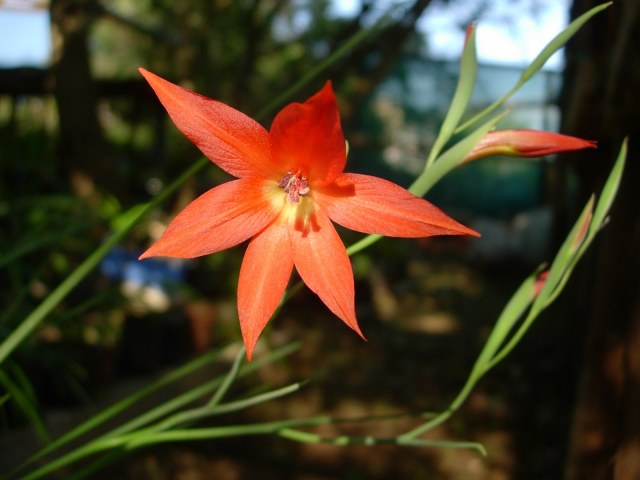
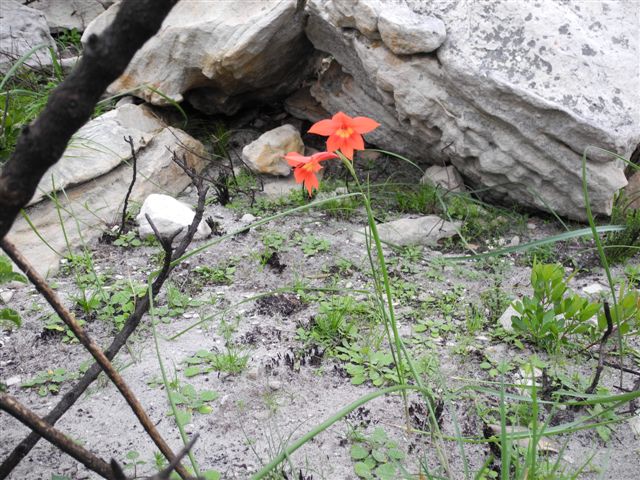
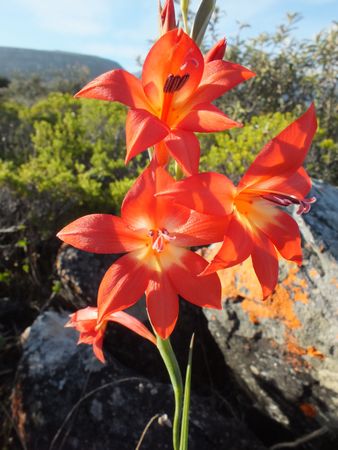
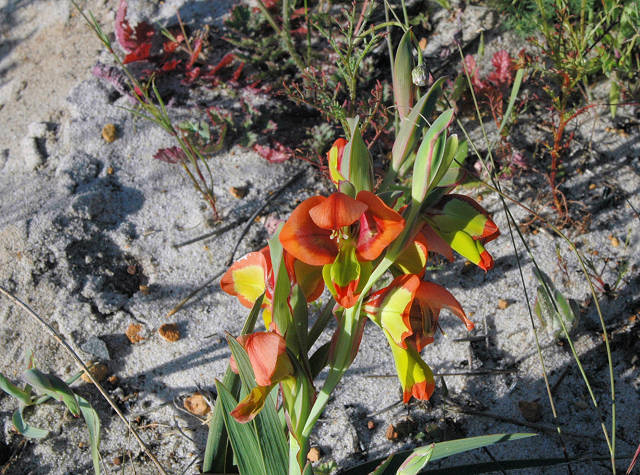
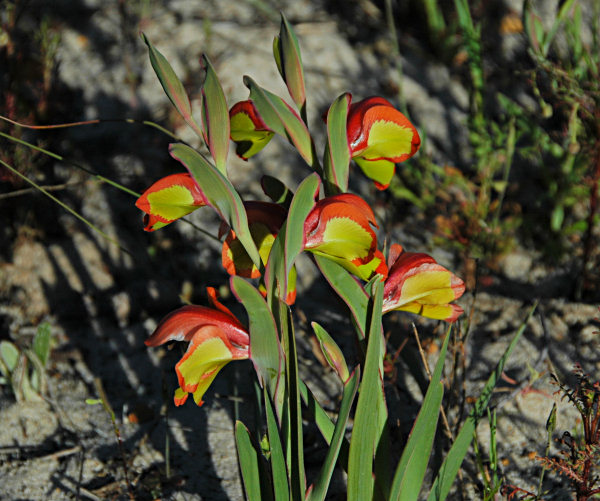
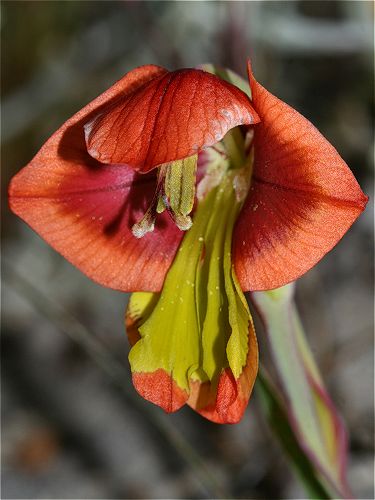
Gladiolus pulcherrimus (G.J.Lewis) Goldblatt & J.C.Manning has very striking orange to salmon flowers that are similar to Gladiolus alatus but is distinguished by broad sword shaped leaves that lack prominent veins. It grows in the northwest Cape on sandstone slopes. Height range: 20-60 cm high. The first photo from Bob Rutemoeller is of a plant grown by Gordon Summerfield in South Africa, which was blooming September 2003. The next two photos by Alan Horstmann, and Rod Saunders.

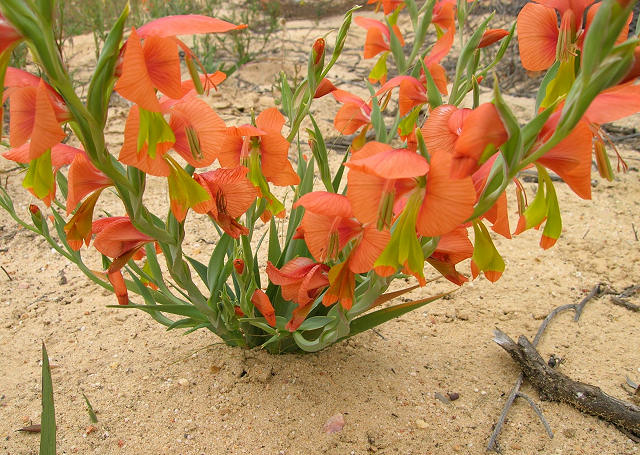
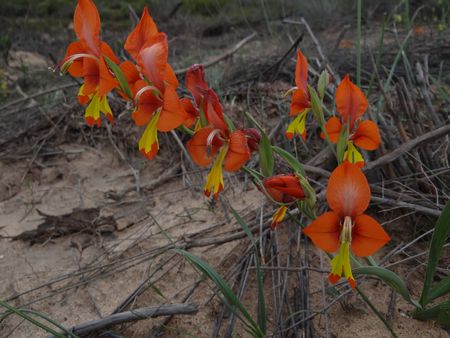
Gladiolus quadrangularis (Burm.f.) Ker Gawl. (syn. Homoglossum quadrangulare) is found on rocky sandstone slopes in the Northwest Cape. It has 4 to 10 red to orange flowers and blooms late winter into spring. Height range: 50-90 cm tall. Photos 1-3 were taken by Mary Sue Ittner showing plants that bloomed in Northern California March 2004 and 2007.

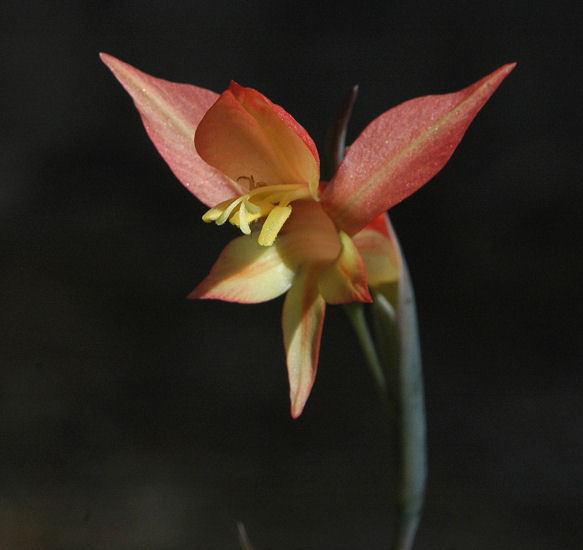
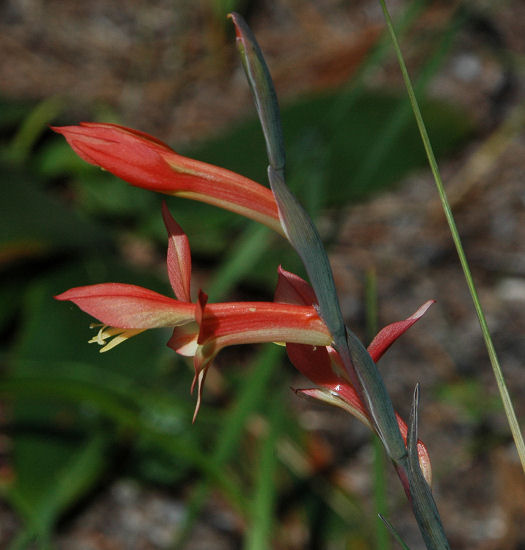
The photos below were taken by Nhu Nguyen. The seeds are on a 1 cm grid.

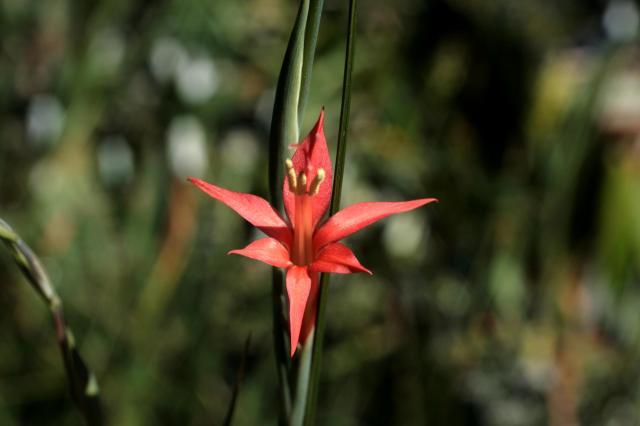


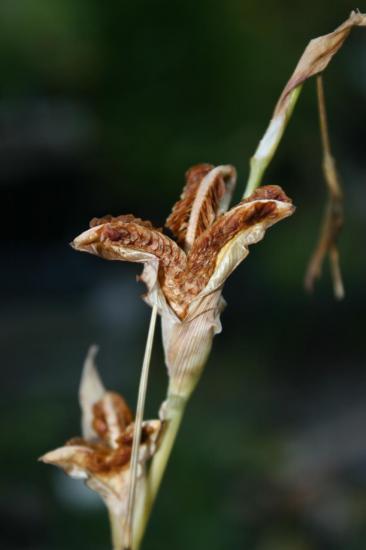
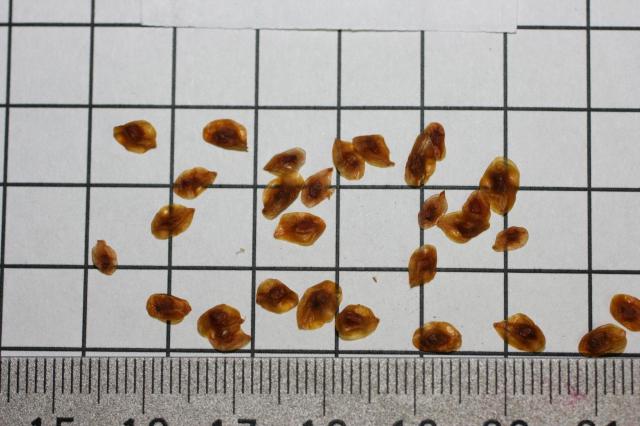
Gladiolus reginae Goldblatt & J.C.Manning is a rare species known from only two populations where plants grow in open woodland in rocky outcrops, partially shaded by shrubs and trees, in heavy metal-enriched soils. Growing from .4 to 1.5 m, it has 7 to 16 unscented long tubed flowers in an erect spike. Flowers are pale flesh-pink flushed deeper salmon and the lower three tepals are flushed deep red in the basal third with longitudinal lines. The upper three tepals are flushed deep red at the base. Flowering takes place from mid March to mid April, but may skip a year if it's too dry. Goldblatt and Manning report that flowers are pollinated by long-proboscid flies, but also attract ants with sweet droplets from the tips of the bracts, likely for protection from other insects.
Photos by Rachel Saunders shows specimens found in the Blyde River Canyon Nature Reserve (situated in Mpumalanga).
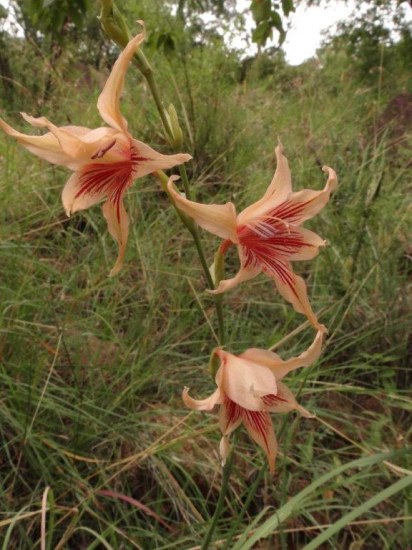
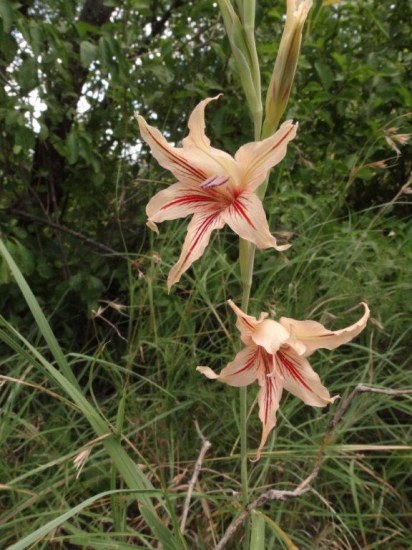
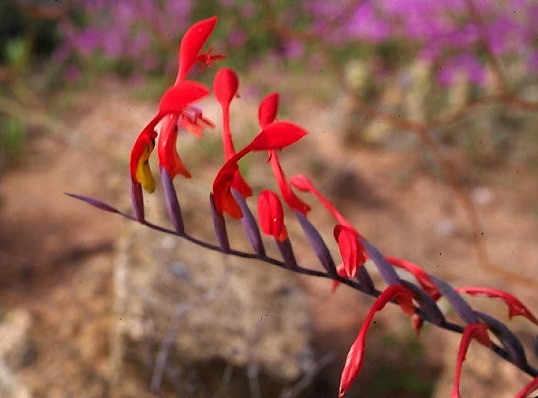
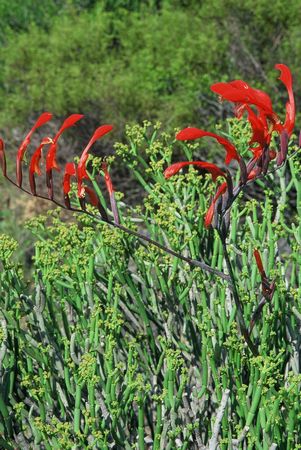
Gladiolus saccatus (Klatt) Goldblatt & M.P.de Vos, formerly known as Anomalesia saccata or Antholyza saccata, extends from the western Cape of South Africa into Namibia. It is found in both summer and winter rainfall areas. It has bright red flowers and is pollinated by birds. This one was growing alongside the road in Namaqualand. Height range: 25-80 cm. Photo #1 taken August 2001 by Mary Sue Ittner. The second photo was taken by Rod Saunders.
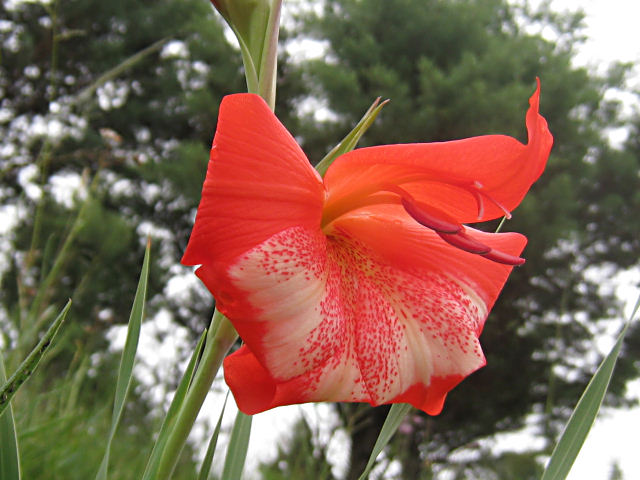
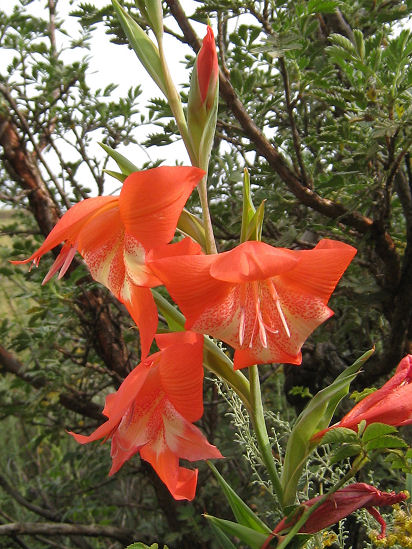
Gladiolus saundersii Hook.f. is native to the southern and central Drakensberg and grows in summer on rocky outcrops, scree slopes and other exposed habitats in dry spots that are seasonally wet. It has bright red flowers that face sideways or are drooping. The lower three tepals are speckled in the lower half with red on a white field. Height: 40-60 cm. This species is pollinated by butterflies. It is a winter-dormant species and its habitat is very cold in winter with frequent snow. It was named after Katherine Saunders who was a botanical artist in Natal in the 1800s. Photos 1-3 taken in the Eastern Cape February 2008 and photo 4 taken at Naude's Nek January 2010 by Cameron McMaster.

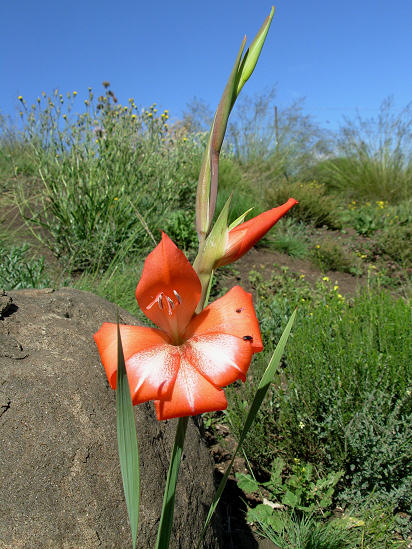
Gladiolus sekukuniensis P.J.D.Winter is known from two sites in Sekukuniland, west of the Transvaal Drakensberg where it is found on alkaline soils in open woodland and flowers from March to April. It grows from .6 to 1 m and has linear leaves with a thickened and raised midrib and a spike of 8 to 17 flowers. Flowers are white or cream to pale salmon pink with a narrow, dark red, longitudinal median streak on each tepal except for the dorsal where the streak is sometimes incomplete or lacking. The lower tepals sometimes have a yellow streak in the center. Flowers are distinctively windowed (in profile there is gaping between the dorsal and upper lateral tepals) with the tepals unequal and narrowed below into claws with twisted and undulate tail-like tips. Photos by Rachel Saunders.
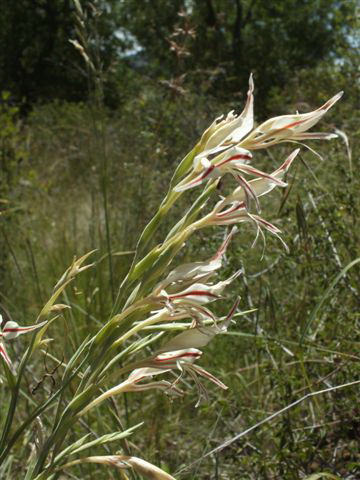
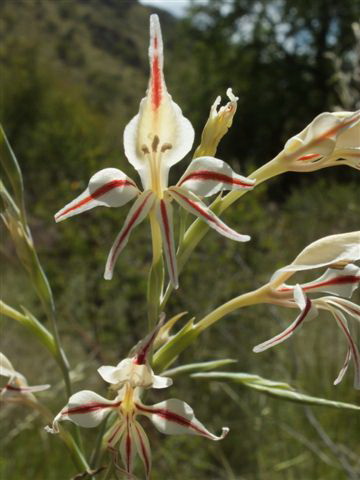
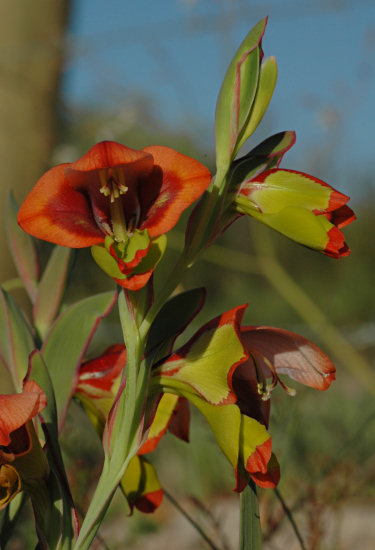
Gladiolus speciosus Thunb. is found in deep sandy soils in the Northwest and Southwest Cape. It is similar to Gladiolus alatus with 2 to 8 flowers in a spike, orange marked yellow to greenish and hooded over the stamens. One of the distinguishing characteristics is that it is colored yellow on the reverse. Height range: 12-20 cm. The first four photos taken in the western Cape near Darling September 2006 by Bob Rutemoeller and Mary Sue Ittner. The last photo was taken by Andrew Harvie near Bokbaai in the Western Cape.
Page 1: G. abbreviatus... Page 2: G. engysiphon... Page 3: G. merianellus... Page 5: G. splendens...