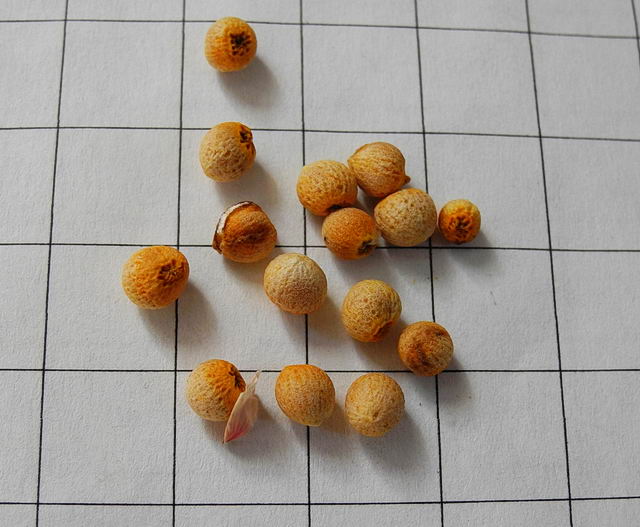
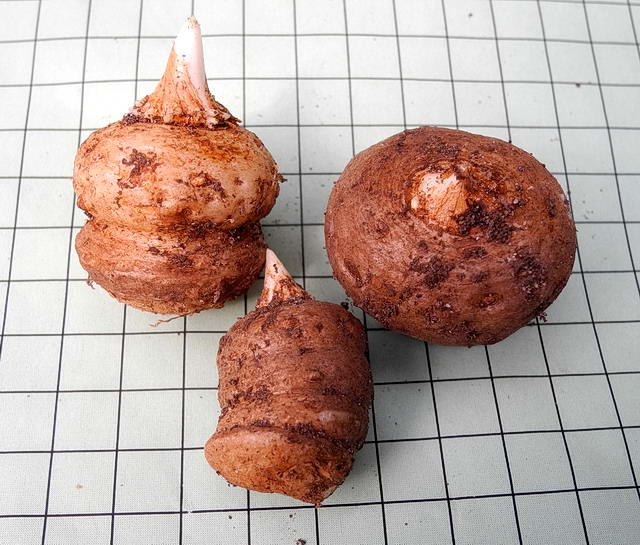
Arum is a genus with tuberous roots in the Araceae family. There are about 25 species found from Europe to central Asia.
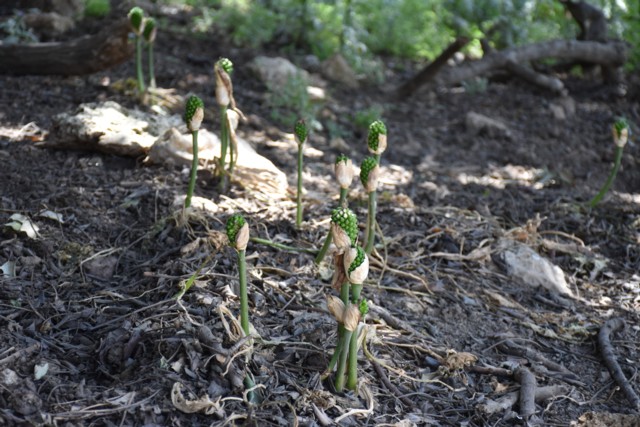
Arum apulum (Carano) P.C.Boyce is an endemic species of central Apulia, related to Arum nigrum from the Balkans. It occurs in sparse woodland areas, being a shade loving plant. It follows the classic pattern of many Mediterranean geophytes, with summer dormancy. Leaves appear in October and flowering is in April. It is listed as critically endangered (according to the IUCN Red List Categories) in the Italian Red Book of Plants. Height range: 20-30 cm. Photos taken in habitat by Angelo Porcelli.
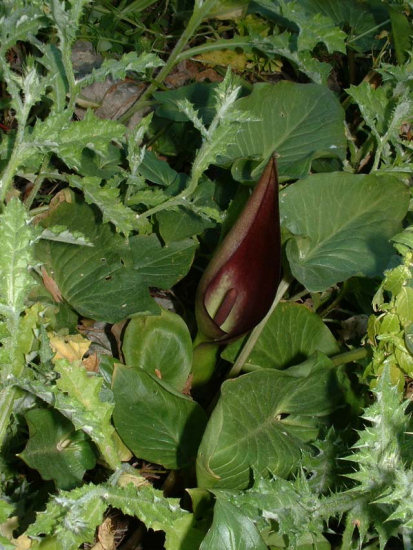
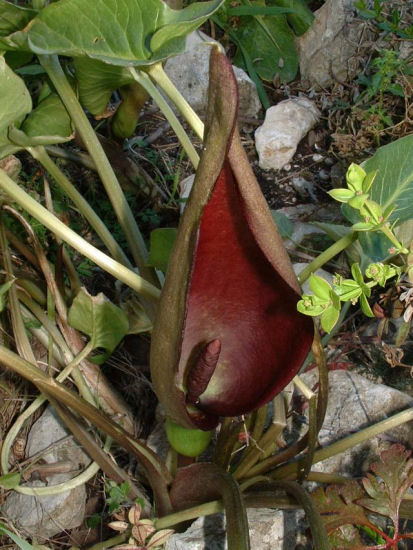
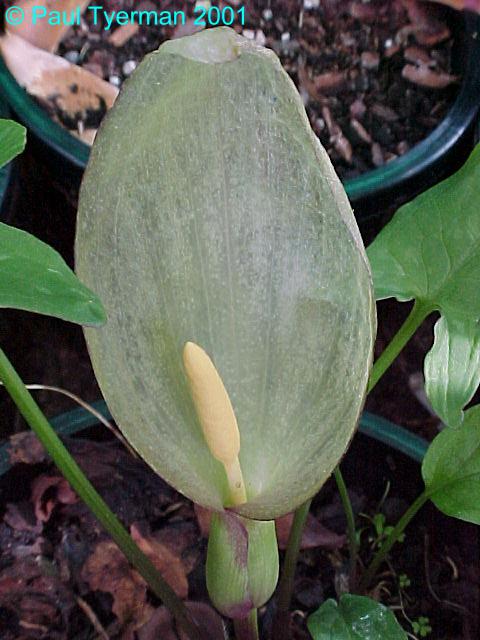
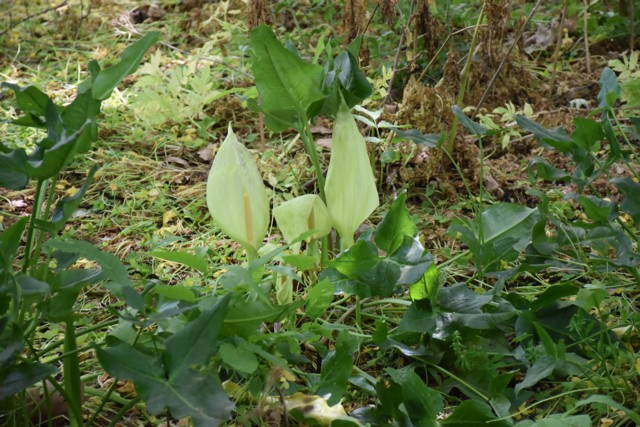
Arum concinnatum Schott is native to the southern tip of the Peloponnese (Greece), most Aegean islands of the Eastern Mediterranean to southwest coasts of Turkey. It flowers in Canberra, Australia in Mid October. Unfortunately I find that the spathe approaches transparency rather quickly. Height range: 2-3 ft. Photo 1 shows a specimen grown and photographed by Paul Tyerman. Photo 2 was taken by Gianluca Corazza in the wild, while botanizing in Crete, Greece.
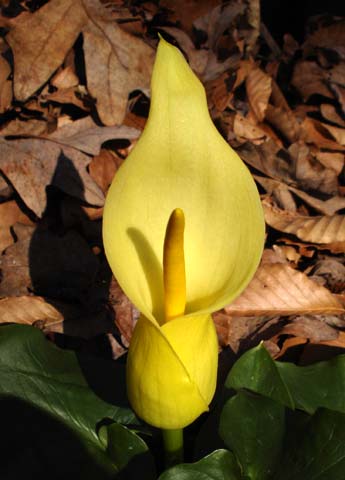
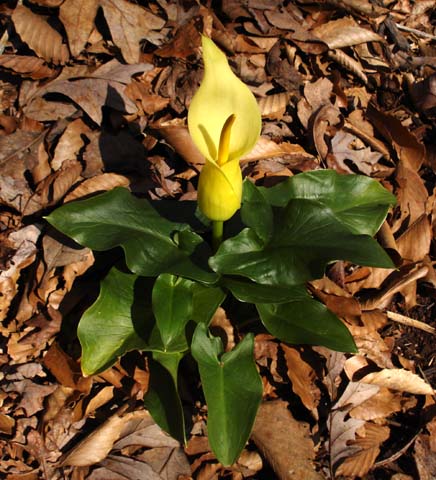
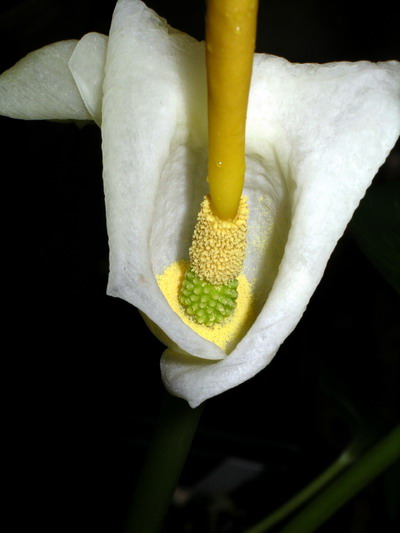
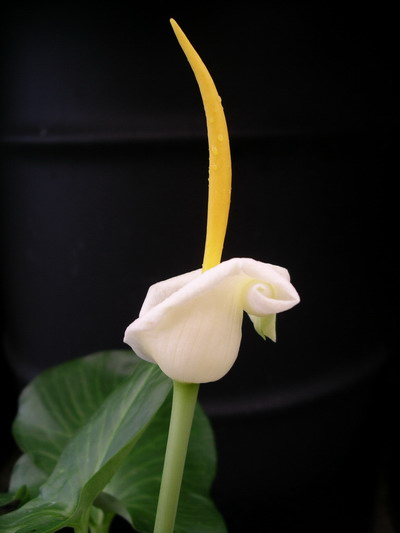
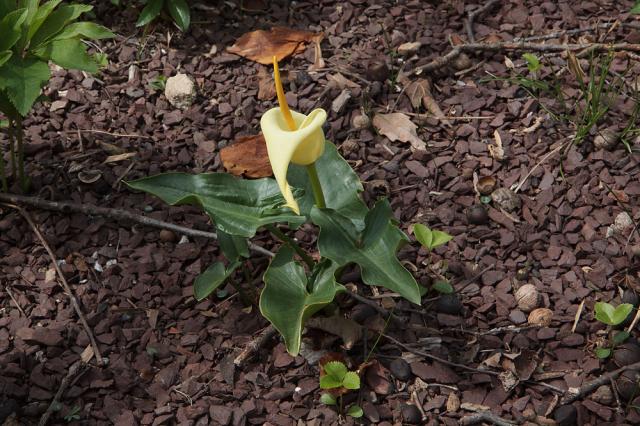
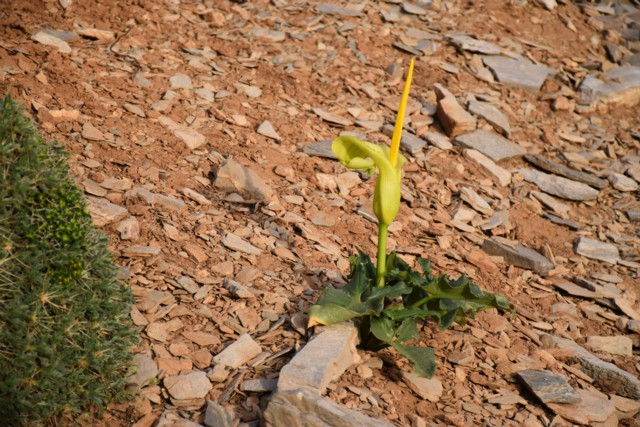
Arum creticum Boiss. & Heldr. is native to the mountains of Crete, Greece and to a few places in southwestern Turkey where it blooms in April to May. It has unmarked, dark green leaves and produces fragrant, bright yellow to yellow-green to green-white spathes. Photos 1-2 taken March 2008 by Jay Yourch. Photos 3-4 from Paige Woodward of plants descended from material collected on the Greek island of Karpathos in 1953. She writes that this fragrant plant that grows to a height of 25-35 cm (10-14") prefers sun and deep, somewhat alkaline soil. She grows her plants in a cool greenhouse kept dry and dormant in summer, watering again in November and has found them hardy to Zone 6. Photo 5 was taken by John Lonsdale and photo 6 is by Gianluca Corazza who took it in habitat, in Crete, in early May.
Arum cylindraceum Gasp. is a widespread species occurring from Sweden to Crete and from Portugal to Turkey. The spathe is about 10-15 cm long, the limb about 8 × 4 cm in size, elliptic-lanceolate, acuminate to almost caudate, completely greenish-white or with some purple shades towards the margins, and the spadix slightly shorter than the spathe limb. The appendix is whitish-yellow to pinkish-yellow to purple, up to 5 × 0.4 cm, long stipitate, subcylindrical to clavate. Height range: 15-40 cm. Photos 1, 2 and 3 were taken by Gianluca Corazza on Cretan mountains.
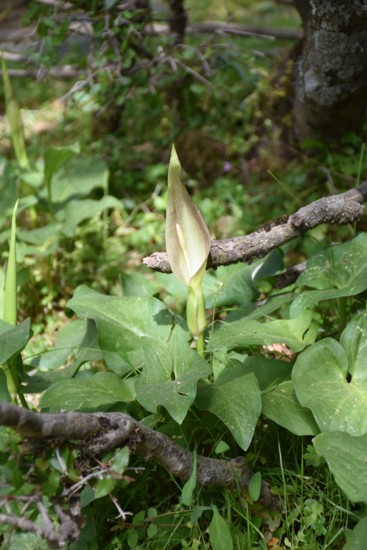
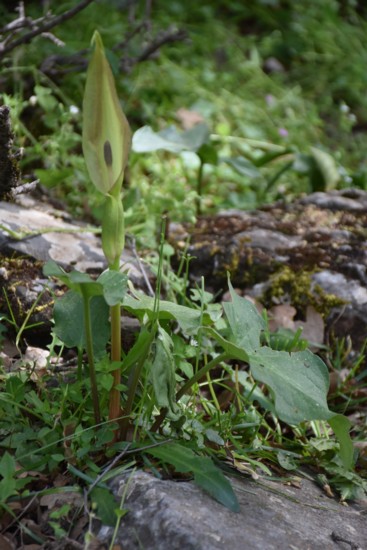
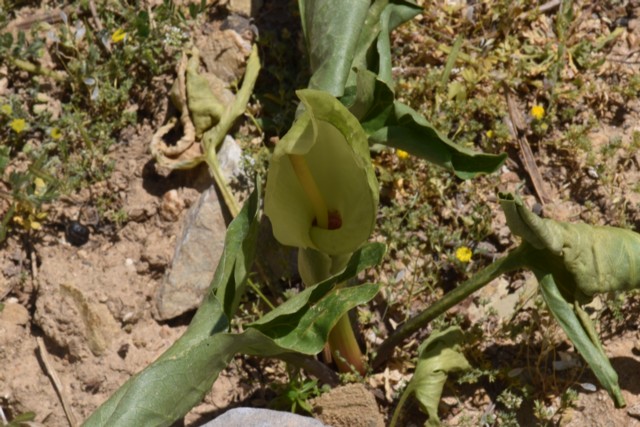
Arum cyrenaicum Hruby is a rather rare and elusive species from SW Crete and NE Libya. It flowers in Canberra, Australia in late September. Flowers are a delicate shading of purple on green. Height range: 20-40 cm. The first photo from Paul Tyerman is of cultivated plants. The second photo was taken by Gianluca Corazza in Crete, while it was fruiting, in spring.
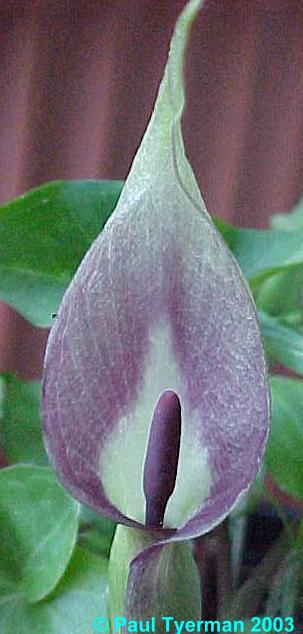
Arum cyrenaicum x concinnatum originally found in Crete and introduced into cultivation as aff. concinnatum has been studied by Peter Boyce and found to be a rare natural hybrid. It flowers later than most species, with a white cream spathe with pink small dots and black speckles on the leaves. It sets seeds too, but I haven't attempted to grow them so far. Grown and photographed by Angelo Porcelli.
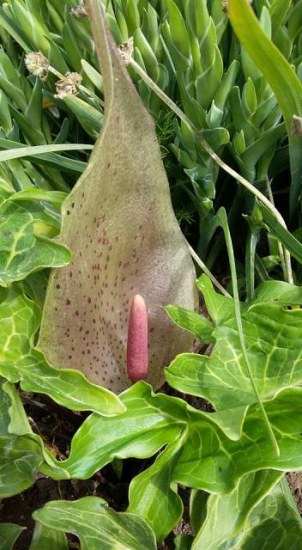
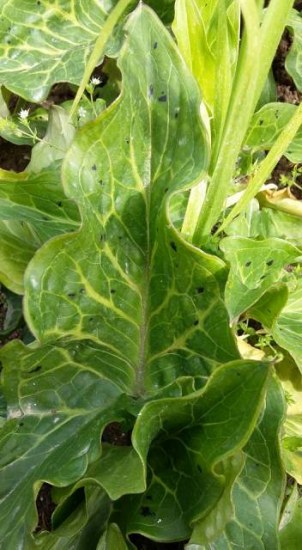
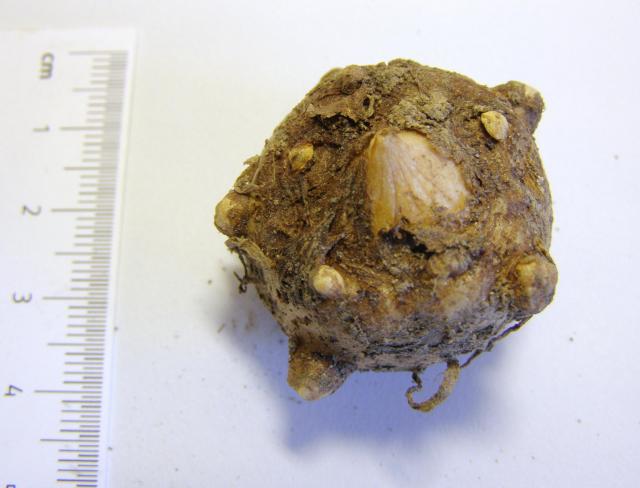
Arum dioscoridis Sm. from the Eastern Mediterranean is found in rocky scrub flowers in Canberra, Australia in early November. The creamy yellow spathe with heavy purple markings is striking and attractive. Unfortunately, the smell is rather the opposite and is somewhat unpleasant. Height: 30 cm. The first photo was taken by Paul Tyerman and the second by Susan Hayek for Diana Chapman. Photo of tuber by Peter Taggart.
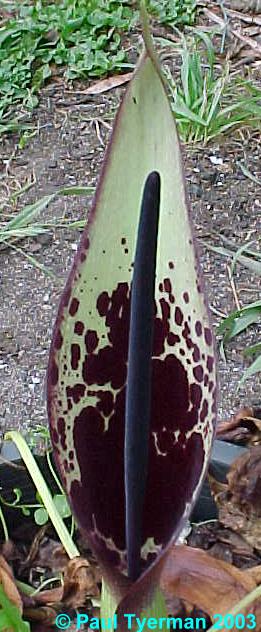
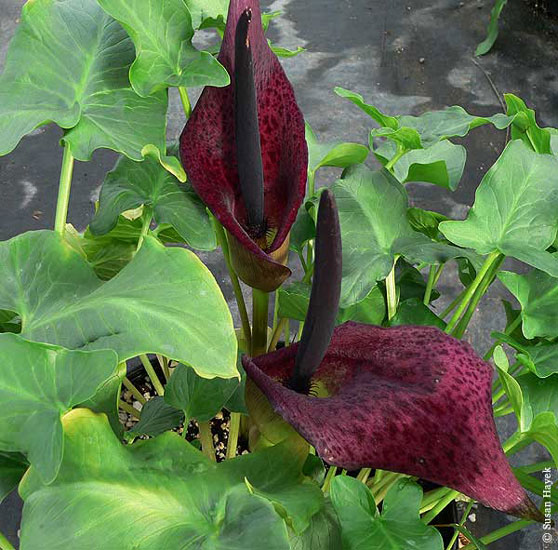
The variety syriacum Engl. is found from Central Turkey to NW Syria. Photo by Angelo Porcelli
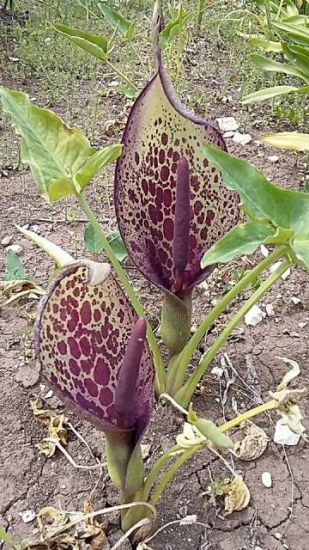
Arum hygrophilum Boiss. is native to NE. Morocco, E. Cyprus, SW. Syria to W. Jordan. Height range: 1-3 ft. Photos one and two below are from Kelly Irvin and three and four are from Paul Tyerman who writes: "Arum hygrophilum flowers in Canberra, Australia in June or July. My form is rather different to Kelly Irvin's as it is green with purple edging rather than that rather interesting creamy white of Kelly's."
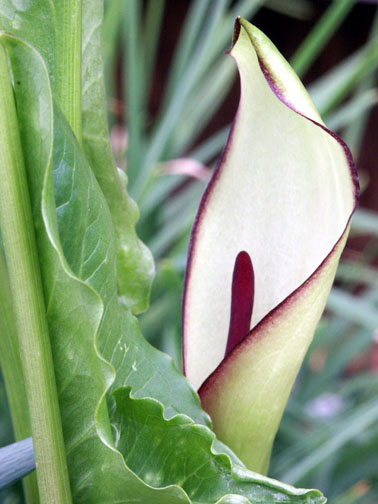
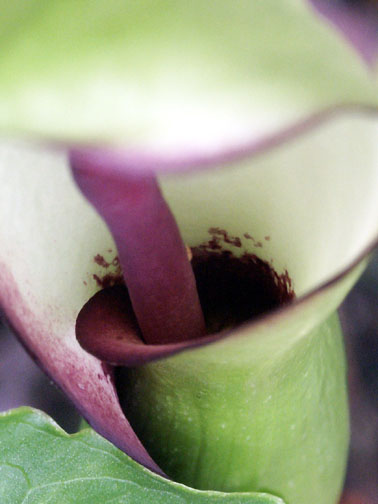
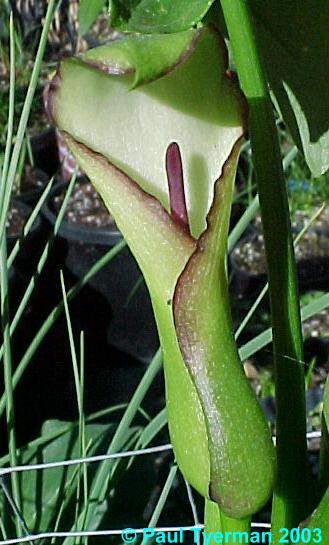
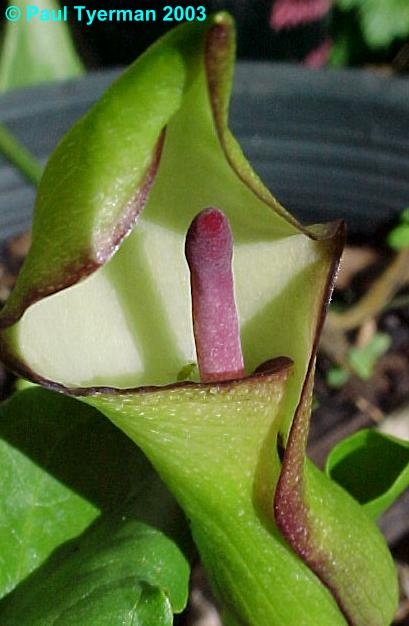
Arum idaeum Coustur. & Gand. is a rare endemic in the highest Cretan mountains. It is a compact species with a white 5-8 cm spathe and a dark purple-blackish spadix. Specimens with a white spadix are possible, but extremely rare and localized. Height range: 25-35 cm. Habitat photos by Gianluca Corazza.
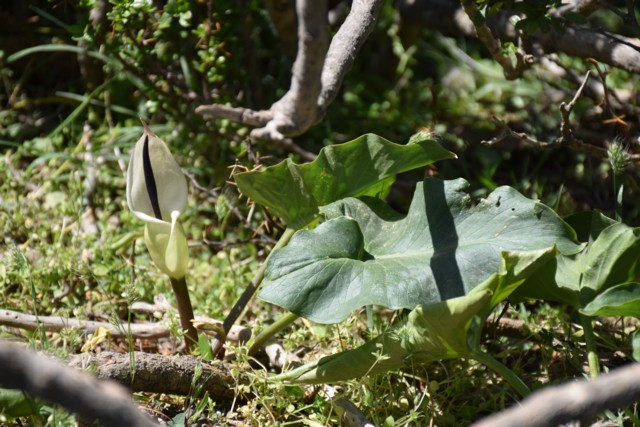
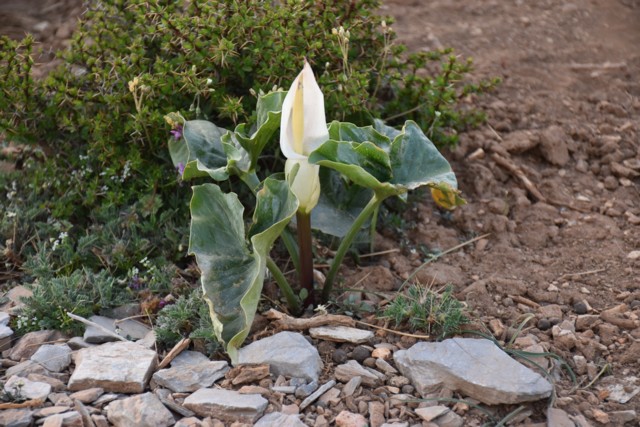
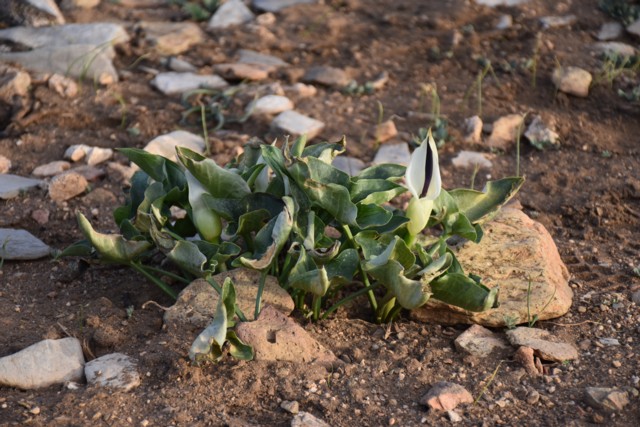
Arum italicum Mill. is a widespread plant of woods and hedges in Europe, North Africa and Asia Minor. It is a very variable species. It can have dark plain green leaves or leaves with whitish-cream stripes. Some plants are particularly variegated and often referred to as 'marmoratum' or 'pictum', but both names are invalid. Variegated specimens grow usually smaller, but the plain green ones can get to an unusually large size in moist and shaded spots, rivaling Zantedeschia. It is also grown for its fruit as plants in fruit are very attractive. Height range: 30-45 cm. The first photo was taken in habitat, Apulia, Italy by Angelo Porcelli. The second and third photos were taken by Angelo Porcelli and Jay Yourch showing the beautiful variegated leaves.
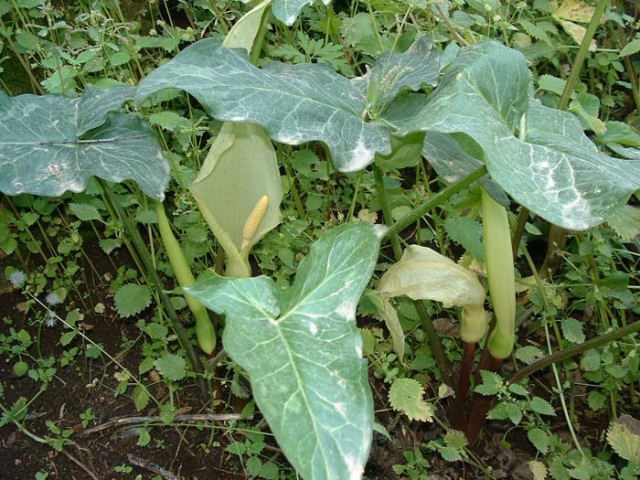
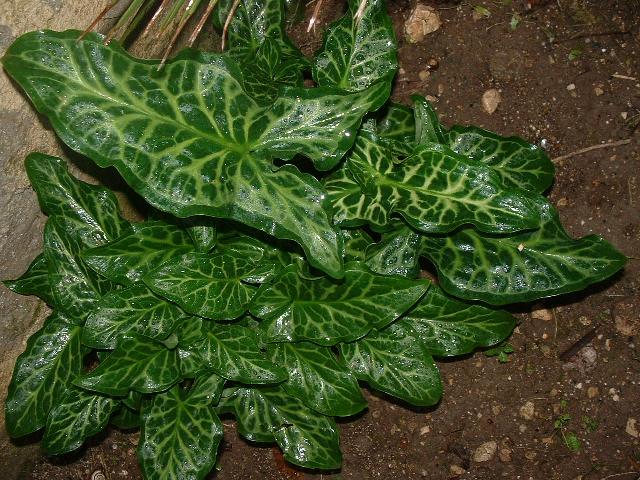

The first photo by Arnold Trachtenberg of a slug in the flower and the second photo taken July 2004 by Jay Yourch is of ripening fruits.
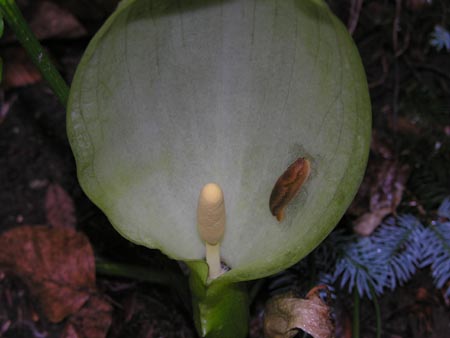

Arum italicum ssp. albispathum (Steven ex Ledeb.) Prime is a subspecies with leaves that are plain deep green, never marked in any way and a spathe that is almost white and a spadix-appendix that is pale yellow. Photo of a plant obtained from Telos Rare Bulbs and grown by Arnold Trachtenberg.
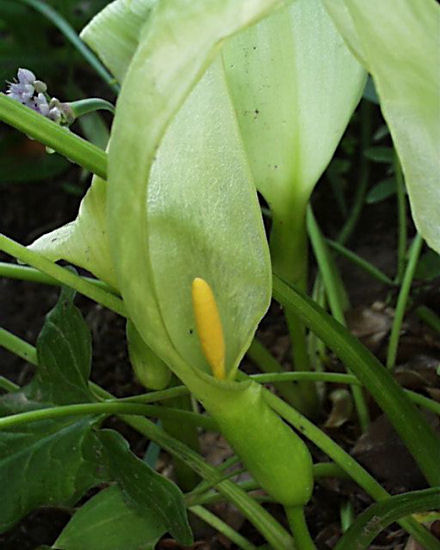
Arum italicum ssp. italicum is the most widely grown subspecies. In an article in The Plantsman, Peter Boyce, an expert on this genus suggests that he now believes another of the subspecies, ssp. neglectum (F.Towns.) Prime should be included in ssp. italicum as wild plants show considerable variation making the usual distinction between the two difficult.
The plant pictured below is a form sometimes referred to in Italy as 'marmoratum'. This form is cultivated for its beautiful leaves that have white to yellowish (ivory) main and secondary veins. The leaves appear in autumn and last through the winter months into spring and summer. It is easy to find and to grow here in Northern Italy. The light yellow coloured spathe, appearing in May in northern Italy, lasts only one week. The second picture is a closeup of the flowers; in a few days the spathes are drying. Photos by Giorgio Pozzi, May 2006.
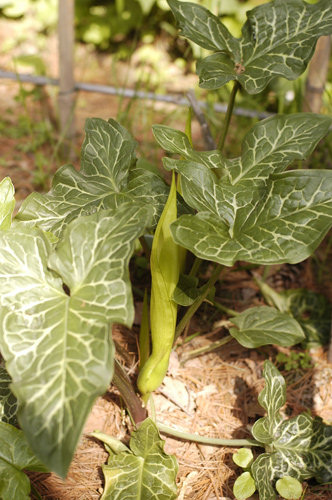
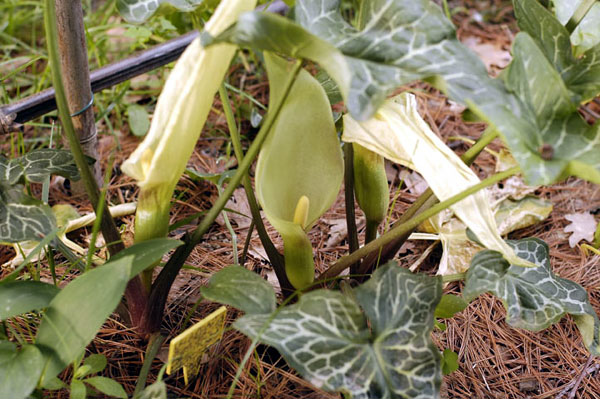
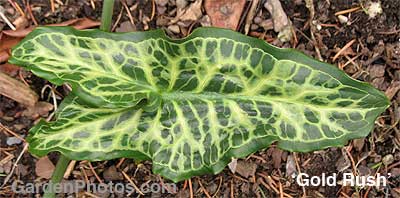
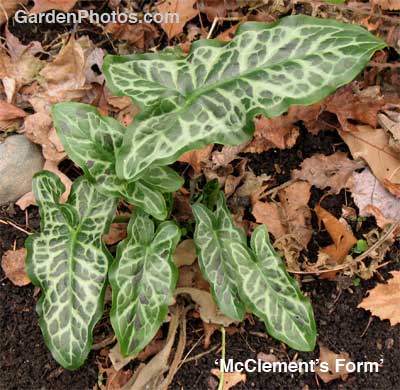
Two attractive cultivars of this subspecies are shown below. In 'Gold Rush' the veins and the surrounding areas on new foliage are heavily marbled in gold, fading to cream. 'McClements' has dark green leaves with bright white veins and black spots over the surface. Photos by Graham Rice.
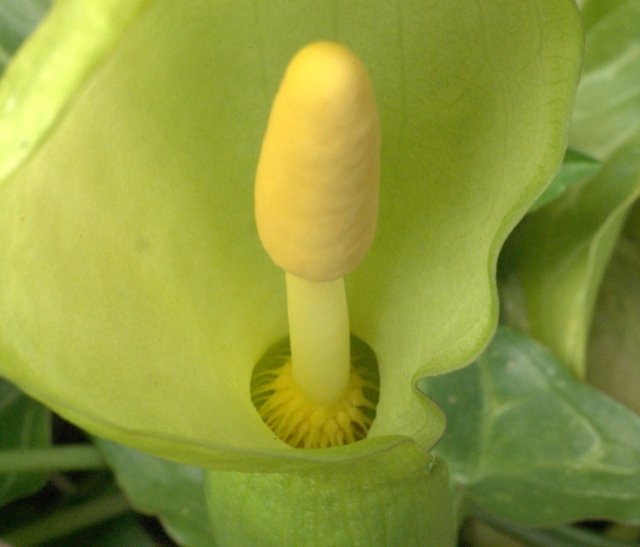
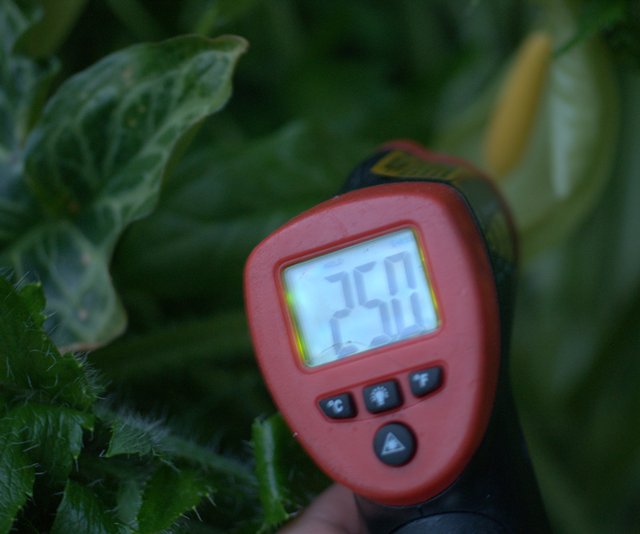
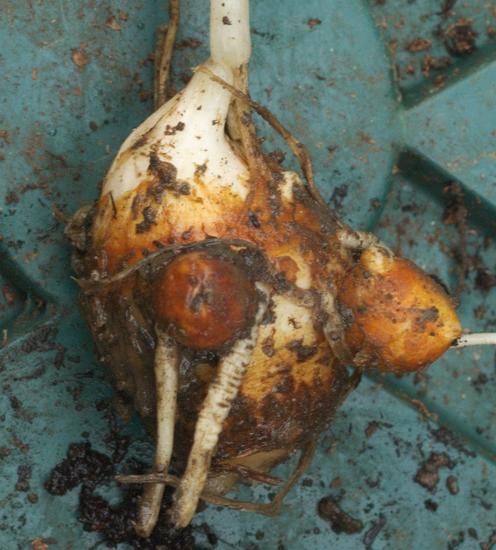
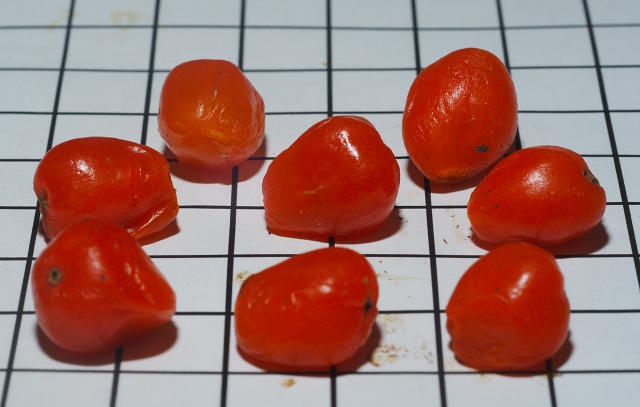
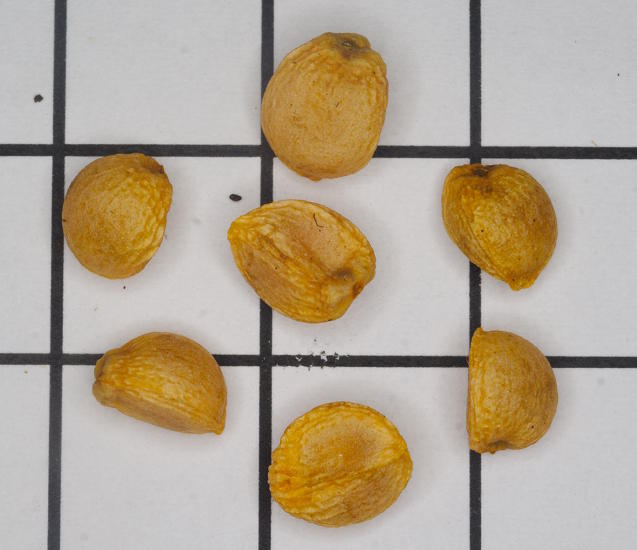
Pollination is achieved by producing the scent "rotting material", attracting flies and then imprisoning them behind hairs for 24 hours. Incoming flies are hopefully carrying pollen from other plants. Before they are released they are exposed to pollen from the plant holding them. At various stages of this process heat is produced, for example, to evaporate the odour producing chemicals. The fact that the plants are thermogenic was known to Lamarck in 1778. The temperature difference between the yellow appendix and the surroundings is above 15 °C. Photographs by David Pilling. The first two show the floral chamber before and (6 days later) after pollination. The next one (of a different plant), taken around 9:40 pm when the ambient temperature was about 11 °C, records the reading on an infra-red thermometer. Photo four is of a bulb with offsets; the bulb is over an inch in size. The final two photos show seed pods and seed on a 10 mm grid; typically there are four seeds per pod. Cleaning the seed is a job best done wearing protective gloves; all parts of the plant contain the irritant calcium oxalate. This is not a problem for normal gardening activities. Crystals of calcium oxalate are known in plants as 'raphides' and are found in many species.
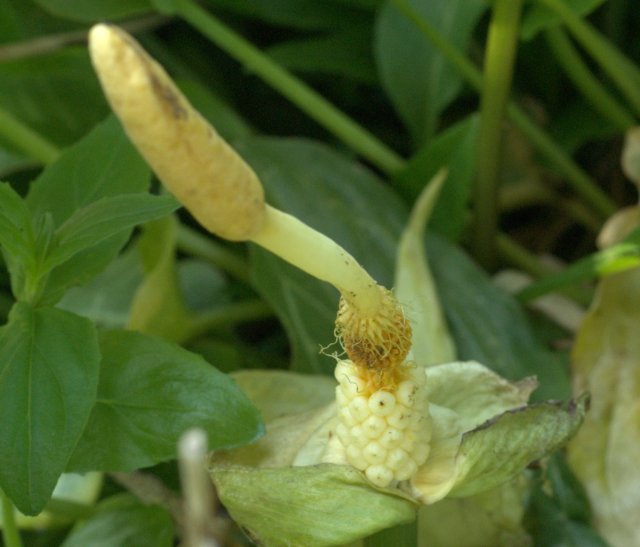
A fresh flower was opened up; inside were lots of small flies which had fled by the time the photo was taken.
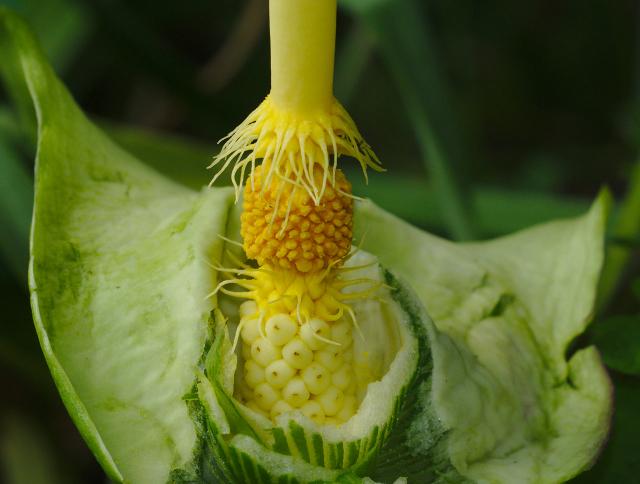
Arum korolkowii Regel is a species of N. Iran, Afghanistan and C. Asia (to northwest China). Height range: 50-60 cm. Photos by Arnold Trachtenberg.
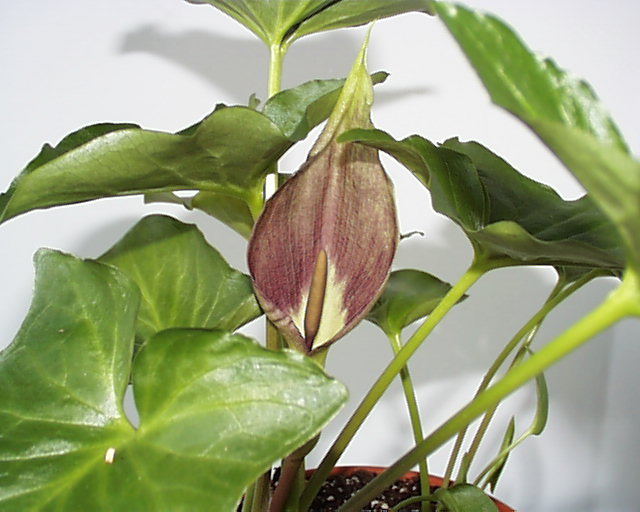
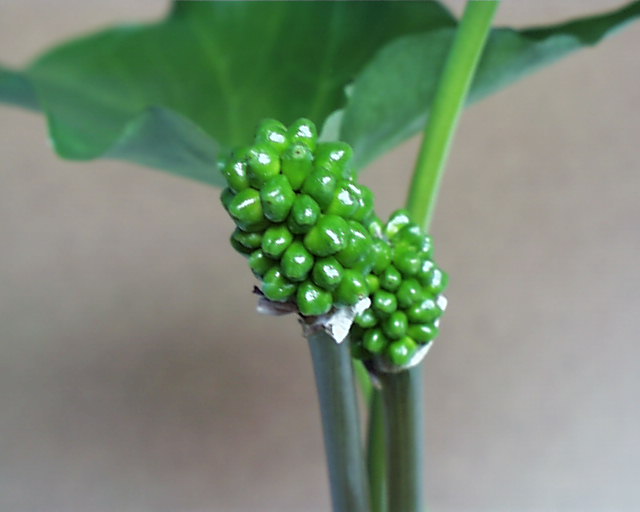
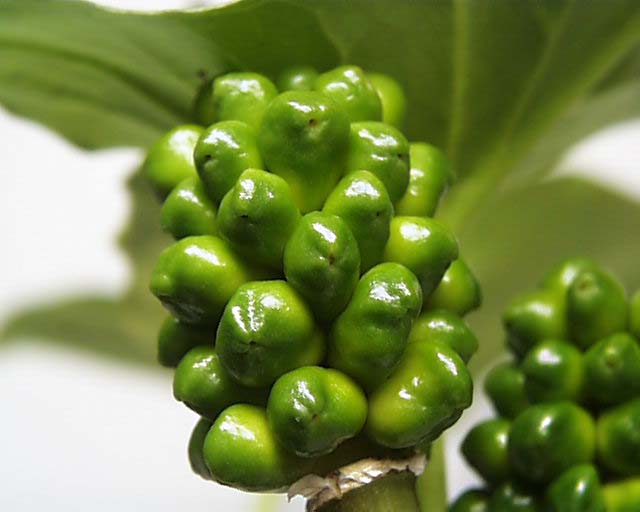
Arum lucanum Cavara & Grande is a very elusive species of Southern Italy, growing on rather high elevation habitats (pastures), usually well over 1000 m (3300 ft). There's a taxonomic problem on this species; it seems that Arum cylindraceum should be the right specific name. In 2024 Arum lucanum is an accepted species. Peter Boyce discusses this question in his monograph, The Genus Arum. Photos were taken in habitat in the Pollino Mountains by Angelo Porcelli.
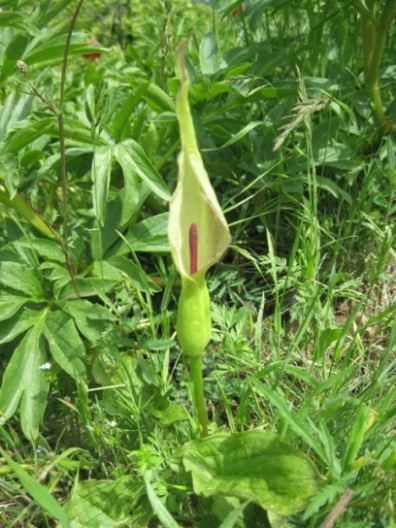
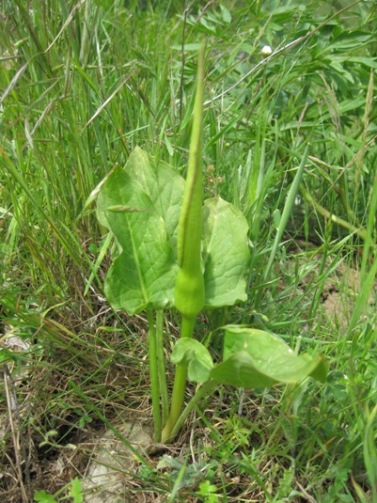
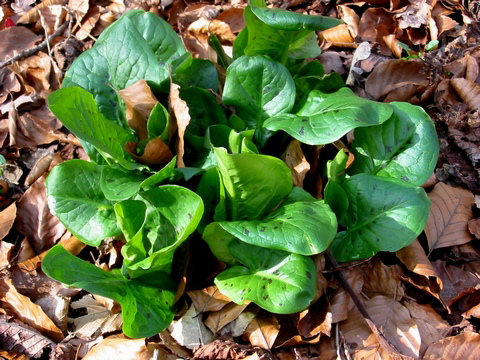
Arum maculatum L. photos were all taken 1.02.04 in the beech woods surrounding Cologne, Germany, where they are widely distributed and show considerable variation in leaf spotting and form. Typically, the leaves die-back completely in summer. Height range: 30-45 cm. Photos from Jamie Vande, Cologne, show typical clumps emerging from leaf litter, a finely spotted clone with rounded leaves, a better splashed form with arrow-shaped leaves, and even a colony without spots. The soil is a loose, sandy loam covered by a 10 cm (4") leaf litter. One can literally dig with their hands! Although I've not tested it, a beech forest is typically acid.
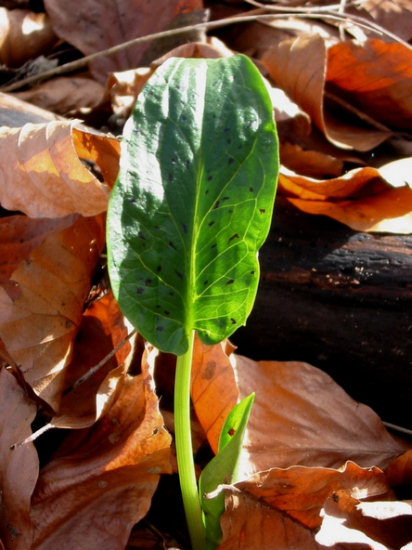
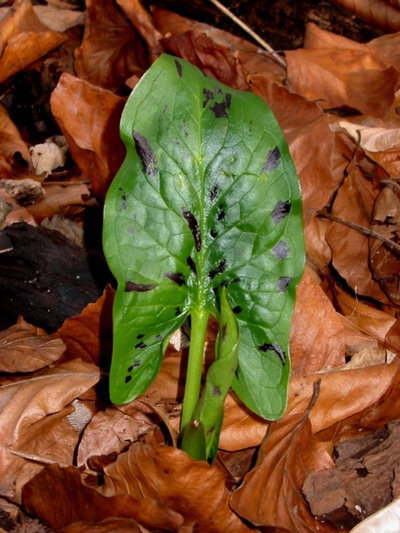
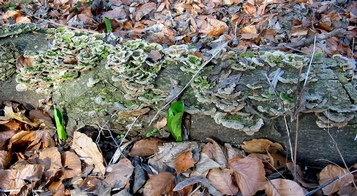
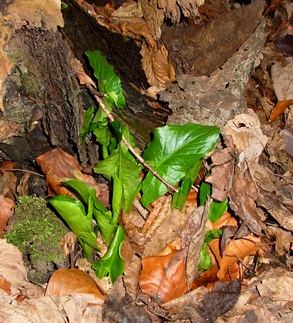
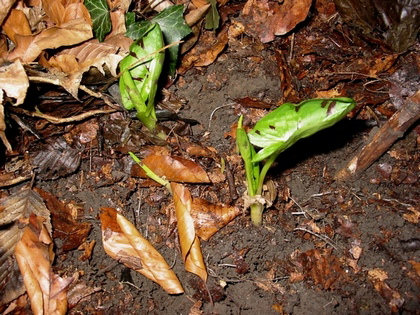
This plant is known as Lords-and-Ladies in the UK. The first picture below taken by Bob Rutemoeller in May 2004 in the Lake District shows the flowers. Pictures 2-4 by Martin Bohnet show the common greenish form, a rare darker version (both end of April) and the fruit (end of August). The leaves of the population in his southern Germany area are never spotted.
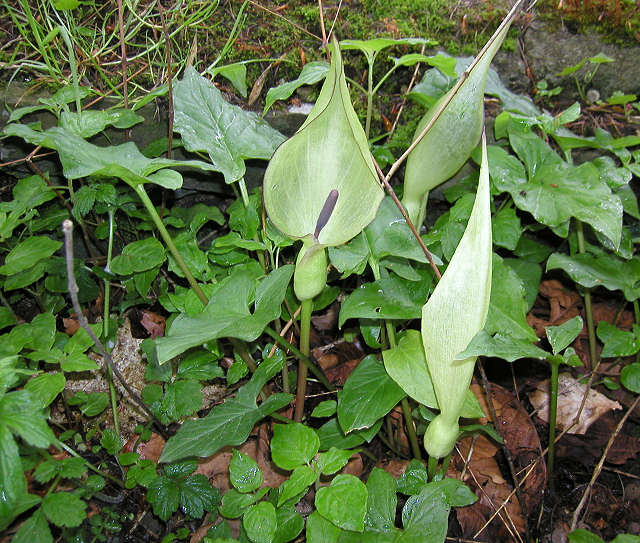
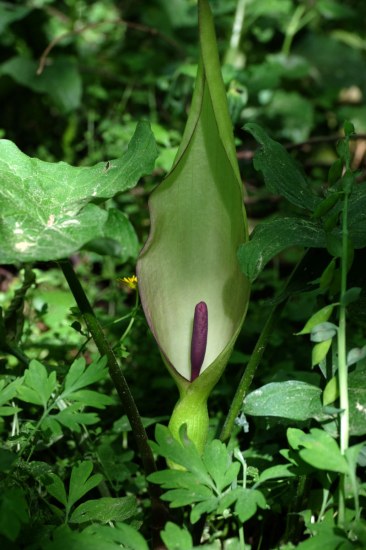
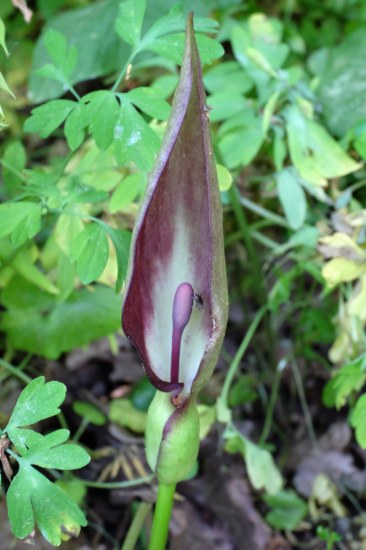
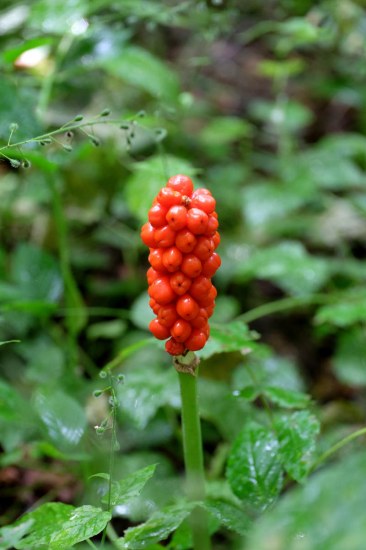
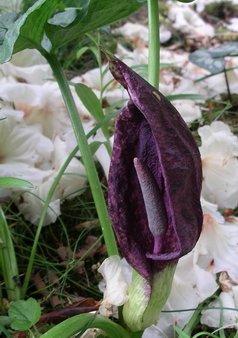
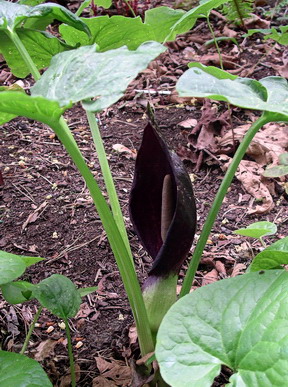
Arum nigrum Schott is native to the Balkans. These magnificent plants (pictured here) descend from material collected in cracks of Karst formation in the Dalmatian coastal range, north of Knin, Croatia. That was in 1982; since then the area has been devastated by war. Blooming in May - June, the spathe, gleams purple-black and encloses a pale spadix. Height: 25 cm. Photos and text from Paige Woodward.
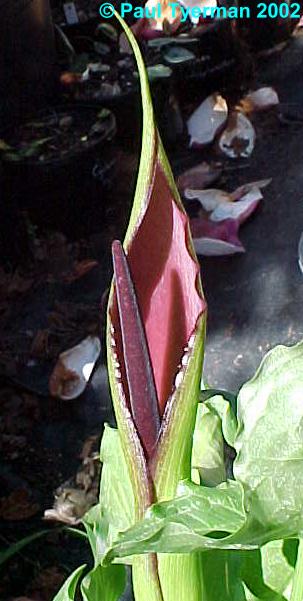
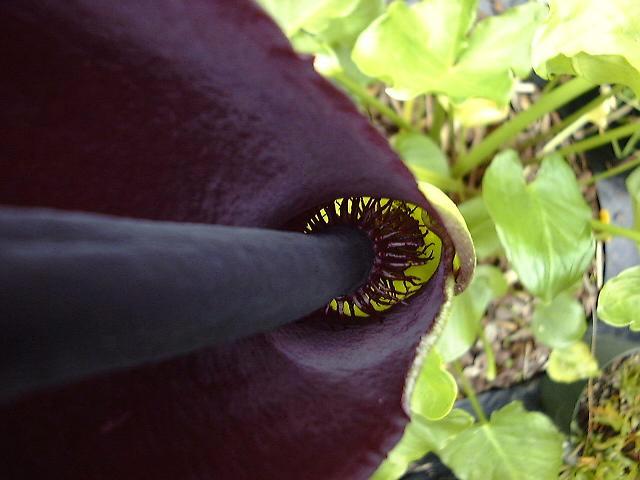
Arum orientale M.Bieb. is native to EC. Europe to W. Caucasus. It flowers in Canberra, Australia in mid September. Height range: 1-2 ft. Grown and photographed by Paul Tyerman.
Arum palaestinum Boiss. is a species from Israel, W. Syria, Lebanon to Jordan. Height: 38 cm. The first two photos show one grown under HID lights and photographed by Arnold Trachtenberg. The third photo was taken by Susan Hayek for Diana Chapman.
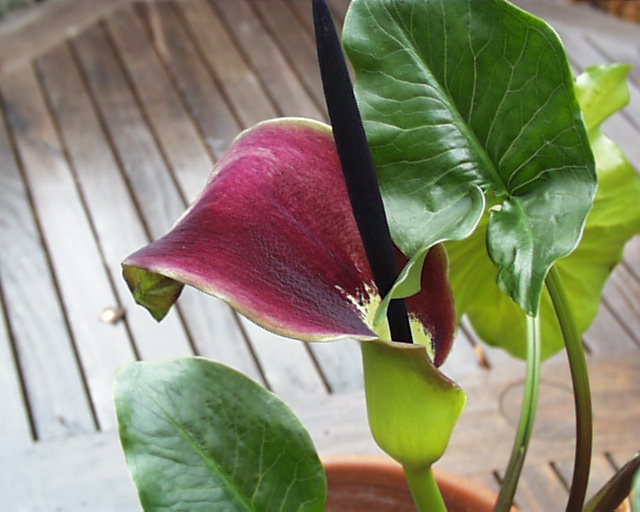
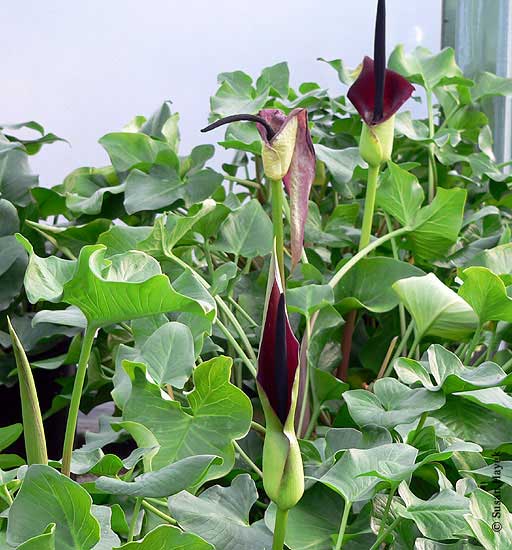
Infrared image of Arum palaestinum showing heat generated by spathe as part of the pollination strategy. Photographed by Arnold Trachtenberg.

Arum pictum L.f. is the only autumn flowering member of this genus. It also has a characteristic purple edge to the young leaves. It grows in Corsica, Sardinia and the Balearics in rocky places. 'Pictum' means painted or colored. Height range: 20-30 cm. The first two photos are from Rob Hamilton and the last three are from Judy Glattstein.
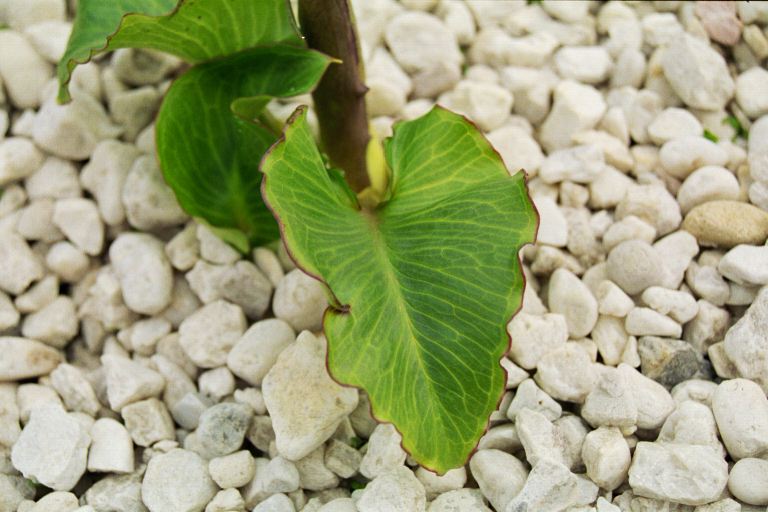
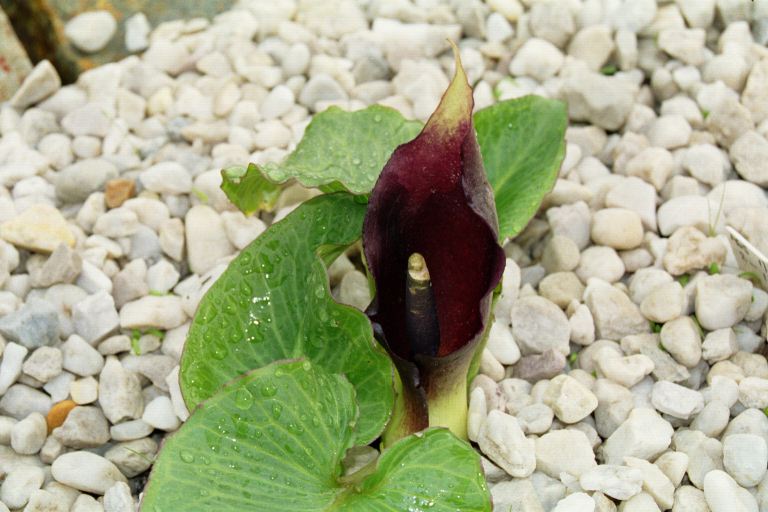
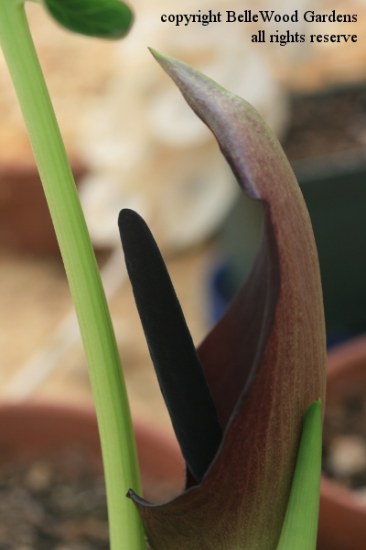
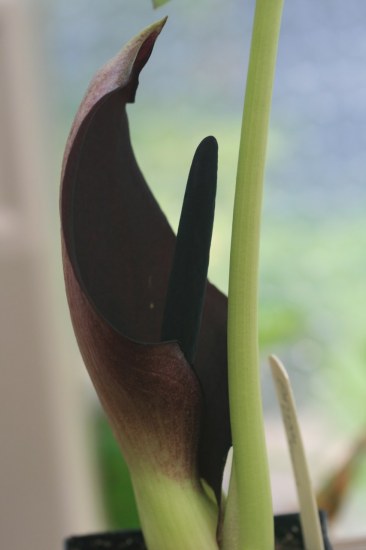

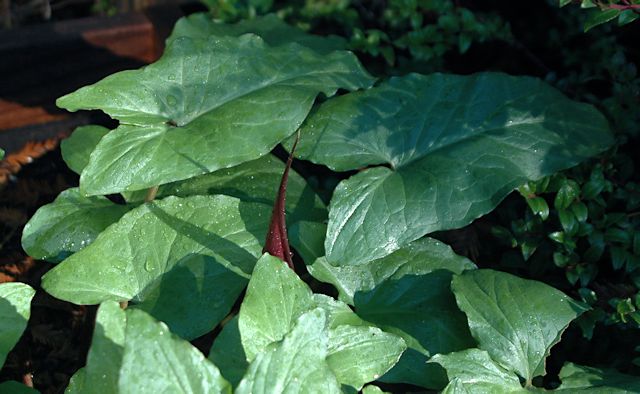
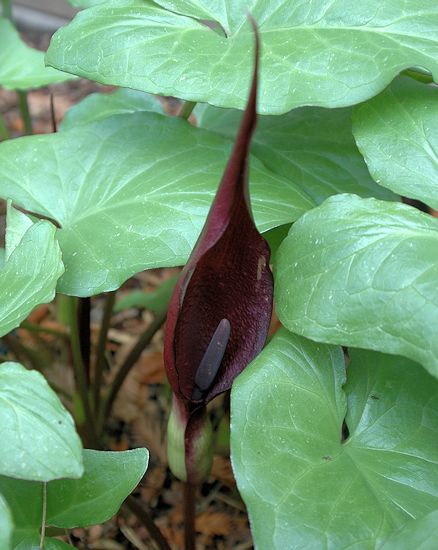
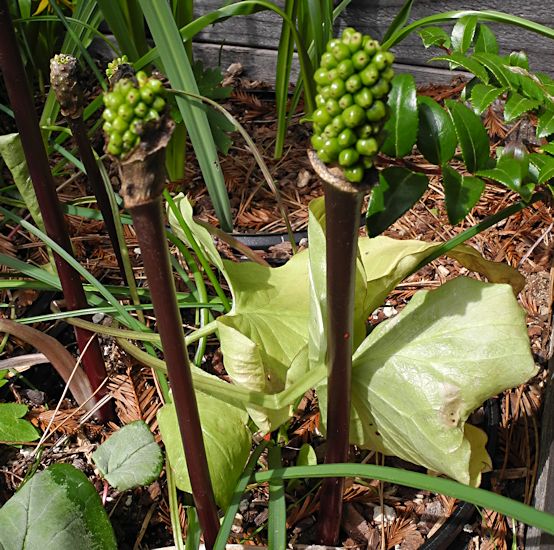
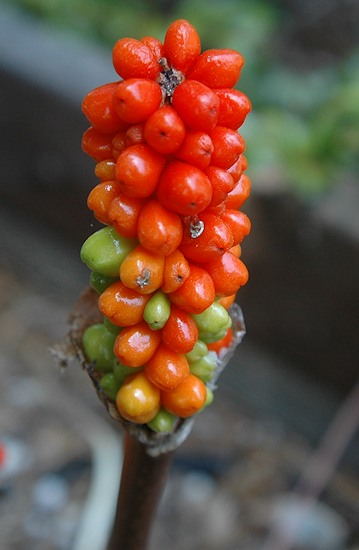
Arum purpureospathum P.C.Boyce is endemic to the island of Crete. Height range: to about 40 cm. Photos 1-3 were contributed by the UC Botanical Garden. Photo 4 was taken by Nhu Nguyen at the UC Botanical Garden of the plants blooming in early April. Photo 5 by Gianluca Corazza who took it in habitat in early May, when plants were fruiting.
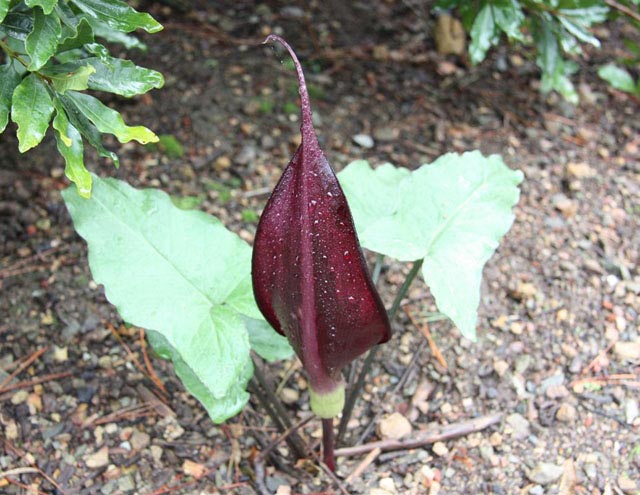
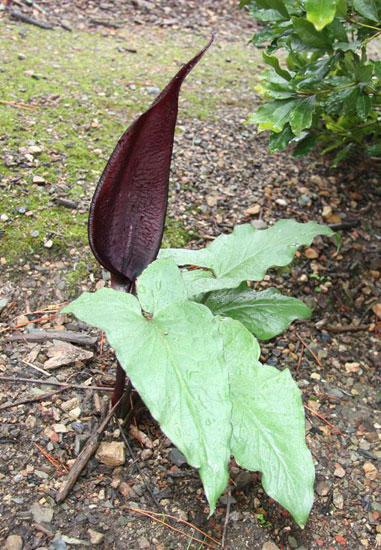
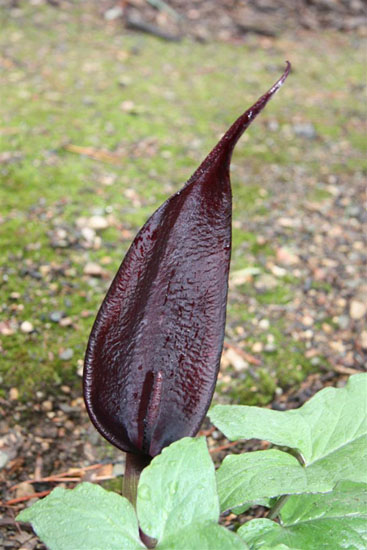
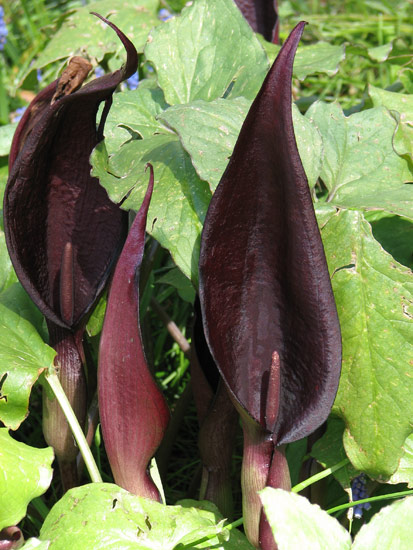
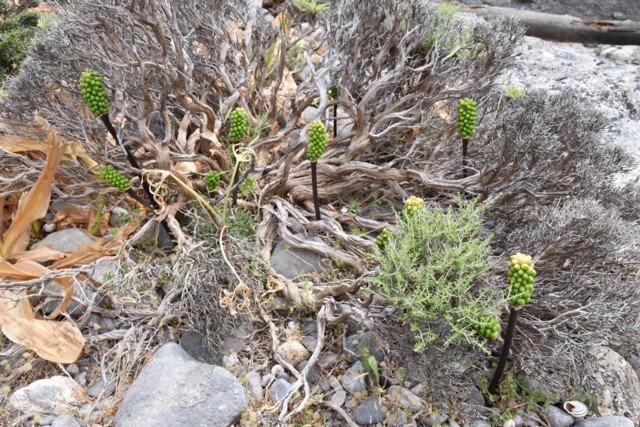
This species is quite interesting over a long period of time. In my northern California garden the large leaves appear in September. They are very shiny and even look nice when rained on. Flowering occurs between November and February depending on the year. In the third photo below the leaves are dying but the plants have green fruit in April. By July the fruit has turned red but in between at times the fruit was green and red. The fifth and sixth photos show the seeds and tubers on a 1 cm grid. Photos by Mary Sue Ittner.