Mathew’s subgenus Limniris are Irises that grow from rhizomes and are beardless. They are native to North America, Africa, Europe and Asia. Many of these plants are found in wetlands and some require moist rich soils while others can dry out a little. Mathew has divided this group into two sections. One section is Lophiris or the Crested Irises. The other section is Limniris which includes all the rest. This section is further divided into many sub groupings. The only subgroup that we have included at this stage on our wiki is Pacific Coast Irises. All the others are listed on this page and other Beardless iris wiki pages. Species s-z will be listed on this page.
For information about the others consult Beardless iris a-k - Beardless iris l-r
Iris species from all groups are listed alphabetically on the Iris wiki page.
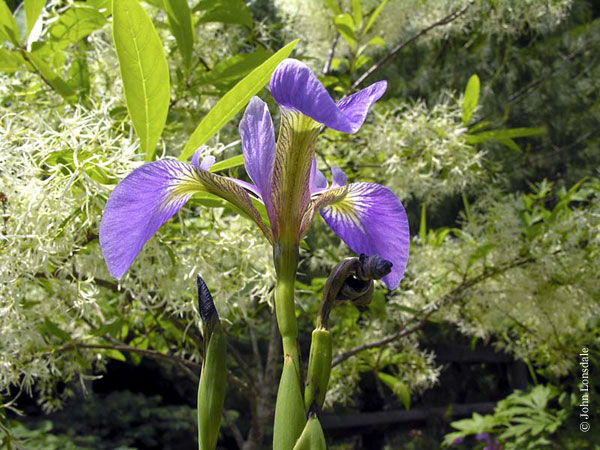
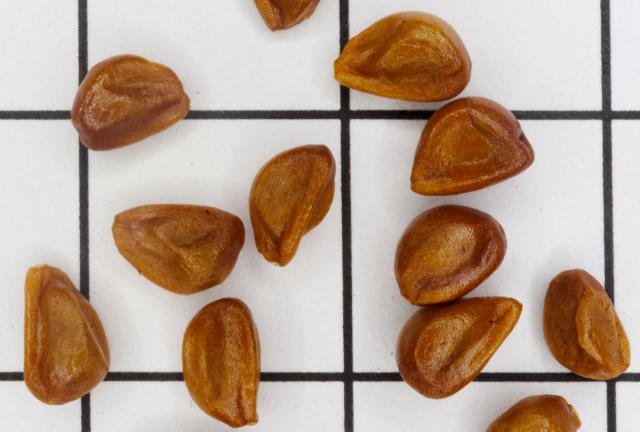
Iris setosa Pall. ex Link is a species from various parts of the world (Eastern Asia, Canada, and the United States). Flowers are bright purple. The name setosa means bristly, perhaps referring to the standards being almost absent; a common name is "bristle point iris". Height range: 60-90 cm. Photo by John Lonsdale, seed on a 10 mm grid photo by David Pilling.
Iris sibirica L. has blue violet and occasionally white flowers and is native to Italy, eastern Europe to Lake Baikal, Turkey and the Caucasus, and blooms late spring to early summer. It is a wetland beardless rhizome type. Height range: 2-4 ft. Photos 1-2 taken by Bob Rutemoeller May 2004 at Wisley Gardens in England that were named with cultivar names. We didn't know if they are actually this species or Siberian hybrids (Iris sibirica × Iris sanguinea). The signs called them Iris sibirica 'Heavenly Blue' and Iris sibirica 'Navy Blue'. Photos 3-5 from Hans Joschko.
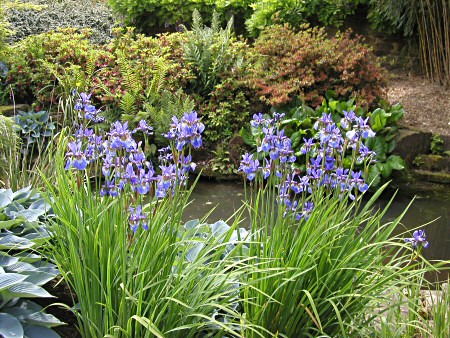
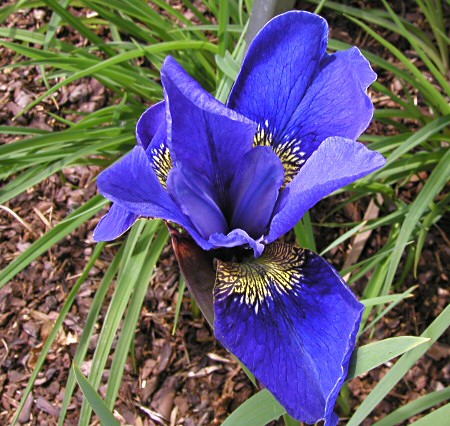
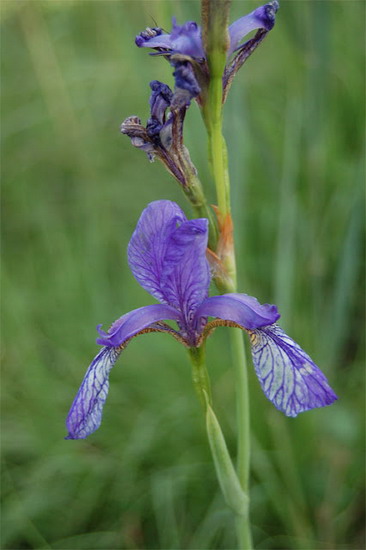
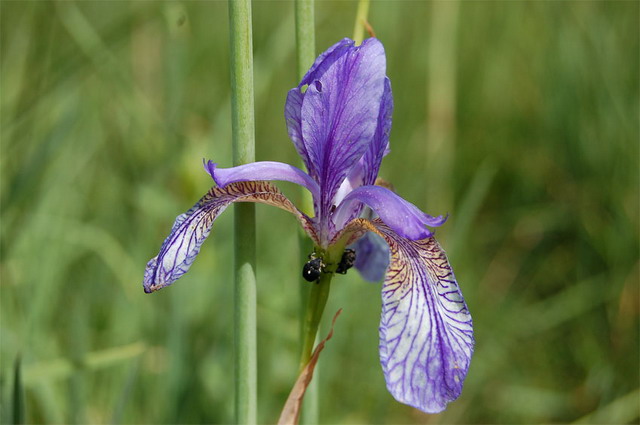
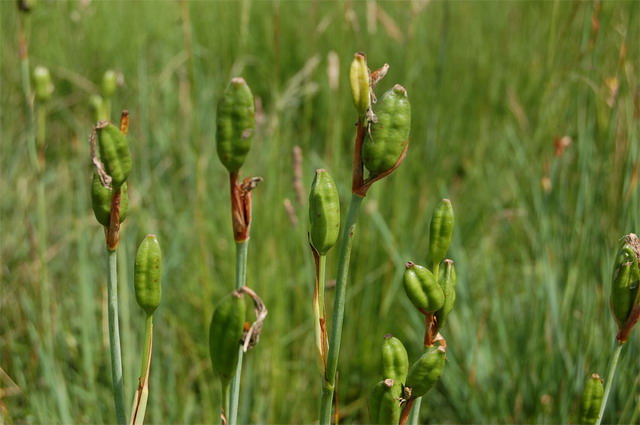
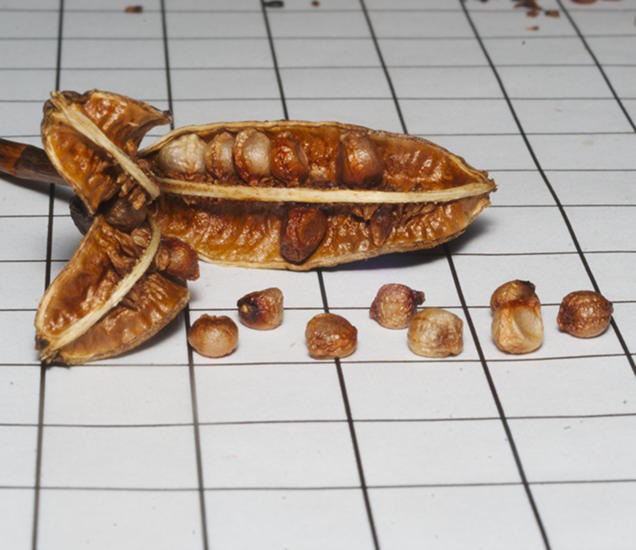
Photographs by David Pilling. This is a 'pass along plant', easily propagated from a chunk of rhizome, producing a thick clump of foliage that dies back in Autumn and re-emerges in Spring. It has persisted in the garden for 50 years. Seeds are set rarely but sometimes a lot are produced, apparently it comes true from seed. Stems are around four feet high with more than one flower. The last photo shows seed and a seed pod on a 10 mm grid, the seed looks different to any Iris sibirica seed photos on the web, so this is likely to be a hybrid.

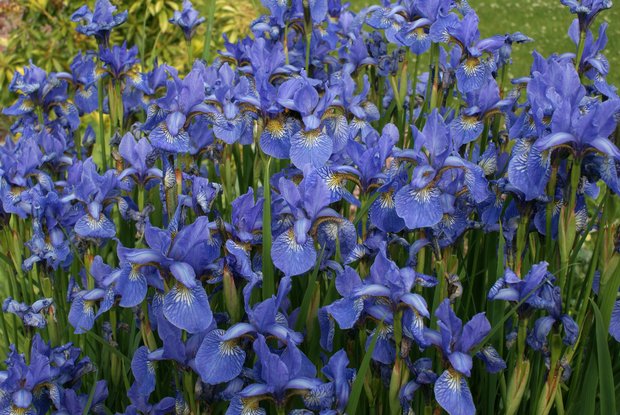
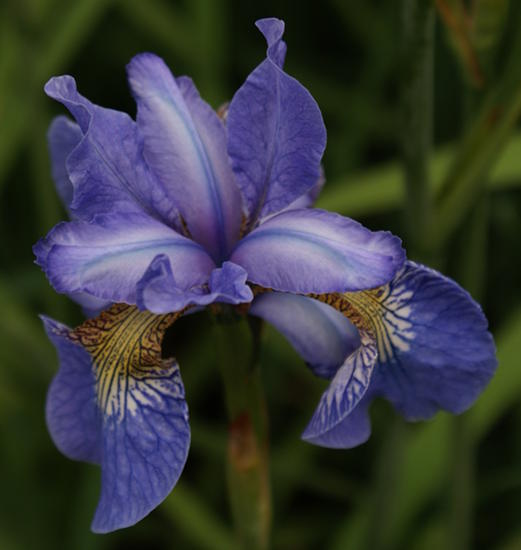
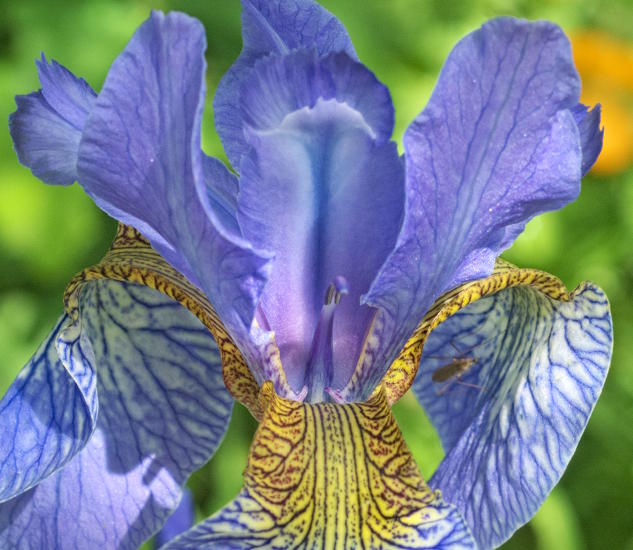
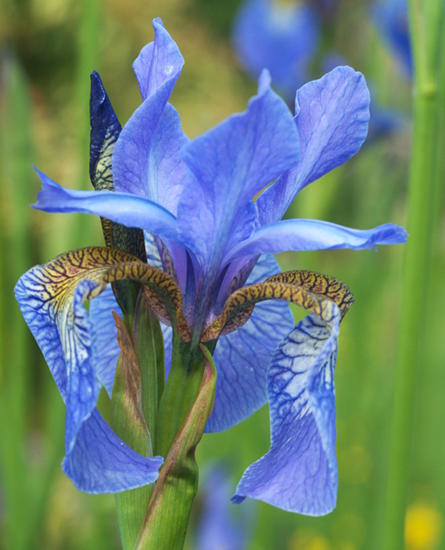
Iris sibirica 'Butter and Sugar' is a white and yellow selection which may or may not be of hybrid origin, but comes true from seed and took 3 years to flower for Martin Bohnet.
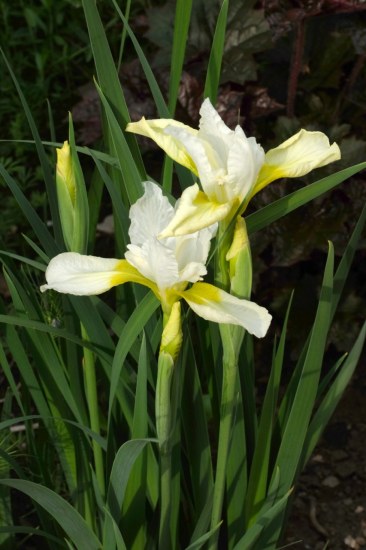
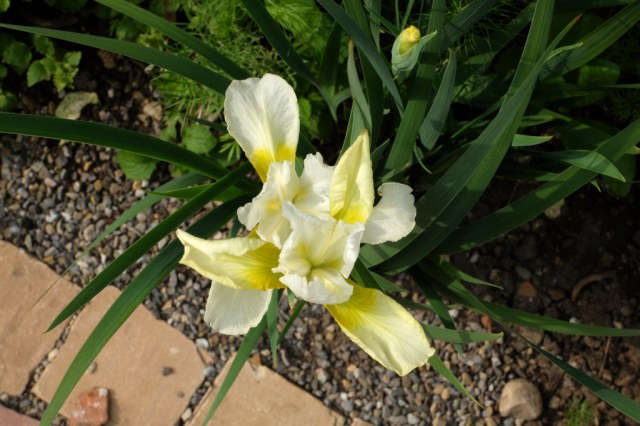
Iris sichuanensis Y.T.Zhao is considered by Plants of the World Online and the Flora of China to be a synonym of Iris leptophylla Lingelsh. ex H.Limpr. It is distributed in the northwest of Sichuan, China. Height range: 13-20 cm. Photo by Alessandro Marinello.
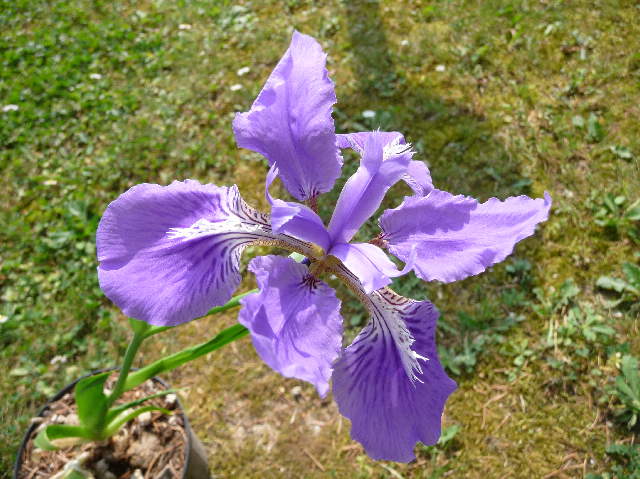
Iris sintenisii Janka is from Southern Italy, the Balkan peninsula and Turkey. It has deep violet-blue flowers with white falls and violet veins. The plant is practically impossible to spot in the grass when not in flower since the leaves are totally grass-like. This species is closely related to Iris graminea but in Italy these species have a distinct distribution, with Iris sintenisii occurring only in Southern Italy. Ants are the main pollinator; they actively visit the scentless flowers which secrete droplets of nectar at the base of tepals. Height range: 30-60 cm. Photos in habitat in Apulia by Angelo Porcelli

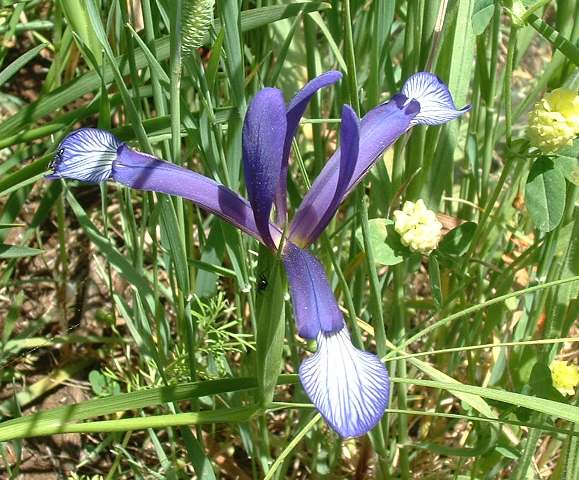

Iris sintenisii ssp. brandzae (Prodán) D.A.Webb & Chater, syn. Iris brandzae Prod. is a rare species from Romania with narrow leaves. Note: Some databases list this as a subspecies of Iris sintenisii and in other databases it is listed as a species. Photos by John Lonsdale.
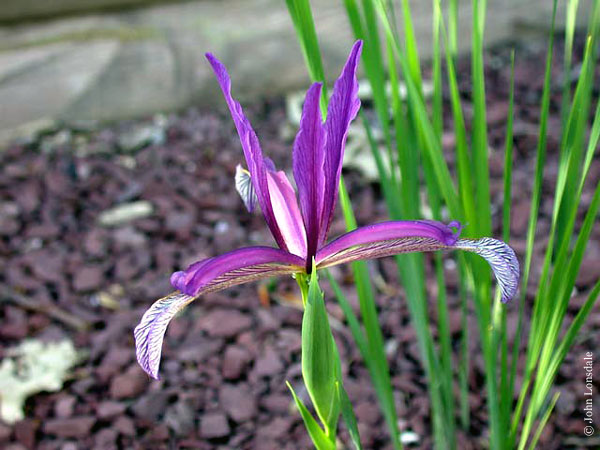

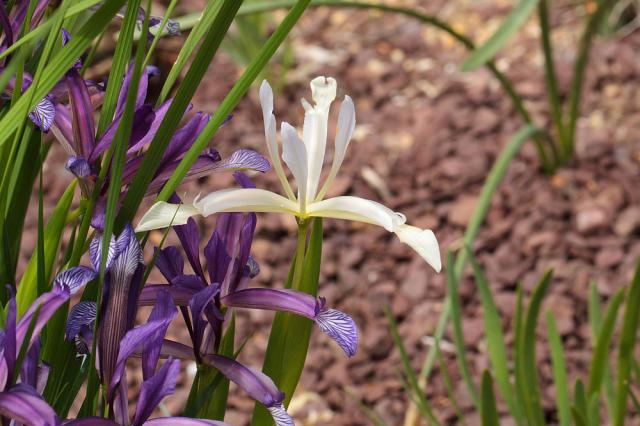
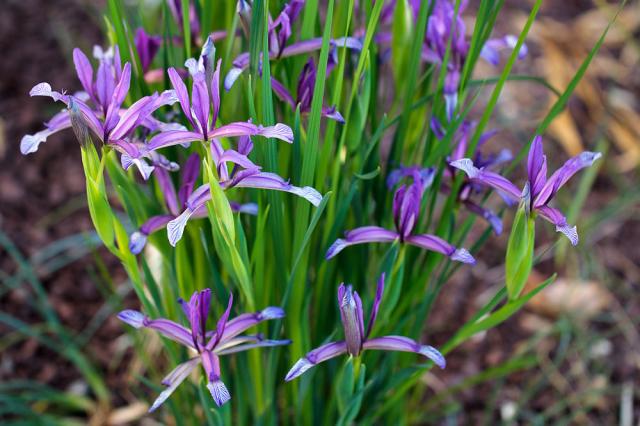
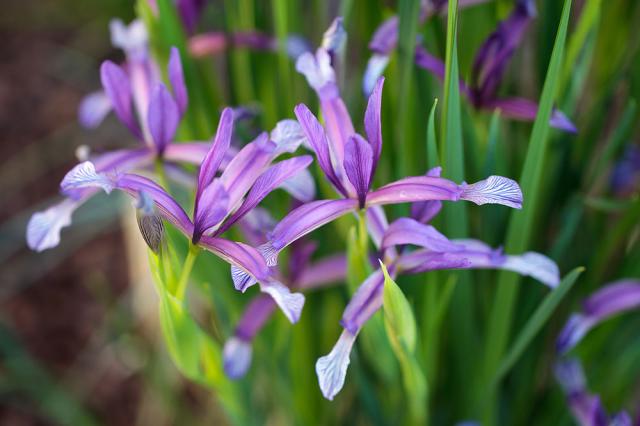
Iris speculatrix Hance is from southeast China and has short evergreen leaves and lavender flowers. Height range: 20-30 cm. Photo by John Lonsdale.
Iris spuria L. has a vast range from Sweden to north Africa and east to Iran. Here is one of its garden hybrids, blooming on June 3, 2008 in the zone 7 Maryland garden of Jim McKenney. It took three years for this plant to bloom from a freshly dug division. Height range: 2-5 ft.

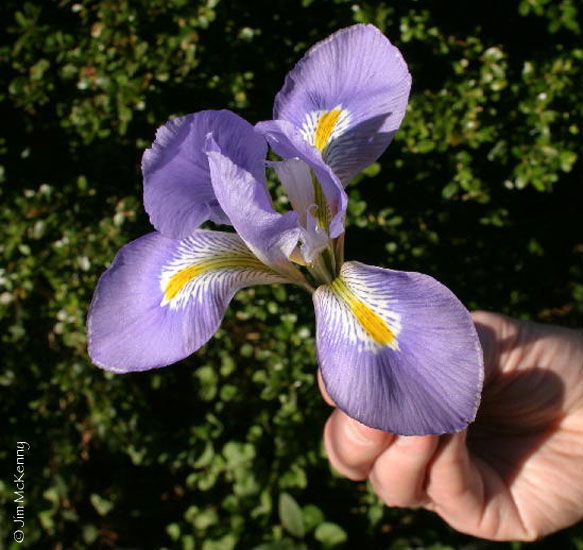
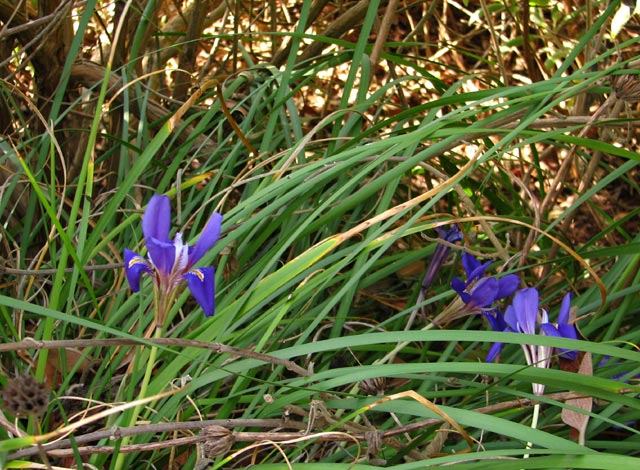
Iris unguicularis Poir. is a species from the Mediterranean region with pale to rich lavender fragrant flowers known by a common name of winter blooming iris. It is a late autumn and winter flowering species with flowers blooming low to the ground and sometimes hidden by the leaves. This species is best grown unmulched with little to no summer water. Cutting the leaves back in late summer to early fall allows the beautiful flowers to be more visible. New leaves appear in September and October, and this is the best time to divide this species. Height range: 30-60 cm. The first photo below by Bob Rutemoeller shows one that is a darker color than the cultivar grown by Rob Hamilton (see below). The second photo from Mary Sue Ittner shows a number flowering the same day and the leaves that have been cut back. The third photo shows a a freshly picked flower which was blooming on November 24, 2006 in the zone 7, Montgomery County, Maryland garden of Jim McKenney. This image gives a good sense of the size of the flower of this species. Photos 4-6 were taken by Nhu Nguyen at the UC Botanical Garden showing original stock collected in Greece of this species.
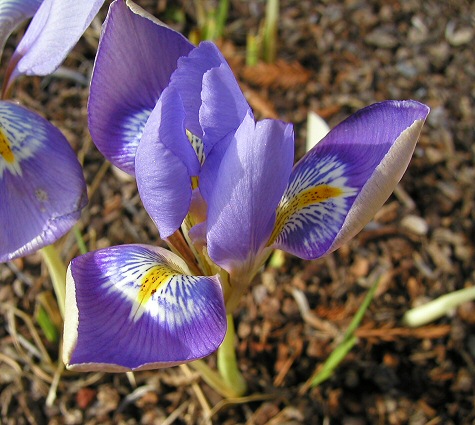


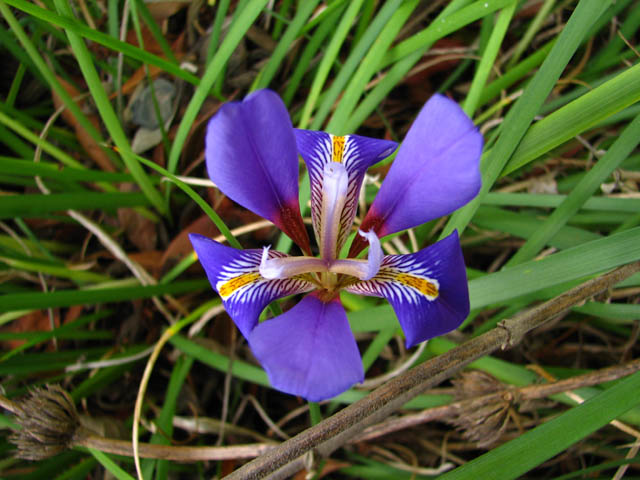
Iris unguicularis 'Mary Barnard' is a dark flowered selection collected in the Algerian scrub in 1937. It is a very popular garden plant. Photos from Mary Sue Ittner.

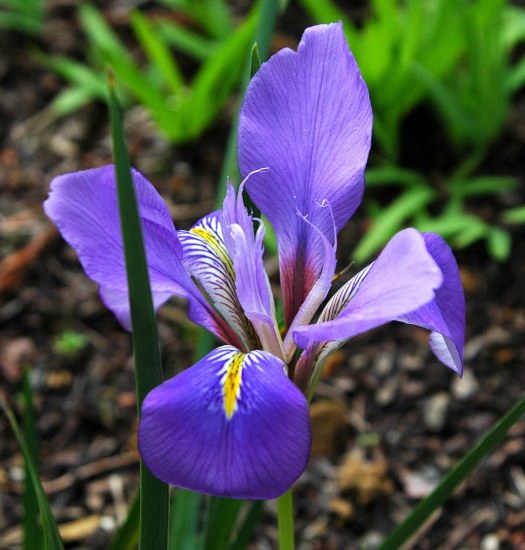
Iris unguicularis 'Starkers Pink' grown and photographed by Rob Hamilton.
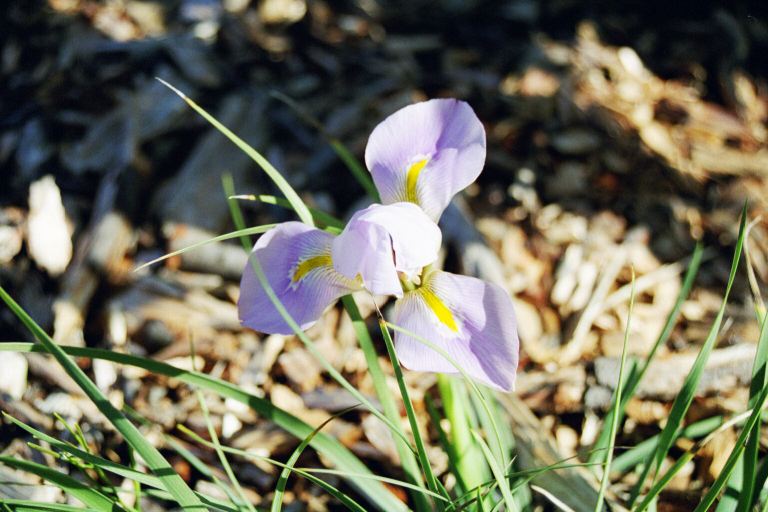
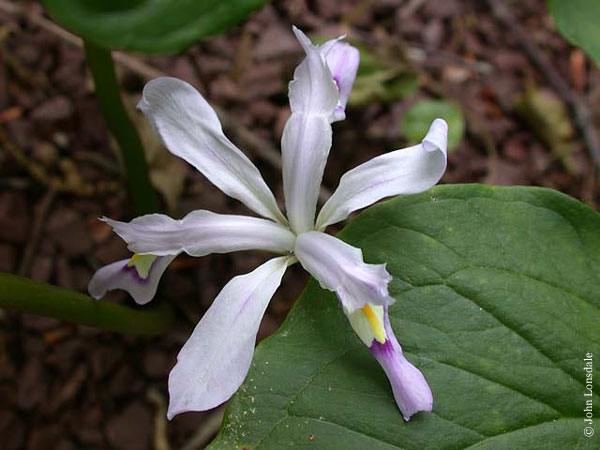
Iris verna L. is from the southeastern United States. It flowers is early to mid spring and has lilac blue flowers with an orange median stripe on the falls. Height range: 10-15 cm. Photos by John Lonsdale.
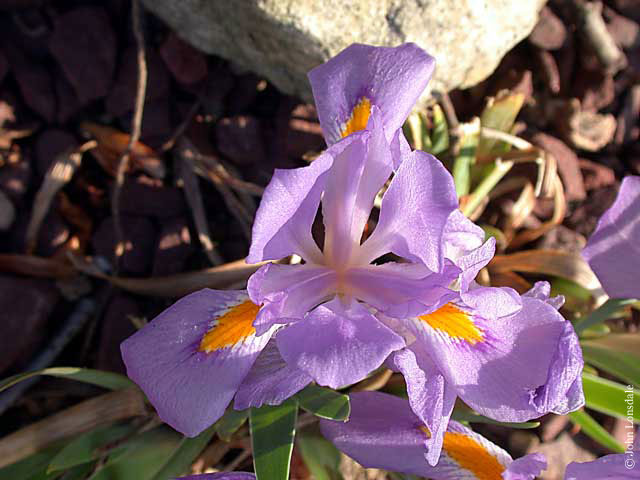
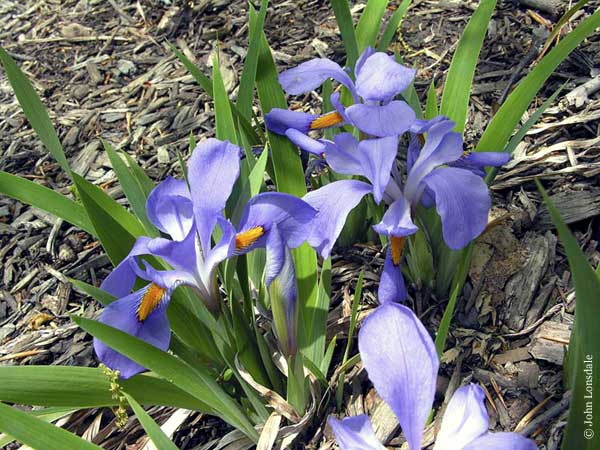
Iris virginica L. known as the Eastern or Southern Blue Flag is native to the southeastern coast of the United States. It flowers late spring. And has blue, violet, lilac, lavender or occasionally pinkish-lavender or white flowers. Height range: 60-90 cm.
Iris virginica var. shrevei growing in the Lady Bird Johnson Wildflower Center. Native to Texas as well as the Mississippi Valley to Canada. Photo taken April 2004 by Lee Poulsen.
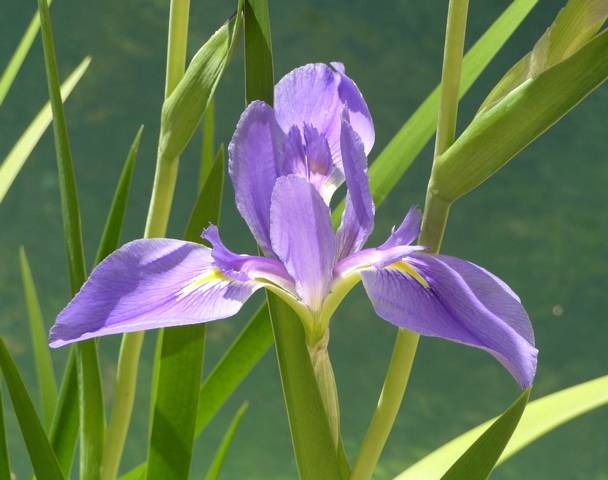
'Contraband Girl' is a vigorous, tall selection of I. virginica with blue flowers. This name is controversial since it appears to have been registered for two different plants - see the PBS list discussion starting here. Photo taken April 2007 buy Jay Yourch.
Iris Index - Beardless iris a-k - Beardless iris l-r - Beardless iris s-z - Crested Irises - Garden Bearded Irises - Juno iris a-i - Juno iris j-r - Juno iris s-z - Aril Irises - Miscellaneous Irises - Pacific Coast Irises - Reticulata Irises - Spanish Irises - Belamcanda - Hermodactylus - Pardanthopsis