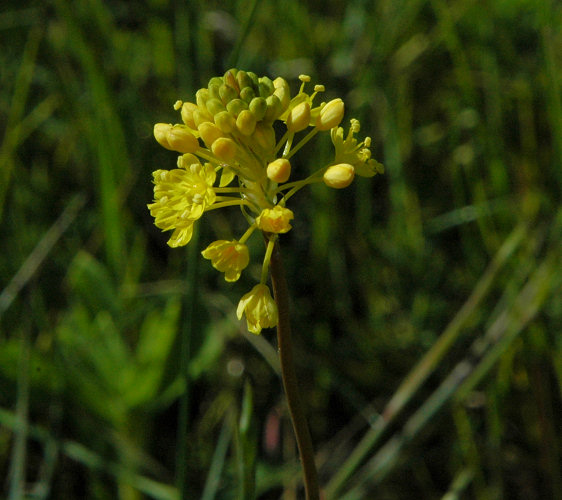
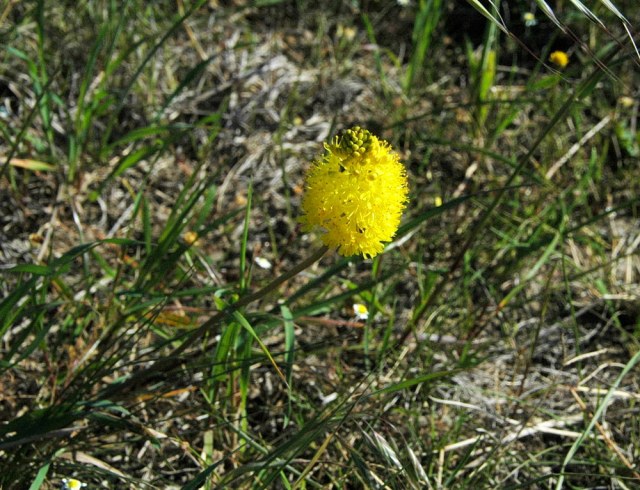
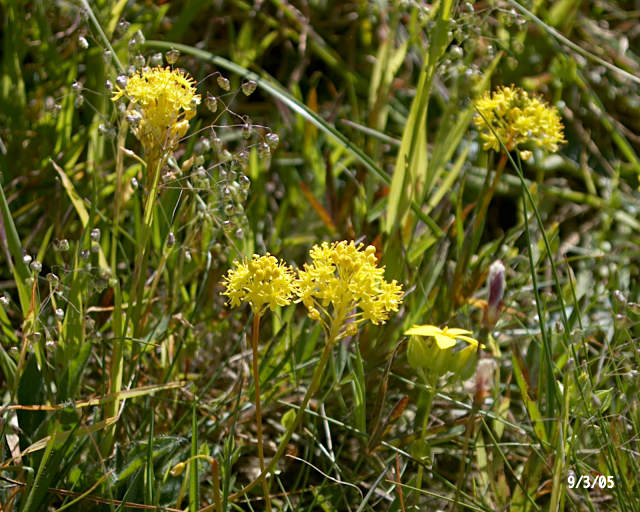
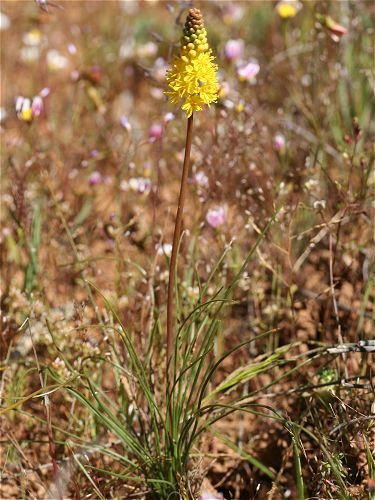
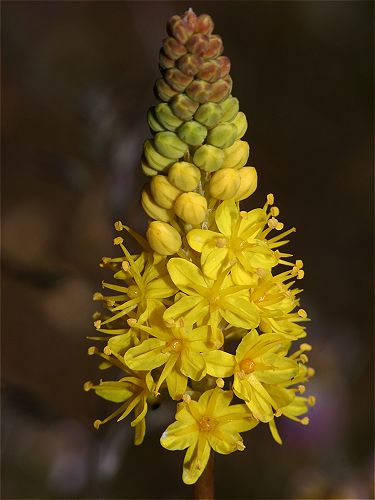
Bulbinella is a genus from the southern hemisphere in the Asphodelaceae family. This genus, which is closely related to Bulbine, has rhizomes. Most of the species are found in South Africa, but there are species from New Zealand as well. There are twenty three species. Fourteen species are native to the Cape Floral Province. Seeds have a short viability from 6 months to a year. Fresh seeds can germinate quite prolifically. Seeds of winter growing species should be sown in the fall.
Bulbinella barkerae P.L.Perry grows in shale flats in renosterveld from the Bot River to Riversdale (winter rainfall South Africa). Growing to 60 cm, it has white flowers with a musky odor in a narrow cylindrical raceme and flowers September-October. Photos taken in Napier in the Overberg by Cameron McMaster.
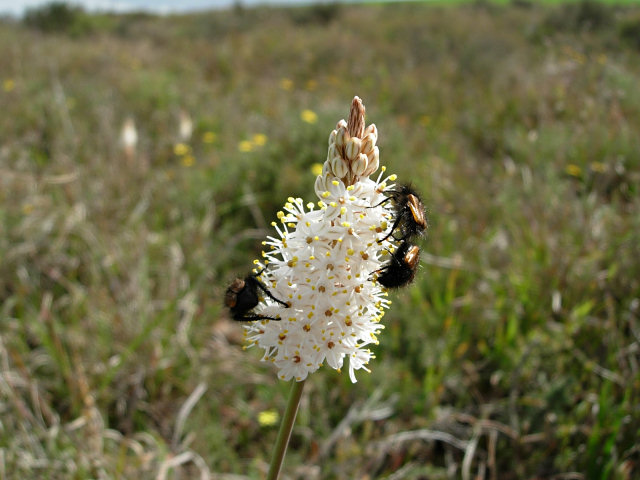
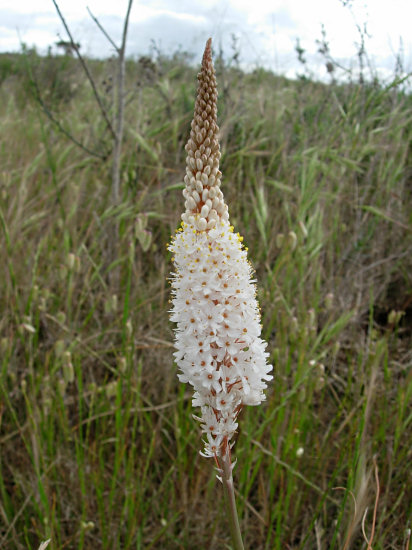
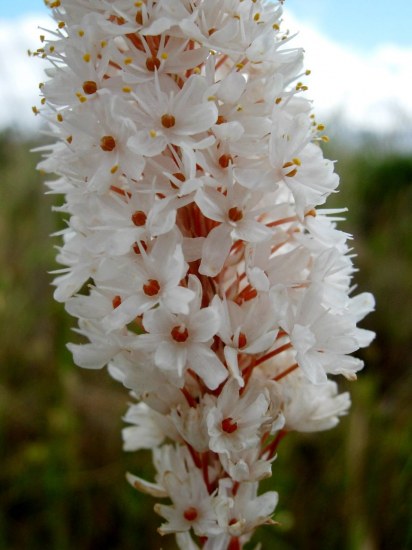
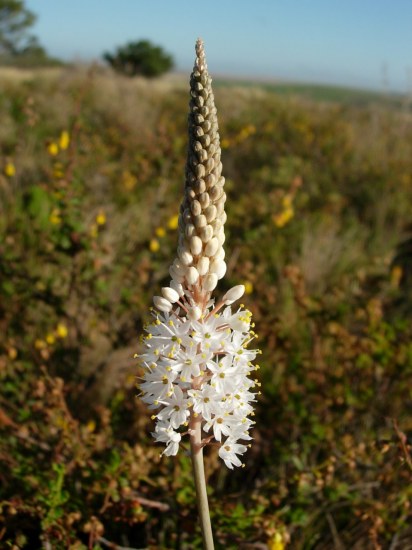
Bulbinella cauda-felis (L.f.) T.Durand & Schinz is widespread in the winter rainfall area of South Africa, growing on sandstone, granite, or clay. It flowers from August to December in the wild. White flowers with pink buds grow in a conical raceme. The 5 to 11 erect leaves are linear; plants grow to 80 cm high. The first two pictures were taken near Middelpos in the Roggeveld September 2006. The next two were taken near the Biedouw Valley in September 2006 where they were growing with the yellow form of Cyanella alba. Photos from Bob Rutemoeller and Mary Sue Ittner.
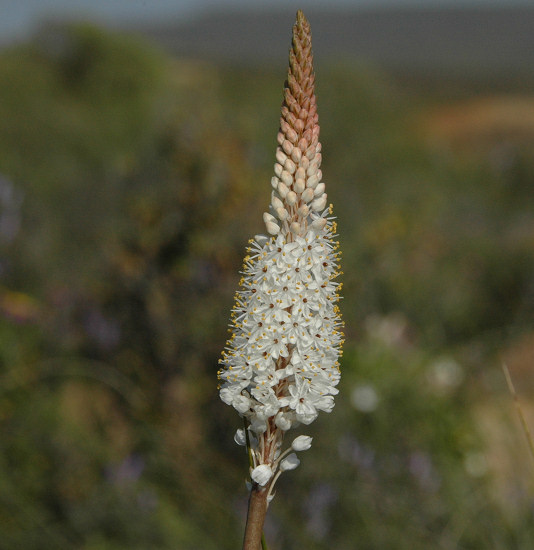
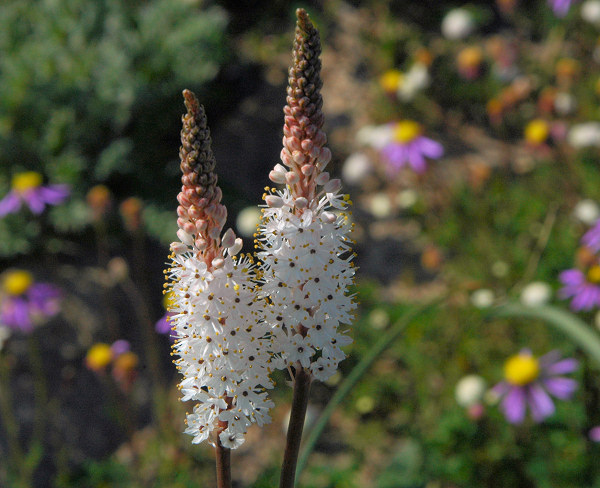


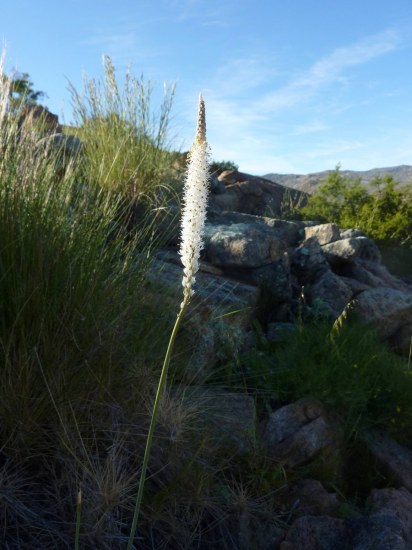
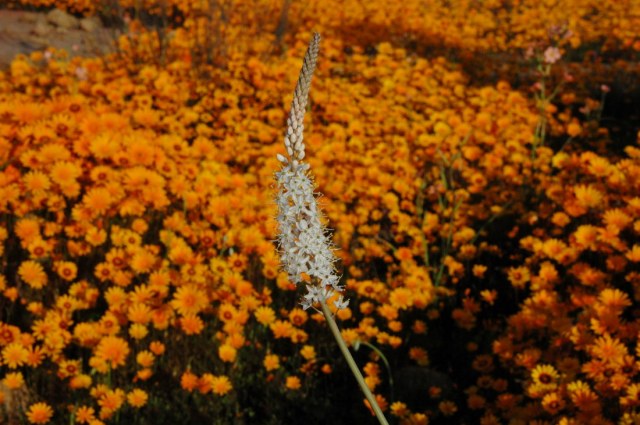
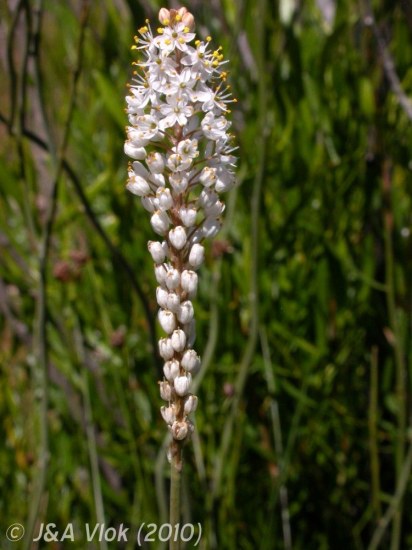
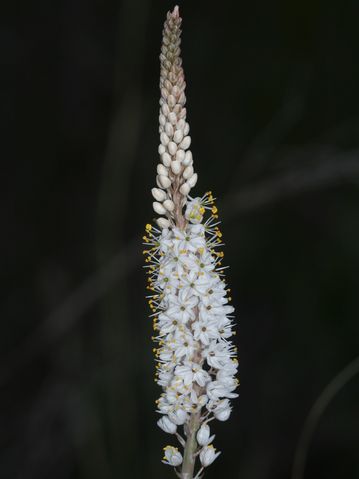
The first photo was taken in the Komsberg and the second near Kamieskroon in Namaqualand by Cameron McMaster. Photos three and four were taken in Namaqualand by Mary Sue Ittner. The last photo from the book Plants of the Klein Karoo courtesy of Jan and Anne Lise Schutte-Vlok.
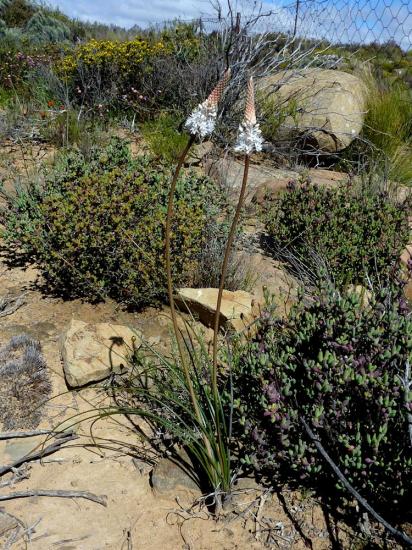

Bulbinella ciliolata Kunth is a white flowered (pink in bud) species that is very similar to Bulbinella cauda-felis and in flower it may be confused with the narrow leaf forms of that species, although the fruit and seeds are different. This species appears to be restricted to northern Namaqualand, South Africa, in the vicinity of Springbok and Kamieskroon where it occurs in broken veld on sandy loams of the granite hills, especially in damper depressions or by streamlets. It is never common. Height range: 60-90 cm. Photo taken by Andrew Harvie in the Kamiesberg of what he believes to be this species, mostly identified by location. It flowers in the wild from July to September.
Bulbinella divaginata P.L.Perry is found mostly growing in clay soils in renosterveld in Namaqualand and the western Cape of South Africa and flowers March to June. It grows to 45 cm high and has filiform leaves, few at flowering and yellow flowers in a narrow cylindrical raceme. The photo was taken by Alan Horstmann.
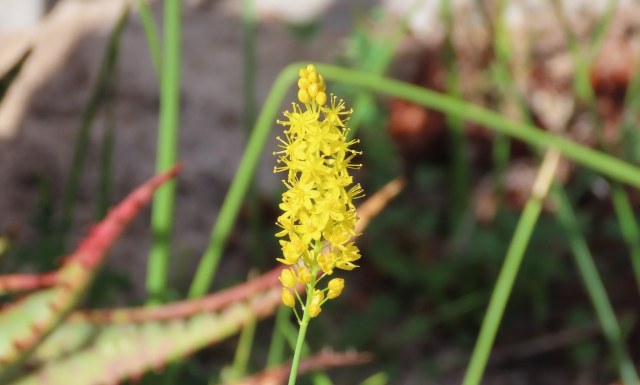
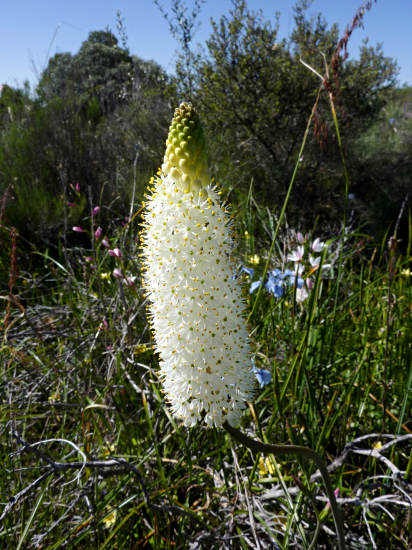
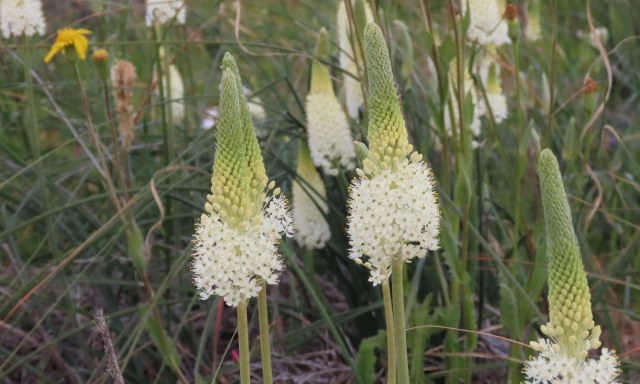
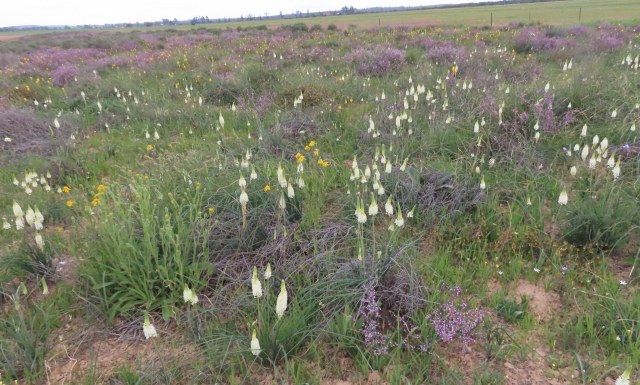
Bulbinella eburniflora P.L.Perry grows on clay and sand on the Bokkeveld Plateau, South Africa. Growing to 75 cm high with 3 to 7 linear channeled leaves with finely toothed margins, it flowers in early spring (August-September). Flowers are in a cylindrical raceme, ivory to pale straw with a musty odor. The first four photos were taken by Cameron McMaster September 2011 near Nieuwoudtville. The last two were taken by Alan Horstmann.


Bulbinella elata P.L.Perry is found on clay and granite soils in the Western Cape. Growing to 1 m high, it has six to eight bright green leaves with smooth margins and cream faintly scented flowers in a slender raceme. It flowers July-August. Photo from Rod Saunders.
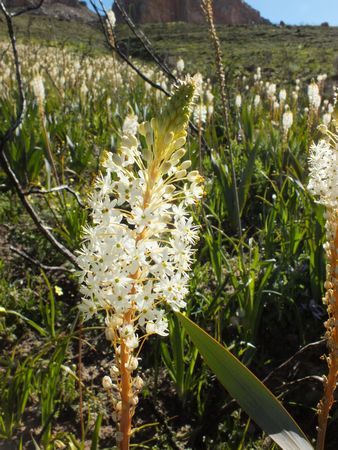
Bulbinella elegans Schltr. ex P.L.Perry has yellow to white small flowers in conical racemes and narrow and channeled leaves. It grows in clay soils in karroid scrub or Renosterveld in dry areas of the South African Cape Floral province. It flowers August to September. Height: to 60 cm tall. The first photo was taken by Mary Sue Ittner August 2001 near Nieuwoudtville. Photos 2-5 were taken near Middelpos in the Roggeveld September 2006 by Bob Rutemoeller and Mary Sue Ittner. The last photo was also taken near Middelpos by Cameron McMaster.
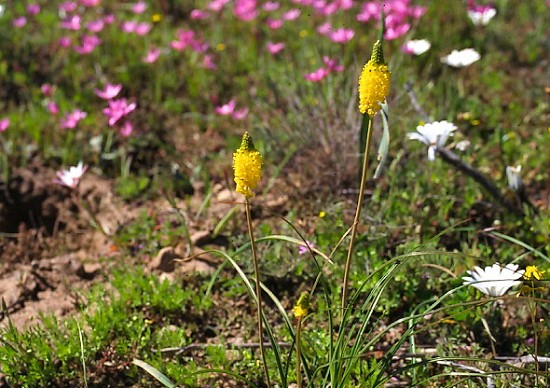
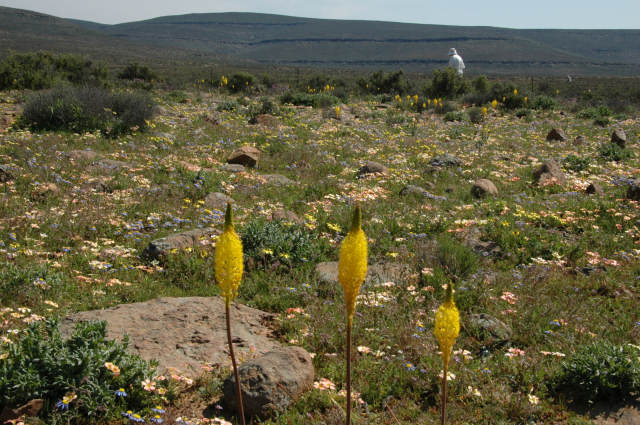
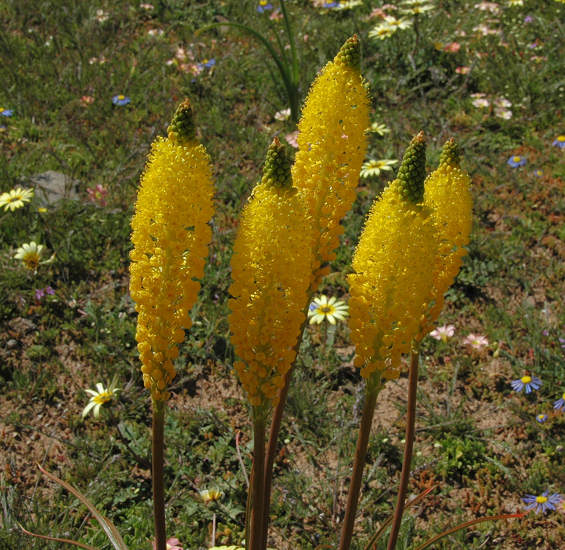
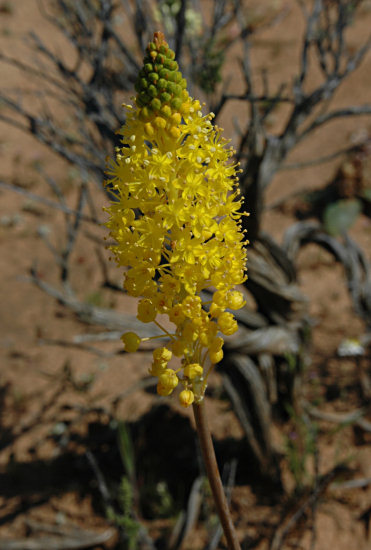
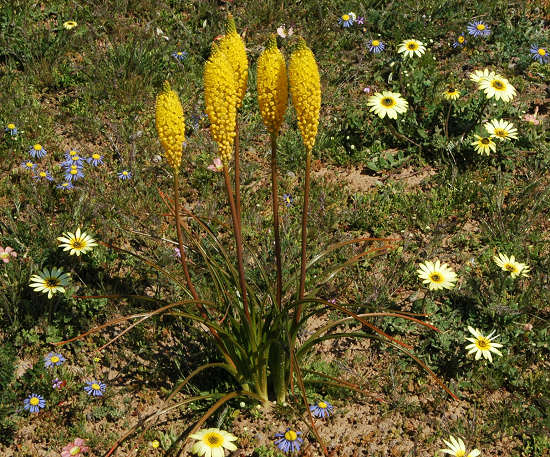
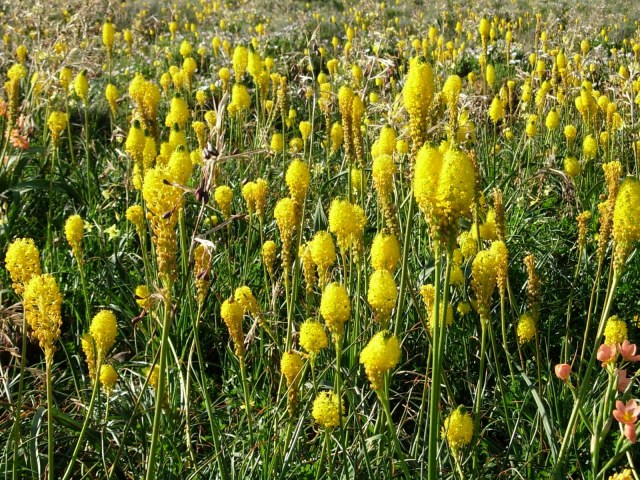
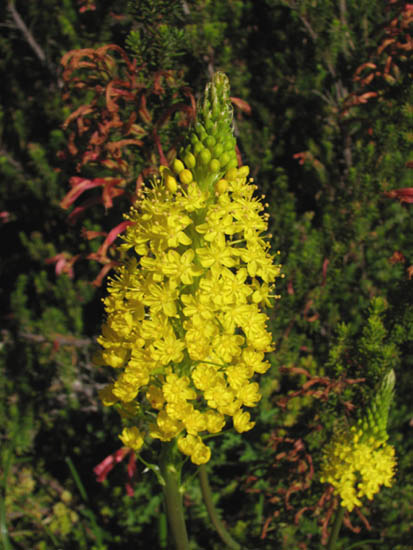
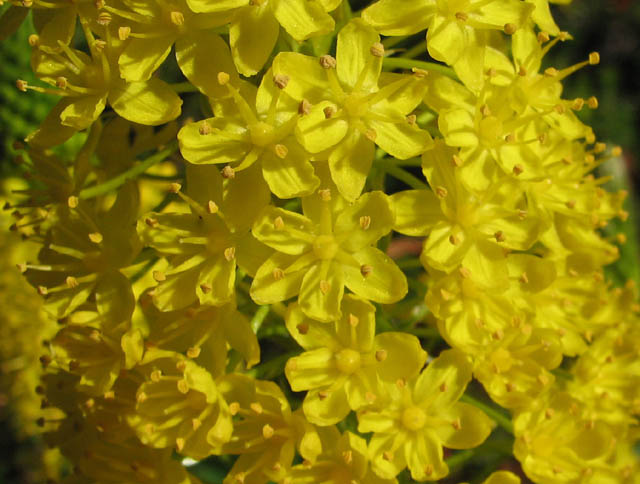
Bulbinella floribunda (Aiton) T.Durand & Schinz (syn. Bulbinella robusta) is native to South Africa. The Kew Monocot Checklist provisionally accepts the species as distinct so it is listed here as such. Plant height: up to 1 m. Photos taken by Nhu Nguyen from the UC Botanical Garden in February 2009. Photo #1 shows the plant nested within an Erica species, as it may occur in habitat. Photo #2 shows the whole inflorescence and photo #3 shows the flowers closeup.
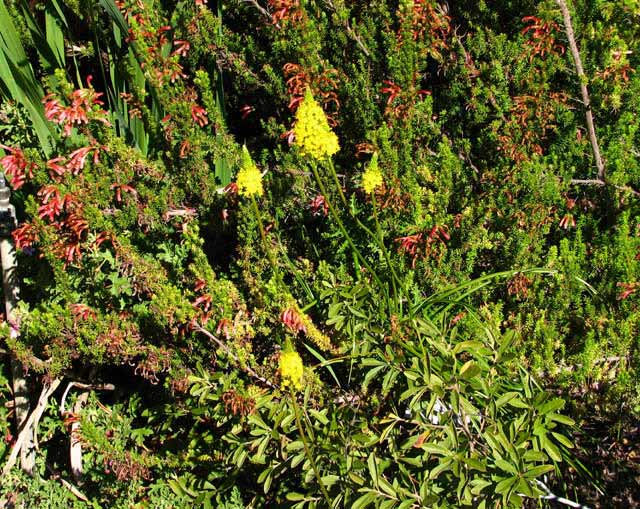
Bulbinella latifolia Kunth is found on seasonally damp sandstone or granite, rarely dolerite from Namaqualand to the western Karoo (winter rainfall areas of South Africa.) Plants grow to 1 m. There are four subspecies recognized. Photos taken below from Cameron McMaster near Nieuwoudtville are probably a combination of ssp. doleritica and ssp. latifolia.
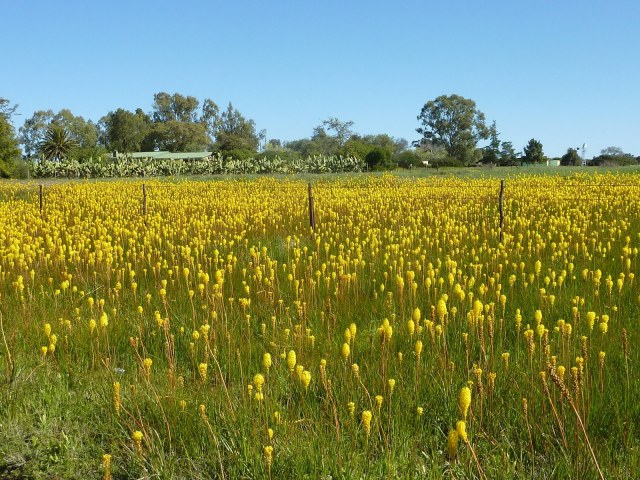
Bulbinella latifolia ssp. denticulata P.L.Perry grows on clay flats in mountain renosterveld or karroid scrub from the cold Bokkeveld to Hex River Pass and flowers September to October. It has lemon yellow flowers. The First two photos below from Bob Rutemoeller were taken in a burned area near the Hex River pass September 2003. It could be this species as it was growing and flowering in the right spot at the right time, but we didn't have with us enough information to figure it out. The last photo was taken by Rod Saunders.
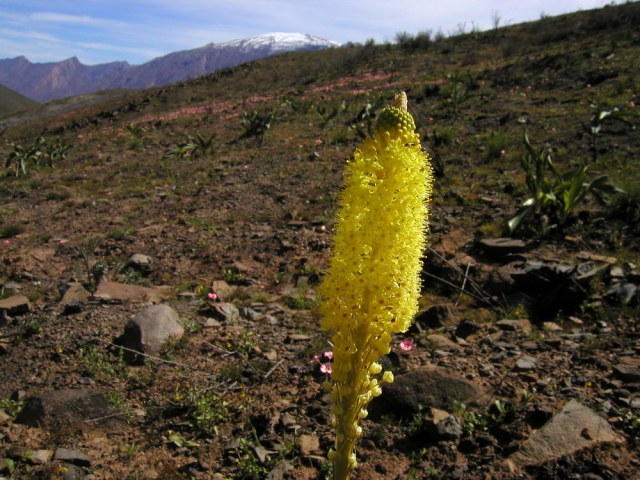


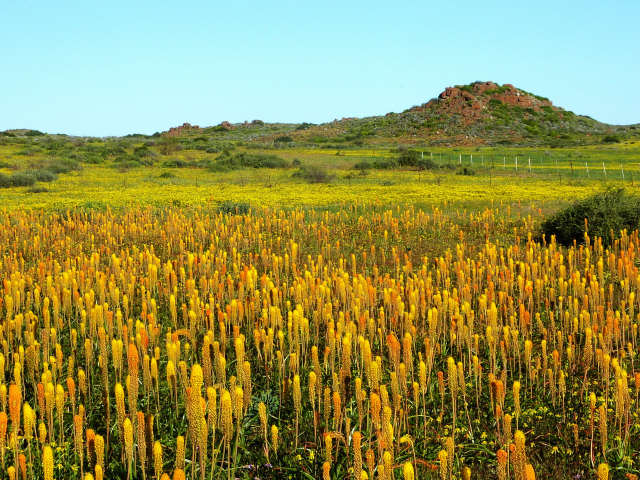
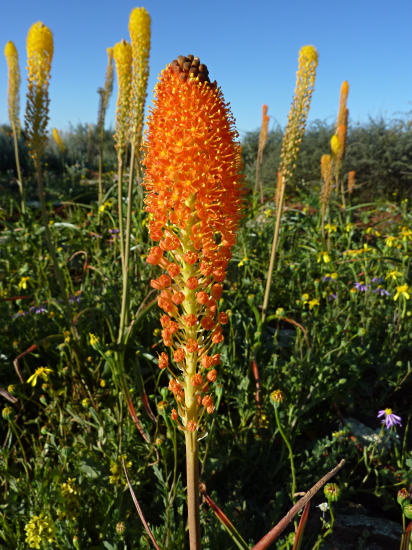
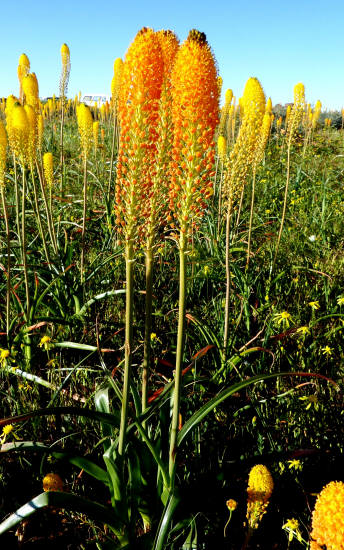
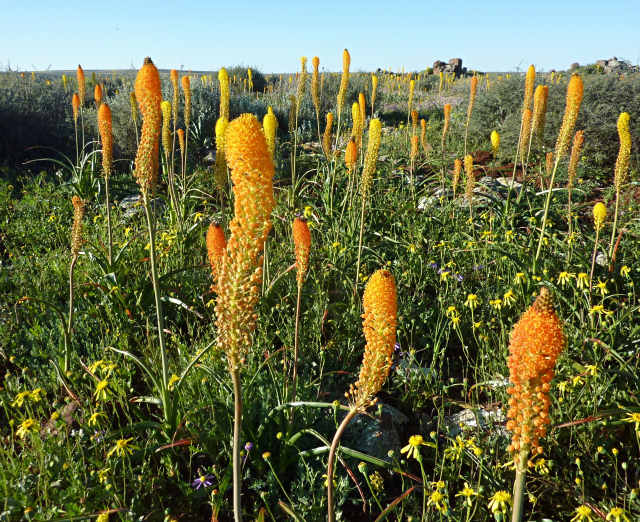
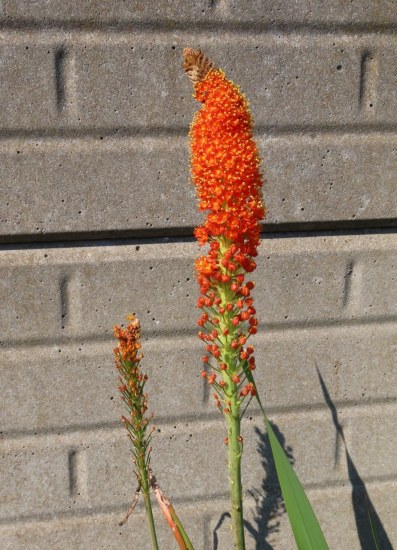
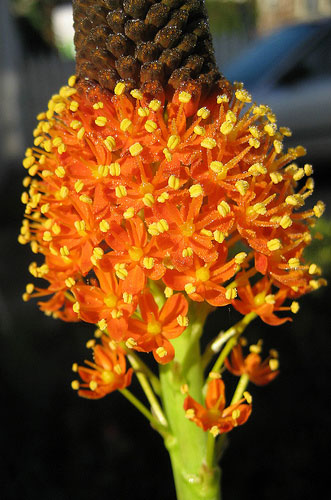
Bulbinella latifolia ssp. doleritica (P.L.Perry) P.L.Perry grows in doleritic clay on the Bokkeveld Plateau and has striking orange flowers. It blooms August-September. This one is reported to be a little difficult to flower in cultivation but deep pots placed in saucers of water may help. The first picture was taken in the Nieuwoudtville Reserve in August 2001 in a very wet year by Mary Sue Ittner. The next three photos were taken by Cameron McMaster near Nieuwoudtville September 2011. The fifth photo from Alan Horstmann shows a first flowering after ten years. The closeup in the final photo taken by Max Withers shows the intense orange of the petals (softened almost to apricot, from a distance, by combination with the prominent yellow pollen).
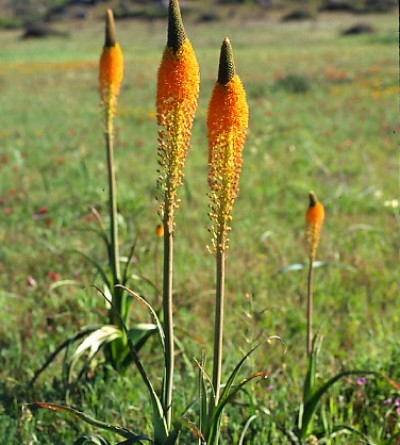
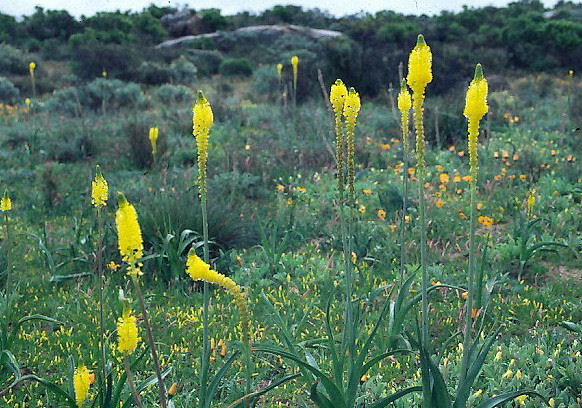
Bulbinella latifolia ssp. latifolia has bright yellow flowers in cylindrical racemes and blooms August to October. It grows in seeps on granite or sandstone soils in the northwest Cape from Namaqualand to Cederberg. The first picture was taken by Mary Sue Ittner on a rainy day in a wet year (August 2001) in Namaqua National Park where it was growing in a very wet place. Other flowers were closed because of the weather, so it really stood out. The next four photos were taken in the Kamiesberg, Namaqualand in 2006 by Bob Rutemoeller and Mary Sue Ittner.
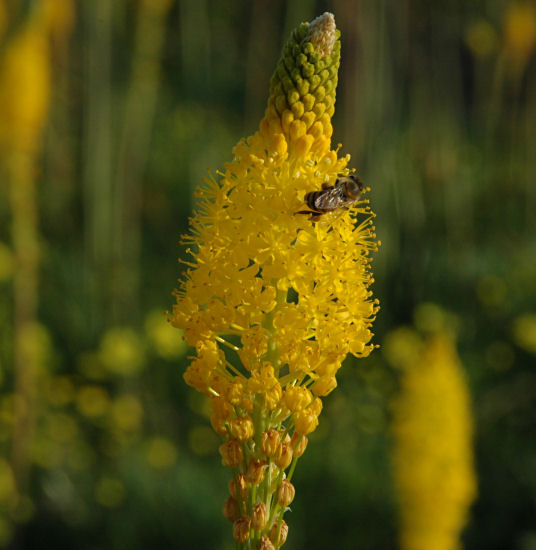
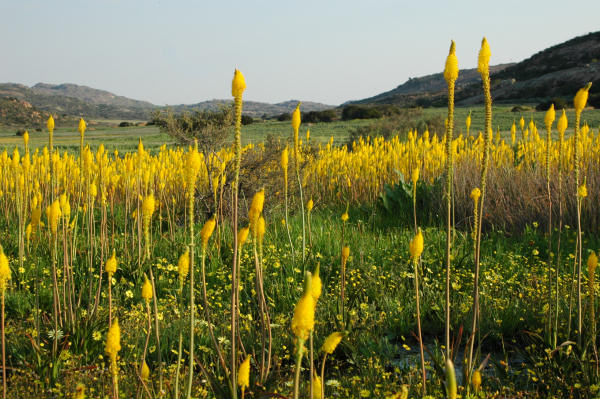
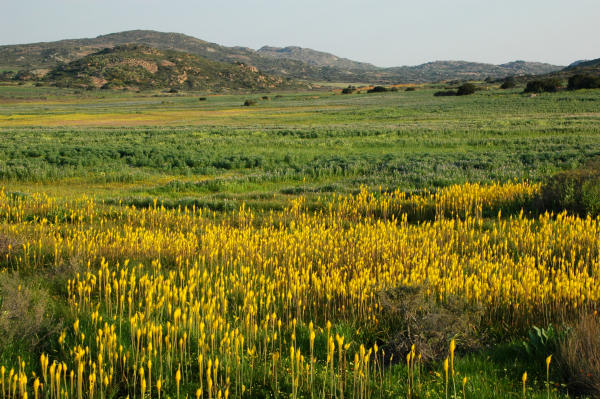
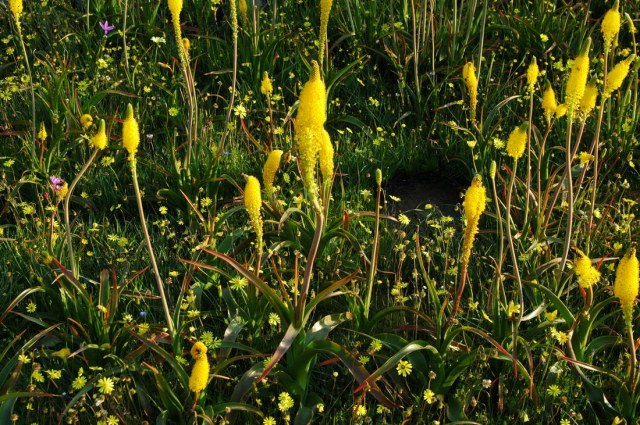
Bulbinella latifolia ssp. toximontana P.L.Perry has smooth leaf margins and creamy flowers and grows on peaty seeps on sandstone in the Gifberg. It flowers July to August.
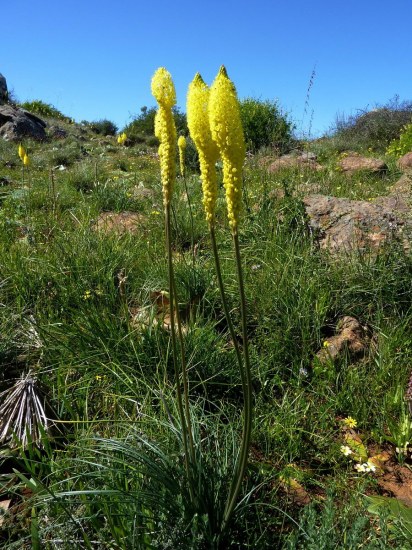
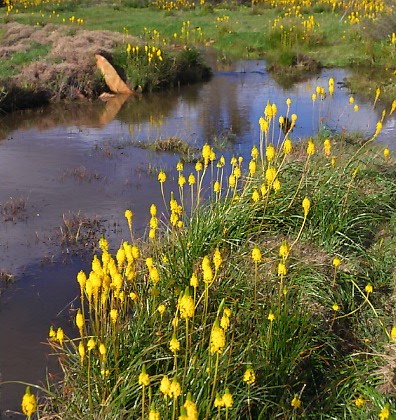
Bulbinella nutans (Thunb.) T.Durand & Schinz is a winter rainfall South African species that grows in damp peaty soils and flowers July-October. Plants are up to 1 meter tall with yellow or cream flowers in a conical raceme. The first four photos were all taken in the Roggeveld. The first two photos were taken by Bob Rutemoeller September 2006 in the Komsberg. The third photo was taken by Andrew Harvie in the Roggeveld Mountains. The fourth photo was taken by Cameron McMaster near Middlepos.
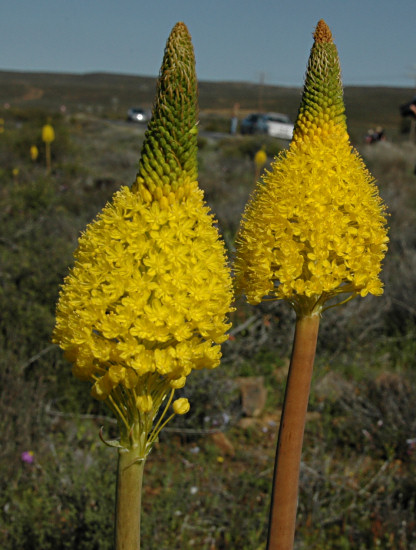
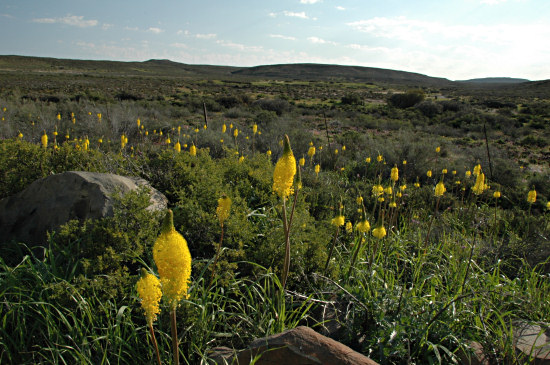
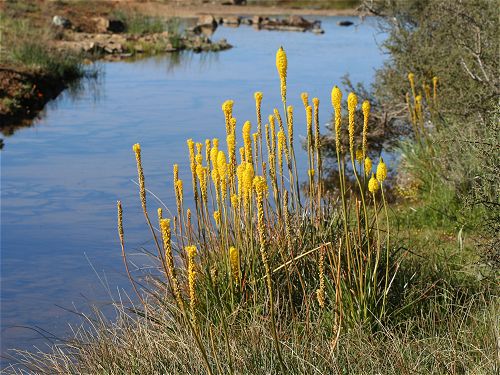

The first photo from Cameron McMaster was taken in Namaqualand. The last two photos from Cameron McMaster and Mary Sue Ittner were taken on the Bokkeveld Plateau.
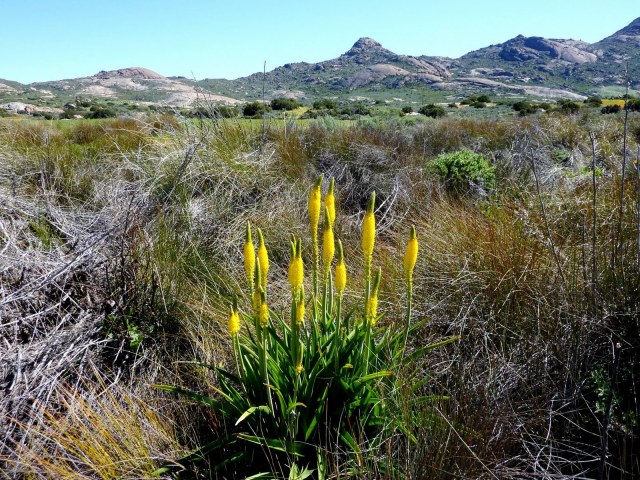
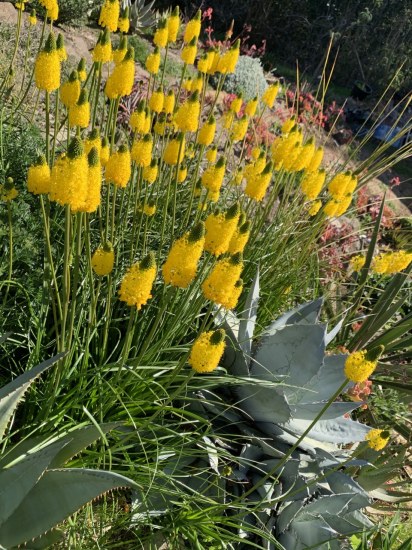
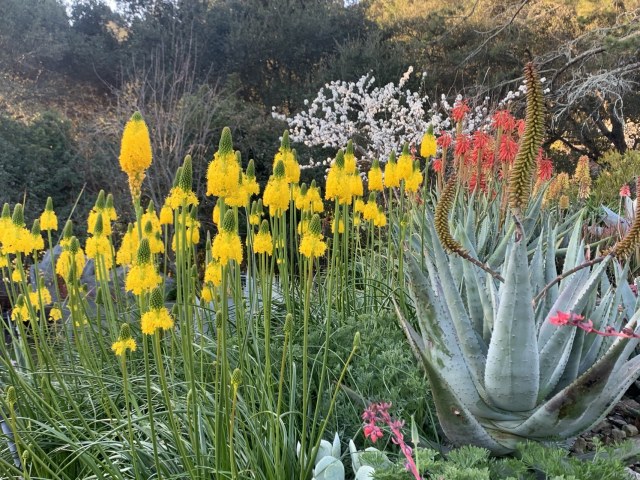
The following photos show plants flowering in March in cultivation in Northern California, by Richard Sullivan. This clump gets no water in summer and normal rainfall in winter. It has been undisturbed for 5-6 years with complete neglect. It spreads by underground rhizomes. It has never set seed.
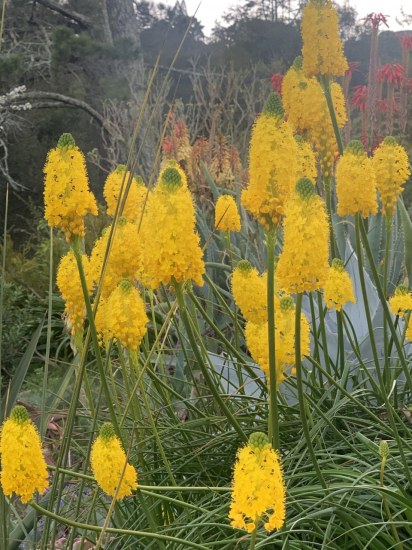
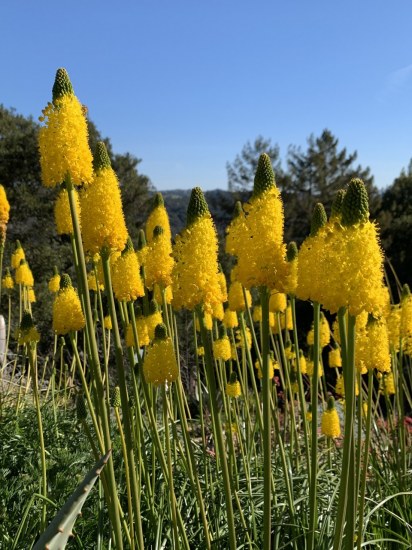
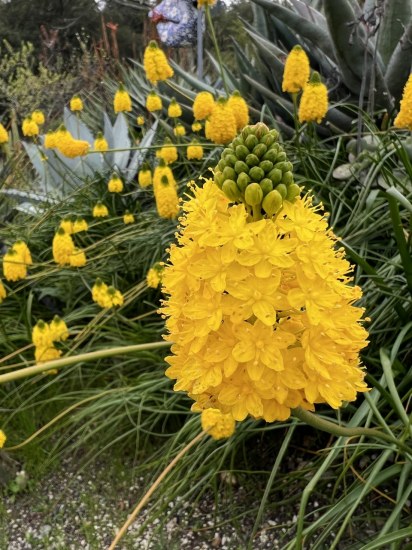
Bulbinella nutans ssp. nutans has small yellow or cream flowers in a conical raceme and long tapering channelled leaves. It flowers July to October and grows in damp clay or peaty soils. The widest leaves 8-16 mm wide and the seeds are gray. The first photo was taken near Kamieskroon in Namaqualand and the next three by Cameron McMaster near Napier in the Overberg. The last two pictures were taken August 2006 by Mary Sue Ittner and Bob Rutemoeller in Villiersdorp. We think the plants are probably this subspecies but appear to be pollinated with two different pollinators.
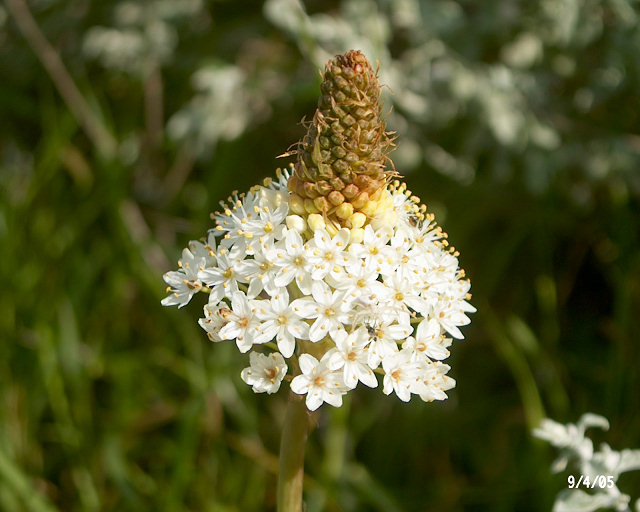
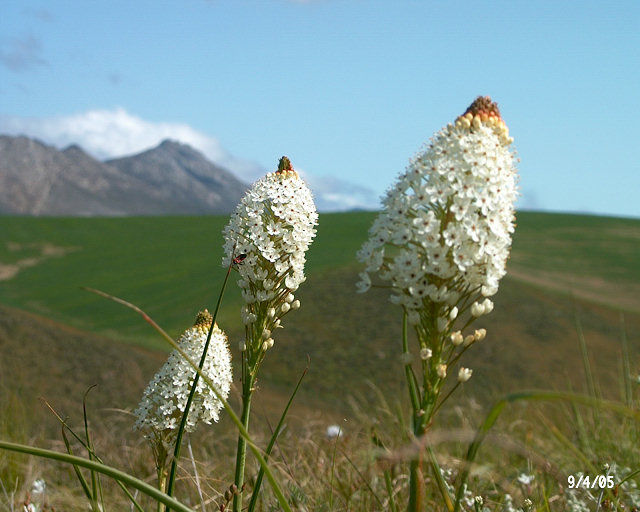
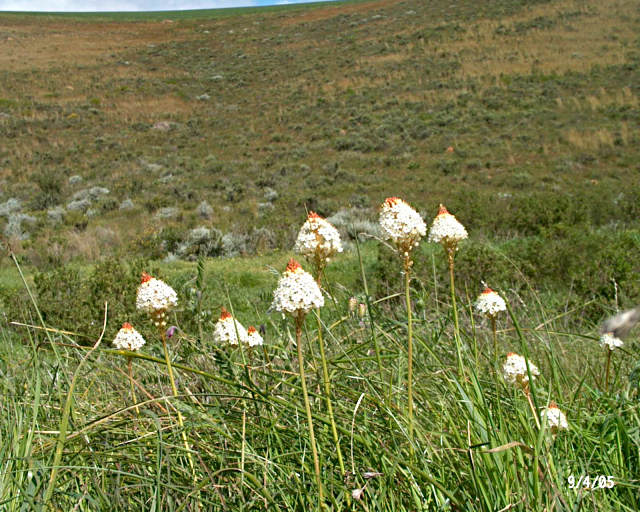
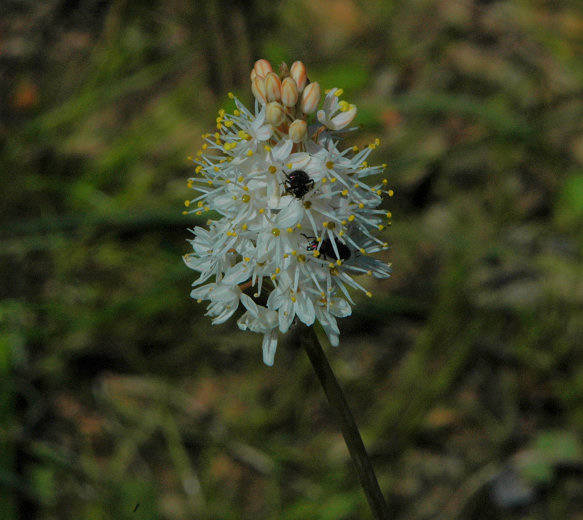
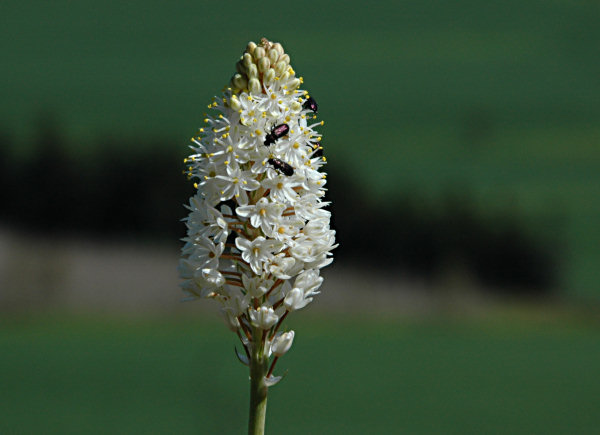
Bulbinella nutans ssp. turfosicola (P.L.Perry) P.L.Perry grows in peaty seepage areas on mountain plateaus from the Cederberg to Table Mountain at altitudes of 500 to 1,000 m. Leaves are 10-25 mm wide, flowers cream-colored, and seeds black. It flowers October to December and is distinguished by where it grows, time of flowering, wider leaves, and the color of the seeds. This subspecies has been difficult to cultivate.
Bulbinella spp. The first photo is of a plant flowering in the southwest Cape in September 2003 in an area that had previously been burned. We were uncertain which species it was. The next two photos are of plants flowering in the Little Karoo, September 2003. They are probably Bulbinella nutans. Photos by Bob Rutemoeller.

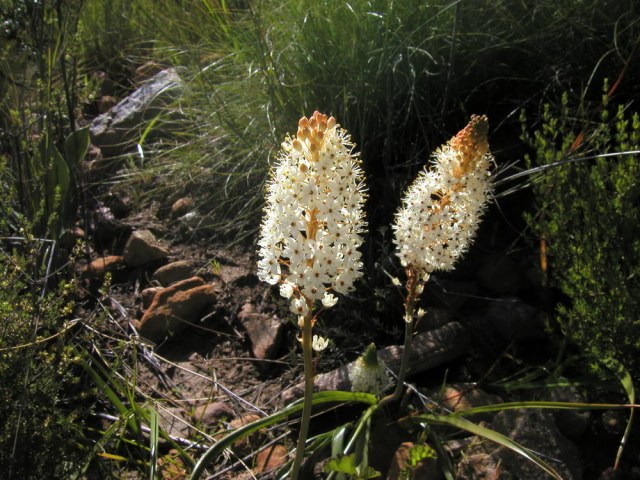
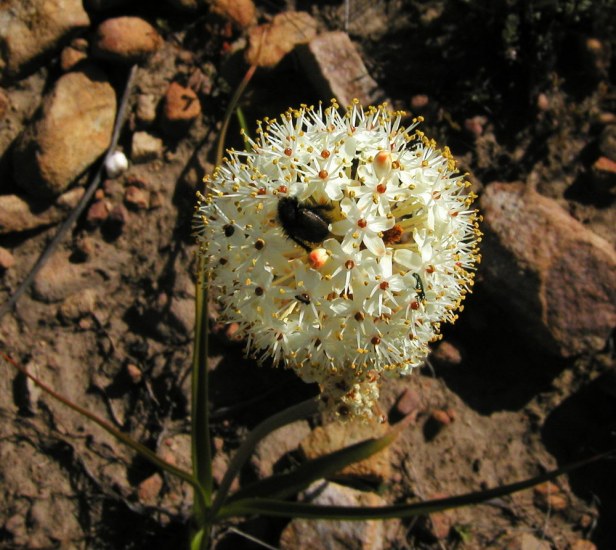
Bulbinella talbotii L.B.Moore is an endemic species of the South Island, New Zealand where it grows in montane boggy ground and pools of water within open shrubland, flowering December to January. It is a short plant with horizontally spreading leaves and deep yellow to sulphur yellow flowers. Height range: 10-40 cm tall. Photo taken in the Alpine Display House at Wisley Royal Horticultural Garden in the UK by Bob Rutemoeller.

Bulbinella trinervis P.L.Perry is a relatively small clump forming plant growing up to 40 cm tall with a few cylindrical leaves and white to pinkish unscented flowers, crowding at the top. It flowers from late summer to autumn, but mostly March to April. It grows in moist, loamy to sandy soils and rocky sandstone slopes from the southwest to the southeast Cape, South Africa and flowers best after a fire. The first three photographs were taken on a rocky outcrop in fynbos, near Stanford, by Christopher Whitehouse. The last photo from the book Plants of the Klein Karoo courtesy of Jan and Anne Lise Schutte-Vlok.
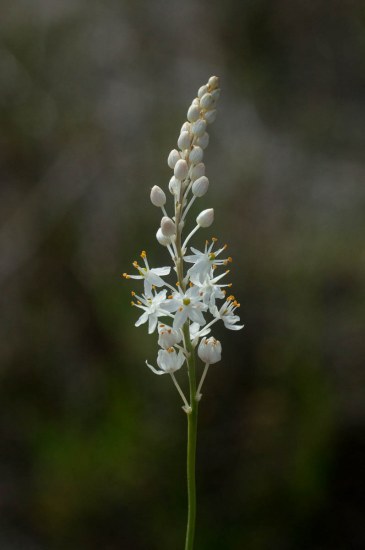
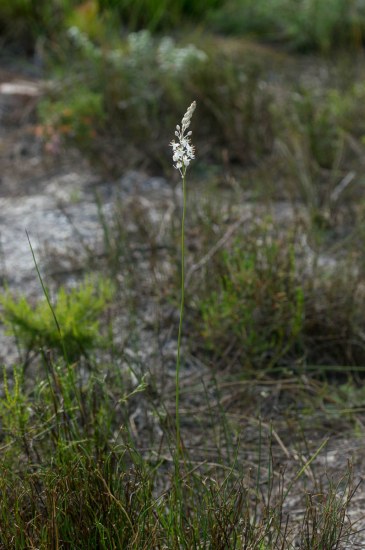
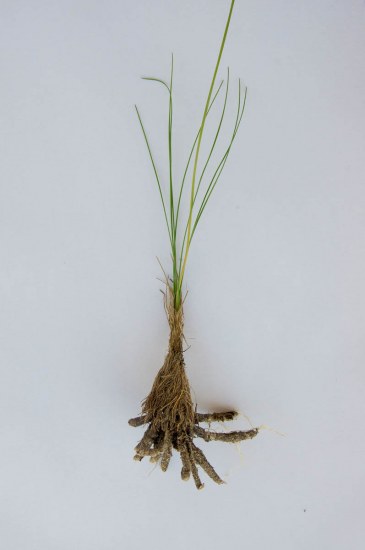
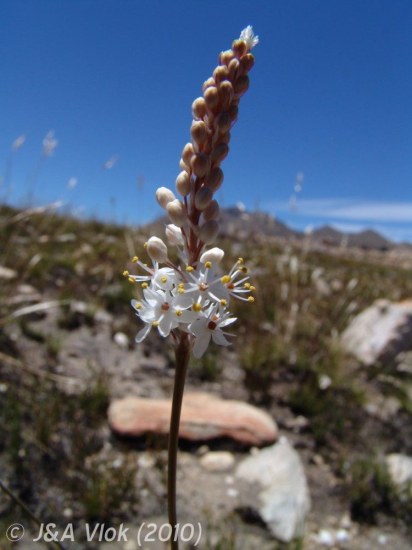
Bulbinella triquetra (L.f.) Kunth is a shorter South African species to 34 cm high with filiform leaves with finely toothed margins and unscented yellow flowers in a conical raceme. It grows on damp sand and granite and flowers in spring. The first photo by Mary Sue Ittner was taken in Villiersdorp in August 2006 and the second near Darling on the southwest coast. The next two pictures were taken by Cameron McMaster in the Overberg. Photos four and five were taken by Andrew Harvie on the Blinkberg Pass in the western Cape.