Crinum species l-n are found on this wiki page.
Crinum species a-b - Crinum species c-j - Crinum species o-z- Crinum species Index - Crinum hybrids Index
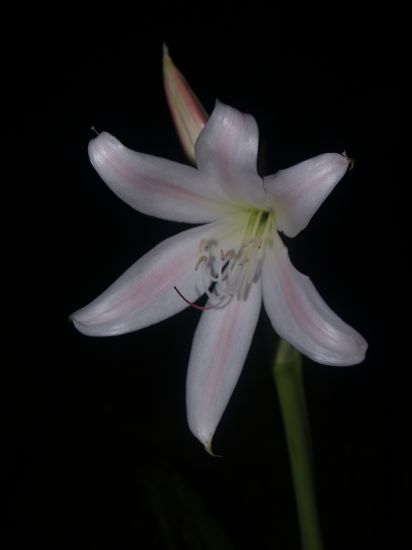
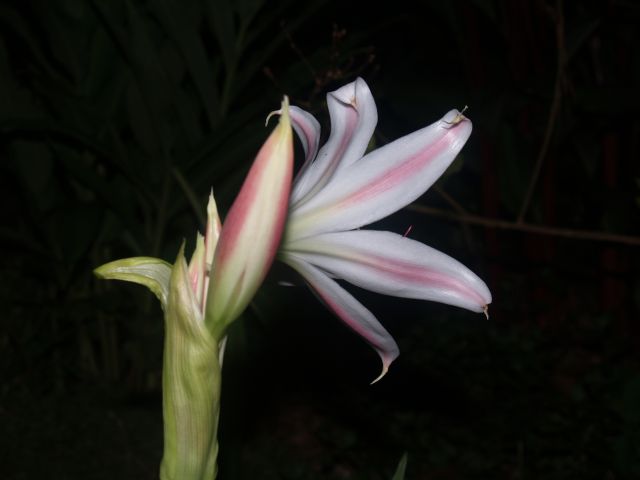
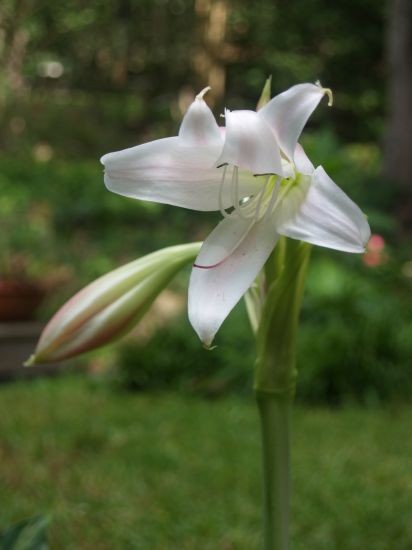
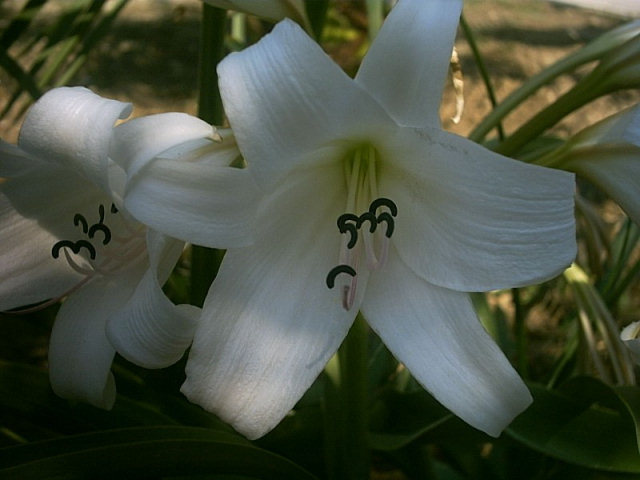
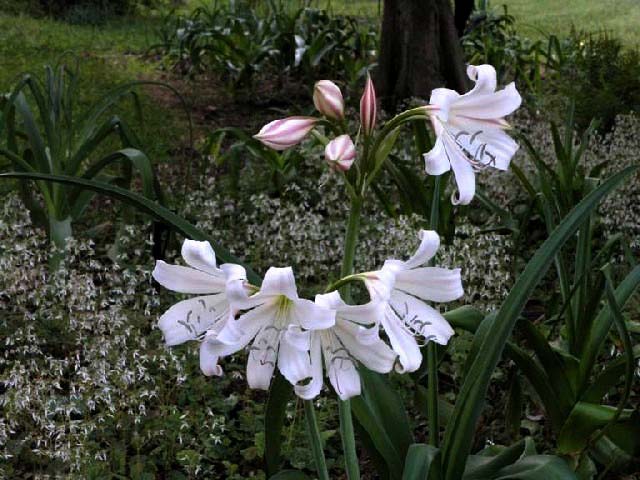
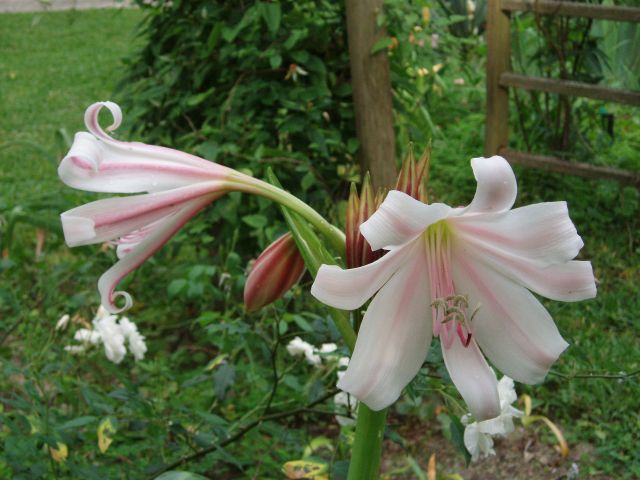
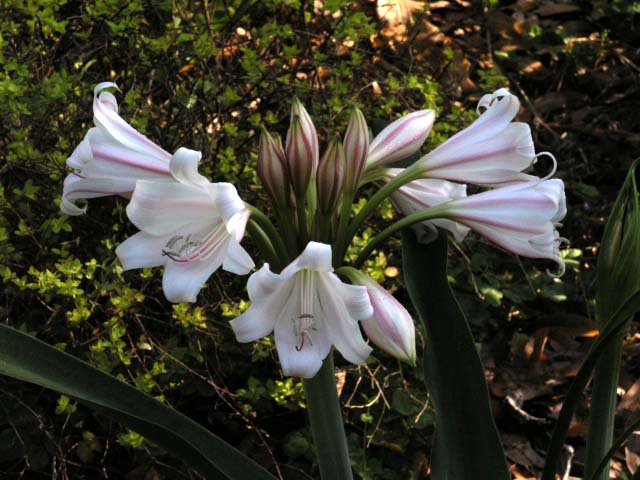
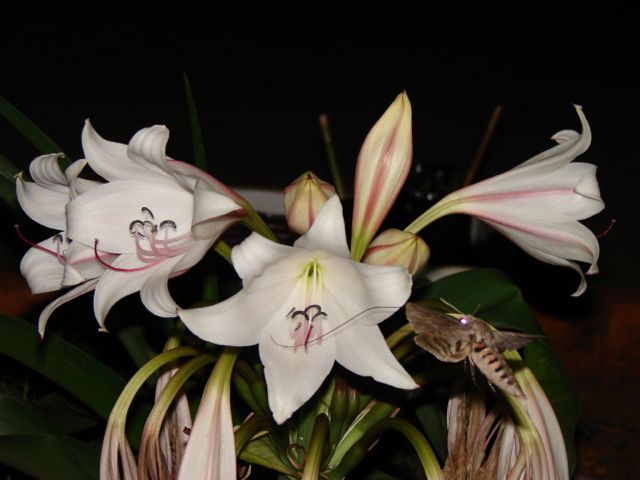
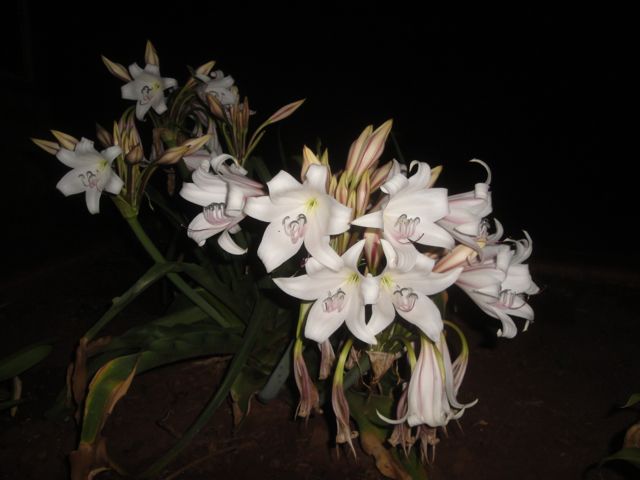
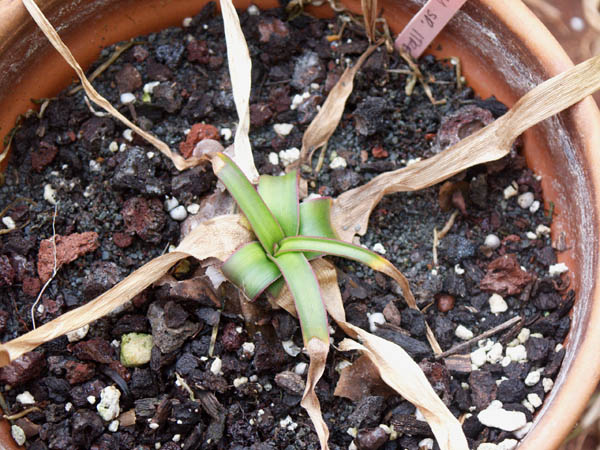
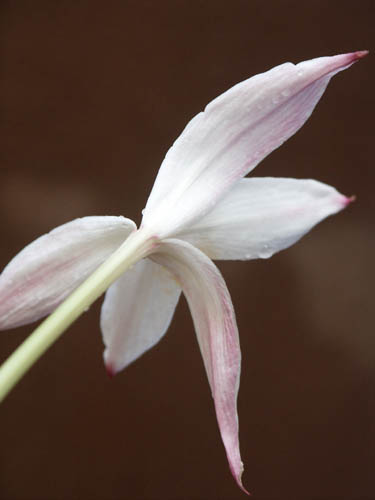
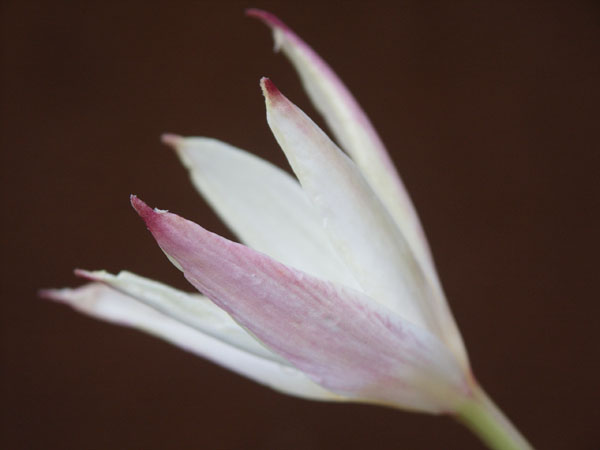
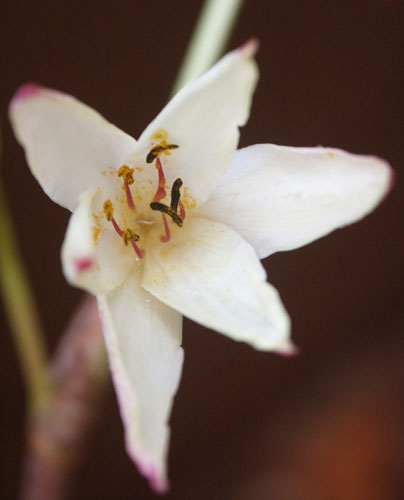
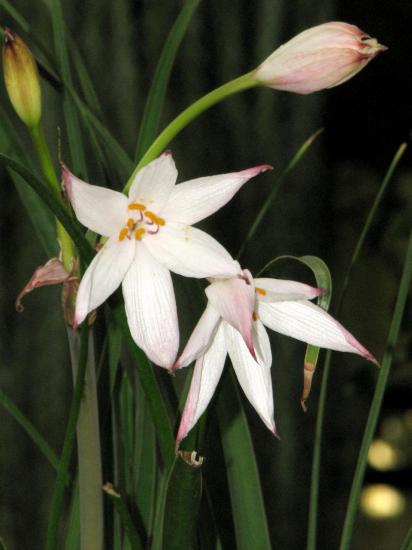
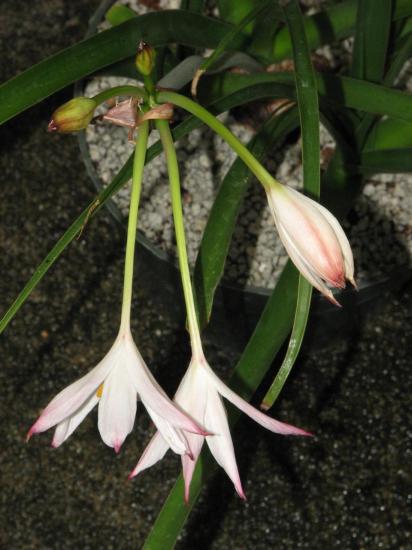
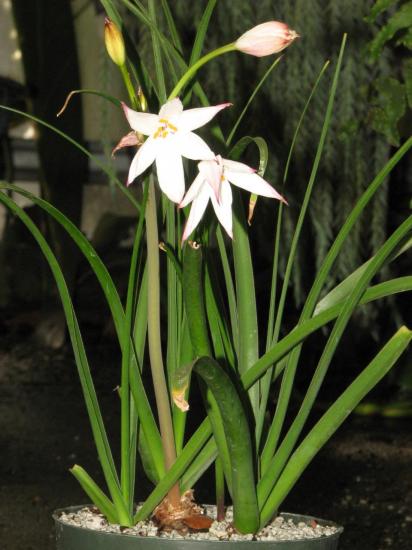
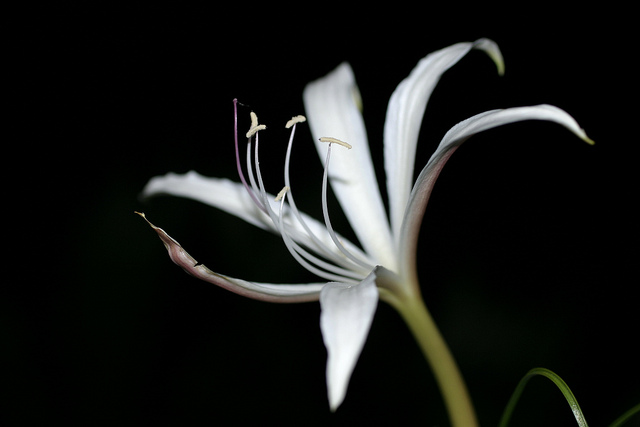
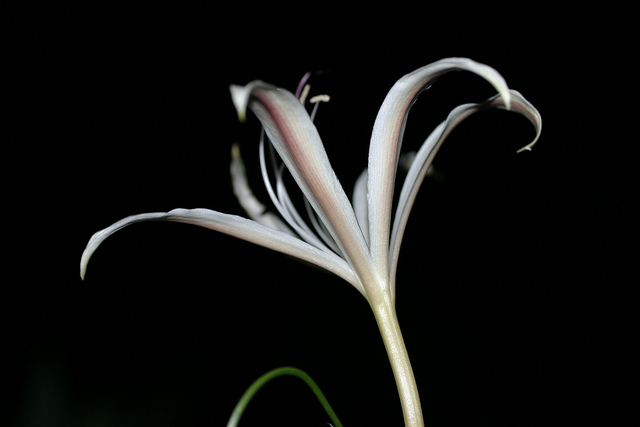
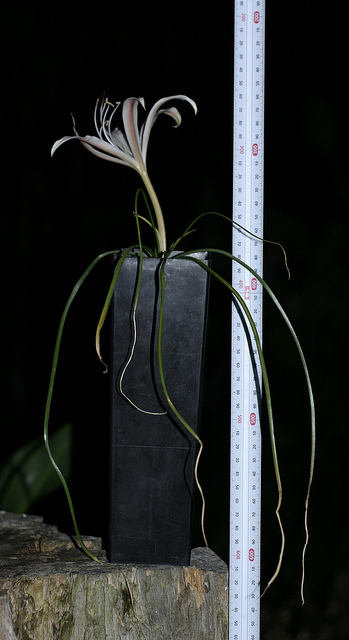
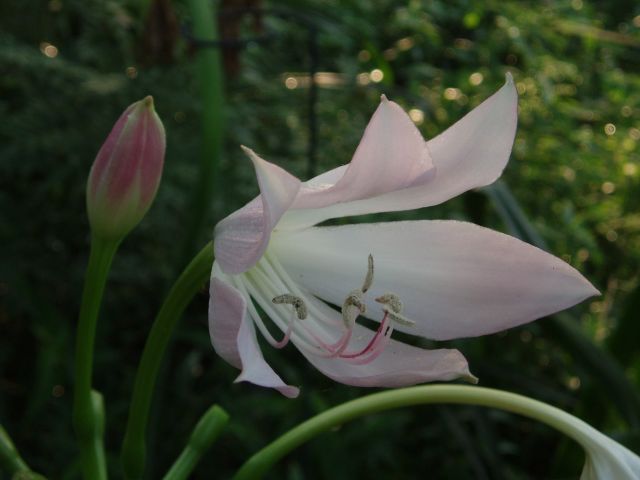
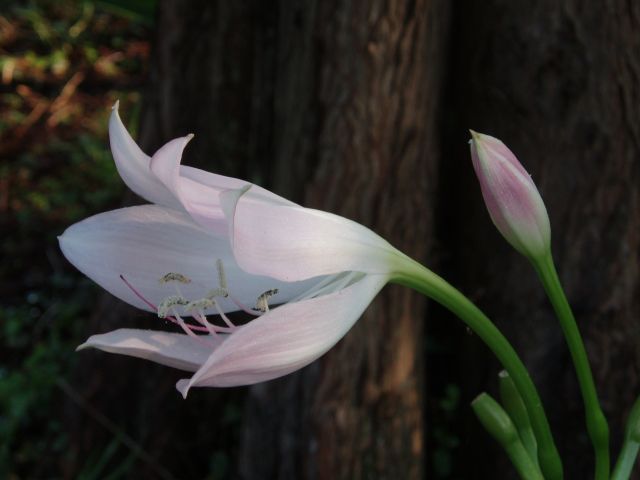
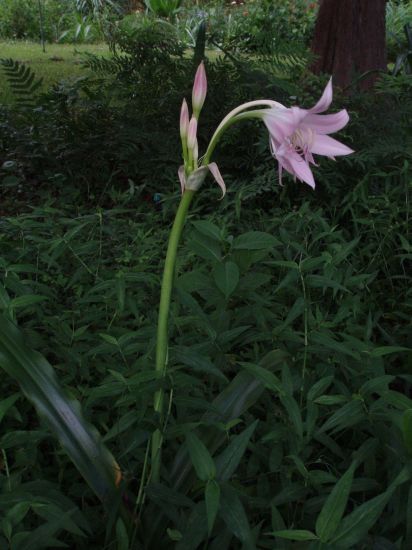
Crinum latifolium L. this is a form found growing in locations in south Florida. It is often considered a pale form of C. zeylanicum but differs from the darker C. zeylanicum in several ways. The plant is small compared to other Crinum and is much more low and spreading in growth with a tidy rosette. It has the strong rib on the underside the foliage The short leaves form a rosette almost flattened on the ground and is similar to the C. album in texture and habit. The flower scapes are glaucous, only slightly pigmented, and to 60 cm tall. Flowers open in the late afternoon and are quite fragrant while open at night. However, they only last a night & are wilted by dawn of the next morning. This unlike the dark C. zeylanicum form which looks good for 2-3 days. The flowers in bud have a pale pink stripe outside, the interiors may have a pink stripe as well or may be pure white. This species sets seeds easily, whether selfed or cross pollinated. It is possible that this form, whatever its true origins, is involved in the mysterious origins of some classic hybrids such as Peachblow, Alamo Village, & Louis Bosanquet. The third picture was taken at 7:00 AM demonstrating one of the drawbacks of this type. Photos by Alani Davis.
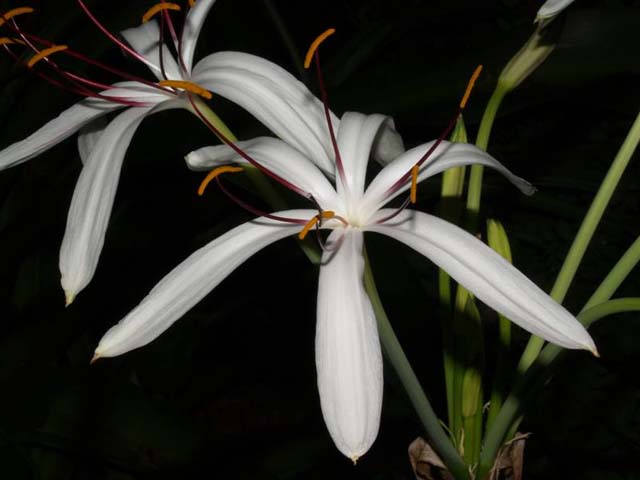
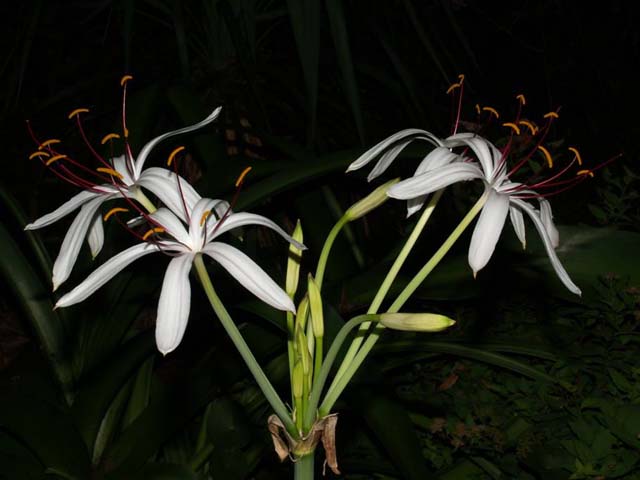
Crinum ligulatum Baker is native to Madagascar. In 2021 some sources list it as a synonym of Crinum firmifolium Baker. Height range: 3-5 ft. Photos by Alani Davis. It has narrow, spreading, arching foliage that is medium flat green and white salverform flowers with burgundy stamens tipped with deep red-orange pollen covered anthers.
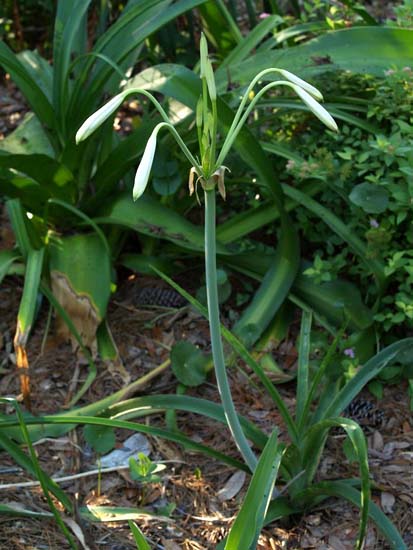
Crinum lineare L.f. is native to South Africa. Height range: 2-3 ft. Photos by Cameron McMaster.
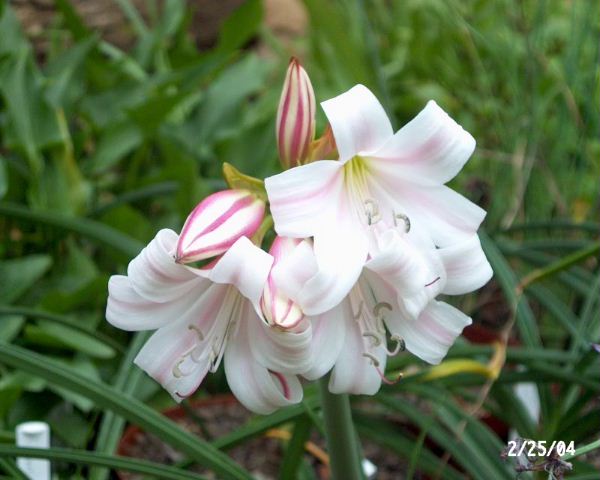
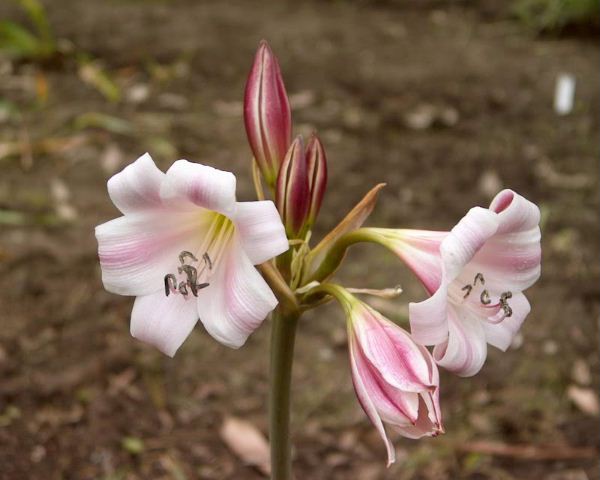
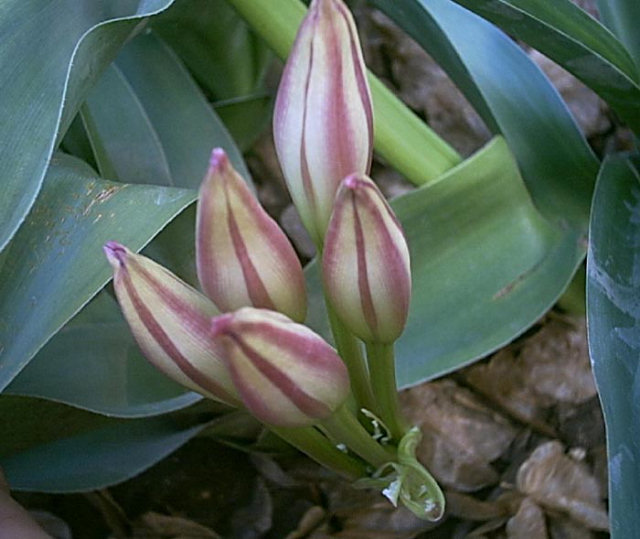
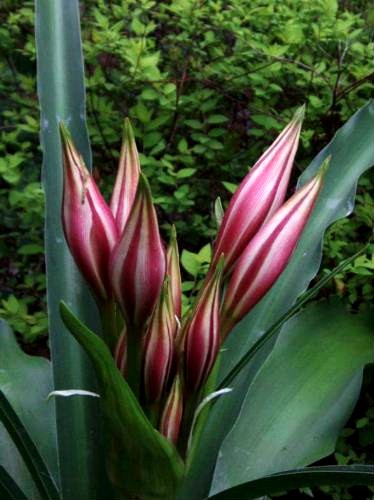
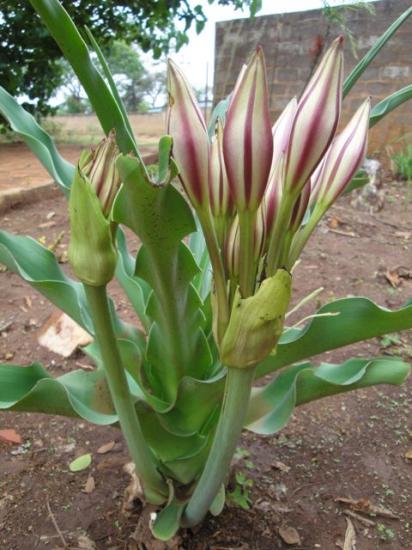
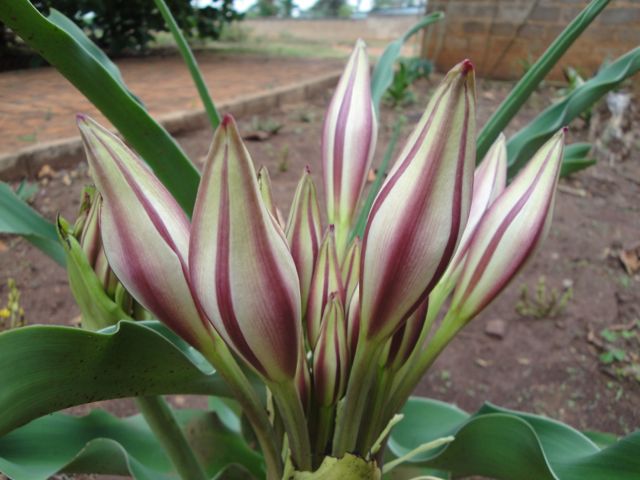
Crinum lugardiae N.E.Br. is a nice species, small compared to other Crinum. The short leaves form a rosette almost flattened on the ground and the flower stalks are short too, no more than 30 cm tall. Flowers open at late afternoon and are very scented. The flowers in bud have a nice reddish stripe outside, which almost disappears as the flowers open, the interiors are pure white. This species sets seeds easily, whether selfed or cross pollinated. Photos by Angelo Porcelli.
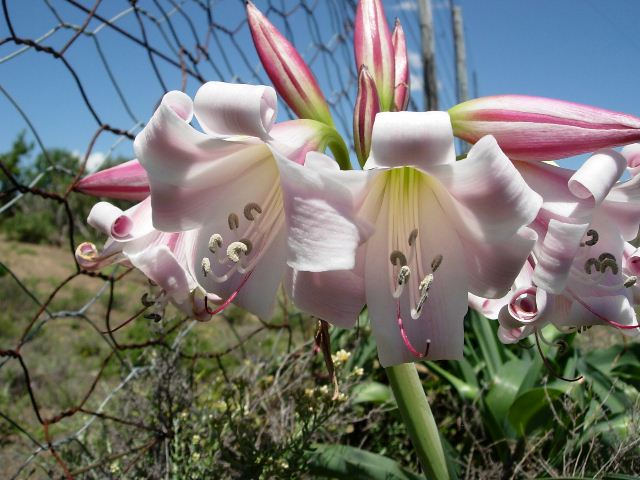
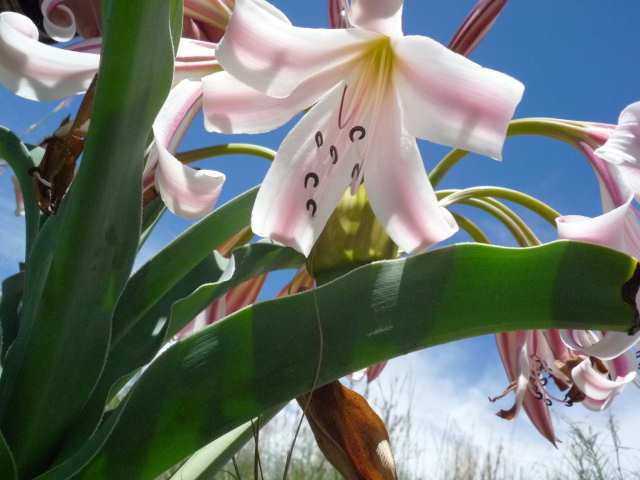
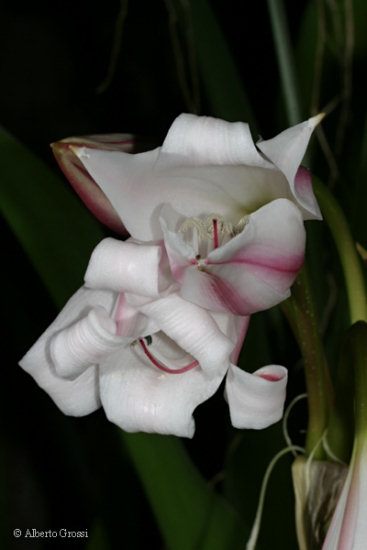
Crinum macowanii Baker is native to South Africa and east Africa to Ethiopia. Known as the River Lily, it grows up to .9 m and is found from the coast to the mountains, in grassland, rocky areas and near rivers. This species rarely offsets and is usually grown from seed. The sweetly scented flowers open in the evening and last two days. Height range: 2-4 ft. Photos below taken in the Eastern Cape of South Africa by Cameron McMaster, Bob Rutemoeller and Mary Sue Ittner. The last five were taken January 2010.
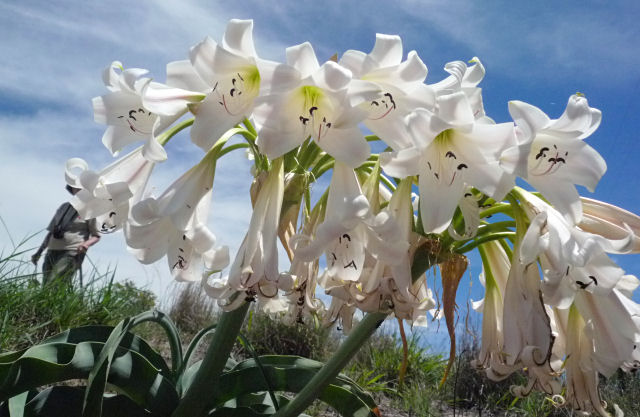

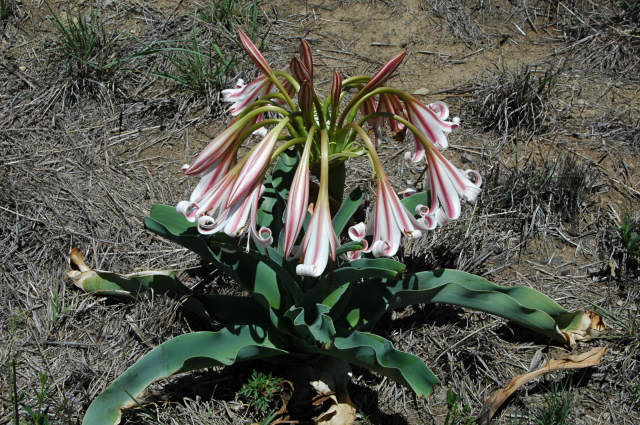
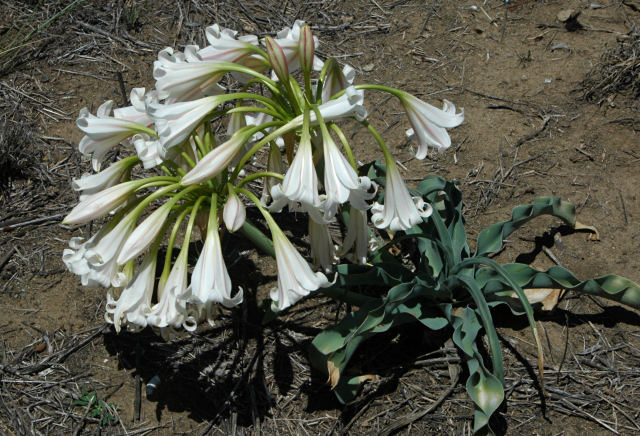
Plants below were grown in cultivation. Photos #1-8 by Alani Davis. Photos #9-10 from Cameron McMaster and photo #11 from Alberto Grossi.
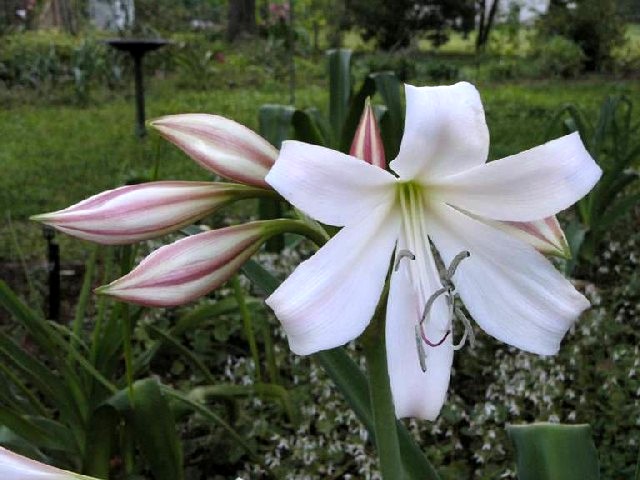


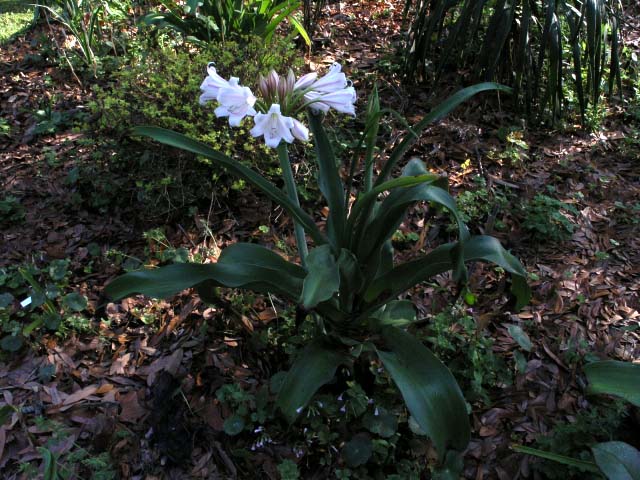
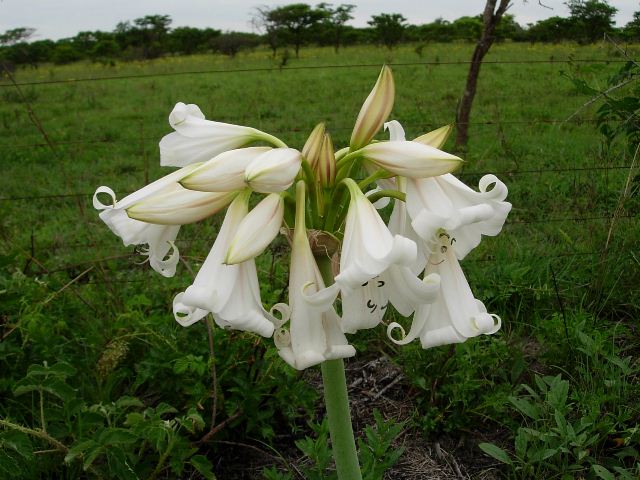
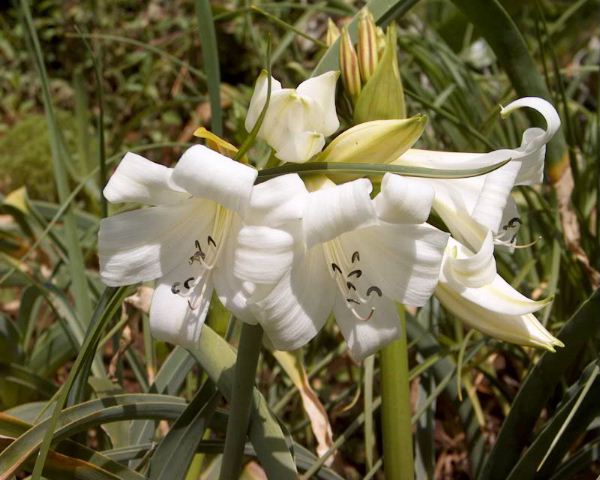
Photos #1-6 by Nicholas Wightman of plants growing in Lilayi, Zambia.
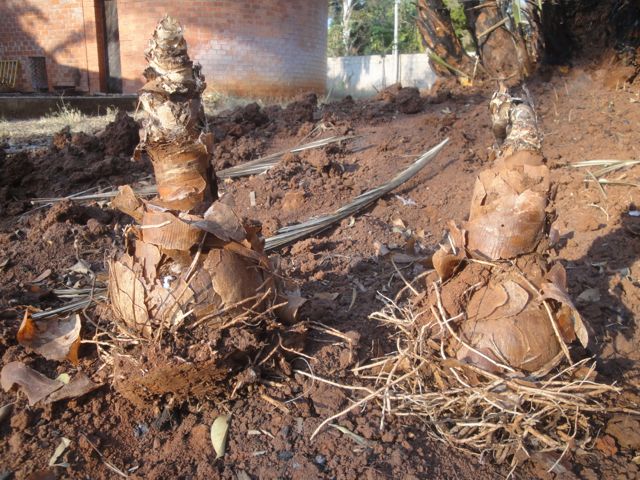
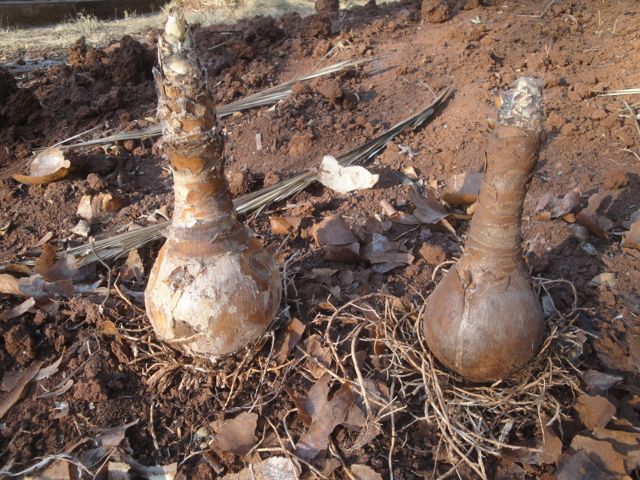
A pair of photos showing seeds and 4-month old seedlings. The seedlings appear after the seed has withered and fallen away fron the developing bulb, images by Byron Amerson.
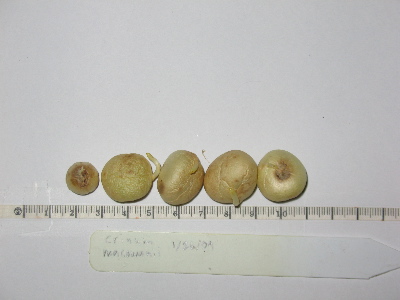

Crinum mccoyi Lehmiller is a recently named species collected in an area of white marble outcroppings near Ambatofinandrahana, Madagascar by Tom McCoy in April 2003. It has attractive, compact, narrow, arched foliage and spidery, white flowers with irregular pink stripes and a purplish red style and filaments. Height range: 2-4 ft. Photo 1 was taken in August 2007 by Jay Yourch. Photos 2-6 taken by Uluwehi Knecht are of a plant originally obtained as an unnamed species from Itremo, Madagascar. Robert Hamilton with confirmation from Dave Lehmiller have tentatively confirmed its identity. I had the plant for 4 years but recently gifted it to a friend who has another clone, in order for it to be propagated since it appears to be self sterile. In the time that I grew it, it never went completely dormant but would start and stop at unpredictable intervals throughout the year. Depicted in the first photo is an example of this peculiar phenomenon. I called it 'pseudo-dormancy', since it would keep a core of dwarfish green leaves until it decided to burst into long strappy growth again. It bloomed just once in September of 2006. The flowers, upon opening only lasted one day. They were thin and delicate, with no detectable fragrance. Grown in Honolulu, Hawai'i.
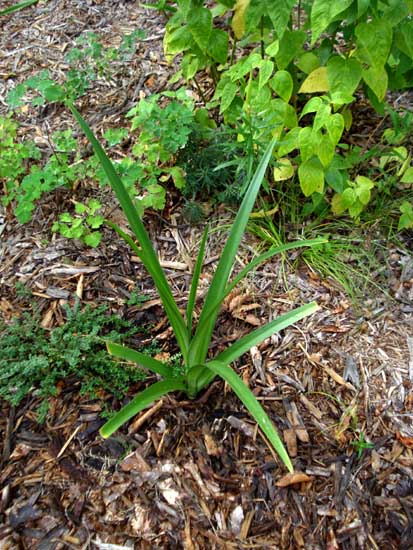

The photos below were taken by Dylan Hannon of plants from Itremo, Madagascar.
Crinum minimum Milne-Redh. see the Crinum minimum page.
Representative photos of this species. Photos 1-4 were from Uluwehi Knecht and photo 5-6 were from Nhu Nguyen.
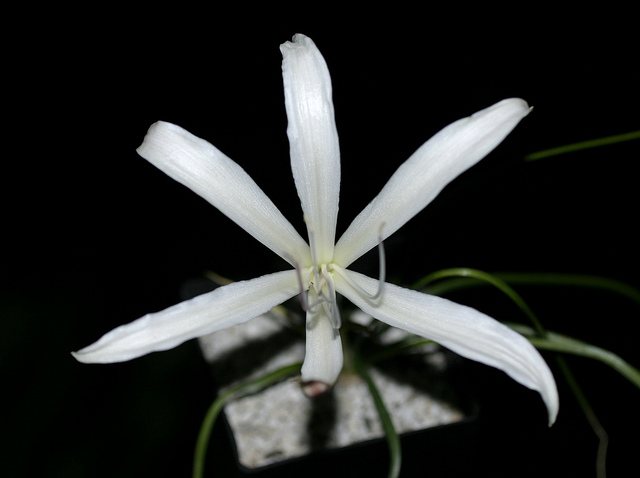
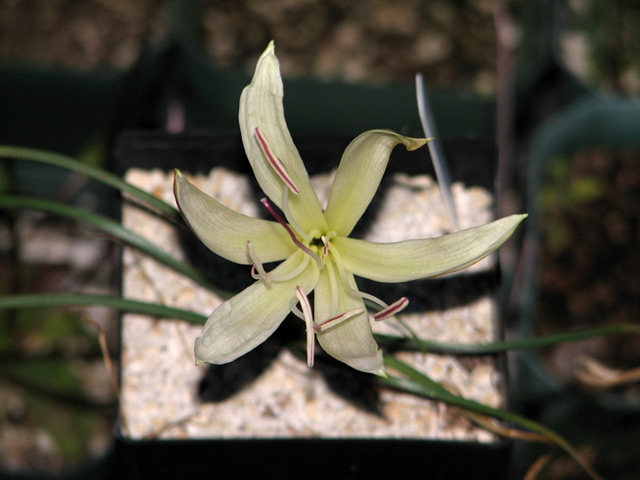
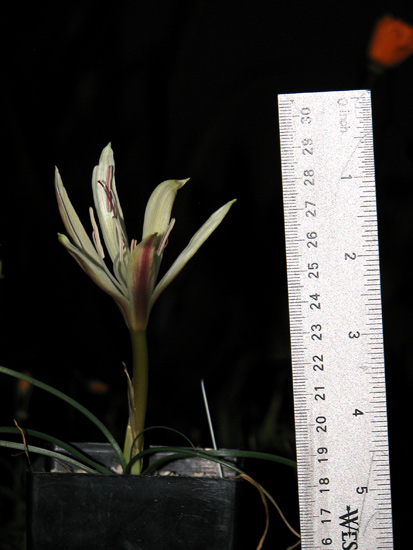
Crinum modestum Baker is native to northwestern Madagascar. Height range: 30-50 cm. The photo below was taken by Dylan Hannon of plants from the Itremo Mountains.
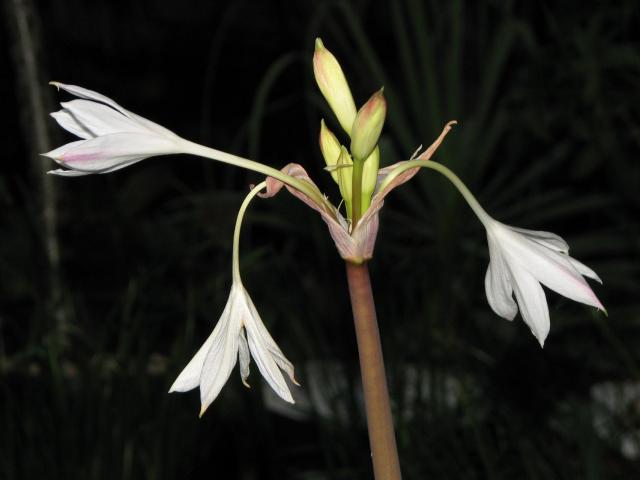
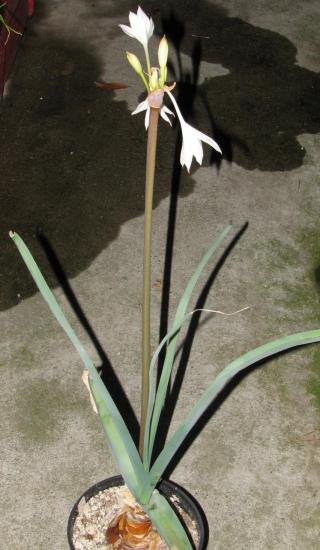
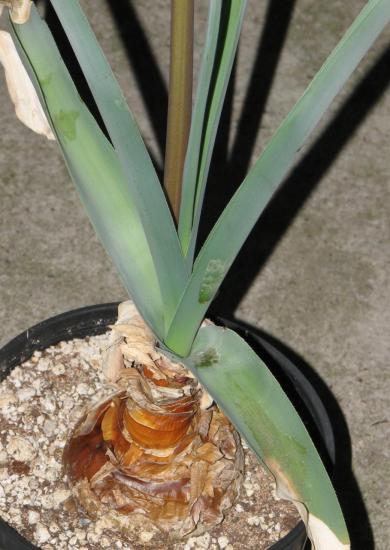
Crinum moorei Hook.f. is native to forested areas in South Africa. It prefers shade from hot afternoon sun and may go dormant during periods of excessive summer heat or drought. Height range: 3-4 ft. Photos of a closeup of 'Alba', a clump in flower taken at an old church in Plymouth, Devon, and old tight clump originally planted in the late 19th century in Brixham, Devon by David Fenwick. The fourth photo of normal pink form by Angelo Porcelli. Angelo says the flowers are darker than shown in the photo. The last photo is a habitat picture taken near Kei Mouth, Eastern Cape by Andrew Harvie.

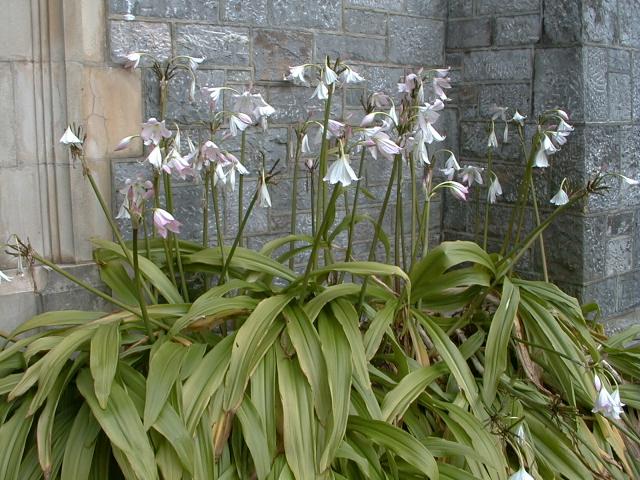
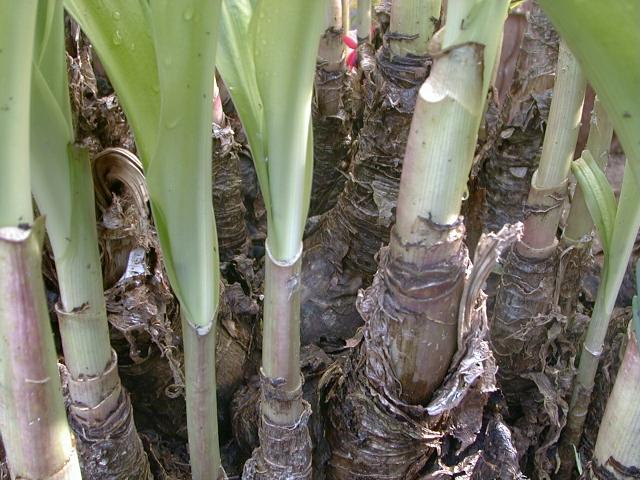
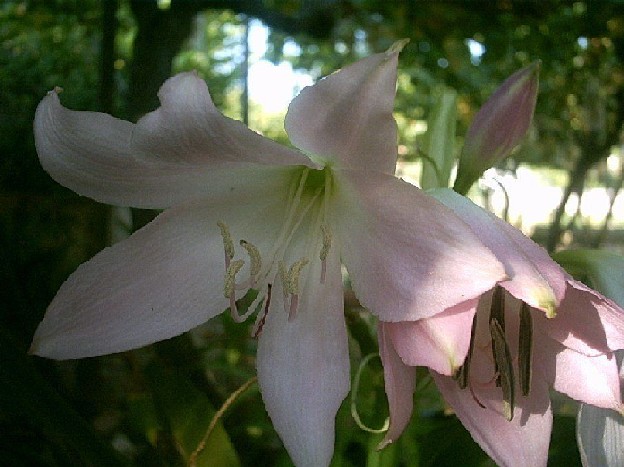
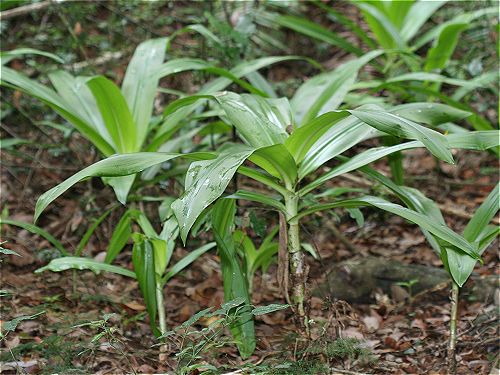
'Sister Teresa' appears to be a selection of C. moorei which readily produces seed. Photos by Alani Davis.

Crinum natans Baker is native to Tropical West Africa, Guinea. I'd like to tell you that this bud comes from a bulb of my collection, but it is not true. My aquatic Crinums, C. calamistratum, C. natans and C. thaianum, have not flowered until now. I took the photo in a pet shop. It was discovered in 1862 by G. Mann. The crinkled leaves are submerged and floating; the flowers, usually more flowers per scape, are fragrant. Height range: 50-150 cm. Photo taken on 11 July 2007 by Alberto Grossi.

Crinum species a-b - Crinum species c-j - Crinum species o-z - Crinum species Index - Crinum hybrids Index