Cypella Herb. is a genus in the Iridaceae with about 37 species native to South America. Species in this genus have scaly bulbs and sword-shaped leaves with yellow, blue/purple, orange, and white flowers. Some of the previous named species are in 2025 considered to belong in the genera Alophia, Cipura, Hesperoxiphion, Larentia, Mastigostyla, Phalocallis, and Trimezia.
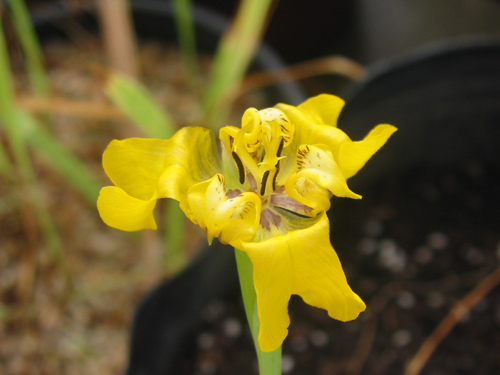
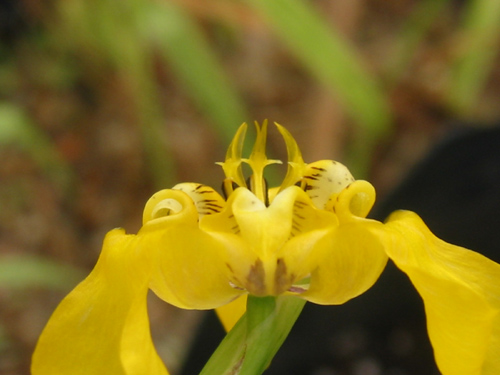
Cypella aquatilis Ravenna, the Yellow Water Orchid, is native to Brazil where it grows in streams and on riverbanks. It has bright yellow flowers with recurved inner segments with a central yellowish-white streak and many minute streaks and dots. It grows to 50 cm tall. Photos from Mary Sue Ittner.


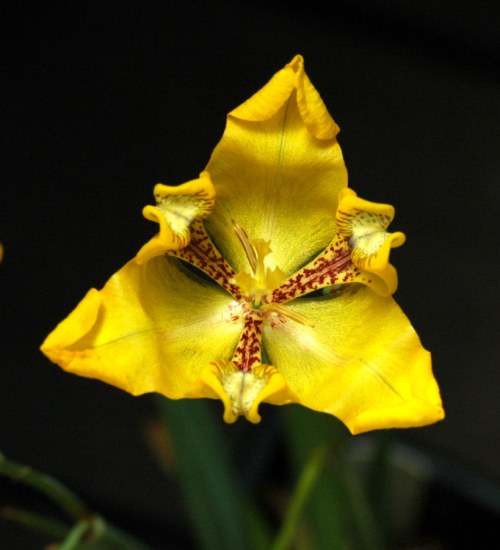

Photos 1 and 2 by Germán Roitman, 3-6 by Martin Bohnet. Photo 6 shows a bulbill which they produce in about every axilla of the flowering stem; one can see the root tip emerging.
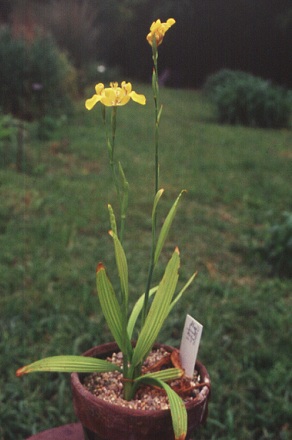
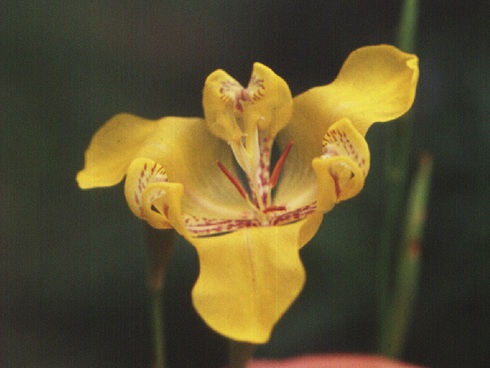
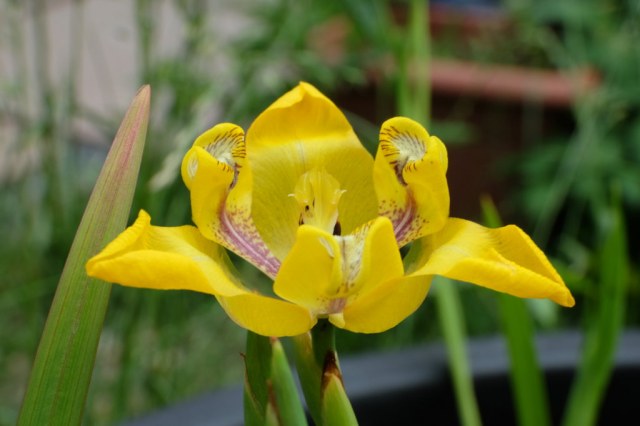
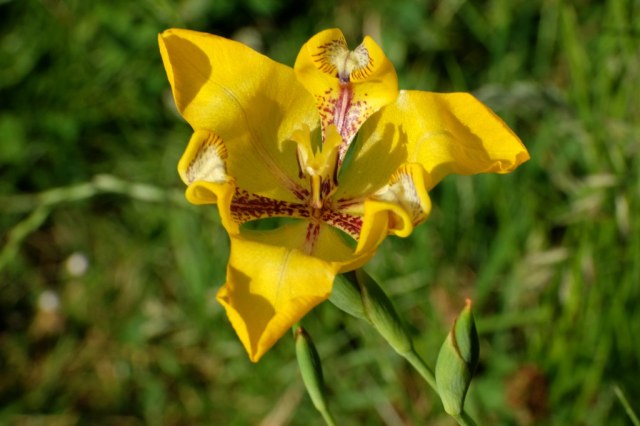
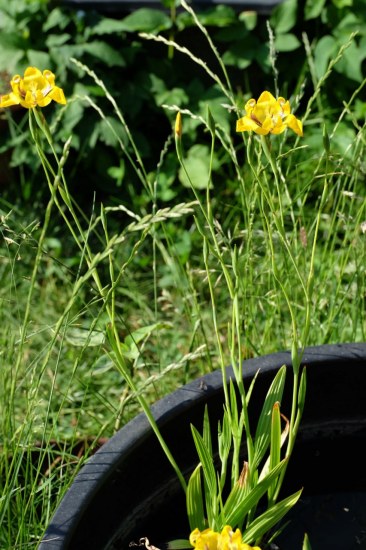
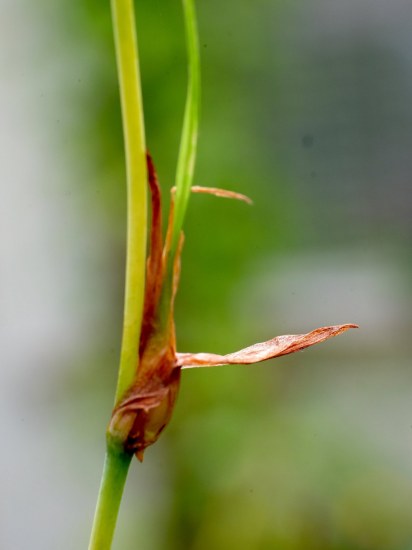
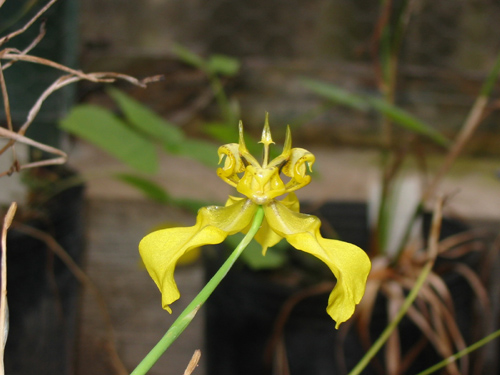
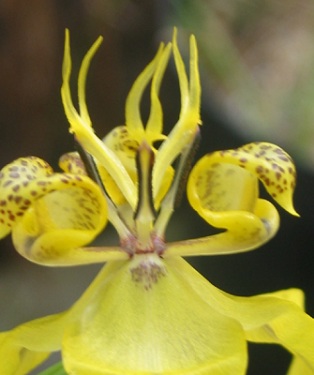
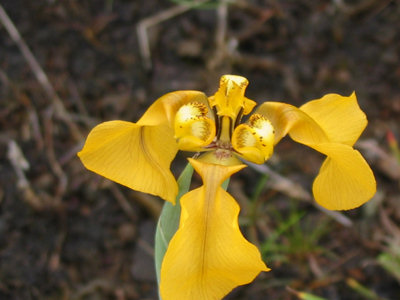
Cypella armosa Ravenna is found in Argentina and Paraguay in grasslands, humid to inundated, with altitude records ranging from 50 to 500 m. It grows to 60 cm high and flowers late spring to summer. The flowers are yellow. The outer segments are somewhat reflexed and the inner segments recurved, marked yellow-orange and brown-black. The yellow style arms are strongly divergent; adaxial crests are longitudinally twisted at the middle portion. The first five photos were taken by Mary Sue Ittner. The fifth photo was taken of a plant grown at Telos Rare Bulbs. The last photo was taken by Bill Dijk.
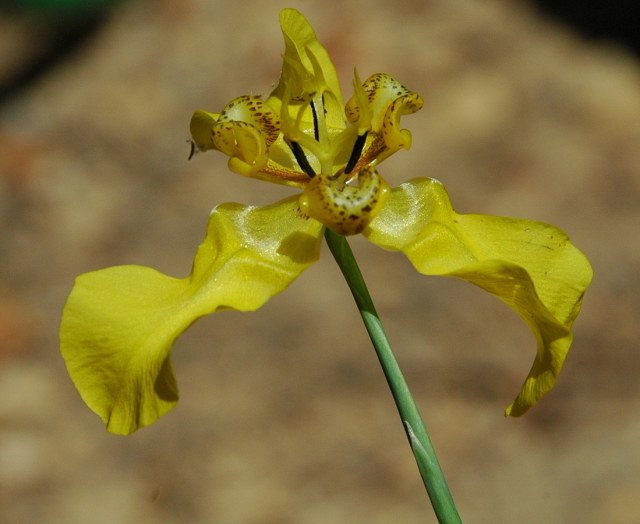
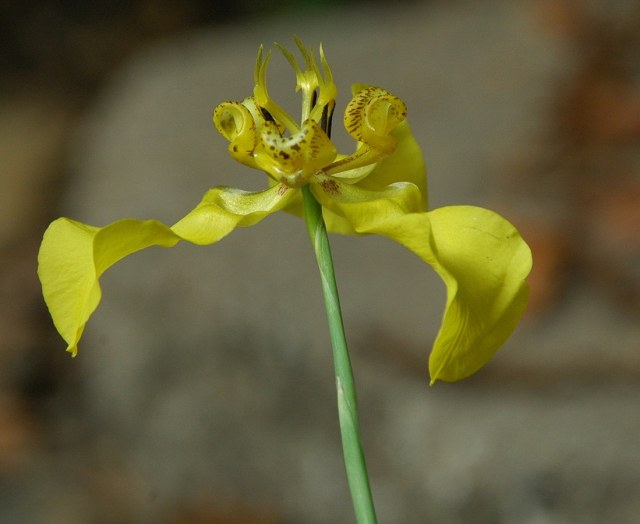
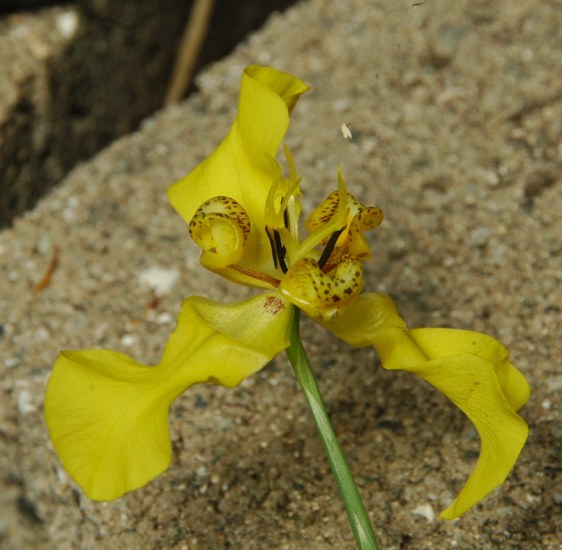
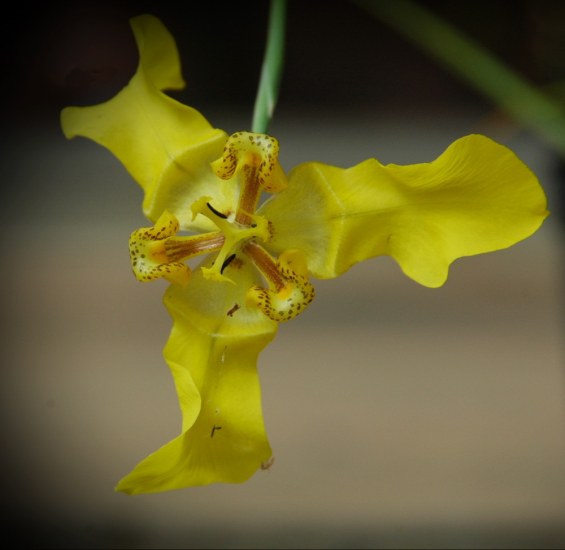
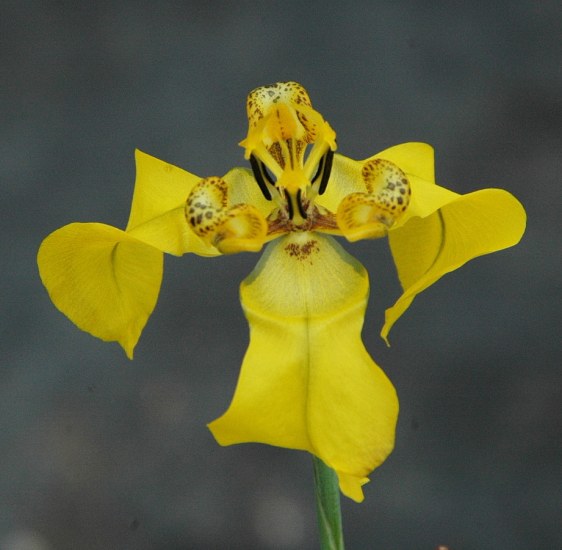
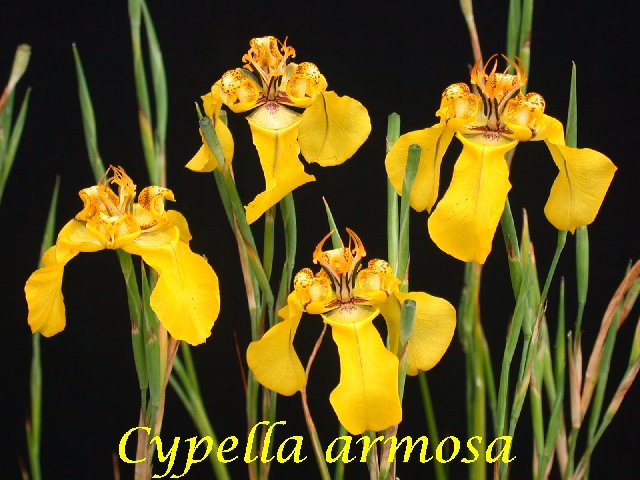
The photos below were added as Cypella exilis and described as growing in Argentina. But that species does not grow in Argentina and looks different. These photos are probably a pale yellow form of this species growing in grassland. Photos by Germán Roitman.
Cypella coelestis (Lehm.) Diels see Phalocallis coelestis (Lehm.) Ravenna
Cypella fucata Ravenna occurs in dry grassland and rocky places in southern Brazil, northeast Argentina and Uruguay. It grows 10-20 cm tall and has dusty orange flowers with the outer curvy tepals dark-veined. The inner segments are recurved and whitish. It flowers in summer (December to February). In 2004 Cypella osteniana Beauverd ssp. aurantiaca Roitman & J.A.Castillo was described as a new subspecies occurring in Argentina and Uruguay. In 2025 it is considered to be a synonym of Cypella fucata Ravenna. Photos by Germán Roitman.
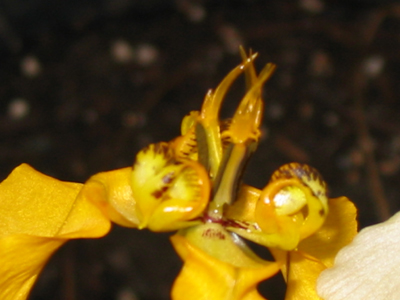
The photo below, taken by Germán Roitman, shows Cypella osteniana and this species together.
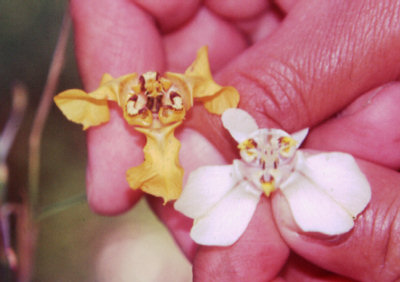
Cypella hauthalii is native to Argentina. There are two subspecies. Plants are winter growers native to grassland with semi-shaded conditions (Rogan Roth).
Cypella hauthalii ssp. hauthalii is from Argentina. Plants have very short stems and grow in grasslands. They flower in spring. The flowers are bigger, more open, and violet as compared to spp. opalina. Photos by Germán Roitman.
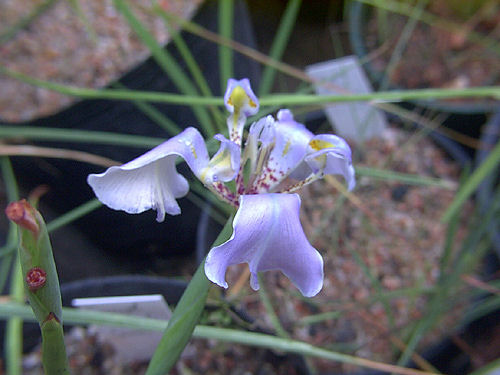
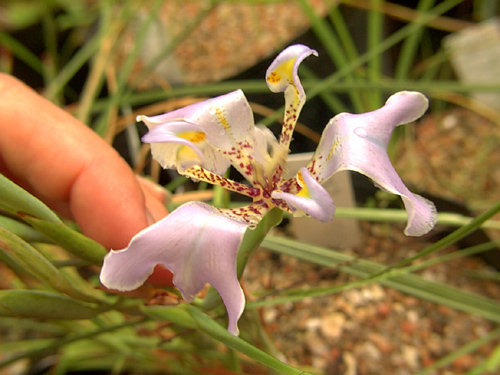
Cypella hauthalii ssp. opalina is from Argentina. Plants have very short stems and grow in grasslands. They flower in spring. Photos 1-2 were taken by Germán Roitman, 3-4 by Dirk Wallace, and 5 by Rogan Roth.
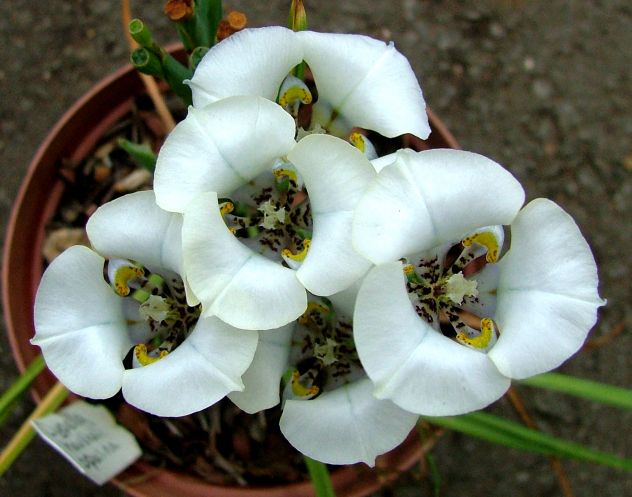
Cypella herbertii (Lindl.) Herb. is native to Argentina and Uruguay and is the most widespread and common species of Cypella. Plants grow from 50 cm to 1.2 m tall in grasslands and hills. There are 4 recognized subspecies. This species is one of the easiest to grow and most rewarding of South American irids. If well grown, it can flower for several months continuously. Grow the plants in a well-draining mix (about 1:1 organic:inorganic). They do well in a US one gallon pot (~3L). Keep the soil moist during the summer growing season and dryish in winter. Fertilize occasionally during active growth. In the winter, the plant will go dormant if water is withheld. In the San Francisco Bay Area, plants grown outdoors that get winter rain will stop growing, but will not go completely dormant. When the weather warms up, new leaves and buds will appear.
This plant is easily grown from seeds. Sow the seeds in the same mix as above in spring, taking care not to overcrowd the pot. Seeds can be sown in a smaller pot and then carefully unpot the plants without disrupting the soil and place into a one gallon pot. Conversely, seeds can be sown directly into a one gallon pot. The most vigorous seedlings will flower in the first year. Photo 1 was taken by Alessandro Marinello. Photos 2-3 were taken by Nhu Nguyen. The last photo is from Wylie Young.
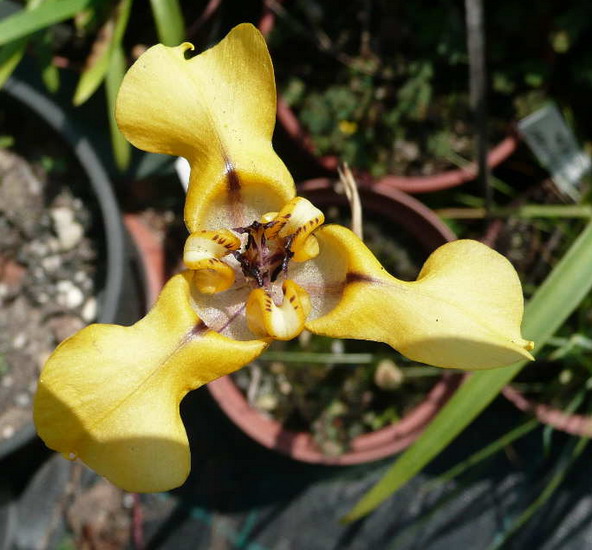
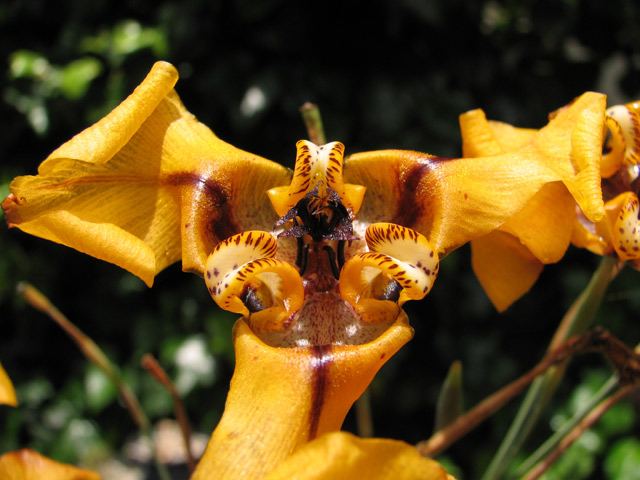
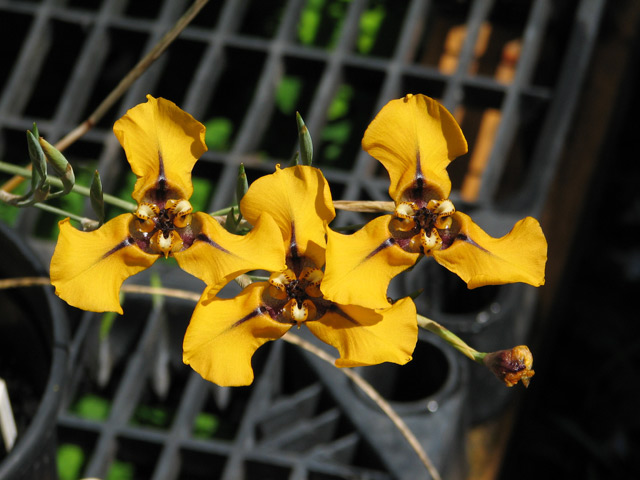
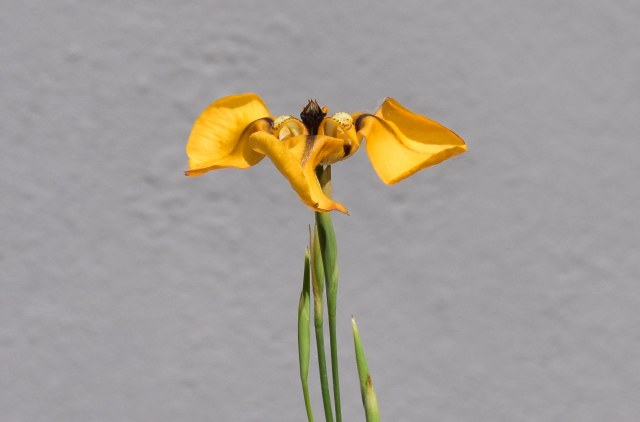
Cypella herbertii ssp. brevicristata Ravenna is the more common subspecies with yellow or orange flowers. Its distribution is Brazil (Rio Grande do Sul) to Uruguay. The stigma lobes are short. The first photo was taken by Nicholas Plummer who writes that the subspecies are distinguished by the length of the stigma lobes, but the two forms that he grows also differ in their color with this subspecies having clear yellow flowers. The second photo is from Lee Poulsen who thinks that his plants belong to this subspecies. The last photo from Germán Roitman.

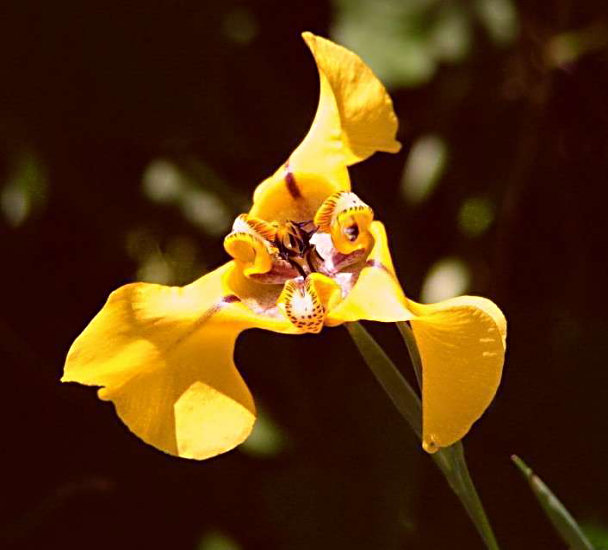
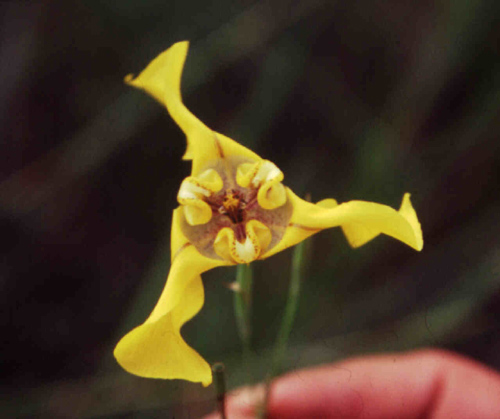
Cypella herbertii ssp. herbertii has a native range from S. Brazil to NE. Argentina. It has yellow or orange flowers. The stigma lobes are long. The first photo by Nicholas Plummer and the second by Germán Roitman.
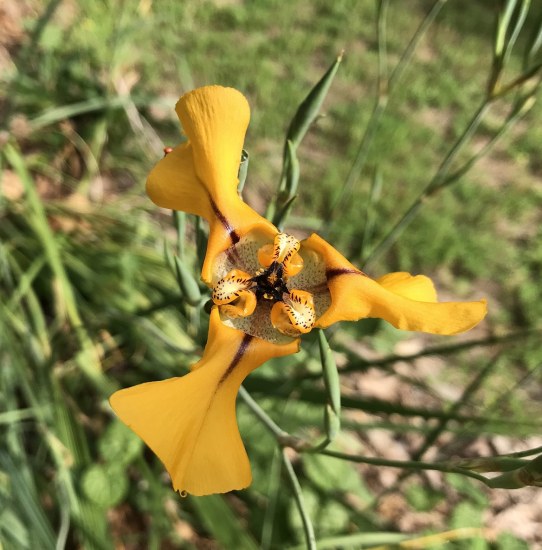
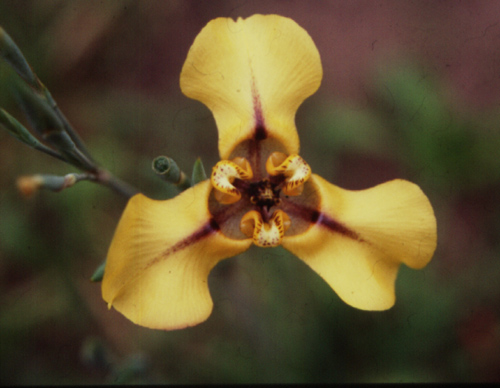
Cypella herbertii subsp. reflexa Ravenna is native to Argentina (Entre Ríos).
Cypella herbertii ssp. wolffhuegeli (Hauman) Ravenna has a very restricted distribution in Argentina (Buenos Aires). It has pale yellow flowers. The style branches are free in the upper part. Photo by Germán Roitman.
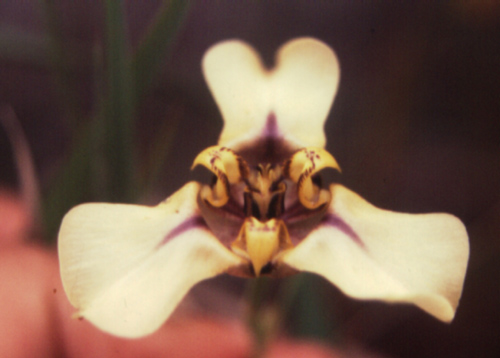
Cypella laeta Ravenna is from Argentina and Uruguay. Plants grow in well-drained grasslands and flower in spring. Cypella laeta, Cypella aquatilis and Cypella laxa belong to the same subgenus (Nais). Height: 30-60 cm. Photos by Germán Roitman.
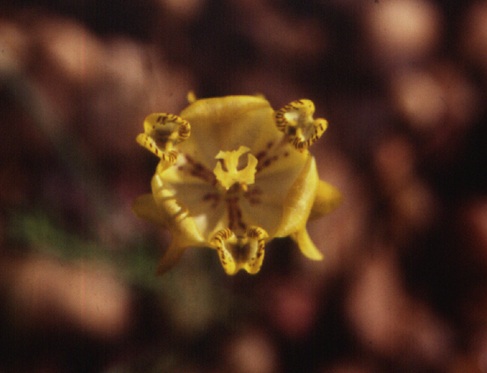
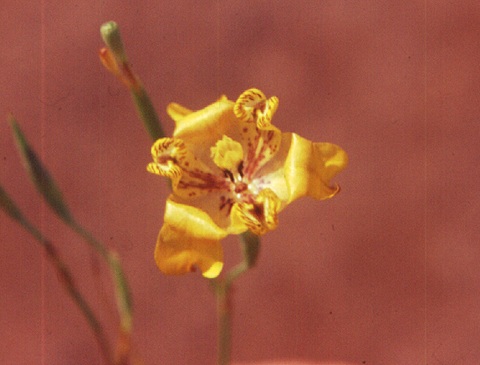
Cypella laxa is from Brazil and Paraguay and recently sighted in Argentina. Plants grow in bog areas and flower in summer. Photo by Germán Roitman.
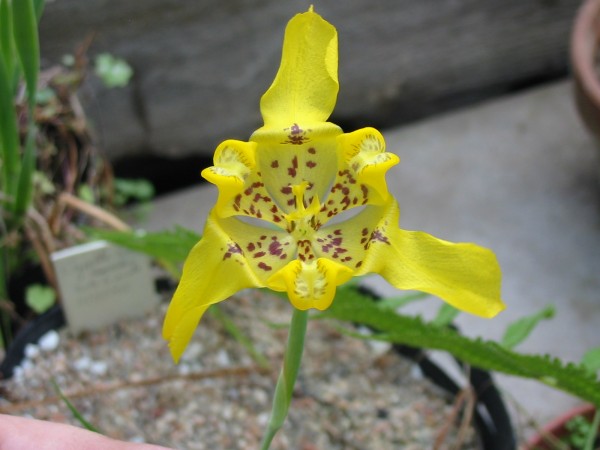
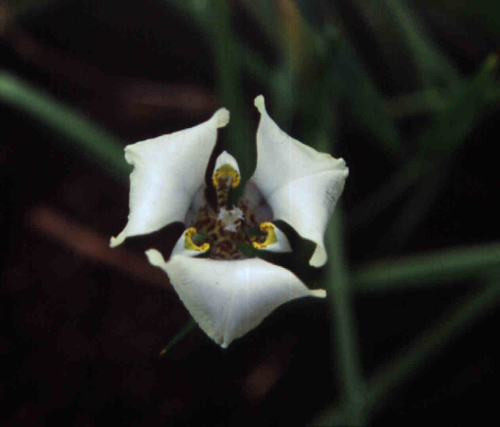
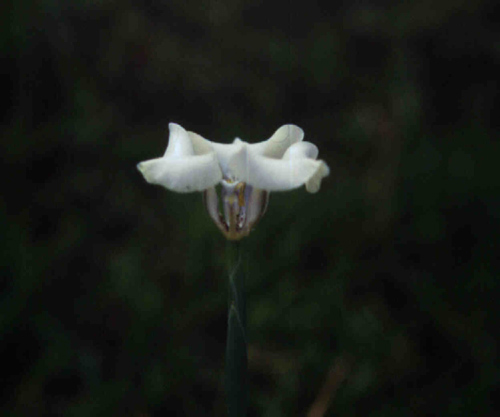
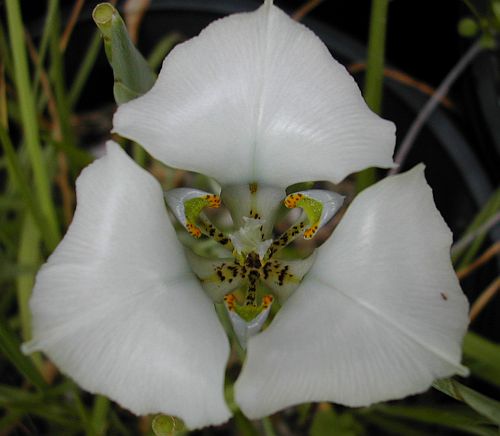
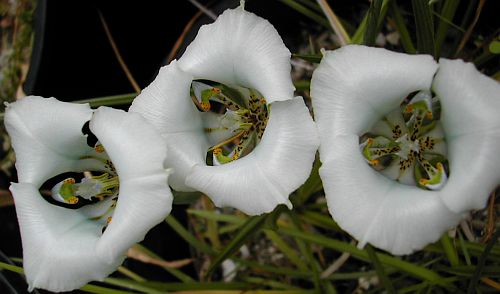
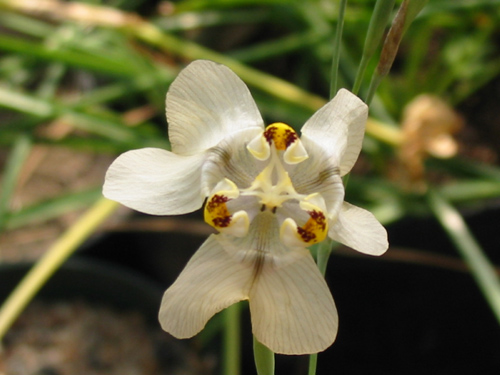
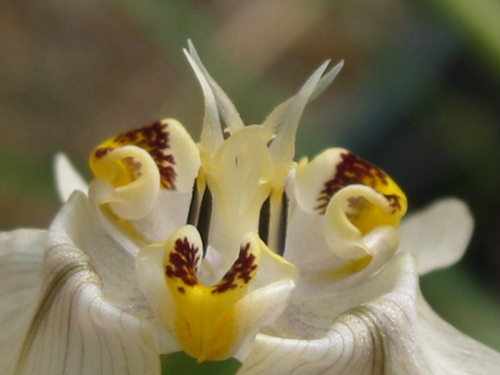
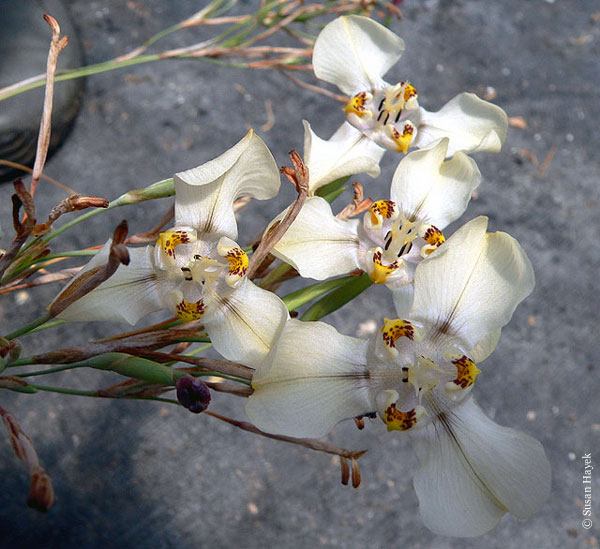
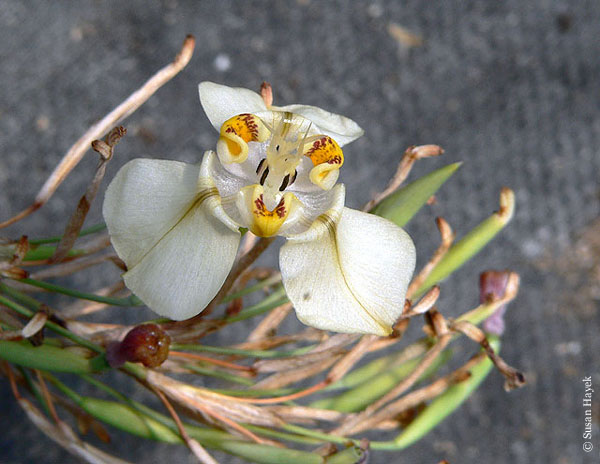
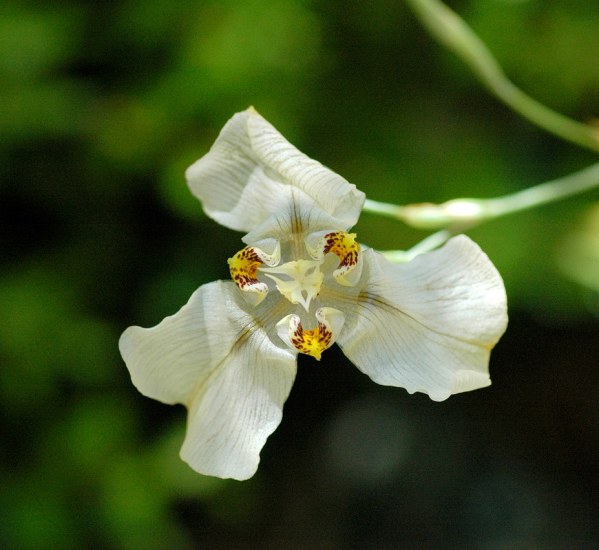
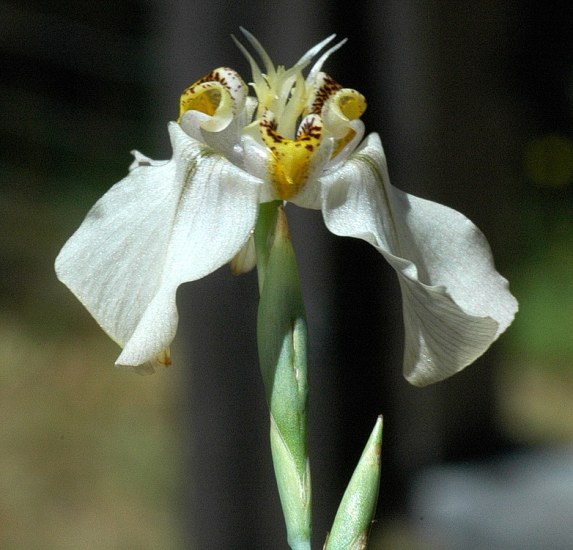
Cypella osteniana Beauverd is native to Brazil, Uruguay, and Argentina and occurs on stony grasslands and hillsides in southern and eastern Uruguay. Plants grow from 30-60 cm and flower in spring. This species is easily identified by its two-flowered spathes and white flowers with divergent stigma lobes. The first two photos were taken by Germán Roitman. The next two photos were taken by Susan Hayek for Diana Chapman. The last two were taken by Mary Sue Ittner.
Cypella osteniana Beauverd ssp. aurantiaca Roitman & J.A.Castillo was described as a new subspecies occurring in Argentina and Uruguay in 2004. In 2025, it is considered a synonym of Cypella fucata Ravenna. The photo below, taken by Germán Roitman, shows them together.
Cypella pabstiana Ravenna is native to Brazil where it grows on dry grasslands. Plants flower in spring and grow to 30-60 cm. An article, Cypella (Iridaceae): What do we know about the diversity of the genus? written in 2020 reported it could not be found in the areas where it was reported in expeditions in November 2013, February 2014, and November/December 2016. Photos by Germán Roitman.
Cypella peruviana Baker see Hesperoxiphion peruvianum (Baker) Baker