Crocus is a genus in the Iridaceae family that is widespread; it is found in Europe, North Africa and in Asia. The standard reference on the genus was Brian Mathew, The Crocus written in 1982, but at least half a dozen taxa, including new species, have been described since its publication. In 2010 Jānis Rukšāns published the book Crocuses: A Complete Guide to the Genus that includes descriptions of species and cultivation information. This PBS wiki page features Crocus species a-h that bloom in the fall.
Crocus index - Fall Blooming crocus i-o - Fall Blooming crocus p-z - Spring Blooming crocus a-b - Spring Blooming crocus c-e - Spring Blooming crocus f-l - Spring Blooming crocus m-s - Spring Blooming crocus t-z
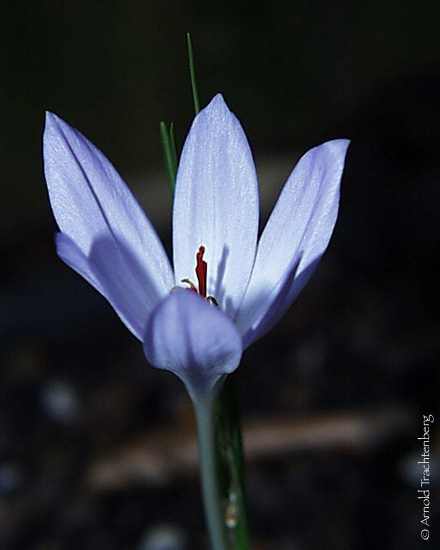
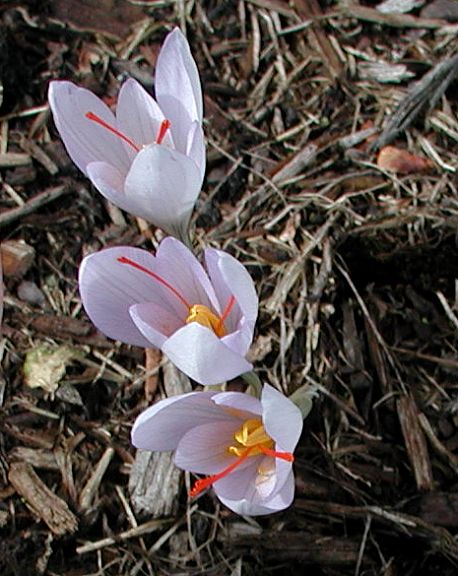
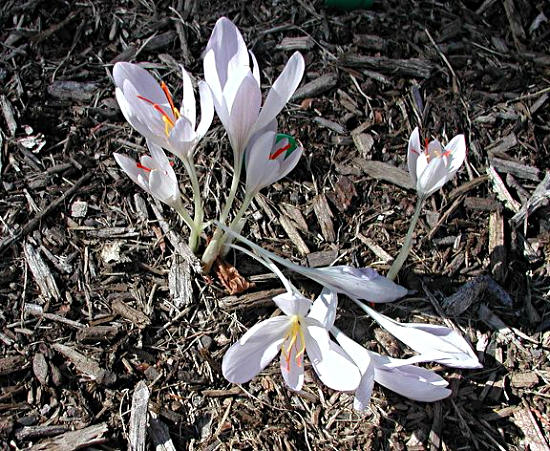
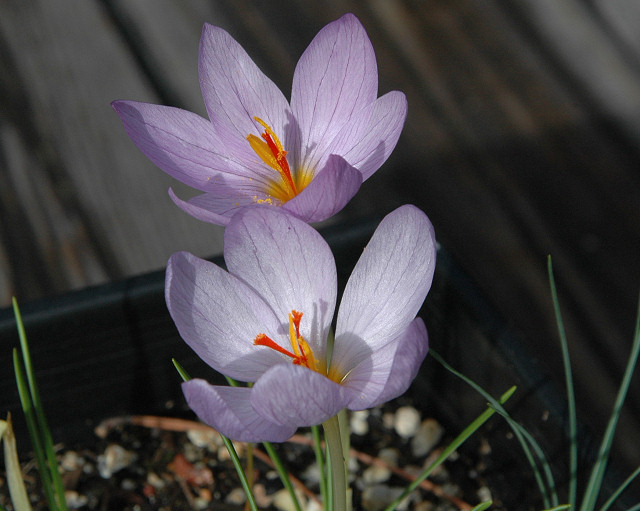
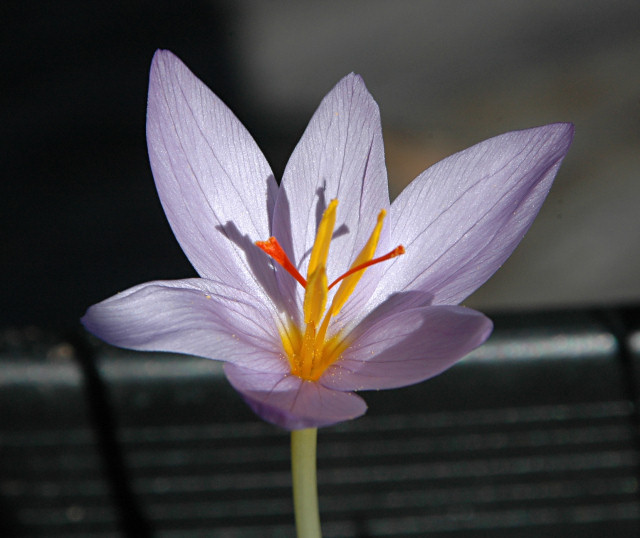
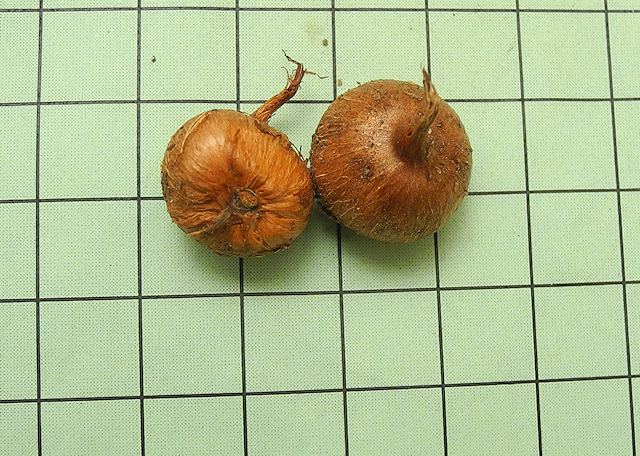
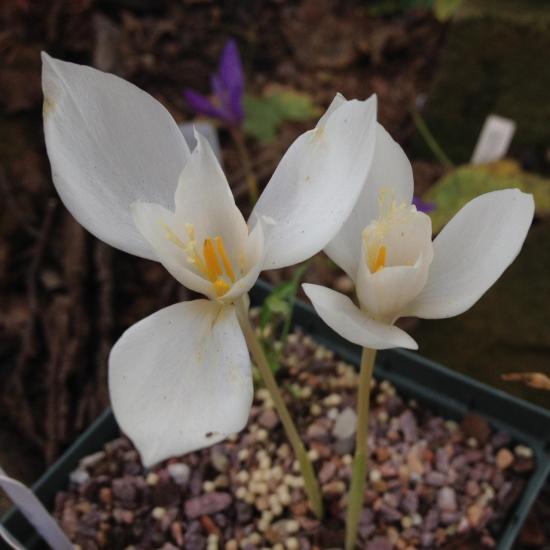
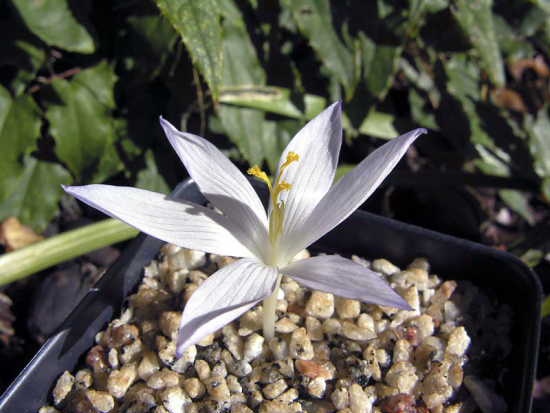
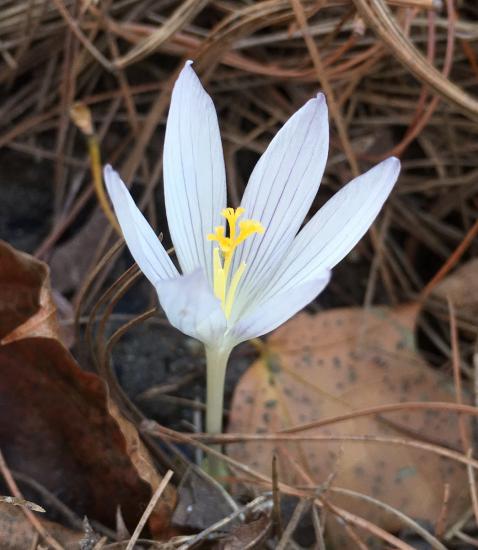
Crocus asumaniae B.Mathew & T.Baytop from S. Turkey where it is found in evergreen and deciduous oak scrub in limestone has white or pale lilac flowers with a yellow throat. It blooms in the fall with leaves just showing at flowering time and is best grown in a frame or alpine house. Height: about 10 cm. Photos by Arnold Trachtenberg and Mark McDonough who writes: "The form I grow is from Jane McGary and it's a lovely pale lilac color. The flowers have a strong sweet fragrance. I find that it grows and flowers perfectly well outside in the garden." His photos were taken mid to late October, 2005.
Photos below from Mary Sue Ittner including corms on a 1 cm grid.
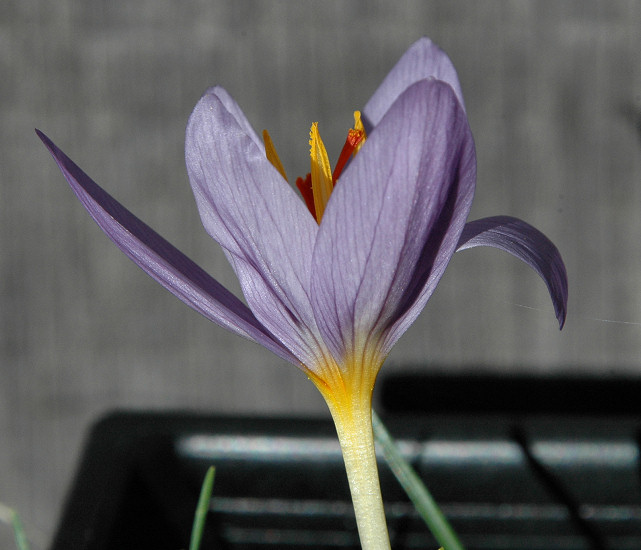
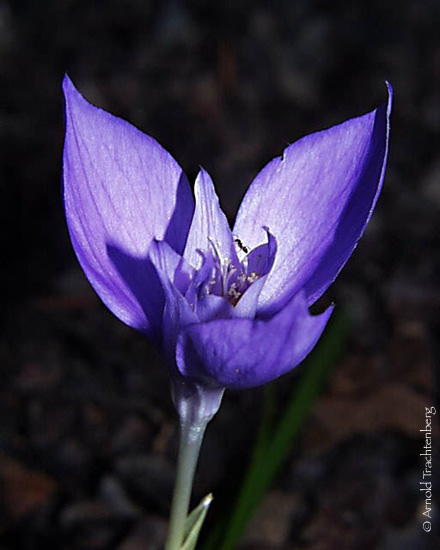
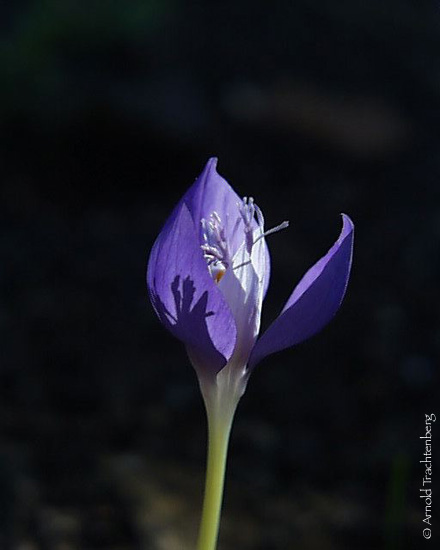
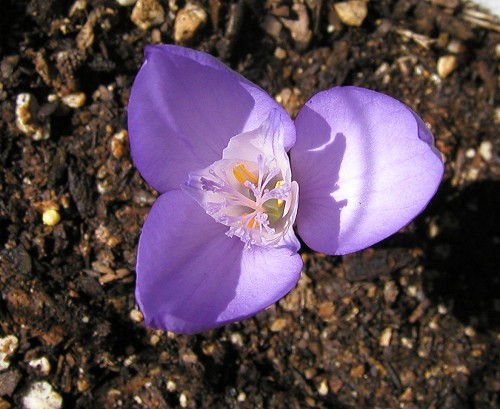
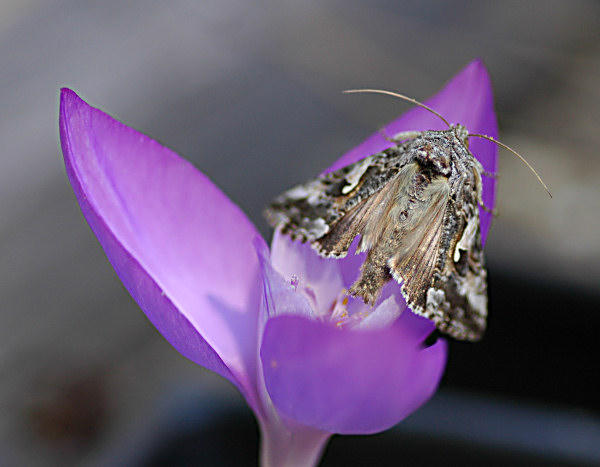
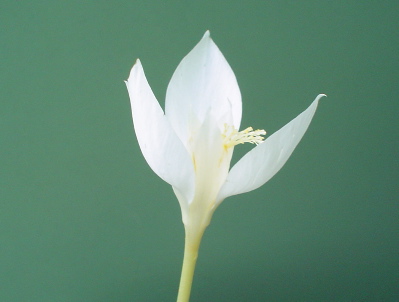
Crocus banaticus J.Gay (syn. Crocus iridiflorus Heuff. ex Rchb.) is a species from Romania that blooms in early fall before its leaves. It is very beautiful with long tubed violet flowers and looks a little like an iris. It is best grown in cool moist conditions. Height: to about 10 cm. The first two photos were taken by Arnold Trachtenberg. The third photo by Bob Rutemoeller looks down on it and shows the lovely center with the divided style. The fourth from Mary Sue Ittner shows a moth resting on the flower after pollinating it. The fifth is a white form of this species flowered and photographed by Rob Hamilton. The final photo is Jānis Rukšāns' cultivar 'First Snow' from Rimmer de Vries.
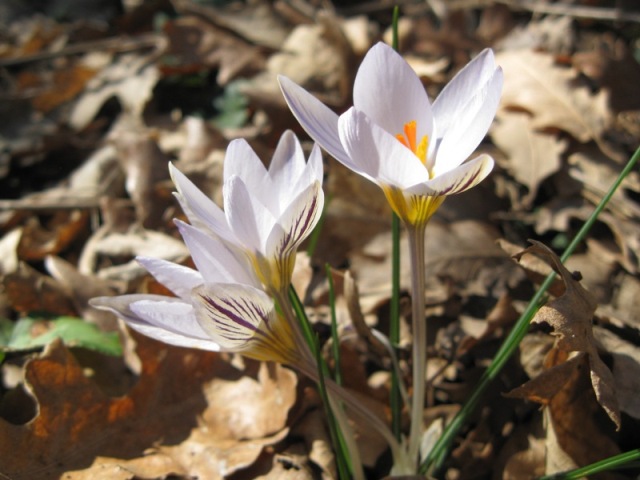
Crocus biflorus Mill. is a complex species with at least 21 recognized subspecies at one time. Height: about 10 cm. Many of these subspecies are still recognized although Kew has all of them now included in the species. Rukšāns still lists them as subspecies except for Crocus biflorus subsp. melantherus which he treats as Crocus melantherus. Their habitat ranges from Italy to Iran. Mathew reports that they are generally easy to grow. Most Crocus biflorus bloom in late winter (a lot of the cultivars sold as Crocus chrysanthus are actually Crocus biflorus selections and hybrids), but a few forms flower in autumn. The first photo was taken in habitat in Southern Italy by Angelo Porcelli. He writes: This species grows usually in open oak-woodlands and pastures. It's the only Italian species of Crocus to have coriaceous tunics; the others have netted tunics. According to other international authors, the Italian populations are ssp. biflorus, but this is not recognized in any Italian Flora. Photos 2-3 below were taken by John Lonsdale. Subspecies photos were taken by him unless marked otherwise.
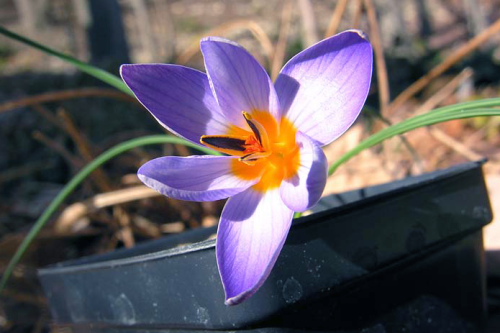
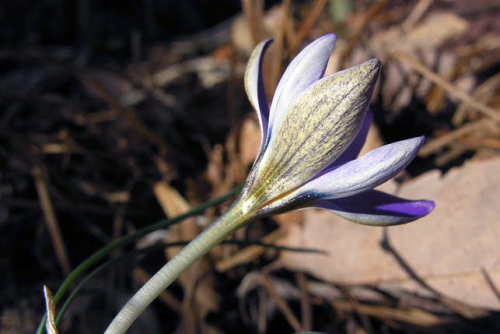
Crocus biflorus subsp. adamii (J.Gay) K.Richt. grows in the former Yugoslavia, Crimea, and the Caucasus. It is considered by Kew to be a synonym for Crocus adamii J.Gay.
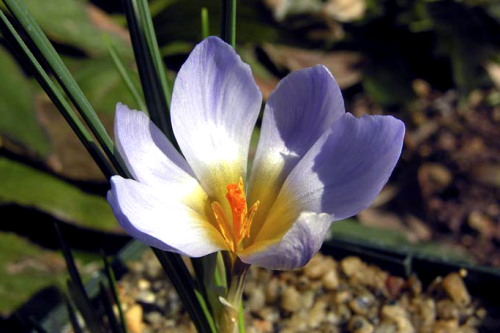
Crocus biflorus subsp. alexandrii (Nicic ex Velen.) B.Mathew comes from the Dalmatian coast, Serbia, and Bulgaria. Bowles cited it as a "splendid garden plant." It is considered by Kew to be a synonym of Crocus alexandri Nicic ex Velen.
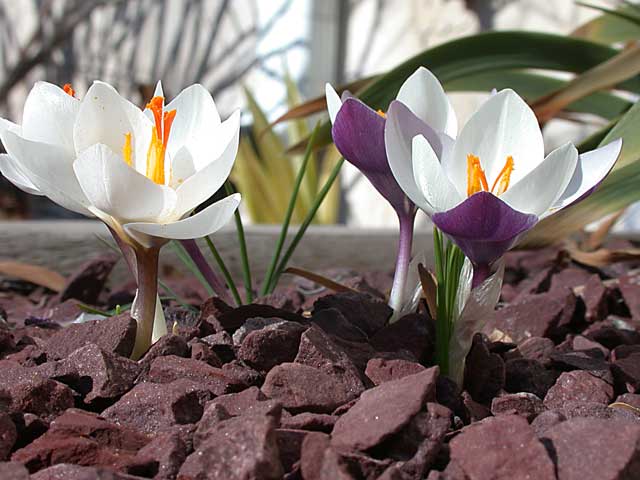
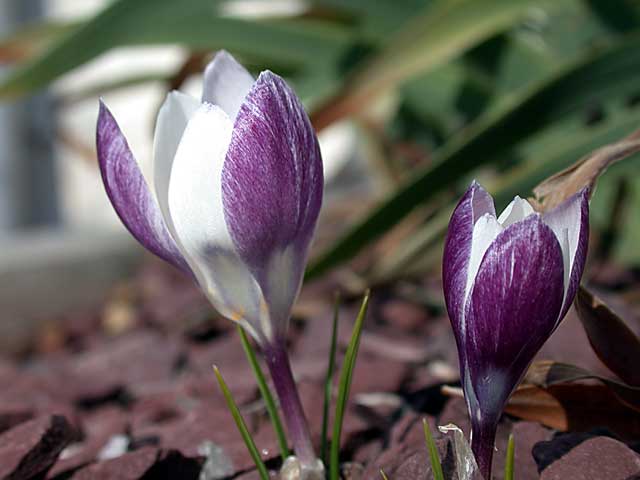
Crocus biflorus subsp. biflorus is commonly called the Scotch Crocus, but is not native to Scotland. Bowles speculated that it was brought to Scotland in the distant past, and from there was taken to the UK and Holland. He wrote, "such a hardy, early, and free-flowering variety deserves planting in large groups, where its white flowers can open out in the morning sunshine." He said it is easy to grow as long as not waterlogged.
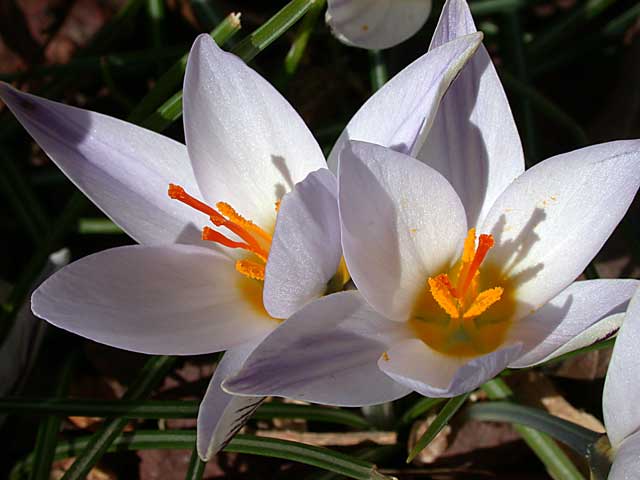

Crocus biflorus subsp. isauricus (Siehe ex Bowles) B.Mathew is from southern Turkey, and is reportedly rare in cultivation. It is considered by Kew to be a synonym of Crocus isauricus Siehe ex Bowles.
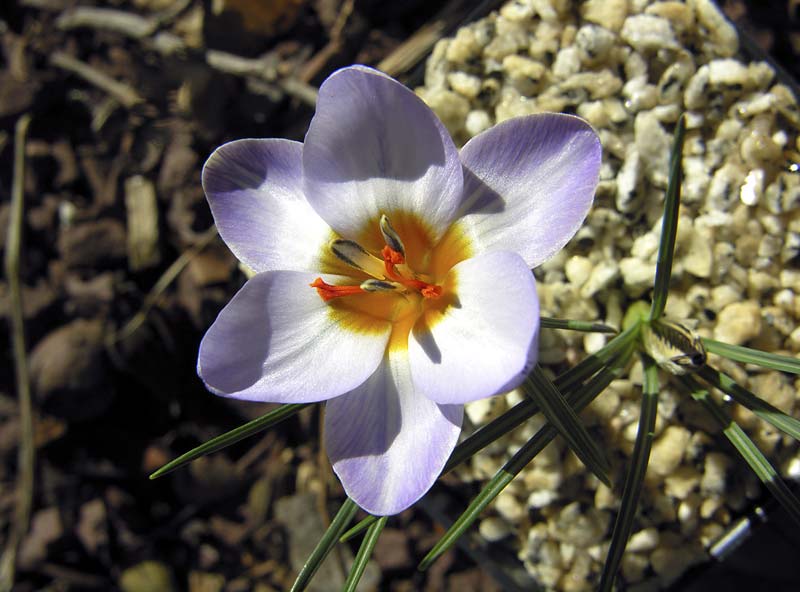
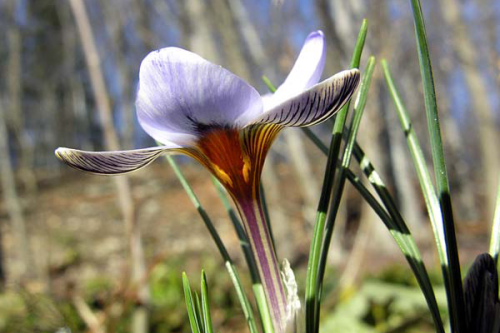
Crocus biflorus subsp. melantherus B.Mathew see Crocus melantherus
Crocus boryi J.Gay is native to southern and western Greece, some Ionian islands, and Crete. It flowers in late fall. The photo shows the typical flowers, which are cream-white and have rather thick tepals. These plants are grown in a bulb frame in Oregon, from seed obtained from the Archibalds. Height: 8 cm. Photo by Jane McGary.

Crocus cambessedesii J.Gay is a species native to the islands of Majorca and Minorca. Its flowering time is variable but usually starts in Autumn and can continue through early Spring. It is one of the smallest Crocus species. E. A. Bowles wrote that it "looks as though the Fairy Queen had tried to make a Crocus for a doll's house." Height: about 7 cm. Photos by John Lonsdale.
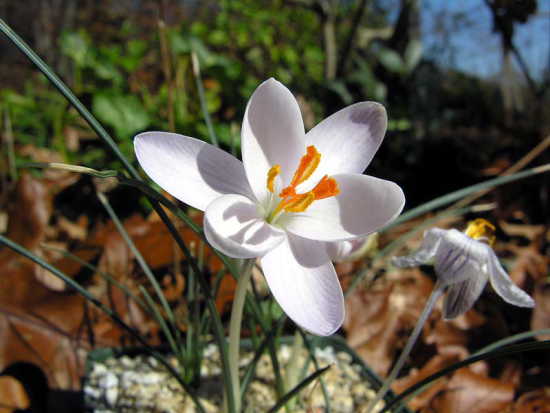
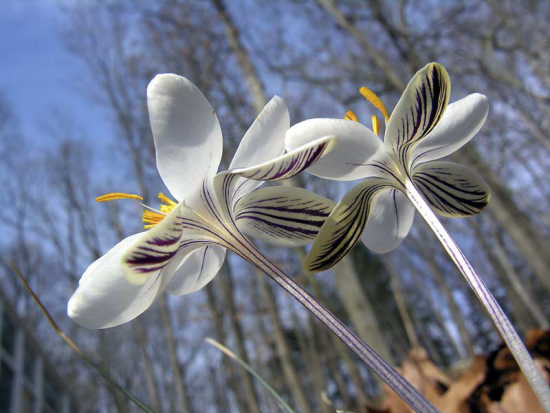
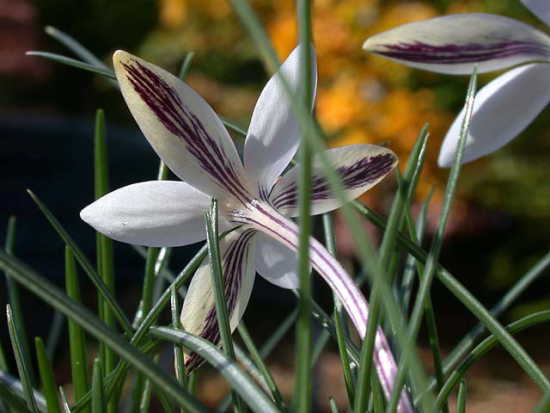
Crocus cancellatus Herb. is a fall blooming Crocus from south Turkey that flowers before the leaves or just with the tips showing. It has slender pale blue flowers striped dark violet on the outside. It grows better in the protection of a bulb frame. Height: to about 8 cm. Photos by Mark Mazer.
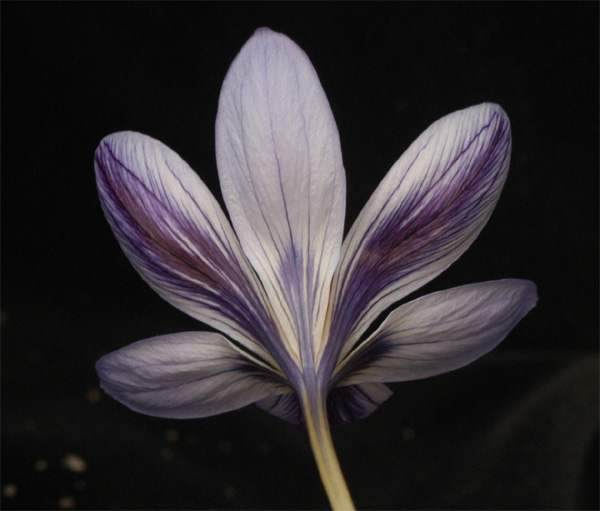

Crocus cartwrightianus Herb. was named by W. Herbert in honor of his friend Mr. Cartwright who was on the staff of the British Consulate at Istanbul in the early 19th century. Mr. Cartwright sent corms to Herbert from the island of Tenos. It is thought to be the source of the sterile triploid Crocus sativus, or cultivated saffron. It is a smaller plant however. It is native to Greece and the Cyclades and blooms in the fall after the leaves are formed. The first two plants shown are a clone, CEH613, which is more vividly colored than the typical forms. Height: 10 cm. Photos by Jane McGary, Mary Sue Ittner (with a pollinator) and Michael Mace.
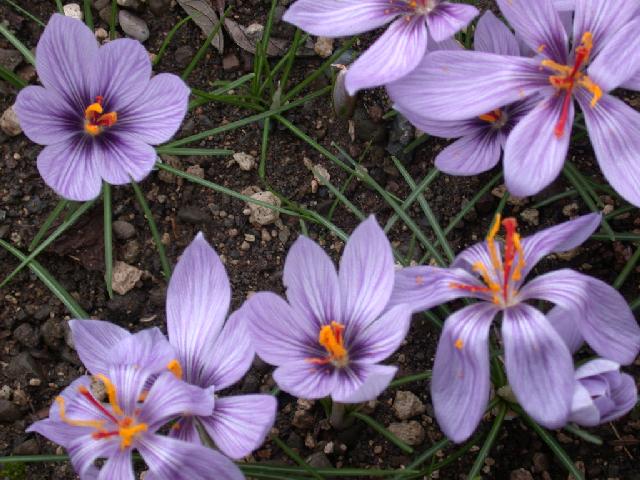
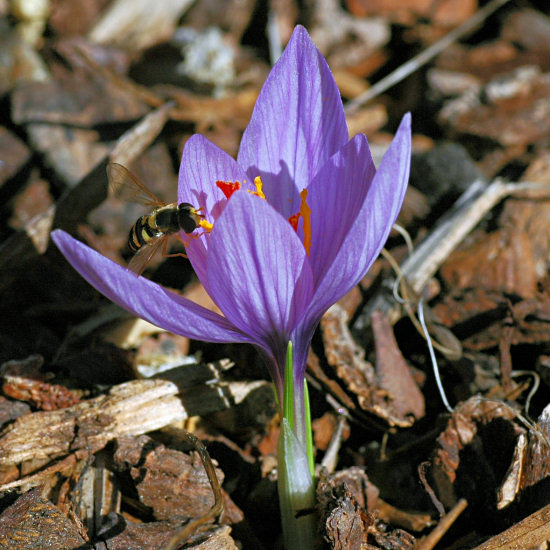
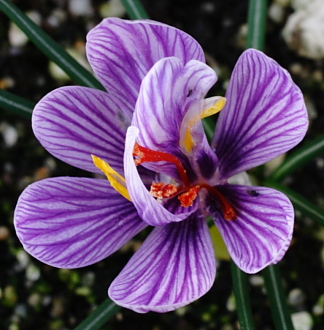
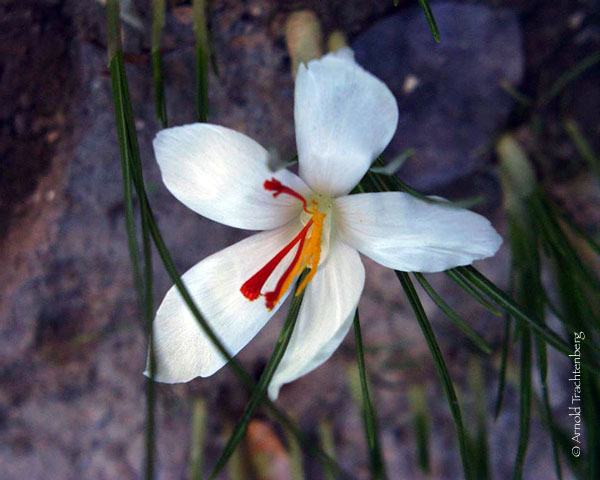
Crocus cartwrightianus 'Albus' is shown in the first photograph by Arnold Trachtenberg. Brian Mathew notes in The Smaller Bulbs that this species often produces white forms which retain the yellow stamens and red style branches. The second photo from Paige Woodward is also of a white form. This one is fragrant with a dark throat and blooms October to November.
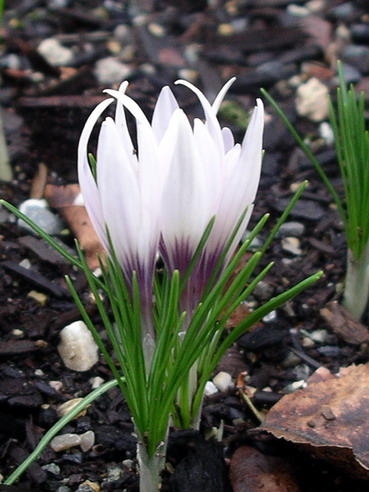
Crocus caspius Fisch. & C.A.Mey. ex Hohen. comes from the western and southern edges of the Caspian Sea at elevations below 1,000 feet (300 meters). It grows among low bushes, but is reportedly hardy in the UK growing in open ground. Height: to about 30 cm. Photos by John Lonsdale.

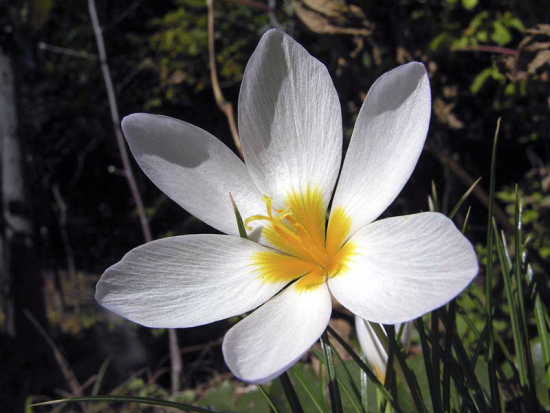
Crocus gilanicus B.Mathew is from western Iran. Tony Goode reports that it grows in forests and pastures, and shouldn't be allowed to become totally dry in summer. It has white flowers and a hairy throat with leaves that emerge long after flowering. Height range: 8-10 cm. Photo 1 by John Lonsdale. Photo 2 by Rimmer de Vries.
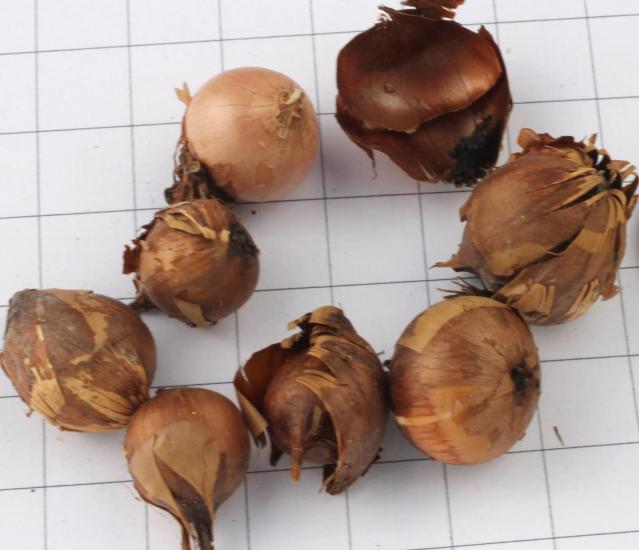
Crocus goulimyi Turrill flowers with the leaves in autumn. There are lilac-blue and white forms with a long slender tube and rounded segments. It is native to Greece where it grows in olive groves. Height: to about 12 cm. The first photo was taken by Arnold Trachtenberg and the second by Mary Sue Ittner. The third photo below, by Jane McGary, shows Crocus goulimyi in the wild on the Mani Peninsula, southern Greece, in a pretty combination with a subshrub of the mint family, perhaps a marrubium. The fourth and fifth photos by M. Gastil-Buhl show corms from Telos Rare Bulbs on a 1 cm grid and one of the blooms from those corms.
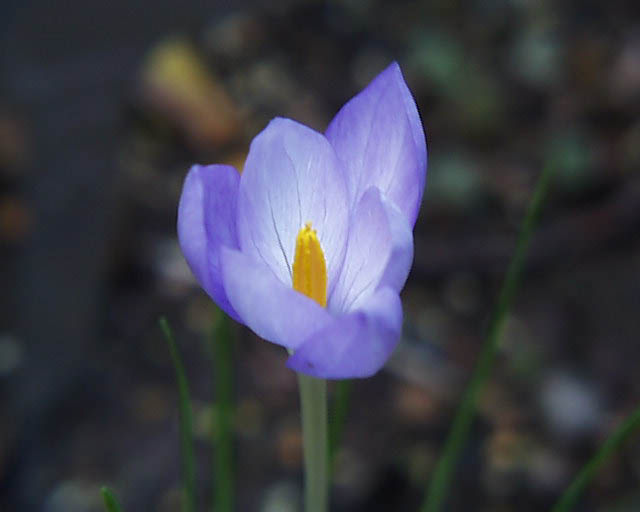
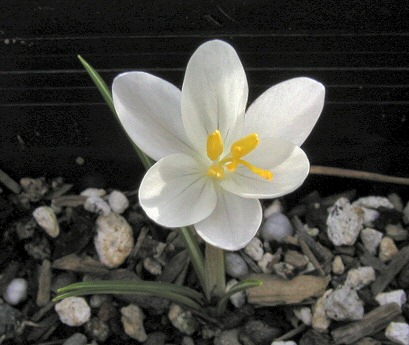

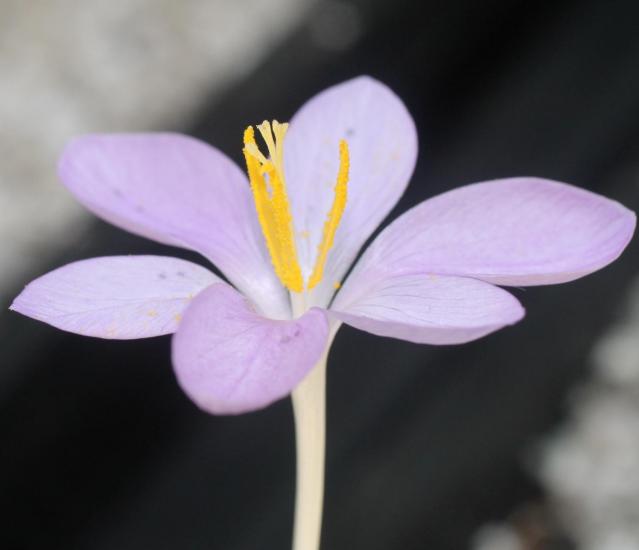
Three photos of this beautiful species by Mark McDonough. The species seems variable, and the form I grow has very broad rounded tepals that overlap. They have a distinct 3-part symmetry about the flowers, reminiscent of Crocus banaticus, the 3 inner tepals white, contrasting richly with the lavender outer tepals. The sweetly fragrant flowers are held on long tubes that are surprisingly weather resistant. The 3rd photo was taken on November 13, 2005, after several nights of hard frost, but still sending up a succession of ethereal goblets.
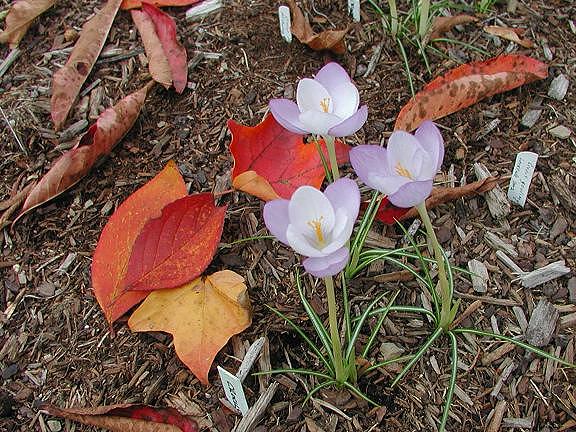
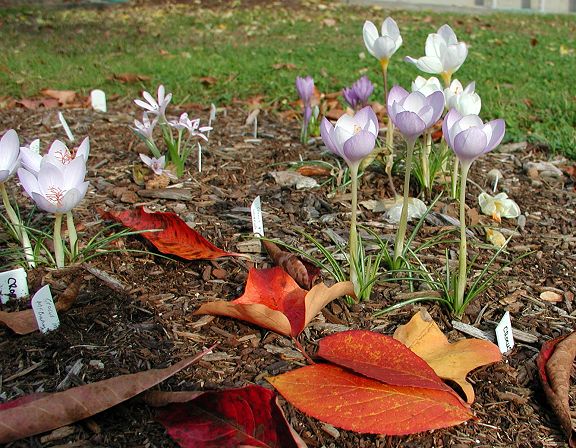
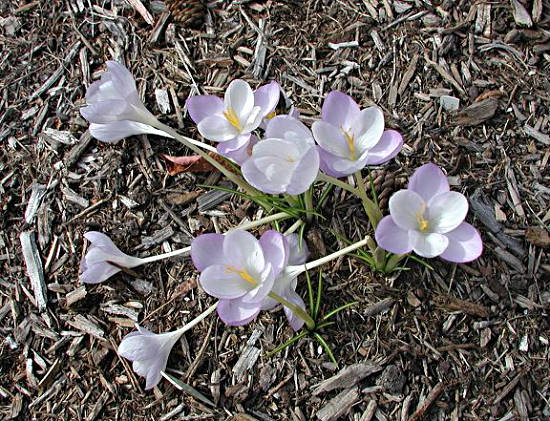
Crocus goulimyi 'Mani White' was nominated as a favorite white flowered bulb by John Grimshaw who lives in the U.K. He wrote: "I have found (it) to be a very reliable garden plant, forming a clump and coming up with a good tuft of flowers each autumn." Photos by Mary Sue Ittner.
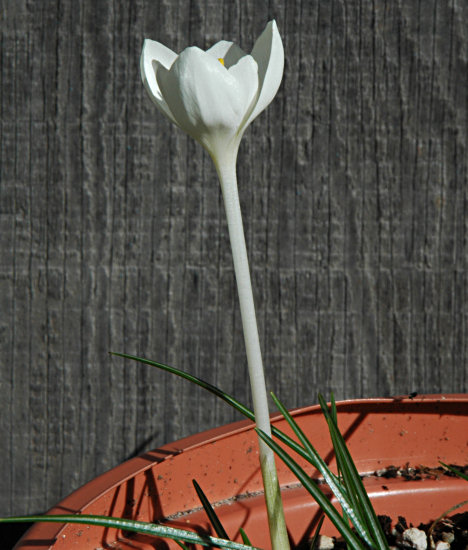
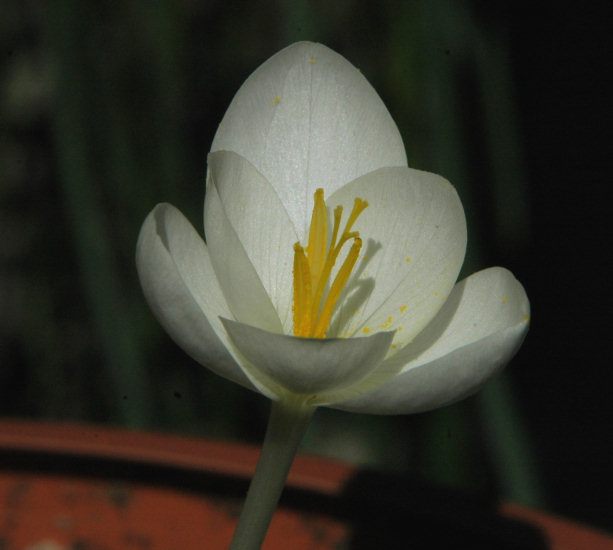
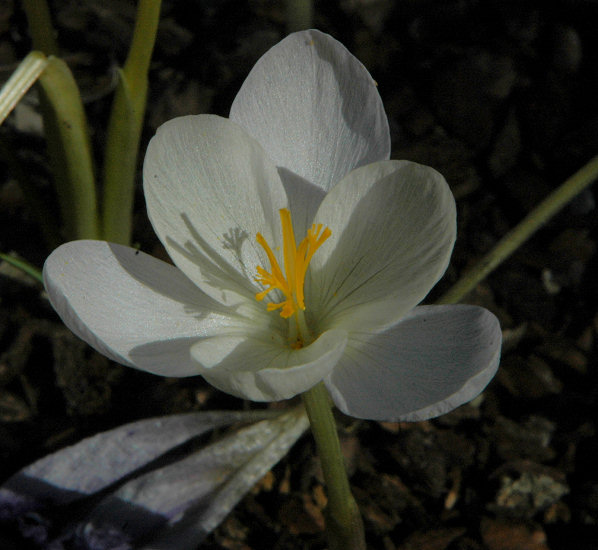
Crocus hadriaticus Herb. is a fall-blooming species native to S. and W. Greece, the Peloponnesus, and nearby islands. Flowers are always white, sometimes with a purplish zone at the upper part of the tube on the outside. Height: 4 cm. The first two photos, taken in Oregon in October by Jane McGary, show a group of plants grown from seed collected in the wild and also a robust clone known in the trade as var. chrysobelonicus, a name Mathew (1982) does not accept as valid. This is a good garden plant in northwestern Oregon, despite its provenance, which would suggest that it lacks cold-hardiness. Leaves are barely to well developed at flowering. The last three photos were taken by Mary Sue Ittner. The insect in the next to last picture hovered until the bee which had been visiting the flower left. The last photo shows the corms on a 1 cm grid.
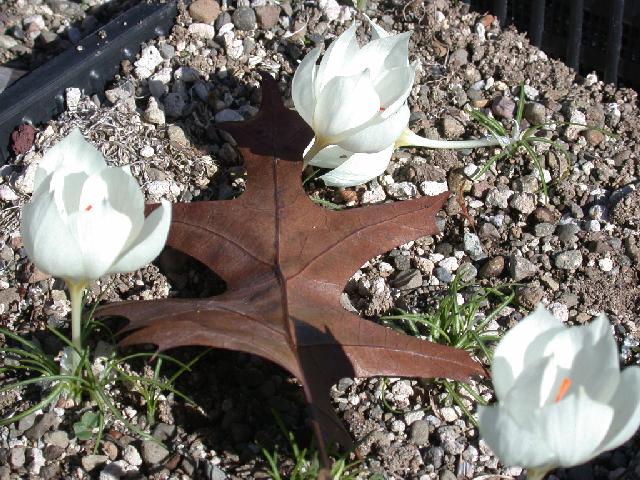
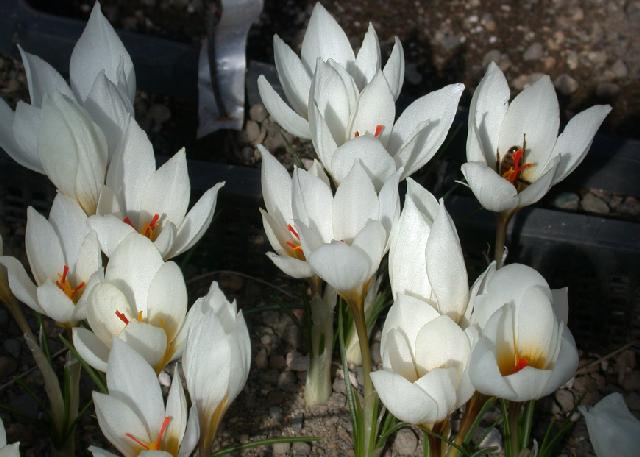
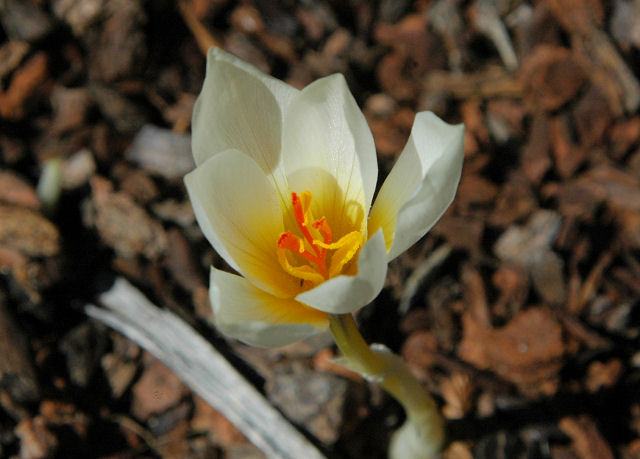
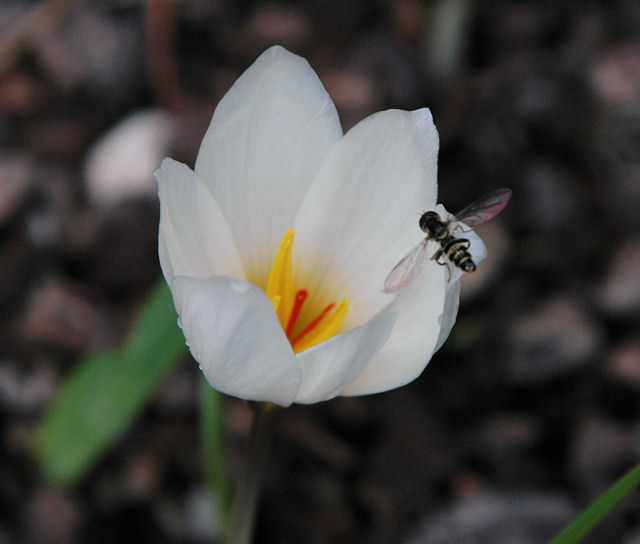
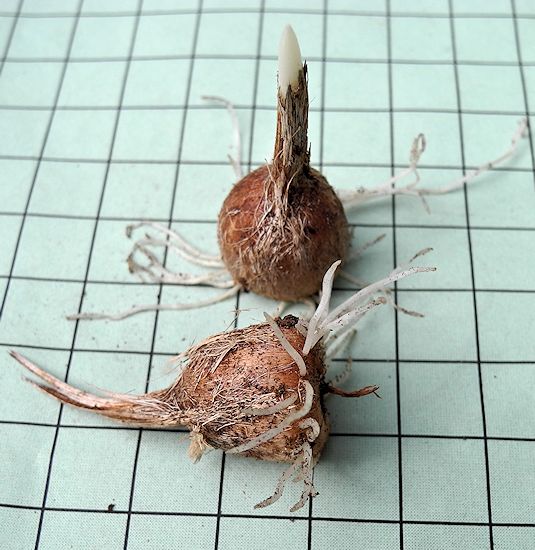
Crocus hermoneus Kotschy ex Maw grows in Israel and Jordan. It resembles Crocus cancellatus, but has a rather papery corm tunic which splits lengthways. Leaves are not visible or barely visible at flowering. Height: 7 cm. Photos by John Lonsdale.
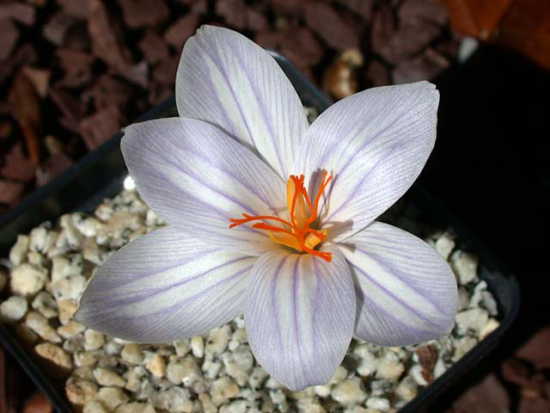
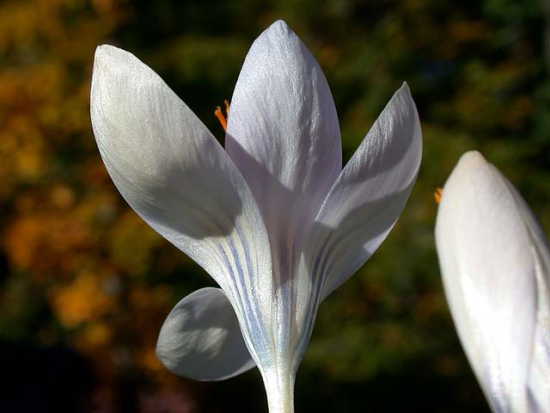
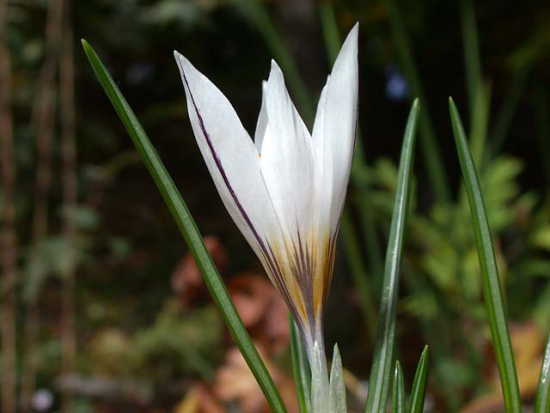
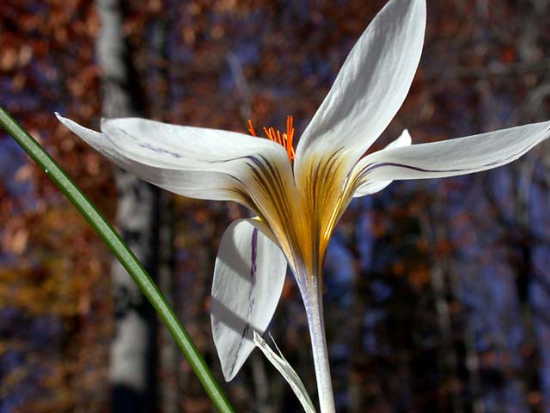
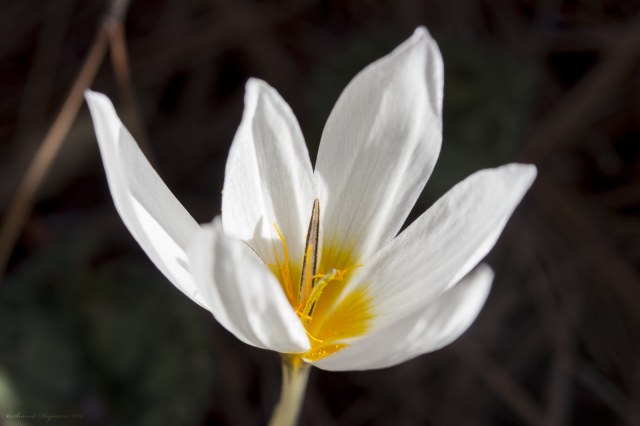
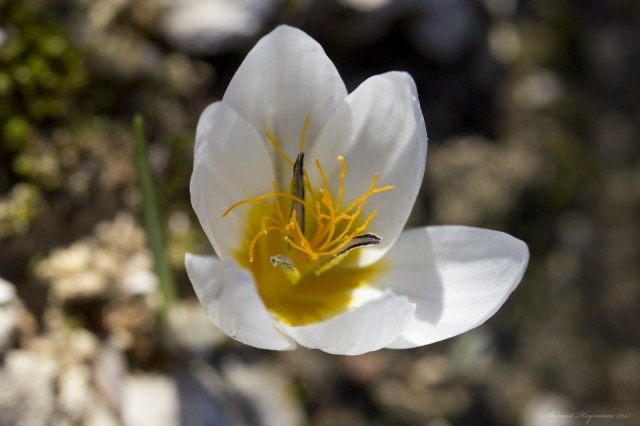
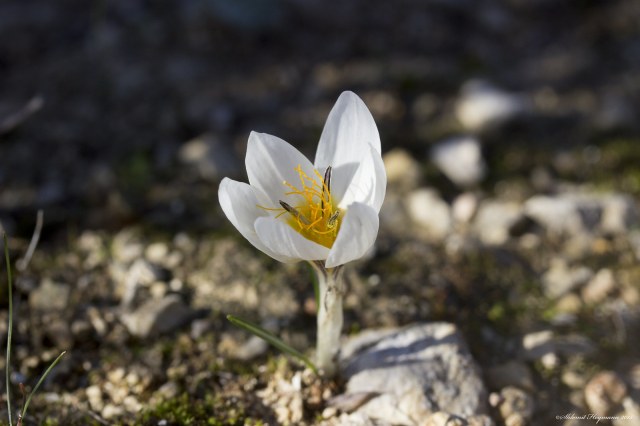
Crocus hyemalis Boiss. & Blanche grows in Israel, Palestine, and Syria. It may need protection in cold climates. It starts blooming in mid-winter after the leaves have emerged. It has white flowers with purple stripes on the outside and a yellow throat with blackish stamens. Height range: 4-8 cm. First three photos by John Lonsdale. Photos 4 through 6 by Shlomit Heymann in habitat, in Israel, blooming December 2015.
Crocus index - Fall Blooming crocus i-o - Fall Blooming crocus p-z - Spring Blooming crocus a-b - Spring Blooming crocus c-e - Spring Blooming crocus f-l - Spring Blooming crocus m-s - Spring Blooming crocus t-z