The genus Moraea can be divided into five groups: Galaxia, Gynandriris, Hexaglottis, Homeria, and Moraea. This wiki page is for the group Hexaglottis which was formerly a cormous genus in the Iridaceae family from the winter rainfall region of Southern Africa now considered to belong to the genus Moraea. The five species listed below have long, narrow, basal leaves and a branched flower stem carrying yellow, short-lived flattish flowers that face upwards. They have filiform style branches that are simple or divided to the base extending between the stamens. Information and pictures of the other Moraea groups can be found by clicking on these groups or the Moraea group pages listed below or found in the Moraea index where all species are listed alphabetically.
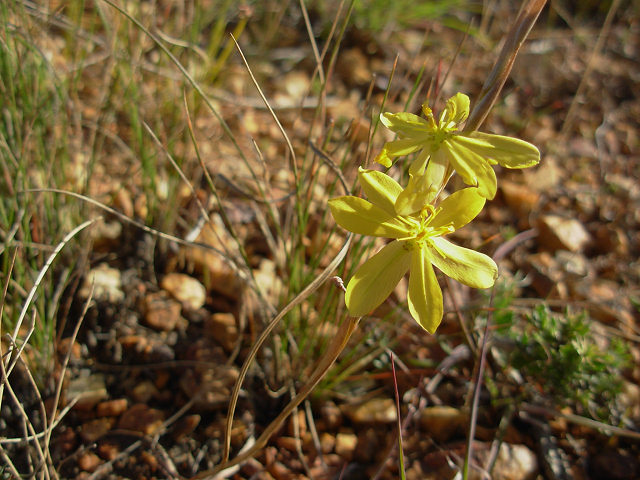
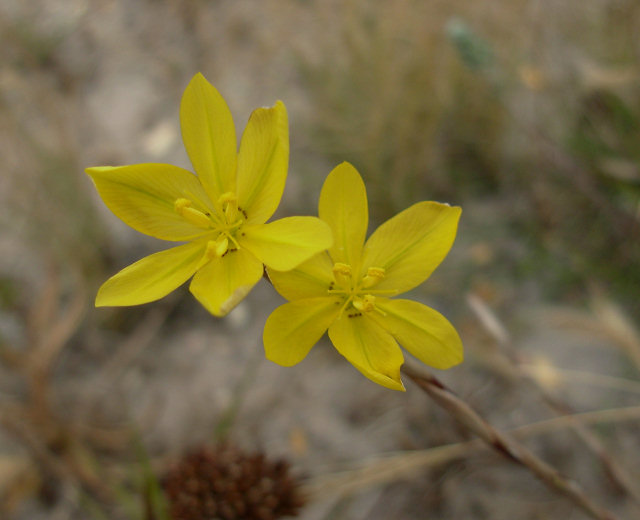
Moraea lewisiae (Goldblatt) Goldblatt syn. Hexaglottis lewisiae Goldblatt is found in a variety of soils and habitats (mostly dry) over a wide area (Clanwilliam to Humansdorp.) It has whiplike leaves and fragrant yellow flowers pressed laterally along the flowering stem with 6 more or less equal tepals and a style divided into 6 threadlike branches. Two subspecies are recognized by some. Height range: 30-60 cm. Photos number one and two were taken by Bob Rutemoeller and Mary Sue Ittner September 2006 near Citrusdal. The last two photos from Mary Sue Ittner are of garden plants grown from seed.
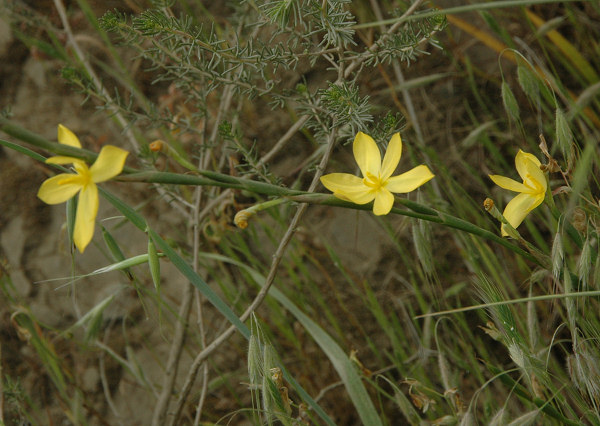
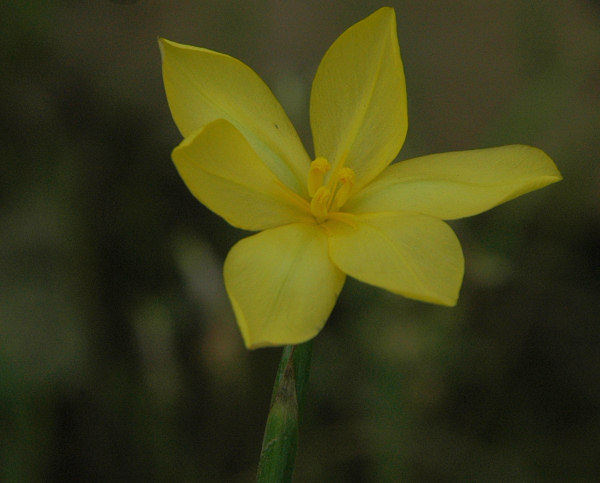
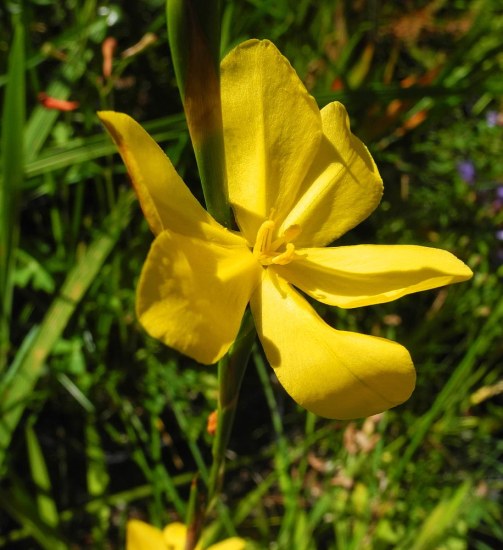
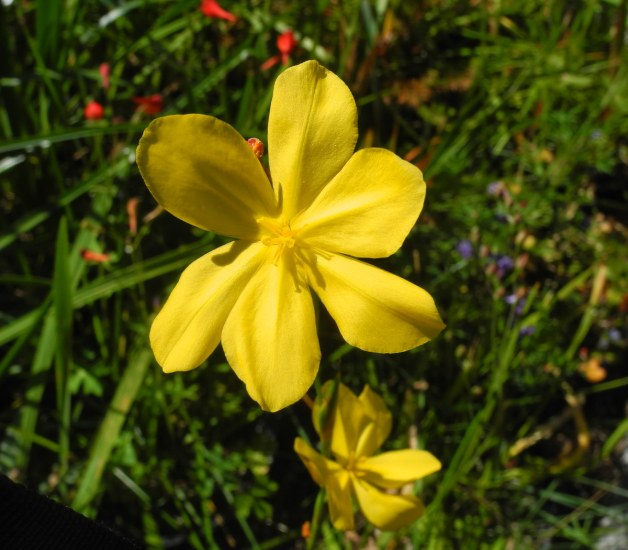
Moraea lewisiae ssp. lewisiae has cylindrical capsules and outer tepals 19-24 mm and is found on dry sandstone and clay slopes over a wide area from the western Cape to the southeastern Cape. Photos taken by Cameron McMaster near Caledon and Hawston View Rd. in the Overberg.
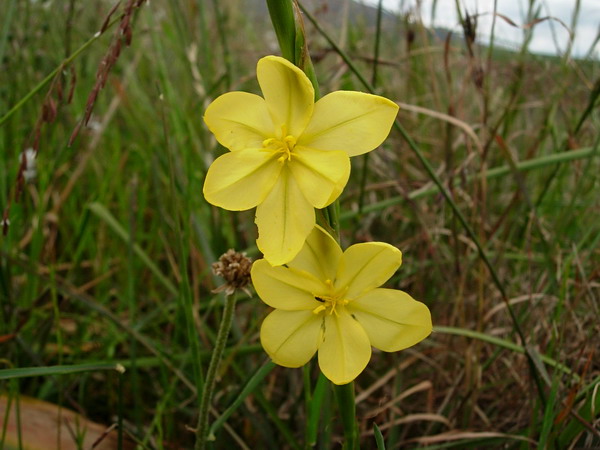
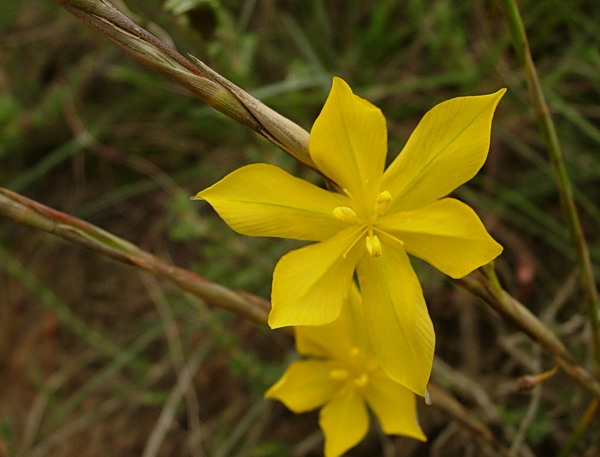
Moraea lewisiae ssp. secunda Goldblatt has oblong to ellipsoid capsules and the outer tepals are larger, 23-30 mm. It is found on stony slopes and flats from Namaqualand to the Bokkeveld Mountains). Photos below taken by Cameron McMaster September 2011. The second photo has a large insect on the flower.
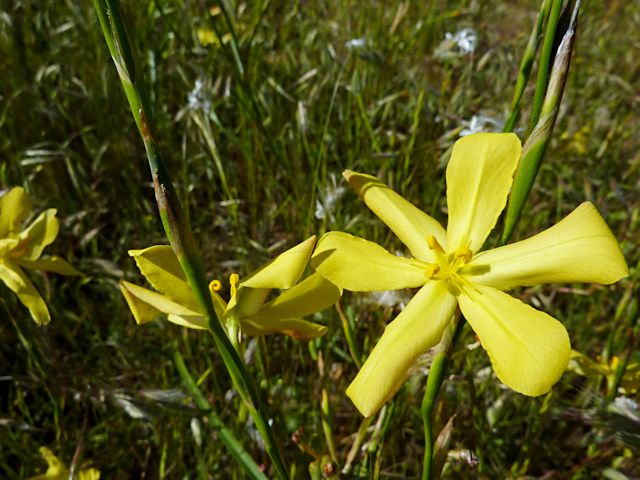
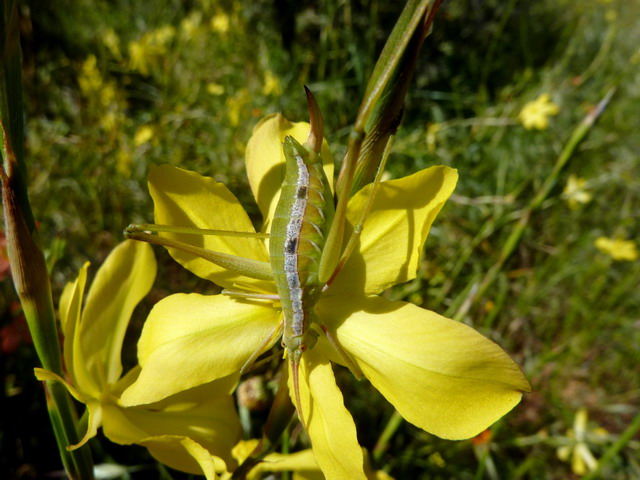
Moraea longifolia (Jacq.) Pers., syn. Hexaglottis flexuosa (L.f.) Sweet] is found on shady, moist sandstone sites in the southwestern Cape. Height range: 30-60 cm.
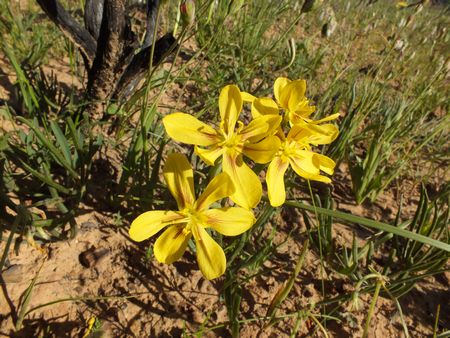
Moraea nana (L.Bolus) Goldblatt & J.C.Manning syn. Hexaglottis nana L. Bolus is found on rocky granite and sandstone slopes from Namaqualand to Citrusdal. It has two to several linear leaves at the top of the stem and yellow to salmon clustered flowers with spreading limbs. The style has six filiform arms extending between the stamens. Height: 20 cm. The first five photos by Bob Rutemoeller and Mary Sue Ittner of some particularly attractive specimens seen in Namaqualand September 2006. The last photo was taken by Rod Saunders.
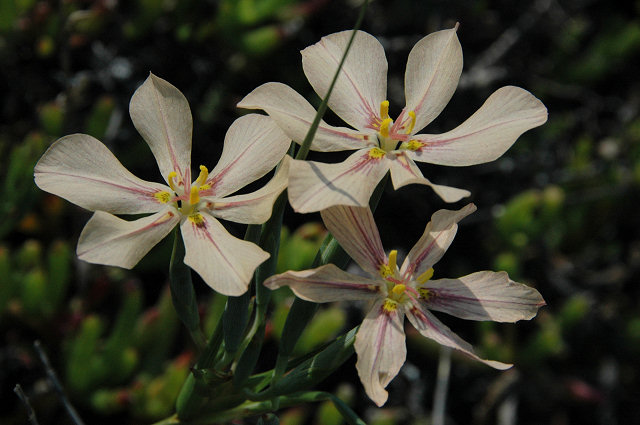
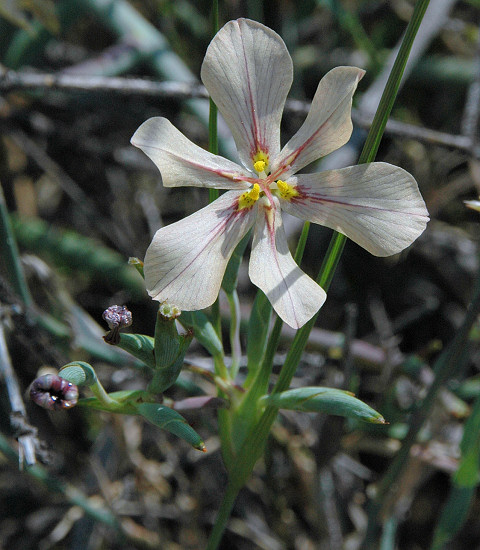
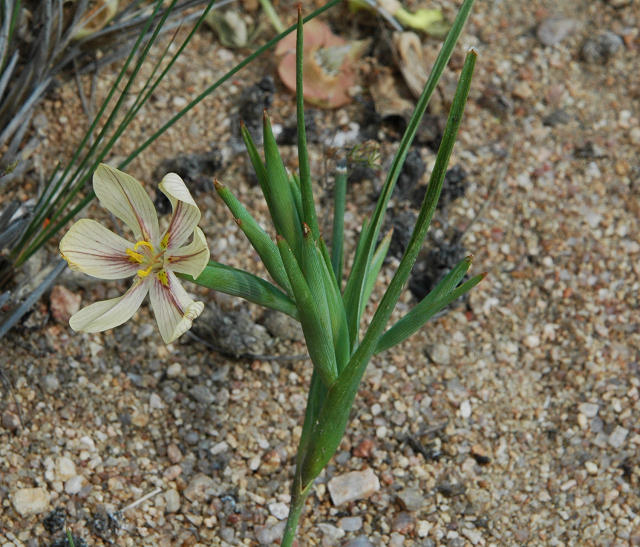
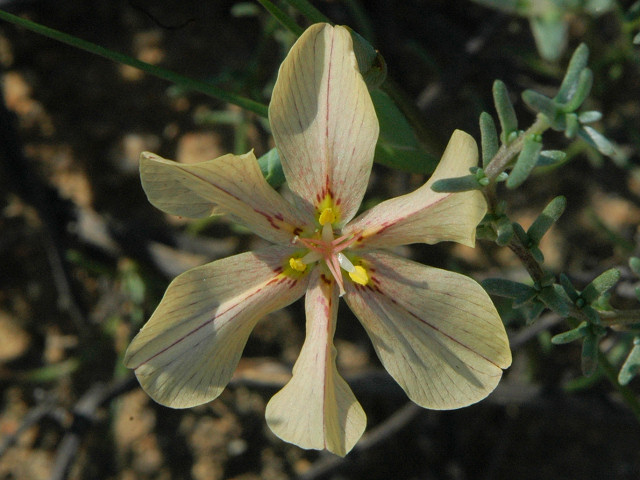
Moraea riparia (Goldblatt) Goldblatt syn. Hexaglottis riparia Goldblatt grows along streams and rivers in rocky sandstone from Clanwilliam to Tulbagh. Height range: 30-60 cm.
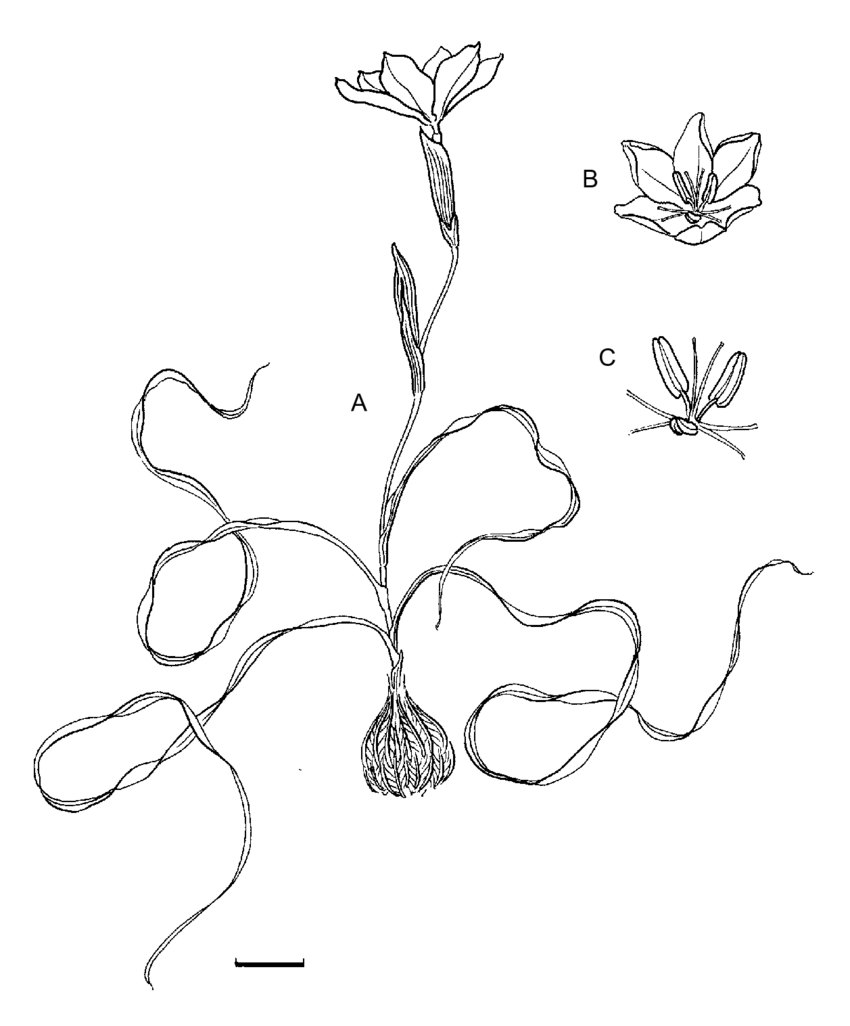
Moraea thermarum Goldblatt & J.C.Manning grows in cracks in shaded cliff faces in the desert of southern Namibia. Growing from 3 to 10 cm, this species has yellow flowers that last a single day and flowers in spring (September-October). The plants are similar to Moraea namaquana, but have narrower leaves, grow in different habitats, and are smaller. Drawing by John Manning shared with his permission from the Goldblatt and Manning paper naming eight new Moraea species. Figure notes: A, flowering plant; B, flower; C, androecium and style. Scale bar: A, B, 10 mm; C, 5 mm.
Moraea virgata (Jacq.) Sweet, syn. Hexaglottis virgata Jacq. is found on shale and granite soils from southern Namaqualand and western Karoo to Port Elizabeth. It is similar to H. lewisiae but flowers have a slender tube and an ovary enclosed in the bracts. Height range: to about 80 cm. Photos taken by Cameron McMaster near Napier and Fairfield in the Overberg.
Galaxia - Gynandriris - Homeria a-j - Homeria k-z - Moraea group a - Moraea group b - Moraea group c-e - Moraea group f - Moraea group g-i - Moraea group j-m - Moraea group n-r - Moraea group s - Moraea group t - Moraea group u-v - Moraea hybrids – Moraea index