Hippeastrum Herb. is a genus in the family Amaryllidaceae with 70-75 species and 600+ hybrids and cultivars. The genus is native to tropical regions of the Caribbean, Mexico, and South America. The Hippeastrum main page has information about cultivation and lists the species and hybrids that are included in the PBS wiki.
This page contains Hippeastrum species p-z. Other species are found on the Hippeastrum species a-o page.
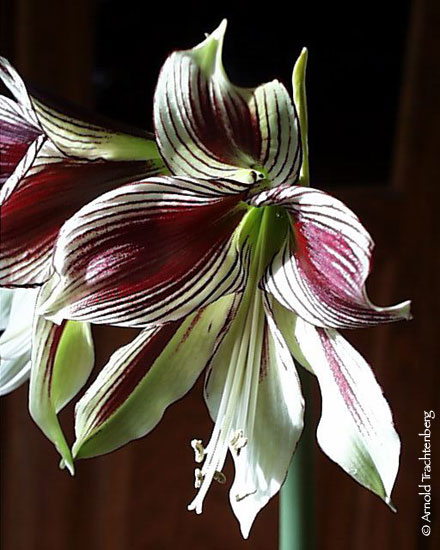
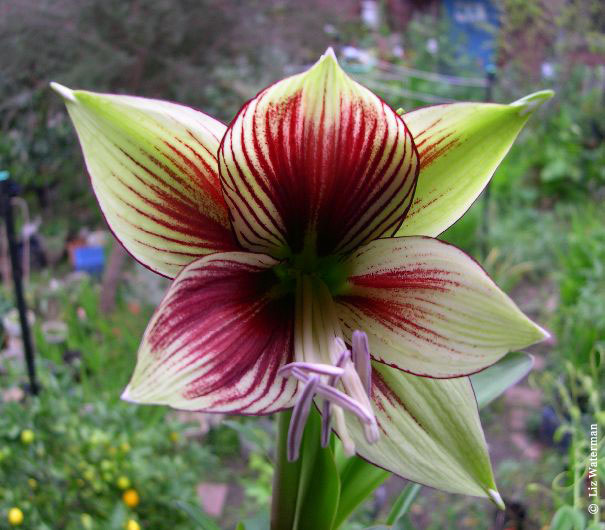
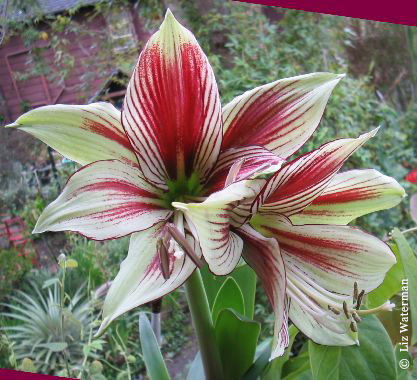
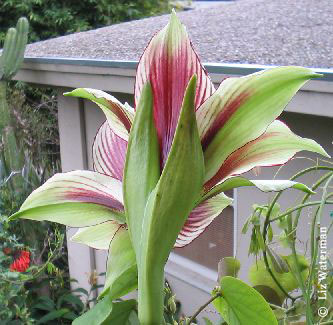
Hippeastrum papilio (Ravenna) Van Scheepen see the Hippeastrum papilio page.
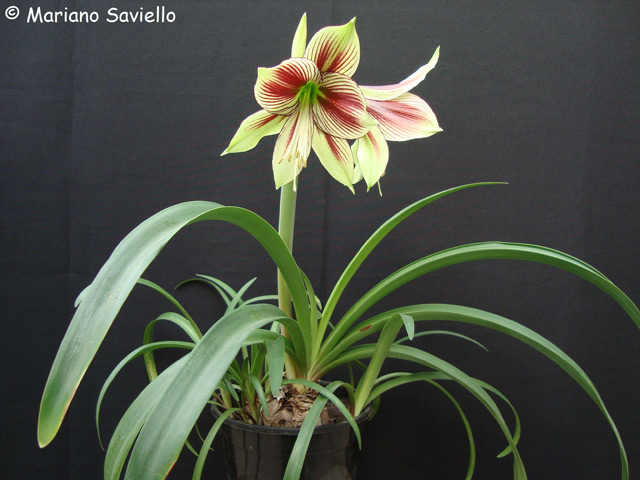
Representative photos of this species. Photo 1 was taken by Jennifer Hildebrand, photo 2 by Arnold Trachtenberg, photos 3-5 by Liz Waterman, and photo 6 by Mariano Saviello.

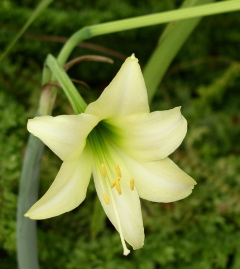
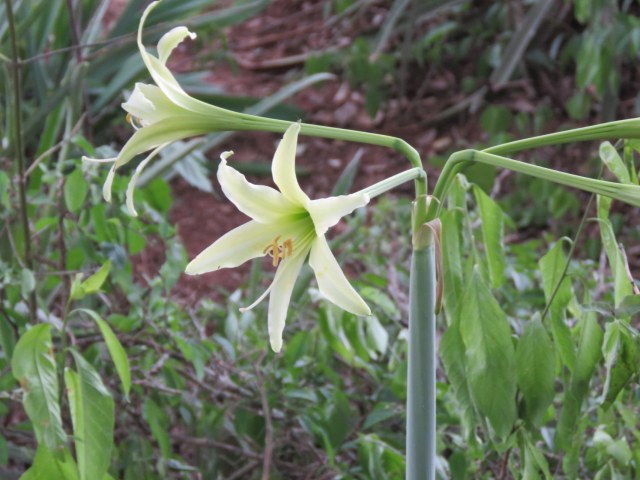
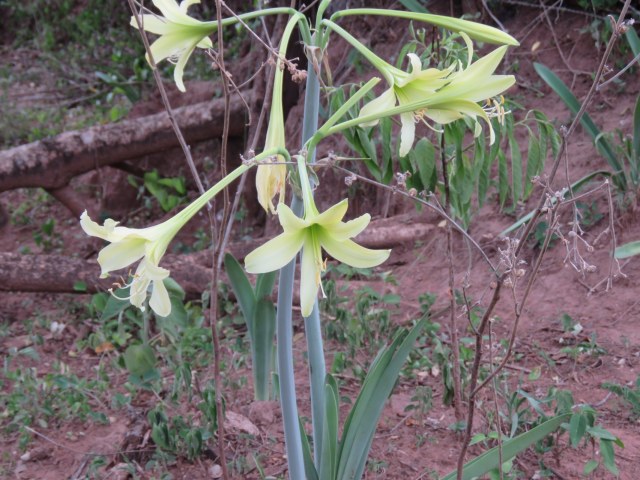
Hippeastrum parodii Hunz. & A.A.Cocucci is native to Bolivia and northwestern Argentina and is considered a "tropical desert" bulb as it comes from hot "dryish" land. The tepals are white to cream to greenish-yellow. In habitat, plants receive rain from December-March (part of spring and summer). Dormancy takes place during part of autumn, winter, and part of spring. In cultivation, the bulbs are dormant for the winter and half the spring. Photo 1 from Doug Westfall taken July 2008. Photos 2 and 3 by John Carr, who discovered this population South of Timboy in Tarija province Bolivia. Plants were also seen north of the village.
Hippeastrum petiolatum Pax is from Argentina. This species is similar to Hippeastrum striatum and Hippeastrum puniceum. The following is a description of the species: Paraperigone of minute scales at the throat of the tepal tube. Tepal segments unequal in length, somewhat ruffled. Perigone 6-7 cm, tepal segments 1-2 cm broad at the middle. Bright scarlet-red with purple veins, greenish-yellow in the throat. Trifid stigma. 3 to 4 fowers, rarely 5 flowers. Height: 30-45 cm. Photos by Doug Westfall. The first image (May 10, 2004) is very nearly the actual size of the flowers. This form is quite orange in color. See Hippeastrum 1924 for what may be a long lived example.
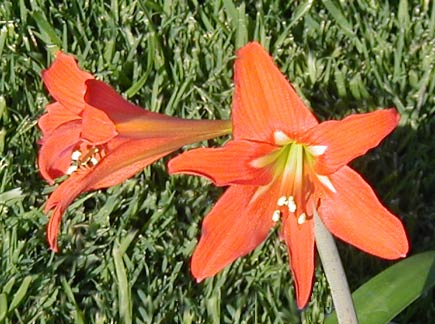
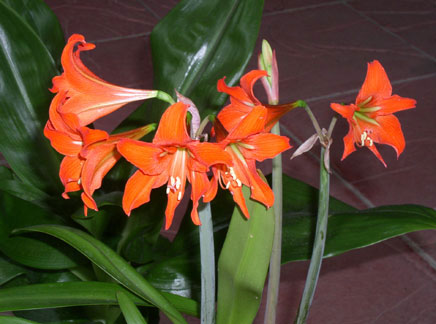
Hippeastrum psittacinum (Ker Gawl.) Herb. is a species from Brazil that grows to about 60 cm. This plant was grown from seed by grower Chris Underhill in NSW Australia, who received seed from South America. There are many cultivars of this species and he may have grown it from 'Atibaia' Allan Ladd took these photos on 13th September 2013 of the flower and the whole plant growing in his garden. Atibaia is a town in the southeast of Brazil, near São Paulo. The species is native to eastern and southern Brazil; psittacine means resembling a parrot.

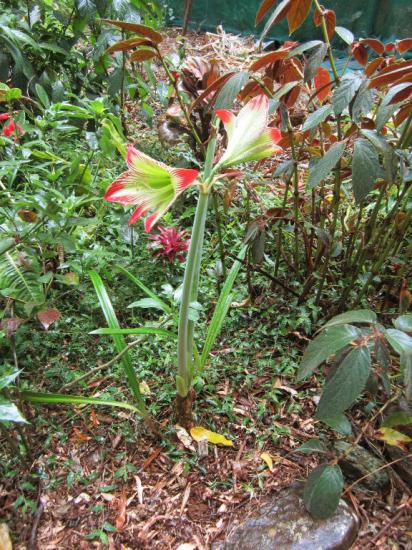
Hippeastrum puniceum (Lam.) Voss is widespread in tropical Central and South America. This species is similar to Hippeastrum striatum and Hippeastrum petiolatum. The following is a description of the species: Paraperigone of obscure bristles at the throat. Perigone 10-13 cm. Tepal segments 3.2-3.8 cm at the middle (petal segments narrower, especially the lowermost), yellowish-green at the base. Bright scarlet, red or salmon. Capitate stigma (triangularly three lobed). 2-4 flowers depending the variety. Height range: 40-60 cm.
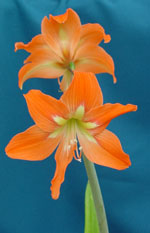
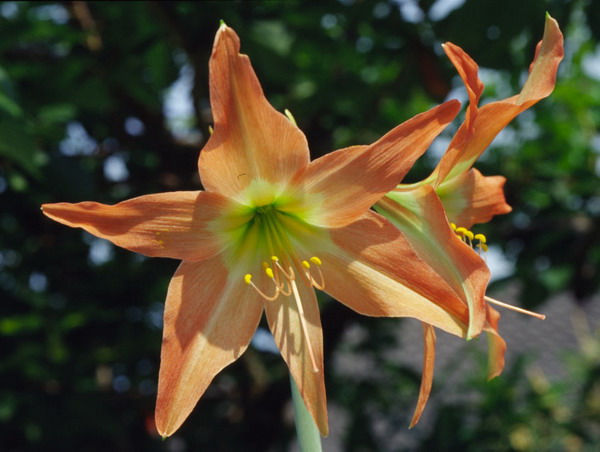
The first photo taken March 2004 by Lee Poulsen is of some bulbs he gathered down near sea level in Haleakala National Park on the island of Maui, Hawaii. Lee was struck by the color of the flowers, unlike other species he was familiar with. The second photo taken March 2004 by Cynthia Mueller, also identified by an earlier name, Hippeastrum equestere (Aiton) Herb., was found in Sealy, Central Texas. She described it as "Very orange -- two blooms per scape, small plant. Self fertile." The third photo by Hans Joschko is of a plant that experts think looks like this species; the plant is from a friend of his and was collected from the Chaco in Bolivia. The fourth photo by Richard Sullivan is of a clump in the wild in Sept 2024, near Ouro Preto, Minas Gerais, Brazil
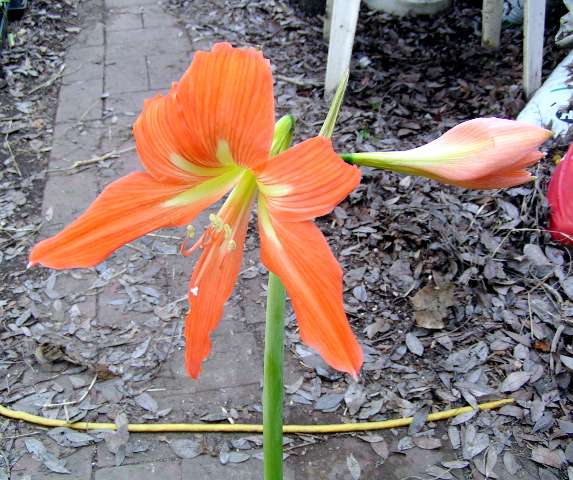

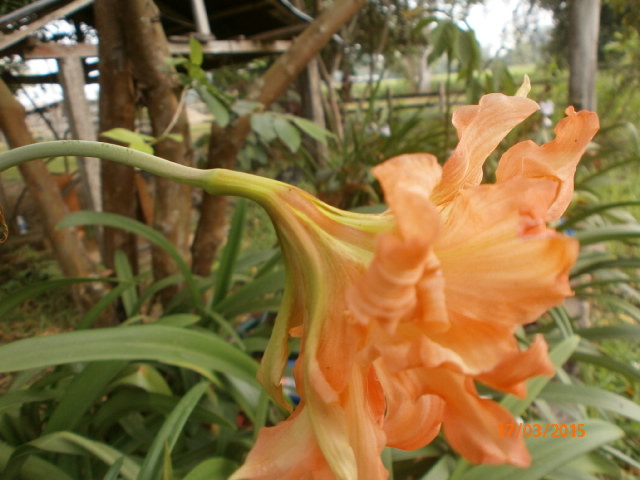
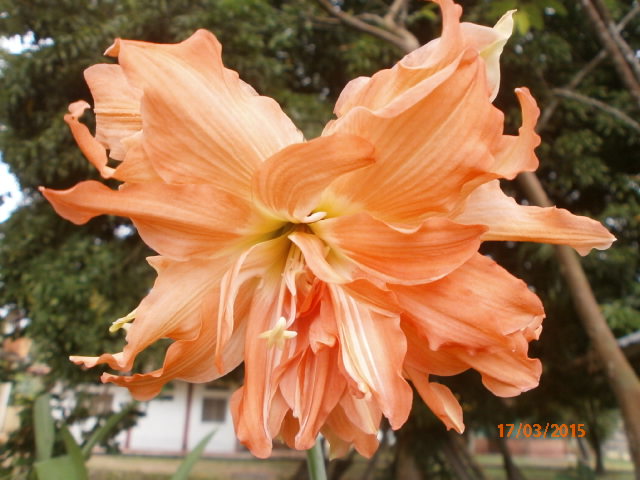
Hippeastrum puniceum var alberti is not a published name. Mariano Saviello on Jim Shields' blog is quoted: "One of the double flower Hippeastrum. Baker (1888) suggested that this form should be placed under H. reginae, but H. reginae does not have the orange flowers that this species has, and the plant characters indicate that this form is allied to H. puniceum. The tepal tube is obscured on account of the double form. Is cultivated in US, mainly in Florida where it has been used in the production of double hybrids commercial Hippeastrum." A native of the Antilles islands, it has a small bulb, 3- 4 cm and the foliage is also small 30-40 cms; there are 1 or 2 flowers in the scape. It is the only multi-tepal Hippeastrum, with 32 tepals, 2-3 functional stamens. The crossing of this plant with simple Hippeastrum produces the famous double hybrid Hippeastrum, or multipetal Hippeastrum. It thrives well in warm weather. Photos by Fabio Francisco Suarezmotta.
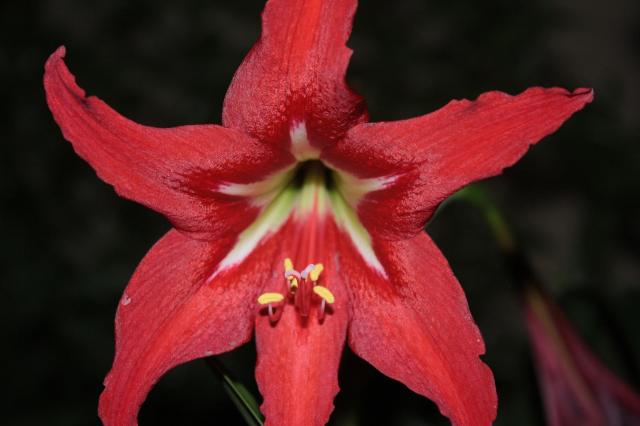
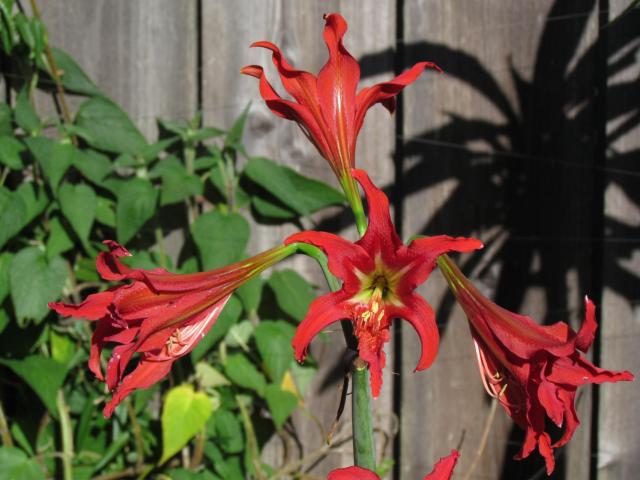
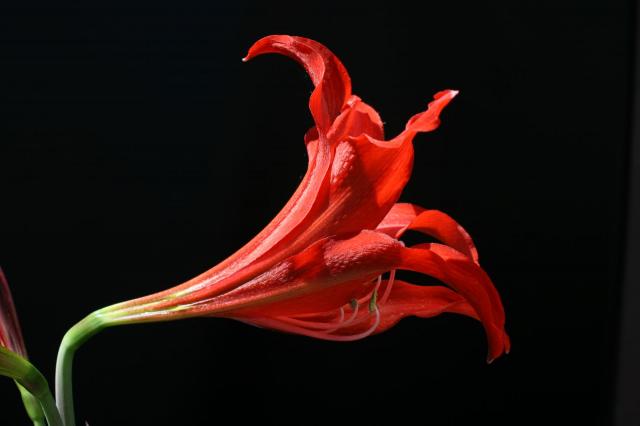
Hippeastrum reginae (L.) Herb. is a widespread species in South America. Height range: 30-60 cm. Photos 1-3 were taken August 2005 in southern Brazil by Tarcísio Eduardo Raduenz. Photos 4-6 were taken by Nhu Nguyen of seed-grown plants.
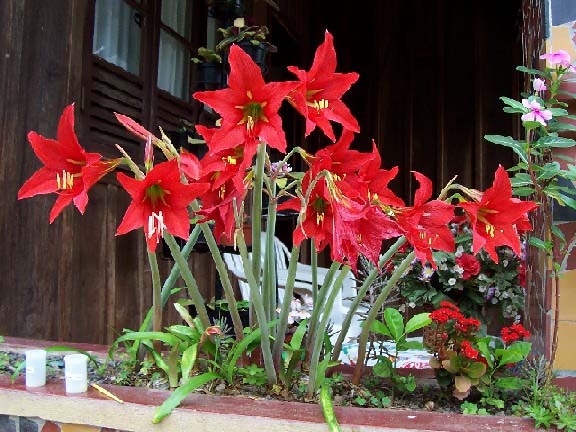

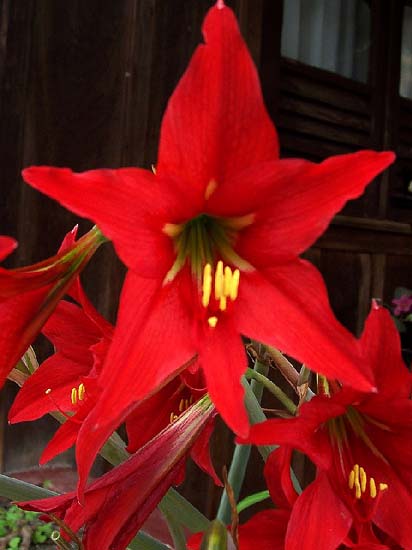
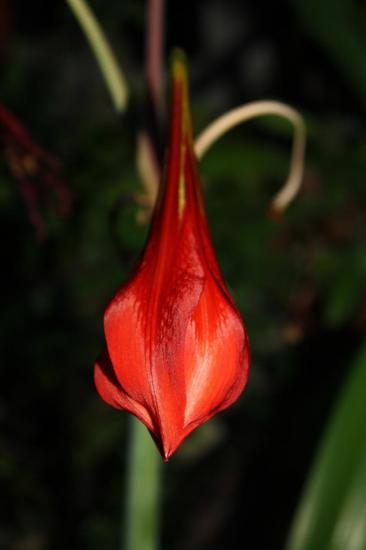
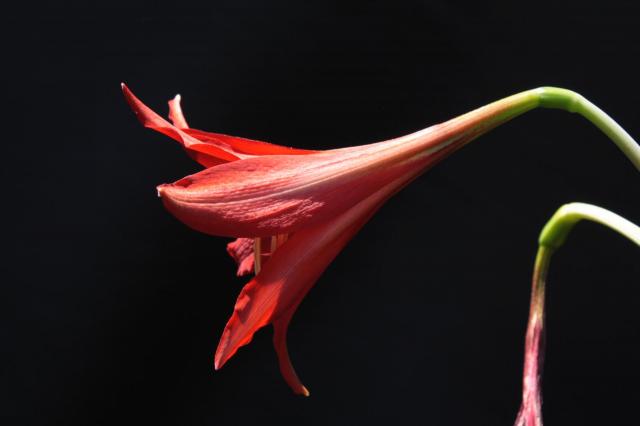
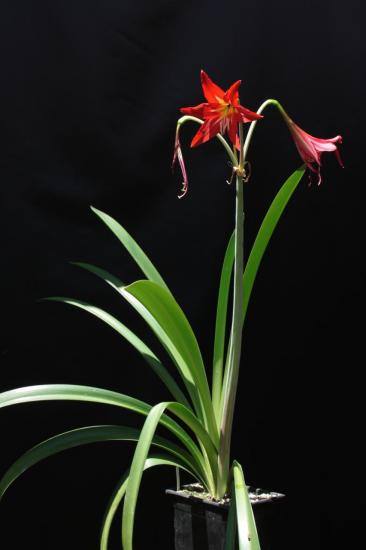
The photos below by Nhu Nguyen show some seedling variations of the species. When these photos were taken, the petals were much thinner and wrinkled, but the following year they were much less so. Petal development may be influenced by humidity.


Hippeastrum reticulatum (L'Hér.) Herb. see the Hippeastrum reticulatum page.
Representative photos of this species. Photo 1-4 were taken by Mariano Saviello, photo 5 by Alan Meerow, and photo 6 by Jay Yourch.
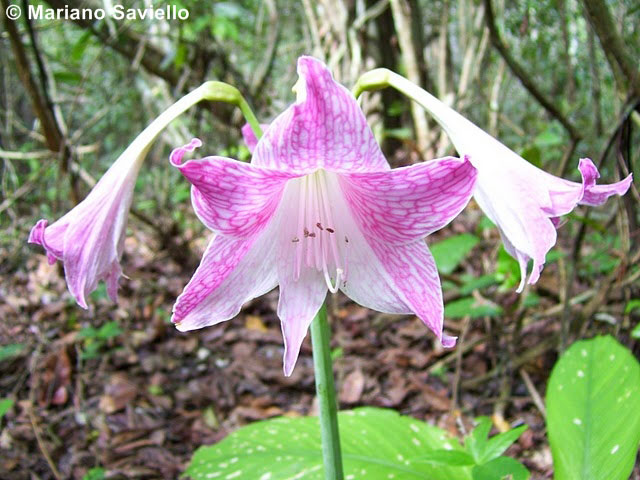
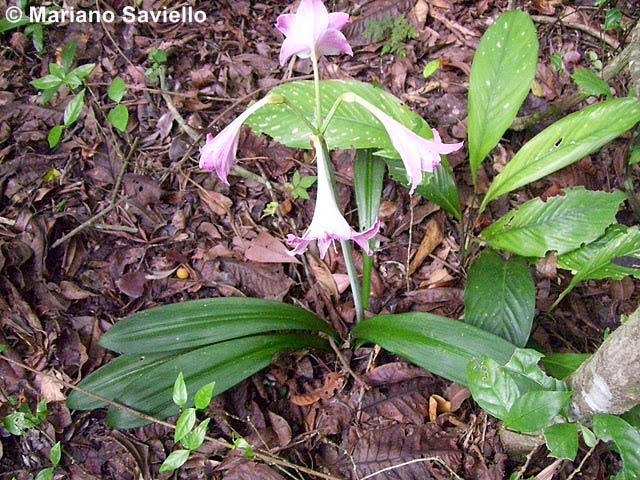
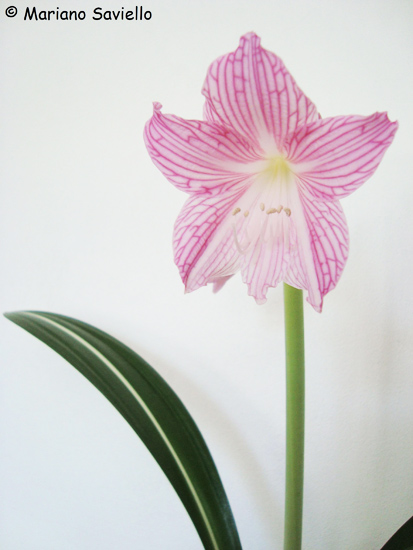
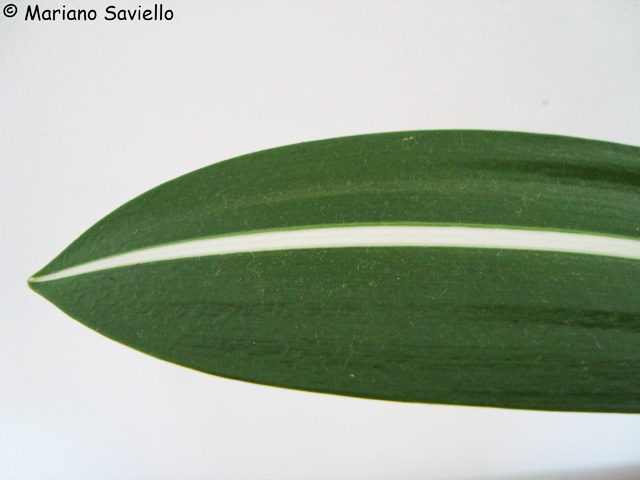
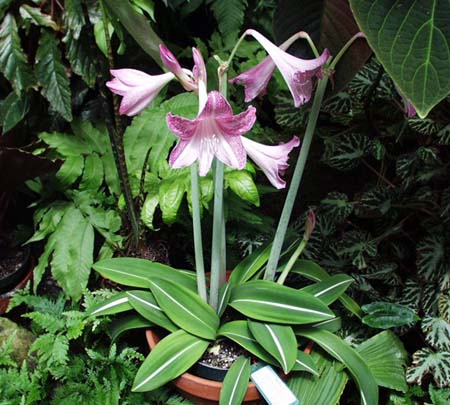
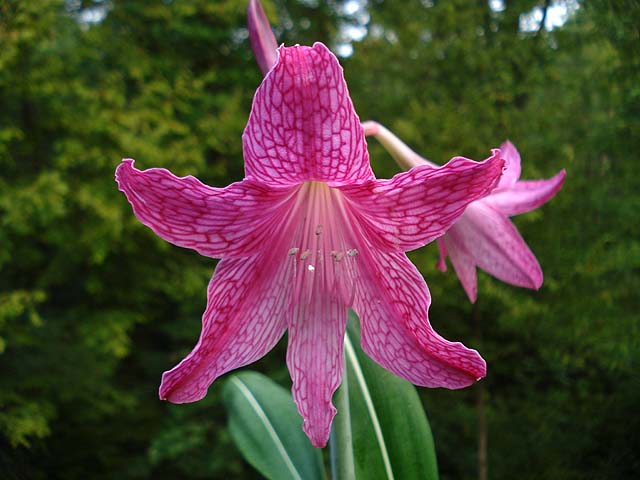
Hippeastrum santacatarina (Traub) Dutilh is a southern Brazil species with medium size flowers found growing in bogs. Height range: to about 75 cm. Photograph by Germán Roitman.
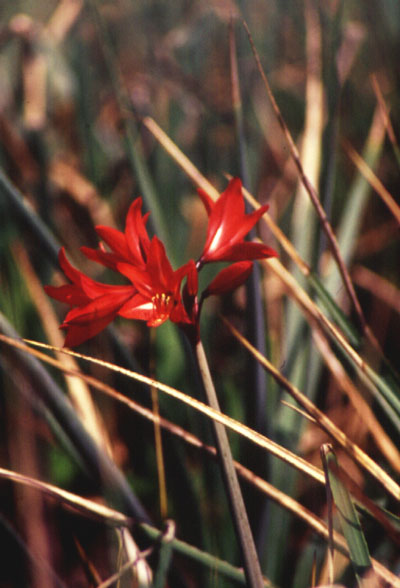

Hippeastrum solandriflorum (Lindl.) Herb. in 2025 is considered to be a synonym of Hippeastrum elegans (Spreng.) H.E.Moore., a species native from Costa Rica to Brazil. Deciduous, cool/dry in winter. It requires a deep pot; plant with neck of bulb at soil-level. Height range: 30-60 cm. Photo by Den Wilson.
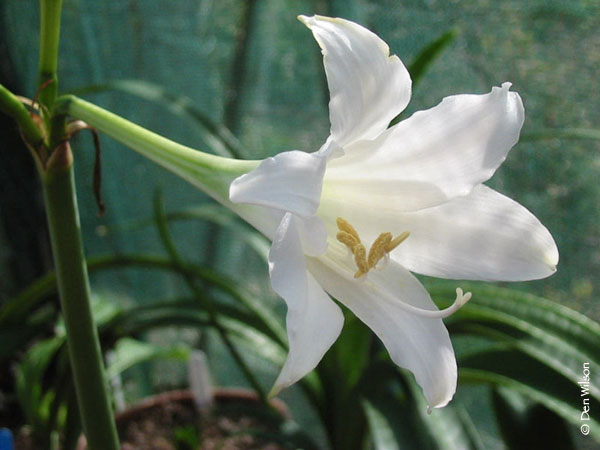
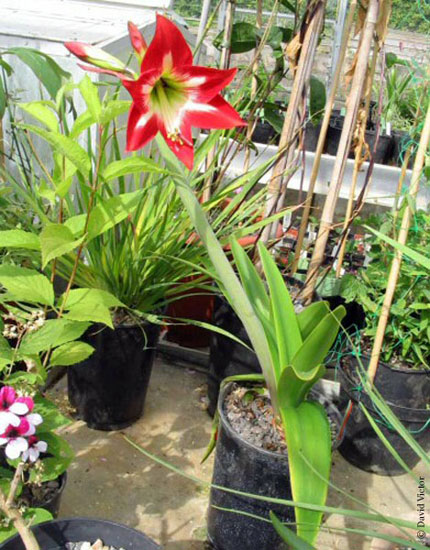
Hippeastrum sp. ex Cuzco was collected near Cuzco, Peru by David Victor. Photo by David Victor.
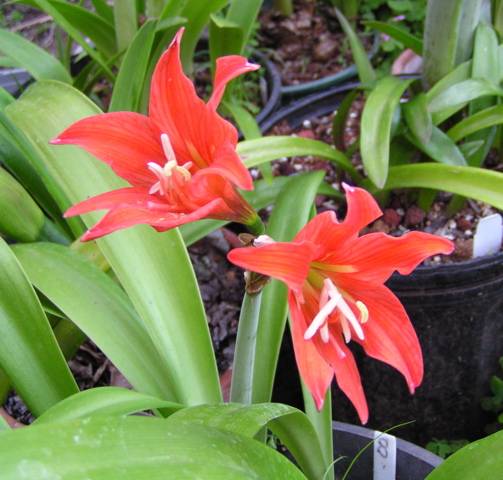
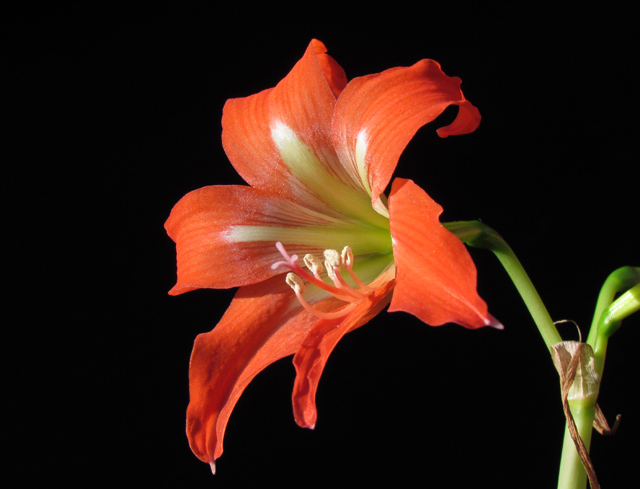
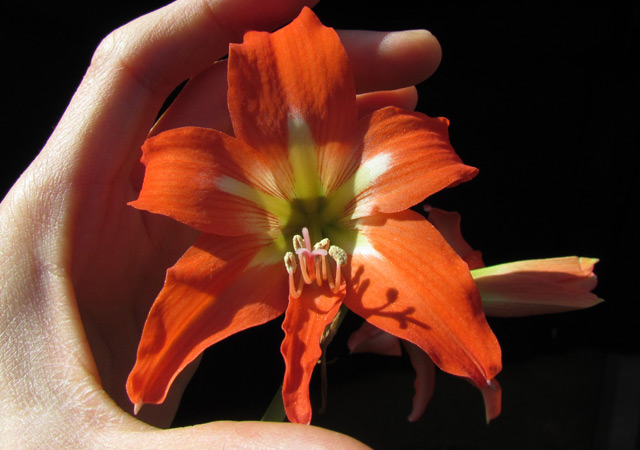
Hippeastrum striatum (Lam.) H.E.Moore is native to Brazil. This species produces numerous bulbils that may be washed or broken off in nature. Because of this prolific production of bulbils, it has naturalized in tropical areas such as Hawaii. There is no special dormancy requirements to bloom this species which can occur in just 2 years from seeds. This species is similar to Hippeastrum petiolatum and H. puniceum. The following is a description of the species: Paraperigone of obscure bristles at the throat of the tepal tube. Perigone 7.6-10 cm, tepal segments 2-2.5 cm broad at the middle, bright nasturtium-red with a green keel extending halfway up the tepal segment. Trifid stigma. 2-4 flowers. Height range: 45-60 cm.
Photo 1 below was taken by Lee Poulsen in April 2004. Lee says that "the flowers are much smaller than all my other hippeastrums, about 2 inches (5 cm) across and 3 in (7.5 cm) deep. Photos 2-4 were taken by Nhu Nguyen.
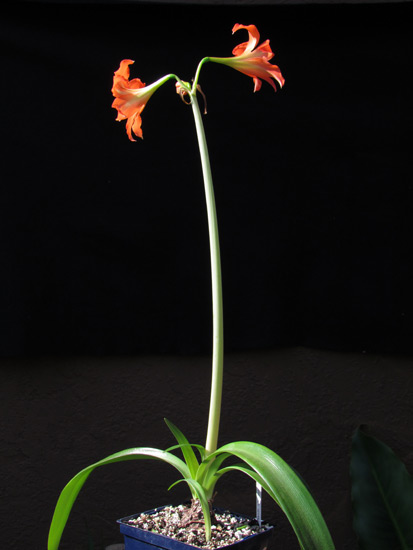
Photos below taken by Ton Wijnen show a cross between the clones known as 'Petiolatum' and 'Saltão'. This plant seems to be widely cultivated.
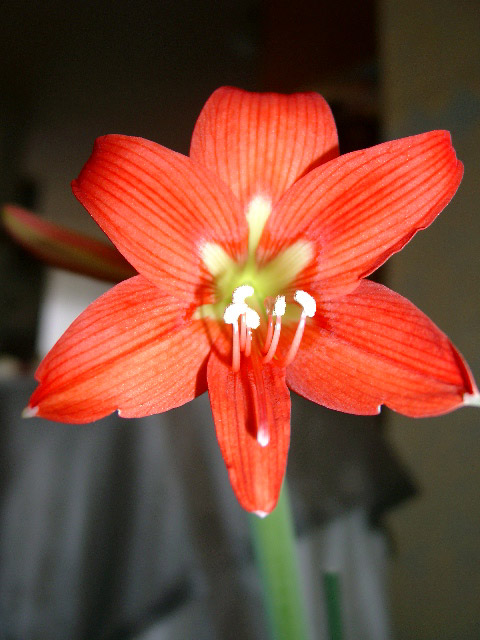
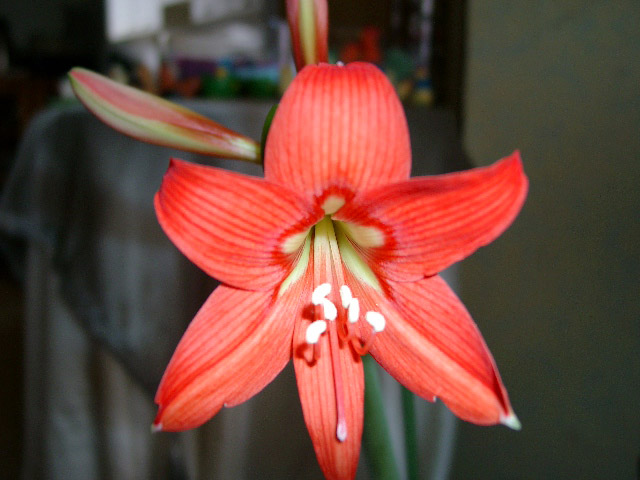
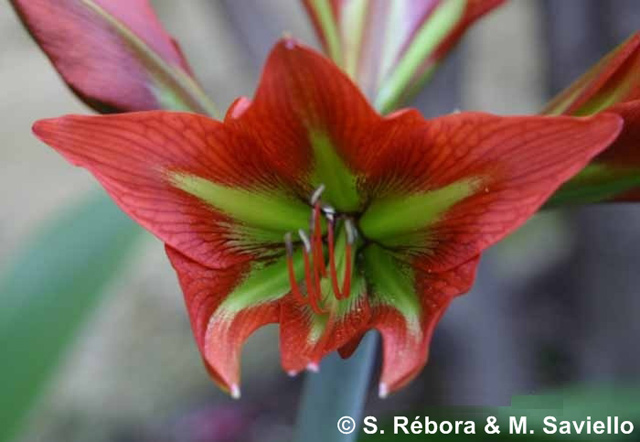
Hippeastrum teyucuarense (Ravenna) Van Scheepen has vivid orange brick veined flowers and is extremely rare in cultivation. A recent study by Daviña et al. showed that similarities exist between this species and Hippeastrum iguazuanum (Ravenna) T.R.Dudley & M.Williams and Hippeastrum glaucescens (Mart. ex Schult. & Schult.f.) Herb. This species has flat strap like leaves, whereas H. iguazuanum has leaves that are channeled and with the edges folded backwards. It is an early spring bloomer (September in the Southern hemisphere) and offsets as easily as H. iguazuanum. Hippeastrum teyucuarense has been reported to be found in San Ignacio (province of Misiones, Argentina). In Teyú-Cuaré Provincial Park, Province of Misiones, Argentina, it grows in a single hill called "Rock of Victoria" among rocks and rich soils. There has been another report of it growing in Corrientes as well. Local people, who call it "Red Lily", used to dig it and take it home as a garden flower and, as a result, it is possible to see it in gardens forming clumps that are heavily virused. It sets no seed and it seems the offsetting form is the only one around. The leaf shape and the color is quite irregular. Height range: 30-60 cm. The photo below show a flower stalk with four flowers, taken by S. Rébora, a colleague of Mariano Saviello.
Hippeastrum vittatum (L'Hér.) Herb. is from Peru. Height range: 30-60 cm. Photograph by Kelly Irvin, April 2003.
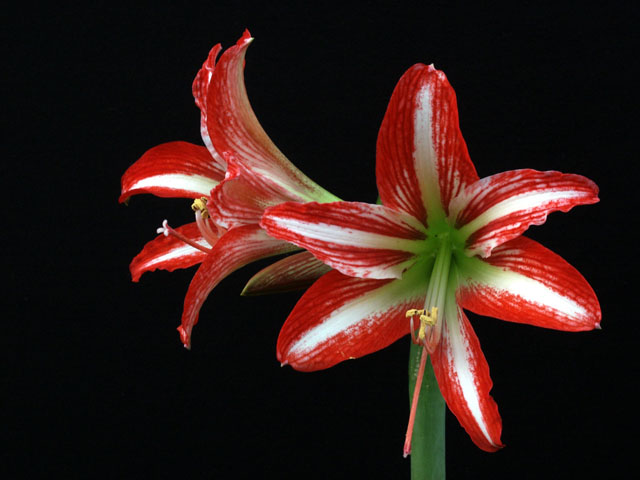
Hippeastrum yungacense (Cárdenas & I.S.Nelson) Meerow is native to Bolivia. It is named for the Yungas, a stretch of forest along the eastern slope of the Andes, from Peru and Bolivia to northern Argentina. Height range: 30-90 cm. The photo was taken by Ton Wijnen of plant sold as Hippeastrum yungacensis 'Kiara'. Hippeastrum yungacensis is not the correct spelling and probably came from Amaryllis yungacensis, its older name.
Hippeastrum hybrids A-B - Hippeastrum hybrids C-H - Hippeastrum hybrids I-N - Hippeastrum hybrids O-Unnamed - Hippeastrum index - Hippeastrum species a-o - x Hippeastrelia
For images of Hippeastrum that appear to be virused consult the wiki Virus page