Ixia is a genus in the Iridaceae family with 100 species mainly from the western, southwestern, and southern winter-rainfall areas of the Northern, Western and Eastern Cape Provinces of South Africa. Information and photographs illustrating Ixia p-z can be found on this page.
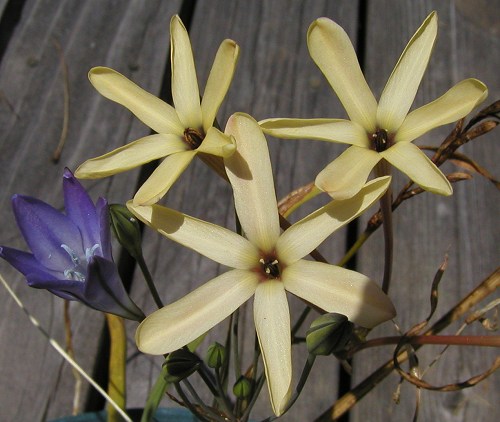
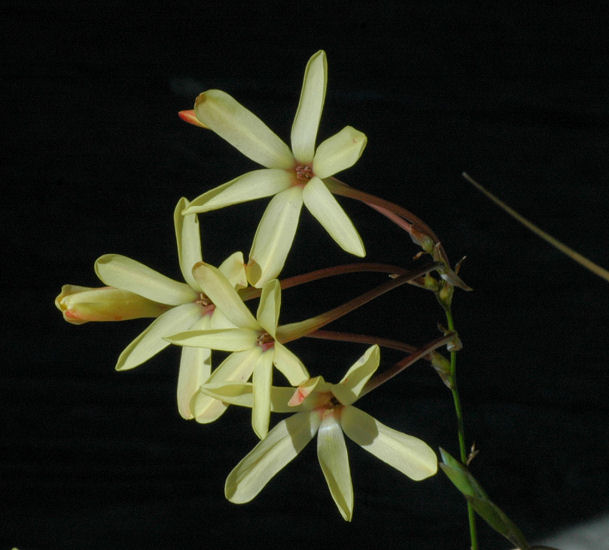
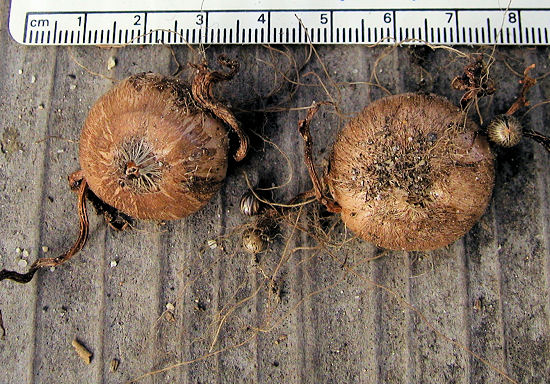
Ixia paniculata D.Delaroche is found on moist sandy slopes and flats in the northwest and the southwest Cape. It has large cream to biscuit flowers that are often reddish on the outside and in the throat. This species is distinguished by having the longest tube in the genus. Plant height range: 40-100 cm tall. The photos below were taken by Mary Sue Ittner. A stray Triteleia laxa has found its way into the pot in the first picture. The second picture illustrates the very long tube and the third shows the corms.
Ixia parva Goldblatt & J.C.Manning, syn. Ixia latifolia var. parviflora G.J.Lewis is a plant of low stature (7-12 cm) with a twisted spike, 3 leaves with the uppermost leaf sheathing the stem, purple to rust colored floral bracts and flowers with pinkish purple vertical tepals that are yellow in the throat and have a base that is edged red. Flowering is from mid August to October; flowers are fragrant and filaments are exserted. This species is distributed in the Western Karoo between Laingsburg and Matjiesfontein where it grows in decomposed shale on south trending slopes. Photos below from iNaturalist taken by kevinjolliffe and shared under a CC BY-NC license and Tony Rebelo in October in that area and shared under a CC BY-SA license.
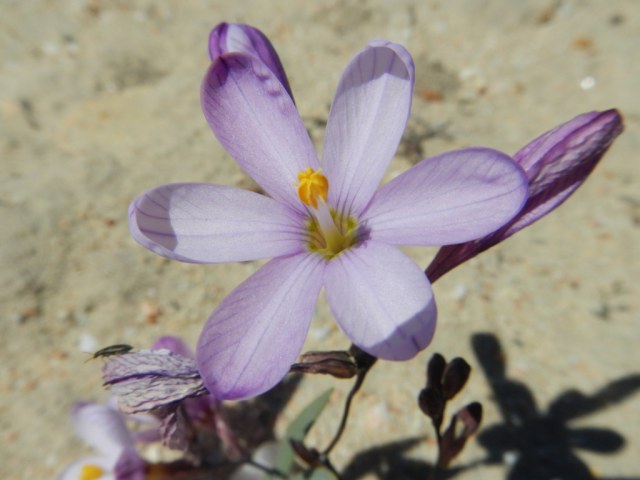
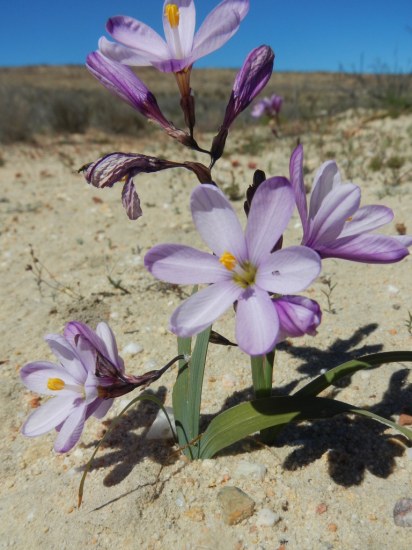
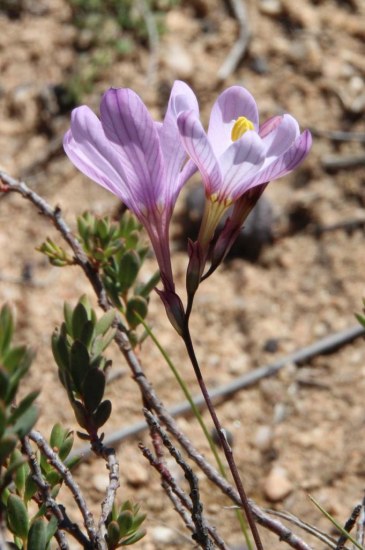
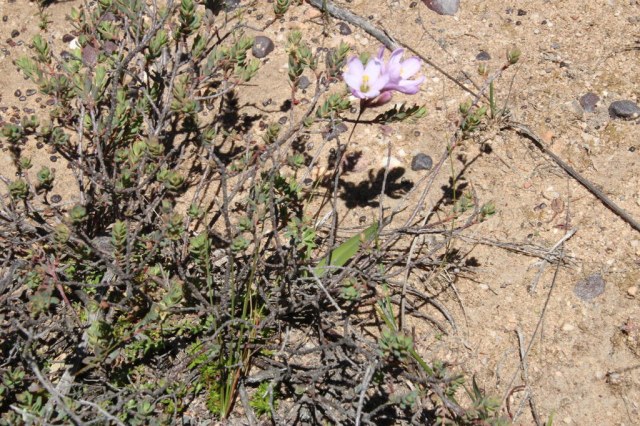
Ixia polystachya L. is found on flats, hills and mountain slopes over a wide range of the northwest and southwest Cape. It has pink, mauve, bluish, or white flowers, often, but not always, with a dark center. It has a fairly tall (up to 80 cm) and usually branched stem, but is variable in size, color, number of flowers, form (compact or lax), and leaf width. The first five photos were taken by Mary Sue Ittner. The last photo was taken by Cameron McMaster in the Overberg.
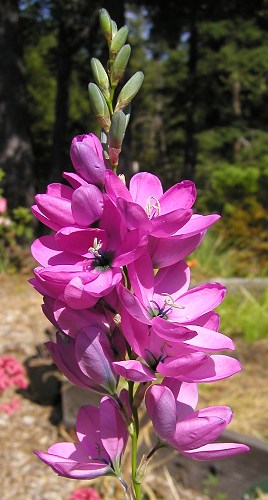
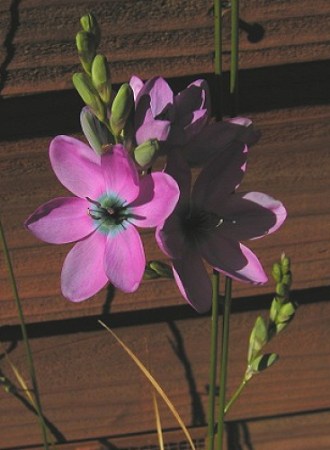

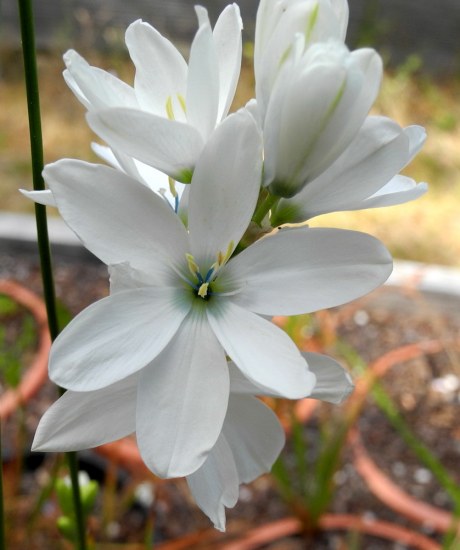
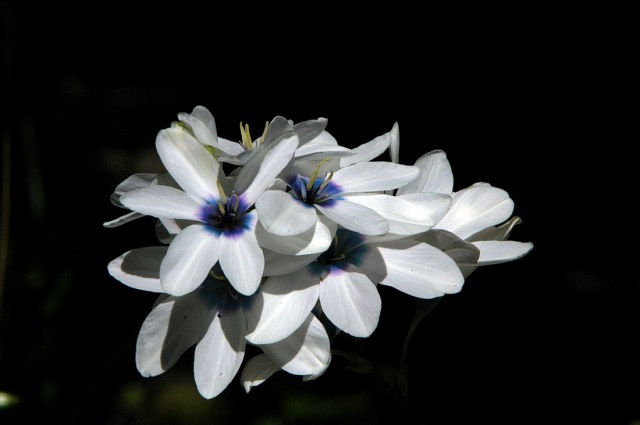
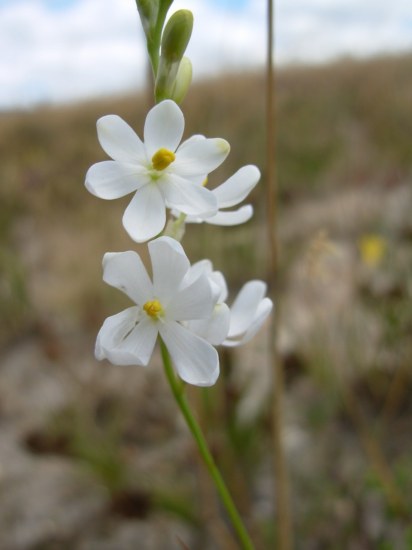
Ixia polystachya var. crassifolia G.J.Lewis is a form (now included in the species) from the Western Cape with blue to mauve or purple flowers with a dark blue or purple center. Leaves of this variety are firm with a prominent midrib and margins.

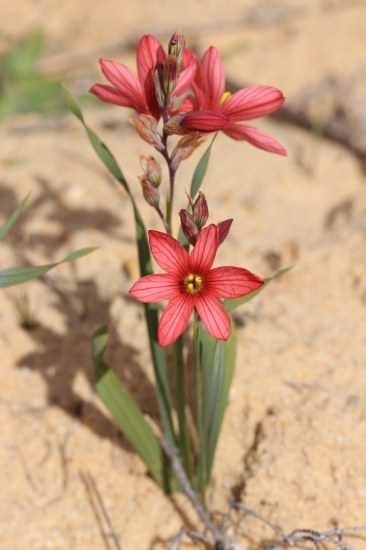
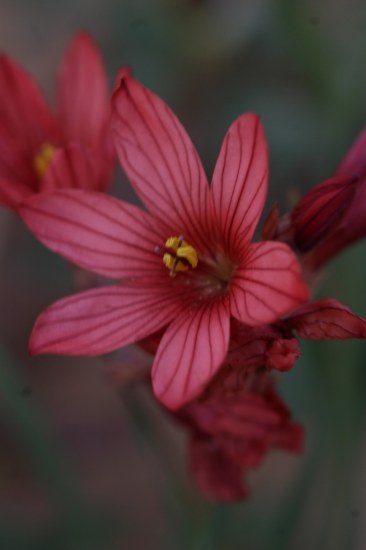
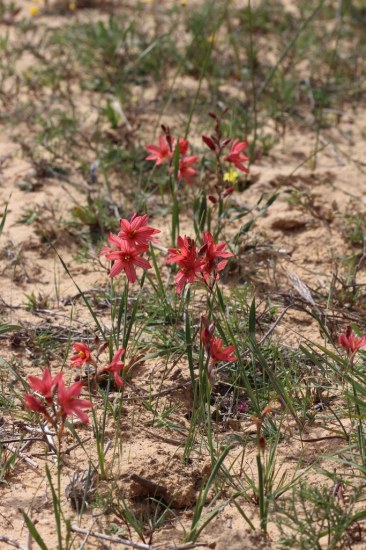
Ixia pumilio Goldblatt & Snijman is known only from its type locality, the banks of Breed River south of Worcester where it grows in deep sand. It has radially symmetrical flowers that are old rose (brick red) with conspicuous darker median veins. Plants grow 12-20 cm high. It flowers in habitat in South Africa August to September. Seed under this name has been shared that is now thought to be Tritonia dubia which is very similar. This was discussed on the pbs list in 2009. Photos from iNaturalist taken by Ismail Ebrahim and shared under a CC BY-NC license.
Ixia purpureorosea G.J.Lewis is found on limestone and sand in the Southwestern Cape. It grows from 20 to 60 cm high and has 3 to 12 mauve pink flowers with a blackish center on a congested spike. The first photo was taken by Mary Sue Ittner of a flower that opened during a rainy period and looks a little worse for it. The last two photos were taken by Cameron McMaster.
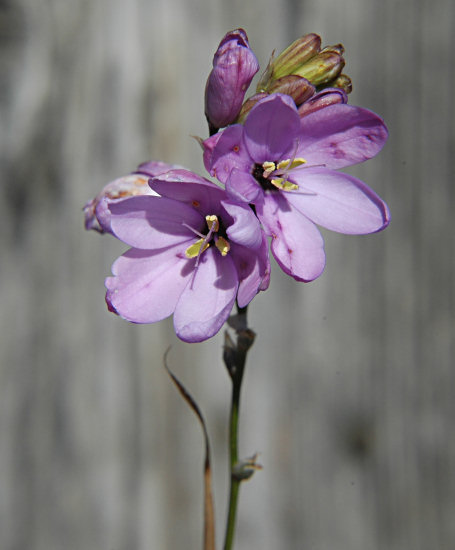
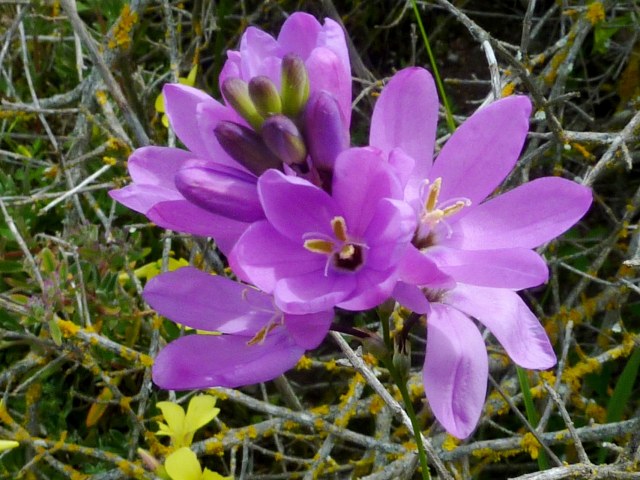
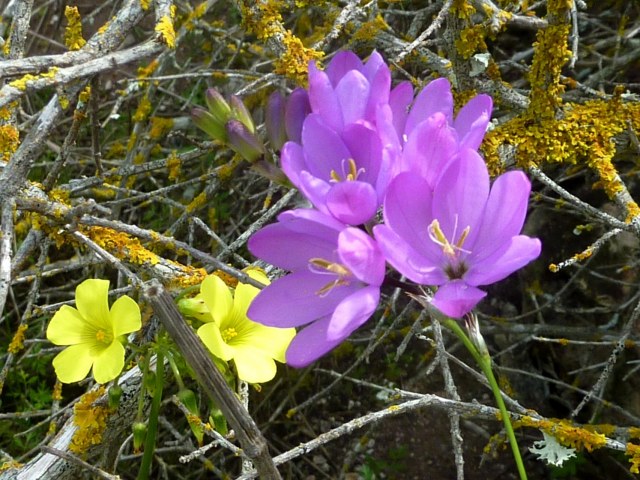
Ixia ramulosa (G.J.Lewis) Goldblatt & J.C.Manning , syn. Ixia latifolia D.Delaroche var. ramulosa G.J.Lewis, is distributed in central Namaqualand in the Kamiesberg and along the Bokkeveld Escarpment in Northern Cape and adjacent Kobee Mtns in Western Cape where it grows in granitic sand or light clay loam, flowering late August to early October, or early November at higher elevations. It has three leaves with the uppermost sheathing the stem, slightly twisted 2 or 3 flowered branches and purple with a white throat or mauve or white with a yellow throat flowers. Stamens are exserted. Height range: 30-50 cm. The first photo was taken in Namaqua National Park September 2006 by Mary Sue Ittner. The other photos from iNaturalist were taken by Tony Rebelo in August in Namaqualand and shared under a CC BY-SA license.
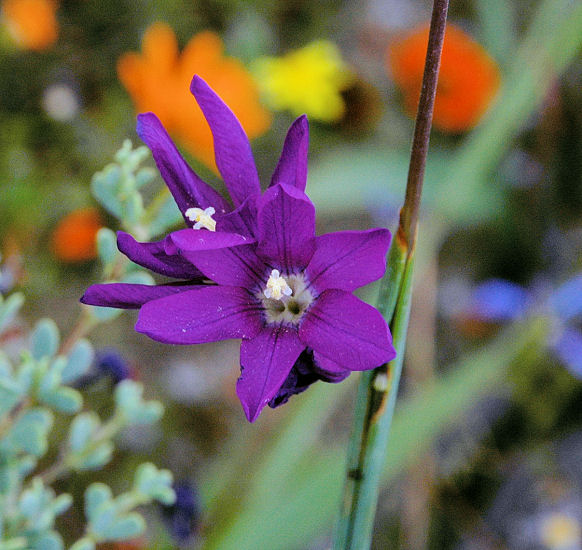
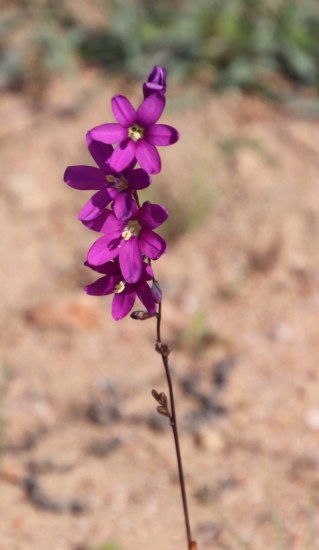
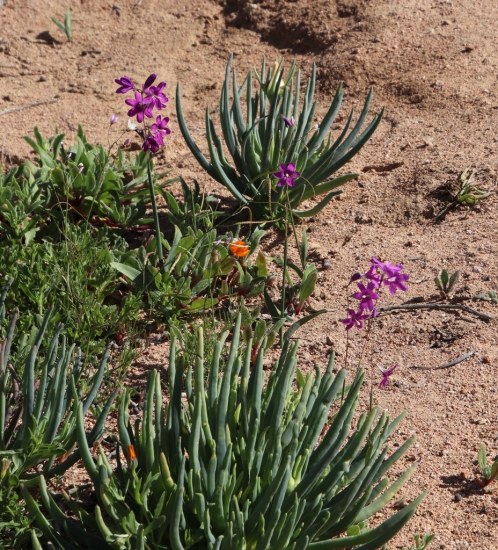
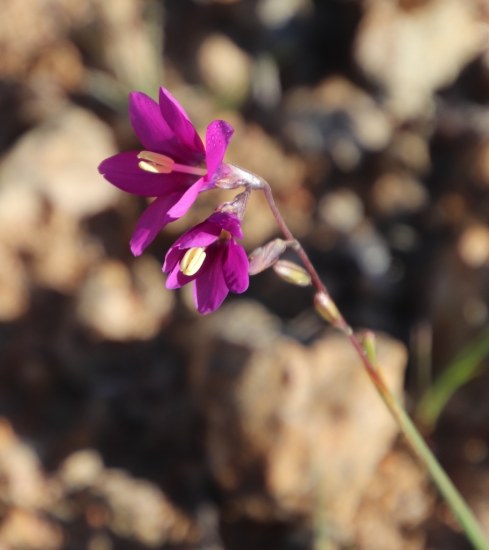
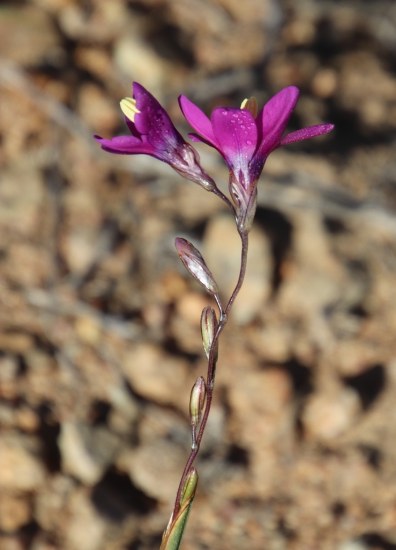
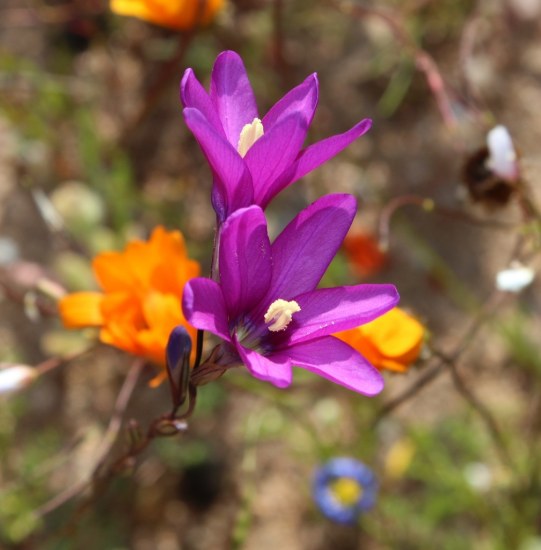
Ixia rapunculoides Delile was investigated and revised in 2008 by Goldblatt and Manning. The Ixia rapunculoides complex was defined by a funnel-shaped perianth tube and filaments fully and anthers partly included in the perianth tube. New species named were Ixia flaccida (G.J.Lewis) Goldblatt & J.C.Manning, later changed to Ixia mollis Goldblatt & J.C.Manning (small, short-tubed white- or pale blue-flushed flowers, soft-textured leaves and corms with basal cormlets from the Olifants River Valley), Ixia sobolifera, Ixia namaquana (horizontally oriented, white, pale lilac or pink flowers and few-flowered lateral branchlets), Ixia oxalidiflora Goldblatt & J.C.Manning (fully included anthers, a longer perianth tube, and ascending purple-pink flowers with a white cup, Hex River), Ixia divaricata (upright white, pink or rarely purple with white or pale yellow cup flowers; main spike long, straight and erect, lateral spikes ascending to spreading, with flowers crowded in distal half), Ixia contorta (upright flowers purple with pale yellow cup; main spike and branchlets twisted and flexuose, inclined to nearly horizontal), Ixia lacerata Goldblatt & J.C.Manning (longer perianth tube and attenuate, slightly lacerate, 5-veined rust-tipped bracts), Ixia rivulicola Goldblatt & J.C.Manning (large white flowers found on streambeds in the Roggeveld), and Ixia robusta (G.J.Lewis) Goldblatt & J.C.Manning (pink flowers with four or five leaves and deep-seated corms with a collar of coarse fibers around the stem base).
What was left of the original Ixia rapunculoides (var. rapunculoides) is restricted to the western Karoo and has broad, falcate leathery leaves, a short perianth tube, and half nodding blue-mauve or pink flowers. Photos below were once felt to be this species. After the revision, we'd be safe to call them part of the complex. Height range: 30-55 cm. The first two photos were taken by Alan Horstmann. Photos 3-5 were taken by Mary Sue Ittner who wrote: It is one of the first ixias of the ones I grow in Northern California to flower which means that it is often in bloom during our wettest period and flower stalks that start out standing are soon bending over after it rains. The first two were taken during a brief dry period in January 2004. The last photo shows the corms.
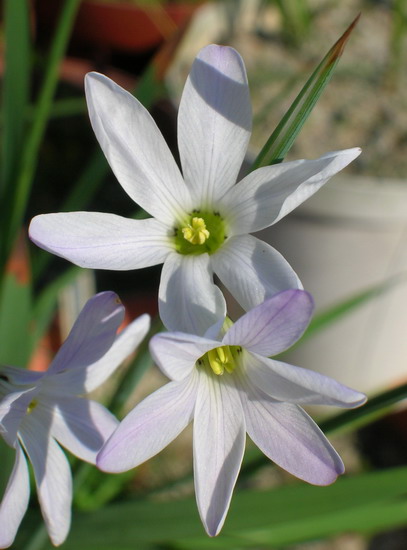
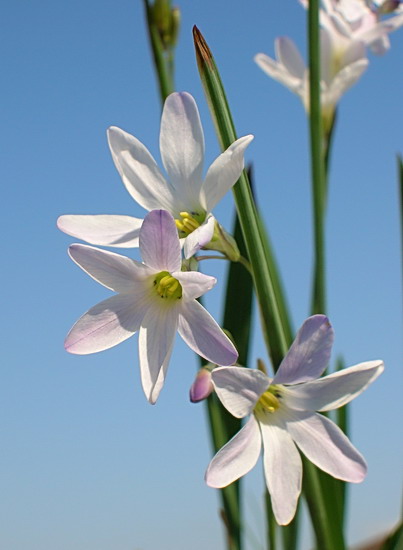
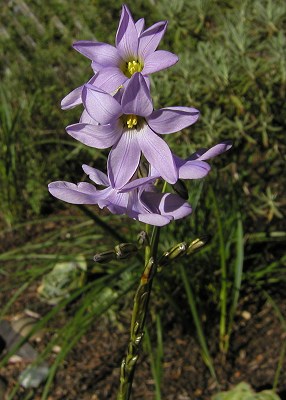
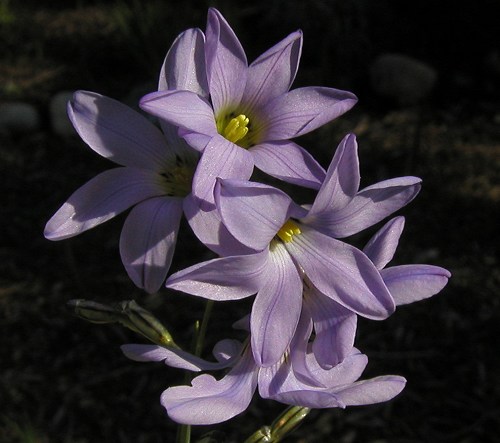
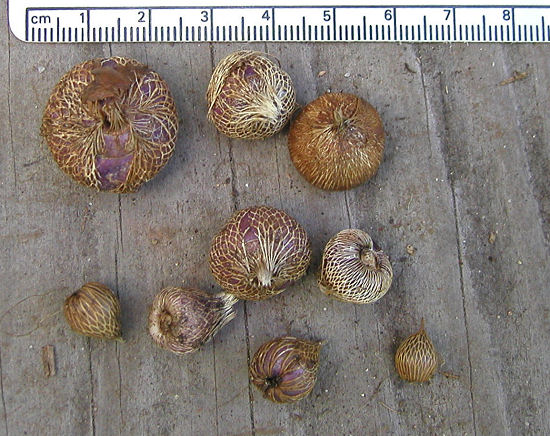
The first picture from Mary Sue Ittner was taken in the Komsberg and the next two in Calvinia in the Roggeveld. Photos 4-5 were taken by Cameron McMaster near Nieuwoudtville in the Bokkeveld Plateau September 2011. The last photo from Cameron McMaster was taken near Middelpos.
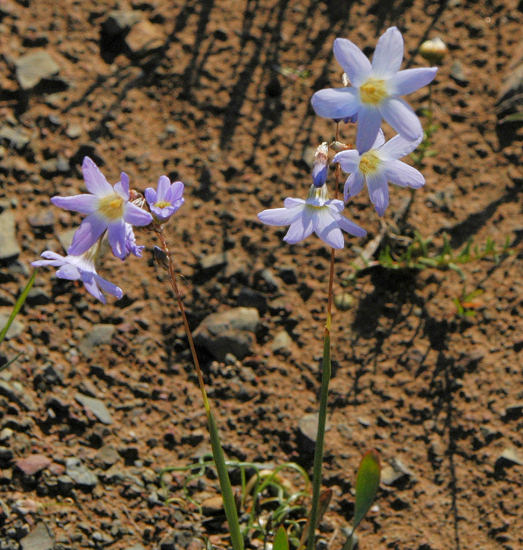
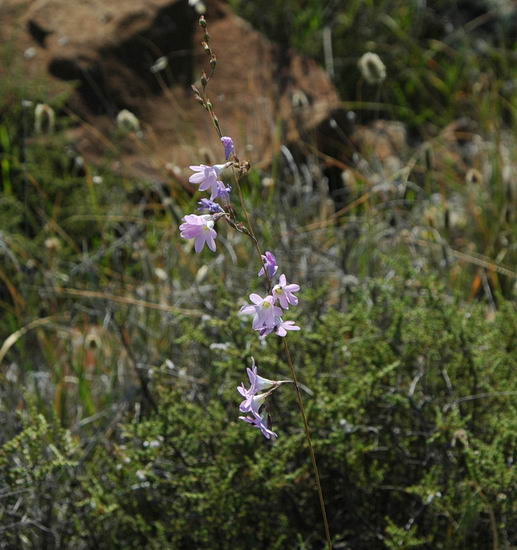
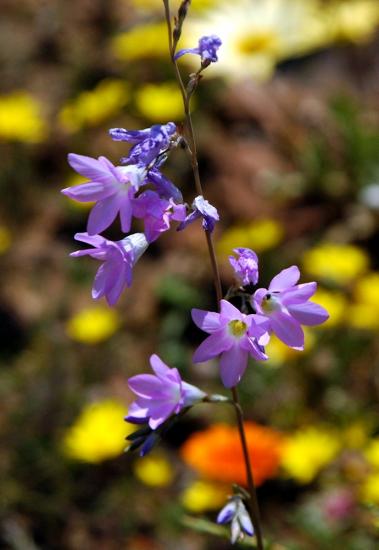
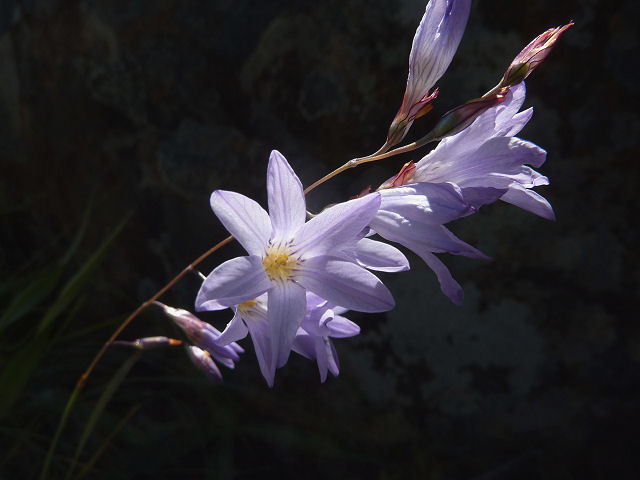
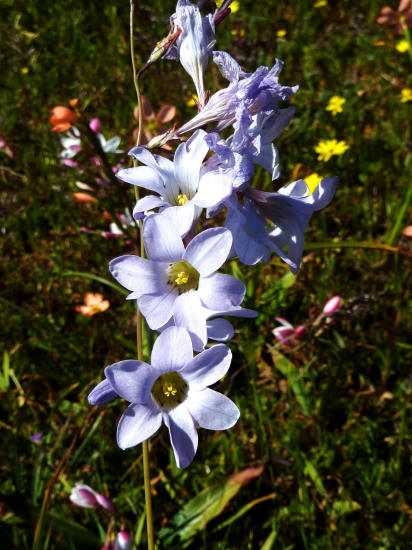
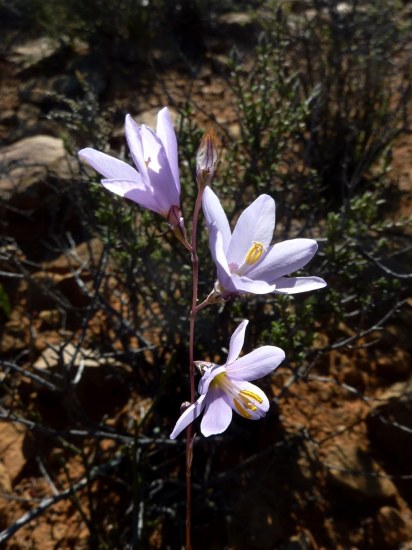
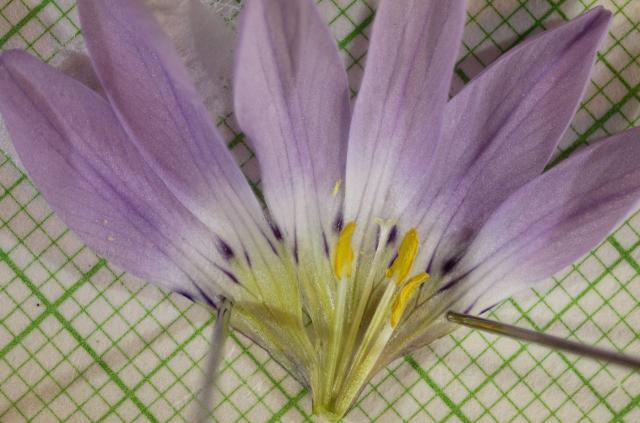
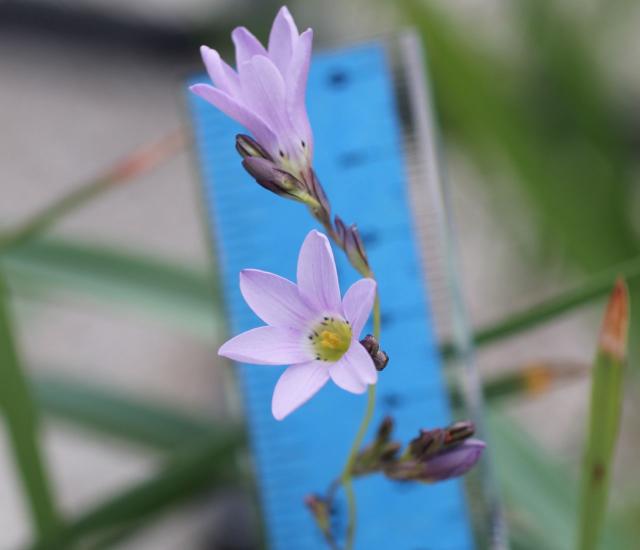
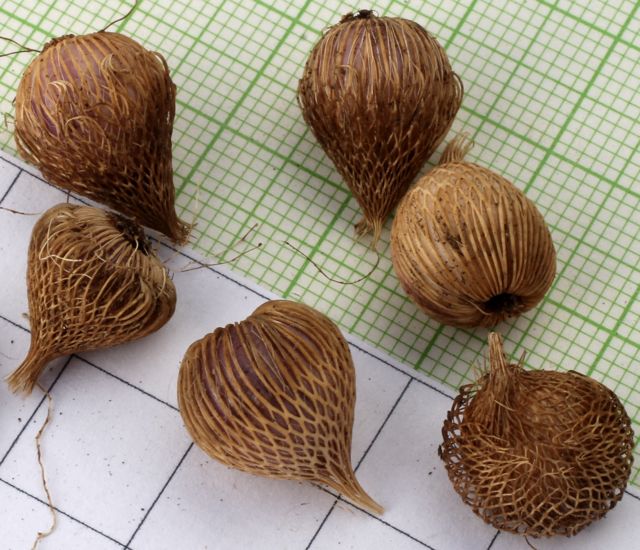
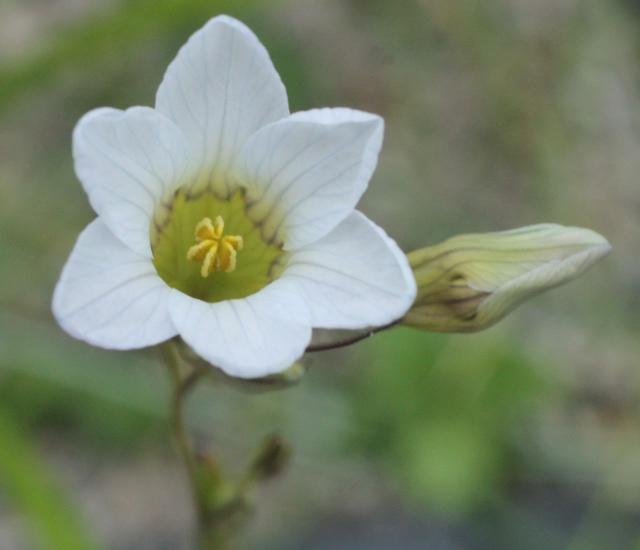
A flower dissection on a 1 mm grid, that same flower on its stem, the corms from which it grew and a white bloom from the same group of corms acquired from Jim Duggan, grown and photographed by M.Gastil-Buhl. These flowers have a faint fragrance when warm.
Ixia scillaris L. grows on stony granite, sandstone and clay flats in the northwest and southwest Cape. It has pink, magenta, mauve or white flowers usually with a small greenish or pink center and exserted stamens with split anthers. Height range: 25-50 cm. Flowering is over a long period, from spring to summer. The first picture below was photographed in South Africa September 2003 by Bob Rutemoeller at Gordon Summerfield's. The next three were taken by Cameron McMaster near Napier in the Overberg. The last photo was taken by Rod Saunders of Silverhill seeds.
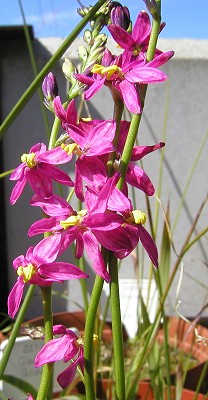

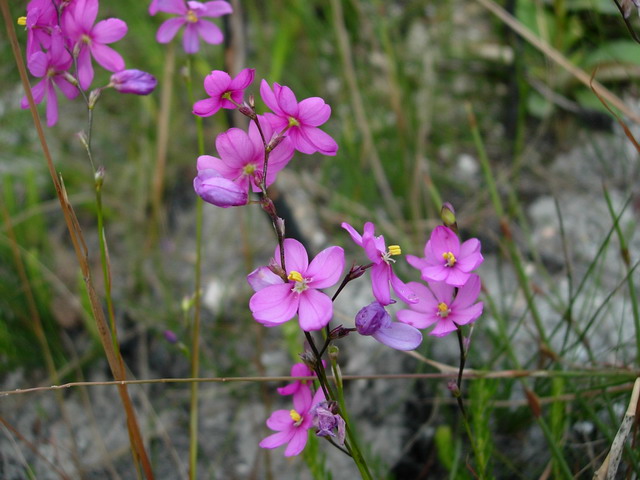
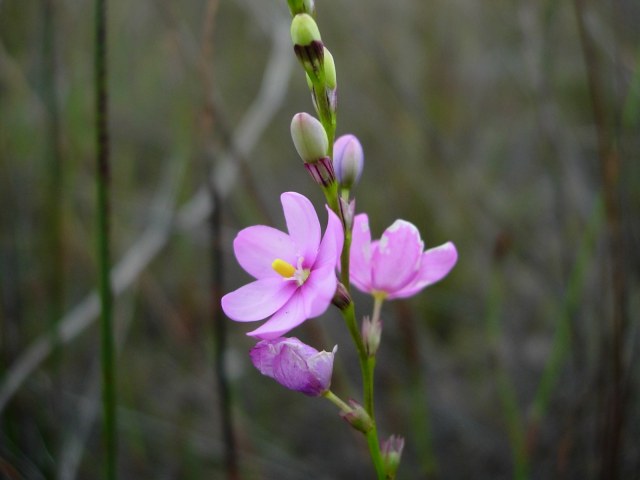
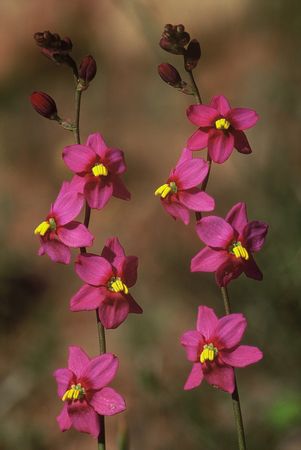
Ixia sobolifera Goldblatt & J.C.Manning was named in 2008 as part of the revised taxonomy for the Ixia rapunculoides complex. Distributed from the Western and Little Karoo, it flowers August to mid September, more reliably in a year with good rainfall. Growing from 25 to 75 cm, it has half to fully nodding pink, slate blue with a white cup, or white with a pale yellow cup faintly rose to strongly carnation scented flowers and corms with soft papery (rather than fibrous) tunics with ribbon-like stolons from the base. There are three subspecies.
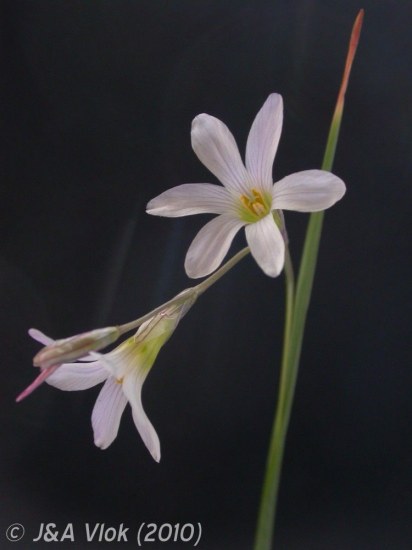
Ixia sobolifera ssp. albiflora is restricted to the central Little Karoo. Growing from 40 to 65 cm, it has creamy white nodding flowers with a pale yellow cup, sometimes flushed grey-mauve, 4 to 5 on the main spike. Flowers are intensely carnation-scented and occur from August to mid September, more commonly in a wet year. Photo from the book Plants of the Klein Karoo courtesy of Jan and Anne Lise Schutte-Vlok.
Ixia sobolifera ssp. carnea is restricted to the Bokkeveld Plateau. Growing from 25 to 75 cm, it has pale to deep pink faintly rose scented flowers with a white cup. Bracts are somewhat dry and dark brown at the tips with age, and anthers marked with dark longitudinal lines.
Ixia sobolifera ssp. sobolifera occurs in the Little Karoo, the Roggeveld and nearby. It has slate-blue or grey-blue faintly scented flowers with a white cup, and uniformly yellow anthers with the style reaching or exceeding the anther tips. Photo from iNaturalist taken by Marion Maclean in the Little Karoo in July and shared under a CC BY-NC license
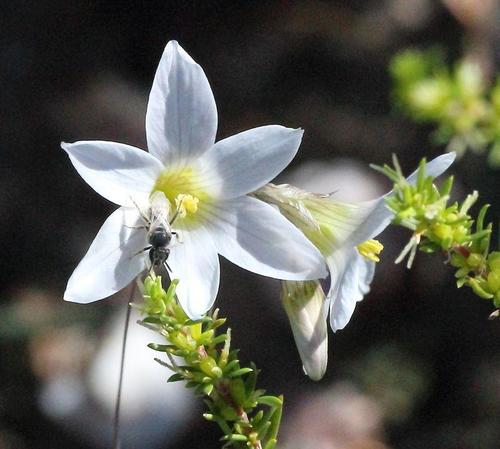
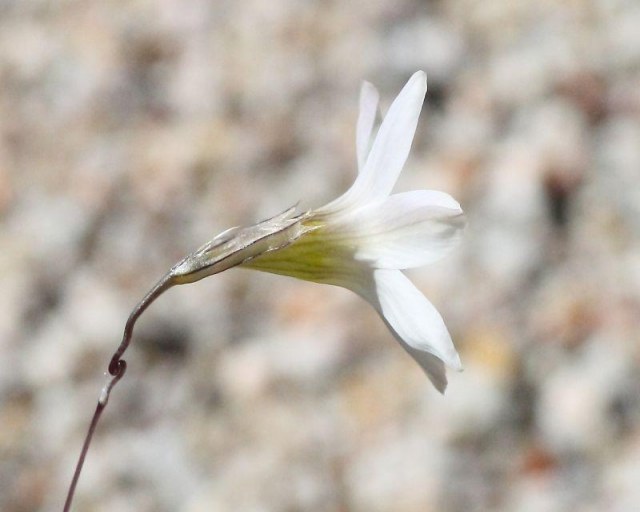
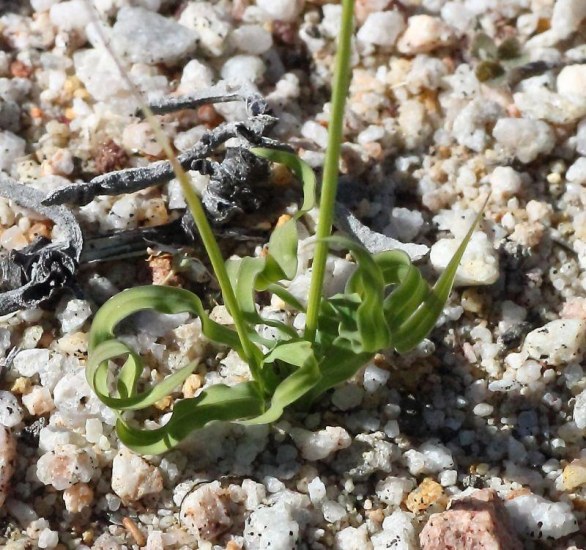
Ixia stricta (Eckl. ex Klatt) G.J.Lewis grows on hills and mountain slopes in renosterveld from Caledon to Bredasdorp in the Overberg. It has pink flowers with a small darker central pink star, growing 35-55 cm tall. It is very similar to Ixia micrandra but has different corms, firmer and wider leaves, sometimes branching stems, and a longer laxer spike with more and slightly smaller flowers. Photos by Cameron McMaster taken near Bredasdorp.
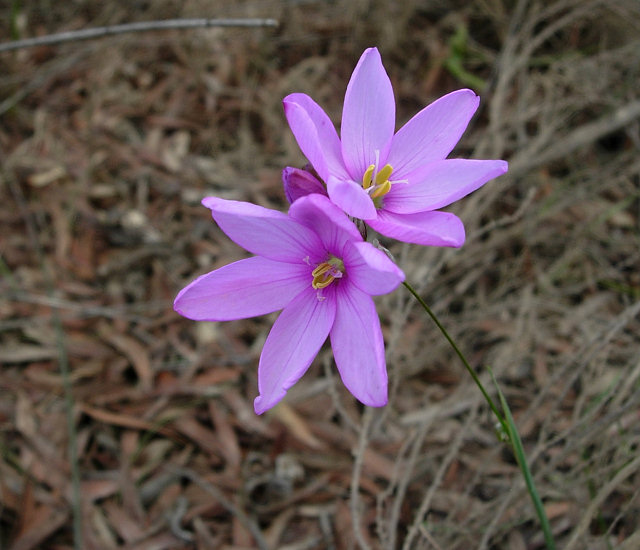
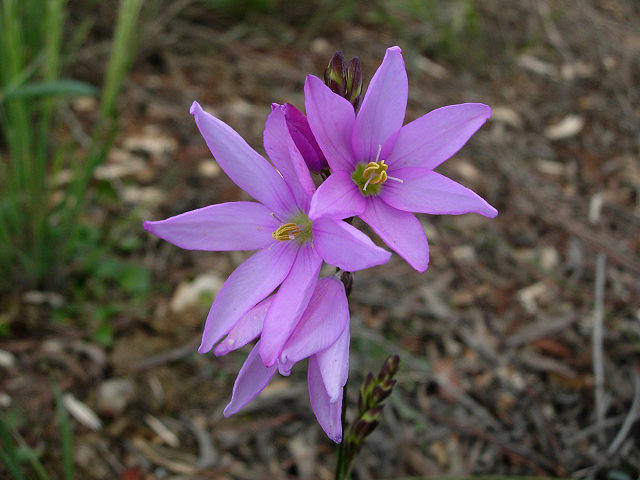
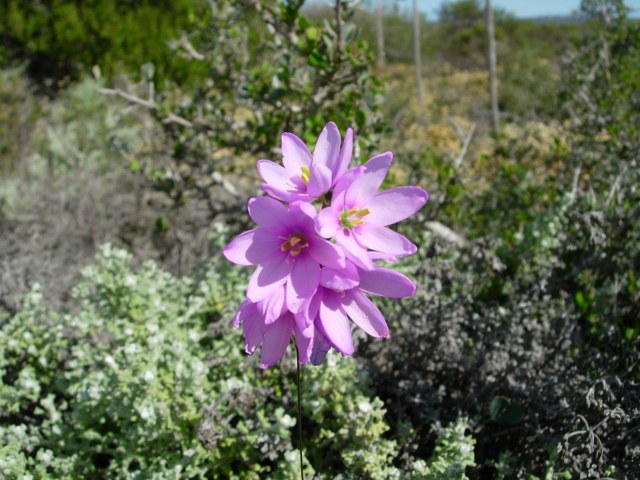
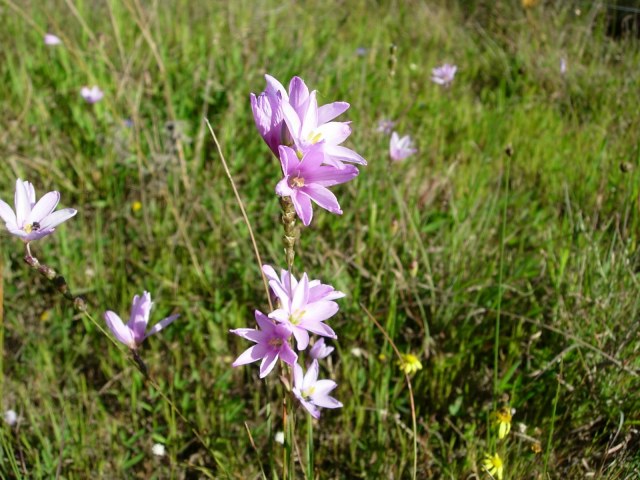
Ixia tenuifolia Vahl grows on sandy flats in the Southwestern Cape, flowering September-October. Growing from 15 to 50 cm, it has crowded, erect orange to brick red flowers with a dark center. Photos from iNaturalist were taken by Ismail Ebrahim in September in the Western Cape and shared under a CC BY-NC license.
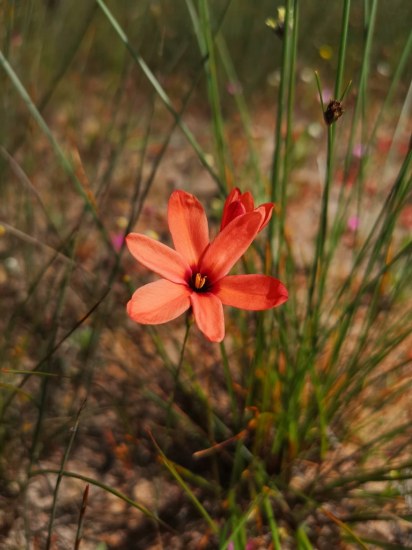
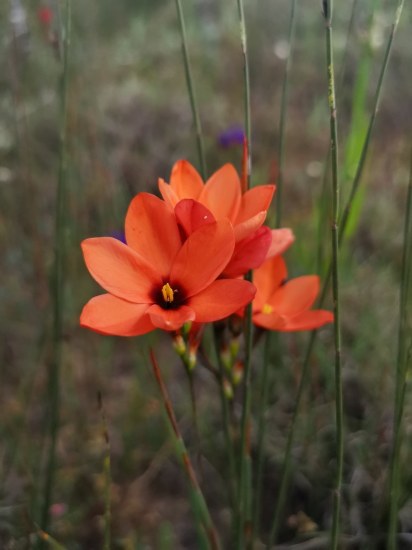
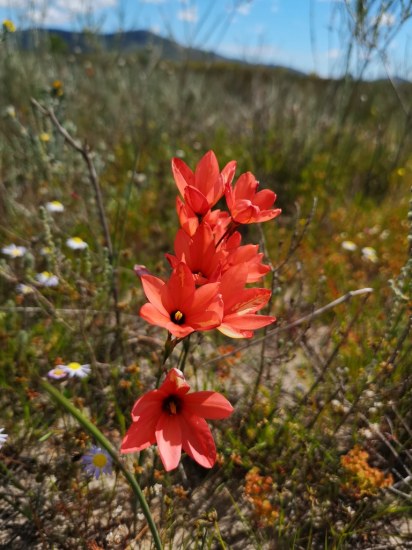
Ixia thomasiae Goldblatt is distributed on stony clay flats and slopes in the Roggeveld. Growing from 40 to 80 cm tall, it has linear leaves, short, nodding branches, and pink funnel shaped flowers with spreading tepals and partly exserted stamens. It is almost Dierama like in habit. It flowers September to October. Photo from Rod Saunders from Silverhill Seeds.

Ixia trifolia G.J.Lewis has small pink flowers (5-9 per spike) and is found on sandstone slopes in the Roggeveld Escarpment and flowers late winter into spring. Plants grow 25-30 cm tall. The first two photos taken by Mary Sue Ittner are of garden plants with flowers that open bright pink, but fade to light pink as they continue to bloom. The third and fourth photographs were taken by Cameron McMaster in the Komsberg, an area in the Roggeveld. The fifth was taken by Alan Horstmann, and the sixth by Michael Mace.
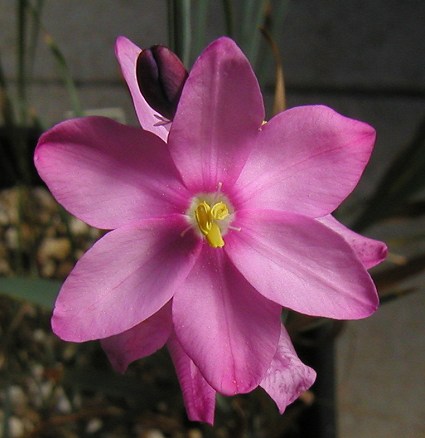
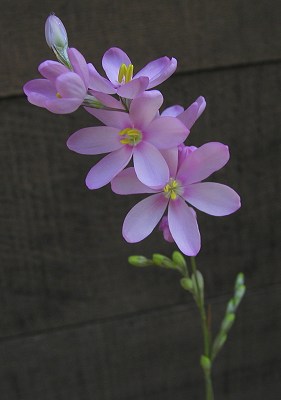
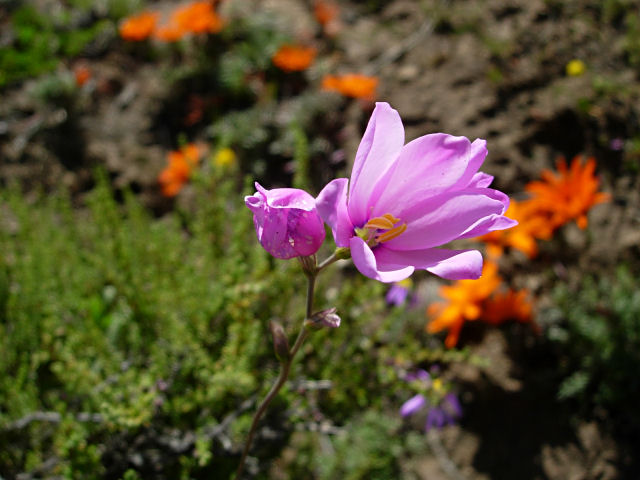
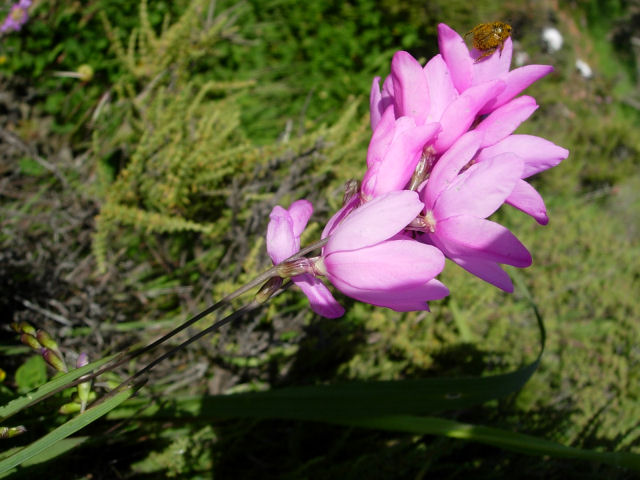
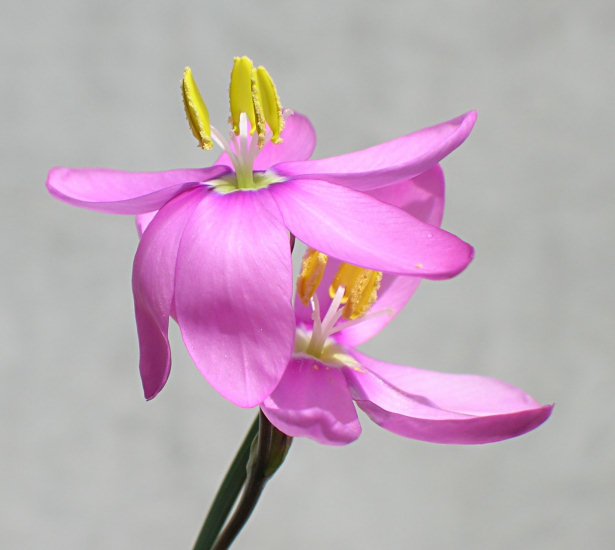
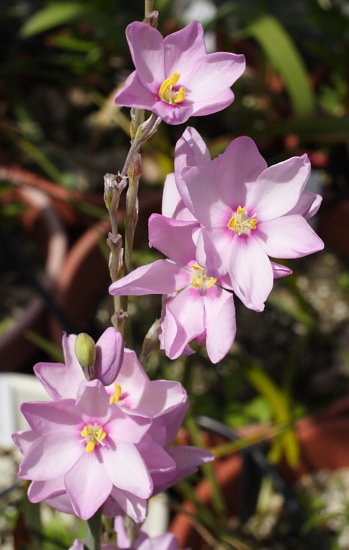
Ixia versicolor G.J.Lewis grows on sandy flats in the Southwest Cape. It has white or purple flowers with a dark center and exserted stamens, and grows 15-35 cm high. The first photo from Rod Saunders. The next photos from iNaturalist were taken by Carina Lochner in September in the Southwestern Cape and shared under a CC BY-NC license.
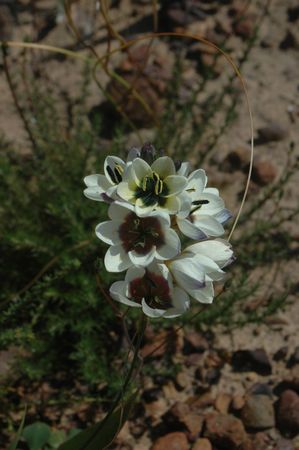
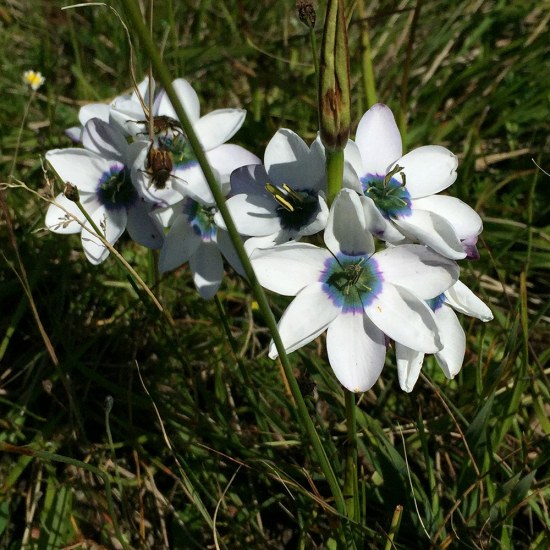
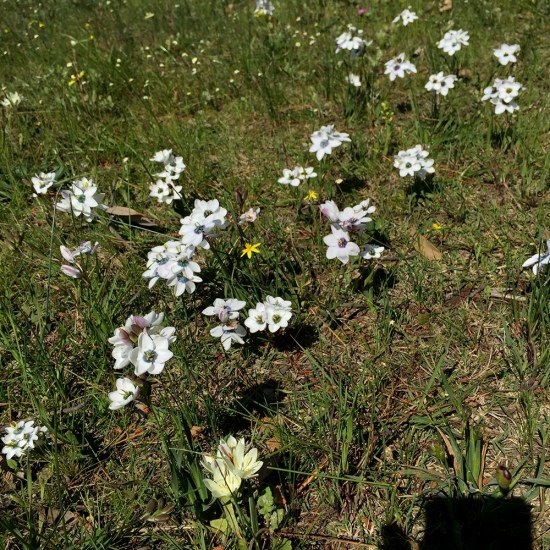
The photos below from iNaturalist were taken by Corrie du Toit in September and October in the Southwestern Cape and shared under a CC BY-NC license.
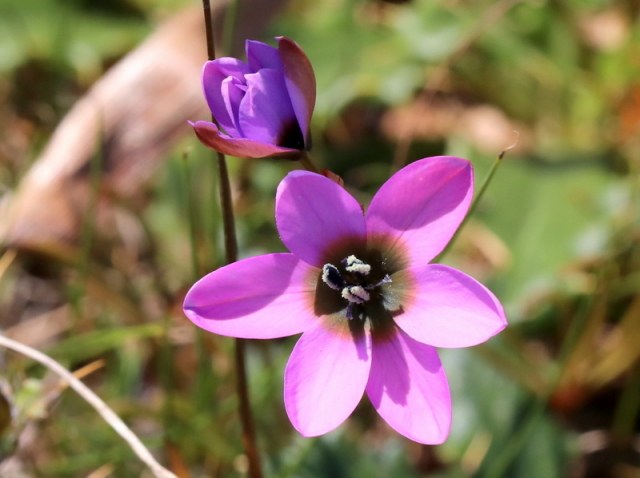
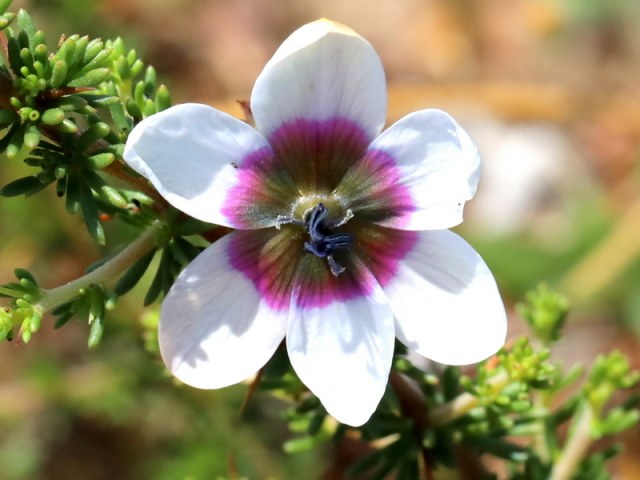
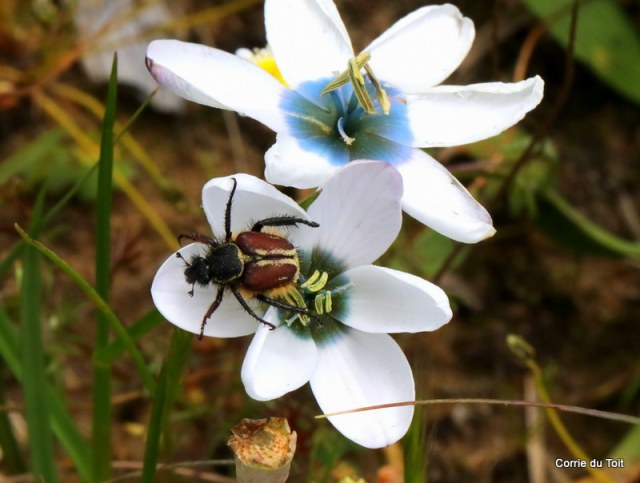
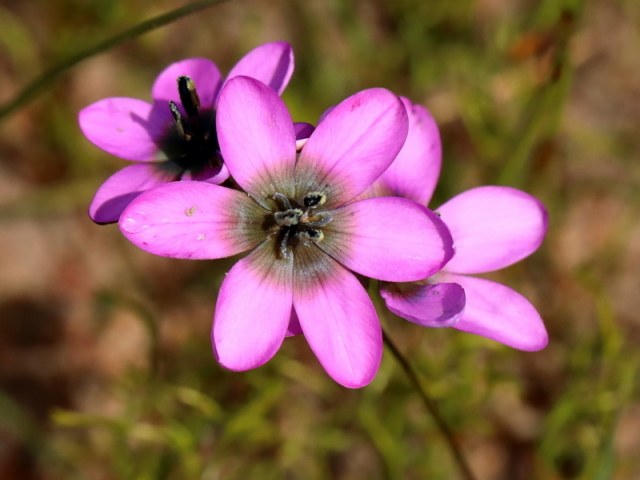
Ixia vinacea G.J.Lewis is found on stony clay flats in the Northwestern Cape. Growing from 40 to 45 cm high, it has red fowers with a dark center, three to nine per spike. It flowers August-September. Photos from iNaturalist taken by Ismail Ebrahim in September and November in the Western Cape and shared under a CC BY-NC license.
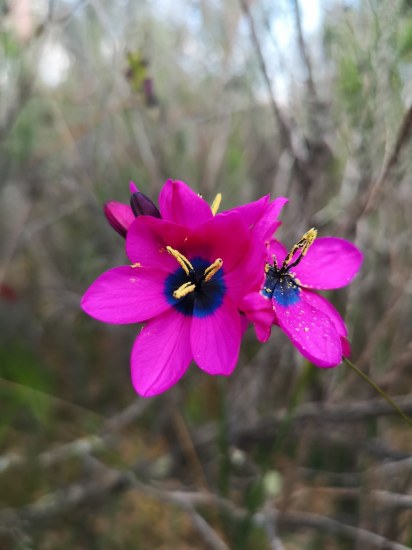
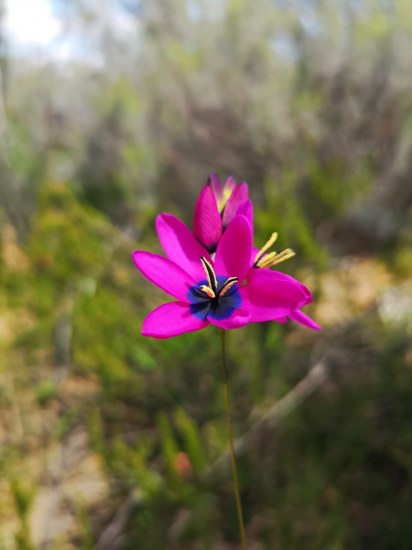
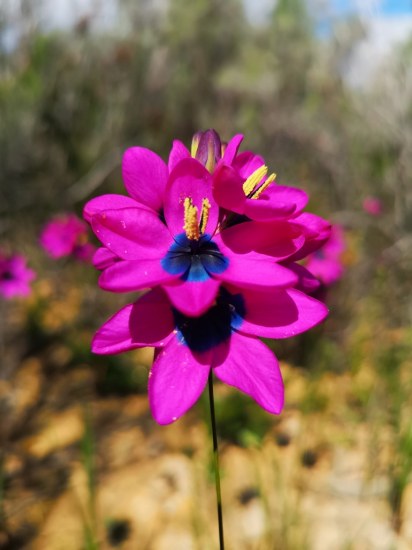
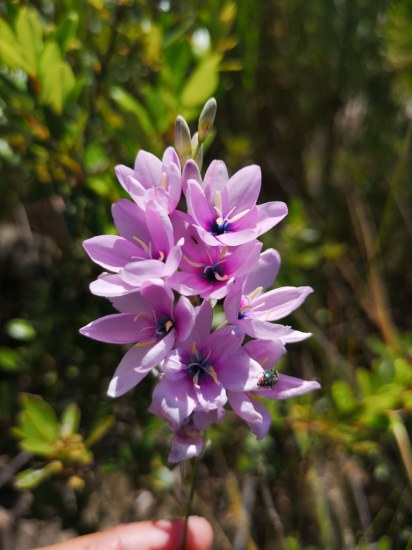
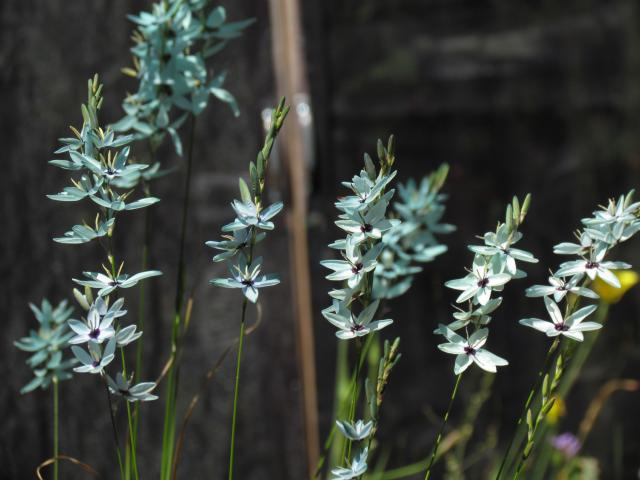
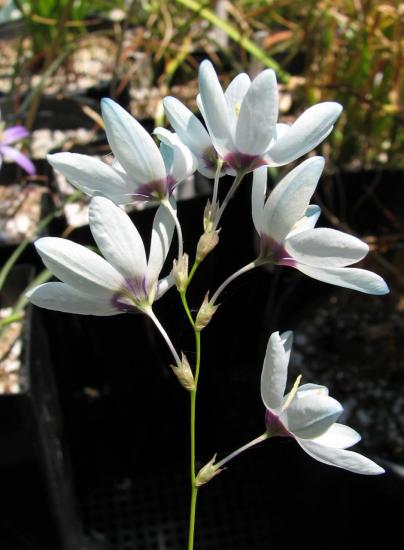
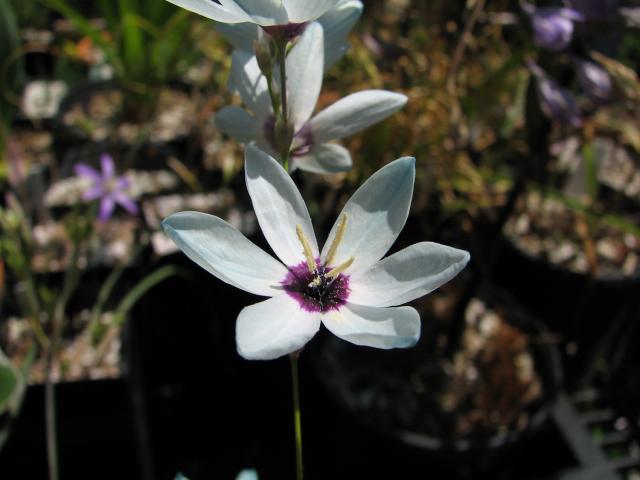
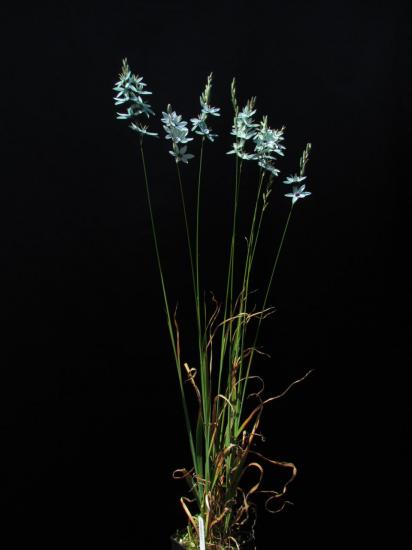
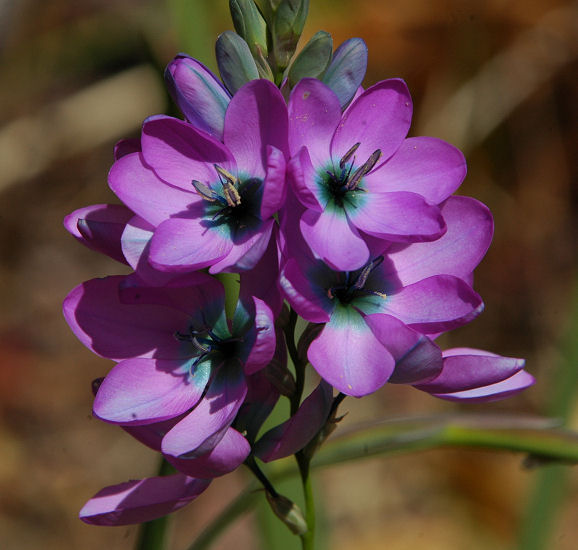
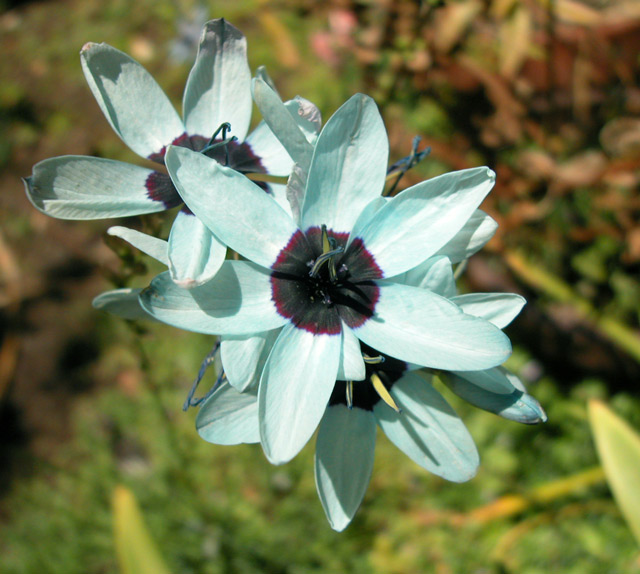
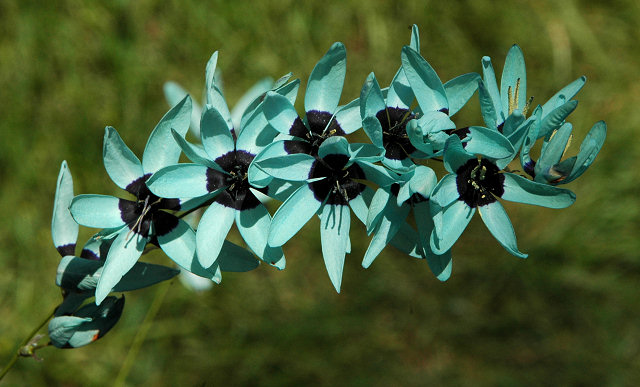
Ixia viridiflora Lam. is native to the rocky clay and granite slopes in the southwestern areas of the Western Cape Province. It is one of the more eagerly sought after species because of its striking turquoise flowers. Height range: 50-100 cm. There are two varieties of the species, one is the typical and widely grown variety viridiflora and the other is variety minor which is smaller with a less saturated center. Reportedly somewhat challenging to keep plants going, it may benefit from occasional summer water. Veld & Flora magazine also noted in an article reproduced here that the corms are short-lived, and recommended that they be re-propagated from seed regularly. This species takes 3-4 years to bloom from seeds.
Ixia viridiflora var. viridiflora Photo 1 was grown and photographed by Sheila Burrow in Western Australia. Photo 2 was taken by Kristina Van Wert, who wrote: "sunk into the succulent garden in the Mendocino Coast Botanical Gardens these plants bloomed much more vigorously than when grown under cover." Photo 3 taken by Mary Sue Ittner shows the amazing color. Some years the color is more vibrant and brighter than others and some years it blooms much better than others. Photos 4-6 were taken by Nhu Nguyen.

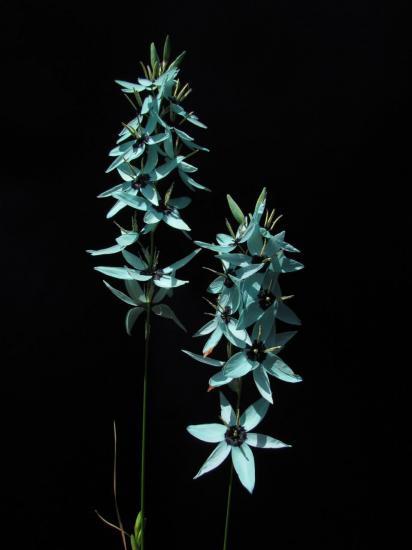
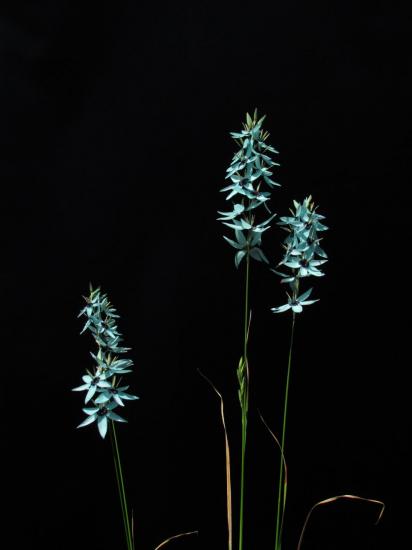
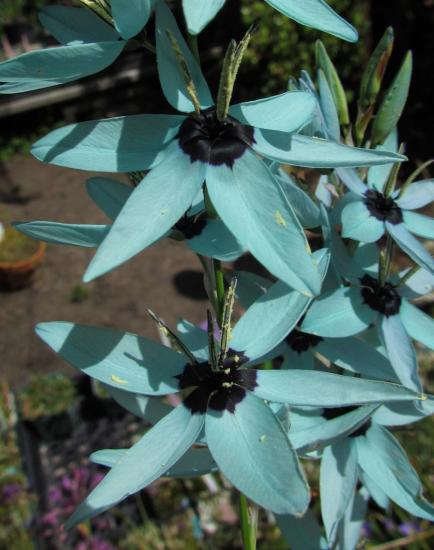
Ixia viridiflora var. minor M.P.de Vos photos below were taken by Nhu Nguyen. It takes 3 years for this variety to bloom from seeds, even in a tiny pot. It loves having more room and blooms much better that way.