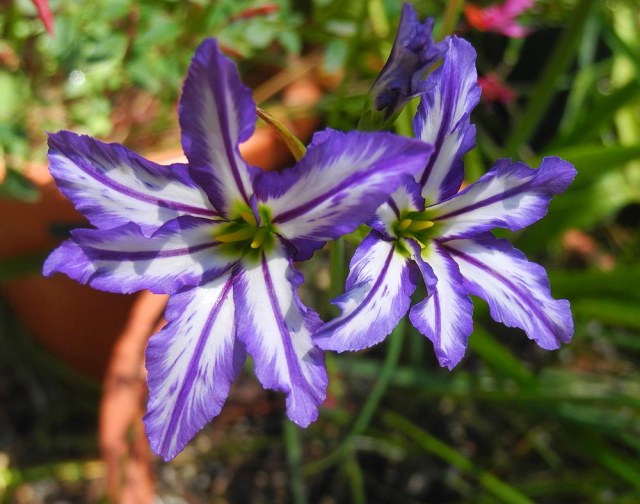
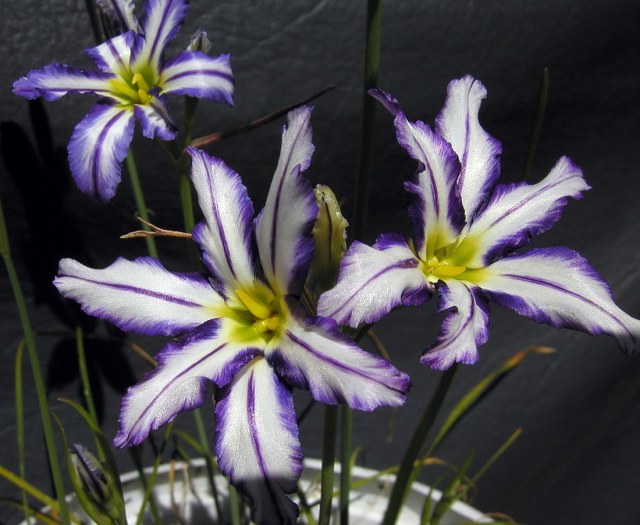
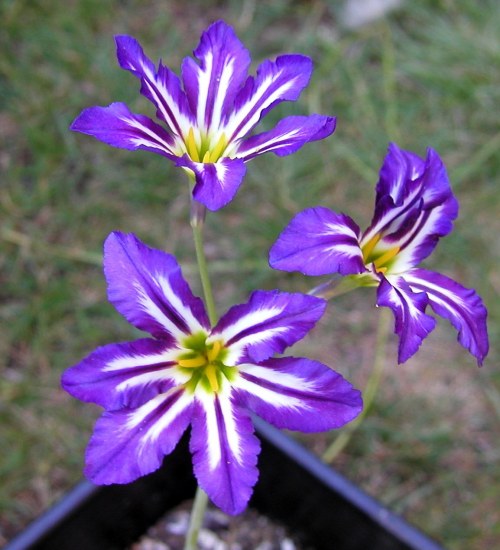
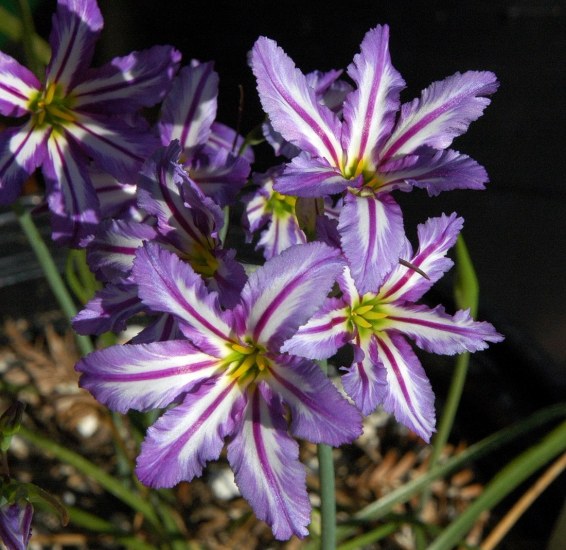
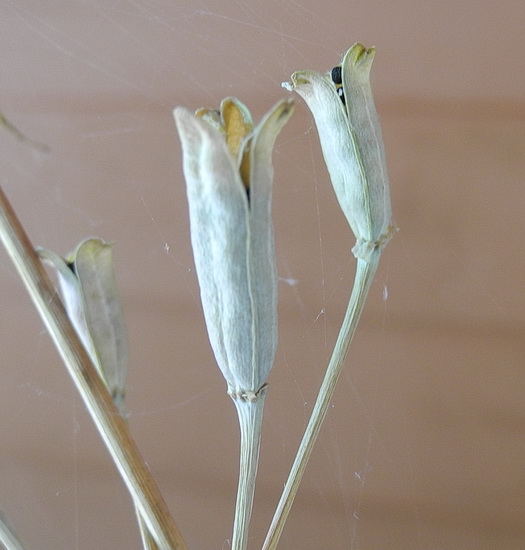
Leucocoryne is a small genus of about 12 species in the former Alliaceae family (now included in Amaryllidaceae) from Chile that grow in winter. They seem to benefit from a hot summer dormancy and adequate fertilization while in growth. Many of the flowers have 3 short fertile stamens and 3 long, sterile staminodes much like North American Brodiaea. Pabellonia is a South American genus (formerly known as Chrysocoryne) that is similar to Leucocoryne and is now included in it by most major data bases. For more information about this genus and a key see the paper written by Melica Muñoz. The first photo from Arnold Trachtenberg shows 3 species (L. purpurea,L. macropetalum, and L. vittata). The second photo from Mary Sue Ittner shows the fruit starting to break open.
Growing from seeds can be somewhat tricky with some people having good results and others mixed results of 0-50% germination. John Wagner find that seeds, particularly of L. coquimbensis germinates very readily without special treatment. The seeds were sown in the fall in a free draining mix with 80% germination. Seedlings emerge in about 3-6 weeks depending on the species. Jane McGary reports that seeds of various species germinate readily within two months after fall planting, planted in a gritty soil mix in pots and given cool but frost-free conditions after beginning application of moisture. According to Lee Poulsen you can give them a quicker start by following the advice that Osmani Baullosa of Santiago, Chile gives which is to sow them in a baggie containing a moist mixture of vermiculite, perlite, and/or tiny pumice. Seal the baggie and place it in the crisper of your refrigerator for 5 days, then sow them in pots which are kept outside in order to experience the autumn temperature fluctuations between night and day. Diana Chapman who grows many of these plants states that she is lucky if 50% of first year seedlings return the following year.
Leucocoryne alliacea Lindl. is a quite cold tolerant species from Chilean regions VI and VII, growing in winter and flowering in spring. Some sources report hardiness down to -15 °C (5 °F). Different images on the web often seem confusing, but can easily be explained with their daily rhythm, as they only open up in the evening and during the warmer part of the night, when they emit the sweet and slightly lemony scent common to moth-pollinated species. In addition to that, they also change considerably with age, growing longer petals and adding a pink tint mostly on the outside of the flower.
Martin Bohnet reports that with his massive variations in April temperatures in Germany, the flowers stay closed if evening temperatures are below about 10 °C (50 °F).
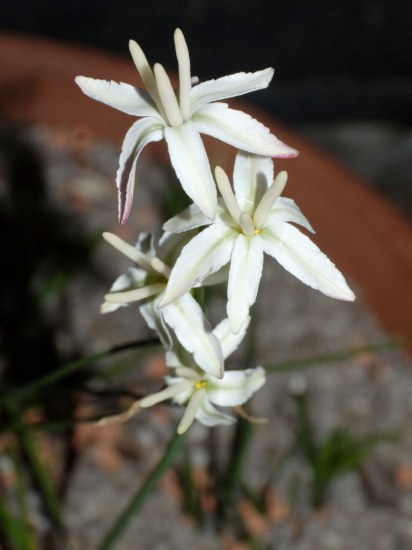
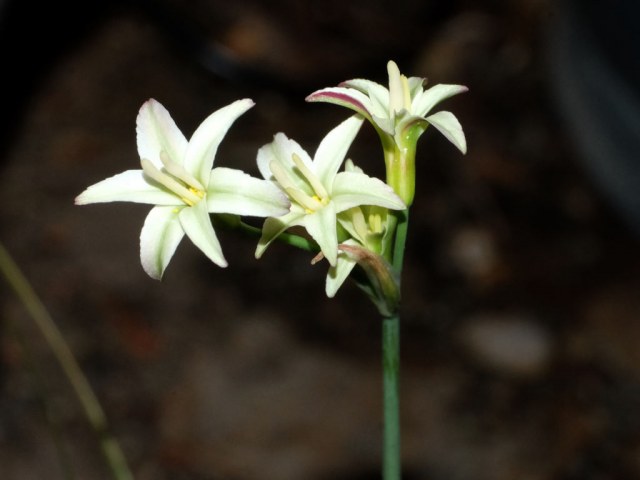
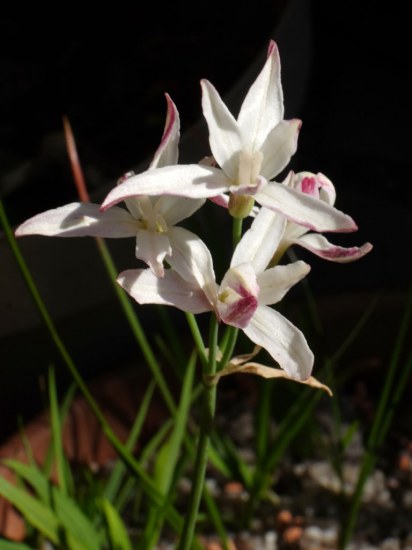
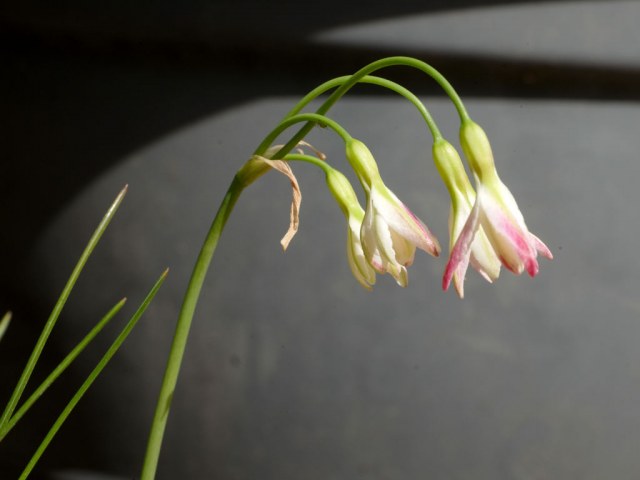
Leucocoryne appendiculata Phil. is distributed in Northern Chile between the Tarapacá and Atacama regions. It has white flowers and three yellow staminodes with the tip terminating in a thread. It grows to 40 cm. Photos by Osmani Baullosa.

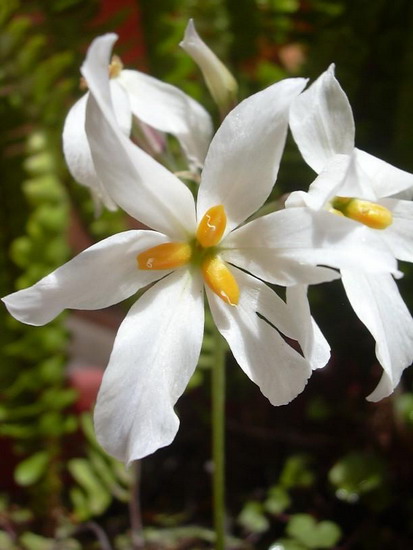
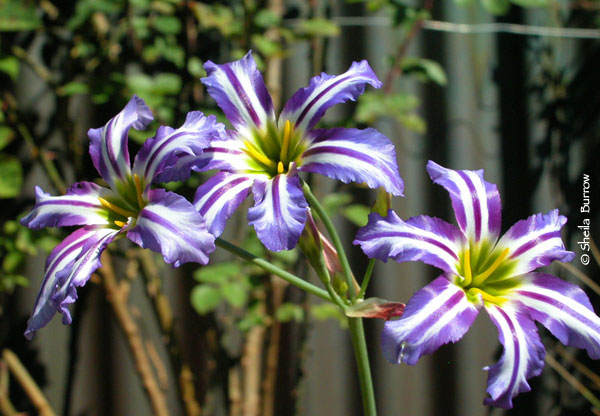
Leucocoryne coquimbensis F.Phil. ex Phil. is distributed in central Chile between the regions of Coquimbo and Valparaíso. It has blue or violet fragrant flowers with a greenish white center and yellow conical staminodes and slightly undulating tepals. Height range: 30-40 cm. Photos 1-2 by Sheila Burrow. Photos 3-5 from Mary Sue Ittner. The last photo was taken by Eugene Zielinski in 2011 in a good flowering of the desert in Chile along Route 5 between between Los Vilos and La Serena.
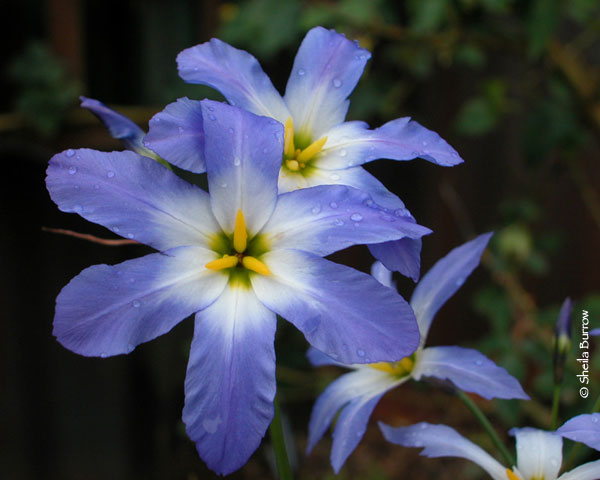
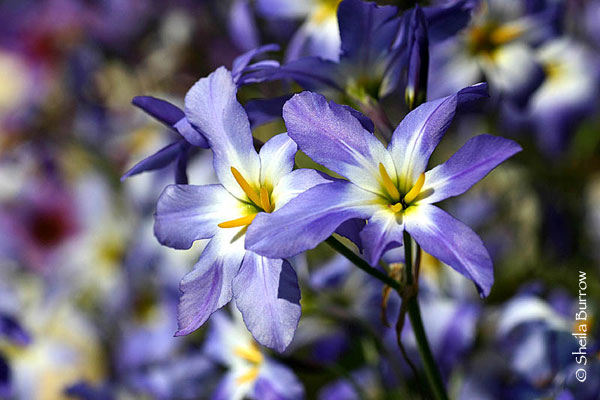

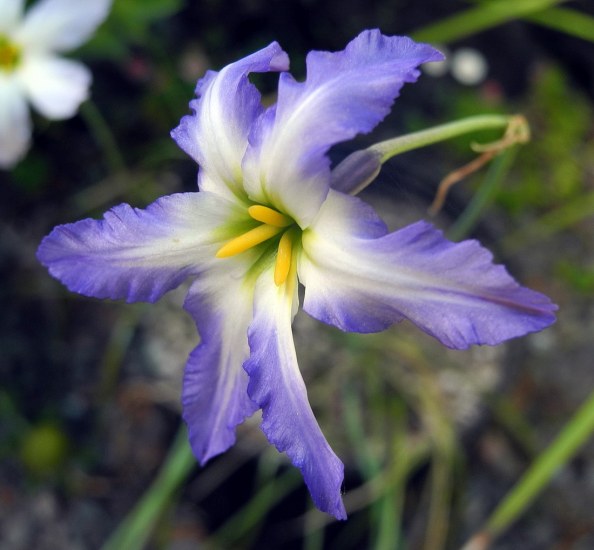
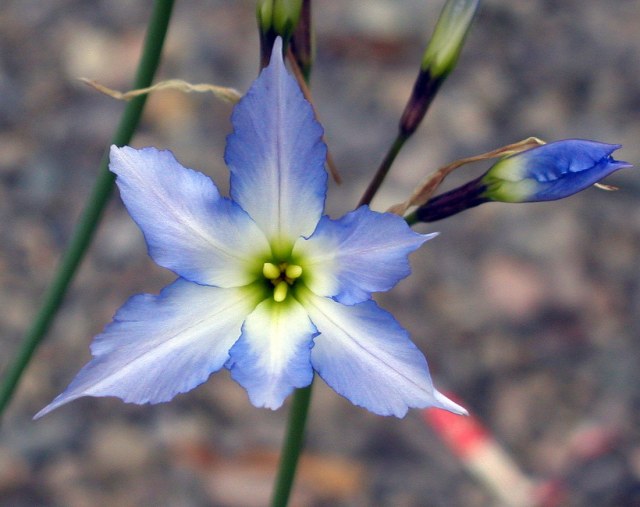
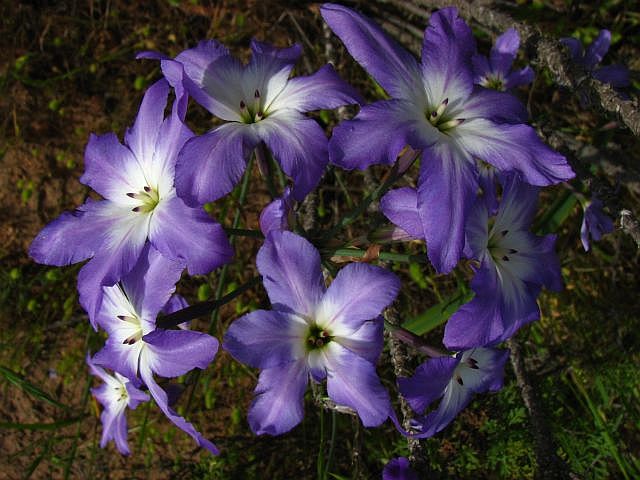
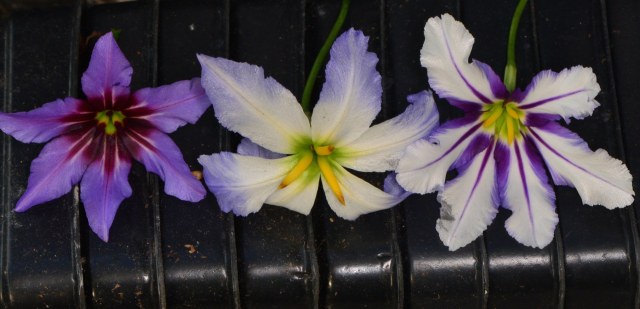
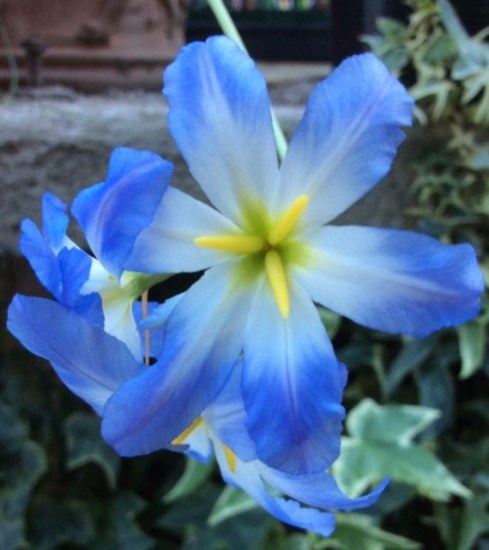
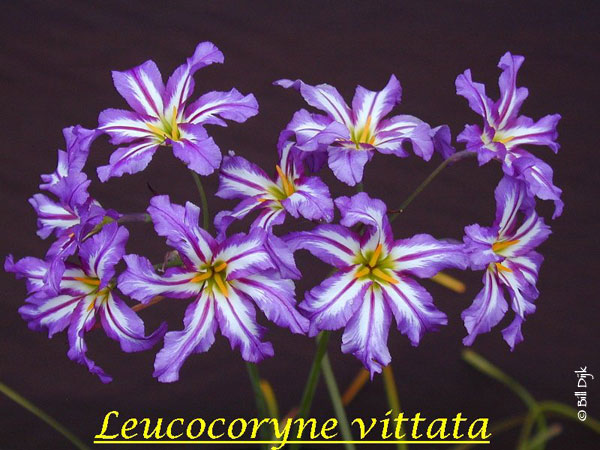
Leucocoryne hybrids can occur when more than one species is grown as they often flower at the same time. The first photo taken April 2004 by Lee Poulsen was of a flower from a package of "mixed hybrids" of Leucocoryne. Photos 2-4 taken by Bill Dijk he labels as hybrids. The first two resemble L. coquimbensis and the last L. vittata.
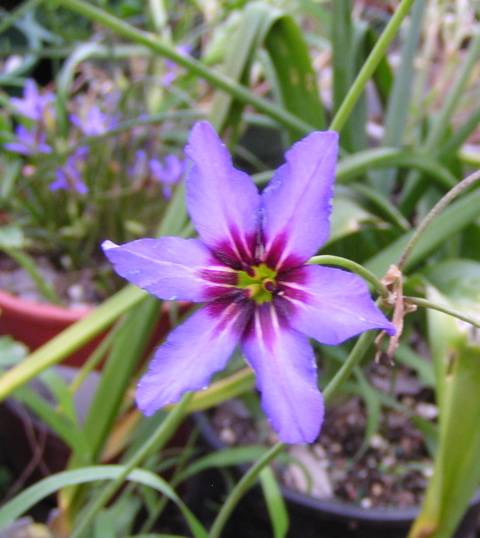
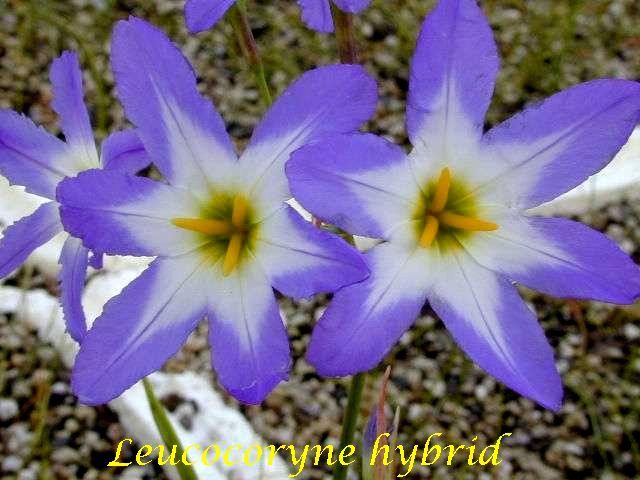
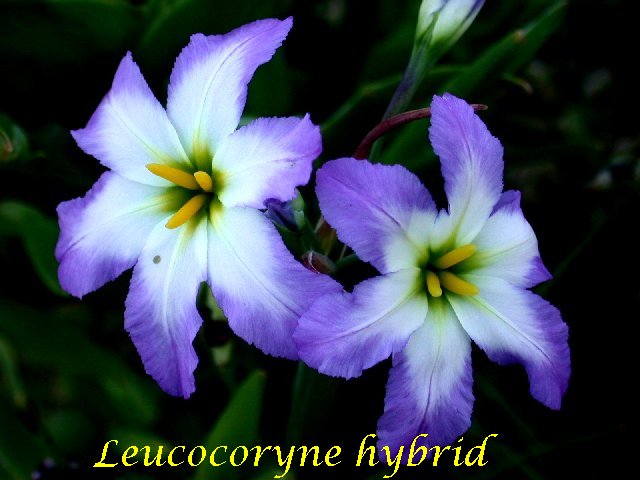

Photos below from Mary Sue Ittner that she thinks are hybrids.

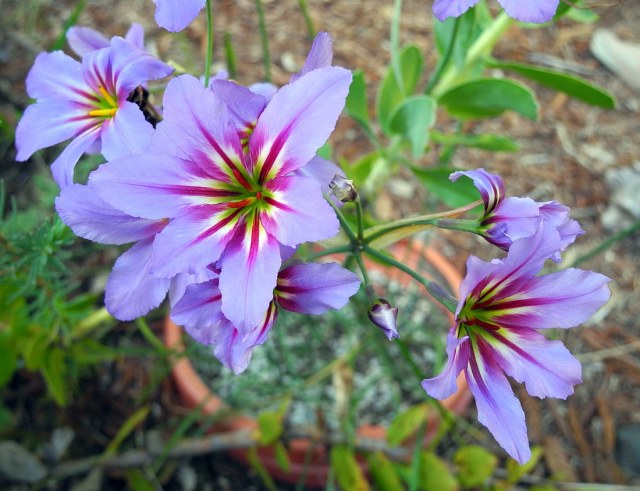
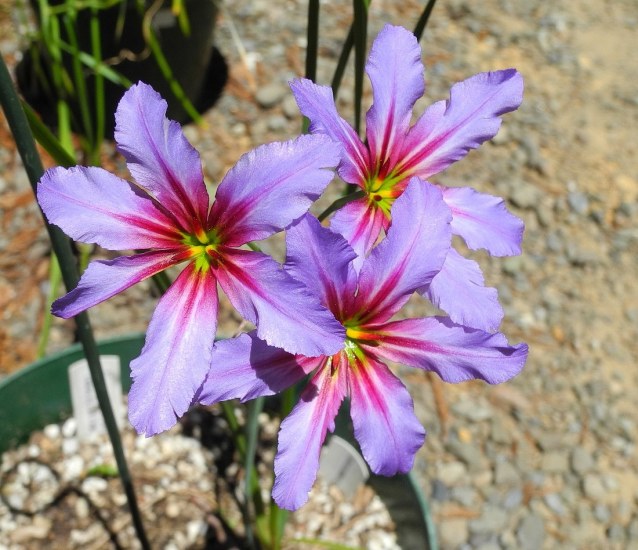
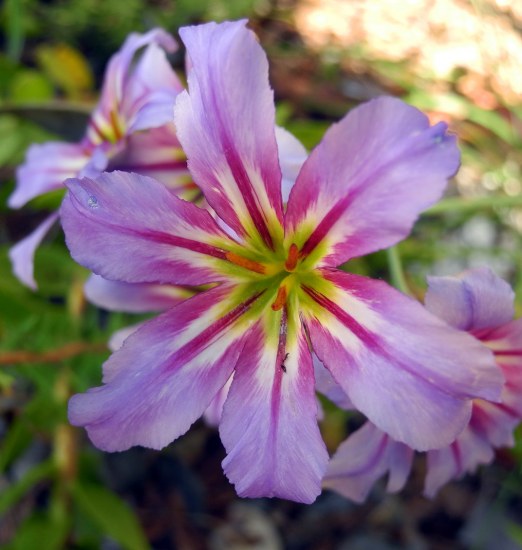
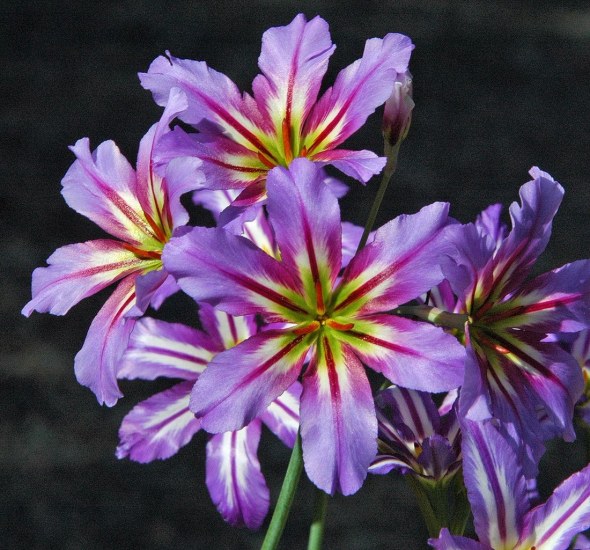
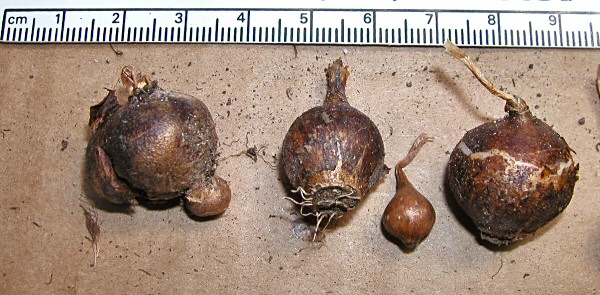
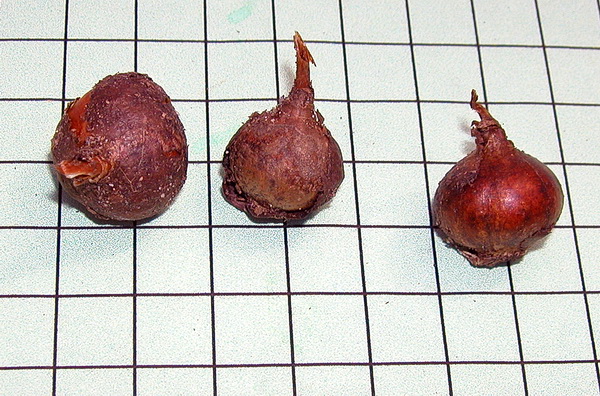
Leucocoryne ixioides (Sims) Lindl., syn. Leucocoryne narcissiflora Baker, is native to Central Chile. It has cylindrical staminodes that are white or cream, with or without the upper half or third dark. Flowers can be white or pink or pale lilac. Height range: 20-45 cm. Photo 1 photographed by Sheila Burrow is white. Photo 2 also photographed by Sheila Burrow matches the description for this species. Photo three was taken by Eugene Zielinski in 2011 in a good flowering of the desert in Chile along Route 5 between Los Vilos and La Serena. Photos 3-4 taken by Mary Sue Ittner. The last shows the corms on a 1 cm grid.
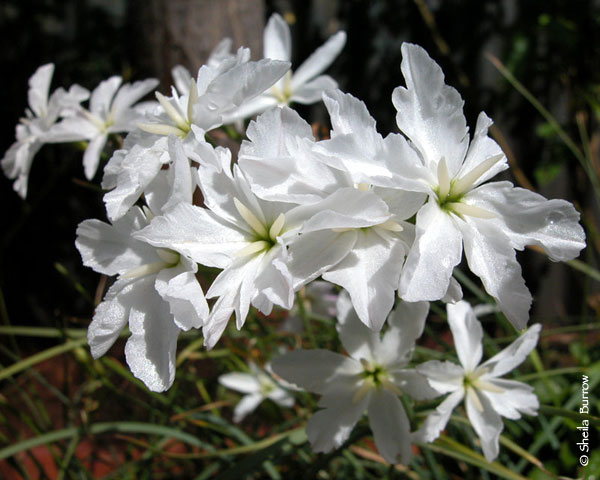
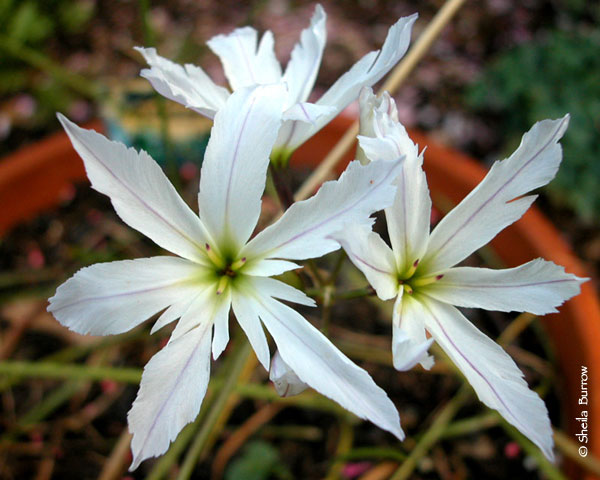
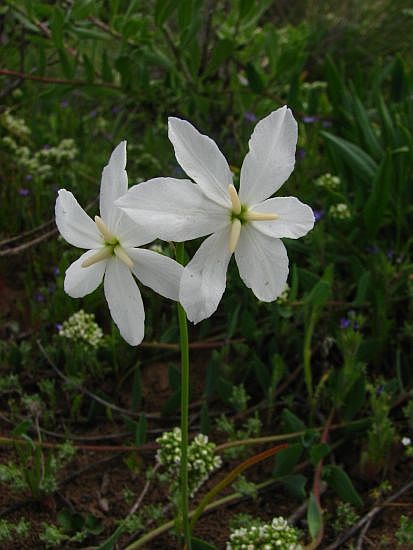
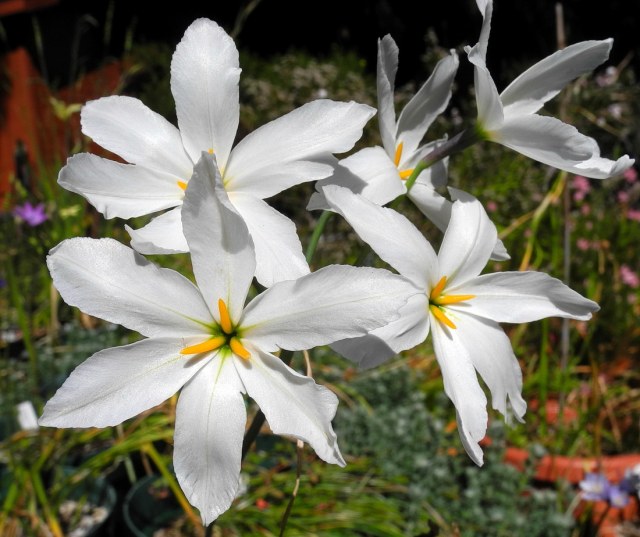
Leucocoryne macropetala Phil. is native to northern and north central Chile between the Atacama and Coquimbo regions. Height range: 30-45 cm. Photos by Arnold Trachtenberg who says this flowers for him in the Northern Hemisphere in spring and is sweetly scented, and Diane Whitehead of a plant that took 17 years to flower from seeds collected by Flores and Watson. It is also scented.
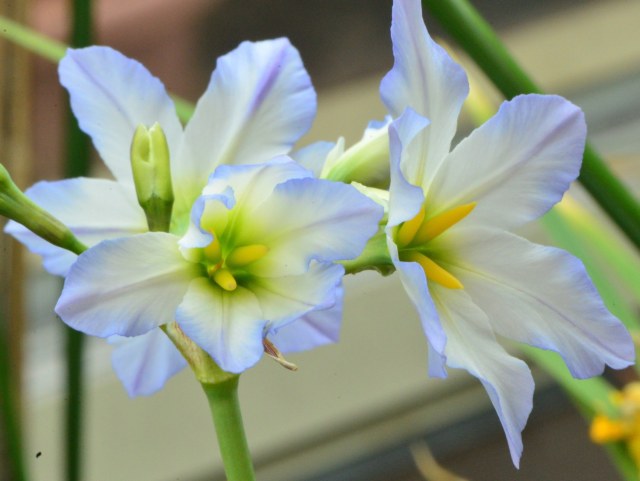
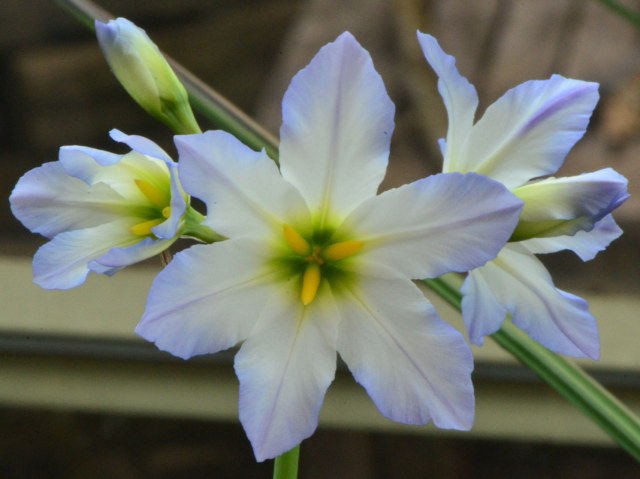
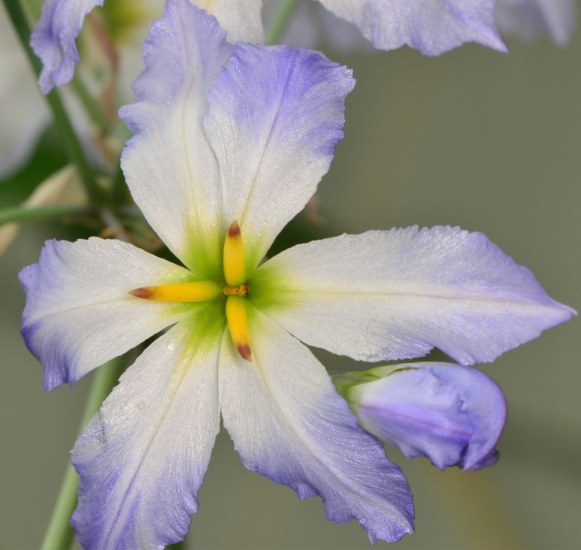
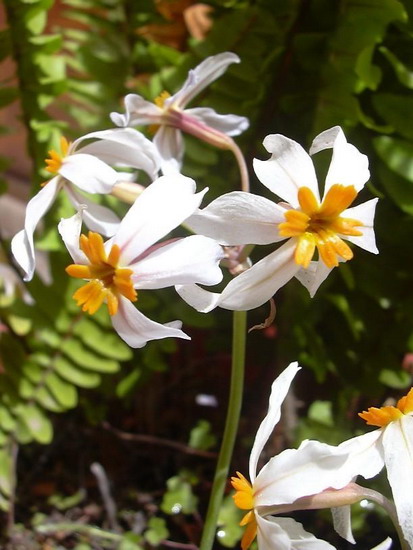
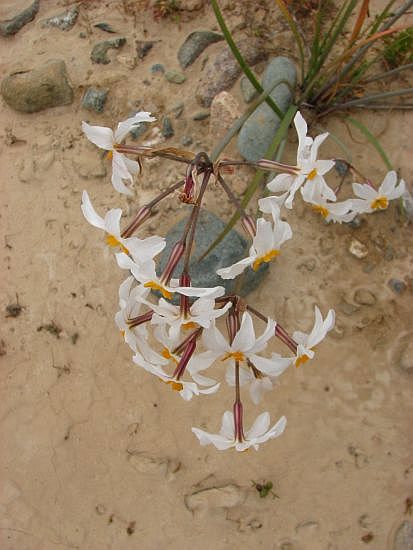
Leucocoryne narcissoides Phil. (1860) syn. Stemmatium narcissoides is native to Northern Chile between the Antofagasta and Coquimbo regions. It is distinguished by having wide or narrow tepals and six equal staminodes, generally 3 short ones and 3 long ones. It differs from other species by having staminodes that are fleshy and flat and of a showy pale orange. There is some disagreement about this species. Some believe that it is the same species as Leucocoryne incrassata Phil. (1896), also known as Pabellonia incrassata. Ravenna has proposed a new species, Leucocoryne coronata Ravenna (2000) that he believes is different, but looks much the same and is not accepted by Melica Muñoz who has studied the Leucocoryne genus. We are including all the photos under this name. Height range: 45-50 cm. Photo 1 from Osmani Baullosa. Photos 2-5 from Eugene Zielinski taken October 2011 growing near Parque Nacional Llanos de Challe.


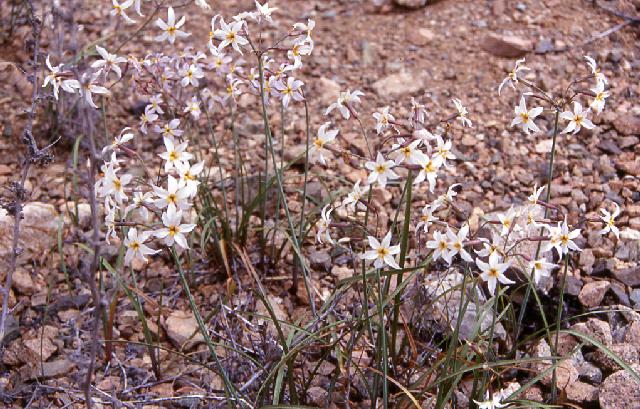
This is a very interesting flower which looks superficially like a small, bicolored small-cupped Narcissus. It grows in very dry, rocky soils quite near the coast, with large Copiapoa cacti and xeric shrubs, and the most robust plants seemed to be down near seasonal drainage gullies on sloping banks. Photo 1 by Jane McGary. Photos 2-3 by Diane Whitehead photographed in Aguada de Tongoy, Atacama Province in October 2011.
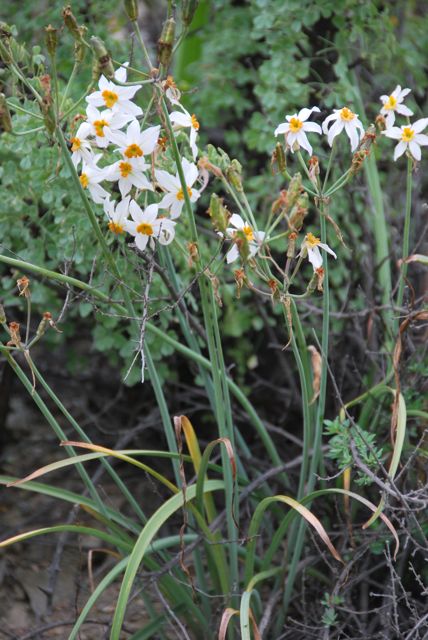
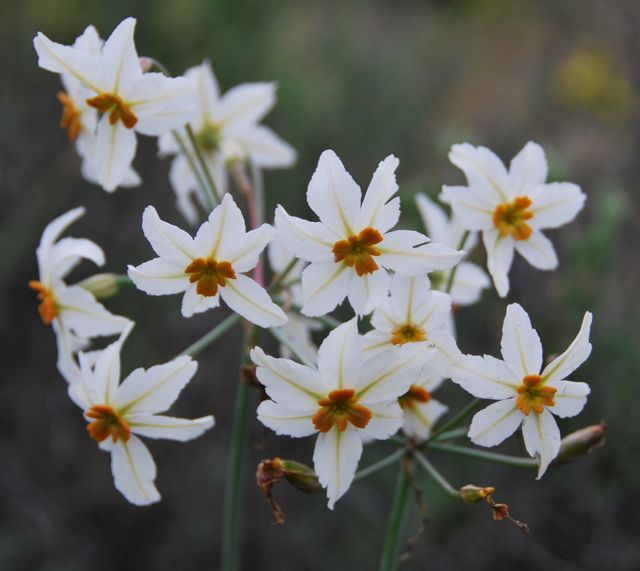
Leucocoryne purpurea Gay is native to Central Chile (the Coquimbo region). It has light purple flowers with darker purple streaks. The staminodes are yellow with purple tips. Height range: 20-40 cm. Photos 1-2 taken by Eugene Zielinski near Parque Nacional Fray Jorge, Chile. Photo 3 by Sheila Burrow is of a plant in cultivation. Photos 4-5 from Mary Sue Ittner. The last photo by Arnold Trachtenberg.
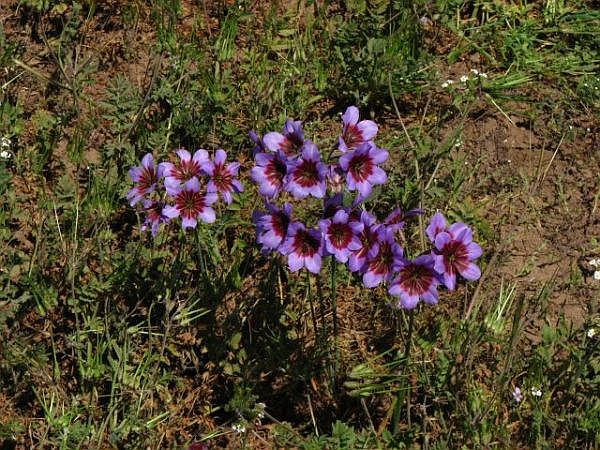
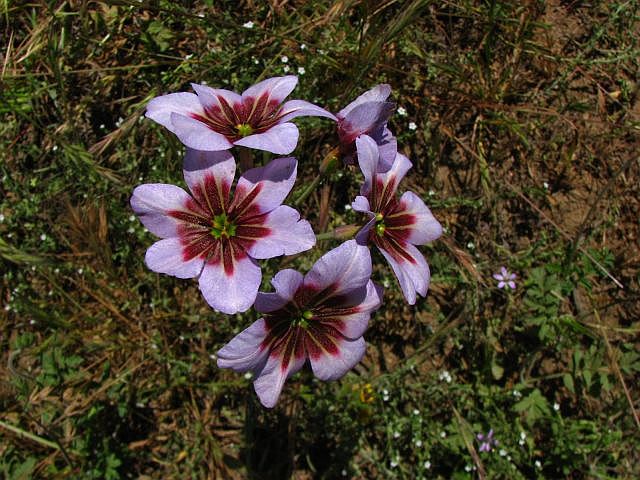
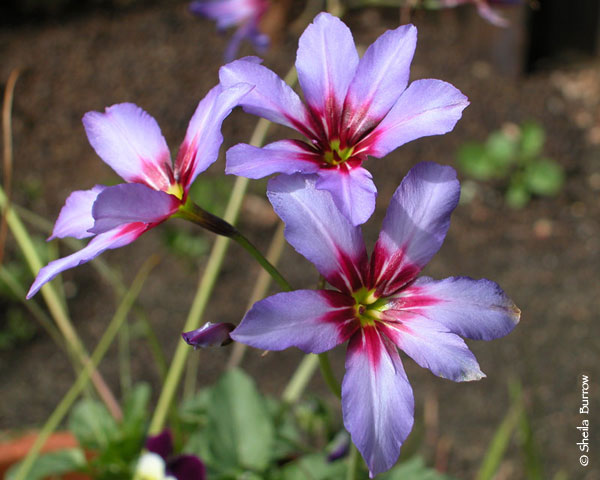
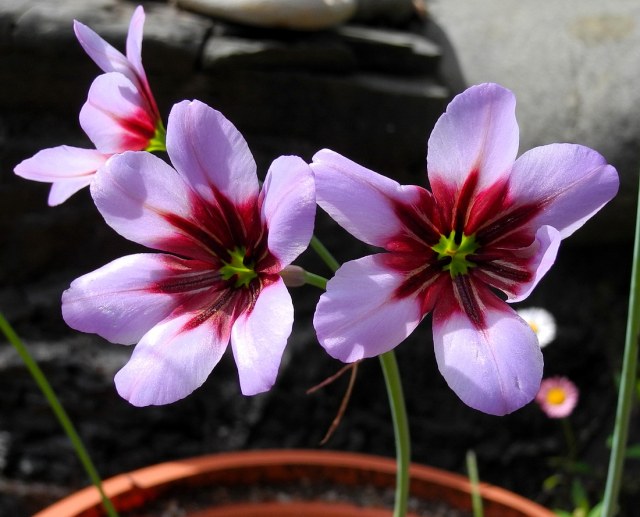

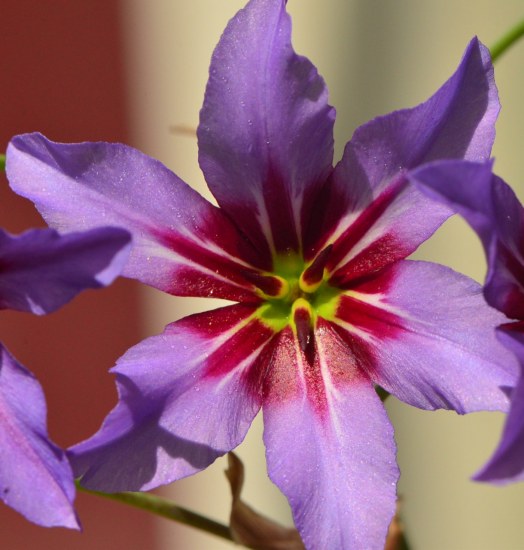
Leucocoryne spp. Photos 1-4 are Leucocoryne species observed in Chile by Eugene Zielinski between late September, early October in Chile that were not identified. Photos 1-3 are of plants seen between Huasco and Carrizalillo. Photo 1 looks like Leucocoryne appendiculata. Photos 2-3 are likely Leucocoryne ixioides or a hybrid. Photo 4 seen near Pichasca National Monument is probably Leucocoryne coquimbensis. The last photo was taken by Sheila Burrow of a plant in her collection unidentified.
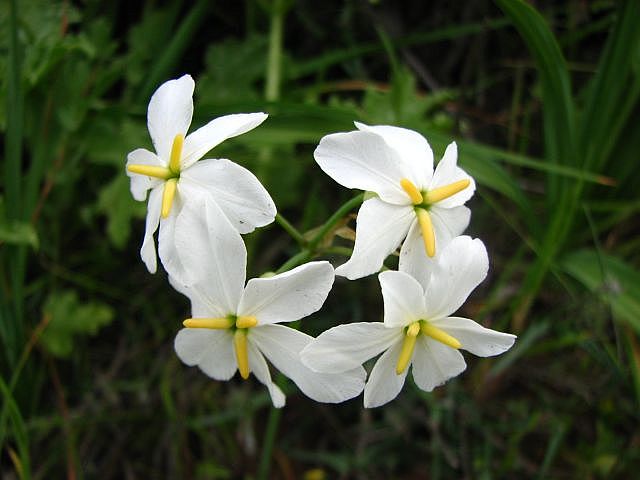
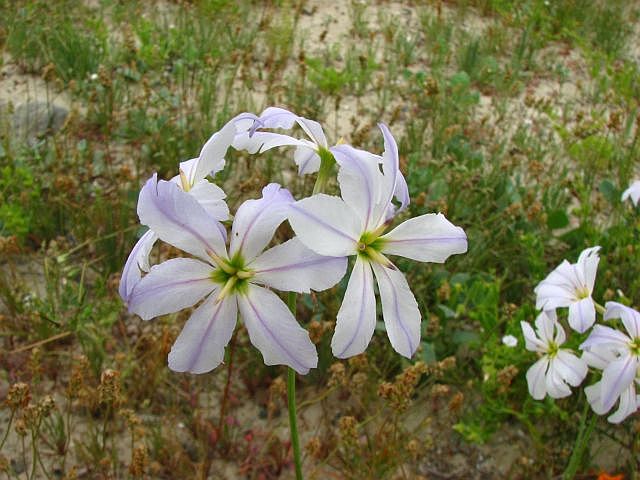
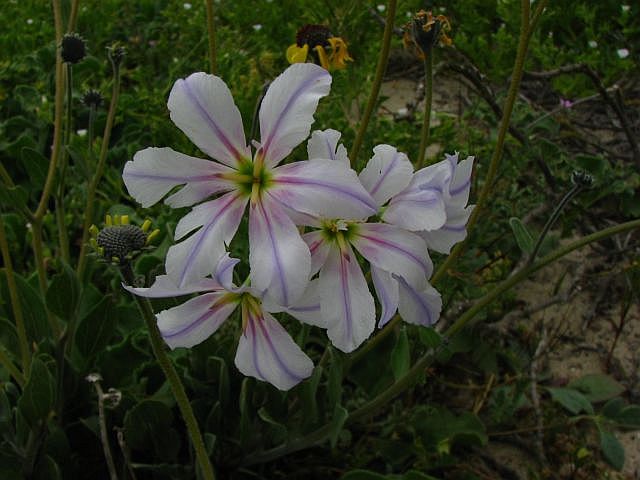
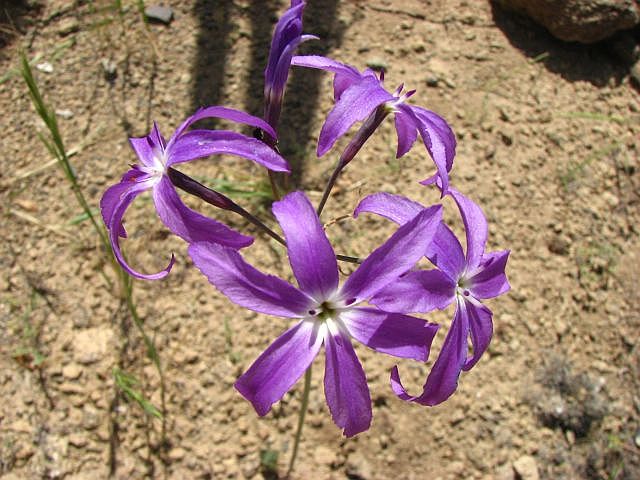
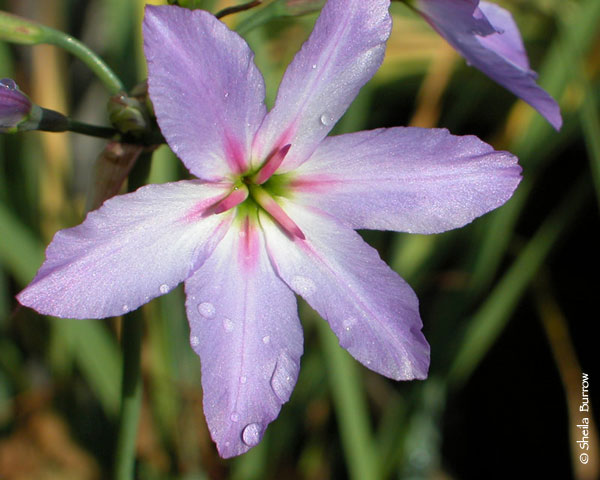
Leucocoryne violacescens Phil. is listed under this spelling in most of the major online data bases. IPNI also has a plant listed under this name as well: Leucocoryne violascens Phil. that is not included, even as a synonym, in the other data bases. It's unclear if it is the same plant with an alternate spelling. It is native to central Chile between the Valparaíso region and the Metropolitan Region. Leucocoryne violacescens has violet oval-lanceolate tepals, paler in their inferior/lower third or towards the base and three yellow, whitish filiform staminodes, with or without dark tips. Photo Osmani Baullosa.
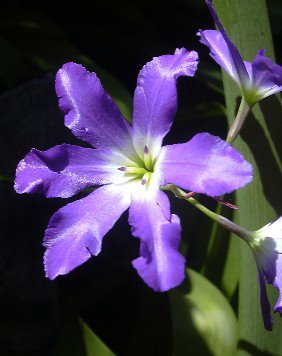
Leucocoryne vittata Ravenna is native to central Chile (Valparaíso). It has tepals with undulating/wavy edges, and is violet-purple with a strong violet central line and yellow conical staminodes. Height: to about 30 cm. Photo 1 by Sheila Burrow. Photos 2 by Bill Dijk is of a darker form of this species. Photo 3 taken April 2004 from Lee Poulsen. Photo 4 by Arnold Trachtenberg who says this flowers for him in the Northern Hemisphere in spring and is sweetly scented.
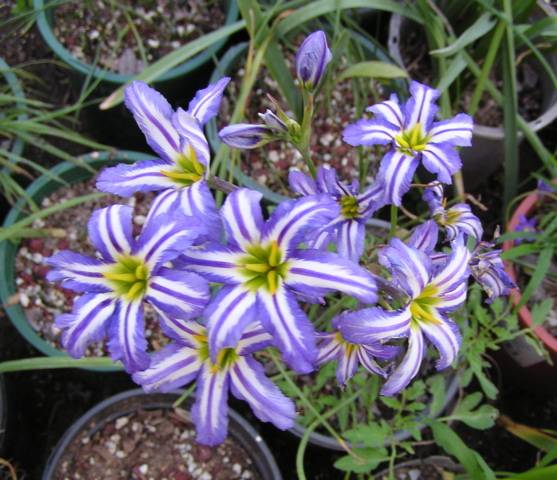
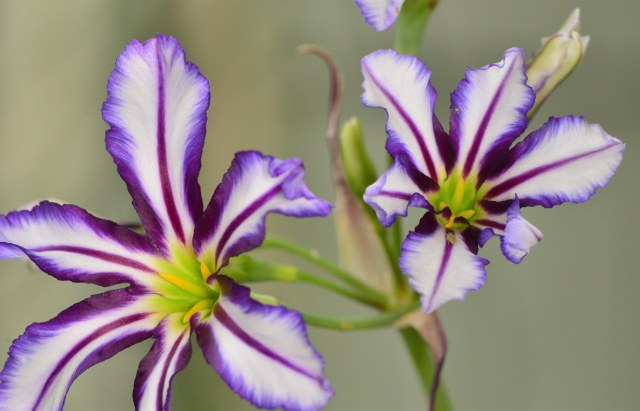
Photos below from Mary Sue Ittner show plants grown from seed. The last photo is of the corms.