Lilium is a large genus in the Liliaceae family. This wiki page is for the Asiatic Section from p-z.
Asiatic Section a-c - Asiatic Section d-k - Asiatic Section l-o
Other Lilium sections and hybrids are linked below.
American Section a-m - American Section n-z - Candidum Section - Dauricum Section - Martagon Section - Oriental Section - Trumpet Section - Lilium Hybrids - Lilium Index
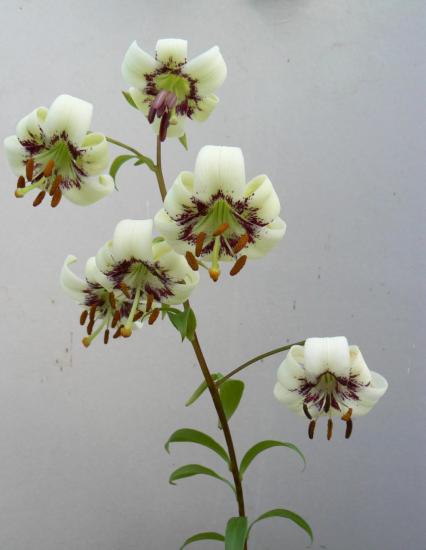
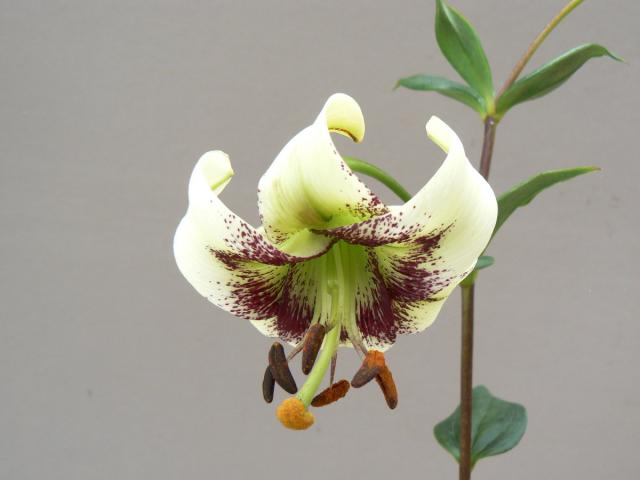
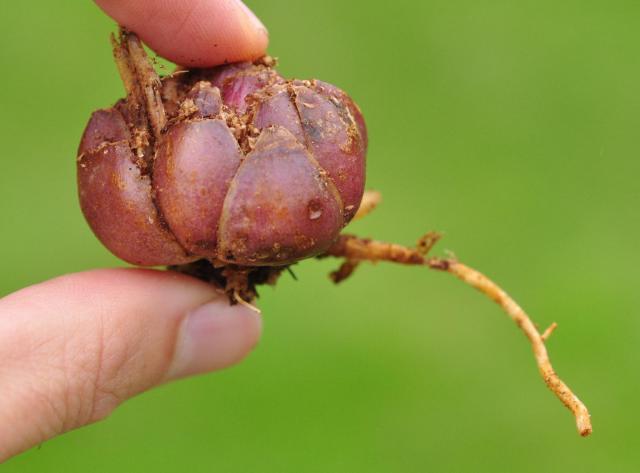
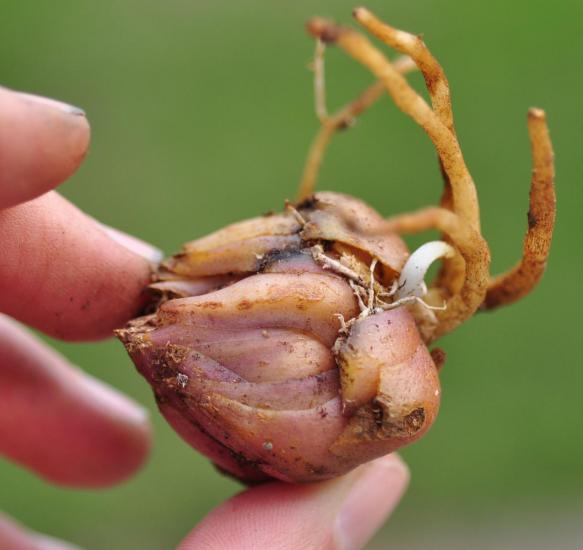
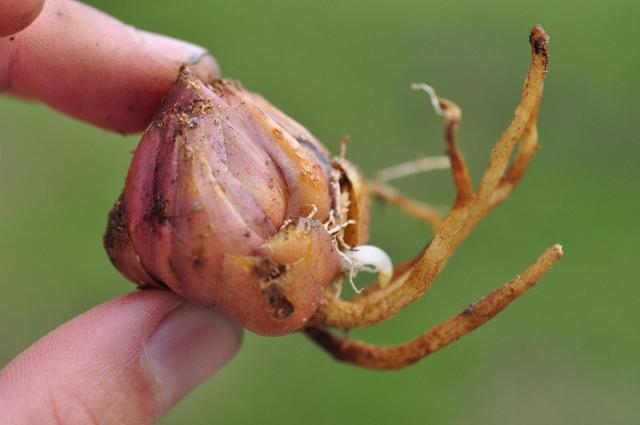
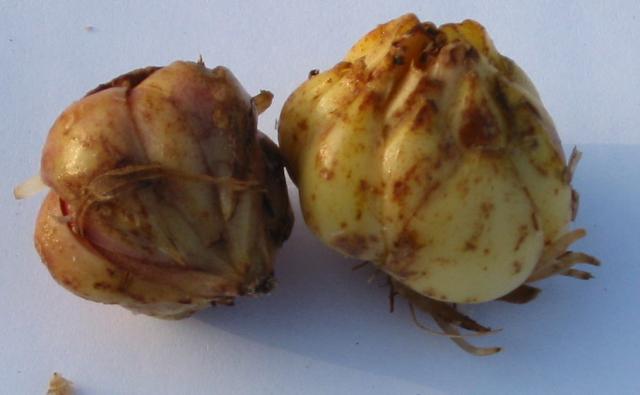
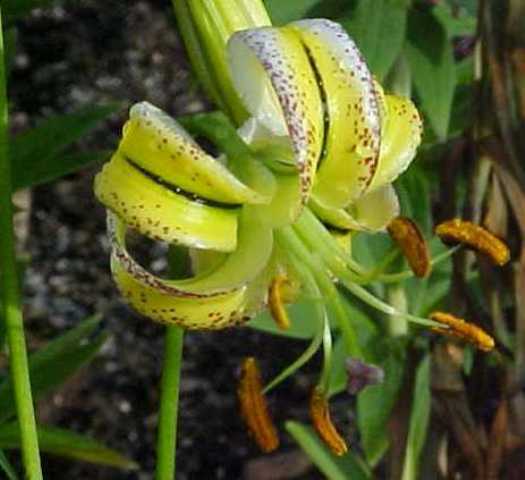
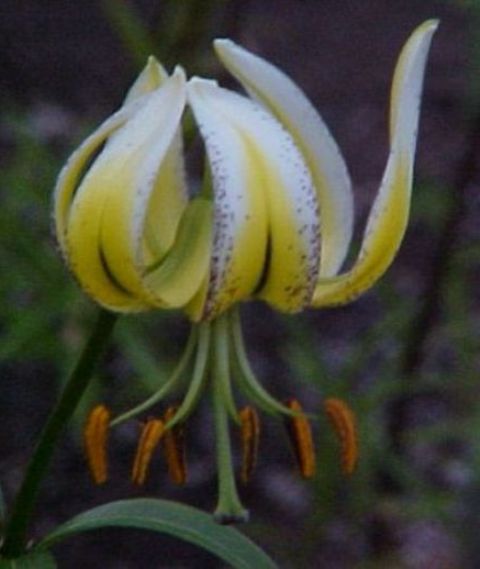
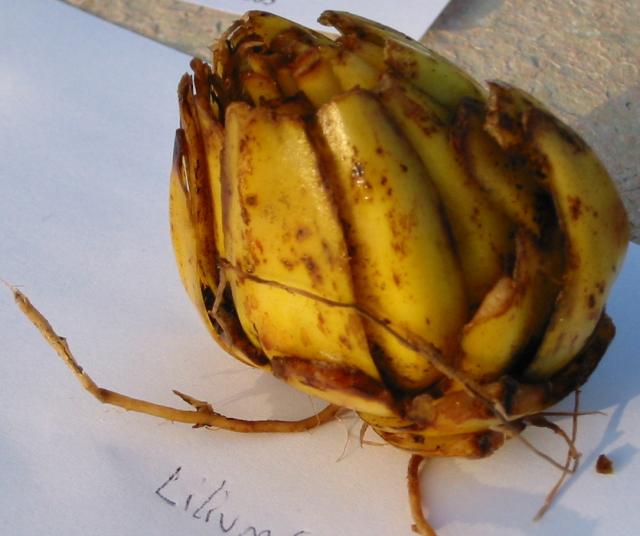
Lilium papilliferum Franch. is from the North West of the Yunnan province of China; its common name is the 'Likiang lily'. Its Latin name derives from the papillose surface of its stem. Up to three scented flowers are borne 60 cm high. Photographs 1 and 2 by John Lykkegaard Johansen. Photo 3 of a bulb by Pontus Wallstén.
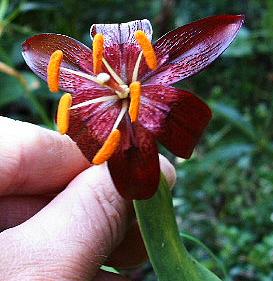
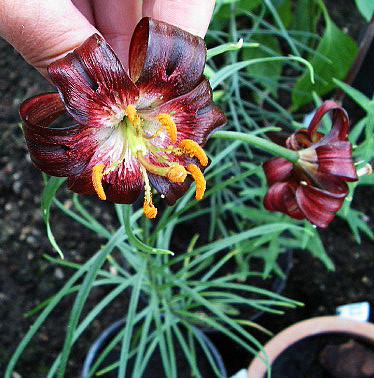

Lilium poilanei Gagnep. is from Vietnam and also is found in Laos and the Yunnan province of China. It grows on cliffs and is thought to be related to Lilium primulinum. Height: 3-4 ft. Photos from Dylan Hannon, who writes "clones of Lilium poilanei from Vietnam, rather different from the one below. The flowers appear on long arching stalks in the heat of summer (July-August) and are intensely fragrant, with an odd sweet smell. Rather a temperamental lily in this climate, at least for me."
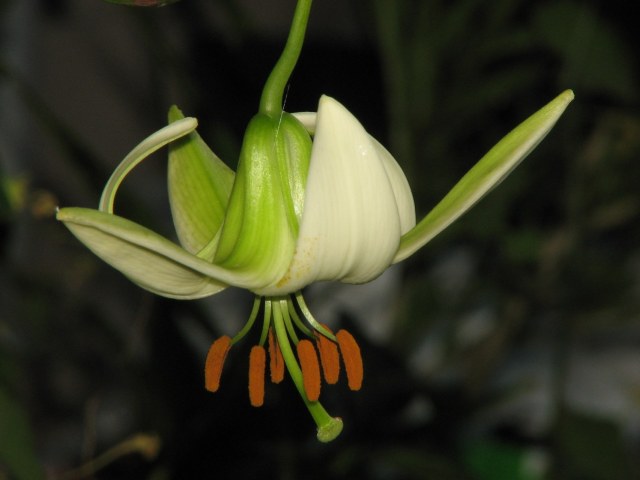
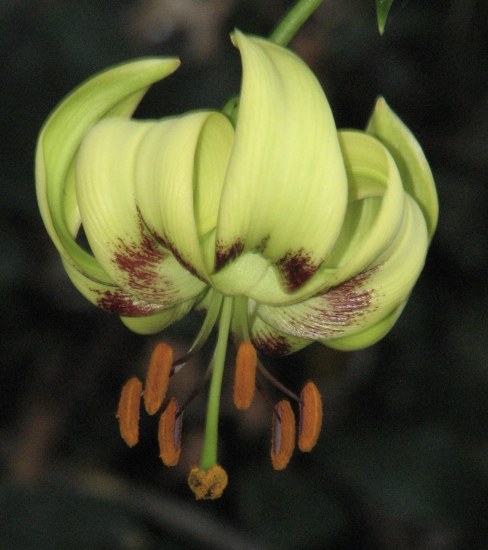


Photos 1-2 were taken by Tony Willis. Photo 3 of a bulb by Pontus Wallstén.
Lilium polyphyllum D.Don grows in the Himalayas from Afghanistan through Kashmir to Kumaon at 1800 to 3700 metres. The name means 'many leaved'. The bulbs are sold as a herbal "cure all" medicine. Height: to about 4 ft. Photographs by Mana Chandhok taken in Gangotri National Forest, India showing the species growing at an elevation of 10,500 ft to 12,000 ft in heavy granite dust at slope of about 50 degrees. This area is snowed in from November to April.
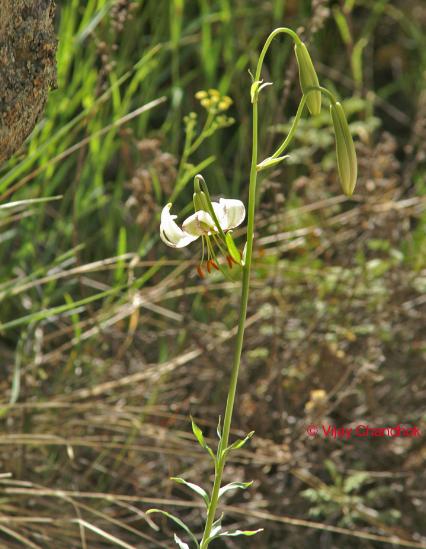
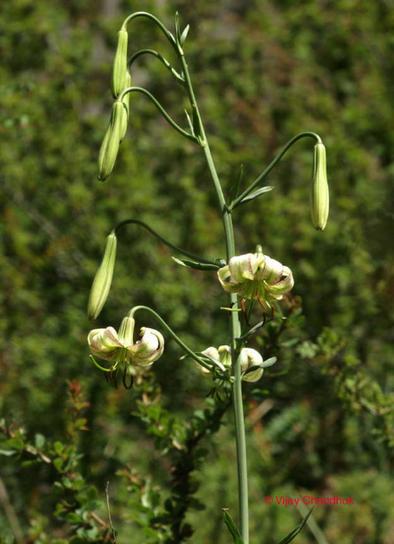
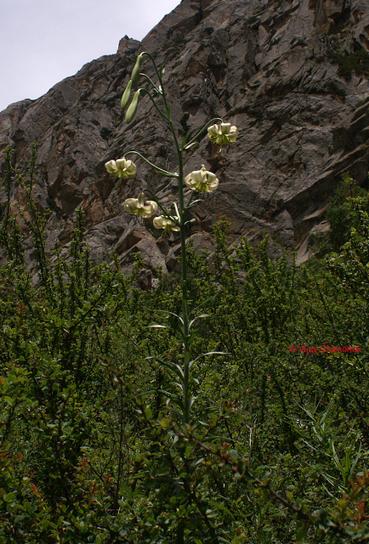
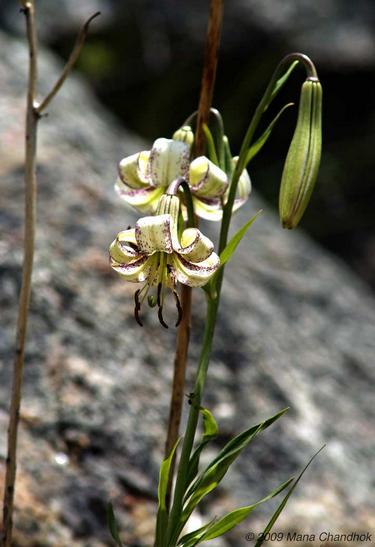
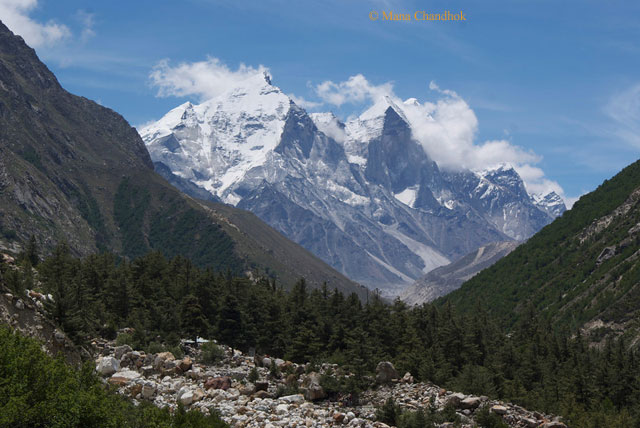

Photo of a seedling bulb by Pontus Wallstén.

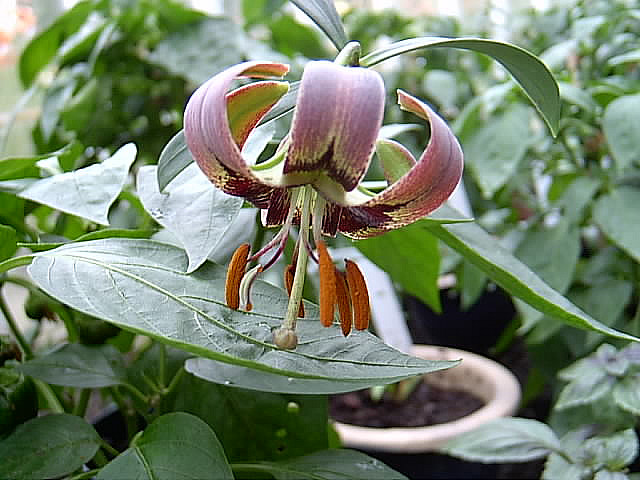
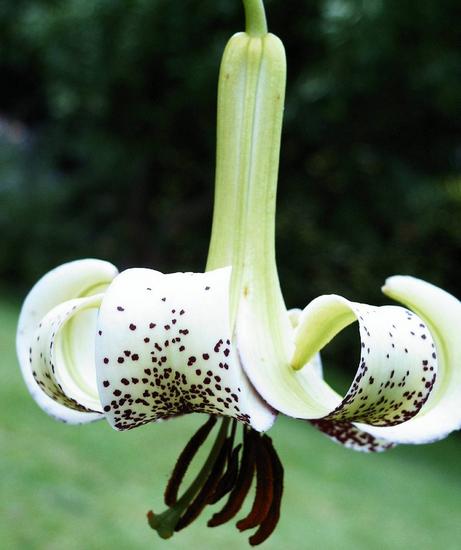
Lilium primulinum Baker takes its name from the primrose (Primula vulgaris) yellow color of its flowers. A common name is the "Ocher (ochre) lily". It is found in Burma (Myanmar), China (Guizhou, Sichuan and Yunnan) and Thailand up to 3000 m. Accepted varieties are Lilium primulinum var. burmanicum (W.W.Sm.) Stearn (greenish yellow flowers spotted with purple), Lilium primulinum var. ochraceum (Franch.) Stearn (syn. Lilium majoense H.Lév.) (wine purple flowers with greenish ocher tips) and Lilium primulinum var. primulinum (only found in Burma, flowers wholly yellow with no blotches). Plants grow 2 m high with up to eight flowers in a raceme.
Photographs by John Lykkegaard Johansen; the second one shows 'Rock's variety' and the third Lilium primulinum var. ochraceum (syn. Lilium majoense).

The below photos by Pontus Wallstén compare bulbs of the varieties of this species. Photo 1 is of a bulb of Lilium majoense. Photos 2 and 3 are bulbs of Rock's variety and photo 4 is a bulb of Hooker's variety.
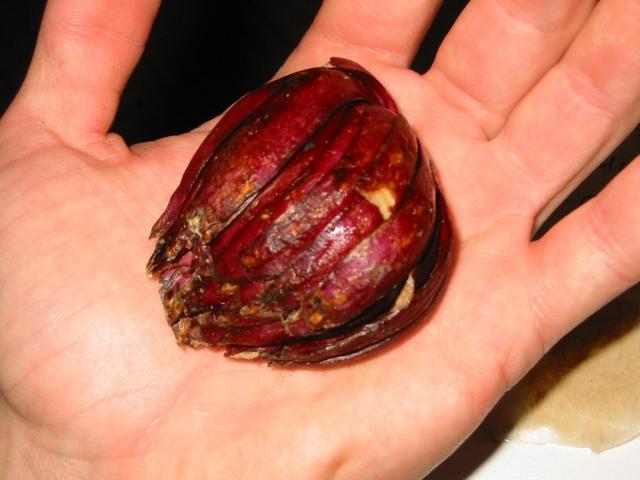
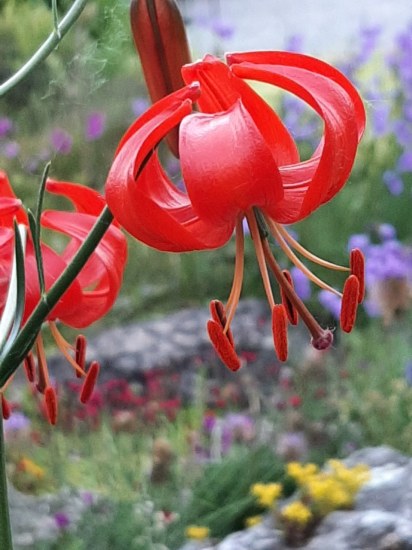
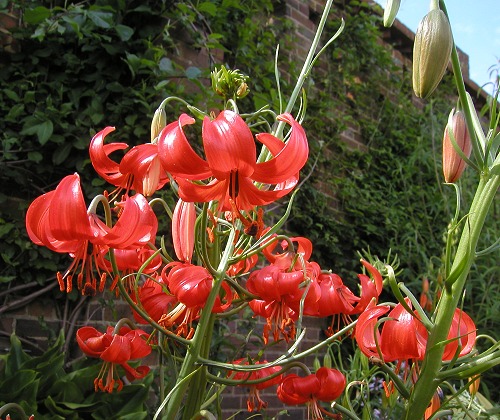
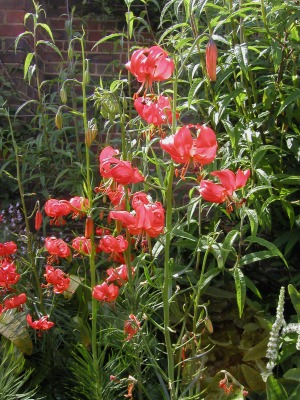
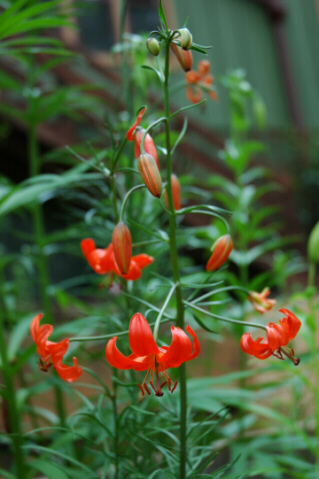
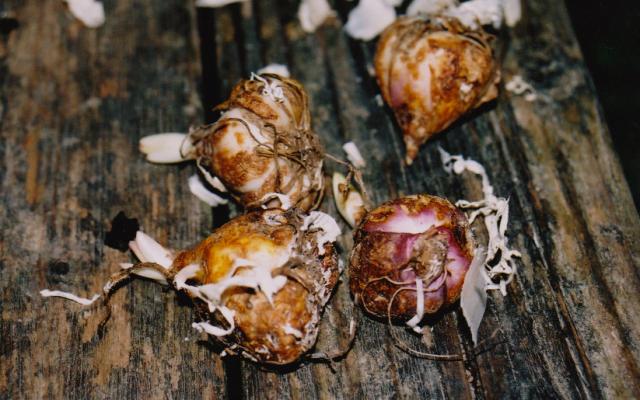
Lilium pumilum Redouté is an Asian lily (North Korea, Manchuria, and Mongolia) with red pendant flowers. It seems to be easily grown in a well watered garden. Height: 1-2 ft. The first photo was taken by Laura Grant. The next two photos were taken May 2004 by Bob Rutemoeller at Kew Gardens, United Kingdom; the second is not as clear but shows the form. The fourth photo, by John Longanecker, is of a lightly sweet-scented container plant grown in Placerville, CA. Photo five of bulbs was taken by Pontus Wallstén.
Lilium pumilum strains 'Golden Gleam' and 'Yellow bunting'. A lot of people believe these two strains to be a species variety of Lilium pumilum. My thoughts are that they are hybrid strains. A species is a naturally occurring group of plants that breed true, a strain is a developed line of hybrids (genetically related) derived from repeated crosses that produce a look alike seedling population. This can be done with hybrids and of course with species, however the species already produces these look alike seedlings with only minor variation between the seedlings so why would a person call them a strain. Text and one photo of each of the two named strains by Darm Crook.
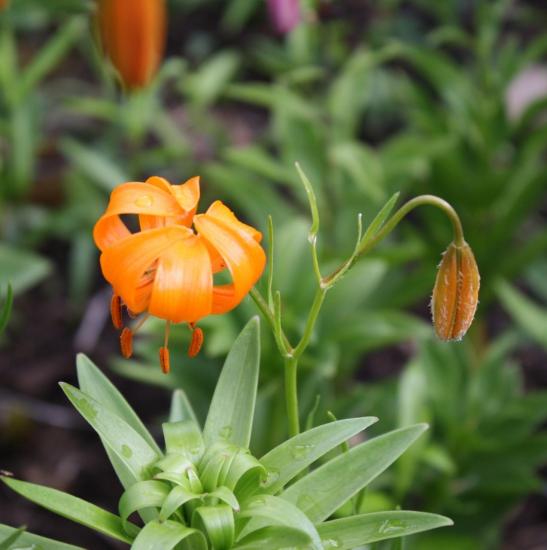
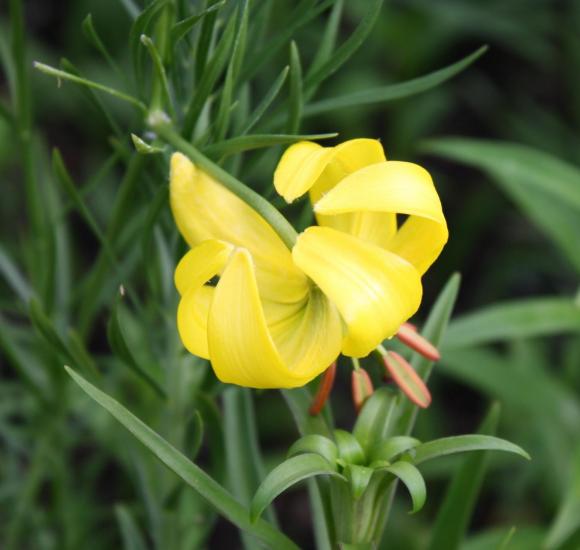
Lilium rosthornii Diels is native to Sichuan, Hubei and Guizhou. It grows in mountain ravines, by streams and woodland, at 350 to 900 meters above sea level. It differs from Lilium henryi in having an oblong seed capsule; more distinctively it is shorter, has a sturdy upright stem and different leaf width; it is also more frost hardy. Height: to about 90 cm. First photo by Arnold Trachtenberg, photos two to five by Darm Crook, photo six of a bulb by Pontus Wallstén.


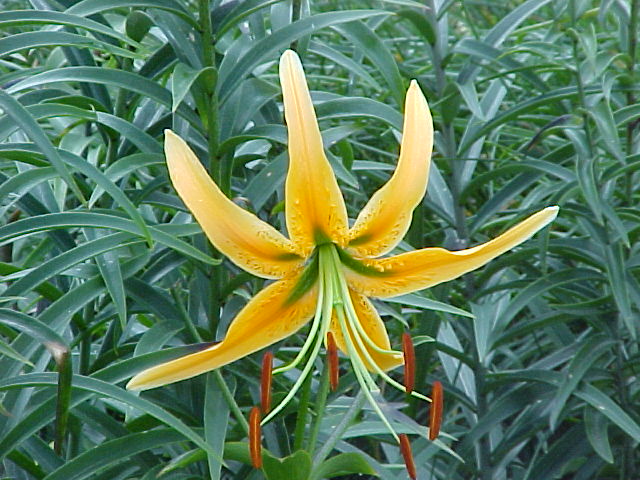
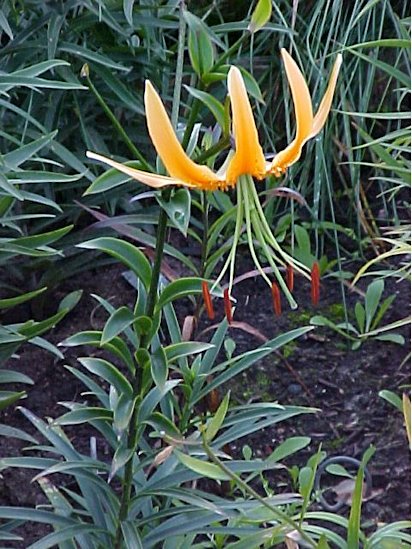
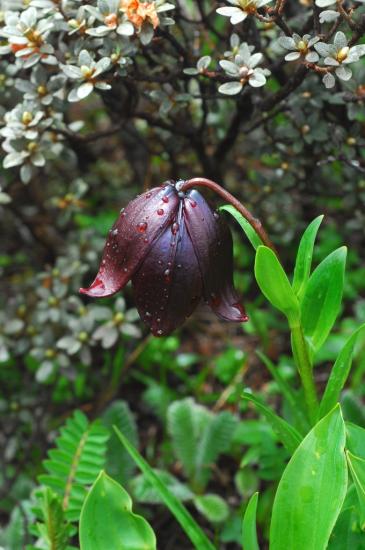
Lilium souliei (Franch.) Sealy is a small fritillaria-like species native to Yunnan & Sicuan provinces as well as SE Tibet. It is 20-50 cm tall with a single, occasionally two flowers. It is a plant of high elevations, above 3000 m, growing in wet/damp conditions of low shrubs, mainly Rhododendron. Blooming in June-July. Photos were taken in Baimashan, NW Yunnan by Oron Peri

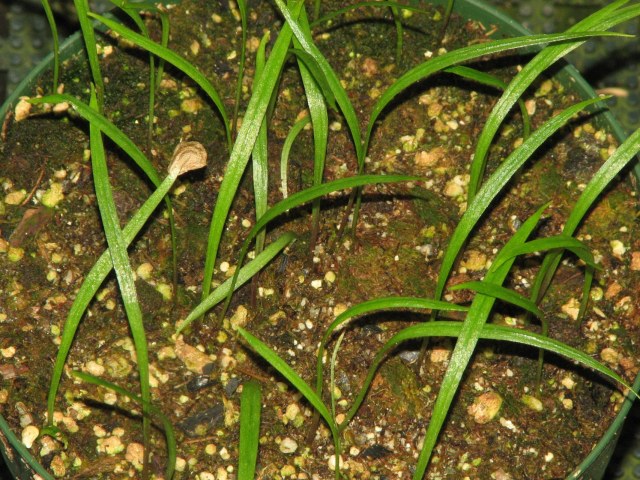
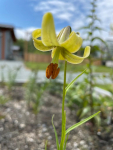
Lilium stewartianum Balf.f. & W.W.Sm., syn. Lilium xanthellum F.T.Wang & Tang, is a low-growing species with grass-like leaves from central China. It is rare in cultivation. Height range: 1-6 ft. Photo of a plant grown from seed by Steve Wilson, flowering for the first time in 2022 sown in spring 2018.
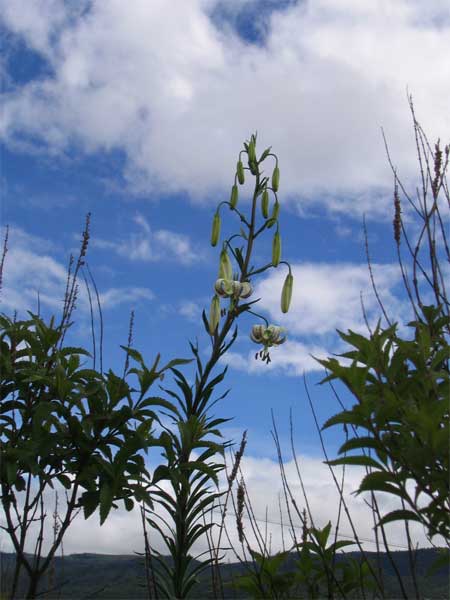
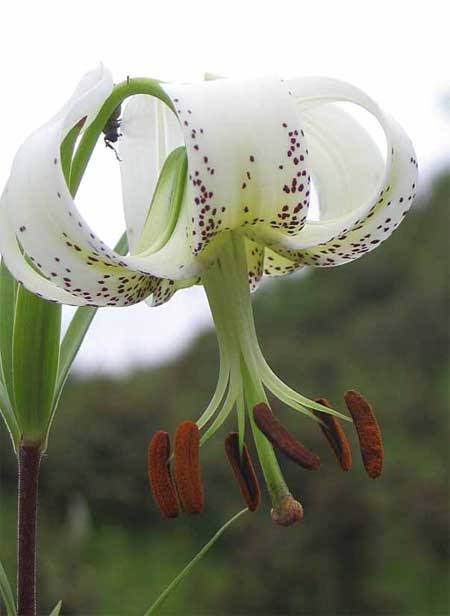
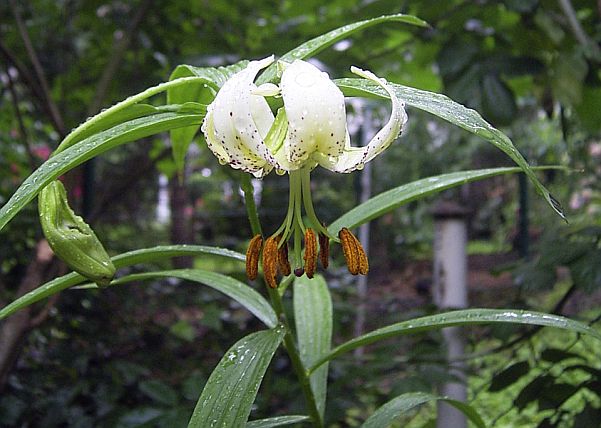
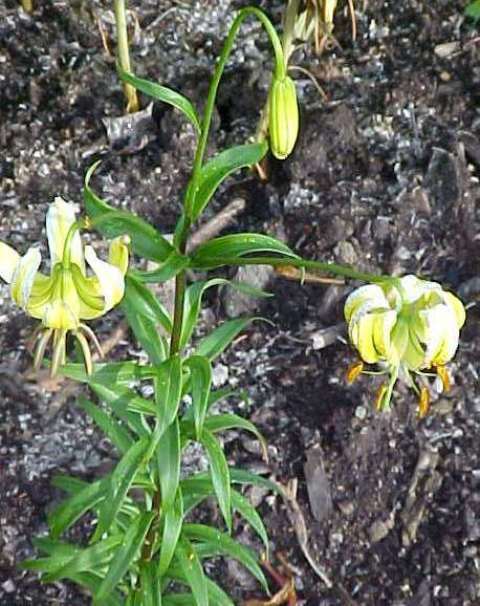
Lilium taliense Franch. is a beautiful and fragrant Turk's Cap lily that grows to 1.5 metres tall. The species is found in northwest Yunnan, China. The first two photographs were taken by David Victor near Zhongdian, Yunnan, in July 2005. The third photo by Denis Barthel is of a variety that was sold for many years mislabeled as Lilium xanthellum. The plant shown was about 6 feet high even though a young plant.
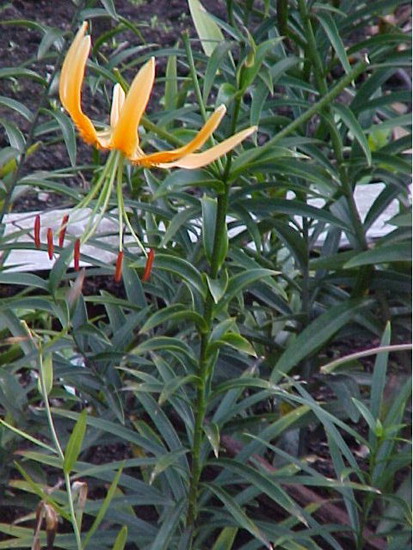
Lilium taliense var. kaichen is not found in IPNI or in any of the major data bases in 2022. It was given to this variety as a nickname and most lily growers have come to know it as such. This version of L. taliense is from China; it has an open raceme inflorescence, with down facing fully recurved florets on long pedicels. The flowers are basically white with a yellow face and have dark green to near black nectary grooves. Each tepal has a band of brown spotting running along its edges. This lilium struggles in a zone 1 garden, never having more than four florets or exceeding heights of 92 cm (3 feet). Photos 1-5 by Darm Crook, photo 6 of a bulb by Pontus Wallstén.


Lilium unknown species believed to not be L. poilanei and not L. majoense; neither is it L. brownii. It produces bulbils and is also stem rooting, growing on cliffs in Vietnamese sub tropical forested areas. Photos from Pontus Wallstén.


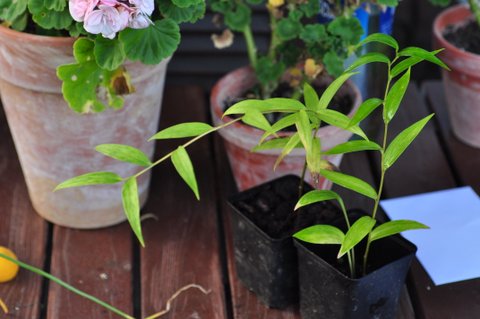
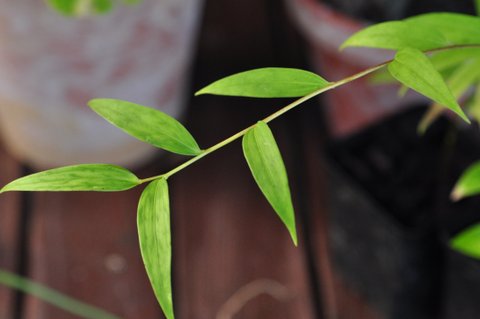
Lilium wardii Stapf ex F.C.Stern is from Tibet and likes a rather dry environment. It will grow to a height of 150 cm (5 feet). The pink with carmine spotted flowers are sweetly scented and set on long but drooping pedicels in a raceme inflorescence. It is named after Frank Kingdon-Ward who first collected it. Flower photo by Darm Crook. Bulb photos by Pontus Wallstén.
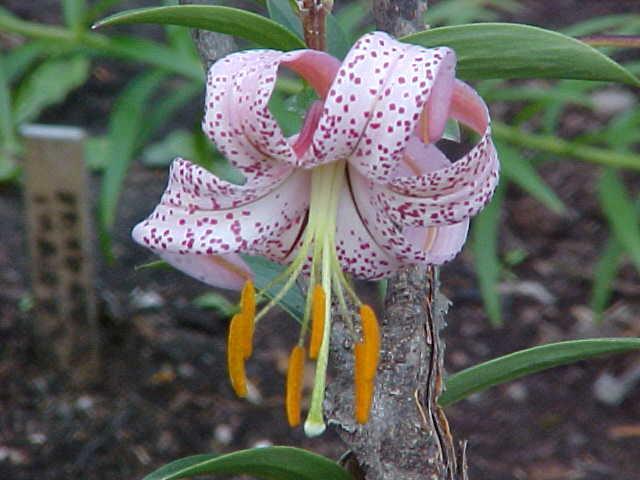
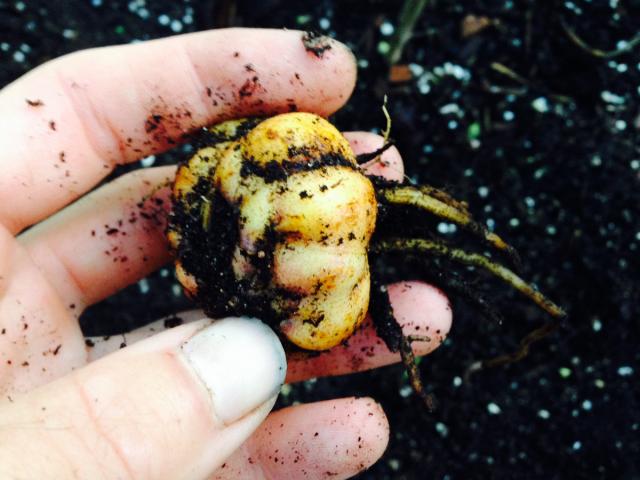
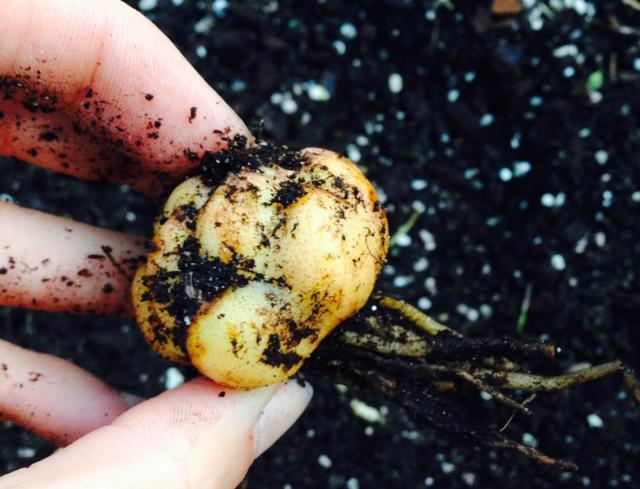
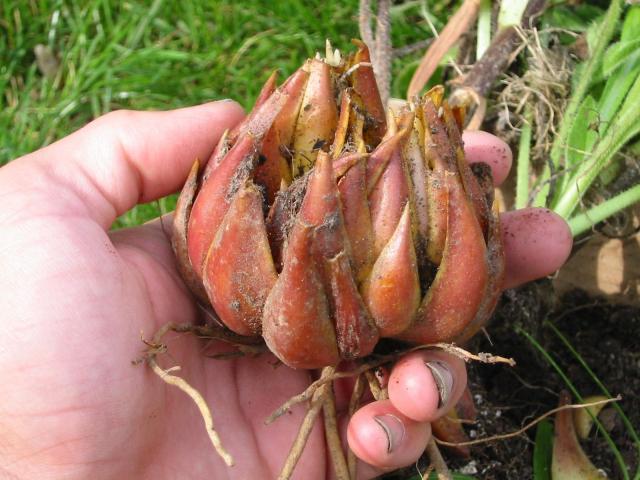
Lilium wenshanense L.J.Peng & F.X.Li was identified as a separate species as late as 1990. In 2022 according to Plants of the World online it is a synonym, but of what is not included. World Flora Online says is it a synonym of Lilium brownii var. brownii, but it is not listed as a synonym of that plant on either database. This lily is named for Wenshan in the Yunnan province of China where it is found in meadows at 1500 m. The stems are 1 to 2 m tall, and as many as seven scented flowers grow in a raceme. Photographs by John Lykkegaard Johansen. Bulb photos by Pontus Wallstén who says they are characteristically flattened with short pointed white scales, which can also be light pink or light yellow if the plant has been in the ground for a while.
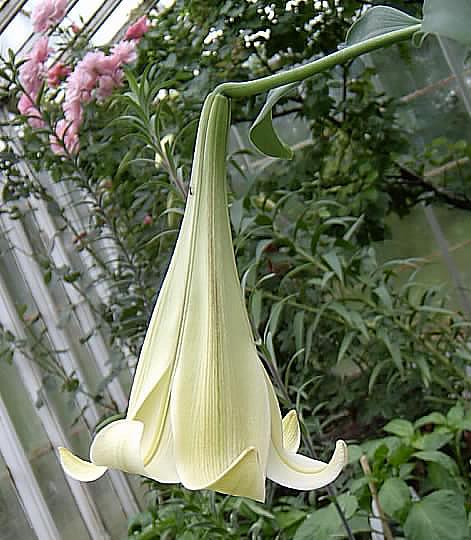
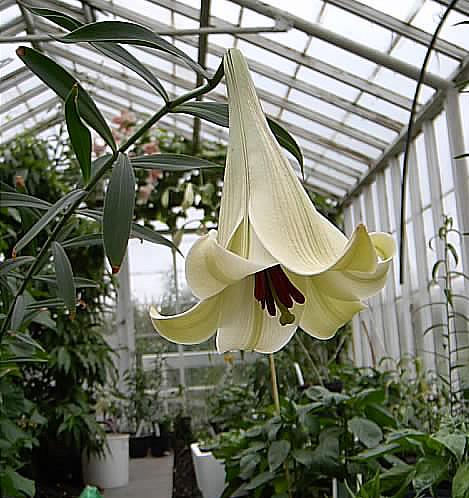
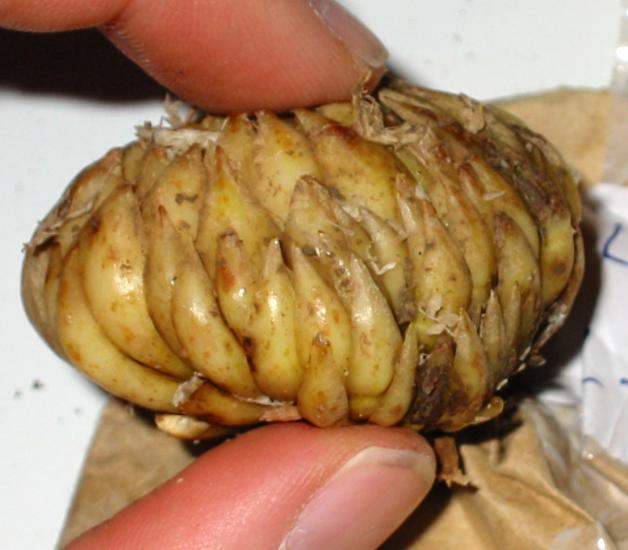
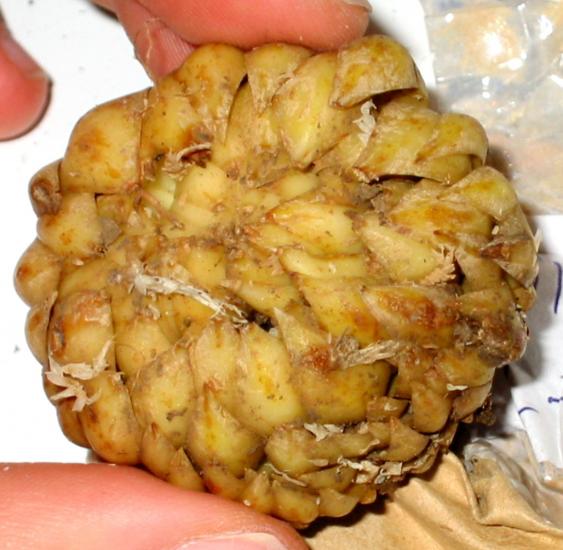
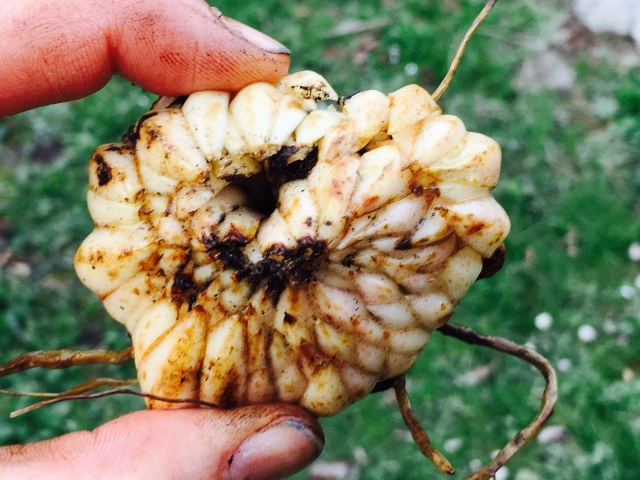
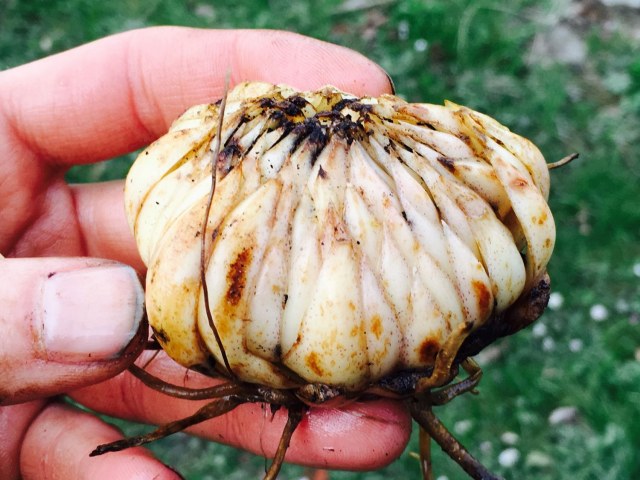
Lilium xanthellum F.T.Wang & Tang in 2022 is considered to be a synonym of Lilium stewartianum as is Lilium xanthellum var. luteum S.Yun Liang. Height range: 35-55 cm.
American Section a-m - American Section n-z - Asiatic Section a-c - Asiatic Section d-k - Asiatic Section l-o - Candidum Section - Dauricum Section - Martagon Section - Oriental Section - Trumpet Section - Lilium Hybrids - Lilium Index