Lilium is a large genus in the Liliaceae family. Information and pictures of species on the pbs wiki are found on section pages linked below. This wiki page is for the Candidum Section. Most, but not all of the species in this section are epigeal (have delayed germination). Stems are erect, leaves scattered, bulb scales are numerous, and the seeds heavy.
American Section a-m - American Section n-z - Asiatic Section a-c - Asiatic Section d-k - Asiatic Section l-o - Asiatic Section p-z - Dauricum Section - Martagon Section - Oriental Section - Trumpet Section - Lilium Hybrids - Lilium Index
Lilium akkusianum Gämperle is only found in a few forest margins near Akkus in NE Turkey. Height range: 80-150 cm. Photo of a bulb by Pontus Wallstén.
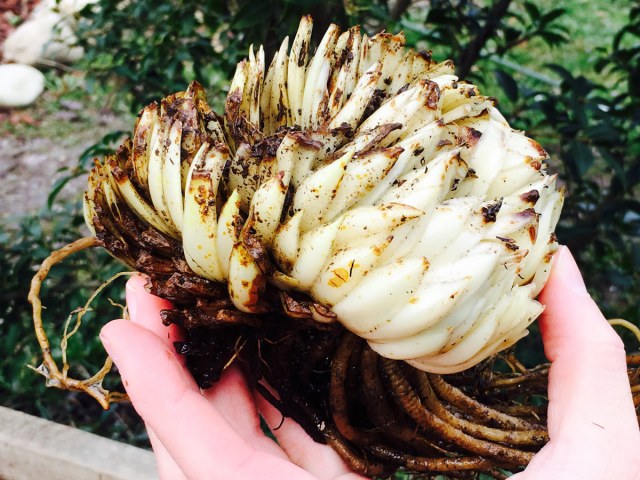
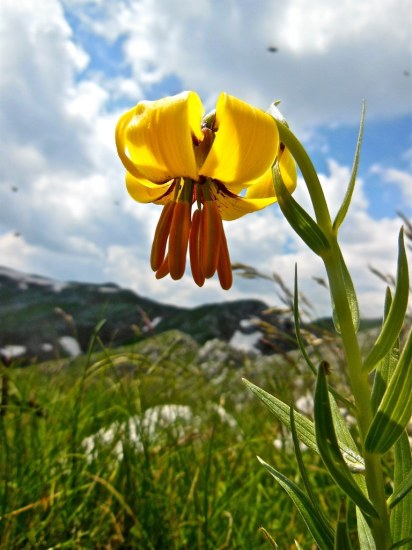
Lilium albanicum Griseb. is a Turk's cap lily from Albania and the Balkans, growing to about 40 cm tall. The first four photos from iNaturalist were taken by Karsten Rohweder in Montenegro and shared under a CC BY-NC license. The last photo of a bulb was taken by Pontus Wallstén.
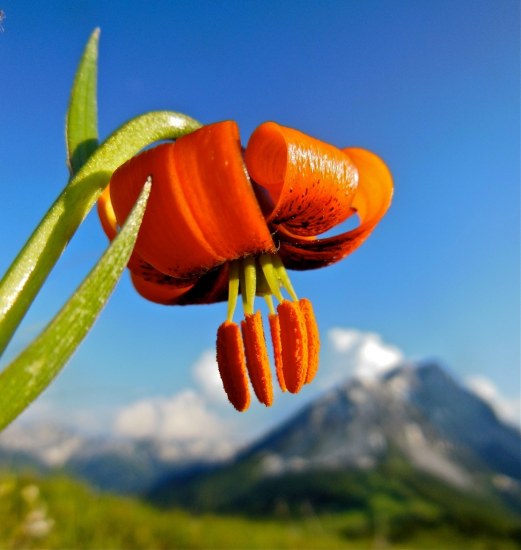
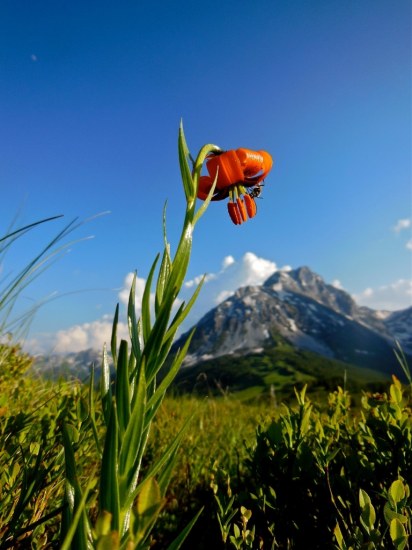
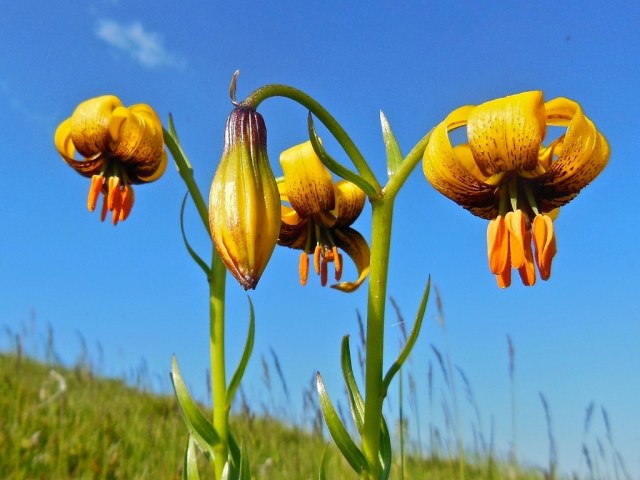
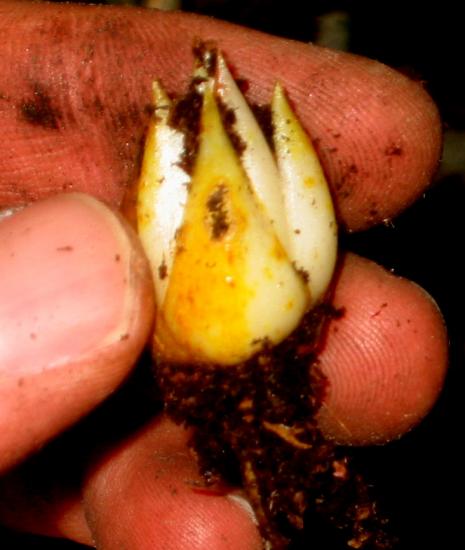
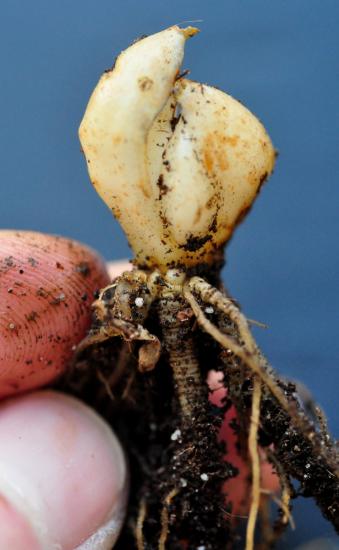
Lilium bosnaicum (Beck) Fritsch is a lily native to Bosnia and Herzegovina. Height range: 30-90 cm. It's also known as Zlatni Ljiljan (Bosnian for Golden Lily) and Bosanski Ljiljan (Bosnian Lily). Photo of a bulb by Pontus Wallstén.
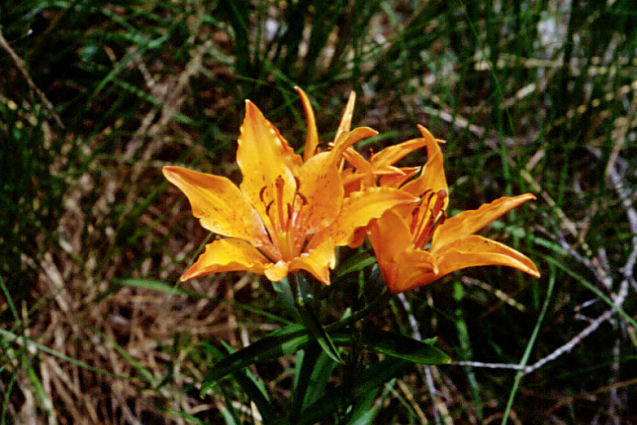
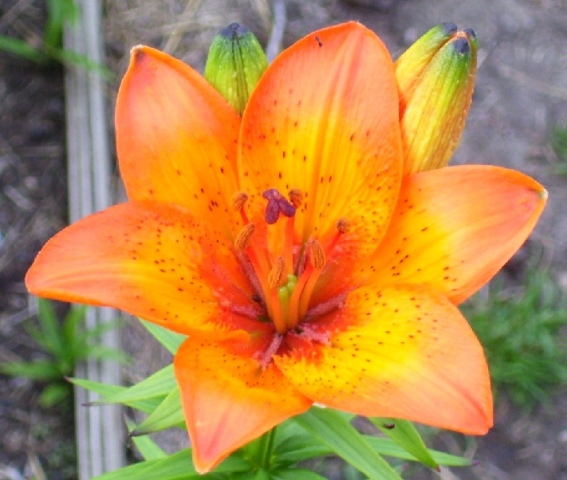
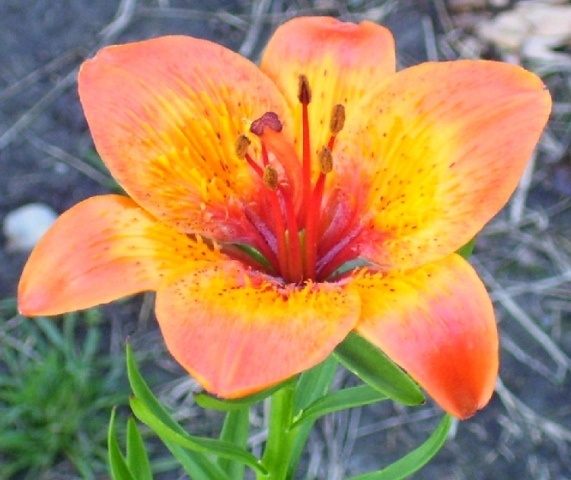
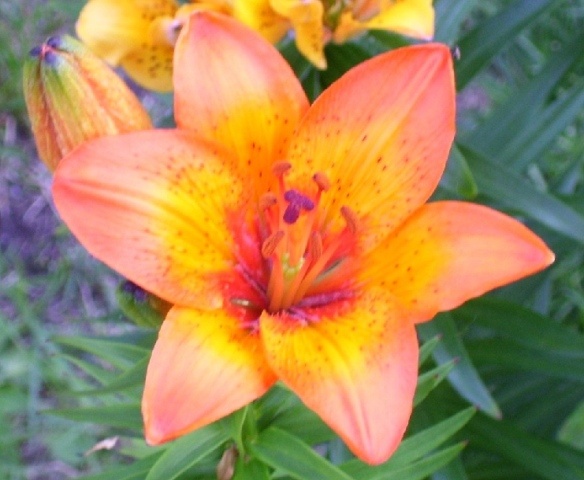
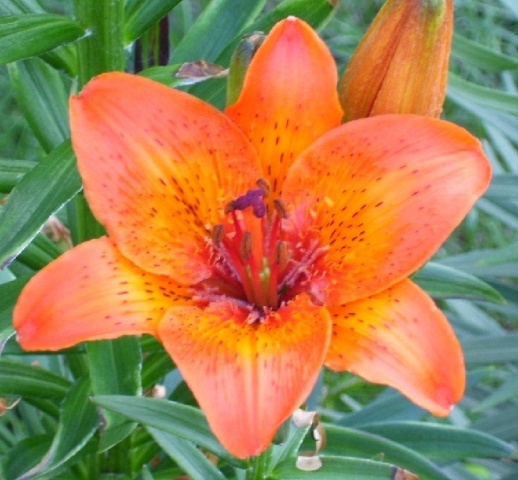
Lilium bulbiferum L. is a European species with bright orange flowers that blooms in summer. Height: to about 90 cm. It is named for the stem bulbils it produces above ground. Variety croceum has orange flowers and is the most common form in cultivation. The first photo was taken by Hans Joschko in the French Alps where these plants were growing with Narcissus poeticus along the road from Grenoble to Col de Lautaret. The second photo is from Janos Agoston. Photos 3 and 4 were submitted by Darm Crook. Photo 5 of a bulb by Pontus Wallstén. In 2022 varieties are no longer recognized by most, but we have included them for informational purposes.
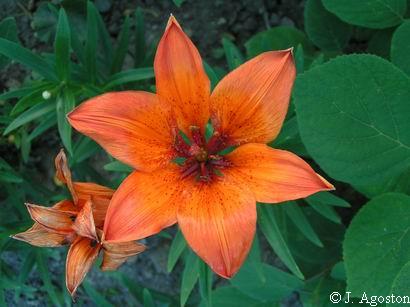
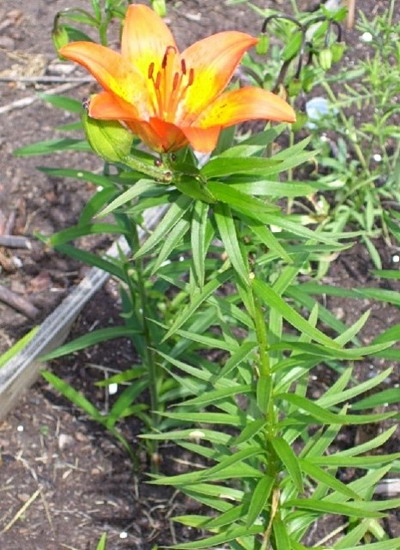
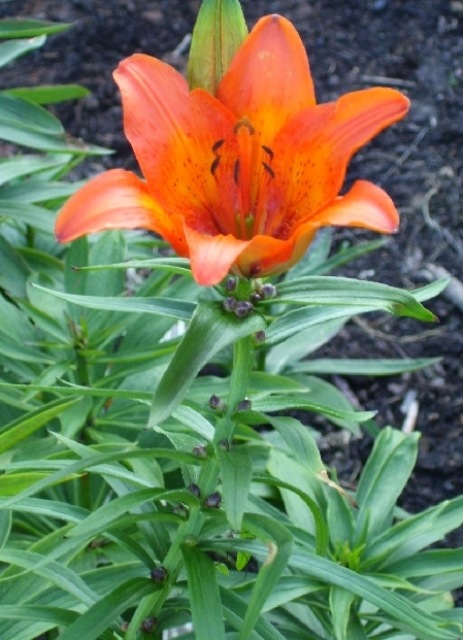
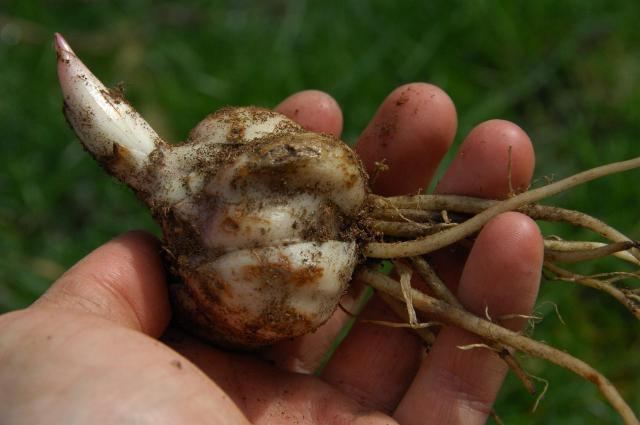
Lilium bulbiferum var. chaixii (Elwes) Stoker occurs in the French Alpes-Maritimes and is by far the shortest of the bulbiferum group growing only to about 32 cm (16 inches) tall. It is also the hardest one to grow; it simply appears to have a weaker immune system, thus catching every disease that comes along. It generally flowers with only one floret in zone 1 Canadian scale growing conditions but in good years will have two. The stems grown in Hay River Northwest Territories prefer a slightly alkaline based soil to acidic. It is a very prolific producer of stem bulbils. Three photos were submitted by Darm Crook.
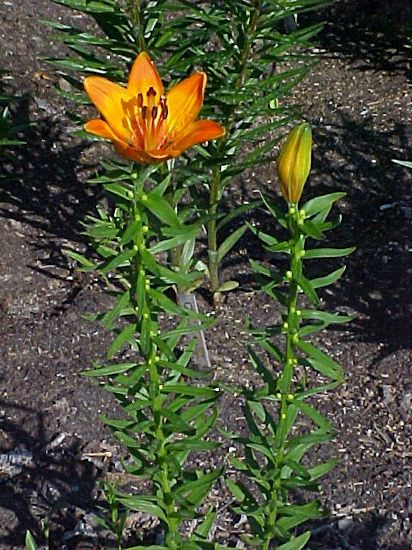
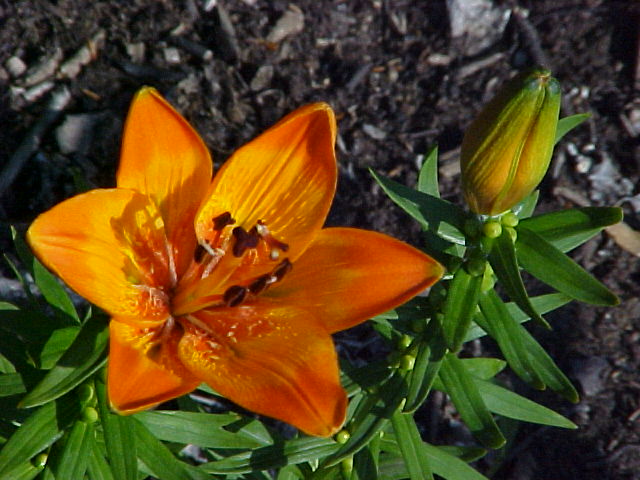
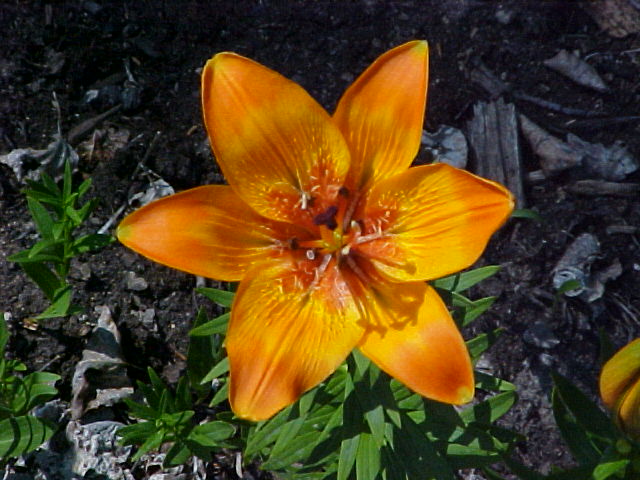
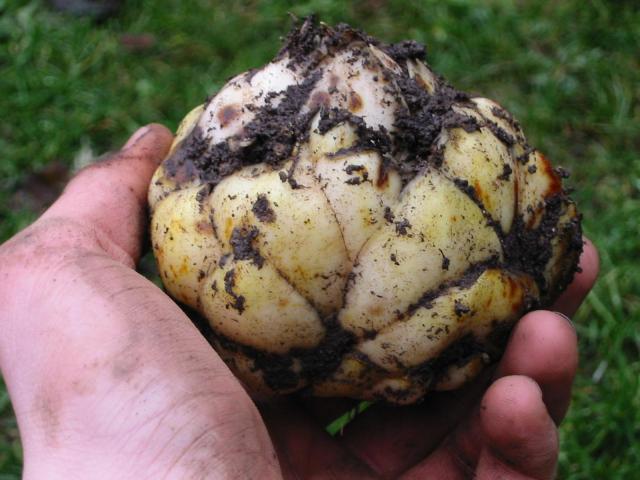
Lilium bulbiferum var. croceum (Chaix) Pers. is the easiest one to grow; it is quite disease resistant and seems indifferent to soil pH, within limits of course. It produces no stem bulbils and can, during a good growing season, produce an inflorescence with a double umbel, with each umbel having four to six buds. Height range: 30-120 cm. During germination seeds from the same seed batch, by about a 50/50 split, usually germinate as immediate hypogeal and delayed hypogeal. This germination style split and no stem bulbils indicate that L. bulbiferum v. croceum's true genetic background may not be pure bulbiferum. Photos 1-4 submitted by Darm Crook. Photo 5 of a bulb by Pontus Wallstén.
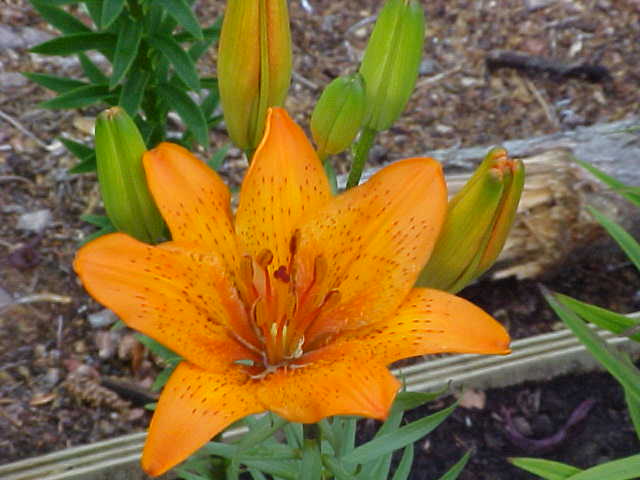
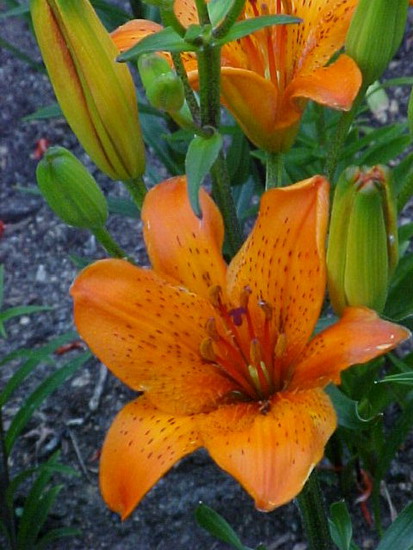
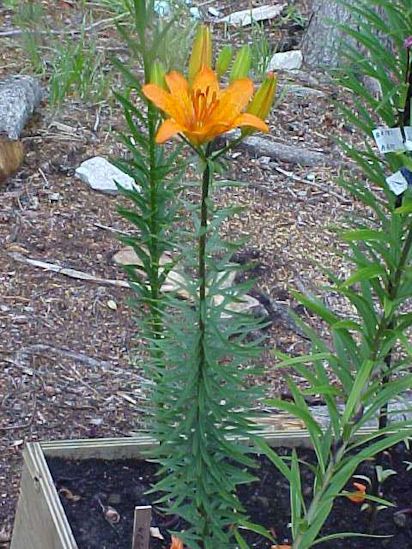
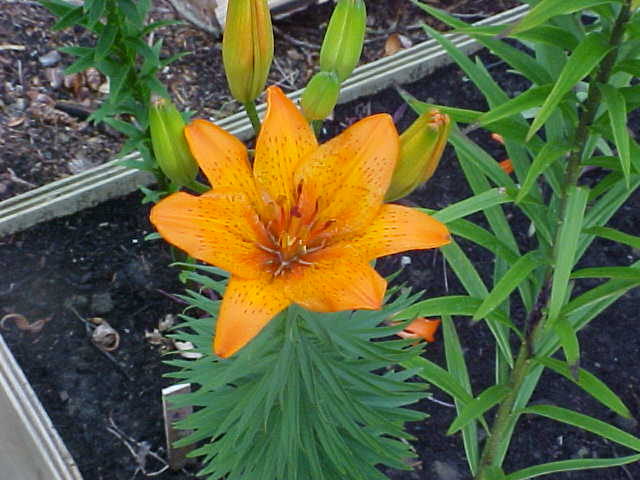
Photos below from Darm Crook are of seedlings that resulted from a cross of L. bulbiferum v. chaixii × L. bulbiferum v. croceum. The cross was made in an effort to save features of v. chaixii but also introduce some disease resistance into it. The resulting seedlings have a little resemblance to v. chaixii in the florets colouration and do produce stem bulbils. They are closer to v. croceum in floret form and plant stature as they grow to a height of 82 cm (40 inches). They have much better resistance to botrytis than v. bulbiferum or the varieties chaixii and croceum have.
Lilium candidum L., the Madonna lily, is native to the Balkans and the eastern Mediterranean. It has been cultivated for many years and can be grown in most zones. This species has fragrant white flowers with a yellow base and blooms from late spring to early summer. Height: 3-5 ft (90-150 cm). It then dies down and therefore is best planted in late summer when dormant and should be barely covered with soil as it does not have stem roots. A rosette of leaves appears in the autumn and lives over winter. This species prefers limey soil and is not long lived as it is prone to disease. Although varieties are no longer recognized in 2022, photos from Janos Agoston were grown as Lilium candidum var. cernuum Weston.
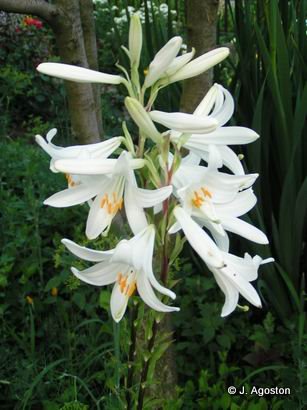
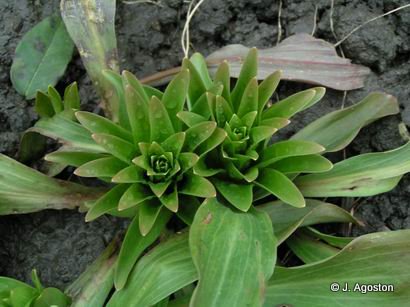
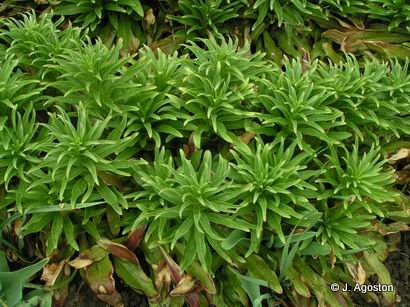
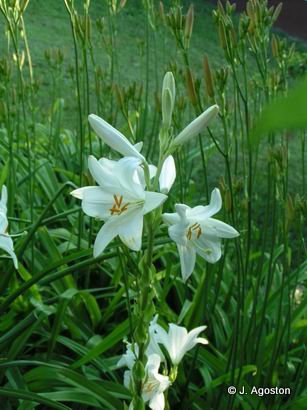
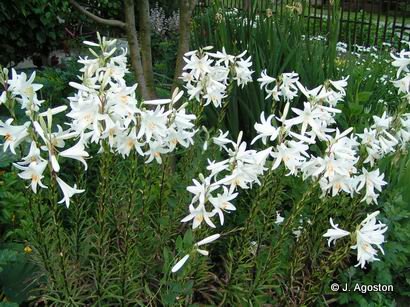
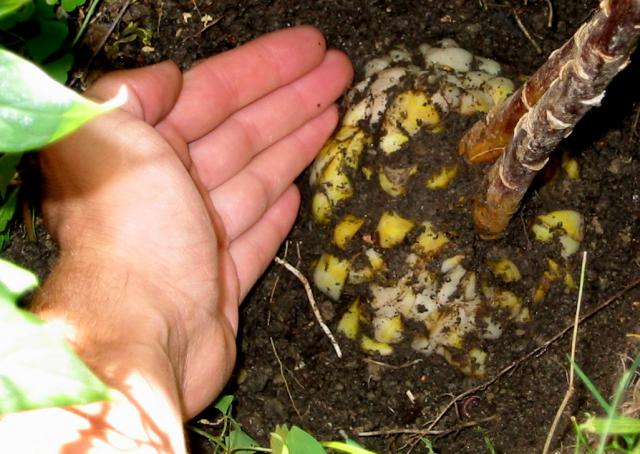
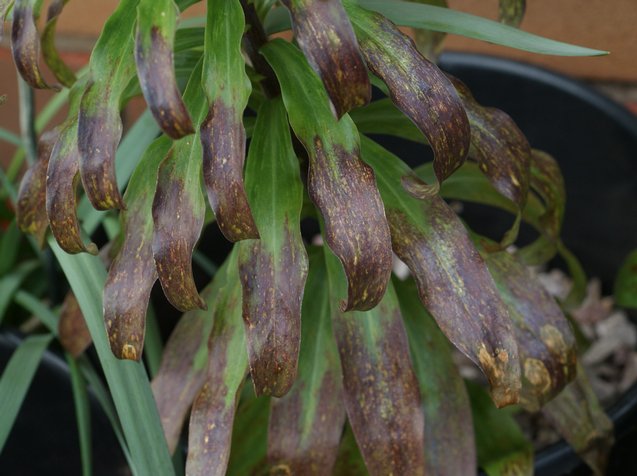
Photo 1 by Pontus Wallstén shows a bulb. Photo 2 by David Pilling shows botrytis to which the winter growing foliage makes this species especially susceptible.
Lilium carniolicum Bernh. ex W.D.J.Koch, syn. Lilium pyrenaicum subsp. carniolicum (Bernh. ex W.D.J.Koch) V.A.Matthews, is native to the western Balkans, from northeast Italy to western Bosnia. Common names are golden apple or Carniolan lily. Sometimes the three species Lilium bosniacum, Lilium albanicum and Lilium jankae have been considered subspecies of Lilium carniolicum. The species takes its name from Carniola which in ancient times was an area in modern day Slovenia. Height: about 4 ft. Photos by Pontus Wallstén, taken in Tim Whiteley's garden.
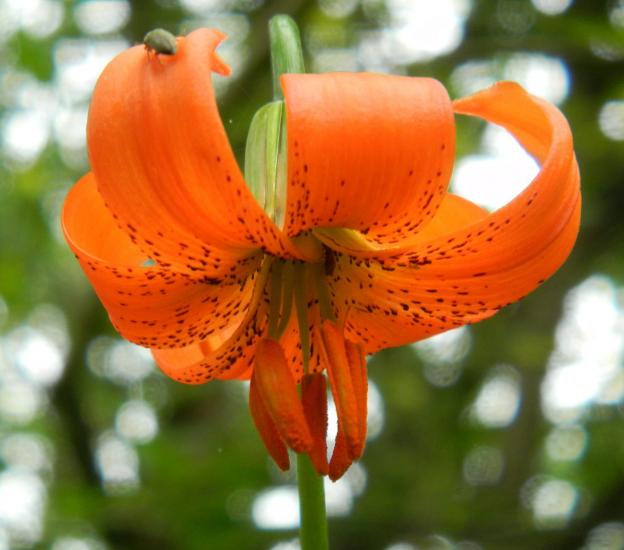
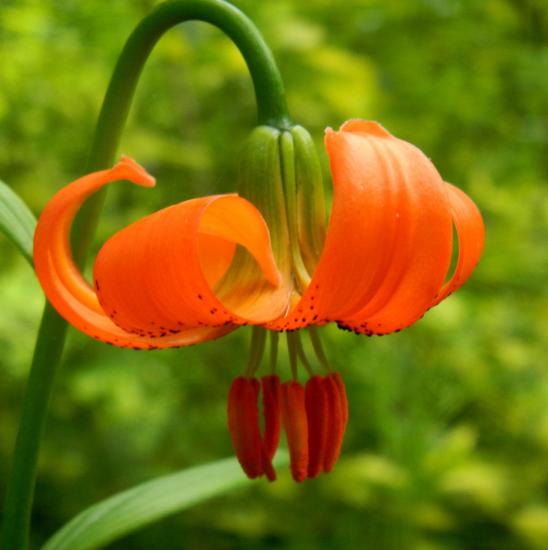
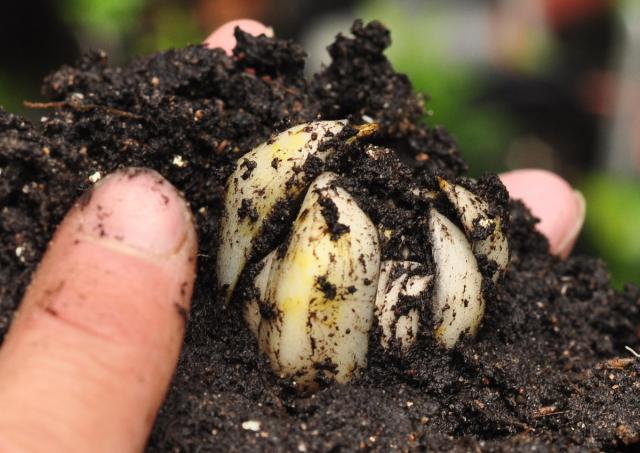
Lilium chalcedonicum L. is from Greece and Albania. Chalcedon was an ancient town located near Byzantium and is now a district of Istanbul. The name was given in 1753 by Linnaeus; a synonym is Lilium byzantinum. Height range: 3-4 ft. Photos by Pontus Wallstén, taken in Tim Whiteley's garden.
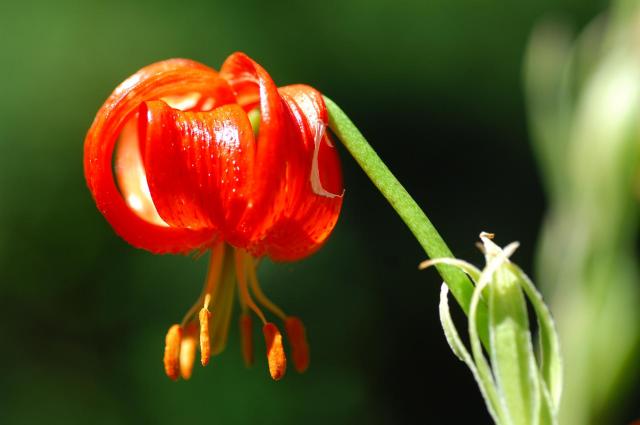
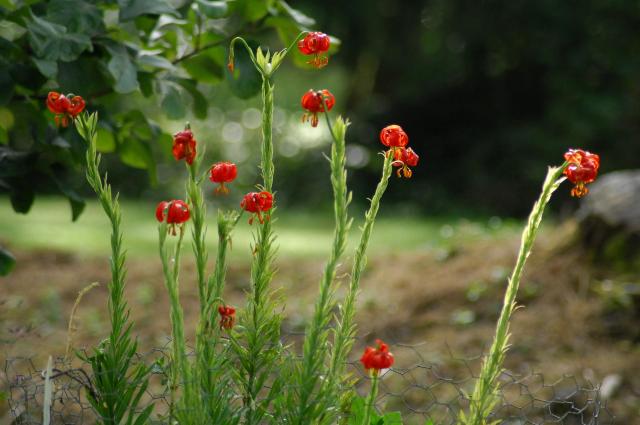
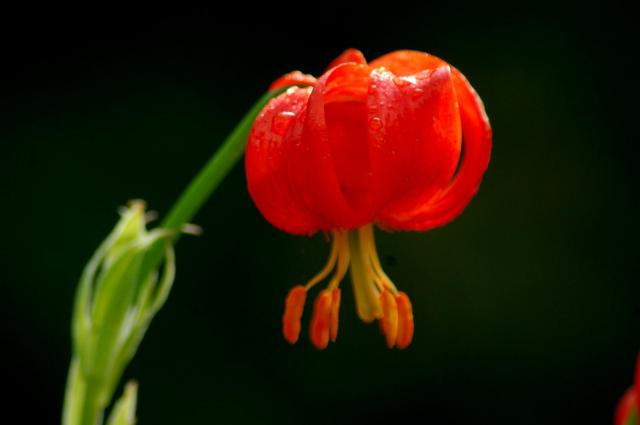
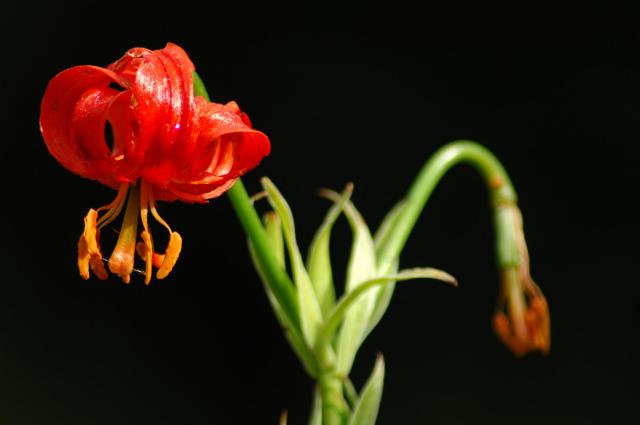
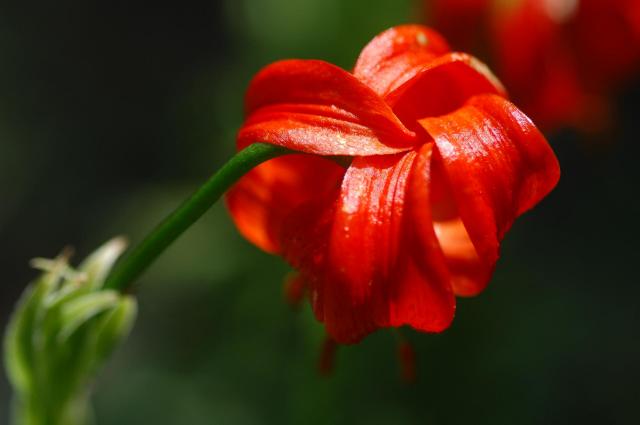
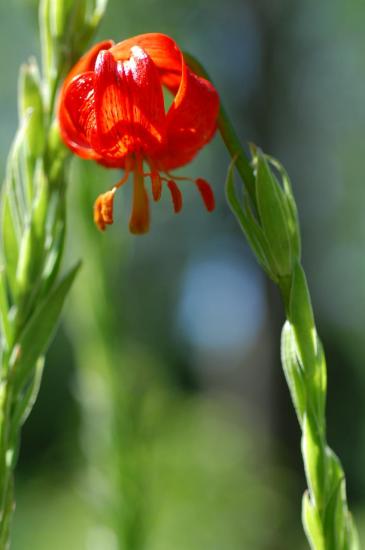
Photograph of a bulb by Pontus Wallstén.
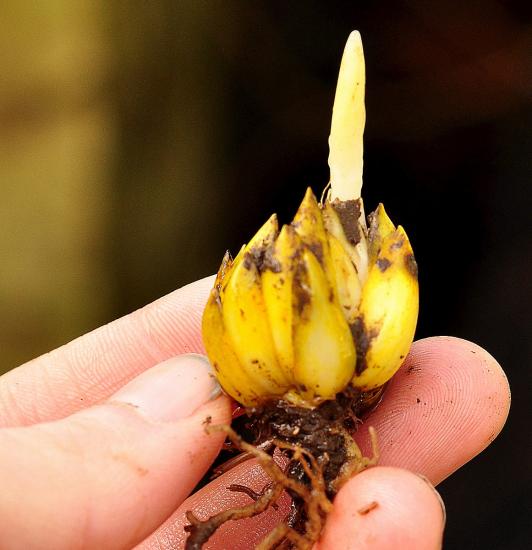
Lilium ciliatum P.H.Davis is a rare, endangered species from northeast Turkey. Height: to about 3.5 m. The first photo from iNaturalist was taken by mnauky in Turkey and shared under a CC BY-NC license. The rest of the bulbs photos were taken by Pontus Wallstén.
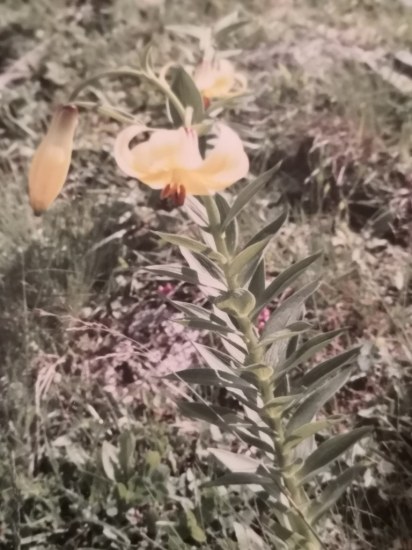
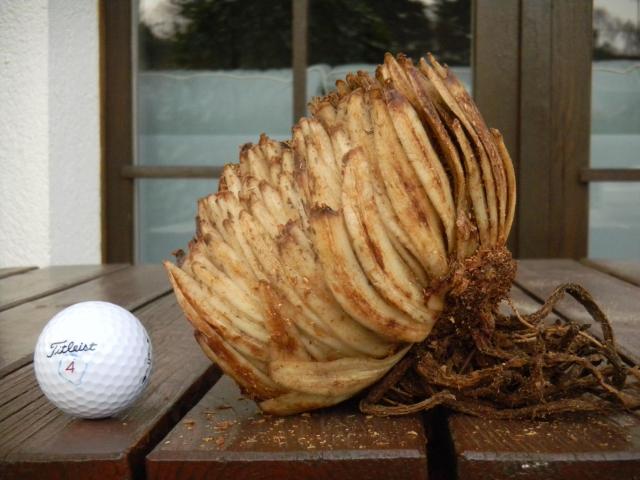
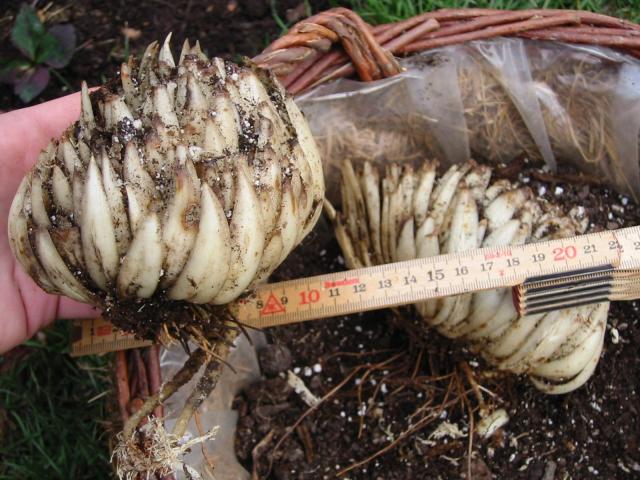
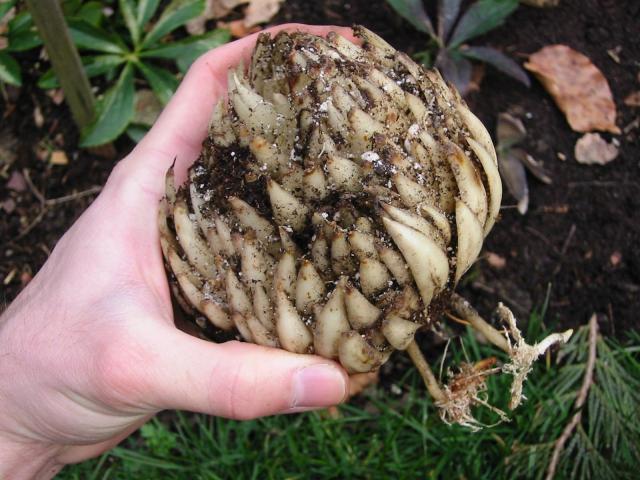
Lilium kesselringianum Miscz. is native from northeast Turkey to west Caucasus. Height: 60 cm. The first two photos from iNaturalist were taken by Felix Riegel in Georgia in June shared under a CC BY-NC license. The bulb photo was taken by Pontus Wallstén.
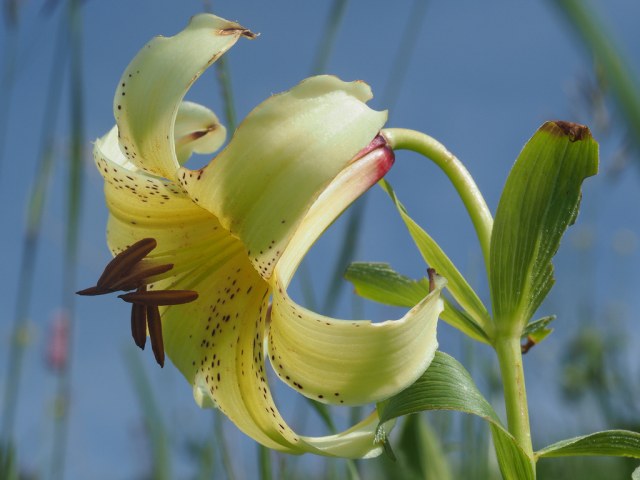
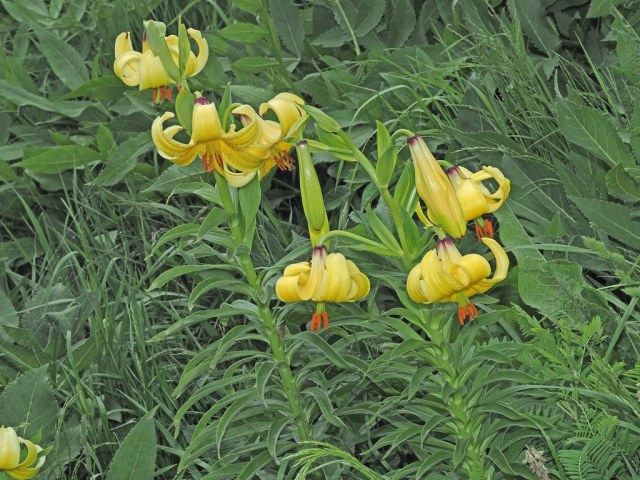
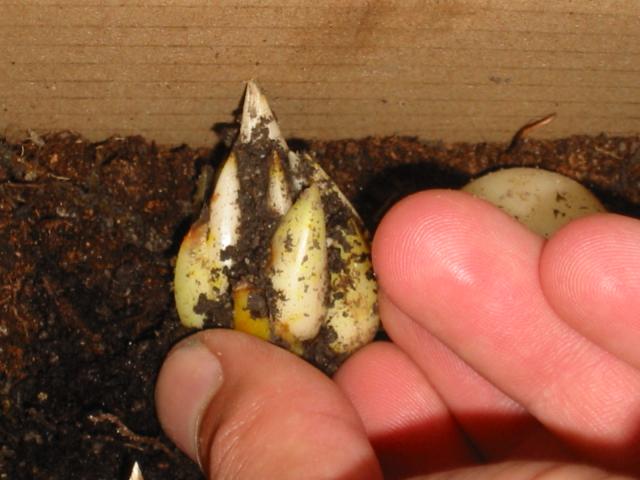
Lilium ledebourii (Baker) Boiss. is from Azerbaijan and the Elburz (Alborz) mountains in Iran, where it grows between 1000 and 1500 meters. Height range: 60-120 cm. Photographs 1-4 by Roma Fiddes. Photo 5 of a seedling bulb by Pontus Wallstén.

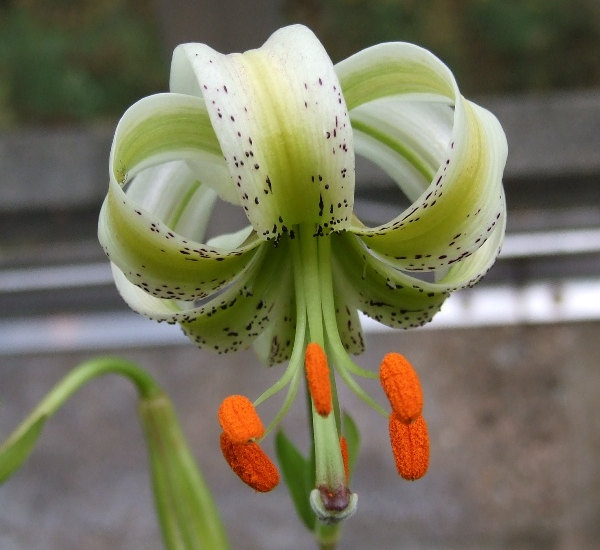
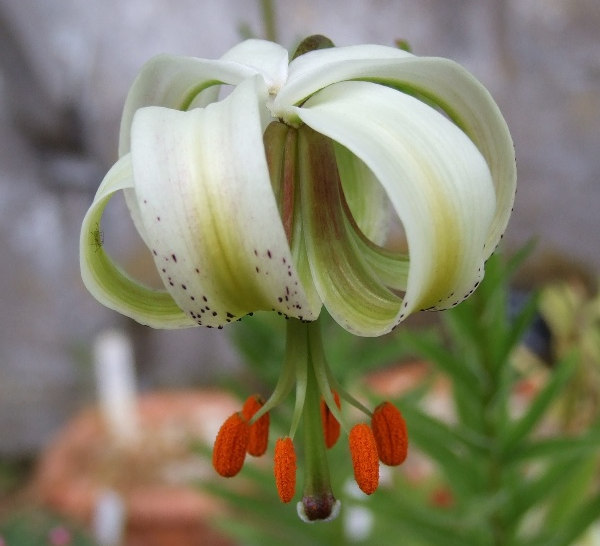
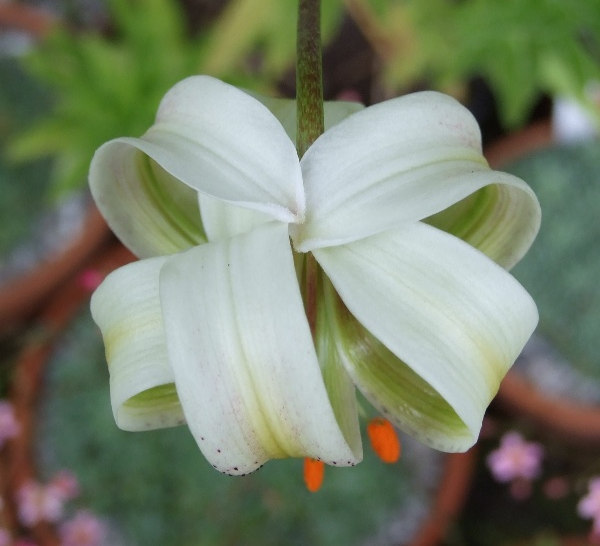

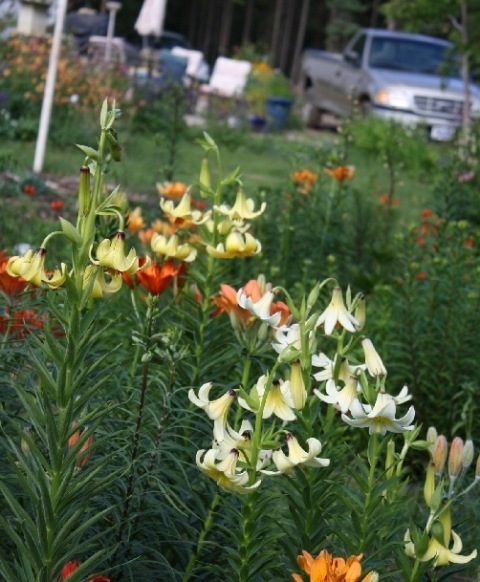
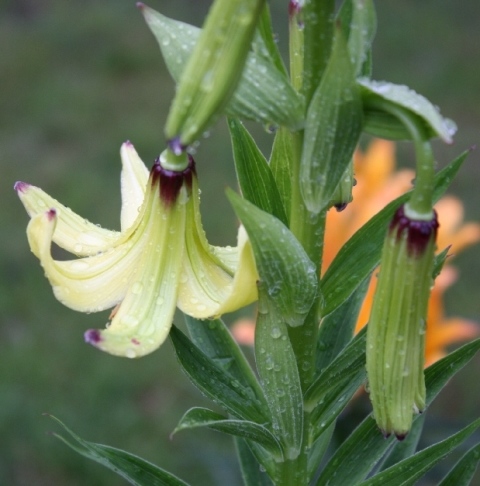
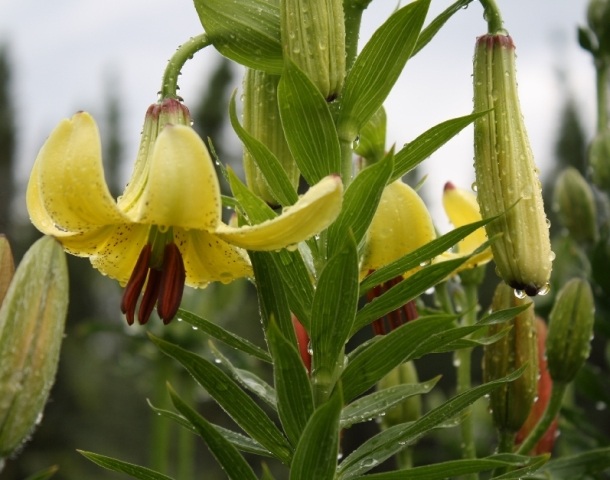
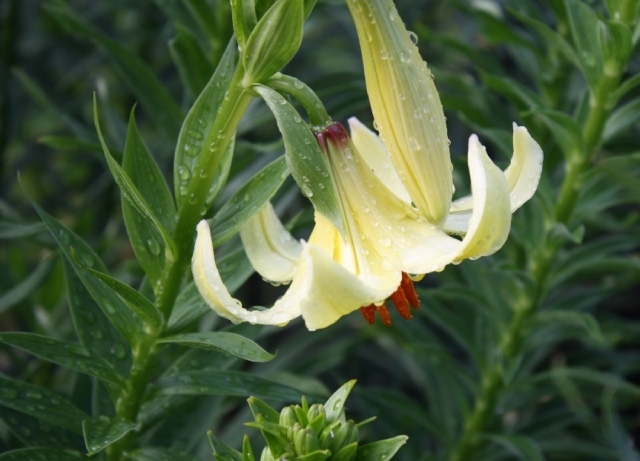
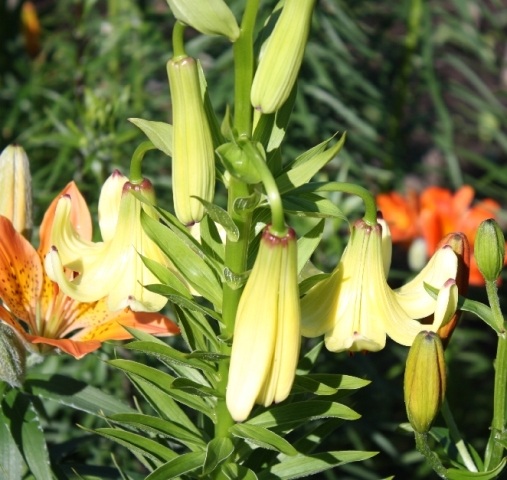
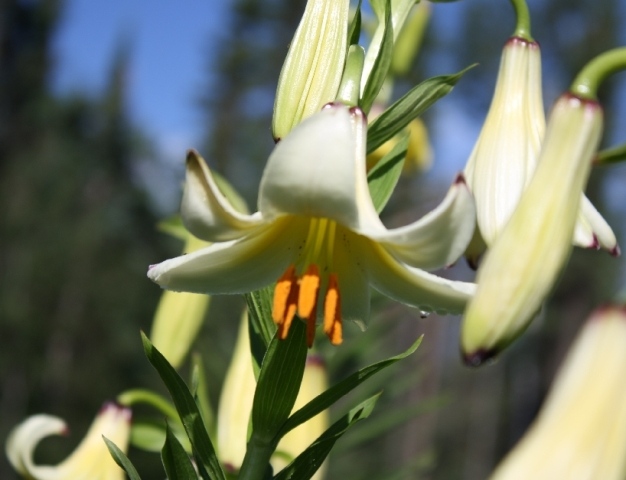
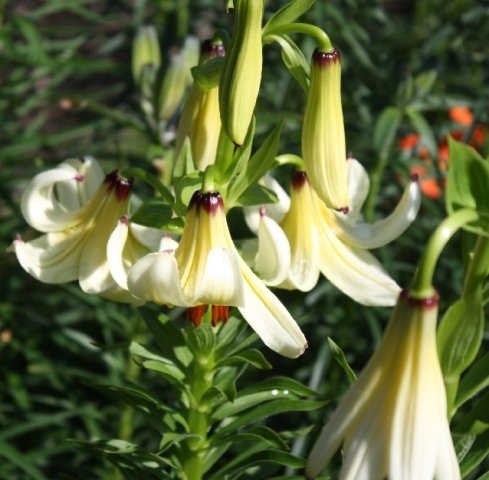
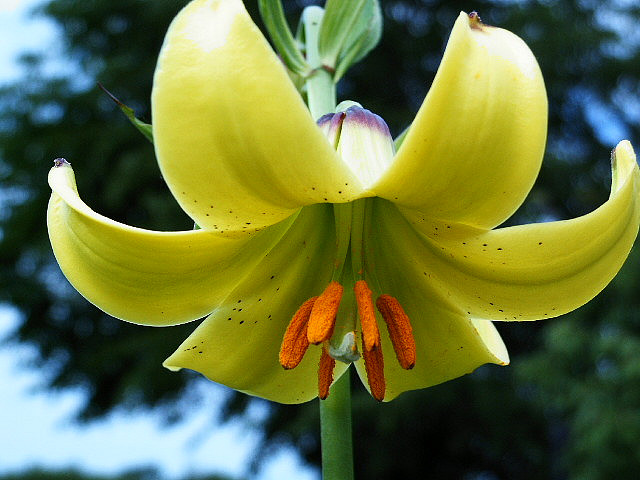
Lilium monadelphum Adams is from the Caucasus on forest margins and slopes. The seed germination pattern is delayed hypogeal. It can grow to over 120 cm (4 ft) and have up to 24 strong but sweet scented down facing florets which range in colour from rich yellow to near white with lilac to black spotting or be spot free. It is an early flowering, cold hardy and disease resistant species, and as such an excellent candidate for areas that have a short growing season. Many say a lily is not L. monadelphum unless the pollen is yellow and the anthers are fused into a tube at their base. The name monadelphum derives from this arrangement. Some botanists think this is not the case and that the formally classified lilies Lilium szovitsianum and Lilium kesselringianum are simply geographic variants of Lilium monadelphum. These two lilies have pollen that is other than yellow and the anthers are not fused at the base. The first photo from Arnold Trachtenberg is of a plant grown in New Jersey. The other photos were submitted by Darm Crook.
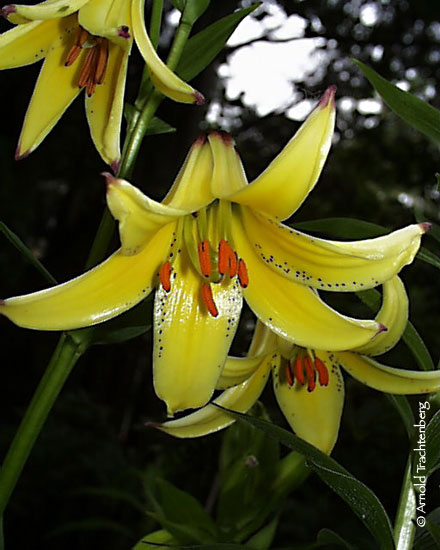


Bulb photos by Pontus Wallstén.
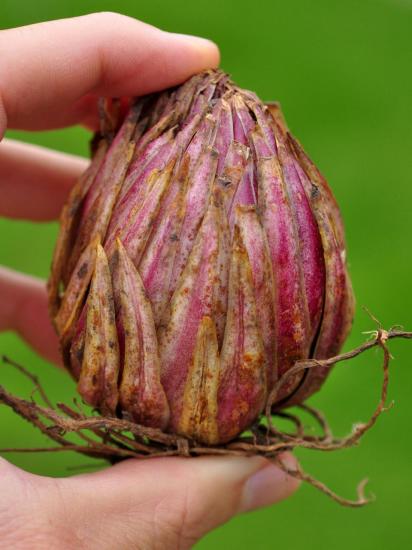
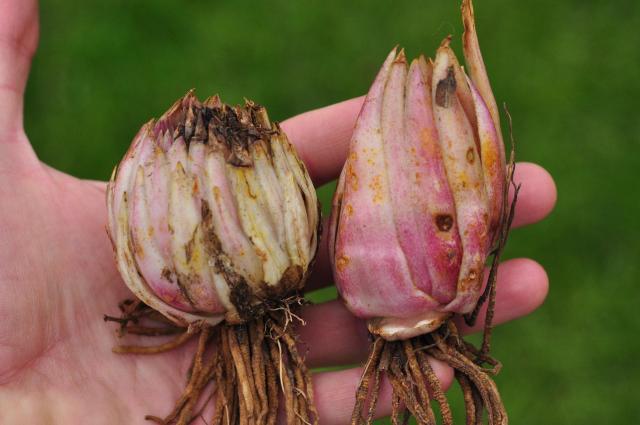
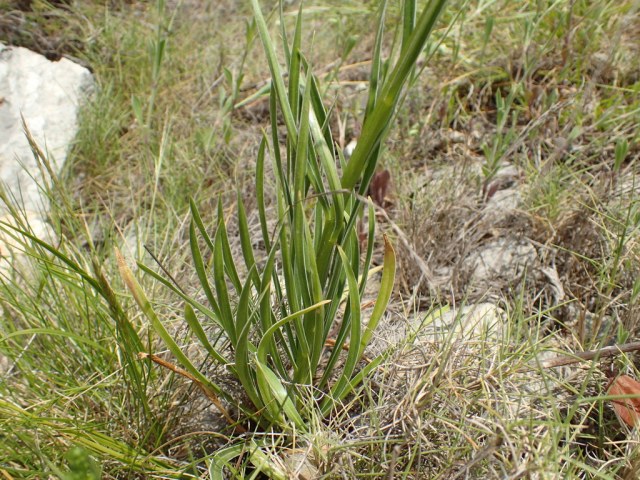
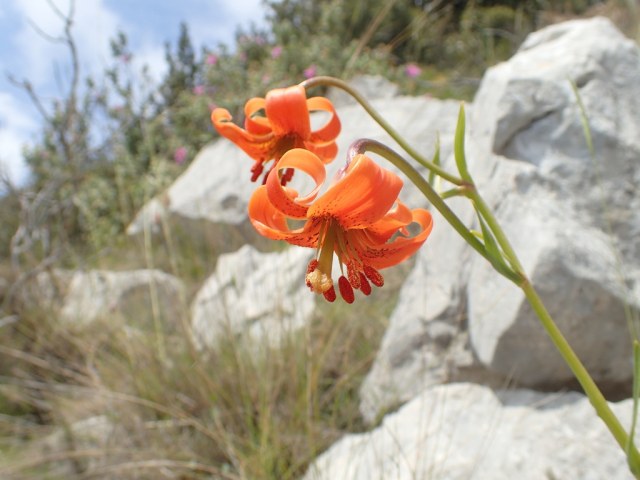
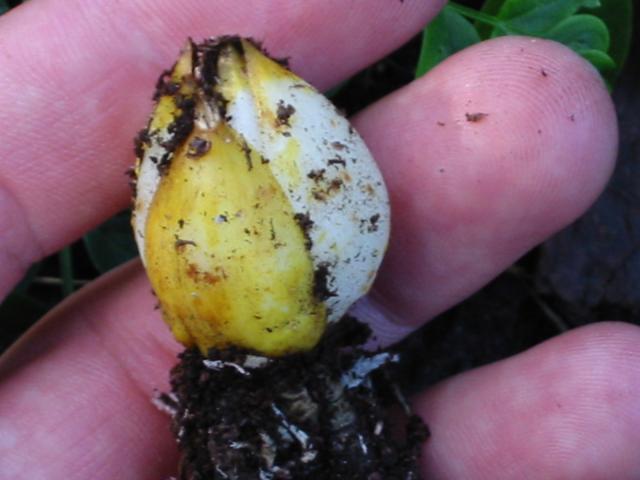
Lilium pomponium L. is from Europe, between France and Italy. Height: to about 70 cm. The first three photos from iNaturalist were taken by Guillaume Papuga in France and shared under a CC BY-NC license. The last photo of a bulb was taken by Pontus Wallstén.

Lilium ponticum K.Koch, syn. Lilium pyrenaicum ssp. ponticum (K.Koch) V.A.Matthews, is from Turkey and Georgia. It grows 40 to 75 cm (16 to 30 inches) tall. The foliage leaves are wide and short with fine hairs along margins on the upper side and veins on the lower side. The florets are in a small pendent form, yellow, spotted with spots as well as dashes plus a purple to brown or near black throat and in the center area orange pollen. The tepal backs are flushed with purple near their base. Flowers have a pleasant scent. It grows well in dappled shade. Five seedling photos by Darm Crook. Photo 6 by Pontus Wallstén shows a bulb.
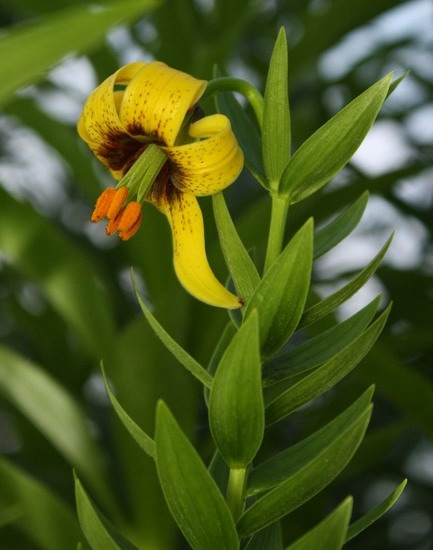
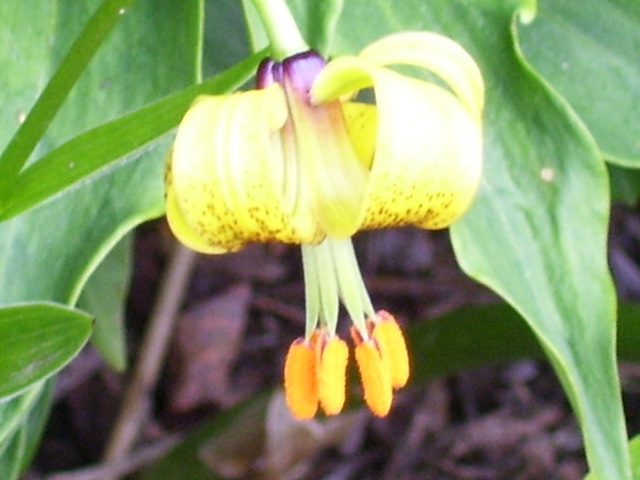

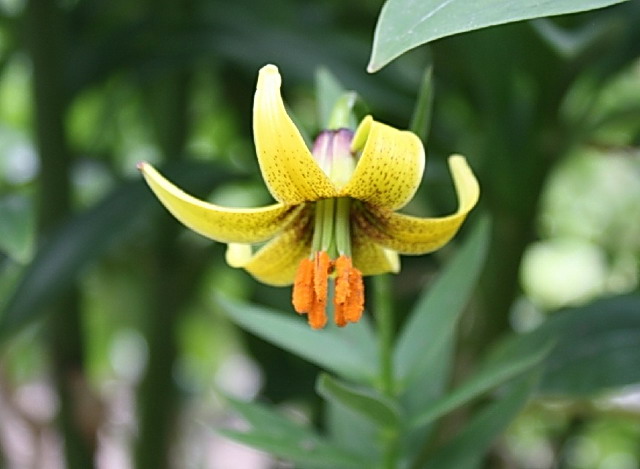
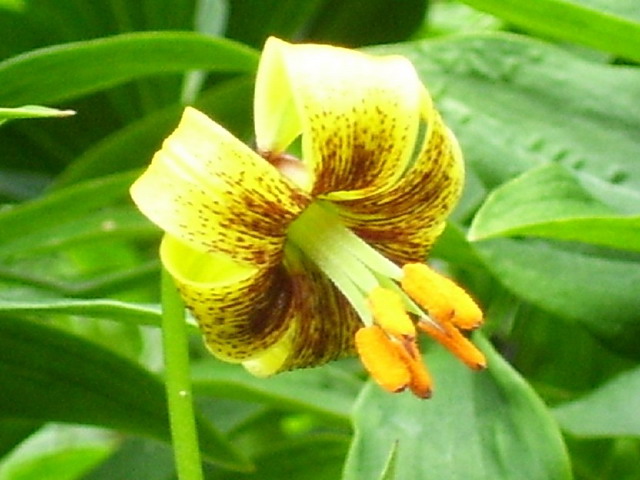
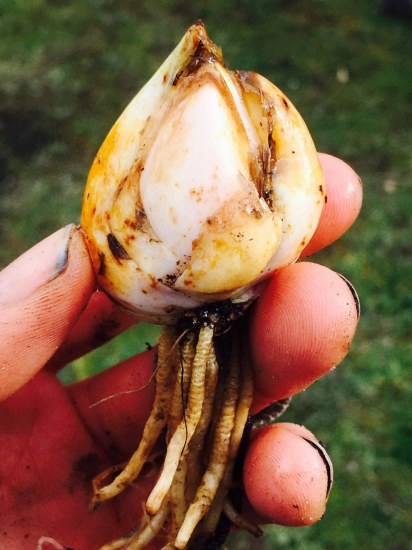
Another synonym is Lilium pyrenaicum var. artvinense (Miscz.) V.A.Matthews. It is from the Turkey Bayburt pass area and grows to a height of 75 cm (30 inches) and has up to three dark orange fully recurved florets on arching pedicels. The florets have to a varying degree (from plant to plant) a dark green center and nectary zone, a few dark green spots and bright orange pollen as well as a prominent display of papillae. Photos by Darm Crook.

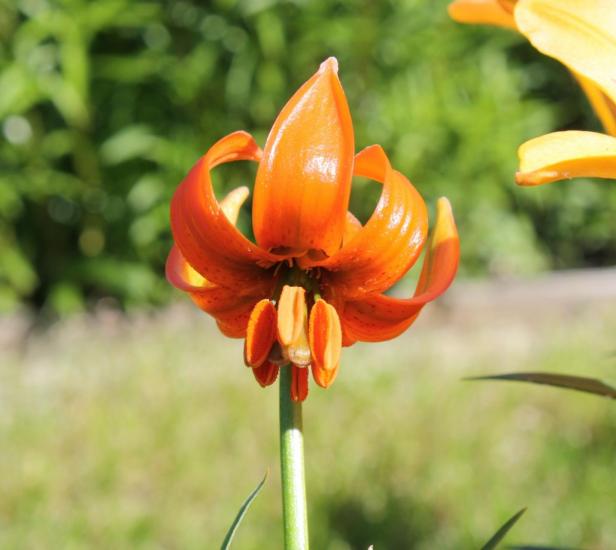
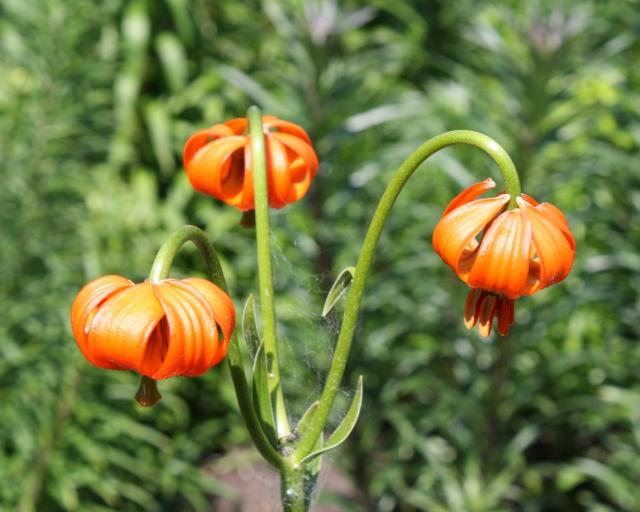
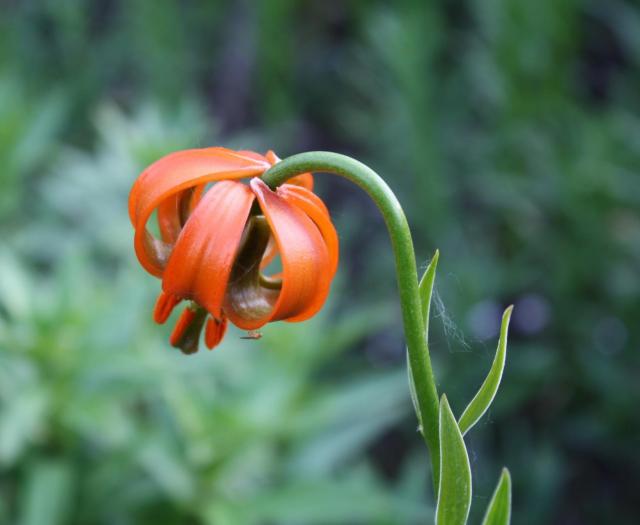
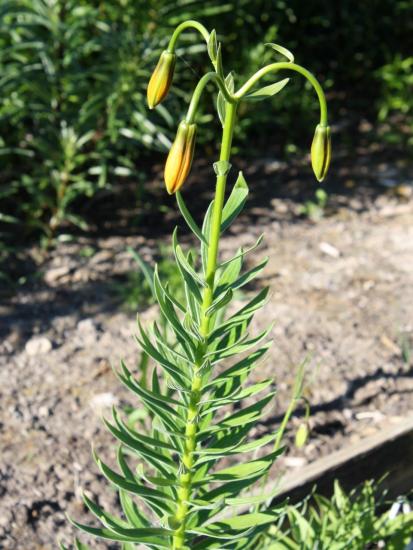

Lilium pyrenaicum Gouan is native to Europe, Turkey, and the Caucasus. It is named for the Pyrenees in France. It is naturalised in England and Scotland. Height range: 60-120 cm. There are a number of subspecies and varieties that in 2022 are recognised as other species. These include var. albanicum, var. bosniacum, ssp. carniolicum, var. jankae and ssp. ponticum. Forma rubrum Stoker, no longer recognized, has orange-red flowers with brown spots. Photos 1-3 by Roger Darlington of it growing wild in Langdale in the Lake District. Photos 4-6 from Hans Joschko.

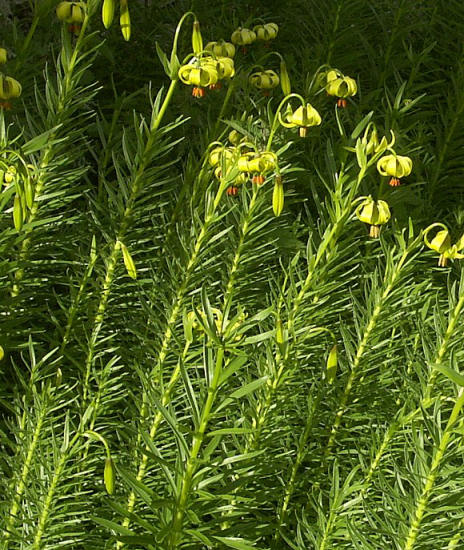


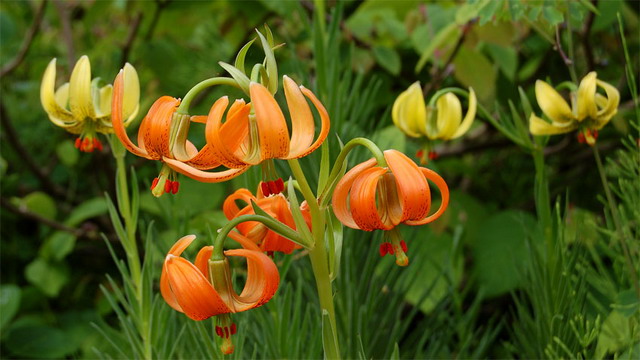

Photos 1-2 below were taken by Darm Crook; photo 3 of a bulb was taken by Pontus Wallstén.
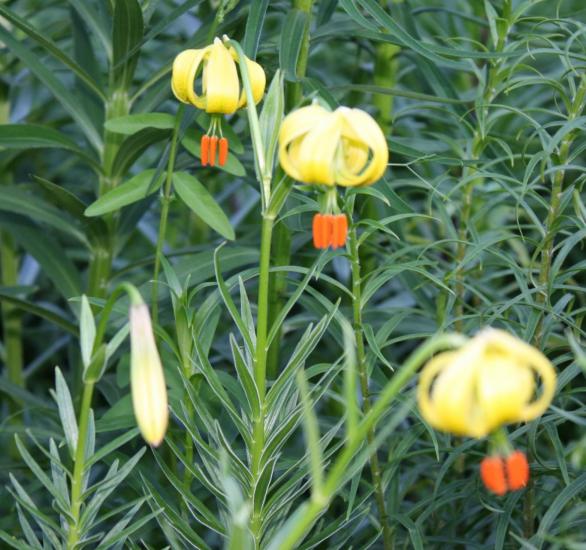
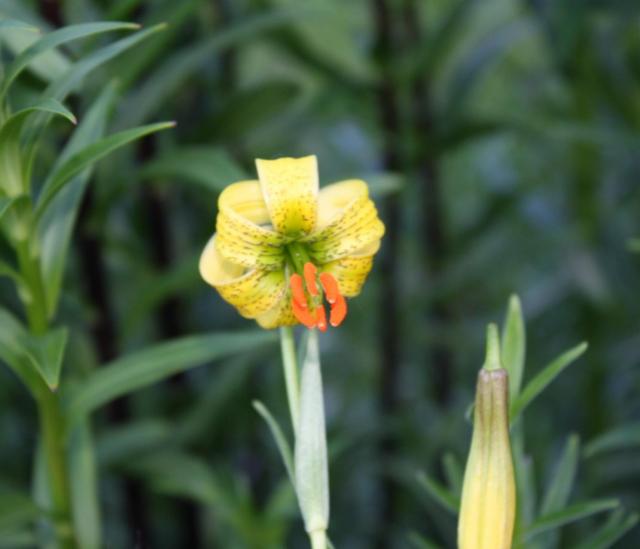

Lilium rhodopaeum Delip. is from Bulgaria; it is yellow. Height range: 60-90 cm. The first photo taken by Ernst Gügel in habitat at Rhodope Mountains, Livaditis, Greece is courtesy of wikimedia and shared under a CC BY-SA 3.0 license. The Rhodopes are a range of mountains most of which are in Bulgaria. The second photo of a seedling bulb by Pontus Wallstén.
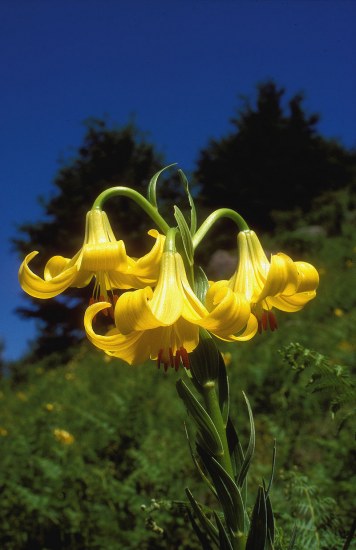
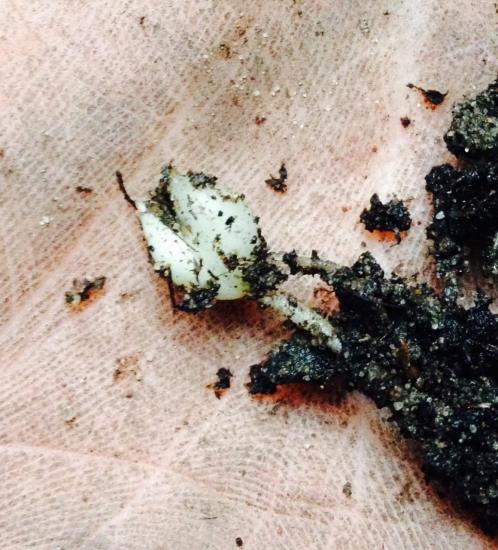
Lilium szovitsianum Fisch. & Avé-Lall. is a very aromatic native to the Caucasus; it was considered a variety of Lilium monadelphum but has recently achieved its own species status. It grows up to five feet (150 cm.) with as many as 16 buds (maybe more). The florets are very similar to L. monadelphum's in size, form and colouration variances. The differences occur in germination in that the cotyledon is shorter; plus in the plant itself, the foliage is sparser then L. monadelphum's foliage and the floret buds are not cradled in the upper foliage making them visible right from their first formings. This is mainly due to the foliage of L. szovitsianum being shorter then L. monadelphum's. In zone one this Lilium takes 7 to 8 years from seed to first flower, and prefers an alkaline based soil but it will tolerate an acidic based soil down to 6.5ph. Six photos submitted by Darm Crook show some colour and spotting variations found in this species and a short budded inflorescence on a young plant.
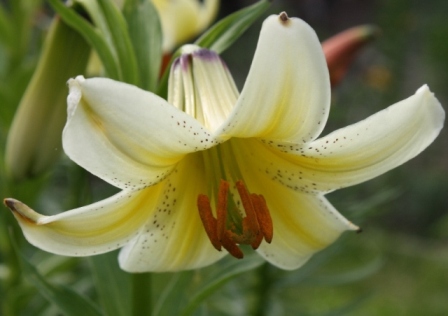
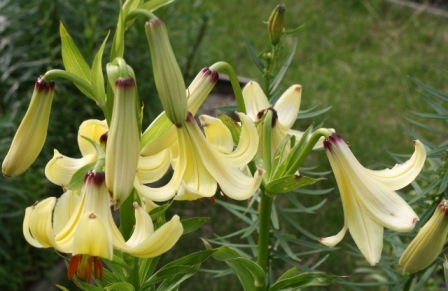

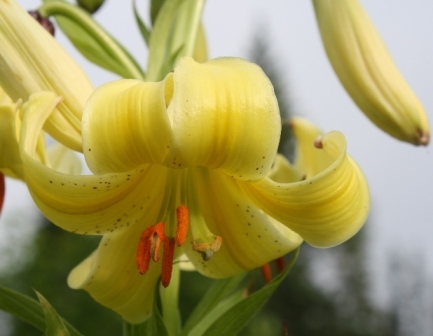
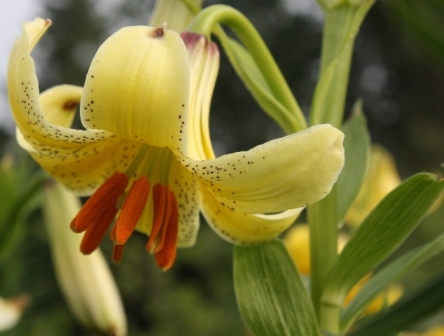
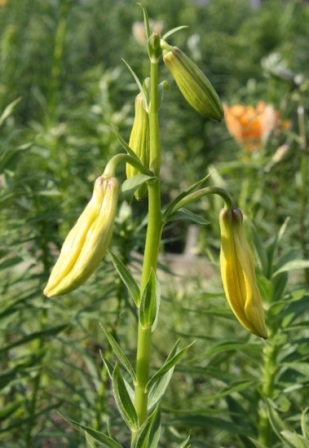
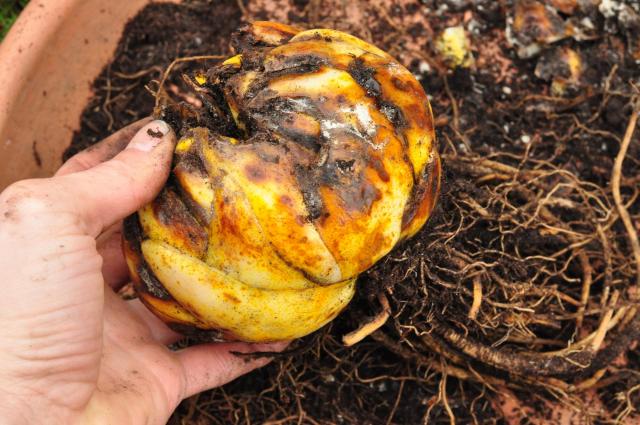
Photo 1 of Lilium szovitsianum by John Lykkegaard Johansen, photo 2 of a bulb by Pontus Wallstén.
American Section a-m - American Section n-z - Asiatic Section a-c - Asiatic Section d-k - Asiatic Section l-o - Asiatic Section p-z - Dauricum Section - Martagon Section - Oriental Section - Trumpet Section - Lilium Hybrids - Lilium Index