There are about 20 species of Fritillaria in western North America. Although they occur in Canada and 16 different states in the United States, the majority of them are found in California. Taxa a-l are found on this page.
North American fritillarias m-z
Fritillaria affinis (Schultes) Sealy (syn. Fritillaria lanceolata) is native to a very wide range on the Pacific coast of North America, from California north to British Columbia and east to western Idaho. It can be found from near sea level to near timberline in the mountains. The species is very variable. Height range: 30-120 cm. Easily grown in temperate gardens, it needs to be kept a little moist and cool in summer to flourish but also requires excellent drainage. The species is separated into two varieties, although the Jepson Manual suggests that more studies are needed.
Fritillaria affinis var. affinis has flowers that are clearly mottled and generally has 2–20 small bulb scales. It is widespread within the range of the species. The photos below show plants that are in cultivation. Photo 1 by Jane McGary shows a pale yellow-green form grown from seed collected in the wild in California (a similar form is sold under the clonal name 'Limelight'). Photo 2 was taken by Nhu Nguyen. Photos 3-6 by Mary Sue Ittner were taken at different stages and show different parts of the same plant flowering in a raised bed in March 2010.
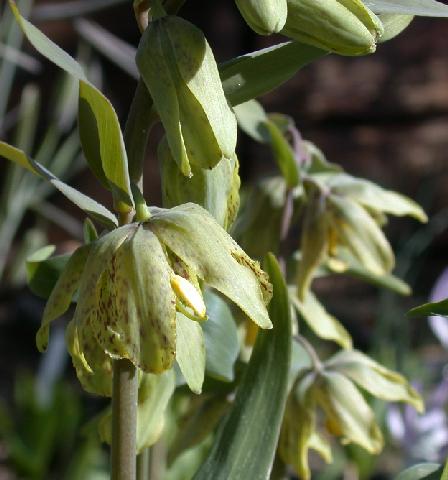
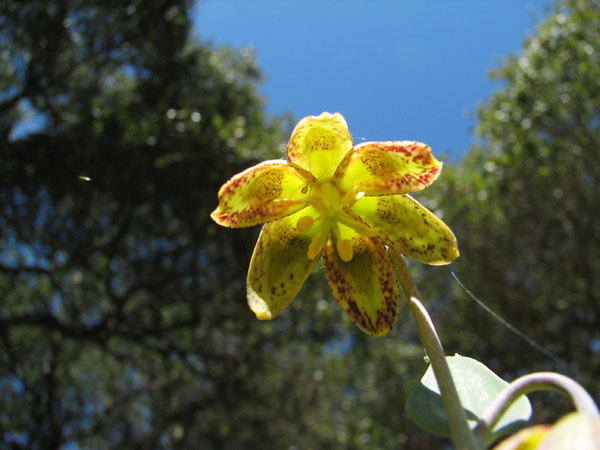
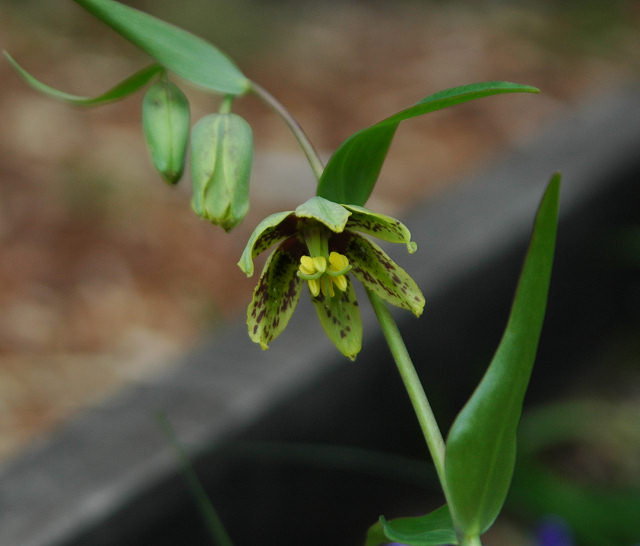
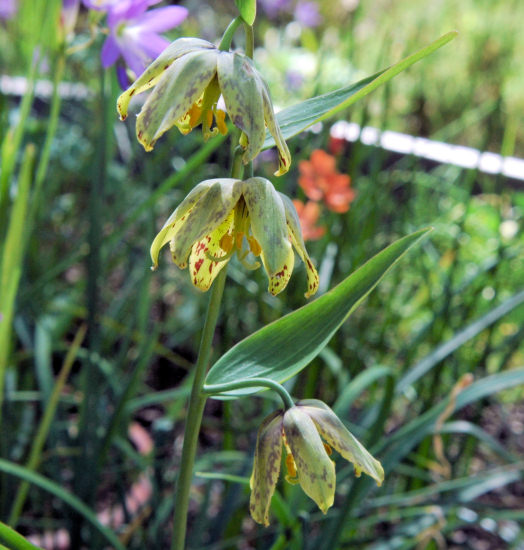


The first three pictures below were taken in Sonoma County where they were growing on a shady bank alongside a road. The next two were taken in 2018 in Mendocino County. The last picture shows flowers grown from seed and blooming March 2005. Photos by Mary Sue Ittner.
The photos below were taken by Nhu Nguyen at Point Reyes National Seashore, Marin Co., California.
The photos below were taken by Nhu Nguyen on Mount Diablo.

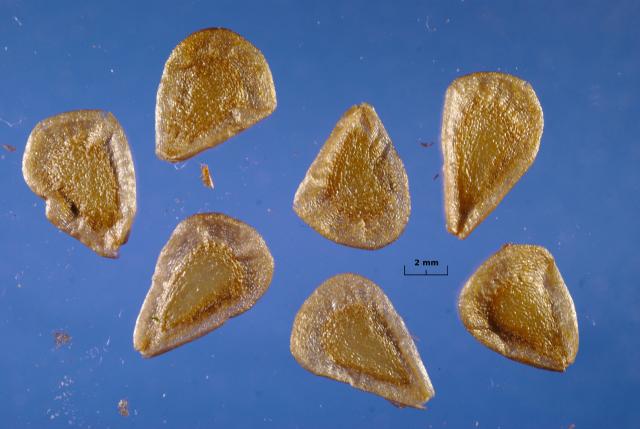
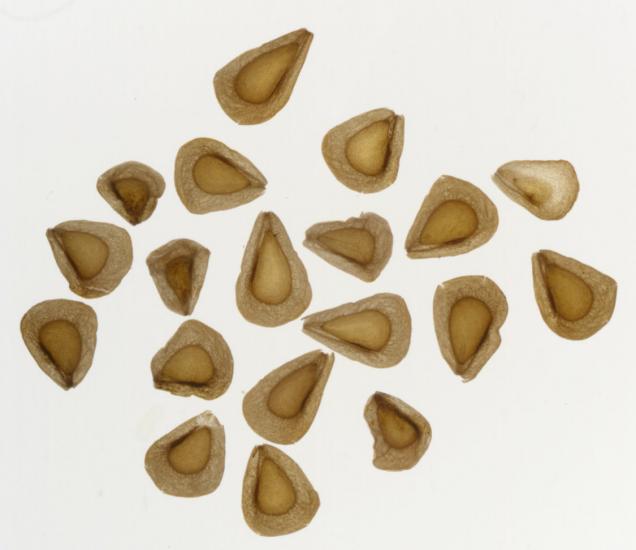
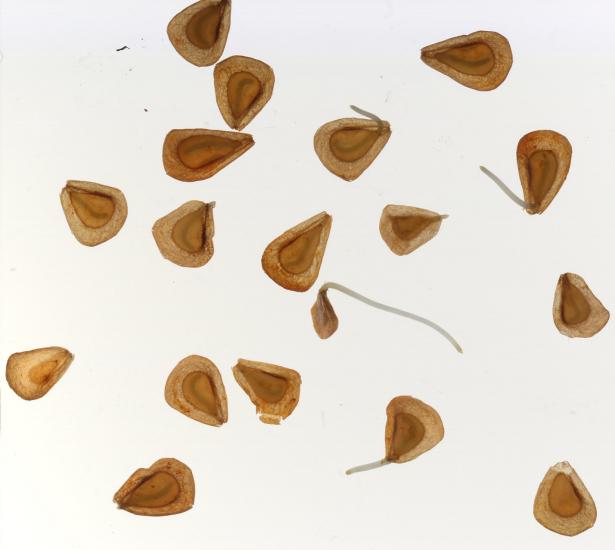
Seed photos by David Pilling. The first was taken using reflected light, the rest of the same seed were taken using transmitted light. In photo 2 embryos are barely visible; the next photo taken 79 days later after the seeds had been exposed to cold (32-40 °F) and wet shows the embryos have developed and germination has begun, see Fritillaria Germination.
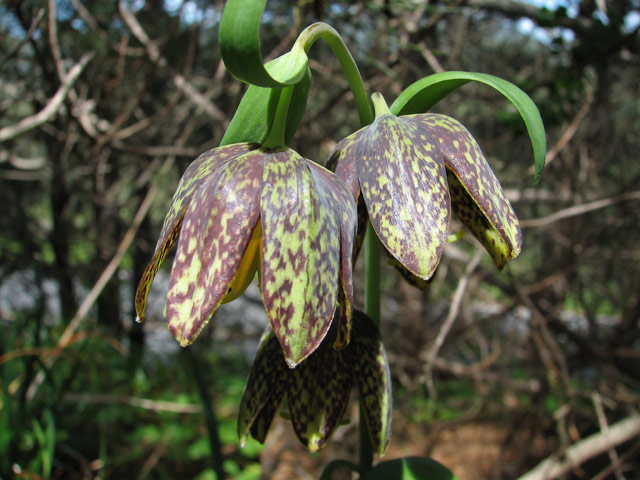
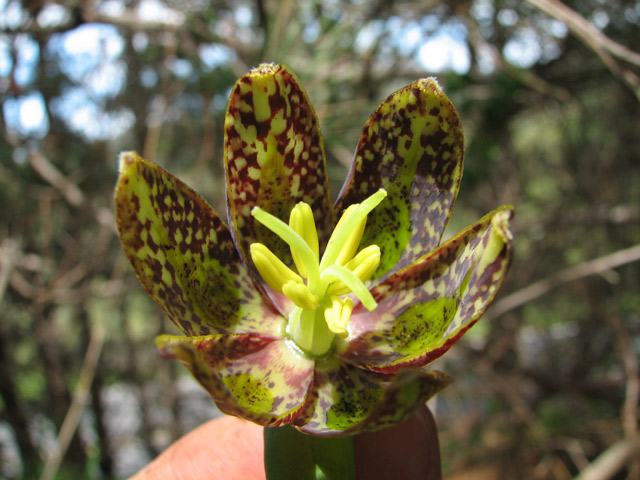
Fritillaria affinis var. tristulis has flowers that are scarcely mottled and generally has 60-100+ small bulb scales. The varietal name reflects the "sad" or somber color of the flowers. It is rare and found only along the north coast of California in Marin County. It is said that this variety is a triploid. Photos 1-4 were taken by Nhu Nguyen at the Tilden Botanic Garden.
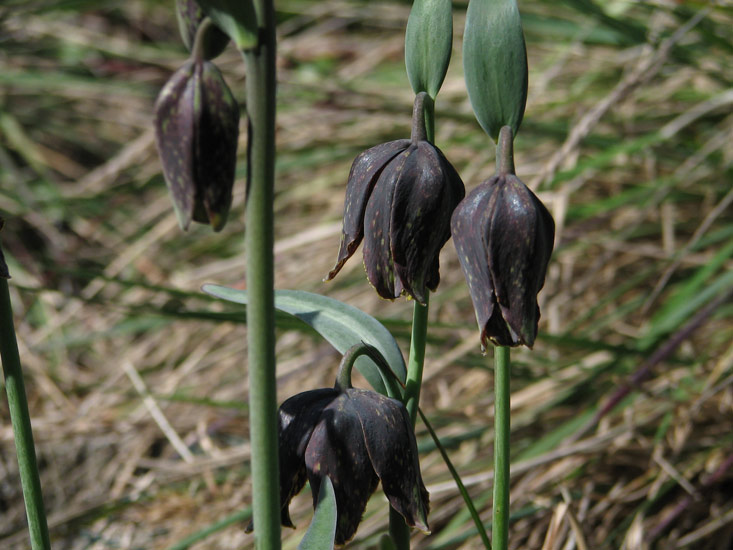
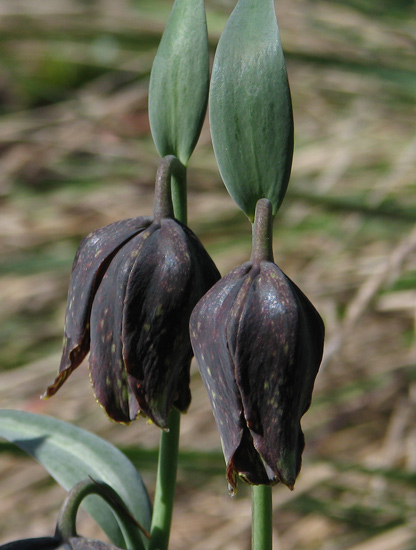
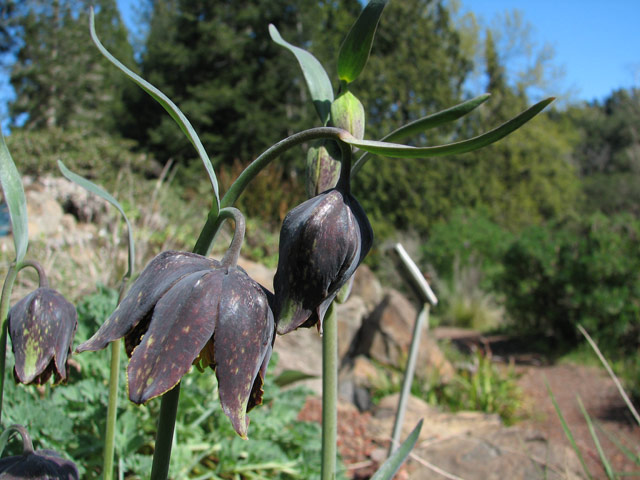
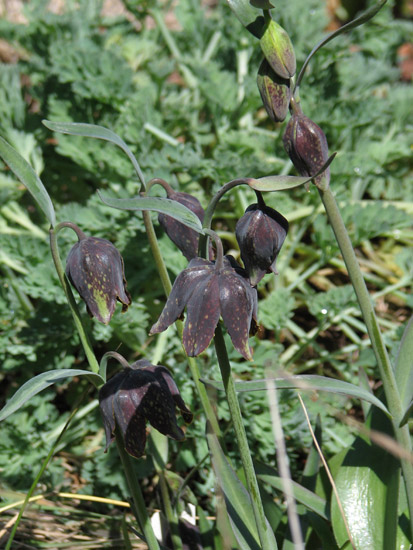
The photos below were taken by Nhu Nguyen on Mt. Tamalpais, Marin Co. CA.

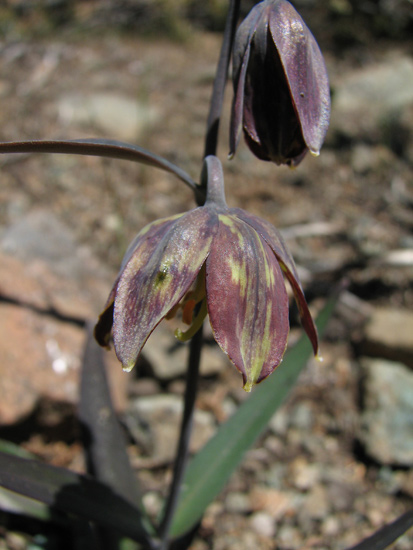
Fritillaria affinis 'Wayne Roderick' is a very large, square-flowered triploid, sterile form from Point Reyes (Marin Co.), California, found by Wayne Roderick. It is now widely grown and the selection is named for him. Anecdotal evidence given by Jane McGary suggests that this triploid form when grown next to two other triploid forms can make seeds with embryos.

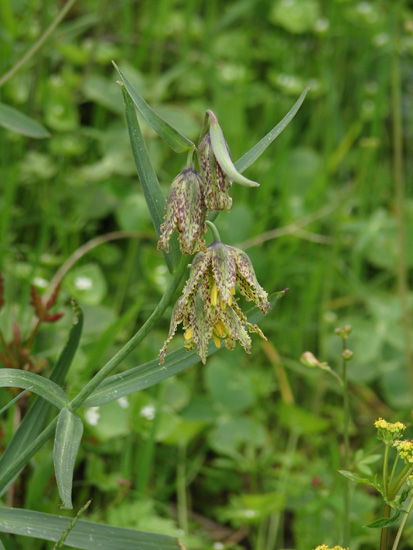
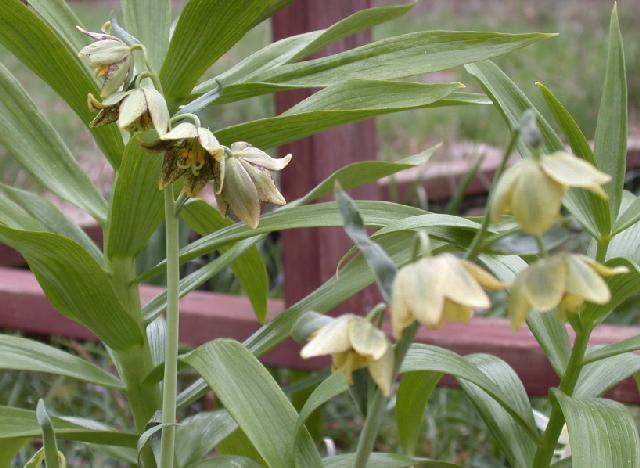
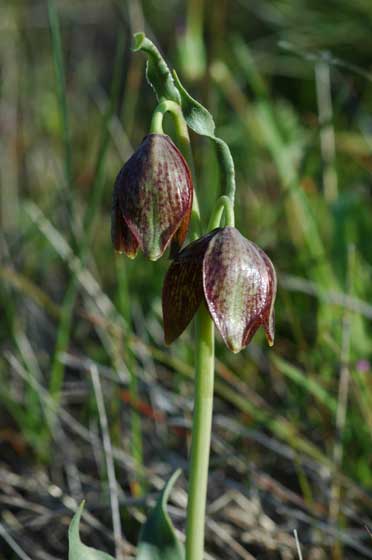
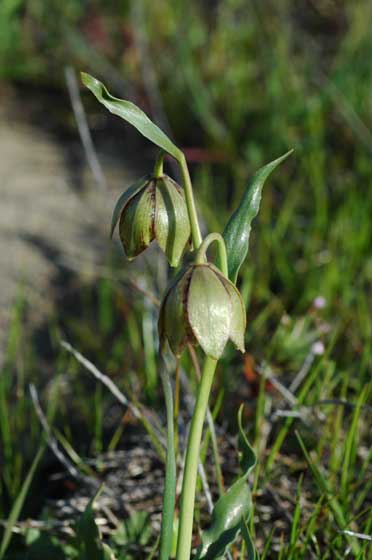
Fritillaria agrestis Greene (syn. F. biflora ssp. agrestis) is native to the Coast Ranges and western Sacramento Valley of California, where it is classified as threatened. The photo shows fairly light color forms; it can be much darker. It is distinguished by its very foul scent. Height: 1-2 ft. The first photo was taken by Jane McGary. The following three photos by Mary Gerritsen were taken in situ just east of Livermore, Ca. March 2008 and show some different color forms. The last photo from Calflora was taken by Dee Shea Himes February 2022 in Alameda County and shared under a CC BY-NC license.

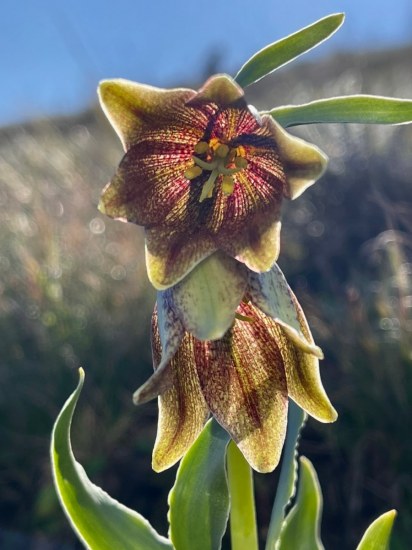
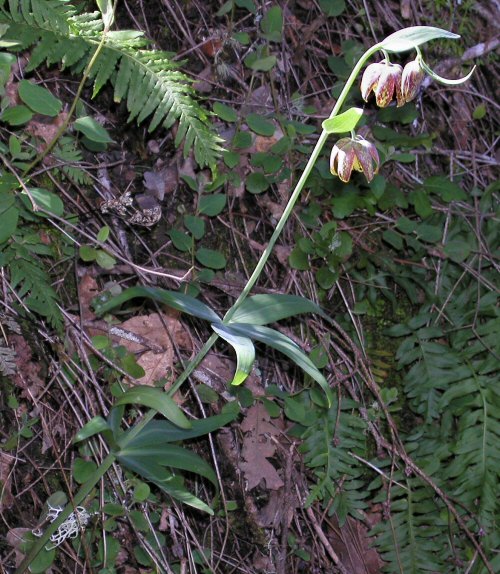
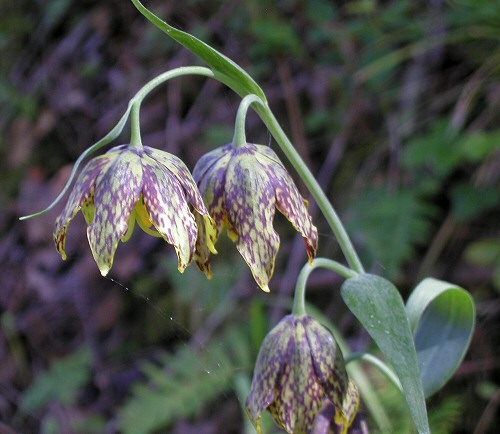
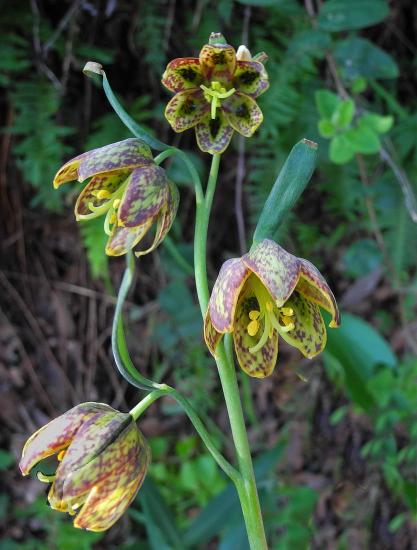
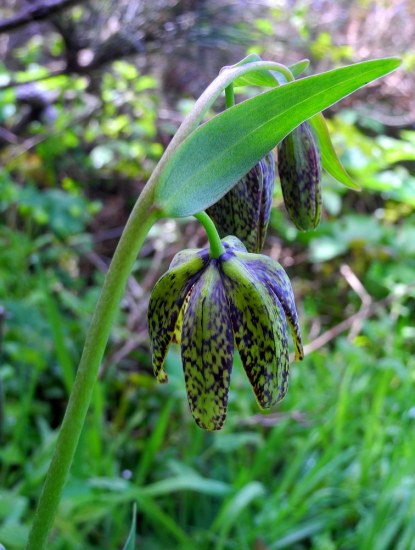
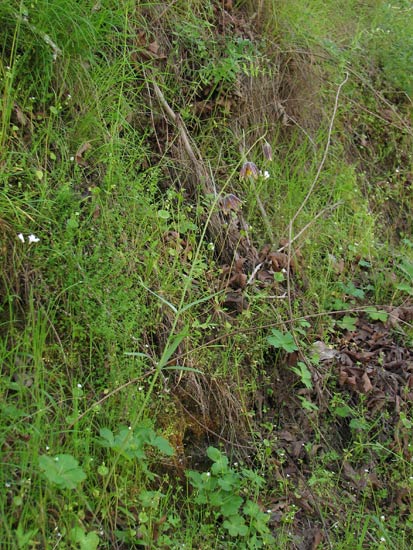
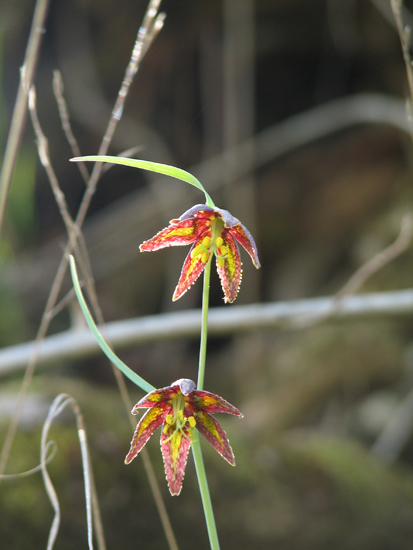
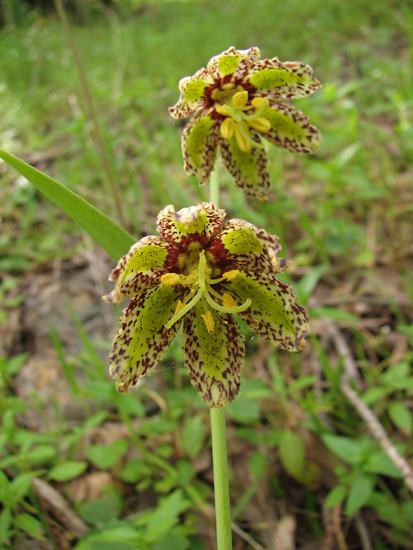
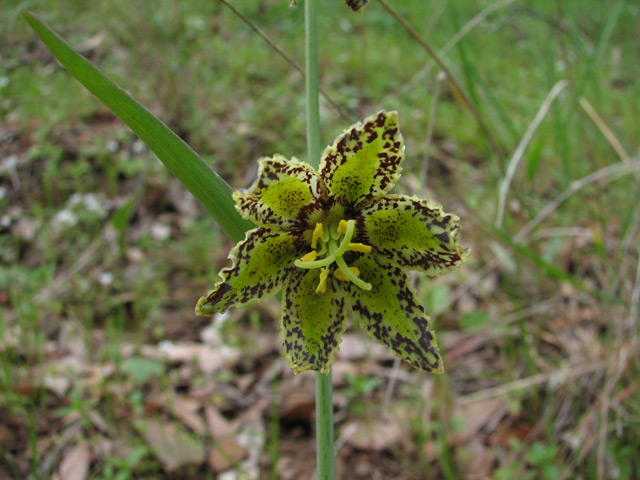
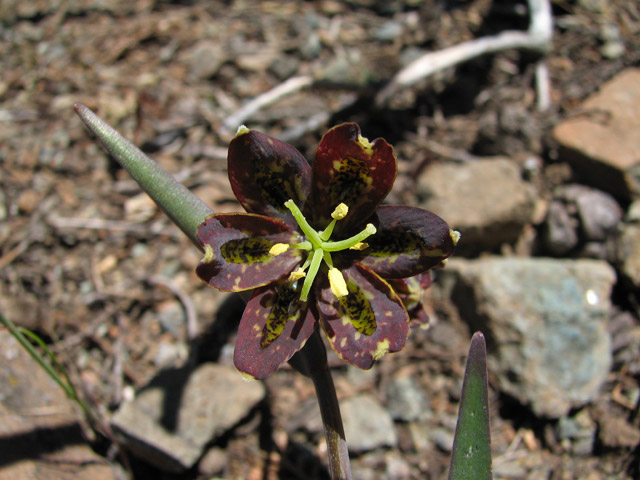
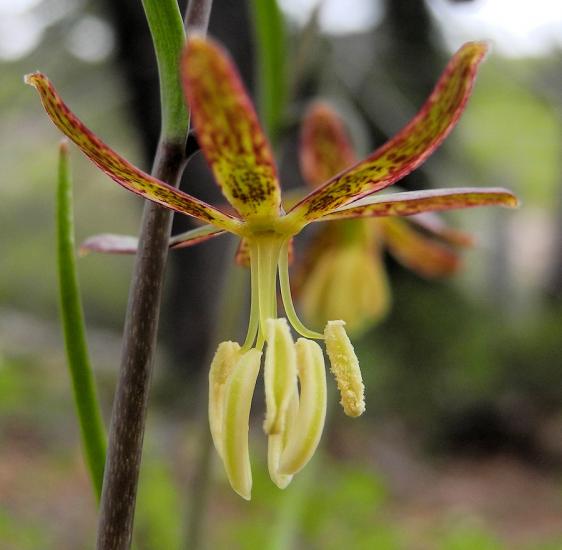
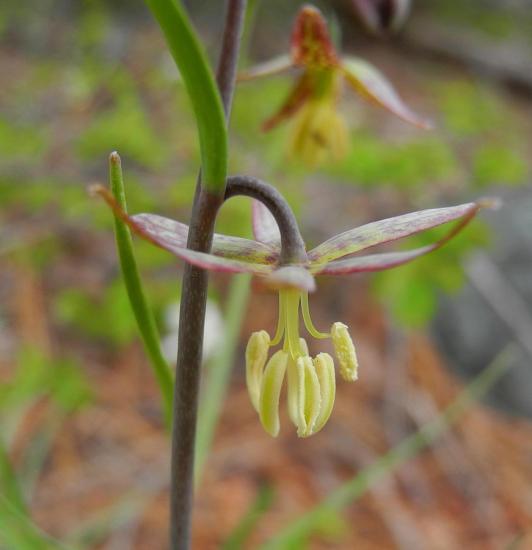
Fritillaria atropurpurea Nuttall is found in the west of the USA and is commonly known as the 'spotted fritillary'. The name means 'dark purple' in reference to the color of the spots. Plants grow in sheltered edges of forests, near shrubs at mid to high elevations in Oregon and Northern California. We found them hard to see at first. Height range: 15-60 cm. Photos were taken at Lakes Basin Recreation Area, Plumas County, California by Mary Sue Ittner.

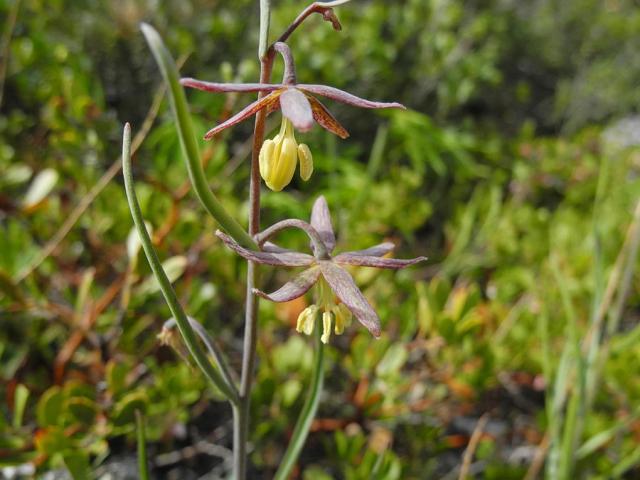
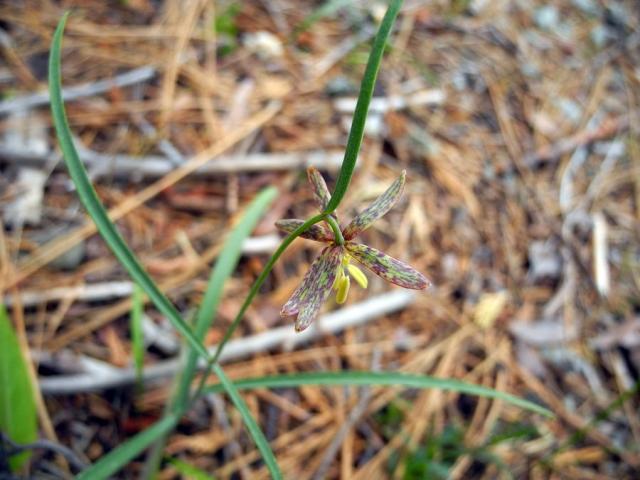
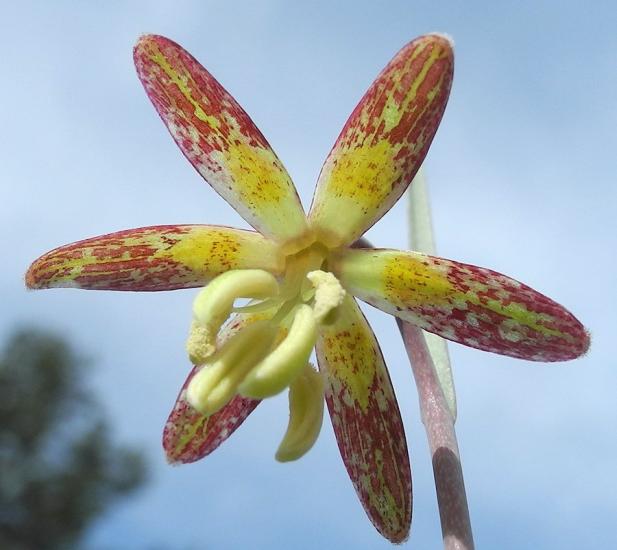
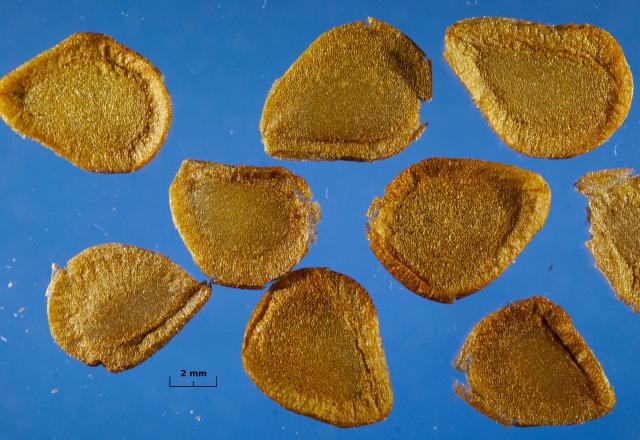
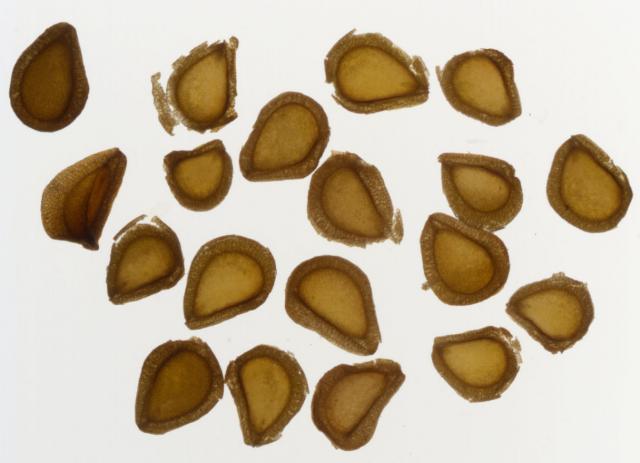
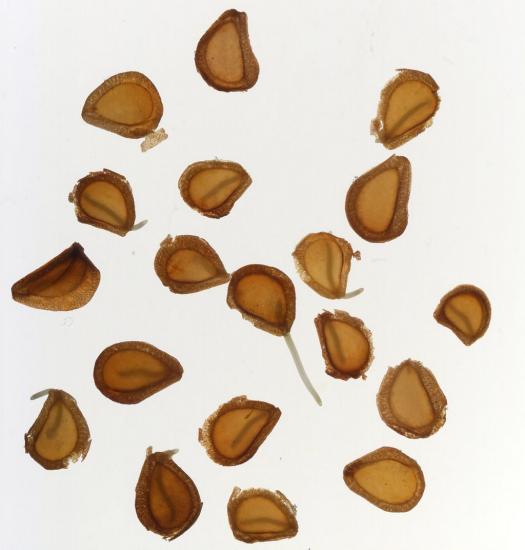
Seed photos by David Pilling, the second of the same seed was taken using transmitted light, embryos are barely visible, see Fritillaria Germination. The next photo was taken 57 days later after the seeds had been exposed to cold (32-40 °F) and wet and shows the embryos have developed and germination has begun.
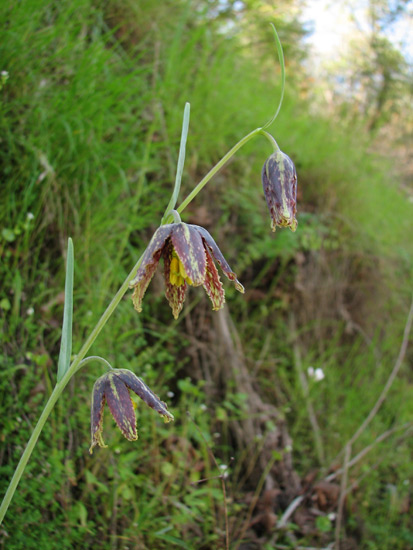
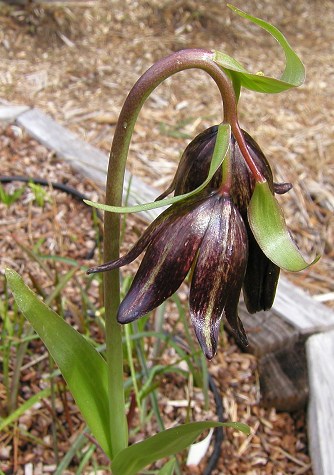
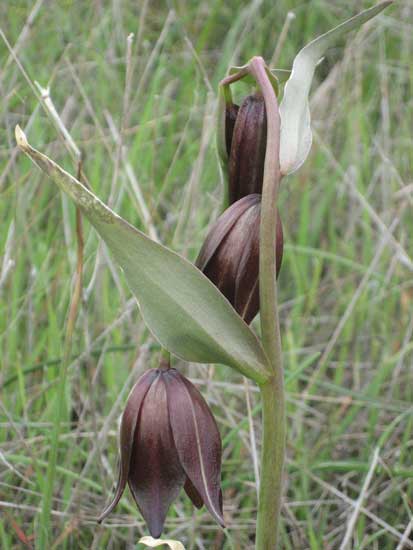
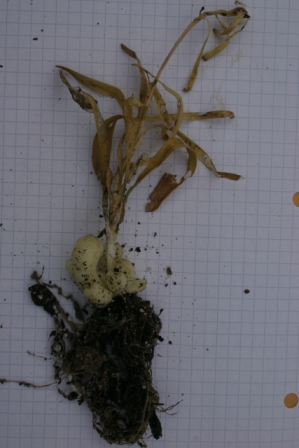
Fritillaria biflora Lindley is native to the coastal ranges of California where it grows in sunny grassy areas with heavy soils. It has chocolate brown flowers. In spite of its name, it can have 1 to 5 flowers although the first picture shows a bulb flowering in February 2004 in Northern California with the expected two flowers. The next two pictures were taken April 2005 at Figueroa Mountain (Santa Barbara County, California). Height: 15-45 cm. The first three photos by Mary Sue Ittner. The fourth was taken by Jim Duggan in San Diego County. The last is a photograph of a bulb grown in zone 7 Montgomery County, Maryland by Jim McKenney and photographed on June 19, 2008 against a quarter inch grid.
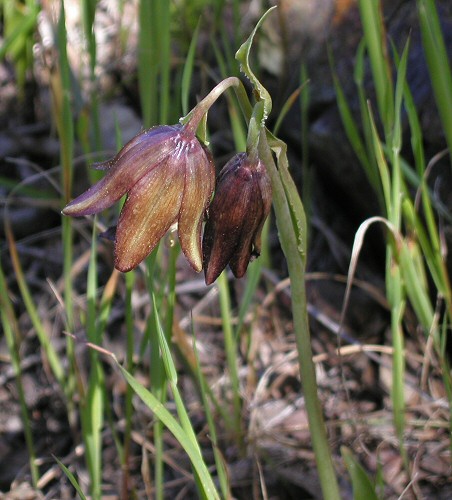
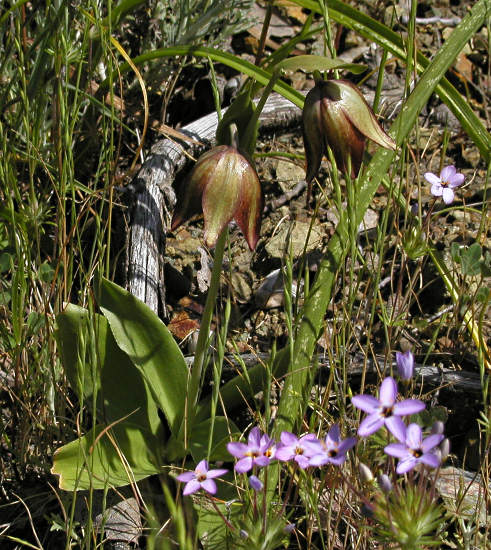
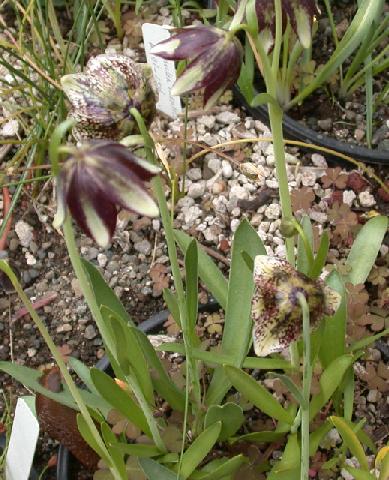
Fritillaria biflora × Fritillaria purdyi hybrids. The illustrated plants are probably bee-made hybrids between F. biflora and F. purdyi, occurring among seedlings raised from garden-collected seeds of these two species. Possible F. purdyi × F. biflora (F. purdyi being the seed parent) is a very robust plant, flowering earlier than pure purdyi, with 10 flowers showing typical F. purdyi form and markings but with a green rather than white ground color. Possible F. biflora × F.purdyi, two of five flowering seedlings, are smaller at first flowering but otherwise similar to the first hybrid. All the hybrids have more glaucous leaves than F. biflora, a F. purdyi characteristic. Photos by Jane McGary.

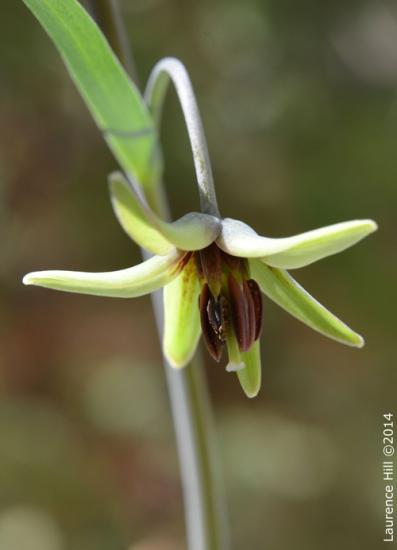
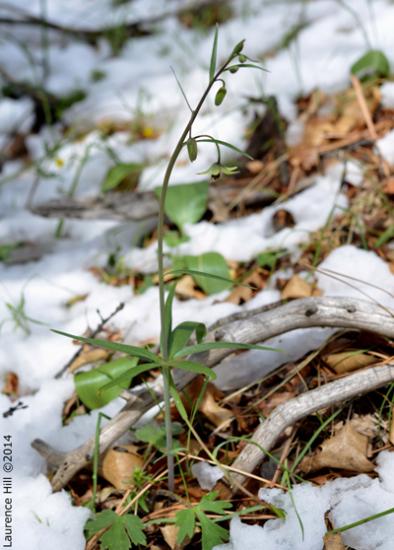
Fritillaria brandegeei Eastwood is only found in Kern and Tulare counties in California; it is commonly known as the 'greenhorn fritillary'. Photographs by Laurence Hill taken in California, Kern Co., Sequoia National Forest, 30th March 2014, in open mixed woodland, 1446 m. The last photo from Calflora was taken by Dee Shea Himes May 2022 in Kern County and shared under a CC BY-NC license.
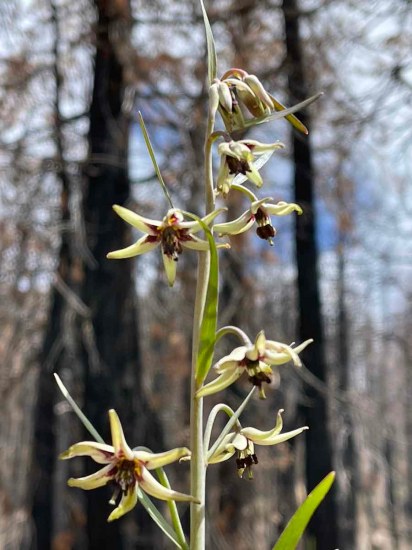
Fritillaria eastwoodiae Macfarlane is native to Northern California, where it is found growing in deciduous and coniferous forests in heavy soils, sometimes serpentine. Height: 20-80 cm. The pictures taken below show one grown and photographed by Dirk Wallace.
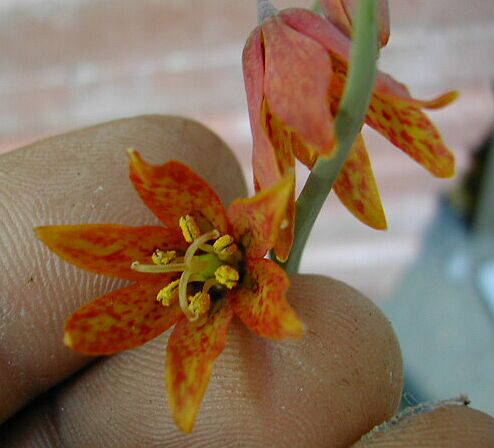
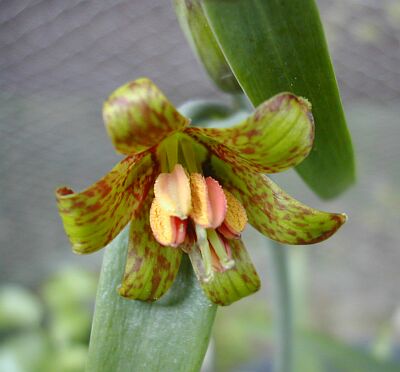
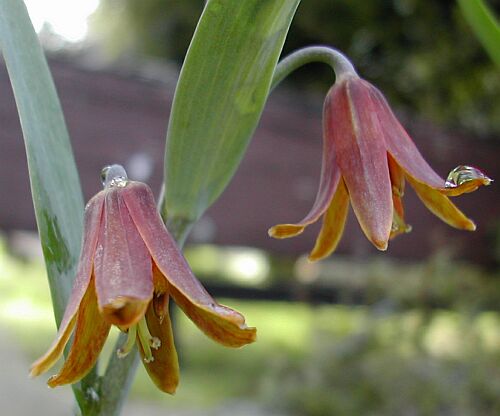
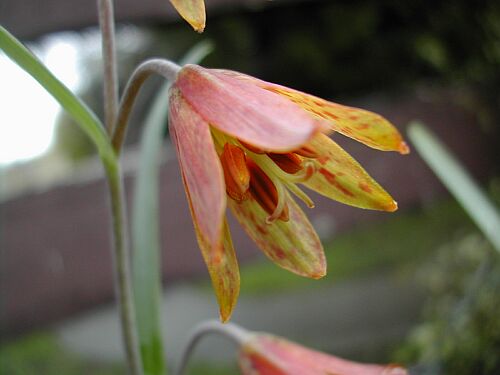

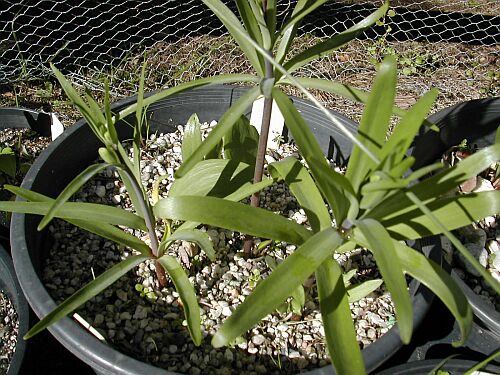
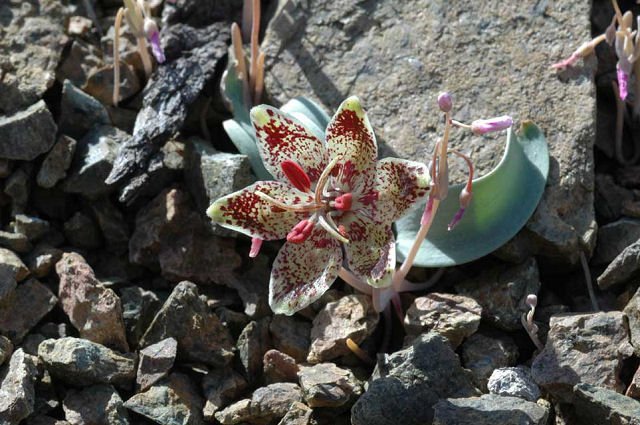
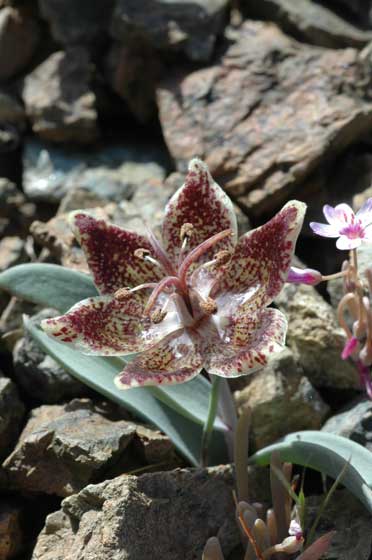
Fritillaria falcata (Jepson) D.E. Beetle, commonly known as the Talus Fritillary, is a species endemic to the serpentine scree slopes of the mountains in and around the San Francisco Bay Area in California. It grows a short stem about 10 to 20 centimeters tall surrounded by two to six flat, sickle-shaped leaves up to about 8 centimeters in length. The upward facing flower has six tepals one to two centimeters long which are greenish on the outside and yellow mottled with purple-brown inside. Photos were taken by Mary Gerritsen in situ on a serpentine ridge south of Livermore, CA. April 5, 2008.
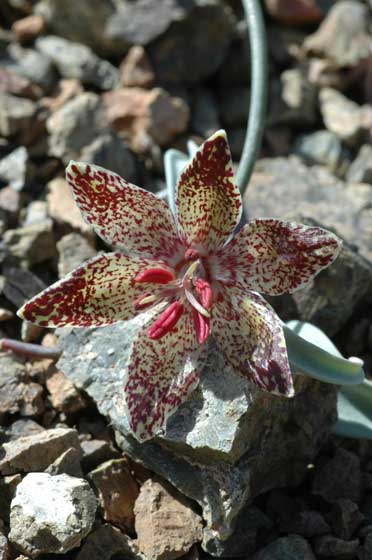
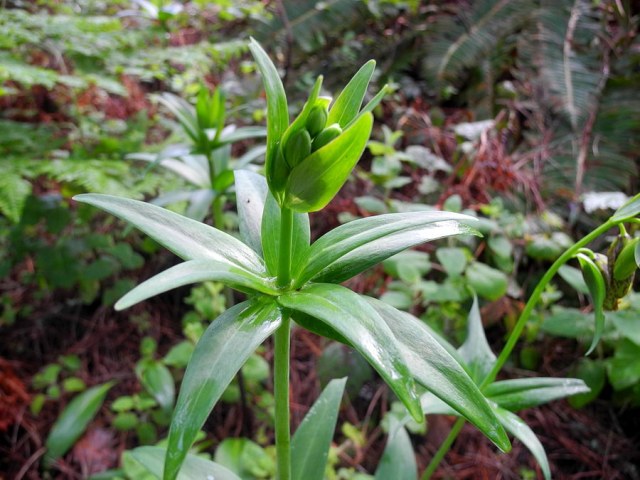
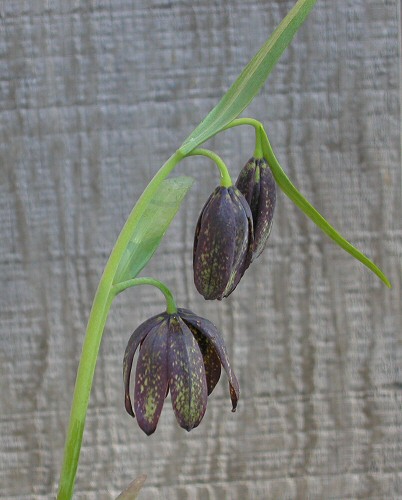
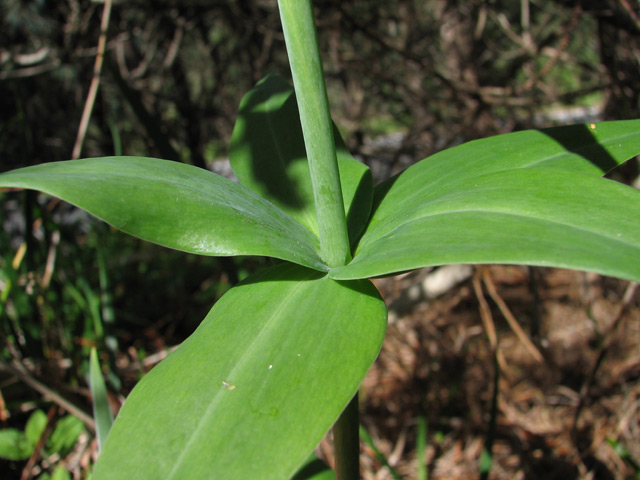
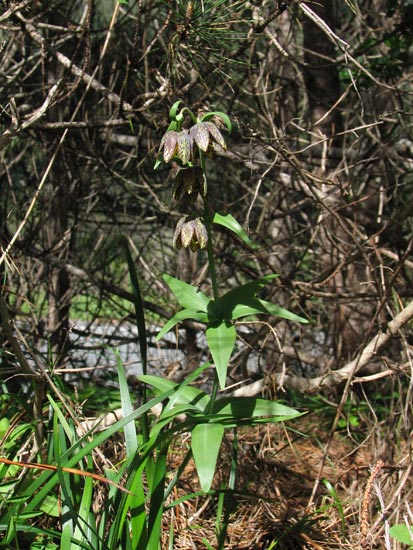
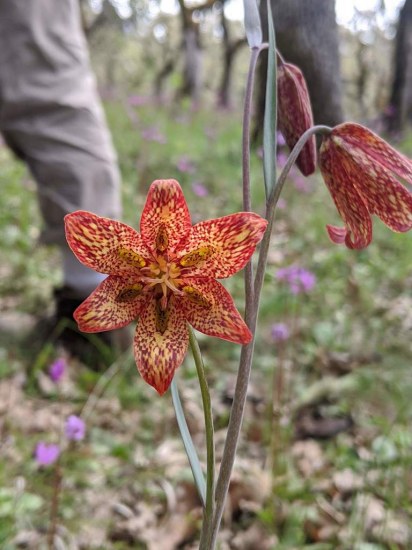
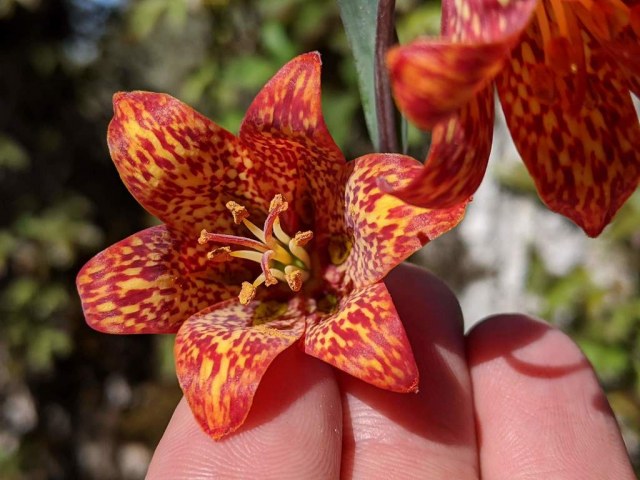
Fritillaria gentneri Gilkey is an endangered species of only a few small populations in Southern Oregon and in Siskiyou County, California. Height: about 30 cm. There is some debate as to whether it is a true species, or a fertile hybrid between Fritillaria affinis and Fritillaria recurva. Both F. affinis and F. recurva have been found in close proximity to populations of F. gentneri, so many botanists doubt it is a true species but instead a fertile hybrid showing intermediate characteristics of both parents. Read more about the debated species in a publication by the Native Plant Society of Oregon (NPSO) here and in the Recovery Plan proposed by the US Fish and Wildlife Service here. Photos from iNaturalist taken by lcwimmer1 in Jackson County, Oregon in April and shared in under a CC BY-NC license.
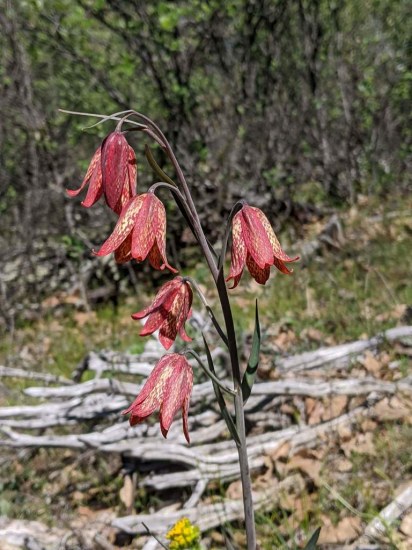
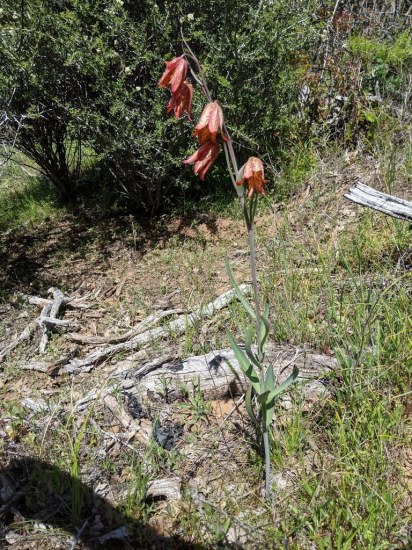
Fritillaria glauca Greene, known as the Siskiyou fritillary, grows on high elevation serpentine slopes from 900 to 2000 m (300 to 6700 ft) in full sun in southwest Oregon and northwest California. It is a short species (10 cm) with nodding flowers that are yellow to mixed yellow and brown to deep brown with red or brown markings. Photo from Elaine Allison.
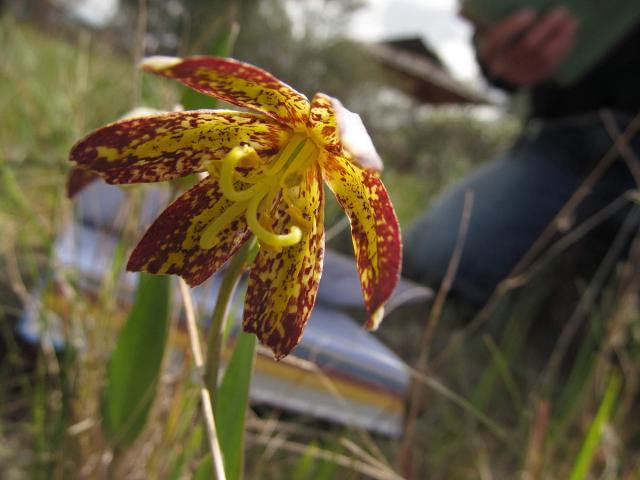
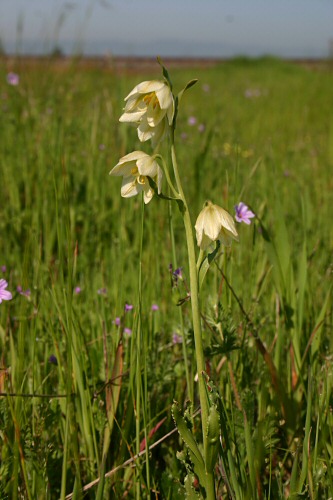
Fritillaria liliacea Lindley is native to coastal areas of Northern California (mostly San Francisco Bay Area) where it grows in clay soils in full sun. It has small white to pale greenish yellow flowers and is known for its fragrance although I can't detect it in my seed grown plants. Height: 30 cm. Photos 1-3 were taken by Mary Sue Ittner. Photos 4-5 were taken by Nhu Nguyen at the Tilden Botanic Garden.
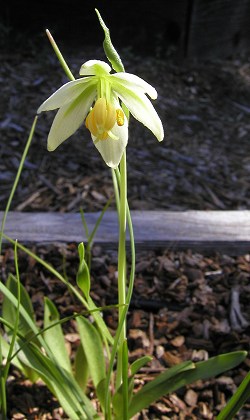
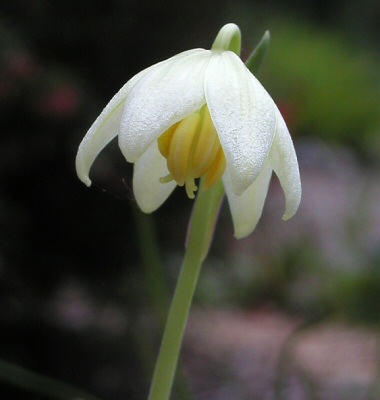
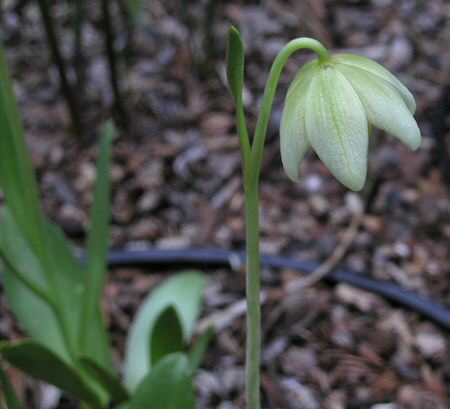
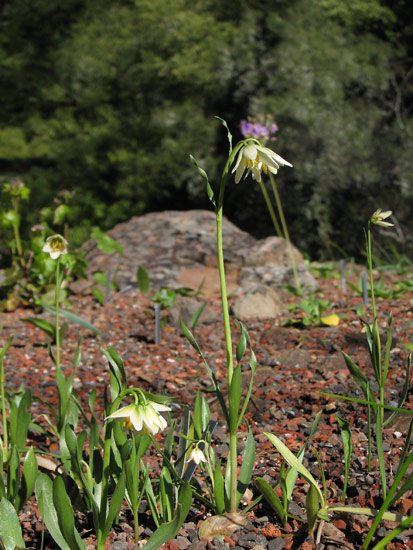
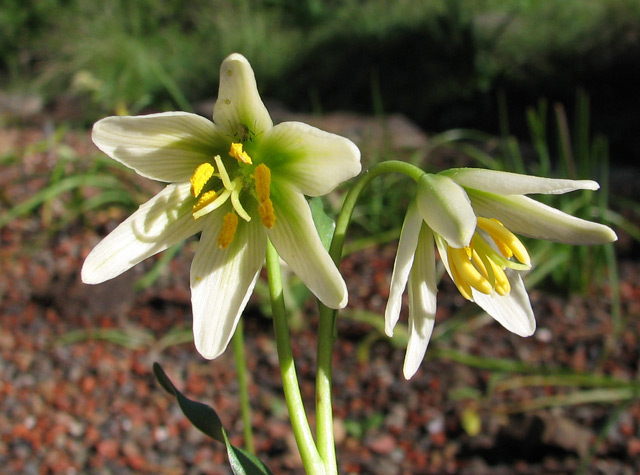
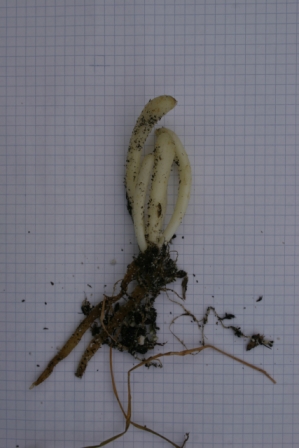
The first two pictures below were taken at Jepson Prairie, California by Bob Werra Spring 2005. The last is the bulb as grown by Jim McKenney in zone 7 Montgomery County, Maryland and photographed June 19, 2008 against a quarter inch grid.

For more information and to see other Fritillaria species and hybrids, go to the wiki pages listed below:
Asian fritillaria a-c - Asian fritillaria d-k - Asian fritillaria l-r - Asian fritillaria s-z - European fritillaria a-o - European fritillaria p-z - Fritillaria index - Miscellaneous fritillaria - North American fritillaria m-z