Bulbous irises in subgenus Xiphium are often referred to as Spanish irises even though there are species in this group that are found in other geographical areas besides Spain. They have bulbs with thin, fibrous roots. Hybrids in this group are referred to as Dutch Irises and they are listed after the true species on this page. Some of this species information was supplied by Rafa Díez Domínguez.
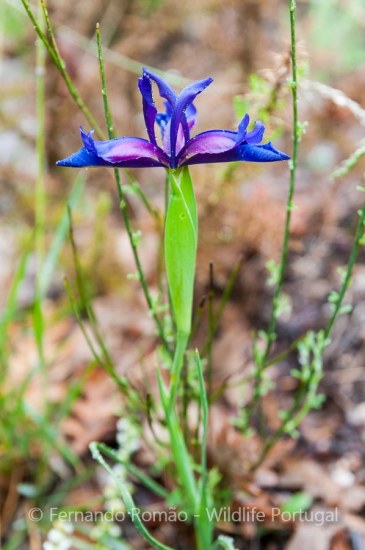
Iris boissieri Henriq. is an Iberian endemic (Spain and Portugal). Growing from 12- 16" (30-40 cm), it has deep violet-purple flowers with a sparse yellow beard. Photos from iNaturalist taken by Fernando Romão and max_hof_mann in May and June in Portugal and shared under a CC BY-NC license.
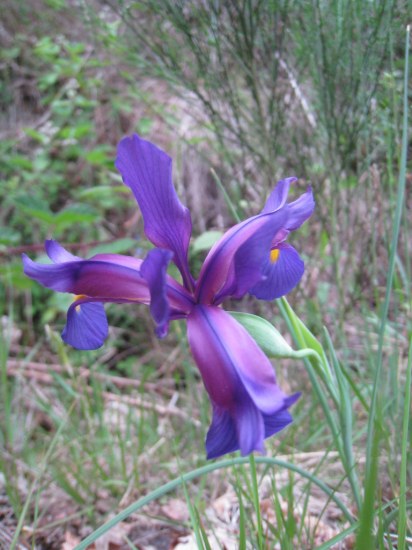
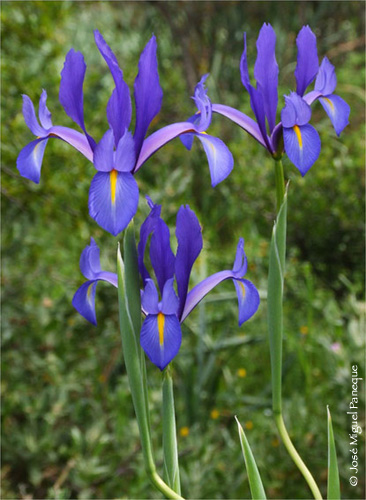
Iris filifolia Boiss. is native to Spain, Gibraltar, Tangier and Morocco. Growing from 10-18" (25-45 cm), it has threadlike leaves and reddish-violet flowers with a median yellow stripe. Although not recognized by Kew, a form with wider leaves, var. latifolia is listed by some sources. Photo by José Miguel Paneque.
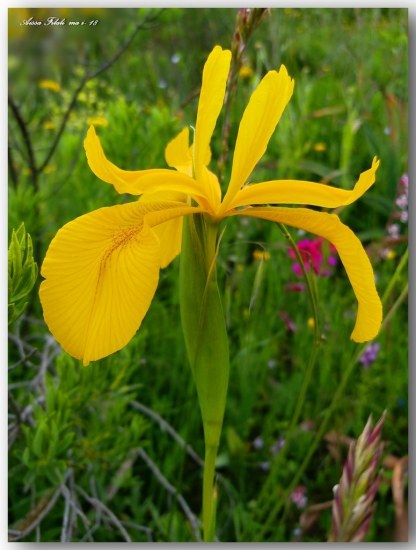
Iris juncea Poir. is native to Spain, Sicily and North Africa. It grows from 12-16" (30-40 cm) and has bright yellow flowers. Photos from iNaturalist taken by Aissa Djamel Filali in May in Algeria and shared under a CC BY-NC license.

Iris latifolia (Mill.) Voss, called "English Iris" by the confusion of authors like Dodens and Clusius, is an endemic iris of Spain and France (Spain in Guadarrama mountain range, between Galicia and Pyrenees). Growing to 24" (60 cm), it has violet blue flowers with a yellow signal. It was at one time considered to be a synonym of Iris xiphioides Ehrh., but in 2020 is considered to be a synonym of Iris jacquinii (Schrank) ined. by Kew. A lot of information about it can be found here. Photo by Marc Ryckaert, acquired from this page and licensed under the Creative Commons Attribution 3.0 Unported license. The next two photos from iNaturalist taken by Rémi Cardinae in July in France in the Pyrenees and shared under a CC BY-NC license.
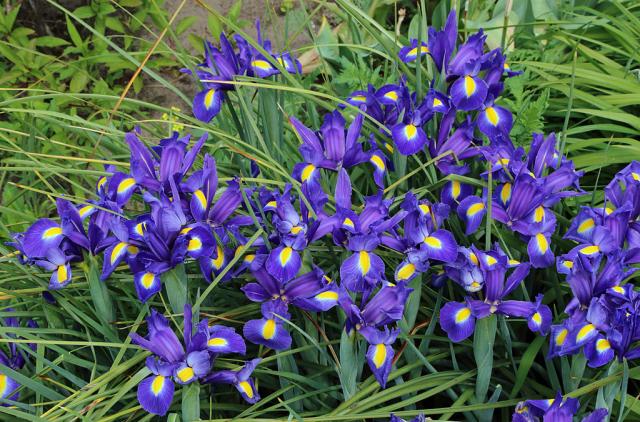
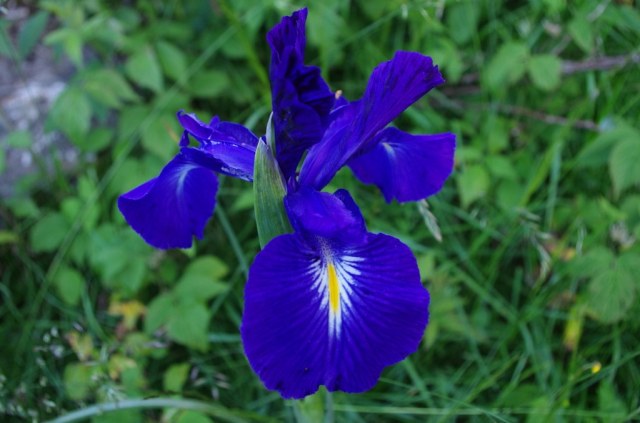
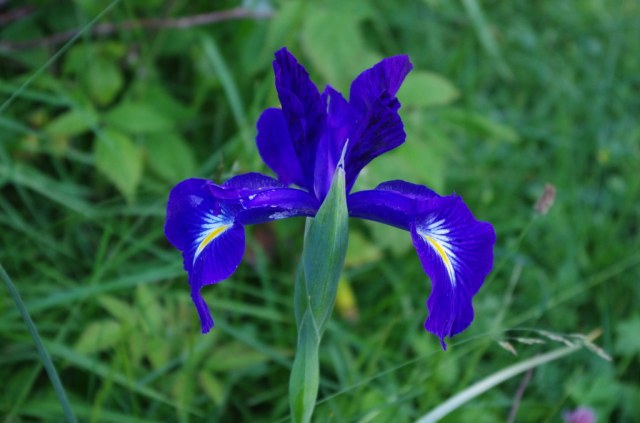
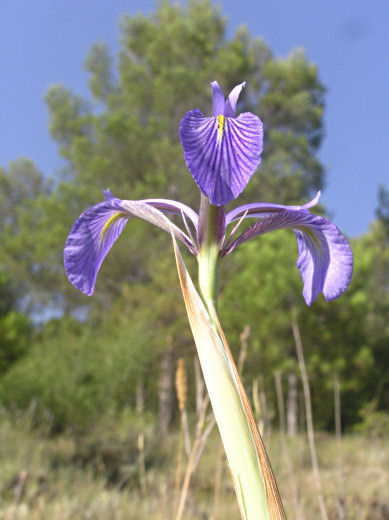
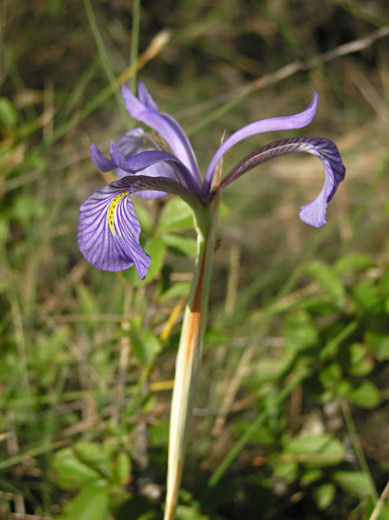
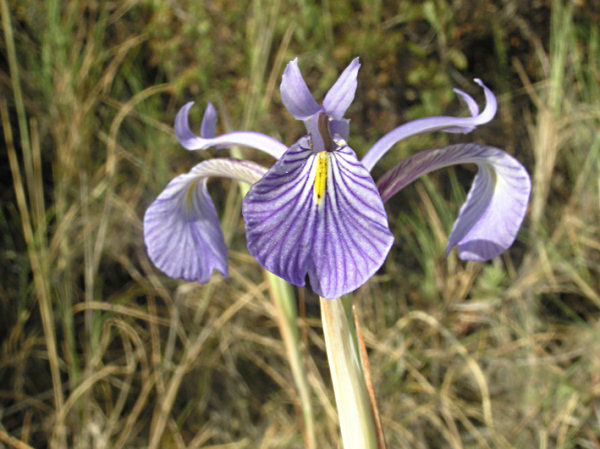
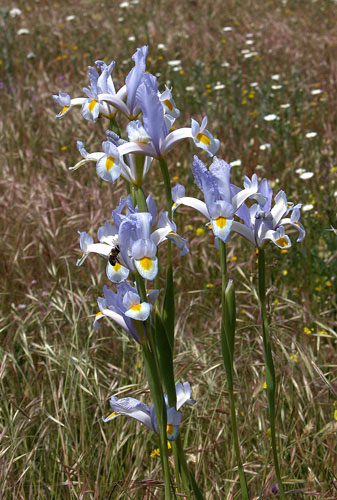
Iris serotina Willk. is found in central and southern Spain and northern Africa. Growing from 16-24" (40-60 cm), it has violet-blue flowers with a yellow central line in the falls. Photos taken in habitat by Rafa Díez Domínguez.
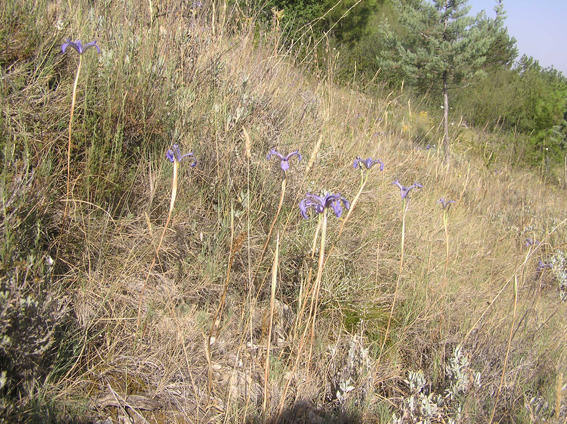
Iris tingitana Boiss. & Reut. , syn. Iris fontanesii Godr., is from southern Spain, Algeria, and Morocco. Growing to 24" (60 cm) it has pale to deep blue flowers. Photo from iNaturalist taken by Valentin Moser in April in Morocco and shared under a CC BY-NC license.

Iris xiphium L., which is the Spanish iris this group is named for, is common in southwest France, Corsica, Southern Italy, Portugal, Morocco, Algeria, Tunisia, Gibraltar and Spain. It has handsome blue and yellow flowers and has been used as one of the parents in the many hybrids known as Dutch Iris, growing to about 60 cm. This iris is quite popular in flower arrangements. Photos by Celestino Gelpi.
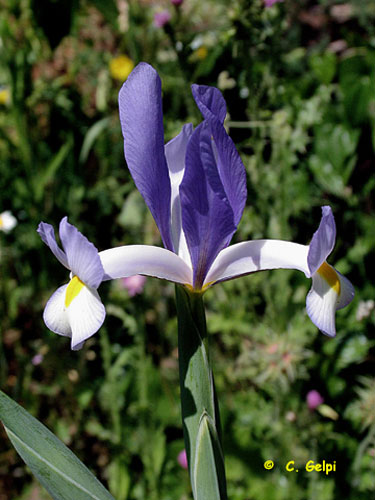
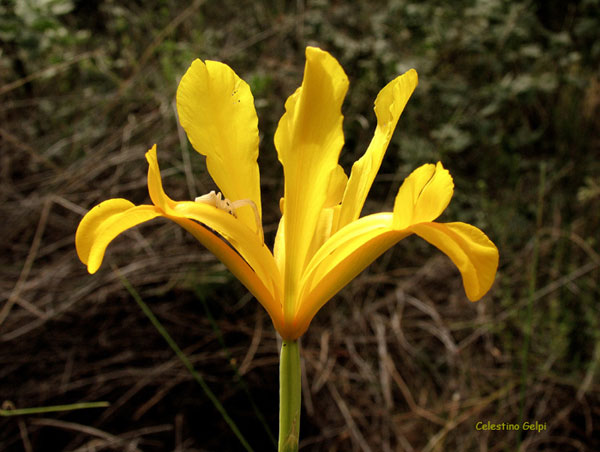
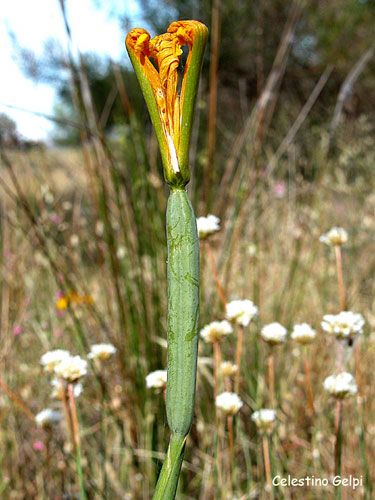
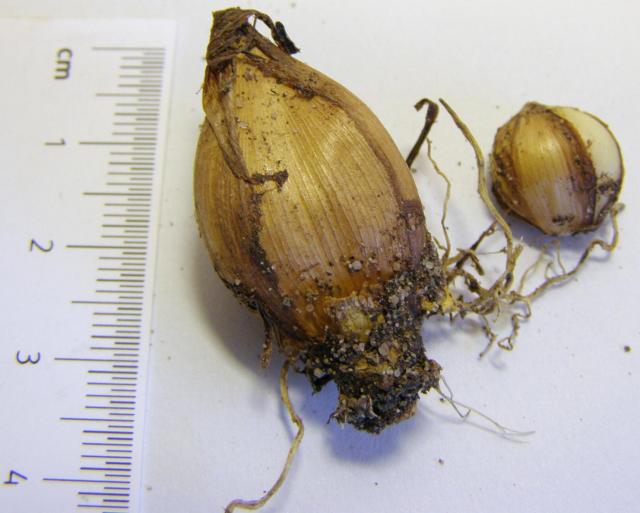
Iris xiphium var. lusitanica (Ker Gawl.) Foster, a yellow form, is in 2020 considered a synonym for the species by Kew as is Iris lusitanica Ker Gawl. It is an Iberian endemic, from dry, warm and rocky places in Spain (Extremadura region) and Portugal. Height range: 30-40 cm. The first two photos by Celestino Gelpi. The last photo by Peter Taggart of the bulbs shows they resemble the typical Spanish Iris bulb in shape, tunic texture and color.
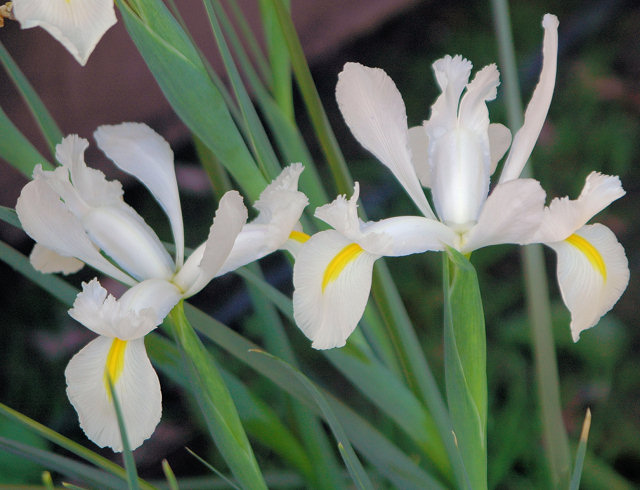
Dutch Irises , which are hybrids of Iris xiphium and Iris tingitana and Iris latifolia, sometimes called Iris × hollandica, are shown below.
Iris 'Bronze Beauty' This is one of the so-called Dutch iris, flowers probably better known to most people as cut flowers. Iris with this brown color were seemingly more common in the past: a list from a century ago shows several in this color range in the similar Spanish Iris group. Years ago I had another handsome one called Le Mogul. Photo by Jim McKenney.
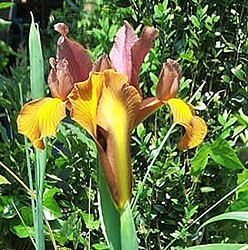
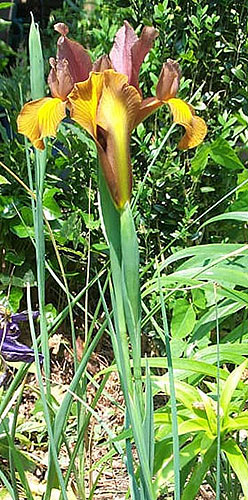
Iris 'Oriental Beauty' - Believing that Dutch Iris were rated as Zone 6 thus too tender to be grown in my colder USDA Zone 5 area, I never bothered trying to grow them, and I passed by the bins of Dutch Iris bulbs sold at retail garden centers in the autumn. But then I saw splendid displays of these Iris growing at a local area botanic garden, so decided to give them a try. I like these Iris because they stand tall, and tidily neat, narrow, and spare of foliage, thus easily interjected into a planting bed without worry of overcrowding. The flowers are large, long lasting, and vibrantly colored. The bulbs are inexpensive, so I'll be trying lots more of these next year. Photo by Mark McDonough.

Iris 'Sapphire Beauty' - See comments about the beautiful Dutch Iris under Iris 'Oriental Beauty' above. Photo by Mark McDonough.
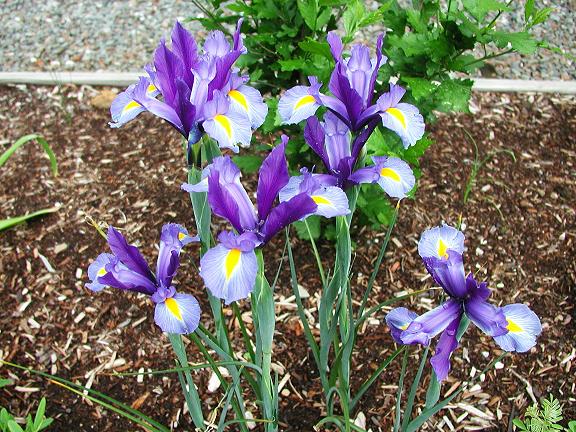
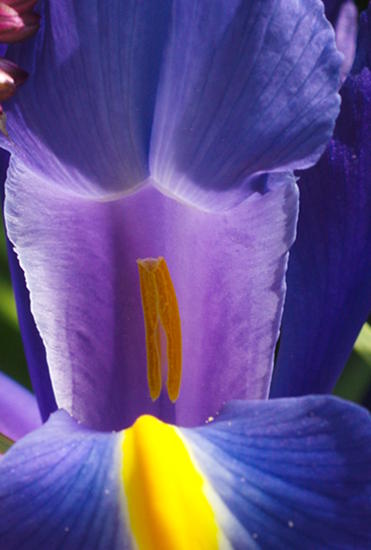
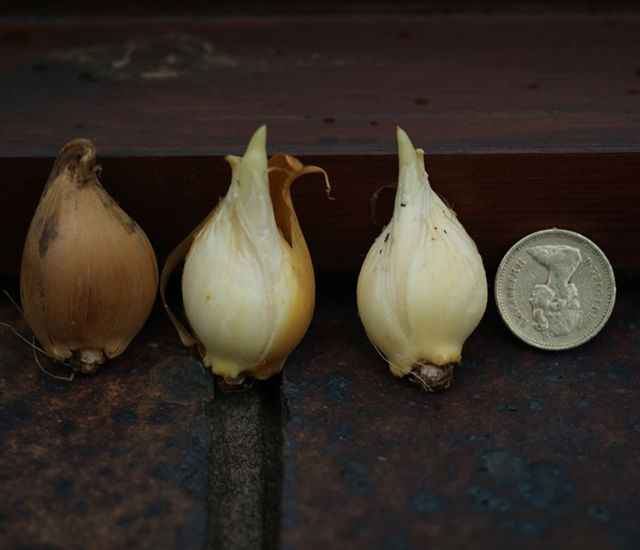
Iris unknown cultivars The first photo by Mary Sue Ittner is of a Dutch Iris that she does not have a name for. The second and third photographs by David Pilling are of an unknown cultivar and its bulbs.
Iris Index - Beardless iris a-k - Beardless iris l-r - Beardless iris s-z - Crested Irises - Garden Bearded Irises - Juno iris A-I - Juno iris j-r - Juno iris s-z - Aril Irises - Miscellaneous Irises - Pacific Coast Irises - Reticulata Irises - Spanish Irises - Belamcanda - Hermodactylus - Pardanthopsis