Crocus is a genus in the Iridaceae family that is widespread; it is found in Europe, North Africa and in Asia. The standard reference on the genus was Brian Mathew, The Crocus written in 1982, but at least half a dozen taxa, including new species, have been described since its publication. In 2010 Jānis Rukšāns published the book Crocuses: A Complete Guide to the Genus that includes descriptions of species and cultivation information
This PBS wiki page describes Spring Blooming crocus species m-s.
Crocus index - Fall Blooming crocus a-h - Fall Blooming crocus i-o - Fall Blooming crocus p-z - Spring Blooming crocus a-b - Spring Blooming crocus c-e - Spring Blooming Crocus f-l - Spring Blooming crocus t-z
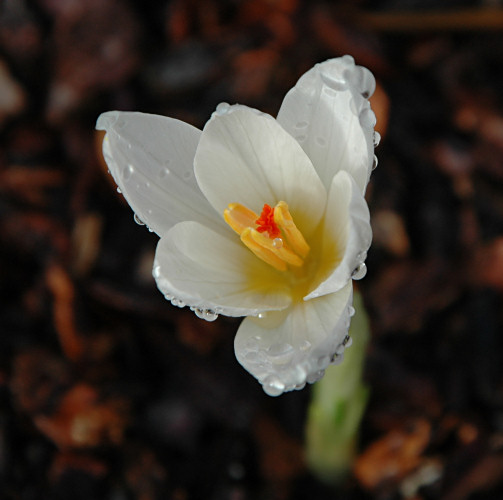
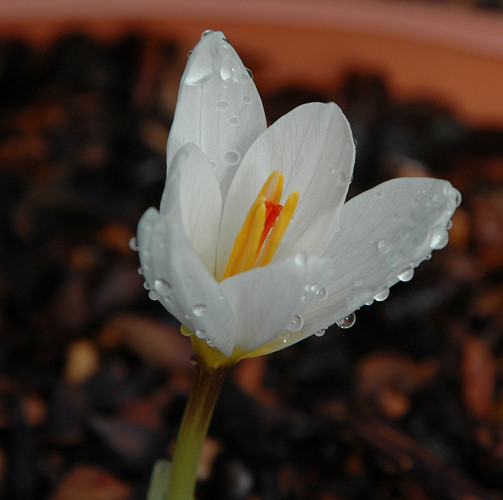
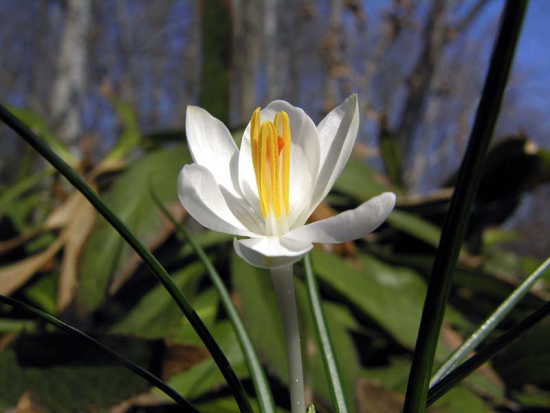
Crocus malyi Vis. grows in grassy rocky places in the western Balkans. It has long white flowers with a yellow throat and a bright orange style. It appeared in my garden in Northern California before the leaves the end of January 2006 when we were getting a lot of rain and lasted only briefly. The leaves appeared in February. Height: 10 cm. Photos by Mary Sue Ittner.
Crocus michelsonii B.Fedtsch. is native to the Kopet Dag range of Turkmenistan and Iran, growing on stony hills and sagebrush steppe at mid elevations. The plants pictured were grown by Jane McGary from seed collected in 2000 by Jan Jilek. They are kept in a bulb frame, fairly dry in summer, and here are flowering in late January after a prolonged period below freezing, when they were covered. The flowers are large and a beautiful shade of blue, and the plants seem robust. Height range: 7-9 cm. Photo by Jane McGary.
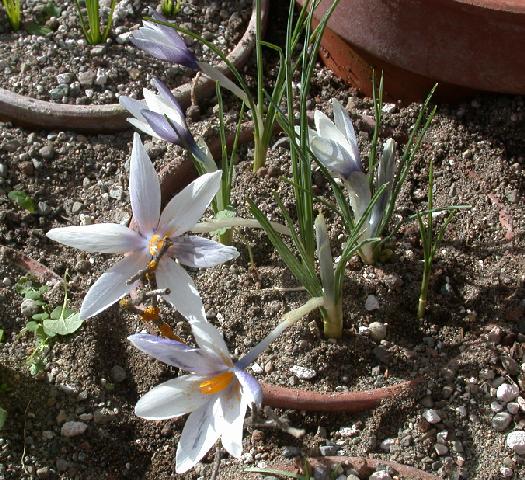
Crocus minimus Redouté comes from the west coast of Corsica at altitudes up to 2,000 feet (700 meters), but grows at higher altitudes in Sardinia. It blooms from January to April in its native habitat. Mathew says it is easy to grow in a rock garden. Height: 8 cm. First two photos by John Lonsdale, remainder by Roland and Gemma.
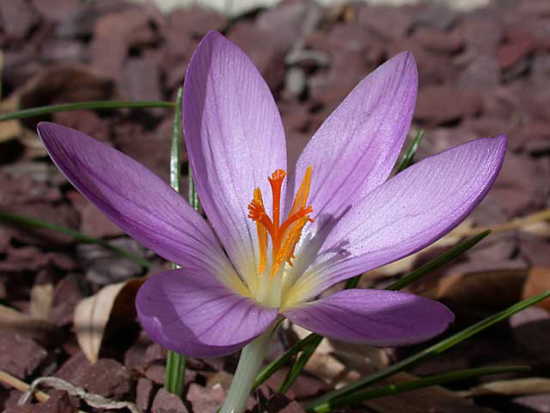
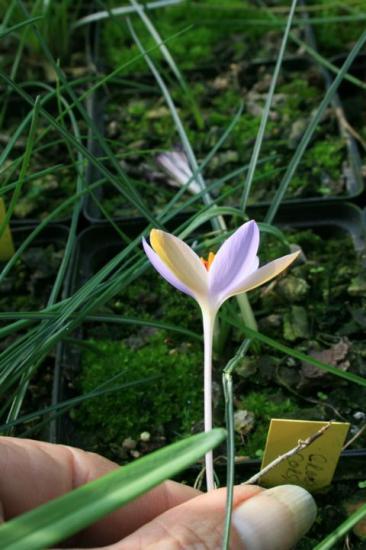

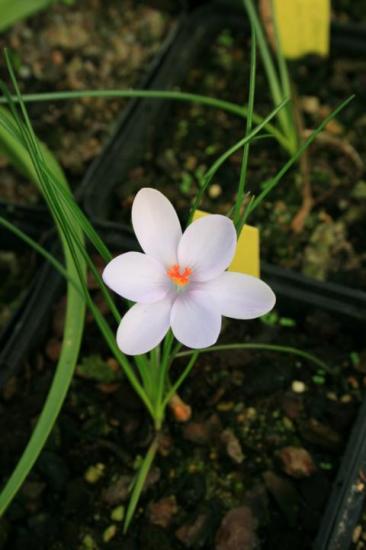
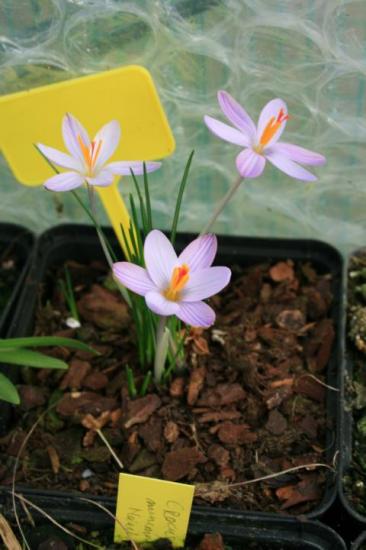
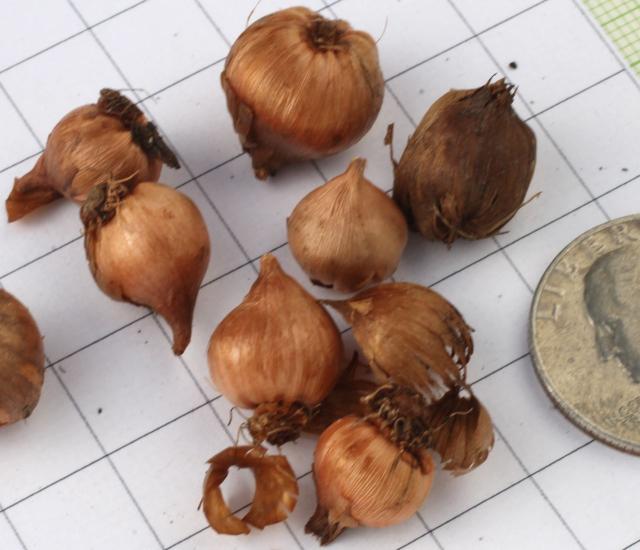
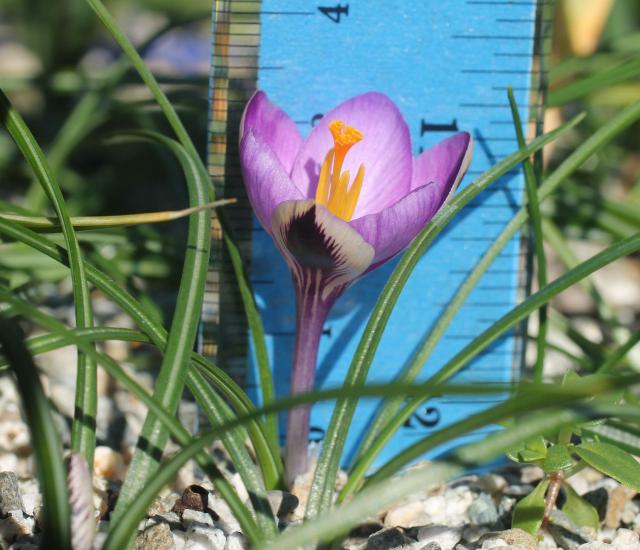
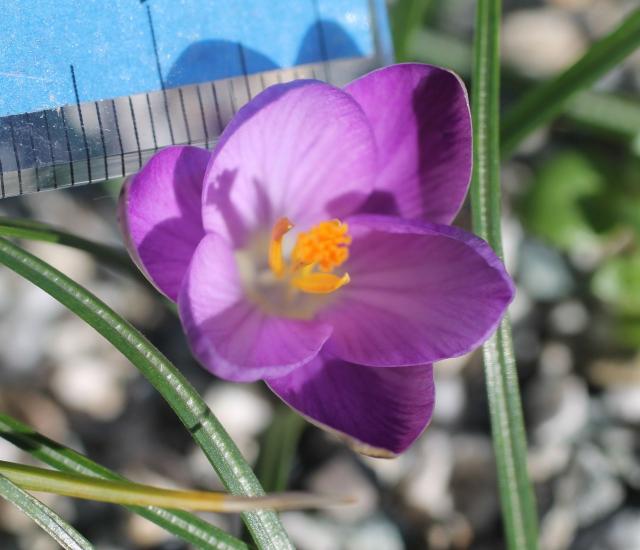
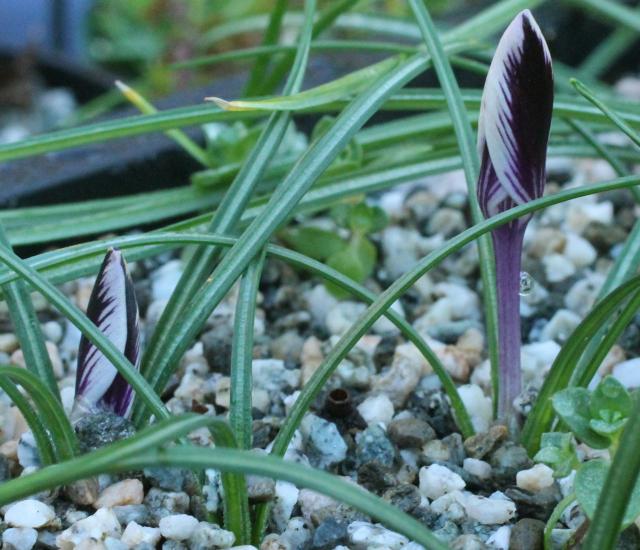
A PBS member writes "The corm tunics have parallel fibers, a characteristic that distinguishes Crocus minimus from the similar Crocus corsicus, which has more reticulate (netted) fibers. The photographed flowers (below) are typical of the commercially propagated variety of Crocus minimus, which is more strongly marked on the outer (reverse) than some wild forms. It also has larger flowers and wider tepals than some I have grown from wild-collected seed or seed from such stock." These were grown and photographed in late January by M.Gastil-Buhl who acquired the corms from Telos Rare Bulbs, shown on a 1 cm grid. They close tightly each night and open when the sun is out. The bud emerges from a transparent sheath, barely visible around the base of the bud on the left in the fourth photo. Some corms have two flowers.
Crocus minimus 'Bavella' is a collection from Alan Edwards that comes true from seed; it has a characteristic white style. Photographs by Rimmer de Vries, I grew this from SRGC seed, resulting in the tiny deep dark purple late blooming crocus (latest blooming spring crocus) unlike anything sold by the Dutch importers.
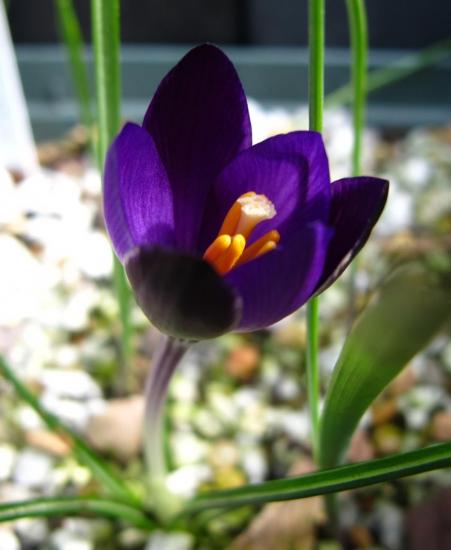
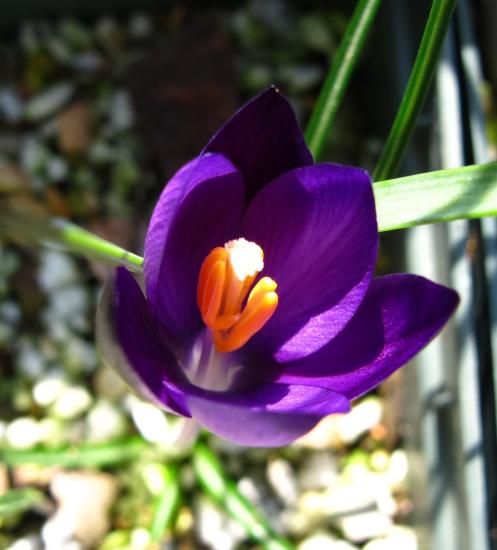
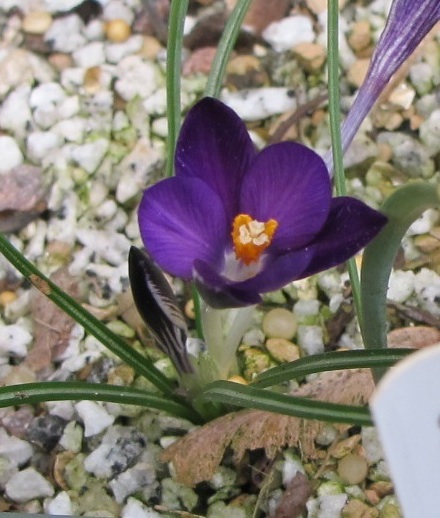
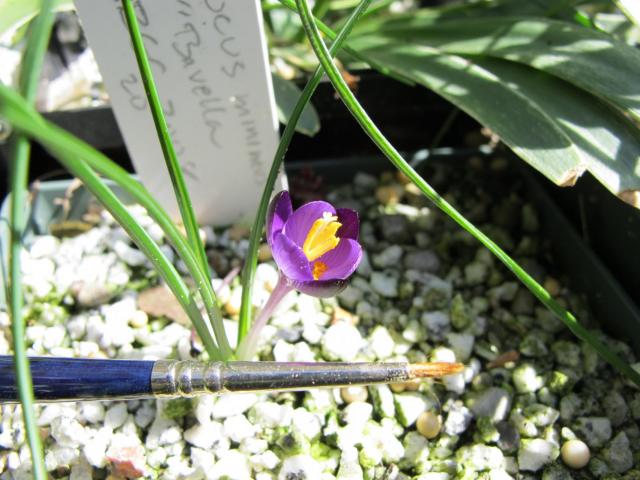
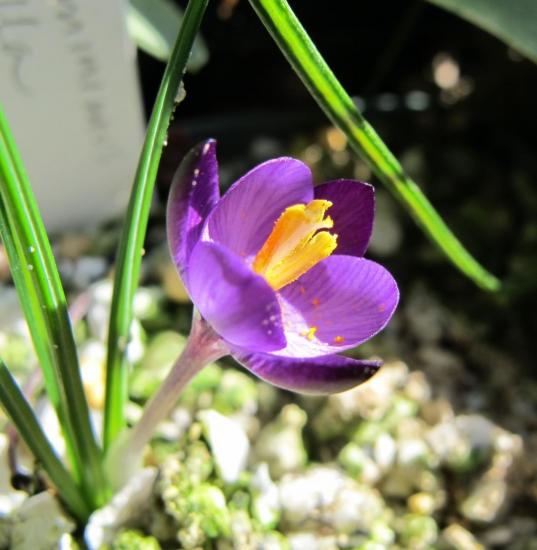
Crocus nevadensis Amo & Campo (synonyms Crocus atlanticus Pomel and Crocus algeriensis Baker) should be grown in an alpine house or frame in the UK, according to Mathew, as it is not very vigorous. It is native to the Sierra Nevada and Sierra de San Cristoval of Spain, and also grows in Morocco, and in Algeria in Oran. Height range: 5-15 cm. Photos by John Lonsdale.
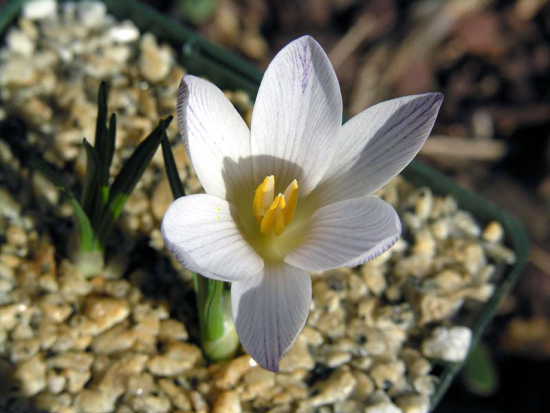
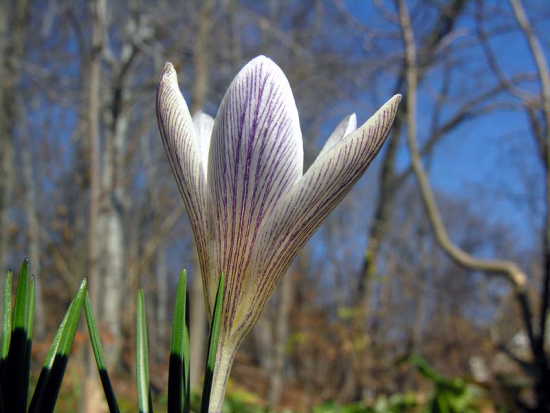
Crocus olivieri J.Gay was named after botanist Guillaume Olivier, who collected it on an Aegean island. This species also grows in the Balkans, Greece, Bulgaria, Romania, and Turkey. Subspecies olivieri has unmarked flowers, but subspecies balansae has dark markings on the backs of the perianths. Height range: 8-10 cm. Photos by John Lonsdale.
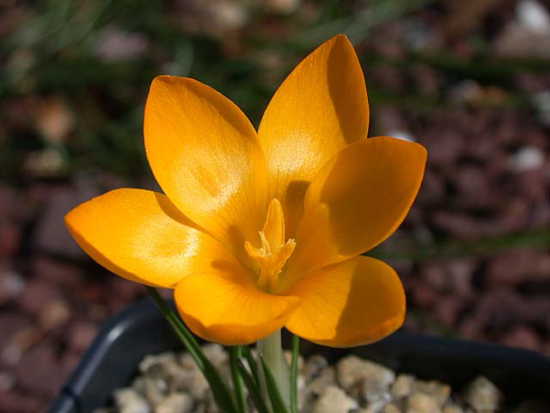
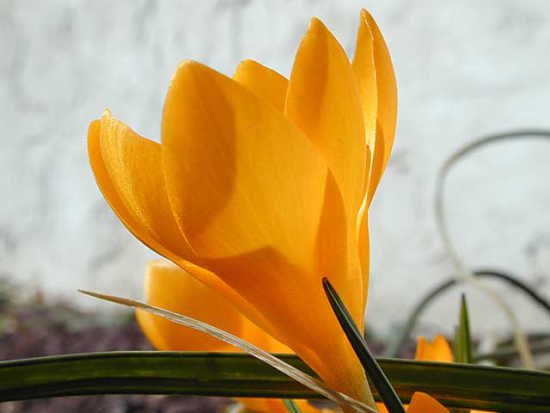
Crocus olivieri ssp. balansae is considered by Plants of the World Online to be a synonym of Crocus balansae J.Gay ex Maw. Its native range is the E. Aegean Islands to western Turkey where it grows on open hillsides and in scrub. It has a much branched style and dark markings on the backs of the perianths. Photos by John Lonsdale.
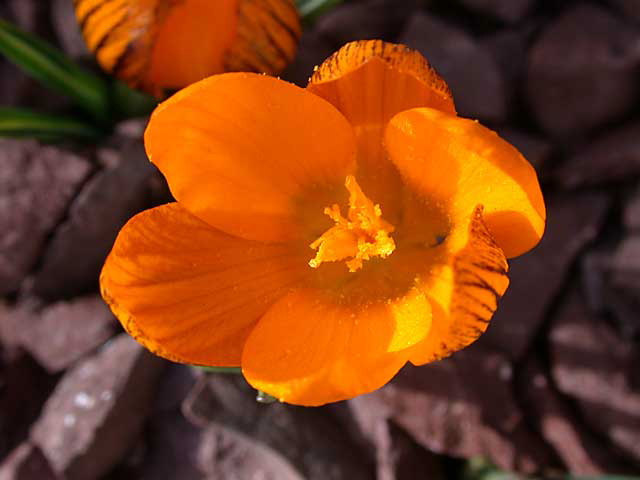
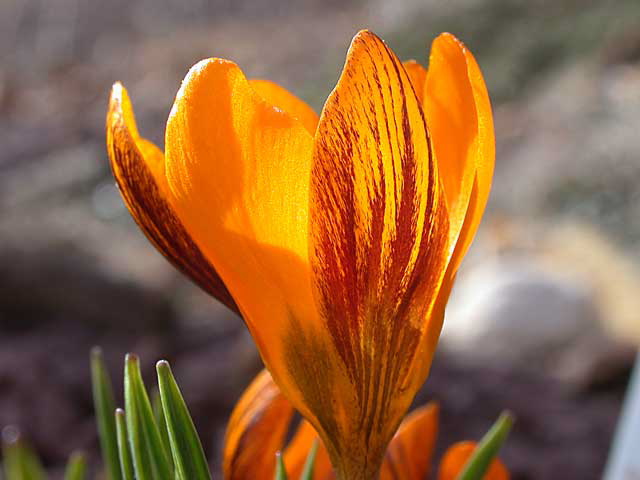
Crocus paschei Kernd. comes from the Taurus Mountains of Turkey. Height: 10 cm. Photos by John Lonsdale.
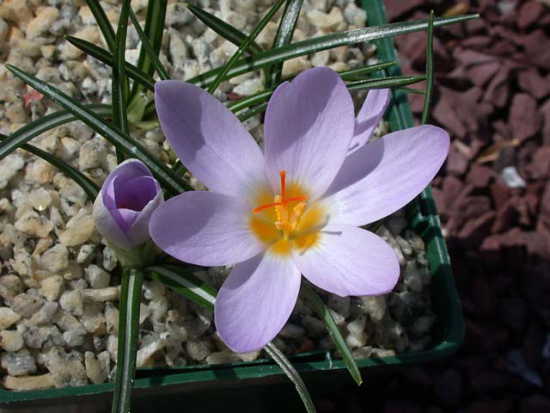
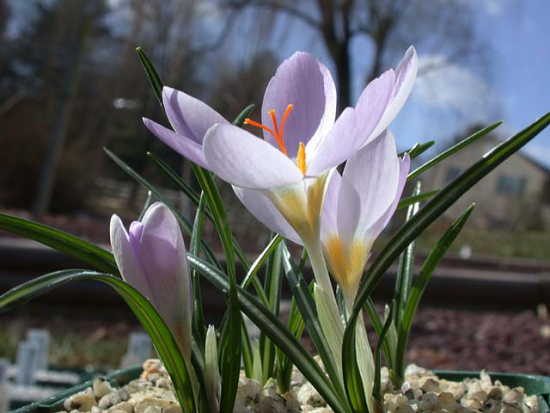
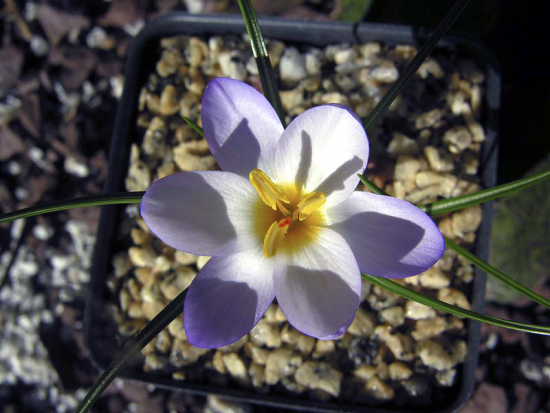
Crocus pestalozzae Boiss. comes from northwestern Turkey. It was named in honor of Italian doctor Fortunato Pestalozza, who botanized in Italy and Syria in the 1800s. In the first photo you can see the dark spots at the base of the filaments which are a distinctive feature of this species. The fourth photo is of forma caeruleus, which is pale blue and is found near Istanbul. Height range: 10-25 cm. Photos by John Lonsdale.
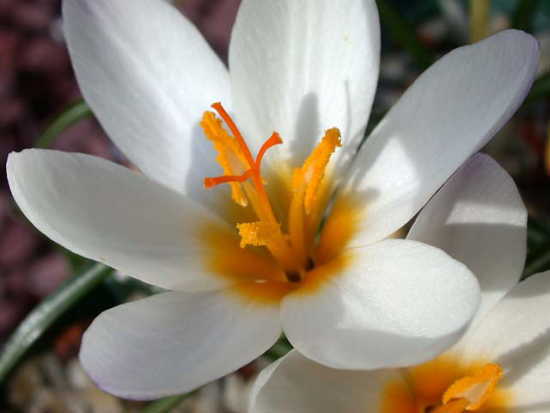
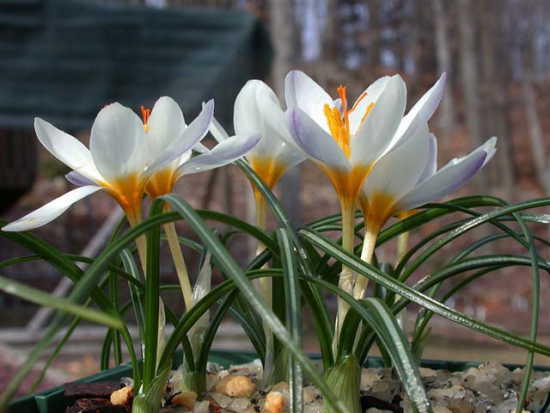
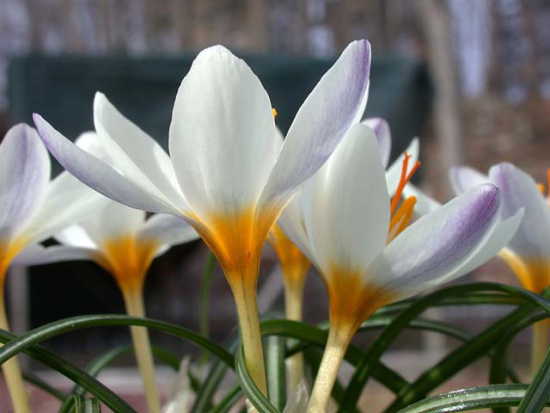
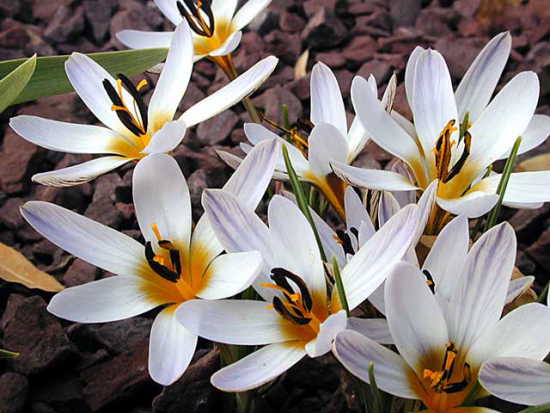
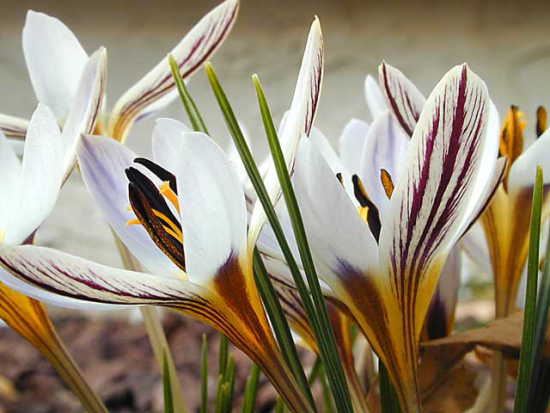
Crocus reticulatus Steven ex Adam has strong stripes on the outside of the flower. It has a broad range, from Eastern Europe to the Caucasus and Turkey. Bowles wrote, "it is unfortunately rather a weakling in cultivation and seldom holds its own in the open ground." The photos show subspecies hitticus, which has very distinctive dark anthers. It comes from southern Turkey. Height range: 5-15 cm. Photos by John Lonsdale.
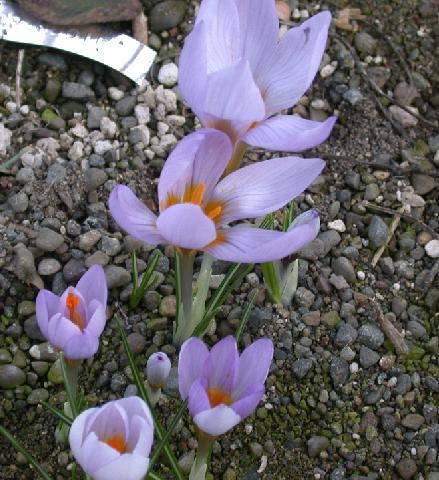
Crocus rujanensis Randjel. & D.A.Hill is shown flowering in a bulb frame in Oregon in late January. These plants were grown from seed supplied by Jim & Jenny Archibald. Height range: 8-10 cm. Photo by Jane McGary. This species has purple flowers with a yellow throat and is from Serbia and Macedonia.
Crocus sieberi J.Gay is a spring flowering crocus. Many sources list four subspecies. Subspecies atticus and sieberi are plants of lower altitudes. Subspecies nivalis and sublimis are plants of high mountains, often flowering near melting snow. Jānis Rukšāns in his book on crocuses written in 2010 treats subspecies atticus as a species and this is accepted by Kew. The corms are edible and taste of hazelnuts. Height range: 7-10 cm.
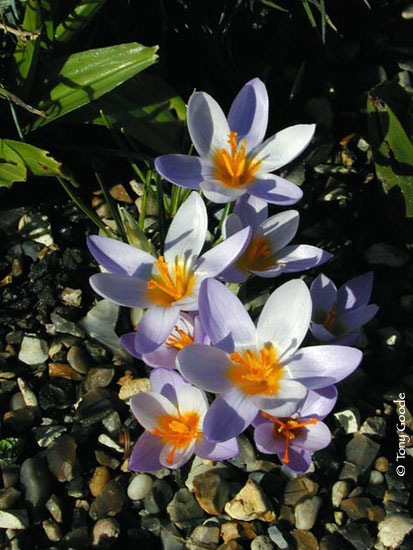
Crocus sieberi ssp. atticus (Boiss. & Orph.) B.Mathew is considered to be a synonym of Crocus atticus (Boiss. & Orph.) Orph. by Plants of the World Online and Rukšāns, but the Flora of Greece website considers it to be a synonym of Crocus nivalis Bory & Chaub. It is from Greece where it grows on stony slopes and open coniferous woods. It has lilac-blue flowers and a yellow throat and is an easy plant to grow, tolerating summer water. The first photograph by Tony Goode. The second photo from Mary Sue Ittner.
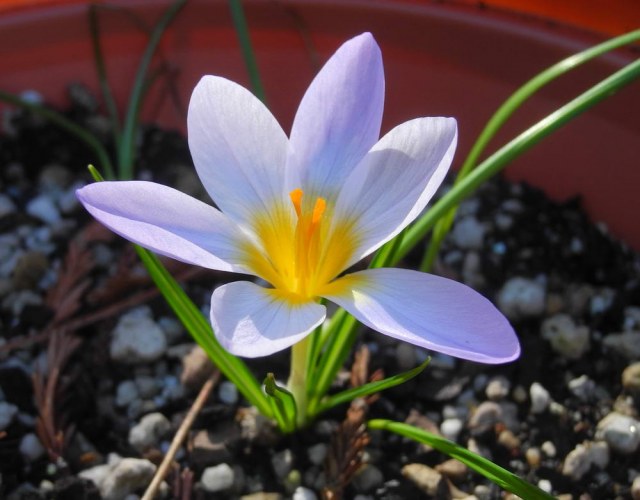
Crocus sieberi ssp. nivalis (Bory & Chaub.) B.Mathew is from Greece where in is found in short mountain turf. It is distinguished from subspecies atticus and sublimis by the absence of hairs in the throat of the flower and by its fine fibrous netted tunic. It is a plant of high mountains, often flowering near melting snow. This species is considered by Rukšāns to be a subspecies of Crocus atticus and by Plants of the World online and the Flora of Greece website to be a synonym of Crocus nivalis Bory & Chaub.
Crocus sieberi ssp. sieberi is from Crete where it grows on stony hillsides and short grazed turf. It is distinguished from other species by having white flowers with purple stain on the exterior of the outer petals and a yellow throat. This subspecies requires a dry summer rest. Photo from John Lonsdale could be this taxa or a cultivar.
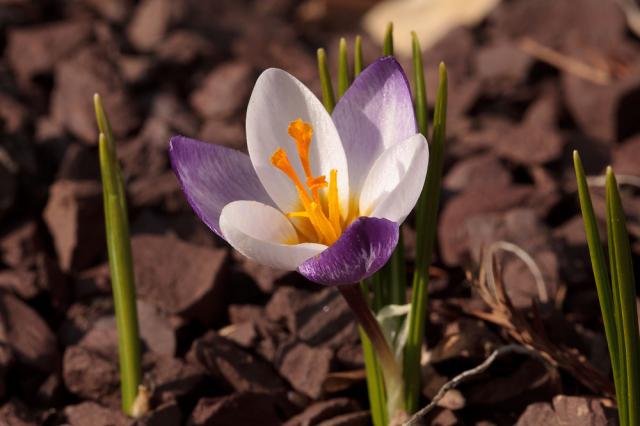
Crocus sieberi ssp. sublimus (Herb.) B.Mathew is from Greece, Macedonia, Albania and Bulgaria. It grows in short mountain turf or open woodland and has lilac blue flowers, sometimes with darker tips and a white zone between the petals and the yellow throat. It is a high altitude species, often flowering near melting snow. This species is considered by Rukšāns to be a subspecies of Crocus atticus and by Plants of the World online to be a synonym of Crocus nivalis Bory & Chaub.
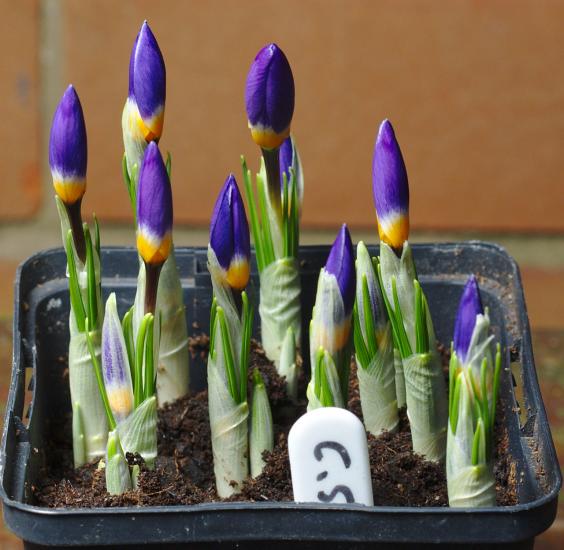
Crocus sieberi ssp. sublimus 'Tricolor' - Photos #1-3 were taken by Mark McDonough of plants flowering in his garden, spring 2002, Pepperell, Massachusetts, USA. The overhead view, as well as the profile views reveal the beautiful coloration of this fine crocus. This cultivar adapts well to cultivation in UK gardens forming clumps. Photo #4 was taken by Arnold Trachtenberg, #5 by Tony Goode.
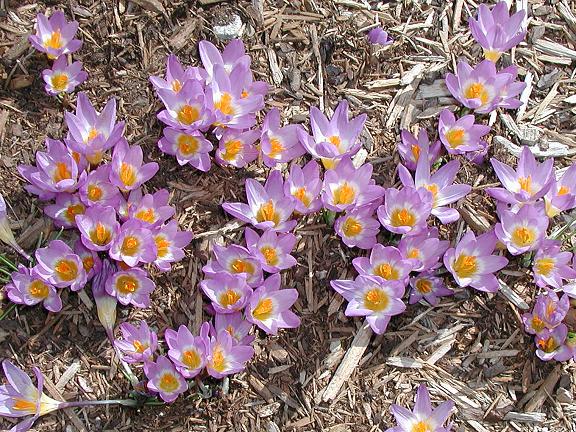
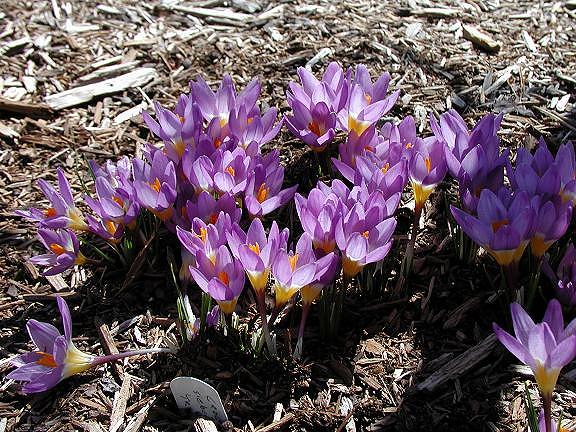

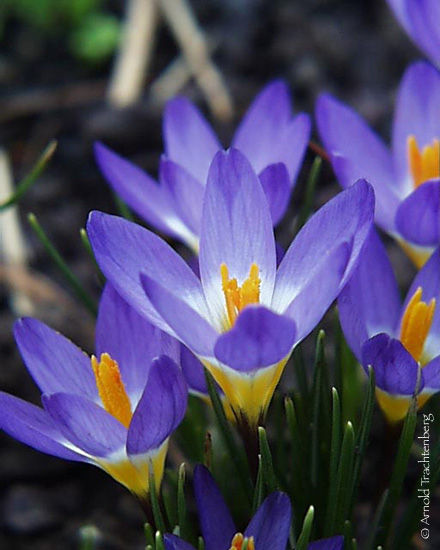
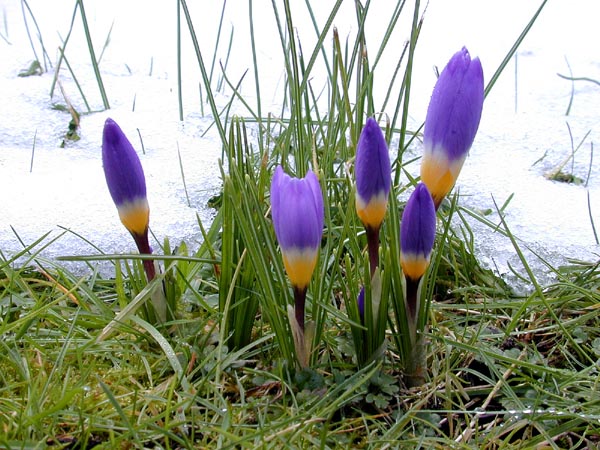
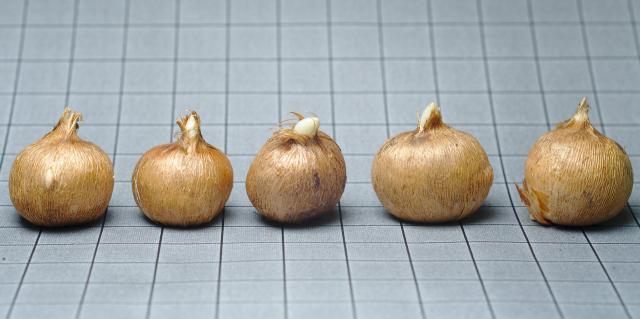
Photo of corms on a 10 mm grid and resulting flowers by David Pilling.
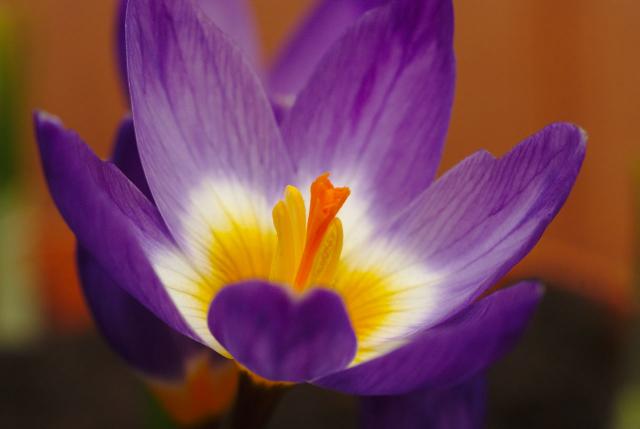
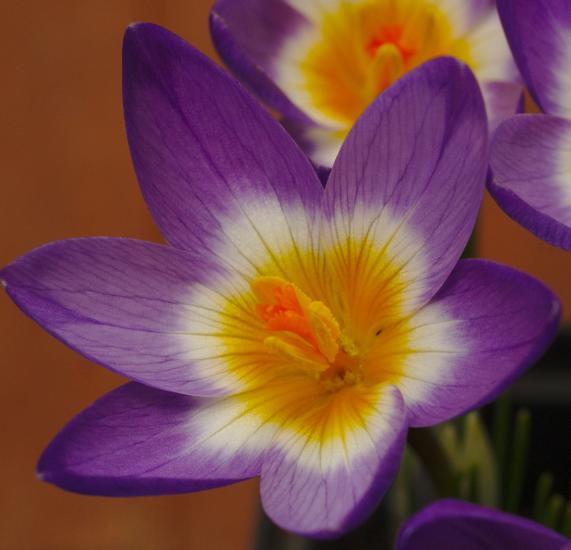
Time lapse by David Pilling of Crocus sieberi taken between 14:37 and 17:11 on the 28th February 2014, showing flowers closing as the sun sets and temperatures drop.
Crocus sieberi 'Bowles White', photographed by Tony Goode.
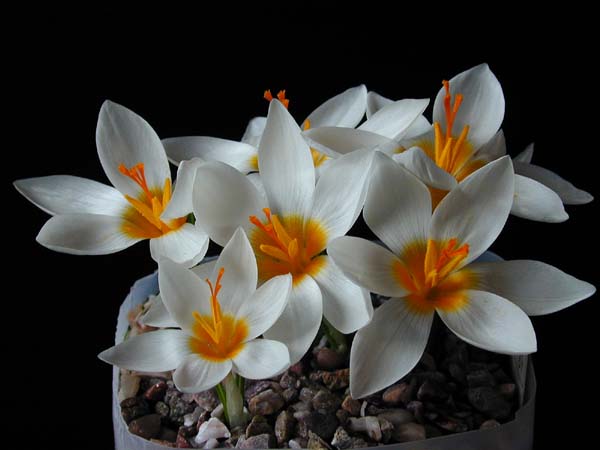
Crocus sieberi 'Hubert Edelsten' is a cross between ssp. atticus and ssp. sieberi, photographed by Tony Goode.
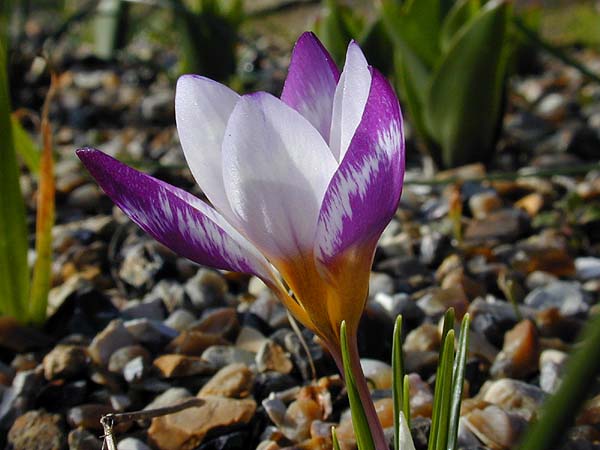
Crocus sieheanus Barr ex B.L.Burtt is from south-central Turkey in the Taurus Mountains at 1,200-2,000 meters (3,500-6,000 feet). Tony Goode recommends that it be given plenty of moisture in spring but a long dry rest in summer. Height range: 10-15 cm. Photo by John Lonsdale.
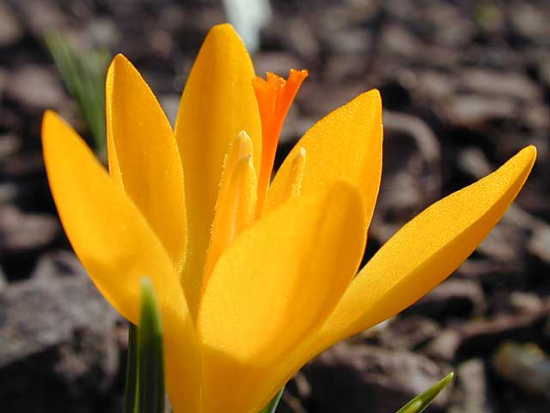
Crocus stridii Papan. & Zacharof Is an early flowering narrow endemic of Mt. Chortiatis, east of Tessaloniki, Greece. The flowers are white with a deep orange-yellow throat and three dark purplish, feathered stripes on the outside of the outer flower segments. Height range: 10-15 cm. Photo by Martin Bohnet, for whom this has been perfectly hardy in southern Germany despite some doubt some sources spread.
Crocus index - Crocus index - Fall Blooming crocus a-h - Fall Blooming crocus i-o - Fall Blooming crocus p-z - Spring Blooming crocus a-b - Spring Blooming crocus c-e - Spring Blooming Crocus f-l - Spring Blooming crocus t-z