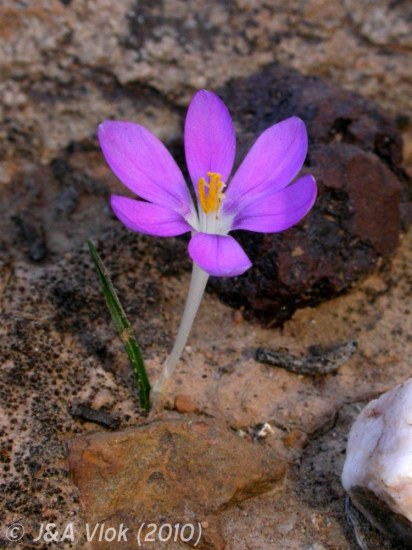
Syringodea is a genus endemic to South Africa in the Iridaceae family. It is very similar in appearance to the Eurasian genus Crocus and also has a stemless habit and long-tubed flowers. It is also similar to the genus Romulea. A distinguishing feature is that the ovaries are subterranean or just at the soil surface and the seed capsules remain there. It is found in both winter and summer rainfall areas and has flowers that are responsive to temperature, opening only on warm days. Flowers are often similar, but leaves are different. This genus was revised by Miriam P. de Vos in 1983.
Syringodea bifucata M.P.de Vos is widely distributed in the northern and eastern Karoo, the Eastern Cape, and the Transvaal. It has a large corm with a pointed base and large long-tubed violet flowers with a yellow throat, filaments, and style. Height range: 3-12 cm. Photos by Cameron McMaster.
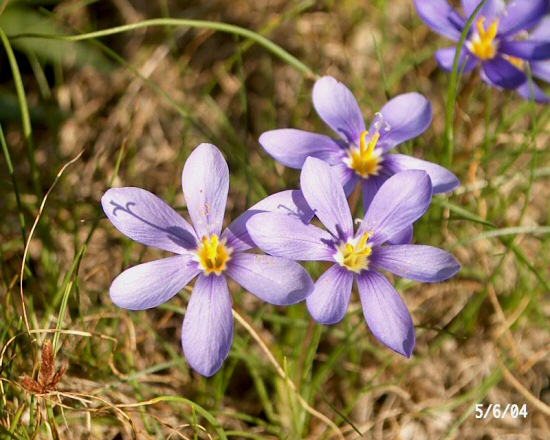
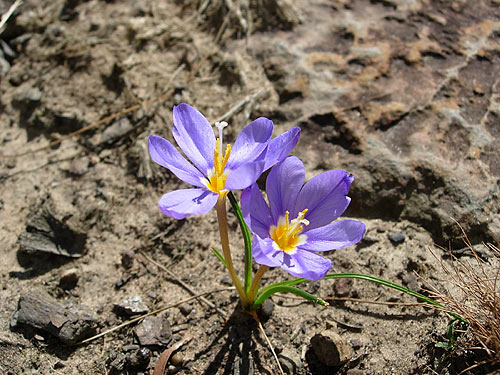
Syringodea concolor (Baker) M.P.de Vos, syn. Syringodea bicolor var. concolor Baker, is found in the Great Karoo. It has pale violet to pale lilac to almost white long-tubed flowers that are darker violet in the throat, and do not have a yellow throat. Height range: 5-10 cm. Photos by Cameron McMaster.
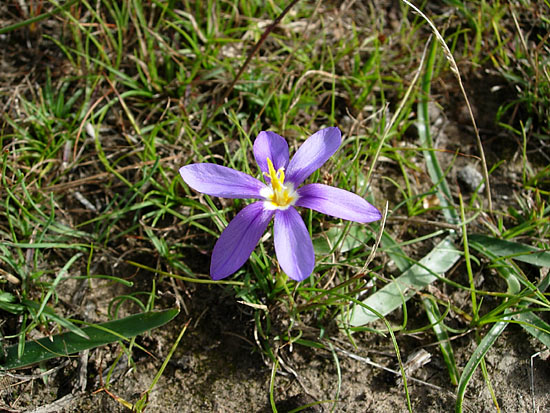
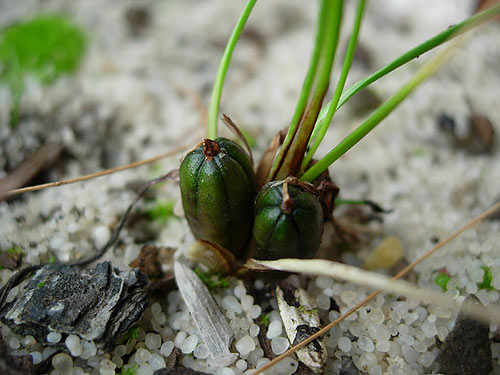
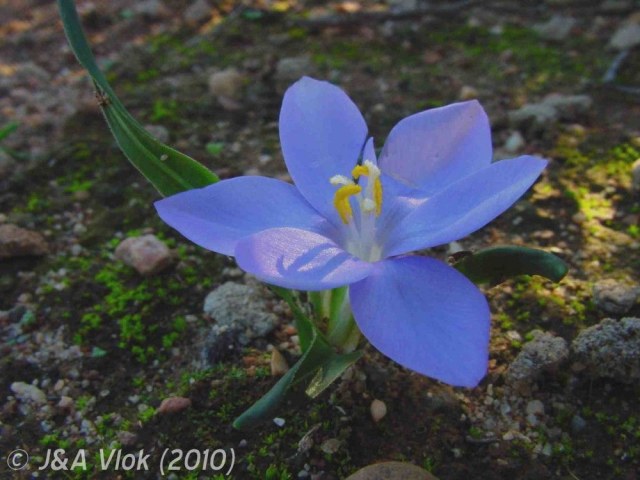
Syringodea derustensis M.P.de Vos is found in a few sites in rocky soils in the Little Karoo. Growing from 5 to 8 cm high, it has 3 to 5 lanceolate or oblong spreading leaves. Flowers are violet to blue, rarely white, and occur from May to June. The photo is from the book Plants of the Klein Karoo courtesy of Jan and Anne Lise Schutte-Vlok.
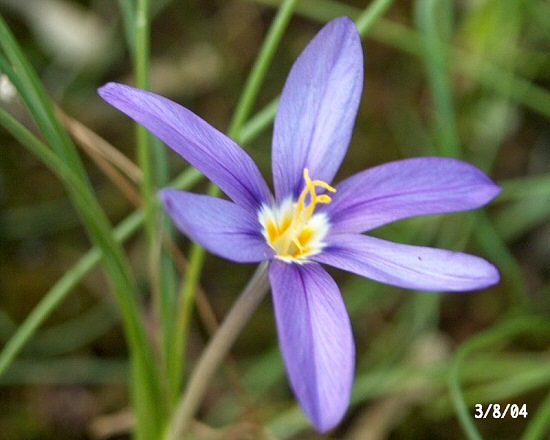
Syringodea flanaganii Baker is an Eastern Cape species with violet flowers and a yellow throat. It is very similar but smaller than Syringodea bifucata. Height range: to about 12 cm. Photo by Cameron McMaster.
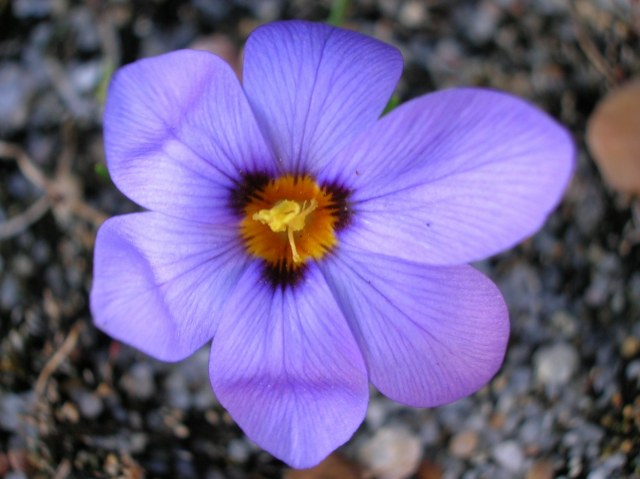
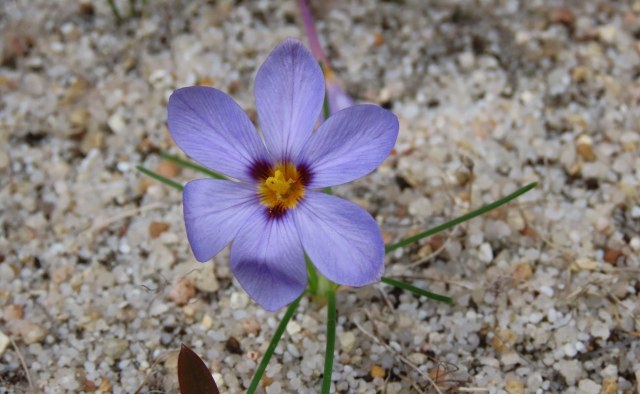
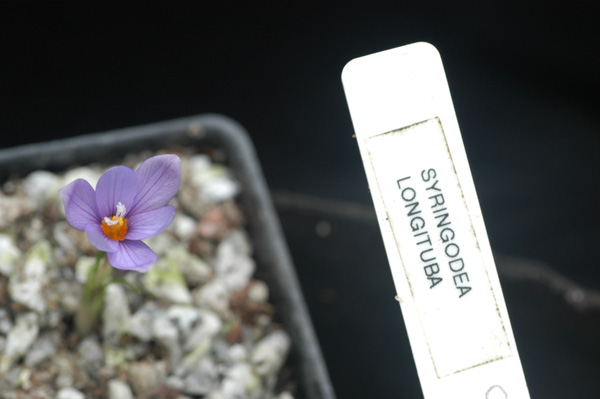
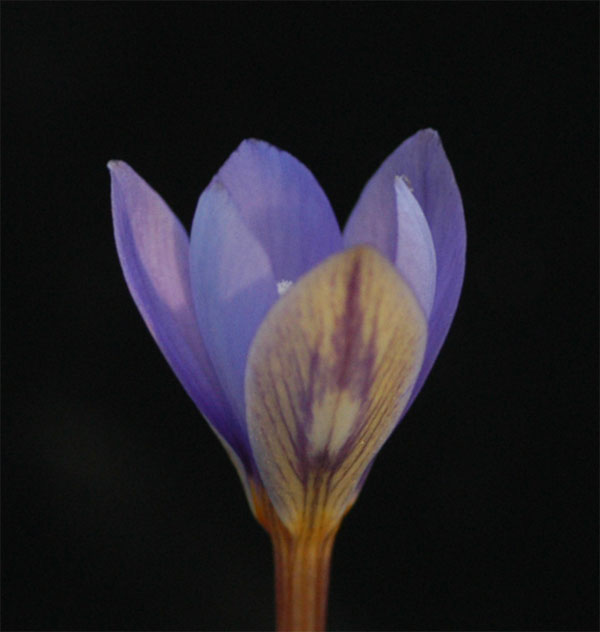
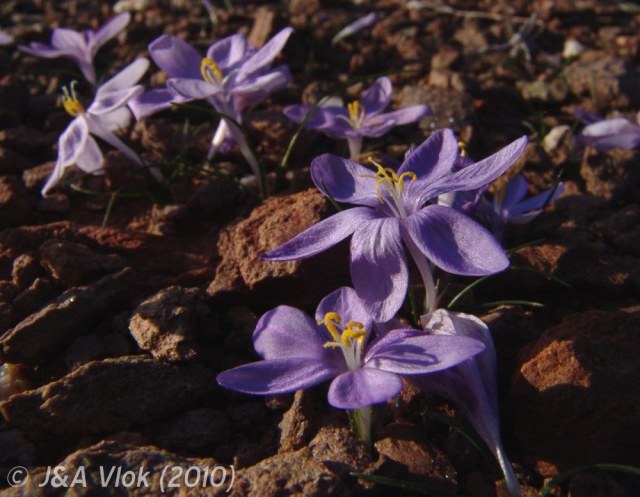
Syringodea longituba (Klatt) Kuntze has blue-violet flowers with a white or yellow center and blooms fall to early winter. The five to eight leaves are filiform with a dorsal often twisted groove. It grows on sandstone and shale flats and slopes in the winter rainfall area. Height range: 4-10 cm. The first two photos weres taken by Alan Horstmann. The third and fourth photos were taken by Mark Mazer. The last photo is from the book Plants of the Klein Karoo courtesy of Jan and Anne Lise Schutte-Vlok.
Syringodea saxatilis M.P.de Vos is another rare plant from the Little Karoo that flowers in early winter and occurs in stony hills in washes among quartzite. Growing from 4 to 8 cm, it has a single falcate, mostly channeled leaf and lilac-violet flowers. Photo from the book Plants of the Klein Karoo courtesy of Jan and Anne Lise Schutte-Vlok.