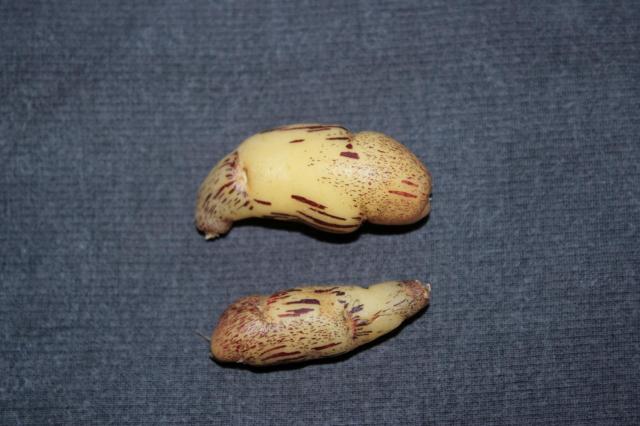
Tropaeolum is a genus of about 80 species native to South America in the Tropaeolaceae family. The common nasturtium (Tropaeolum majus) is the most easily encountered member of this family. Some of the species have tuberous or rhizomatous rootstocks. The bright flowers of quaint shapes are usually freely produced on long stalks and the rapid growth of many of the climbers renders the Tropaeolum a very useful and decorative plant for many purposes. Species from the coastal areas and many from the lowland foothill areas of the Andes are winter growers and those that are true alpine are summer growers.
Growing Tropaeolum from seed is one of the best ways to propagate them because of the slow vegetative division of the rootstock in some species. Seeds should be sown as fresh as possible according to many growers (Christian Terry and Diana Chapman) but Jane McGary was able to get good germination on seeds that had been dried for 7 months. Seeds of winter growing species such as T. hookerianum, T. azureum, T. tricolor and T. brachyceras are coastal and should be sown in the fall. Alpine species such as T. nubigenum, T. polyphyllum and T. sessilifolium should be sown in the spring. Sow the seeds in a well-draining mix and cover with 1-2 cm (1/2 - 3/4 inch) of sand. Keep the pots about 4-0 °C (40-32 °F) but not below freezing nor too warm because germination can be inhibited at higher temperatures. Seeds should germinate in about 1 month. This treatment works very well for T. tricolor, T. brachyceras, T. azureum, T. rhomboideum, T. hookerianum and T. austropurpureum (Diana Chapman).
Grow the adult tubers or seedlings in a well-drained mix that is neutral to slightly acidic. Tuberous species should be planted in a very deep pot at least 6" below the soil. Species such as T. austropurpureum, T. azureum, T. hookerianum, T. brachyceras, and T. tricolor should be grown in part to full sun. While in growth they need support for the climbing stems such as a trellis or a fence. T. austropurpureum, Tropaeolum hookerianum and T. azureum are from coastal habitats and are not hardy. Tropaeolum tricolor and T. brachyceras are more hardy. When the leaves start turning yellow, stop watering and give the plants a completely dry summer dormancy. This group is notorious for staying in dormancy and skipping one or two years of growth.
Summer growing species can be grown in the same mix as above but they require good watering during growth. In the winter these plants will go completely dormant. It is not necessary to keep the soil dry during this period.
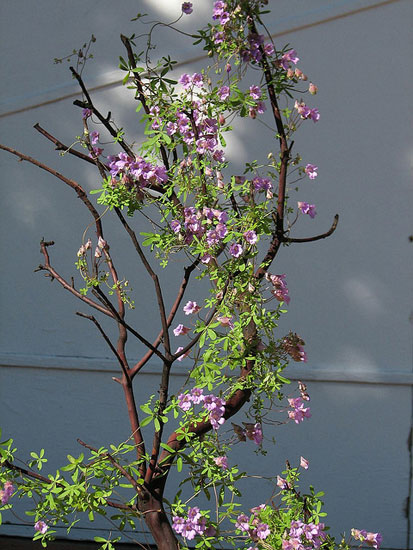
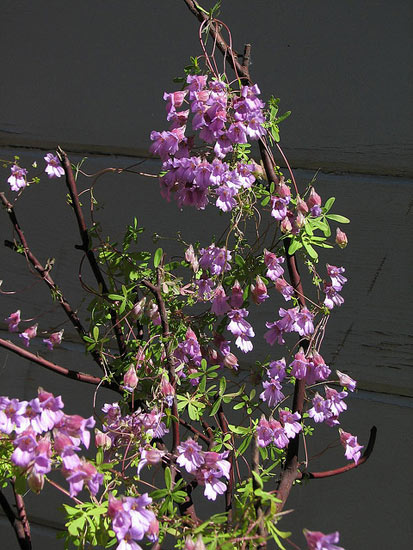
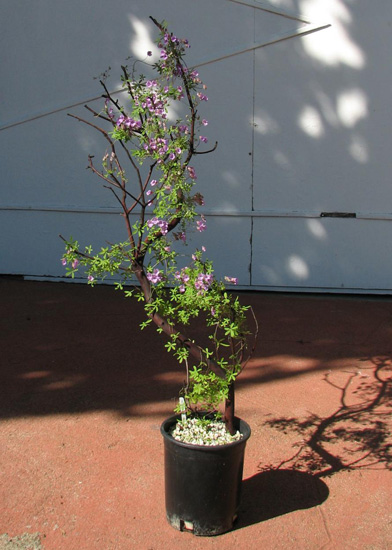
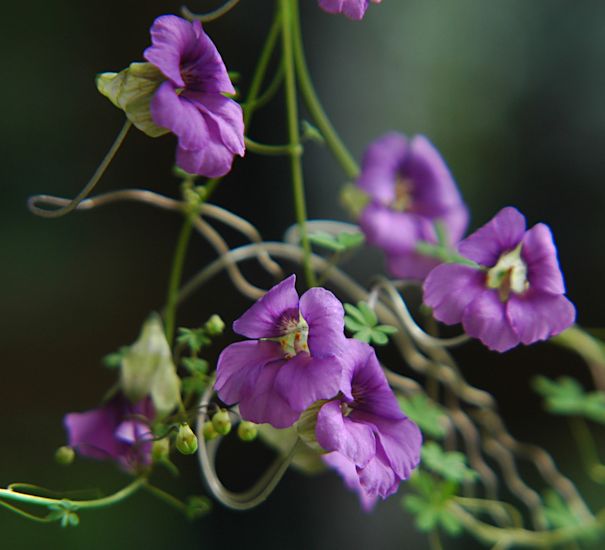
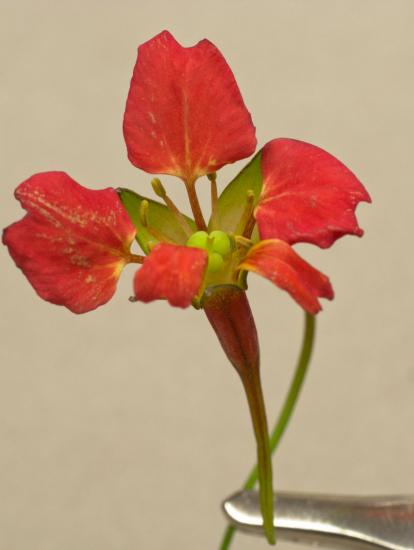
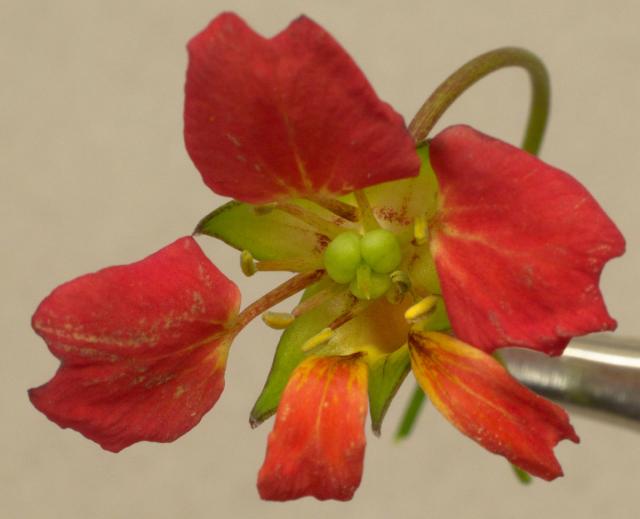
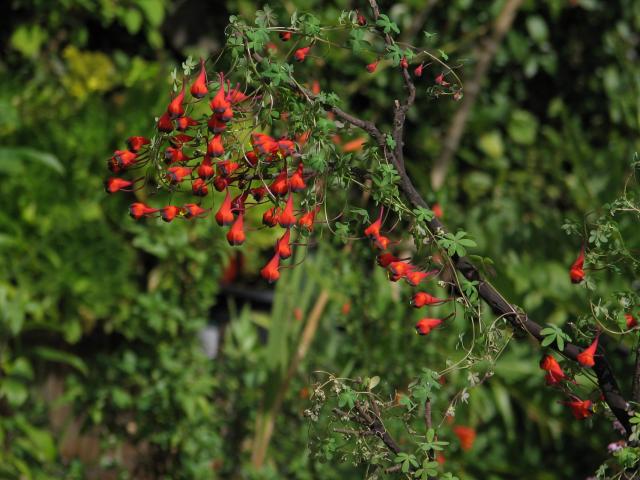
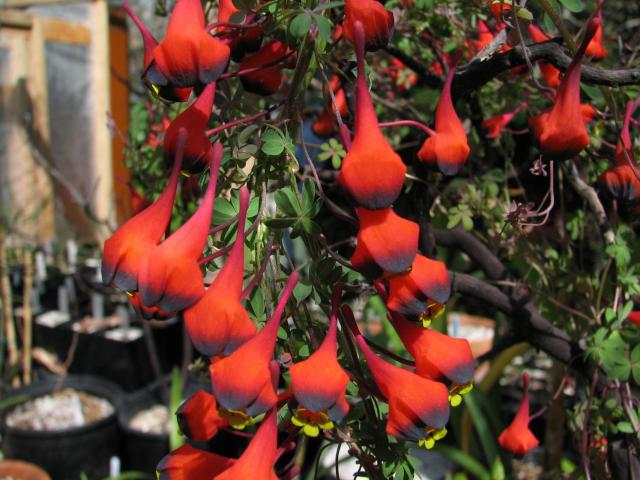
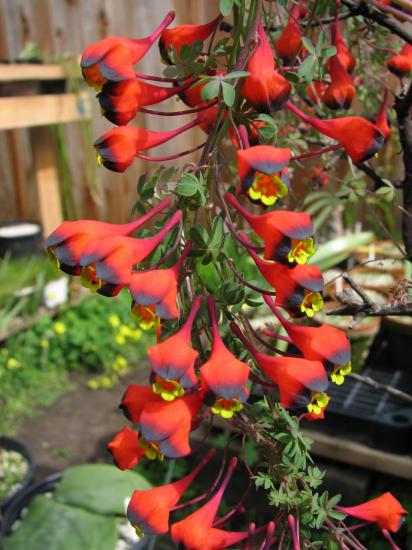
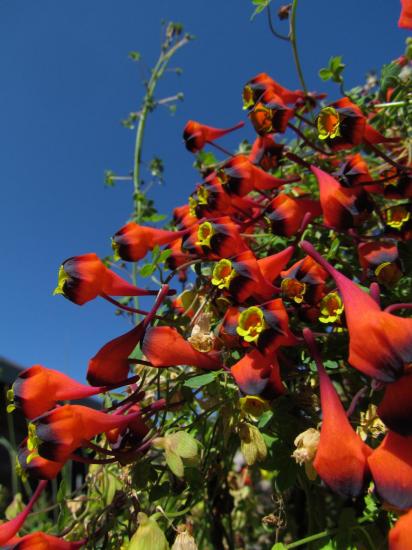
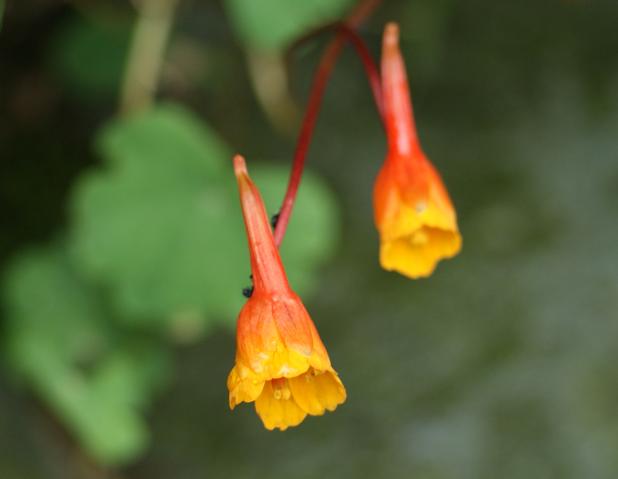
Tropaeolum austropurpureum (J.M.Watson & A.R.Flores) J.M.Watson & A.R.Flores was elevated to species level from Tropaeolum hookerianum ssp. austropurpureum J.M.Watson & A.R.Flores in 2010. It often skips a year or two of growth, but when it does grow and bloom, the results are spectacular. The photos below were taken by Nhu Nguyen of the plant growing in a 1 gallon container. The photos were taken in late March 2009.
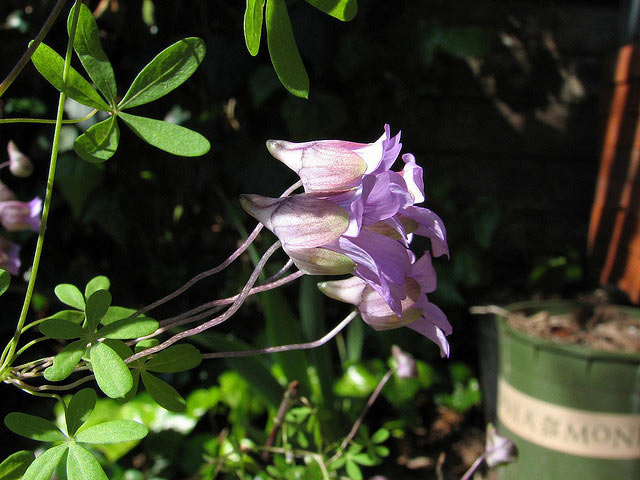
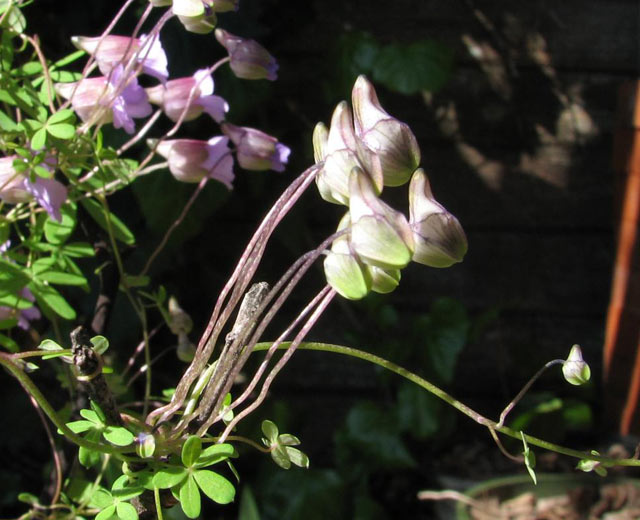
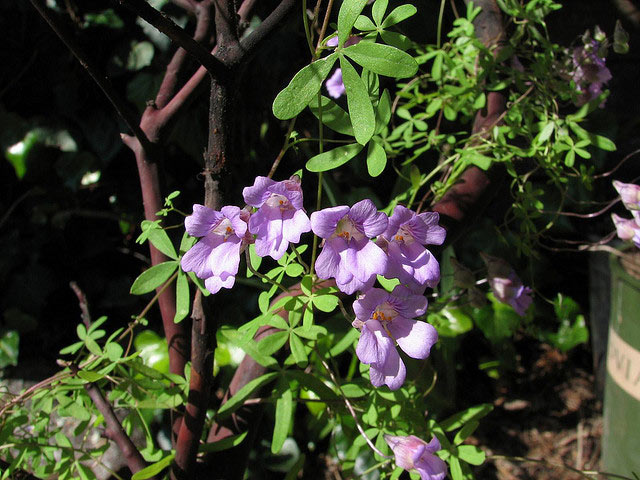
The first five photos below were taken by Mary Sue Ittner. The first three are of flowers from tubers purchased from Telos Rare Bulbs in different years. This species has not been nearly as vigorous in growth as the other two species she grows and as pictured in the photos above from Nhu Nguyen and has therefore not needed such an elaborate system of string, wire or trellis. It also often does not come into growth, although the tubers remain. The next two photos are of tubers grown from seed. One of them flowered months after the seed was sown. The last photo below taken by M. Gastil-Buhl shows the tuber on a 1 cm grid.
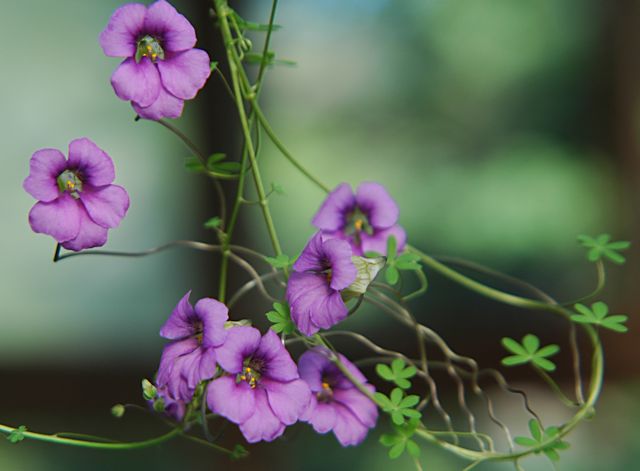
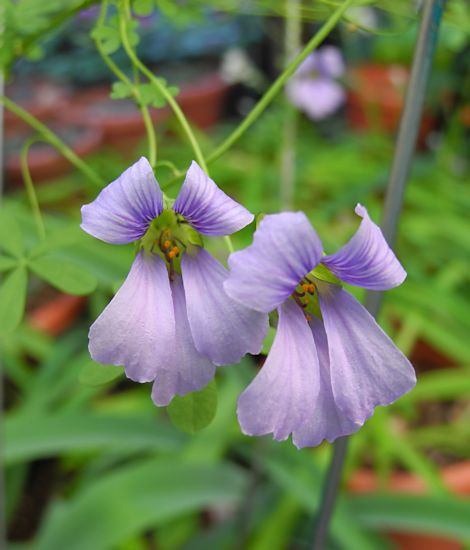


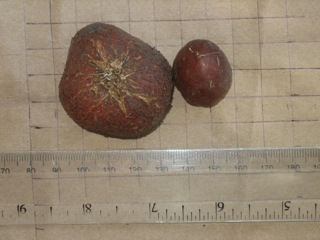
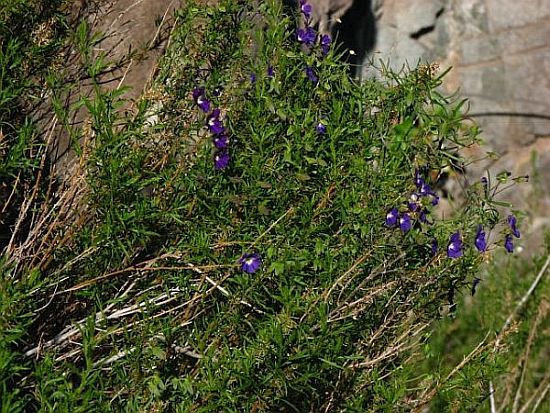
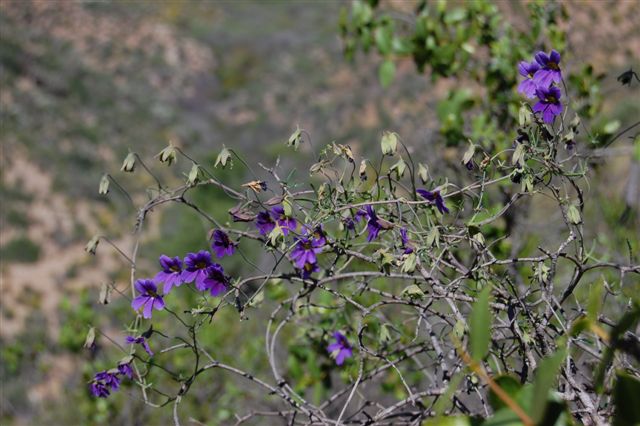
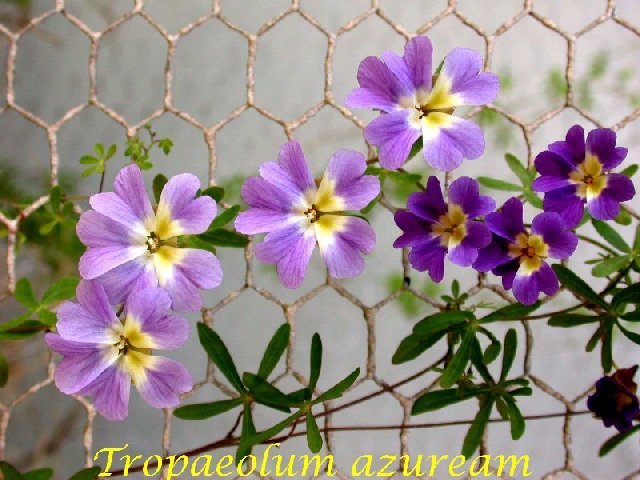
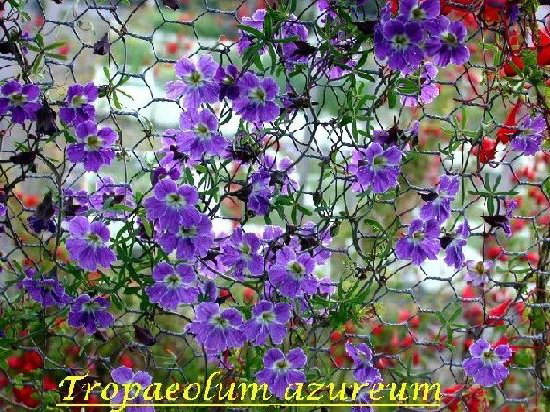
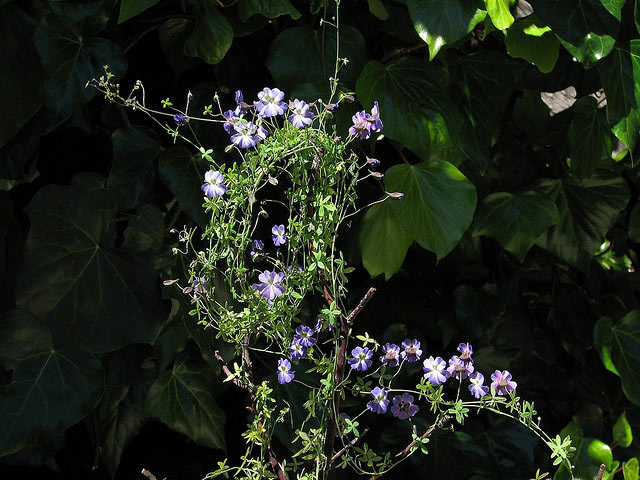
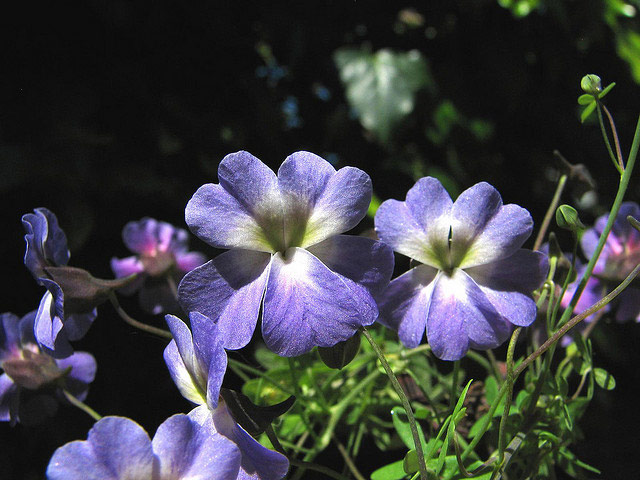
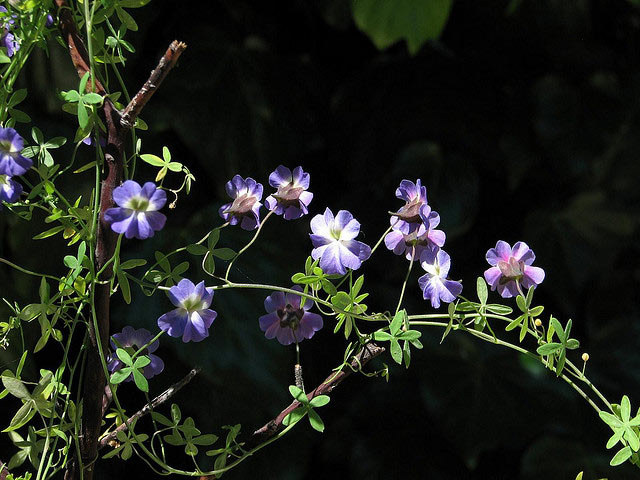
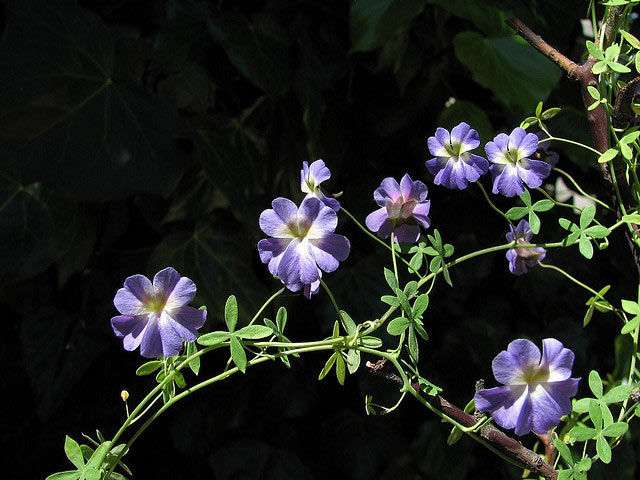
Tropaeolum azureum Bertero ex Colla is a slender, tender climbing species from Chile with lavender-violet blue flowers with white eyes that can be as large as 4 cm (1.5 inch). Photos 1-2 below were taken by Eugene Zielinski and photo 3 was taken by Jane McGary spring 2011 near Reserva Nacional Pichasca.
Photos below were taken by Bill Dijk. The last photo shows the container with wire netting attached at planting time for support, which will avoid damage to the delicate new shoots later on.

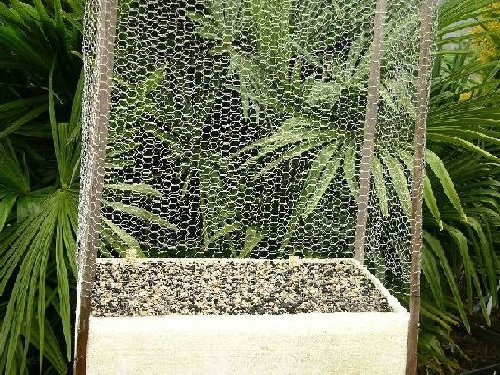
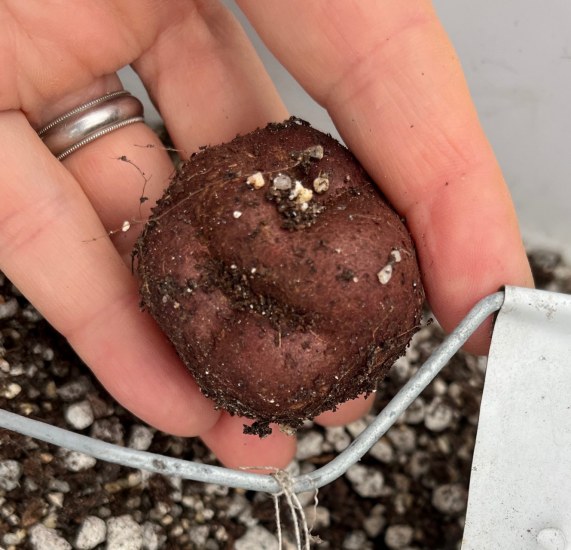
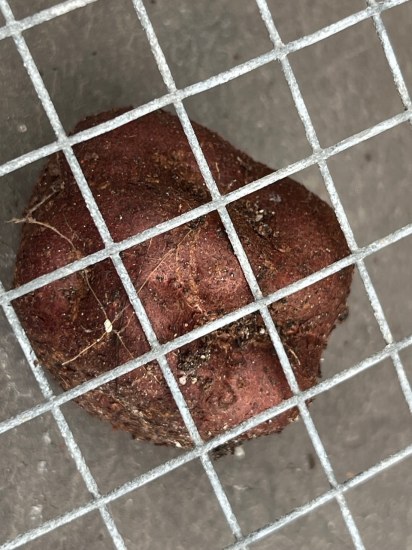
The photos below were taken by Nhu Nguyen of a plant grown in a 1 gallon container. The tuber in photos by M Gastil-Buhl was grown near the bottom of an 8" diameter terracotta pot plunged into a wider pot of pumice. This tuber shown with a 1/2 inch wire mesh for scale had no top growth the past year but the year before bloomed abundantly.
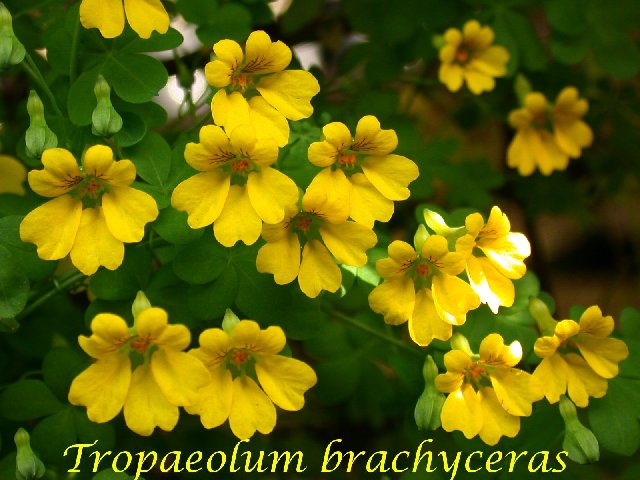
Tropaeolum brachyceras Hook. & Arn. is another half hardy native of Chile, with yellow flowers with purplish markings up to 25 mm (1 inch). This species may stay dormant some years and it is not clear what triggers it to break dormancy. The stems are very tiny and fragile when they first come up and if they are broken or the plant does not get water then, that may be the end of the growth for that season. It is a climber and will need support for the thin stems. Photo 1 was taken by Bill Dijk. Photo 2 was taken by Nhu Nguyen and photo 3 was taken by Jane McGary. The last 3 were taken by Mary Sue Ittner including a tuber on a 1 cm grid.
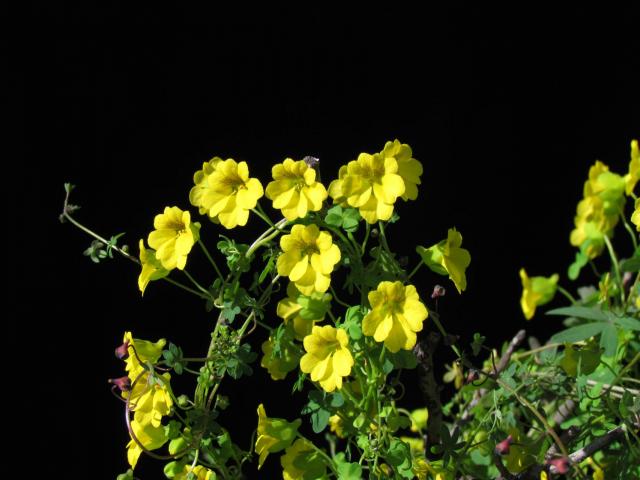
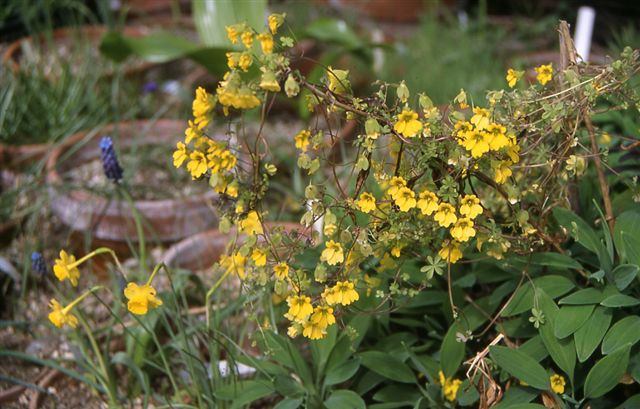
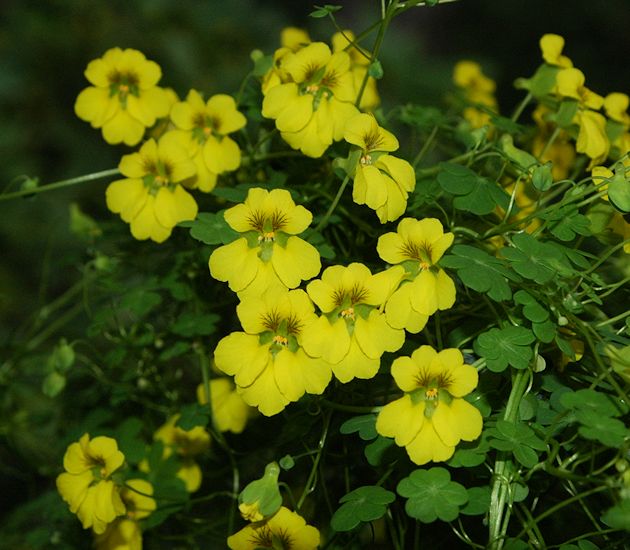
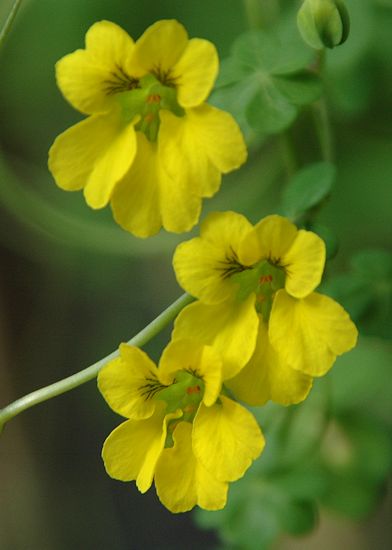

The first three photos below showT. brachyceras and Tropaeolum tricolor intermingling together. Photo 1 was taken by Mary Sue Ittner of plants growing in an unheated greenhouse where they appeared in the same pot. Photos 2-3 were taken by Nhu Nguyen of plants growing in the same pot (by accident). It shows how much more a vigorous grower T. brachyceras is compared to T. tricolor. The tubers look alike so it is difficult to tell them apart when dormant. The last photo from Mary Sue Ittner shows this species growing next to Tropaeolum austropurpureum.

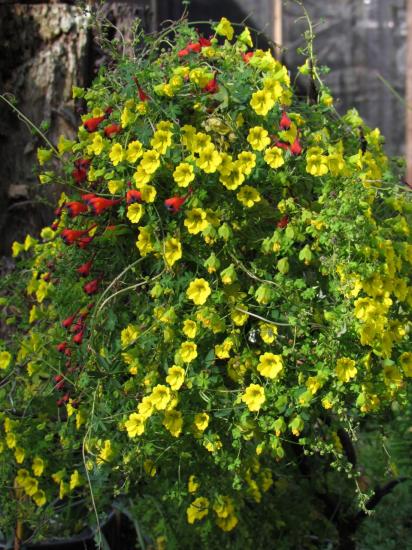
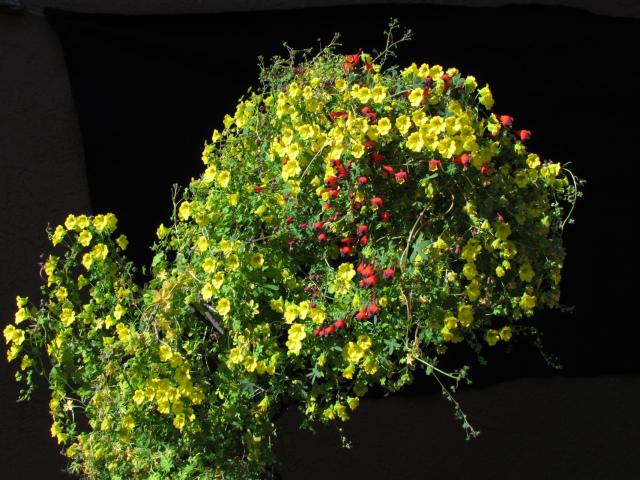

Tropaeolum hookerianum Barnéoud is a tuberous, winter growing species native to Chile. Flores and Watson published the name of two subspecies in 2000, but in 2010 elevated one of them with purple flowers, ssp. austropurpureum to species level. In 2025 there are still two species listed including Tropaeolum hookerianum subsp. hookerianum, but they are both yellow. It is unclear how they differ.
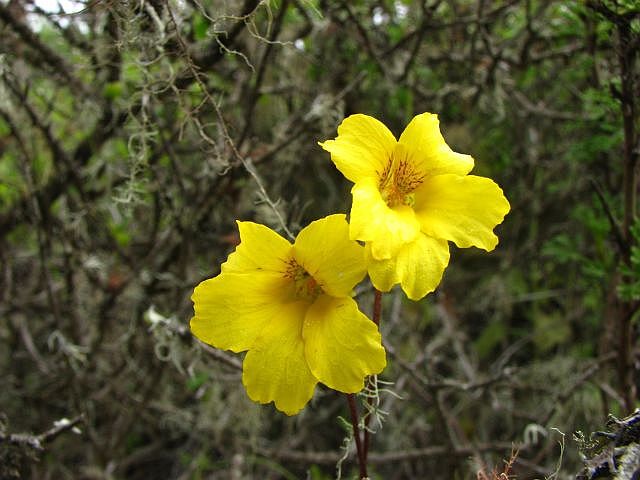
Tropaeolum hookerianum subsp. pilosum J.M.Watson & A.R.Flores grows in a small coastal area in arid valley shrub zones. Flowers are yellow with petals longer than the calyx. The photo below was taken by Eugene Zielinski spring 2011 of a plant flowering at Parque Nacional Fray Jorge in a very wet year.
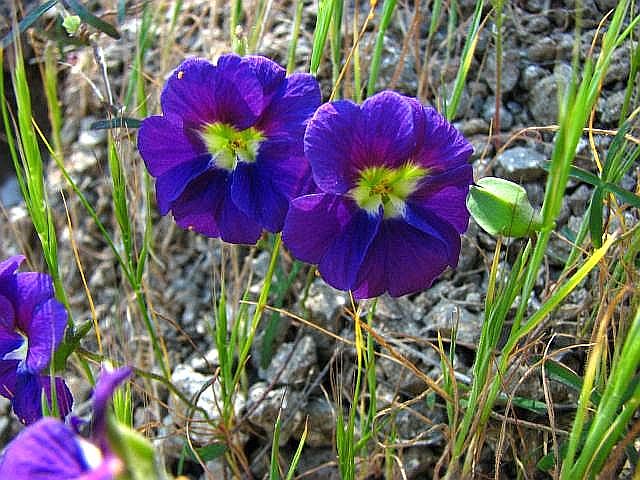
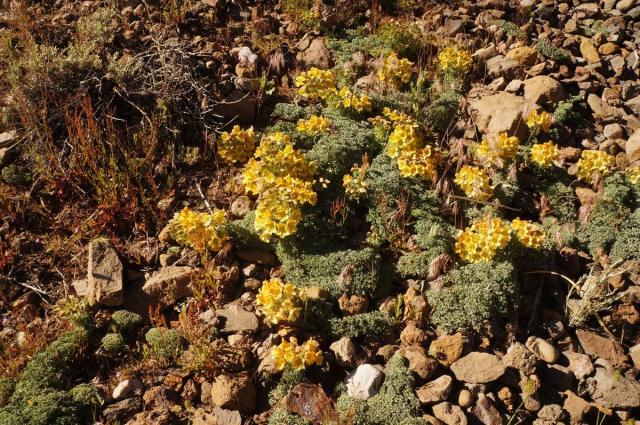
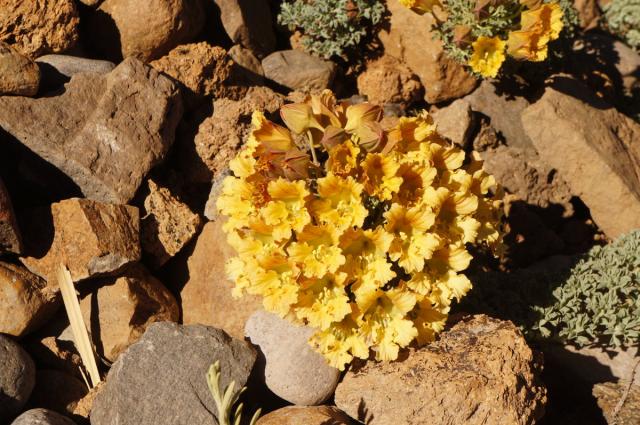
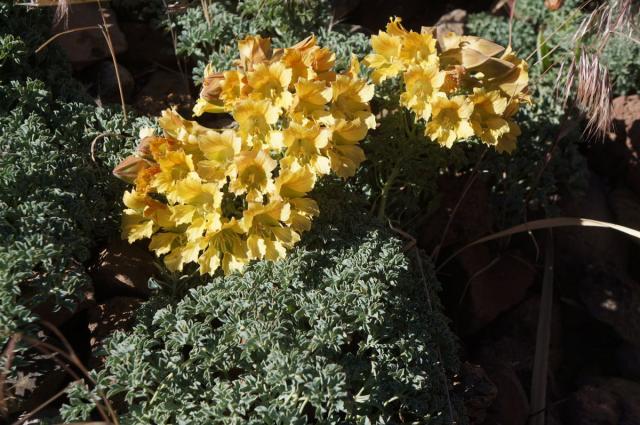
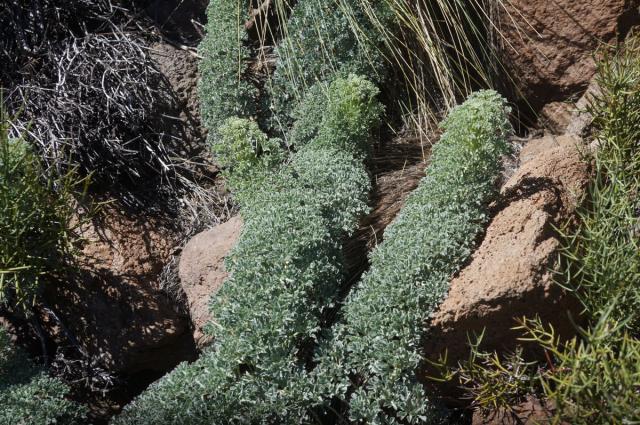
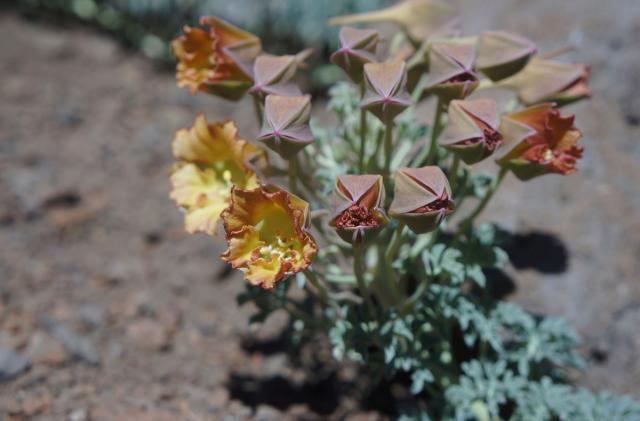
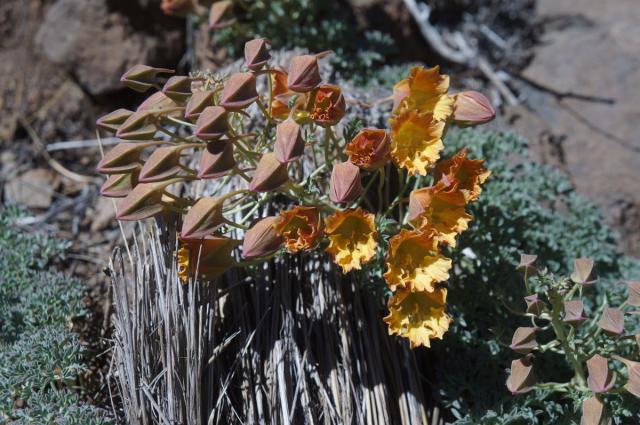
Tropaeolum incisum (Speg.) Sparre is native to the dry slopes of the Andes in Argentina. The photo below was taken by Jane McGary.
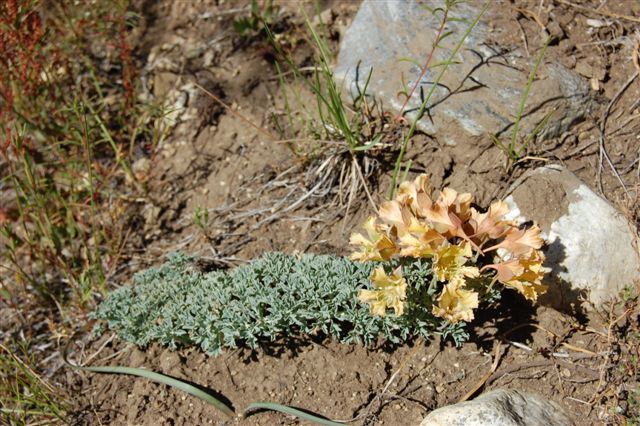
Photographs by Trond Høy were taken in Argentina, Neuquen, Caviahue-Cajon Chico road on December 6th 2013. He comments "The plants grew in a scree (volcanic ash and rocks) along the road between Caviahue and Cajon Chico at about 1800 m above sea level. There is snow here during the winter and the soil is moist at least in spring and early summer. We found probably the same species much higher also, but not in flower (a bit too early in the season)."
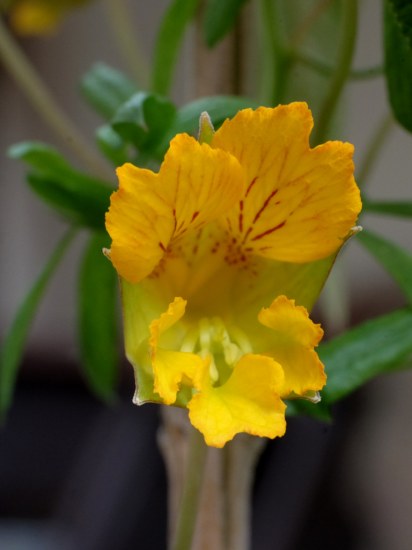
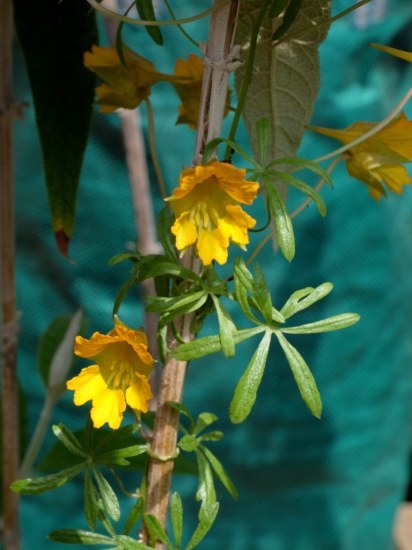
Tropaeolum leptophyllum G.Don is a species from Chile (around region V). It is said to be closely related to Tropaeolum polyphyllum. Some sources state both hybridize, but unlike that species, it is a true climber. The shoots appear in early spring, and soon after flowering in late spring or early summer, they go back into dormancy. The bright yellow flowers have a fine pattern of red lines on the upper petals.
Pictures by Martin Bohnet show a plant cultivated in a container together with Buddleja globosa, which shares the same geographic origin. Since that species survives planted out in southern Germany, chances are Tropaeolum leptophyllum would also, as the deep digging tubers don't really like to be pot bound.
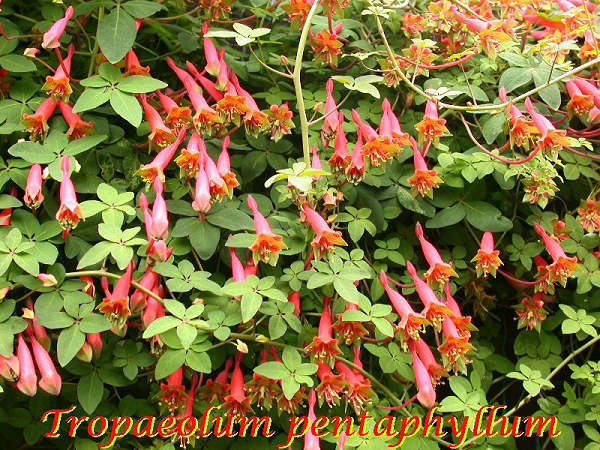
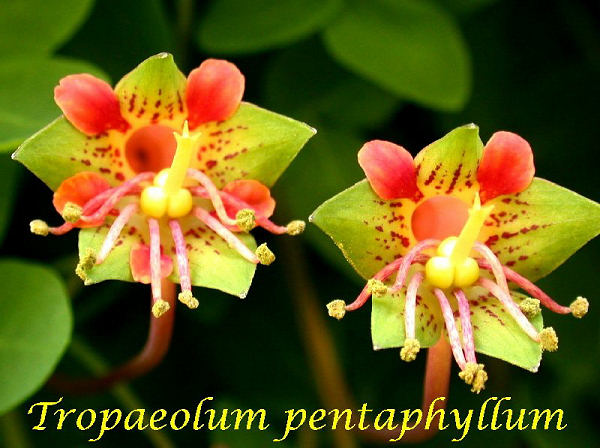
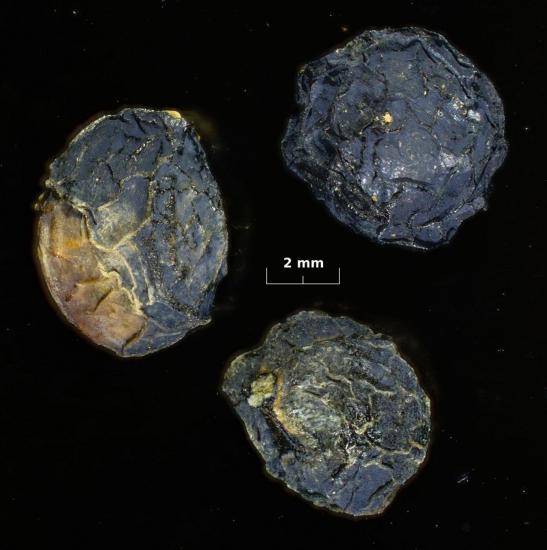
Tropaeolum pentaphyllumLam. is a climbing species native from Brazil to Argentina that produces masses of pink flowers, tipped with green, followed by dark purple fruit. It is commonly called 'Ladies legs' as the flowers resemble pink legs with green shoes. The name pentaphyllum means 'five-leaved'. Photos 1 and 2 by Bill Dijk. Photo 3 of seed by David Pilling.
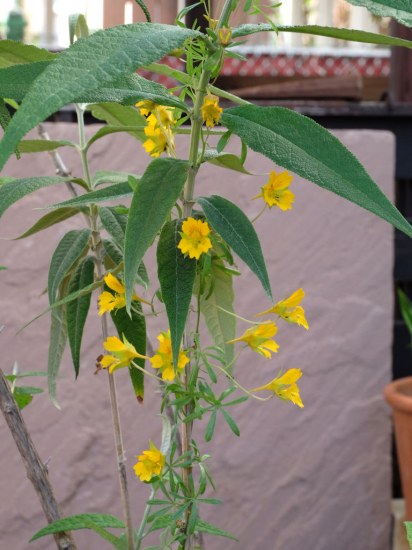
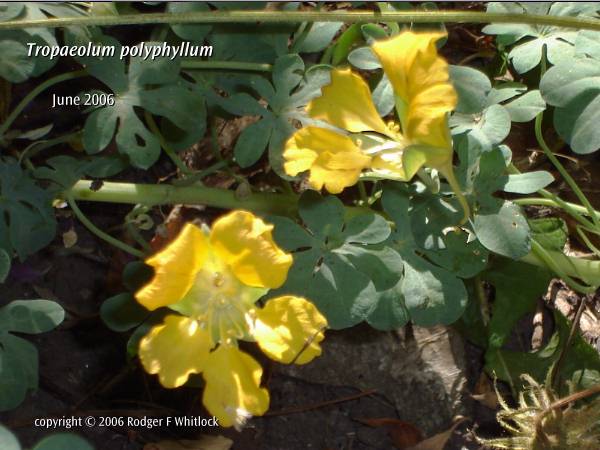
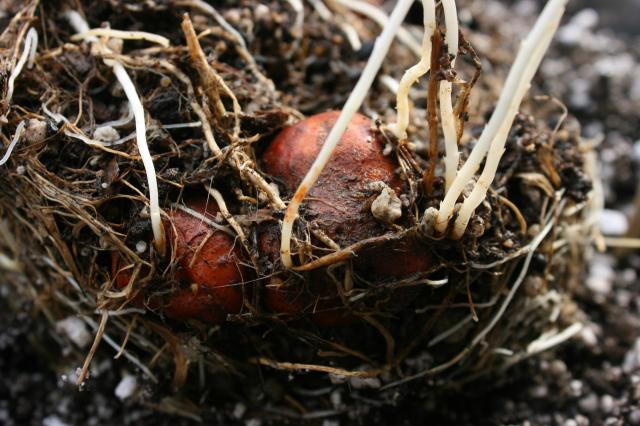
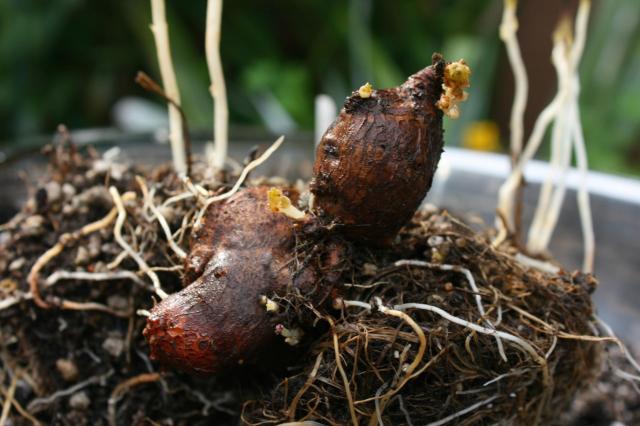
Tropaeolum polyphyllum Cav. is one of the tuberous Tropaeolum species native from Chile to Argentina. The plant depicted originally came from Gossler's Nursery in Springfield, Oregon around 1990. Planted about 3' from a raised concrete patio, it methodically moved year by year until it now emerges from crevices around the margin of the patio. The tubers are probably under the patio at this point. With its gray-blue foliage and clear yellow flowers of some size, this is a very good garden plant. Plant it where the foliage can sprawl and spread; it doesn't seem to be a climber. The plant is self-fertile and sets viable seed once in a long while. Since this plant puts its tubers a long way below the soil surface, seed may be an easier method of propagation than bringing in a backhoe to lift tubers. Photo 1 by Rodger Whitlock does not clearly depict the sprawling character of this tuberous nasturtium. Photos 2-3 by Nhu Nguyen shows the tubers, roots, and new sprouts.
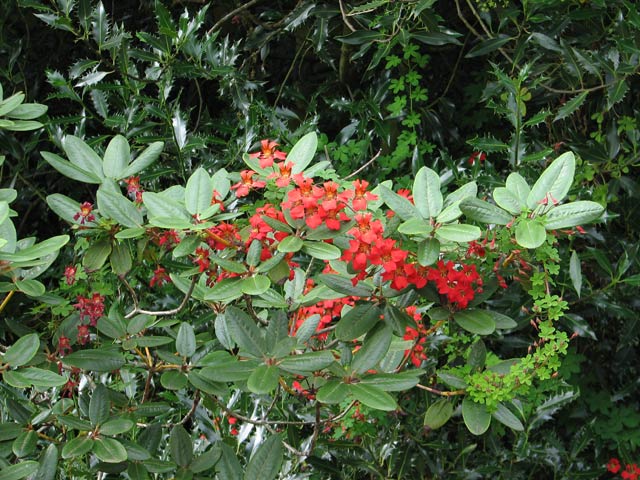
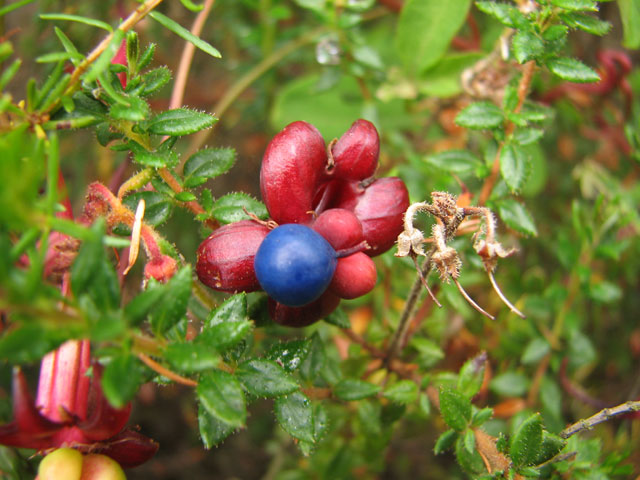
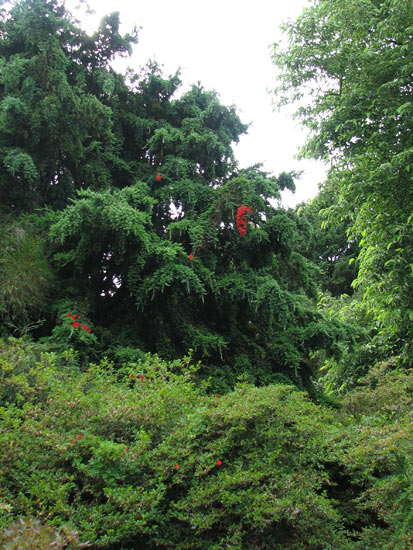
Tropaeolum speciosum Poepp. & Endl. is native to central Chile. It is a summer grower and has quite a large stature (see photo below). The name "Flame Creeper" is quite appropriate for this species because of the brilliant red inflorescence that can hold dozens of flowers. It is difficult to establish, but once established, it is very hardy and in Scotland it can be found in abandoned gardens flowering prolifically. On the other hand, the tubers are quite sensitive to hot temperatures, making them likely to fail due to early induced summer dormancy in continental climates. Photos 1-5 were taken in August 2010 by Nhu Nguyen at the Royal Botanic Garden at Edinburgh, Scotland. Photo 6 by Caroline Langensiepen.
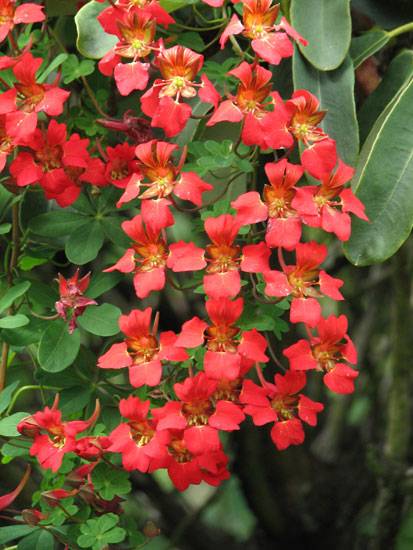
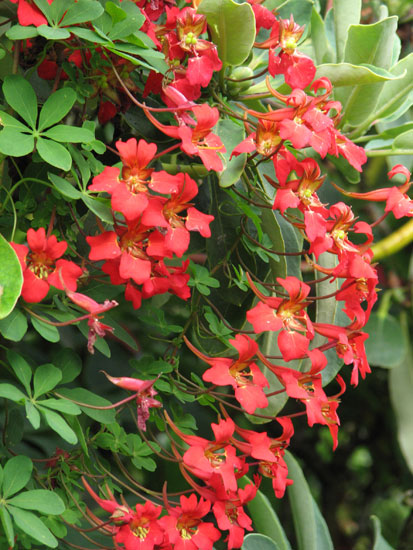
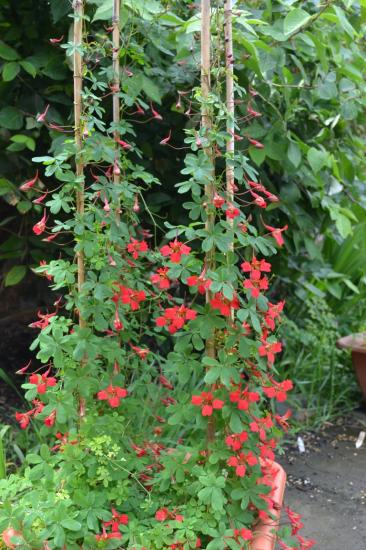
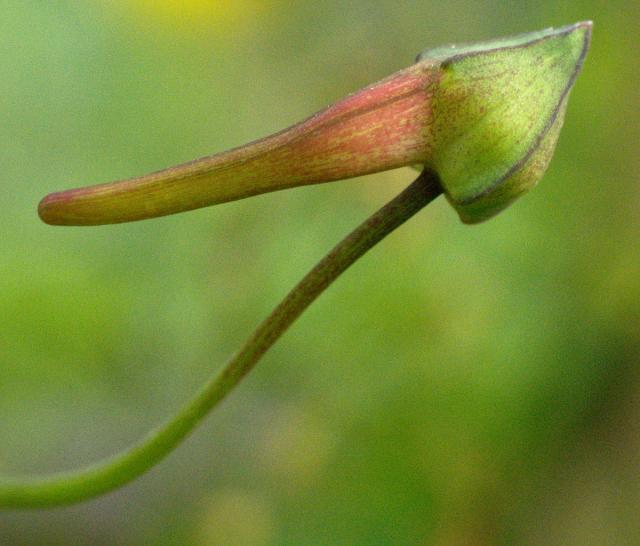
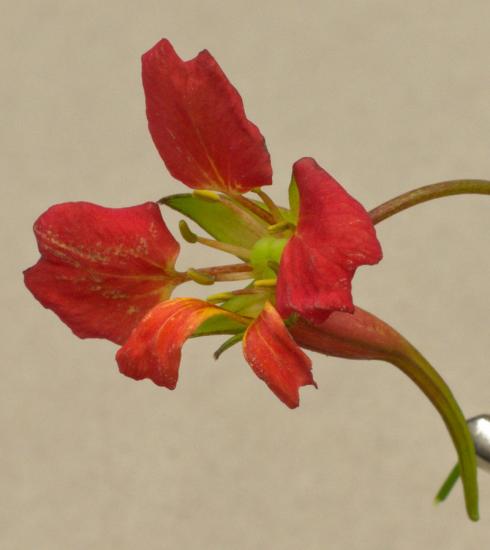
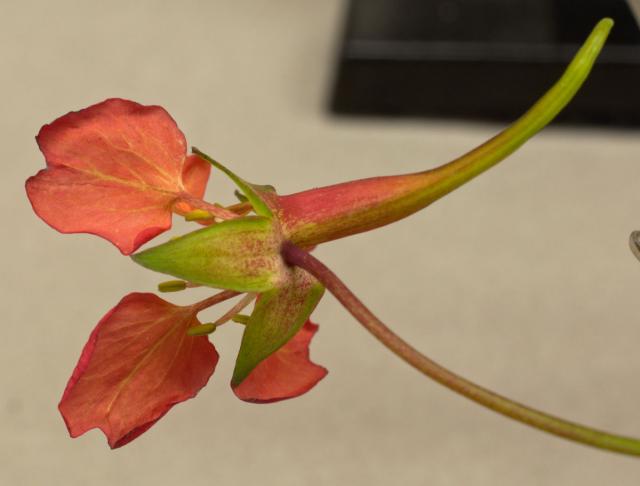
Photographs by David Pilling. The first shows a flower bud.

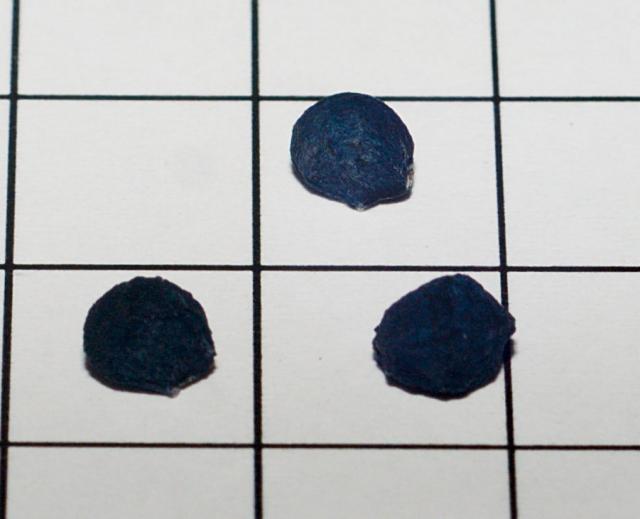
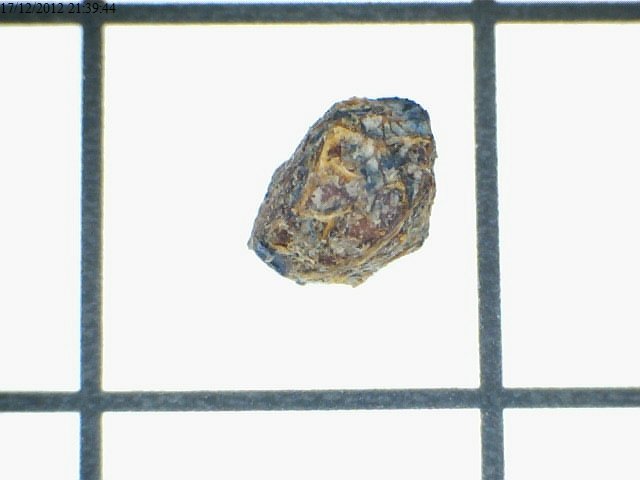
Photographs of seeds on a 10 mm grid by David Pilling, germination occurs at low temperatures (circa 4 °C) and may take several years' temperature cycle. For example dry seed sown in January 2008 and kept outside started to germinate in December 2008, growing leaves in spring 2009. The slightly purple/blue tint is flesh that can be removed after soaking to produce seeds looking like the one in the second picture. After the first two photographs were taken in December 2012, the seeds were kept moist and exposed to ambient temperatures; photo 3 shows them germinating in February 2014.

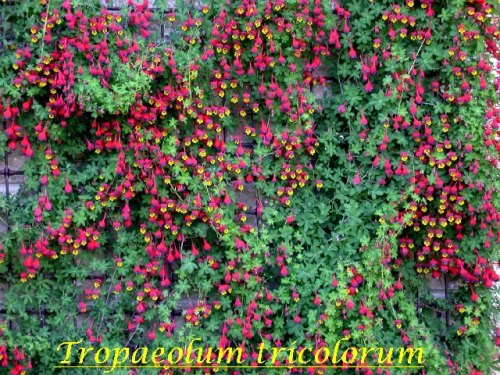
Tropaeolum tricolor Sweet from Chile and Bolivia is a half hardy plant with red, violet, blue or yellow flowers with greenish margins. This plant is sometimes referred to as Tropaeolum tricolorum. It is probably the easiest and most reliable of the winter growing tuberous species to grow, returning every year and increasing in numbers. The photo below was taken by Eugene Zielinski in the spring of 2011 in Chile. It was growing between Huasco and Carrizalillo.
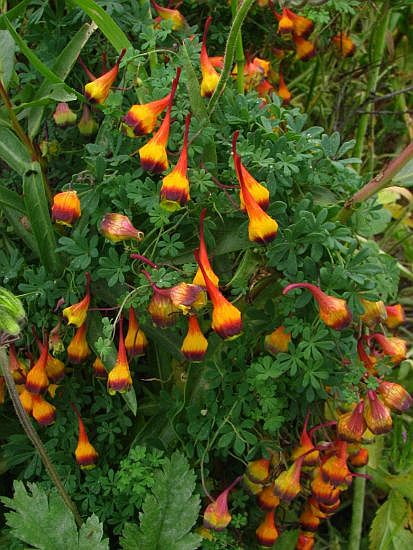
This species is long blooming and a favorite winter blooming plant in Mary Sue Ittner's Northern California garden. She grows it in a deep container nested in another pot in the ground and provides it with a trellis or fence to grow on. The initial shoots are very fragile so it can be difficult to get them started growing on the trellis so for back up she also has a pot in her greenhouse where she can protect it from the elements. The first two photos by Bob Rutemoeller show the first blooms and then later when there were many more. Photos 3 and 4 from Mary Sue Ittner show species Tropaeolum brachyceras where the two are intertwined in the greenhouse. The tubers look alike so after they initially appeared together, they have remained together. Photo 3 was taken by Bill Dijk. Photo 4 was taken by Jane McGary of a plant that escaped the bulb house. Plants that can grow in the ground can become spectacular specimens.
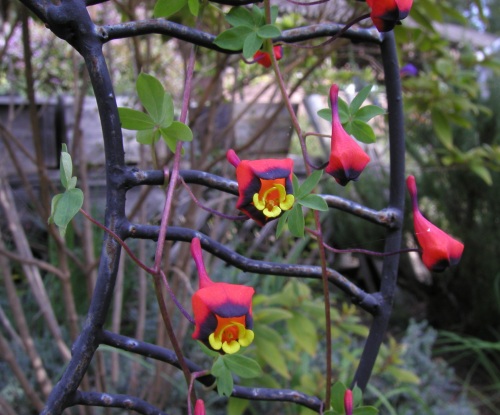
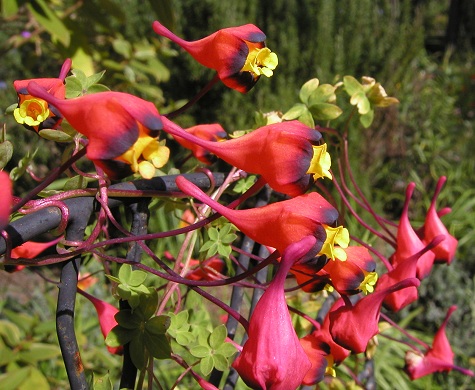
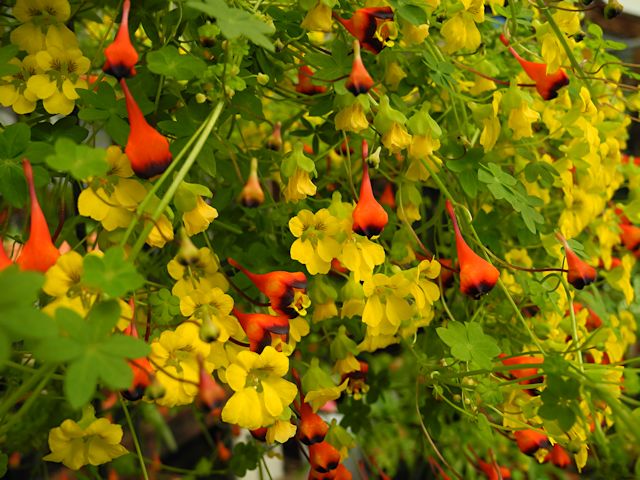

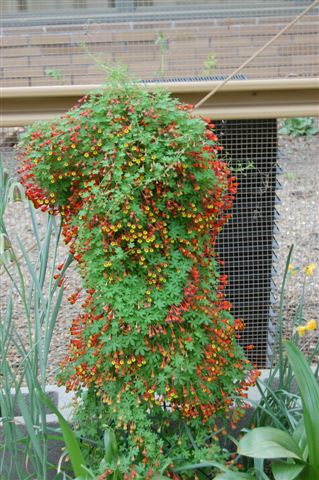
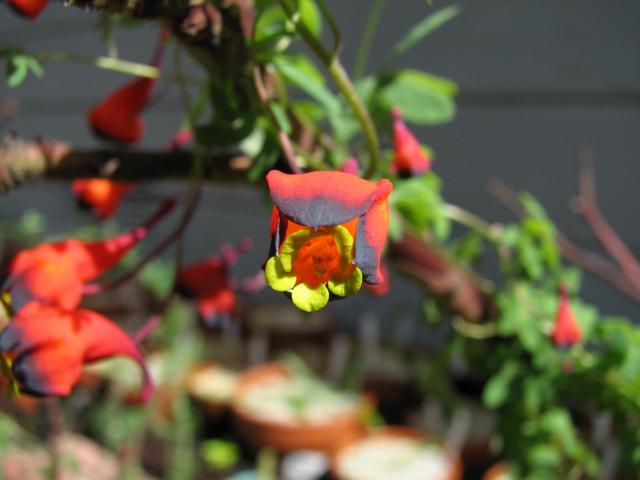
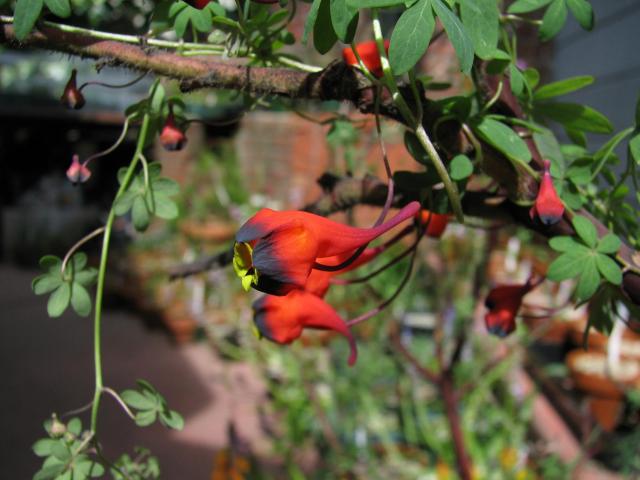
The photos below by Nhu Nguyen show various aspects of the flowers and vegetative habit of this species.
Tropaeolum tuberosum Ruiz & Pav. is native to Chile. It is commonly known as mashua and is one of the root vegetables cultivated by the natives of the Andes. Because of the long history of cultivation, there are now hundreds of varieties, most of which can be found in South America. Only a few cultivars are more widespread worldwide. This plant does well in good tilled soil and with a support for the vines to climb on. The tubers are produced in autumn for light sensitive varieties. In climates with more mild winters, give the plants full sun, water, and fertilizers to yield a bigger crop. Flowers when pollinated will produce seeds that germinate easily in spring. The flowers can be eaten, just as in nasturtiums (Tropaeolum majus).
The photos below were taken by Nhu Nguyen showing various aspects of the plant.
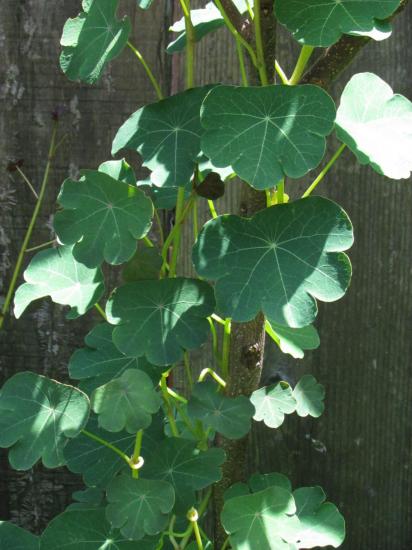
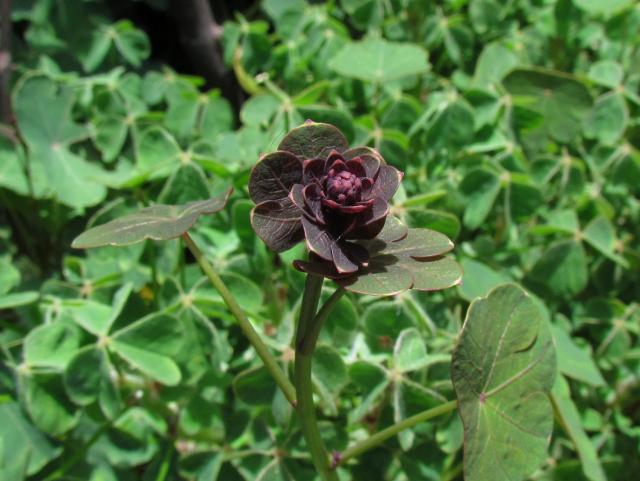
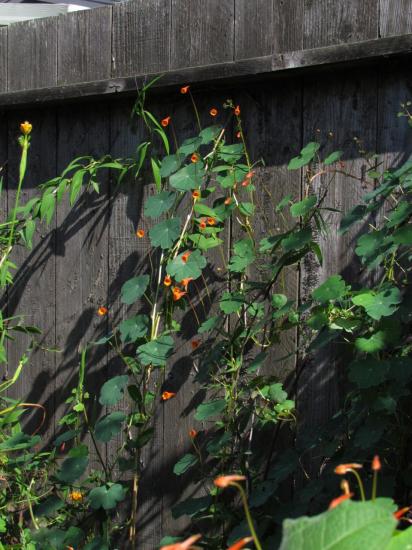
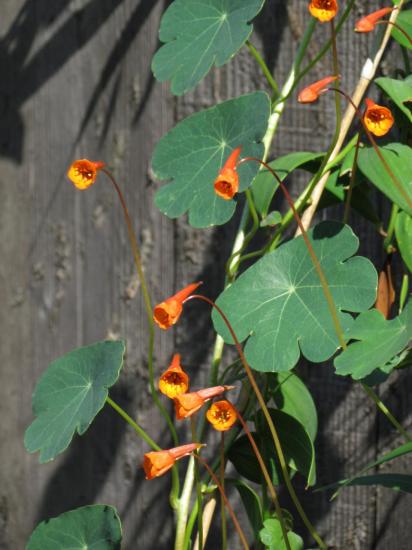
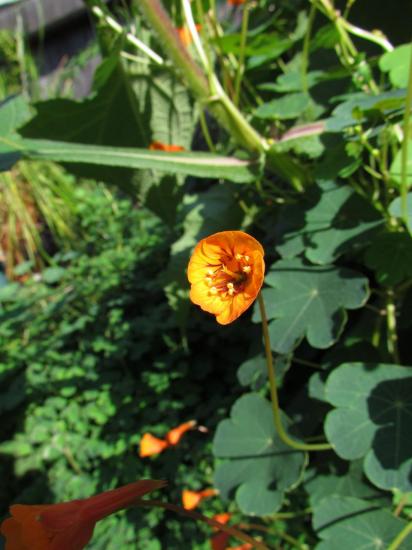
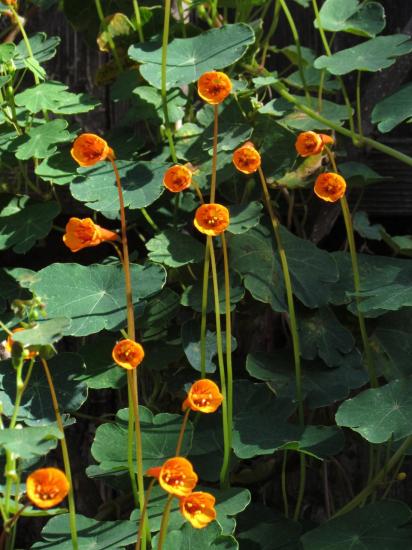
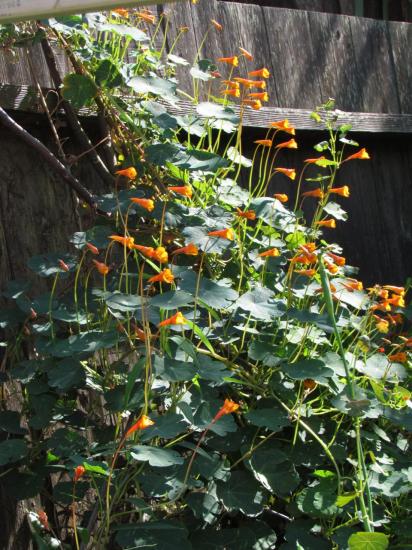
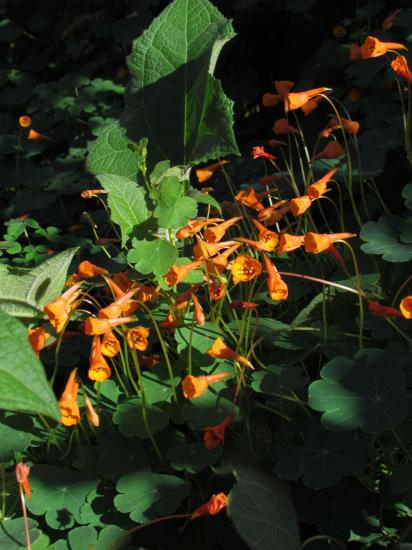
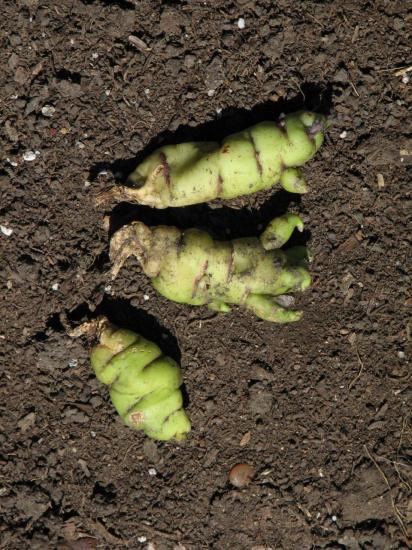
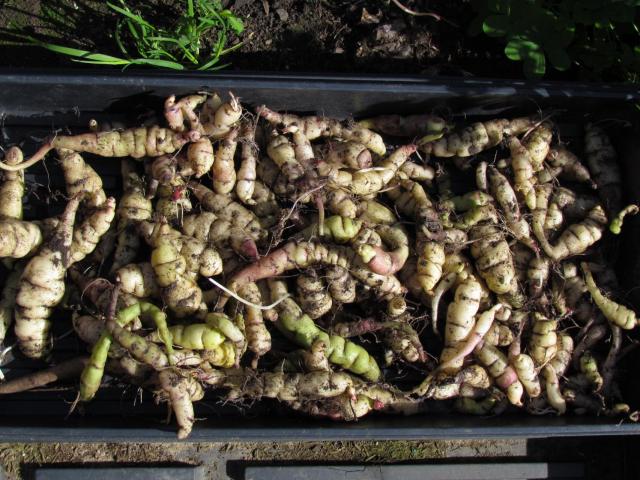
Tropaeolum tuberosum 'Ken Aslet' is a daylight insensitive form that flowers early in the Summer. The ordinary species flowers when the days are short and is often passed off as 'Ken Aslet'. Caution should be taken when buying this selection because of a virus that affects the vines. The photographs below were taken by David Pilling at the start of October in North West England.
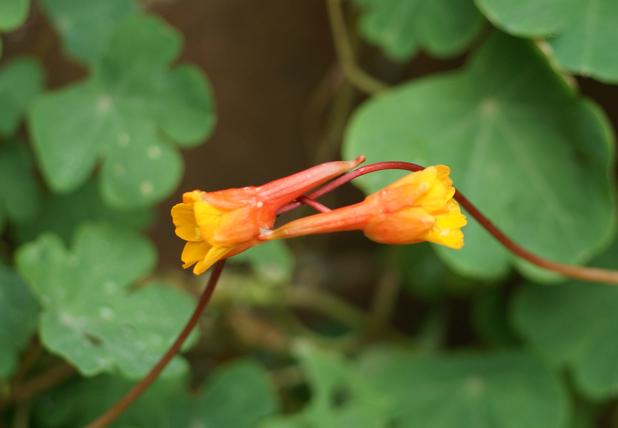
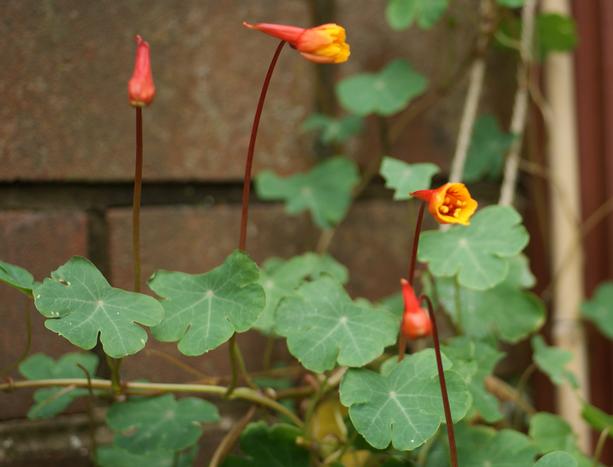
Tropaeolum tuberosum var. lineamaculata 'Puca-añu' was originally introduced by Oregon Exotics. The cultivar fits the description of var. lineamaculata. This variety has vines with dark purple stems and are highly productive.