Mathew’s subgenus Limniris are Irises that grow from rhizomes and are beardless. They are native to North America, Africa, Europe and Asia. Many of these plants are found in wetlands and some require moist rich soils while others can dry out a little. Mathew has divided this group into two sections. One section is Lophiris or the Crested Irises. The other section is Limniris which includes all the rest. This section is further divided into many sub groupings. The only subgroup that we have included at this stage on our wiki is Pacific Coast Irises. All the others are listed on this page and other Beardless iris wiki pages. Species l-r will be listed on this page.
For information about the others consult Beardless iris a-k - Beardless iris s-z
Iris species from all groups are listed alphabetically on the Iris wiki page.
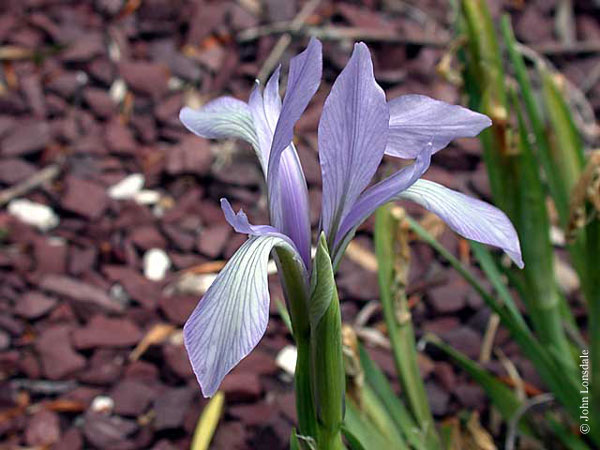
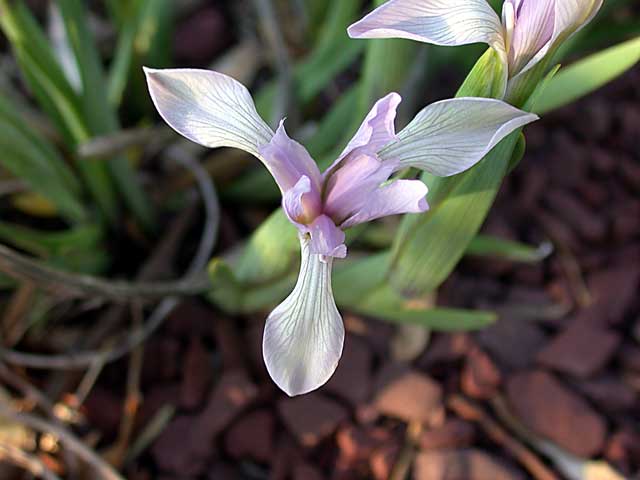
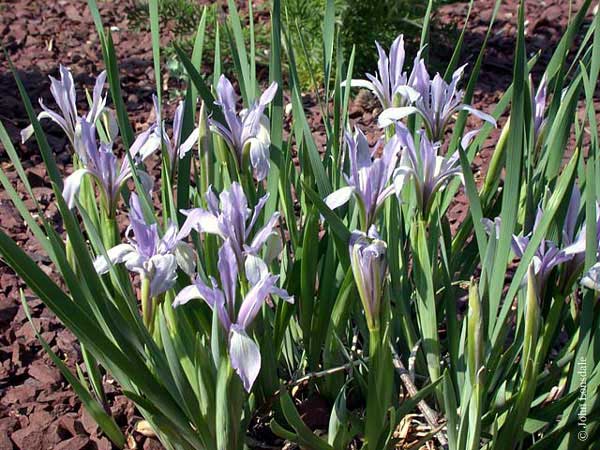
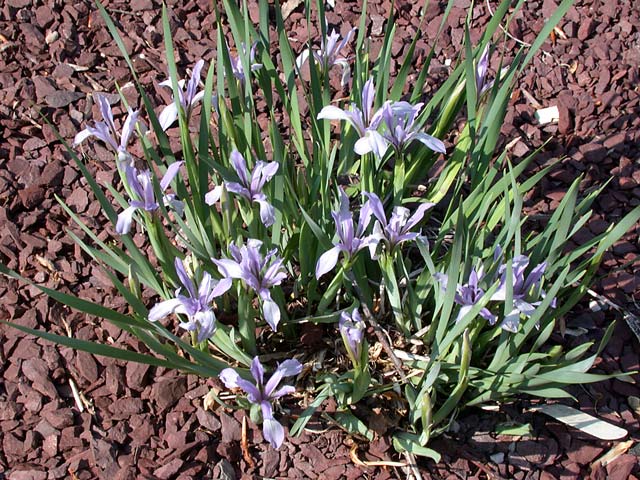
Iris lactea Pallas is from Northeastern Afghanistan, Kazakhstan, Russian central Asia, Tibet, China, Mongolia, and Korea. It has pale bluish-violet to white flowers. Height range: to about 30 cm. Photos by John Lonsdale.
Iris laevigata Fisch., a species from Eastern Asia, is often aquatic. Height range: 60-90 cm. Photos from Pamela Harlow of plants that originated from Plant Delights Nursery.
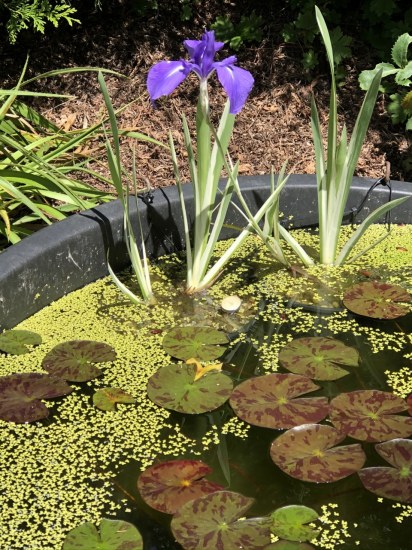
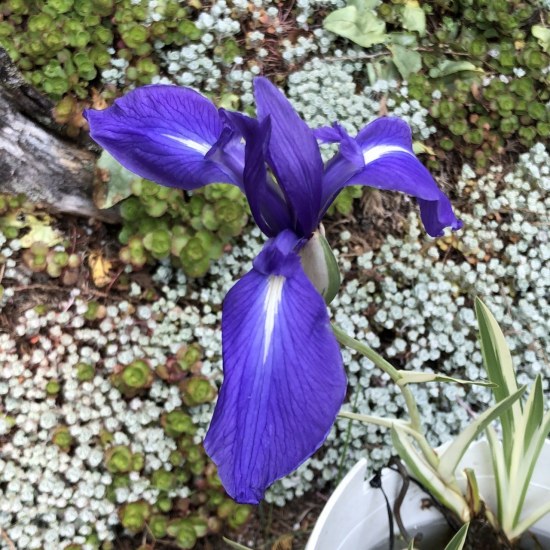
Iris laevigata 'Alboviolacea' was photographed by Bob Rutemoeller at Kew Gardens in the UK.
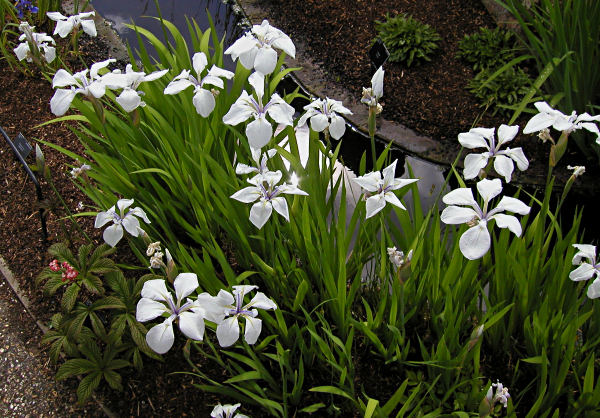
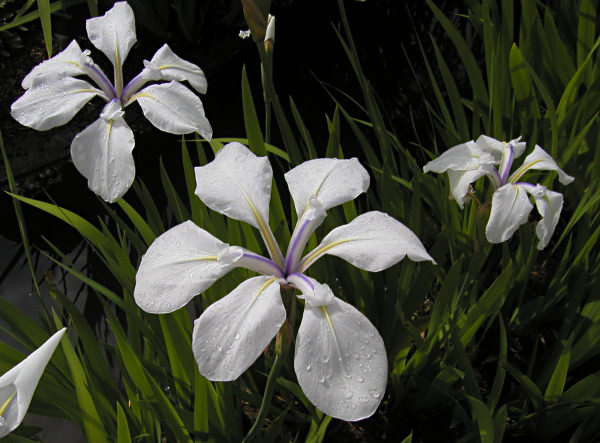
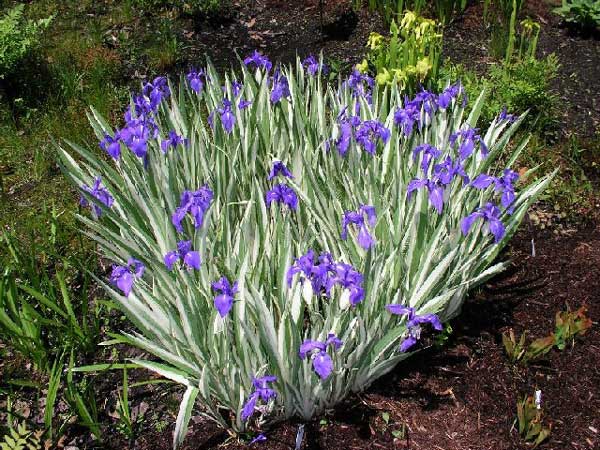
Iris laevigata 'Variegata' is a beautiful form of Rabbitear Iris. It is native to Japan and grows well in damp soils or shallow water. Photo taken May 2005 at Plant Delights Nursery by Nestor White.
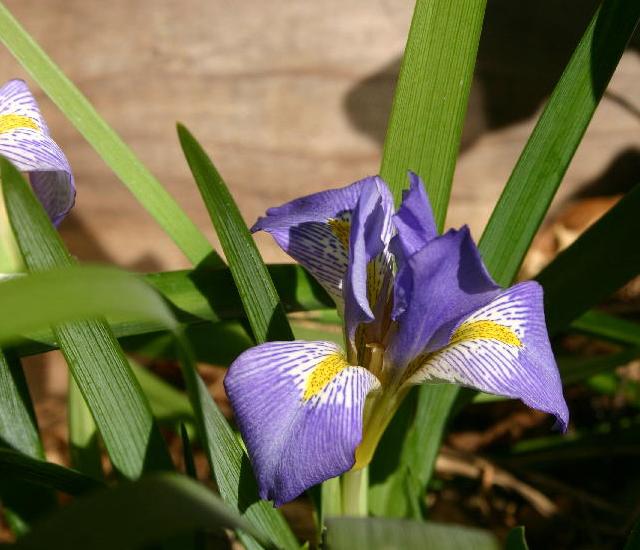
Iris lazica Albov is from NE Turkey and Georgia. The species name 'lazica' is a reference to Lazistan on the shore of the Black Sea where it was discovered. It is very similar to Iris unguicularis, and is said to be hardier than that species. Height: about 30 cm. Photographed by Jim McKenney in his USDA zone 7 Maryland garden where this plant is grown in a cold frame. It is known to be a successful garden plant in some other gardens in the greater Washington, D.C. area.
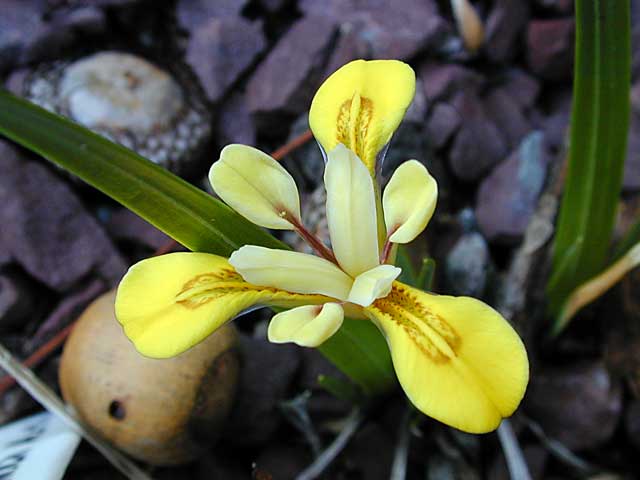
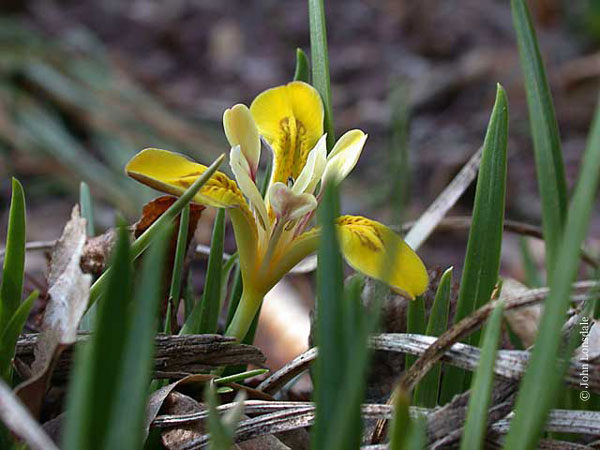
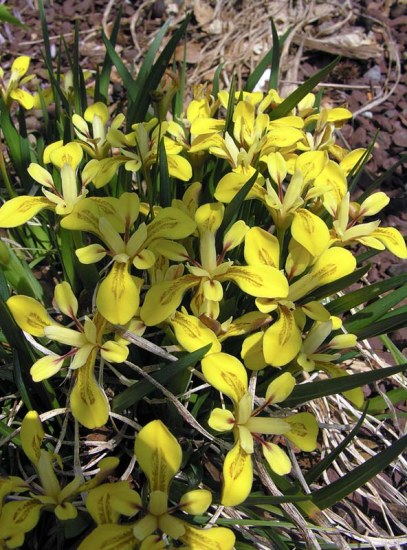
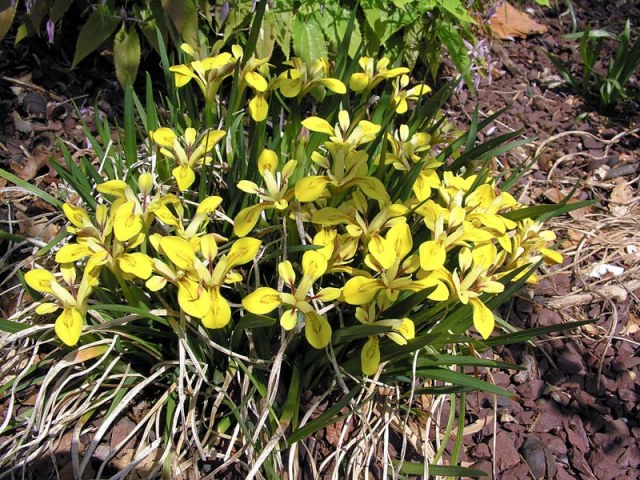
Iris minutoaurea Makino is from Korea and China and is cultivated in Japan. It has yellow flowers, and grows to 10 cm. Photos by John Lonsdale.
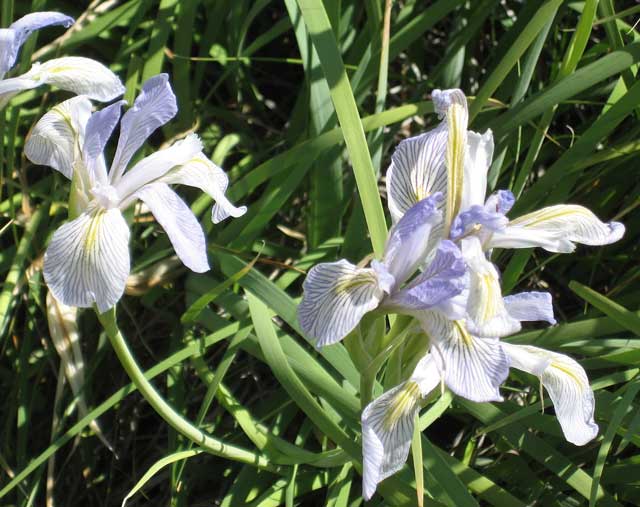
Iris missouriensis Nutt. is a widespread species that grows in intermountain western North America with flowers in various shades of white to blue lavender. Height range: 20-50 cm. It is commonly found growing in wet meadows, seeps, and open woodland. It can be found in places that dry out later in the year as it only needs moisture in the spring. Members of the pbs list have found it challenging to grow from seed. Photo from Jim Duggan taken in San Diego County, California.
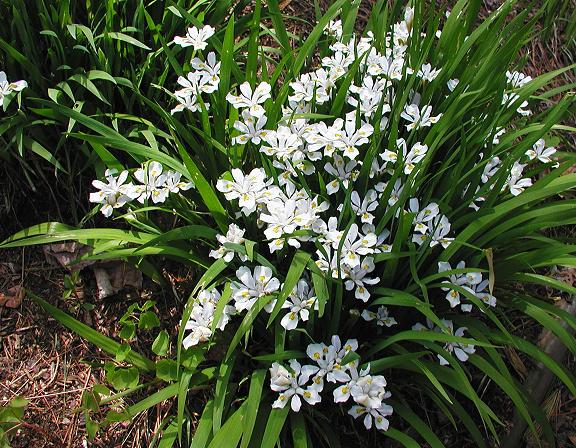
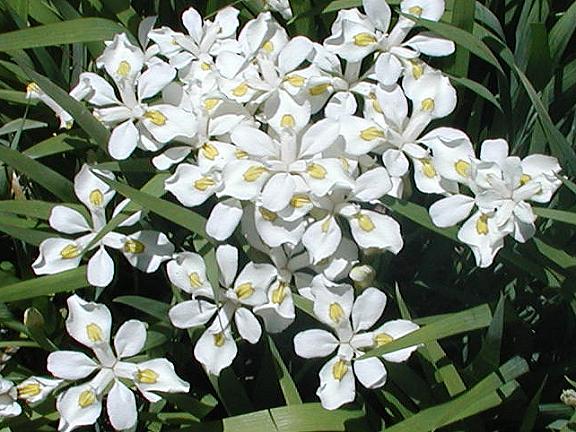
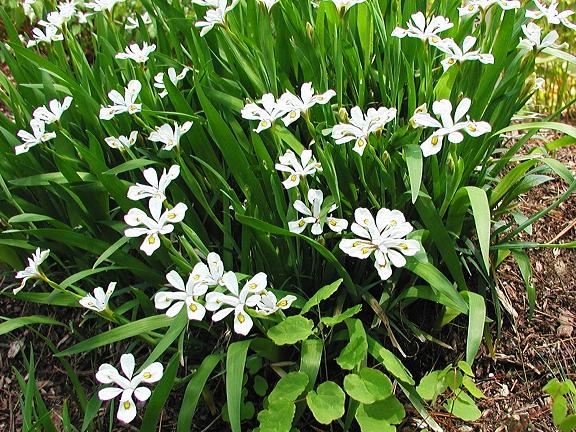
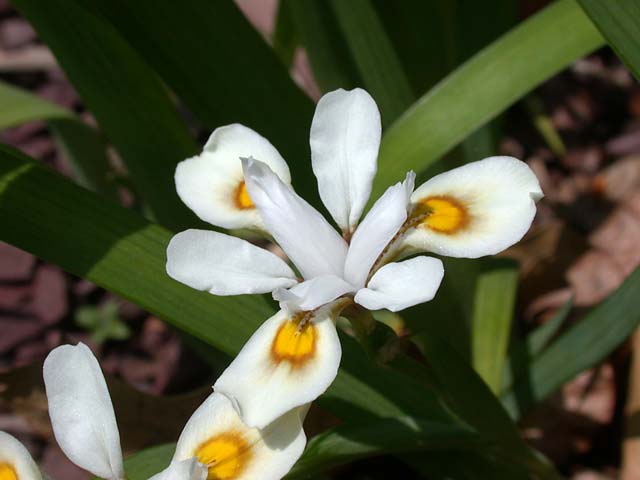
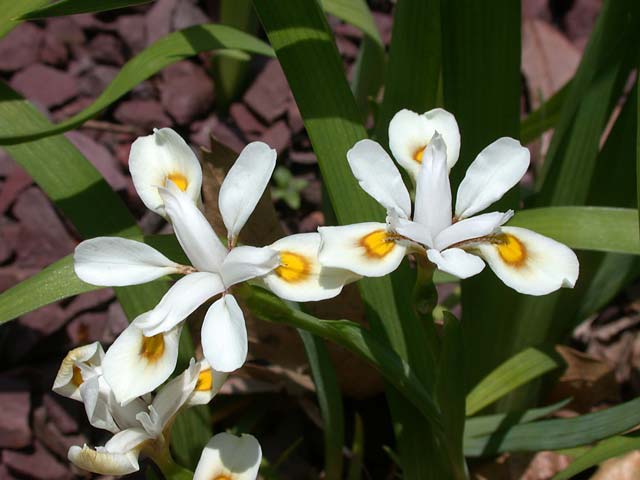
Iris odaesanensis Y.N.Lee is among several exciting Korean species suitable for a partly shaded woodland situation, but will take about 6 hours of sun as well. Height: to about 20 cm. The first three photos were photographed by Mark McDonough in Darrell Probst's fabulous Epimedium nursery known as Garden Vision. Darrell has several forms; all are beautiful, looking somewhat like a large white Iris cristata with a mass of pure white flowers and distinct yellow signals. In the last of these three photos, notice the one aberrant fused flower. The final three photos were taken by John Lonsdale.
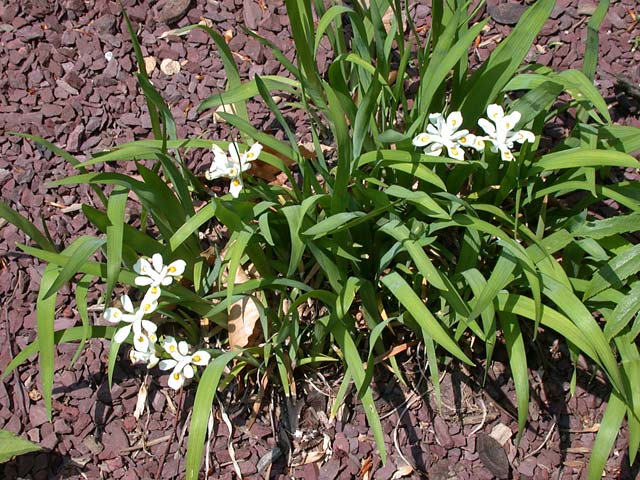
Iris orientalis Mill., syn. Iris gigantea Carrière, syn. Iris ochroleuca L., is the most well-known species in the section Spuria. Coming from Turkey and Greece, it is also found naturalized in old homesteads in Southern Italy. A very long lived plant, the form I grow is very tall, up to 170 cm, and with time develops into a large round clump. I find references to an Iris 'Ochroleuca Gigantea' and 'Shelford Giant' which I believe to be this form. The first photo and text by Angelo Porcelli. The rest of the photos from John Lonsdale.
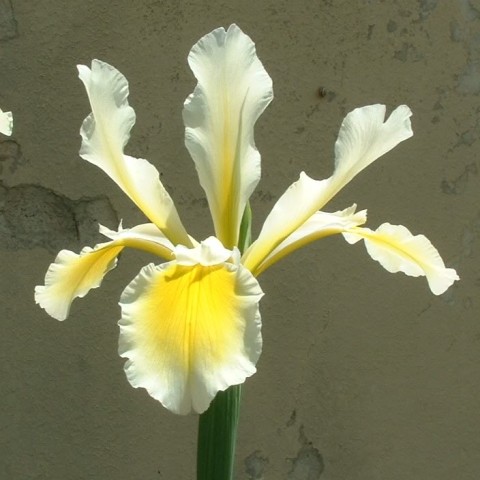
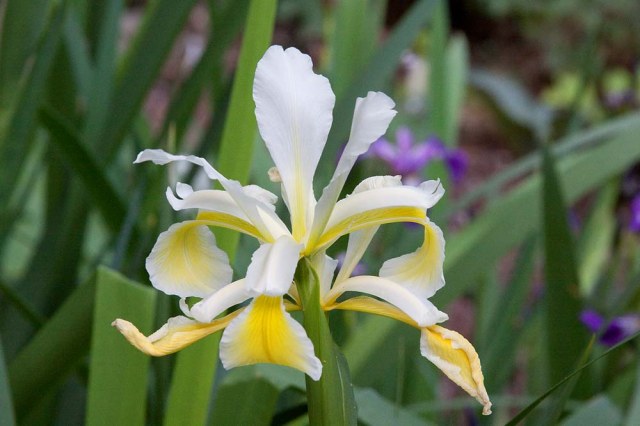
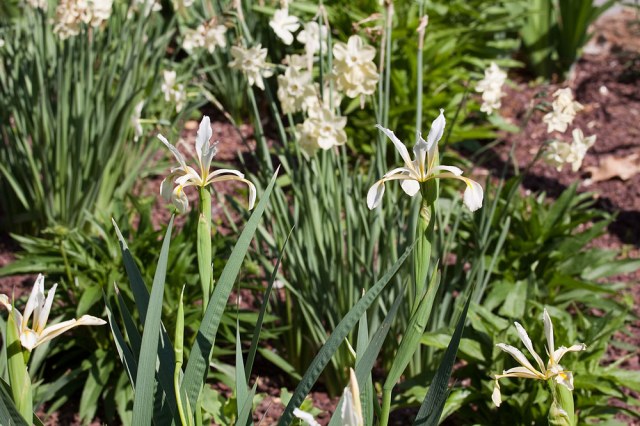
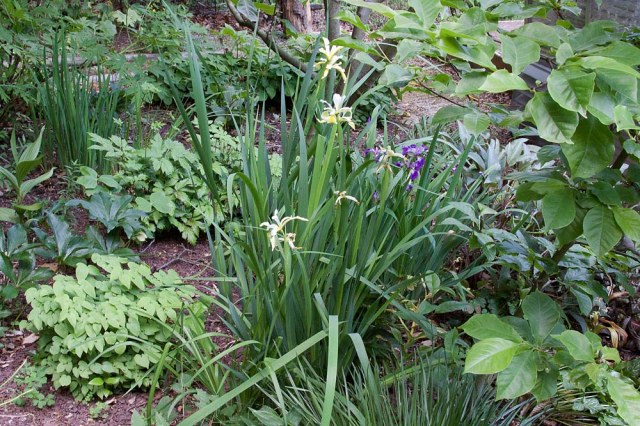
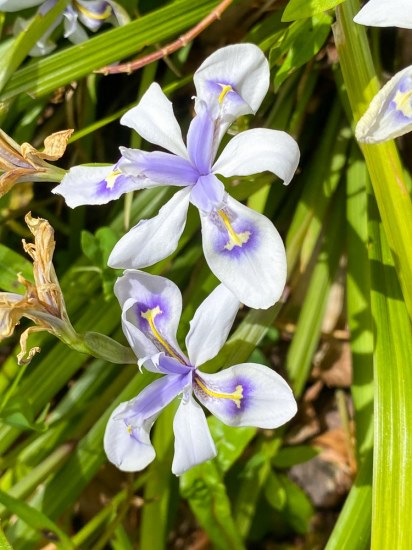
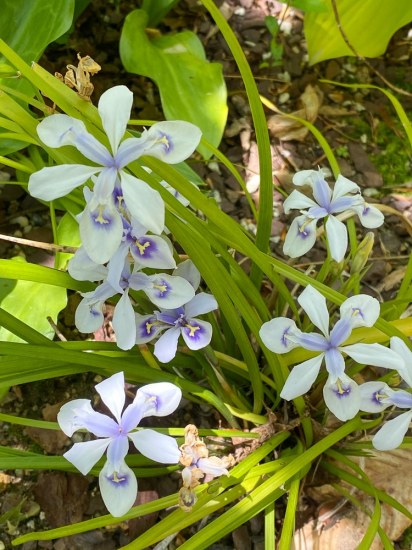
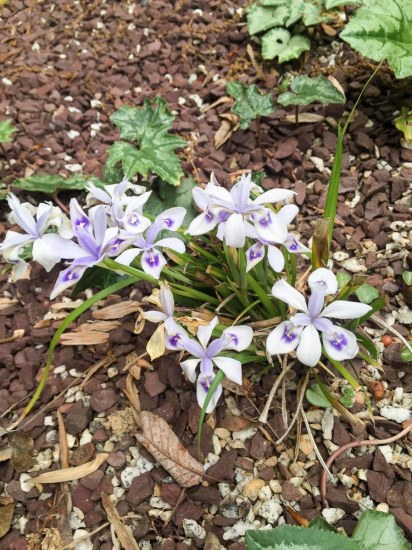
Iris probstii C.A.Wilson was discovered in southern China in the mountains of northern Guizhou Province on an expedition in 2003 and named in 2020. According to a SIGNA article one clone was growing in loose, rich and moist soil on a 60 degree slope between rice paddies among short grasses and ferns and a second clone was on a 40 degree slope under short pines among briars and grasses. The soil was rocky, dry and limestone. It's in the Chinenses series, closely related to Iris odaesanensis, Iris henryi, Iris koreana, and Iris minutoaurea. It's a small plant, with grass-like foliage and the flowers blooming about 8 in (20 cm) above the ground. It's named for Darrell Probst. The first photo from Dennis Kramb who wrote in May 2022: "I've been lucky enough to have it in my garden for 7 years or so, but I rarely seem to catch it in bloom. It's blooming now along with the tall bearded irises, whereas my other Chinenses were in bloom in April (before the neighboring plants grow up and obscure them). The other photos from John Lonsdale.

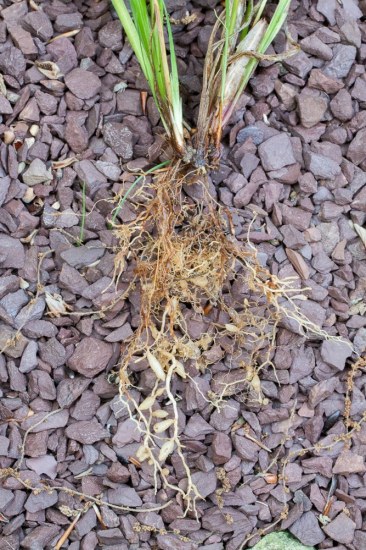
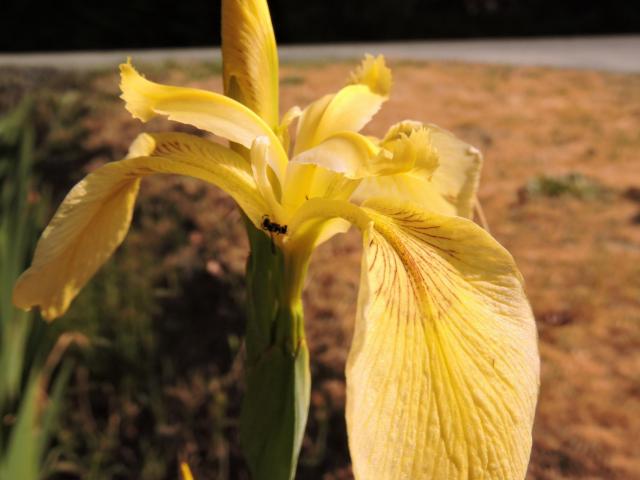
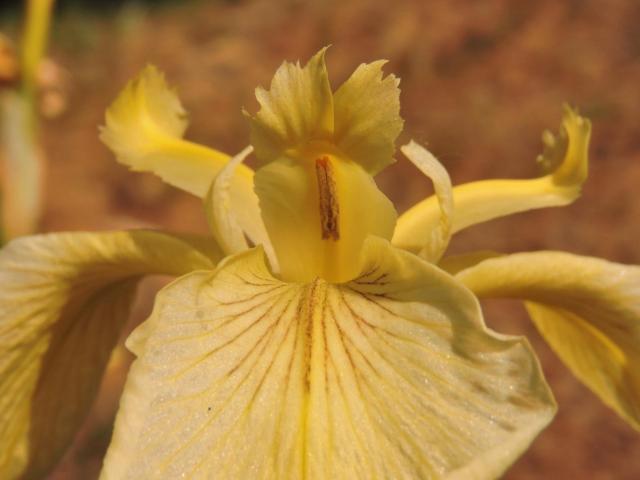
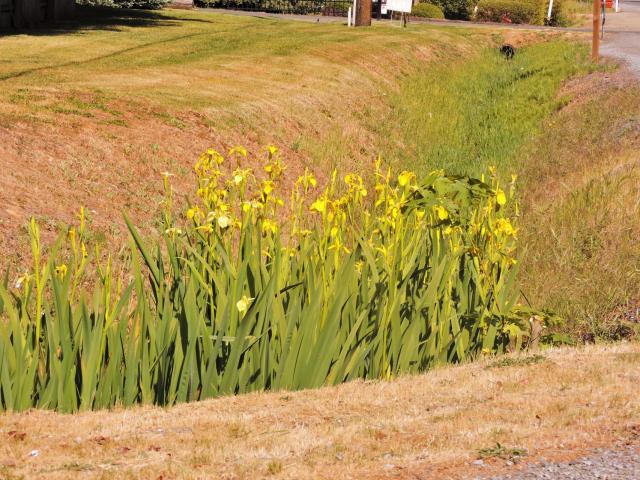
Iris pseudacorus L., yellow flag or pale-yellow iris, is native to Western Europe including Great Britain, Western Asia and North West Africa, but planted all over the world. Height range: 60-90 cm. In some environments it is highly invasive and banned. The seeds float and are distributed by water. It grows in wet conditions, like bogs, fens, or other wetlands but not in deep ponds (though they may colonize the edges). Photos by Janos Agoston.
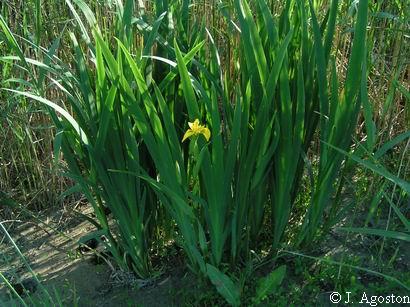
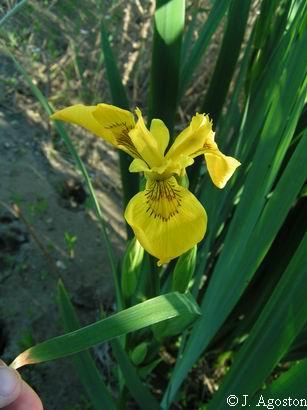

Photos below by Travis Owen are of plants growing in a roadside ditch in the city of Grants Pass in Josephine County in Oregon.
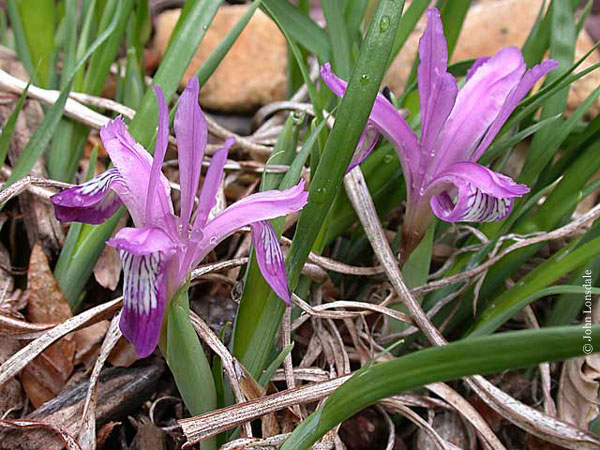
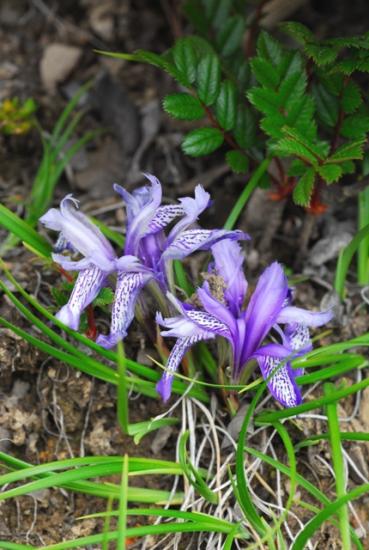
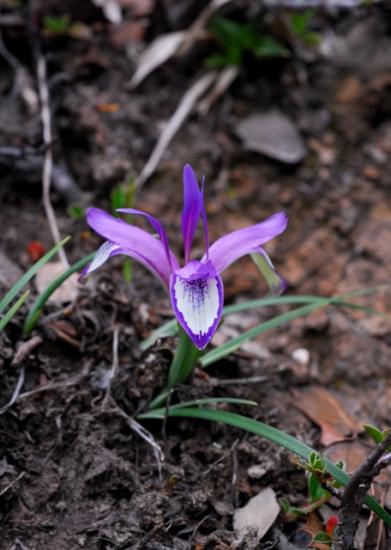
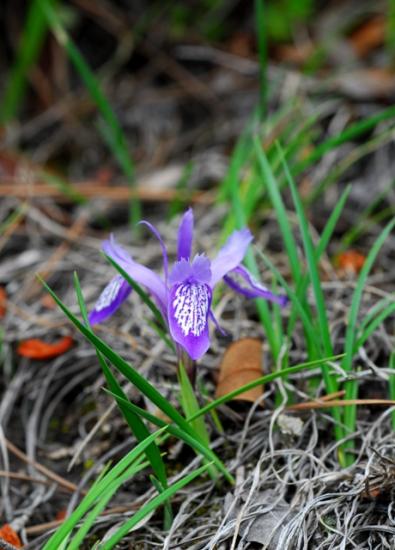
Iris ruthenica Ker-Gawl is from Eastern Europe and Asia. It has fragrant violet flowers, and grows to about 15 cm. First photo by John Lonsdale, photos 2-4 taken by Oron Peri in its habitat in Sichuan.
Iris Index - Beardless iris a-k - Beardless iris l-r - Beardless iris s-z - Crested Irises - Garden Bearded Irises - Juno iris a-i - Juno iris j-r - Juno iris s-z - Aril Irises - Miscellaneous Irises - Pacific Coast Irises - Reticulata Irises - Spanish Irises - Belamcanda - Hermodactylus - Pardanthopsis