Lachenalia is a genus with bulbs in the Hyacinthaceae family found in Namibia and South Africa. There are around 133 species. A complete illustrated systematic monograph of this genus by Graham Duncan, The Genus Lachenalia, was published in 2012. Lachenalia species from b to c are found on this page.
Lachenalia a - Lachenalia Species d-i - Lachenalia j-n - Lachenalia o-p - Lachenalia q-t - Lachenalia u-z - Polyxena - Lachenalia index
Lachenalia bachmannii Baker is found on the edges of seasonal pools in the Southwest Cape, blooming in early spring (August-September). Plants grow from 14 to 42 cm with white bell-shaped flowers with brown to maroon gibbosities, suberect pedicels, and included stamens. Plants have two linear leaves with the lower surface plain or suffused maroon. Photos by Mary Sue Ittner and Alan Horstmann.


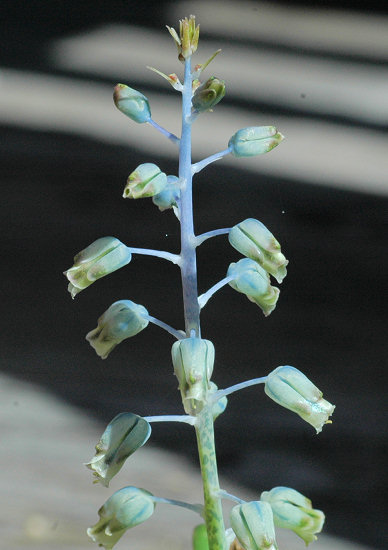
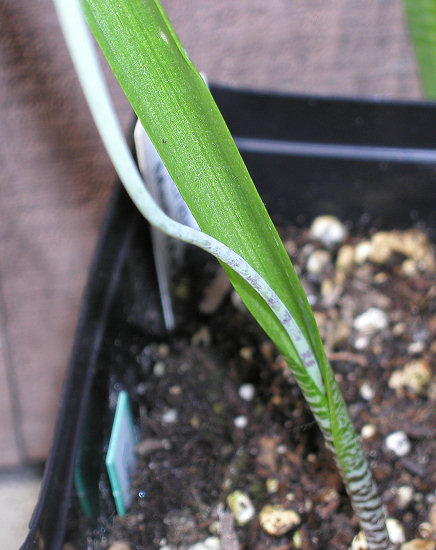
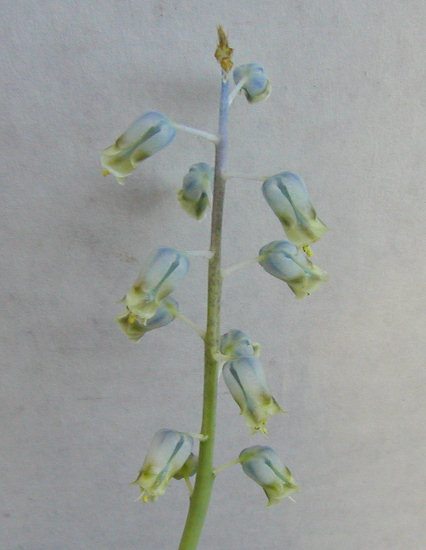
Lachenalia bolusii W.F.Barker is found on rocky outcrops in the northwestern Cape. It flowers in spring (August to September). This species is from 10 to 35 cm high and has a single leaf that is banded maroon below and bell-shaped pale blue and white nodding flowers. Flowers are pedicellate with included anthers. Photos by Mary Sue Ittner.
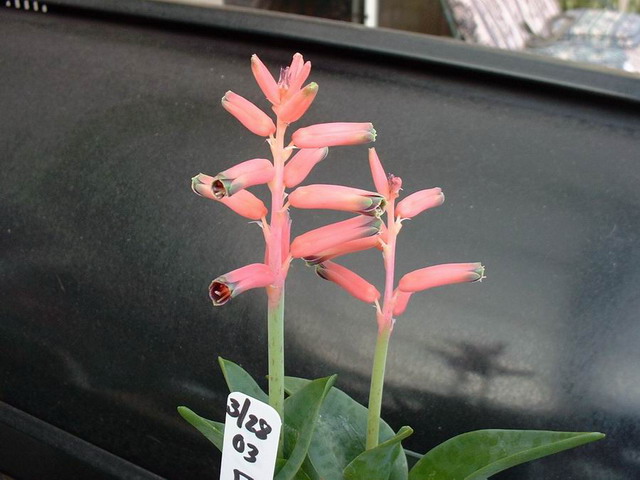
Lachenalia bulbifera (Cyrillo) Engl. is found on sandy slopes and flats, mainly coastal, in the winter rainfall areas and can be one of the earlier ones to flower (April to September). Growing from 8 to 30 cm, it has one or two leaves and nodding red flowers on long pedicels with darker red or brown markings and green tips. Anthers are included. Don Journet wrote: Once sold under the synonym Lachenalia pendula, this species has been the main commercial competitor of L. aloides species and cultivars. Its bright red pendulous flowers make a striking display particularly when planted in mass. The colour of the flowers varies from orange through scarlet to crimson and also varies in flower length and amount of purple and green on the tips of the outer perianth segments and on the slightly longer inner segments. The leaves also generally have dark green or purple markings on their broad surface. The bulbs of this species tend to be among the largest in the genera. Flowering for him was from early June to early September over a number of plants and years. The first photo was taken by Ann of plants received from the PBS BX of 3/03, planted 3/28/03 and blooming 5/25/03. The second photo was taken by Mary Sue Ittner. Photos 3-5 photos from Cameron McMaster show the great variety of forms growing in habitat in different areas. The first two were taken in the Overberg, in Agulhas and Struisbaai. The last was taken in the west coast at Hopefield. The sixth photo is from Rod Saunders.
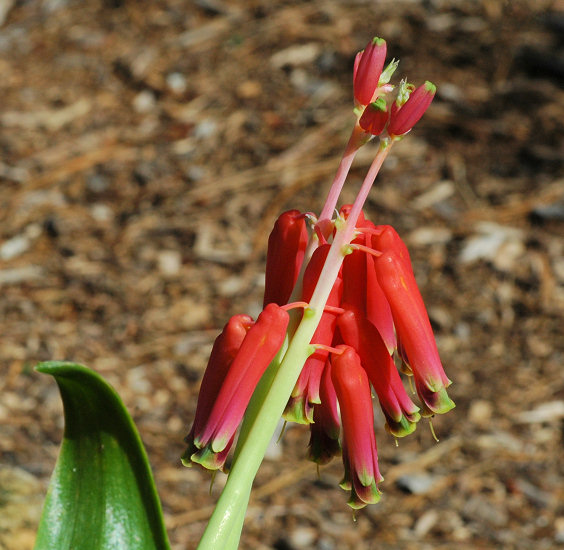

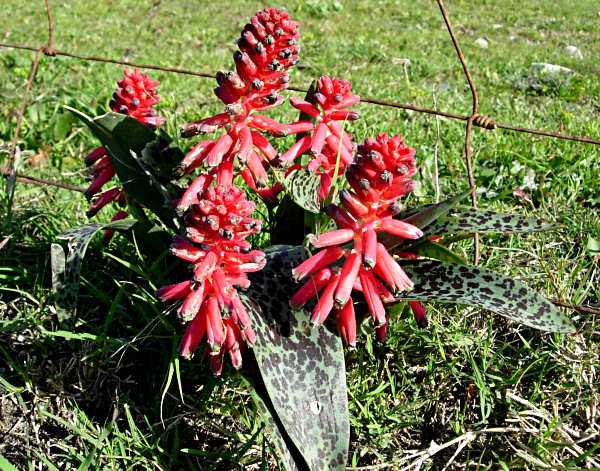
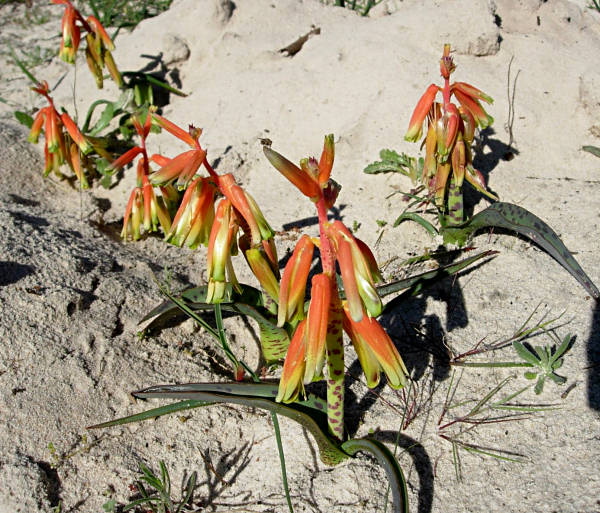
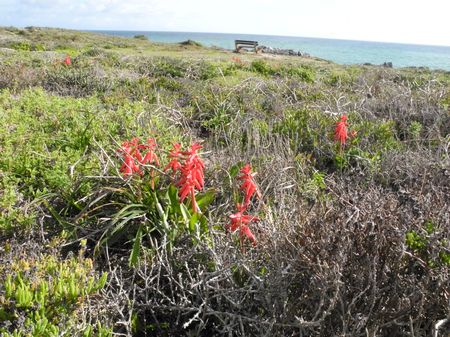
The first three photos were taken by Alan Horstmann. The last two photos were taken by Erika Schroedersecker.
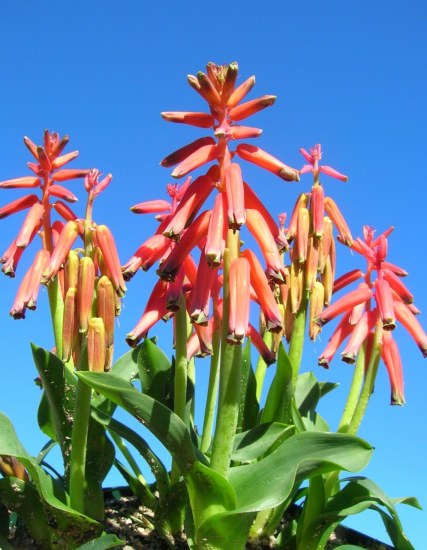
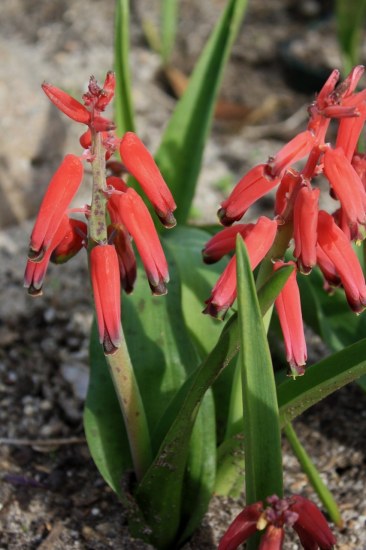

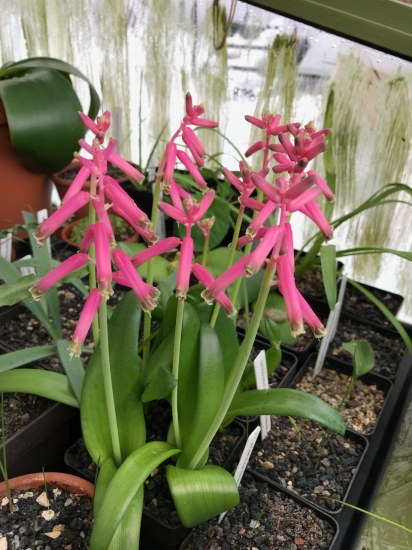
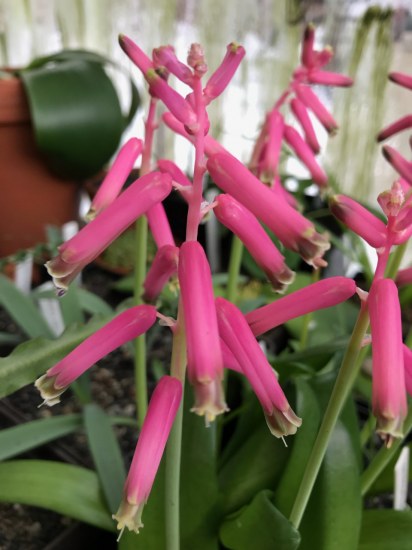
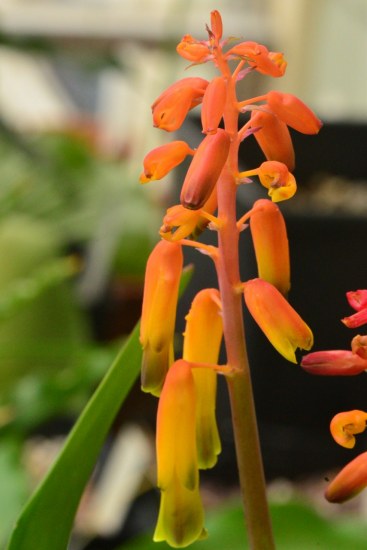
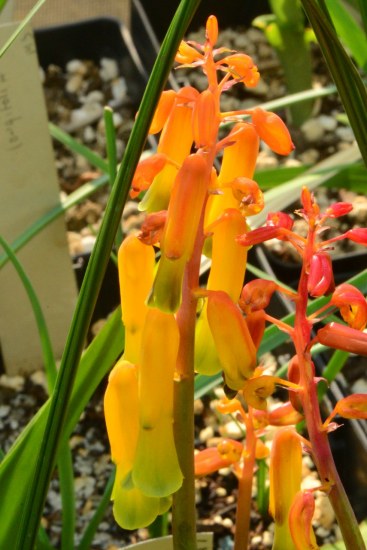
Lachenalia callista G.D.Duncan & T.J.Edwards was published in 2012 when Lachenalia aloides (L.f.) Engl. was split into seven species. Growing to 25 cm, it flowers August to September and is distributed in a small area near Piketberg. It is described as having two lanceolate leaves and pendulous flowers with bright yellow outer tepals flushed orange with green gibbosites and bright yellow inner tepals with green tips. It is very similar to Lachenalia thunbergii, but is taller and has longer tepals and wide spreading apices (versus slightly spreading apices). It is also very similar to Lachenalia aloides except it has green tips. Some of the distinctions in morphology between the seven species are very subtle and because the flowers change color in different stages and the ones in cultivation may have hybridized deciding which photograph belongs to which species is a challenge. The photos below may be this species or Lachenalia luteola or Lachenalia thunbergii. The first two photos from Bob Rutemoeller and Mary Sue Ittner are of plants grown from seed, one of which was originally collected near Piketberg. The third photo from Colin Davis was received as Lachenalia tricolor.
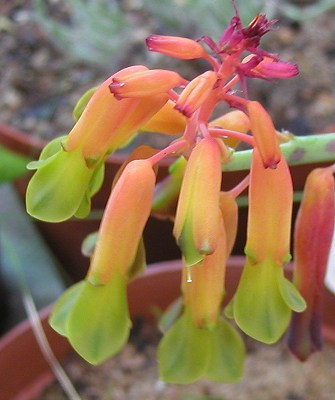
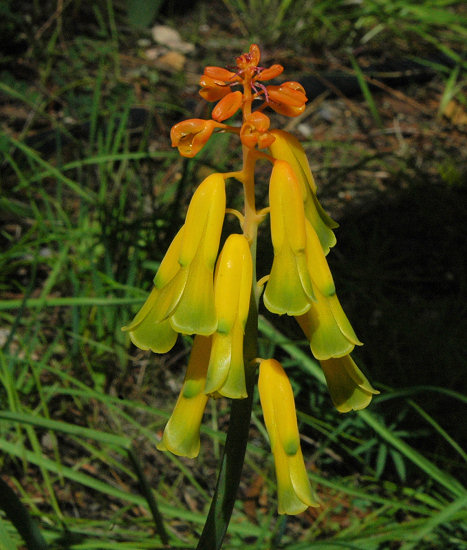
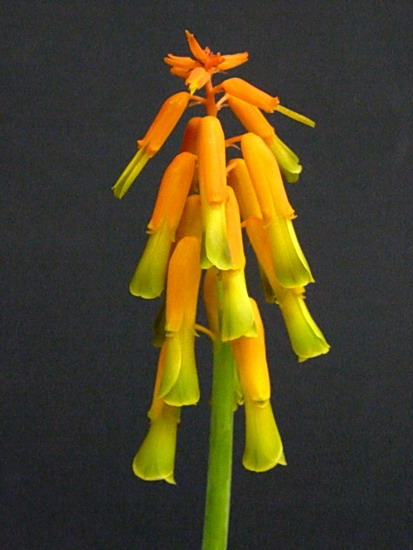
Photos below from Arnold Trachtenberg of plants obtained from Croft show a progression of the color of the flowers. The first two photos were taken February 8, 2022, the second two February 13, 2022, and the last February 19, 2022.

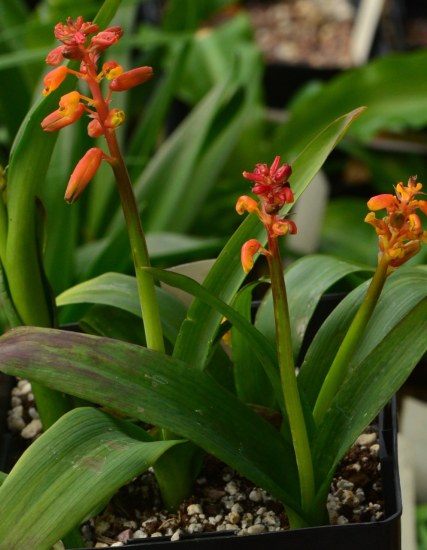

Lachenalia campanulata Baker is from the Eastern Cape interior mountains where is occurs in nine vegetation types. Although plants occur in a mainly summer rainfall area, they are winter growing and dormant in the summer in the wild after flowering (October to December). Plants are often evergreen in cultivation. Growing 5 to 19 cm high, plants have 1 to 2 leaves, and white to pink flowers, marked with maroon spots and blotches, lightly scented and with exserted stamens. Photos from Cameron McMaster and Mary Sue Ittner.
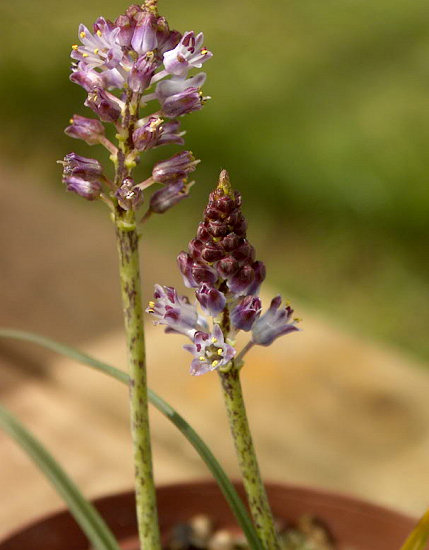
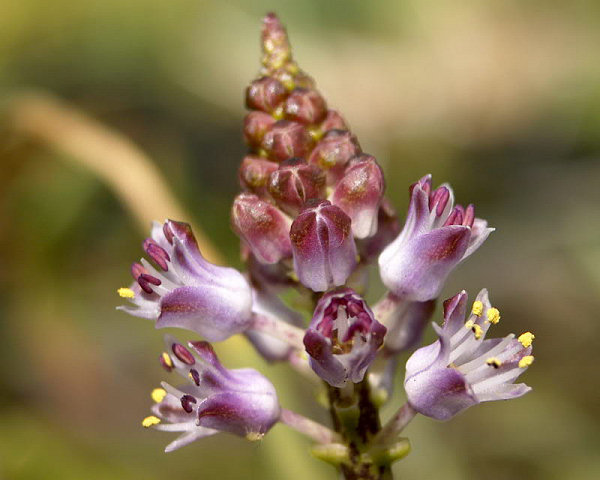
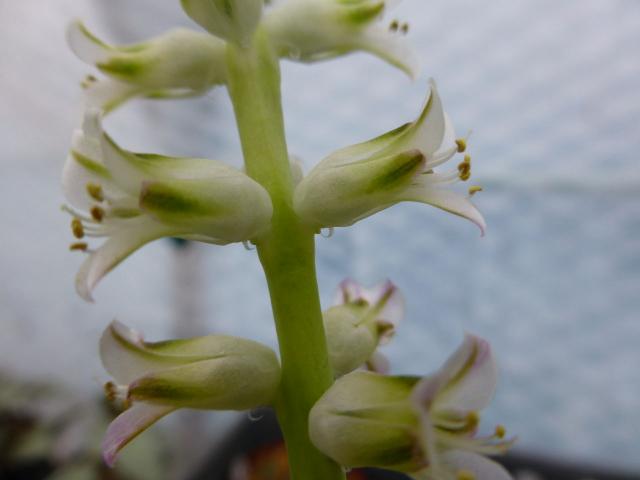
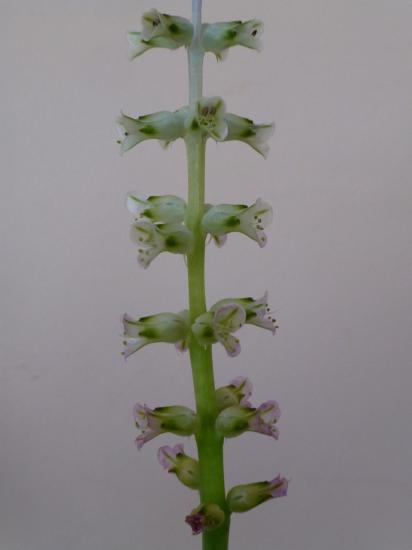
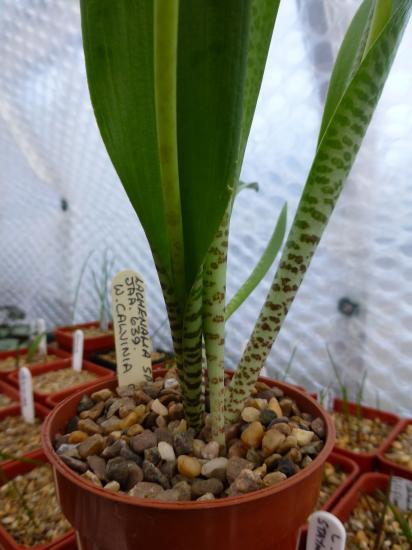
Lachenalia canaliculata G.D. Duncan is distributed from the Bokkeveld Plateau, the Roggeveld to the Great Karoo where it grows in a variety of habitats. Growing from 15 to 45 cm high, it has (1)-2 dark green spreading to suberect lanceolate leaves, sometimes marked with magenta spots on the lower surface. The inflorescence is spicate and the scape green with darker green or maroon blotches. The flowers are oblong campanulate, arranged in 3-flowered whorls, cream to white with brown to green gibbosities. Flowering is from August to October. The first four photographs by Steve Walters are of plants grown from JAA 639, seed collected west of Calvinia. Flowers started to open in December in the UK (equivalent to June in South Africa) which makes it a relatively early flowerer. The Latin word canaliculatus means channelled, grooved or like a pipe. The name is descriptive of the channeled, lower inner tepal: "upper two tepals overlapping, lower inner tepal narrower, 2 mm longer, strongly canaliculate". The last photograph of plants in cultivation by Arnold Trachtenberg.
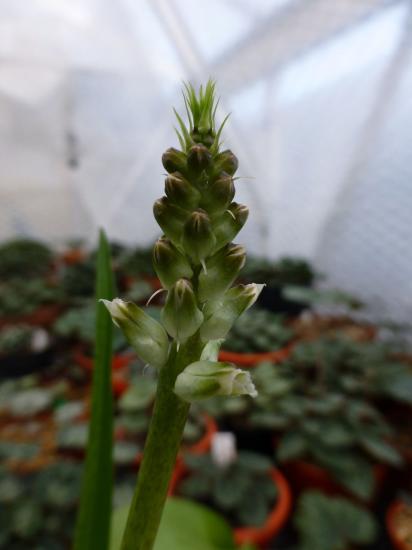
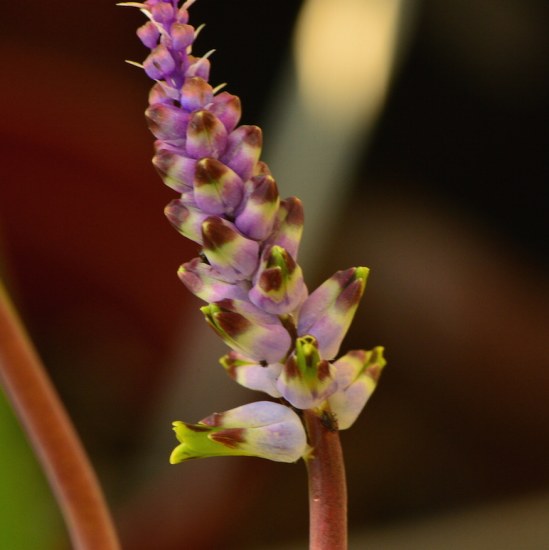
Lachenalia capensis W. F. Barker is found on sandstone slopes in the Southwestern Cape where it flowers September to October. Growing from 15 to 25 cm high, it has one or two lanceolate or strapped shaped leaves and sessile or shortly pedicellate flowers with anthers included. Don Journet describes it with its almost white scented flowers as certainly worthy of inclusion in a collection. During the life of the inflorescence there are a number of other pale colours that can be distinguished from the pale purple tips of the juvenile flowers to the very pale blue bases of the outer perianth segments and pale yellow of the gibbosities and aging outer perianth segments. The flowers become brown as they reach senescence. For him the flowering time has been quite short and late in the season being right at the end of October and the first three weeks of November. Photos below from iNaturalist were taken by Jan-Hendrik Keet and Lara and shared under a CC BY-NC license.
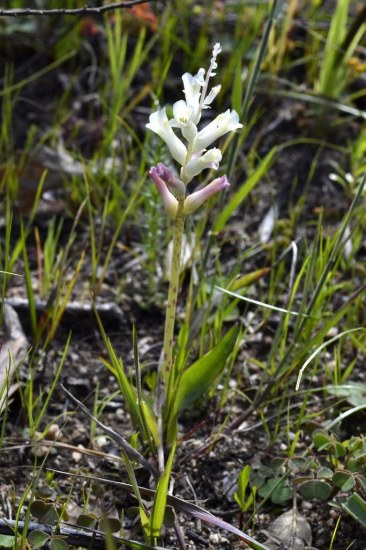
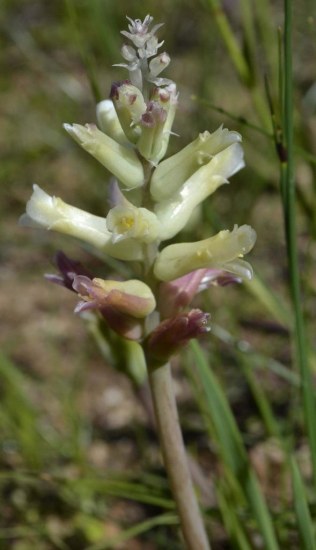
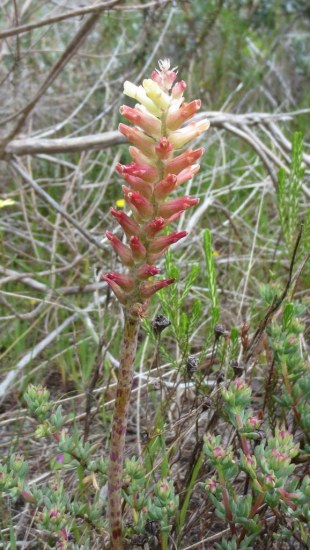
Lachenalia carnosa Baker is a Namaqualand species found growing in rocks and on sandy flats between hills. It has two bright green ovate leaves with depressed longitudinal veins on the upper surface. Once known as Lachenalia ovatifolia this species has attractive small flowers in which the inner perianth segments are tipped with a broad magenta band. The outer segments are a sort of dirty white with a tinge of pale blue at the base and green gibbosities. The leaves are different from many species in that they are broader and have pronounced depressed veins running their whole length. This is one of the species that I give extra drainage to by increasing the quantity of sharp sand in the potting mix. Flowering times extend from mid July to the end of September. Description from Don Journet. Height: to 22 cm. Photos 1-4 from Bob Rutemoeller and Mary Sue Ittner show this species growing in the rocks in Namaqualand September 2006 and also show the variations in color of flower and leaves. Photo 5 was taken by Cameron McMaster September 2011. The last photo from Rod Saunders.

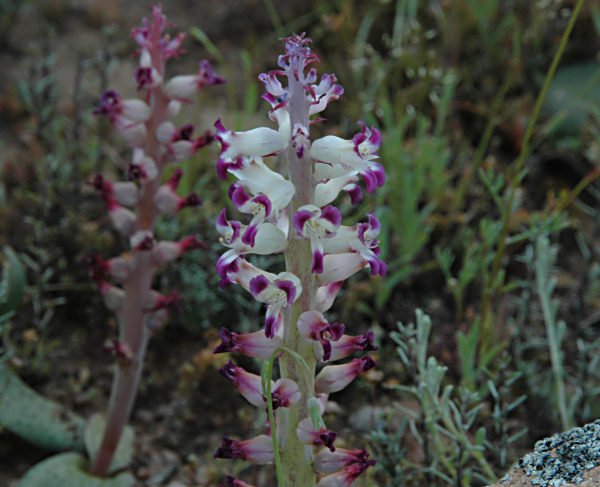
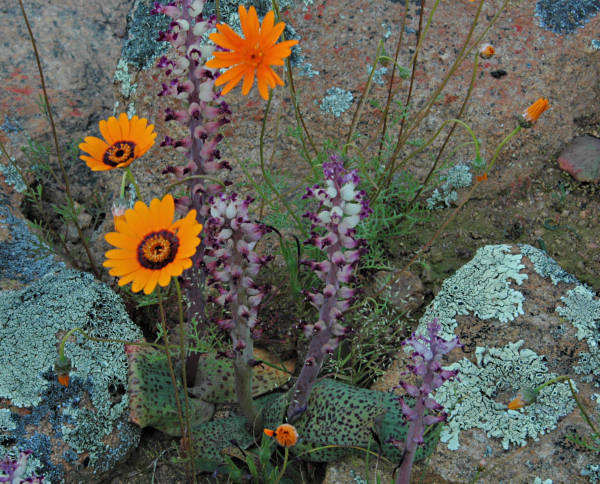
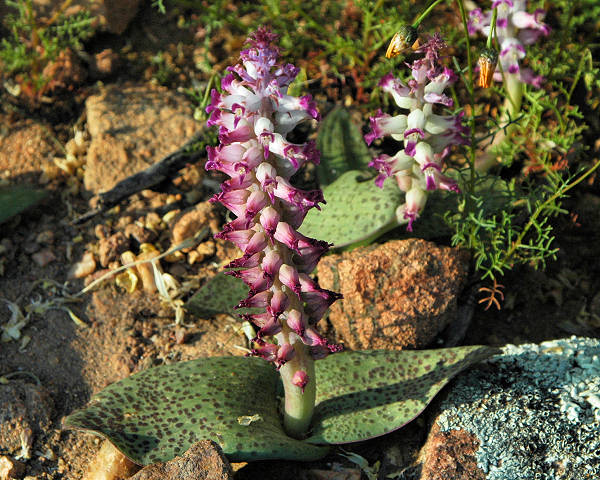
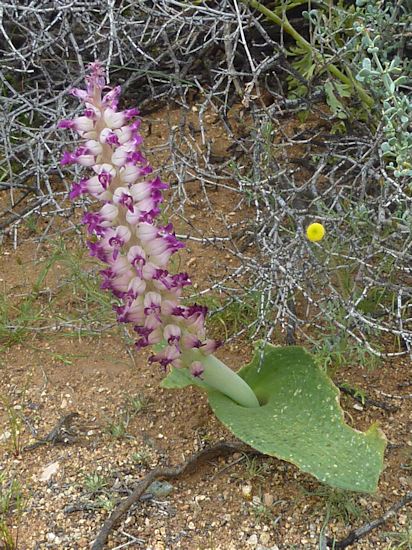
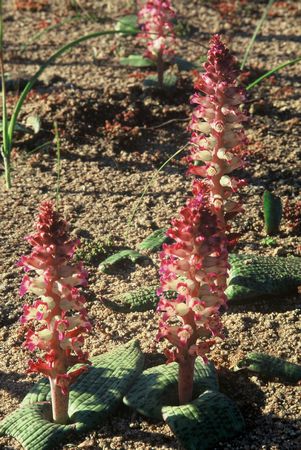
Photos from Alan Horstmann taken near Springbok in Namaqualand.
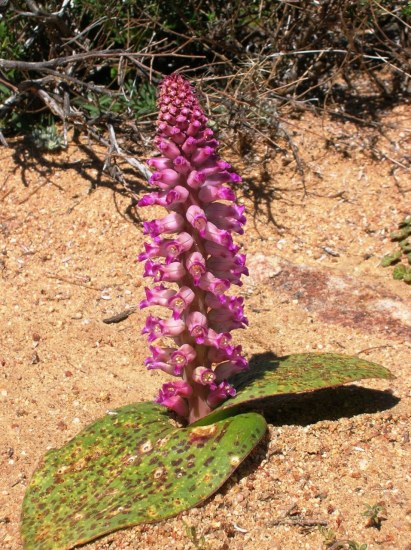
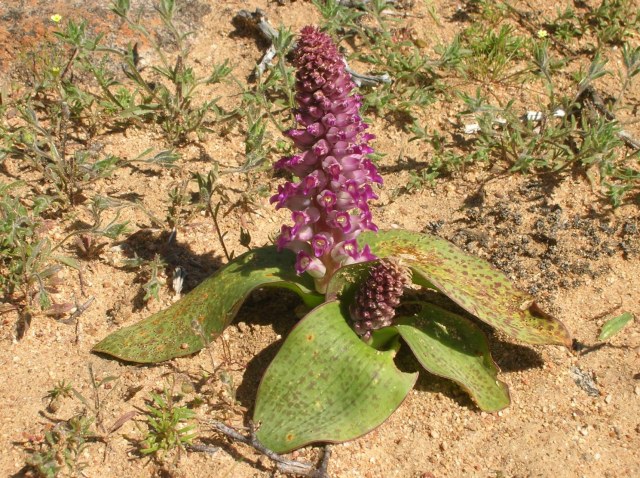
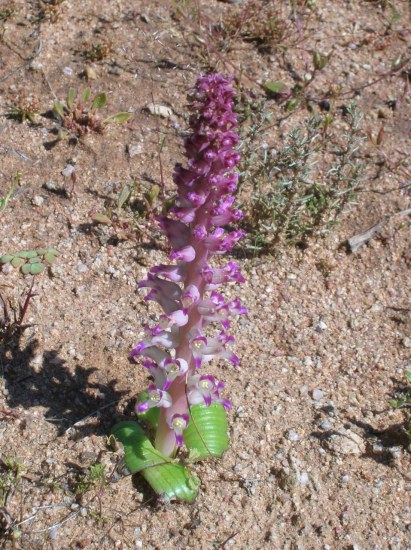
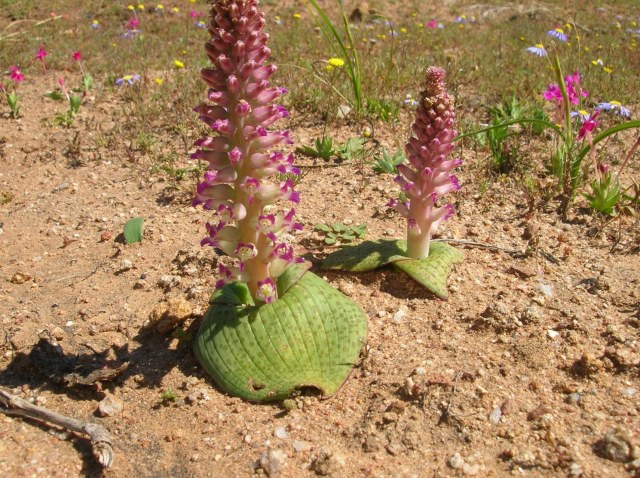
The first photo was taken by Kristina Van Wert when the Mendocino Coast Botanical Gardens had a bulb collection. The next three photos below from Mary Sue Ittner illustrate the wonderful leaves of this plant and the remarkable buds which develop over a long time adding to the interest of this plant. Bulbs can get very large and so can the leaves.
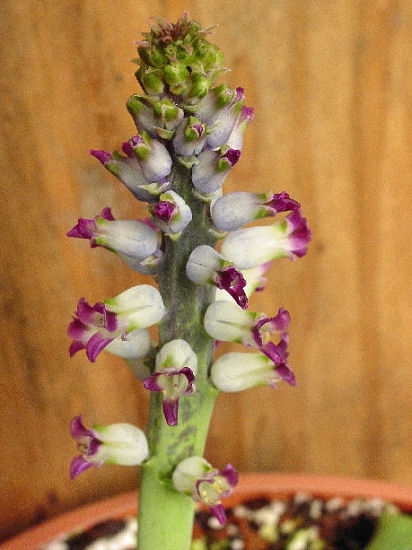
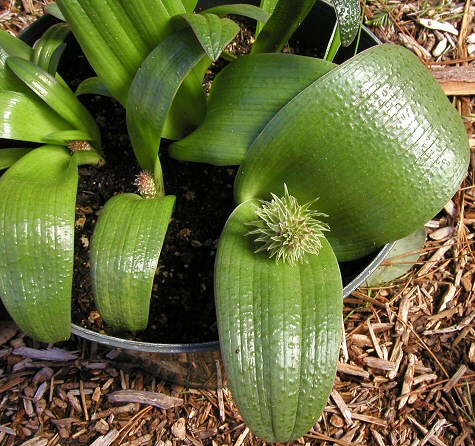
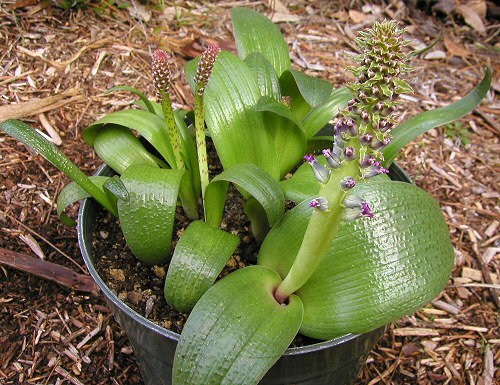
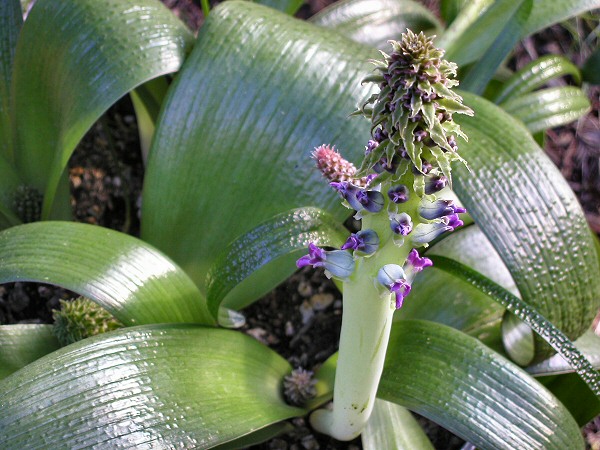
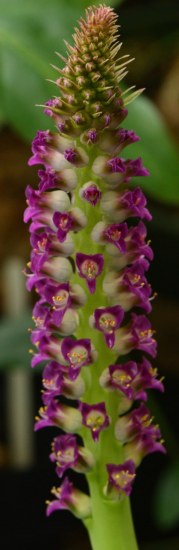
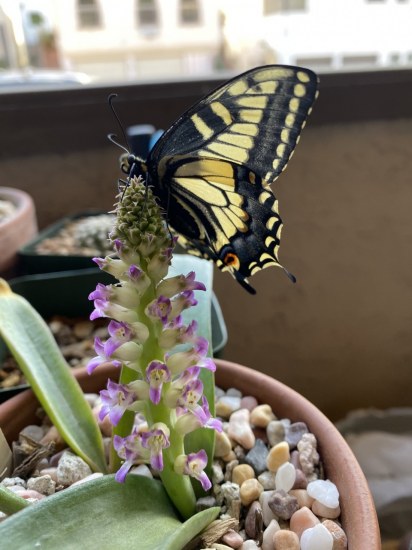
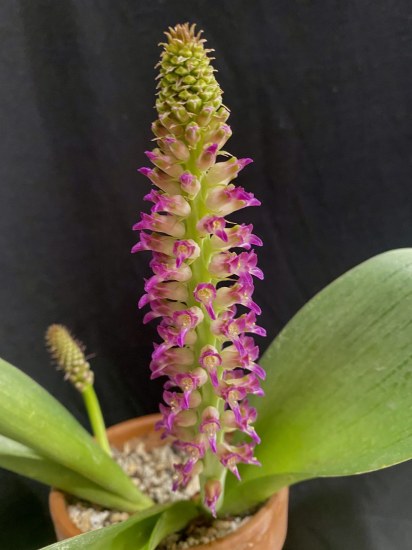
The first 3 photos from Arnold Trachtenberg. The next two are from Mike Lowitz including one image with an anise swallowtail butterfly.
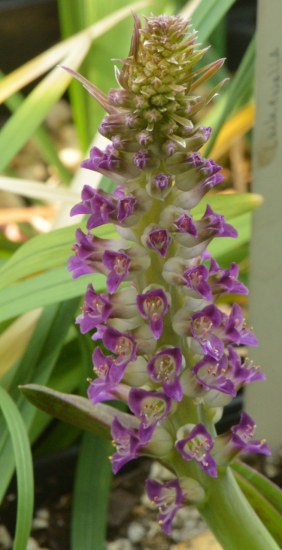
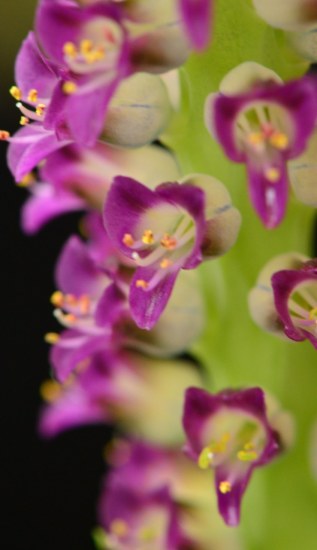
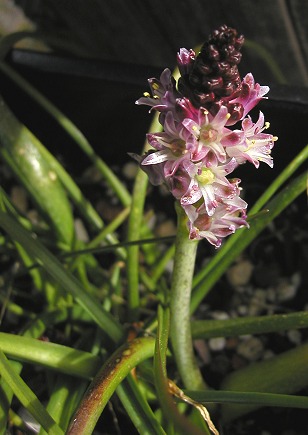
Lachenalia comptonii W.F.Barker has one or two hairy leaves and a white bell-shaped scented flower shortly pedicellate with exserted stamens with purple filaments. It is found on sandy flats from the Roggeveld escarpment to the Little Karoo and flowers in the spring (September-October). Height range: 5-20 cm high. The first photo was taken by Bob Rutemoeller of the flowers and the second photo by Mary Sue Ittner of the hairy leaves. Photos three to five were taken by Alan Horstmann. The last photo was taken by Bert Zaalberg.
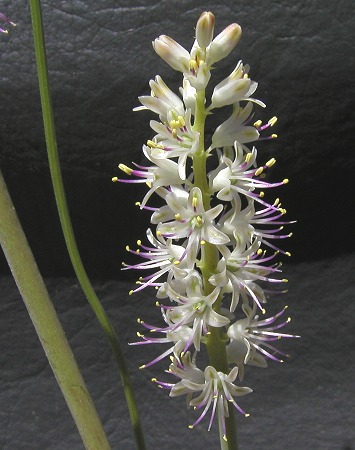
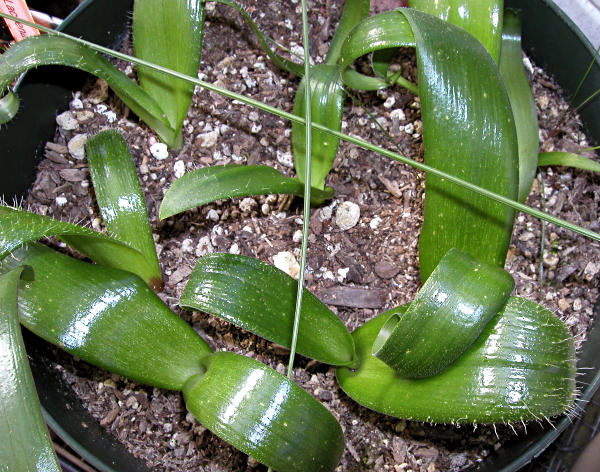
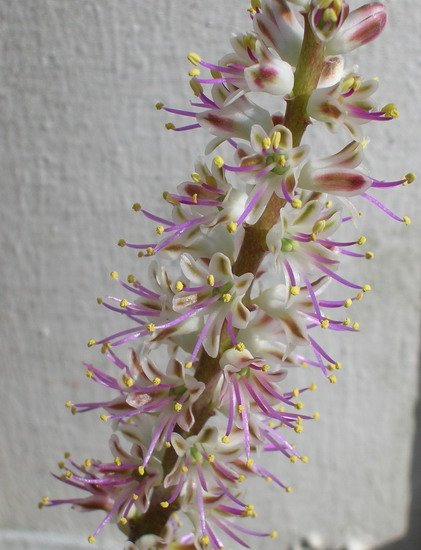
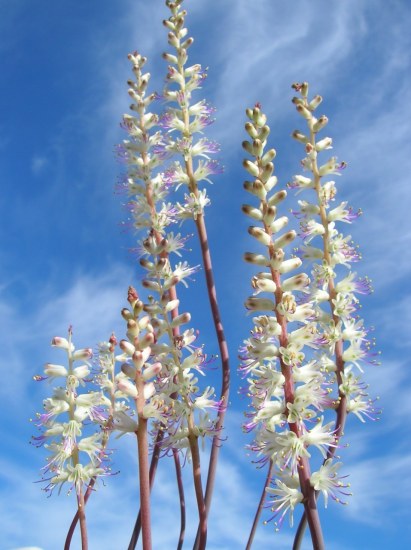
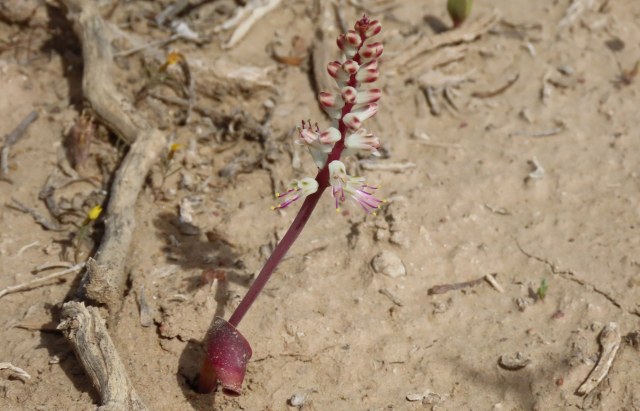
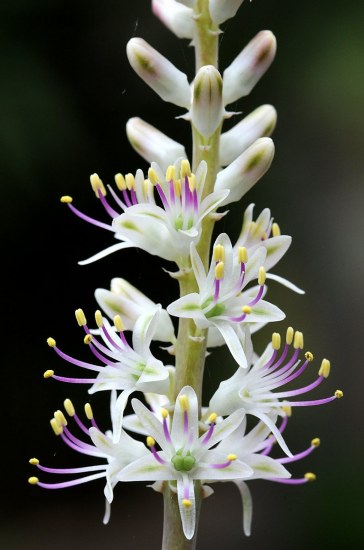
Lachenalia congesta W.F.Barker is a dwarf species from Sutherland and Calvinia where it is found on stony flats, flowering June-August. Growing from 6 to 14 cm tall, plants have two prostrate leaves and strong scented bell-shaped pale yellow flowers. Flowers are sessile and anthers included. The first two photos were taken by Alan Horstmann and Rod Saunders. The third photo was taken September 2011 by Cameron McMaster near Middelpos in the Roggeveld.
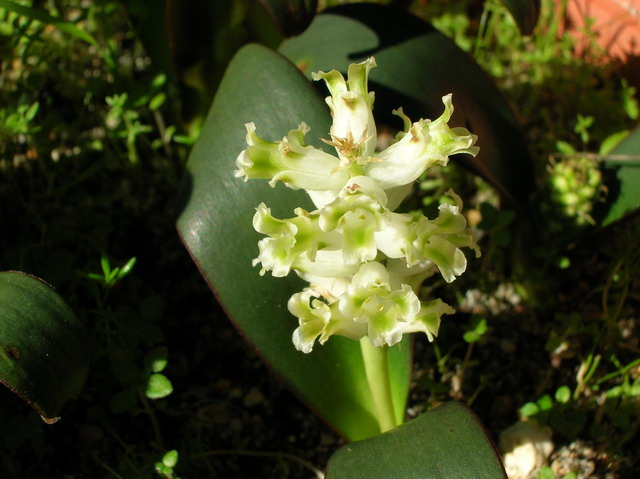
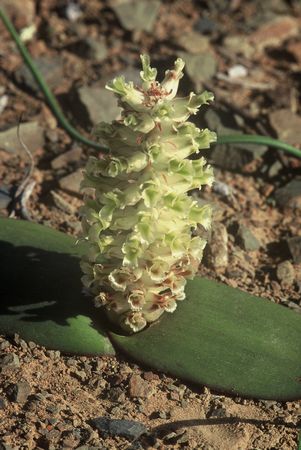
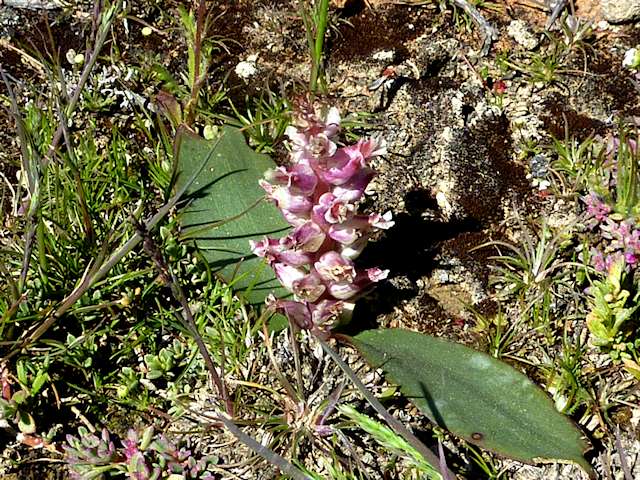
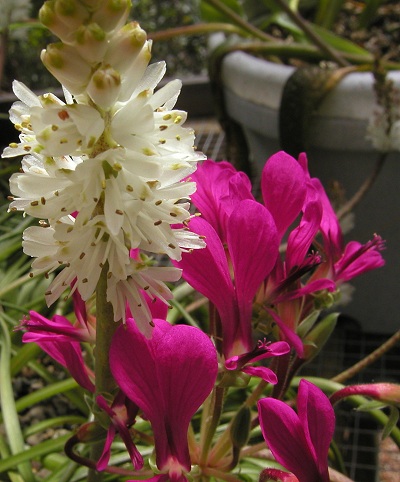
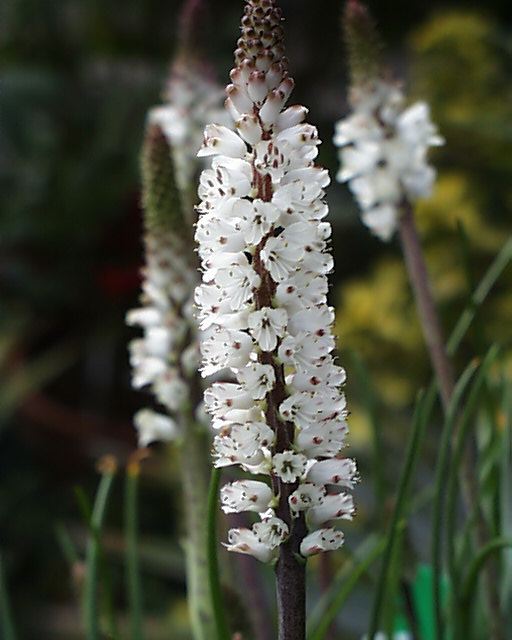
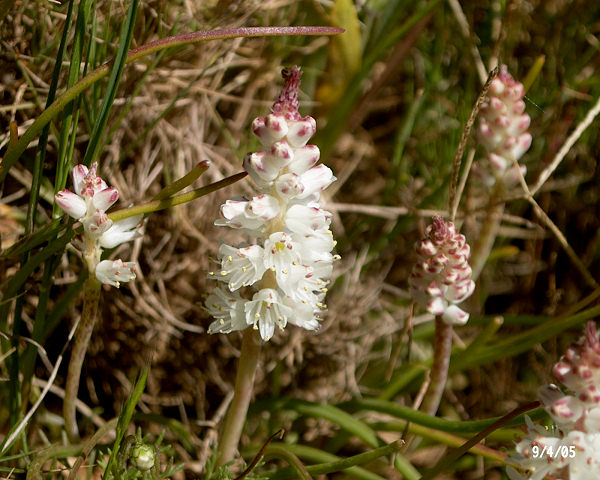
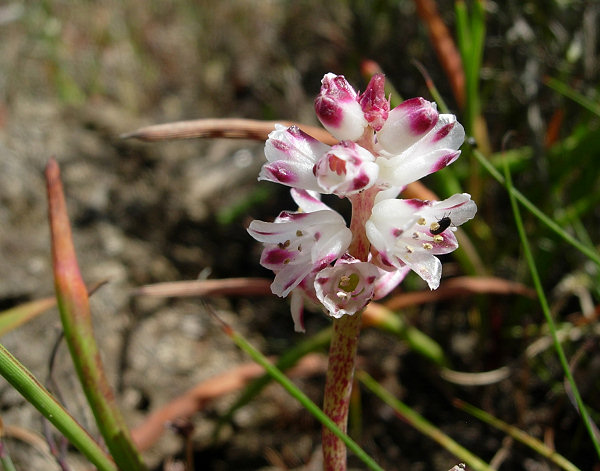
Lachenalia contaminata Aiton has bell-shaped white flowers shortly pedicellate with brown or red markings. It is found in wet places in the winter rainfall areas (Citrusdal to Bredasdorp). Growing 6 to 25 cm high, it flowers August-October. In the first photo by Bob Rutemoeller it is shown with Pelargonium incrassatum which was blooming at the same time. The second photo taken by Mary Sue Ittner shows the leaves too. The third photo was taken by Arnold Trachtenberg at Wave Hill. Photos 4-5 were taken by Cameron McMaster of plants growing and blooming in habitat in the Overberg. The first photo was taken at Boskloof and the second at Bredasdorp.

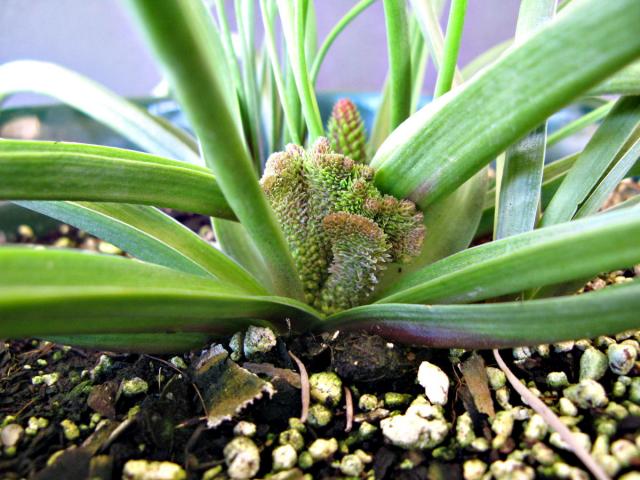
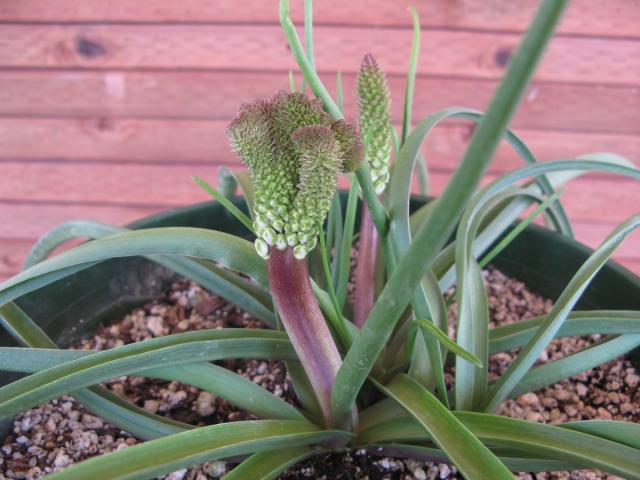
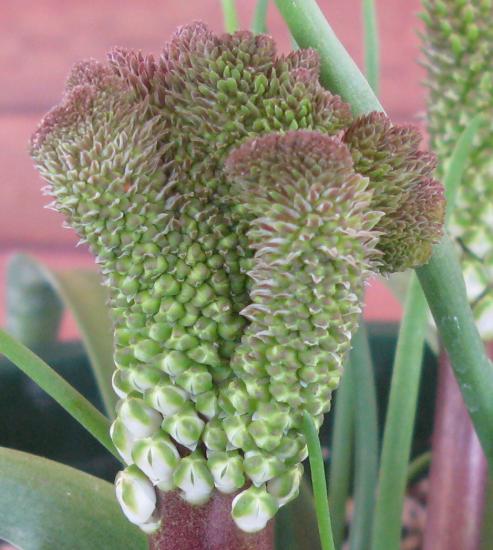
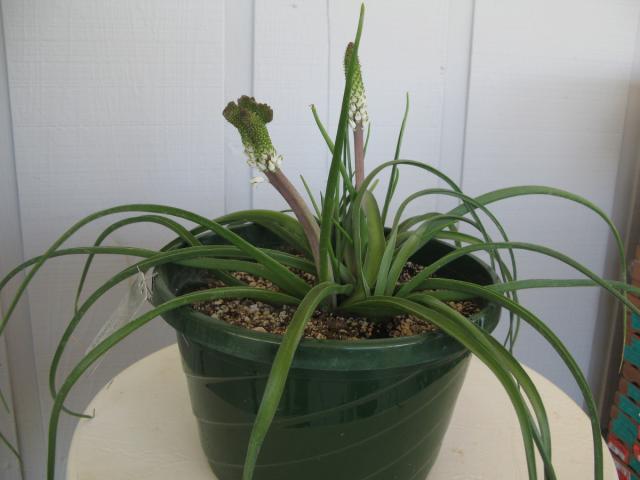
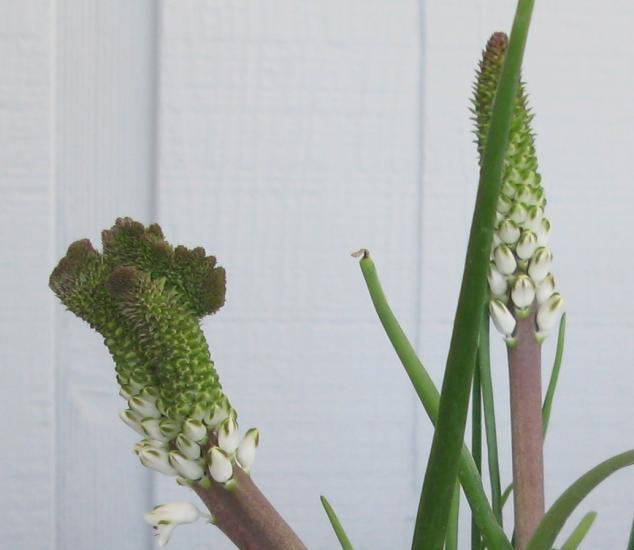
Photos by Pamela Slate showing fasciation of buds.
Lachenalia a - Lachenalia Species d-i - Lachenalia j-n - Lachenalia o-p - Lachenalia q-t - Lachenalia u-z - Polyxena - Lachenalia index