Lilium is a large genus in the Liliaceae family. This wiki page is for the Asiatic Section from l-o.
Asiatic Section A-C - Asiatic Section d-k - Asiatic Section p-z
Other Lilium sections and hybrids are linked below.
American Section a-m - American Section n-z - Candidum Section - Dauricum Section - Martagon Section - Oriental Section - Trumpet Section - Lilium Hybrids - Lilium Index
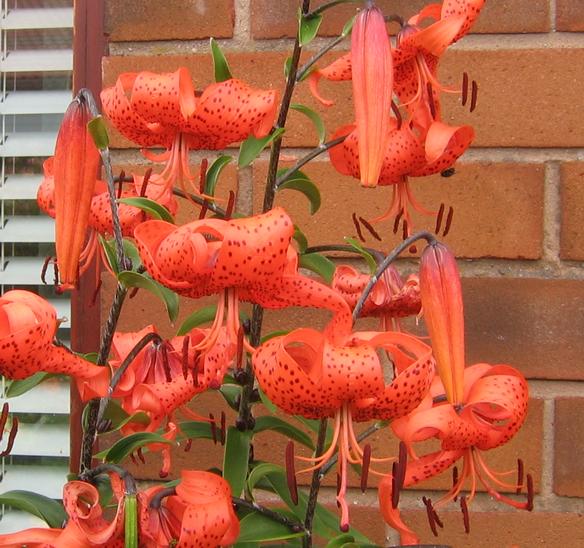
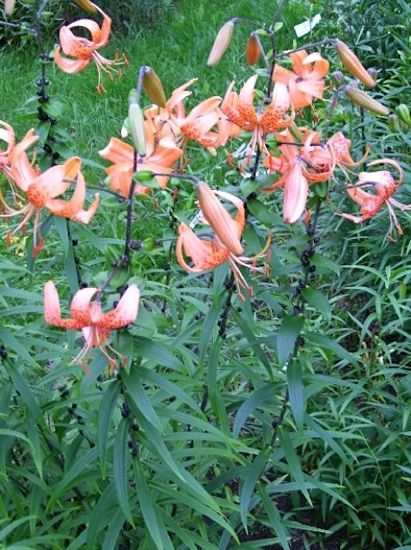
Lilium lancifolium Thunb. is a species of lily native to eastern Guam, China, Korea, and Japan. This species is commonly called the "Tiger Lily", synonymous with Lilium tigrinum Ker Gawl. See the Lilium lancifolium page. Height range: 3-4 ft. Representative photos of this species by David Pilling, Ron Parsons, and Darm Crook.


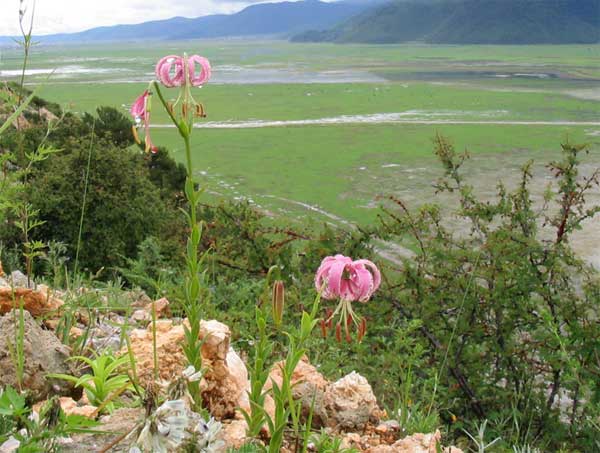
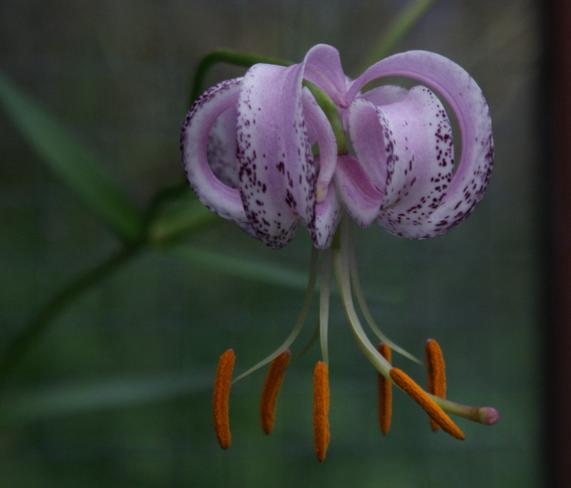
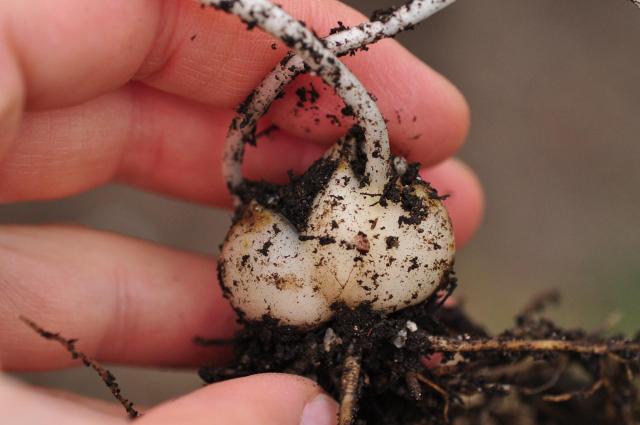
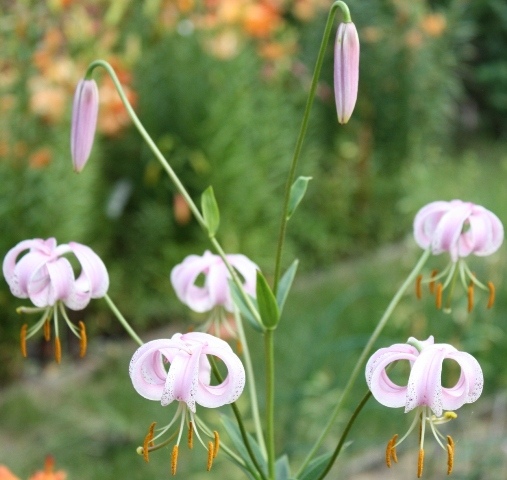
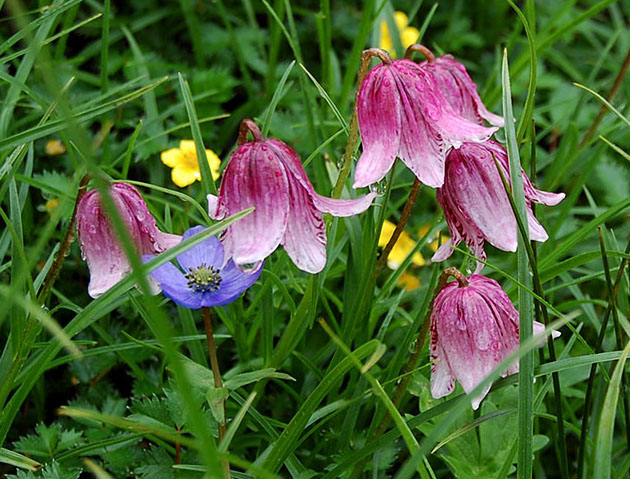
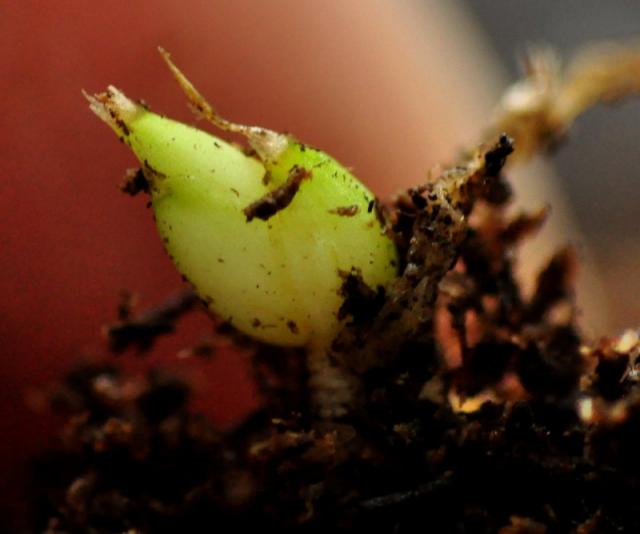
Lilium lankongense Franch. is a species found in northwest Yunnan and southeast Xizang in China growing at altitudes between 1800 and 3200 metres. It is occasionally referred to as the "pink" Lilium duchartrei. Flowers are set on long pedicels in a very open raceme inflorescence, are down-facing, fully recurved, and scented with 6 to 12 per stem. Height: 3 ft. The first photograph by David Victor was taken near Zhongdian, in Yunnan, July 2005. The second photograph by David Pilling is of a plant grown from SRGC seed exchange in 2007 which first flowered in 2009. The third photo of a bulb was taken by Pontus Wallstén. All the other photos were submitted by Darm Crook.
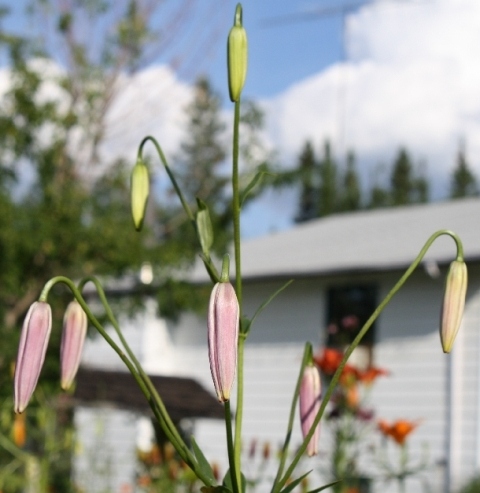
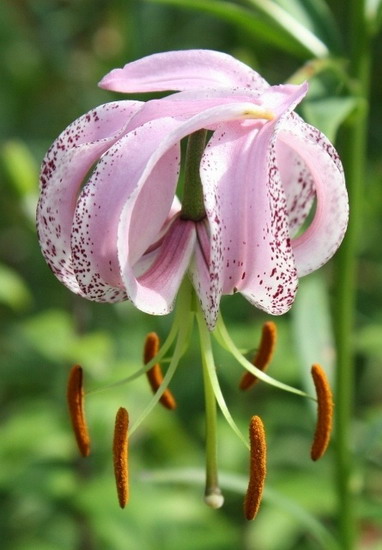
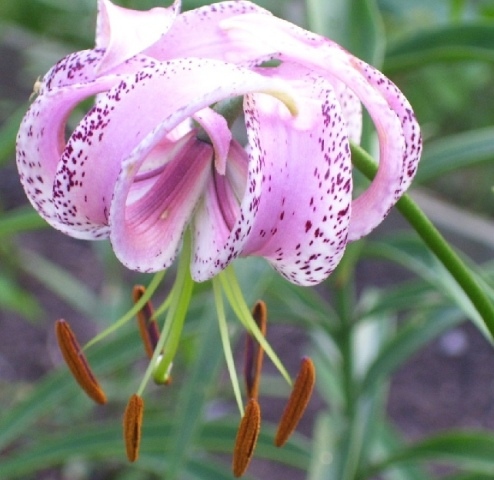
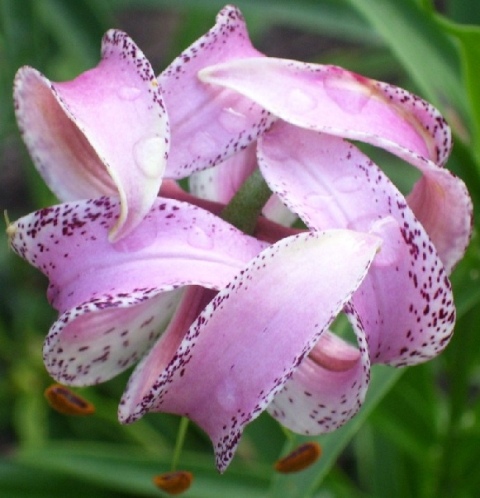
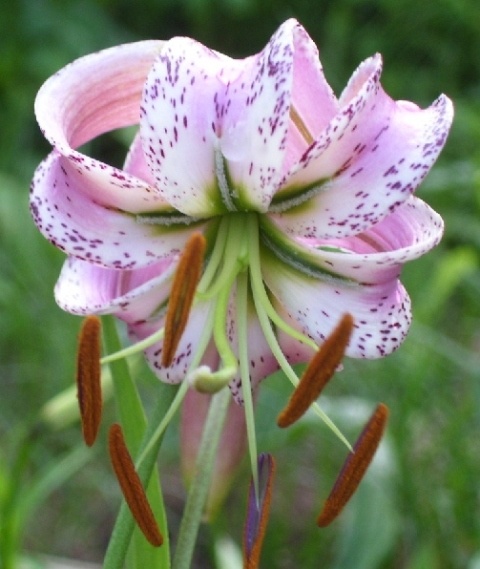
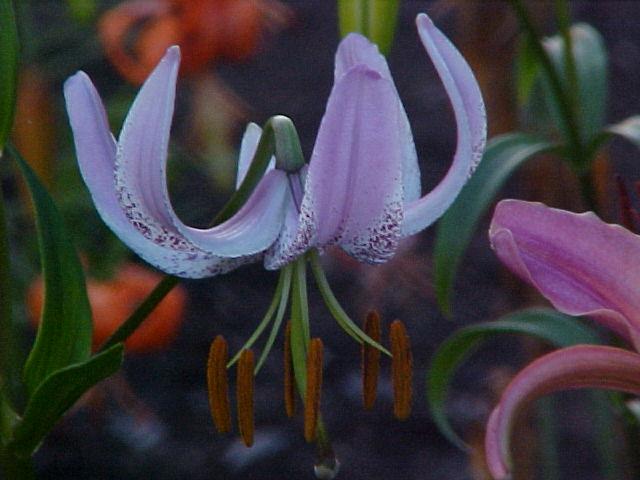
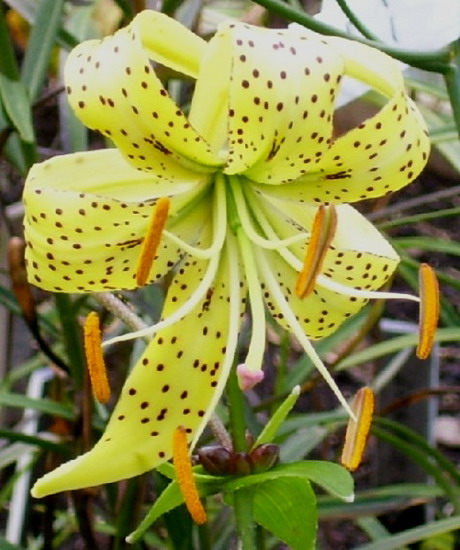
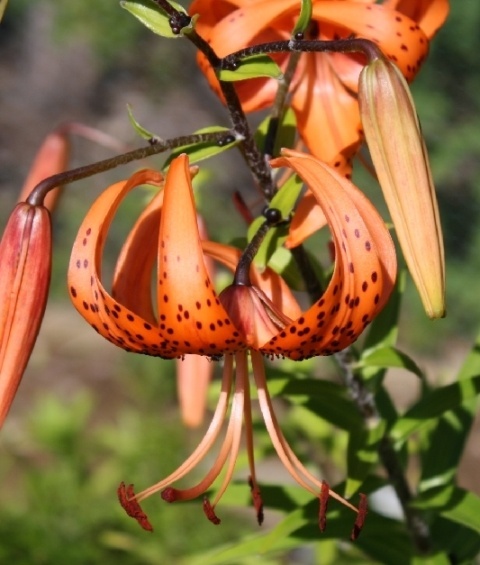
Lilium leichtlinii Hook.f. is from Japan. The type form of the species has yellow flowers with reddish-purple spots and grows only in central Honshu, Japan's main island, among tall grasses in rich, moist meadows. The variety maximowiczii with orange flowers is found all over Japan and in China and Korea. It is now believed that this variety is the true type and the yellow form should be considered a variety. It appears the yellow form was discovered and named as the type first and then the orange form was botanised. Debate concerning who discovered the lily first has led to the name var. maximowiczii for the orange form. The orange flowered form was once confused with Lilium lancifolium giving synonyms like Lilium leichtlinii var. tigrinum (Regel) G.Nicholson and Lilium leichtlinii var. pseudotigrinum (Carrière) Baker. It is no longer confused with L. lancifolium but due to professional ethics on who first and published it, var. maximowiczii could still be changed to var. tigrinum or Lilium pseudotigrinum Carrière. Another synonym is Lilium maximowiczii Regel. It has been noted (see LilyGerminationBySpecies) that leichtlinii and var. maximowiczii have different germination modes. For an attempt to resolve matters see Lilium leichtlinii subsp. maximowiczii (Regel) J.Compton (Liliaceae): a new combination for Maximowicz’s orange lily.
The stem is purplish; the buds (and the outside base of the tepals) are woolly (hairy) with some hair also being on the stem and foliage. It grows to 60-120 cm [2-4']. There are no stem bulbils. Photos #1-2 were taken by Gerry Danen showing the plants grown in Edmonton, Alberta, Canada. Photos three to five by Darm Crook.
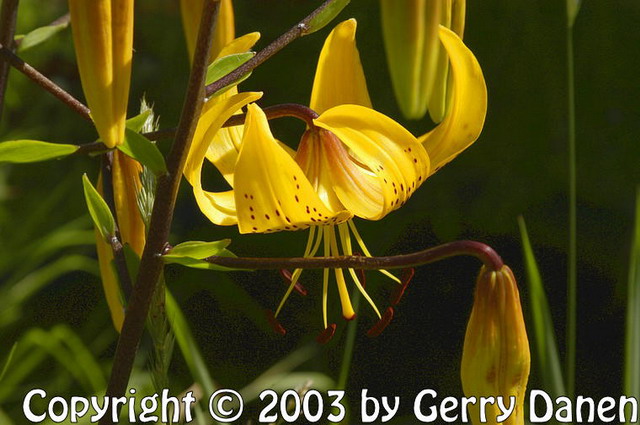
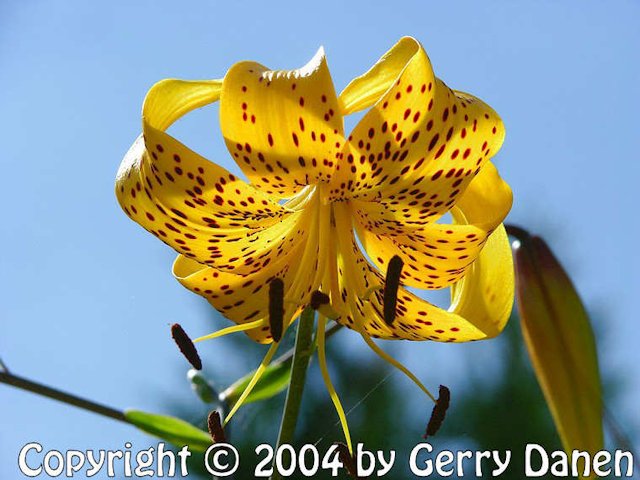
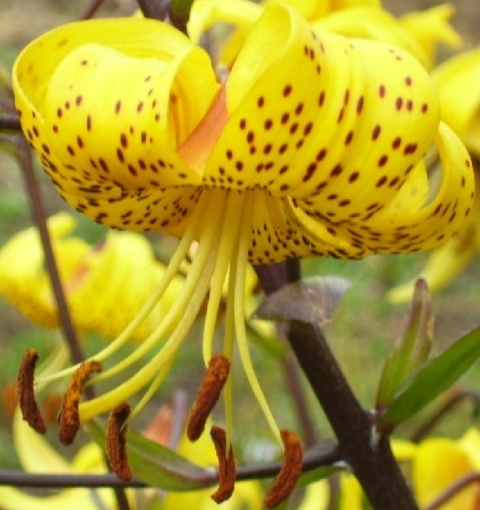
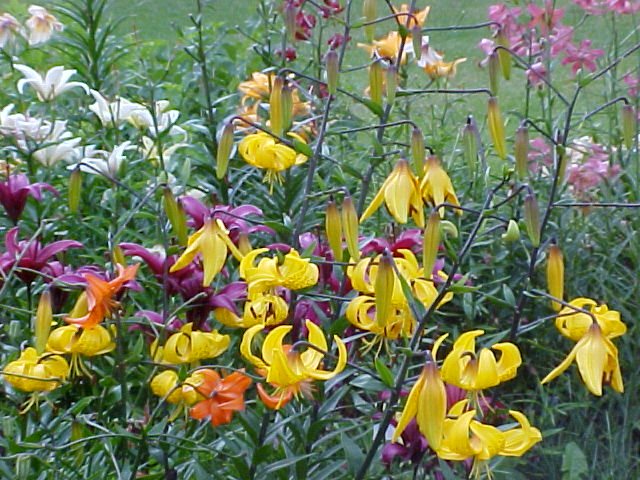
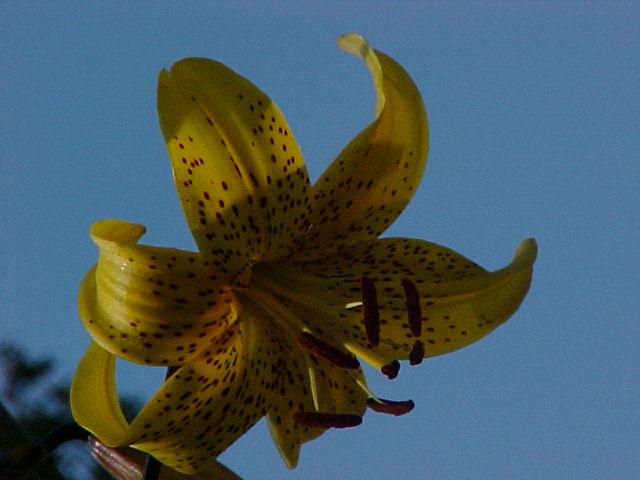
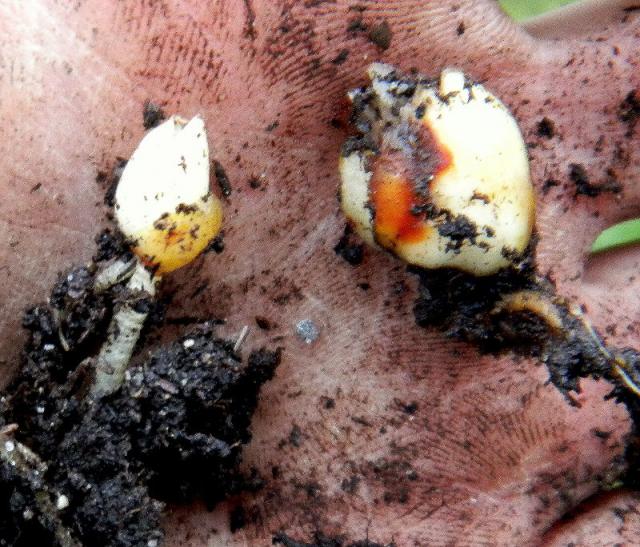
Photo 1 of seedling bulbs and 2 of a flowering size bulb by Pontus Wallstén.
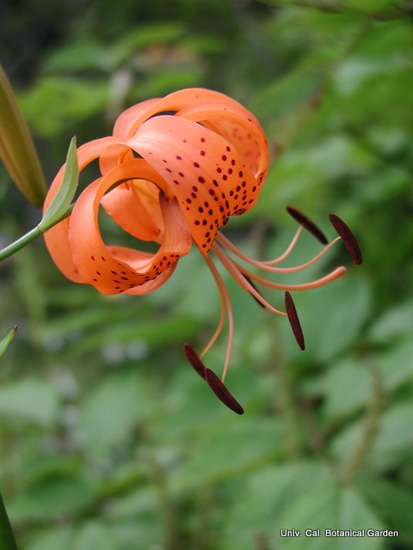
The photos below were taken by Nhu Nguyen from the UC Botanical Garden.

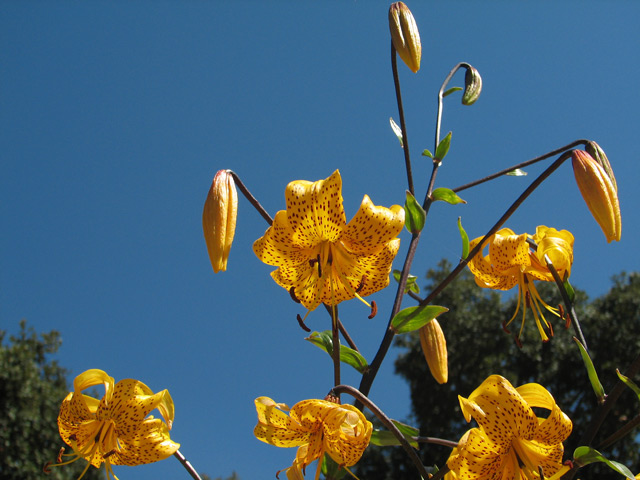
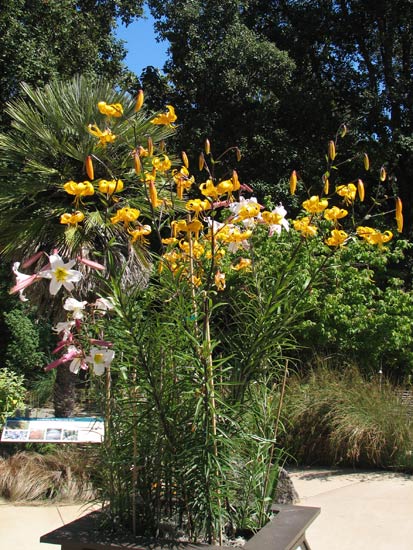
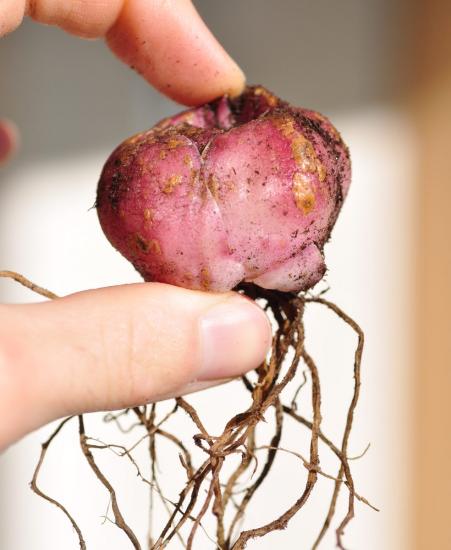
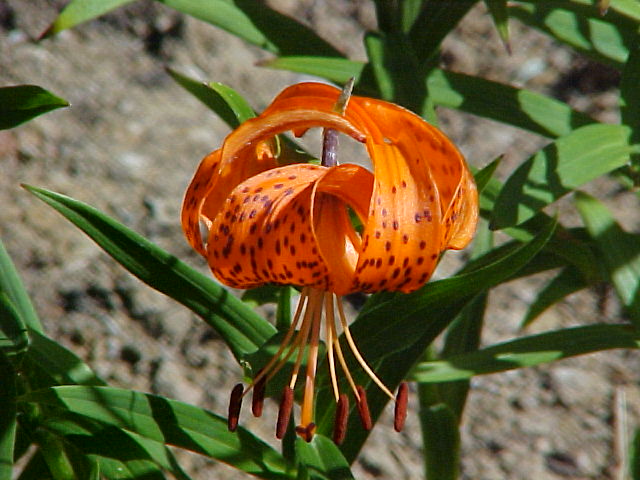
Lilium leichtlinii var. maximowiczii (Regel) Baker with the first two photos contributed by the UC Botanical Garden, photos three to five by Darm Crook, and the last photo of a bulb by Pontus Wallstén.
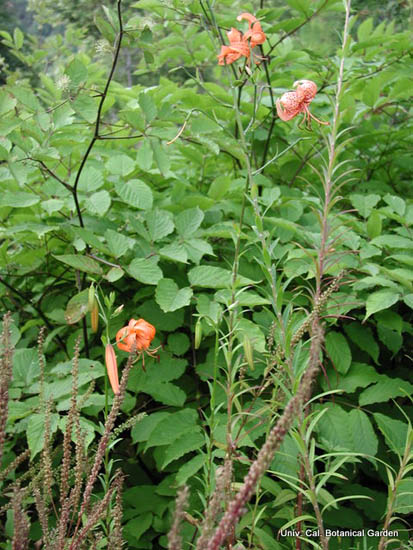
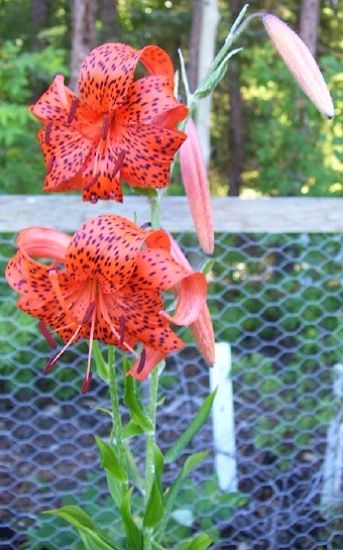
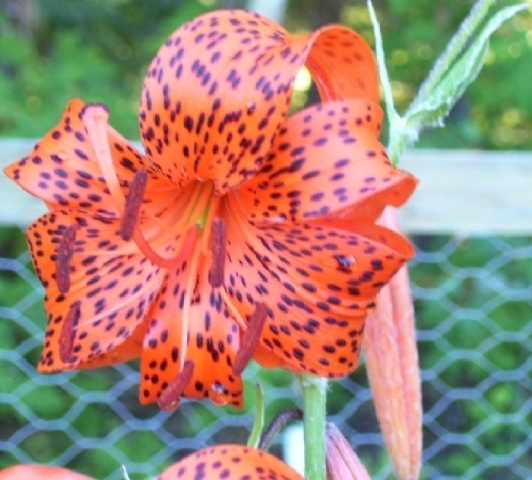
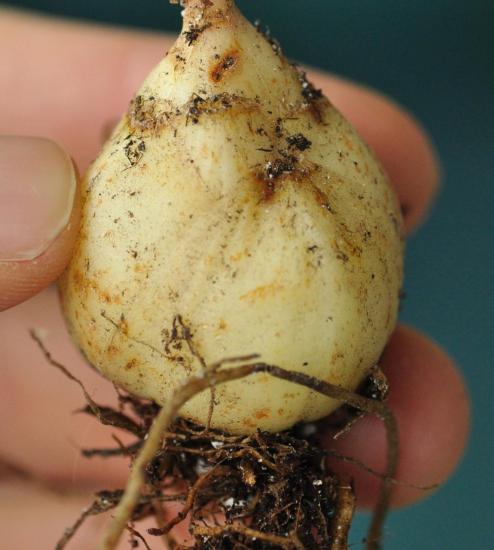
Lilium leichtlinii var. maximowiczii mutated clone, two photos by Darm Crook.
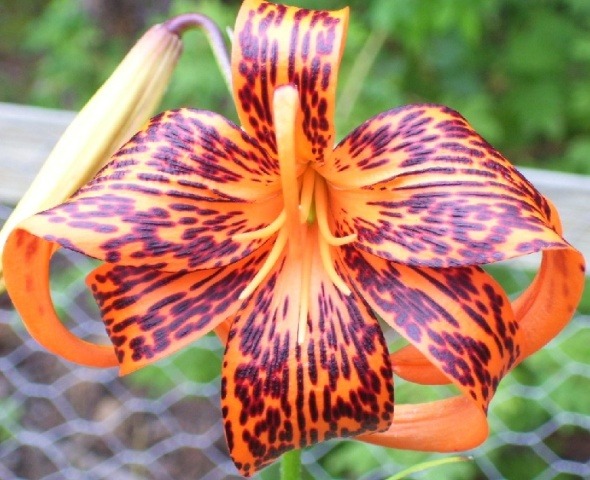
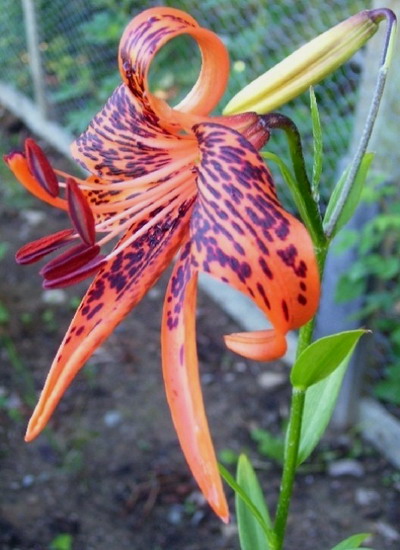
Lilium lijiangense L.J.Peng (synonym Lilium ningnanense J.M.Xu) is found in the Sichuan and Yunnan provinces of China at over 3000 metres. It has up to 5 scented flowers in a raceme on a 60 cm stem. Lijiang is in Yunnan and Ningnan in Sichuan. Photo 1 by John Lykkegaard Johansen, photos 2 and 3 by Pontus Wallstén.
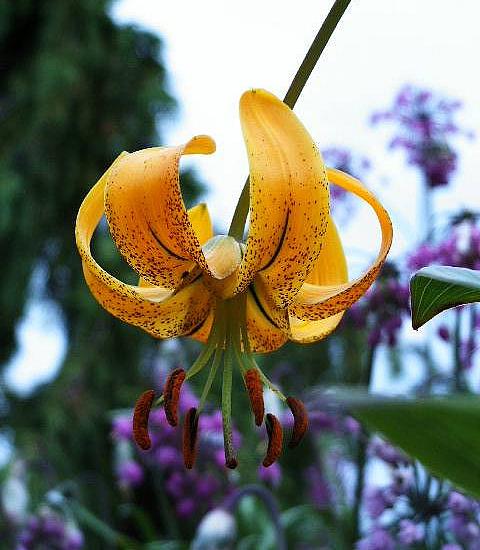
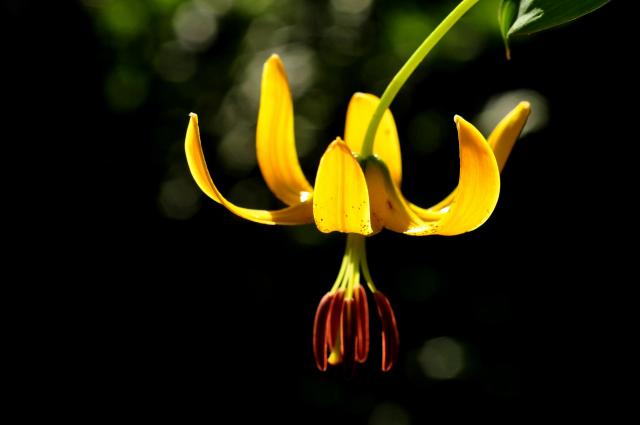
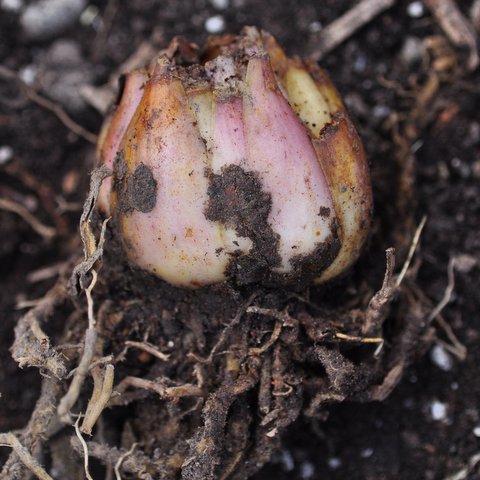
Lilium lophophorum (Bureau & Franch.) Franch. is found at high elevations in Yunnan and Sichuan provinces as well as SE Tibet. It is a small plant, not more than 25-30 cm high with usually a solitary, lantern-like flower. It grows in alpine meadows, occasionally at the edge of forests or in shrubby areas. Photo 1 was taken in Baimashan, NW Yunnan by Oron Peri. Photo 2 of a bulb by Pontus Wallstén.
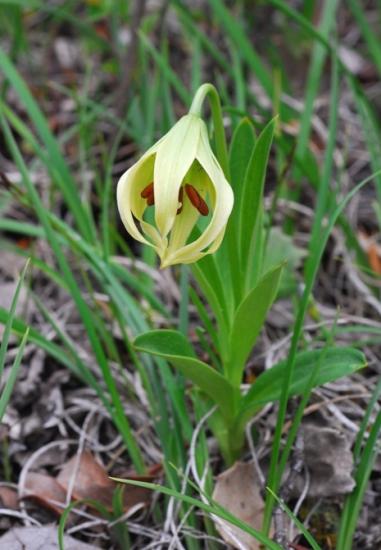
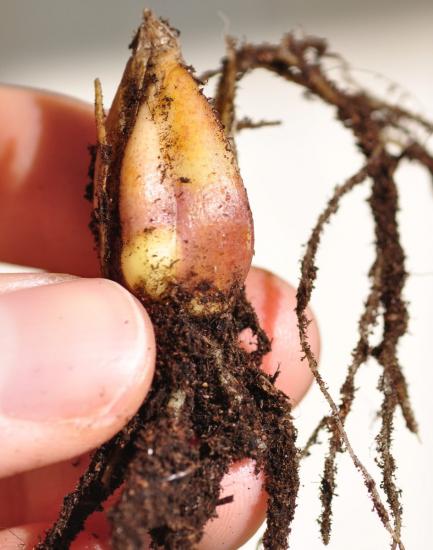
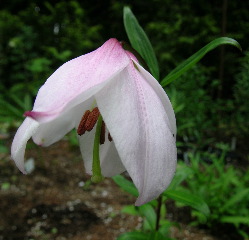
Lilium mackliniae Sealy was discovered by Frank Kingdon Ward on his botanical study tour in Siroi Hills of Ukhrul of Minipur, India, and named for his wife, Jean Macklin, notes Dr. A. V. Singh. Height: about 2 1/2 ft. The plant shown in photo 1 by Diane Whitehead was first thought to be a Nomocharis. This is the only plant from ten seeds sown in 1998, from the Royal Horticultural Society Lily Group. It is growing under an apple tree behind a deer fence, and flowered for the first time in mid-May, 2004 in Victoria, British Columbia, Canada. Photo 2 of a bulb by Pontus Wallstén.
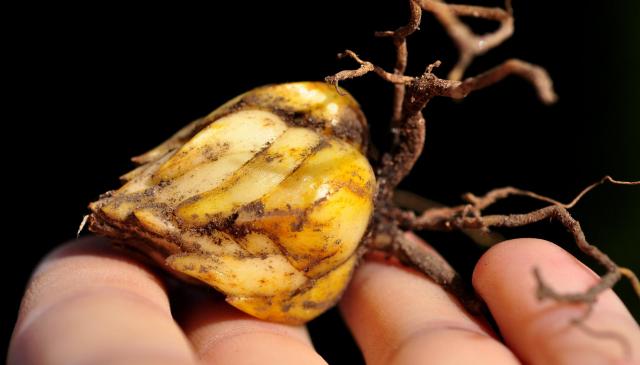
Lilium matangense J.M.Xu was described in 1985 by Jie Mei Xu. It is endemic to the district of Barkam, in northwestern Sichuan in China. It grows at altitudes between 3200 and 3300 m on sunny limestone and clay slopes both in shrubbery and exposed on the sides of cliffs. It is known only to be found in a very small colony location where it is extremely threatened. Height range: 20-35 cm. Photo of a bulb by Pontus Wallstén.
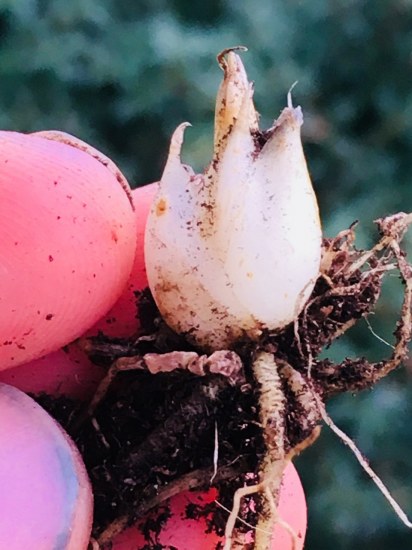
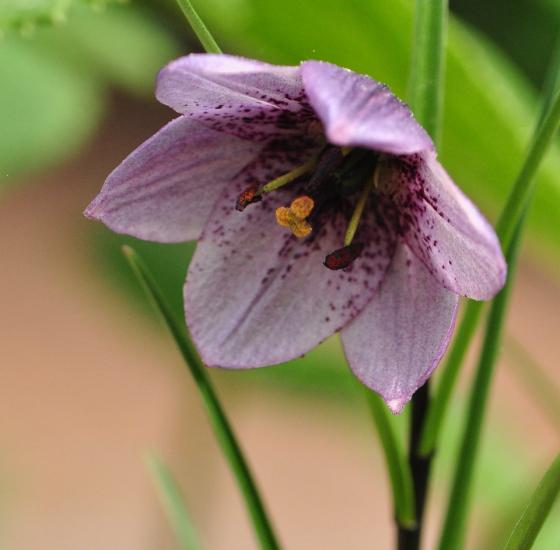
Lilium nanum Klotzsch, syn. Nomocharis nana (Klotzsch) E.H.Wilson, is an alpine species native to the Himalayas. It is a short species, growing 16 to 34 cm (7 to 15 inches); the floret is outward facing, pale pink spotted with purple. The foliage is narrow and long; it grows in a very upright position and can extend from mid-point on the stem to well above the flowering tip. Photos by Pontus Wallstén.
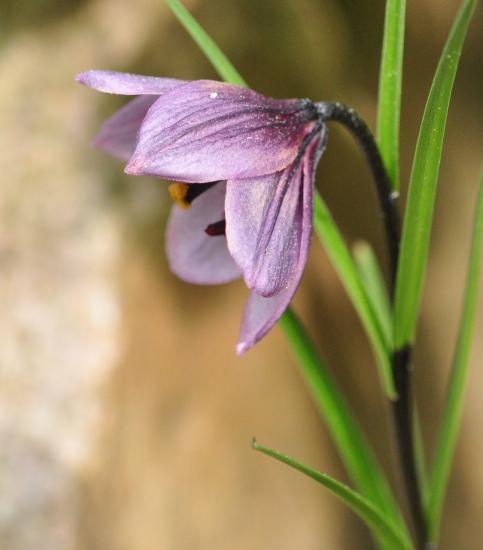
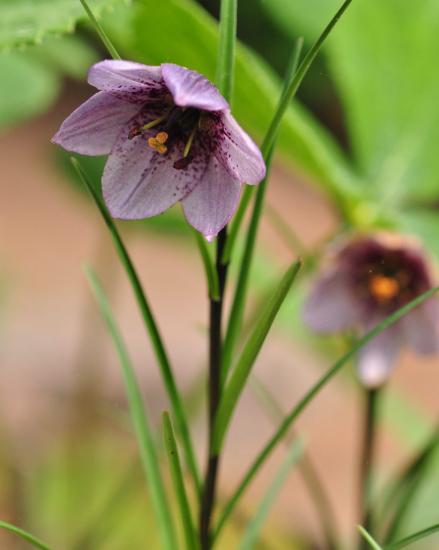
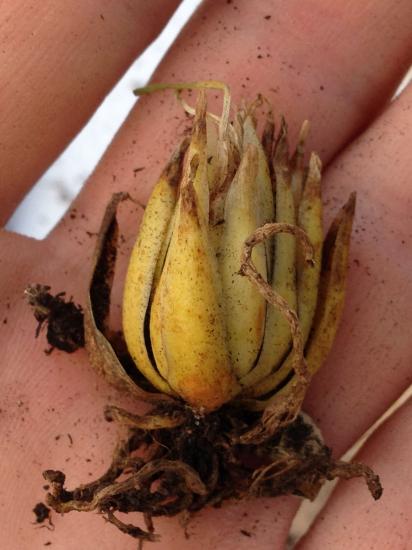
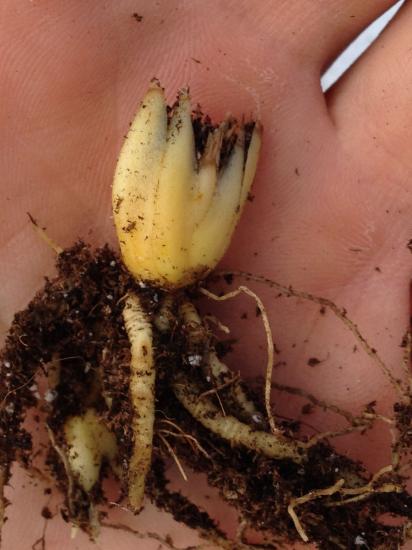
Lilium nanum var. flavidum(Rendle) Sealy is much like the type in foliage and height, but the florets have an outward and downward orientation, aren't as widely opened, are yellow, spot free, and have a light blue stigma. This lily is an early flowering species; in zone 1 it flowers by late June or early July and senesces ("browns down") by early to mid August. It enjoys a high humus well-drained acidic based soil. Five photos of L. nanum var. flavidum were submitted by Darm Crook.
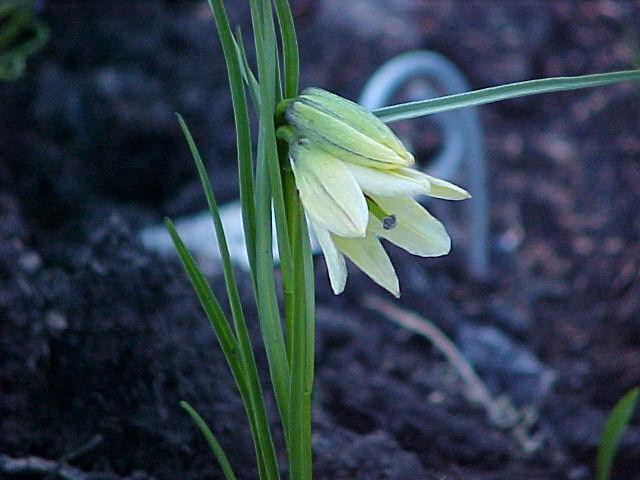
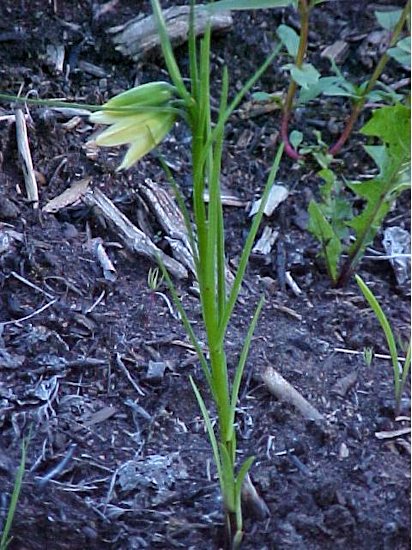
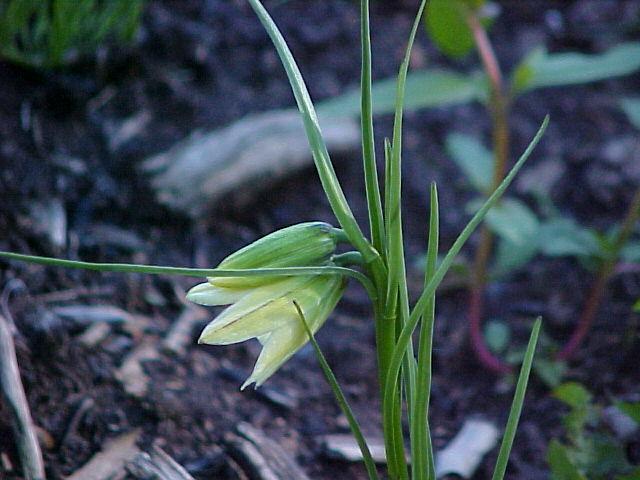
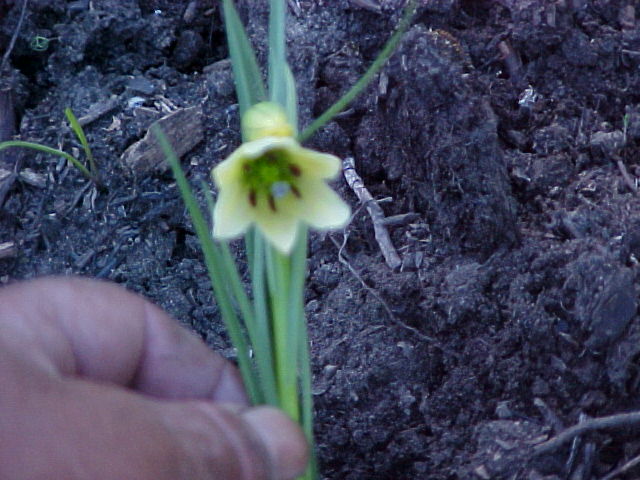
Lilium nepalense D.Don is a species first found in Nepal, but now known to stretch across the Himalaya into western China. It typically grows in wet forest borders, between 1200 m and 3000 m. Height: 2-3 ft. Three botanical varieties are recognised, according to Haw (in "Lilies of China", Timber Press, 1987), all of which occur in Yunnan. The broad leaves and the location make me believe that this fits with var. nepalense. The plant shown was photographed in Yunnan, west of Liuku, near the Myanmar (Burma) border, at 2,350 m. Comments and photos 1-2 by David Victor. Photo 3 of bulb by Pontus Wallstén.
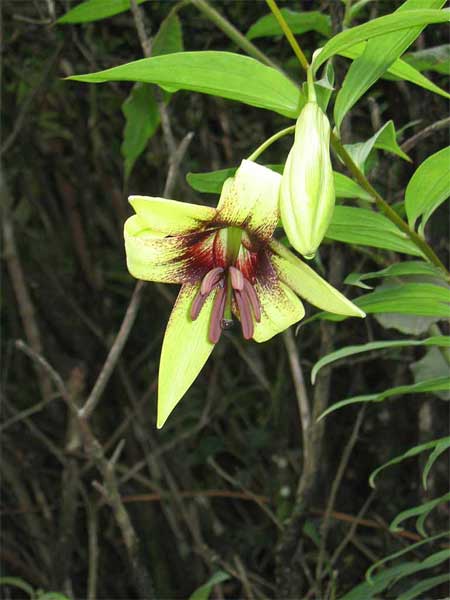
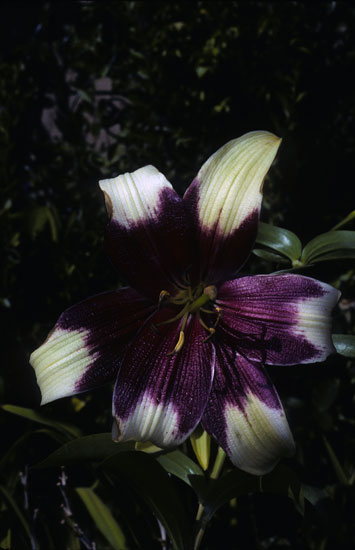
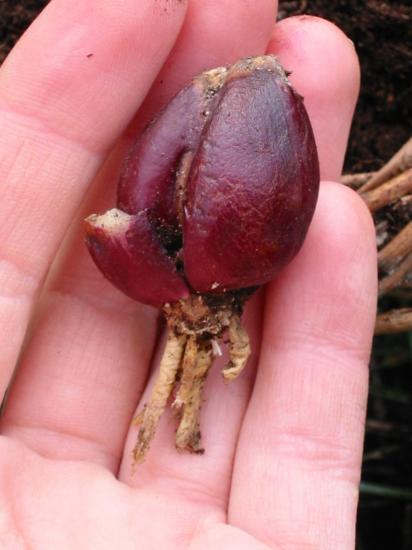
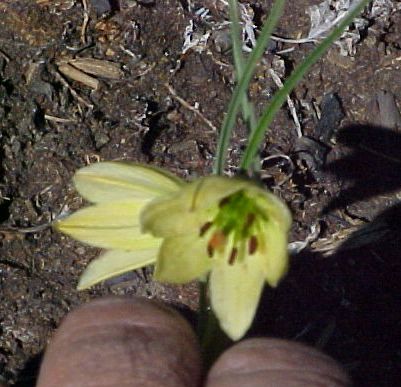
Lilium oxypetalum Baker, syn. Nomocharis oxypetala E.H.Wilson is native to Nepal and the West Himalaya. It grows from 30 to 50 cm with yellow to cream colored flowers from June to July. The name oxypetala means 'sharp petals'.
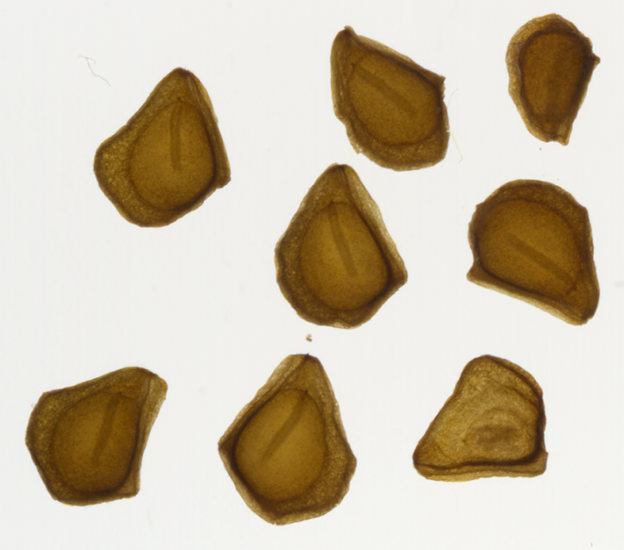
Lilium oxypetalum var. insigne Sealy in 2022 no longer has variety status. It is distinguished by having pink to purple flowers. The first photograph was taken by Gunhild & Thorkild Poulsen and the second by David Nicholson. The third photo is of the bulb by Pontus Wallstén. The last two photographs are of the same seed by David Pilling; the second one was taken using transmitted light.
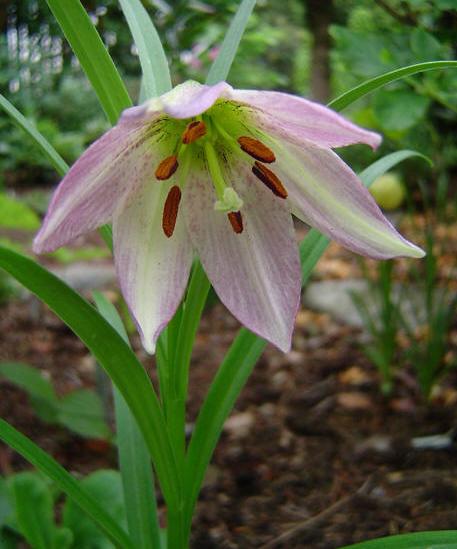
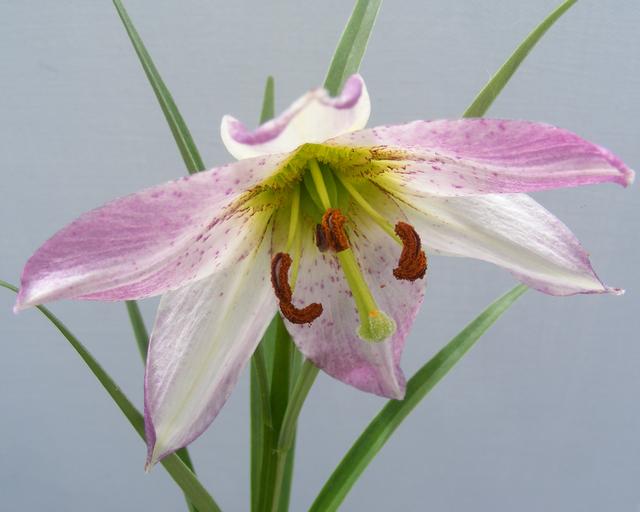
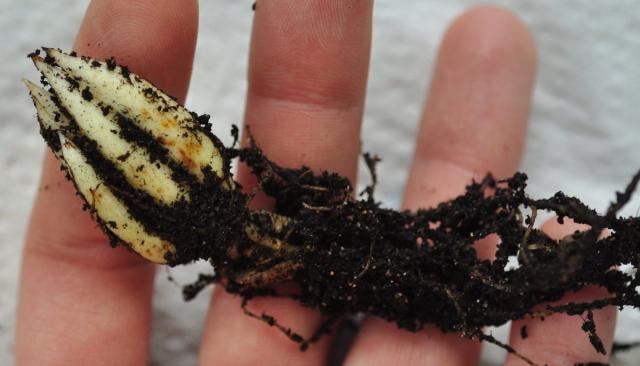
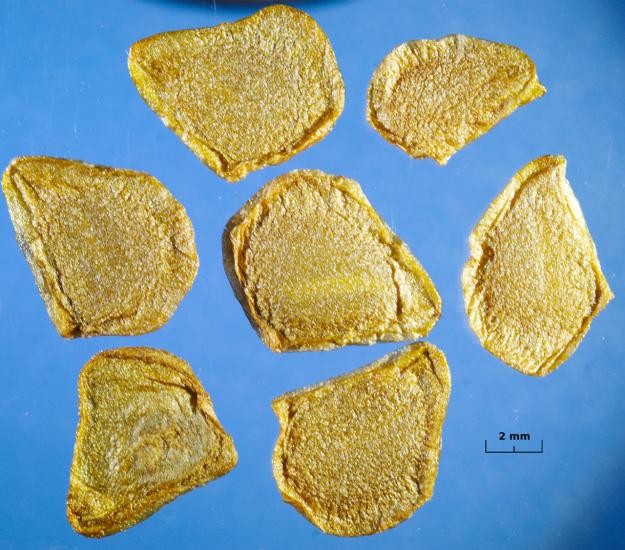
Lilium yapingense Y.D.Gao & X.J.He is a species described in 2013 in a paper entitled Lilium yapingense (Liliaceae) a new species from Yunnan, China, and its systematic significance relative to Nomocharis. Height range: 30 cm. It is very similar to Lilium nanum|Photo 1 by Bjornar Olsen. Photo 2 of bulb by Pontus Wallstén.
American Section a-m - American Section n-z - Asiatic Section a-c - Asiatic Section d-k - Asiatic Section p-z - Candidum Section - Dauricum Section - Martagon Section - Oriental Section - Trumpet Section - Lilium Hybrids - Lilium Index