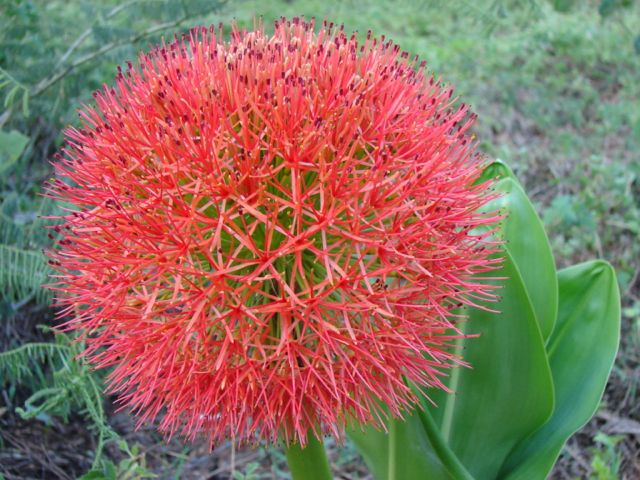
Scadoxus is a genus in the Amaryllidaceae family. The 9 species are found in tropical Africa. Three are found in the well watered areas of the summer rainfall area of South Africa and two are found in the Cape. This genus was long regarded as a subgenus of Haemanthus, but because there are differences in the number of chromosomes, the foliage, and the rootstock, it is now treated as a distinct genus. The rootstock is predominately an elongated rhizome, sometimes with a bulbous part above. Leaves are dry or green at flowering. Many have a sheath that forms a false stem. Most species favor semi-shade and can be grown from seed without a lot of trouble. Cameron McMaster has provided interesting information about this genus in an article he wrote for Farmer's Weekly in 2008. The photo below from Alan O'Leary shows the following species from left to right for comparison: Scadoxus multiflorus ssp. katharinae, Scadoxus multiflorus ssp. multiflorus, Scadoxus pole-evansii, Scadoxus pseudocaulus (just opening), and Scadoxus membranaceus (fading).
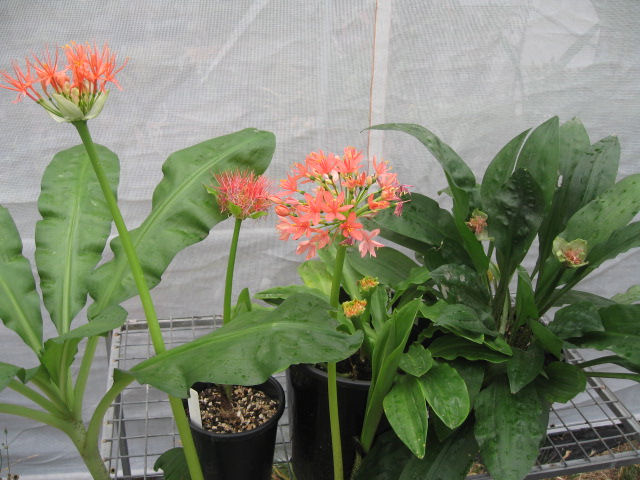
Collect seeds when they have turned red and fall off the plant or at least fall into your hand when touched. Then remove the fleshy coating from the seeds. The period of viability is rather short compared to other seed -- even to Haemanthus seed (Doug Westfall). Plant the seeds on the surface of a moistened mix like ProMix (Jim Shields). The seeds will germinate but will not produce leaves right away. Instead, all of the energy will be put into producing a small bulblet which will sit dormant for a few months before leaves emerge. During this time, keep the medium somewhat moist but not completely dry nor soaking wet. In general, Scadoxus don't need huge pots to grow and bloom well.
Scadoxus cinnabarinus (Decne.) Friis & Nordal is widely distributed in West and Central Africa. It is evergreen. The bulb is used in combination with other plants as a poison and is also used medicinally. It must have rather warm and humid growing conditions with the temperature never dropping below 45 °F (7 °C). At the same time, it is very sensitive to bright sun which will burn the leaves. Height range: to about 60 cm. The first two photos from iNaturalist were taken by Bart Wursten in the Democratic Republic of the Congo in October and shared under a CC BY-NC license. The last photo from Doug Westfall who wrote: "It is one of the "most rare" of the Scadoxus and I feel privileged to own this one.
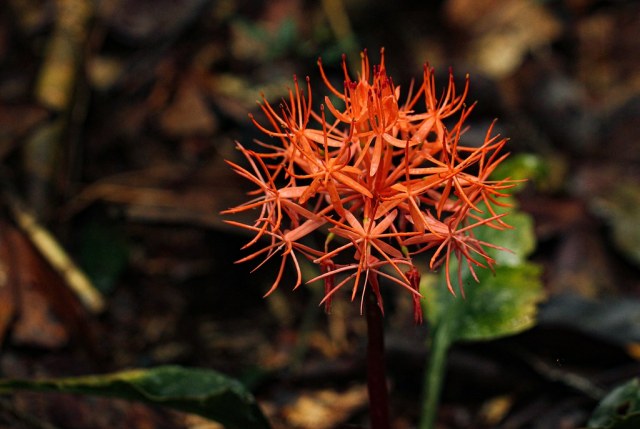

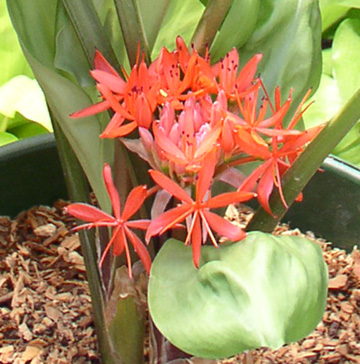
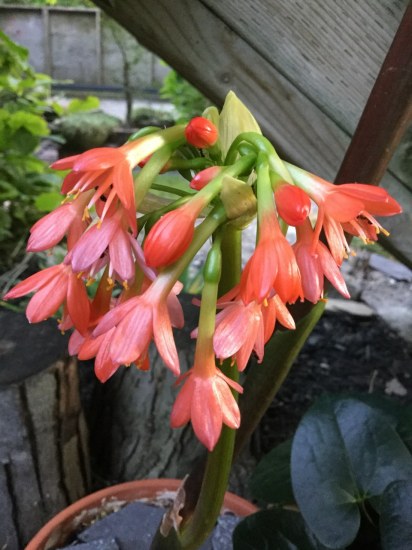
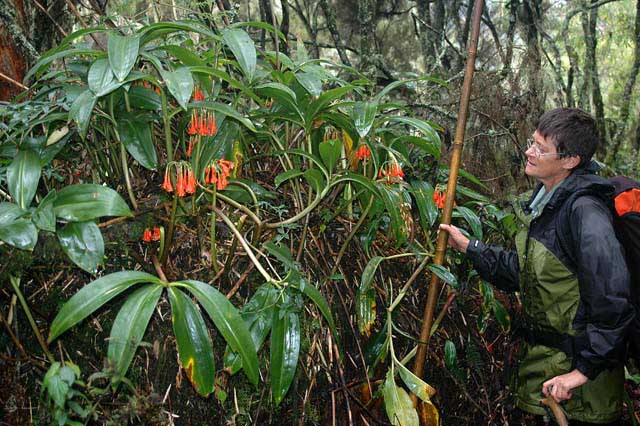
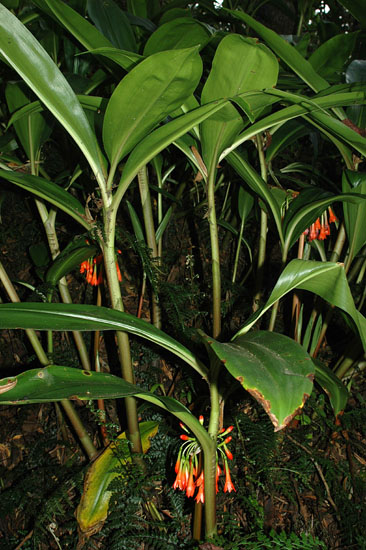
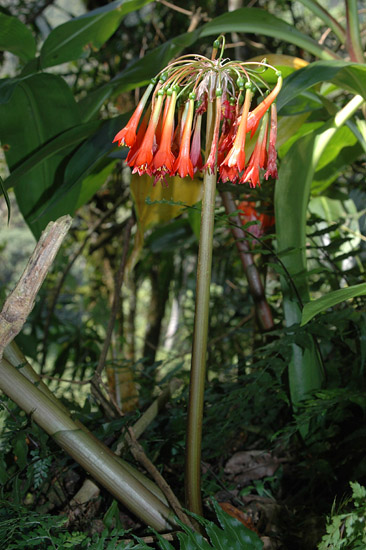
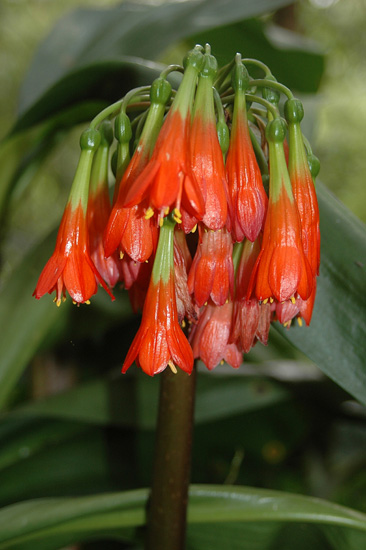
Scadoxus cyrtanthiflorus (C.H.Wright) Friis & Nordal is distributed in Central Africa in Uganda and the Congo where it is found at 2300 to 2700 meters. This species grows from a rhizome that produces a deciduous ovoid bulb. New growth and the flowering scape emerge by splitting through the pseudostem. The umbel has 20 to 30 bright red pendulous flowers, about 5 cm long. Height: to about 60 cm. The first two photos by Jonathan Hutchinson. The next two photos are from Erika Schroedersecker who says the flowers are long lasting.
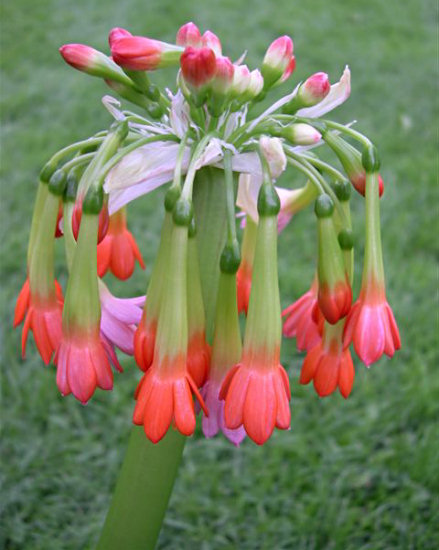
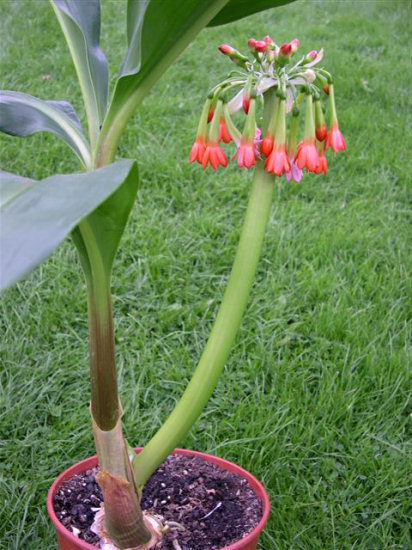
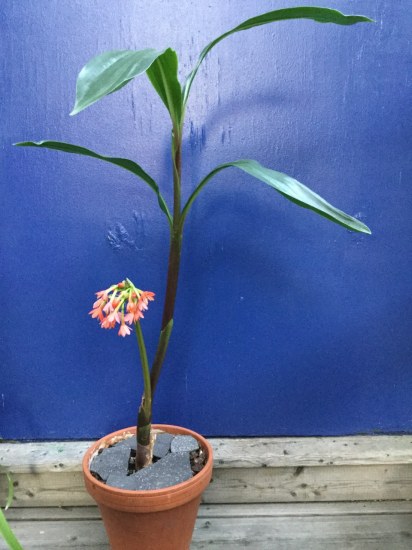
The next four photos of Scadoxus cyrtanthiflorus were taken in habitat, on the Ruwenzori Mountains in Western Uganda, January 2006, courtesy of Rachel Saunders.
Scadoxus 'In Rainbows' (S. membranaceus × S.multiflorus ssp. katharinae) This hybrid took approx. 10 years from seed formation to first flowering in February 2011. The leaves are intermediate between the two species, ie. 190 x 95 mm. The pseudostem is approximately 90 mm and the scape is approximately 250 mm tall. The false stem and scape are heavily spotted with brown blotches (as per the seed parent ). The scape bracts are green. Perigone segments are approximately 20 x 2 mm, and salmon pink (as per the pollen parent). The anther filaments are bright orange. This hybrid was registered by the Dutch KAVB (The RHS’s official registering body for Amaryllidaceae ) in March 2011. Photographs by the hybridiser Jaco Truter.
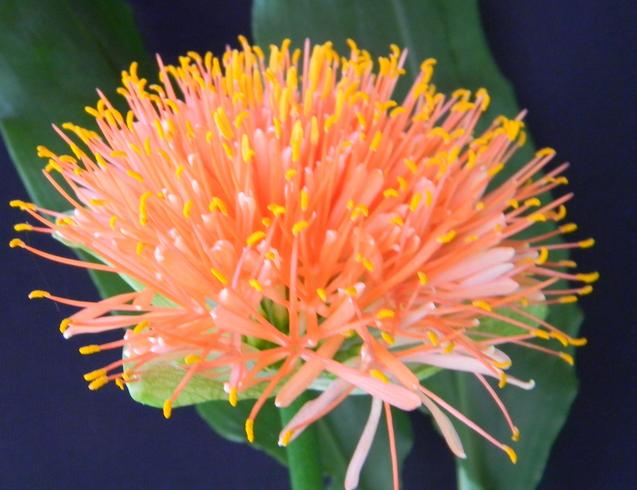
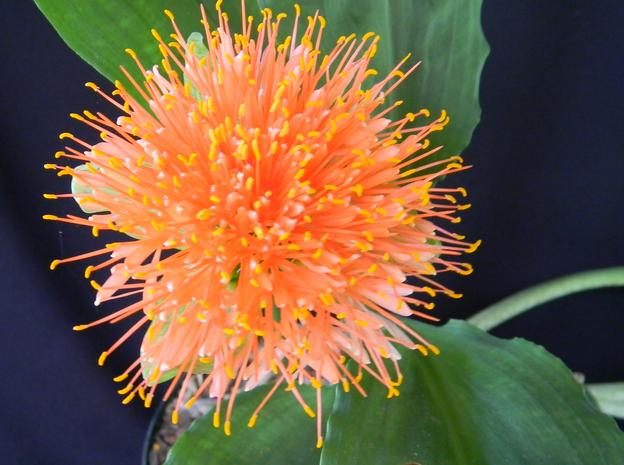
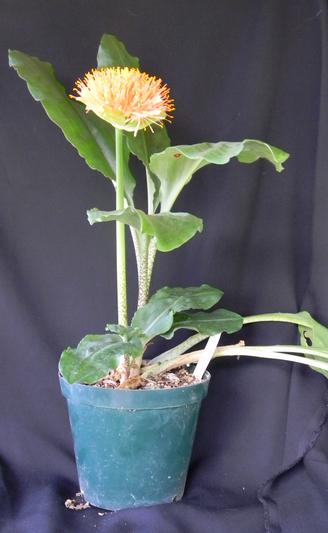
Scadoxus 'King Albert' (or König Albert) is often classified as an old Haemanthus hybrid between Haemanthus coccineus and Haemanthus albiflos; its growth habit and flowering time follow the coccineus parent. However it is believed to be the product of crossing two species of Scadoxus: S. multiflorus subsp. katherinae (Bak.) Friis & Nordal and S. puniceus (L.) Friis & Nordal. See here for more information. The hybrid was raised by Johannes Nicolai in Coswig-Dresden in Germany and flowered for the first time in 1899. The photo below was taken by Rob Hamilton.
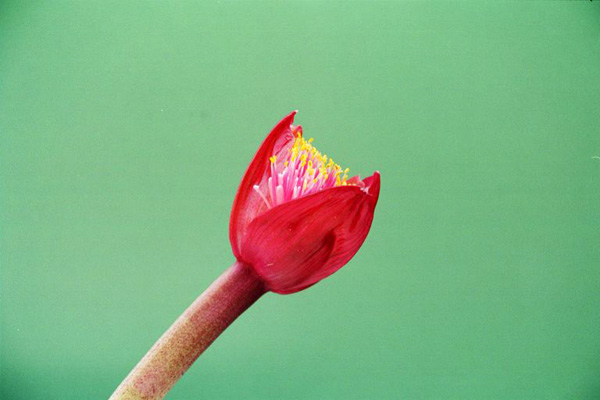
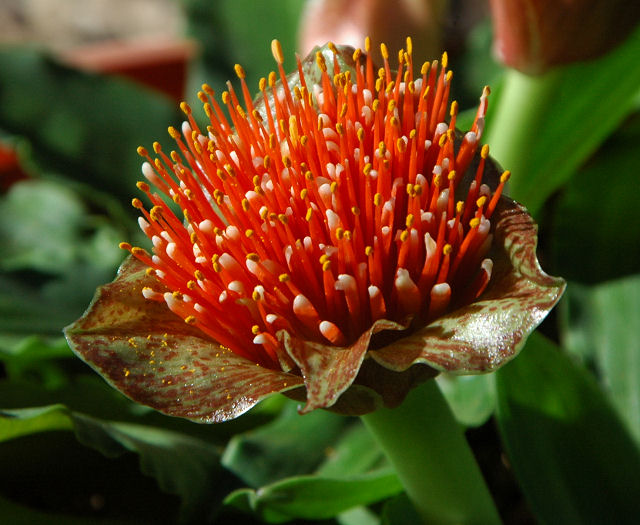
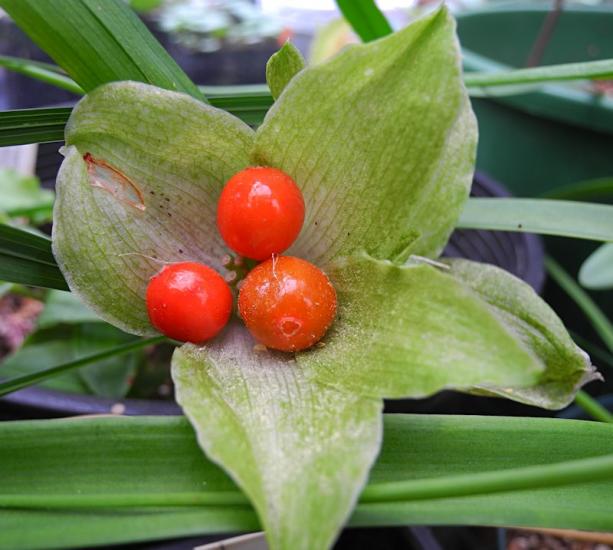
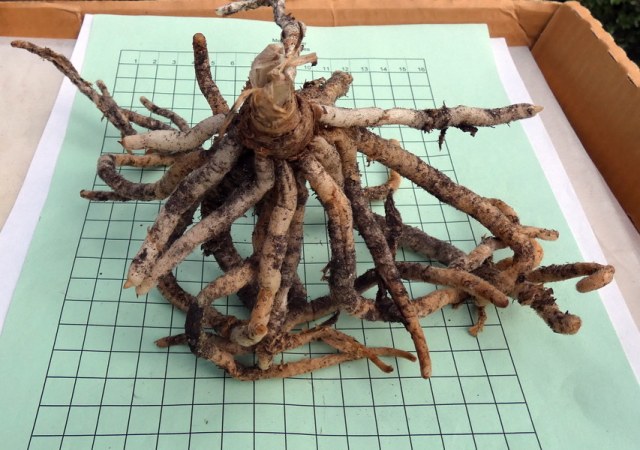
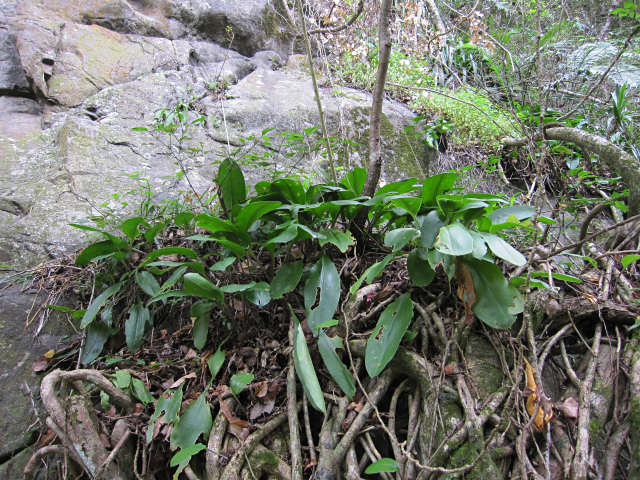
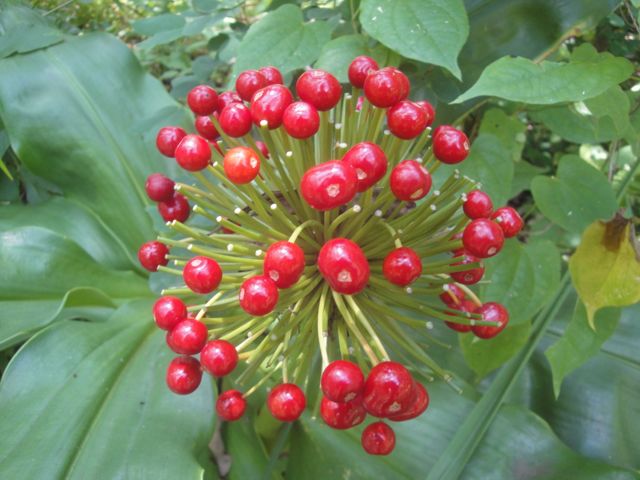
Scadoxus membranaceus(Baker) Friis & Nordal is the smallest of the known Scadoxus. It is native to the southeastern Cape, RSA, where it is found in coastal sand. It always catches the eye, but is not widely grown. It does well in filtered shade, growing to 40 cm high, and often does not go into dormancy. Give the medium constant moisture but not soaking wet. Seeds should be sown immediately after cleaning them from the red flesh. The seeds will sprout and form a bulb immediately. This little first year bulb will not sprout leaves until the next growing season. Keep the bulbs moist until they break dormancy. John Ingram was able to flower this species in southern California in 3 years from seeds. Photos 1-4 were taken by Mary Sue Ittner showing flowers, fruit and a rhizome on 1 cm squares when the pot needed dividing because after many years there were so many rhizomes in the same pot. Photos 5-6 were taken by Nhu Nguyen of the same plants at another time.


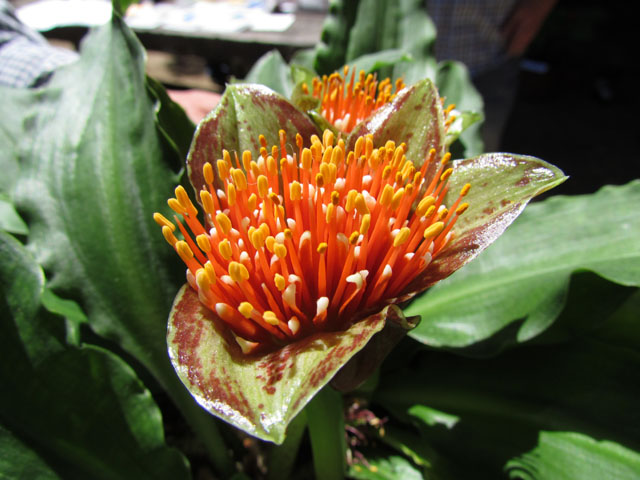
The first three photos below were taken by Cameron McMaster and show the flowers, the fruit, and the plants growing in habitat at the Kei River mouth in the Eastern Cape. The last photo is of a plant from the southern California garden of Doug Westfall.
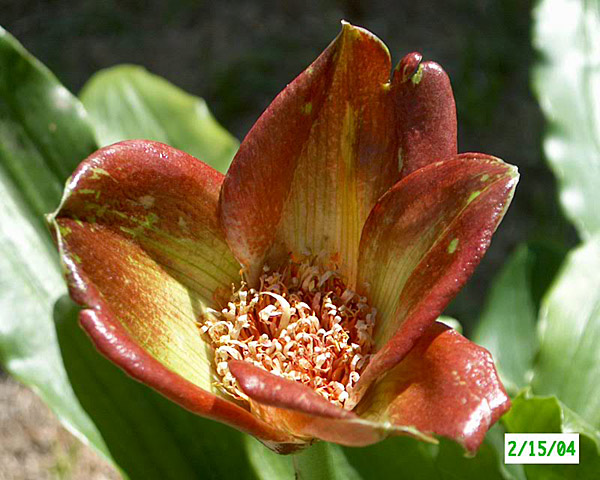
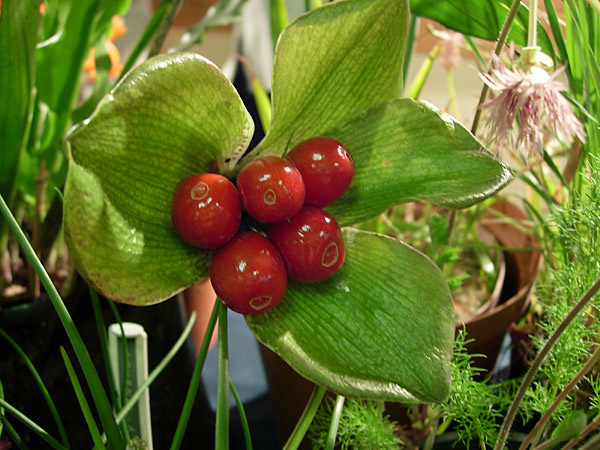
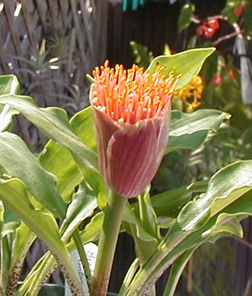
Scadoxus multiflorus (Martyn) Raf. is a species of southern tropical East Africa and Swaziland. Height: to about 25 cm. There are three subspecies, but most people grow only the two described below.
Scadoxus multiflorus ssp. katharinae (Baker) Friis & Nordal is a robust plant that grows in coastal and swamp forest in the Eastern Cape. It has deep pinkish red flowers and is one of the most common and easily grown Scadoxus. This subspecies has a very short to no dormancy in cultivation and prefers some shade. It multiplies rather rapidly by rhizomes which separate easily from the parent bulb. It flowers with the leaves in January (after mid summer). The first photo was taken by Doug Westfall and the second by Sheila Burrow. The final pictures were taken by Mary Sue Ittner.
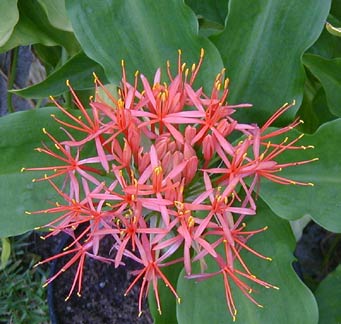
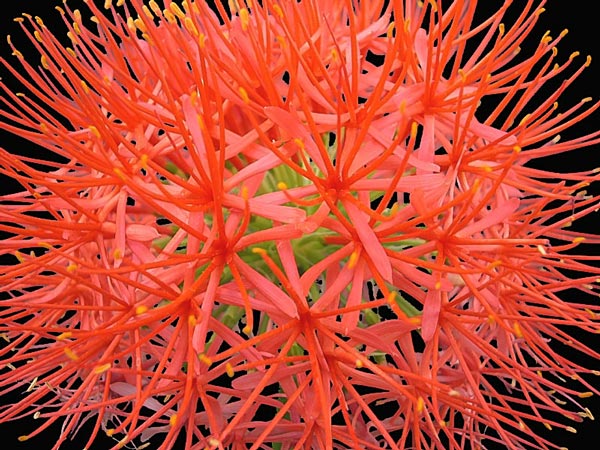
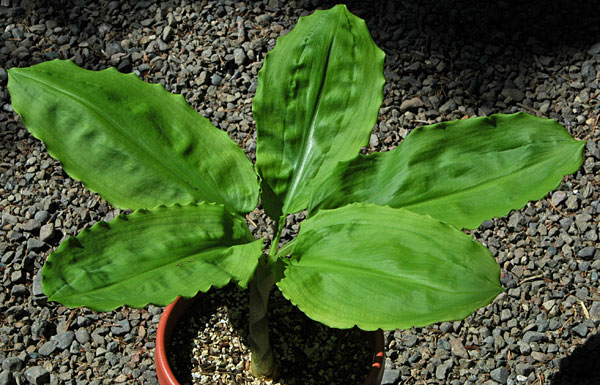
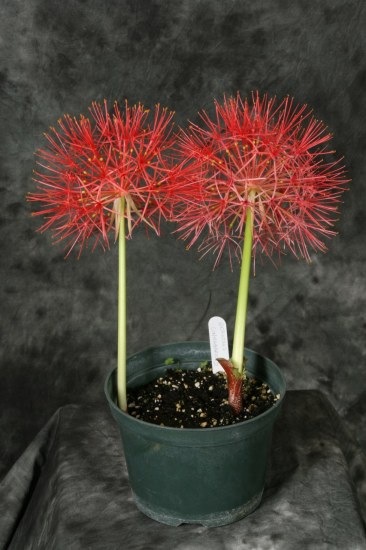
Scadoxus multiflorus ssp. multiflorus is a small plant that grows in dry to very dry Savannah areas in sun. It is deciduous and always solitary. In these areas it flowers with no leaves, early in December (before mid summer.) In mountain and wetter habitats it can be more robust and flower with the leaves and with a short dormancy. The first photo taken by Doug Westfall is of a dwarf form that goes completely dormant. The second photo is from Robert Lauf who received this originally as Haemanthus coccineus. He states it is very slow to offset.

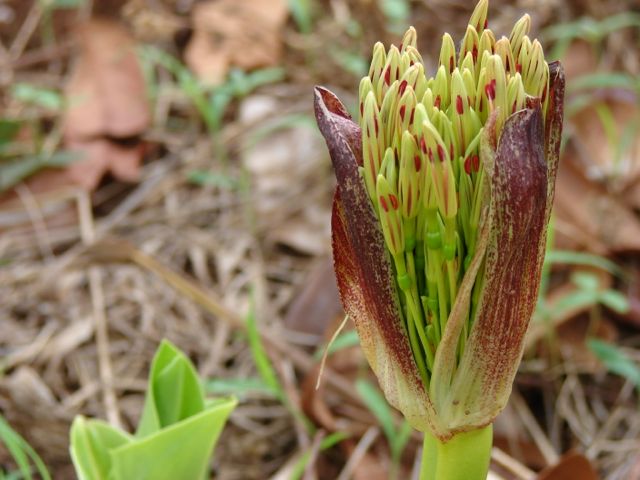
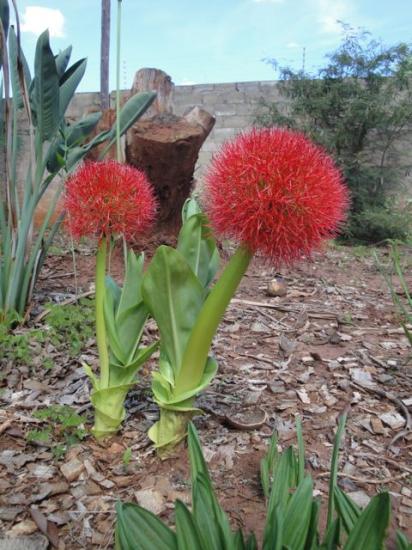
These photos taken by Nicholas Wightman show a progression from bud to seed on plants growing in Lilayi, Zambia.


Scadoxus nutans (Friis & I.Bjørnstad) Friis & Nordal is native to SW Ethiopia. It is mainly epiphytic and enjoys plenty of moisture during growth. It tends to produce a lot of stoloniferous shoots when happy. In habitat, this species flowers from November to February, which is a relatively dry season. The species blooms in a rather unique manner. It splits the pseudostem near the base and sends out the short flower stem and scape. That is the same way that the new pseudostem appears by splitting the old one and sending out the new. Growing this species from seed is rather tricky. As soon as seeds are ripe, the outer red covering must be taken off, along with the clear membrane that tends to linger. Plant these right away otherwise roots will start sprouting and be bound within this membrane. Unlike S. pole-evansii, this species does not produce a pronounced bulb. The meristemic structure will rest for about 4 months before sprouting leaves. Height range: 30-50 cm. The first two photos were taken by Mary Sue Ittner in Rachel Saunders and Rod Saunders garden in 2010. Photos 3-4 were taken by Doug Westfall. Photo 5 by Nhu Nguyen shows the seeds and membrane. Keep the medium moist during this period. It takes about 4 years to flower from seeds.
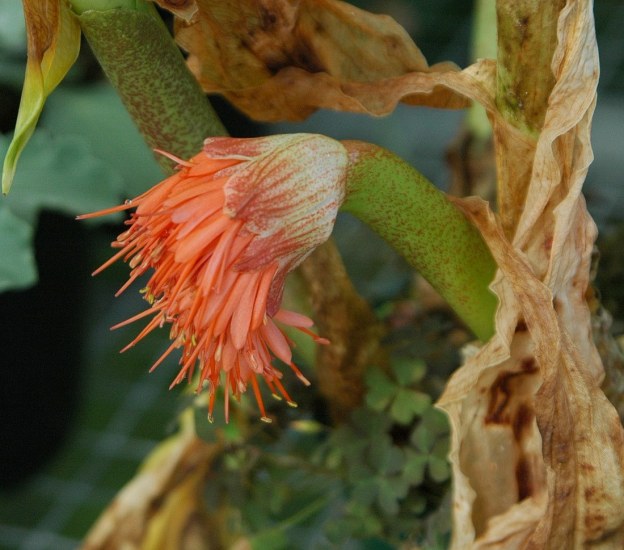
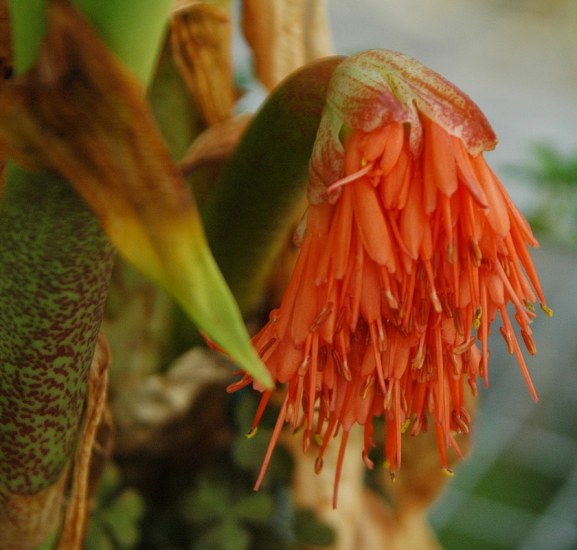
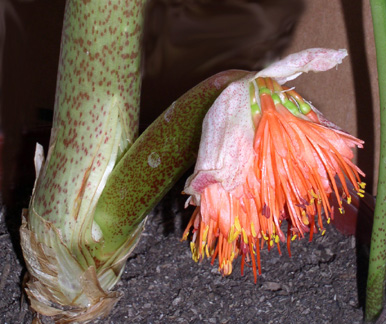
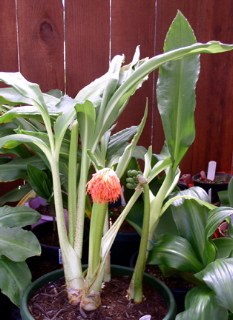
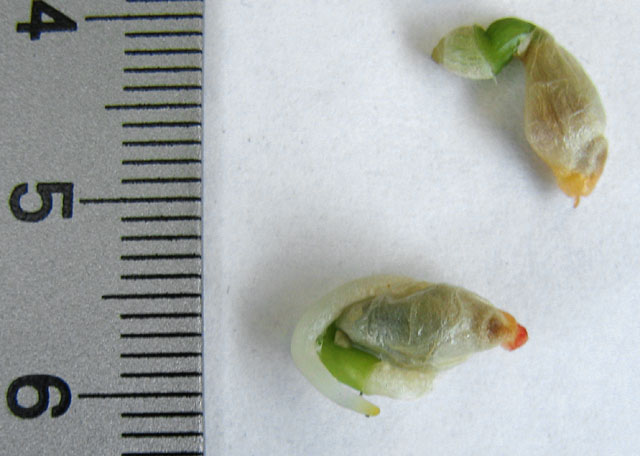
Scadoxus pole-evansii (Oberm.) Friis & Nordal is endemic to the Pungwe gorge, Nyanga district, in eastern Zimbabwe, where it grows in moist evergreen forests. Plants can grow up to 130 cm tall, and flowers are produced just before or simultaneously with the new leaves, which usually emerge during early to mid summer. In their native habitat flowering occurs at the height of the rainy season in mid February. The showy umbels can have 50 to 70, dark salmon to red flowers, which are up to 4 cm in diameter. These are followed by large red berries which are apparently distributed by Somango monkeys. Plants are rather slow growing in cultivation, but well worth the wait! Seeds sprout in a strange manner where immediately even before going into the ground, the seeds will put all of their energy into producing a bulb. This bulb may or may not produce roots and will sit dormant for 4 months before sprouting leaves. Plant either seeds or young bulbs right away and keep the medium moist until leaves appear. Photos 1-5 by Pieter van der Walt and photo 6 by Nhu Nguyen show the seeds/bulbs.

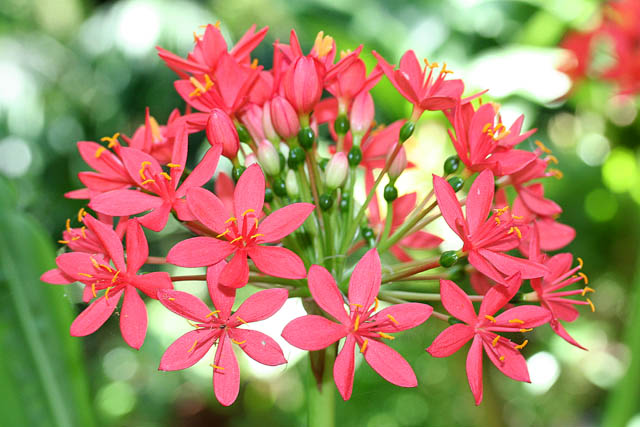
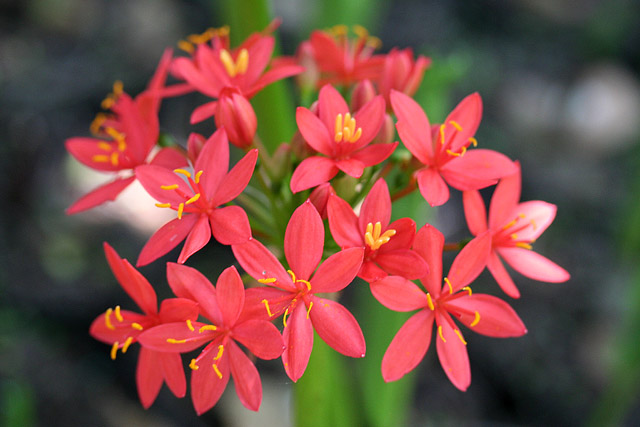
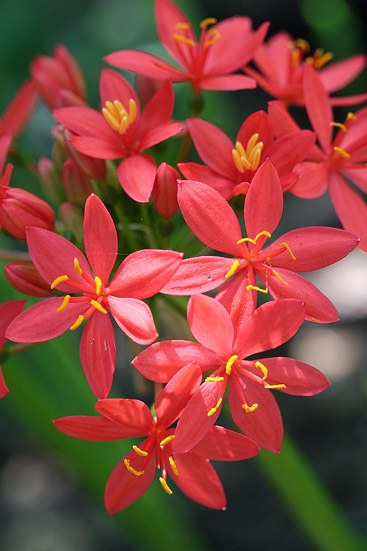
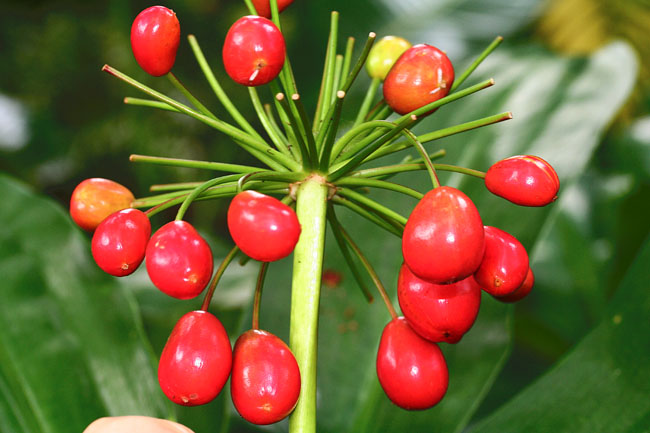
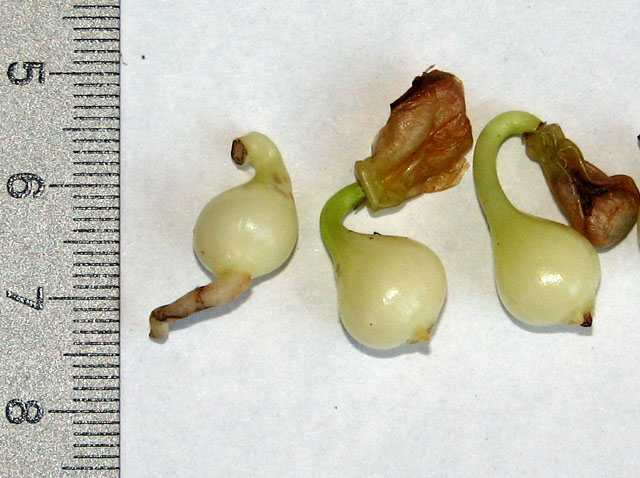
The photos below were taken by Nhu Nguyen of a plant in cultivation grown by Uluwehi Knecht.
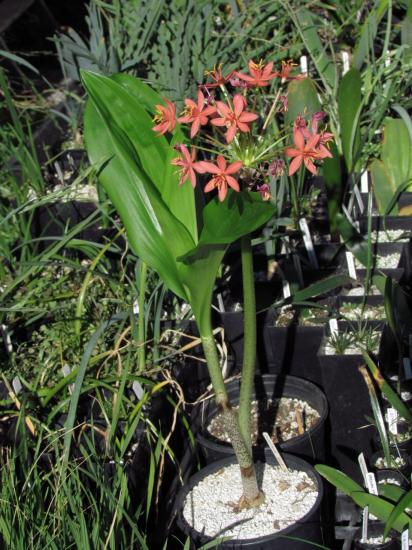
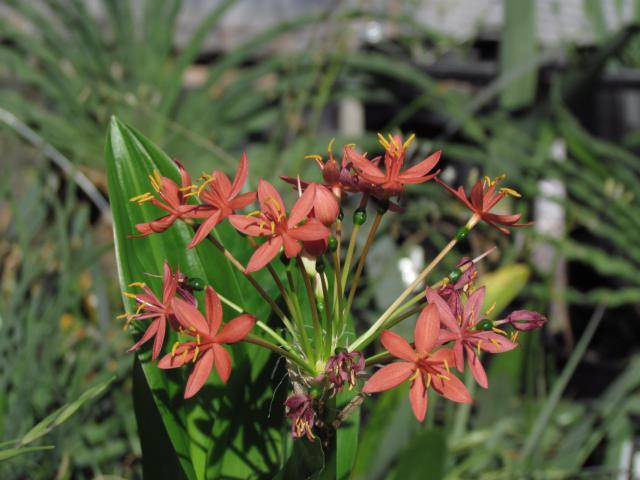
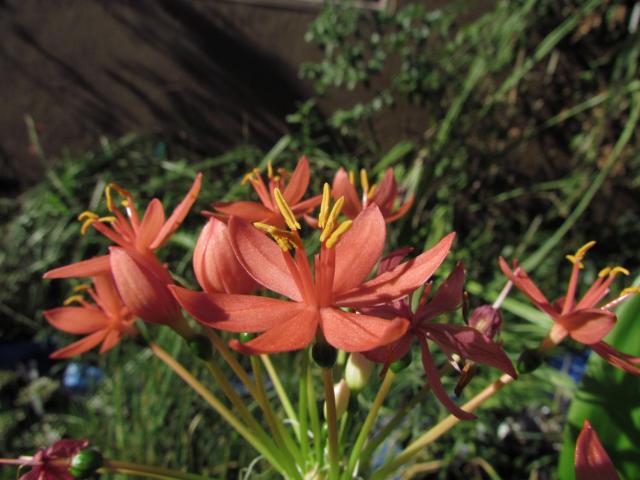
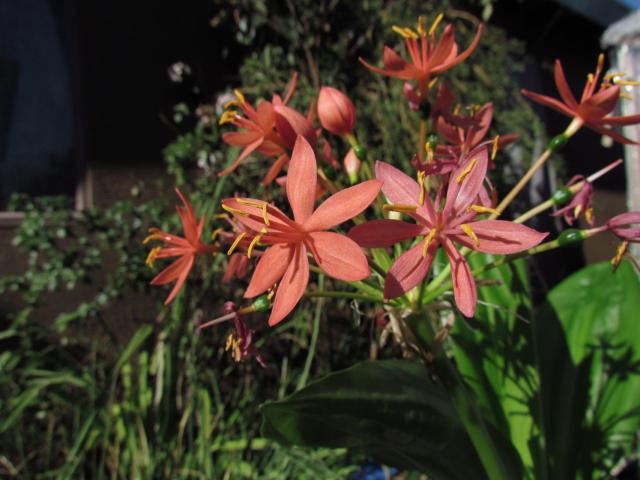
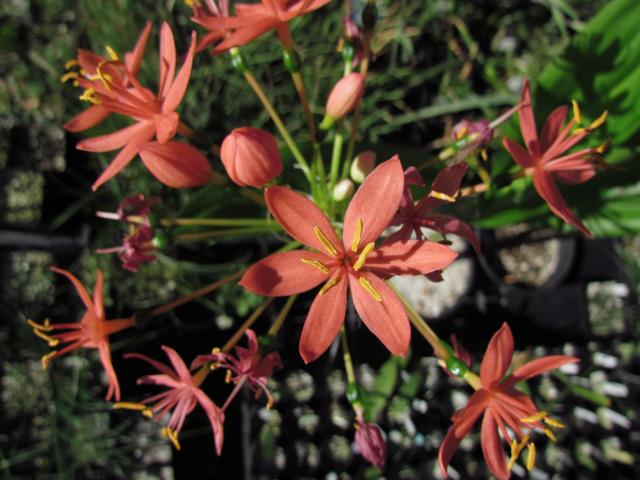
Scadoxus pseudocaulus (I.Bjørnstad & Friis) Friis & Nordal is distributed from S. Nigeria to west central tropical Africa (Nigeria, Cameroon, Equatorial Guinea, Gabon.) Height: to about 50 cm. The first two photos are from Alan O'Leary. This plant is evergreen for him and grown in the shade in Adelaide, Australia. The last three photos from Alessandro Marinello of a form from Nigeria that was considered a subspecies when it was considered to be Haemanthus pseudocaulus subsp. prorumpen I.Bj¢rnstad & Friis but does not seem to be recognized in 2021 as a subspecies of Scadoxus pseudocaulus.
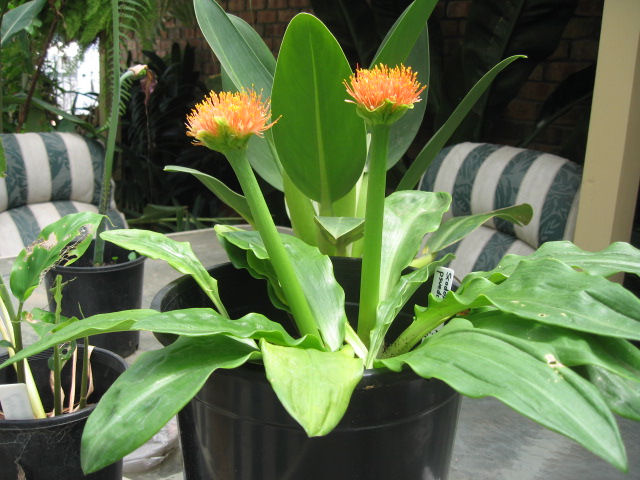
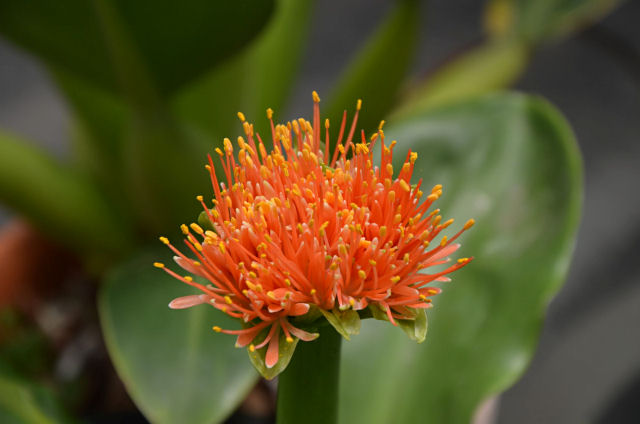
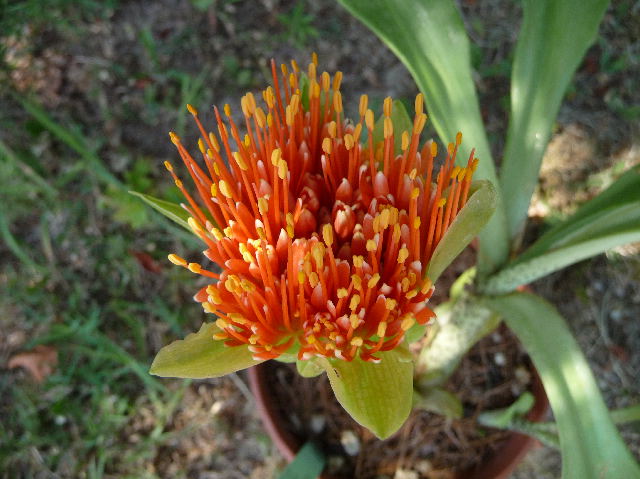
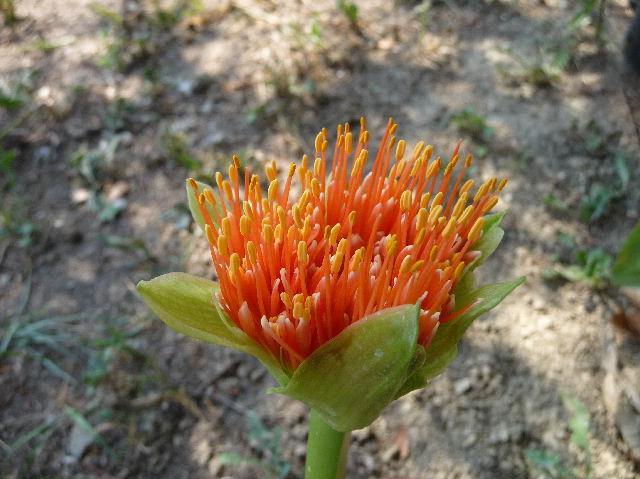
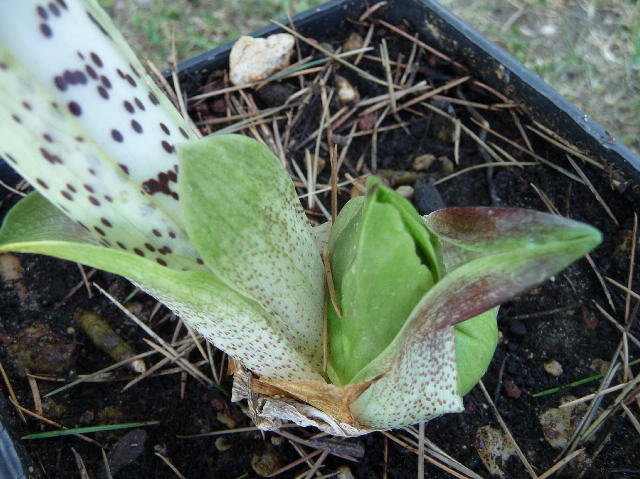
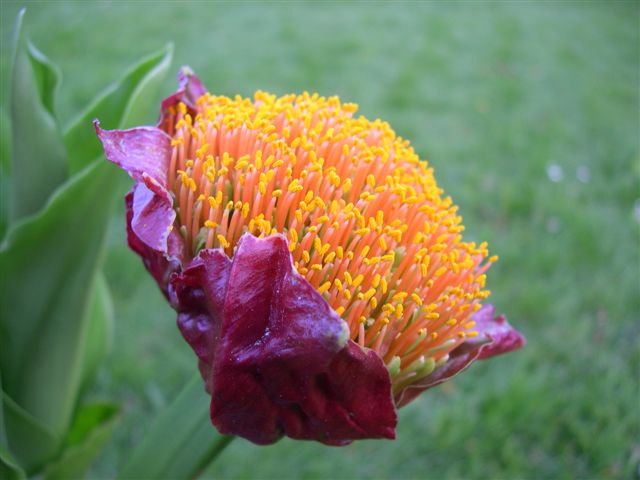
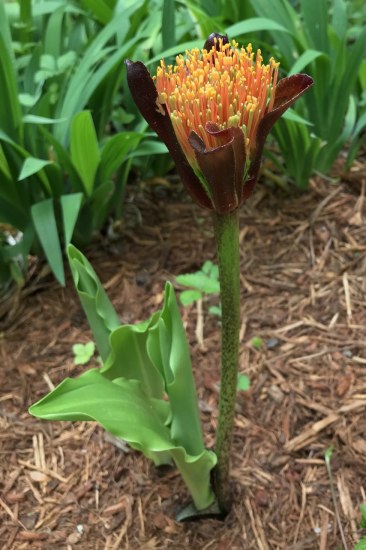
Scadoxus puniceus (L.) Friis & Nordal is found along the coast and in river valleys, in subtropical thicket in the southern to southeast Cape to tropical Africa, growing to 75 cm high. It goes dormant in the winter. During the summer growing season, it should be kept moist. Plants flower in 4-5 years from seeds. The first three photos taken in the Eastern Cape by Cameron McMaster show it growing in different habitats.
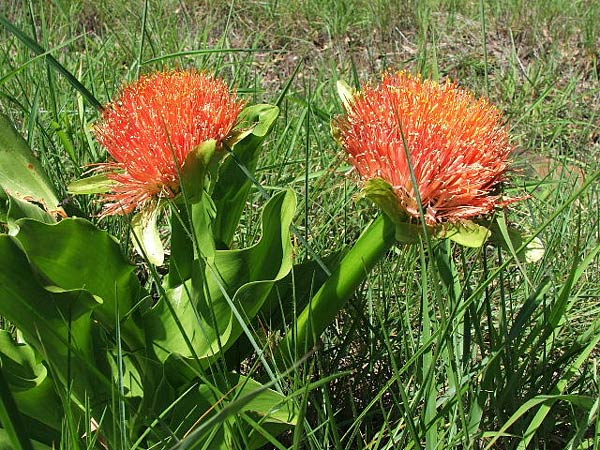
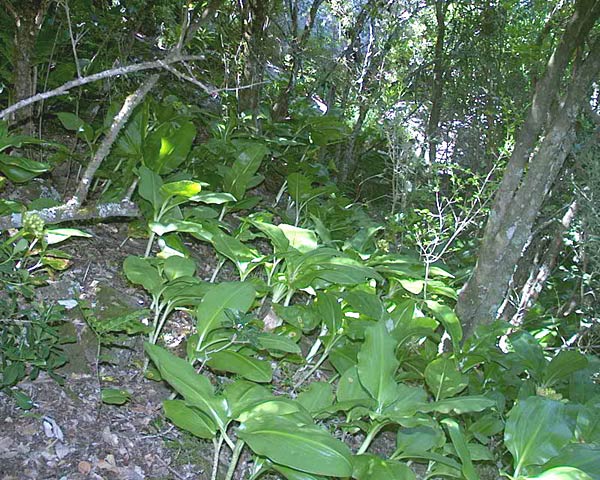
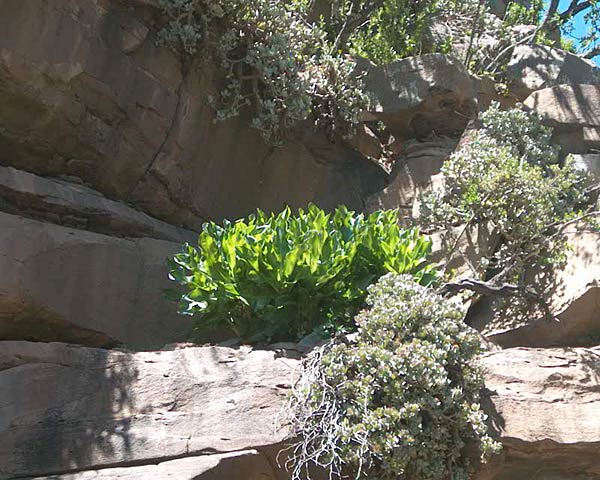
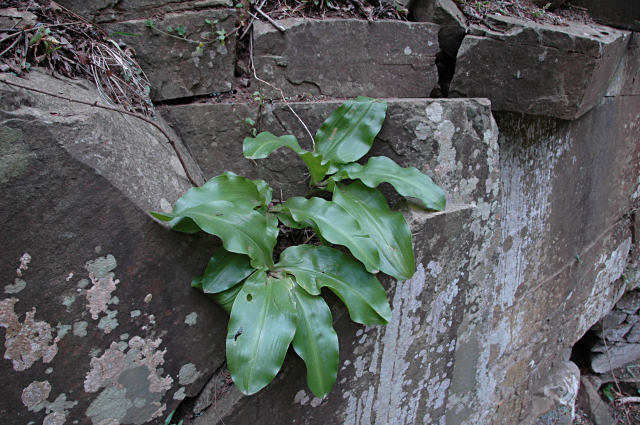
Photos from Bob Rutemoeller and Mary Sue Ittner taken January 2010 at Glen Avon in the Eastern Cape. Plants were growing near rocky areas or in rock crevices.
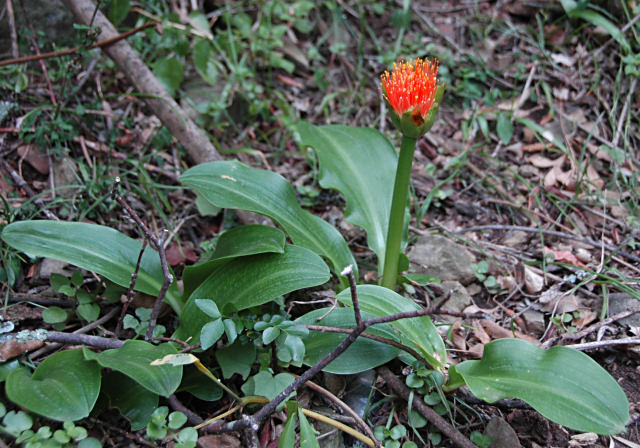
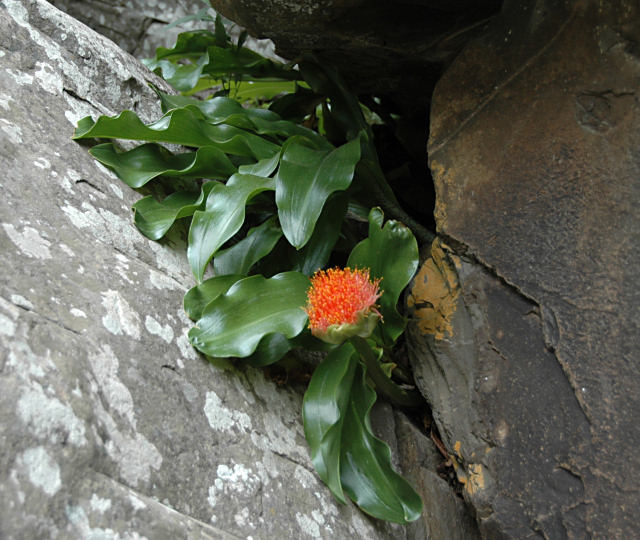
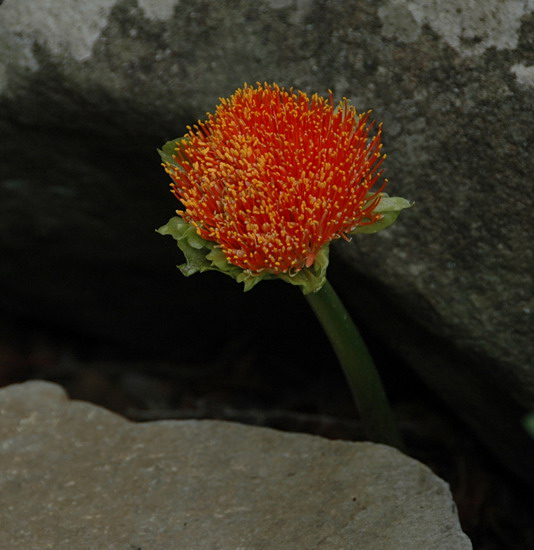
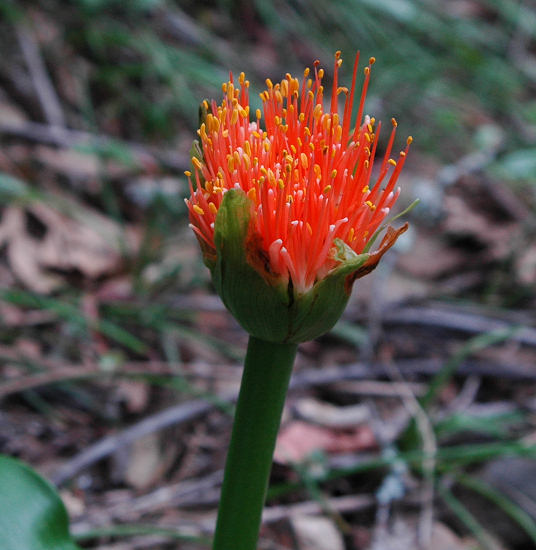
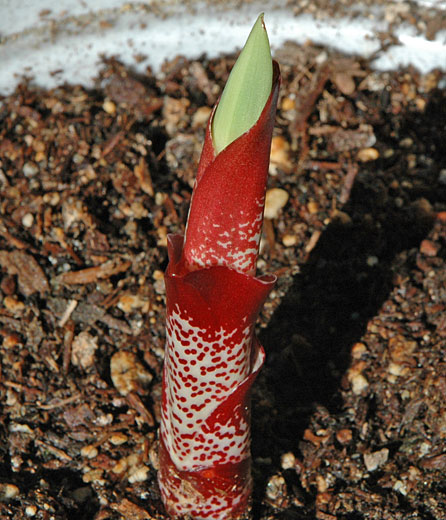
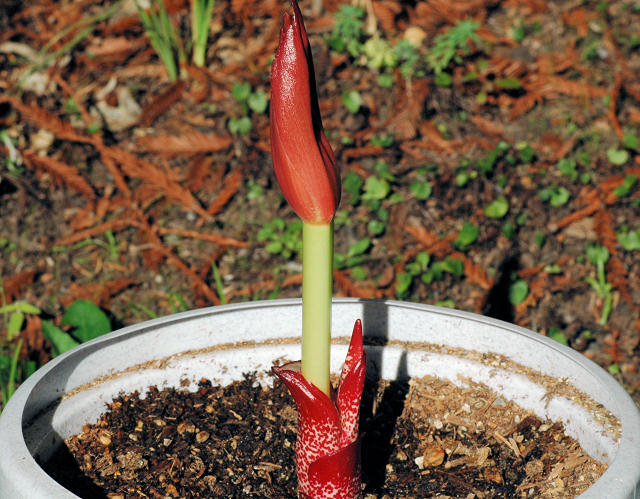
The first photo shows the attractive emerging leaf shoot in a year when the young plant had yet to bloom. The following year it did bloom and the second photo shows the bud appearing. The last two pictures show a large pot of blooming plants being grown by Rod Saunders and Rachel Saunders and blooming September 2006. Photos by Mary Sue Ittner
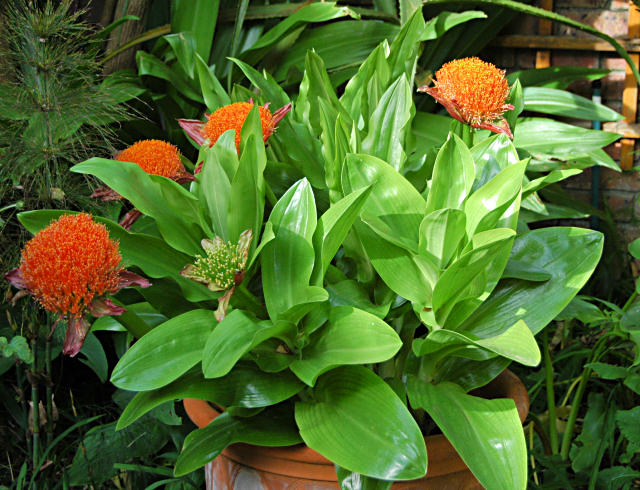
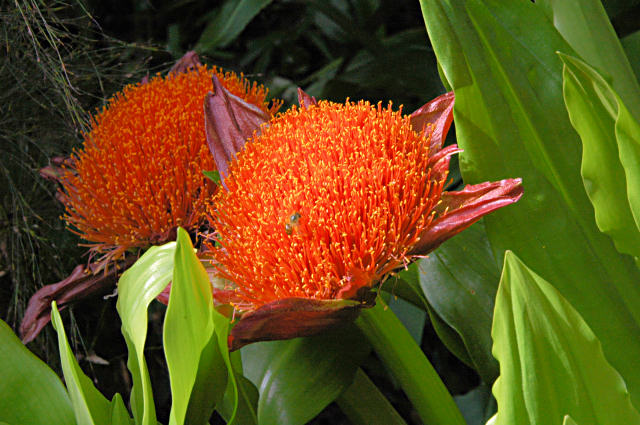
The first three photos are from Jonathan Hutchinson. The last photo is from Nicholas Plummer who is growing it in the ground in North Carolina.
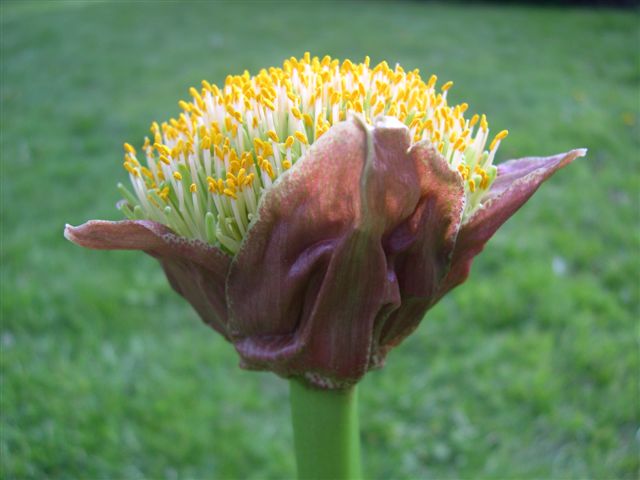
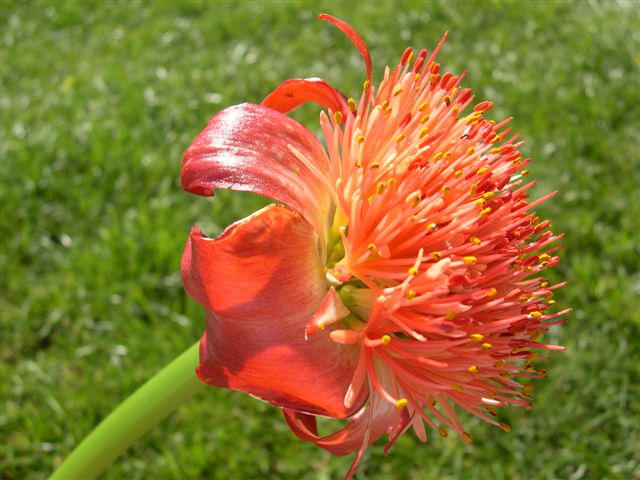
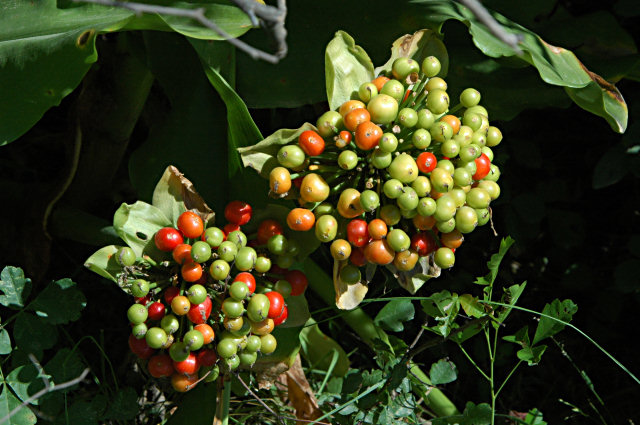
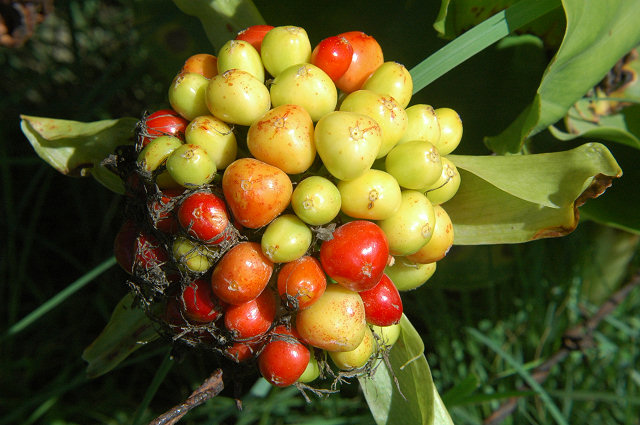
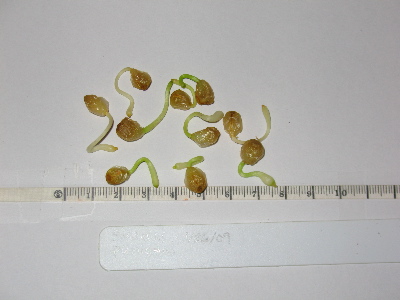
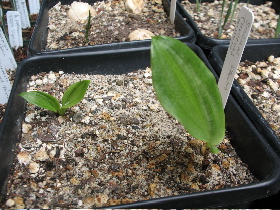
Photos #1 and 2 from Mary Sue Ittner show two plants in fruit seen in the Eastern Cape. Photos 3 and 4 from Byron Amerson show seeds and seedlings.
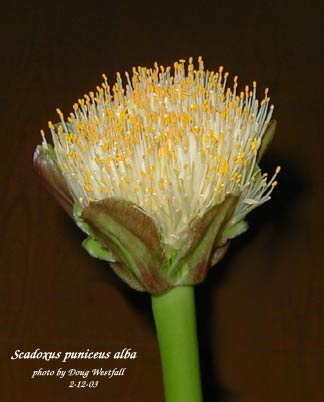
Scadoxus puniceus 'Alba' is a rather rare Scadoxus. Photo by Doug Westfall who wrote: "I have owned it for about 10 years. This year, I have grown a seedling which is white. Previous seedlings have been the "normal" color. It always attracts attention and gets comments."
Scadoxus puniceus 'Magnificus' is shown below. It was grown and photographed by Angelo Porcelli who purchased it as a seedling from Telos Rare Bulbs.
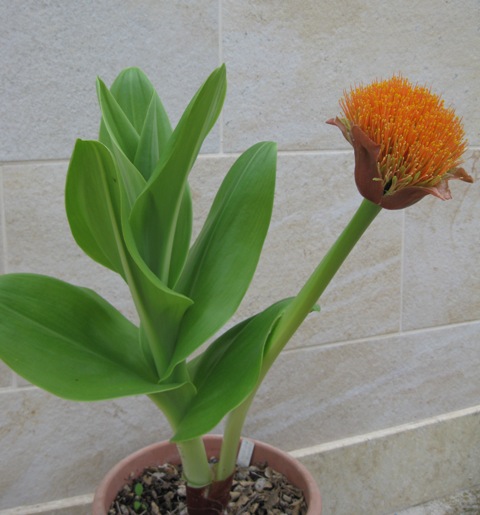
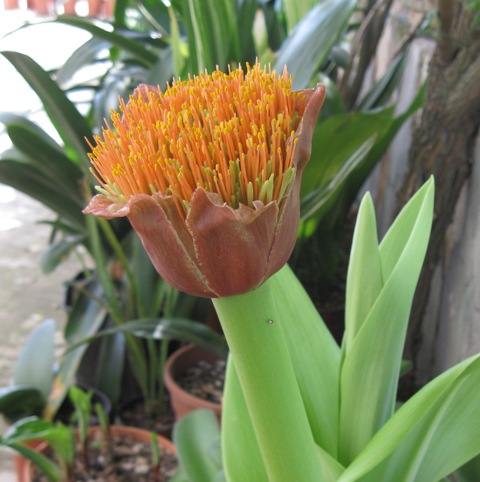
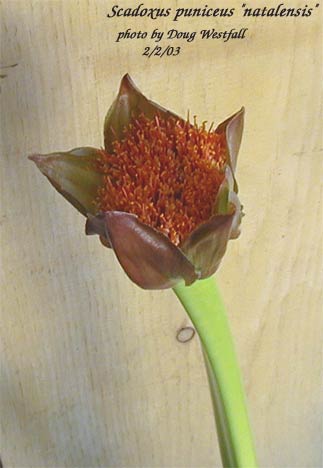
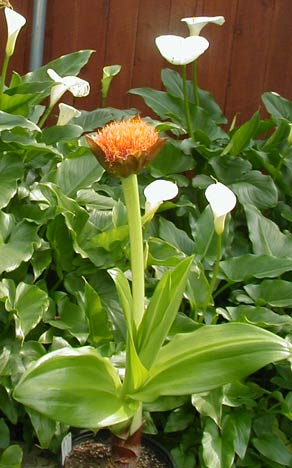
Scadoxus puniceus 'Natalensis' is shown below. It was grown in a 12 inch pot in Doug Westfall's Southern California garden. This plant measures 25 inches tall from the soil; the flower stalk is 1 3/4 inch thick/wide. This is the "normal" color for natalensis; Scadoxus puniceus 'Magnificus' is usually lighter in color. The second picture is with another background.