There are more than 200 species of Oxalis in South Africa and 270 varieties and probably many new species as well. The only handbook on the Southern African species, by Salter, is almost sixty years old and out of print so there are many challenges in identifying them. Cape Plants, a conspectus of the Cape flora of South Africa by Peter Goldblatt and John Manning lists 118 in the Cape Floral Kingdom but there is only a brief botanical description, location sometimes with habitat information, and time of bloom in this book.
South African species h-k are found on this wiki page.
Oxalis index - Miscellaneous Oxalis - Oxalis flava - Oxalis hirta - Oxalis obtusa - Oxalis pes-caprae - Oxalis purpurea - South African oxalis a-b - South African oxalis c - South African oxalis d-e - South African oxalis f-g - South African oxalis l-m - South African oxalis n-o - South African oxalis p - South African oxalis r-s - South African oxalis t-z - South American oxalis
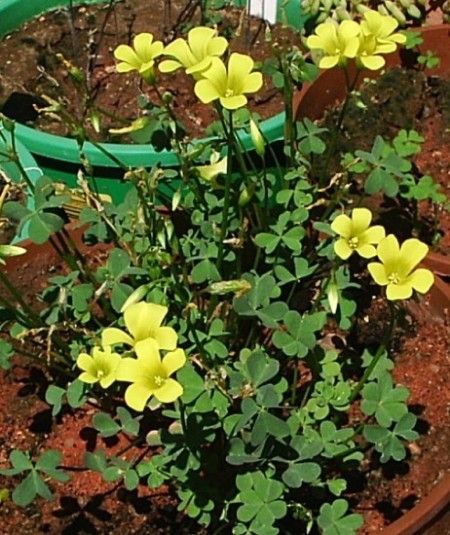
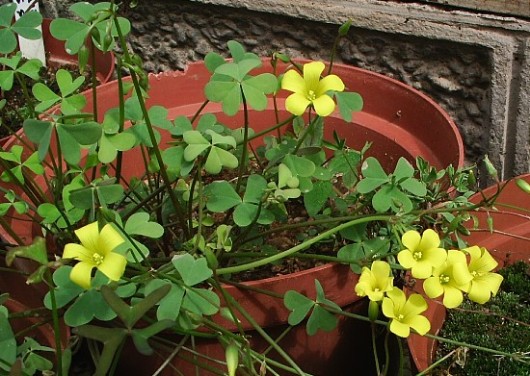
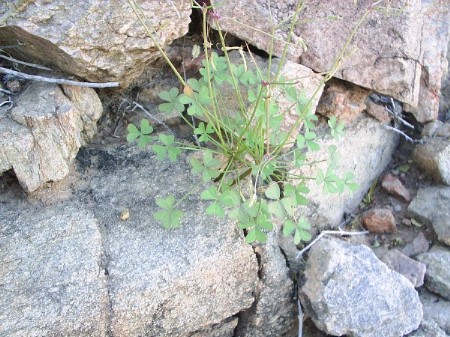
Oxalis haedulipes Salter is a yellow flowering oxalis resembling Oxalis pes-caprae, although it is typically smaller in stature and flower size. The best diagnostic difference between these two species is the bulbs, those of O. pes-caprae being pale brown, with indistinct longitudinal ridges. O. haedulipes has a greyish bulb with conspicuous longitudinal ridges, and always has a stem. See also O. copiosa for more information on these look-alikes. It is found in the Kalahari, from about Keimoes, and as far east as Kimberley. The last photo shows O. haedulipes in habitat growing among rocks, about 60 km east of Upington. Photos by Christiaan van Schalkwyk.
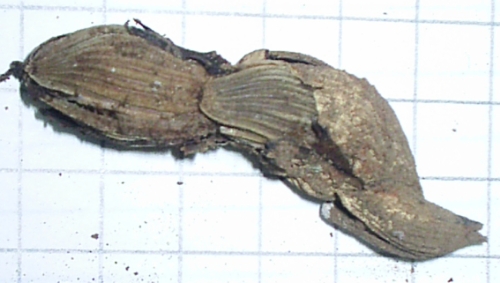
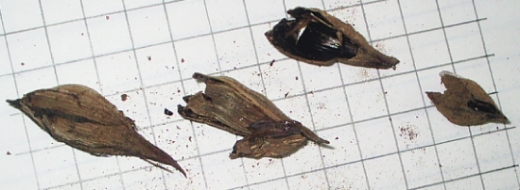
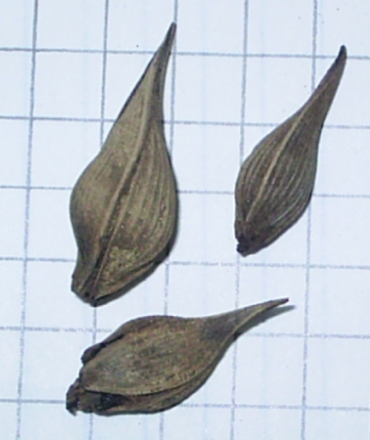
Most Oxalis form new bulbs each year, often deeper than the previous year’s bulb. These photos show the bulbs of Oxalis haedulipes, four years after its last transplant. In the first picture the bulbs and old bulb scales can be seen in the soil. Note also the secondary bulbs formed away from the original bulb. In the second and third photos, a set of bulb and scales were removed and separated with the bulb in the left of the pictures. The last photo is a close-up showing the greyish colour and distinct longitudinal ridges characteristic of this species. These photos by Christiaan van Schalkwyk, with the bulbs on a 1 cm grid.
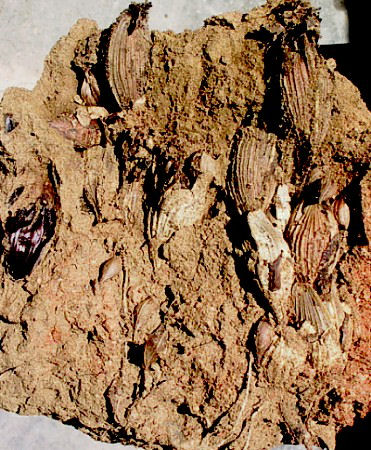
Oxalis helicoides Salter is a caulescent species with a twisted, spiraling stem (resembling a helix). It is known from Springbok, Kamieskroon and Garies in Namaqualand. A white form (var. alba) has also been described. This is truly a beautiful species. Photos by Christiaan van Schalkwyk.
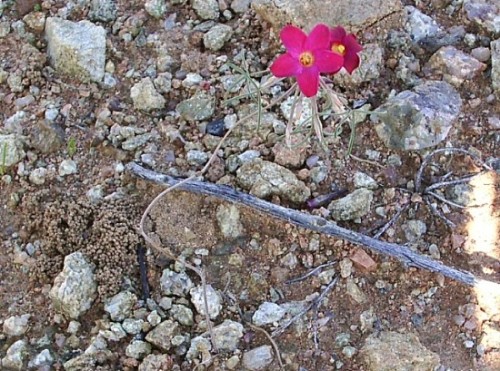
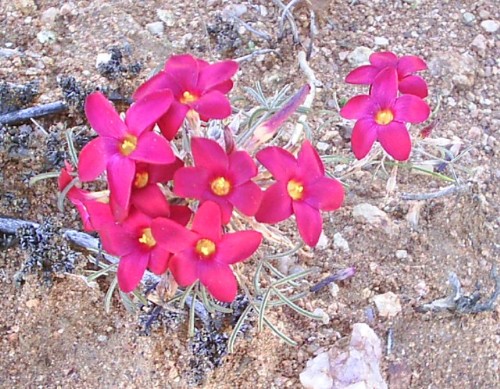
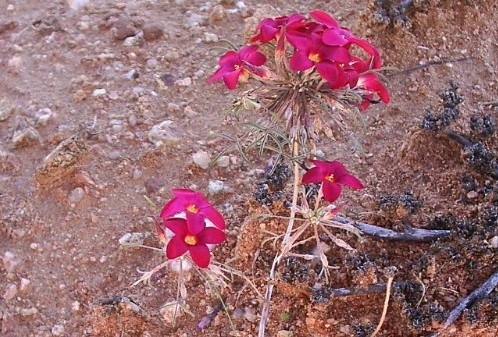
Oxalis heterophylla DC. grows on south slopes and mountains from Namaqualand to Riversdale, flowering August to October. Leaves are trifoliolate with leaflets bilobed to the middle and the flowers are red to purple with a yellow tube. Height: to 30 cm. The photo was taken by Cameron McMaster September 2015 near Middelpos, in the Roggeveld.
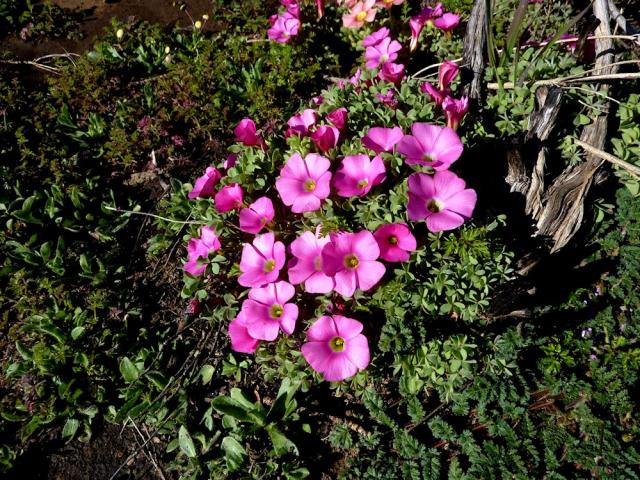
Oxalis hirta L. see the Oxalis hirta page.
Representative photos of this species. Photos 1 & 6 were from Mary Sue Ittner, photo 2 was from Bill Dijk, photo 3 was from Andrew Broome, photo 4 was from Nhu Nguyen and photo 5 was from Andrew Wilson.

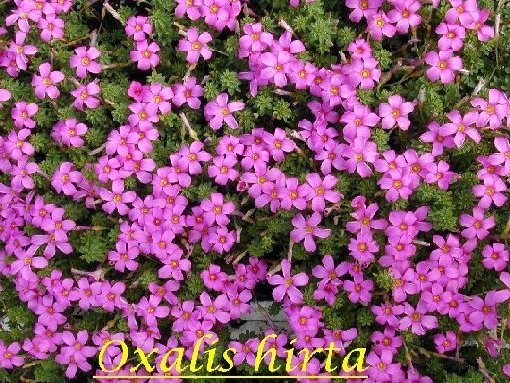
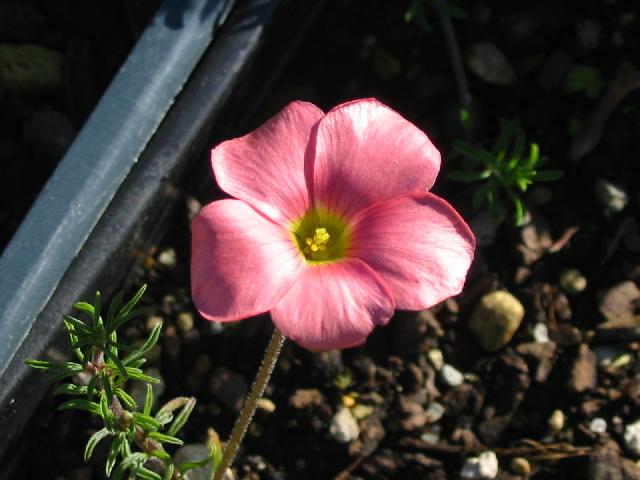
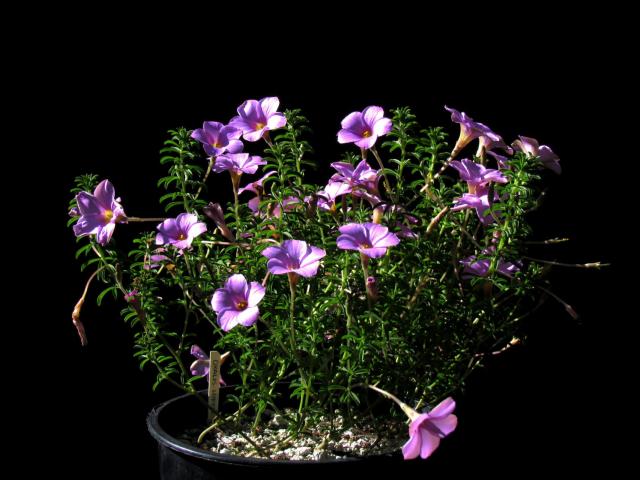
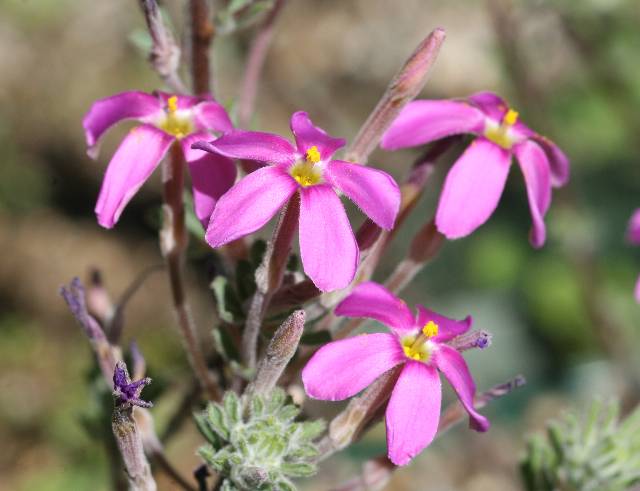
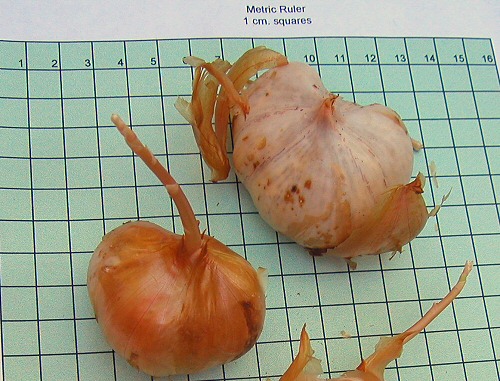
Oxalis imbricata Eckl. & Zeyh. is described as having trifoliolate hairy leaves and white flowers with a greenish tube by at least one source. This is a species from both the Western and Eastern Cape. The pink form is more often seen and more widely distributed. The first three photos by Mary Sue Ittner. The last of these shows the bulbs on a 1 cm grid. The next two photos from iNaturalist were taken by Adriaan Grobler in Summerstrand, near Port Elizabeth, Eastern Cape in May and shared under a CC BY-NC license.
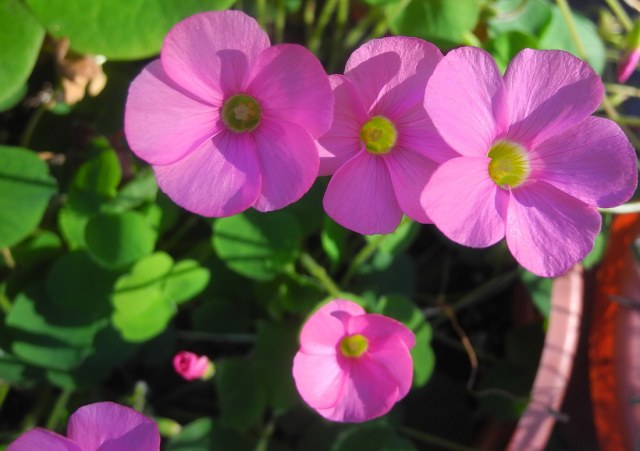
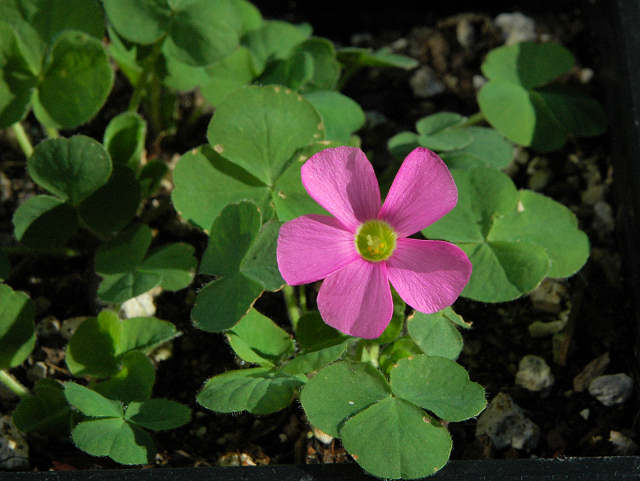
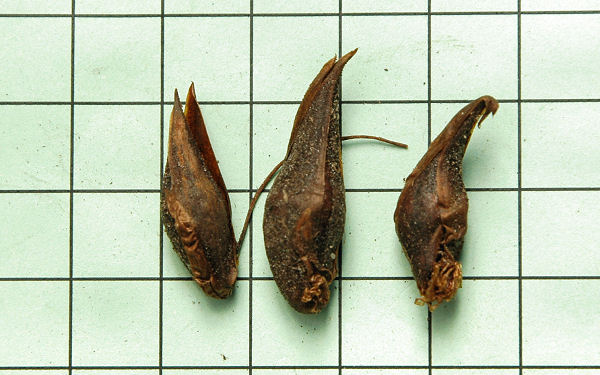
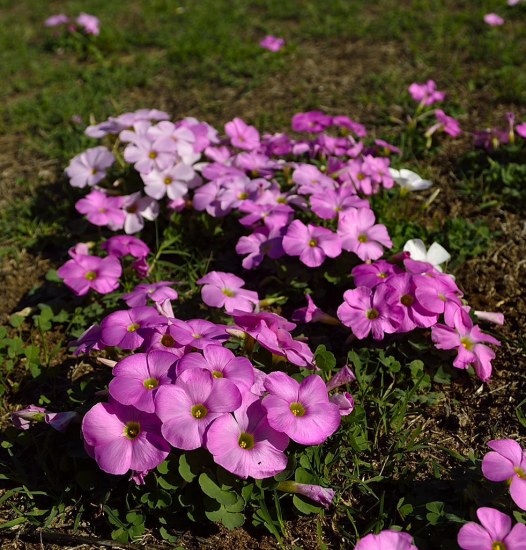
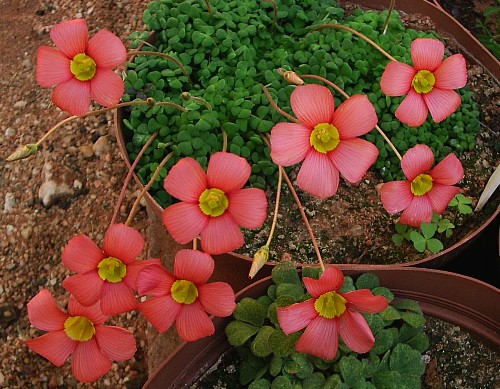
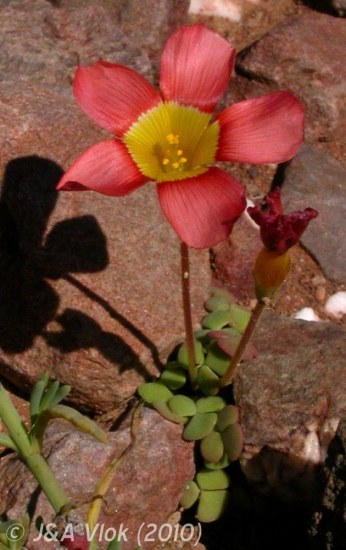
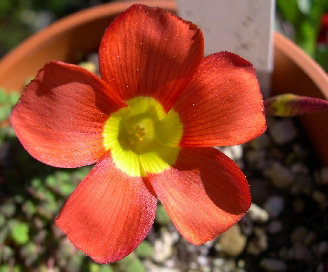
Oxalis inaequalis Weintroub has 3 succulent leaflets and is one-flowered, with short yellow to coppery-rose flowers with a yellow tube. The sepals are grossly unequal in size, giving rise to its Latin name. It often forms numerous (up to 400) axial bulbils per plant. Height: to about 8 cm. The first photo from Christiaan van Schalkwyk. The second photo from the book Plants of the Klein Karoo is courtesy of Jan and Anne Lise Schutte-Vlok. The last photo is from Liz Waterman who obtained bulbs from Telos.
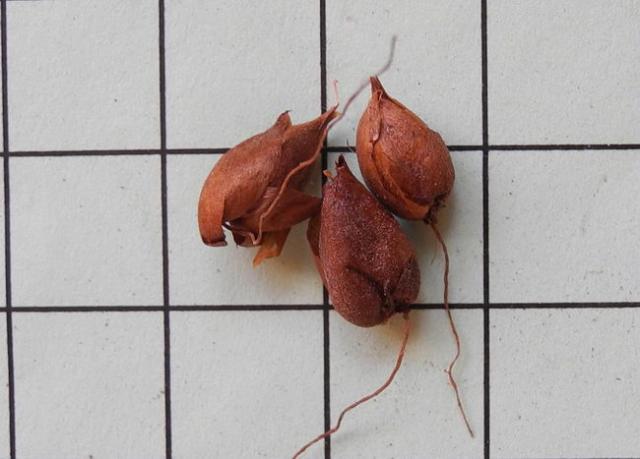
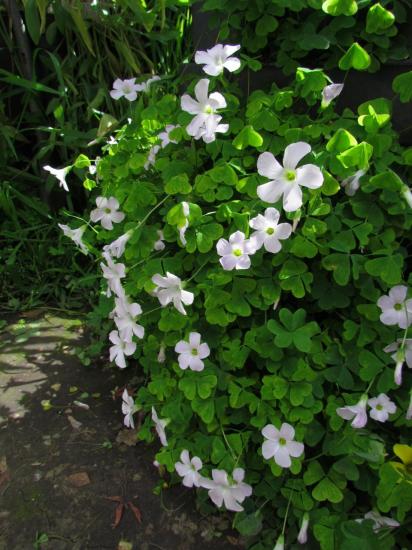
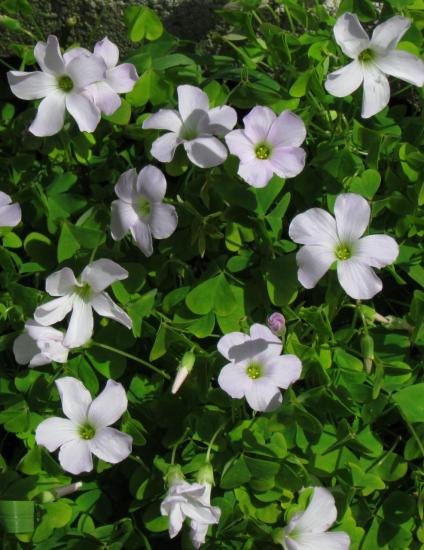
Oxalis incarnata L. has become a weed in some places and care should be taken when growing this species. The weediness is due to its ability to make bulbils in the leaf axis. It can stay evergreen with moisture. Height: 10-30 cm. It can be a nice hanging basket specimen however. This plant started blooming in October in the Northern hemisphere and bloomed through May in northern California. It seems to prefer shade when temperatures are warm. Photos 1-3 were taken by Bob Rutemoeller. Photos 4-5 were taken by Mary Sue Ittner and show the bulbs on a 1 cm grid.
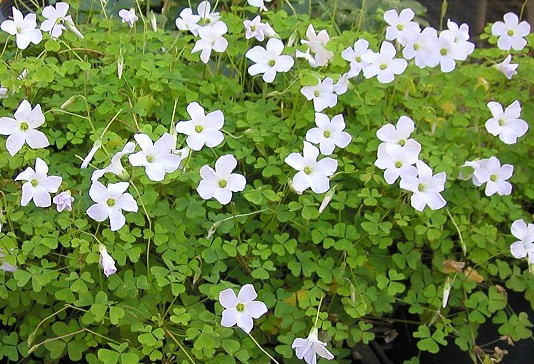
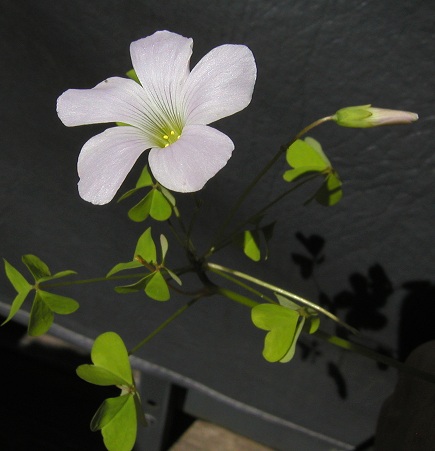
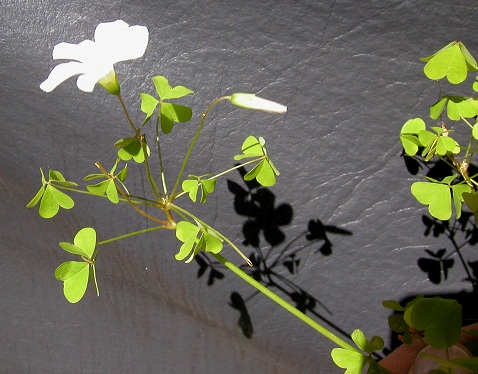

The photos below were taken by Nhu Nguyen of plants being a weed in his northern California garden.
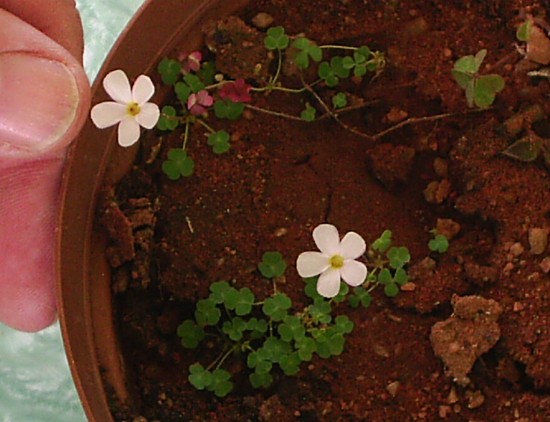
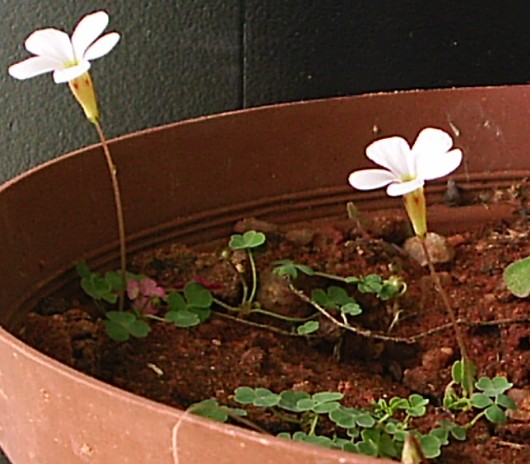
Oxalis inconspicua Salter is a very small, low growing and white flowering Oxalis. It flowers in midwinter, and the slightly inflated tube of the corolla, as seen in the second picture, is a definite character of this species (shared only with O. purpurea). Photos by Christiaan van Schalkwyk.
Oxalis kaajagdensis is a name previously used by Telos Rare Bulbs for bulbs now sold under the name Oxalis kasvogdensis. The correct name for these bulbs is unclear. Others suggest the names of Oxalis kaasvogdensis or Oxalis klaasvoogdensis (a name proposed by Dryer in her thesis), but none of those four names are published names. Oxalis experts at Stellenbosch University Botanic Garden believe the accepted name to be Oxalis confertifolia (Kuntze) R.Knuth. Note from SANBI: "Bayer (1993) included this species, as well as nine other species, under Oxalis pardalis Sond., creating a large species complex. Oxalis experts disagree with this lumping (K.C. Oberlander pers. comm. 2012) and advise that this species should still be recognized, but it is in need of further study". Oxalis confertifolia has pink flowers. You can see photos on iNaturalist. Salter recognized a variety, lutea, described as smaller and more slender than the species, stem to 6 cm, flowers yellow, flowers May. Whatever its proper name, it is an attractive winter-growing bulb. It does well in pots with loose soil and a little fertilizer, kept dry in summer. It grows as a column; the plant looks like something you'd see growing at the bottom of an aquarium (but don't try to grow it there; it would drown). In fall it has bright yellow flowers on long wiry stems that emerge from the column. Photos by Michael Mace.
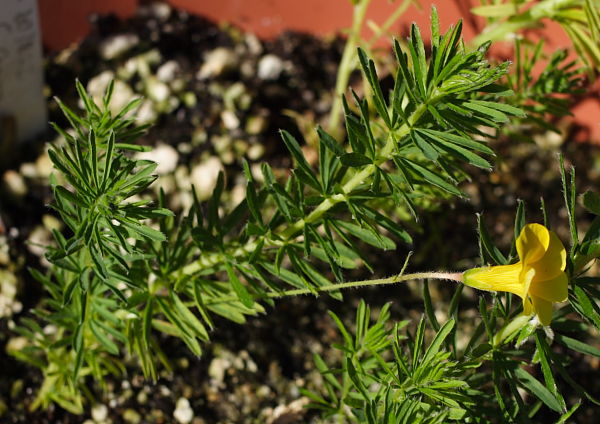
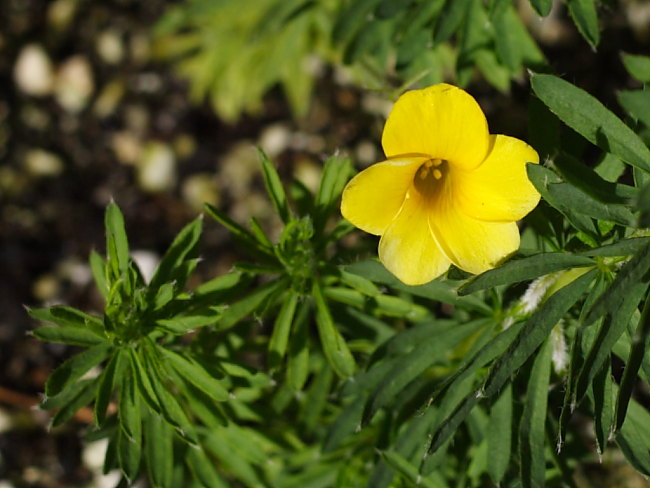
Oxalis karooica does not appear to be a valid name. Bulbs grown under this name are probably Oxalis gracilis.
Oxalis index - Miscellaneous Oxalis - Oxalis flava - Oxalis hirta - Oxalis obtusa - Oxalis pes-caprae - Oxalis purpurea - South African oxalis a-b - South African oxalis c - South African oxalis d-e - South African oxalis f-g - South African oxalis l-m - South African oxalis n-o - South African oxalis p - South African oxalis r-s - South African oxalis t-z - South American oxalis