The pictures below are of romuleas that are native to South Africa, grown from seed or seen in the wild. Many of the species are very similar and difficult to tell apart. Sometimes it is necessary to examine the bracts and bracteoles and often looking at the corm is very helpful. Photos of the different corms will be added as available.
There are three good references for the southern African species, The Genus Romulea in South Africa written by Miriam de Vos in 1972, her revision written in 1982 and a later revision from John Manning and Peter Goldblatt in 2001.
Species from e to k are shown on this page.
European And Mediterranean Romuleas - South African Romulea a-d - South African Romulea l-n - South African Romulea o-s - South African Romulea t-z - Romulea index
Romulea eburnea J.C.Manning & Goldblatt grows in alluvial washes along streams on sandy flats in renosterveld shrubland. It is endemic to the Roggeveld. Growing 5 to 15 cm tall, it has corms that are rounded at the base with curved, acuminate teeth. It has 2 to 4 filiform 4-grooved leaves. The yellow or pale apricot colored flowers with a narrow funnel-shaped tube are enclosed by reddish bracts with broad, brown-flecked membranous margins and tip. The lower 2/3 of the tepals and the cup are deep yellow. The outer tepals are flushed dull olive-colored on the reverse. The fruiting peduncles are coiled. Flowering is in late winter to early sring, late August to early September. The photo below was taken by Alan Horstmann in the Komsberg early September.
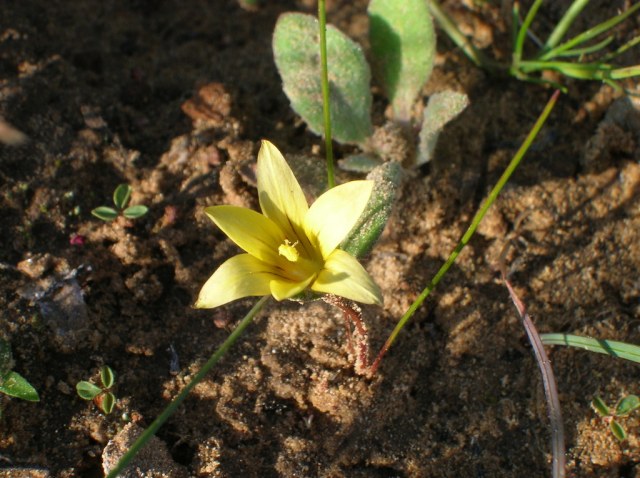
Romulea elliptica M.P.de Vos is found on sandy flats in the southwest Cape. It grows to 30 cm and flowers in late winter, early spring. Leaves are filiform, corms have an oblique crescent shaped basal ridge, and flowers are bright golden yellow with a few short dark veins in the cup. Inner bracts have narrow white membranous margins. The outer segments are elliptical and the backs are green with brown markings along the margins. Photos from Mary Sue Ittner show some of these features.
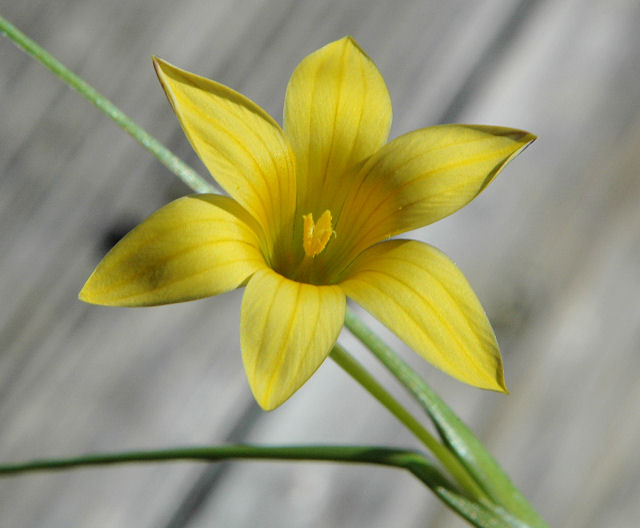
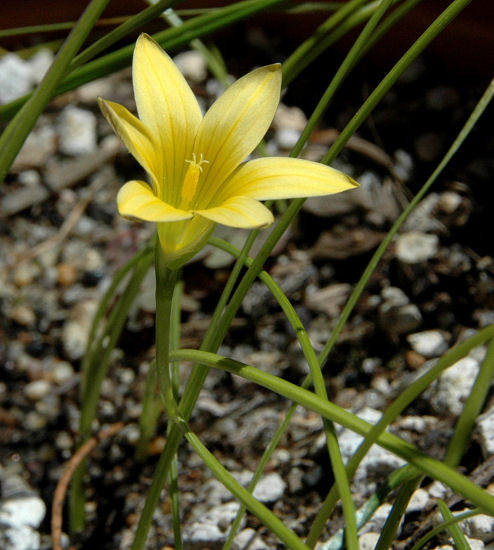
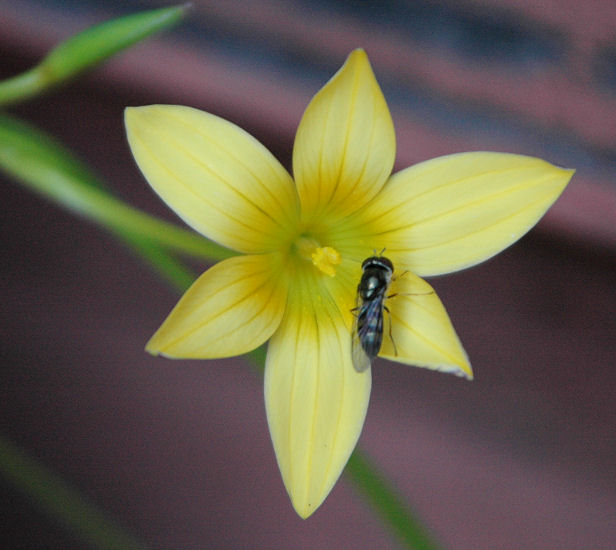

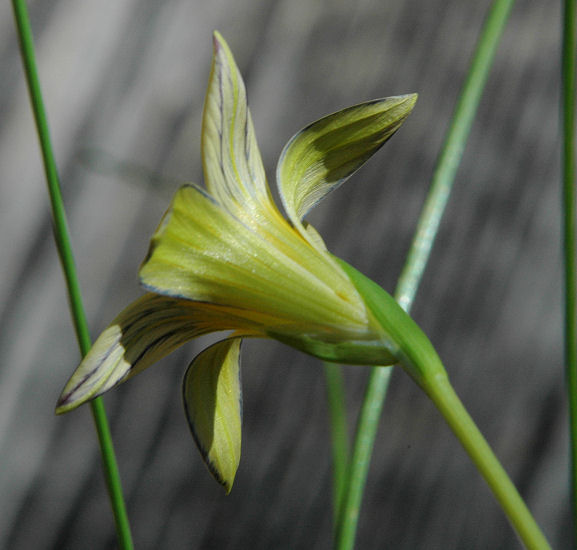
Romulea eximia M.P.de Vos is a narrow endemic of the West Coast, where it grows on sandy flats, seasonally wet granite flats, or loamy flats in fynbos or renosterveld shrubland. Growing from 3-20 cm, it has basal, terete-filiform, narrowly 4-grooved leaves and old rose pink or terracotta-red flowers with dark blotches around the pale or greenish yellow cup with purple-reddish blotches in the throat with median lines extending into the cup. The outer tepals are irregularly streaked on the reverse. It is very similar to Romulea hirsuta and Romulea obscura (form once known as var. blanda) but has corms with pointed bases and straight basal teeth. It flowers winter to spring. Photos by Alan Horstmann and Mary Sue Ittner including the corms which are pointed at the base.
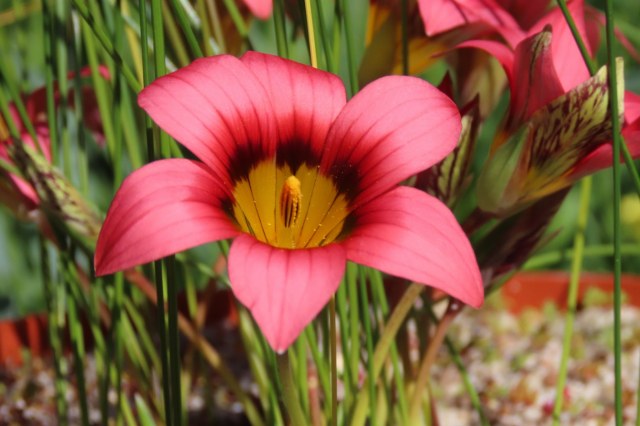
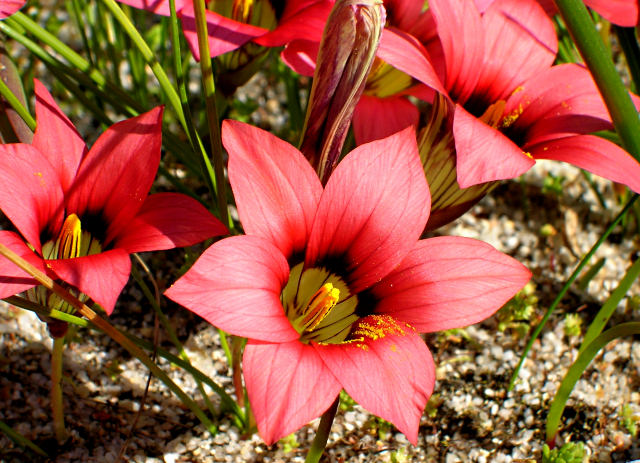

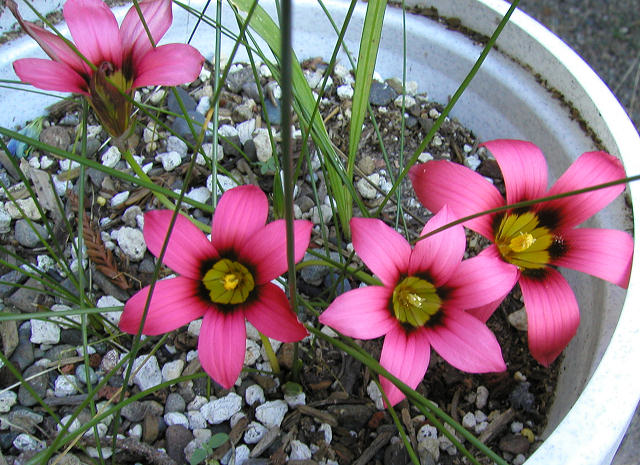


Habitat pictures were taken in the Darling Reserve September 2006 by Bob Rutemoeller and Mary Sue Ittner.
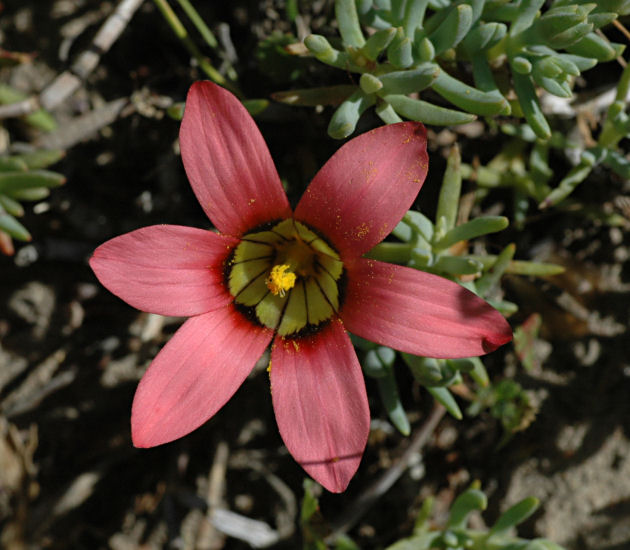
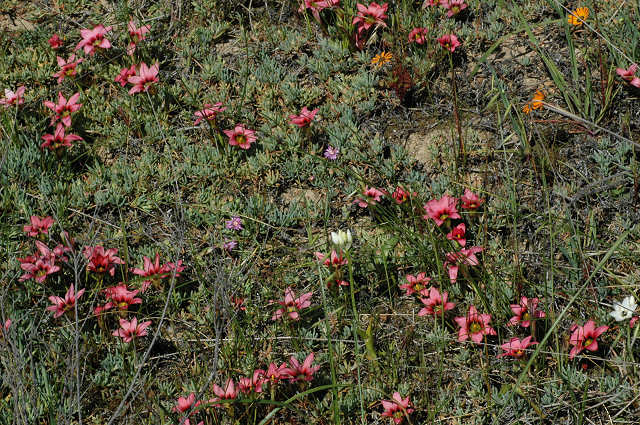

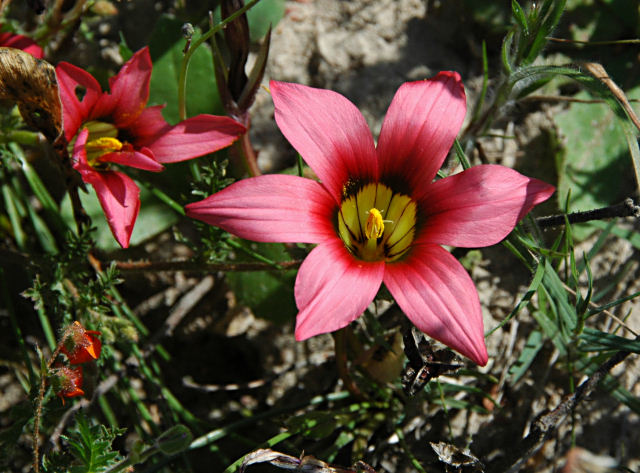
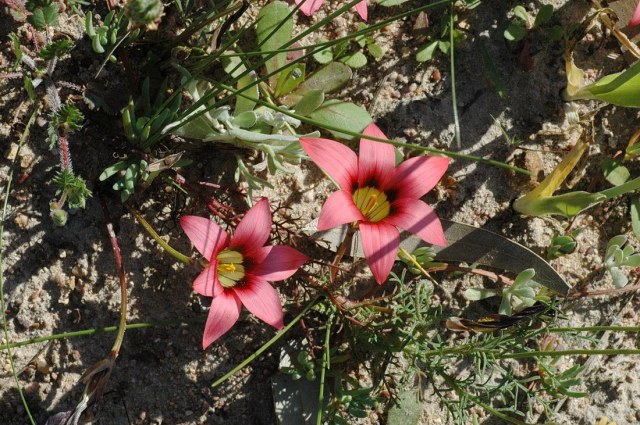

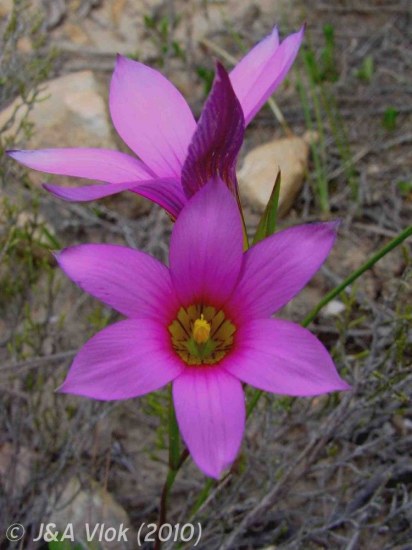
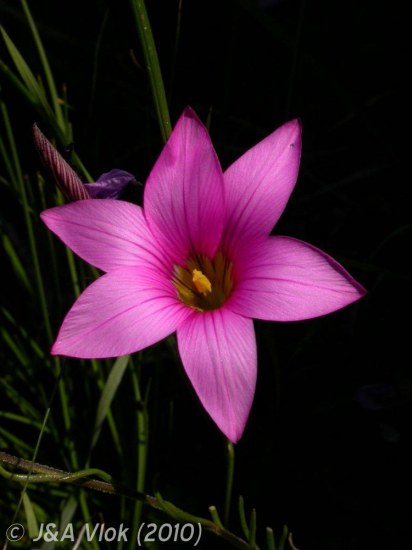
Romulea fibrosa M.P.de Vos is found growing in sandstone on coastal and inland mountains from Langeberg to the Winterhock Mountains. Corms have an oblique basal ridge of fibril clusters and are usually covered with the remains of old leaf bases, leaves are narrow, sometimes hairy, and flowers are magenta to pink with diffuse purple markings around a yellow cup. Plants can be up to 40 cm tall with a distinct stem. Flowering is from late spring to early summer (October to December). Photos from the book Plants of the Klein Karoo courtesy of Jan and Anne Lise Schutte-Vlok.
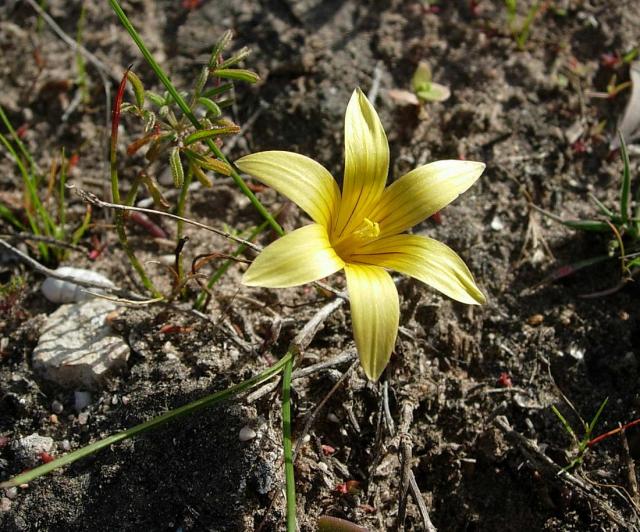
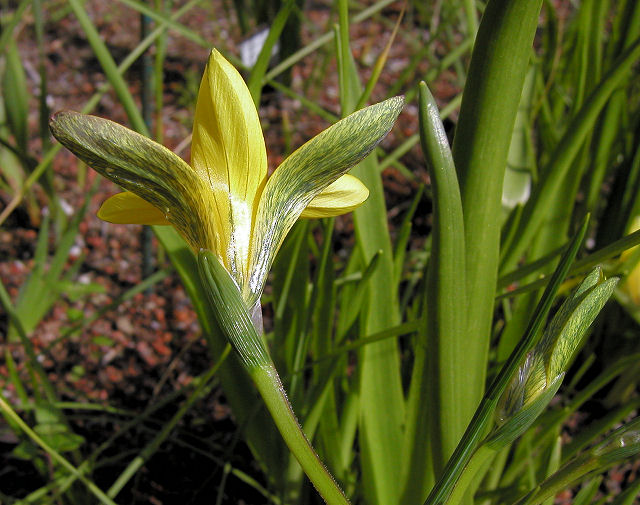
Romulea flava (Lamarck) M.P.de Vos grows in sandy and clay soils, fynbos or renosterveld over a wide distribution in the winter rainfall areas. Growing from 10 to 15 cm high, it has corms that are obliquely flattened towards the base with fine parallel fibrils on the basal ridge and white or yellow flowers with a yellow cup. This species is a long blooming one, easily grown in the garden. Flowers only open on warm sunny days, often early afternoon and close late afternoon and are easily missed other times of the day. The first photo was taken by Cameron McMaster in the De Hoop Nature Reserve in the Overberg. The rest of the photos by Mary Sue Ittner show yellow and white forms, the back of a yellow form and corms on a 1 cm grid.


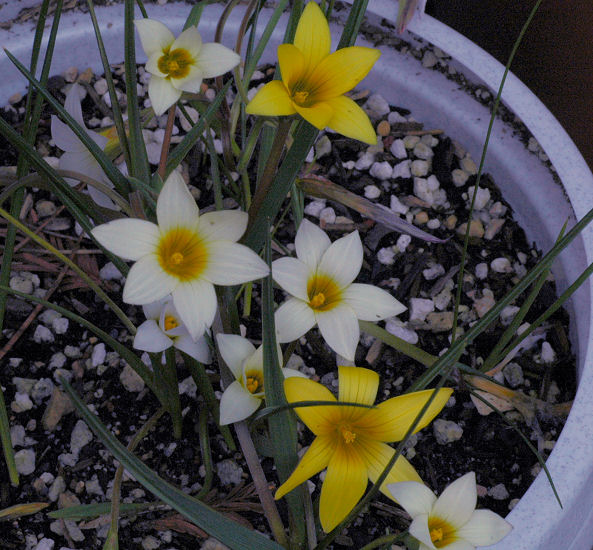
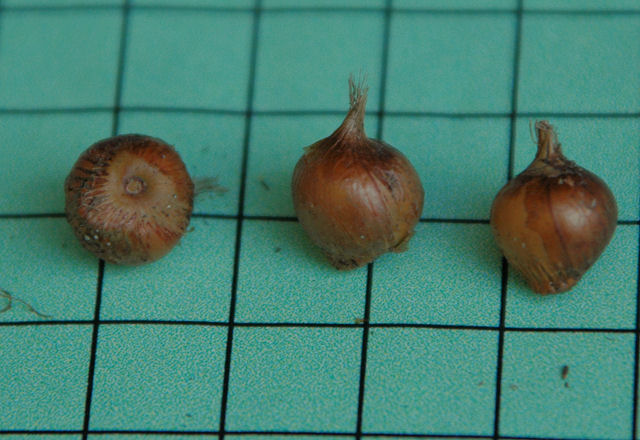
Additional photos by Alan Horstmann, Cameron McMaster, Bob Rutemoeller, and Bob Werra.
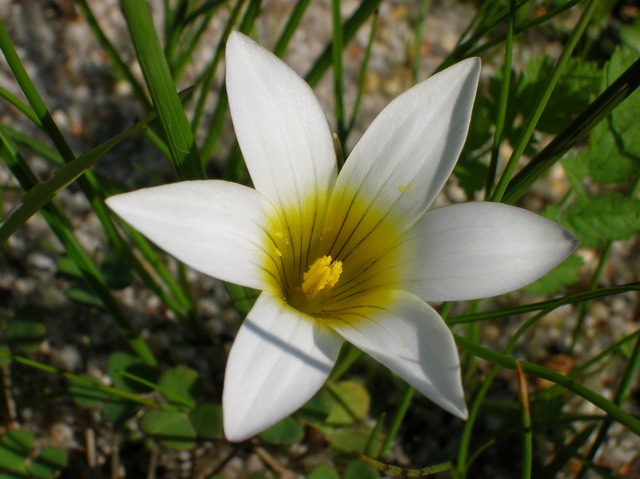
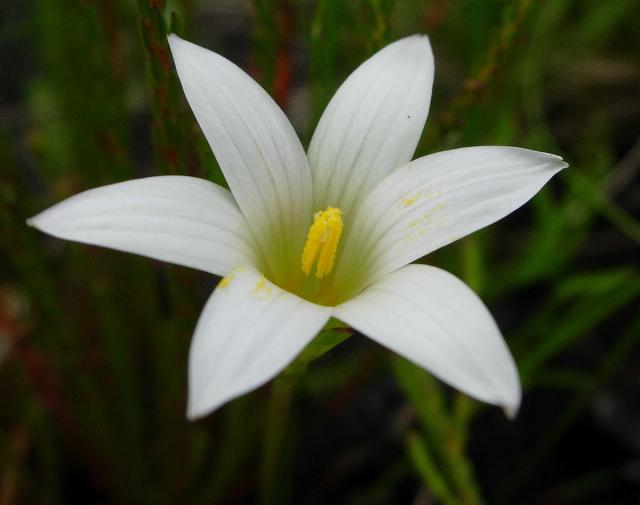
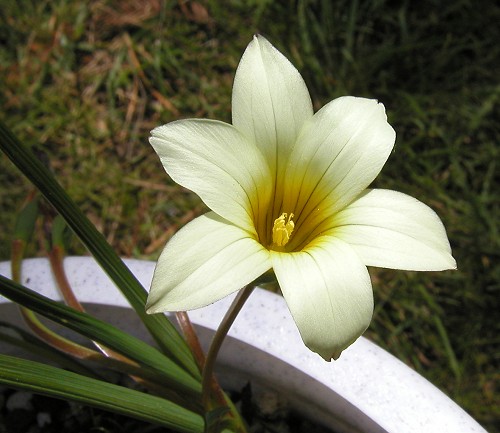

Romulea gigantea Béguinot is a species that has small white, lilac, or blue flowers with a yellow greenish cup and is found in moist places in the South African Cape. Height: to about 40 cm. The first photo taken by Bob Rutemoeller illustrates this species even though it was grown from seed labeled Romulea bulbocodium v. leichtliniana. It bloomed the second year from seed in March in Northern California and was then properly identified. It is a weedy species and probably offered in exchanges under the wrong name as it sets seed easily. The other two pictures of this species grown from another batch of misnamed seed are close-ups of this small flower from the front and back. These photos were taken by Mary Sue Ittner.
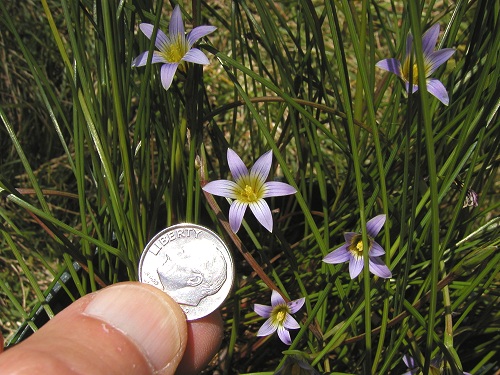
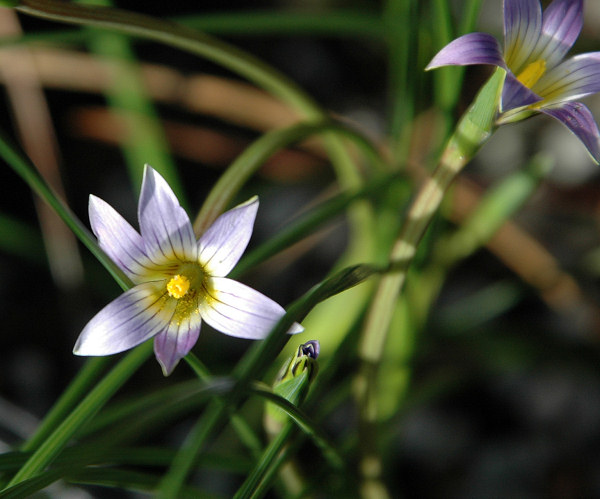
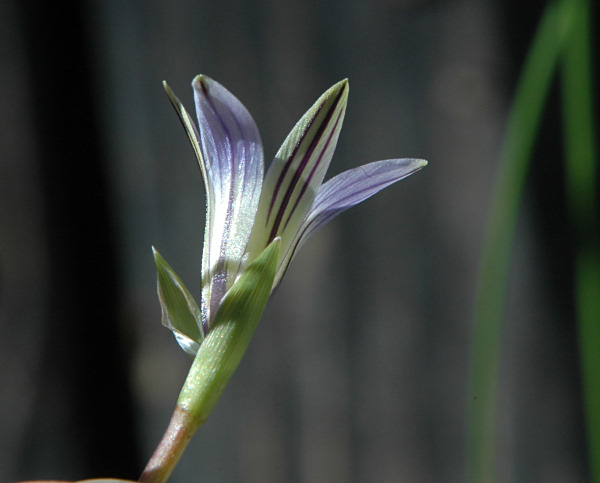
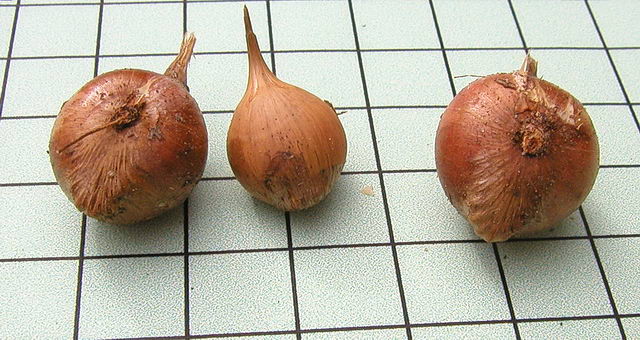
Romulea hallii M.P.de Vos grows on clay flats in the Roggeveld in a very cold dry winter rainfall area (Sutherland). It blooms from May to July in the wild and is the first species to bloom in our Northern California garden (usually in November or December). Height: 10 cm. Photos 1-2 were taken by Bob Rutemoeller in different years. Photo 2 shows the back and the bracts. Examining bracts is often helpful in identifying species. Photos 3-5 were taken by Mary Sue Ittner. The last photo shows the corms on a 1 cm grid. Corms are rounded at the base with curved acuminate teeth bent to one side.
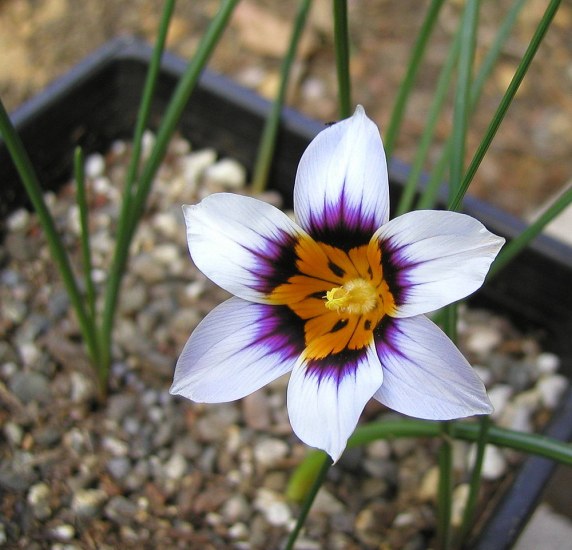
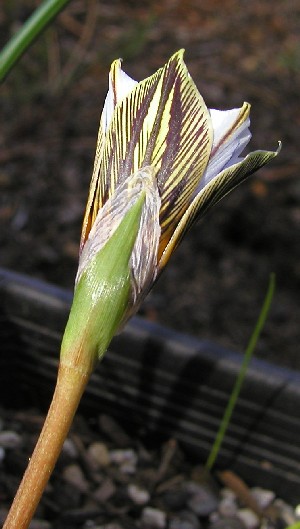
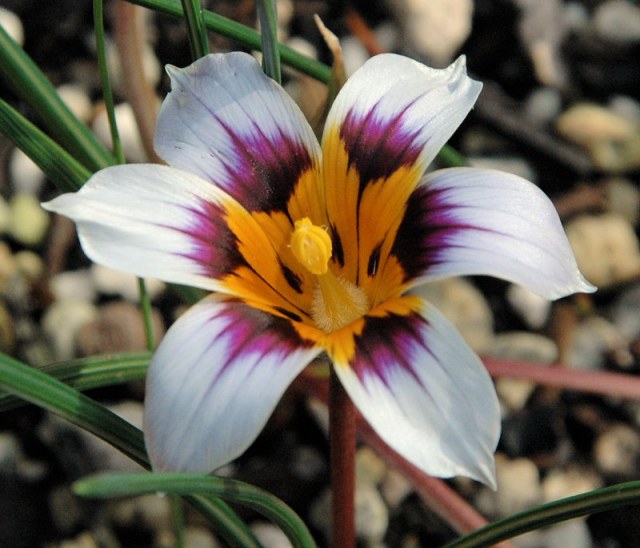
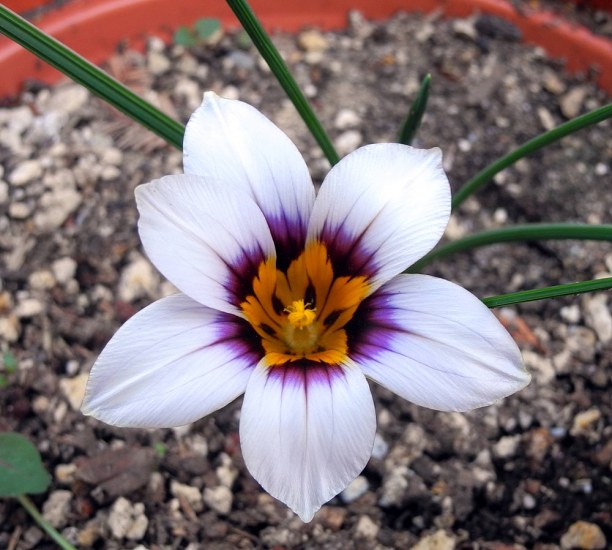
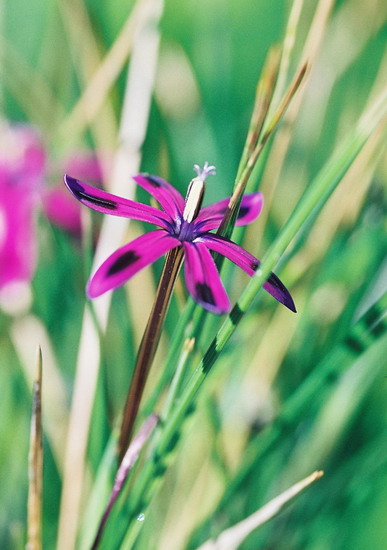
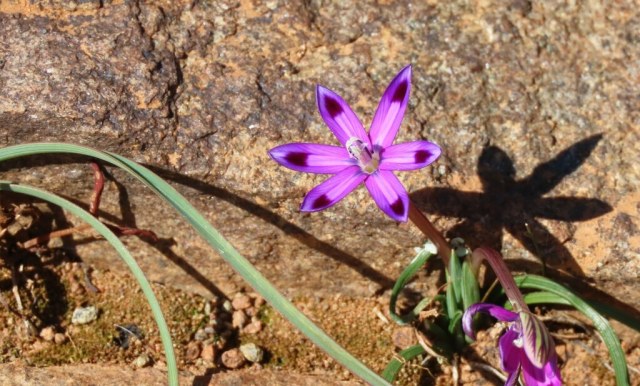
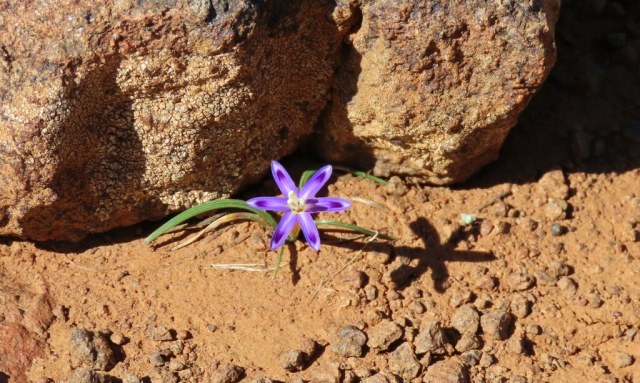
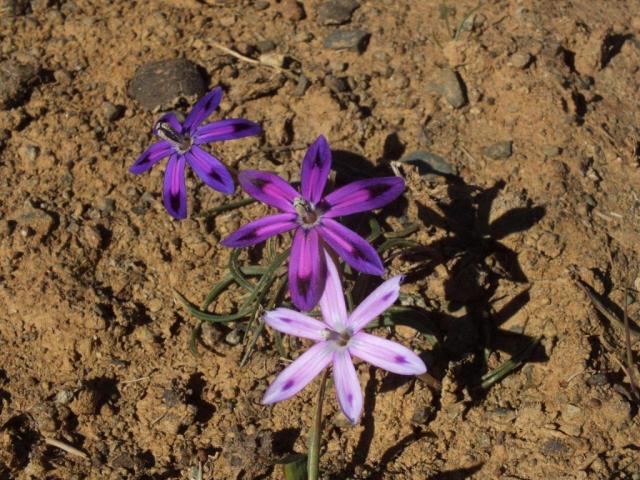
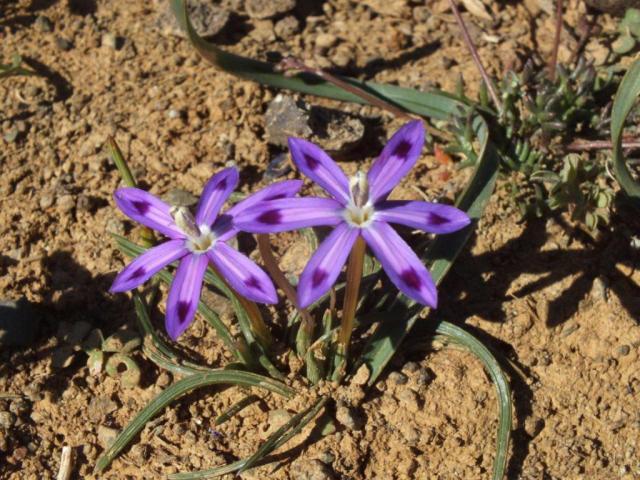
Romulea hantamensis (Diels) Goldblatt is a narrow endemic that is restricted to damp doleritic flats on the summit plateau of the Hantamsberg Mountains, a cold desert area similar in climate to parts of Iran, Turkmenistan, the High Atlas mountains of Morocco, and Bakersfield, CA. Flowers are salver-shaped, dull pink or magenta to purple (rarely white) with the tepals strikingly marked and veined with purple and white streaks. There is a dark blotch in the distal third and a white throat. Bracts are green, the outer with narrow and inner with wider hyaline margins; corms are ovoid and pointed at the base. Height range: 7-15 cm.
This very beautiful species can be difficult to grow from seed and seems to require stratification and even then seeds do not always germinate. However, once the seeds sprout, they respond well to normal summer-dry growing conditions, and the tiny vivid flowers are worth the effort. Photos below, including some in habitat, were taken by Alan Horstmann.


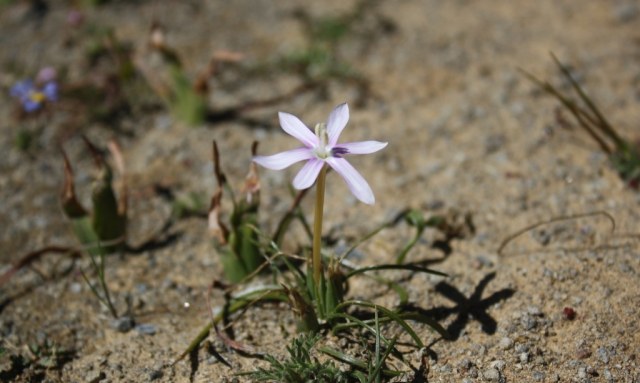
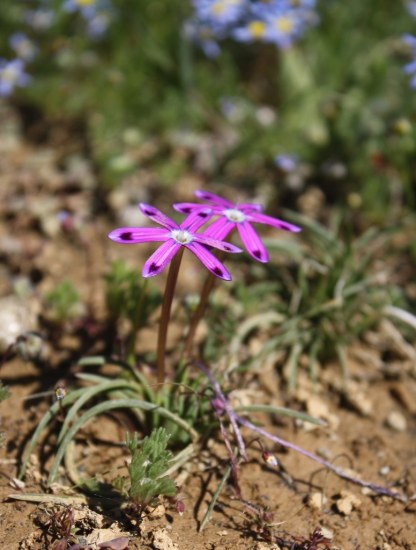
The rest of the photos were taken by Rachel Saunders in September 2014 on an IBSA trip to the Hantamsberg. There was considerable variation in color in the flowers in the population they saw.
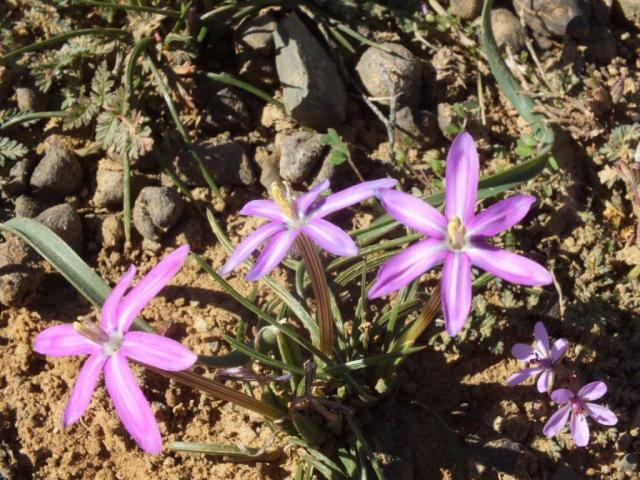
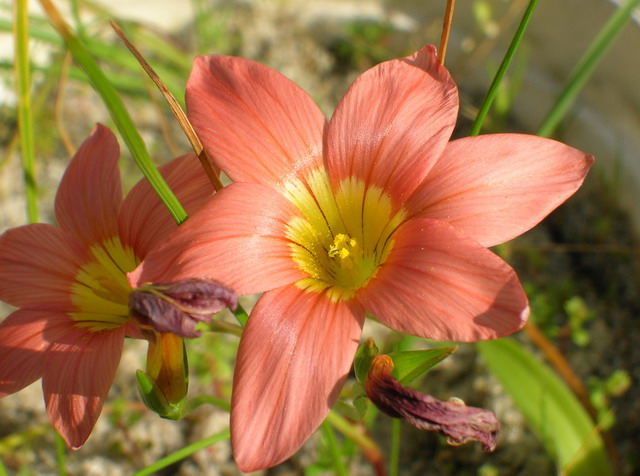
Romulea hirsuta (Steudel ex Klatt) Baker grows on granitic or sandstone or clay slopes and flats in the Northwest and Southwest Cape. Plants are 6 to 30 cm with a symmetrical bell-shaped corm with a circular rim of fibrils. Most populations have deep pink to red flowers with darker blotches in the throat, but there is a coppery orange flowered form without the dark markings. Fruiting peduncles are suberect or spreading. Some populations have a strongly angled or winged peduncle. Photos from Rod Saunders, Bob Rutemoeller, Alan Horstmann and Cameron McMaster were taken in habitat.
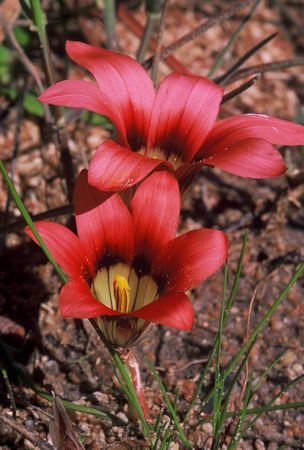
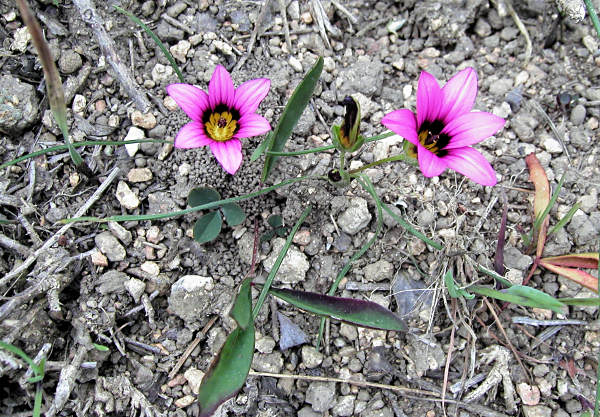
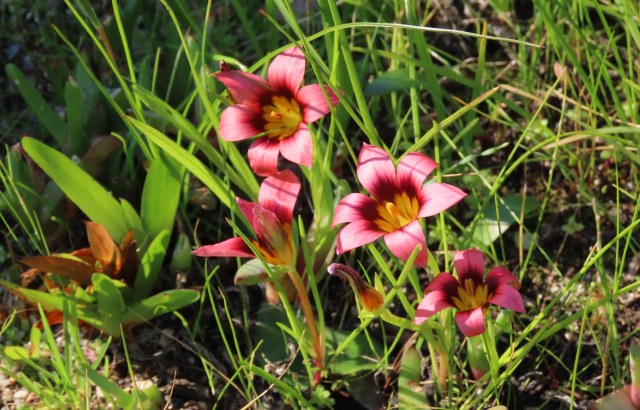
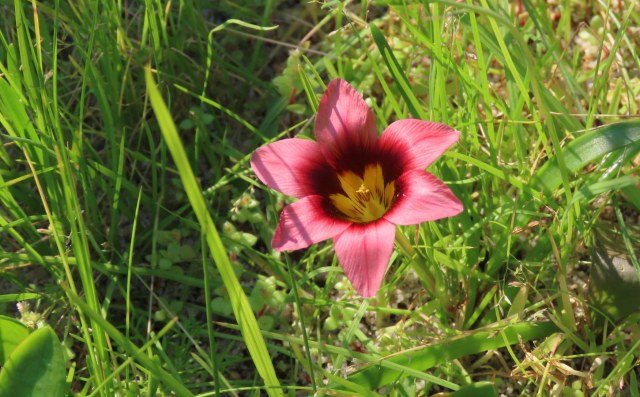
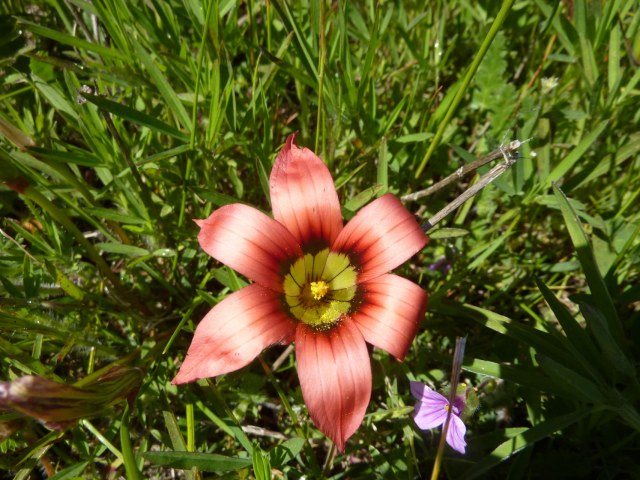
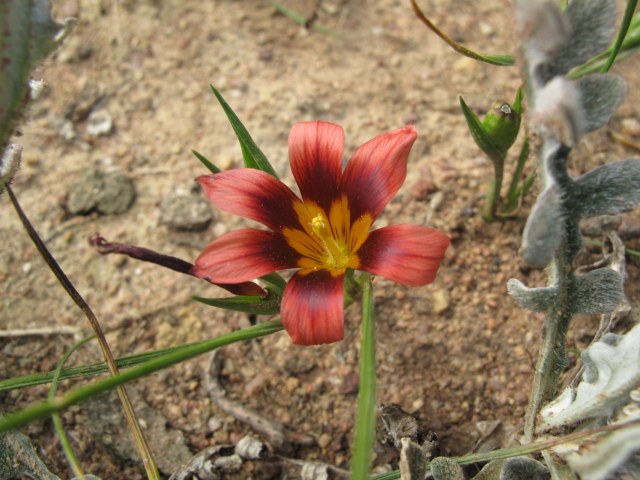
Photos of the corms were taken by Mary Sue Ittner.
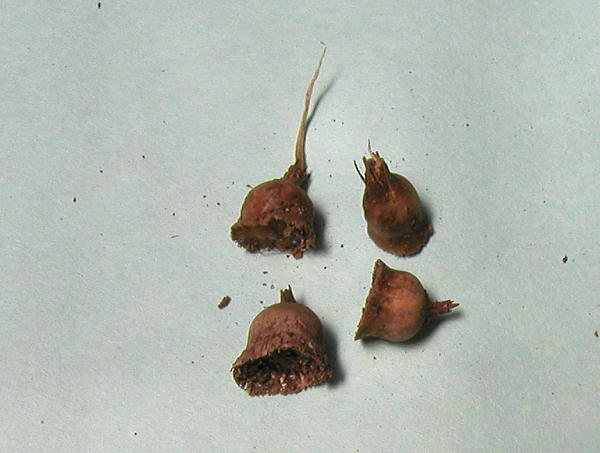
Photos by Alan Horstmann and Rod Saunders of the form Miriam de Vos named var. cuprea, a form that is apricot pink without dark blotches in the throat and with a yellow cup.
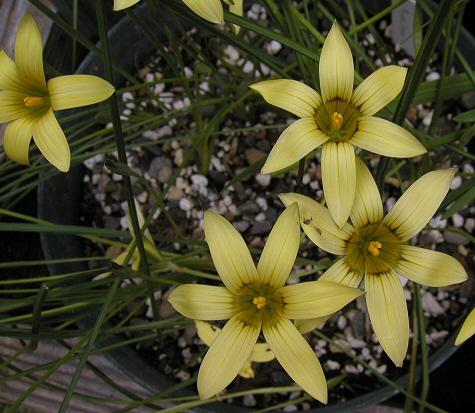
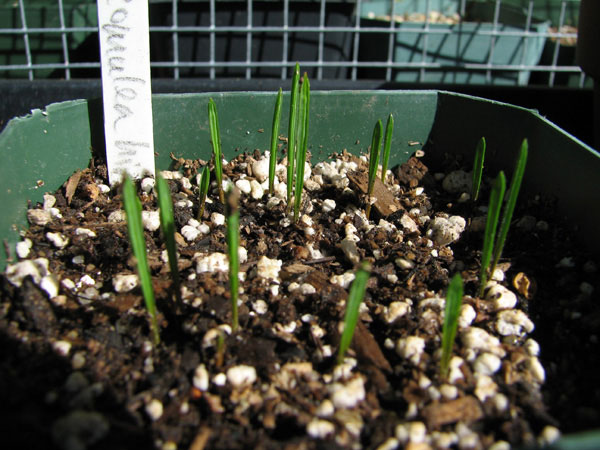
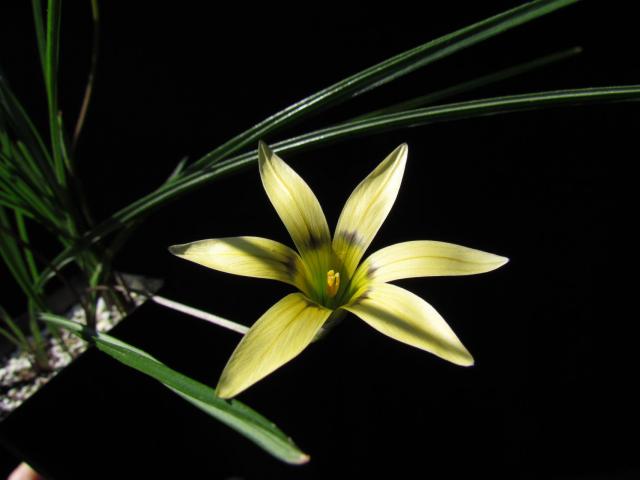
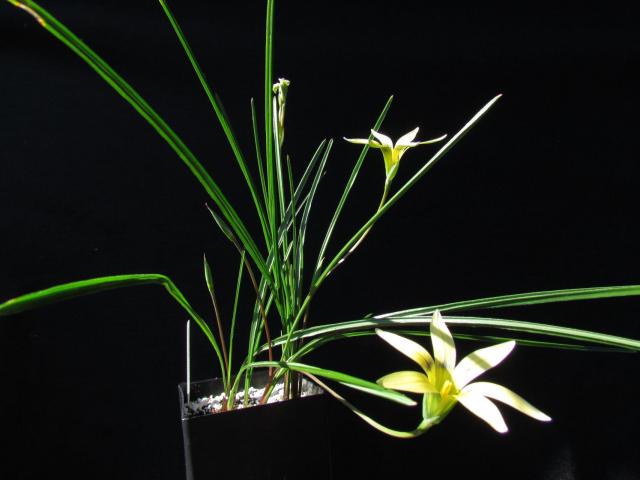
Romulea hirta Schlechter sets a lot of seed and is often available in seed exchanges and sometimes blooms the second year from seed. It is found on damp dolerite and clay flats in the mountains of the northwest Cape. Flowers vary in size and are pale yellow, often with a pale reddish brown or greenish brown zone above the throat. Corms are rounded at the base with curved acuminate teeth bent to one side. The distinctive identifying trait is the leaves which have the lateral ribs reduced and medium ribs widened to form 4 longitudinal wings. Height range: 5-20 cm. The other species showing this trait is Romulea tetragona which has different colored flowers. Photos 1-2 by Mary Sue Ittner of the flowers and the corms on a 1 cm grid. Photos 3-6 were taken by Nhu Nguyen of plants grown from a PBS BX.

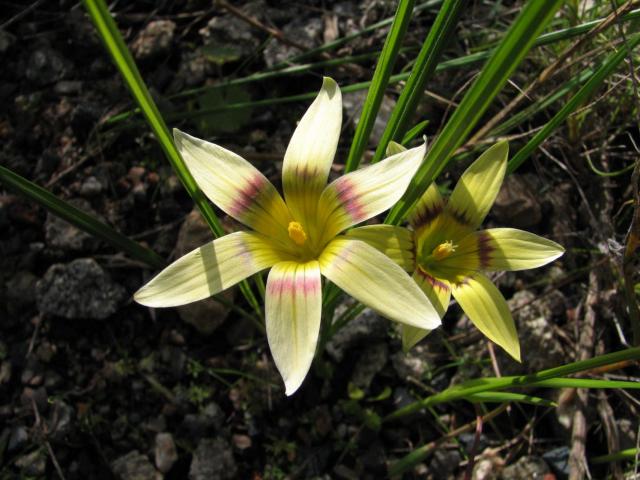
Photos of plants in habitat from Mary Sue Ittner, Bob Rutemoeller, and Rod Saunders. Photos 1 and 2 show a plant blooming near Middelpos in the Roggeveld September 2006. Photos 3-5 show variations in plants photographed near Nieuwoudtville September 2006.
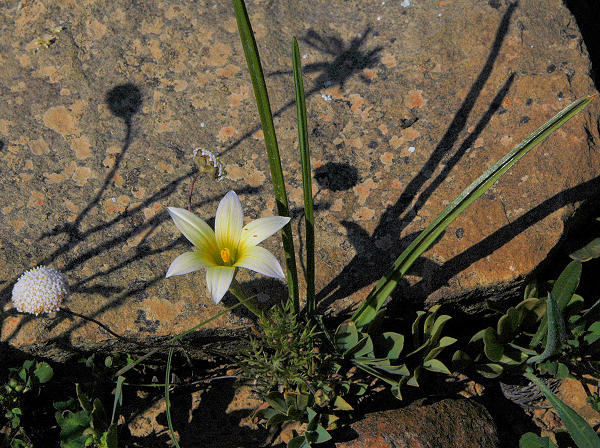
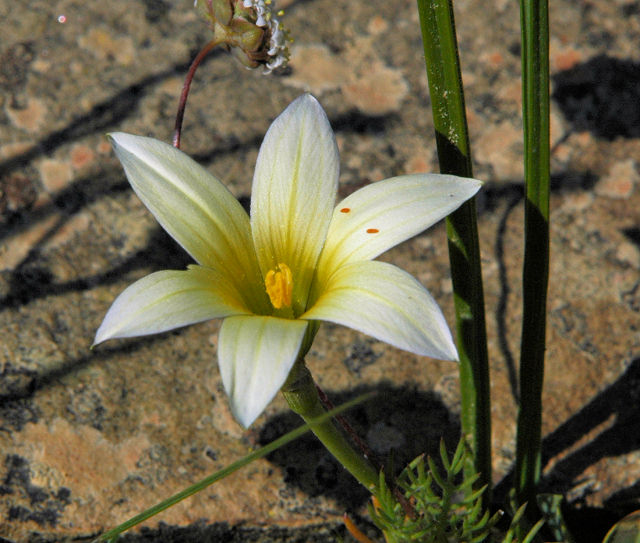
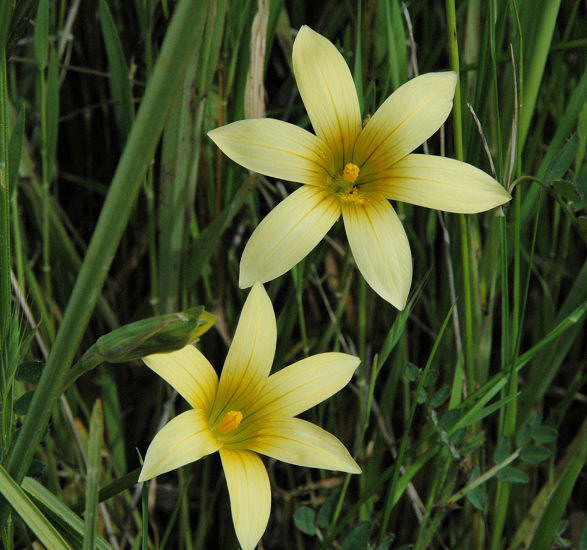
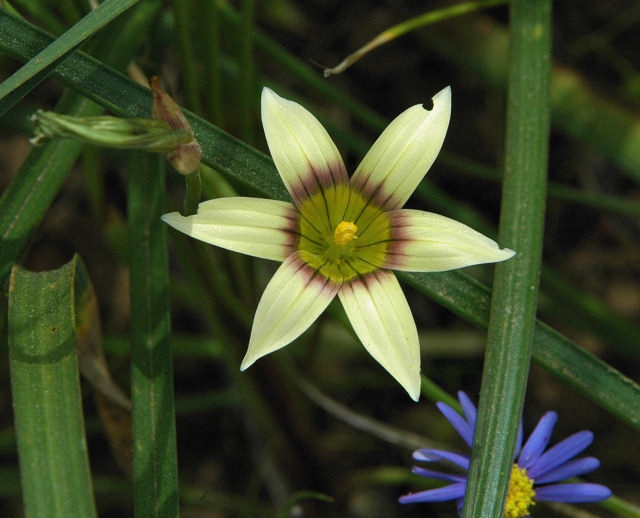
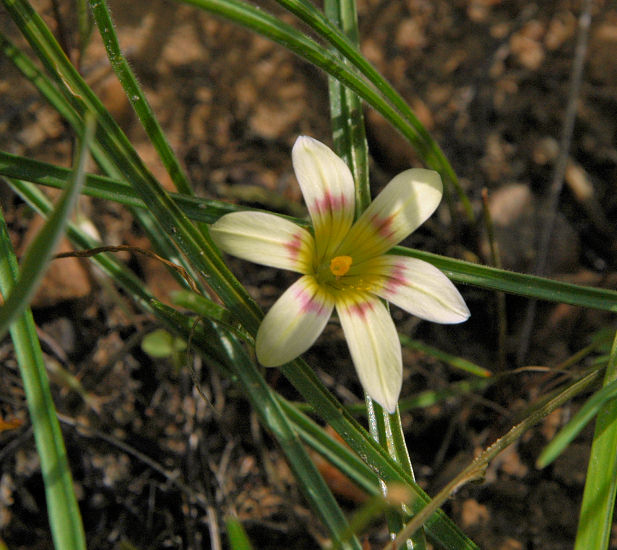
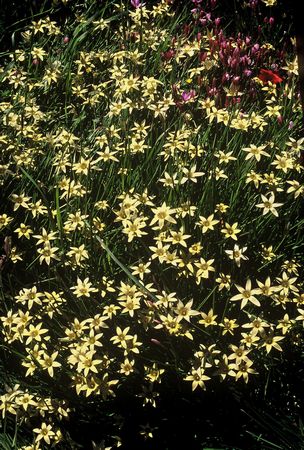
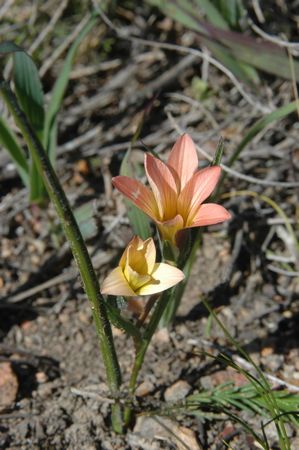
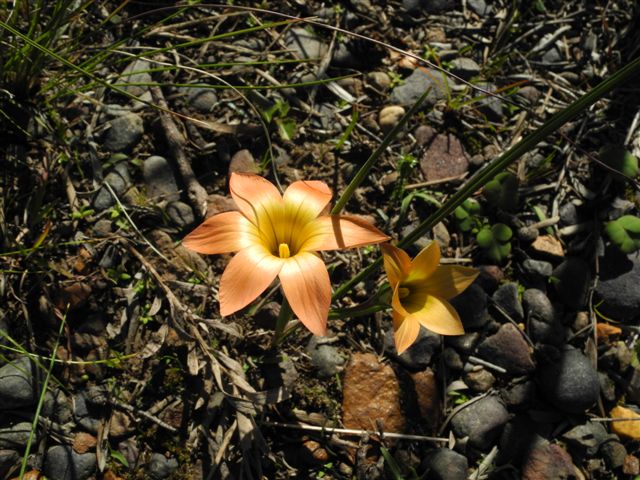
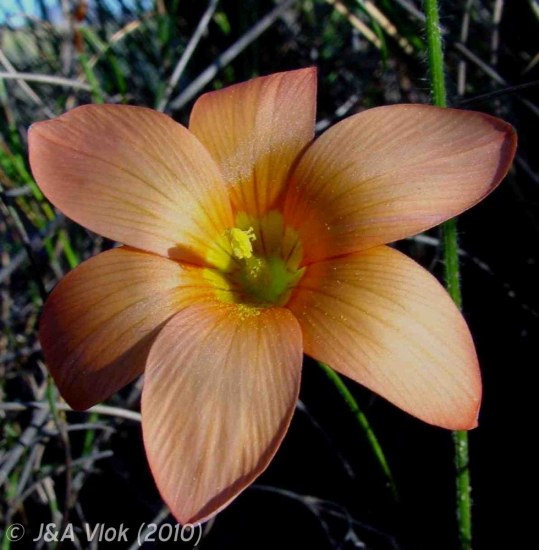
Romulea jugicola M.P.de Vos grows in clay soils in renosterveld and is found from the Southwest Cape, the Little Karoo mountains to the southeast Cape. It has a corm with an oblique basal ridge of fibril clusters, hairy leaves, and apricot flowers with a yellow cup. Height: 8-12 cm. The first photo by Rachel Saunders was taken in August 2012 in an area of the Southwest Cape that had burned previously. The second photo from the book Plants of the Klein Karoo is courtesy of Jan and Anne Lise Schutte-Vlok.
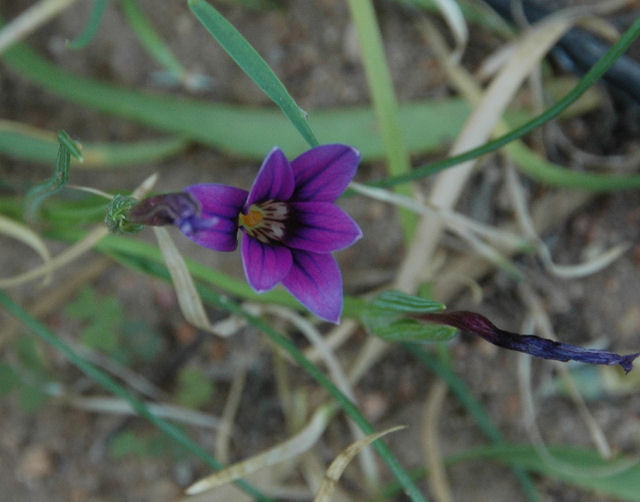
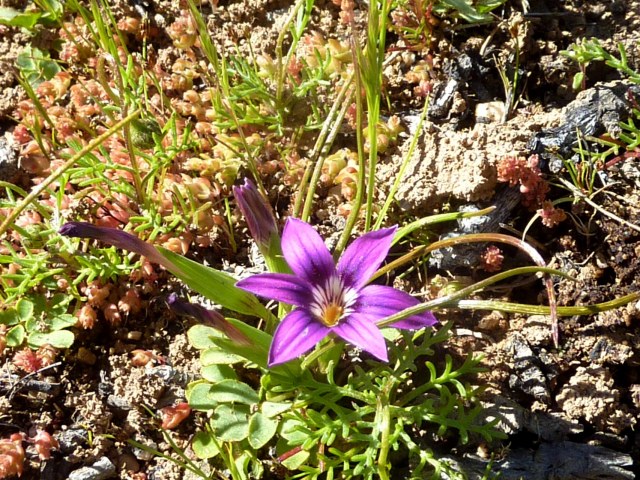
Romulea kamisensis M.P.de Vos grows in sandy loam in Namaqualand. It has small magenta purple flowers with a violet center and violet stripes in the throat. Stamens and style are included in the tube. It flowers in late winter, early spring. Height: 10-15 cm. Photos by Mary Sue Ittner. The last shows the corms on a 1 cm grid. Corms are obliquely flattened towards the base with a crescent-shaped basal ridge.
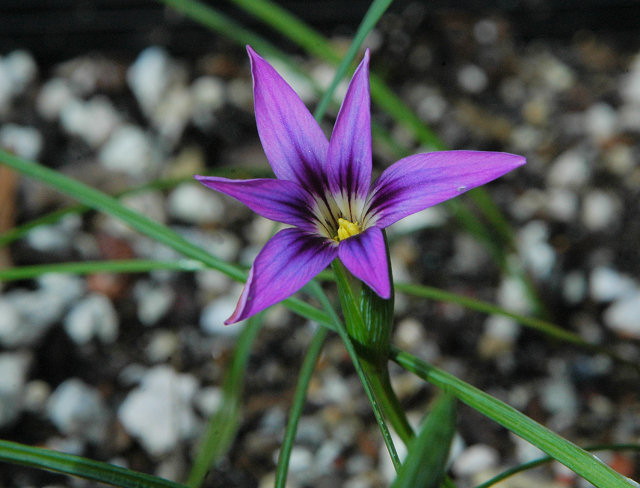
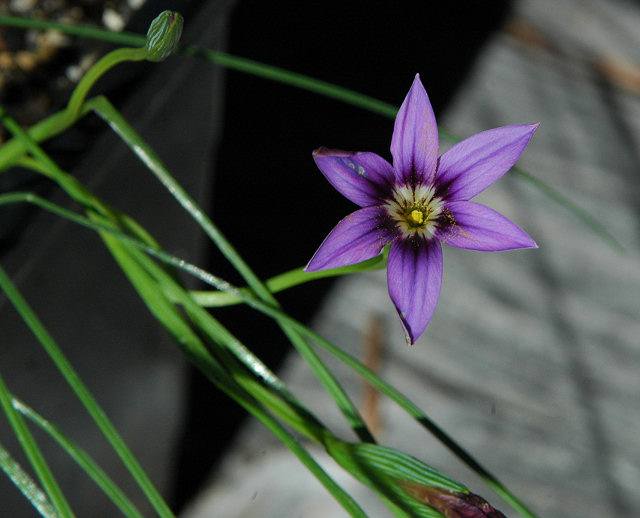
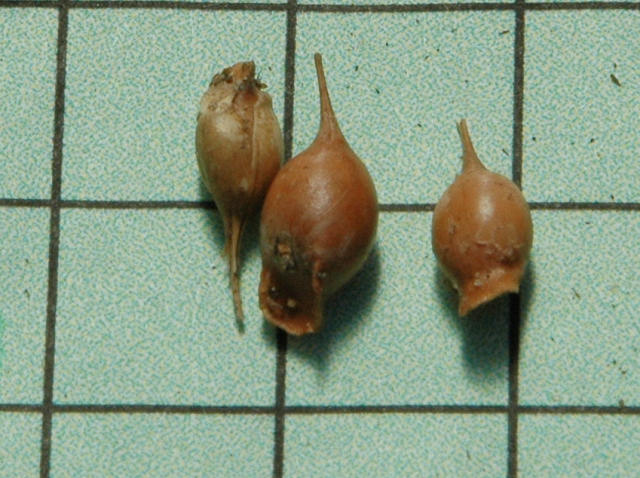
The first three photos were taken in Namaqualand on two different trips by Mary Sue Ittner and Bob Rutemoeller. The last photo was taken by Cameron McMaster.
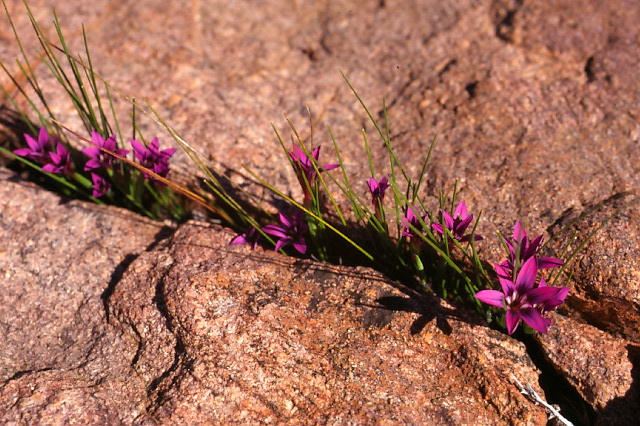
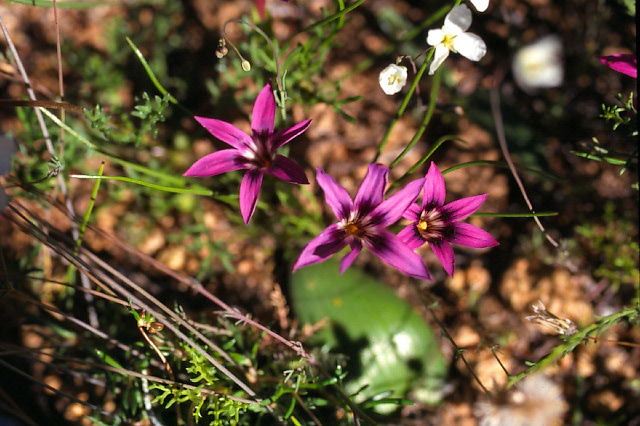
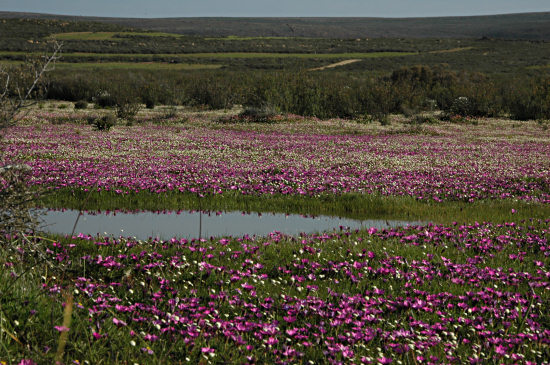
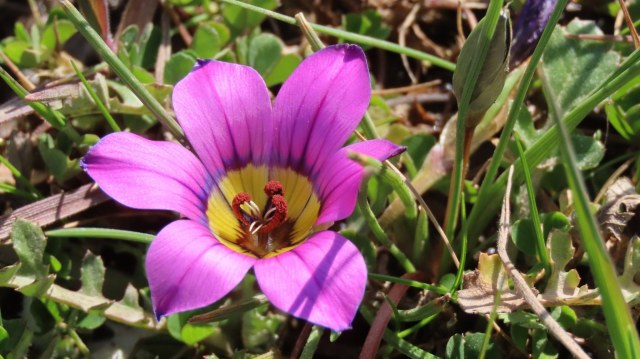
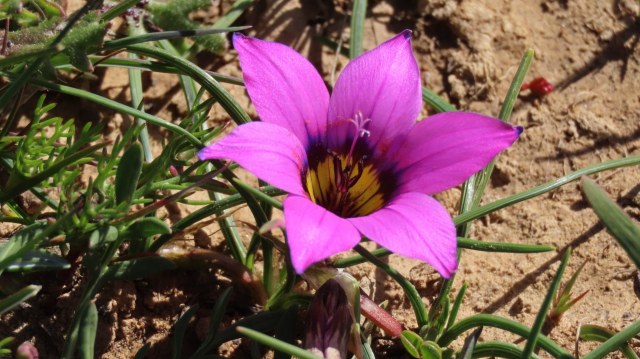
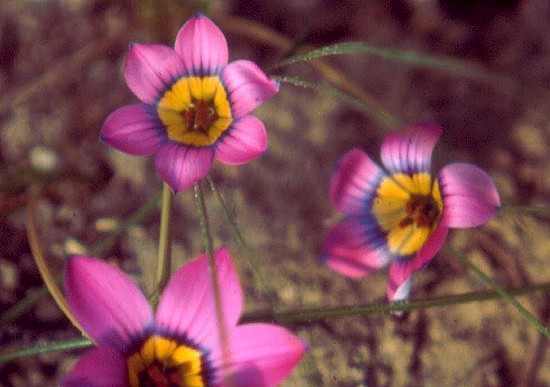
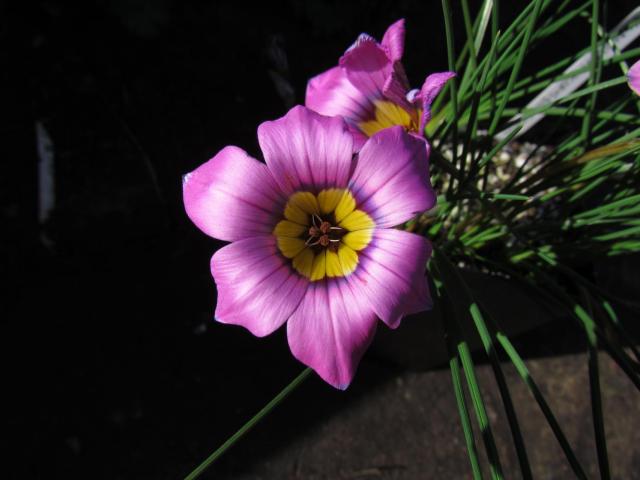
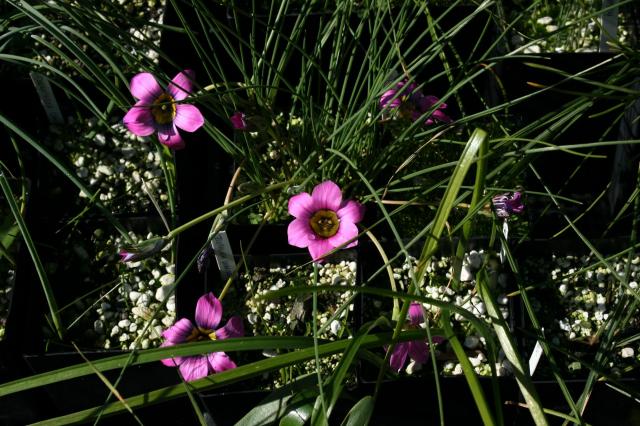
Romulea komsbergensis M.P.de Vos is found on damp loamy flats in the Roggeveld Escarpment. This species can be grown easily from seeds and takes 4 years to bloom. Plants grow from 8 to 12 cm high, rarely taller and have corms rounded at the base with grooved basal teeth bent towards one side. Flowers are magenta with a narrow blue band around the yellow cup which is brown at the base. Flowering is from August to September. Photos by 1 to 5 from Bob Rutemoeller and Mary Sue Ittner were taken September 2006 in a wet place near Middelpos in a wet year. The first shows the scene with hundreds of flowers in bloom, the second a closer version and then some pictures of some odd colored forms. The fifth photo shows a white one growing next to the usual color form.
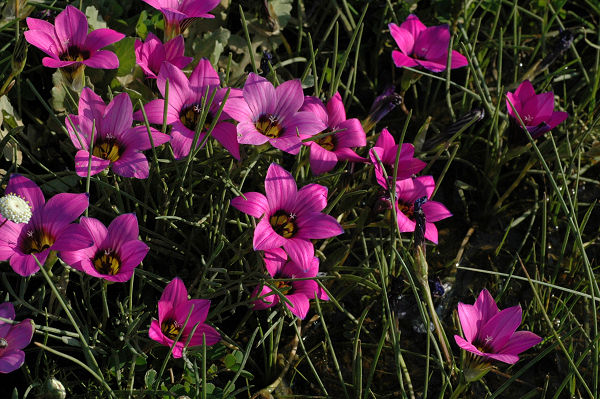
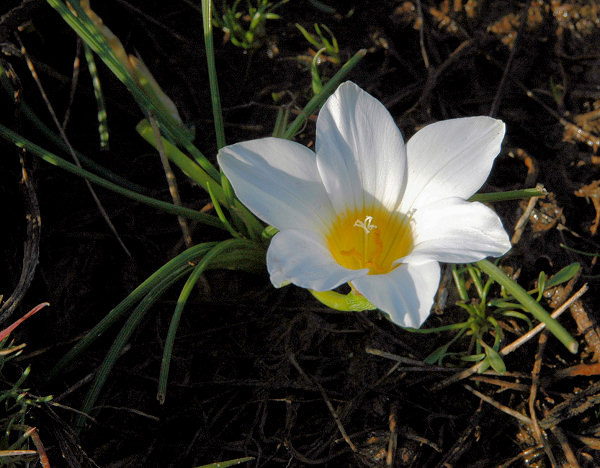
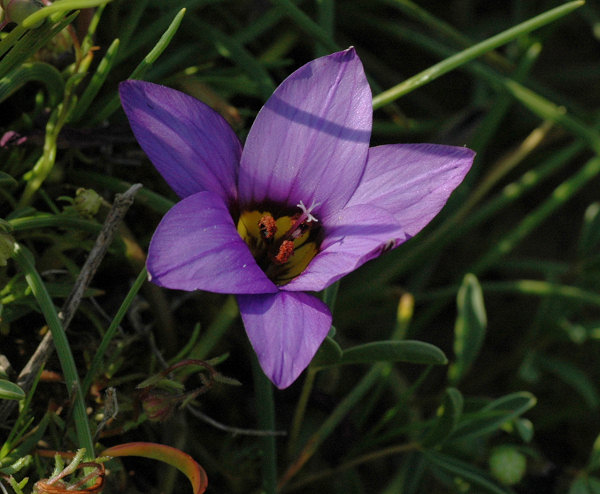
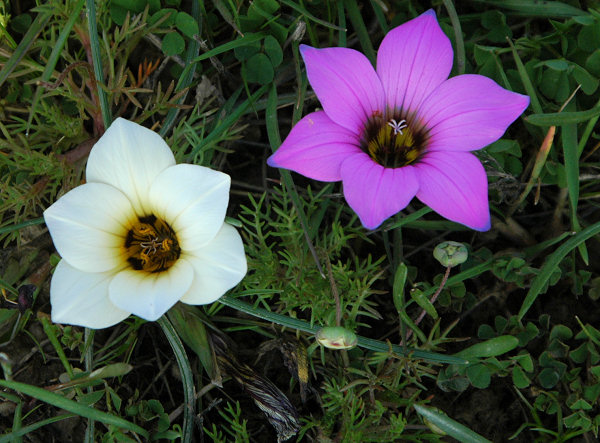
The first photo from Cameron McMaster was also taken in habitat. The last two photos were taken on a trip to this area by Alan Horstmann in 2023.
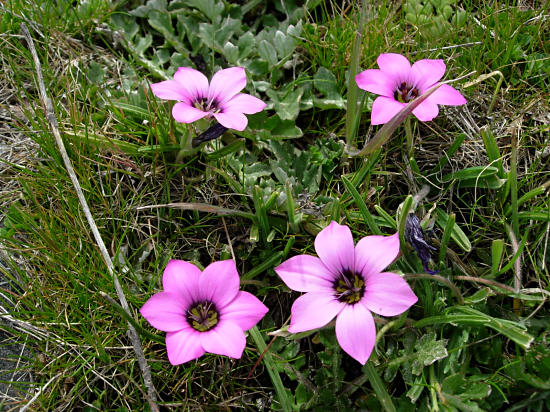
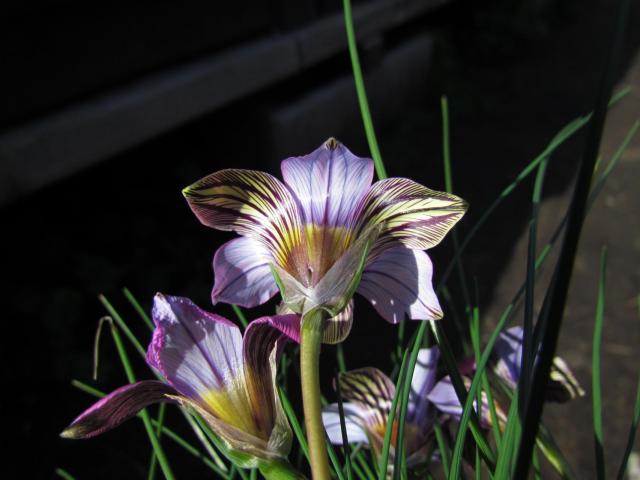
Plants grown from seed from two different sources are pictured below. Photos from Bob Rutemoeller and Mary Sue Ittner. There are differences with the flowers from one batch having a much more pronounced brown center than the other. The patterns on the back are different too, but they both key out to this species. In photo 3 the pot was being pollinated by a bee that spent a lot of time rolling around in each flower. Photos 4 and 5 show the variation of the backs of the two different clones. The last photo shows the corms on a 1 cm grid.
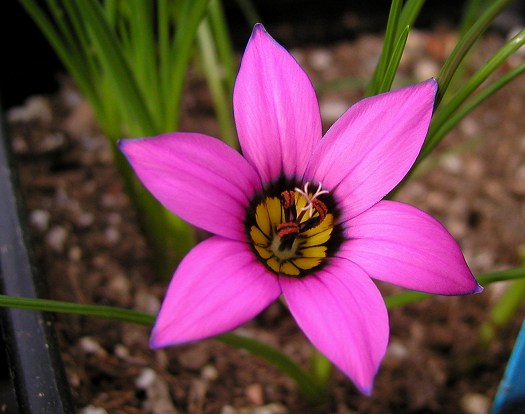
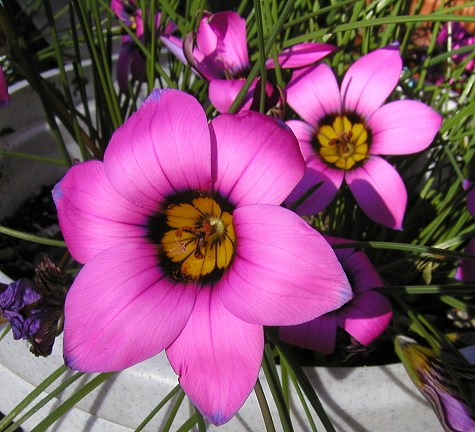
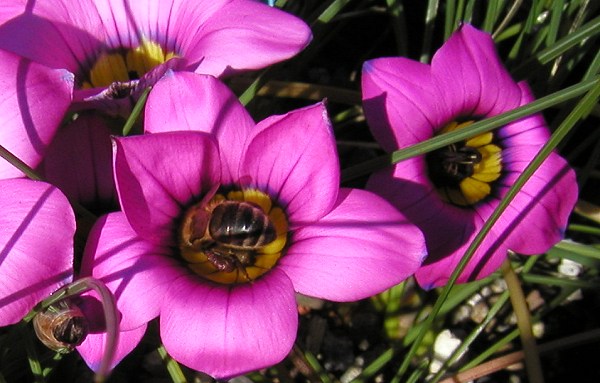
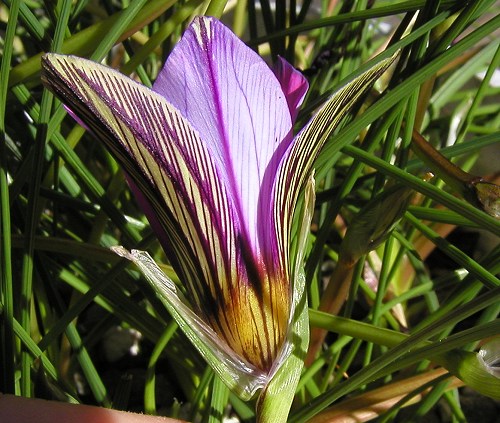
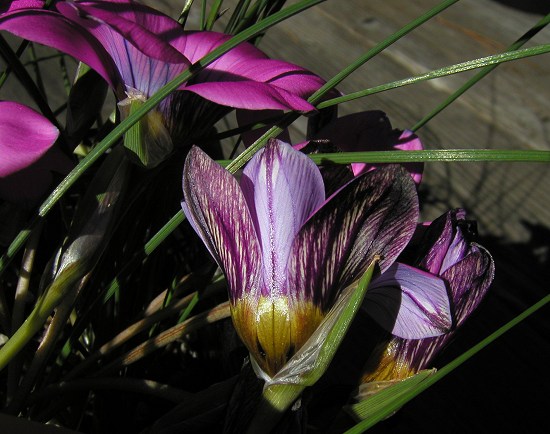
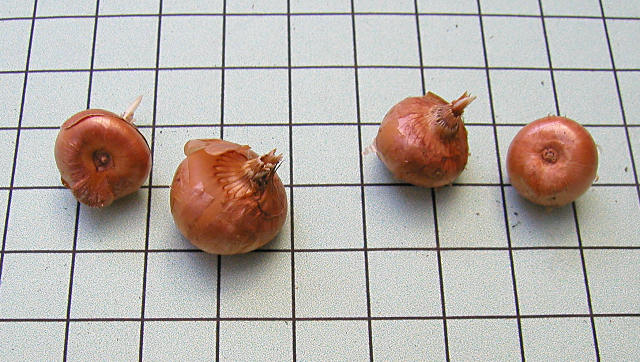
Photo 1 was taken by Lauw de Jager. Photos 2-4 were taken by Nhu Nguyen of a form with more reflexed petals.
Time lapse video of flowers of Romulea komsbergensis by Richard Sullivan
European And Mediterranean Romuleas - South African Romulea a-d - South African Romulea l-n - South African Romulea o-s - South African Romulea t-z - Romulea index