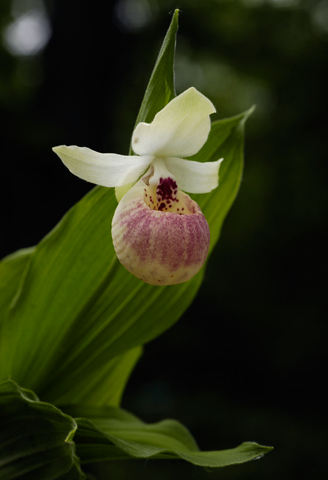
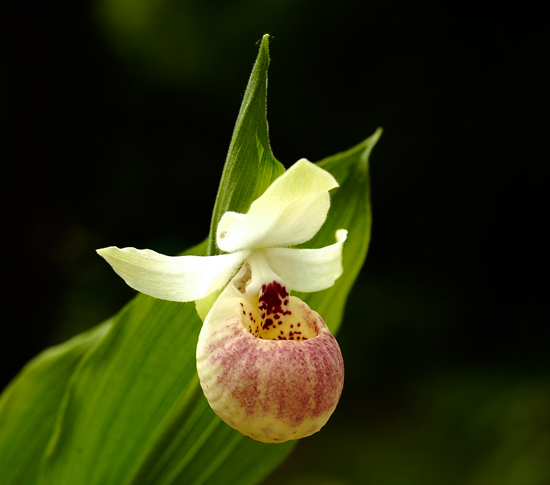
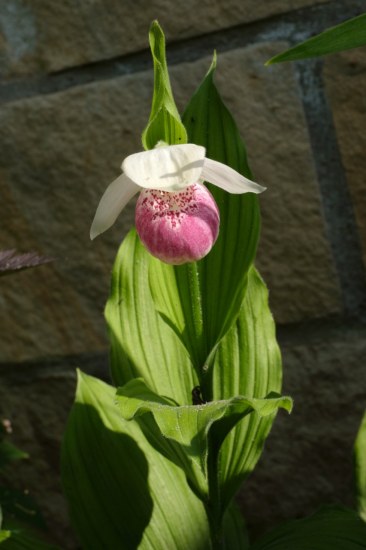
Cypripedium is a genus of terrestrial orchids (Orchidaceae family), most of them perfectly hardy, which can be found growing in nature in different areas: America, Europe, and Asia. Original species are found as well as many hybrids, due to easy cross pollination. Cypripedium reginae is from North America; C. calceolus (similar to the American C. parviflorum) is native to Europe; C. tibeticum, C. japonicum and many others are from Asia.
They are usually grown from seeds in vitro, in sterile conditions, and begin their flowering stage after five or six years from sowing. Some people may grow them from seeds by just spreading the content of the mature capsules on the soil near mother plants as these live and thrive with humus rich in organic components. Seeds and adult plants of cypripediums are often mycorrhizal with soil fungi and thus it is difficult to grow certain species out of habitat.
Shady position but good light, wet conditions but good drainage, are the secrets to obtaining healthy and fine plants with rich roots. Soon it is possible to split the clump and obtain new specimens. This is the way to test if a different position will improve the growth and to save the plant from possible attack from enemies; fungus especially which kill old and crowded plants.
The excellent monograph The Genus Cypripedium by Dr. Phillip Cribb (Timber Press, 1997) is undoubtedly the best introduction to hardy lady’s slipper orchids.
Svante Malmgren in Sweden is an expert grower of many species, here is a link (internet archive) to his site with many photos and information; he will also help with advice for those who love to grow from seeds. Another hybridizer who has had fine plants since the late nineties, is Michael Weinert (Germany), who owns Cypripedium nursery Frosch®Exklusivstauden
Information supplied by Giorgio Pozzi and Oron Peri.
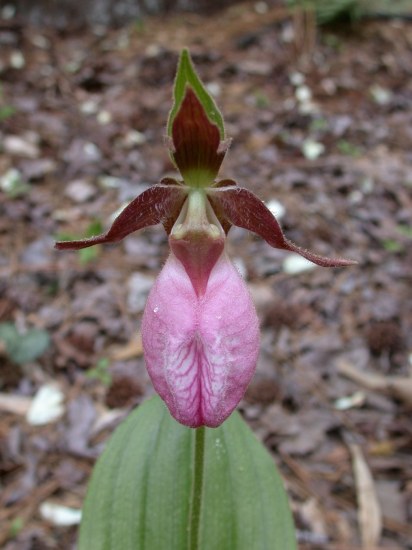
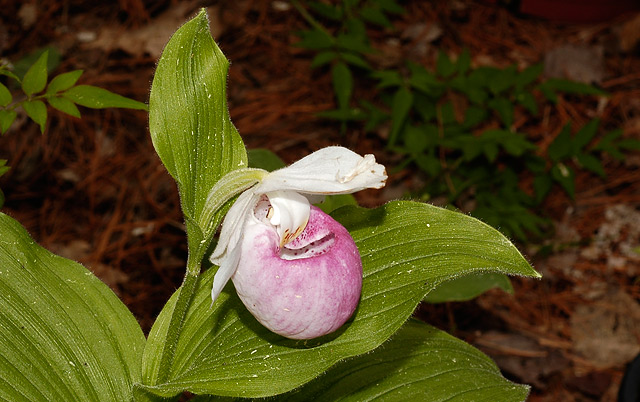
Cypripedium acaule Ait. is a species in the Orchidaceae widely distributed across the eastern United States and eastern to central Canada. Plants often grow in fairly dry pine woods, but also in mixed deciduous forest and occasionally in bogs or swamps. Known commonly as the pink lady's slipper or moccasin flower, it has two opposite basal leaves with conspicuous parallel veins that sit flat on the ground and a solitary flower with purplish brown to green petals and sepals. The labellum is a distinctively inflated pouch, magenta to white, often light pink with darker pink venation. Rarely the flower may be all white. This plant grows 6 to 15 inches (15 to 38 cm) tall and flowers generally between May and July. The plants are tolerant of varied moisture levels, and their main requirement is for very acidic soil. Photos below were taken by Nicholas Plummer. The first photo was taken in late April in North Carolina. The second photo was taken late summer in eastern Maine of leaves he believes are of this species.
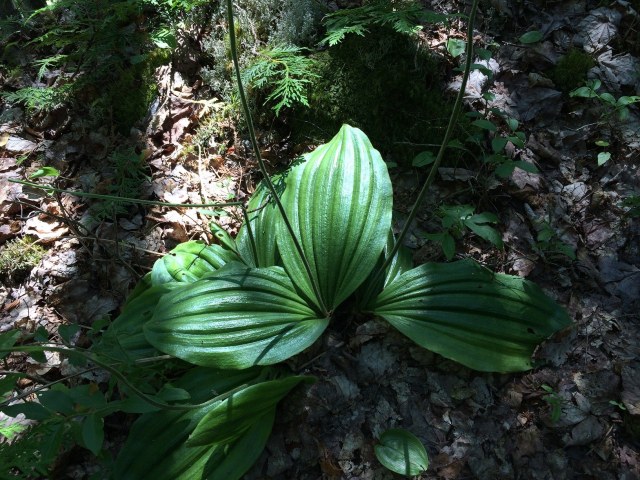
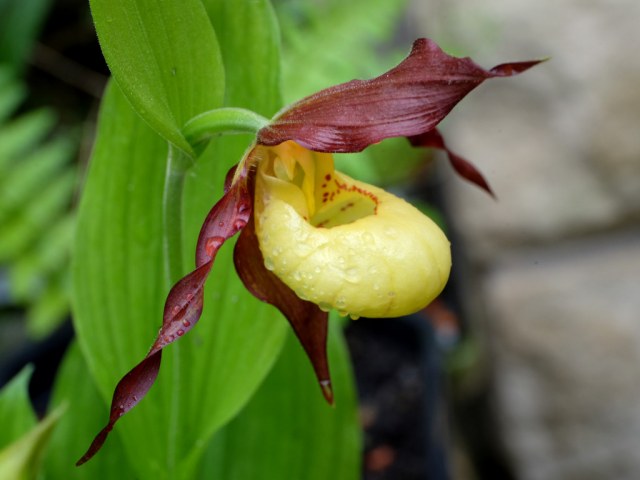
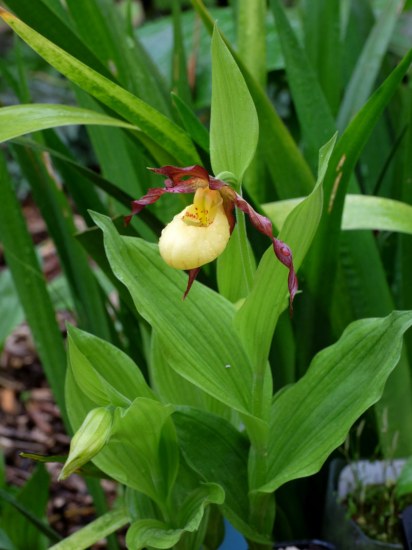
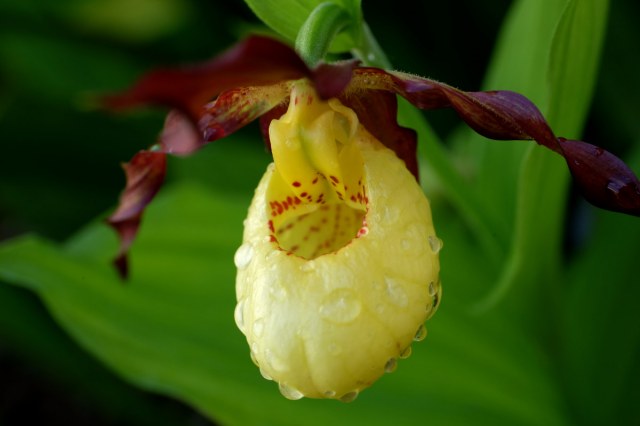
Cypripedium calceolus L. is native to the European Alps, and is the largest flowered orchid species in Europe. In Italy they grow wild at an altitude of 1000/1800 meters, and are difficult to find as they are rare and even if protected by Cites, many specimens are lost, as the woods are now abandoned and lawns near the woods have plenty of invasive grasses. The first picture is of a plant in the ground in full shade, the second from a flower in a pot. Height range: 25-60 cm. Photos 1,2 from Giorgio Pozzi, third photo taken by Oron Peri in its habitat in the Spanish Pyrenees.
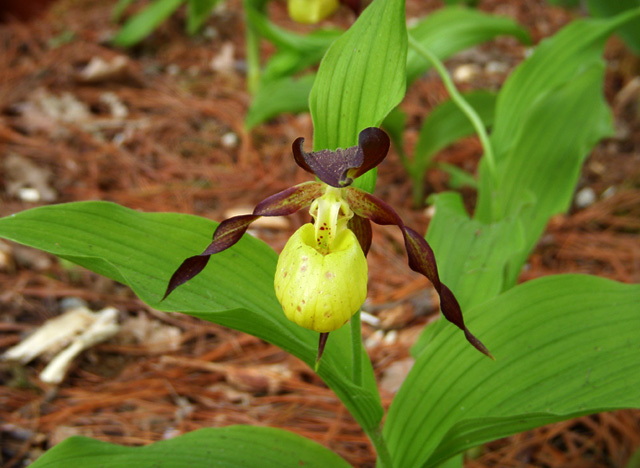
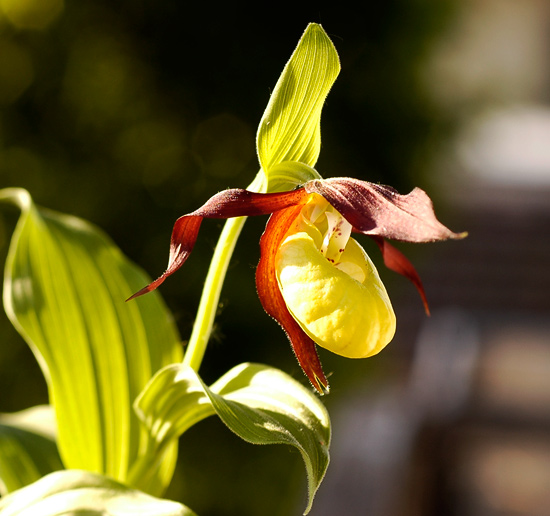
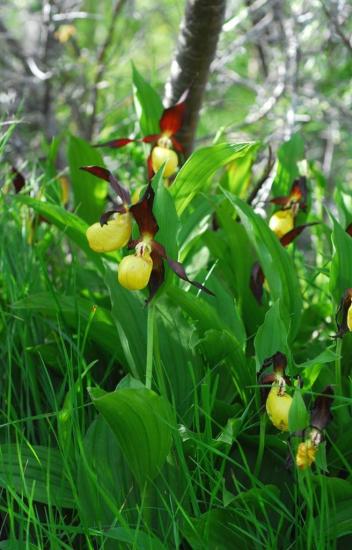
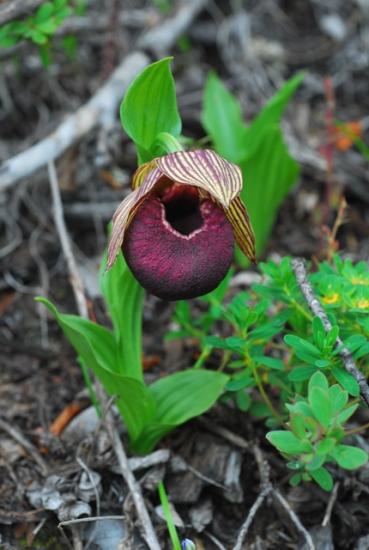
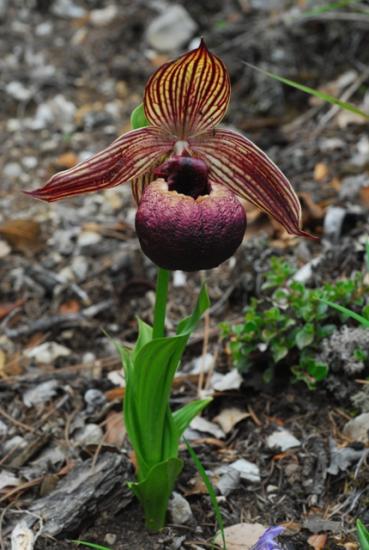
Cypripedium calcicola Schltr., syn. Cypripedium smithii Schltr., is a species from China where it grows in rocky, moist forests and thickets at elevations of 2600 to 3900 meters. Growing from 15-45 cm high, it has deep purple flowers in June-July (late spring, summer). Photo from Giorgio Pozzi.
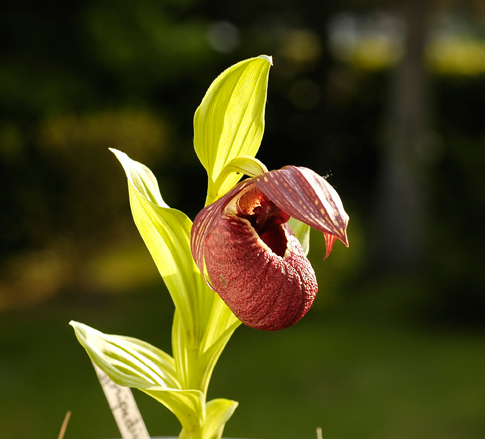
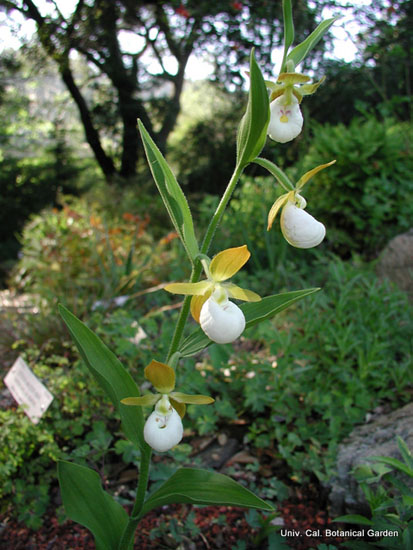
Cypripedium californicum A.Gray is a species native to mountainous areas of northern California and southern Oregon, USA. It occurs in areas with constant moisture such as stream-banks or serpentine seeps. The plant can reach up to 120 cm (47") tall and produces 3-12 flowers from May to July. It is a difficult species to cultivate outside of habitat. The first three photos below were taken along a creekside trail in Del Norte County, California by Mary Sue Ittner. The fourth photo was contributed by the UC Botanical Garden of a specimen growing in the California section of the garden. The last photo shows a plant cultivated by Robin Hansen.
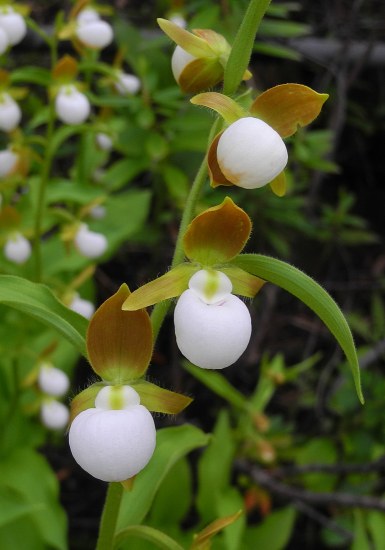
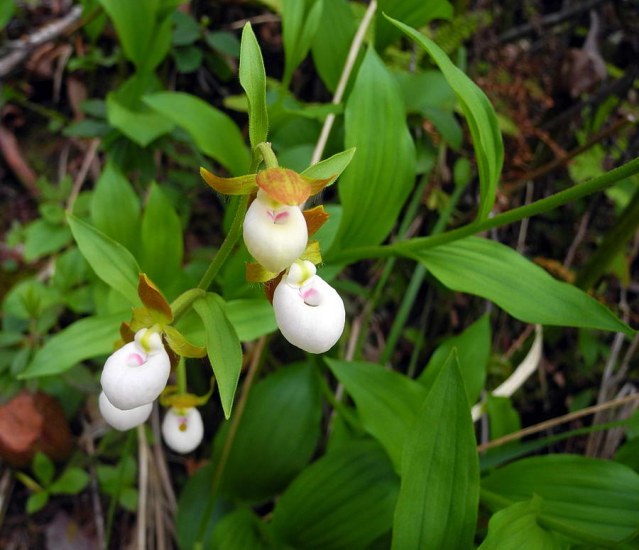
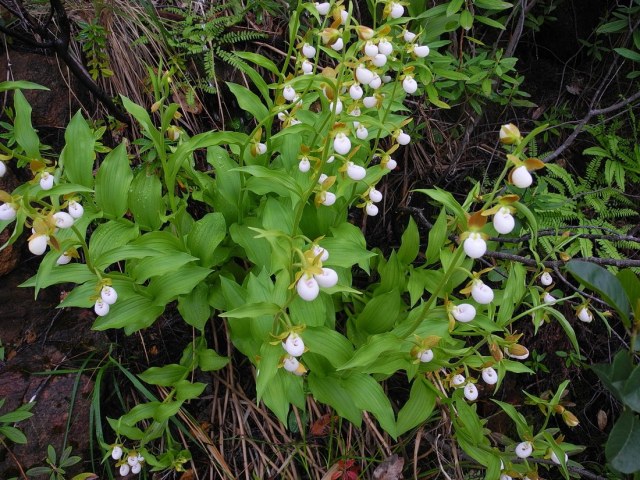
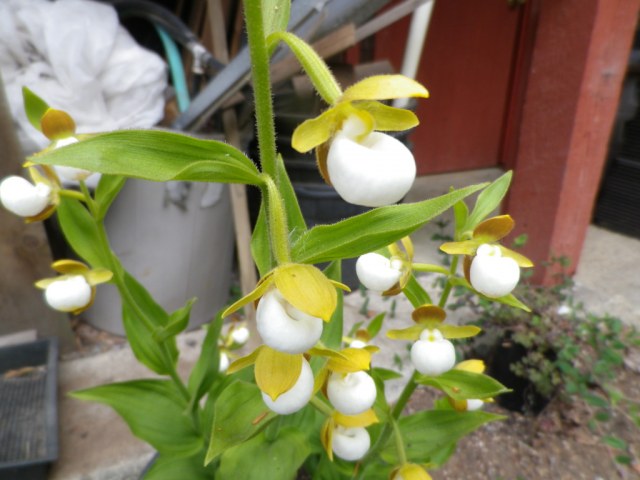
Cypripedium flavum P.F. Hunt & Summerh. is widespread in quite a few provinces of China. It is a variable species with flowers in shades of yellow marked differently in reddish color; growing in light woods in a humid situation; often in large populations. Height range: 30-50 cm. Photos taken in northwest Yunnan by Oron Peri.


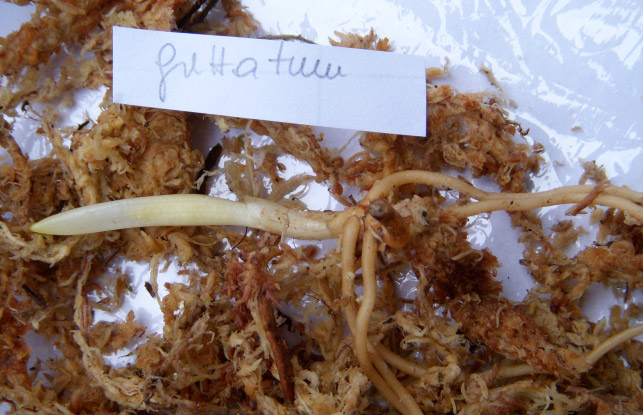
Cypripedium guttatum Sw. is known by the common name of Spotted Lady's Slipper. This is a medium-sized species distributed in northern Canada, Alaska, Russia to Korea, in cold areas. The first picture is of the flower of a young plant. The rhizome with one bud in November just after dividing and cleaning before replanting is shown in the second photo; note the " spaghetti " shape of the roots. Height range: 12-35 cm. First and second photos from Giorgio Pozzi. A link to USDA description page. Third photo taken in its habitat in northwest Yunnan by Oron Peri.
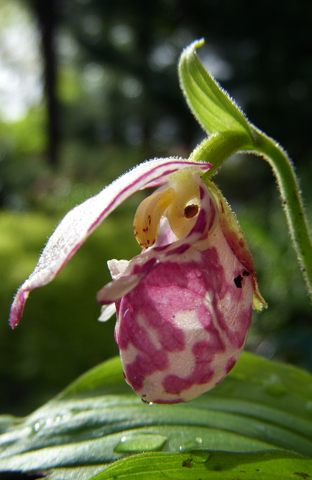
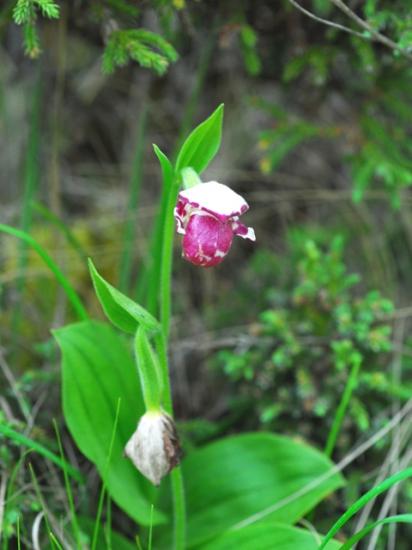
Cypripedium japonicum Thunb. is found in wet areas of cool mountain forests at 1000 to 2000 m in Japan. It is also found in Korea and China. The Japanese name is 'Kumagai-Sou'. Height range: 20-33 cm. Photographs taken in Japan by Mari Kitama.
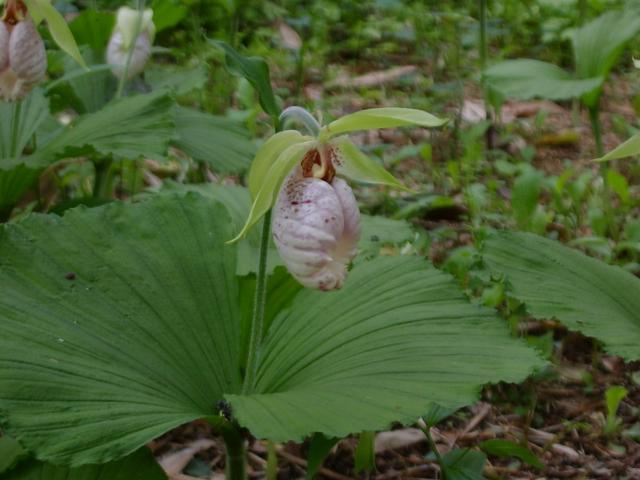
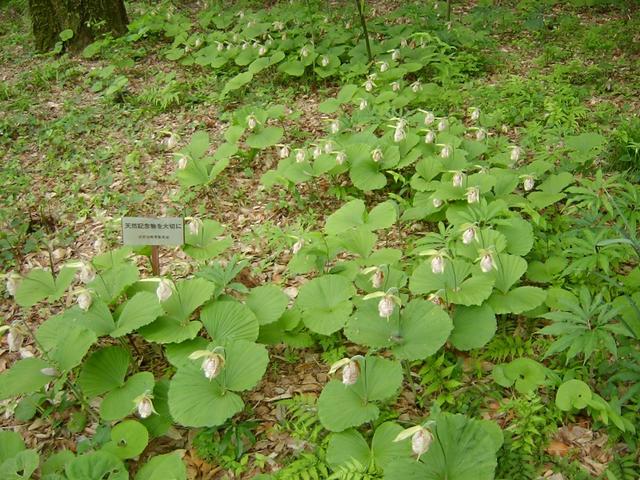
Cypripedium kentuckiense C.F.Reed is found in the central portion of the United States including Texas, Mississippi, Kentucky, Ohio, Missouri, Arkansas, Oklahoma, Louisiana, and Tennessee. It has the largest flower of the genus. Originally thought to be an aberrant form of Cypripedium parviflorum, the morphology of Cypripedium kentuckiense suggests it is a species of its own. Molecular evidence is that Cypripedium kentuckiense is more closely related to Cypripedium parviflorum var. parviflorum than it is to Cypripedium parviflorum var. pubescens. Common names include the Kentucky lady's slipper and southern lady's slipper. Height range: 45-75 cm.
The photographs below are by Robin Hansen, who writes: "One was taken in a friend's rock garden in Z9 on the southwest Oregon coast, and the other is taken after the plant was dug and put in a container. It was purchased from professional growers in California many years ago. It is in a pot on my deck and is watered regularly, with fertilizer lightly once or twice a year, when I remember. It gets full light but not much direct sun and has bloomed profusely since I dug it three years ago. It gets very good air circulation and I've not so far had any problems with pests or diseases. I asked an acknowledged orchid expert and she said when they are dormant, to completely and carefully remove all soil, then using a sharp knife cut sections with at least one eye, but this is large enough that I should be able to include more eyes per division."

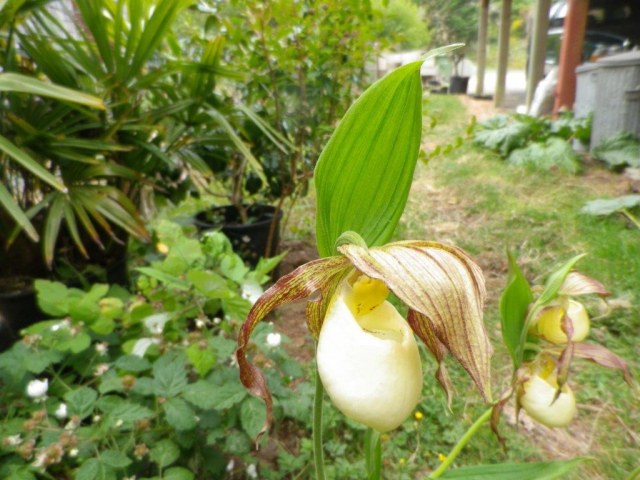
Cypripedium lichiangense S.C.Chen & P.J.Cribb is a beautiful, shy species growing in humus and leaf mold in the shade of evergreen trees and rhododendrons. Leaves are wide and maculated while the small flower is on a short pedicel. Height range: 7-14 cm. Photos were taken in its habitat in northwest Yunnan by Oron Peri.
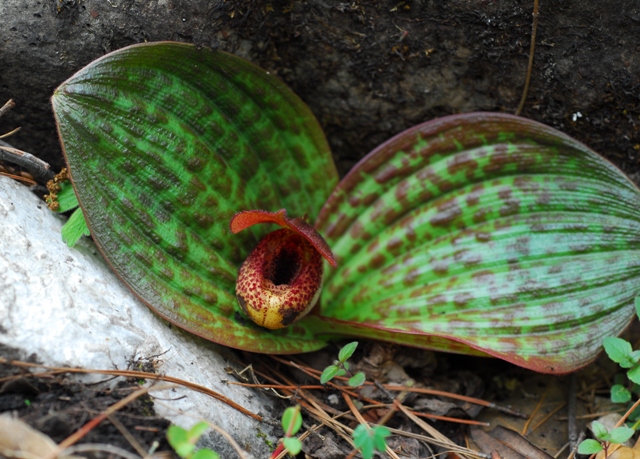

Cypripedium montanum Douglas ex Lindl. is a species native to the northwestern United States and western Canada. Common names include: large lady's slipper, mountain lady's slipper, white lady's slipper, and moccasin flower. Height range: to about 70 cm.
Cypripedium parviflorum Salisb. is a North American species with greenish or yellow flowers. Height range: 30-60 cm. The photo below was taken by Carl Frederick in Alberta, Canada.
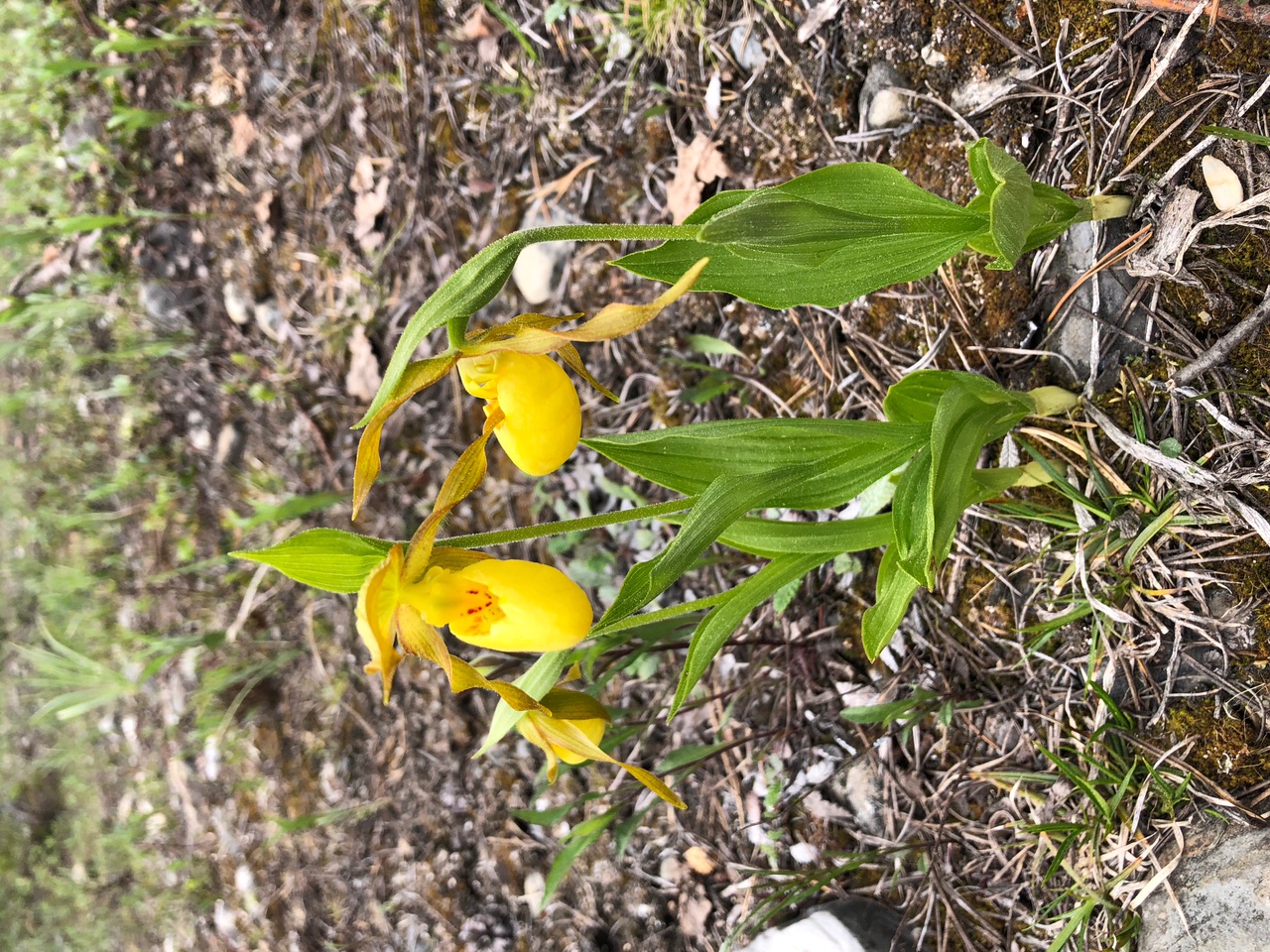
There are four varieties:
Cypripedium parviflorum var. exiliens Sheviak is native to Alaska.
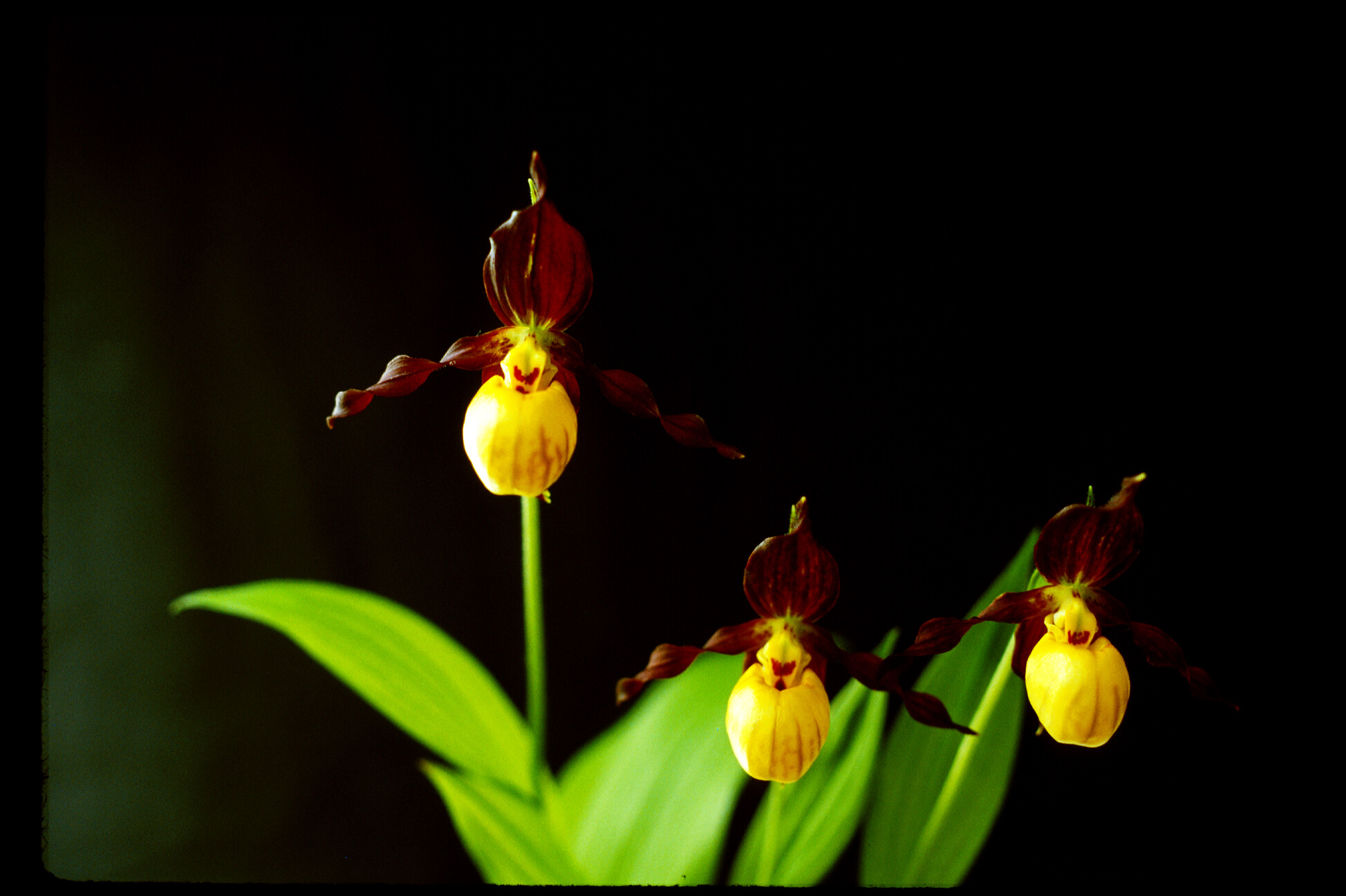
Cypripedium parviflorum var. makasin (Farw.) Sheviak is native to subarctic America and the Northern United States. The photo below is from Nicholas Plummer who grew it in a pot inside on a windowsill when he lived in Michigan. The flowers were small, but highly fragrant.
Cypripedium parviflorum var. parviflorum is native to the north-central and eastern United States.
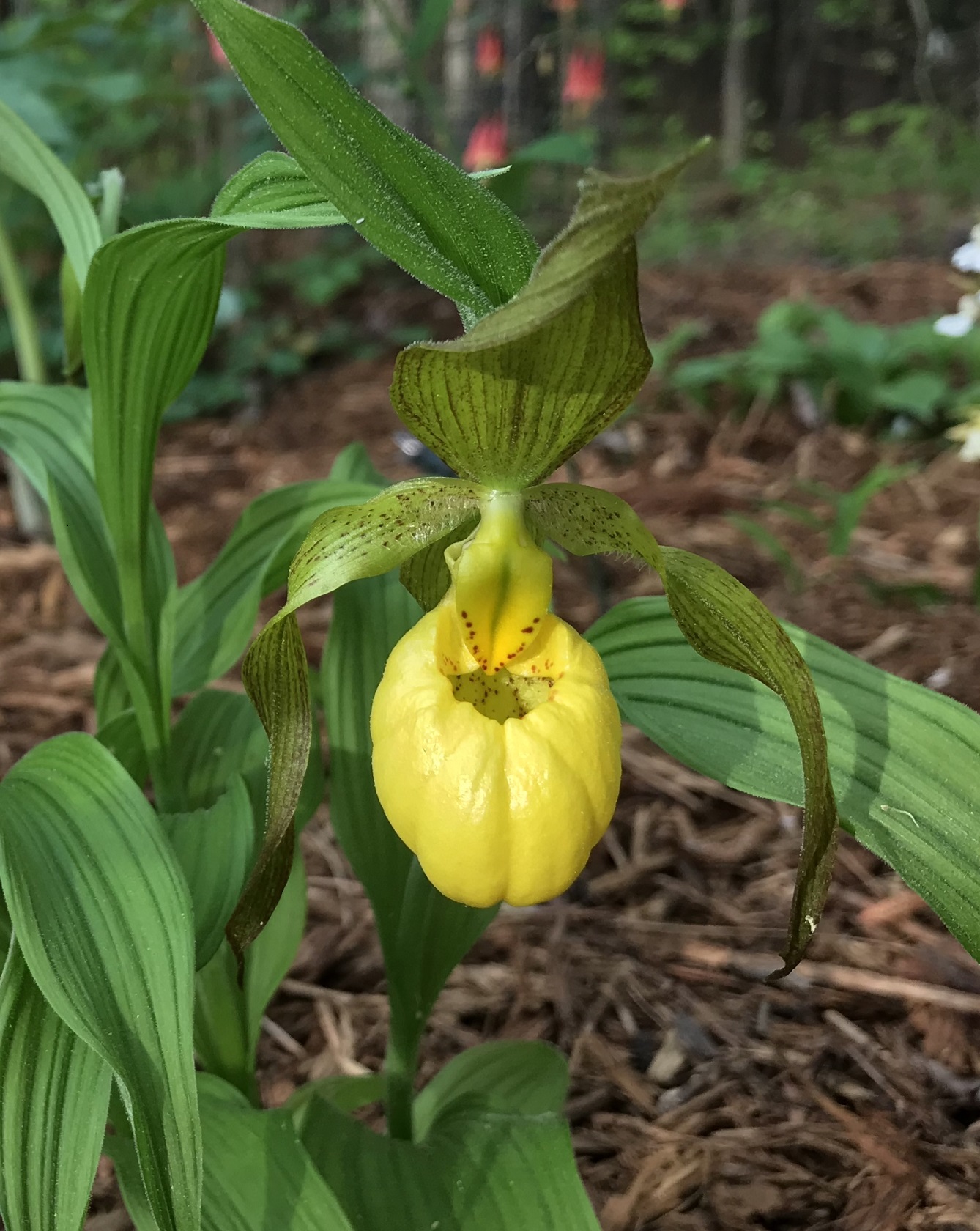
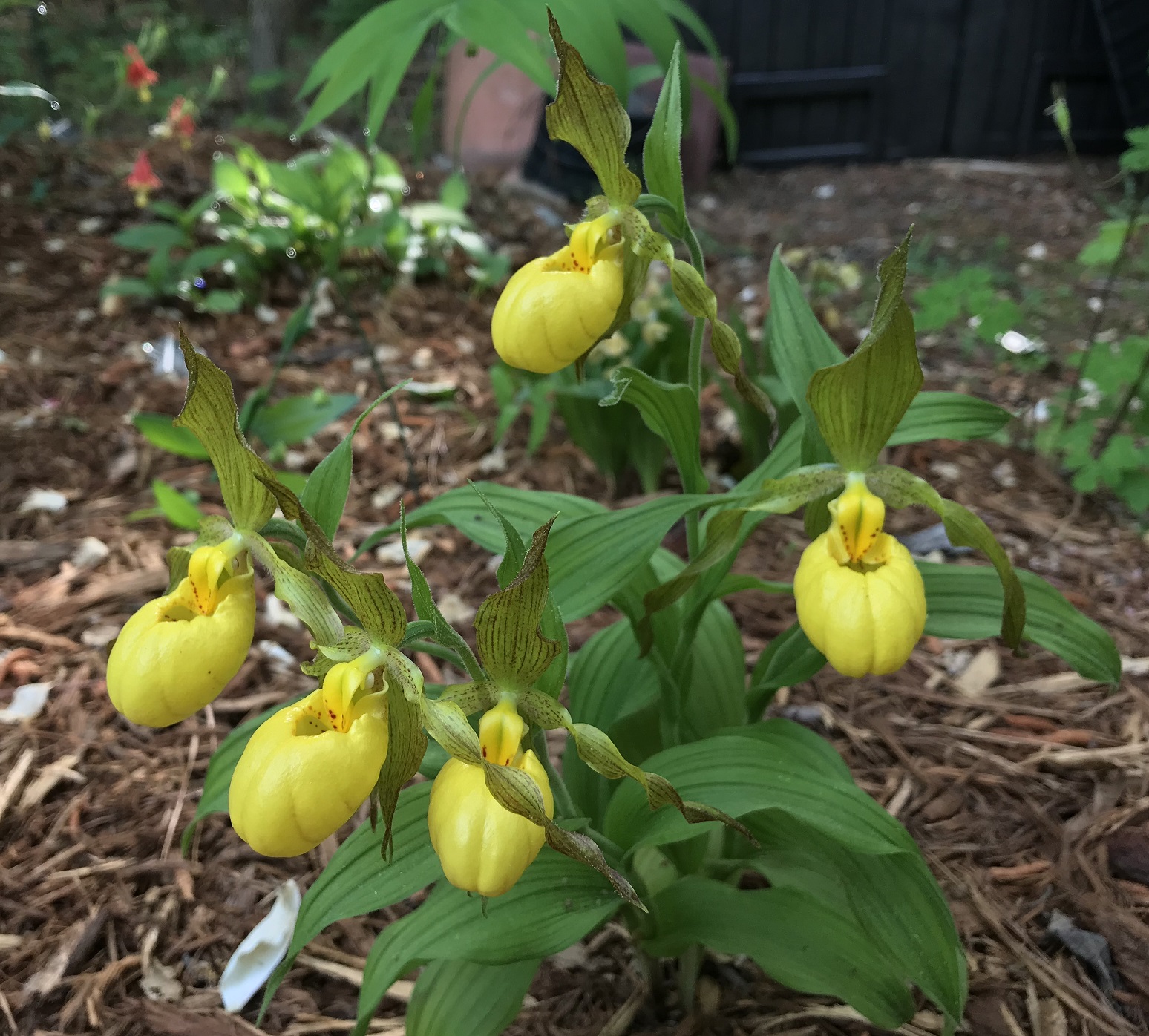
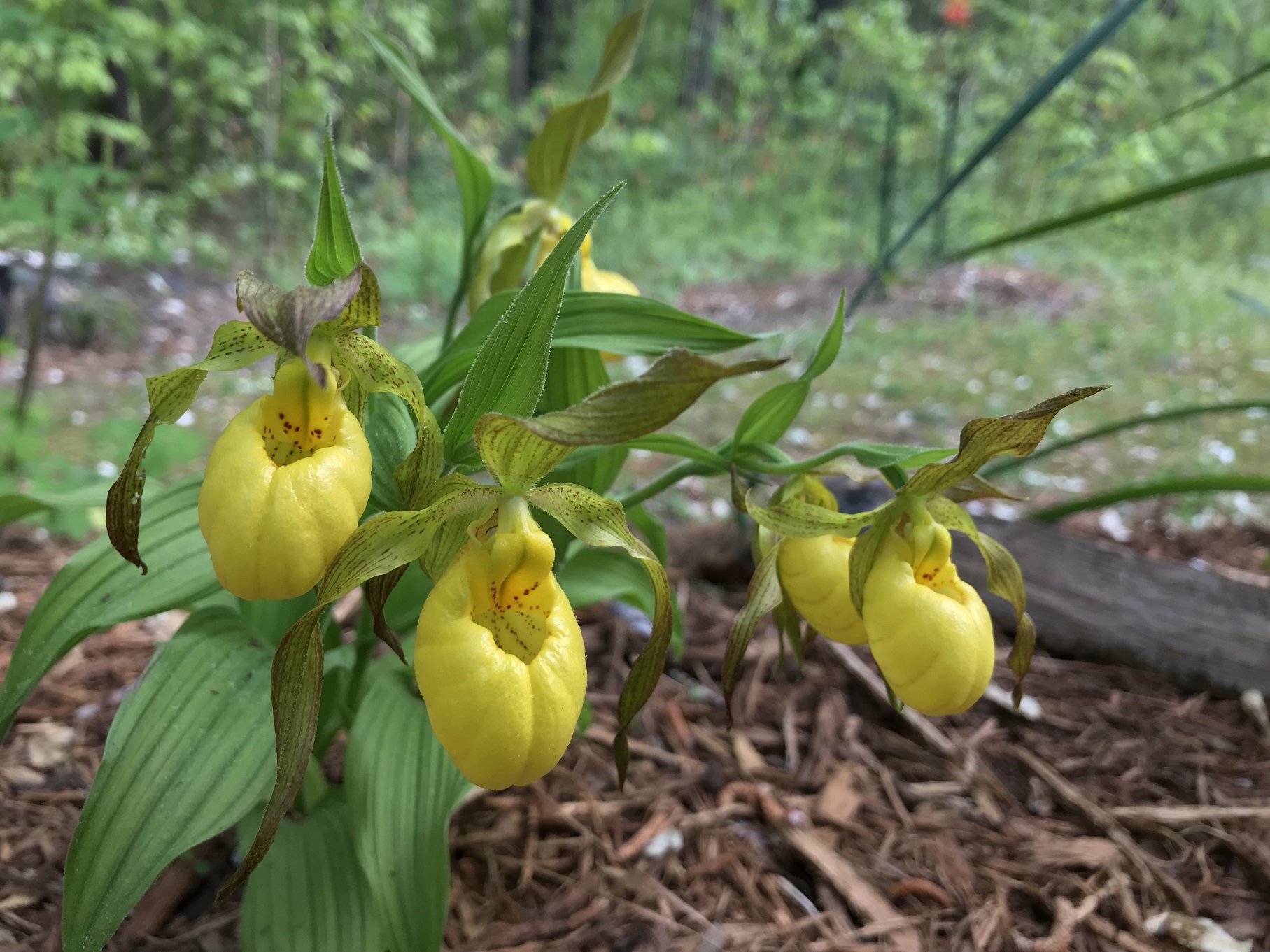
Cypripedium parviflorum var. pubescens (Willd.) O.W.Knight, syn. Cypripedium pubescens Willd., is native to subarctic America and the United States. Commonly known as the yellow lady's slipper, it grows in fens, wetlands, shorelines, and damp woodlands. The photos below were taken by Nicholas Plummer in the North Carolina piedmont where they were growing among Polystichum acrostichoides on a fairly steep hillside in a deciduous forest dominated by beeches, oaks, and tulip poplars.
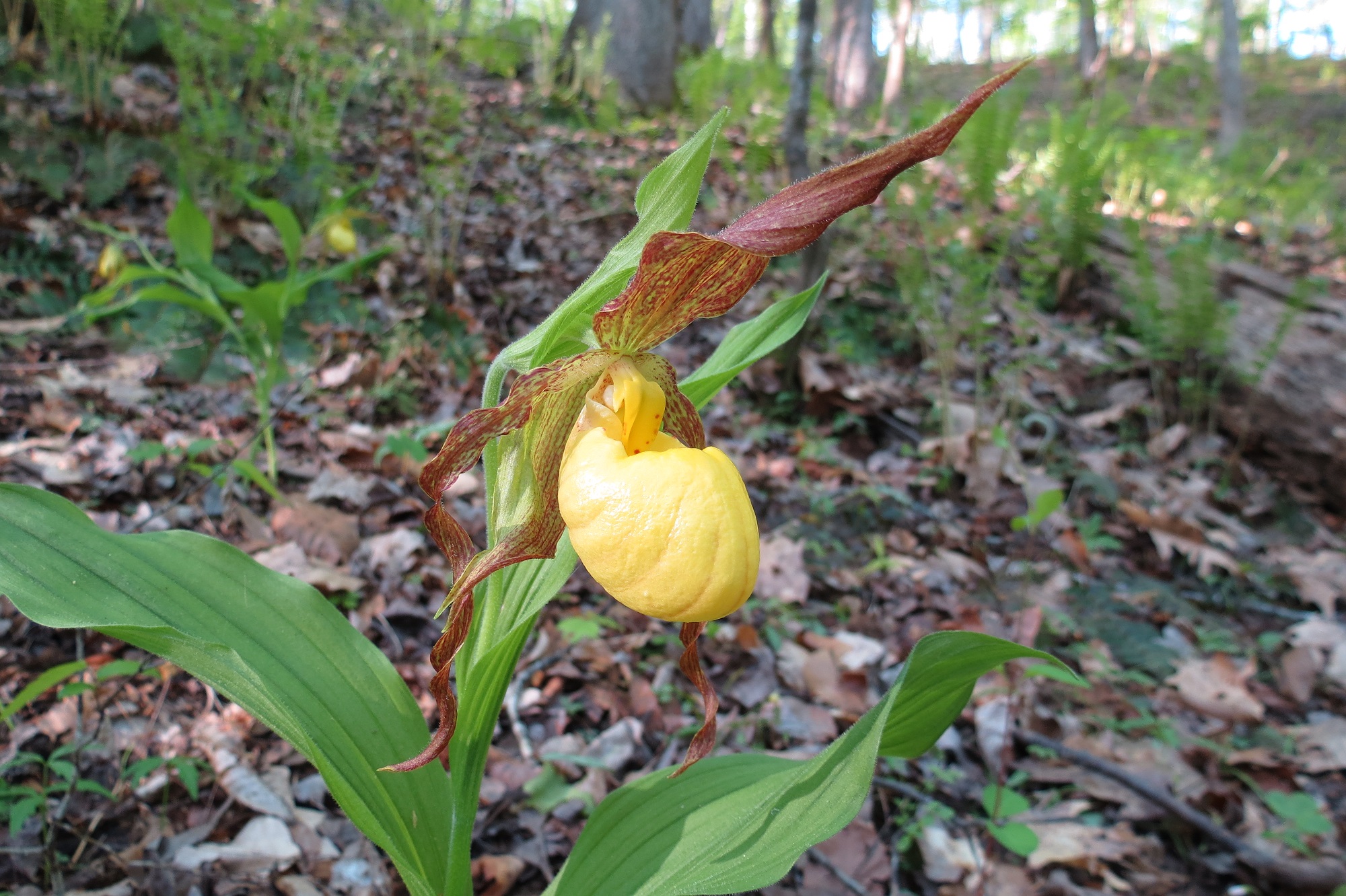
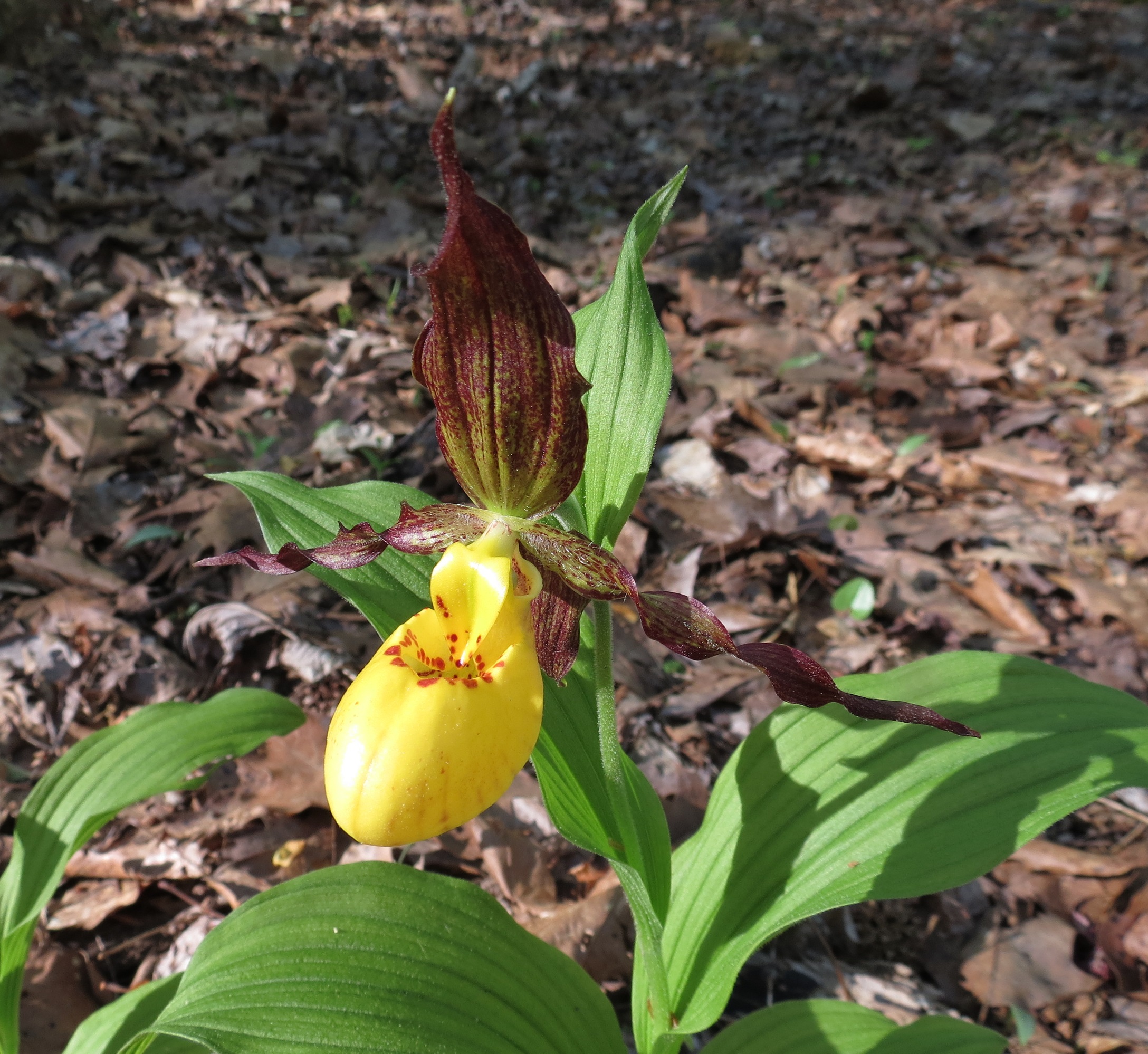
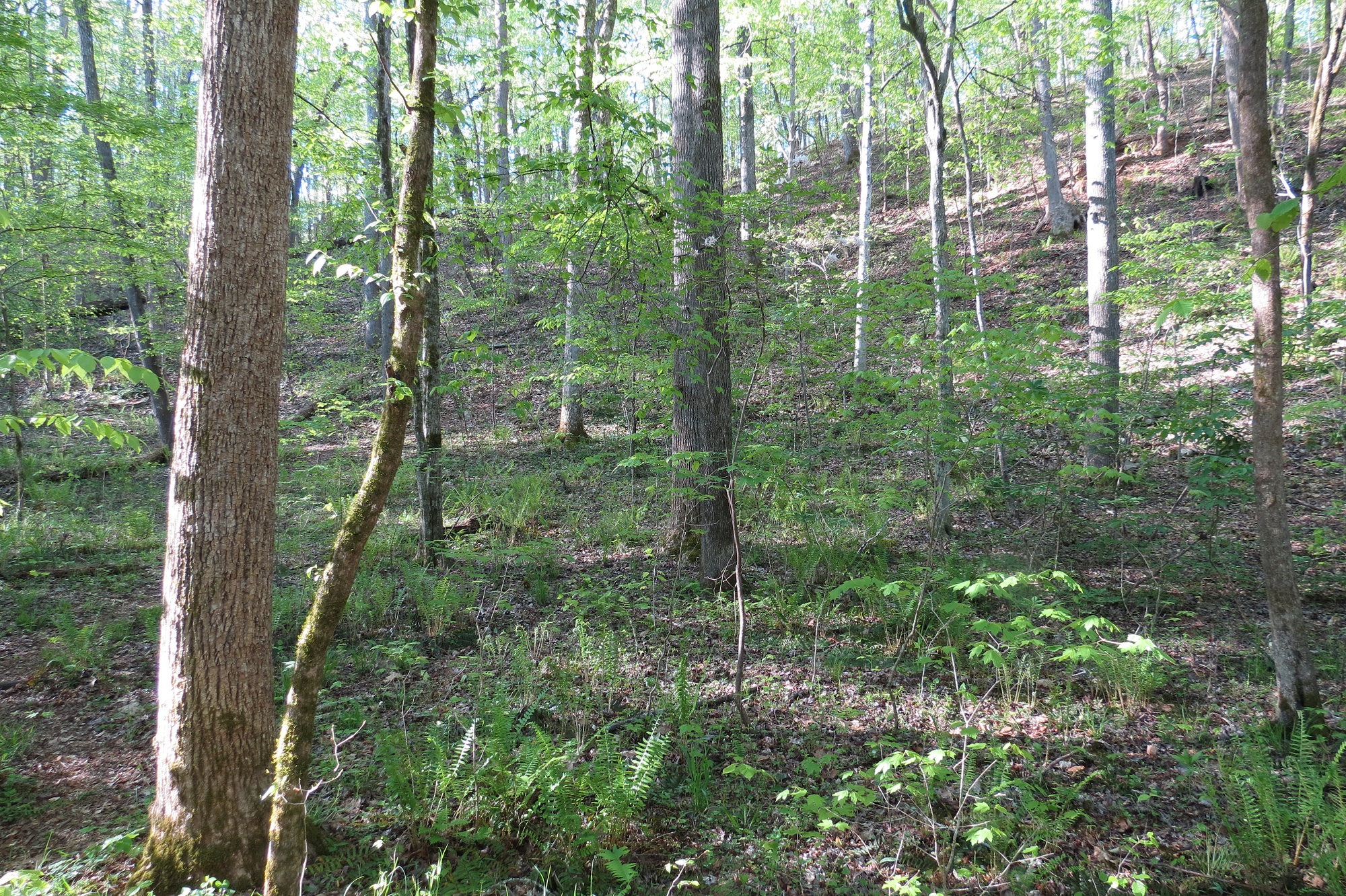
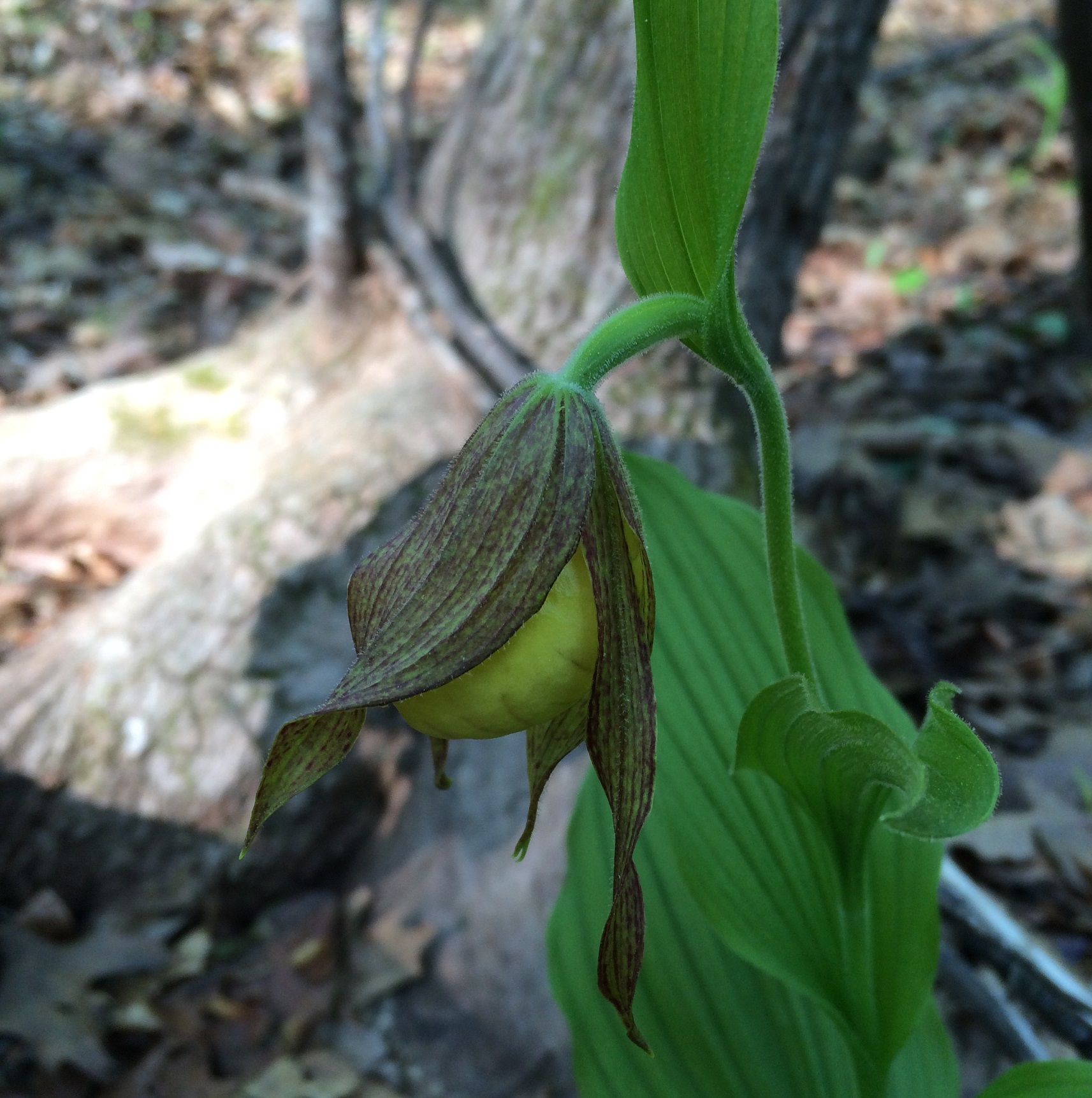
The first photo was taken by Giorgio Pozzi. The other photos were taken by Nicholas Plummer of one he is growing.

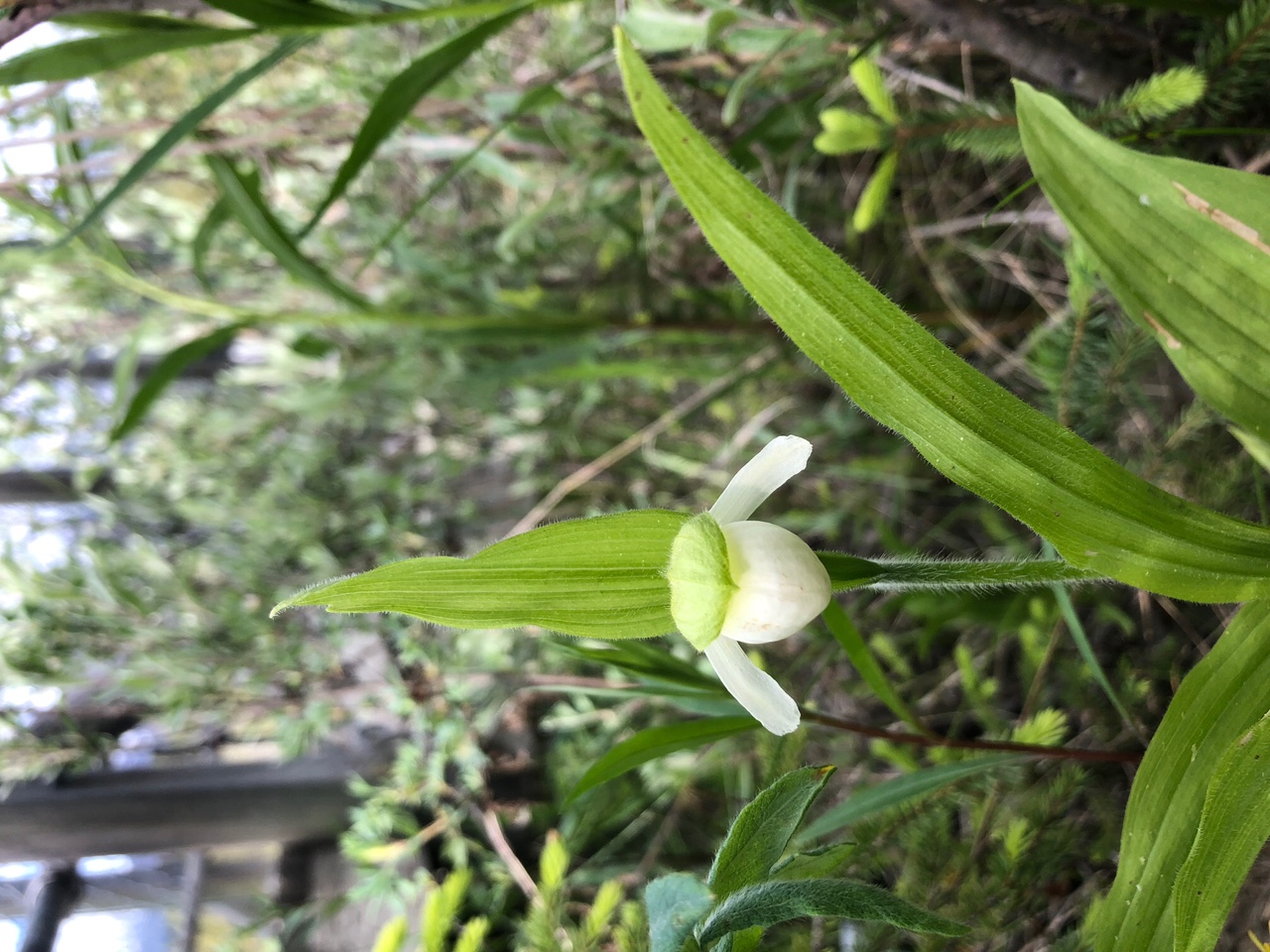
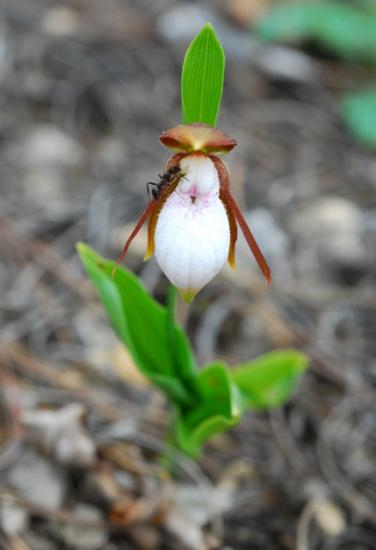
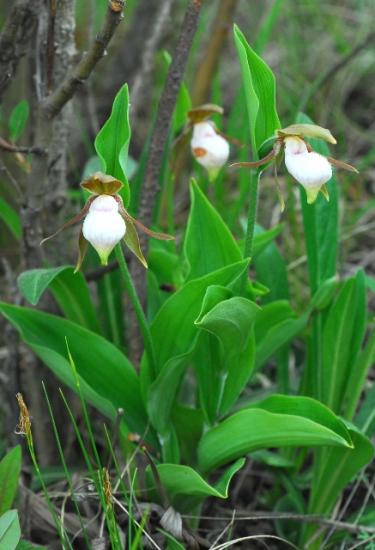
Cypripedium passerinum Richardson, commonly known as the Sparrow's Egg Lady's Slipper, is found throughout the interior of Alaska, across Canada to Hudson Bay, and south to northern Montana where it grows in moist coniferous forests, mixed woodlands, sphagnum bogs, thickets, stream banks, and lake margins. It produces one or two small white flowers on a leafy stem. The flowers have straight petals and a green dorsal sepal covering the egg-shaped labellum. Purple spots appear on the labellum's base, orifice, and interior wall. The green flower bract is prominent and upright. It grows from about 12-50 cm high. The photo was taken by Carl Frederick in Canada.
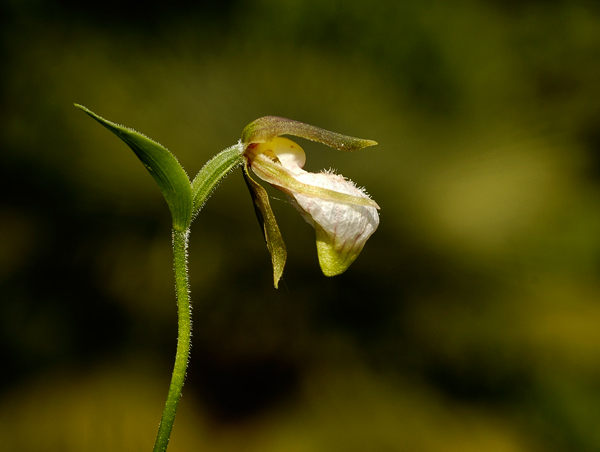
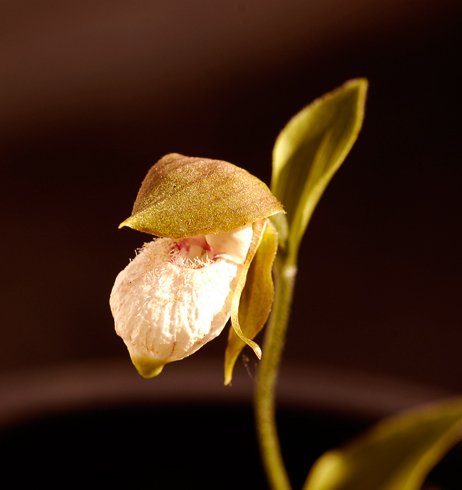
Cypripedium plectrochilum Franch. is a very small species; when mature the plant is about 13-15 cm tall. The flower is 1.5 cm. This species is native to Yunnan (China). Photos 1-2 were taken by Giorgio Pozzi and photos 3-4 were taken in its habitat in north-east Yunnan by Oron Peri.
Cypripedium reginae Walter, also named the Queen's Lady's Slipper. This is a tall plant, native in North America, easily grown in a home garden in a flowerbed with light wet soil in a shady position. When the plant is mature, it forms multiple stems of 2 to 3 feet each with 1 to 3 flowers per stem. There is also a pure white form commercially available. Here is a link to the US Forestry service page about this species. Photo from Giorgio Pozzi.
Cypripedium smithii Schltr. see Cypripedium calcicola.
Cypripedium tibeticum King ex Rolfe is a common, robust species distributed in the provinces of Yunnan, Sichuan, Tibet and in the Himalaya growing mainly in forest margins but also in more open areas, often in large numbers. Height: to about 30 cm. Photos were taken By Oron Peri in north west Yunnan.

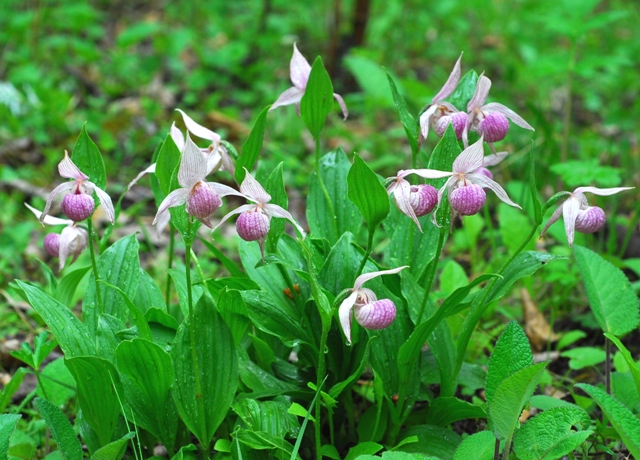
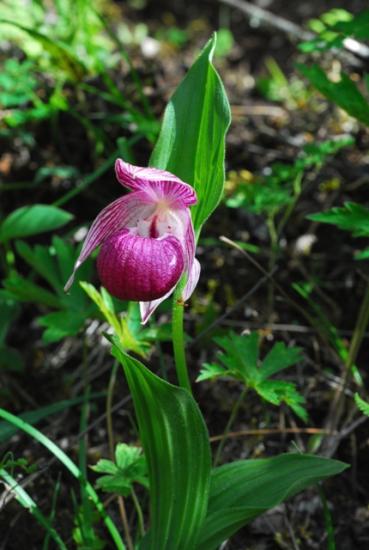
Cypripedium yunnanense Franch. is a small species, 20-37 cm tall, growing in different habitats, mostly in light woods, at high elevations above 2700 m. It is distributed in Yunnan and Sichuan provinces of China and also in Tibet. It tends to form large clumps. Flowers are pink, purplish red, or occasionally off-white. Photos were taken in its habitat in Zongdian, north west Yunnan by Oron Peri
Hybrids
Cypripedium hybrids tend to be far more adaptable to garden conditions than pure species and are thus recommended subjects to start growing the genus. Unless otherwise stated, the commercially available named hybrids are seed raised plants and may show considerable variation. Most established ones are primary hybrids, with secondary ones slowly starting to enter the market.
Cypripedium 'Axel' (Cypripedium parviflorum x Cypripedium tibeticum produced by S.Malmgren 1998). Height range: 30-45 cm. Photo by Giorgio Pozzi.
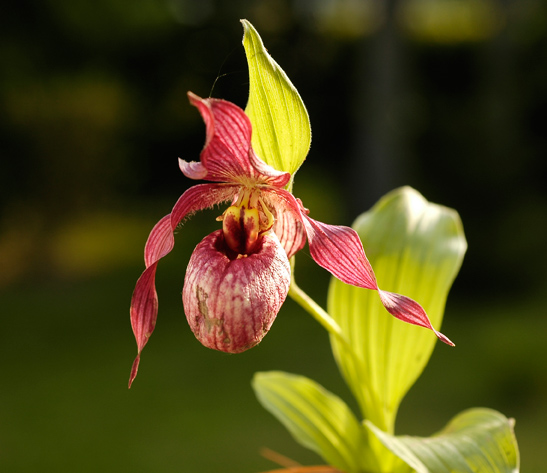
Cypripedium 'Baerbel Schmidt' ( C. montanum x C. macranthos, Schmidt 2009 ) inherits the chance for multiple flowers per stem from the North American montanum parent. The flowers have a pale yellow base color and deep red lines on the petals and a red net on the lip, blending into a warm pinkish tone from a distance. For Martin Bohnet, this hybrid is about 1-2 weeks earlier than Gisela and somewhat bigger both in flower and in statue.
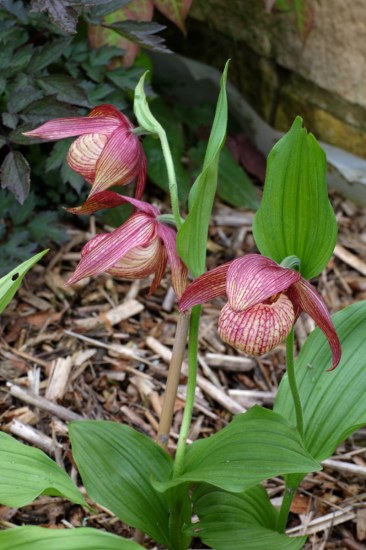

Cypripedium 'Barry Phillips' ( C. fasciolatum x C. segawai, 2013) is another interesting cross of Asian parents, combining the yellow-green color scheme and chance for multiple flowers of Taiwanese C. segawai with the larger lip of the Chinese C. fasciolatum. One of the early hybrids, opening up about 2 weeks after Cypripedium formosanum. While not difficult regarding growing conditions, this hybrid has been challenging for Martin Bohnet, as it seems to be extraordinarily popular with slugs and catarpillars, so the photos show his first unharmed flower in two years - and one which hasn't been that lucky.
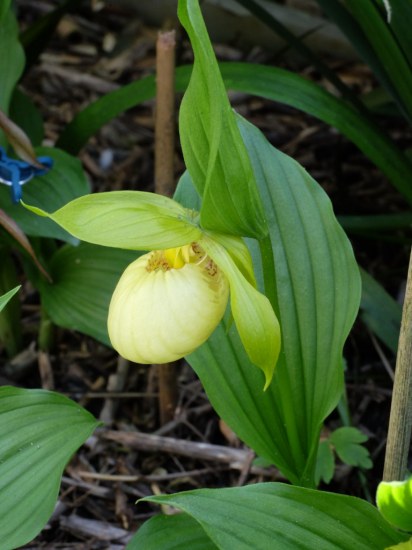
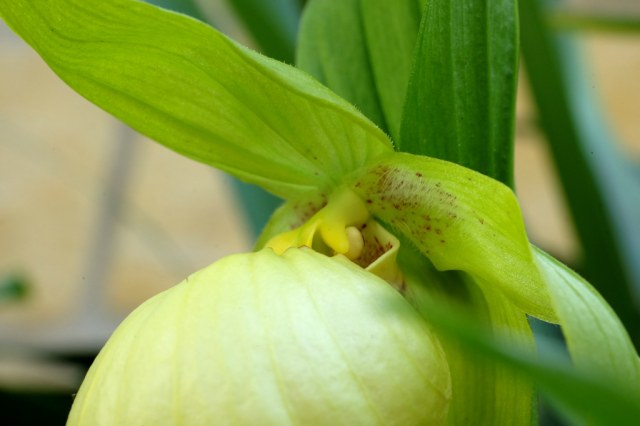
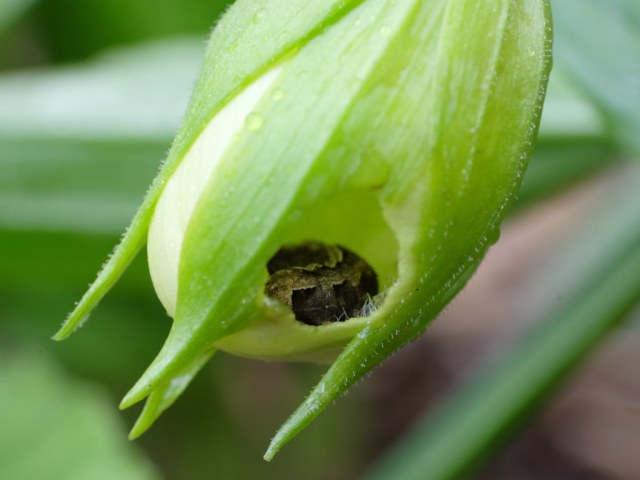
Cypripedium 'Gisela' ( C. parviflorum x C. macranthos, Frosch 1992 ). Gisela is among the best of cypripedium hybrids for beginners, forming clumps easily under various garden conditions in moderate shade. It is a smaller hybrid, making it very robust against falling over. It is also very hardy. The color may be somewhat variable with a chance to end up with a brighter lip than on these photos from Martin Bohnet, which also document the speed of development, taking about 3 weeks from emergence to flower.
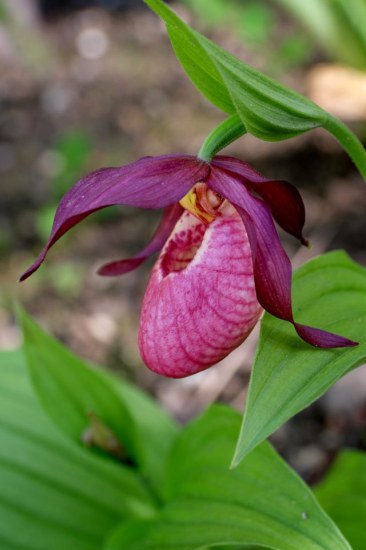
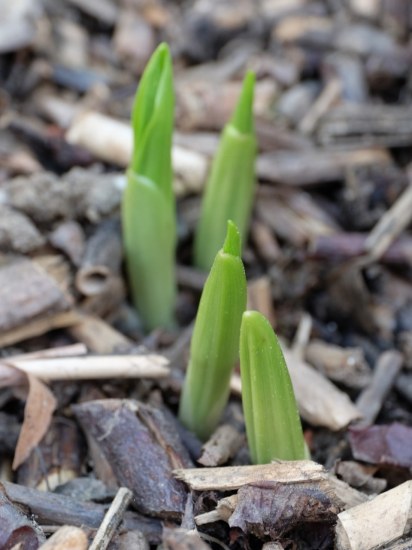
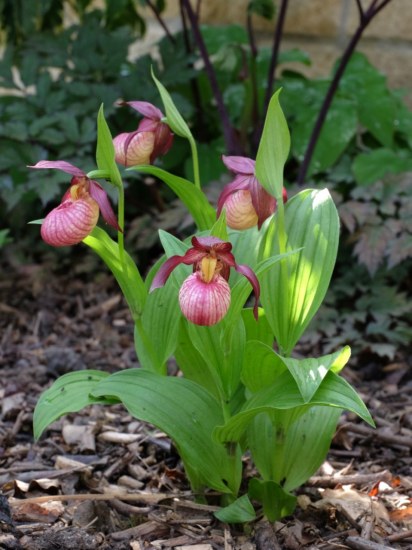
Cypripedium 'Otto' ( C. calceolus x C. pubescens, Frosch 1991 ) is an excellent garden replacement for the somewhat capricious Cypripedium calceolus, which dominates the appearance of this plant, while the pubescens parent mostly shows in red spots on the inner side of the lip. Since the individual flowers are notably smaller than in many other garden hybrids, it has less trouble staying upright in all weather conditions. The flowers have a pleasant honey-like scent. Pictures by Martin Bohnet.
Cypripedium 'Ulla Silkens' is a hybrid ( C. reginae x C. flavum ). These words from Peter Corkhill member of Royal Horticultural Society well introduce this hybrid: "The first hybrid I tried in the open garden was Cypripedium 'Ulla Silkens' (Malmgren 1996), produced in Sweden by Svante Malmgren and named after his wife. This cross between North American Cypripedium reginae and Chinese Cypripedium flavum is a must for the beginner and produces strong, multi-stemmed clumps which often flower five years ex-flask. The flowers come in two main colour forms - pale lilac with multiple spots and a darker form reminiscent of the C. reginae parent but always displaying the delightful curled-back lateral sepals of C. flavum." These words were taken from a RHS article entitled Growing Cypripedium outdoors in Britain no longer available online. Photos from Giorgio Pozzi and Martin Bohnet, for whom 'Ulla Silkens' is both the latest flowering and tallest Cypripedium in his collection.