Lachenalia is a genus with bulbs in the Hyacinthaceae family found in Namibia and South Africa. There are around 133 species. A complete illustrated systematic monograph of this genus by Graham Duncan, The Genus Lachenalia, was published in 2012. Most of the species have a dormancy period and grow new roots each year. Lachenalia species q-s are found on this page.
Lachenalia a - Lachenalia b-c - Lachenalia Species d-i - Lachenalia j-n - Lachenalia o-p - Lachenalia u-z - Polyxena - Lachenalia index - Polyxena - Lachenalia index
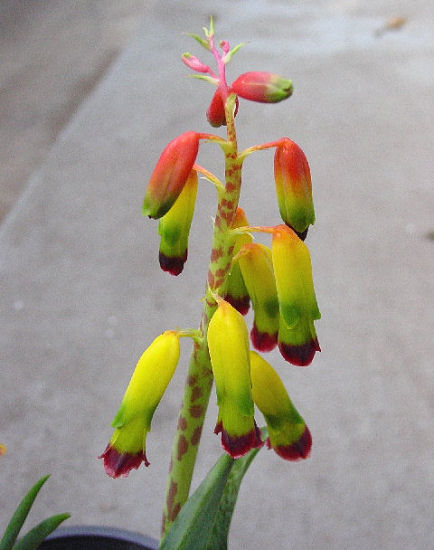
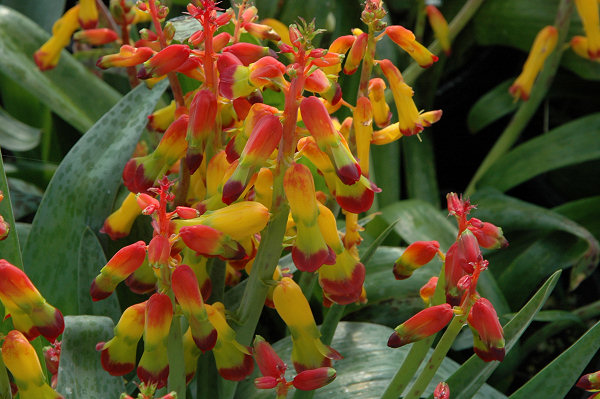
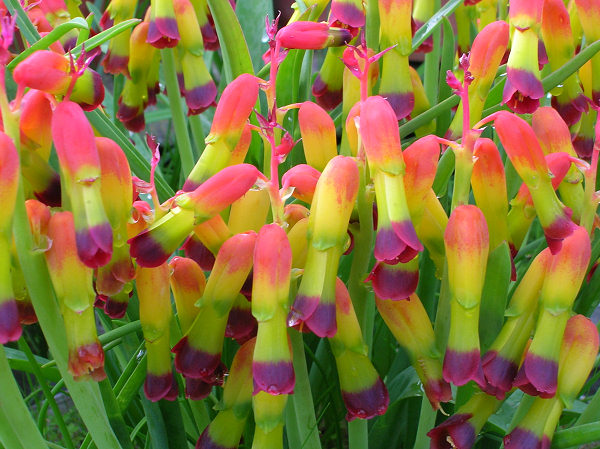
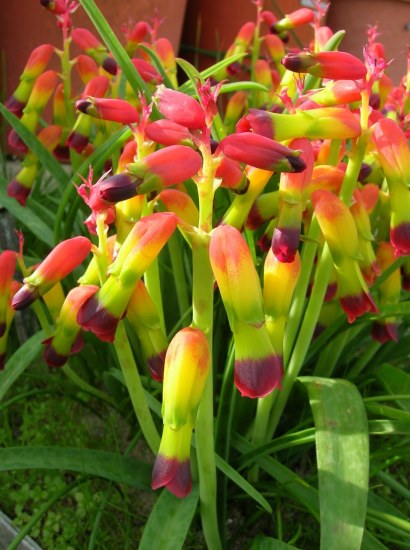
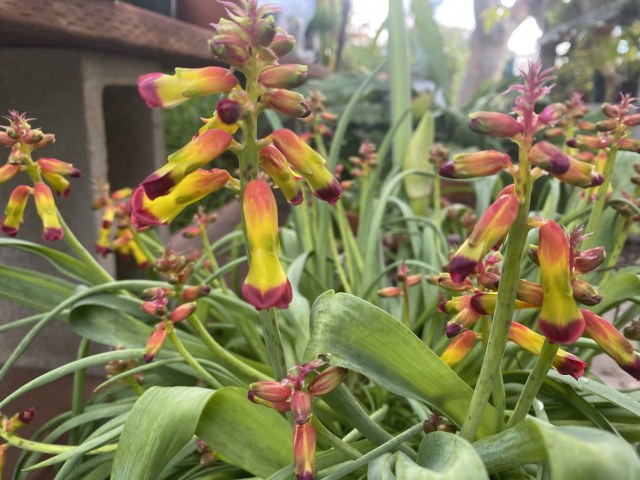
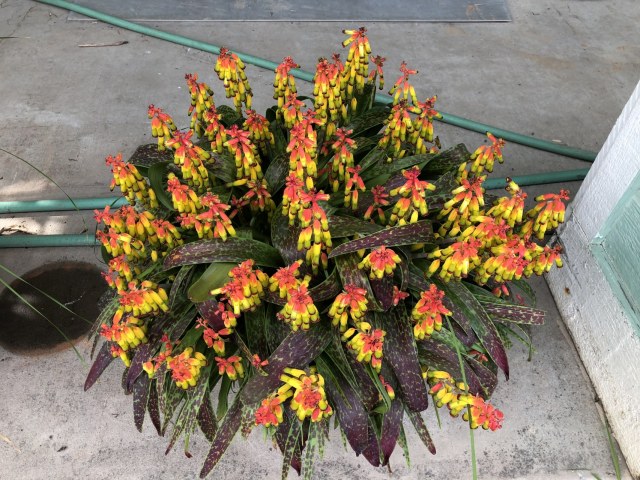
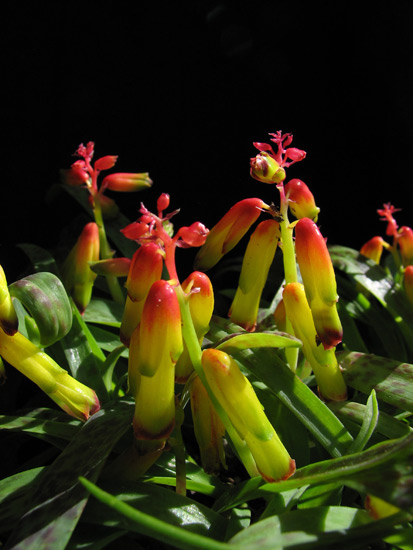
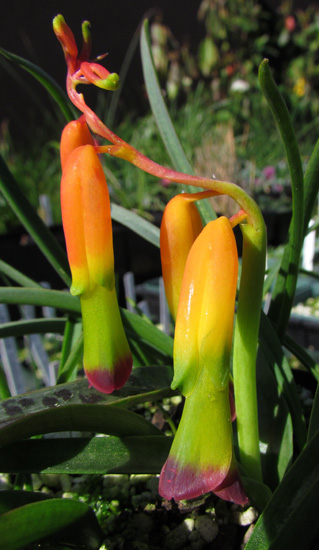
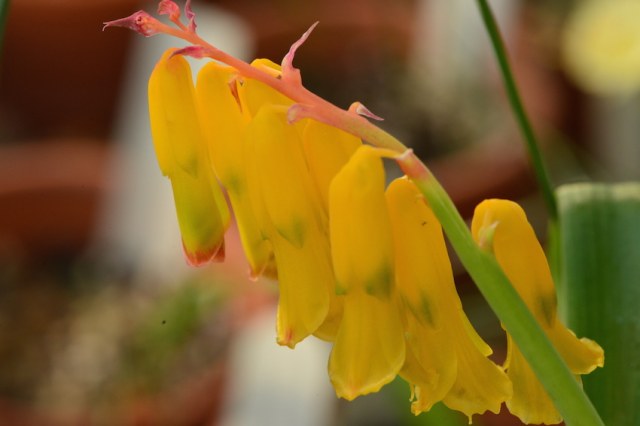
Lachenalia quadricolor Jacq. was elevated from Lachenalia aloides var. quadricolor (Jacq.) Engl. by Graham Duncan in 2012. It is found in humus-rich crevices in granite outcrops in the western Cape. It is sister to Lachenalia aloides. Both have bright yellow to greenish yellow outer and inner tepals with the outer tepals with green apical gibbosities. Lachenalia aloides has a longer perianth tube, longer outer tepals and inner tepals that have broad red or purplish red apices with white margins. The inner tepals of Lachenalia quadricolor have apices that are slightly flared and deep purple magenta. Growing from 9 to 20 cm, this is an early flowering species flowering in the winter (late June to mid August). Because it is impossible to gauge size in photographs and the distinction in morphology is subtle we cannot be certain, but think the photos below are of this species. Photo 1 taken by Kristina Van Wert is from the former Mendocino Coast Botanical Gardens bulb collection. Photo 2 was taken by Mary Sue Ittner in Diana Chapman’s greenhouse. Photos 3-4 from Alan Horstmann.
Photos 1 and 2 below were taken by Mike Lowitz. Photo 3 was taken by Chad Cox. Photos 4-5 were taken by Nhu Nguyen. The last photo also fits the description of Lachenalia luteola and may be that species instead.

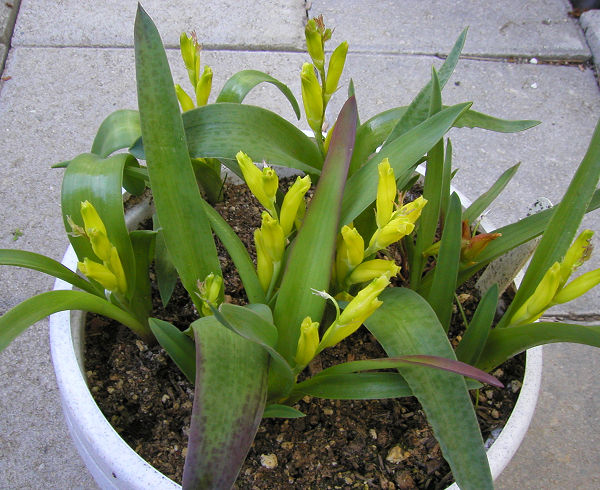
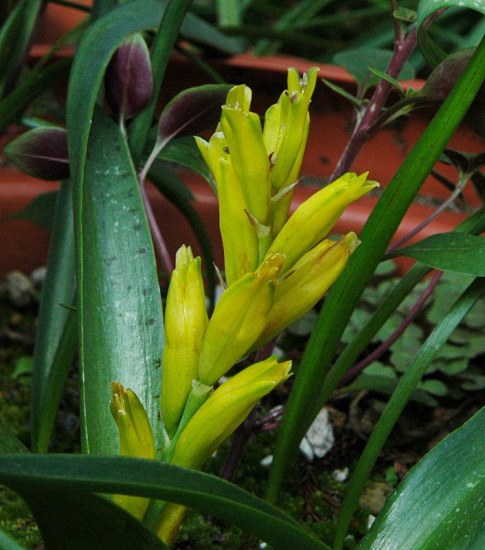
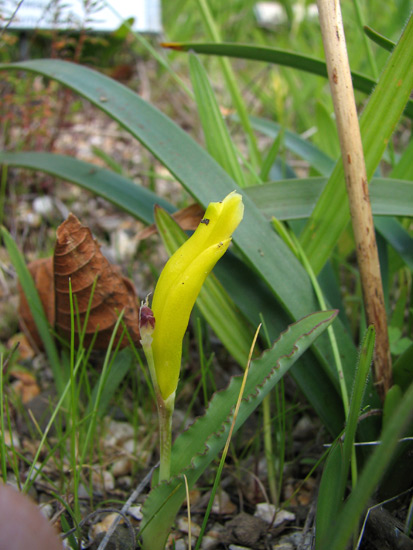
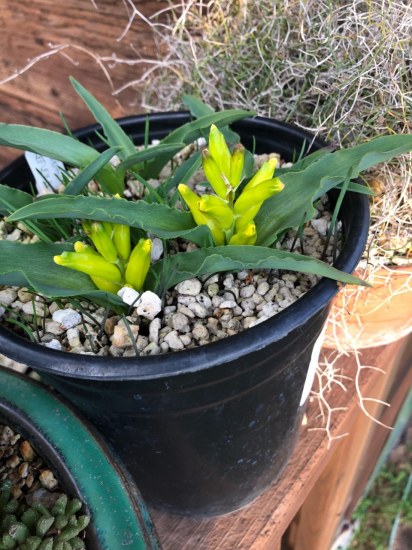
Lachenalia reflexa Thunb. has one or two lanceolate or strap-shaded leaves and bright yellow urn-shaped flowers and grows on wet sandy flats in the southwestern Cape flowering in winter (June to August). Flowers are shortly pedicellate and anthers included. Height: 3-19 cm. Don Journet wrote that unlike most lachenalias the flowers are borne upright on a peduncle that only pushes the flowers just above the foliage. The plants are also smaller than most other lachenalia making it ideal for pot culture or in an area where the competition is not too fierce. For me this species has flowered over an extended period, on different plants, stretching from the first week in June to the second week in October. This species, also known as Yellow soldier, is a noxious weed in Western Australia. See an informative pamphlet here: http://www.environment.gov.au/biodiversity/invasive/weeds/publications/guidelines/alert/pubs/l-reflexa.pdf
Photo 1 by Kristina Van Wert is from the former Mendocino Coast Botanical Gardens bulb collection and photos 2-3 are from Mary Sue Ittner. Photo 4 by Nhu Nguyen from the UC Botanical Garden shows a form with crispy leaf margins. The last photo is from Carl Frederick.

Lachenalia rosea Andrews is mostly coastal and found on wet flats over a broad distribution from the Cape Peninsula to the Eastern Cape flowering August to October. Growing from 8 to 30 cm, this species has flowers that are shortly pedicellate, oblong-campanulate, pink or combinations of pink and blue, with darker pink markings. Anthers are included. The flowers in the first photo by Bob Rutemoeller are light pink with darker pink markings. The second photo by Kristina Van Wert is from the former Mendocino Coast Botanical Gardens bulb collection. The third photo was taken by Mary Sue Ittner.
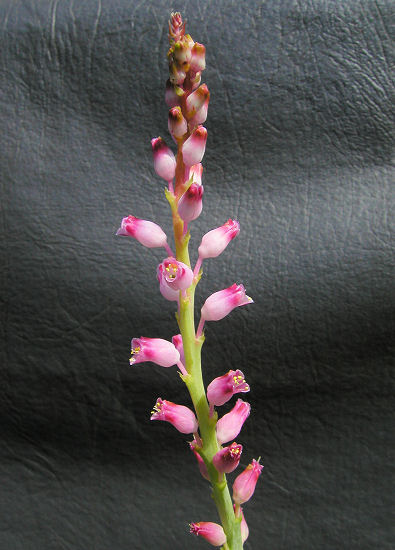
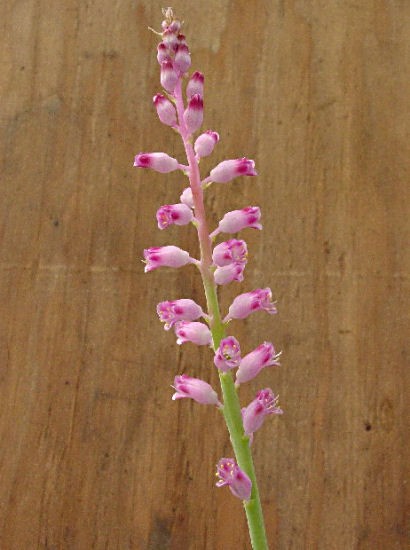

Photos from wild populations from Cameron McMaster and Andrew Harvie. All of the pictures were taken in the Overberg; the first from Boskloof, the second taken near Caledon, the third near Napier, and the last two between Botriver and Kleinmond.
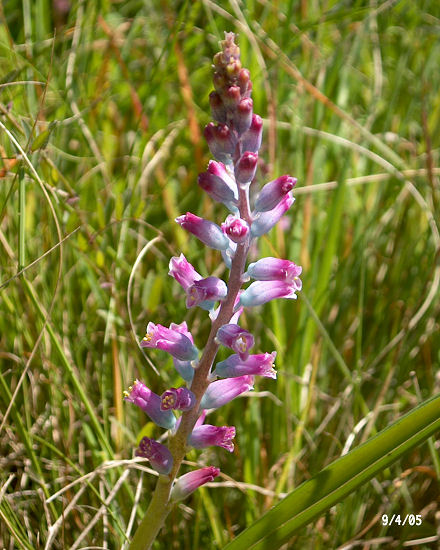
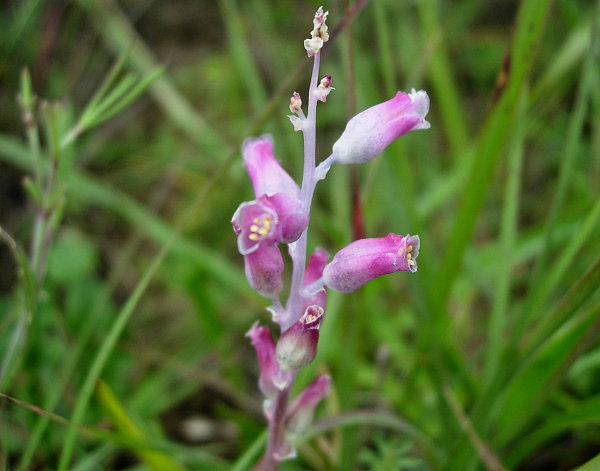
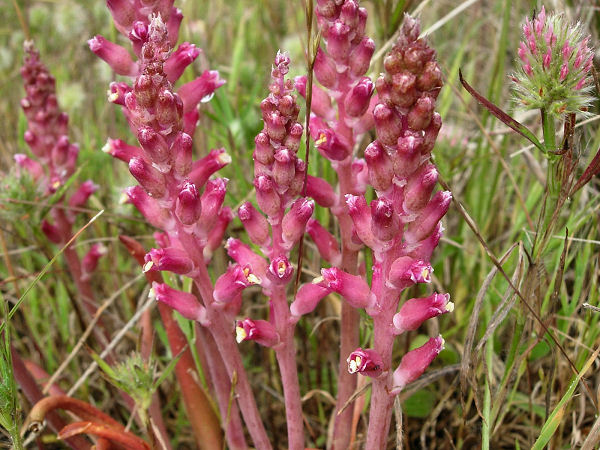

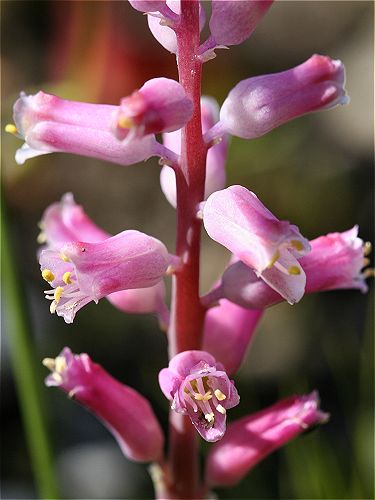
Lachenalia rubida Jacq. is a synonym for Lachenalia punctata Jacq. The name was changed in 2012 by Graham Duncan when the history indicated that the name Lachenalia punctata had been published earlier.
Lachenalia salteri W.F.Barker is a late flowering coastal species (southwest and southern Cape) often found growing in marshy areas around seasonal pools. It has bell shaped flowers that are shortly pedicellate, cream, reddish purple or a combination of pale blue and pink. The anthers are exserted. Growing from 15 to 35 cm, it flowers October to December. Photos by Mary Sue Ittner taken in May 2008.
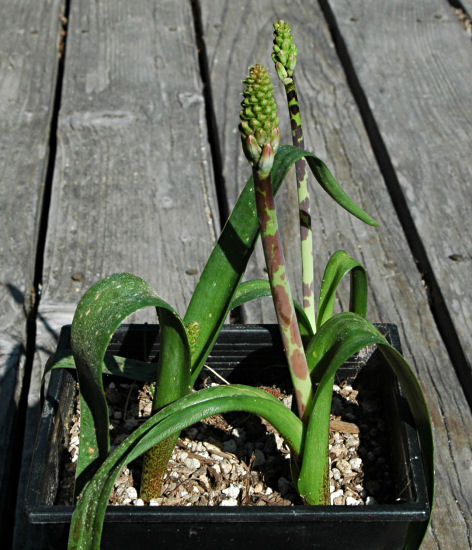

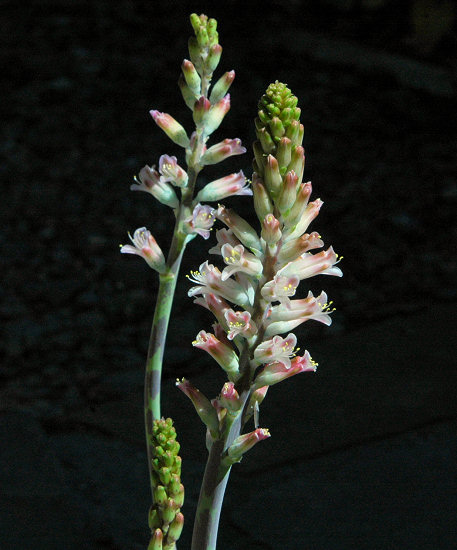
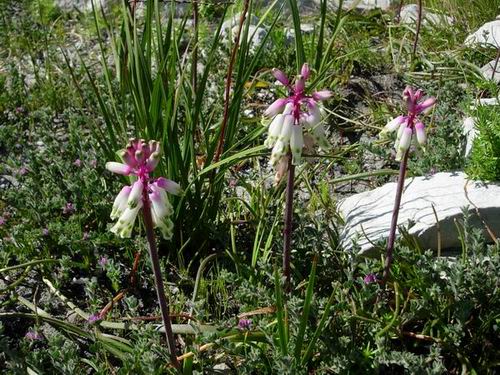
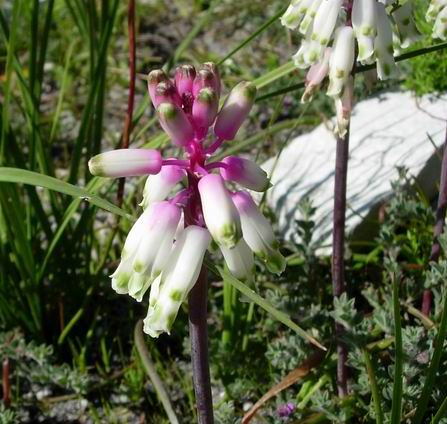
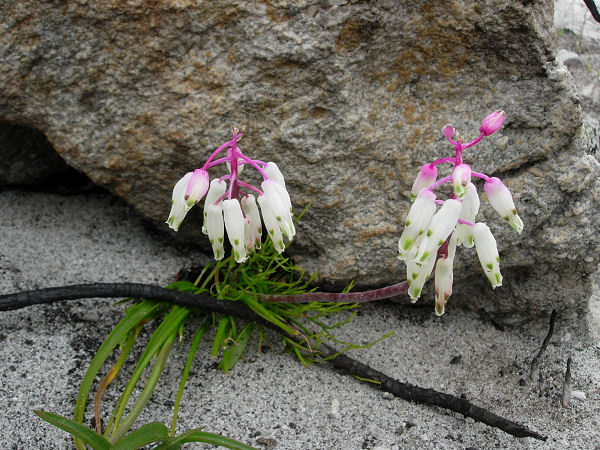
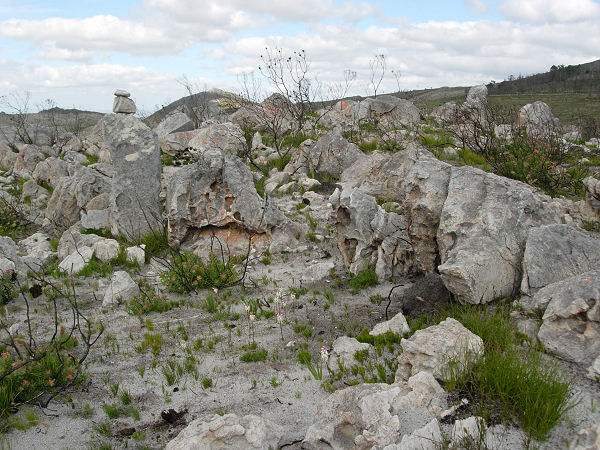
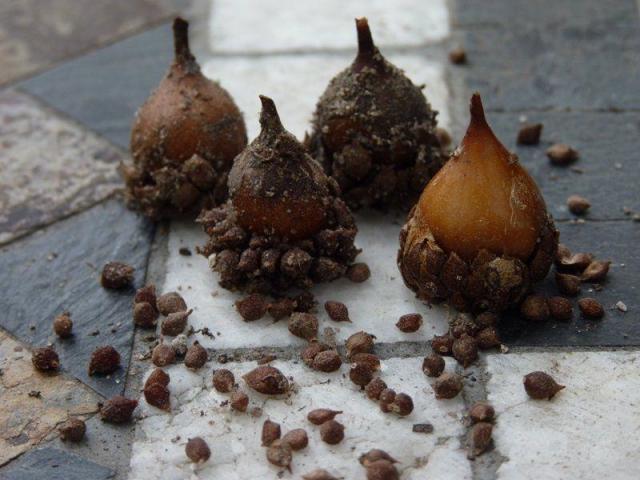
Lachenalia sargeantii W.F.Barker is a rare species which is entirely fire-dependent. It was discovered near Bredasdorp in 1971 and was not seen in flower again until Cameron McMaster found a second population in 2004 flowering near Napier after a fire. In October 2006 Cameron discovered a third population on the mountain above Napier in an area that was burned last summer. The story of the bulb's rediscovery is posted here. The plants are found in small localised populations on rocky outcrops in mountain Fynbos at an altitude of 450 meters. They apparently only flower after fire which can occur at intervals of 10 to 20 years. The plants persist by making leaf growth each year and can multiply by means of bulblets that form around the parent bulb. The top of the flowering stem has flowers that are maroonish purple to bright magenta. Growing from 20 to 30 cm, flowers are on long pedicels, nodding, cream or pale green with green or brown markings and included anthers. Photos by Cameron McMaster. Last picture from Colin Davis shows the multitude of offsets this species is capable of producing.
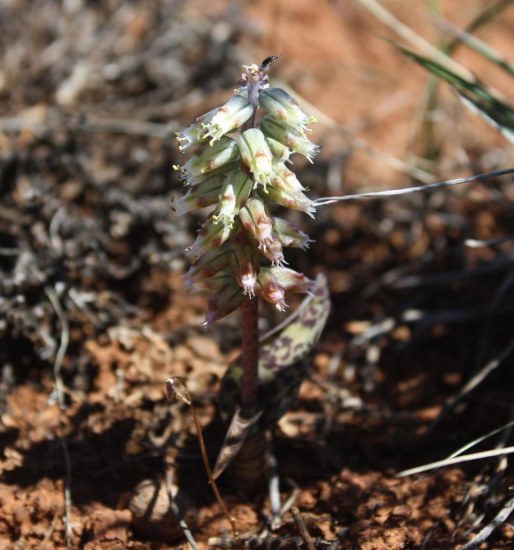
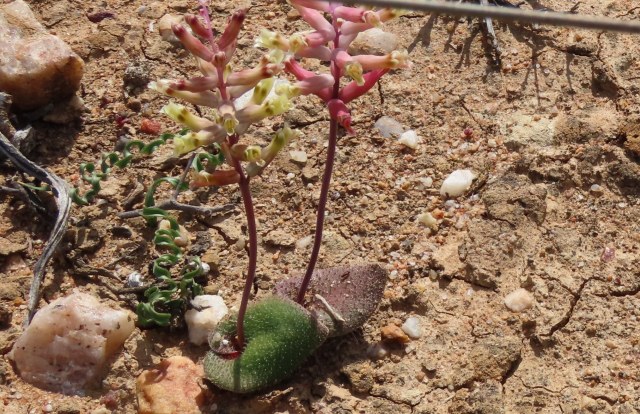
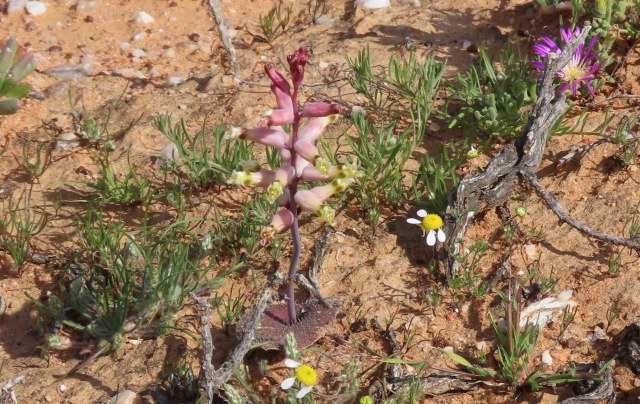
Lachenalia schelpei W. F. Barker is probably not likely to be grown by other than the most ardent lachenalia enthusiasts. The flower colour is probably as close to a camouflage as one could get being mottled in various greens along with maroon to brown markings on the gibbosities and tips of the inner segments. Information above supplied by Don Journet. This species is 14 to 23 cm tall, flowers June to early August and is restricted to the plateau of the Hantamsberg Mountain north of Calvinia. It has two broadly lanceolate leaves, spreading to erect that are covered above and below with bright green to dull maroonish-green blotches. Stamens are shortly exserted. Photo from Alan Horstmann.
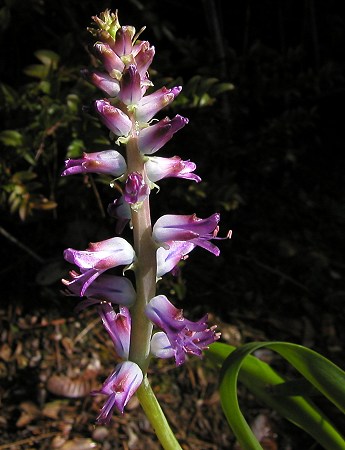
Lachenalia splendida Diels is found on sandy flats in the northwest Cape. It was once known as L. roodeae E.Phillips. It has two unmarked leaves and sessile flowers that are pale blue and bright lilac with exserted stamens. It is a very attractive pot plant. Growing 6 to 25 cm, it flowers in late winter (July to August). Photo 1 by Mary Sue Ittner. Photos 2-3 by Nhu Nguyen.
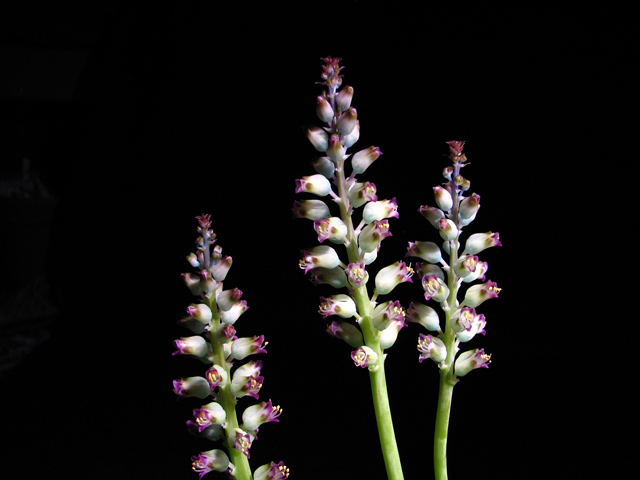
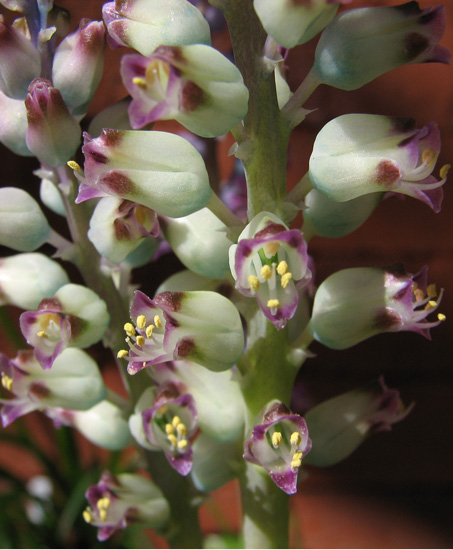
Lachenalia spp. photos viewed in habitat, but not identified to species. The first two from Mary Sue Ittner and Cameron McMaster were taken in the Roggeveld. The third photo from Cameron was taken near Nieuwoudtville, September 2011. The fourth photo was taken by Michael Mace in Elandsberg. The last photo is of a flower that showed up in one of Arnold Trachtenberg's gladiolus pots. He thinks it resembles the description of Lachenalia thunbergii.
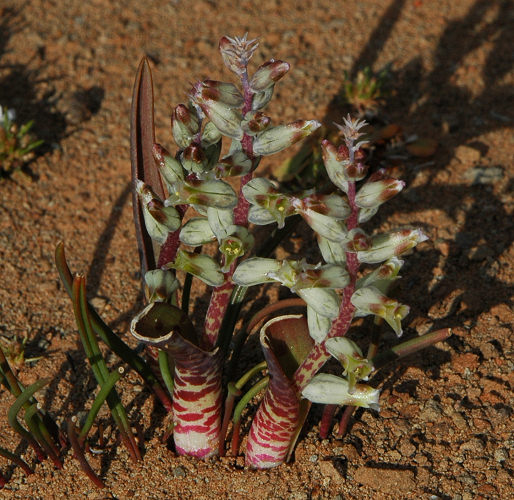
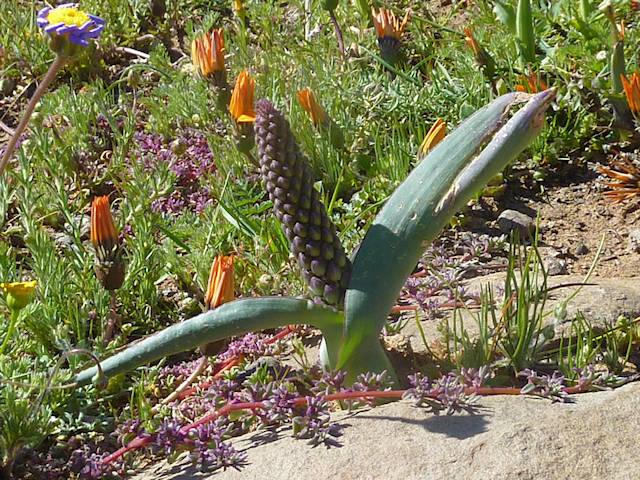
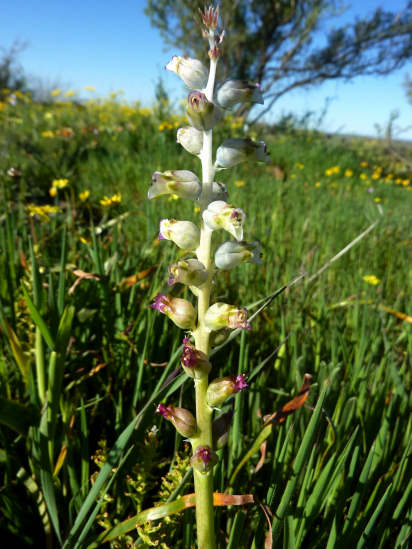

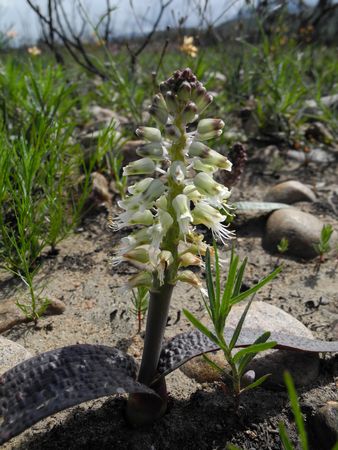
Lachenalia stayneri W.F.Barker is found on karroid flats in the Northwestern Cape (Worcester-Robertson Karoo). Growing from 12-30 cm, it has 2 broad prostrate leaves with large pustules on the upper surface and bell shaped pale blue and cream flowers on long pedicels with red-brown markings. It flowers August to September. The first photo from Rachel Saunders taken at Worcester. The next two were taken by Alan Horstmann in September in the Worcester area.
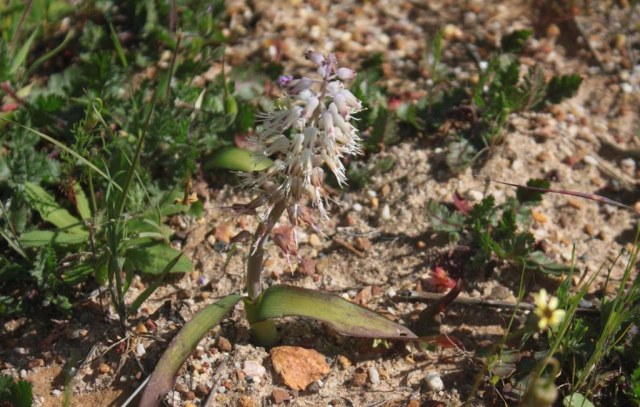
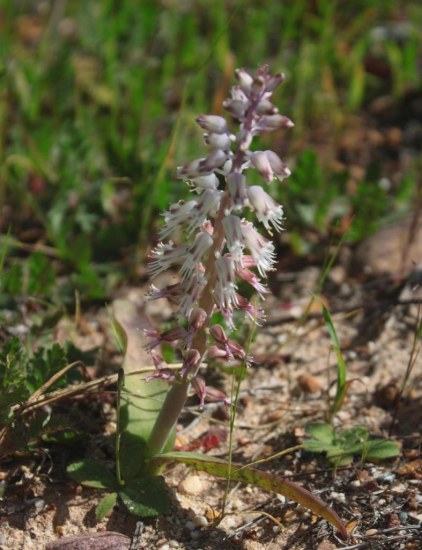
Lachenalia suaveolens (W.F.Barker) G.D.Duncan, syn. Lachenalia elegans var. suaveolens, is distributed from the Bokkeveld Plateau to the southern Tanqua Karoo. Growing from 16 to 40 cm with 1 or 2 lanceolate leaves, it has spreading light to deep pink to purple flowers without pedicels with dark maroon markings and recurved apices on the lower tepals with narrow, bright white margins. It flowers September to October; flowers have a carnation scent. It is allied to Lachenalia membranacea, but that species has light yellow to greenish-yellow or rarely light blue outer tepals and light greenish-yellow or white inner tepals and spreading leaves. Since Lachenalia elegans has been split into four different species, we cannot be sure, but believe that these photos are this species. The first two photos by Bob Rutemoeller and Alan Horstmann. Photos 3-5 were taken by Mary Sue Ittner near Nieuwoudtville September 2006. The last photo was taken by Cameron McMaster September 2011.
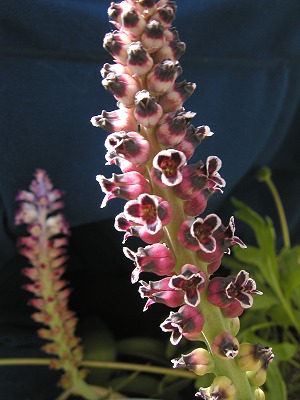
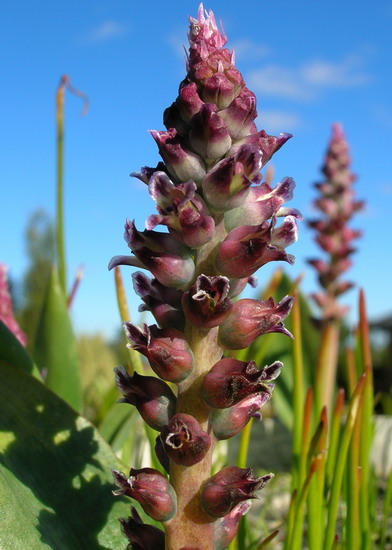
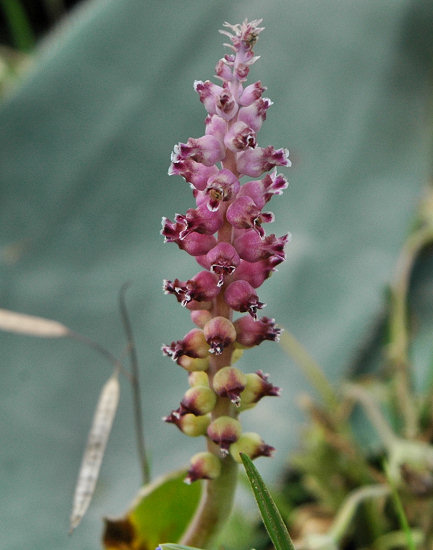
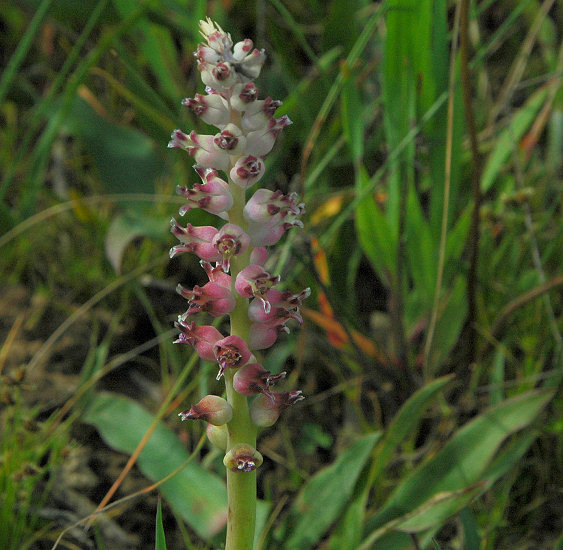
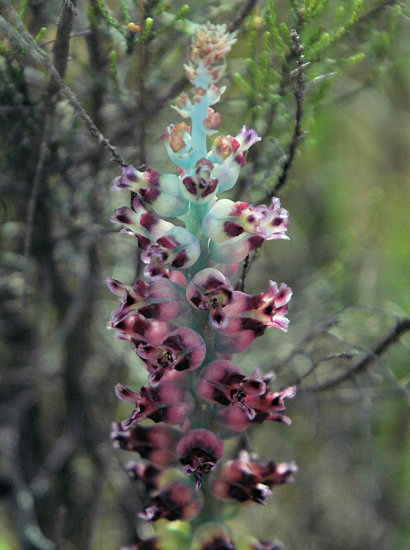
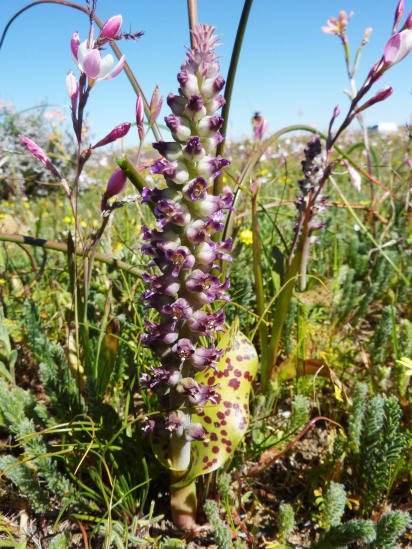
Lachenalia summerfieldii G.D.Duncan is known from an area north of Middelpos in the Roggeveld where it grows in seasonally moist doleritic clay that bakes hard in summer. Flowering September to October, this is a short species growing from 9 to 18 cm, with two spreading to suberect green leaves with longitudinal grooves and an erect green scape, heavily marked with dark brownish-purple blotches. The flowers are oblong-campanulate; outer tepals are light blue shading to white with brownish-maroon gibbosities, the inner tepals are white with dark brownish-maroon or yellow keels, and the stamens are shortly exserted. Photos taken by Alan Horstmann in Roggeveld in September that he believes is this species.
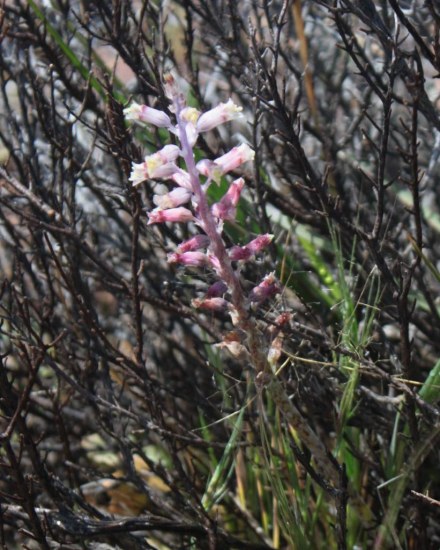
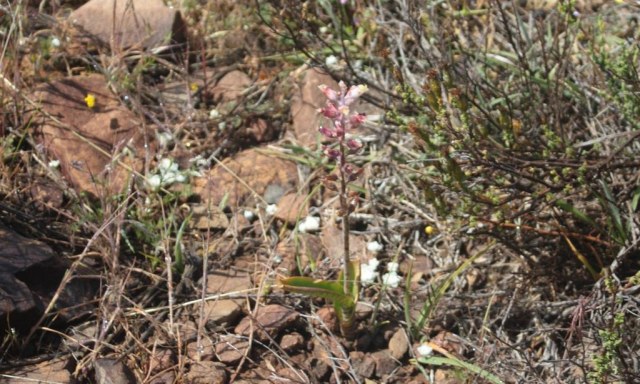
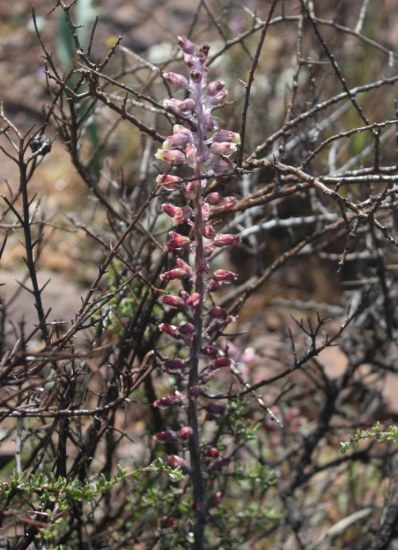
Lachenalia thomasiae W.F.Barker ex G.D.Duncan grows on rocky sandstone slopes in the Clanwilliam district. It has two leaves and white bell-shaped flowers with green or brown markings on long pedicels with well exserted anthers. Growing from 12 to 38 cm, it flowers September to October. The first photo from Rod Saunders. The rest from Mary Sue Ittner.
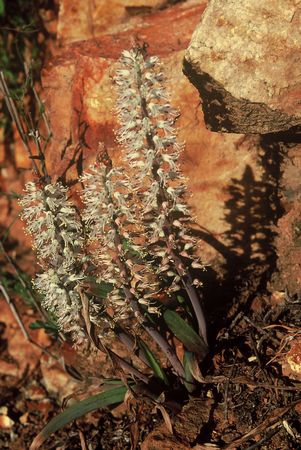
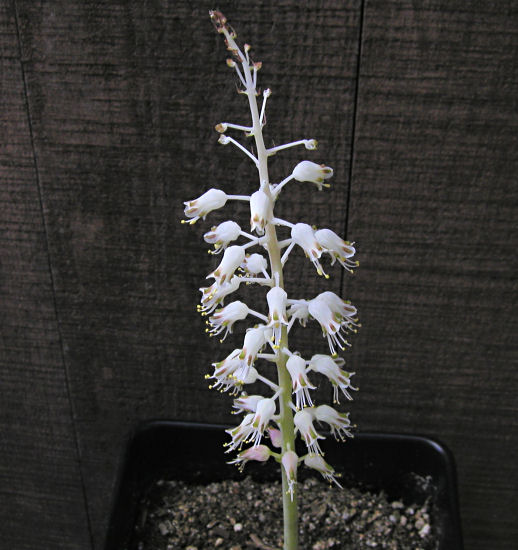
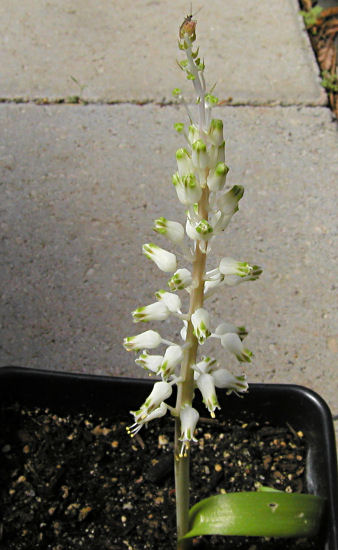
Lachenalia thunbergii G.D.Duncan & T.J.Edwards was previously included in Lachenalia aloides. It is restricted to rocky crevices along summit ridges in the Swartland region in the southwestern Cape where it grows in sandstone fynbos vegetation. Growing from 8 to 12 cm high, it has 1 to 2 lanceolate green leaves and long tubular green and yellow flowers with a reddish orange rachis. The inner tepals are 23-24 mm long with slightly spreading apics. Flowering is August to September. Photos from iNaturalist taken by Andre Venter, Fiona Hellmann, and Riaan van der Walt in the southwestern Cape in September and October and shared under a CC BY-NC license.
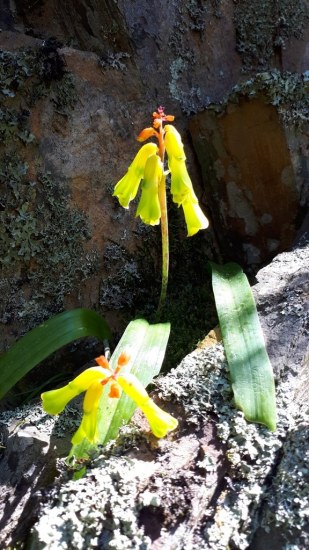
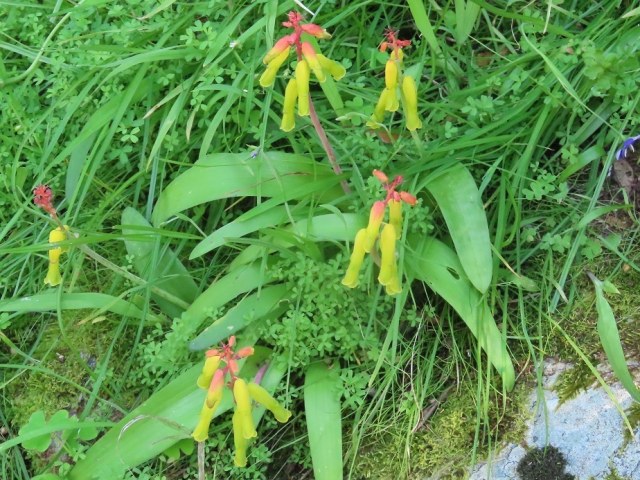
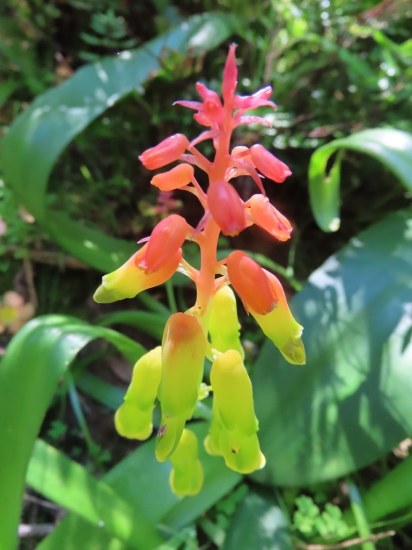
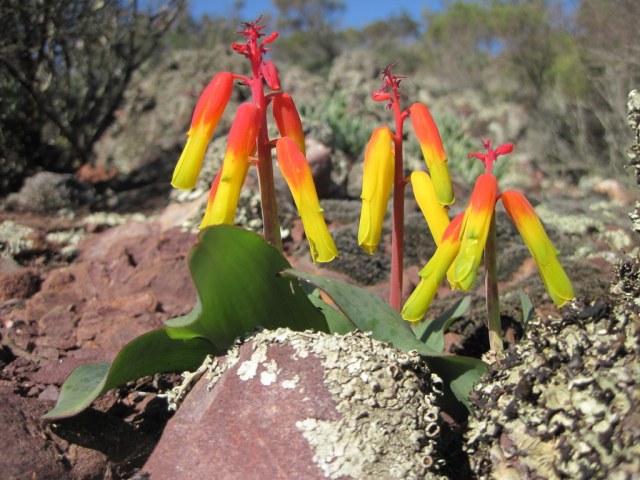
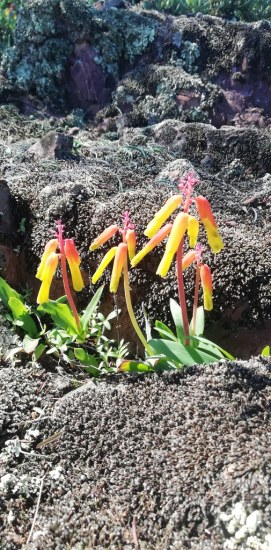
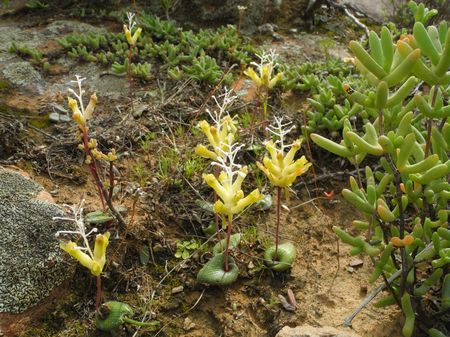
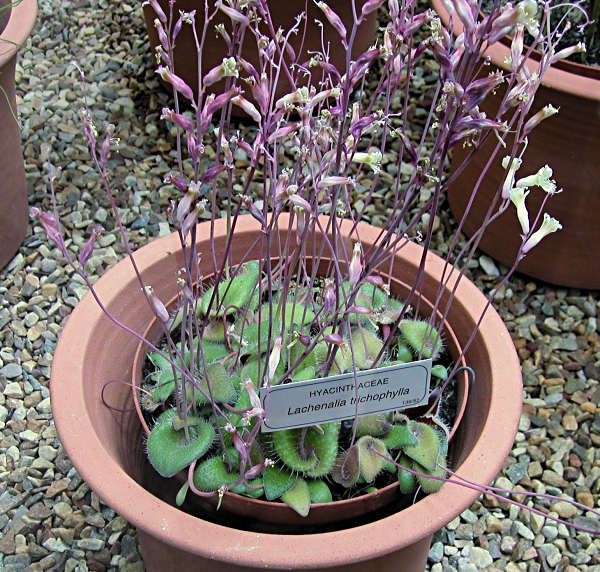
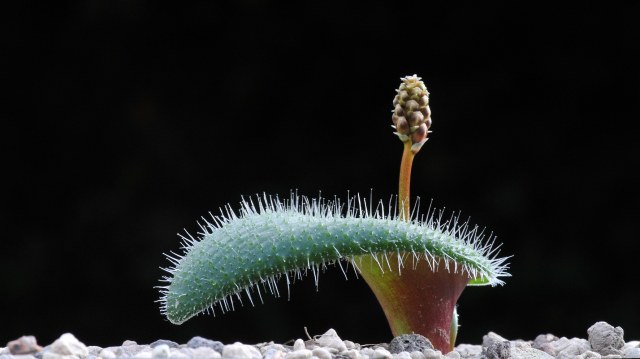
Lachenalia trichophylla Baker is a most unusual lachenalia and quite a curiosity. This species would be quite difficult to mistake as it has one or possibly two leaves that are covered with stellate hairs. Two forms have been identified, one having both short and long hairs, the other only having very short hairs. The leaves tend to lie on or just above the surface of the soil. The flowers on my plants are all well spaced on the peduncle and have distinct pedicels (stalks). The flower colour starts as pink near the base then white and finally yellow with green gibbosities. Flowering occurs from the fourth week in July to the third week in August. Information furnished by Don Journet. This species is found in Namaqualand and the Northwest Cape where it grows on sandy slopes. Growing from 8 to 20 cm, it flowers August to September in South Africa. Anthers are included. The first photo was taken by Rod Saunders. The second photo was taken by Bob Rutemoeller in the bulb room in the Conservatory at Kirstenbosch National Botanical Garden in 2001. The third and fourth photos were taken by Bert Zaalberg. The last photos from Alan Horstmann.

Lachenalia a - Lachenalia b-c - Lachenalia Species d-i - Lachenalia j-n - Lachenalia o-p - Lachenalia u-z - Polyxena - Lachenalia index