Species Lilium that originate in North America from n-z are found on this page.
Other Lilium sections and hybrids are linked below:
Asiatic Section a-c - Asiatic Section d-k - Asiatic Section l-o - Asiatic Section p-z – Candidum Section - Dauricum Section – Martagon Section – Oriental Section - Trumpet Section - Lilium Hybrids - Lilium index
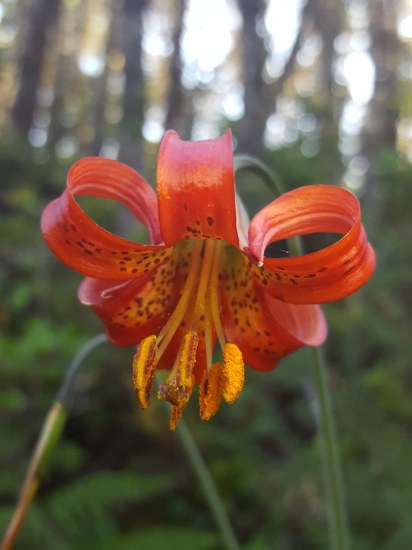
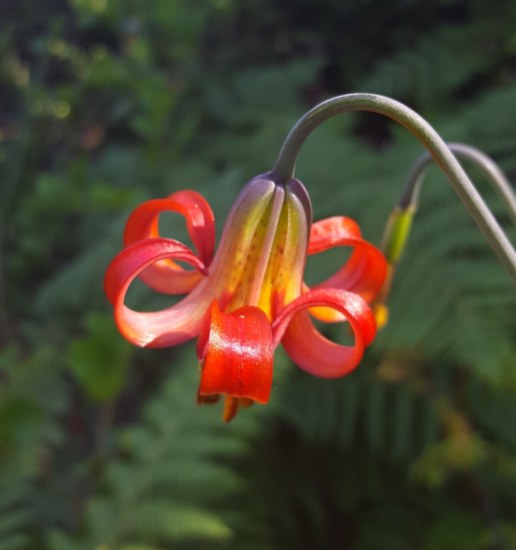
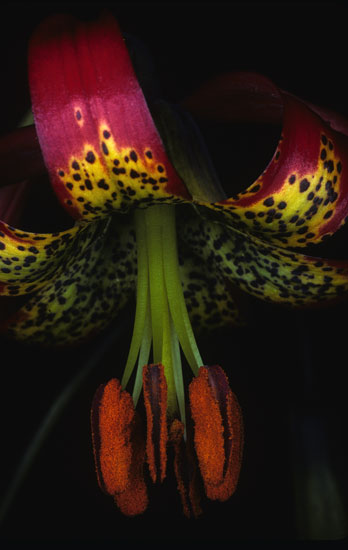
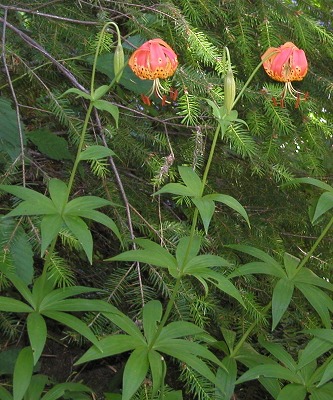
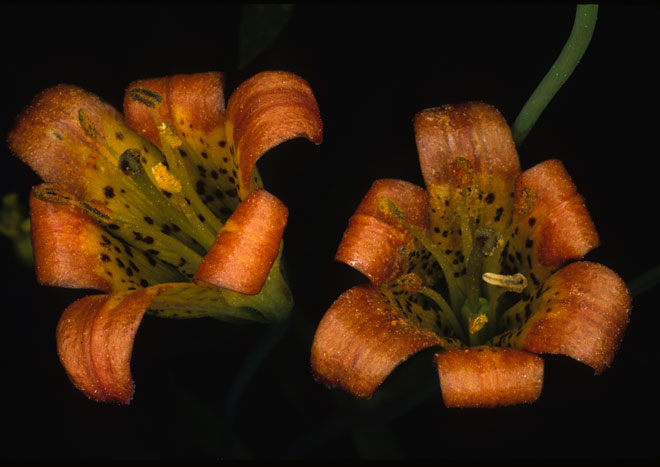
Lilium occidentale Purdy is an endangered lily restricted to seeps and bogs of the coastal prairie, scrub, and coniferous forests of Del Norte and Humboldt counties in California and adjacent Oregon. It is pollinated by hummingbirds. Although threatened, it can be grown in cultivation. Height range: 3-4 ft. The first two photos from iNaturalist were taken by Alex Abair in July in Curry County, Oregon and shared under a CC BY-NC license. The third photo by Ron Moodycliffe at a residence in Oregon City, Oregon. The last two by Ron Parsons were taken from a small population in Humboldt County, CA.


Lilium pardalinum see the Lilium pardalinum page. Representative photos of this species by Bob Rutemoeller and Ron Parsons.
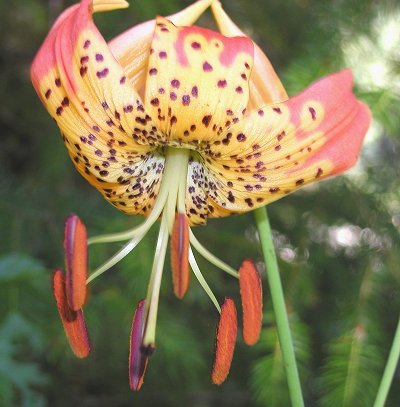
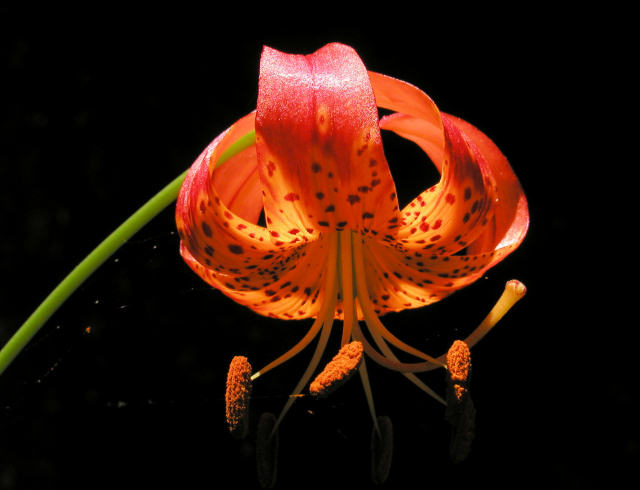
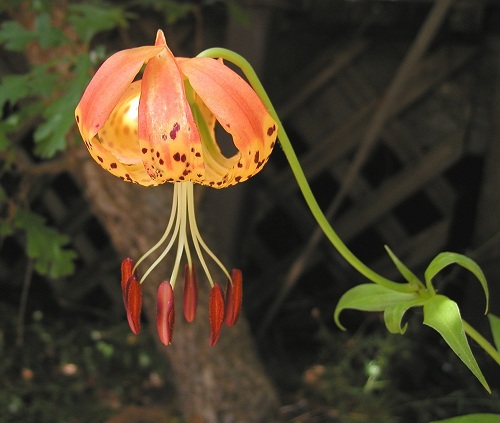
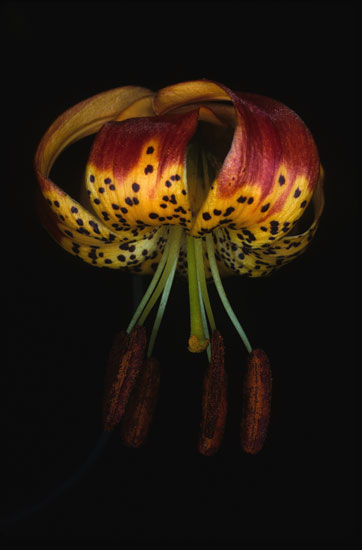
Lilium parryi S.Watson is commonly known as the Lemon Lily. It is native to the foothills of the San Gabriel Mountains in southern California. In the wild, the plants grow in meadows and seasonal streams in montane coniferous forests of southern California. In cultivation, the bulbs should be kept moist throughout the year. This plant is a favorite of slugs and susceptible to Narcissus Bulb Fly. Height range: 5-6 ft. The first four photos were taken by Nhu Nguyen. The last two photos from Ron Parsons are from a population in San Bernardino County, California, and were taken in late July 2005.
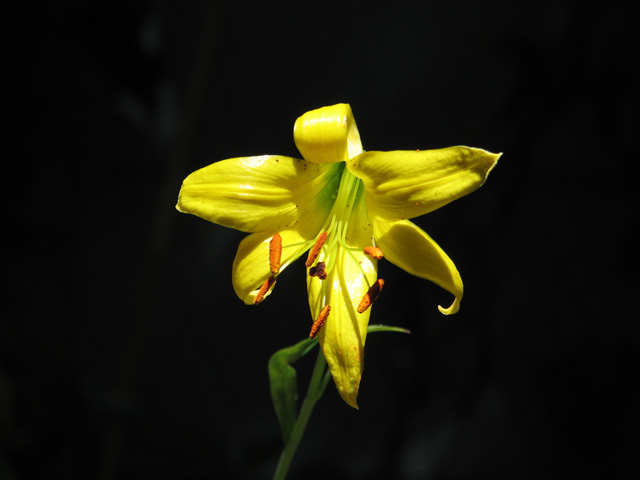
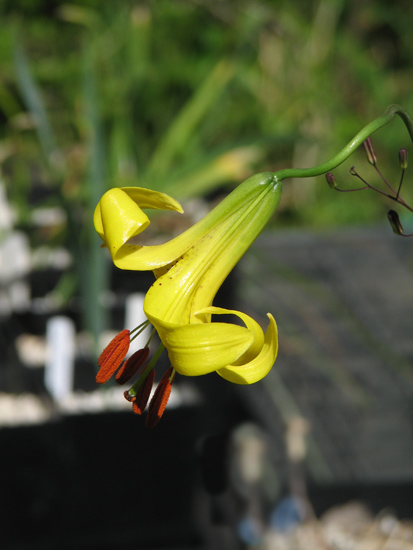
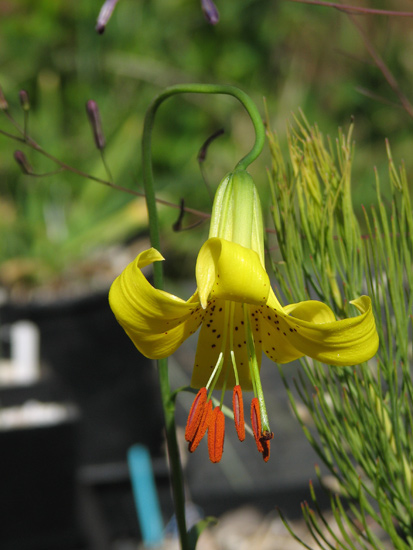
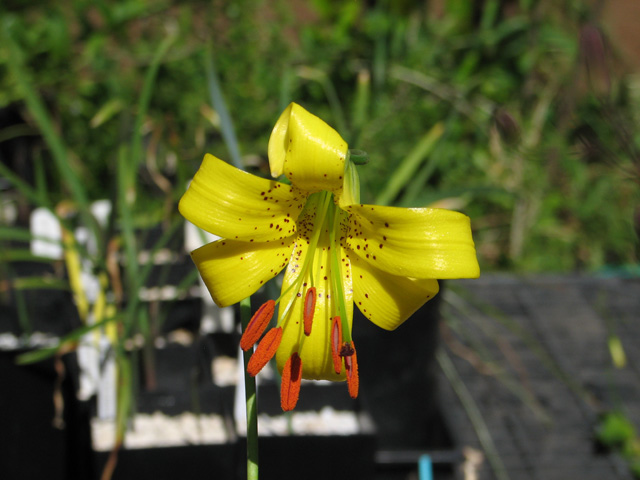

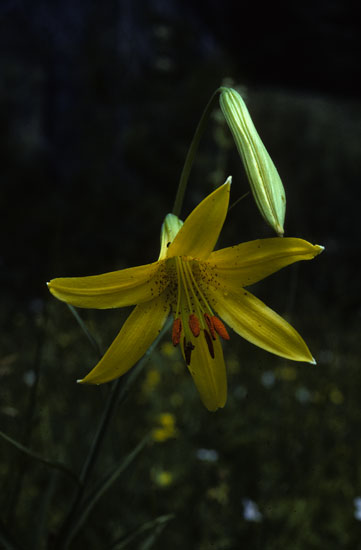
The first three photos below were taken by Darm Crook The last two photos of bulbs were taken by Pontus Wallstén.

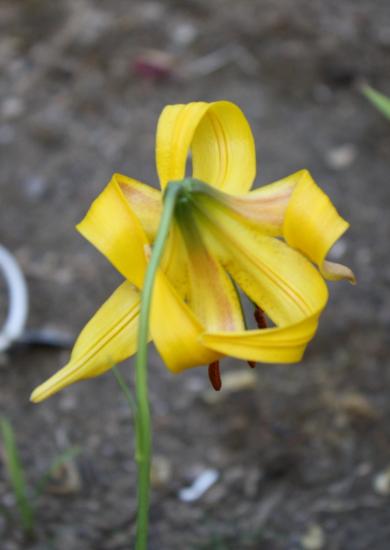
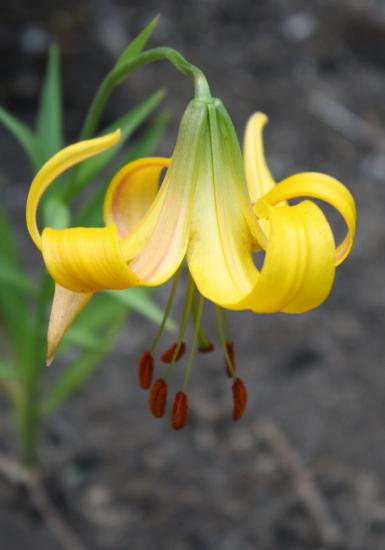
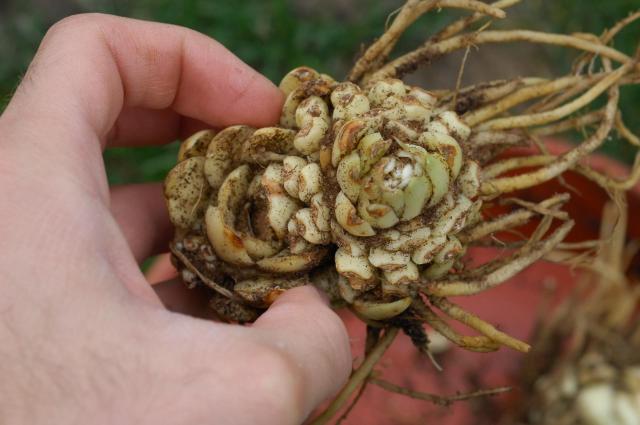
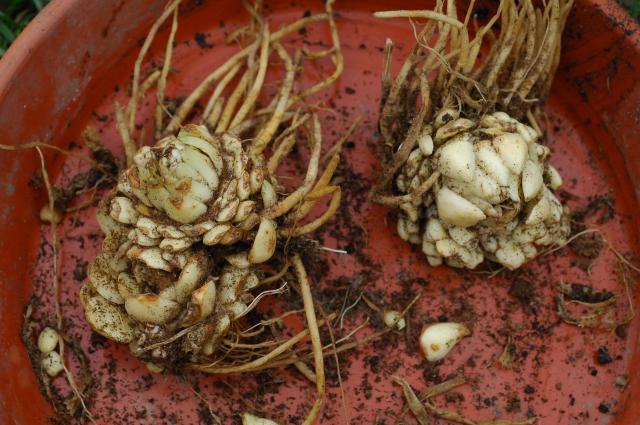
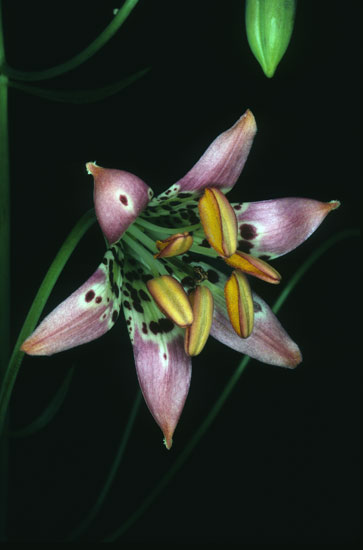
Lilium parvum Kellogg is found in various forms and colors in California's Sierra Nevada and the Cascade Range of southern Oregon at 4900 to 9800 ft (1470 to 2940 m). It grows along riverbanks and in snowmelt areas so needs plenty of moisture in growth and protection from moisture in winter when it would be under snow. Height: 3 ft. Photos below were taken by John Longanecker.
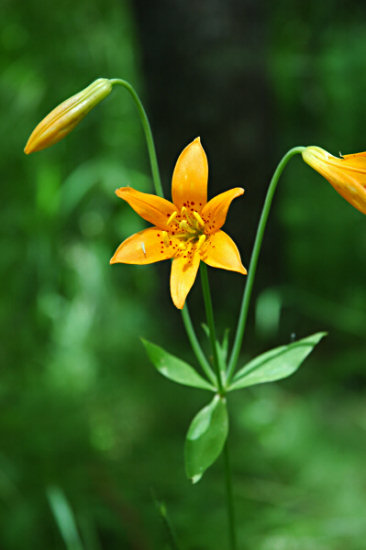
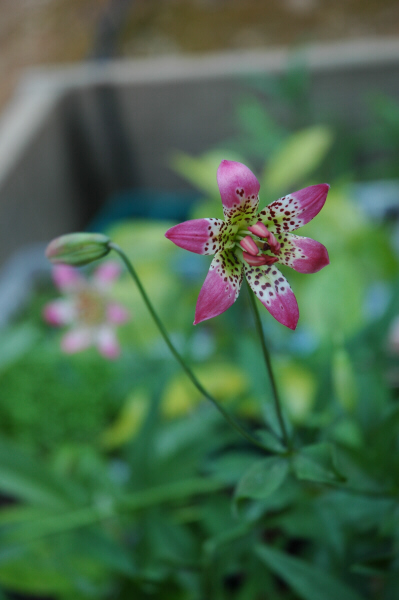
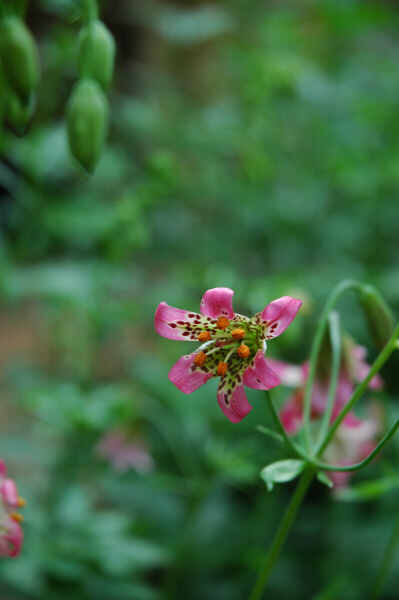
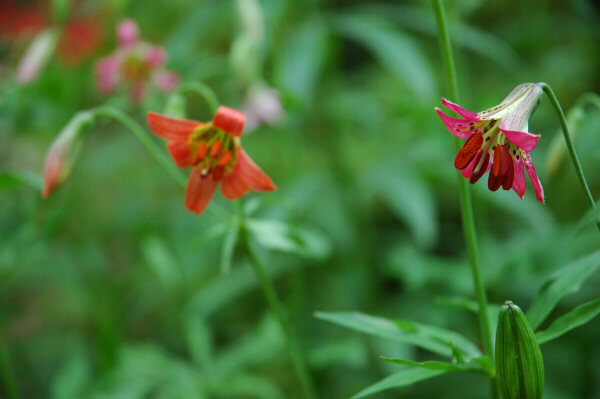
Photos from iNaturalist were taken by in El Dorado County in July and shared under a CC BY-NC license.
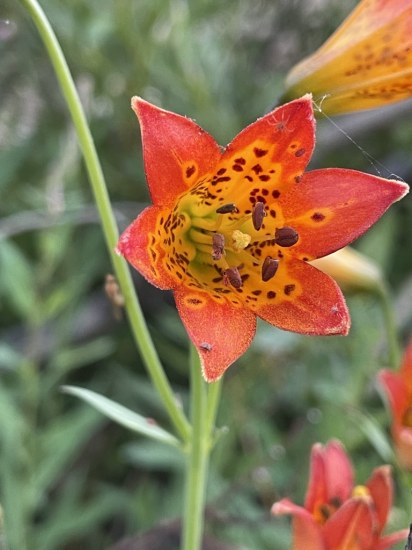
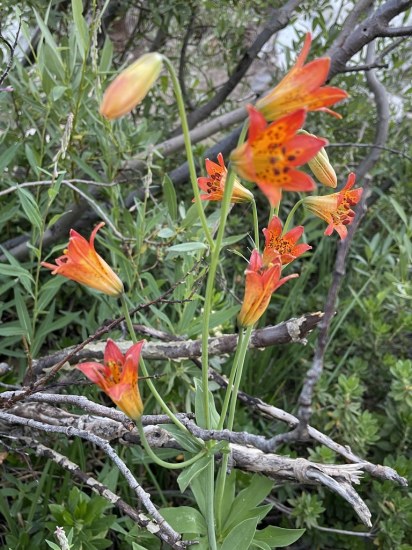
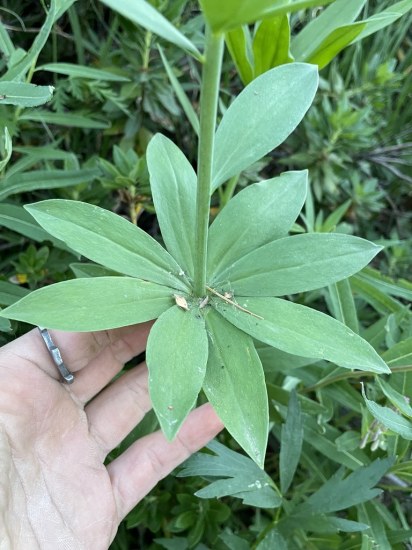
Photos below were taken by Ron Parsons from plants growing at various localities in El Dorado County, CA.
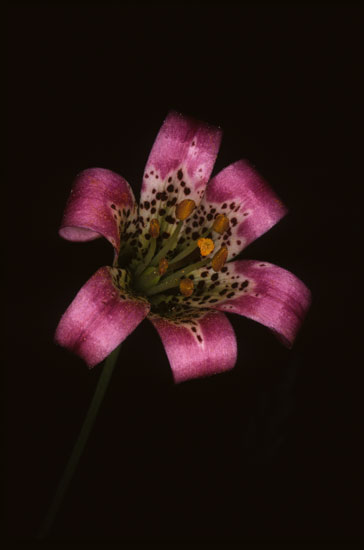
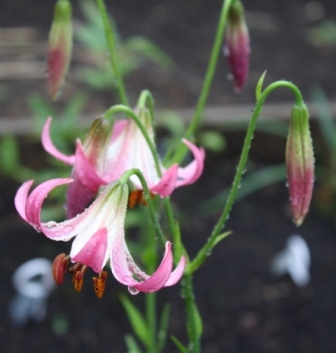
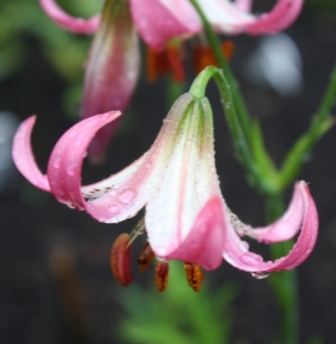
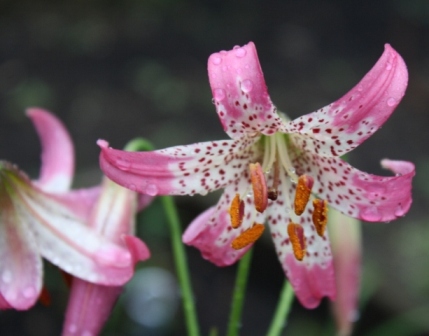
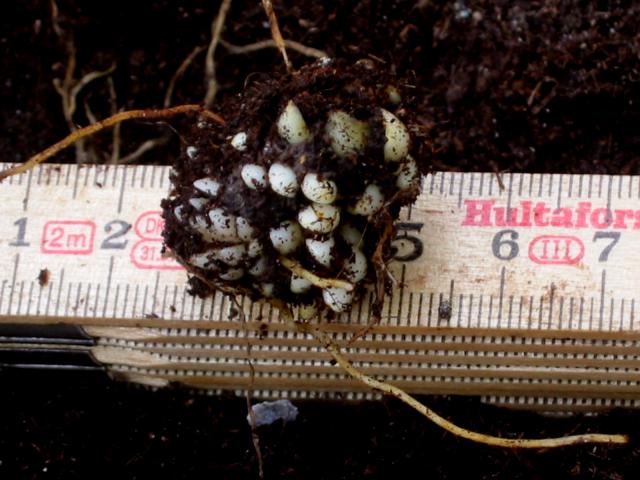
Lilium parvum var. hallidayi is the name sometimes given to a pink form that is valued by gardeners but not recognized in current taxonomy; seedling photos 1-3 below were submitted by Darm Crook; they grow in his zone 1 gardens. Photo 4 of a bulb by Pontus Wallstén.
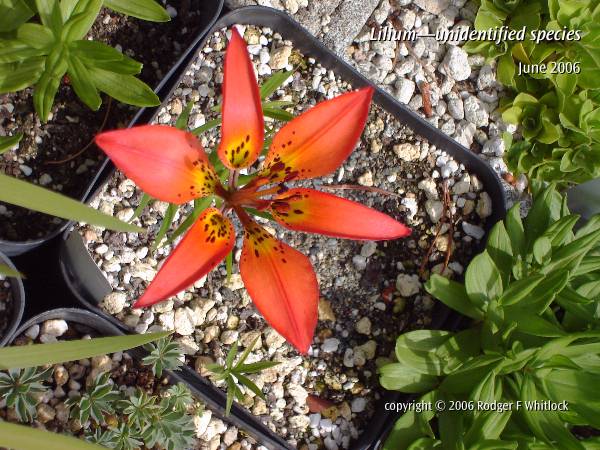
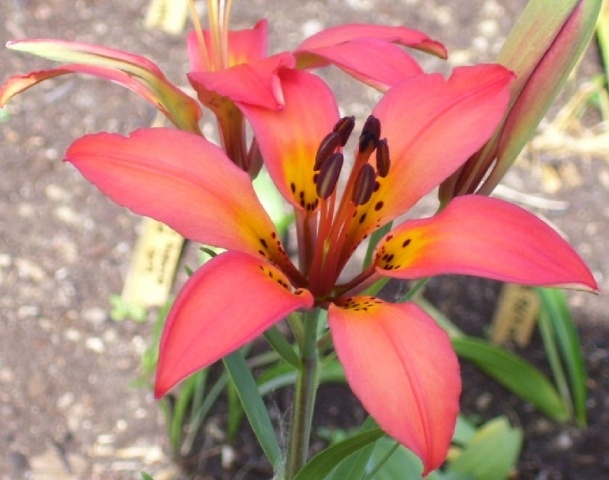
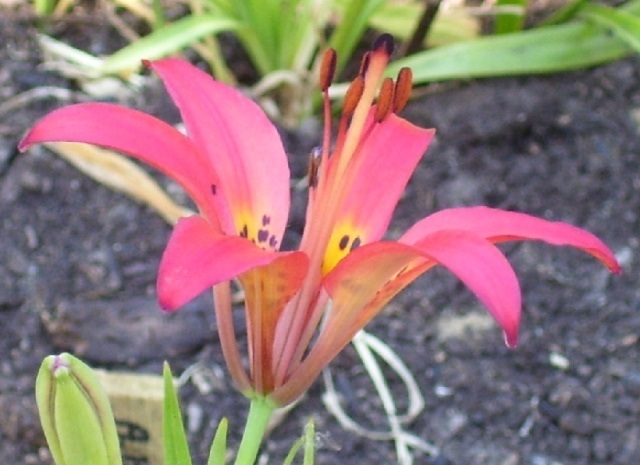
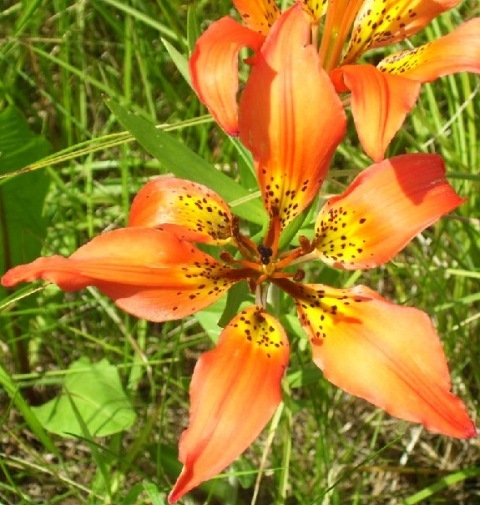
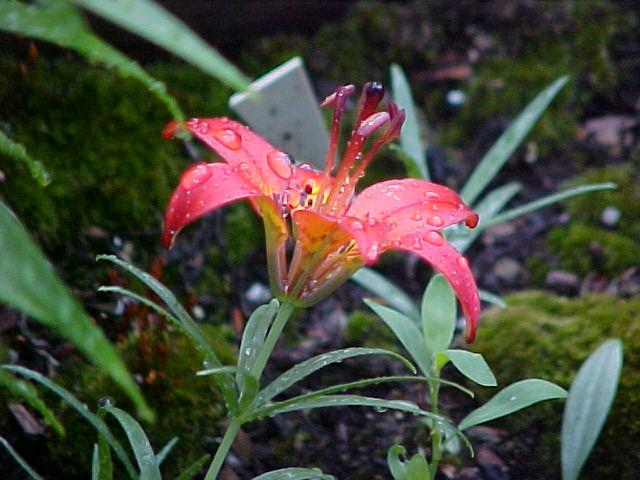
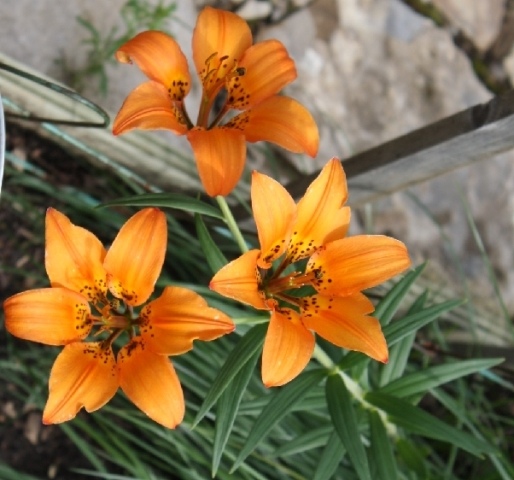
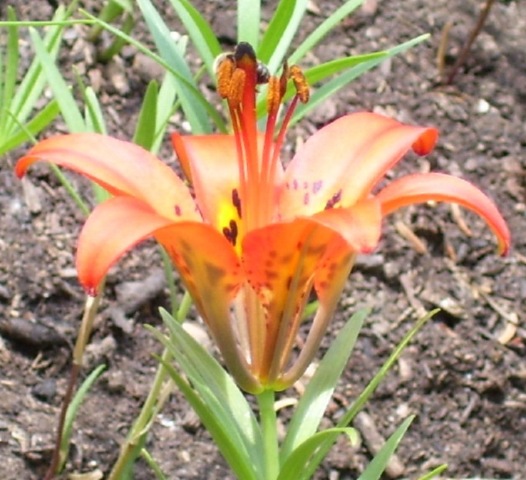
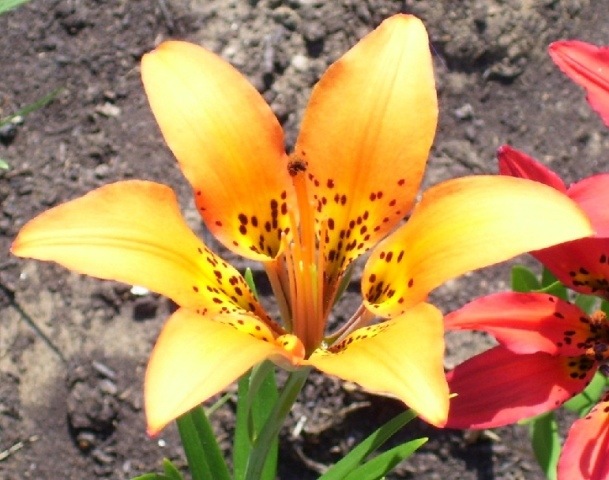
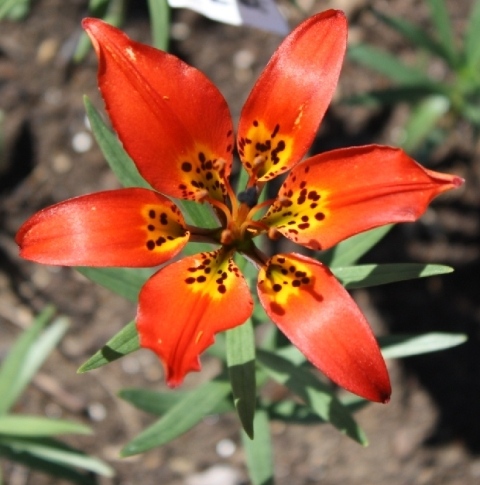
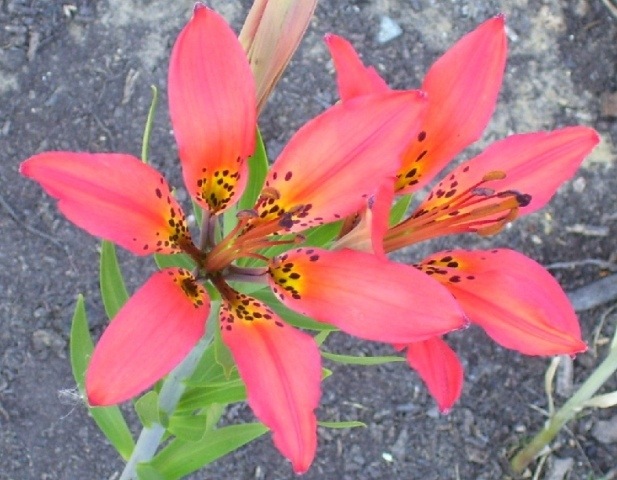
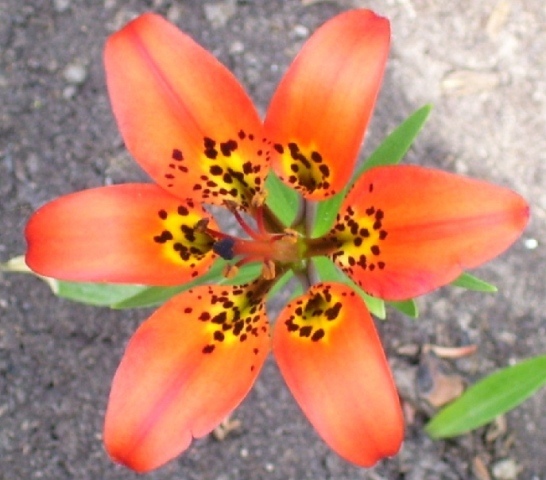
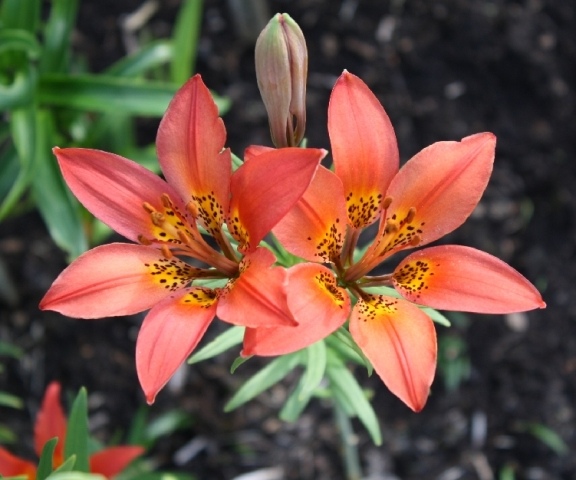
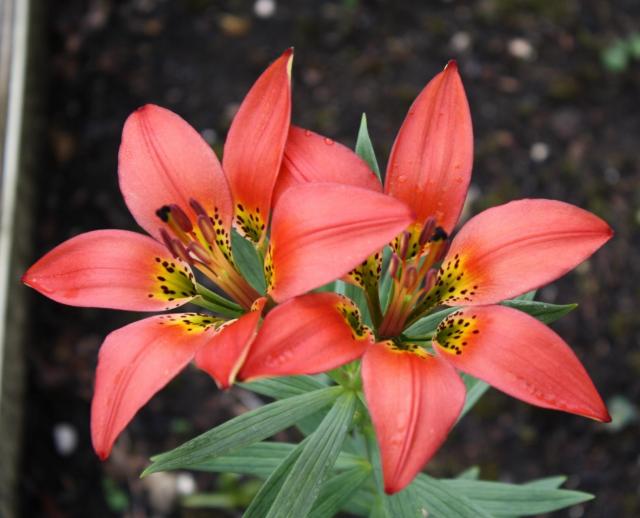
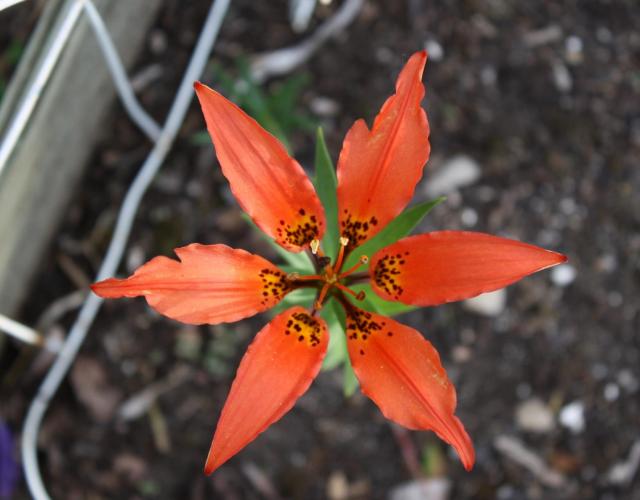
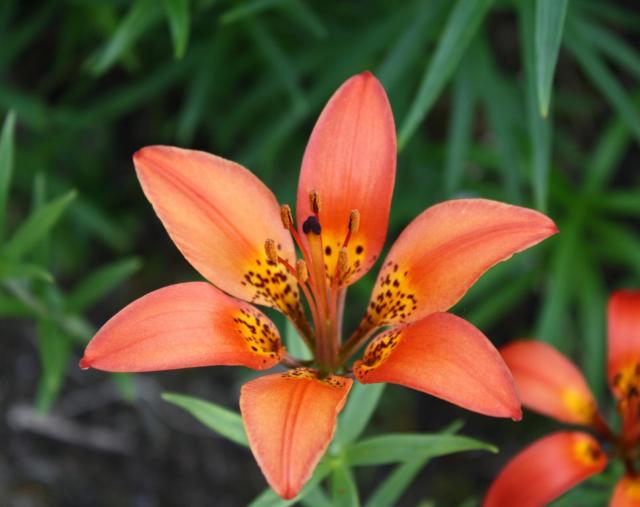
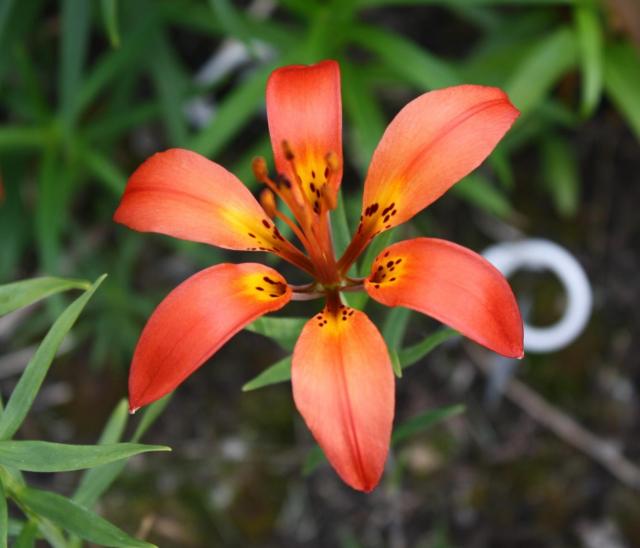
Lilium philadelphicum L. is found across the northern United States and into Canada, as far north as Ft. McMurray Alberta, from Maine to eastern British Columbia. It is also found in the southern end of the Alaskan panhandle and on Vancouver Island BC. Canada. The western populations have leaves scattered along the stem, and are separated as var. andinum. The eastern populations (var. philadelphicum) have whorled leaves. Height range: 1-4 ft. The first photo from Linda Foulis was taken in Alberta, Canada. The next photo from Rodger Whitlock is of a plant grown from seed received as Iris lacustris. It took a number of years from seed before it flowered so a proper identification could be made. The last four photos by Ron Parsons of plants in Manitoba, Canada.
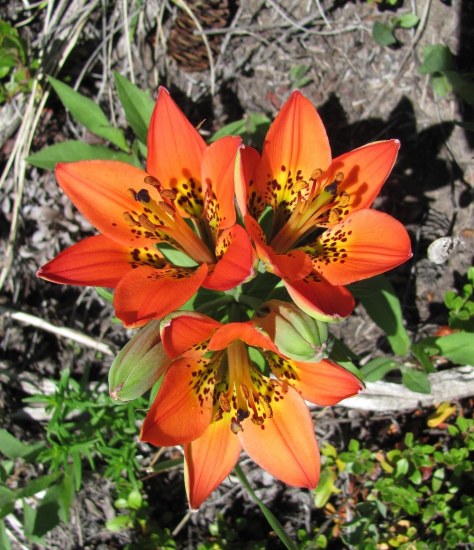
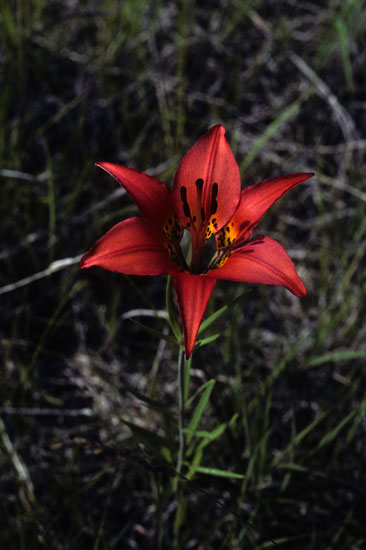
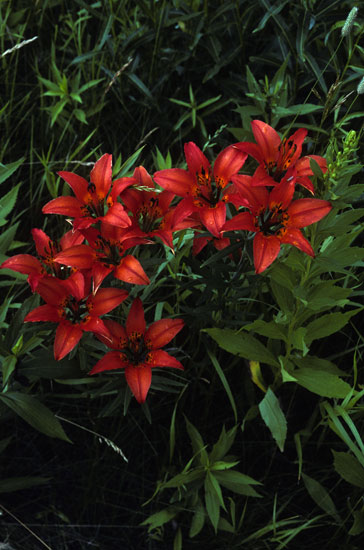
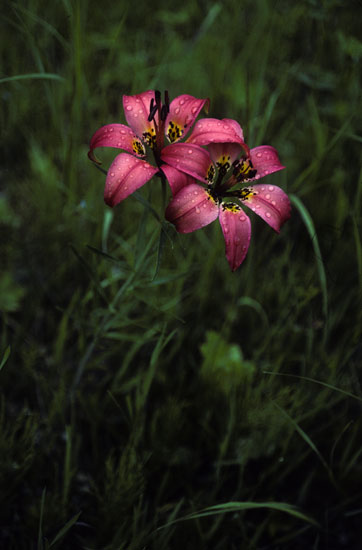
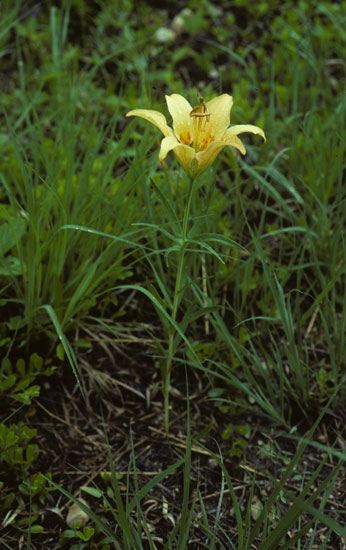
Lilium philadelphicum var andinum Ker Gawl. Photos by Darm Crook show some of the diverse colours and forms; it seems no two seedlings of this variety are ever alike. To survive and do well at Hay River NWT. Lilium philadelphicum var andinum needs an alkaline soil, right around a 7.5 pH, well drained, 50/50 high humus sand mix and full sun. Between L. philadelphicum and its variety andinum this lily probably has one of the largest natural geographic growing ranges of all the Lilium species excepting possibly L. martagon and its varieties. So it appears to thrive in nature but is a hard lily to grow in cultivation.

Lilium pitkinense Beane & Vollmer is considered by the Plants of the World Online and the Jepson eflora to be a subspecies of Lilium pardalinum. See the Lilium pardalinum page.
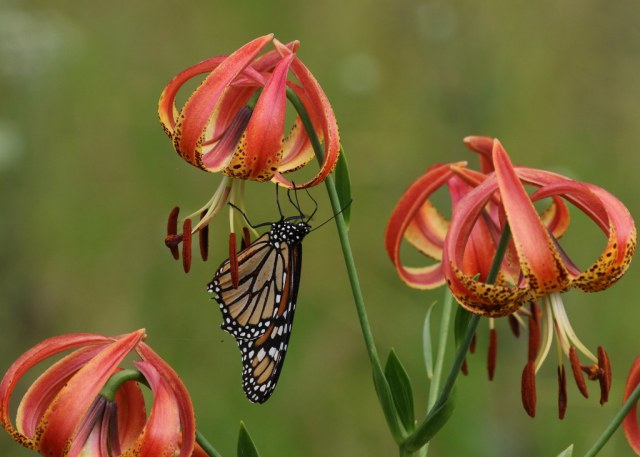
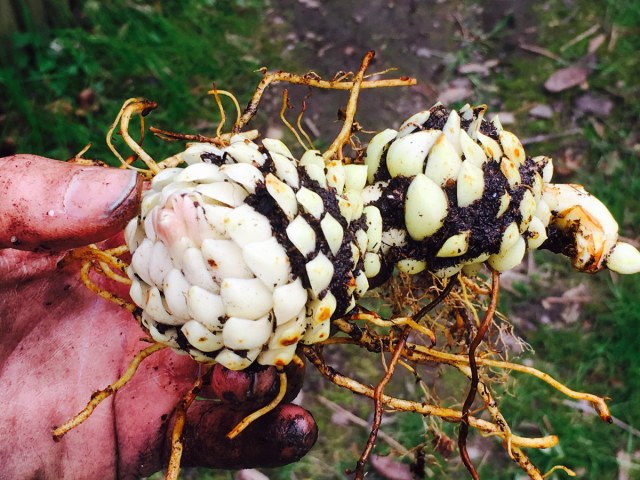
Lilium pyrophilum M.W.Skinner & Sorrie, commonly known as the "sandhills lily", was named in 2002. It grows in longleaf pine ecosystems that experience regular fires; these are marshy, sandy wetlands. It is found in North and South Carolina and Virginia. It is fairly close to Lilium superbum but very distinct. Flowers open orange-yellow, but quickly turn dark red as the flower ages, so bigger stems can exhibit flowers at various colour stages. The plants can grow 3-4 ft. tall. The first photo from iNaturalist was taken by Will Stuart and shared under a CC BY-NC license. The second photo of a bulb was taken by Pontus Wallstén.
Lilium shastense (Eastw.) Beane is a synonym of Lilium pardalinum ssp. shastense (Eastw.) M.W.Skinner. See the Lilium pardalinum page.
Lilium rubescens S.Watson is a native, endemic species found in California. It is commonly known as the Redwood Lily. Height range: 2-9 ft. Photos 1 to 4 below are from populations in the wild in various localities in Mendocino, Humboldt, and Sonoma Counties, California by Ron Parsons. Photo 5 of a young bulb and photo 6 of a flowering size bulb by Pontus Wallstén.
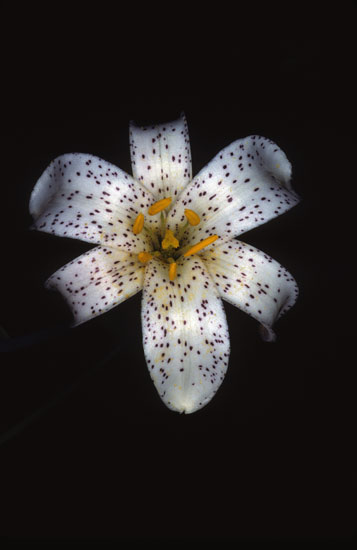
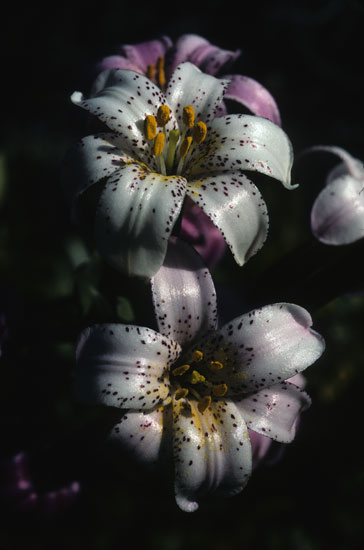
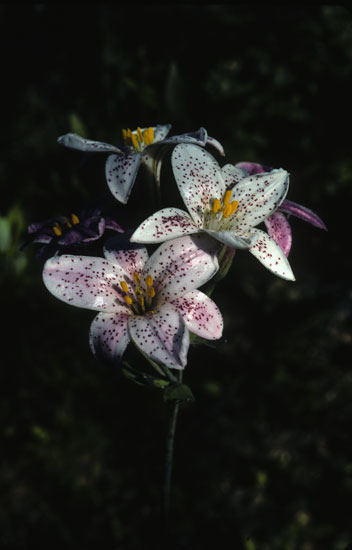
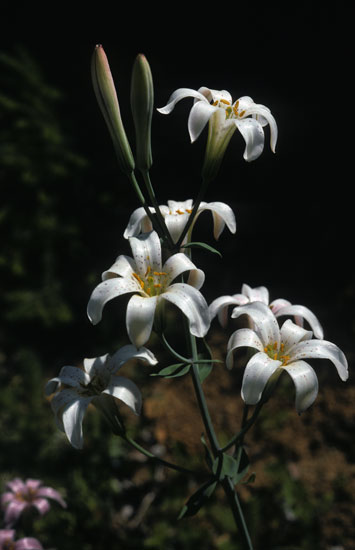
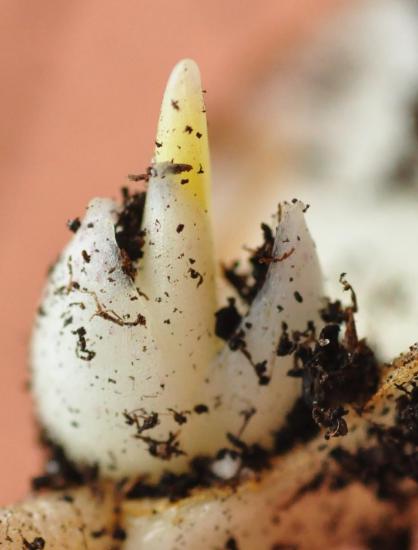

Lilium superbum L. has a wide distribution in eastern North America. Height range: to about 8 ft. The first photo taken by Wayne Crist is of a plant, from a commercial source, that grows in the garden of Jim McKenney near Washington, D.C. This species still grows wild in this area, although it is as rarely seen in the wild as it is in local gardens. The plant shown was flowering for the first time: mature plants are among the most spectacular of lilies. The second photo by Ron Parsons shows plants in cultivation at the UC Botanical Garden. Photos three to five submitted by Darm Crook are of a seedling that took 6 years to first flower in 2010. Photo 6 of a bulb by Pontus Wallstén.
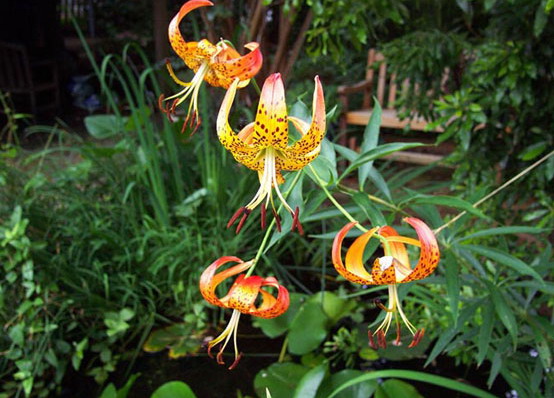
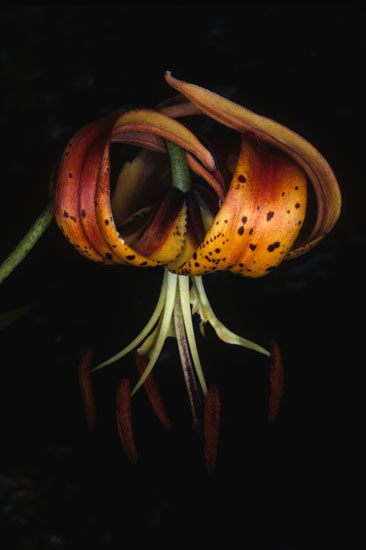
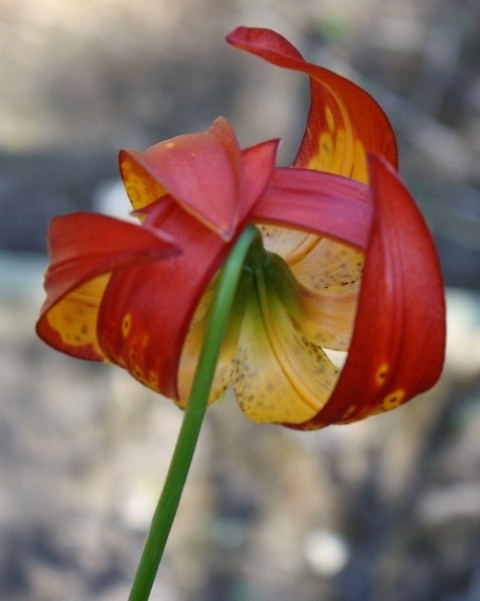
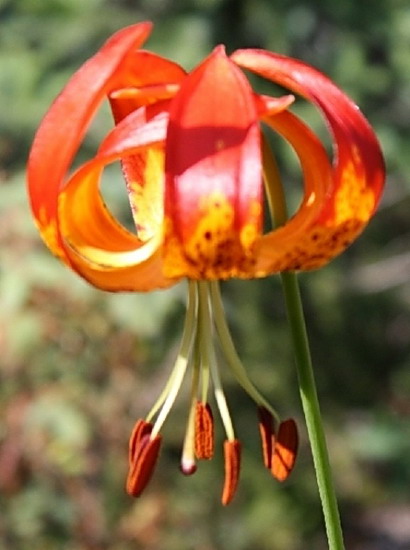
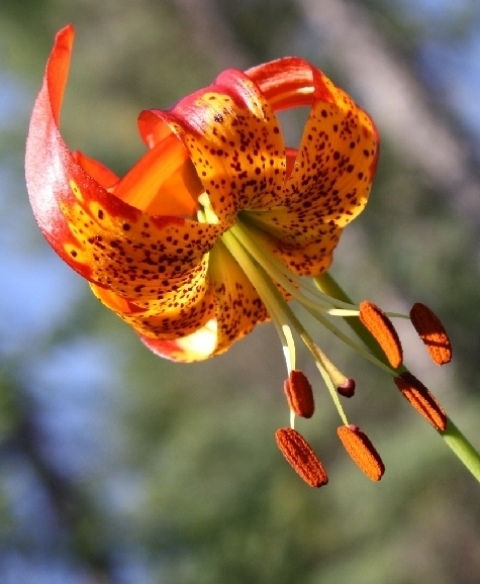
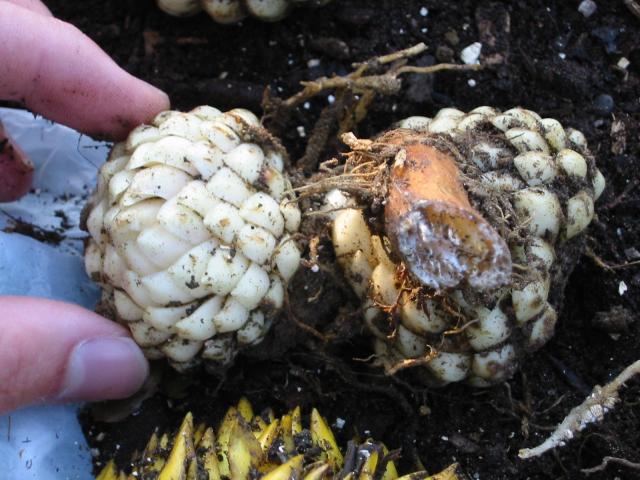
Lilium vollmeri Eastw. is a synonym of Lilium pardalinum ssp. vollmeri (Eastw.) M.W.Skinner. See the Lilium pardalinum page.
Lilium washingtonianum Kellogg grows from central California to almost the border of Canada on steep forested slopes in the Sierra Nevada and Cascade ranges. Flowers are fragrant, trumpet-shaped, and open white, fading to pink or purple. Height range: 2-7 ft. Photo 6 was taken by Nhu Nguyen of a form found in Tuolumne County, California. Photo 2 was taken at Mount Hood by Ron Moodycliffe; photos 3-4 were taken by John Longanecker. Photos 5-6 were taken by Ron Parsons of plants in situ, El Dorado and Butte County, California.
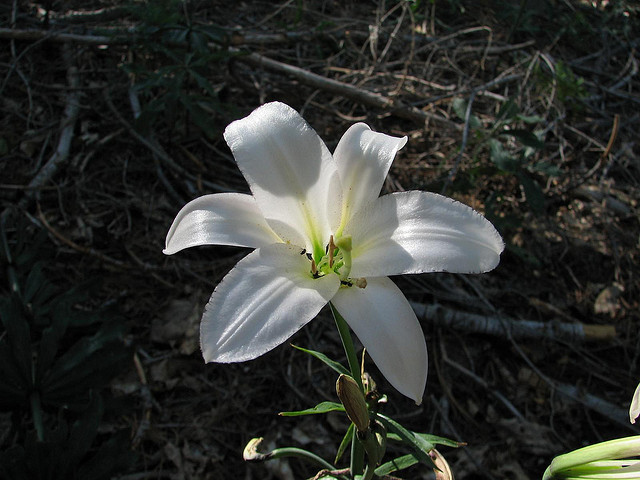
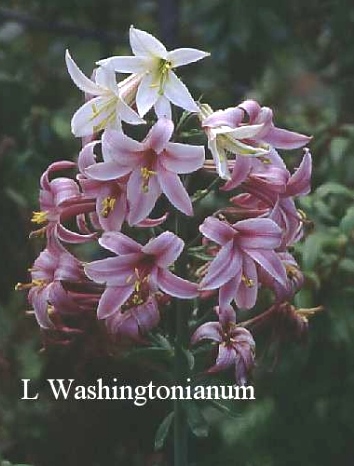
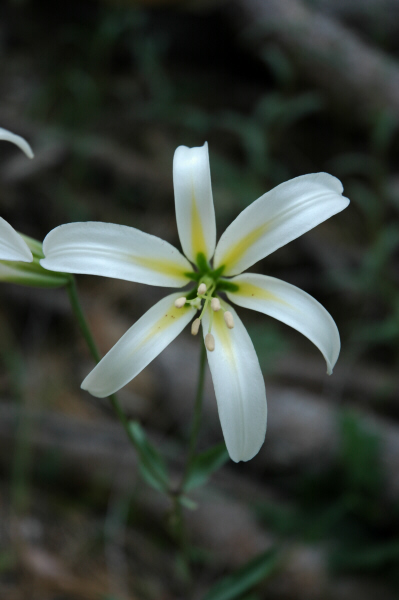
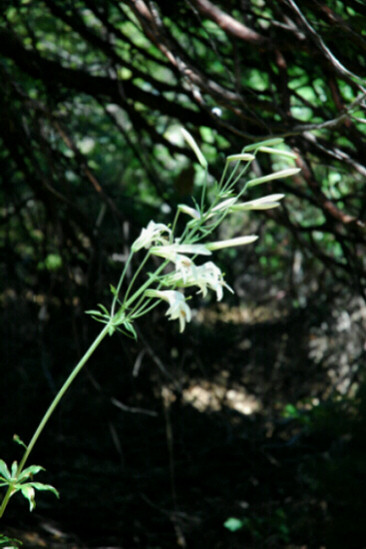
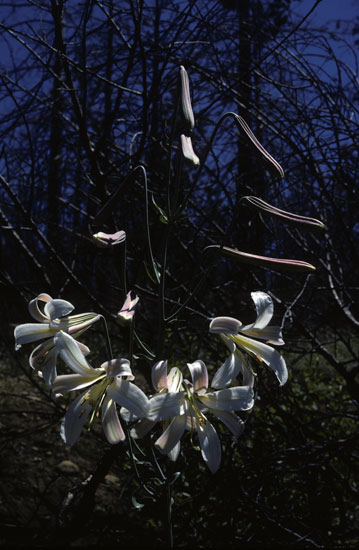
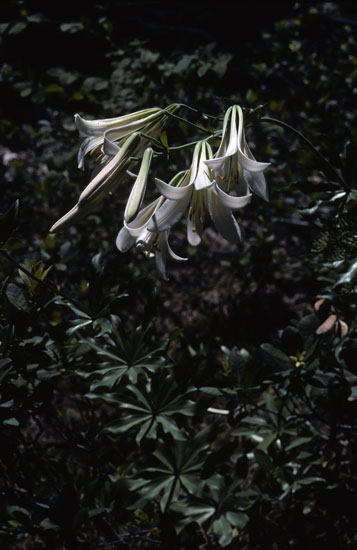
Photos from Calflora were taken by Jamie Spielmann in Shasta County, California and shared under a CC BY-NC license.

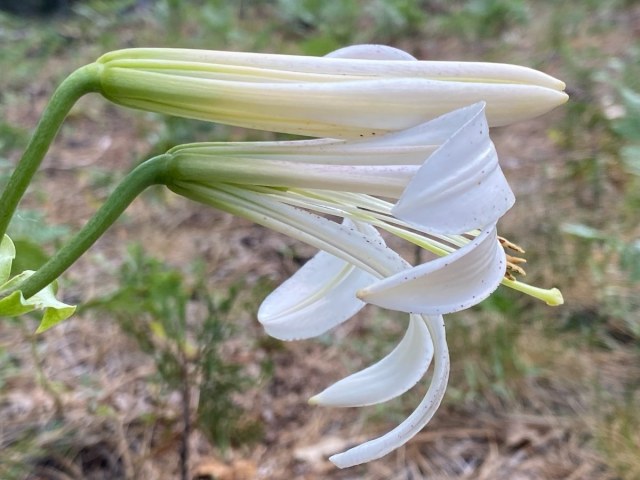
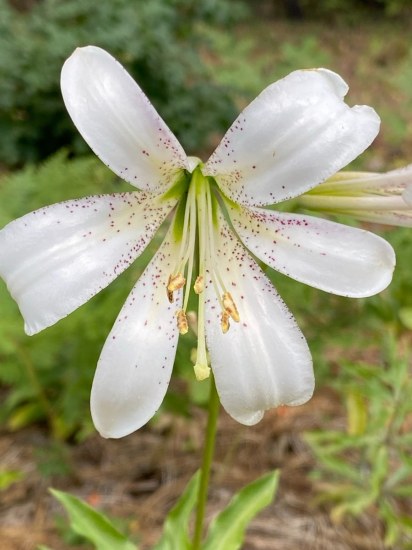
Lilium washingtonianum subsp. purpurascens (Stearn) M.W.Skinner is found from Western Oregon to Northern California. Flowers of it age to dark purple. The first photo from iNaturalist was taken by Jeff Bisbee in the Klamath Natural Forest and shared under a CC BY-NC license. The second photo of a bulb by Pontus Wallstén.
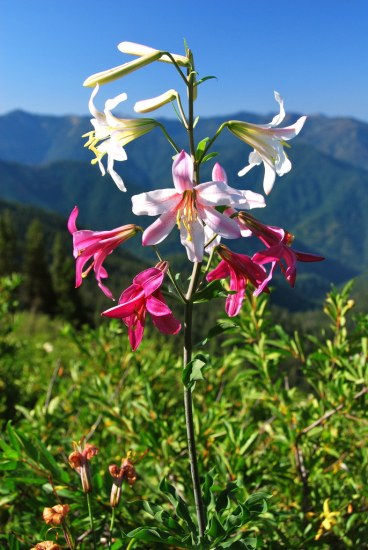

Lilium wigginsii Beane & Vollmer is a synonym of Lilium pardalinum subsp. wigginsii (Beane & Vollmer) M.W.Skinner. See the Lilium pardalinum page.
Asiatic Section a-c - Asiatic Section d-k - Asiatic Section l-o - Asiatic Section p-z – Candidum Section - Dauricum Section – Martagon Section – Oriental Section - Trumpet Section - Lilium Hybrids - Lilium index - North American Lilium a-m