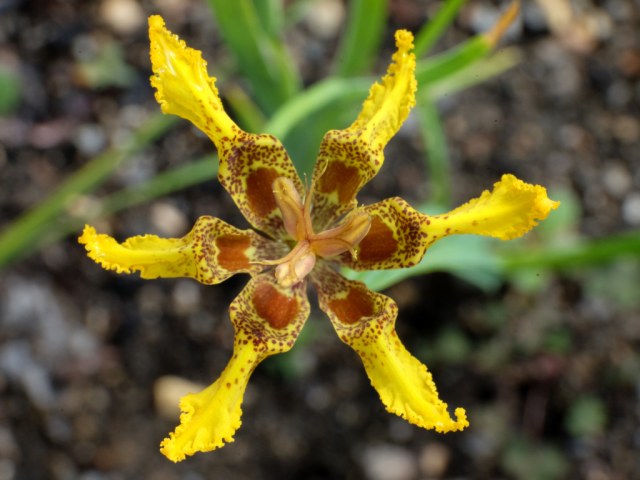
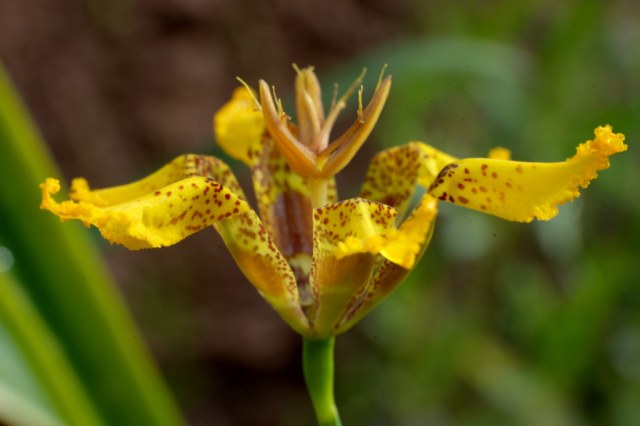
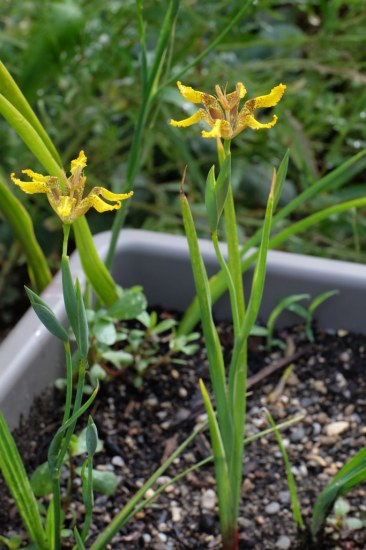
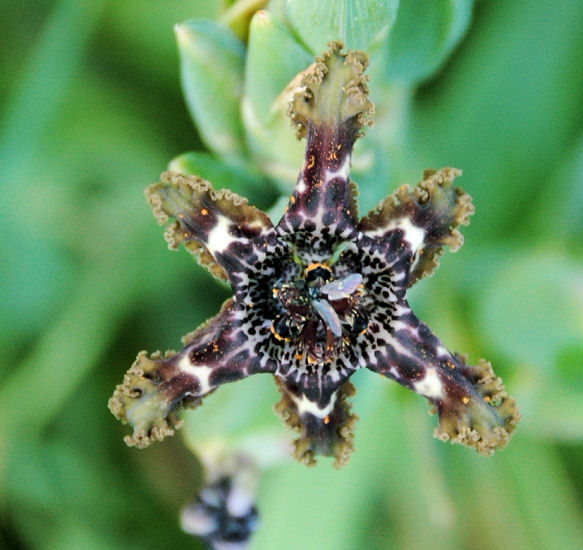
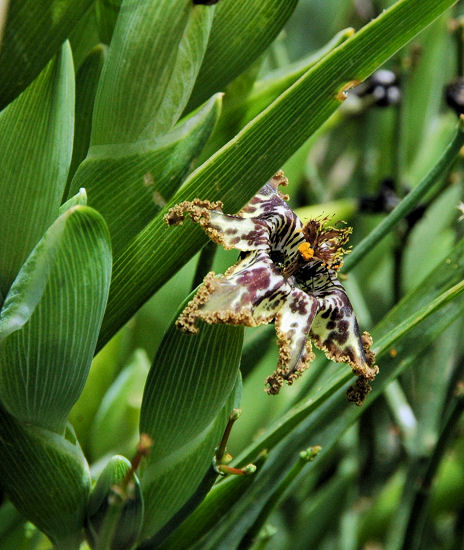
Ferraria Burm. ex Mill. is a genus in the Iridaceae family. It is found in the dry parts of central and southwestern Africa with the center along the southern African western coast. There are currently 18 species, most of which grow in winter rainfall and summer dry climates, with the exception of four species, includingFerraria glutinosa, which is found in southern tropical Africa with a hot, wet summer and a dry, cool winter. This is a genus with long-lived corms that accumulate from year to year in a chain with a usually branched flowering stem and flowers that are symmetric, either lasting for a couple of days or very short lived. The flowers look like mutant starfish. They are generally dull colored (cream, buff or brown) and often bizarrely marked with spots and blotches and sometimes crisped or fringed. Many of them have an unpleasant odor and are pollinated by flies, but a few species are pollinated by wasps. This genus is most closely related to Moraea. The monograph for Ferraria was written by Miriam de Vos, 1979, with a major review by Goldblatt and Manning in 2011. Ferraria was the subject of the PBS list topic of the week in December 2004. An introduction was furnished by John Bryan.
Photos of a shoot of an unidentified species were taken by Christine Doud.
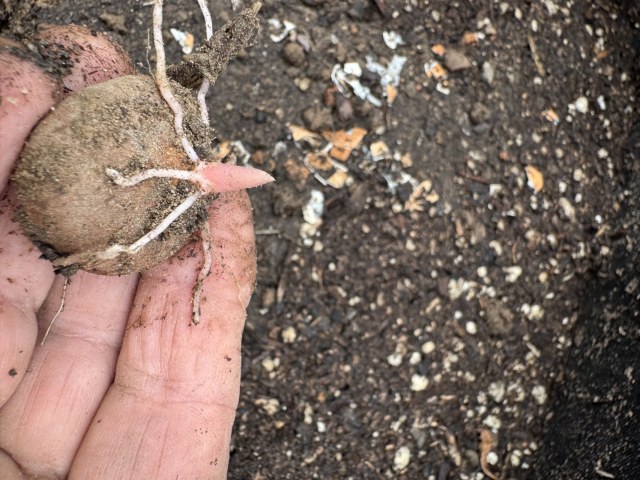
Video from Christine Doud of pollination by flies.
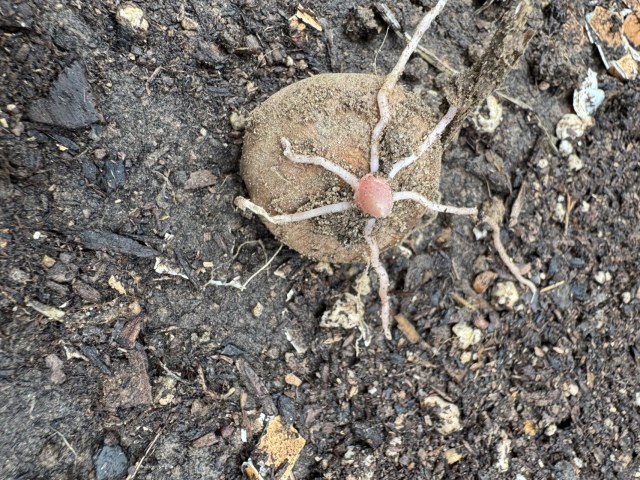
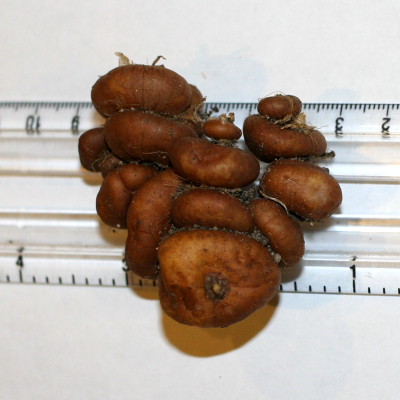
Ferraria crispa Burm. (synonym: F. undulata) is widespread but mostly coastal, found on sandstone or granite rocks from Namaqualand and the northwest Cape to the southwest Cape, the southern Cape and the Little Karoo. It has sword shaped leaves with a prominent midrib and a much branched inflorescence with flowers that can be dark brown, maroon, almost black, cream, or pale yellow, with a variety of stripes, blotches, and speckles. A distinguishing characteristic is the brownish-green crisped margins. Many forms have an unpleasant odor. Height range: 40-100 cm tall. When grown in pots, some selections of F. crispa can multiply rapidly. The offsets remain attached to the parent corm. If left undisturbed for several years, the corms will form bizarre connected piles (below). These corms can all be separated to form new plants, but beware -- it can be very difficult to tell which side is up after the corms are separated. When in doubt, plant them sideways. The first two photos, by Angelo Porcelli, show colour variants in the fringe. The third photo is of a very nice cream-and-chocolate form, originally distributed by the International Bulb Society as "Ferraria #8." The fourth is a plant distributed by the IBS as "Ferraria #7." The last shows corms left in a pot a bit too long. The last three photos by Michael Mace.
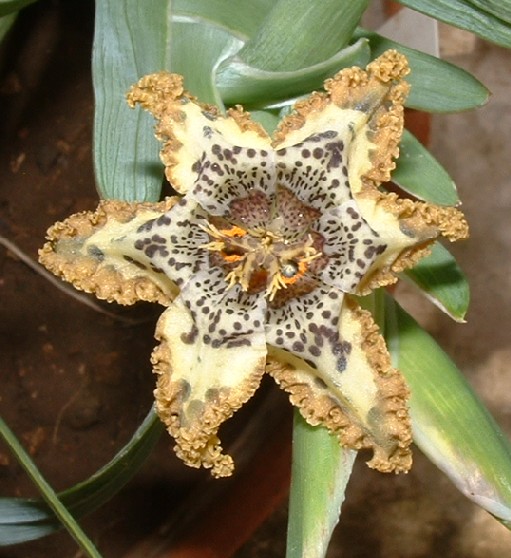

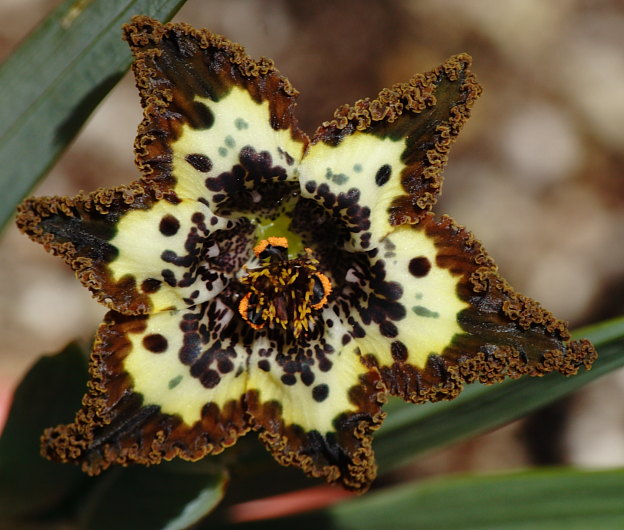
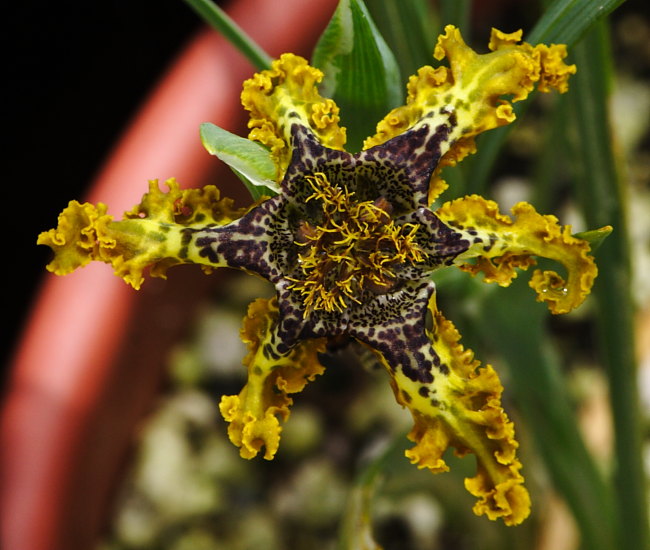
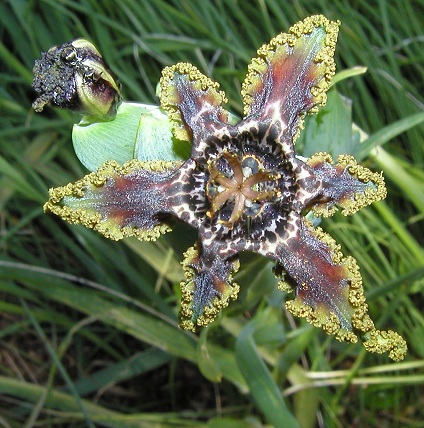
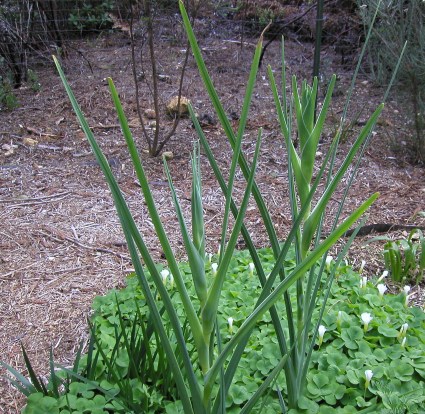
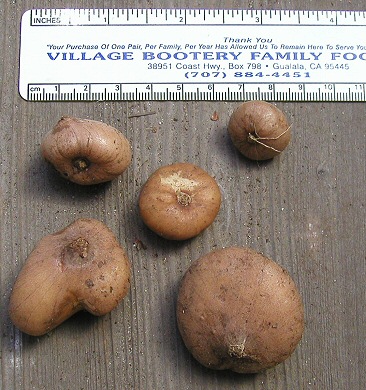
The plant pictured below was grown from seed that was supposed to be F. uncinata but matches F. crispa in its large size and thickened midrib in the leaves. It proved a bit of a thug in a raised bed in Northern California and does not tolerate temperatures much below freezing. It has a long bloom season and an interesting fragrance that is vanilla like even though this species is described as ill scented. One of these pictures shows the flowering stalk in the garden (growing through a ground cover of a white form of Oxalis purpurea) before it flops which it sometimes does and the very unusual and sometimes very large corms. Photos by Bob Rutemoeller and Mary Sue Ittner.
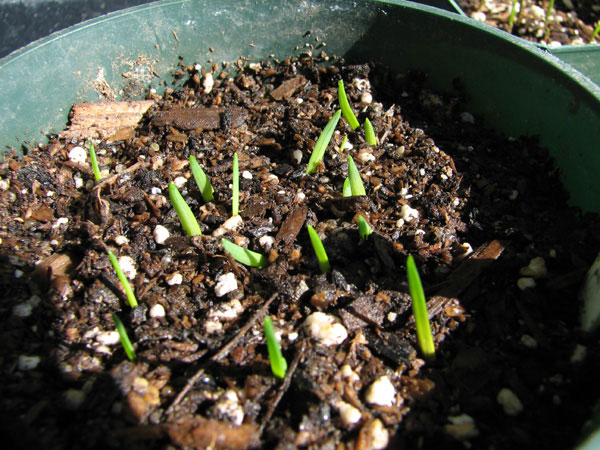
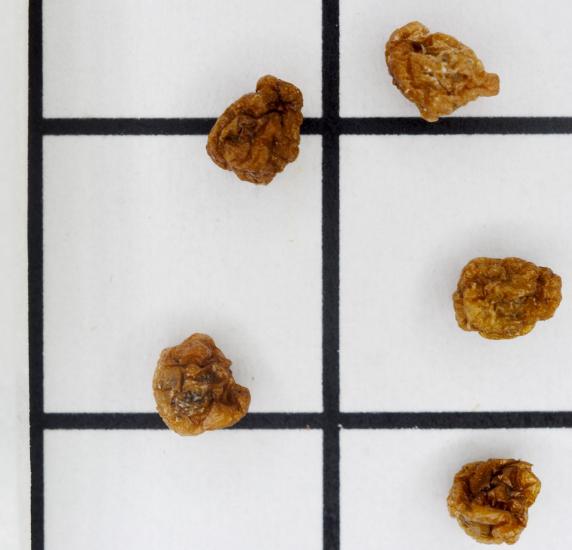
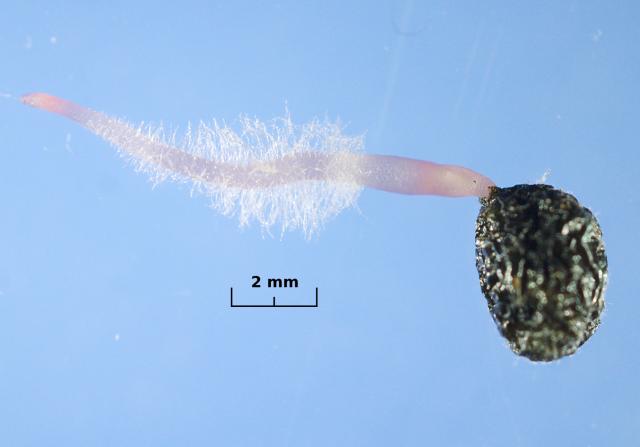
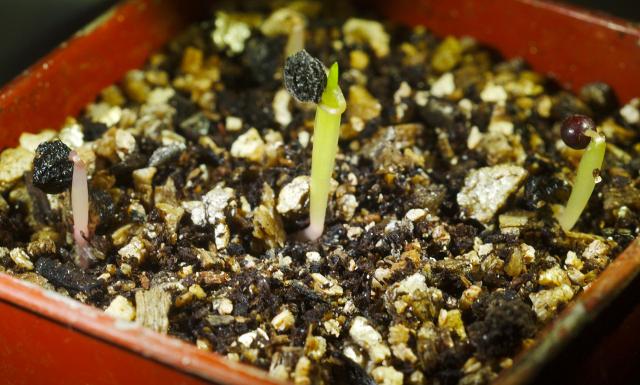
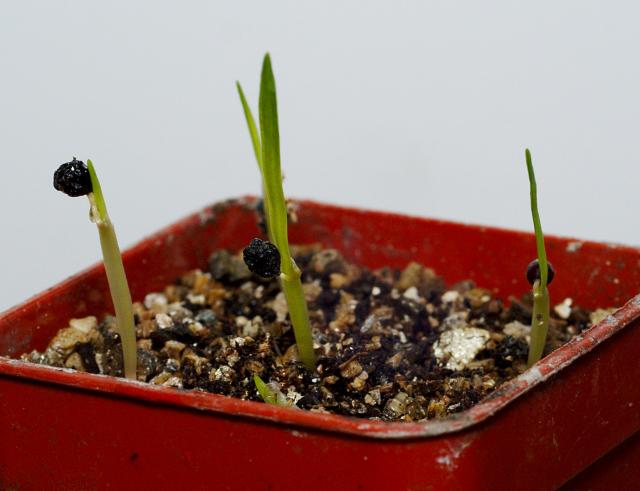
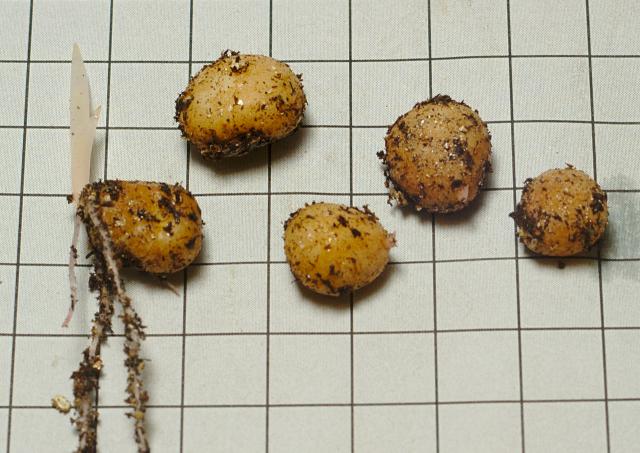
The first photo shows three week old seedlings, grown by Nhu Nguyen. Seeds were sown in mid-February and took about 1.5 months to sprout. The remainder are by David Pilling; photo 2 is of seed; photo 3 shows the same seed germinating. Photos 4 and 5 with a week in between are of seedling development. Photo 6 records the bulbs produced beginning their second year after dormancy. The grid in photos 2 and 6 has a 10 mm spacing.
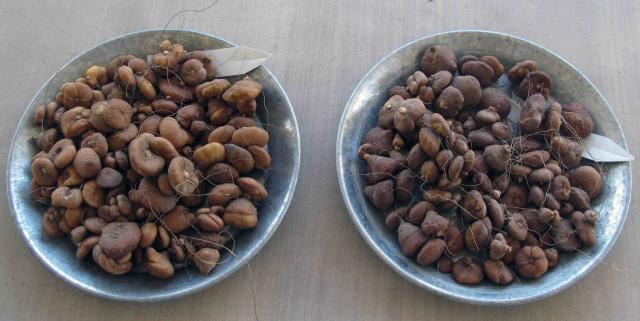
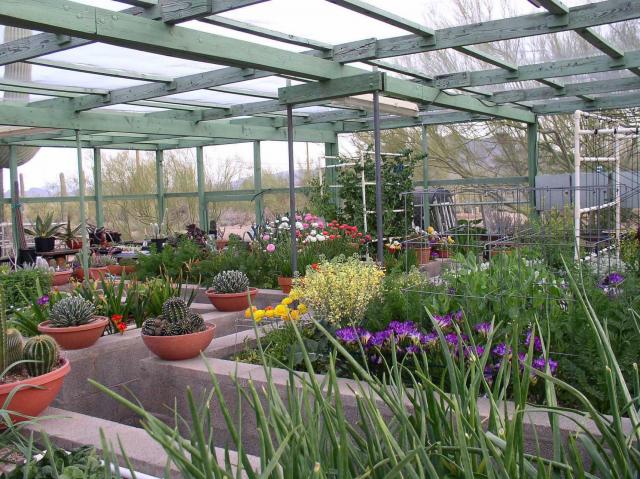
Pamela Slate says 'I decided in 2010 to "field grow" all my Ferrarias in my tall, large concrete block planters. The yellow form increased from six corms to well over a hundred. Not sure how many of the regular F. crispa form I planted in 2010 but it wasn't many and the same thing happened'. Conditions were rich soil, regular autowater, and a dry dormancy except for rain. Photograph 1 by Pamela Slate showing resulting bulbs in 2014, the left hand dish contains the yellow form and the right hand dish the regular form; the dishes are 12 inches in diameter. Photo 2 shows the concrete raised planters; they're filled with a mix of sandy loam, compost and pumice and are 25" tall. Photo 3 shows the yellow form.
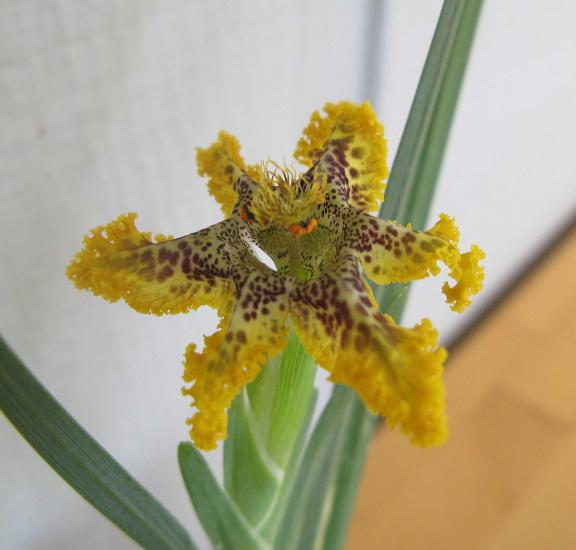
Ferraria crispa ssp. crispa Burm. has larger flowers than the other subspecies and is found in the southern and eastern range of the species (south of Saldanha Bay). It flowers September to October. The first four photos from Cameron McMaster show plants growing in habitat near Agulhas in the Overberg in view of the ocean and near Velddrift in the west coast of the Western Cape. The last two photos were taken near Tulbagh by Bob Rutemoeller show a very dark form.
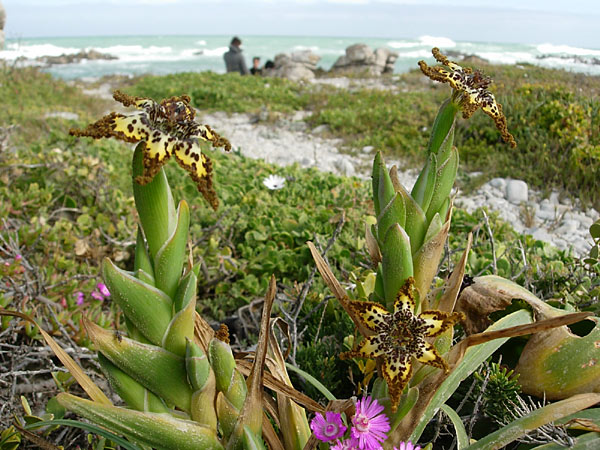
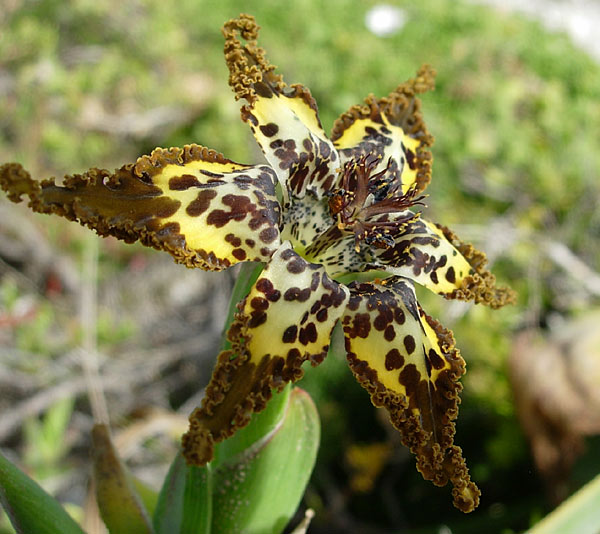
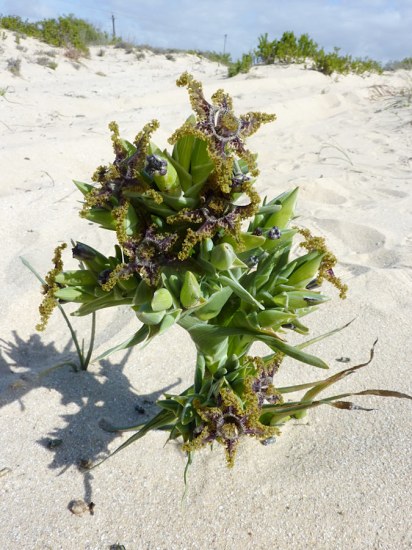
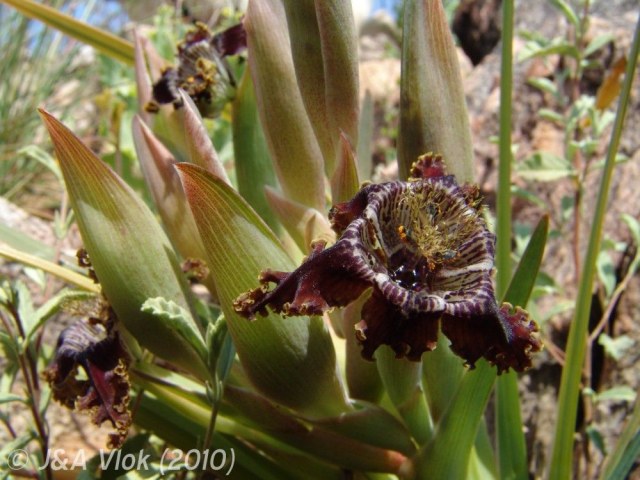
The first four habitat pictures were taken by Bob Rutemoeller and Mary Sue Ittner September 2006 and show variations in the flowers of some seen along the path that goes around Lion’s Head at Table Mountain National Park. One of the flowers is being visited by a fly. The last photo from the book Plants of the Klein Karoo courtesy of Jan and Anne Lise Schutte-Vlok.
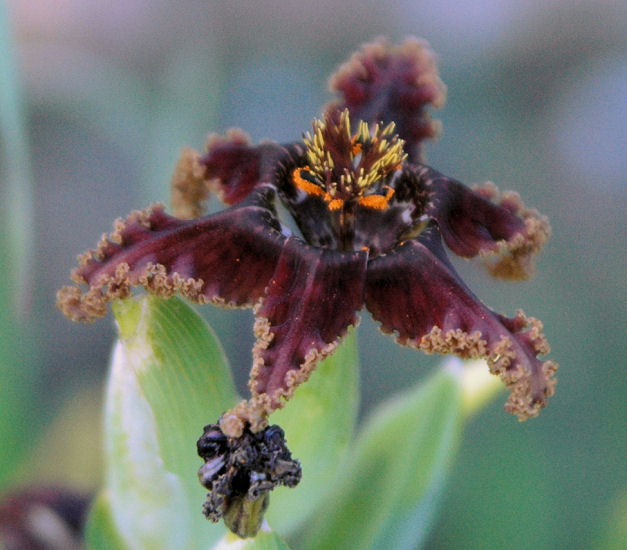

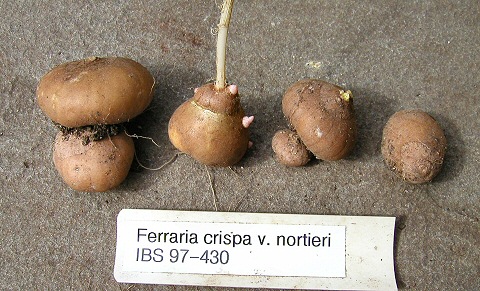
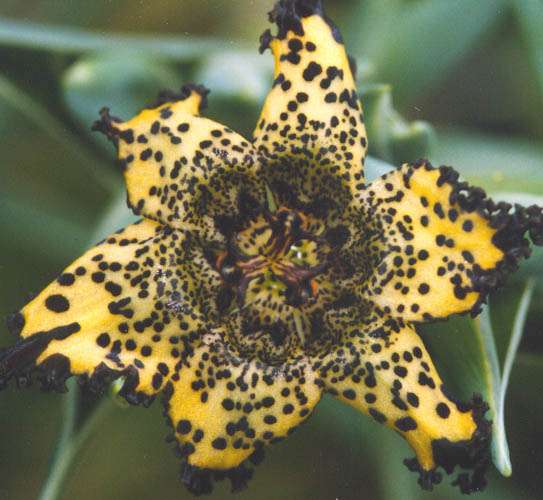
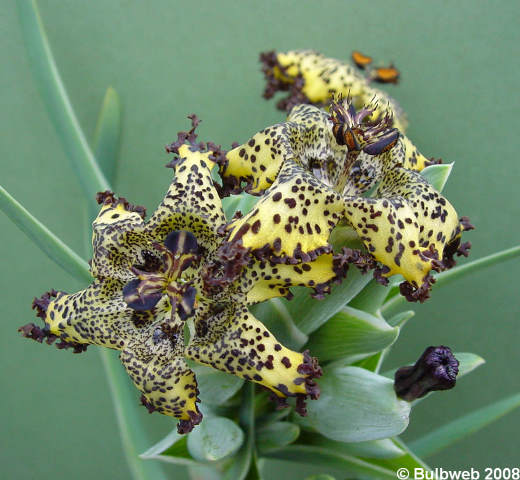
Ferraria crispa Burm. ssp. nortieri M.P.de Vos as 'nortierii' flowers earlier than subspecies crispa (July to September) and is found on the northern border of the range in the Clanwilliam district where it is found in sandy soil usually amongst rocks. It has yellow flowers with dark brown margins, spots, and blotches. It has been easy to flower from seed in Northern California. Photos by Bob Rutemoeller and Mary Sue Ittner of the flowers and the corms which are sometimes layered and may even grow better if not separated.
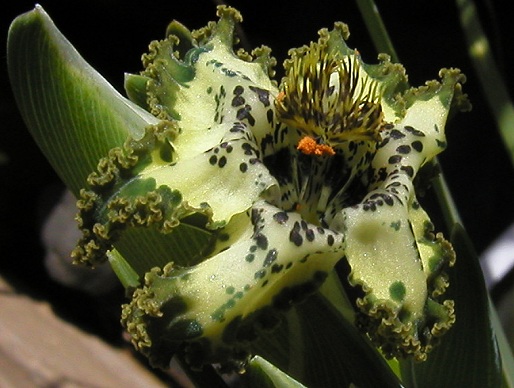
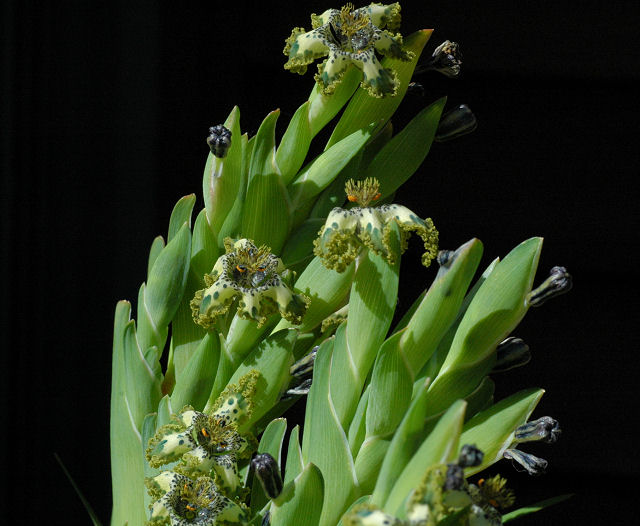
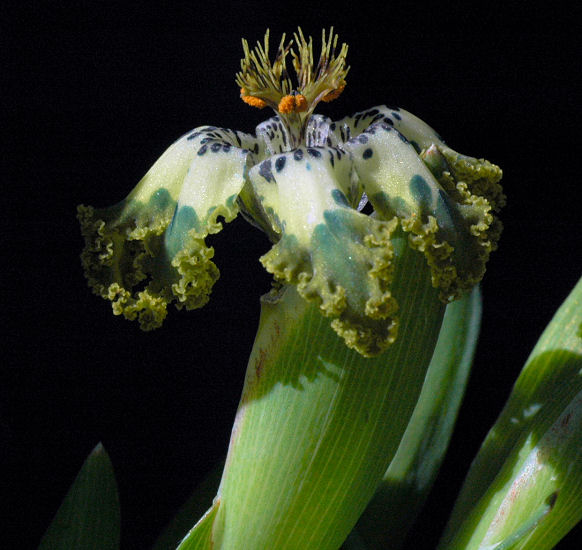
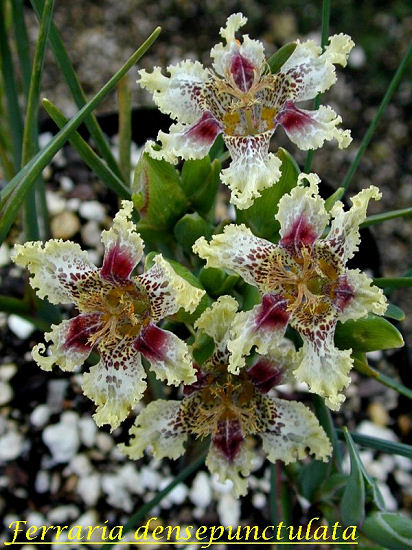
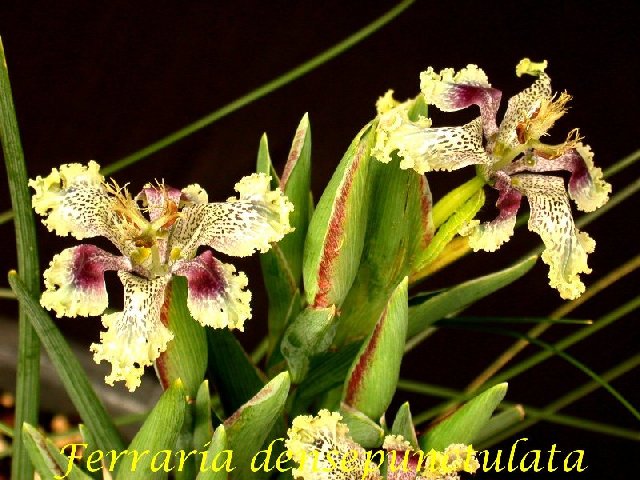
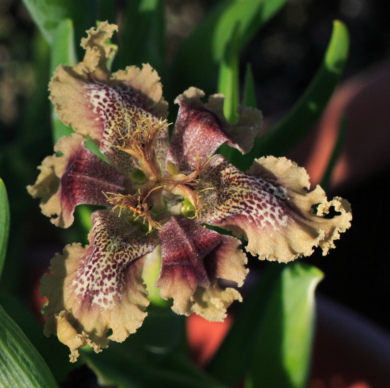
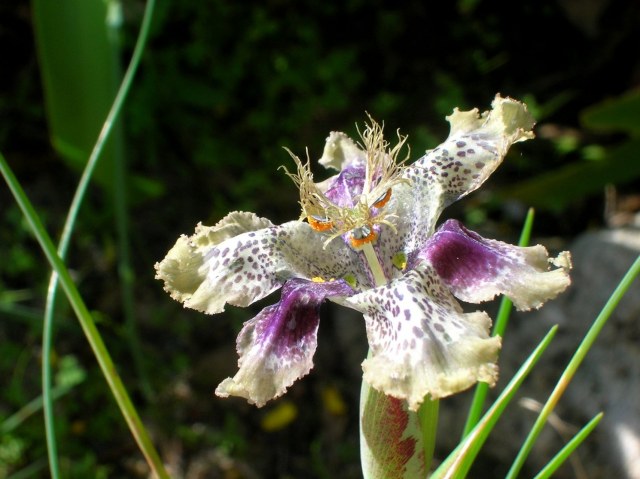
Ferraria densepunctulata M.P.de Vos is found on rocky sites, mostly coastal, in the northwestern and southwestern Cape. It has pale greenish grey flowers with crisped edges spotted with maroon or purple dots and narrow cylindrical lower green leaves. From a distance, the flowers are dull-looking, but are densely patterned and freckled when examined up close. Height 12-35 cm high. It is an early bloomer, blooming May to July in South Africa (late autumn to winter). It is easy to grow in California and is unharmed by light frosts. The first photo by Jennifer Hildebrand shows a plant purchased from Jim Duggan growing and increasing in a container in Riverside, CA. The next two photos were taken by Bill Dijk. The fourth photo was taken by Michael Mace. The last photo was taken by Alan Horstmann.
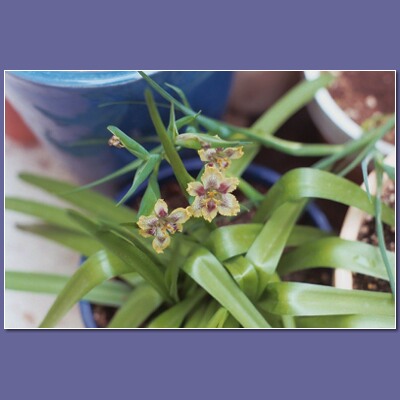
Ferraria divaricata Sweet was changed in 2005 by Manning and Goldblatt, separating the previous four taxa described by Miriam P. de Vos to two species with a new species Ferraria variabilis named. They are not distinguishing between the subspecies. Previous taxa, Ferraria divaricata subsp. arenosa M.P.de Vos was retained in this species and Ferraria divaricata subsp. aurea became a synonym for Ferraria flava. Plants grow to 45 cm and have a well-developed aerial stem which is usually extensively branched in the upper half. Flowers last only one day and are brown to maroon with lighter brown margins or golden brown with darker margins. The claws are broad forming a wide cup. This species is found in deep sands from Namaqualand to Langebaan in the southwestern Cape. Photos taken by Andrew Harvie near Langebaan.
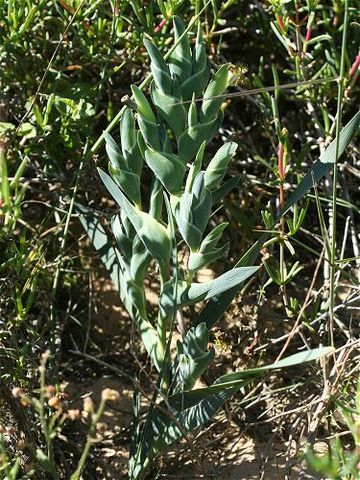

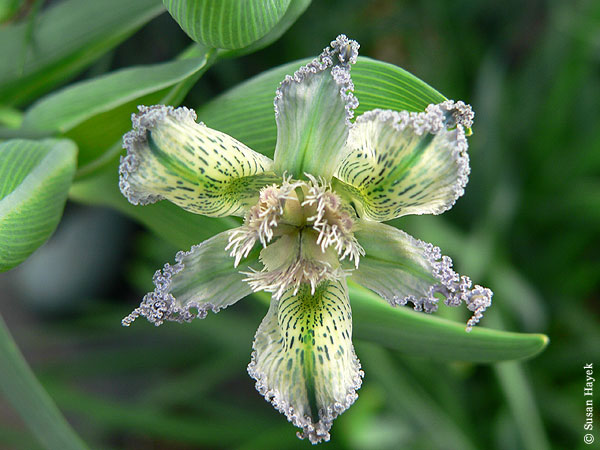
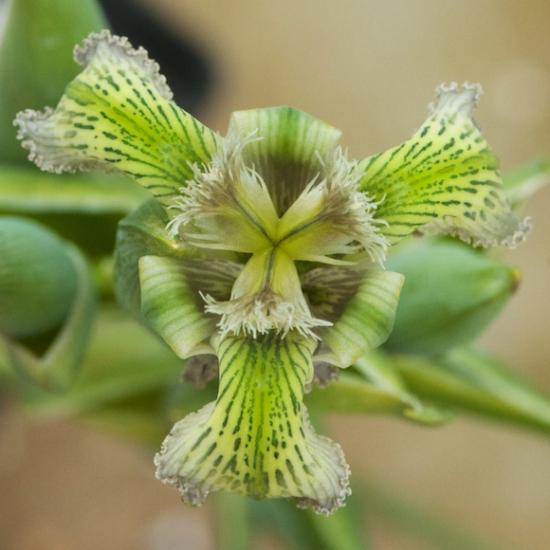
Ferraria ferrariola (Jacquin) Willdenow is found growing in deep sand on the western coast of South Africa. It has greenish-white, or pale greenish-yellow to greenish-blue flowers with the outer segments finely striped with short dark lines. Other distinguishing characteristics are a stem not covered with leaf sheaths and red or purple spotted basal leaf sheaths. It is sweetly scented. Height range: 15-60 cm. The first three photos were taken by Arnold Trachtenberg, the fourth by Doug Westfall in Southern California, the fifth by Susan Hayek for Diana Chapman, and the sixth by Audrey Cain. The final two photos are by John Willis.
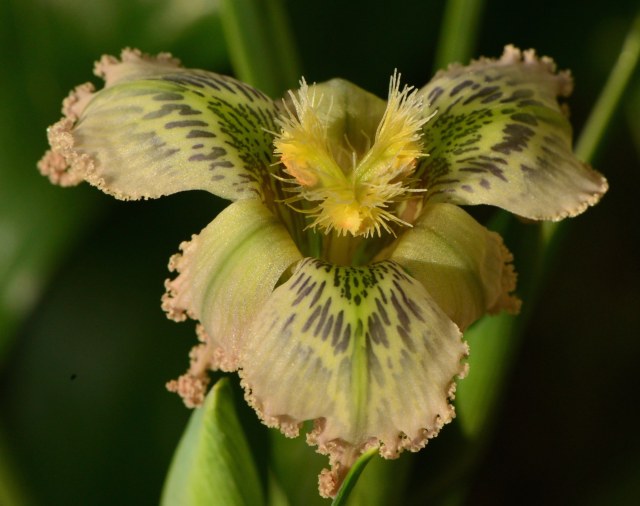
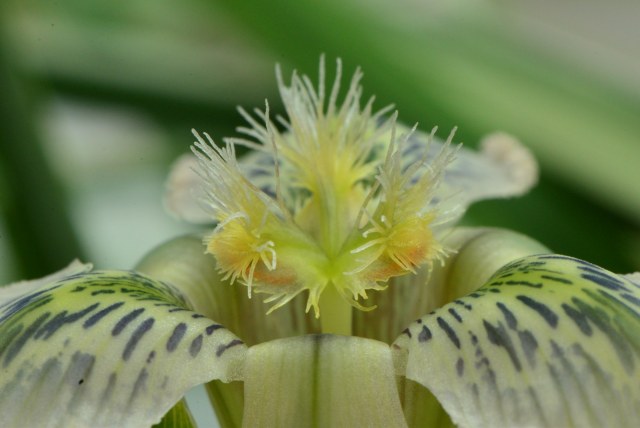
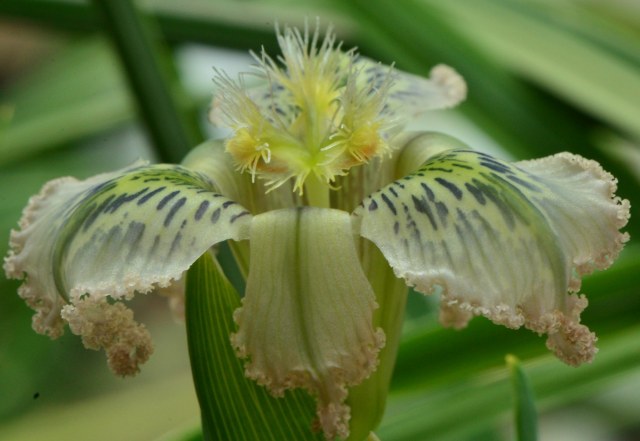
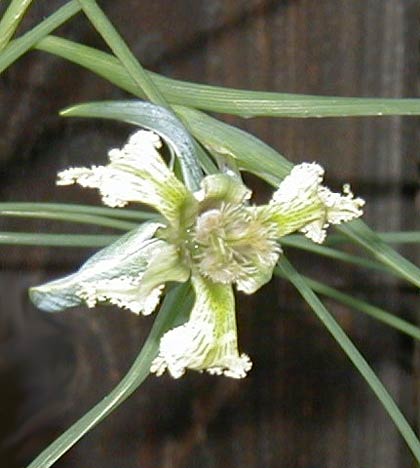


Ferraria flava Goldblatt & J.C.Manning (published in 2011), syn. Ferraria divaricata ssp. aurea M.P.de Vos, is a rare species, known from only eight locations distributed in the sandveld in coastal areas from Namaqualand to the Western Cape (Lamberts Bay and Klawer), South Africa. Height: to 45 cm. Photo from iNaturalist taken by Nick Helme in the sandveld west of Garies in August and shared under a CC BY-SA license.
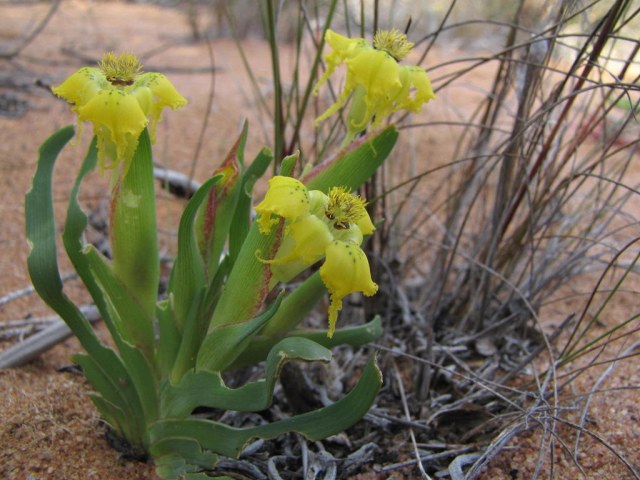
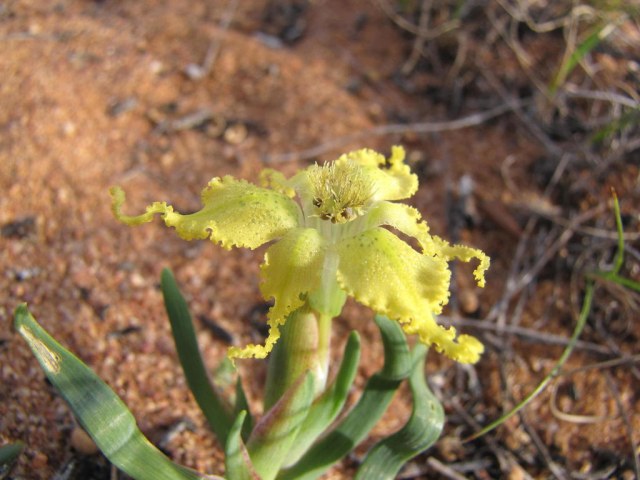
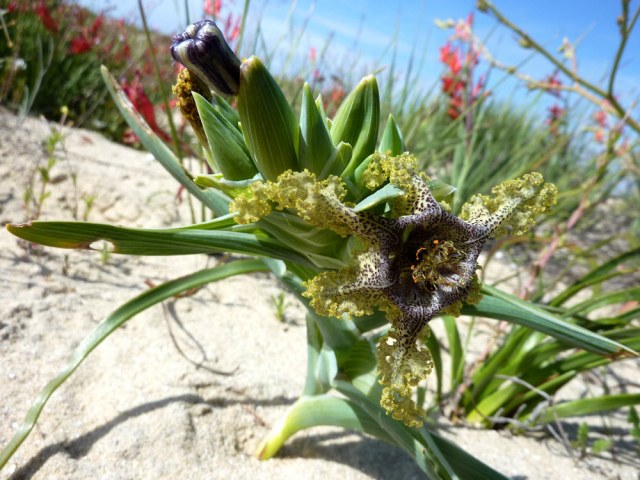
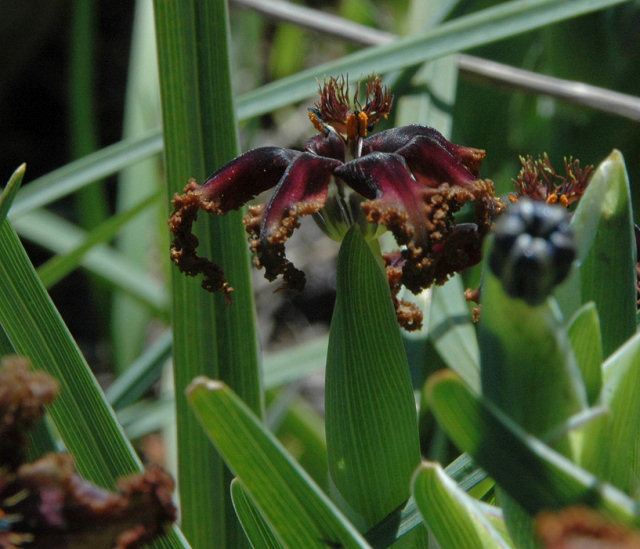
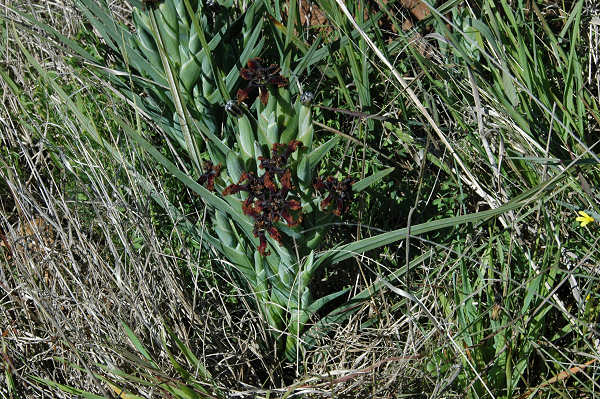
Ferraria foliosa G.J. Lewis grows in deep sand on the western coast of the Western Cape (from Namaqualand to Elands Bay). It grows from 40 to 100 cm tall and has spirally two ranked sword-shaped leaves. Flowers are brown and speckled with maroon, purple or dark brown tepals and parallel anthers. This species blooms August to October. Its blue-green foliage is significantly different to Ferraria crispa which has looser fan-like foliage (see last photo of plant). Photographs by David Retief, taken around Redelingshuys.
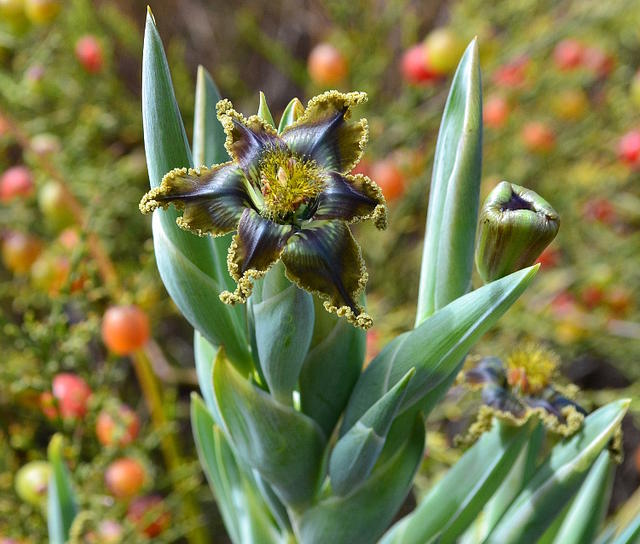
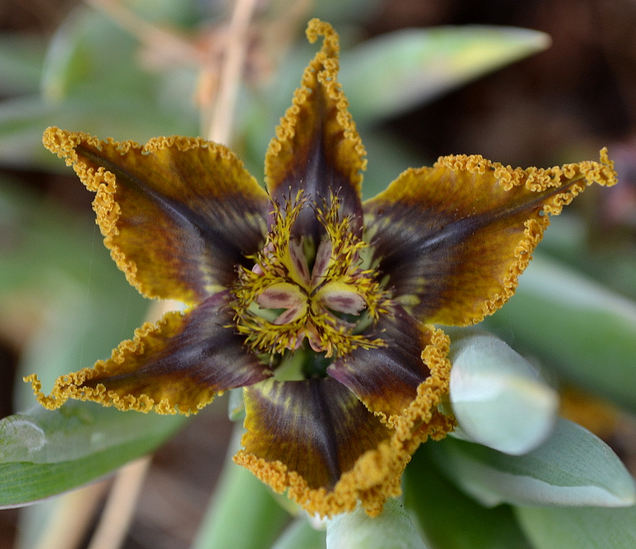

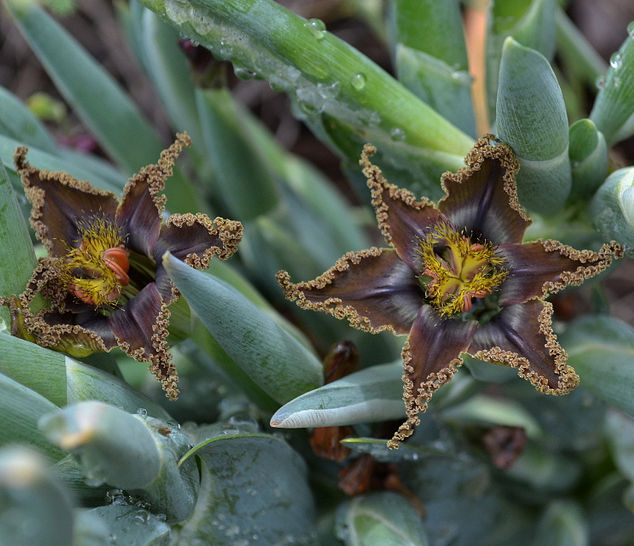
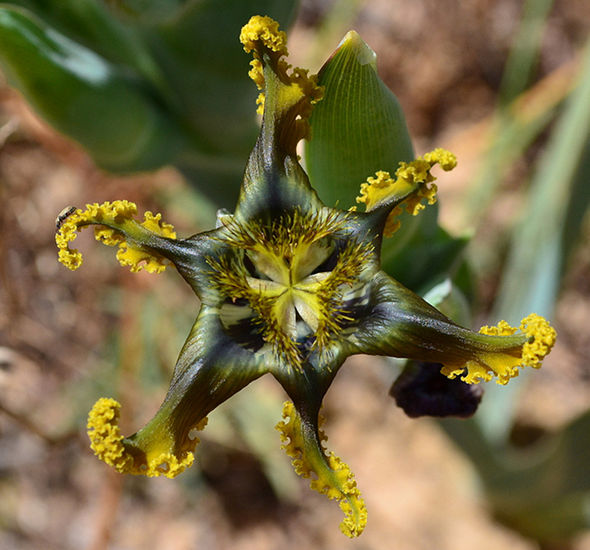
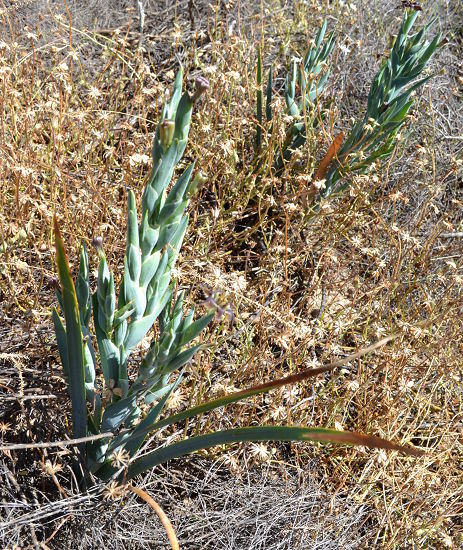
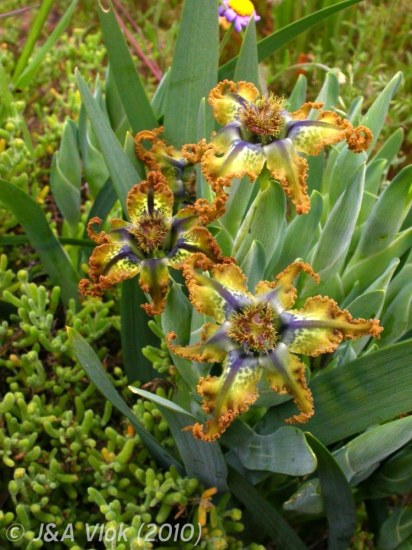
Ferraria macrochlamys (Baker) Goldblatt & J.C.Manning, syn. Ferraria uncinata ssp. macrochlamys was elevated to species status in 2004 by Peter Goldblatt and John C. Manning. This species is endemic to Namaqualand where it is found from Springbok to Garies. It has pale yellow flowers, often with slightly darker yellow margins and bluish-green spots or a pale green median zone above the claws. It has distinctive leaves that are spreading, somewhat falcate, generally with strong, crisped or wavy margins. Height range: 30-45 cm. Photos 1-4 taken by Bob Rutemoeller and Mary Sue Ittner in Namaqua National Park September 2006 and 5-6 by Andrew Harvie in the Kamiesberg.
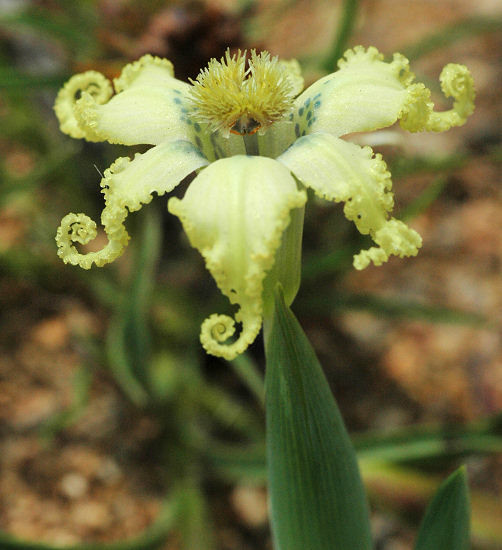
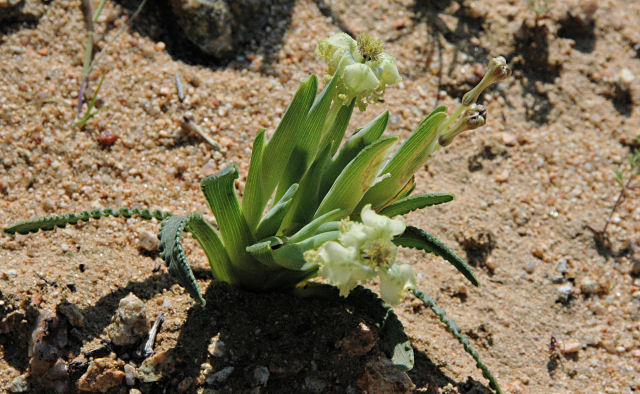
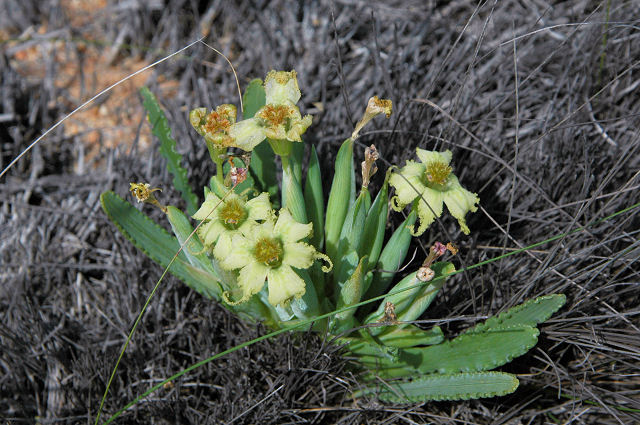
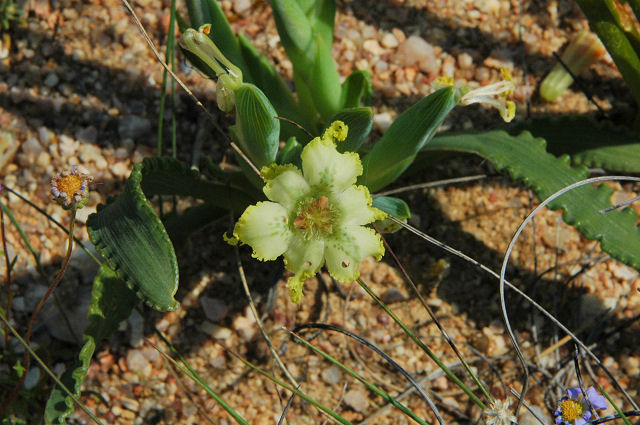
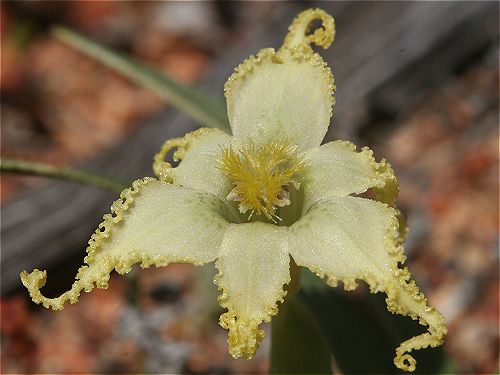
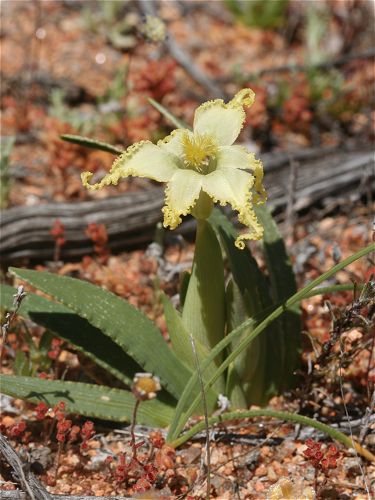
Ferraria ovata (Thunb.) Goldblatt & J.C.Manning is a rare species known from only a few sites in Namaqualand where it grows on granite outcrops. Growing from 12-35 cm, it has cream-colored flowers with rounded tepals, bordered and spotted in brown. It was originally classified in 1800 as Moraea ovata Thunb., but when rediscovered in 1999 was found to be a Ferraria. The species was finally properly described 200 years after its initial discovery. The first photo from iNaturalist was taken by Nick Helme in July and shared under a CC BY-SA license. The second photo from flo_rent taken August 2018, also from iNaturalist shared under a CC BY-NC license, may also be this species. In 2025 there are no photos of the flowers of this plant known as the Lost Spiderlily on iNaturalist.


Ferraria schaeferi Dinter is found in the arid winter rainfall region from northern Namaqualand to southern Namibia. It has sweetly scented short lived yellow flowers with dark brown spots and blotches and crisped brown margins. Height range: 20-50 cm. Photos by Audrey Cain.
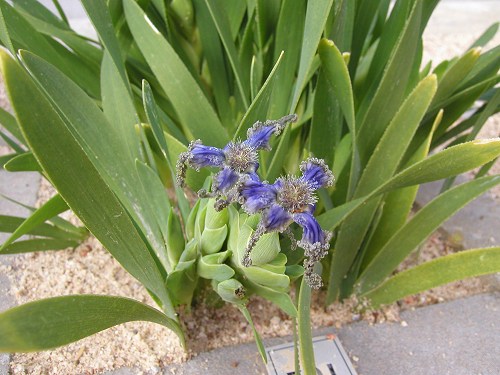
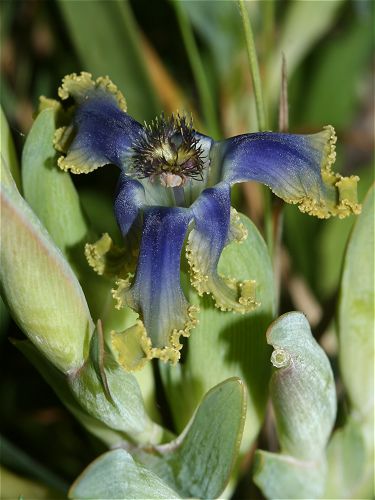
Ferraria uncinata Sweet is found on sandstone slopes and rock outcrops in the northwest and southwest Cape. It has blue to violet flowers with brown markings and finely crisped and toothed greenish-yellow margins. Height range: 10-40 cm tall. It flowers August to September. Photos 1-2 below taken by Bob Rutemoeller and Mary Sue Ittner are of plants happily growing in one of the sections of the elevated raised beds in the Karoo Desert NBG in South Africa where it has a deep root run. The last photos was taken by Andrew Harvie in habitat near Mamre on the West Coast.

Ferraria variabilis Goldblatt & J.C.Manning was named in 2005 as a new species to include two previous taxa of Ferraria divaricata, Ferraria divaricata subsp. australis and Ferraria divaricata subsp. divaricata. This species is found on sandy and shale flats and rock outcrops from Namibia to the southern Cape and the Little Karoo. It is 6 to 20 cm tall, often branched just above the base. Leaves are sword shaped to linear, crowded basally, usually without midribs. Flowers last two to three days and are mostly pale to dull yellow to pale to middle brown or dull grey-blue. The limbs are dark brown to blackish purple at the base with scattered dark spots and darker or lighter margins. The claws are pale or dark streaked and the cup is 12 to 15 mm deep and usually slightly putrid smelling. The nectaries are basal and dark colored. The first three photos below were taken by Mary Sue Ittner and Cameron McMaster between Matjiesfontein and the Komsberg in the Roggeveld. The fourth picture was taken near Villiersdorp August 2006 by Mary Sue Ittner. The last photo was taken by Pamela Slate of plants offered from BX 185 that were originally grown from seed labeled Ferraria divaricata. Mary Sue Ittner was unable to get her plants to bloom in Northern California so offered them to the BX in October 2008. They bloomed for the first time for Pamela (in warmer Arizona) in April 2011.

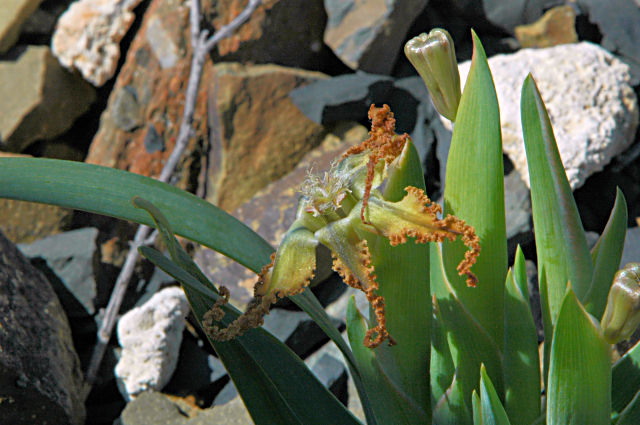
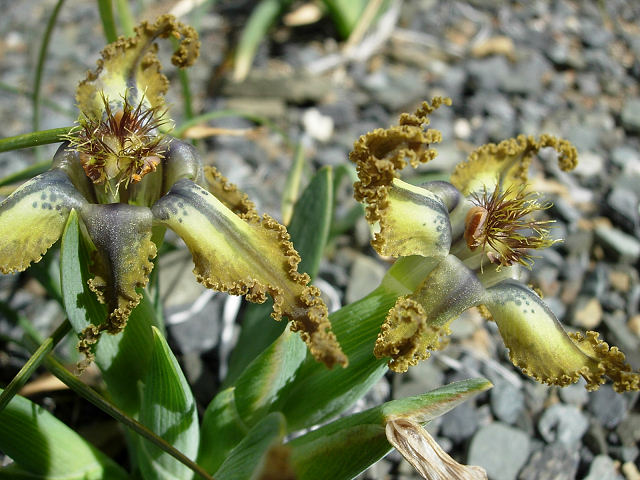
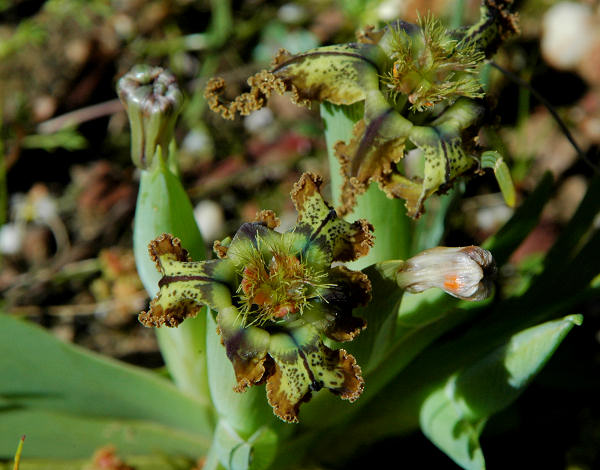
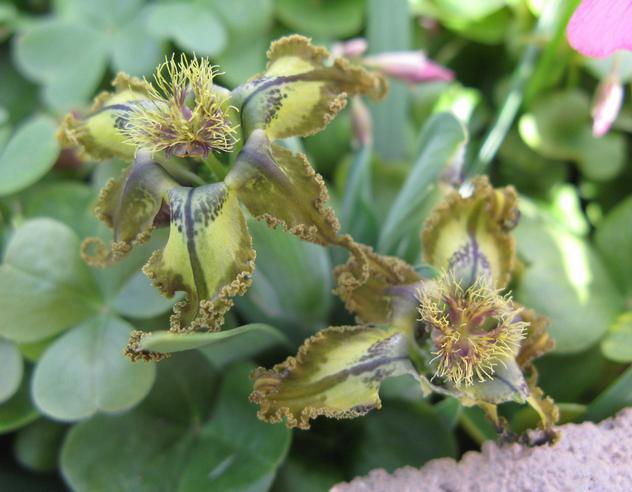
The first two photos below were taken by Bob Rutemoeller at the Karoo Desert NBG in South Africa in 2003. The third picture was taken by Alan Horstmann. The fourth picture was taken by Rod Saunders. The last photo from the book Plants of the Klein Karoo courtesy of Jan and Anne Lise Schutte-Vlok.
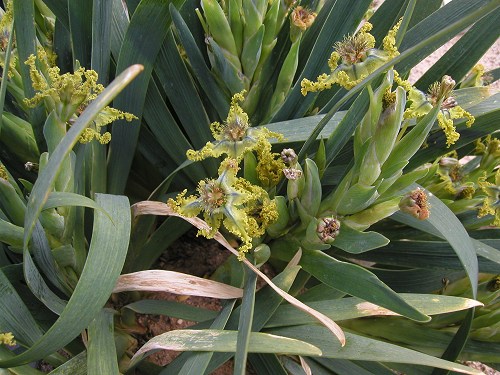
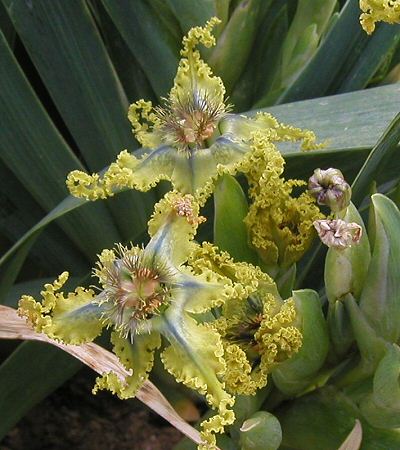
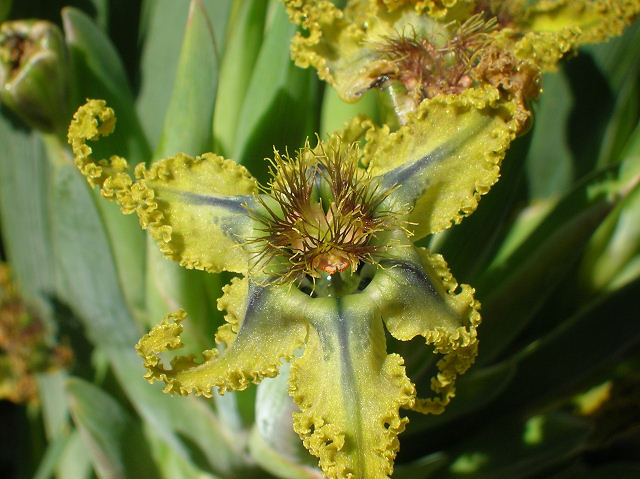
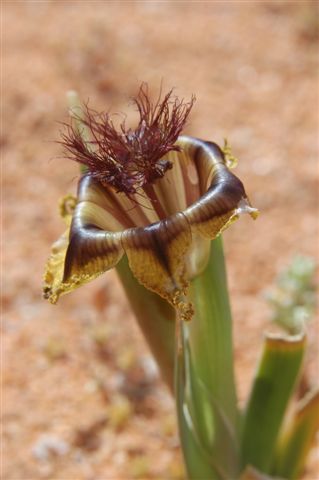
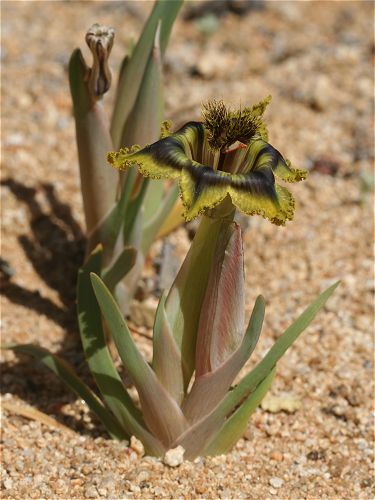
Namaqualand photos 1-2 taken near Springbok by Andrew Harvie. Photos 3-4 taken by Cameron McMaster near Knersvlakte September 2011.


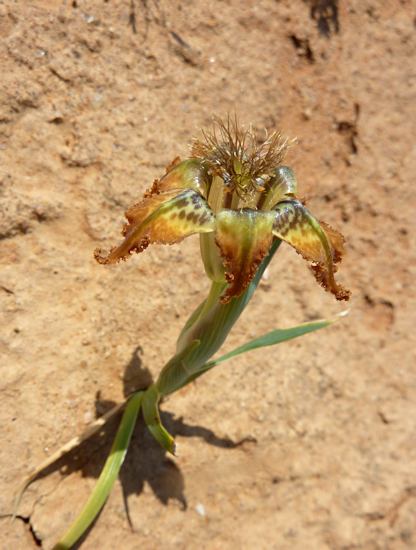
Photos taken near Nieuwoudtville by Andrew Harvie.
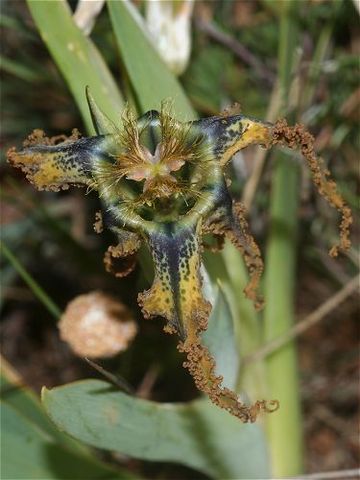

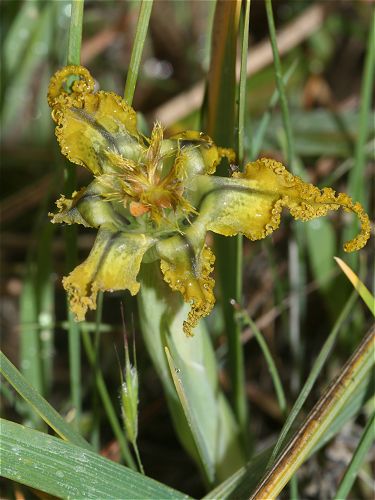
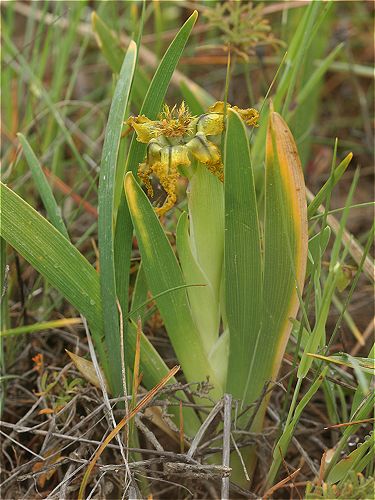
Ferraria welwitschii Baker is a species of the tropical, summer-flowering Glutinosae subspecies occurring in a vast area including Angola, Zambia, southern Congo and Zimbabwe on the margins of open woodland. Its open branching pattern is more reminiscent of a Cypella than of the winter growing Ferrarias. The pictures show a plant in cultivation by Martin Bohnet in southern Germany, where it needs full sun to flower. He grows them as container plant but lifts them to store completely dry in winter. The yellow, spidery flowers are produced in early summer, last one day and produce glittering nectar on the inner dark area of the flower which attracts flies and wasps in Europe.