The genus Moraea can be divided into five groups: Galaxia, Gynandriris, Hexaglottis, Homeria, and Moraea.
Moraea group species u-z are found on this wiki page. More information can be learned from Peter Goldblatt's book on Moraeas.
The other species in the Moraea group are listed alphabetically on these wiki pages: Moraea group a - Moraea group b - Moraea group c-e - Moraea group f - Moraea group g-i - Moraea group j-m - Moraea group n-r - Moraea group s - Moraea group t
Moraea index lists all the species in all five groups alphabetically.
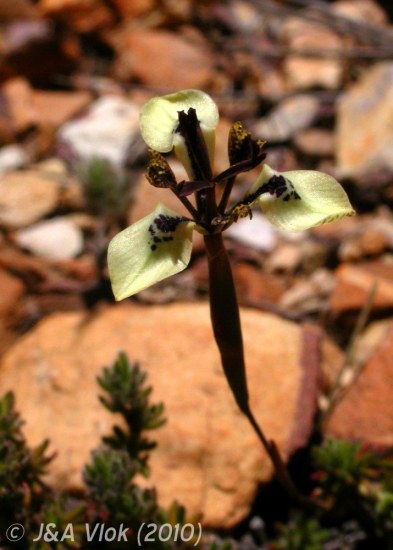
Moraea unguiculata Ker Gawl. is found on shale slopes in the winter rainfall area. Its range extends into the Eastern Cape where it occurs in drier open thicket environments and Karoo hills. The flower on this one is smaller than many of the others pictured on this page. Height range: 20-50 cm. Photos below by Bob Rutemoeller, Bob Werra, and Dirk Wallace show this plant in cultivation.
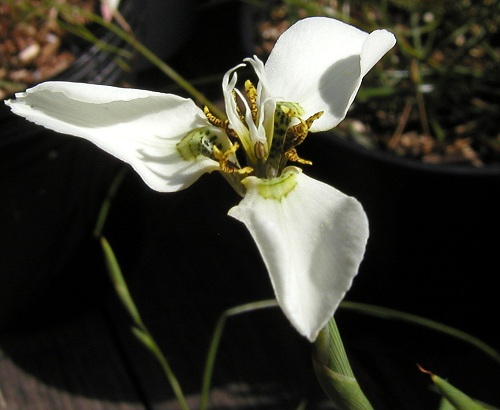
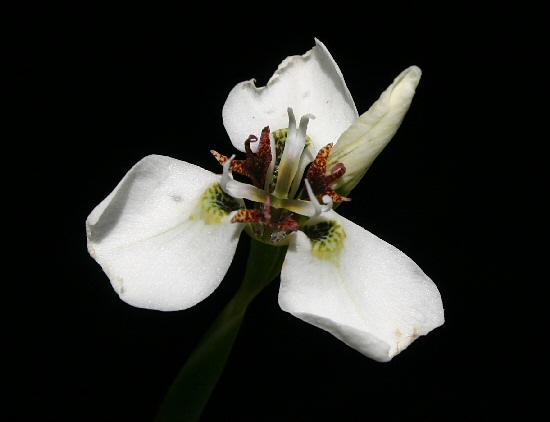
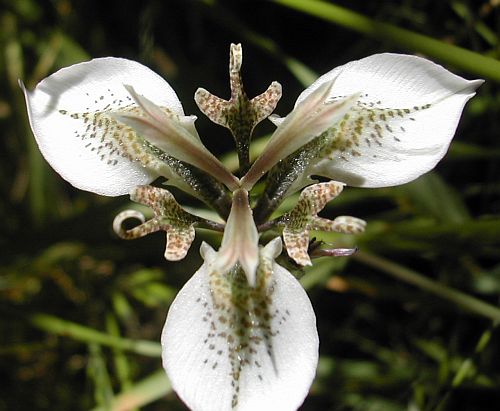
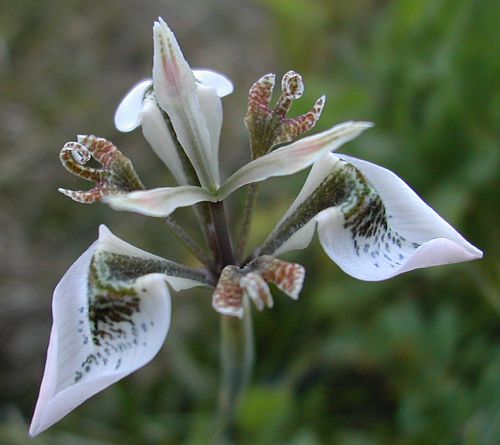
The first five photos below from Cameron McMaster show some of the variation. Photos 3-4 were taken in Napier and near Swellendam in the Overberg. Photo 5 taken September 2011 near Kamieskroon in Namaqualand. The last photo from the book Plants of the Klein Karoo courtesy of J and A Vlok.
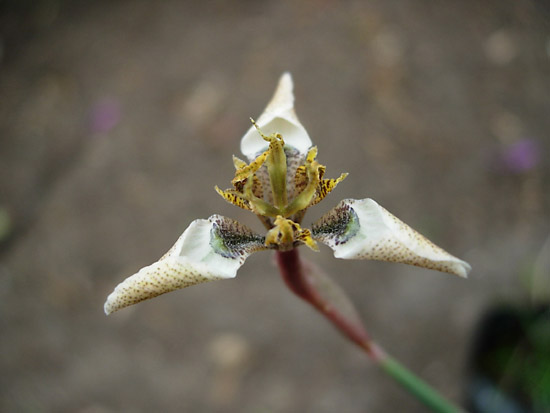
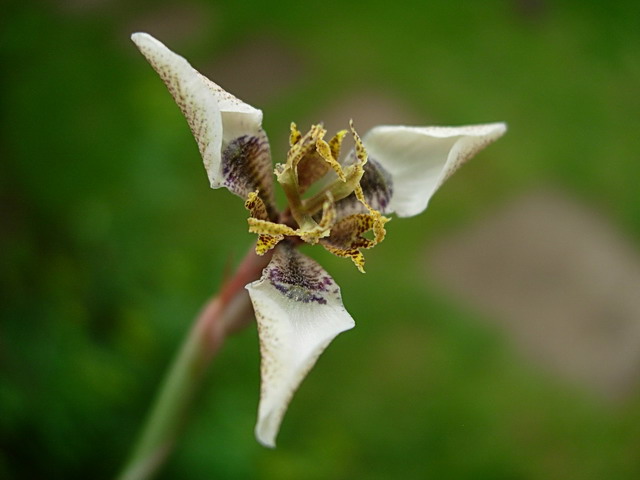
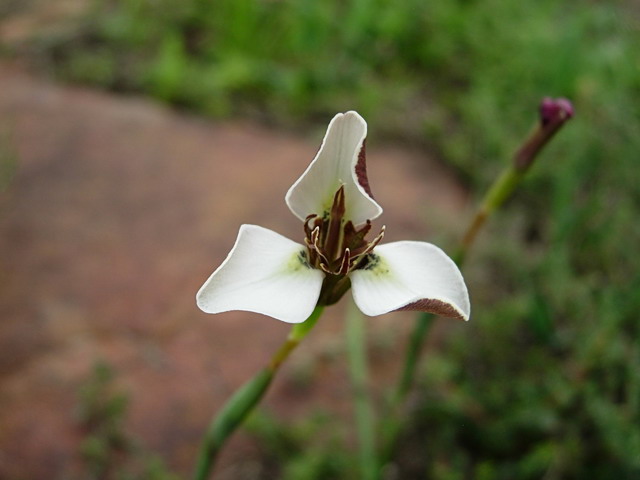

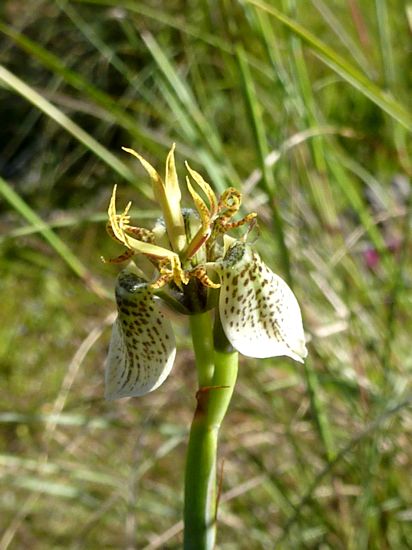
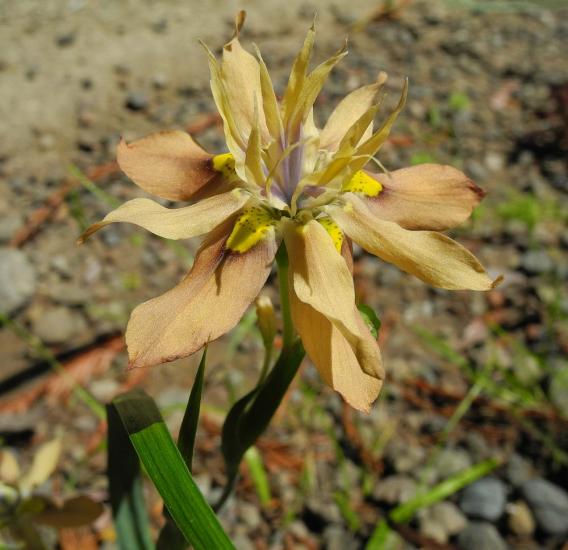
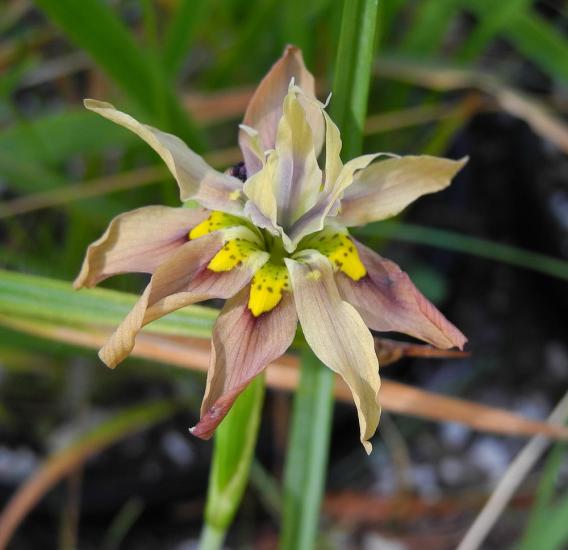
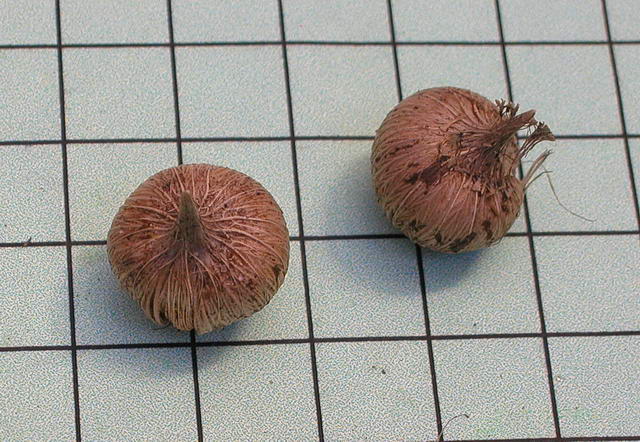
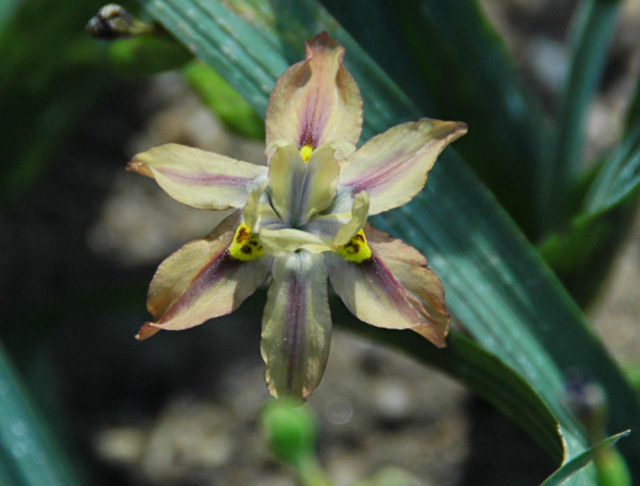
Moraea vegeta L. is a short species (15 to 30 cm) from the southwestern Cape where it is found on damp clay or granite slopes and flats. It has a minutely hairy stem and three or four linear-lanceolate channeled bluish-green leaves and buff to dull purple-brown short lived flowers with yellow nectar guides. Flowering takes place between September and October. It can be grown in the ground in Northern California and often increases to a large patch in conditions where it is happy. Photos from Mary Sue Ittner and Bob Rutemoeller. The second shows it growing in our driveway. There is variation in color and in at least two different years a flower with more than usual tepals. The last photo shows the corms on a 1 cm grid.
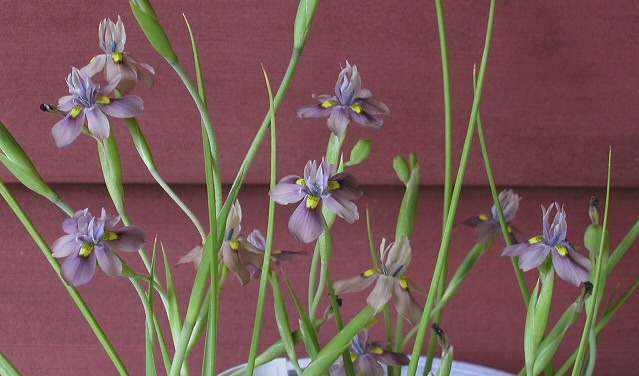

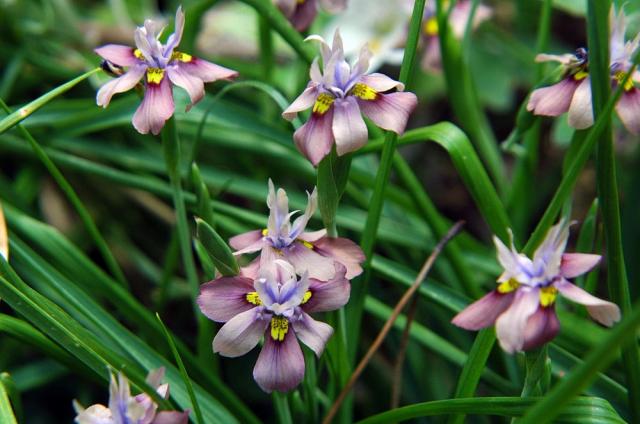
The first photo below was taken by Alan Horstmann. The second photo was taken by Arnold Trachtenberg. It was growing at Wave Hill and labeled Moraea gawleri but we think it is instead Moraea vegeta which has more and wider leaves (hence the name) and less colorful flowers. Moraea gawleri has a smoother stem, but the photo doesn't illustrate this.
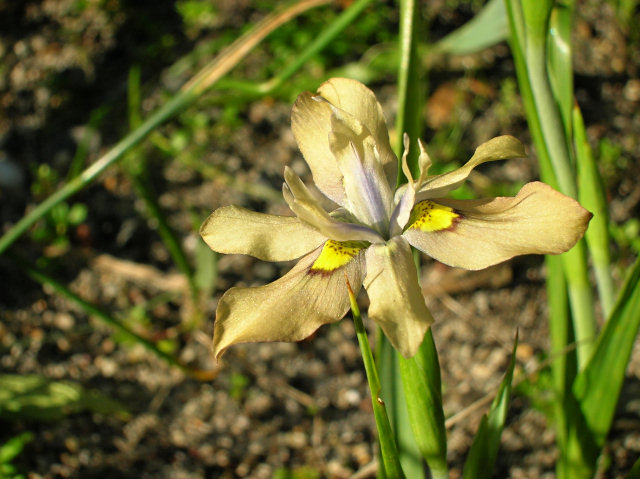
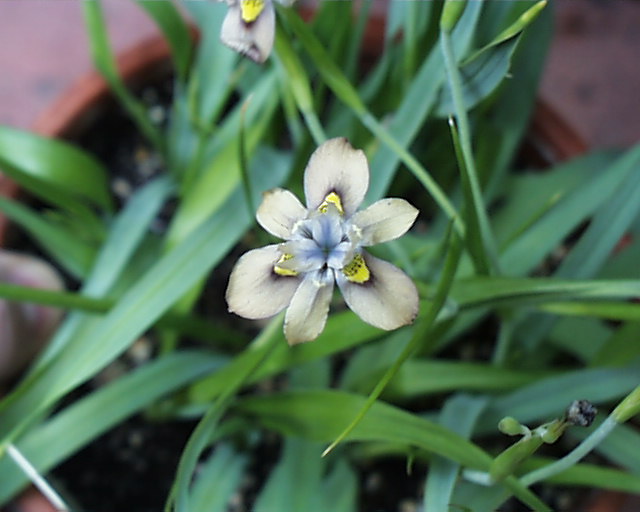
Flowering on Lions Head in the southwestern Cape, September 2006. Photos by Mary Sue Ittner and Bob Rutemoeller.

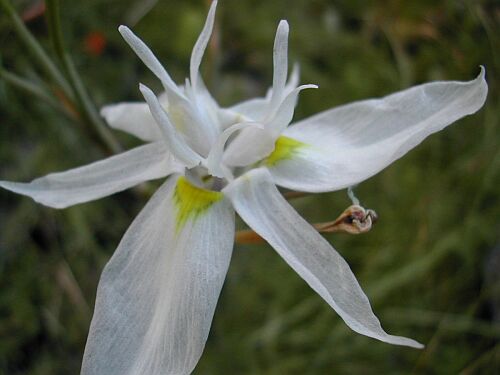
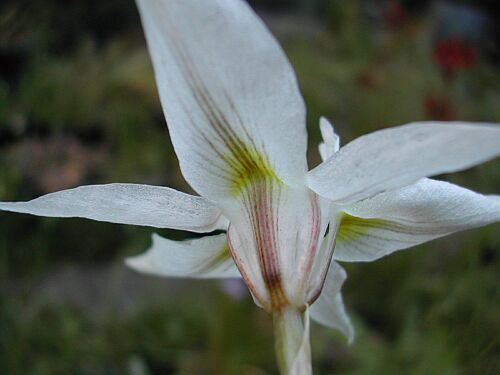
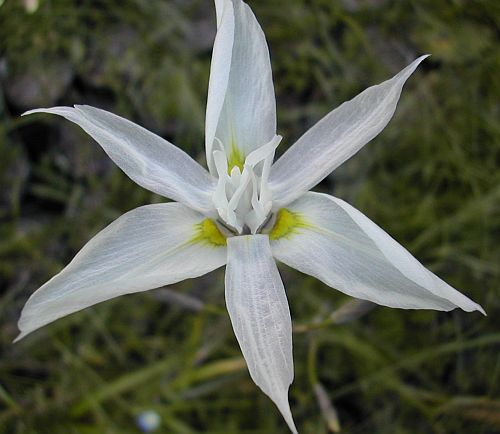
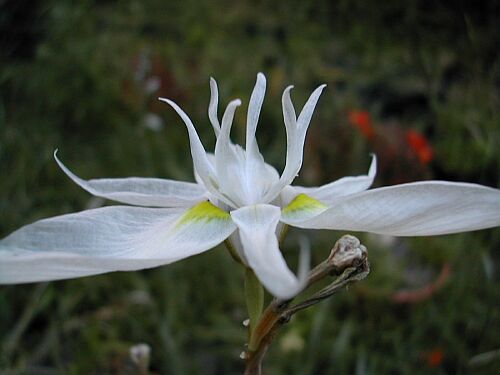
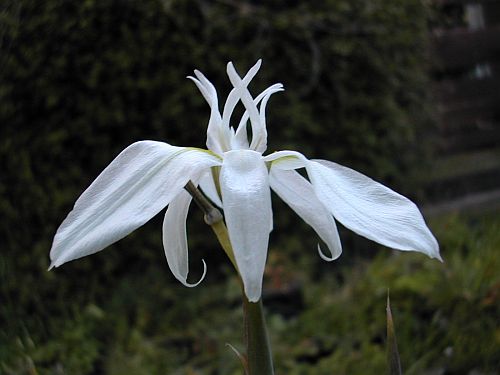
Moraea vespertina Goldblatt & J.C.Manning is a species with fairly large lemon scented white flowers that open around 6 p.m. and close around 8 p.m. A new species published in 2000, Moraea vespertina was found in seasonally waterlogged areas near Nieuwoudtville in heavy red doleritic clay. Plants are 70-100 cm tall. Some PBS members report that this species blooms reluctantly when grown in pots, even large ones. They recommend growing it in the ground for best results. Photos by Dirk Wallace.
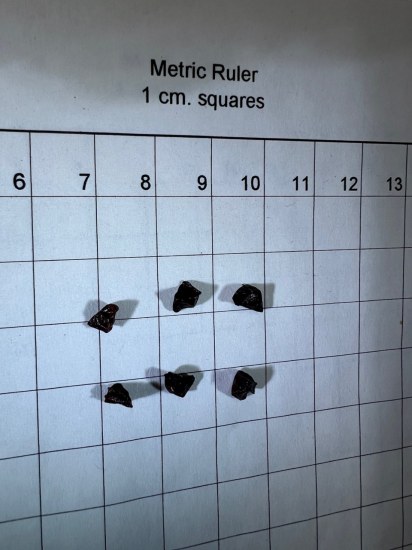
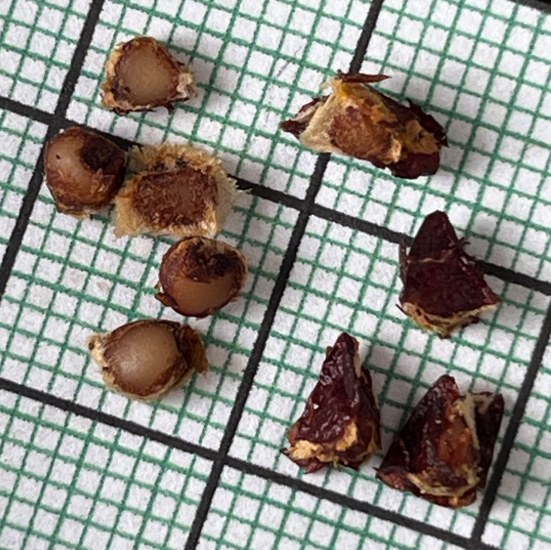
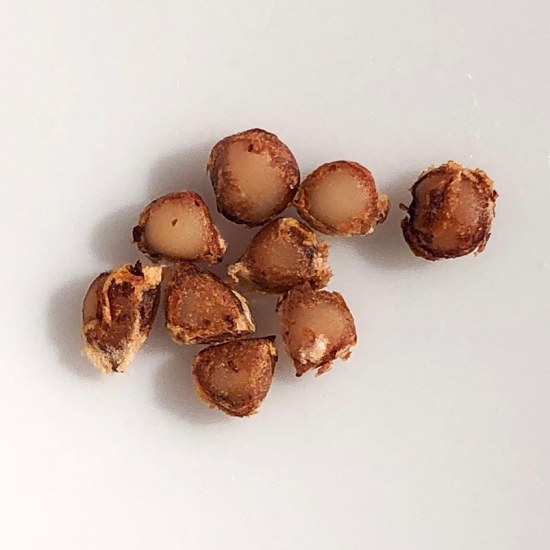
Seeds of this species differ from most other Moraea. These were grown by the late Bob Werra. In the first photo, taken by Bob Rutemoeller, the seed coats are intact. In the second photo below by M Gastil-Buhl with 1 mm green grid lines, some seed coats have rubbed off of the round inner part of the seed. The third photo by Carlo Balistrieri shows the angular seed coat cleaned off to reveal a much rounder seed. The shape is described as angular in the reference [1]. Whether the exposed seeds germinate is to be determined.
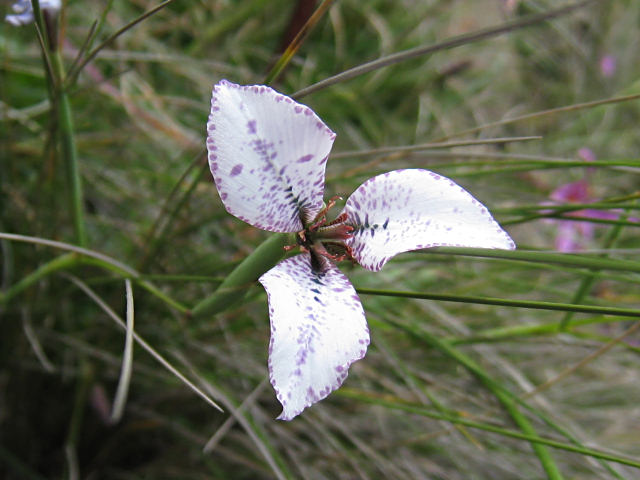
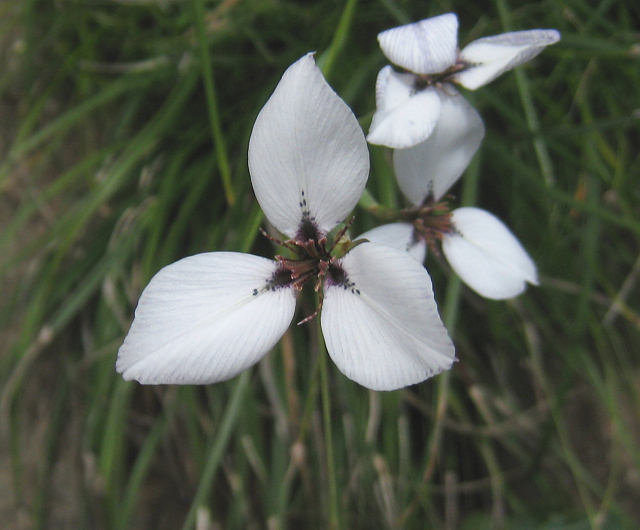
Moraea vigilans Goldblatt & J.C.Manning, a relatively new species, published in 2000, is found on steep moist slopes in basalt outcrops in the high Drakensberg. The sweetly scented flowers are white, with bluish bands or spots towards the base of the outer tepal limbs and are speckled with mauve. Flowering is in January and February with flowers lasting about two days. Photos taken by Cameron McMaster at Sentinel Peak in the Drakensberg Mountains of KwaZulu-Natal.
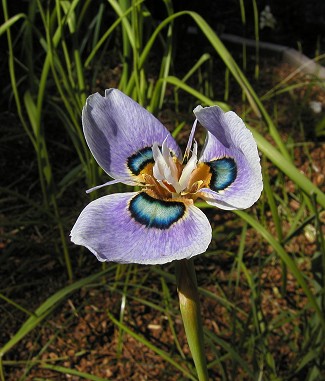
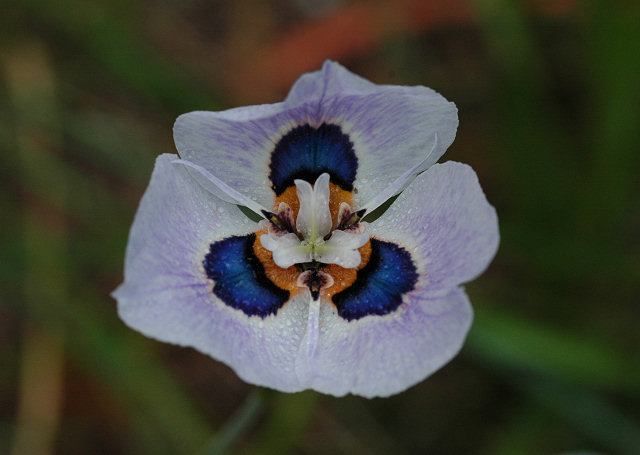
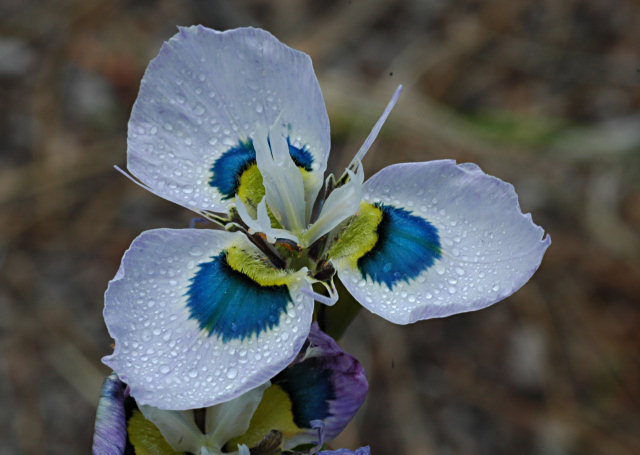
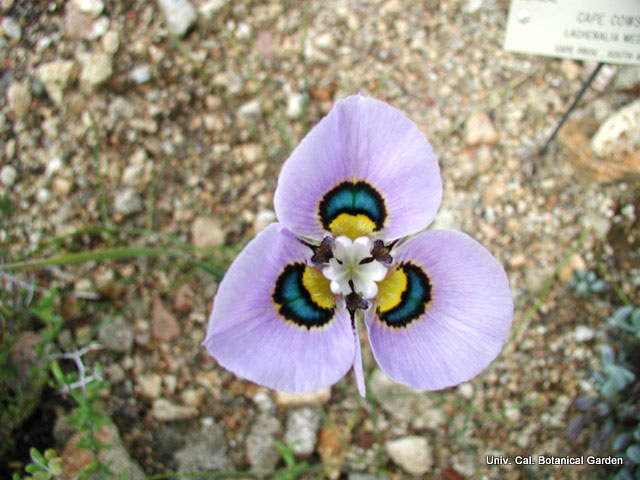
Moraea villosa (Ker Gawl.) Ker Gawl. is found on stony granite and clay slopes and flats in the winter rainfall area of western South Africa. Most commonly, the flowers are pale purple with a large blue nectar guide and a hairy center colored either yellow or orange. Height range: 30-40 cm. These four photos show some typical variations. Flowering in Northern California and grown from seed. Photos by Bob Rutemoeller
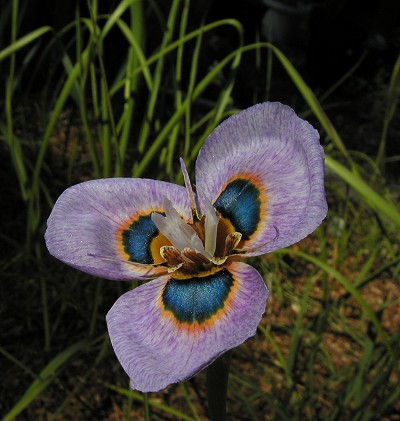
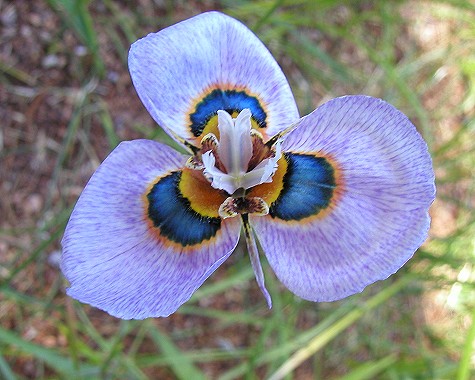
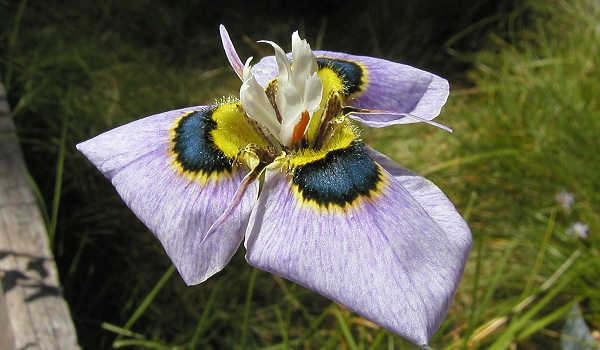
But M. villosa can also be found in other colors. Often these are quite rare in the wild, but have been preserved and shared in cultivation. The flowers can be purple, lilac, sometimes pink or orange or even cream or white with nectar guides on the outer tepals outlined in broad bands of dark color. Here are some examples. The first four photos were taken by Mary Sue Ittner in her Northern California garden. The fifth photo was taken by Colin Paterson-Jones at Versveld Pass on Piketberg, Western Cape.
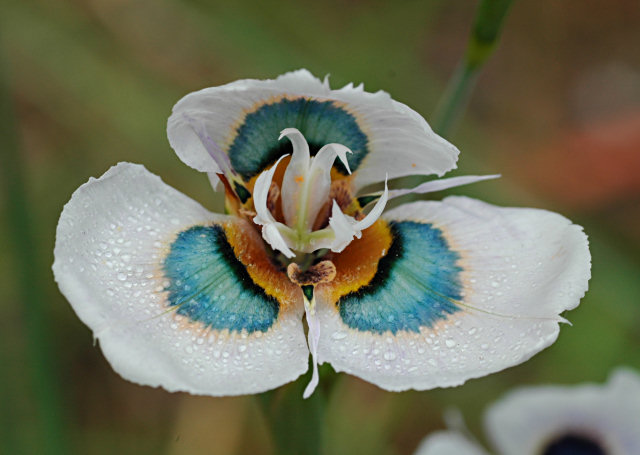
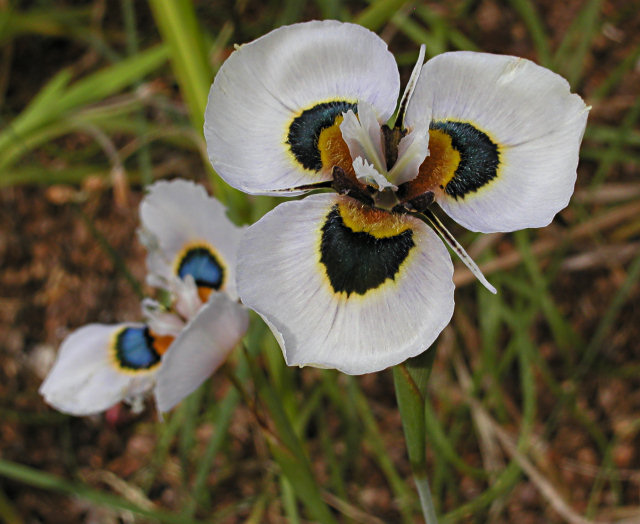
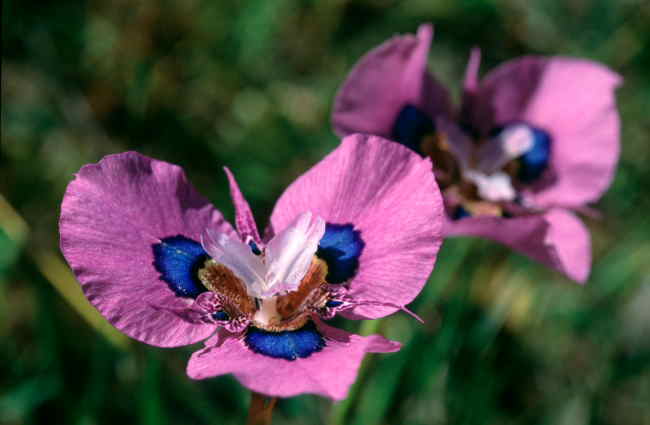
Mary Wise photographed the first one below from her Australian garden, another with striking colors and Jana Ulmer the second one. The third photo taken by Bob Rutemoeller shows one growing in Gordon Summerfield's collection that is a darker purple. The fourth photo was taken by Alan Horstmann and the fifth by Bob Werra. The last photo was contributed by the UC Botanical Garden.
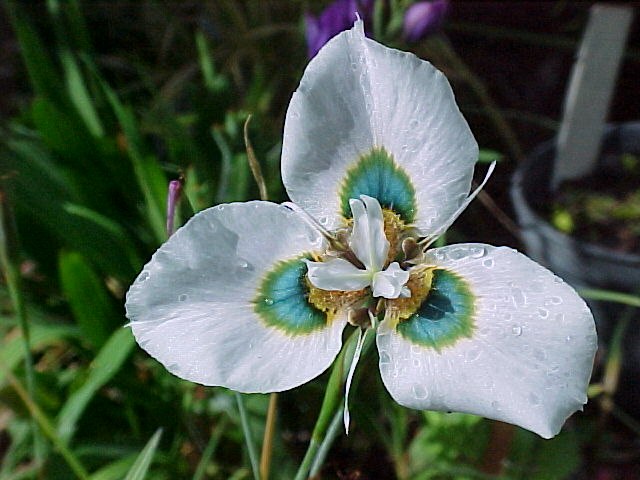
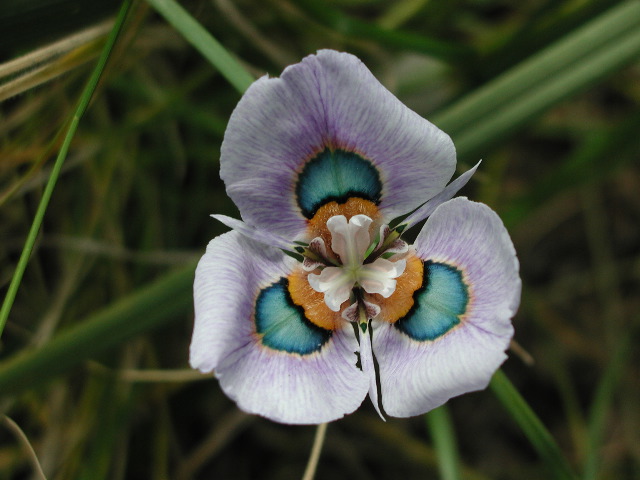

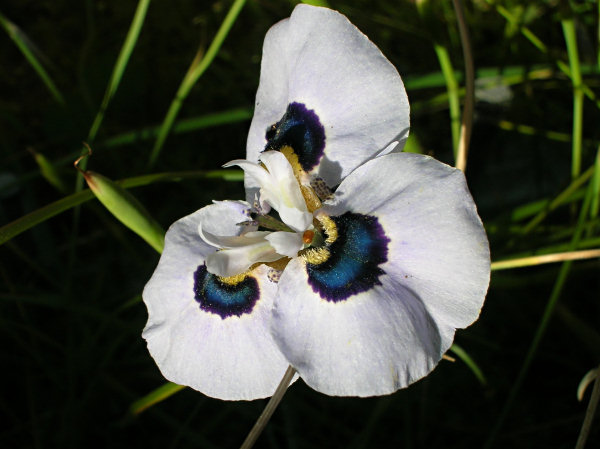

This first one pictured below almost looks like M. aristata, which when it first bloomed I thought it was. I love the appearance and color of the second one. It looked different than all my other M. villosa. Photos 1 and 2 taken March 2004 by Lee Poulsen. Photos 3 and 4 by M. Gastil-Buhl show corms on a 1 cm grid grown by Michael Mace of color variations he labels A and B, respectively. Photos 5 and 6 are blooms from those corms in March 2013.
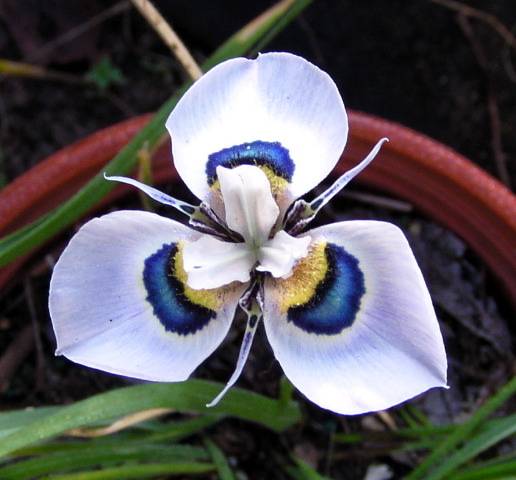
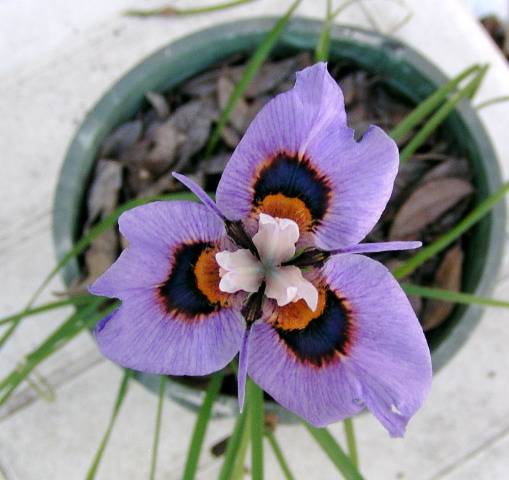
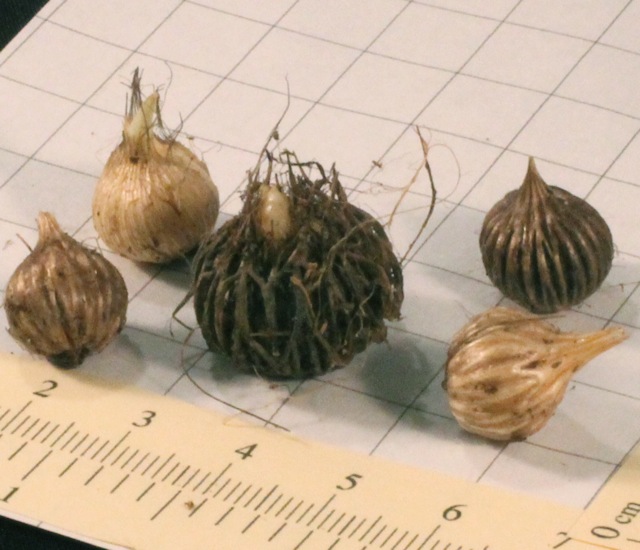
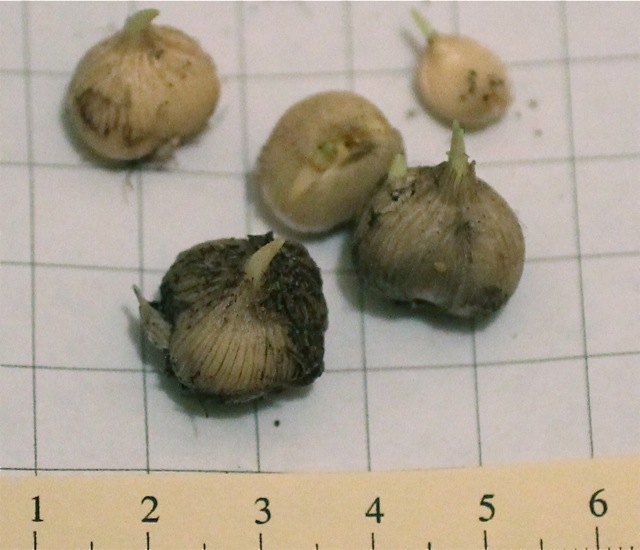
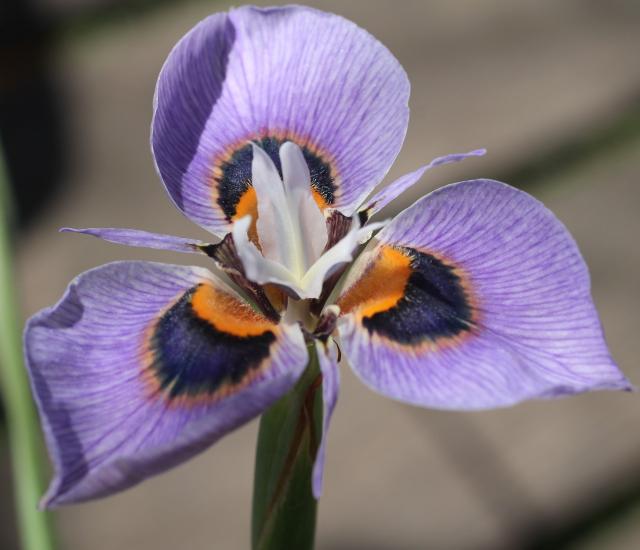

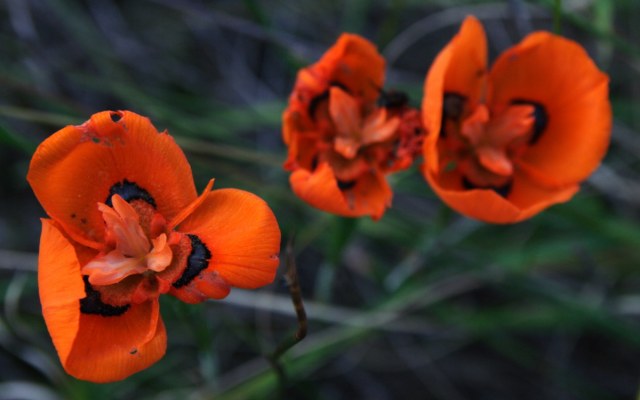
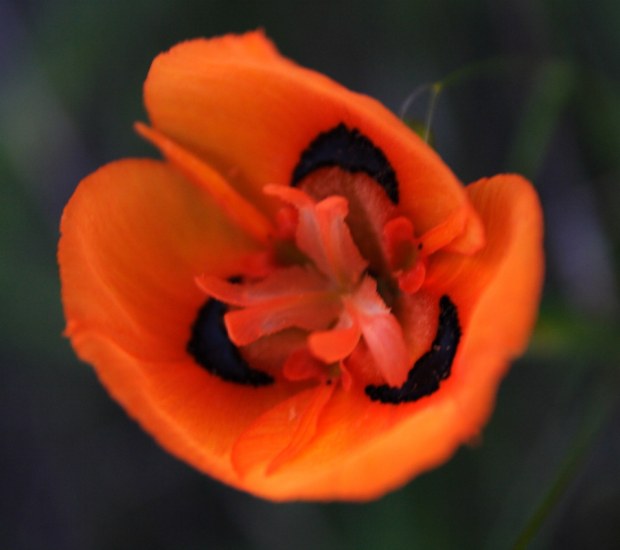
Moraea villosa ssp. elandsmontana grows in the Elandsberg Nature Reserve, on the grounds of a resort and farm called Bartholomeus Klip, east of the town of Hermon, in the Western Cape. It has stems that are usually unbranched. The flowers are bright orange with nectar guides that are very dark navy blue, almost black. Although it may resemble Moraea tulbaghensis in color, it differs by having large style branches with prominent crests and short anthers that reach only to the base of the stigma lobes. This plant was seen in Kirstenbosch National Botanical Garden growing in the ground August 2006 and was photographed by Mary Sue Ittner and Bob Rutemoeller. A bright yellow form of this subspecies was discovered in 2009.
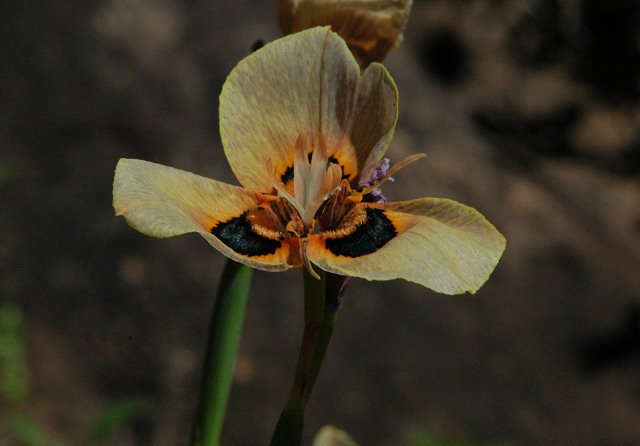
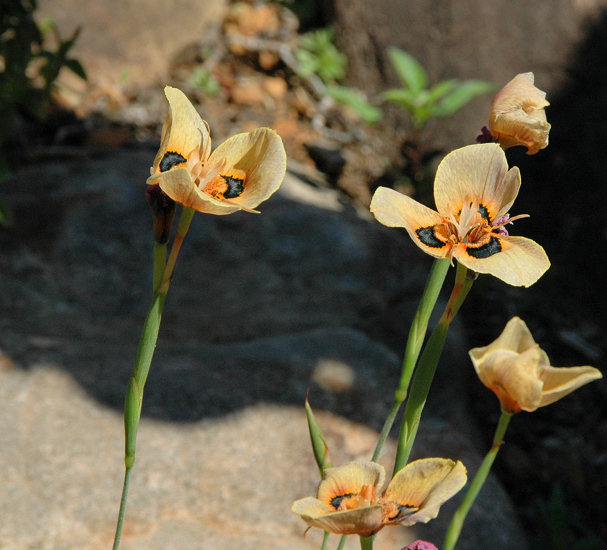
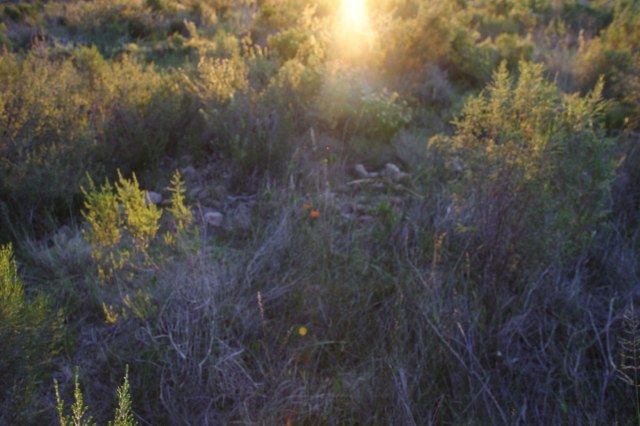
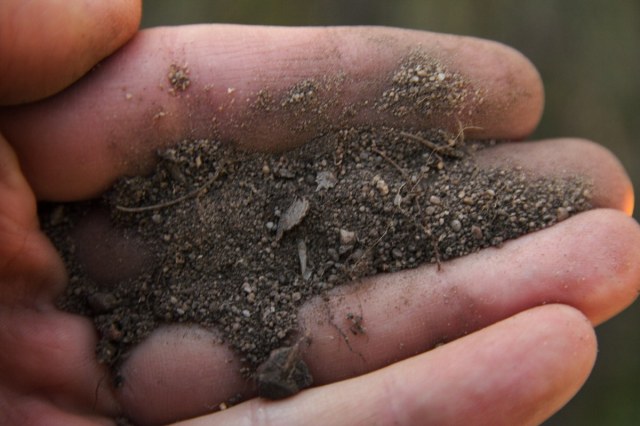
The photos below show the plant growing in its native site in September 2016: Three views of the flowers, the plants growing among hip-high brush (the flowers are the tiny orange dots at center), the silty renosterveld soil in which they grow, and a view of the surrounding vegetation and nearby mountains. Photos by Michael Mace.
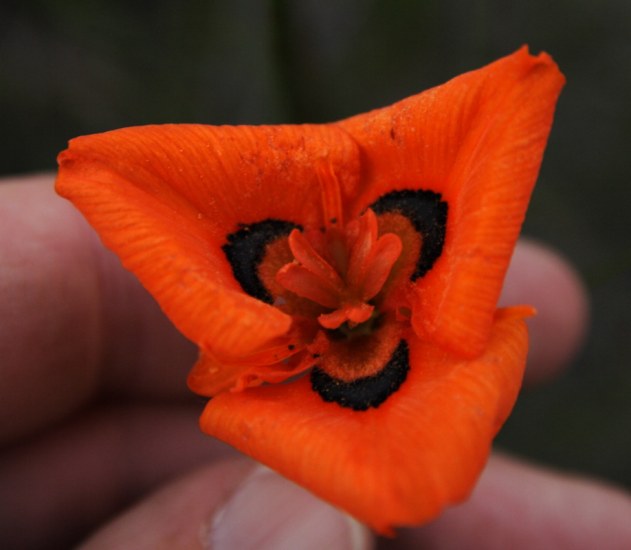
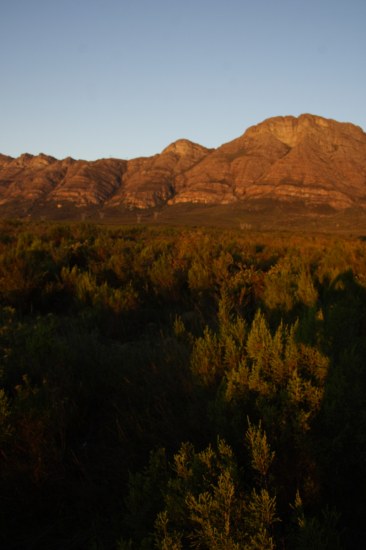
Moraea viscaria (L.f.) Ker Gawl. is found on the coastal areas of the southwestern cape between Saldanha Bay and Cape Agulhas. It grows on sandy or stony flats and slopes. It has white, fragrant small flowers. Height range: 20-45 cm. It blooms spring to summer and has fugacious flowers that open late afternoon and fade by early evening. Photo by Cameron McMaster. The last three photos from iNaturalist taken by Felix Riegel in October in the Overberg and shared under a CC BY-NC license.

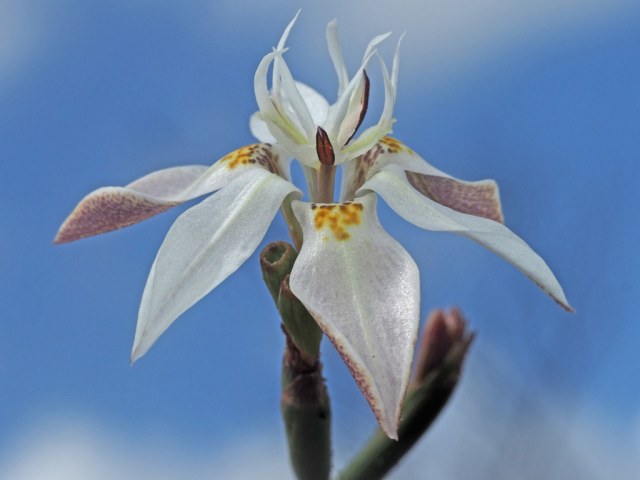
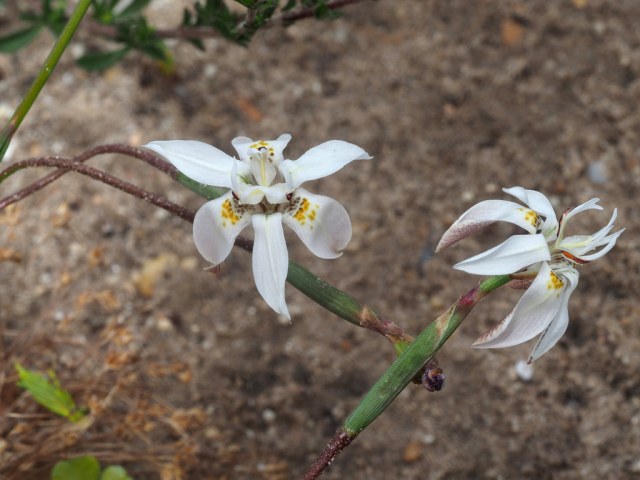
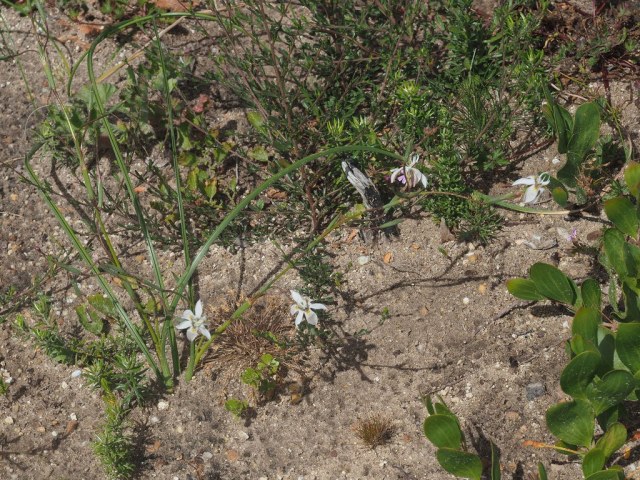
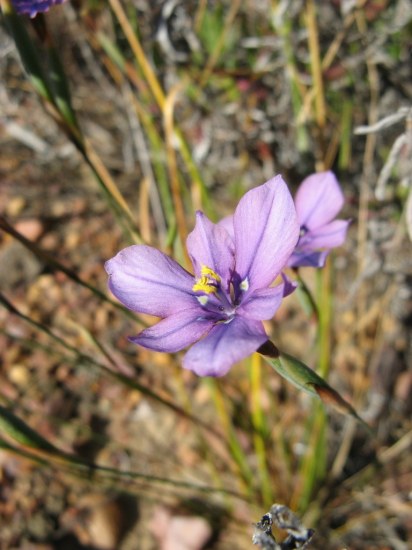
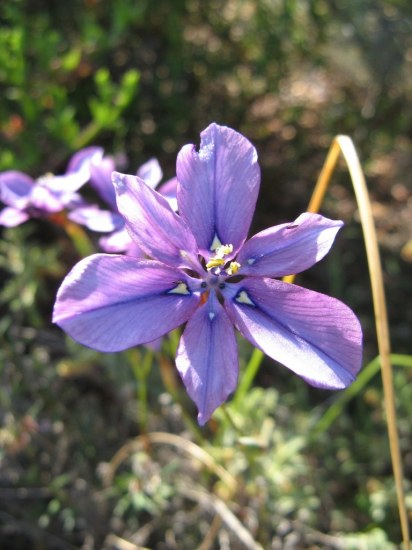
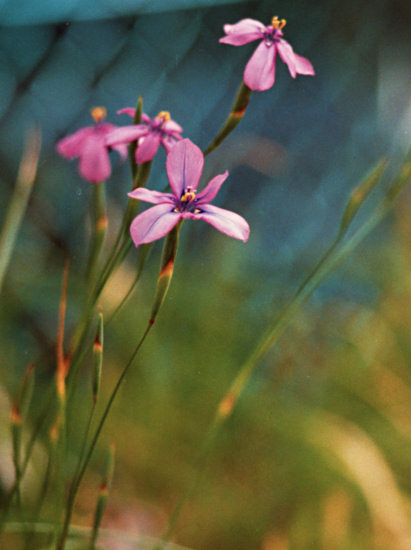
Moraea worcesterensis Goldblatt is found on rocky slopes and flats on low hills near Worcester. It has a single leaf and purple flowers with pale diamond-shaped markings on the tepals and blooms in spring, growing 15-20 cm high. Photos from iNaturalist taken by Nick Helme in September and shared under a CC BY-NC license. The last photo by Alan Horstmann.
Galaxia - Gynandriris - Hexaglottis - Homeria a-j - Homeria k-z - Moraea group a - Moraea group b - Moraea group c-e - Moraea group f - Moraea group g-i - Moraea group j-m - Moraea group n-r - Moraea group s - Moraea group t - Moraea Hybrids - Moraea index