The pictures below are of Romuleas that are native to South Africa, grown from seed or seen in the wild. Many of the species are very similar and difficult to tell apart. Sometimes it is necessary to examine the bracts and bracteoles and often looking at the corm is very helpful. Photos of the different corms will be added as available.
There are three good references for the southern African species, The Genus Romulea in South Africa written by Miriam de Vos in 1972, her revision written in 1982 and a later revision from John Manning and Peter Goldblatt in 2001.
Species from o-s are shown on this page.
European And Mediterranean Romuleas - South African Romulea a-d - South African Romulea e-k - South African Romulea l-n - South African Romulea t-z - Romulea index
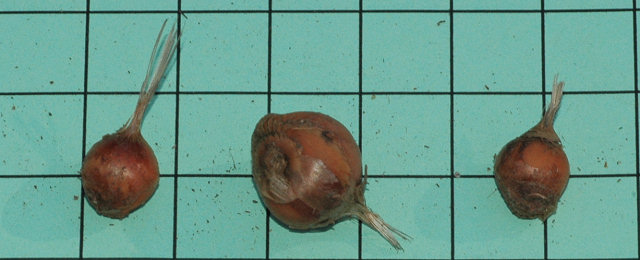
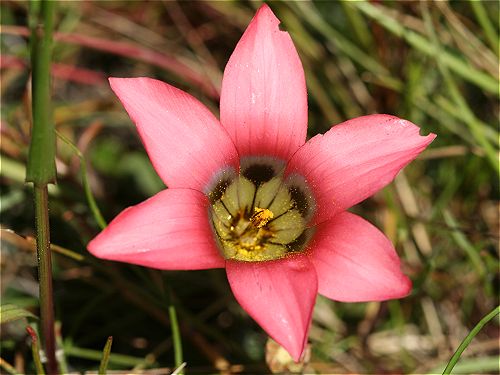
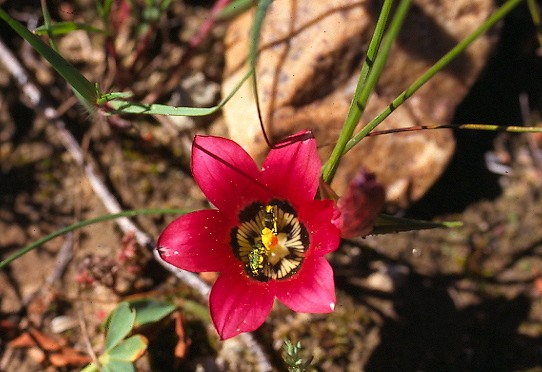
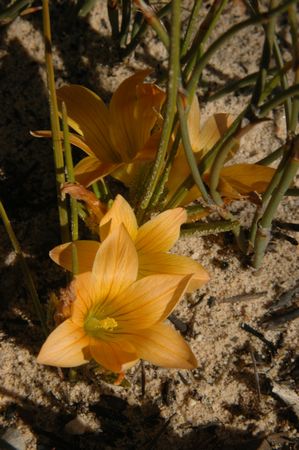
Romulea obscura Klatt is found on sandy flats in the Western and Southern Cape. It grows from 10 to 20 cm high and has corms that are rounded at the base with curved acuminate teeth. Flowers are yellow or apricot to red, often with dark blotches around the greenish to yellow cup. The fruiting peduncles are widely spreading from the base. Miriam de Vos recognized four varieties, but the latest revision includes all in the species. This species is very closely related to Romulea rosea but differs in color and fruit. Some Romulea obscura color forms have yellow in pigmentation and no blue tints. In seed the fruiting peduncles diverge sharply and spread horizontally. The purple magenta forms of this species are difficult to tell apart from Romulea rosea unless they are in fruit. The first three photos from Mary Sue Ittner. The third shows the corms on a 1 cm grid. The last photo was taken by Andrew Harvie in habitat at Tinie Versveld in the southwestern Cape.
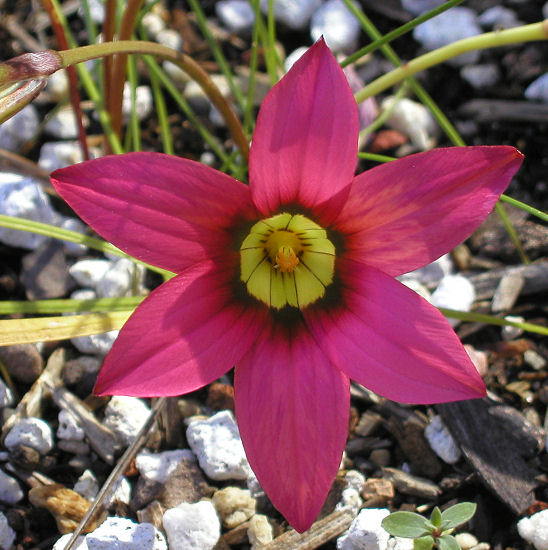
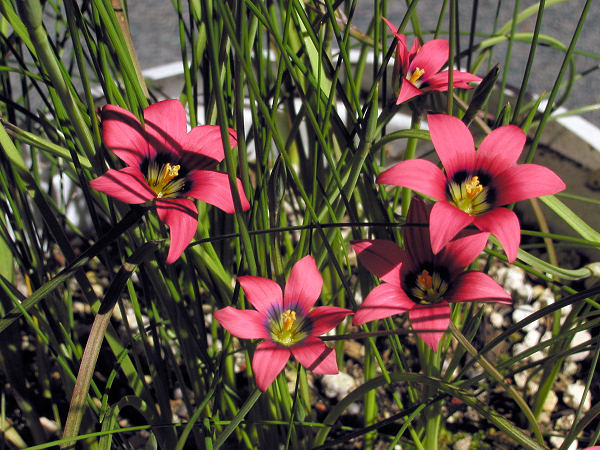
Under Miriam de Vos's varieties there was a smaller flowered form (flowers 15 to 25 mm) with yellow or apricot flowers (rarely pink) with the non yellow forms without blotches called var. obscura. Photos from Bob Werra and Mary Sue Ittner.
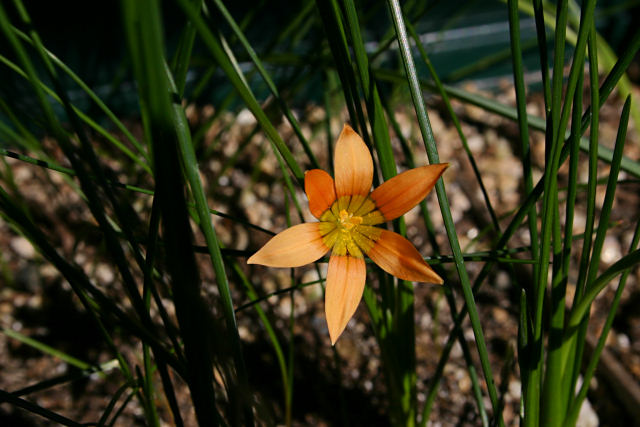
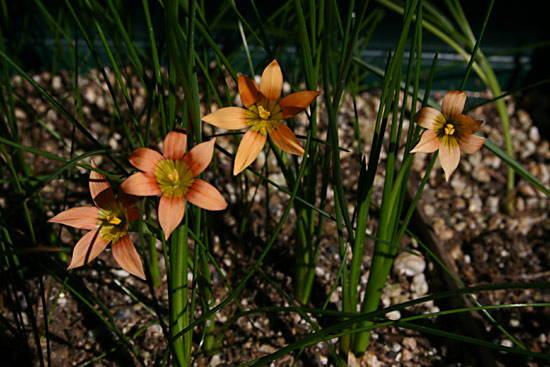
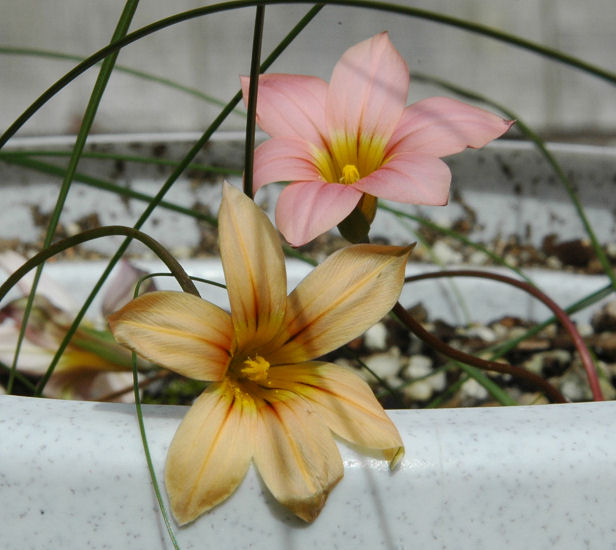
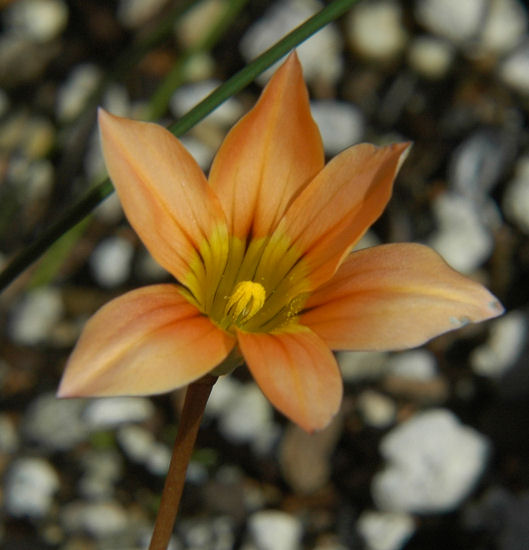
Another one of her smaller flowered varieties with flowers 18 to 25 mm was called var. subtestacea. Flowers of this variety were described as deep rosy-pink or dark old-rose with small purplish blue or greyish blue blotches in the throat. Photos from Mary Sue Ittner including the last one that shows how much smaller the flowers are of this form compared to one grown from seed identified only as Romulea obscura.
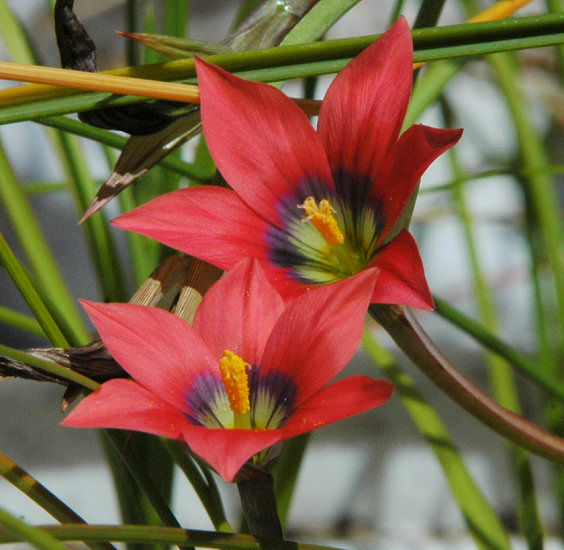
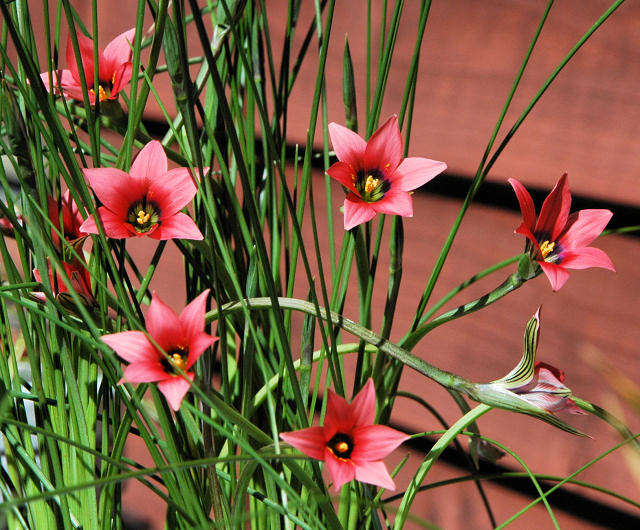
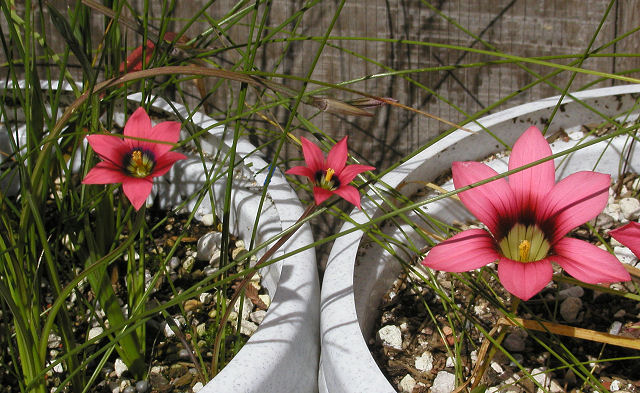
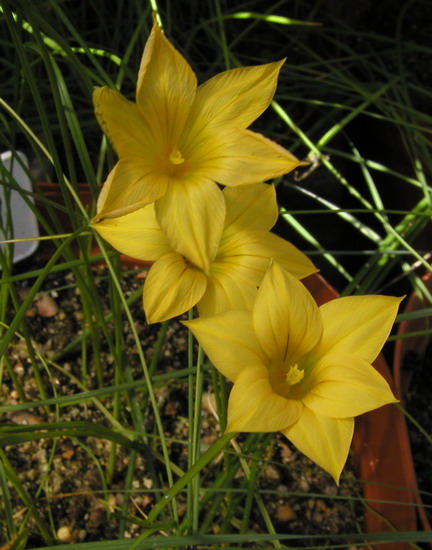
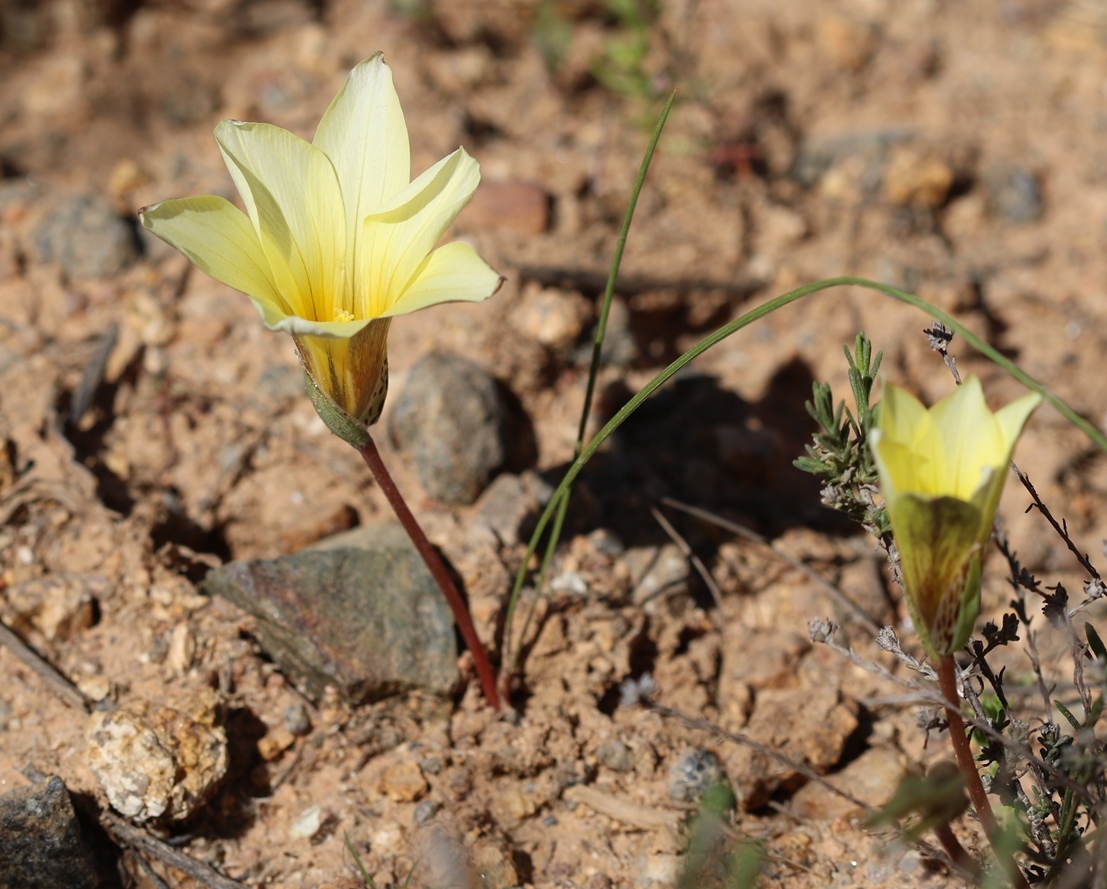
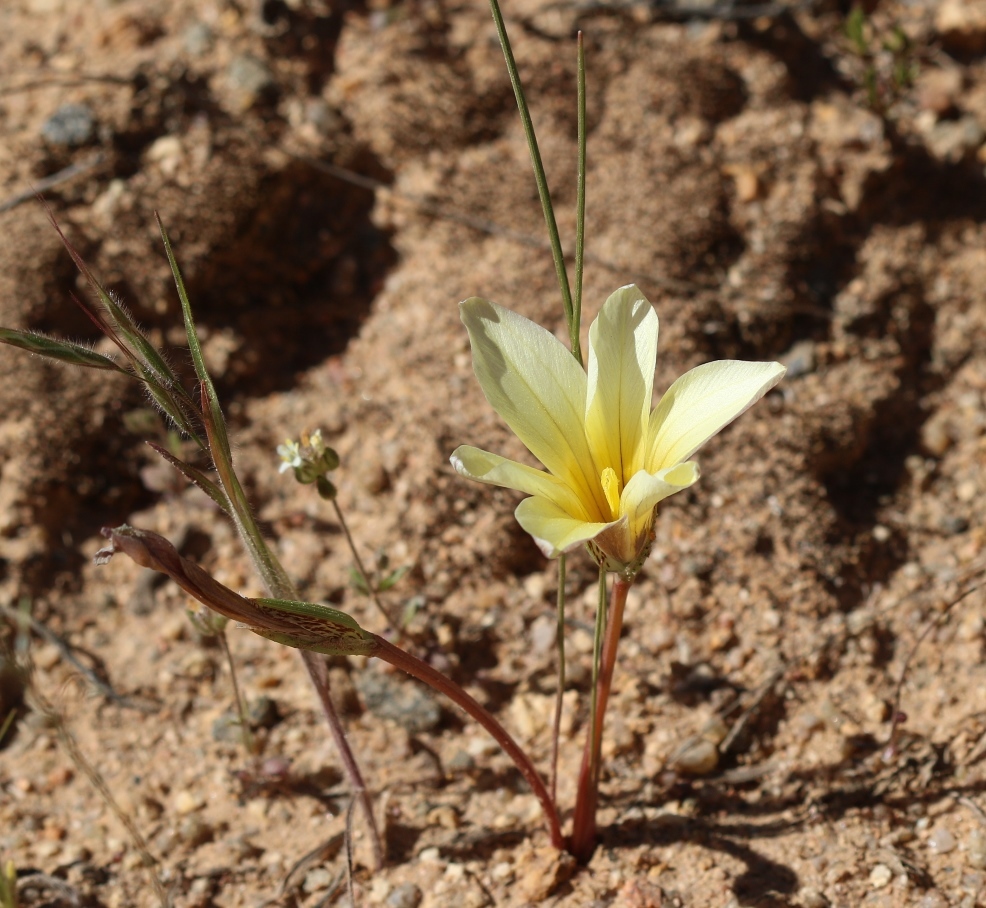
Romulea pearsonii M.P.de Vos grows in sandy soils on the Kamiesberg and flats to the west in Namaqualand. It grows mostly up to 10 cm (but sometimes to 25 cm tall) from corms that are obliquely flattened toward the base with a crescent-shaped basal ridge. The filiform leaves are narrowly 4-groved and the flowers are lemon-yellow with brown streaks on the margins; flowers often fade to cream. Bracts are green with narrow, brown-streaked hyaline margins. It is similar to Romulea citrina but is distinguished by the brown streaks on the margins and tip of the bracts. The first photo was taken by Rod Saunders in habitat and the second by Bob Rutemoeller of ones being grown by Gordon Summerfield in South Africa.
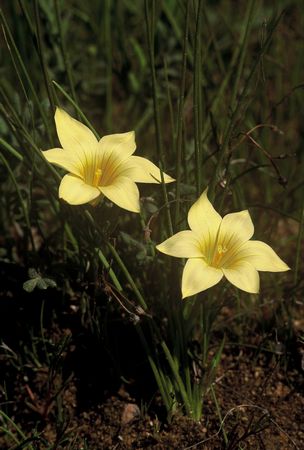
Photos from iNaturalist were taken by Corné Rautenbach, September 13, 2021, and Nick Helme, August 25, 2020, and shared under a CC BY-NC license.



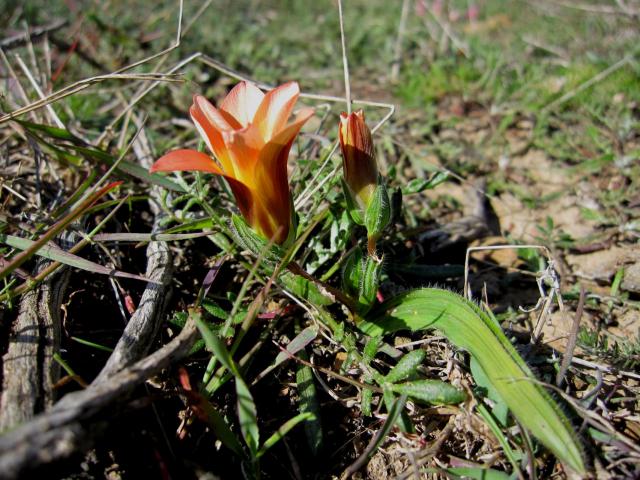
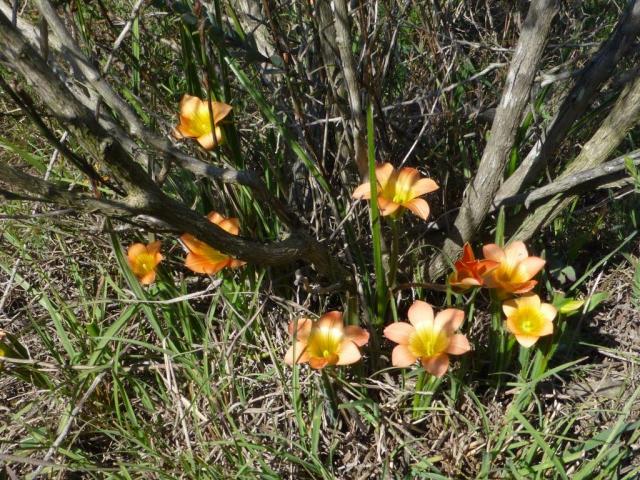
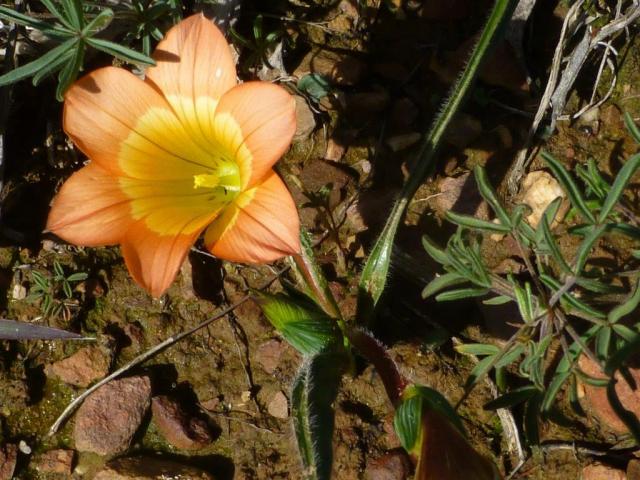
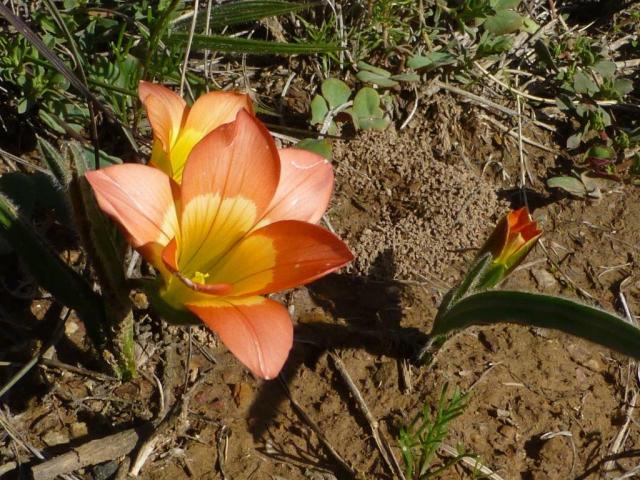
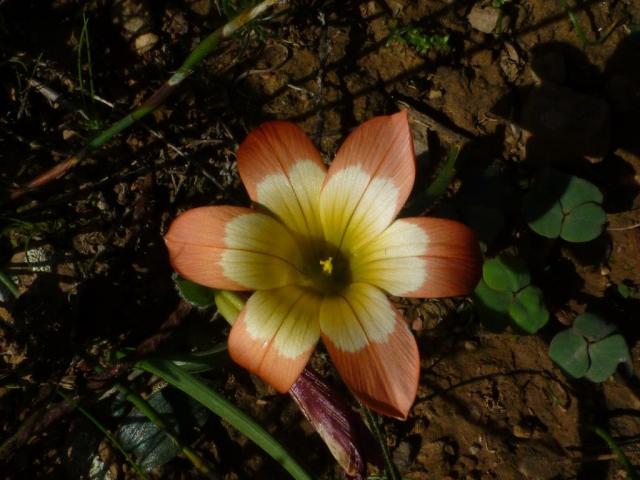
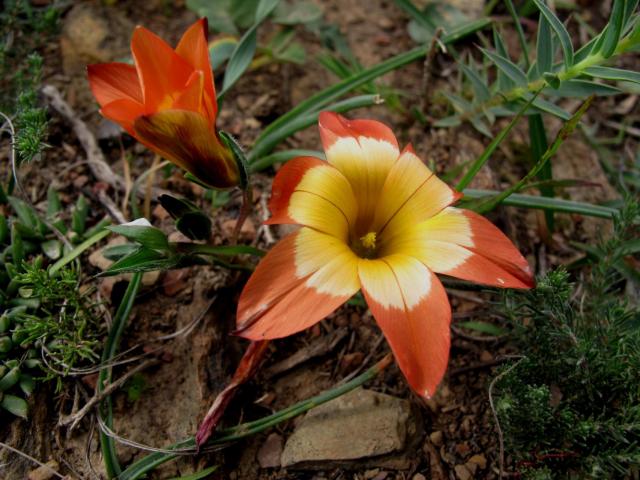
Romulea pilosa J.C.Manning & Goldblatt has an orange or red flower with a large yellow center, sometimes banded in white. The species is known from two locations near Riviersonderend, where it grows in a rare plant community known as Rûens Silcrete Renosterveld. The leaves are winged and very hairy at the edges, an adaptation that may help the plant gather light while reducing evaporation. This plant was first collected in the 1930s, and then was apparently lost until rediscovered in 2009 by PBS members Cameron McMaster and Rhoda McMaster. Height range: 10-30 cm. Photos by the McMasters.
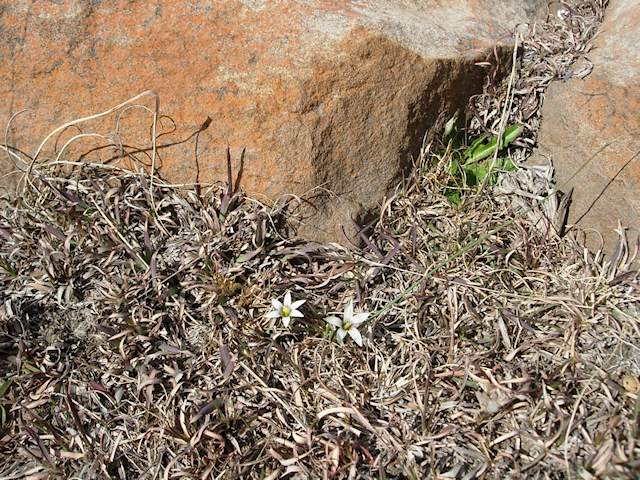
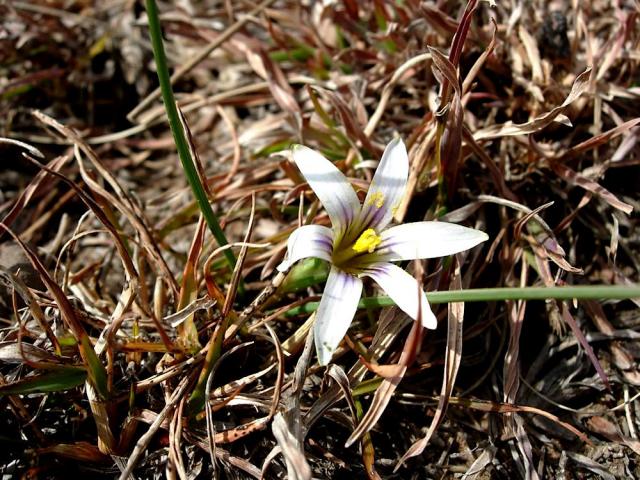
Romulea pratensis M.P.de Vos grows in grassland in the southeastern Cape. From 12 to 25 cm tall, this species has a corm with an oblique basal ridge and sharply bent over fibrils. Flowers are white, lilac, or rose, often with 1-3 dark lines in the throat, and with a greenish yellow cup. Outer segments are brownish purple or green with dark lines on the backs. Photos were taken by Cameron McMaster in the Eastern Cape.
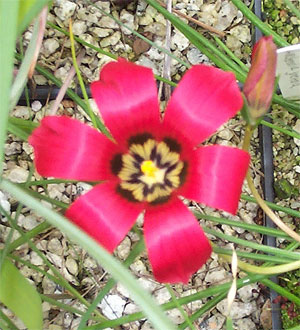
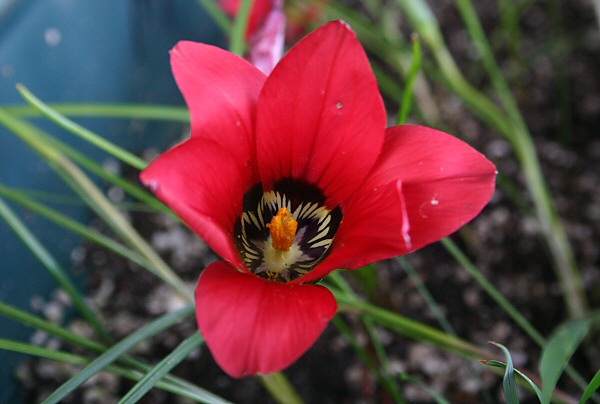
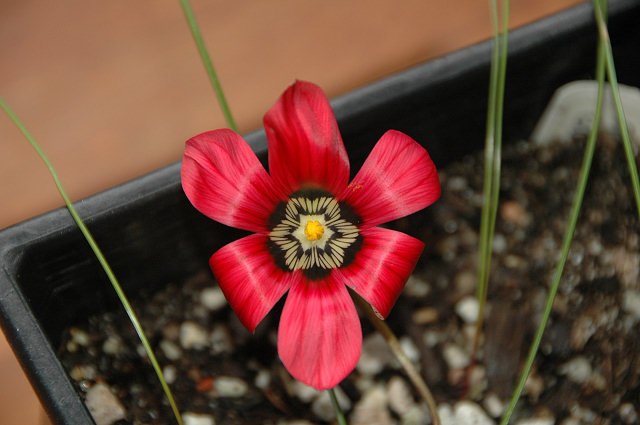
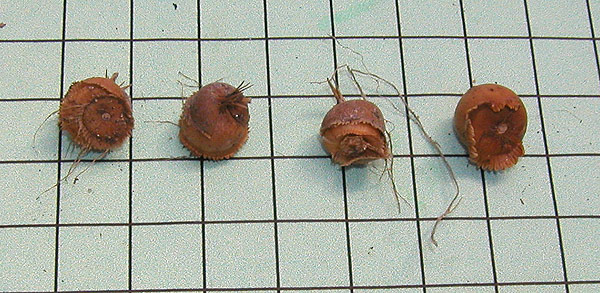
Romulea pudica (Sol. ex Ker Gawl.) Baker. Formerly known as Romulea amoena Schltr. ex Bég., this species grows in damp sandstone soils in the Bokkeveld Mountains (northwest Cape.) It has deep rose pink to red flowers with black blotches and stripes in a yellow or cream cup, arranged in a very striking star-shaped pattern. The old name means "beautiful;" the new name means "chaste," which just goes to show you that botany isn't poetry. Height: 15-30 cm. For details on the renaming, see the article by Goldblatt, Manning, and Harrower in Bothalia 41,2: 269–276 (2011).
The first photo from Mark Mazer is of one grown from Silverhill Seed, growing in a greenhouse in Connecticut. The second photo was taken by Bob Werra. The last three photos from Mary Sue Ittner show the flower with its star-shaped center, the back, and the symmetrical, bell-shaped corms with a circular fringe of fibril clusters (photographed on a 1 cm grid).

The first photo below was taken in habitat near Nieuwoudtville in August 2001 by Mary Sue Ittner. The other habitat shots were taken by Alan Horstmann.
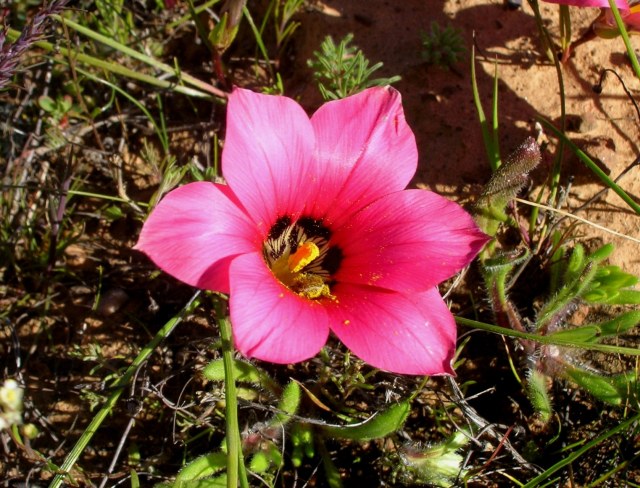
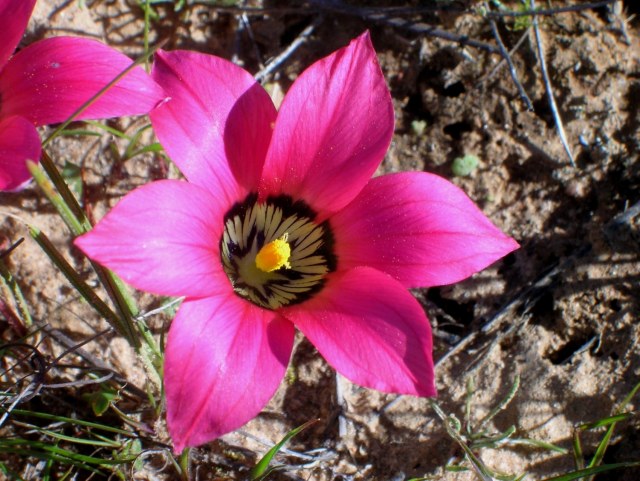
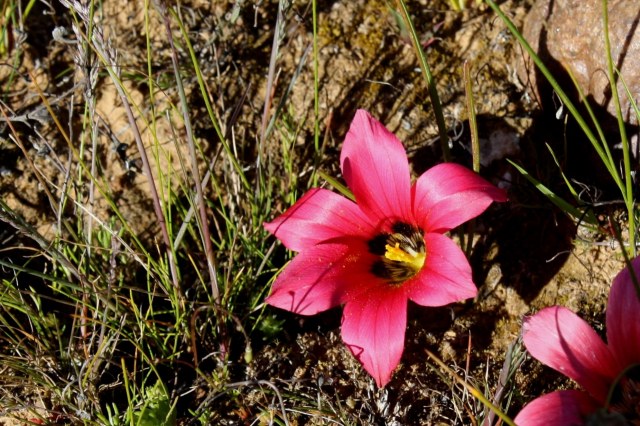
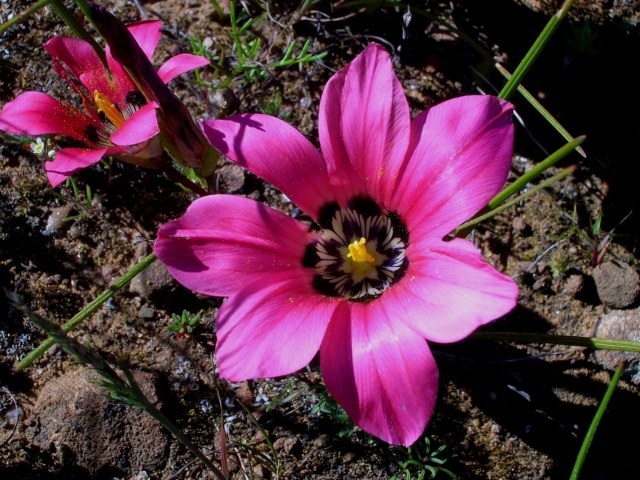
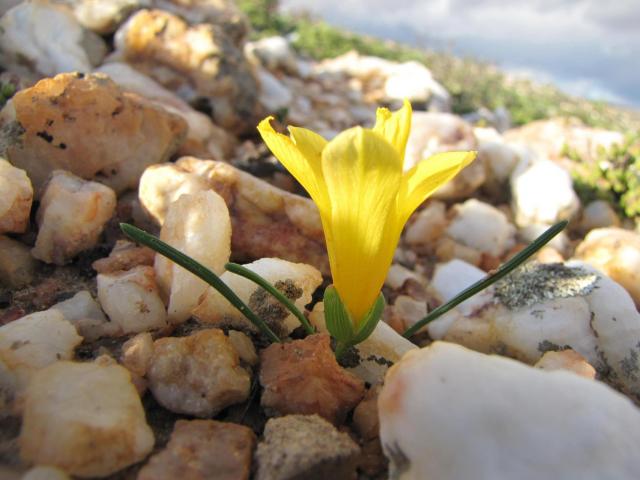
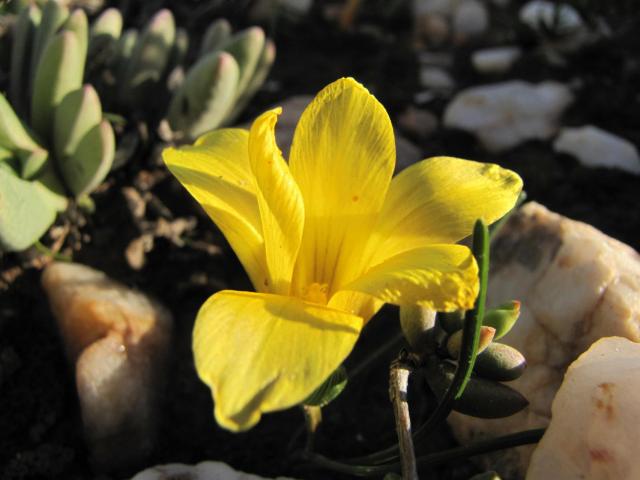
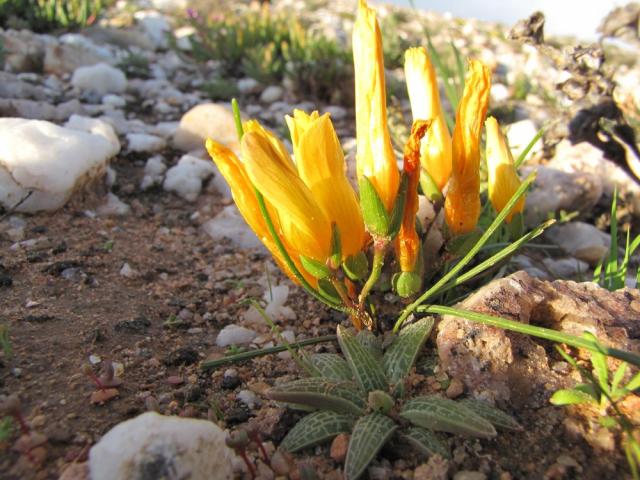
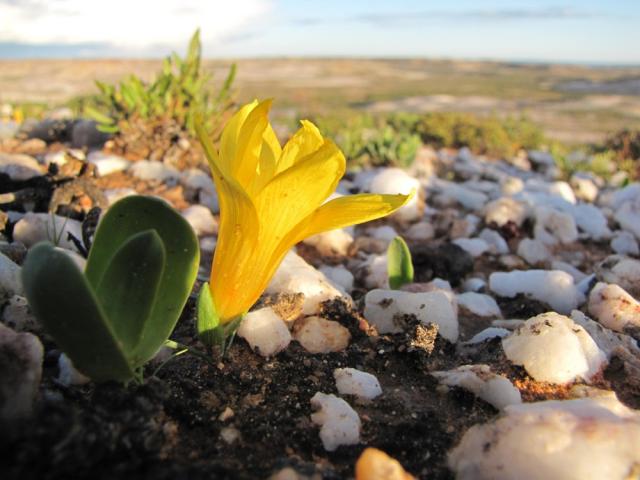
Romulea quartzicola J.C.Manning & Goldblatt is a winter-growing species native to the southern edge of the Knersvlakte in South Africa, a desert region known for its large areas covered in quartz pebbles. The plants grow on ocean-facing rocky crests in an area that apparently receives supplemental moisture from fog. The flowers are yellow or peach with a few dark veins in the center, and open in mid-afternoon on sunny days. Height: 10-20 cm. Photos by Nick Helme, originally published in ispot.org and reproduced here with his permission.
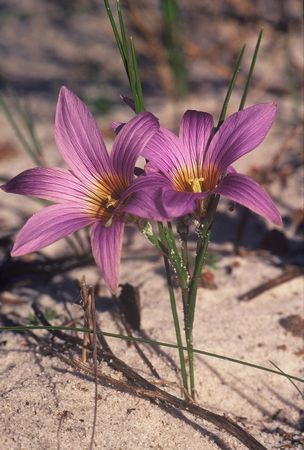
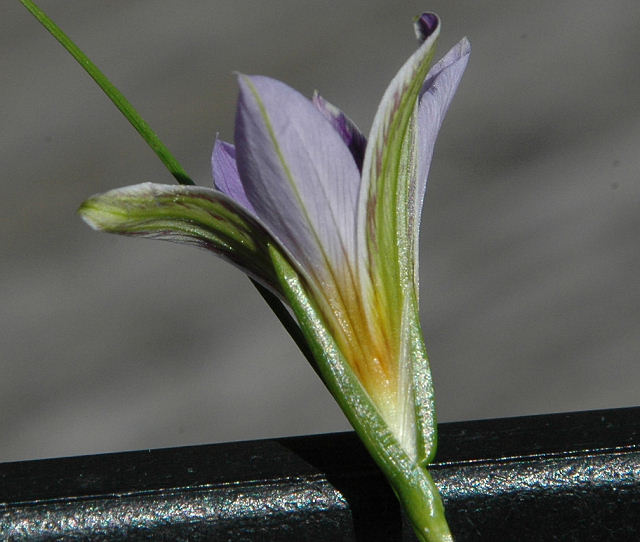
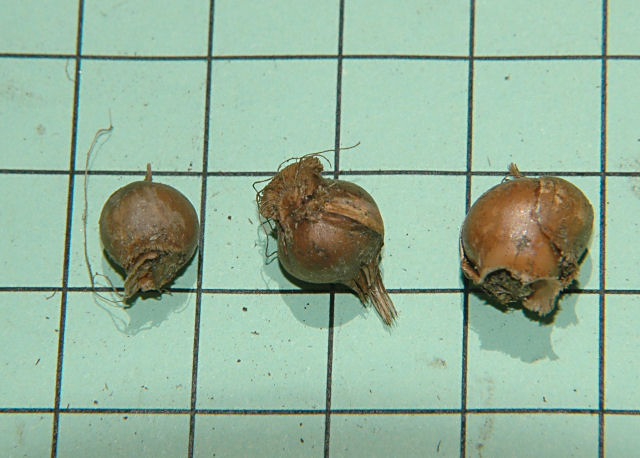
Romulea rosea (L.) Eckl. is found on sandy and clay slopes and flats and is widespread in many different geographical areas of the Cape. It is also very variable and once was considered to have five different varieties. It grows from 6 to 15 cm, occasionally to 60 cm, and has a corm that is rounded at the base with curved acuminate teeth. Leaves are 3 to 6, basal and narrowly four-grooved. Flowers are pink to magenta or white, often with a purplish zone around the yellow cup. The fruiting peduncles curve after flowering and straighten later. Photos by Alan Horstmann and Mary Sue Ittner of larger forms, front and back, plants with white flowers, and corms on a 1 cm grid.
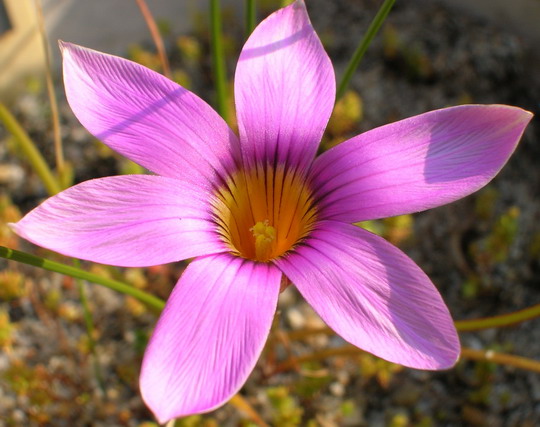
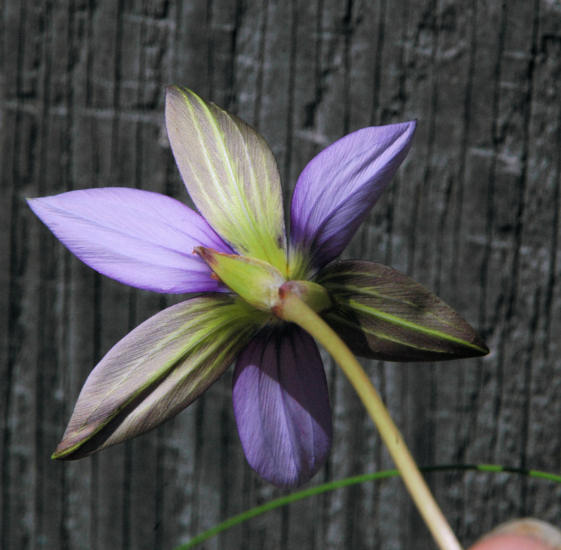
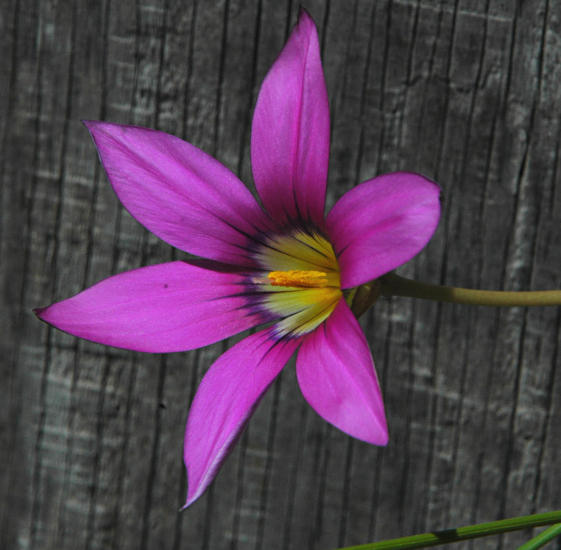
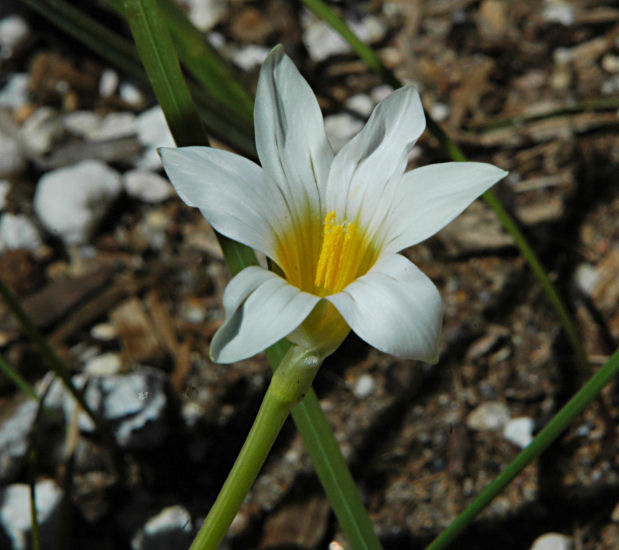
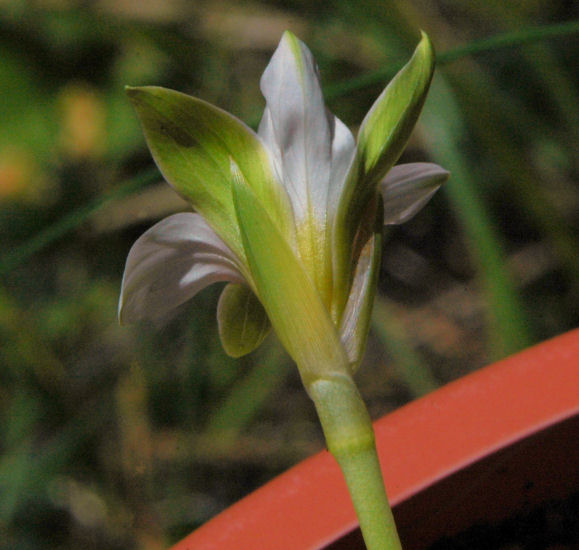
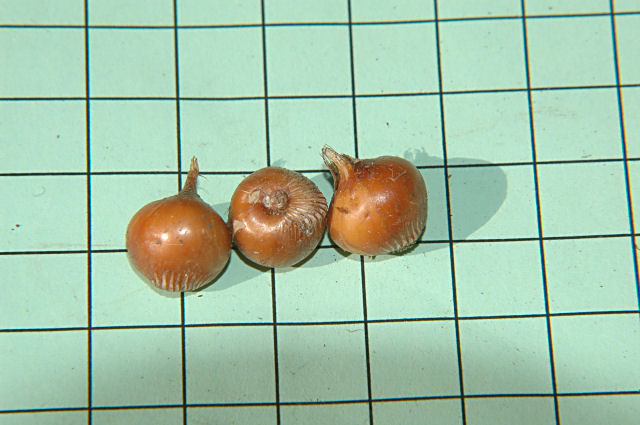
The first two photos from Bob Rutemoeller and Mary Sue Ittner are of a large flowered form seen growing near Tulbagh, South Africa, August 2006. The next two photos in habitat were taken by Cameron McMaster in the Overberg. The last photo from the book Plants of the Klein Karoo courtesy of Jan and Anne Lise Schutte-Vlok.
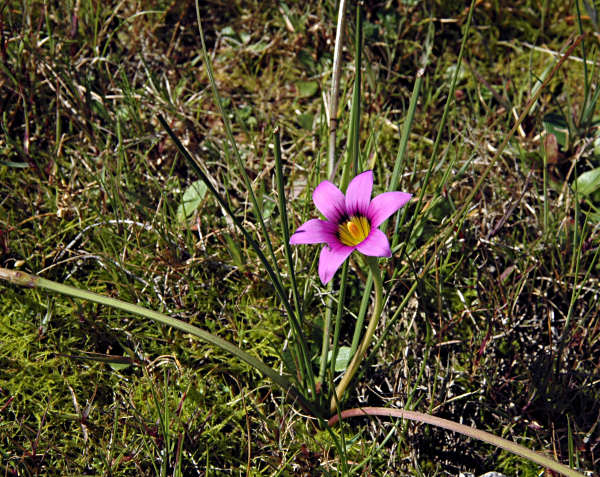
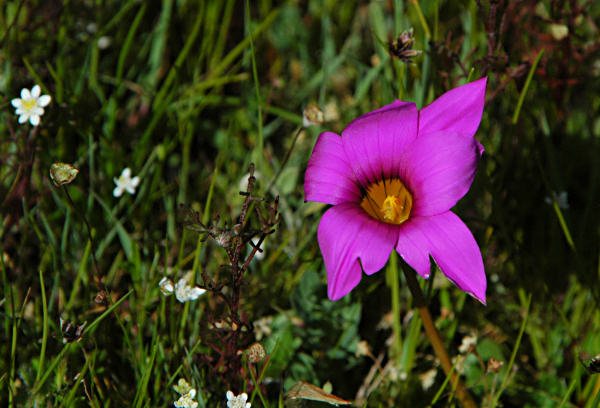
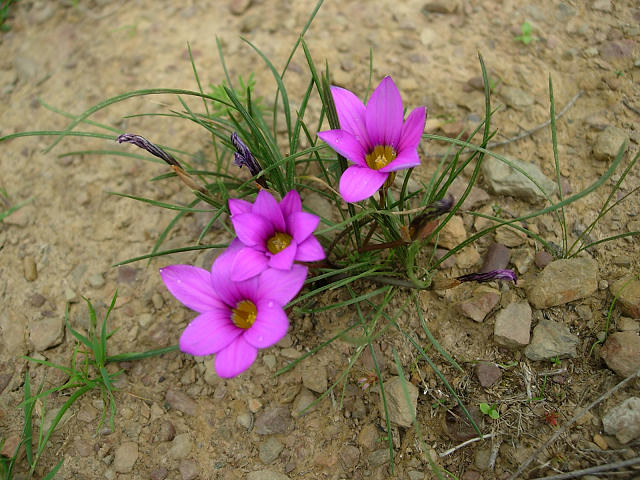
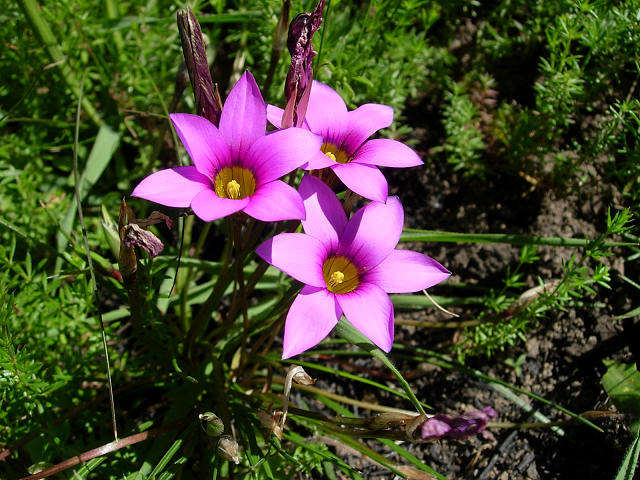
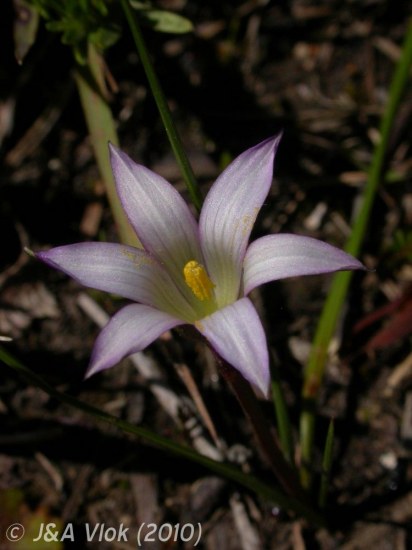
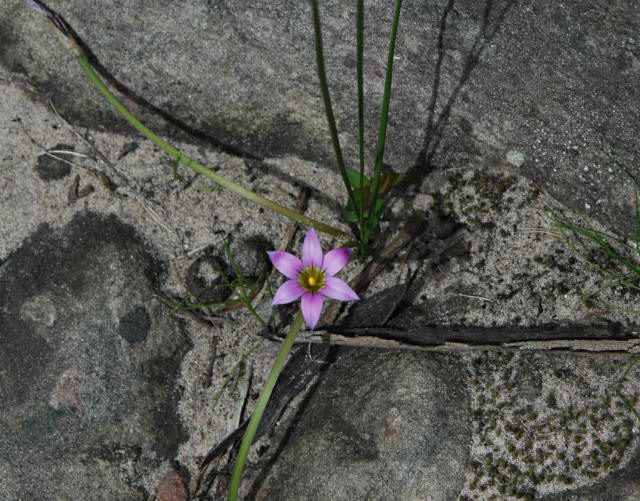
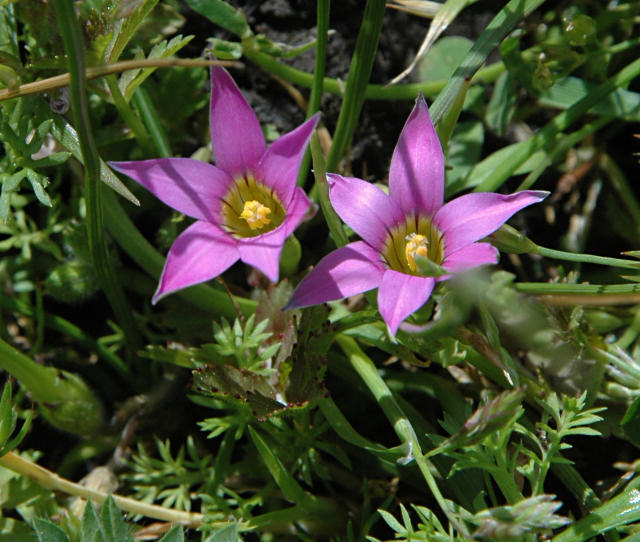
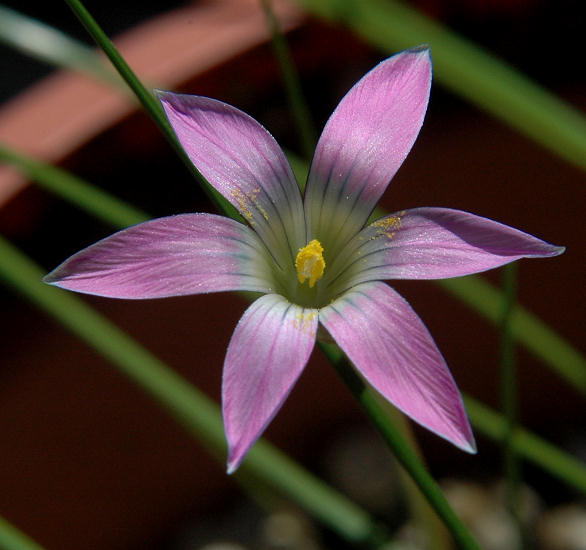
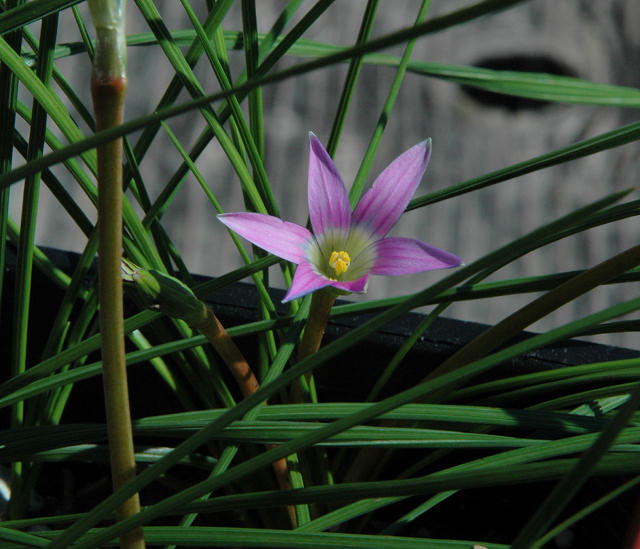
A form with much smaller flowers that sets seed profusely once considered to be var. australis (Ewart) M.P.de Vos when varieties were recognized, is a terrible weed in Australia and also has achieved weedy status in northern California. The first two pictures below show naturalized populations in Australia, the second of them in the Grampians. The third shows it blooming in coastal Sonoma County, California, where it was viewed in alarmingly large numbers. What I believe to be this weedy form received in a NARGS seed exchange, misidentified as something else, is pictured in the last three photos with close-ups of the flowers so it can be recognized and avoided in areas where it might escape and be a problem. Photos by Mary Sue Ittner.
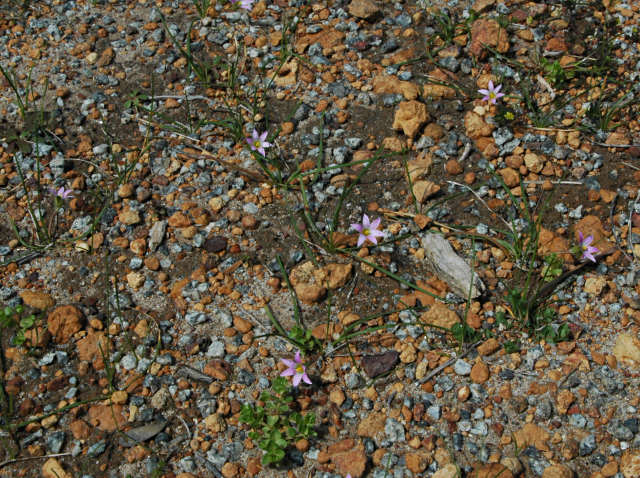

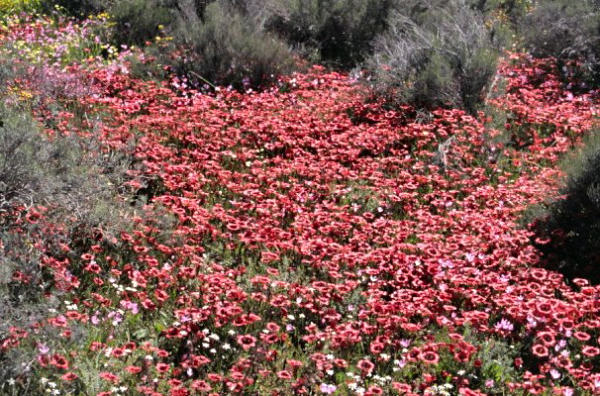
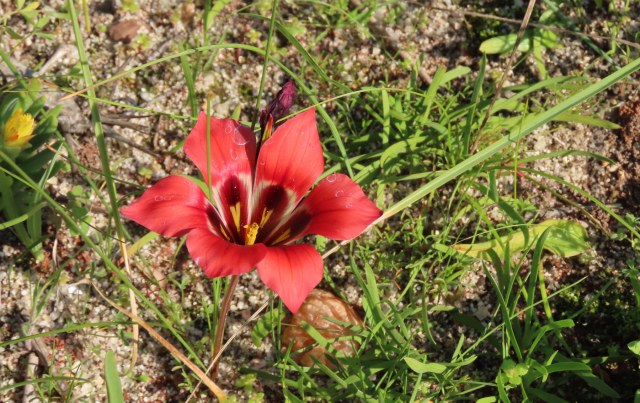
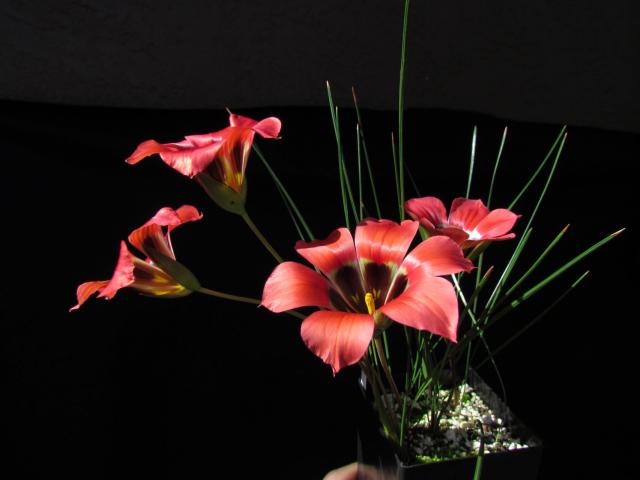
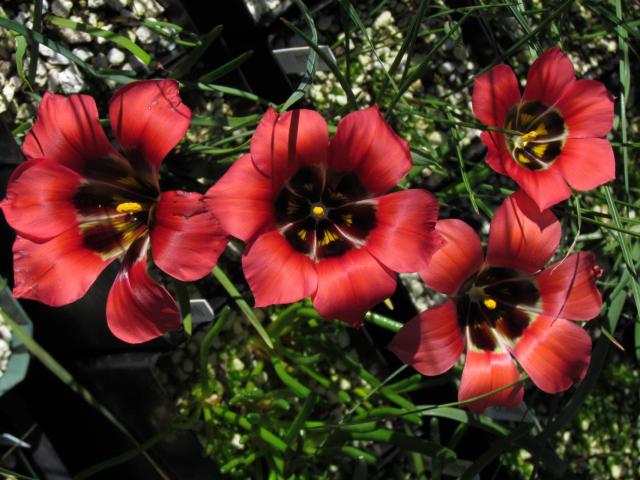
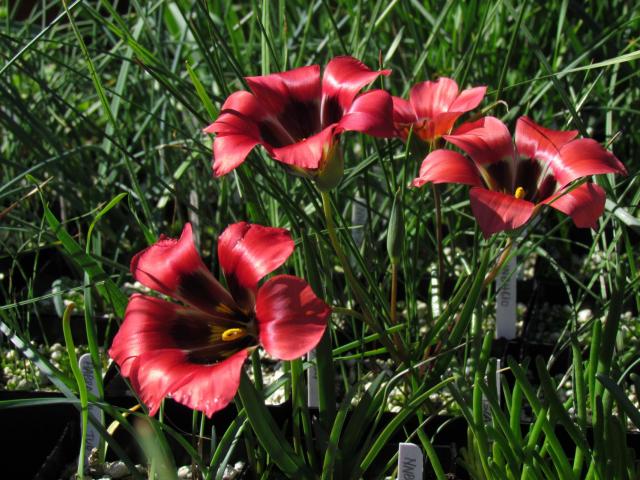
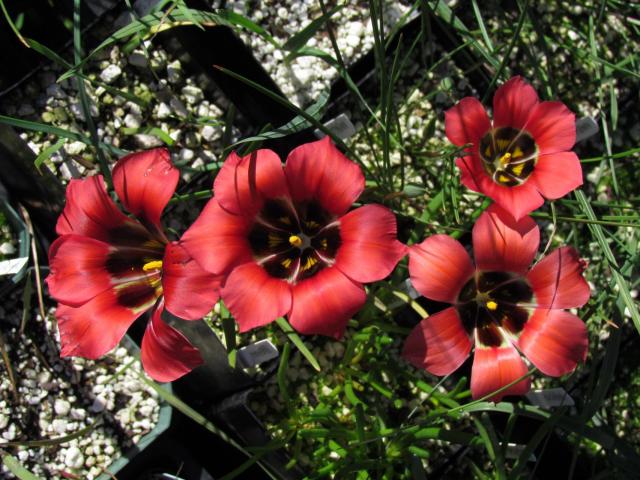
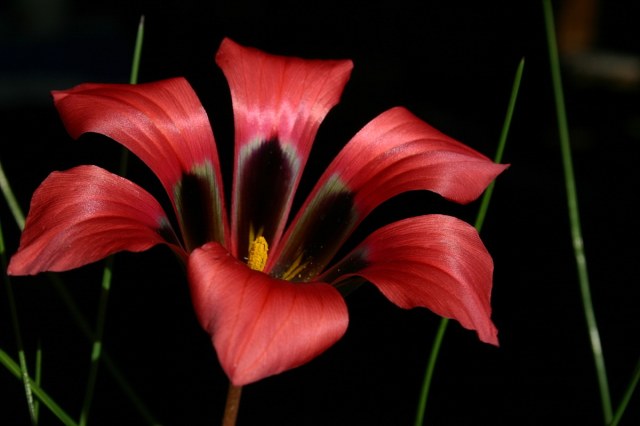
Romulea sabulosa Schltr. ex Bég. is one of the most spectacular romuleas with large shiny flowers that bloom in late winter early spring in the Bokkeveld Plateau. It has corms that are rounded at the base with curved acuminate teeth and red bell-shaped flowers with black blotches within a creamy green cup and free filaments. It most resembles Romulea monadelpha, which blooms around the same time and also grows in the Bokkeveld Plateau but also in the Roggeveld. Romulea monadelpha has a black blotch on a blue or purplish grey or sometimes pale yellow background on each tepal. This species takes 4 years to bloom from seeds. Height range: 12-40 cm.
The first picture from 2001 shows this species flowering in mass in Nieuwoudtville, South Africa in a wet year, where it was growing in wet sand. The same spot was visited around the same time in 2006, but the flowers were mostly finished as the second photograph shows. There were a few in less than perfect condition still in bloom. Photos 1-4 from Bob Rutemoeller. The fifth photo from Cameron McMaster was taken in Nieuwoudtville September, 2012. The last photo was taken by Alan Horstmann.

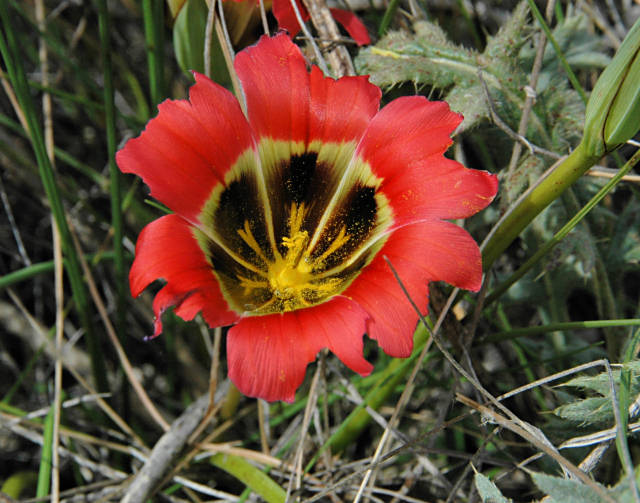
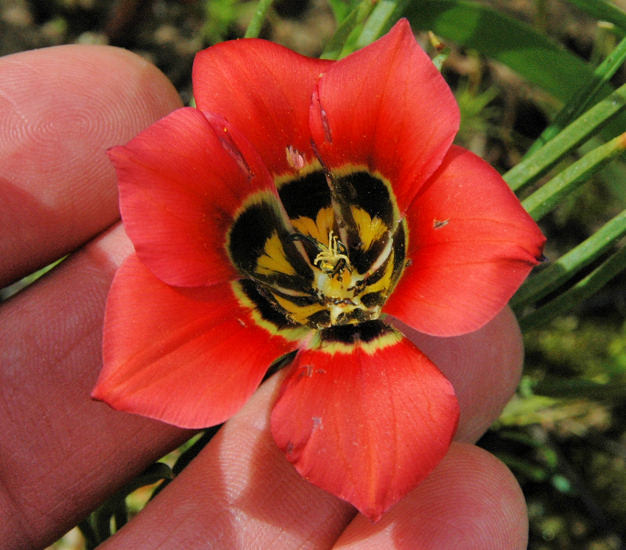
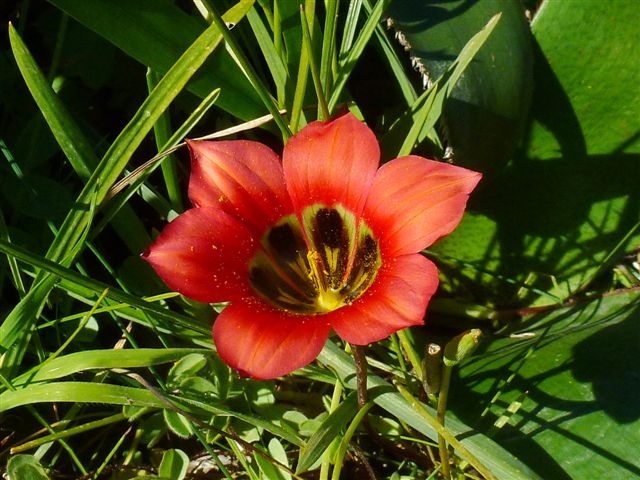
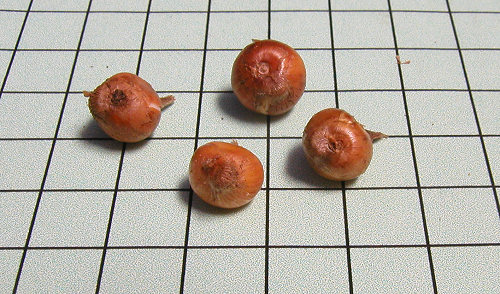
The first photo below from Bob Rutemoeller shows how beautiful they are in a pot and the following photos from Mary Sue Ittner show the bud and the individual flowers from different angles. The fifth photo shows the two side by side for comparison. The last photo shows the corms on a 1 cm grid.
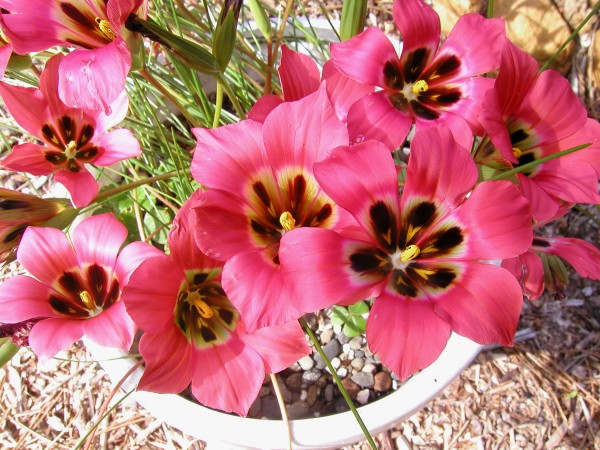
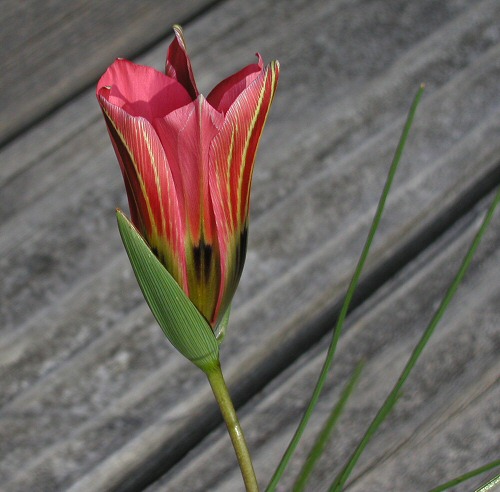
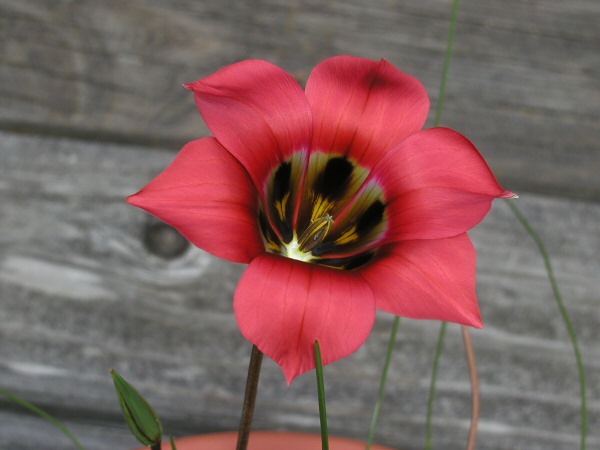
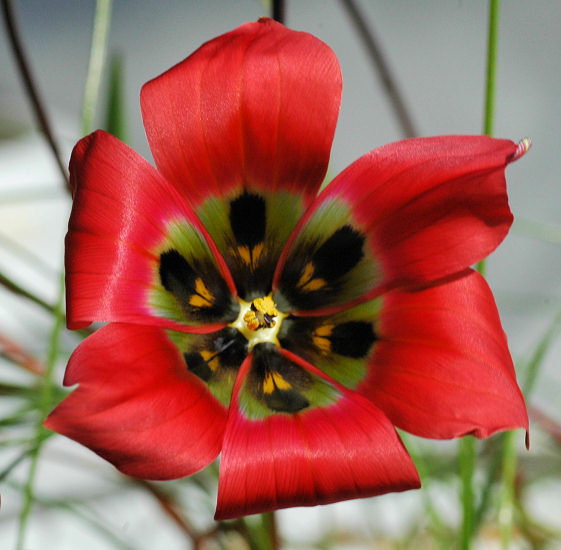

This species is as spectacular or even more so than the wild tulips of the Middle East. The first four photos below were taken by Nhu Nguyen of plants grown from seeds. The last photo from Bob Werra.
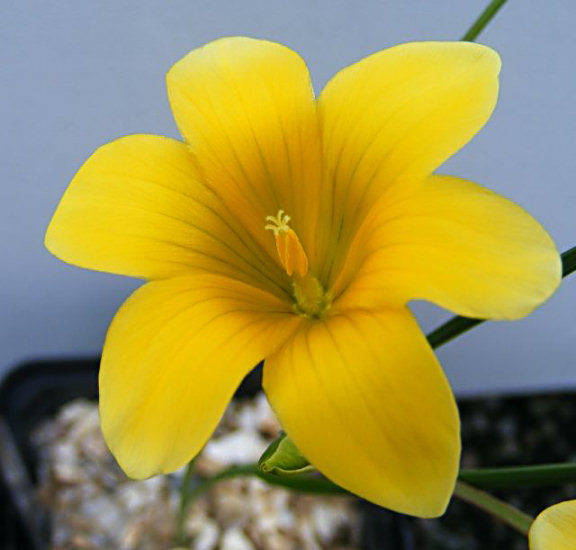
Romulea saldanhensis M.P.de Vos, Cadmium Froetang, is a rare and local endemic that grows on low altitude wet granitic sandy or clay flats in the southwestern coastal Cape (coastal districts of Vredenburg, Hopefield, and Malmesbury.) It has cadmium or golden-yellow flowers with slender dark lines in the cup and globose corms obliquely flattened toward the base with a crescent-shaped basal ridge. It has one thick basal filiform leaf and cauline leaves clustered at the stem apex. Outer bracts are green with narrow membranous margins and inner bracts submembranous in the lower half and green or flushed maroon above, central portion sometimes conspicuously brown-spotted, with broad membranous margins usually streaked or speckled with brown. This species grows from 5 to 20 cm high and flowers in spring (August, September). The first two photos from iNaturalist were taken by Gigi Laidler in September and the next two were taken by Nick Helme, also in September and shared under a CC BY-NC license. The last photo from David Nicholson was taken from a small collection of Romulea species he was trying to grow under glass in Devon, UK.


Romulea schlechteri Bég. grows in sandy soils, often along streams or in seasonally wet places, in the Western Cape. It grows from 8 to 45 cm high and has lilac or mauve to white flowers with deep yellow to orange cups. The outer segments are purplish or greenish or irregularly blotched or striped. The inner bracts have wide white membranous margins. Corms have an oblique basal crescent-shaped ridge of fibril clusters. The first photo from Rachel Saunders. The last three photos below from Mary Sue Ittner show the flowers and the corms on a 1 cm grid.

Romulea setifolia N.E.Br. is a South African endemic species found on sandy flats in the Northern Cape, Eastern Cape and Western Cape provinces, from the Bokkeveld Escarpment to Port Elizabeth, and inland to the western Karoo. It is stemless to short-stemmed with filiform leaves and yellow to apricot flowers with a yellow cup, sometimes with arrow-shaped dark markings in the throat extending to base of cup as dark lines or reduced to median dark lines. Growing from 5 to 25 cm, it is highly variable in the dimensions and markings of the flowers and in the relative lengths of anthers and filaments. Stamens are erect, yellow or orange and the corms have an oblique basal ridge with the fibrils convergent in clusters. It flowers from July to September, or to November at higher altitudes (winter to spring). The first four photos by Mary Sue Ittner show close-ups, a grouping, and the back of a flower and were taken in August 2006 near Tulbagh where it was growing close to Romulea rosea. The last photo is of a flower in cultivation from Mary Sue Ittner.
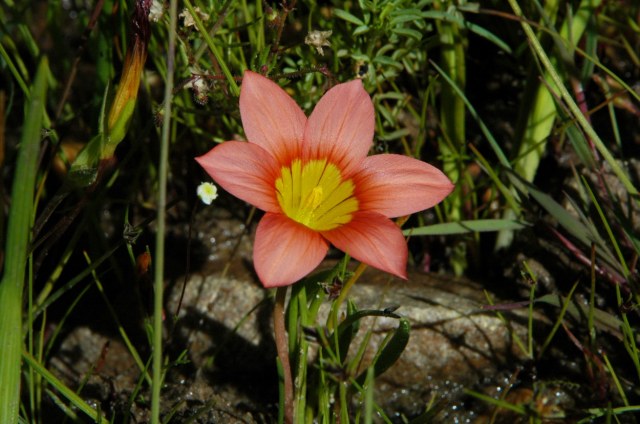
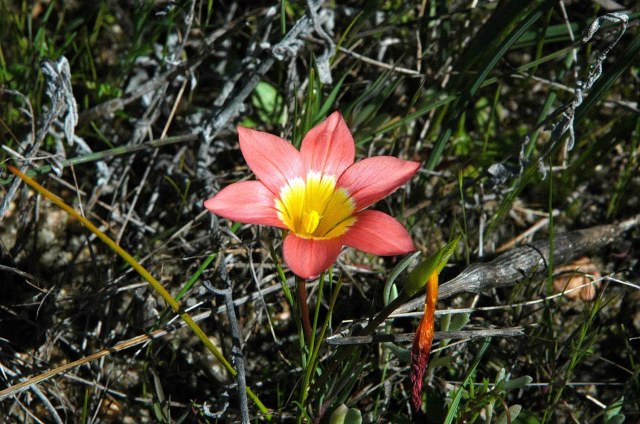
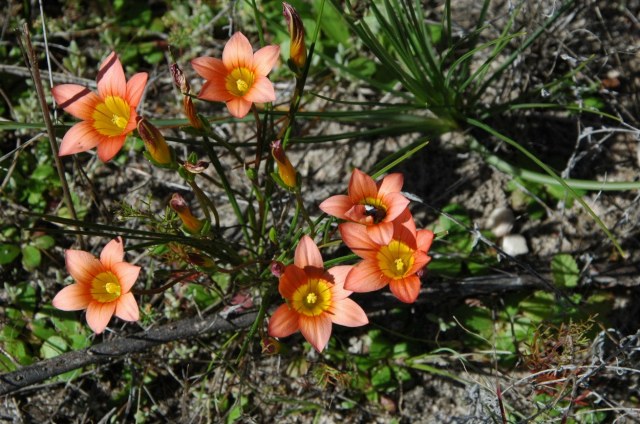
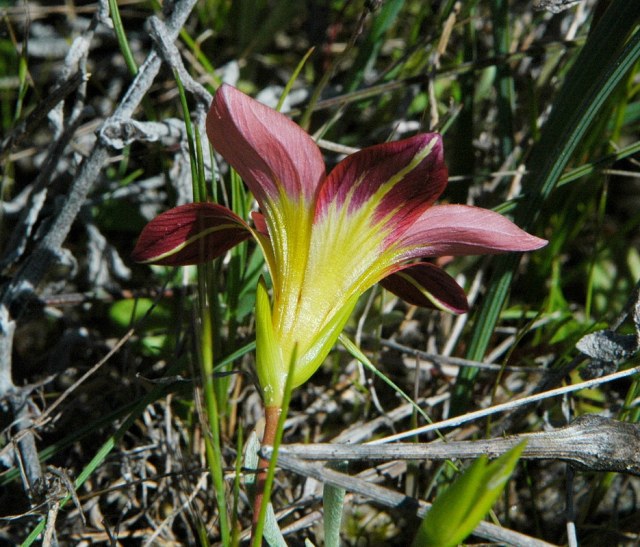

The first photo was taken by Alan Horstmann. The second photo was taken by Rod Saunders. The last photo is from the book Plants of the Klein Karoo courtesy of Jan Vlok and Anne Lise Schutte-Vlok.
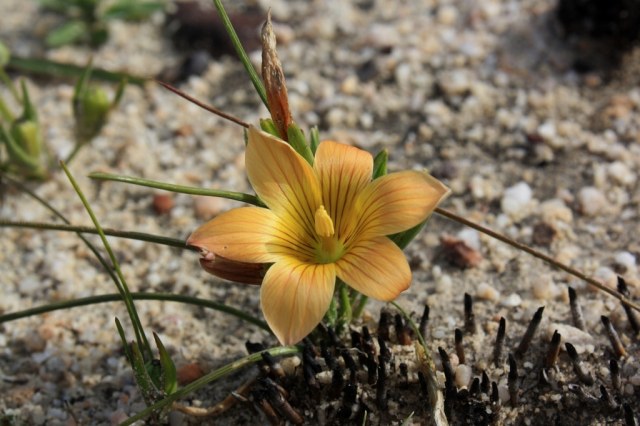
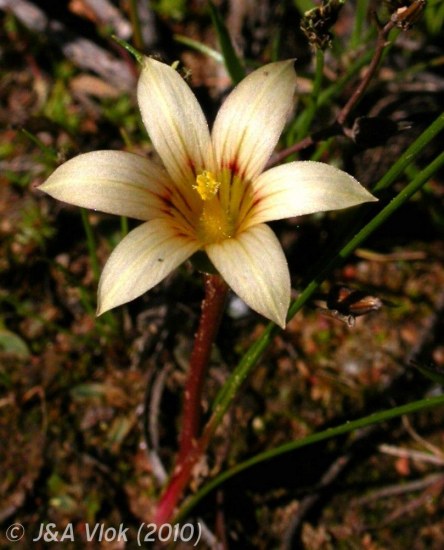
Romulea sladenii M.P.de Vos is restricted to the Gifberg and Matsikamma Mountains in the Northwest Cape, where it grows on rocky seasonally wet sandstone flats and shallow soil. Plants are 7 to 30 cm with a subterranean stem that branches above ground and can reach 20 cm. The white unscented flowers have an orange-yellow cup; the outer tepals are flushed green or pink on the reverse. This species has bright yellow partly exserted anthers and can be distinguished from another Giftberg Romulea species, Romulea toximontana, by the color of the anthers and the different corms. Romulea sladenii corms are symmetrical, bell-shaped, with a broad, lacerated basal ridge and Romulea toximontana has laterally compressed, oblique corms with a wide basal ridge. Flowering is in late winter to spring (August to September). Photos below were taken by Mary Sue Ittner including the corms on a 1 cm grid.


Photos below were taken by Bob Werra.
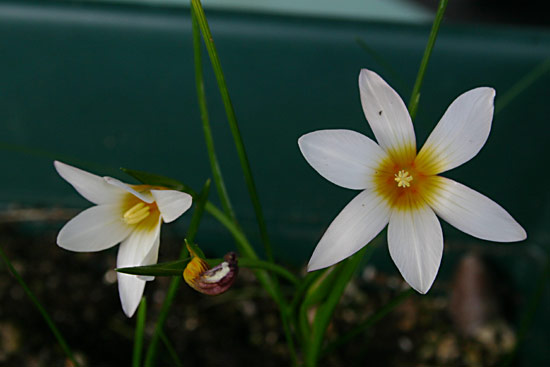
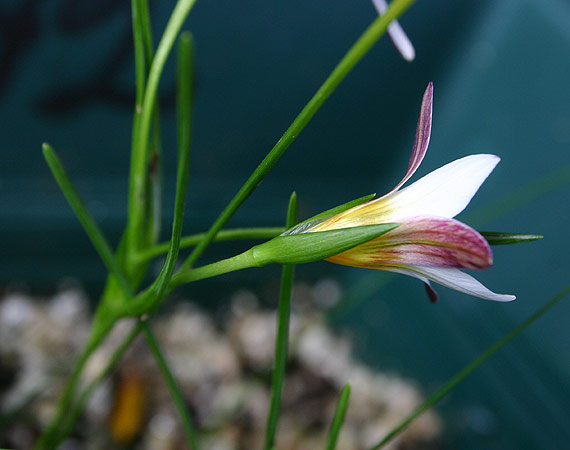
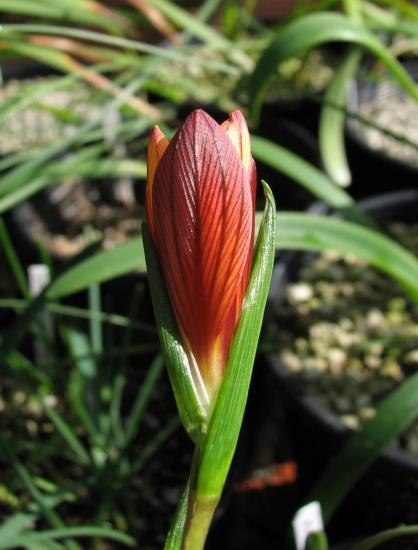
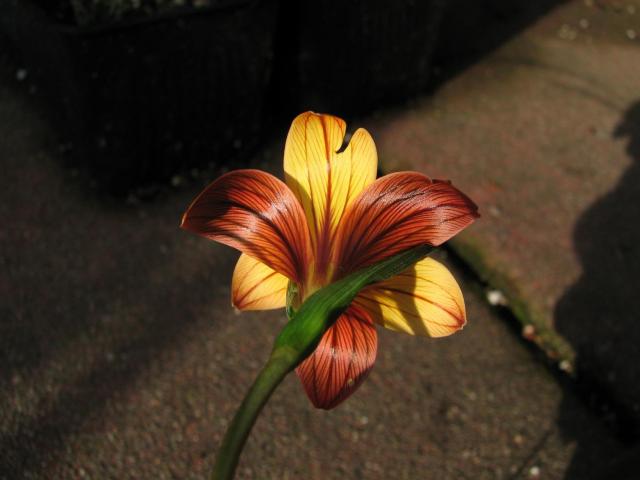
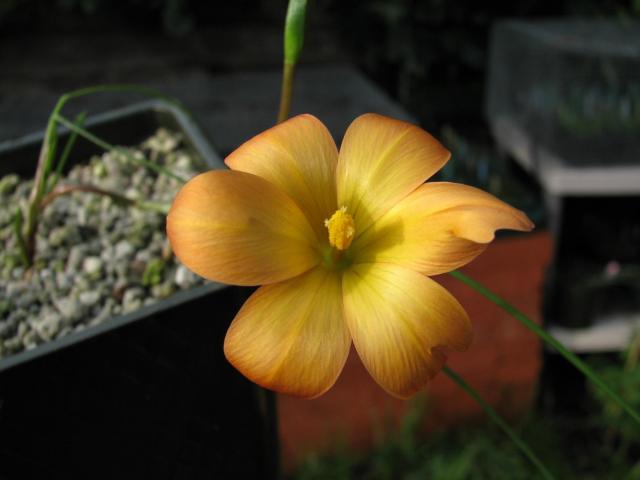
Romulea sp. This Romulea was grown from Silverhill seed called Romulea namaquensis. It was collected in Namaqualand, but does not fit the description of that species and may instead be a new unnamed species. I have had poor luck growing these no doubt because they are unhappy in my much wetter climate. Of the original 11 seeds that germinated fall 2001, only two corms have survived. One gorgeous flower bloomed in 2006. There are two basal leaves and two stem leaves. When closed the flower looked red. The flower only opened late in the day. Perhaps it wasn't warm enough although it was a period of warmer than usual weather for this time of the year. Flowers originally looked almost gold, but on later days became salmon and then orange when open with reddish lines in the throat of the flower. Photos show the stages as the flower slowly opened and on subsequent days. Photos by Mary Sue Ittner
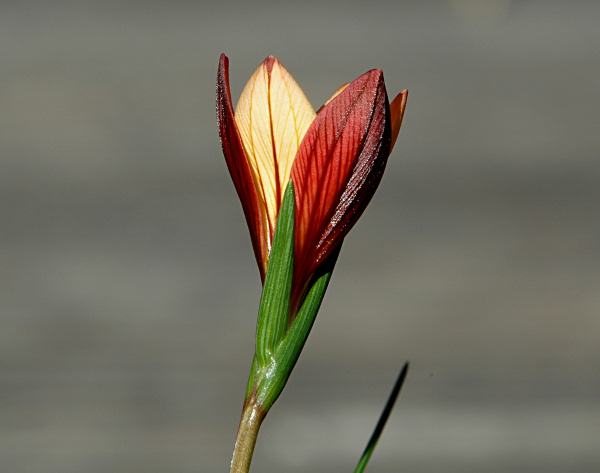


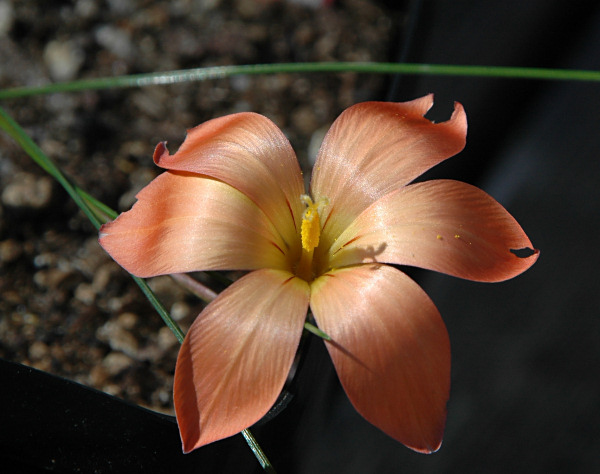
The photos below were taken by Nhu Nguyen of a bulb from Telos Rare Bulbs. The seeds for this plant probably came from the same Silverhill collection described above. It definitely did not like the winter in Berkeley, CA and the bulb rotted after two seasons of too much winter rain.
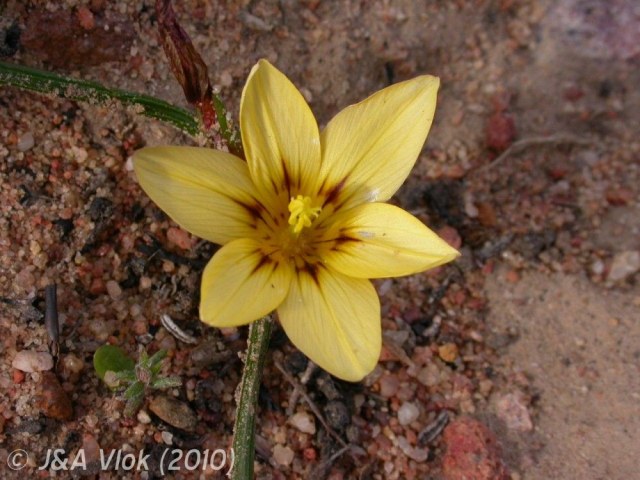
Romulea sphaerocarpa M.P.de Vos is found sporadically in moist sites in fynbos and renosterveld and on sandstone outcrops in the inland mountains in the Northwest Cape and the Little Karoo. Growing from 15 to 30 cm high, it has an obliquely flattened corm with a wide fan-shaped basal ridge, one, rarely two, sticky (often attracting sand grains) basal leaves and usually solitary yellow flowers with brown streaks in the cup. It flowers in winter (June). Photo from the book Plants of the Klein Karoo courtesy of Jan and Anne Lise Schutte-Vlok.
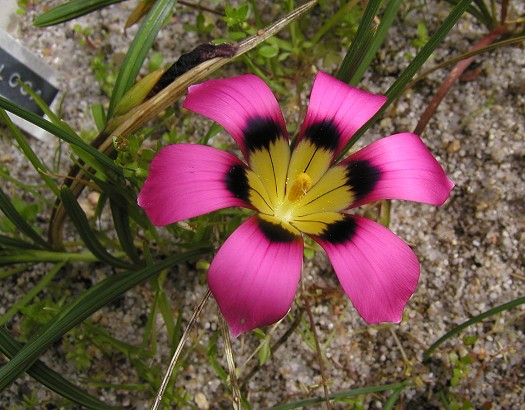
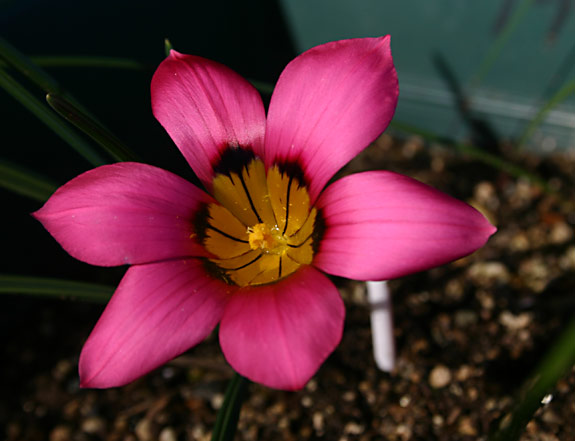
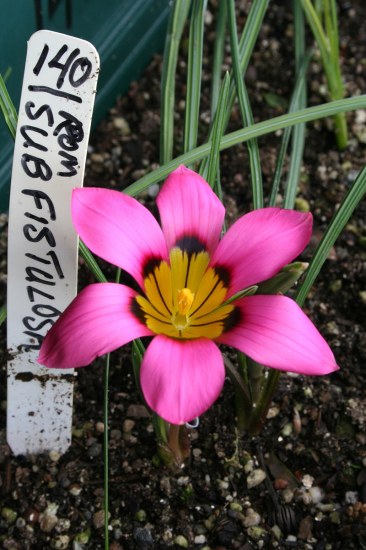
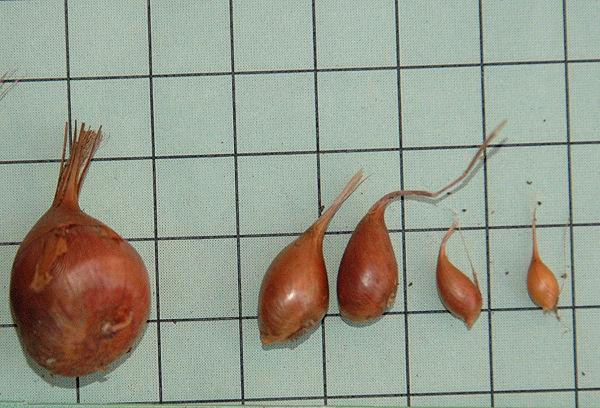
Romulea subfistulosa M.P.de Vos grows on dolerite flats from Calvinia to the Roggeveld Escarpment. It is pink with dark blotches at the edge of a yellow cup. Height: 15-30 cm. The first one shown below is grown by Alan Horstmann in South Africa, photographed by Bob Rutemoeller and the next two photos are from Bob Werra. The last photo taken by Mary Sue Ittner shows corms on a 1 cm grid. The smaller ones are two years old.
The first two photos were taken in habitat by Cameron McMaster. The rest were taken by Alan Horstmann. The third shows one growing with Romulea unifolia.
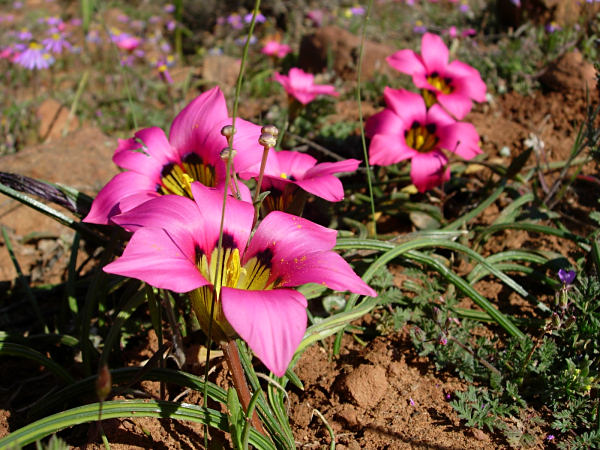
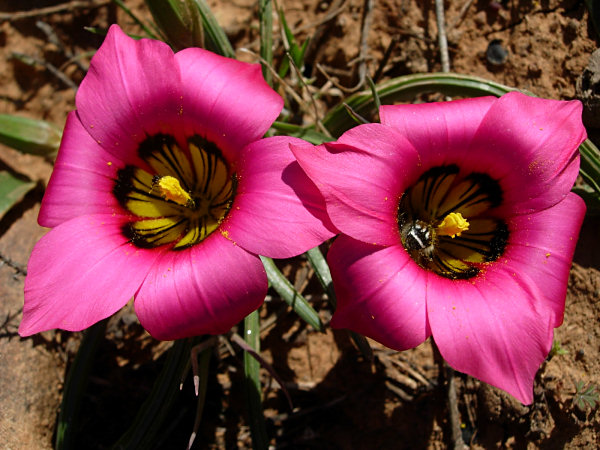
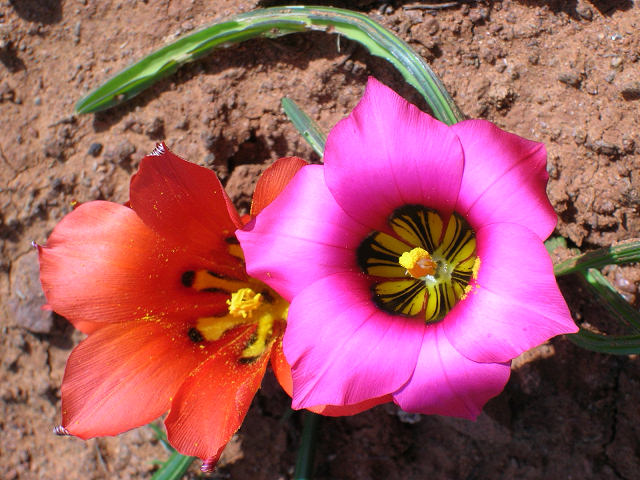
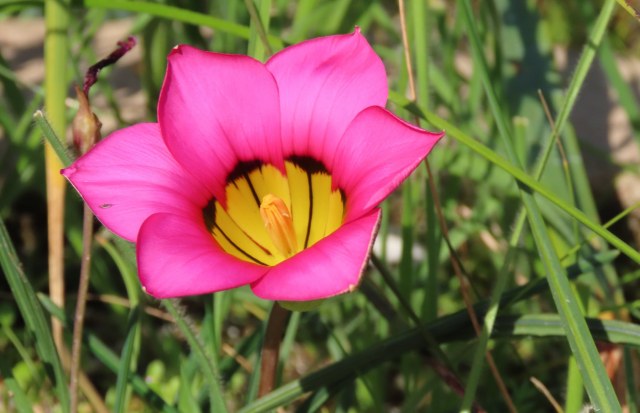
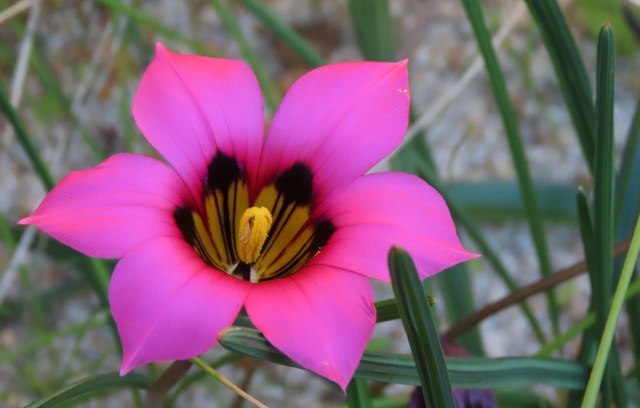
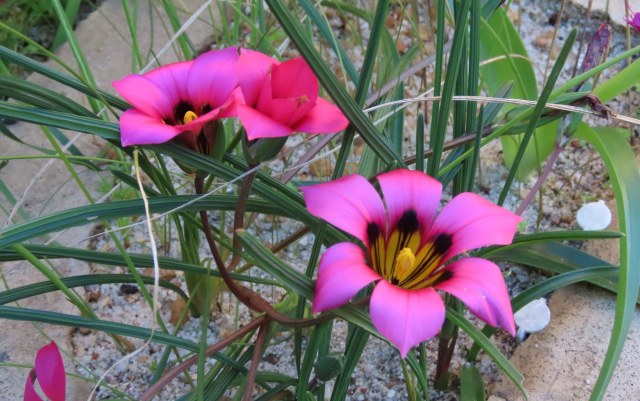
The first three photos taken in September 2006 in the Roggeveld near Middelpos by Bob Rutemoeller show the flower before it has opened with the interesting back and bract (with a closed Hesperantha cucullata), a group of three, all with little different markings in the cup, and with Androcymbium latifolium. The last photo by Mary Sue Ittner shows two variants found the same day, one white and one pink.
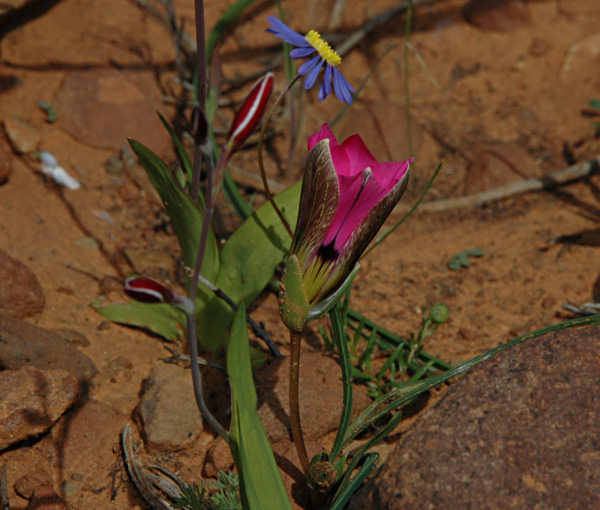
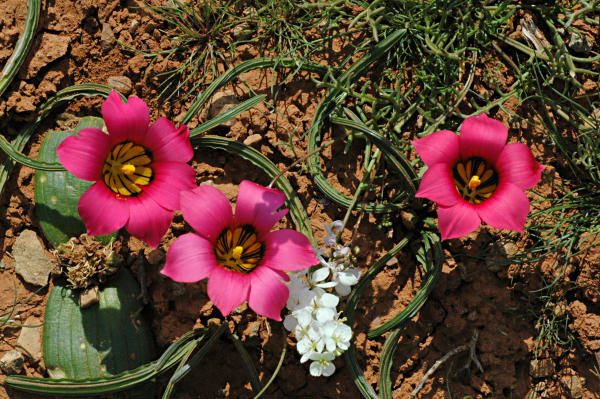
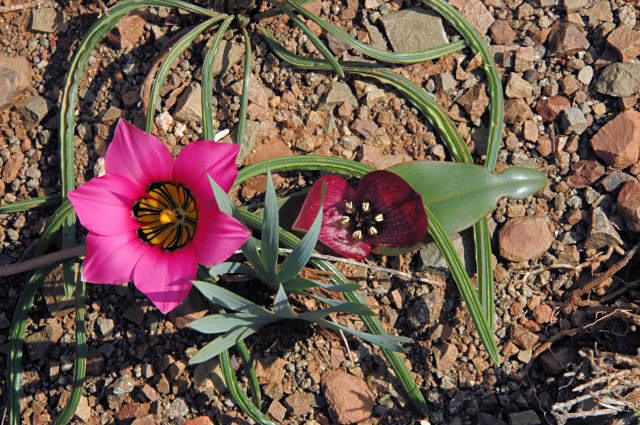
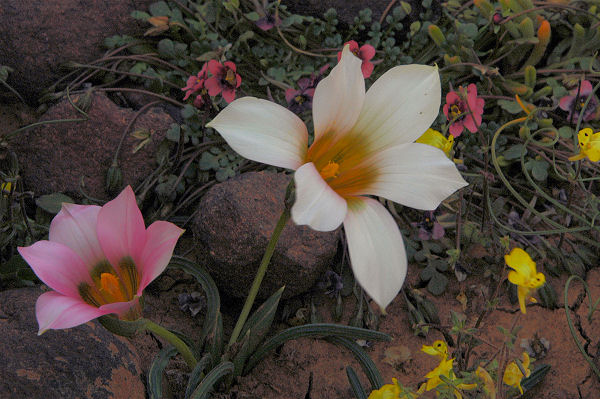
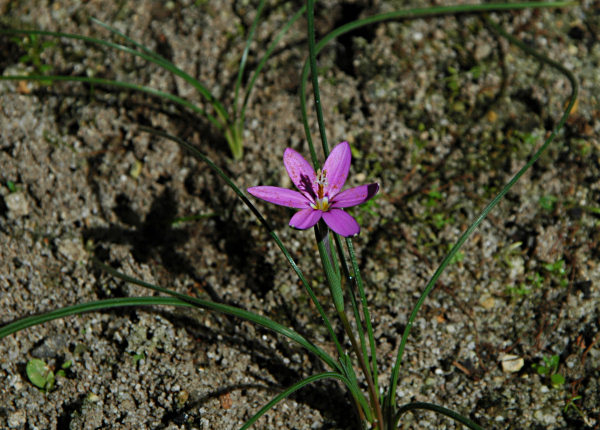
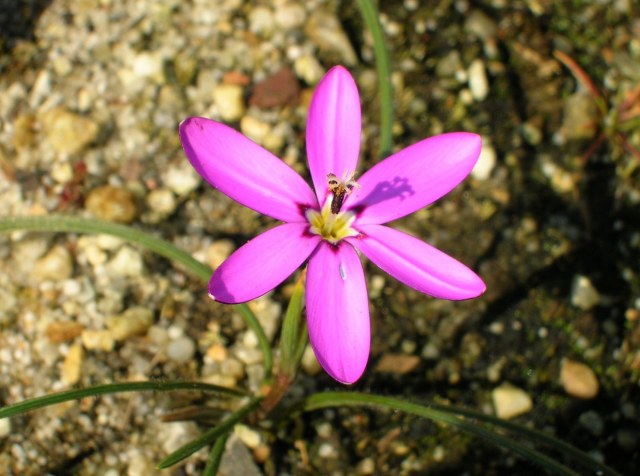
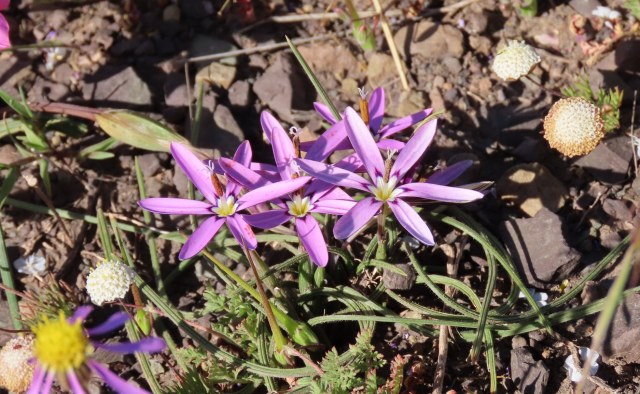
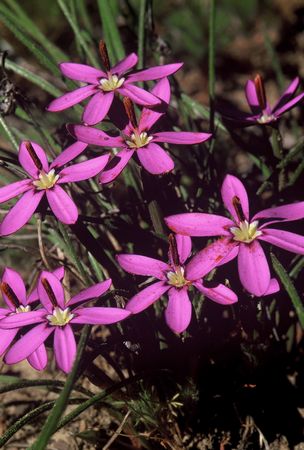
Romulea syringodeoflora M.P.de Vos is found on shale flats and slopes near Sutherland in the Roggeveld and blooms in spring. It has magenta pink flowers that are salver-shaped with a yellow center and curved sparsely hairy leaves. It resembles plants in the genus Syringodea but has a different leaf structure and bifid style branches. It is one of four species with a narrow cylindrical perianth tube. Height: 15-30 cm. The first photo was taken by Mary Sue Ittner of plants in Alan Horstmann's bulb collection in South Africa. The next three photos were taken by Alan Horstmann, including the third of three at Middelpos in the Roggeveld. The last was taken last by Rod Saunders.

European And Mediterranean Romuleas - South African Romulea a-d - South African Romulea e-k - South African Romulea l-n - South African Romulea t-z - Romulea index