Lapeirousia is a genus in the Iridaceae family. The rootstock is a bell-shaped or triangular corm with a flat base with woody or densely compacted fibers. Leaves are flat and curved to narrow and pleated. A number of very diverse species are found in Namaqualand and the northwestern Cape, South Africa in semiarid habitats. Many of the Cape and Namaqualand species are very small and also very striking. Some of these species can remain underground some years and may not like to be disturbed so repotting every year is not recommended. More information can be found by consulting Manning, Goldblatt, Snijman listed in References. In Systematics and Biology of Lapeirousia, Codonorhiza, Psilosiphon & Schizorhiza in Southern Africa published in 2015 by Goldblatt and Manning Lapeirousia was dismembered. Lapeirousia was retained and the other three new genera described were Codonorhiza with 7 species from the Southwestern Cape, South Africa, Schizorhiza with one species from the Southwestern Cape, South Africa and Psilosiphon with 16 species from tropical and eastern southern Africa. Psilosiphon was renamed in 2016 as Afrosolen. Lapeirousia was left with 27 species centered in western Southern Africa, but also represented in south tropical Africa.
Another species that was once included in Anomatheca and before that in Lapeirousia most people now think should be called Freesia laxa. It has corms that resemble other Freesias instead of the more typical Lapeirousia corm. It can naturalize in temperate climates. Freesia laxa can still sometimes be found labeled Lapeirousia cruenta, Lapeirousia laxa, Anomatheca cruenta, or Anomatheca laxa.
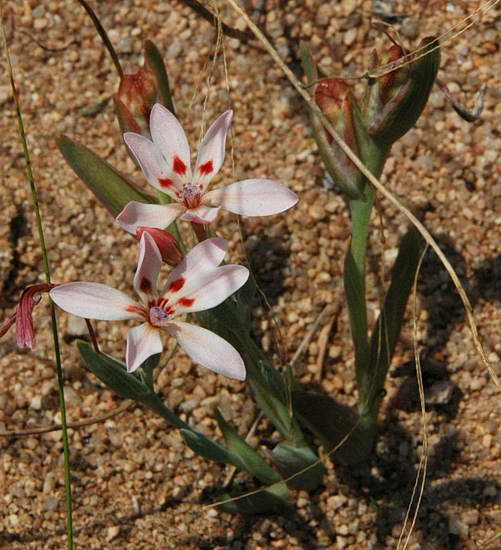
Lapeirousia anceps (L.f.) Ker Gawl. is found in deep sand or stony slopes in fynbos from southern Namaqualand to Mossel Bay. Leaves are ribbed and linear. Flowers are cream to pink with a long slender tube and narrow tepals with red markings on the lower shorter tepals. The central upper petal is the largest. Height: 10-30 cm. Photographs were taken by David Retief.
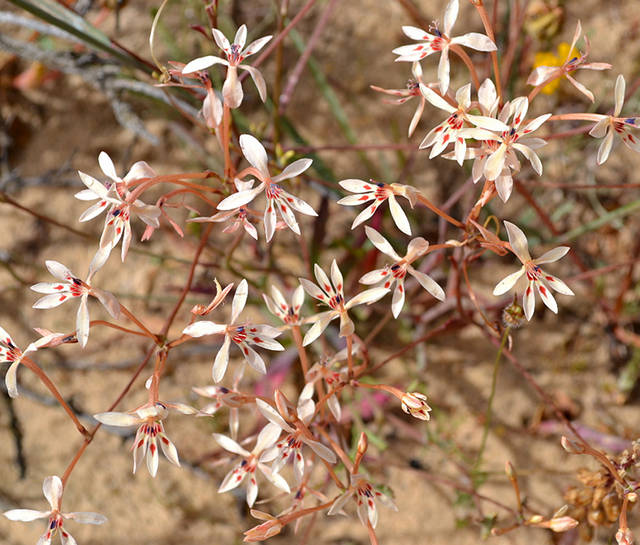
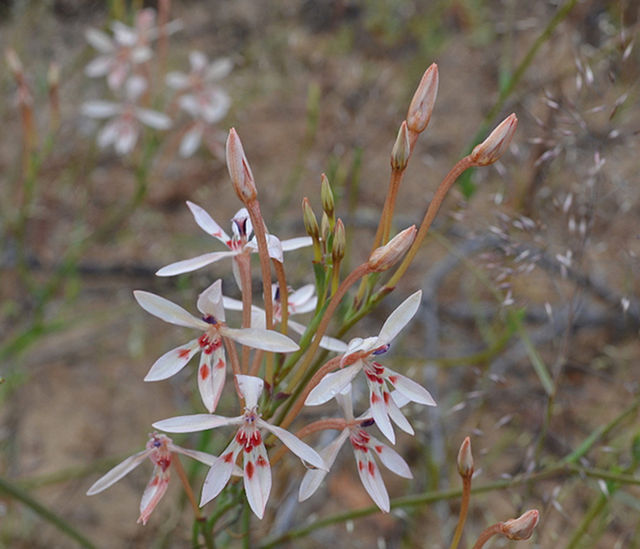
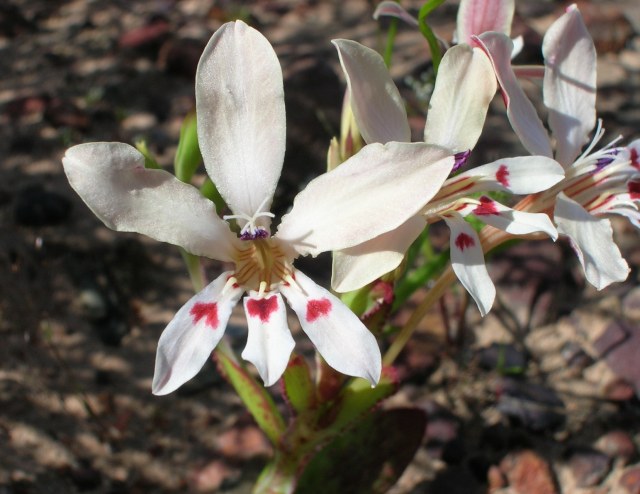
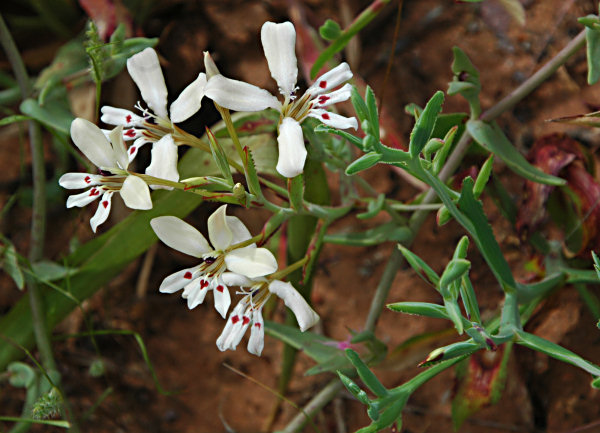
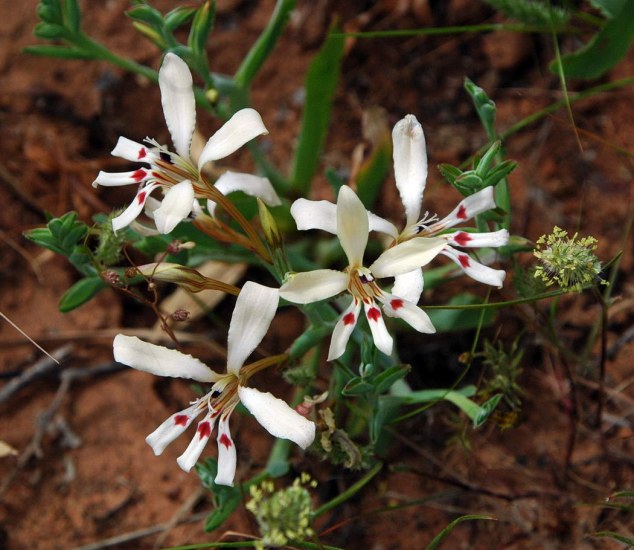
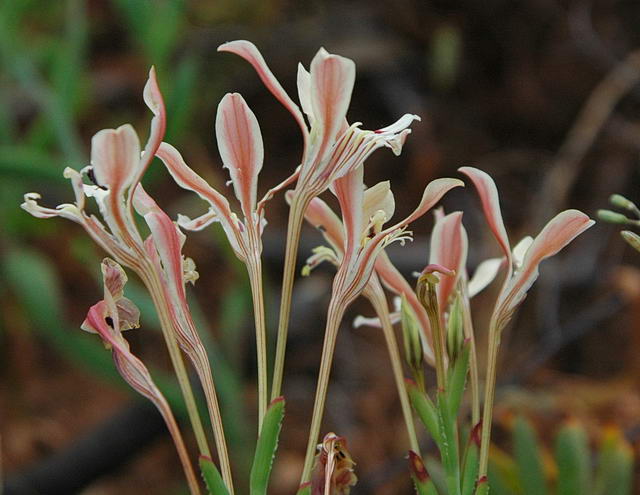
Lapeirousia arenicola Schltr. is found in deep red sand in Namaqualand. This short plant has a branched stem and cream to pink flowers with a red spot at the base of the lower smaller segments. The tube is shorter than in some of the other species. Height: 10-15 cm. Photos 1-3 taken September 2006 by Mary Sue Ittner in Namaqualand. The last photo was taken by Rod Saunders.
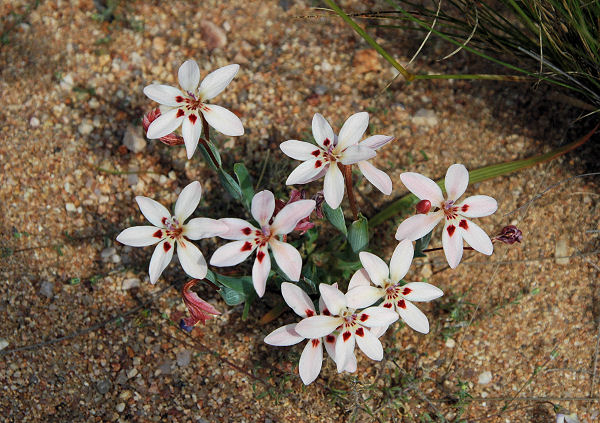
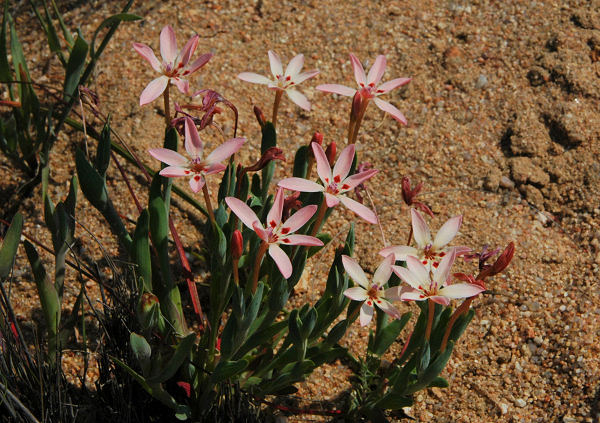
Lapeirousia azurea (Eckl. ex Baker) Goldblatt see Codonorhiza azurea
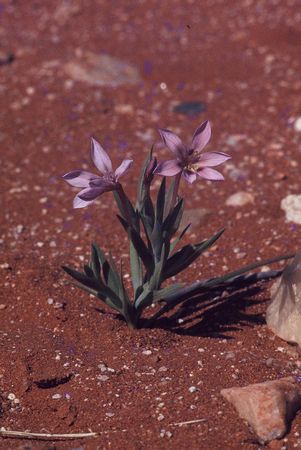
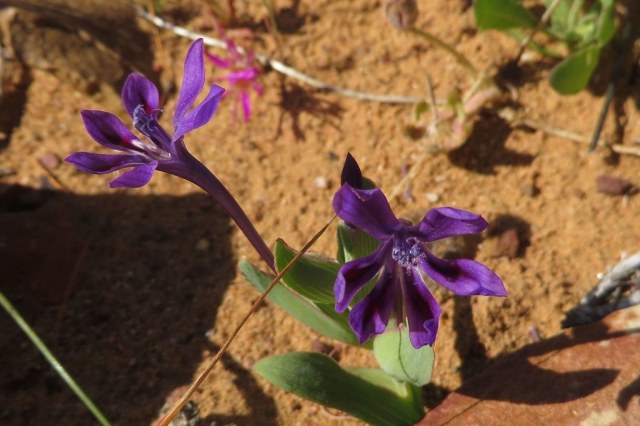
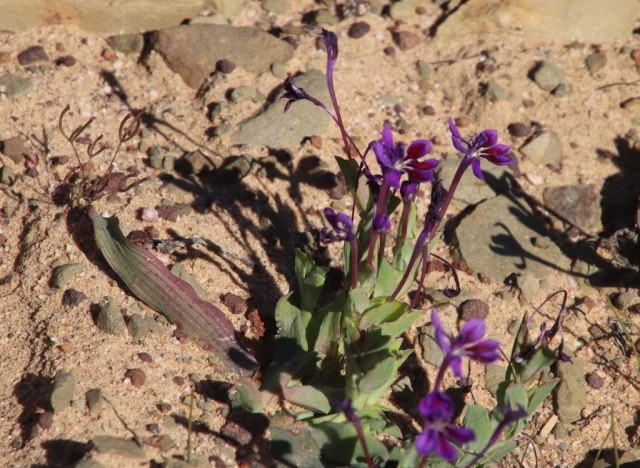
Lapeirousia barklyi Baker is a species growing from 10 to 15 cm found in the Northern Cape and Namibia. It has lilac to purple flowers with the tepals cupped at the base with large ridged toothlike calluses found on the lower tepals. The first photo was taken by Rod Saunders. The second photo was taken in the Richtersveld winter 2011 by Rachel Saunders in a spot where hundreds of them were growing in the reddish sand.
Lapeirousia corymbosa (L.f.) Ker Gawl. see Codonorhiza corymbosa
Lapeirousia divaricata Baker is found in damp sandy places in the northwestern Cape from the Bokkeveld Escarpment to Citrusdel. This species has a single linear or sword shaped leaf and fragrant white to pale pink flowers with dark pink to red streaks on the lower tepals. The lateral tepals are reflexed with the upper central segment erect. Height range: 7-25 cm. Sometimes seed has been passed around that has been named for this species but is really Freesia laxa. This plant grown and photographed by Sheila Burrow appears to be the real thing. Photos 2-4 from Mary Sue Ittner and Bob Rutemoeller were taken September 2006 near the Biedouw Valley and at Ramskop in Clanwilliam. Photo 5 from Rod Saunders. The last photo from Mary Sue Ittner is of a plant in cultivation.
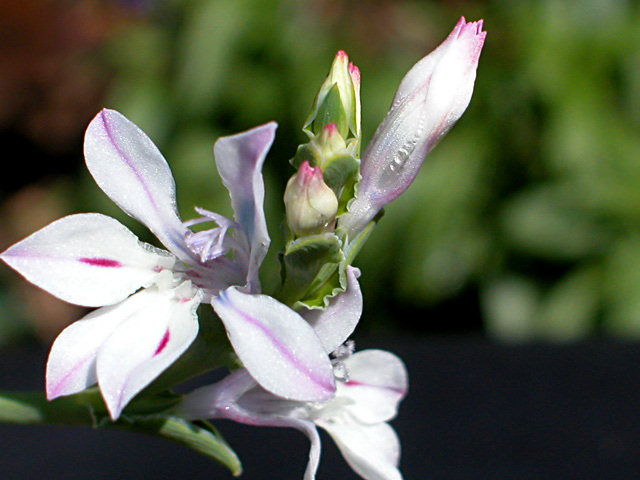
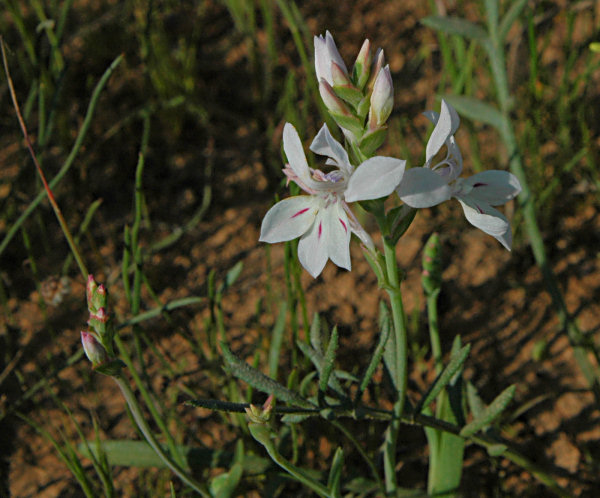
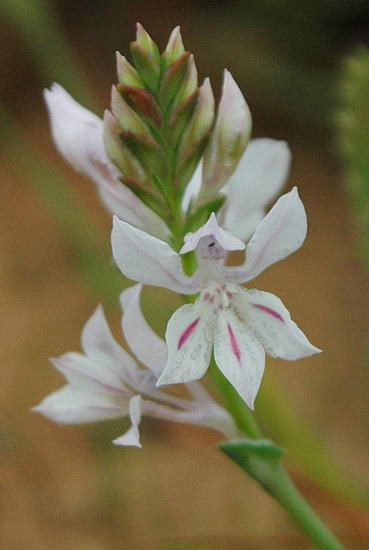
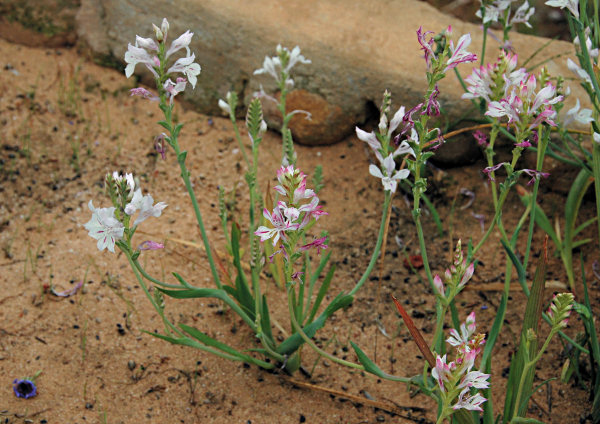
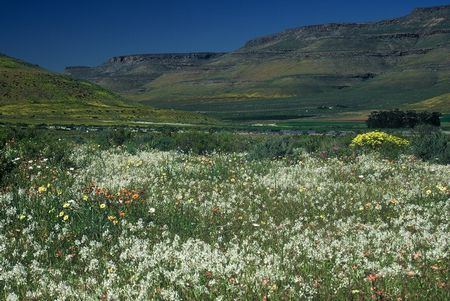
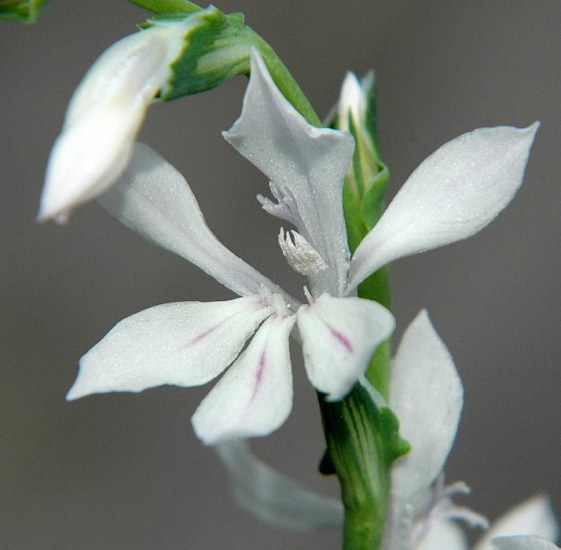
Lapeirousia 'Enigmata' may have been first offered by Richard Doutt and Bioquest International and later by Jim Duggan and in various seed exchanges. It is not a valid published name and is likely to be a hybrid. Click here to see PBS list posts about Lapeirousia enigmata. Photo by Jim Duggan.
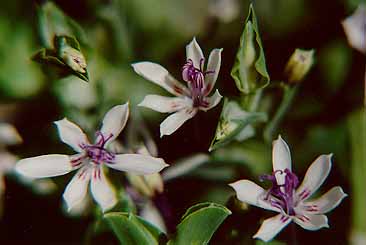
Lapeirousia fabricii (D.Delaroche) Ker Gawl. is found on stony sandstone and granitic slopes from Namaqualand to Worcester. This species has ribbed linear leaves and flowers in short spikes on a branched stem, and grows 15-25 cm tall. The cream to pink long tubed flowers often have a hooked tooth appendage and red markings on the lower tepals. Flowers are flushed pink on the back and are very pretty. Photos 1-4 by Mary Sue Ittner and Bob Rutemoeller were taken September 2006 in Namaqualand showing the front and back of the flowers (and the long tube.) Photos 5-6 were taken by Cameron McMaster at Elands Bay, Western Cape.
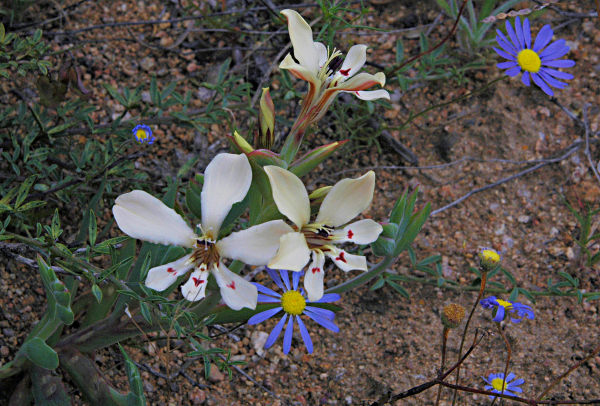
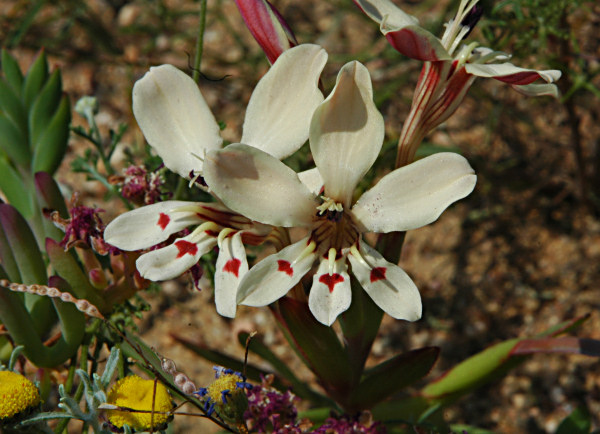
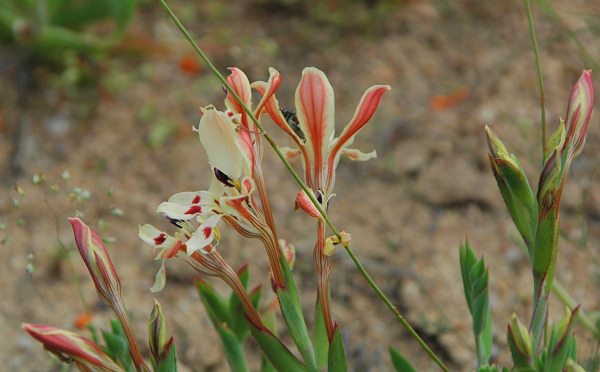
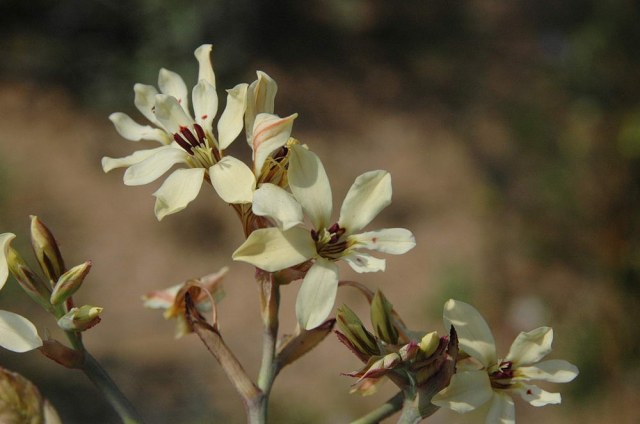
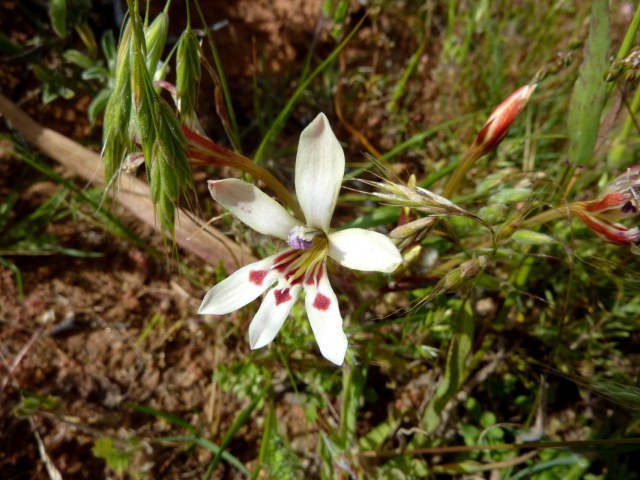

The first photo was taken by Alan Horstmann. The other photos were taken between Clanwilliam and Citrusdal in the Cederberg by Mary Sue Ittner.
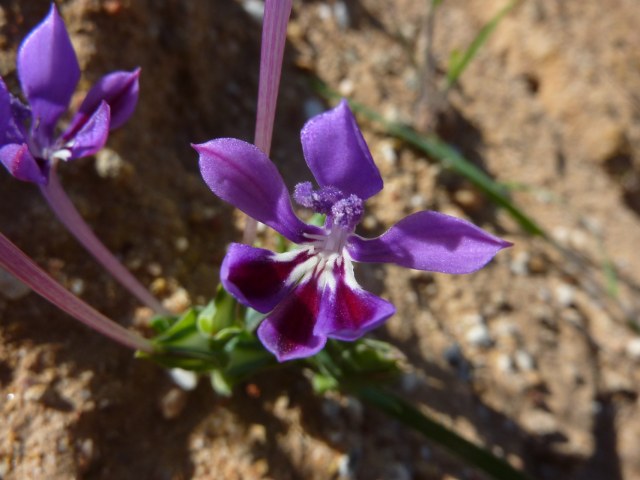
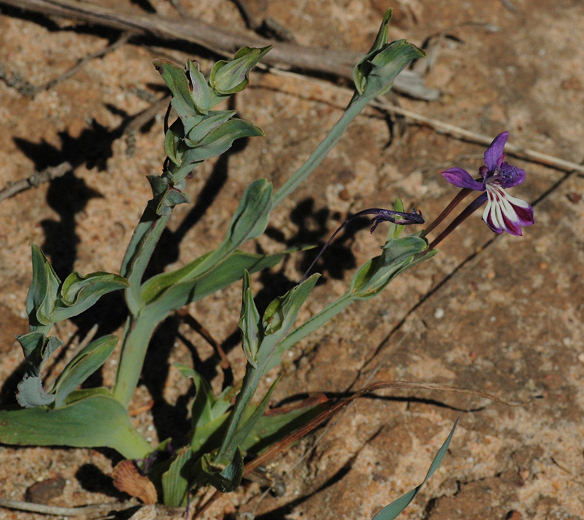
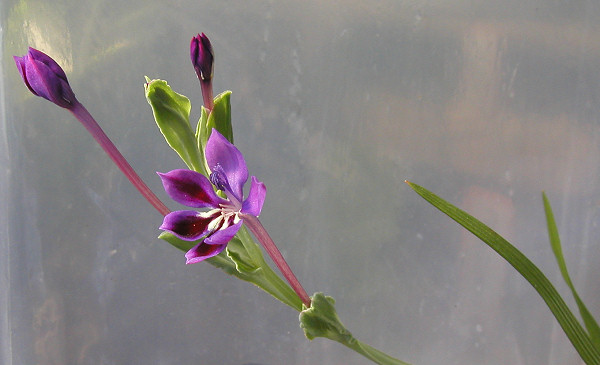
Lapeirousia jacquinii N.E.Br. is a small plant growing on sandstone soils from Namaqualand south to Worcester. Leaves are grey green and ribbed and flowers are long tubed on short spikes on a branched stem arising from several leaf like 2 keeled bracts, dark purple to violet with the lower tepals held close together and striped with white and red markings. The upper tepal is erect and larger. Height: 8-12 cm. The first four pictures were taken by Mary Sue Ittner, Bob Rutemoeller and Cameron McMaster near Nieuwoudtville in the Bokkeveld Plateau.
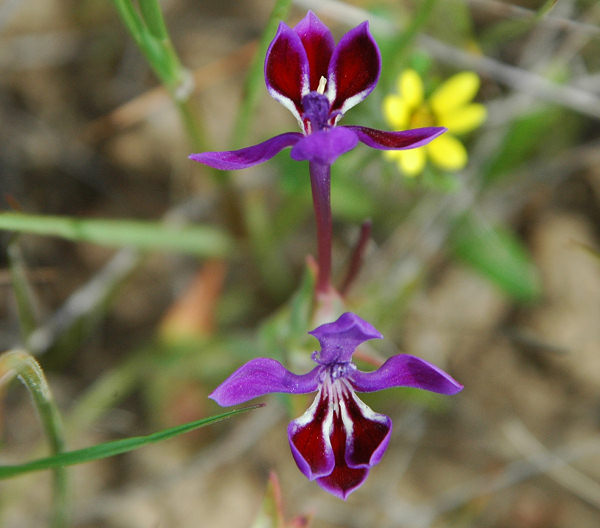
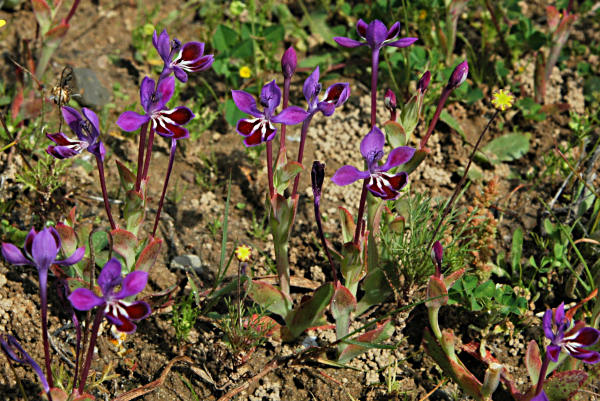
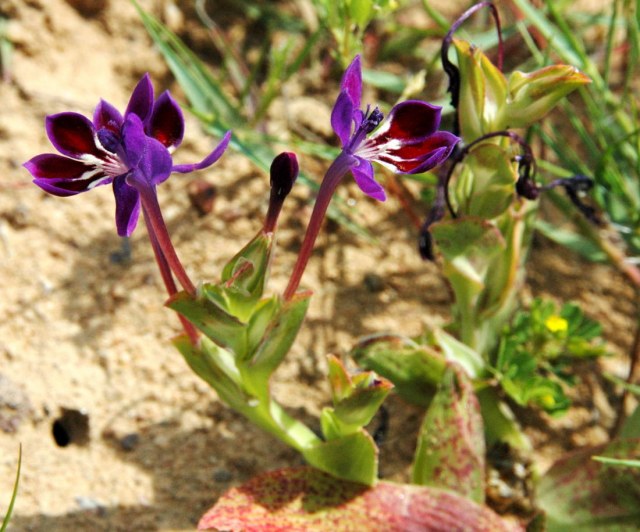
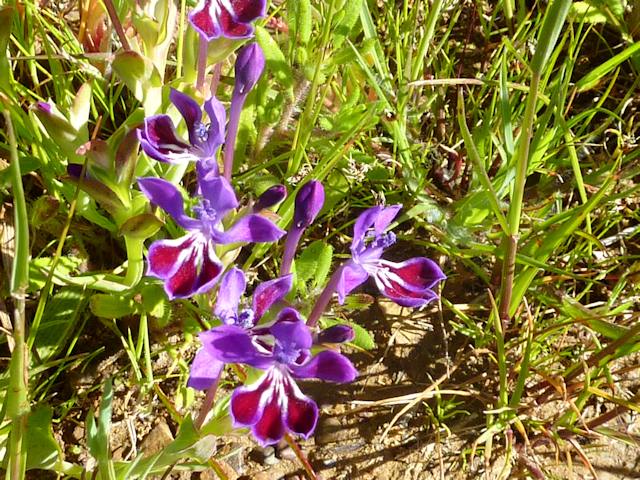
The first photo from Cameron McMaster was taken near the Pakhuis Pass. The second by Bob Rutemoeller was taken in the Southwestern Cape in September 2006. The final photo was taken by Mary Sue Ittner who finds this a difficult plant to grow where she lives in Northern California. The photo shows one flowering in 2004.
Lapeirousia micrantha (E.Mey. ex Klatt) Baker see Codonorhiza micrantha
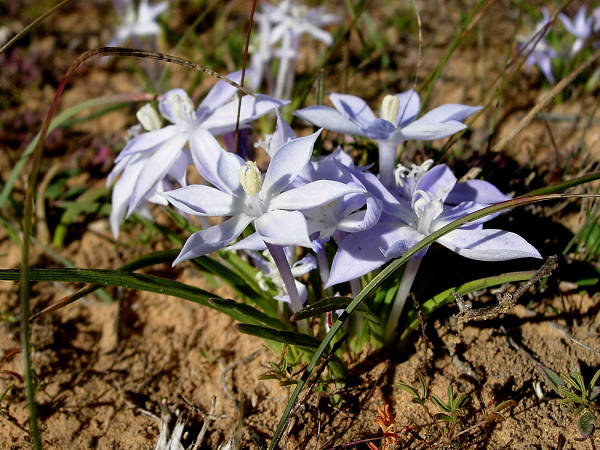
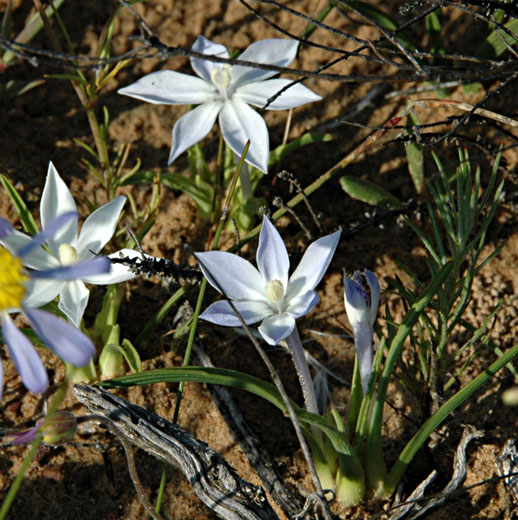
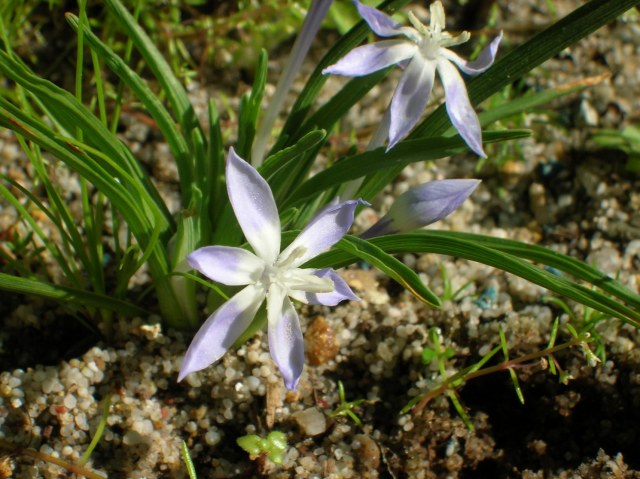
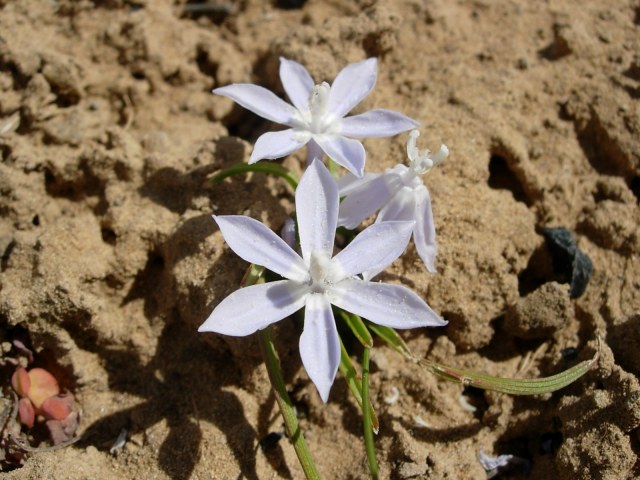
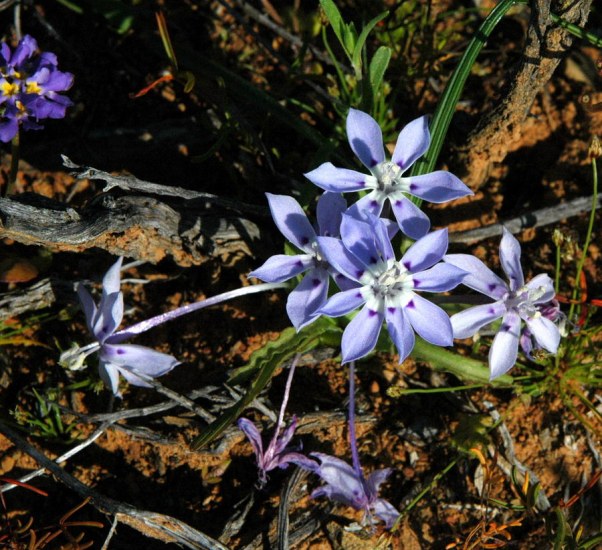
Lapeirousia montana Klatt grows from 5 to 10 cm and is found on clay soils in the Roggeveld flowering August to September. Leaves are linear, straight or curvy. The pale blue to whitish fragrant flowers are in a basal rosette and are radially symmetrical with the lower third of the tepals white and often with darker blue triangular or diamond shaped median markings. This species is similar to Lapeirousia plicata but has larger flowers and a longer tube (tube to 40 mm, tepals 12 to 14 mm). Tepals have more or less straight margins. Anthers are usually white. It flowers August to late September. The first two photos were taken by Cameron McMaster and Bob Rutemoeller in the Komsberg. The next photo was taken by Alan Horstmann. The last three were taken by Cameron McMaster and Mary Sue Ittner near Middelpos.
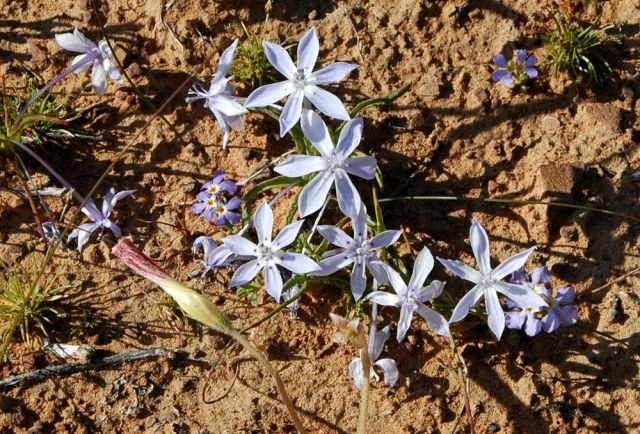
Lapeirousia neglecta Goldblatt see Schizorhiza neglecta.
Lapeirousia oreogena Schltr. ex Goldblatt, a striking species, is found in clay soils in the northwestern Cape. It has linear to sword shaped ribbed leaves and violet flowers with cream and blackish markings. Plant height: 5-10 cm. The first two photos were taken by Bill Dijk and the next two by Mary Sue Ittner of plants in cultivation. The last photo was taken by Erika Schroedersecker.
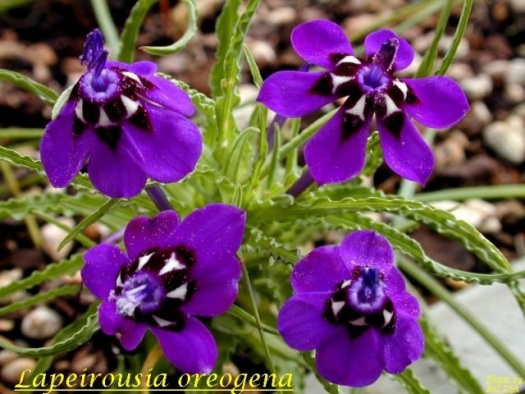
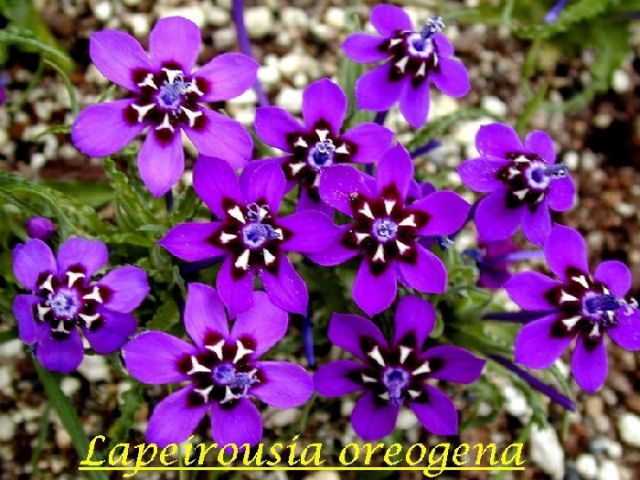
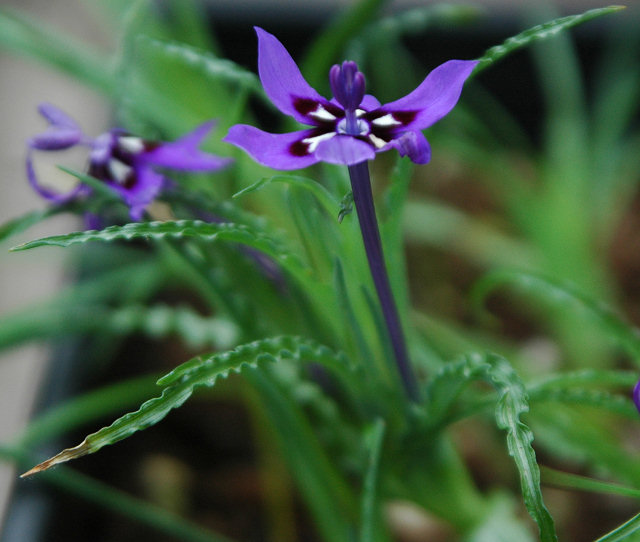
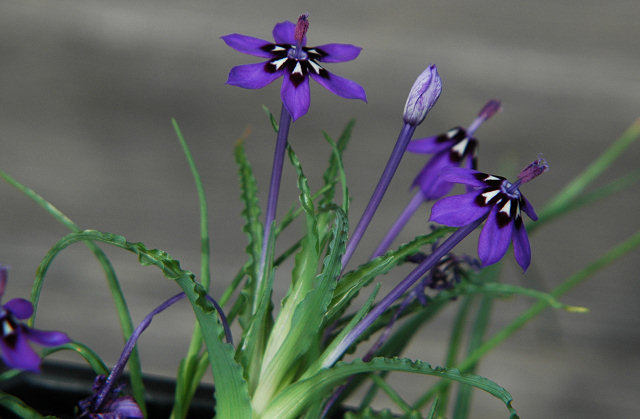
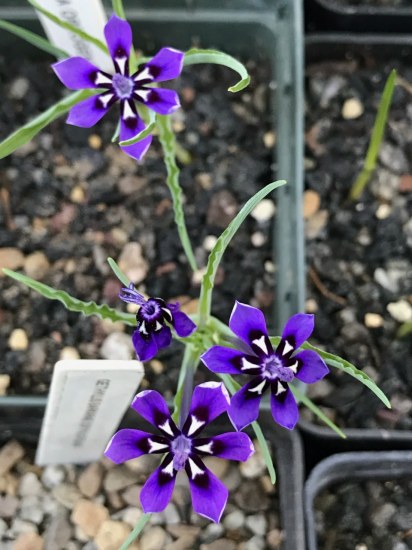
The first photo by Bob Rutemoeller was taken in habitat near Nieuwoudtville and the BokkeveldPlateau September 2006 and the next photo was taken by Cameron McMaster in the same location September 2011.
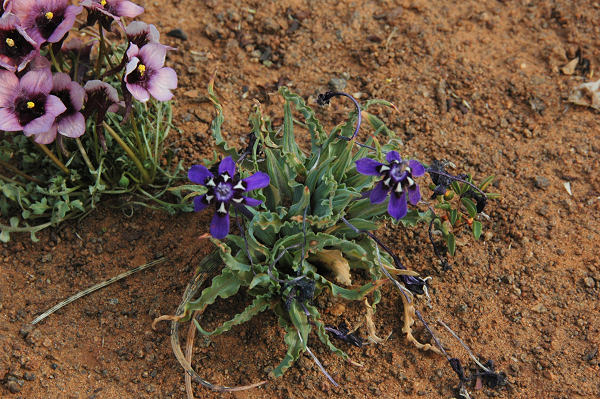
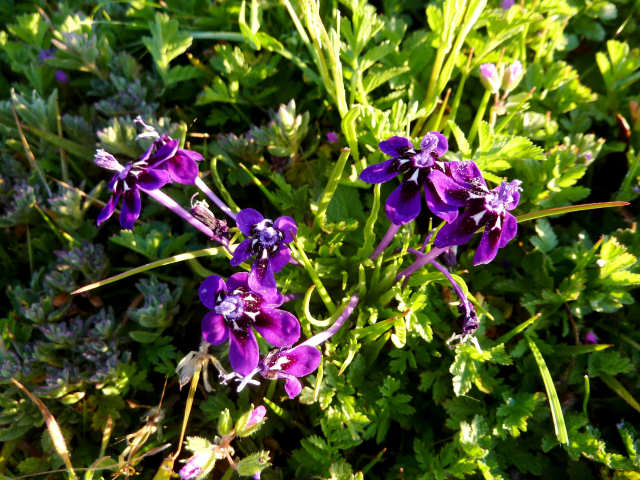
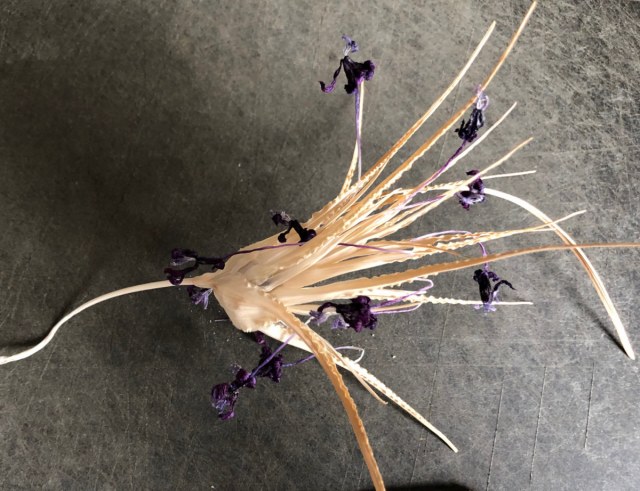
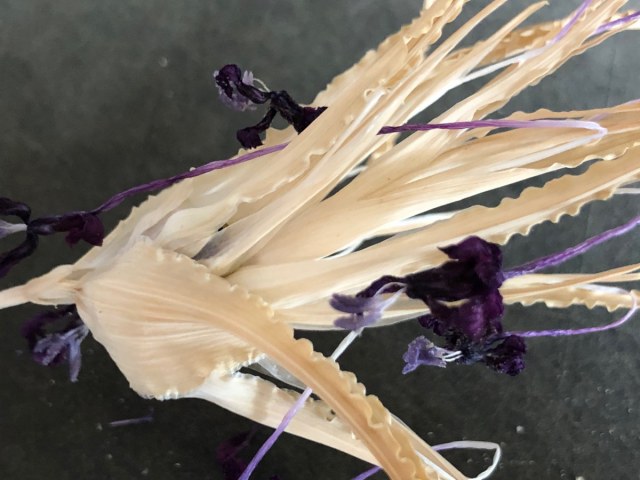
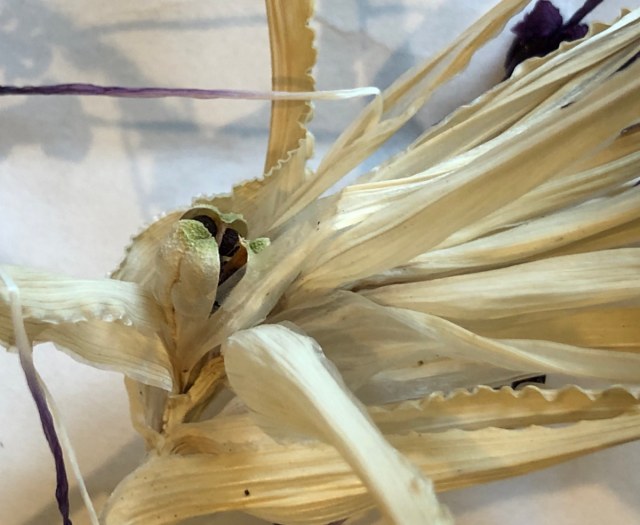
Photos of a seed pod by Rimmer de Vries. In photo 4 the pencil lead is 0.9 mm in diameter.

Time lapse video of flowers of Lapeirousia oreogena opening over 3 days by Richard Sullivan
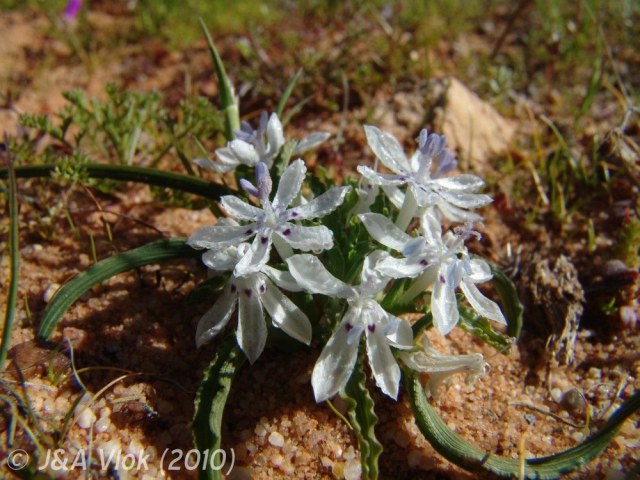
Lapeirousia plicata (Jacq.) Diels forms a compact cushion from 3 to 5 cm. It has linear to sword shaped flat ribbed leaves with the margins crisped or wavy and pale blue to white small (tube 12 to 25 mm, tepals 5 to 10 mm) flowers in a basal tuft with large leafy crisped bracts. It is found on dry shale flats, succulent karoo, or renosterveld in the interior Western Cape, the Karoo, and Little Karoo to Southern Namibia. It is similar to Lapeirousia montana, but has a shorter tube and smaller flowers, blue anthers, and tepals with undulate margins. The filaments are distinctive in that they are initially erect, but arch outward during anthesis. It flowers in winter or early spring (July to September). The first photo from Alan Horstmann. The second photo from Rod Saunders. The third and fourth photos were taken by Mary Sue Ittner and Bob Rutemoeller of what they think is this species near Middelpos in the Roggeveld. The fifth photo was taken by Margaret Fox in the Tankwa Karoo August 2022. The last photo from the book Plants of the Klein Karoo courtesy of Jan and Anne Lise Schutte-Vlok.
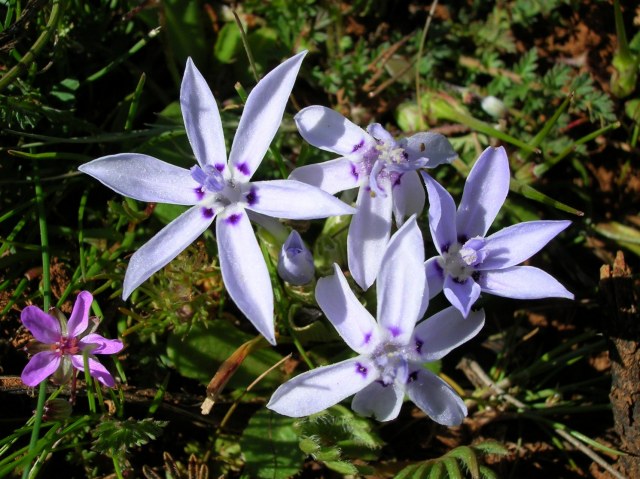
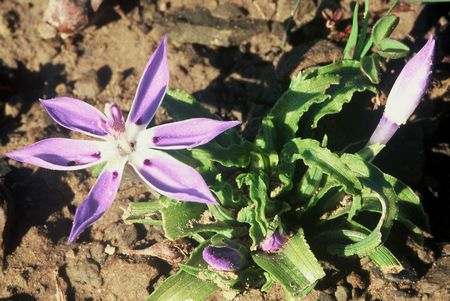
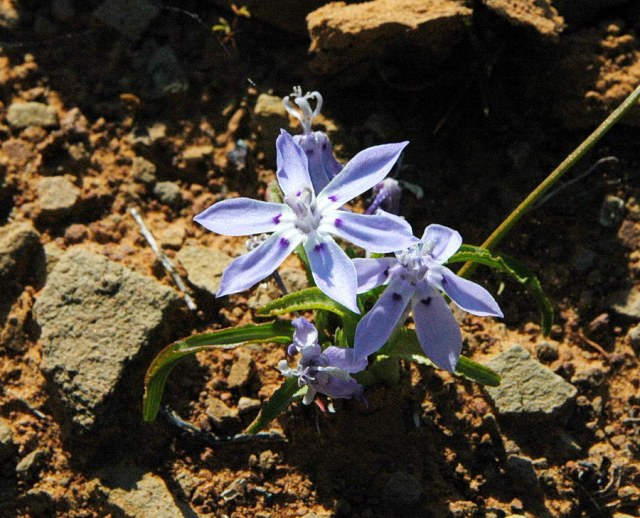
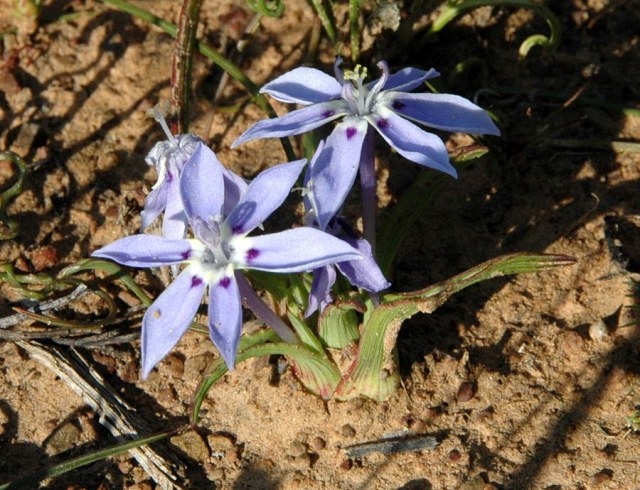
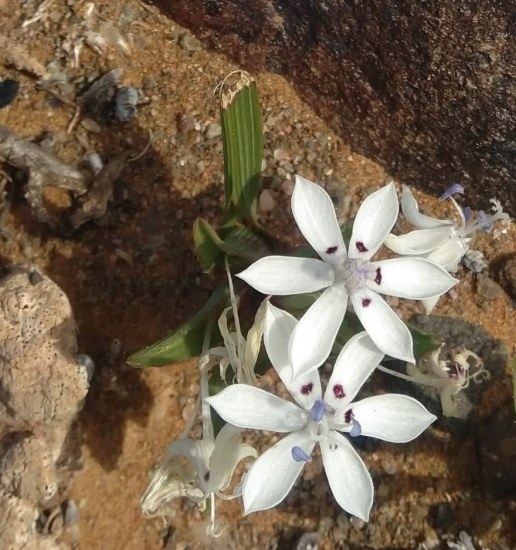
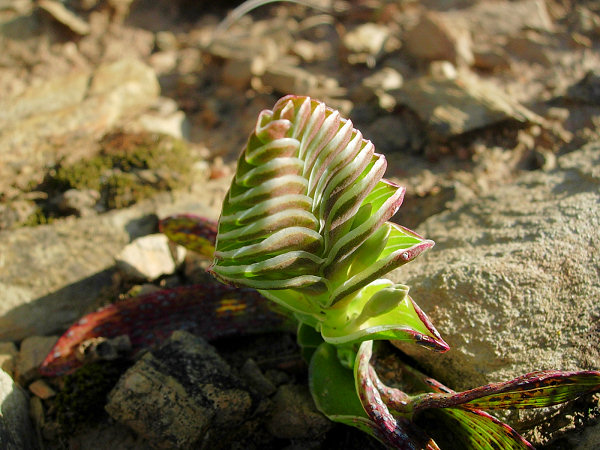
Lapeirousia pyramidalis (Lam.) Goldblatt is found on shale and sandstone soils, in fynbos and renosterveld in the drier areas of the southwestern and southern Cape. Growing from 5 to 10 cm, it flowers July to September. It has creamy white sometimes tinged pink to bluish or dark purple to magenta long tubed fragrant flowers with spoon shaped tepals in a short dense spike and linear ribbed leaves that are horizontal. It forms a pyramid shape in bud with tightly packed pale green or red bracts that fold over each other. A stalkless flower will come out of each bract. The first photo of the bracts by Cameron McMaster was taken in the Overberg. The second photo is from Alan Horstmann. The last photo from Mary Sue Ittner shows corms on a 1 cm grid.
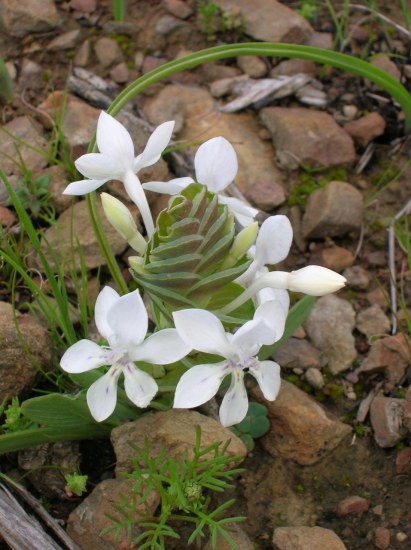

Lapeirousia pyramidalis ssp. pyramidalis is cream to bluish and found from southern Namaqualand to the Little Karoo. Flowers are strongly scented and the perianth tube is 2.5-4 cm long, cylindrical below, but curved outwards at the end. The first photo was taken August 2003 near Swellendam by Bob Rutemoeller and the second August 2006 near Villiersdorp by Mary Sue Ittner. The next two photos from the book Plants of the Klein Karoo courtesy of Jan and Anne Lise Schutte-Vlok. The second one shows some of the pink, blue and lilac tinges the flowers of the subspecies are capable of when they are not all white or cream. In these cases the margins tend to be white. The last two photos were taken by Mary Sue Ittner of plants grown from seed the only time they flowered before dwindling away.
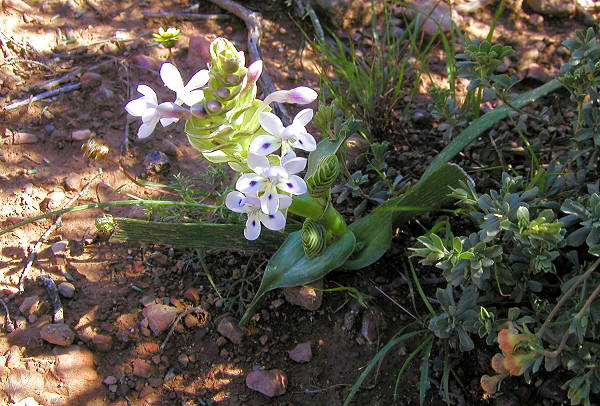
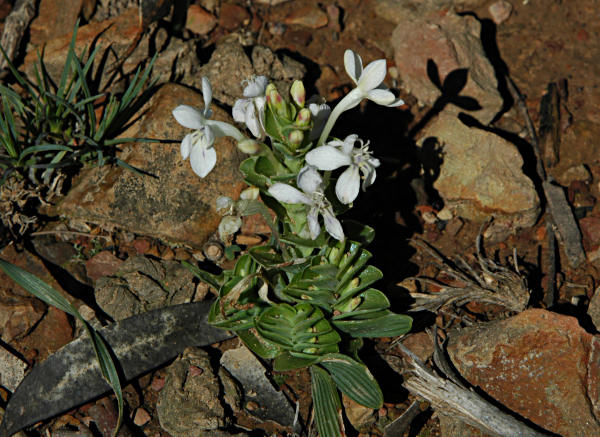
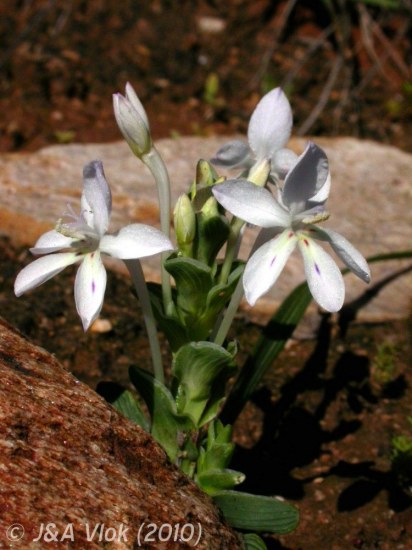

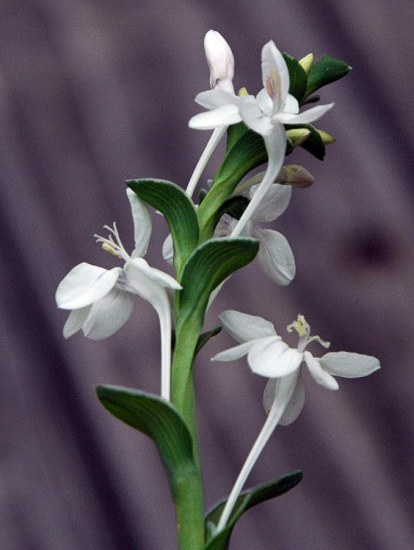
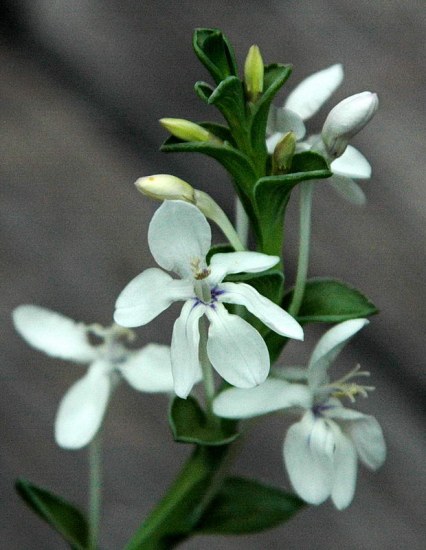
Lapeirousia pyramidalis ssp. regalis has dark purple to magenta flowers and is found on stony sandstone slopes in the Olifants River Valley. Flowers are unscented with a longer cylindrical tube, 4 to 5.5 cm long. Photo 1 was taken by Bob Rutemoeller of plants being grown by Gordon Summerfield. Photo 2 from Rod Saunders.
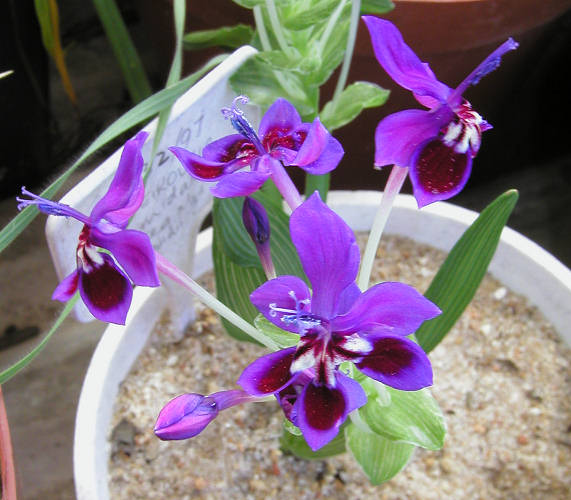
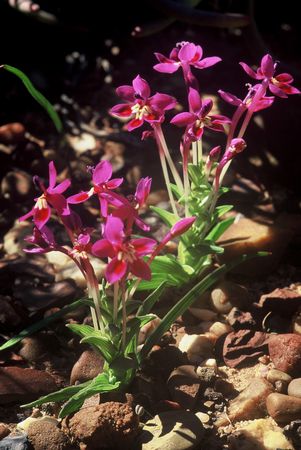
Lapeirousia sandersonii Baker has been renamed Afrosolen sandersonii (Baker) Goldblatt & J.C.Manning.
Lapeirousia schimperi (Asch. & Klatt) Milne-Redh. has been renamed Afrosolen schimperi (Aschers. & Klatt) Goldblatt & J.C.Manning.
Lapeirousia silenoides (Jacq.) Ker Gawl. is found in Namaqualand in coarse granite derived sand and in rocky places often in the crevices of granite outcrops. It is sometimes called "Springbok painted petals". Numerous magenta to cerise flowers with creamy yellow markings are borne close together. Height: 30-45 cm. In a wet year like 2006, throughout Namaqualand were patches of bright pink from this plant and also Pelargonium incrassatum which is the very same color. Photos from Mary Sue Ittner and Bob Rutemoeller taken in Namaqualand August 2001 and September 2006 show it growing in the rocks, the leaves, and the long tube.
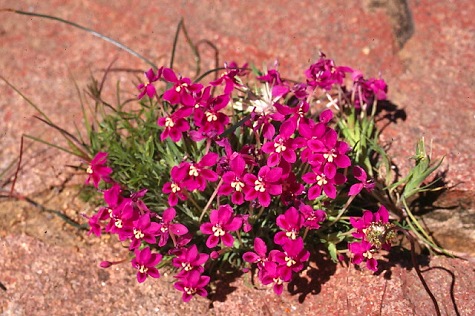
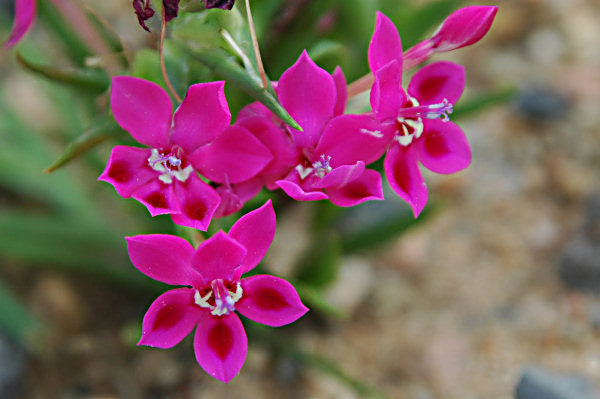
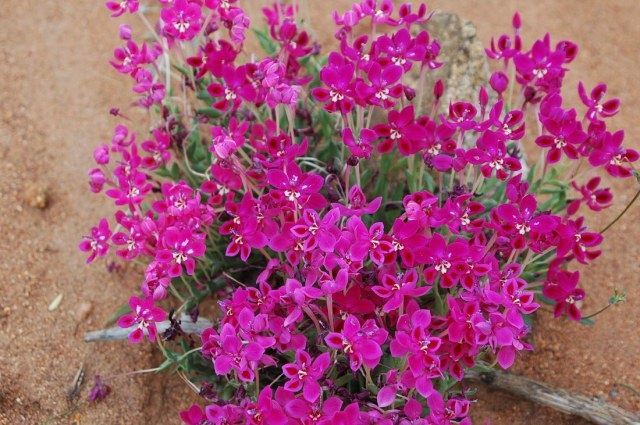
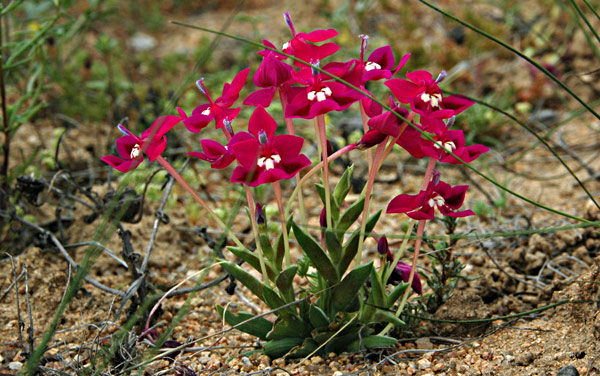
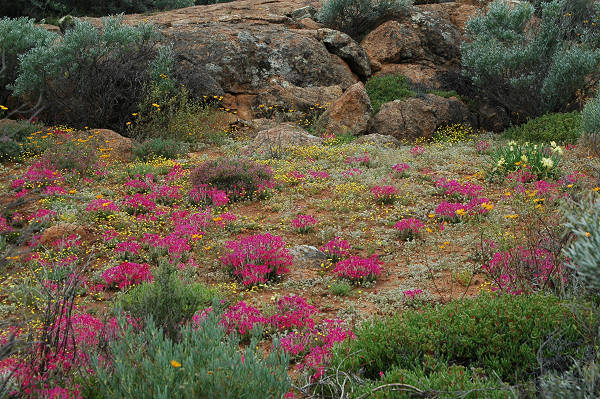

The first photo was taken by Alan Horstmann. The second photo was taken near Kamieskroon by Cameron McMaster. The last photo below was taken in the bulb room at Kirstenbosch National Botanical Garden by Bob Rutemoeller.
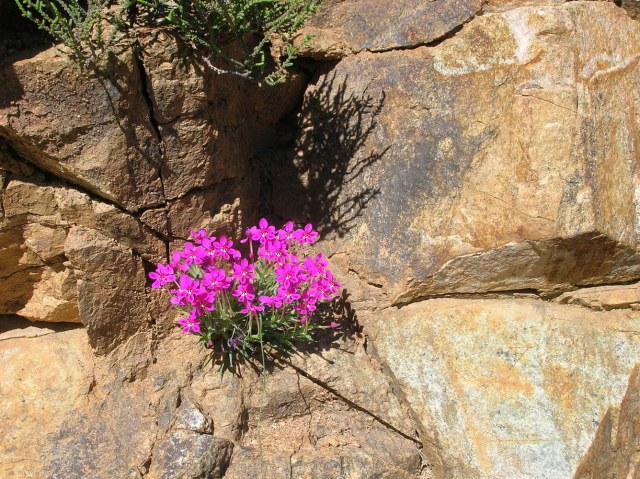
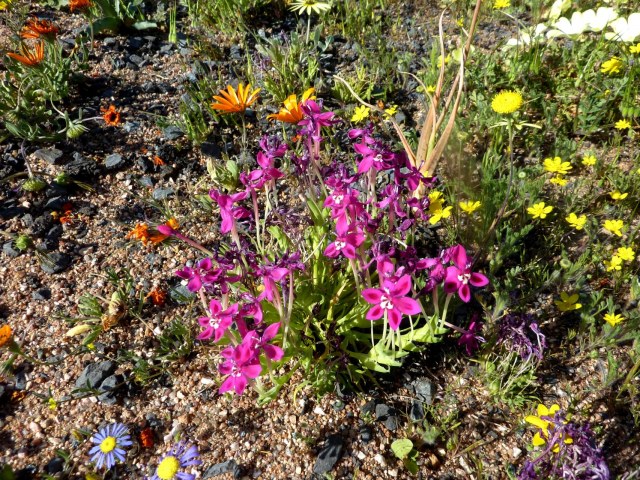

Lapeirousia verecunda Goldblatt is a narrow endemic of the Spektakel Mountains in Namaqualand where it grows on stony shale slopes. It has been known to hybridize with Lapeirousia silenoides in areas where they both grow. Growing from 8 to 15 cm high, it has odorless, long tubed bilaterally symmetrical white flowers with red, round to heart-shaped marks on one or more of the three lower tepals. The tube is usually 5 to 5.5 cm long and slightly curved forward. The tube and reverse of the tepals are colored copper-pink. It has fairly long and narrow bracts with deflexed apices. It flowers late August to the end of September, sometimes later. Photos taken in Namaqualand by Cameron McMaster.
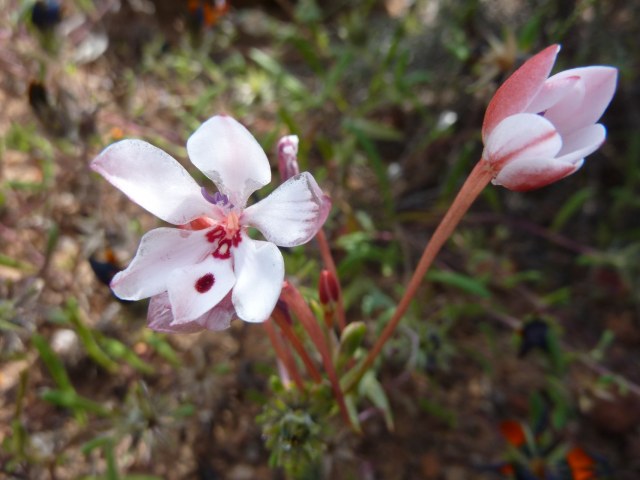
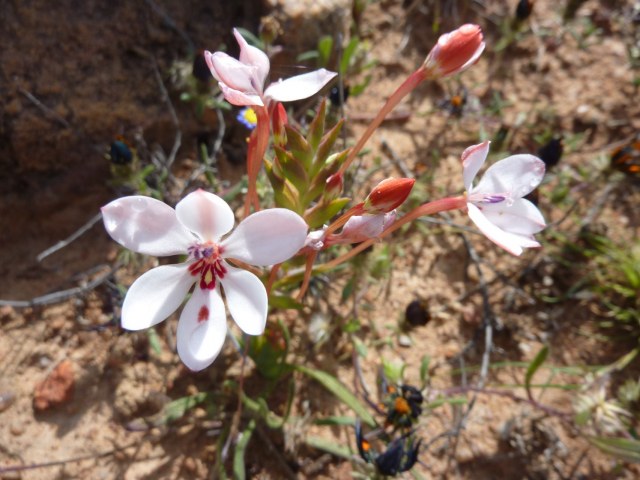
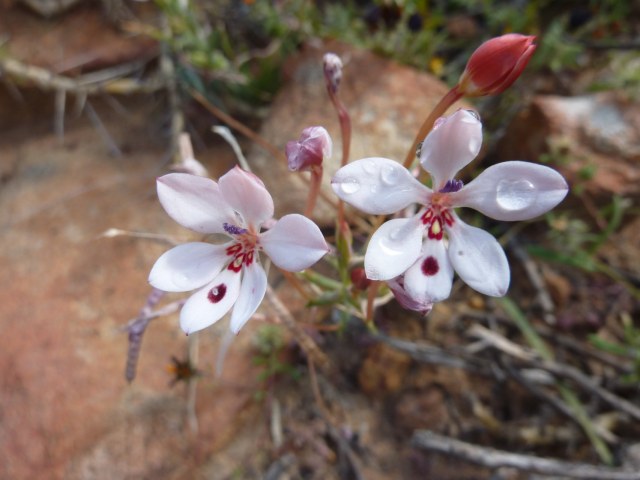
Lapeirousia violacea Goldblatt is found on sandstone soils in arid fynbos and in renosterveld in the northwest Cape. The long tubed flowers are in a short spike, violet with dark red markings on the lower tepals. Height: 8-10 cm. Photos from iNaturalist were taken by Tony Rebelo and Nigel Forshaw in August and shared under CC BY-SA and CC BY-NC licenses.
Afrosolen - Codonorhiza - Schizorhiza