The genus Moraea can be divided into five groups: Galaxia, Gynandriris, Hexaglottis, Homeria, and Moraea.
Moraea index lists all the species in all five groups alphabetically.
Moraea group species n-r are found on this wiki page. More information can be learned from Peter Goldblatt's book on Moraeas.
The other species in the Moraea group are listed alphabetically on these wiki pages: Moraea group a - Moraea group b - Moraea group c-e - Moraea group f - Moraea group g-i - Moraea group j-m - Moraea group s - Moraea group t - Moraea group u-v
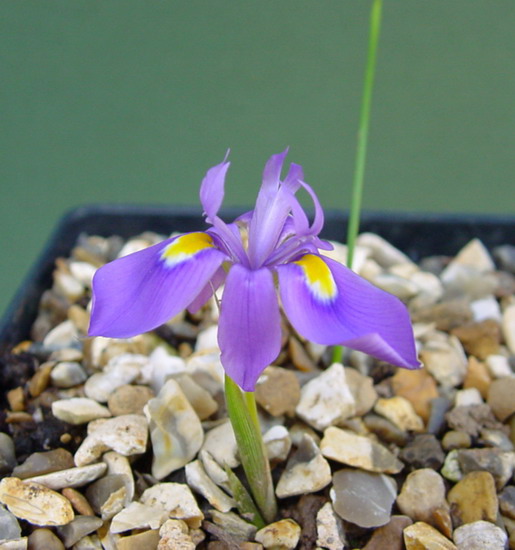
Moraea natalensis Baker grows in seasonally wet exposed areas from KwaZulu-Natal to tropical Africa. The lilac to blue violet flowers with yellow nectar guide edged with a mauve outline bloom in summer. Flowers open late morning. Height range: 30-45 cm. Photo by Audrey Cain.
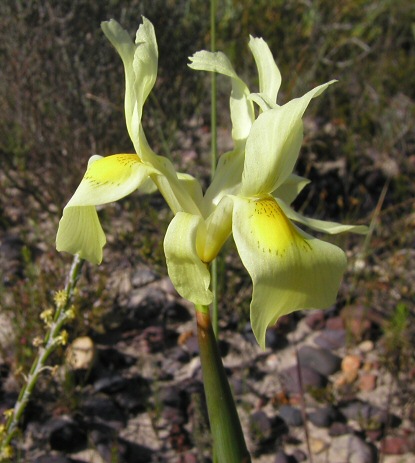
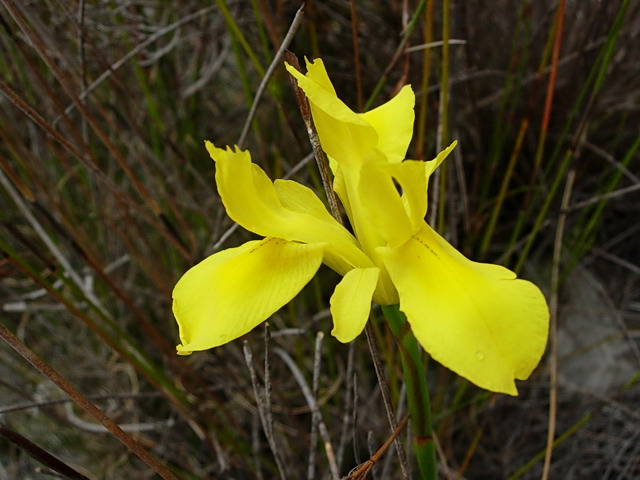
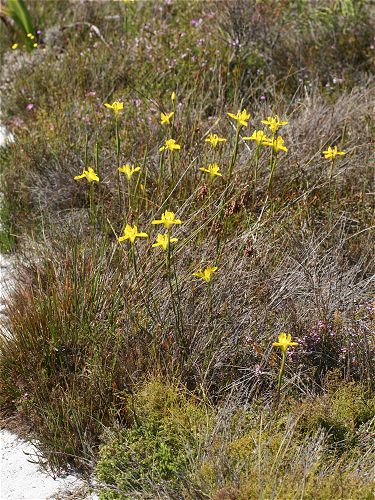
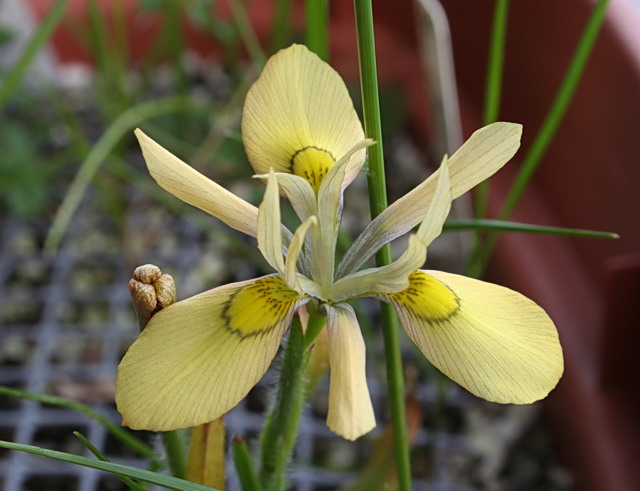
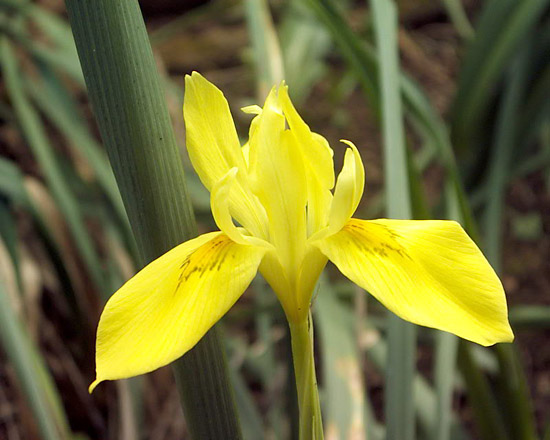
Moraea neglecta G.J.Lewis is found growing in deep sandy soils in the northwest and southwest Cape and the Agulhas coast blooming in spring. It has large yellow flowers with penciling on the nectar guide and opens at midday. Height range: 30-60 cm. The first picture was taken by Bob Rutemoeller in the Bontebok National Park in September 2003 where it was blooming close to the road. The other pictures were taken by Cameron McMaster in the Overberg, at Boskloof, Fairfield, and Napier. The last pictures show the seed capsules.
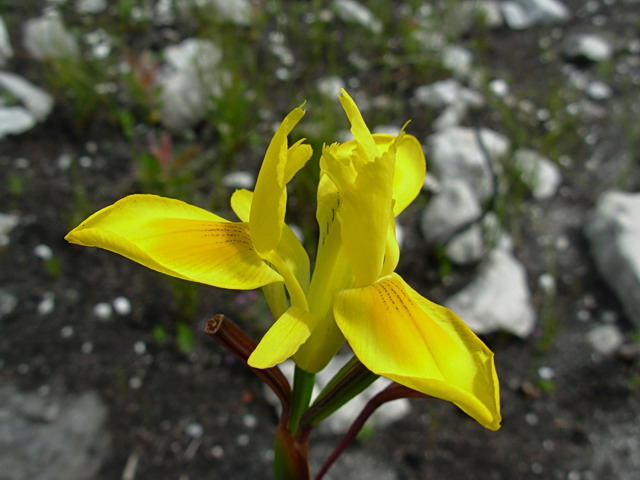
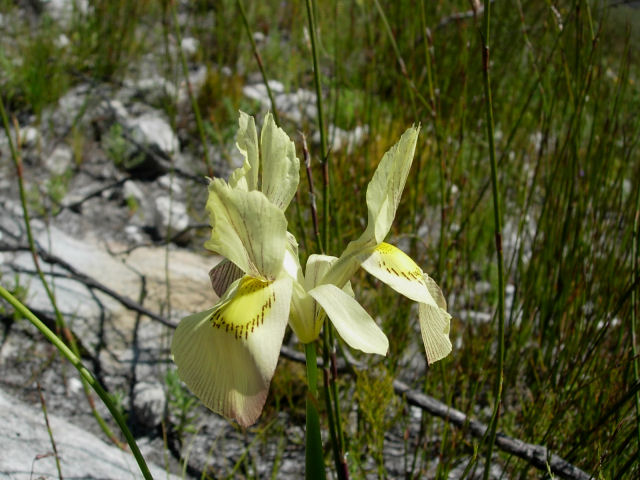
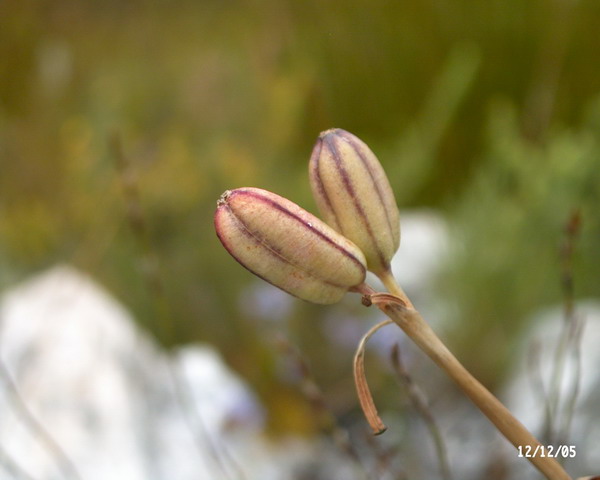
Photos below were taken by Andrew Harvie at Silvermine in Table Mountain National Park.
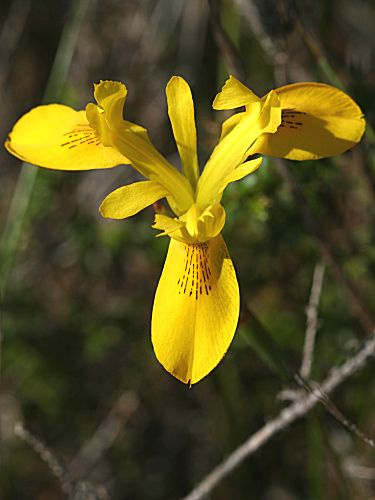
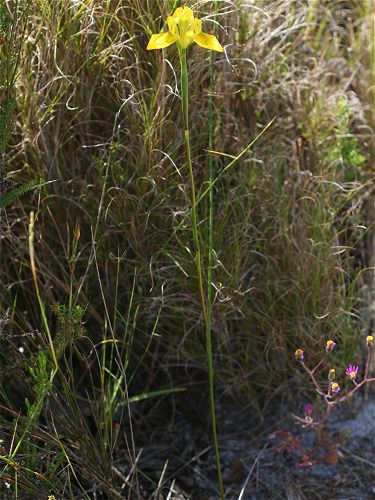
Moraea neopavonia R.C.Foster is now considered to be part of the species Moraea tulbaghensis by Manning and Goldblatt.
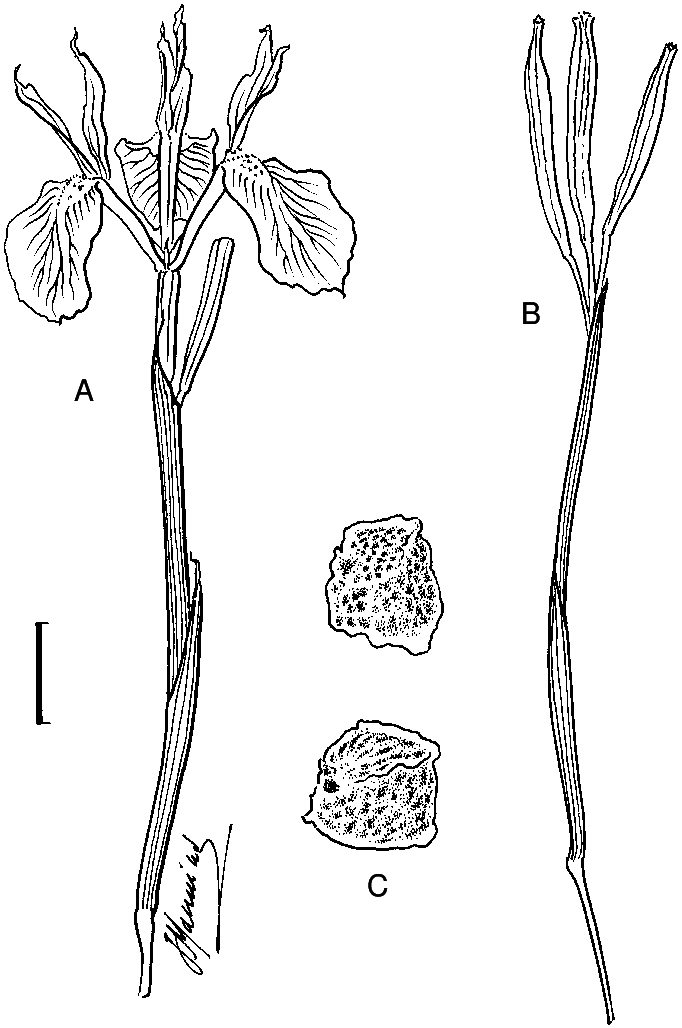
Moraea ogamana Goldblatt & J.C.Manning is part of the Moraea tripetela complex. Information about has been taken from the Goldblatt, Manning article describing the complex. It is a rare species of the western Cape lowlands where it occurs in waterlogged stony ground. It is considered endangered but it does occur in the Elandsberg Nature Reserve. Growing 15 to 20 cm high, it has a solitary foliage leaf often shorter than the stem with a single, small cormlet in the foliage leaf axil. Flowers are pale blue with triangular yellow nectar guides with dark lines radiating from them. The ovary is linear-cylindric, 10-13 mm long; inner tepals are threadlike, under 4 mm. Unlike other species in the complex in the area, the pollen is white. The style crests, up to 12 mm, are unusually long for the relatively small flowers. It flowers mid August to mid September. Figure notes: A, flowering stem; B, capsules; C, seeds. Scale bar: 10 mm.
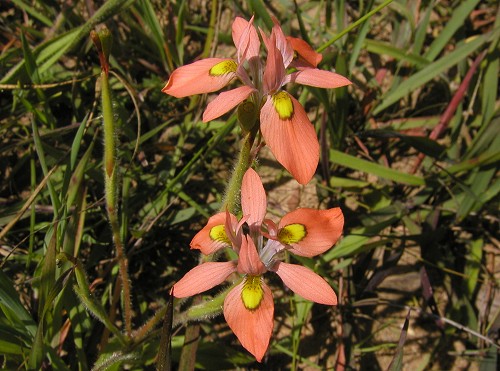
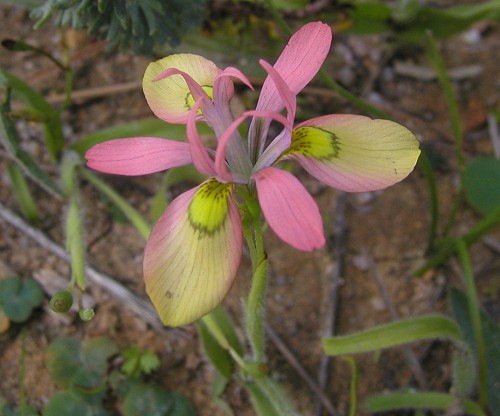
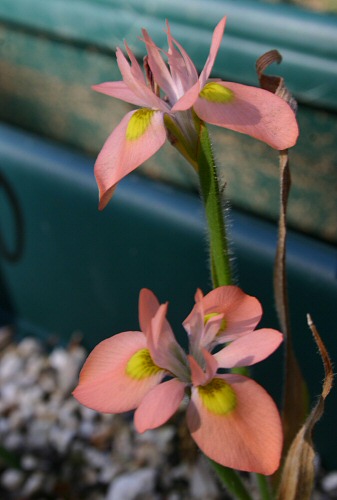
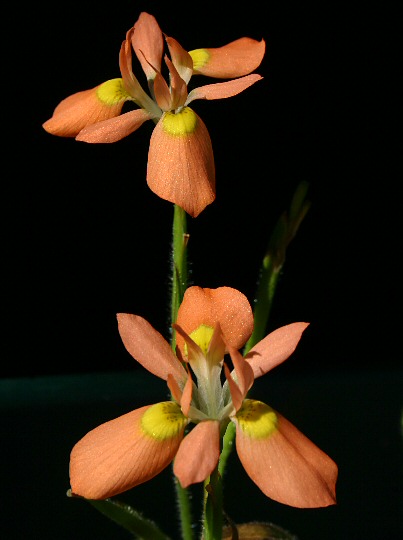
Moraea papilionacea (L.f.) Ker Gawl. grows on mostly sandstone soils, sometimes granite or clay, in renosterveld and transitional fynbos in the south and southwest Cape. It flowers late winter to spring and is usually hairy with yellow or salmon flowers with yellow nectar guides. Flowers are fugacious. Height: to about 60 cm. The first three pictures were taken near Paarl by Bob Rutemoeller September 2003 where there were many different color forms growing in the same location, salmon, yellow, and bicolored. The fourth photo taken of a yellow one at Drayton by Cameron McMaster and the last two photos taken September 2003 near Brackenfell by Bob Rutemoeller and Mary Sue Ittner.
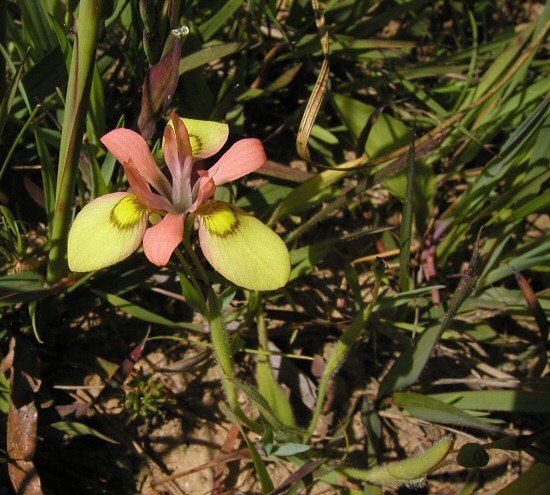
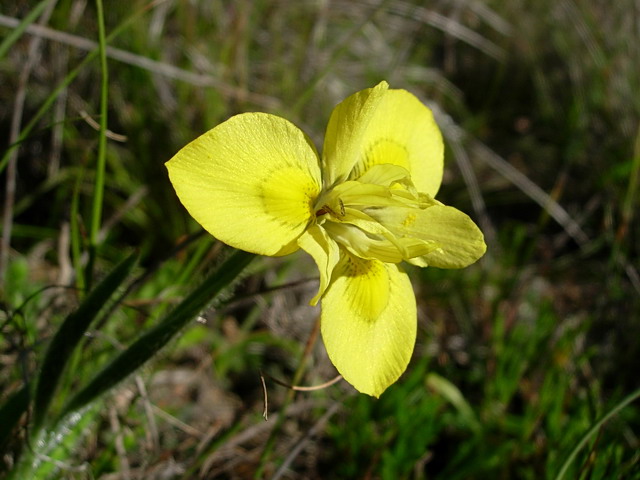
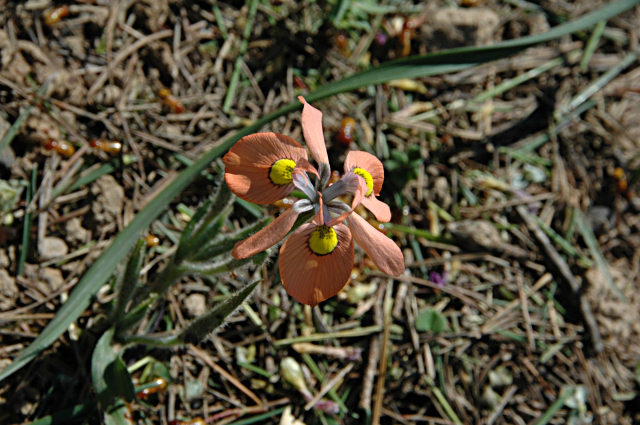
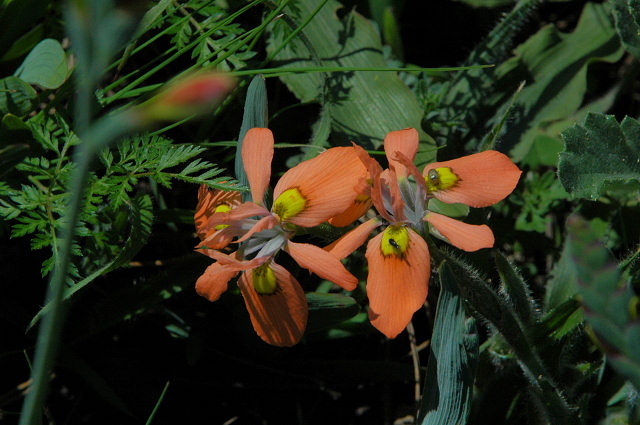
More photos by Bob Werra.

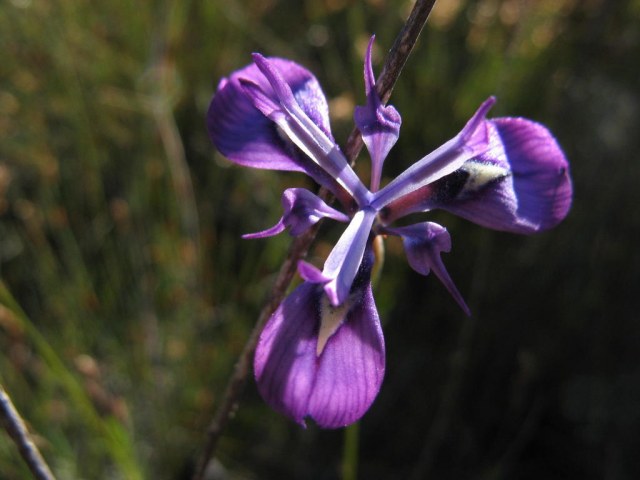
Moraea petricola Goldblatt & J.C.Manning was named in 2013. It is a rare endemic restricted to higher elevations in the mountains to the north of Pakhuis Pass in the northern Cedarberg. It has a solitary basal leaf and purple flowers with white nectar guides edged in dark purple. The inner tepals have three lobes, the central one long and bent at an angle. It looks similar to Moraea decipiens, but with several differences in anatomical details. It flowers in spring (October-November). Photos from iNaturalist taken by Nick Helme in the Pakhuis Mountains in October and shared under a CC BY-NC license.
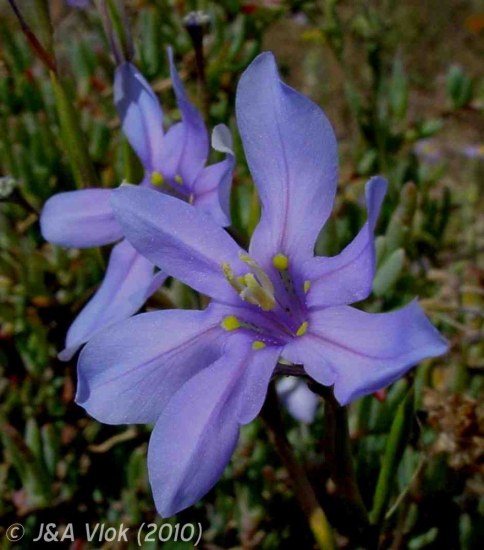
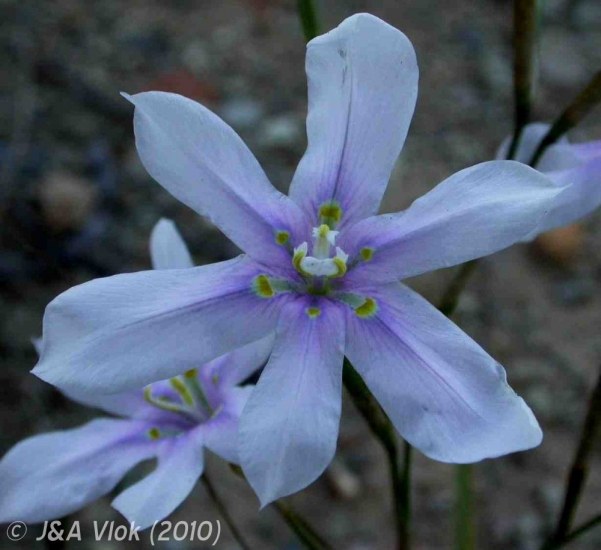
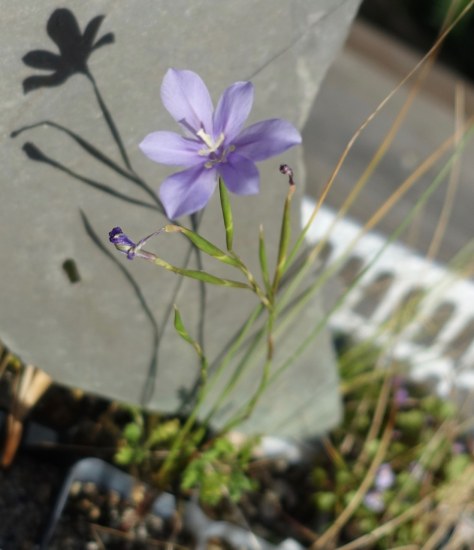
Moraea polyanthos L.f. , syn. Homeria lilacina L.Bolus, is found growing on flats and lower slopes, mainly clay, in a wide area that can have year round rainfall, winter rainfall, and summer rainfall (Worcester to the Eastern Cape). Growing up to 60 cm tall, it has blue flowers on a branched stem. Although the flowers resemble flowers in the Homeria group, that group has mostly yellow or orange flowers and Moraea polyanthos hybridizes with species in the Moraea group. It is considered to be closely related to Moraea bipartita. Flowers have a small yellow eye on each lobe. Blooming time varies depending on its habitat. Flowers open midday and close as the sun sets. Although individual flowers last only a single day, the plant can have several open at once, and can bloom for a period of several months, making a nice if not spectacular show. In California, when grown with winter water, this is one of the last of the winter rainfall Moraea species to bloom, usually starting in late spring and blooming well into the summer if kept watered. The first three photos by Mary Sue Ittner. The fourth photo from Alan Horstmann. The last two photos from the book Plants of the Klein Karoo courtesy of Jan and Anne Lise Schutte-Vlok.
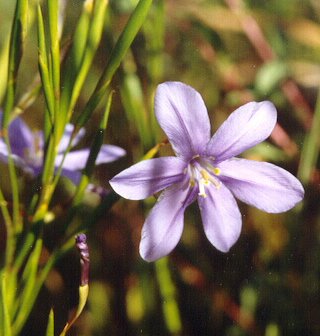
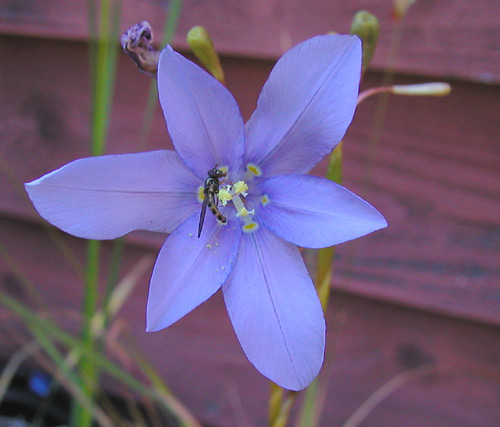
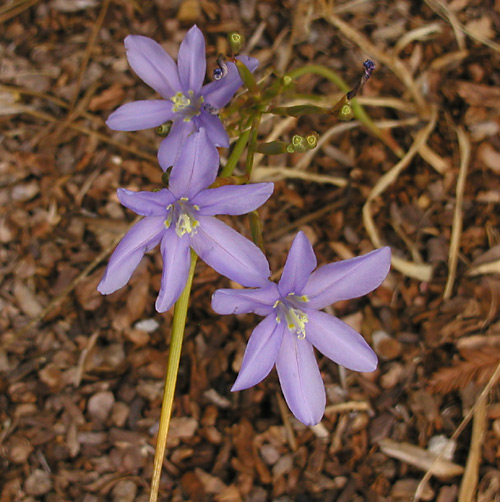
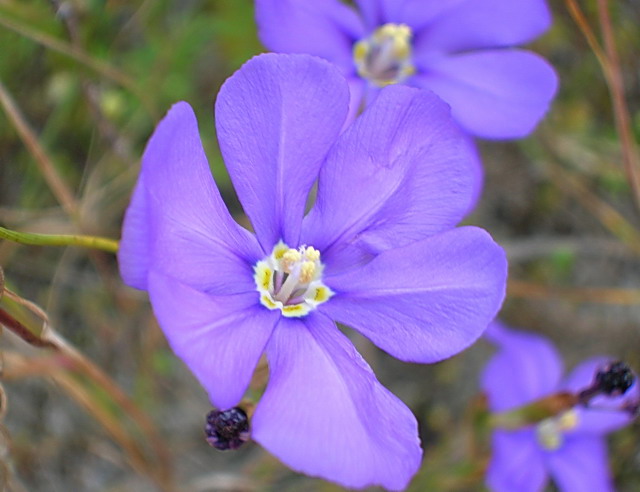
Photos 1 and 2 show a bloom and corms grown by M.Gastil-Buhl from the 2012 PBS NY seed sale, item #58.

A more distinctive form is found in the southern Cape. The tepals are white and the flowers are smaller and the tepal cup is deeper and the stamens smaller so that they are more or less included. Photos from Roger Macfarlane. He reported that the flower opened around 13:00 and closed around 19:30.
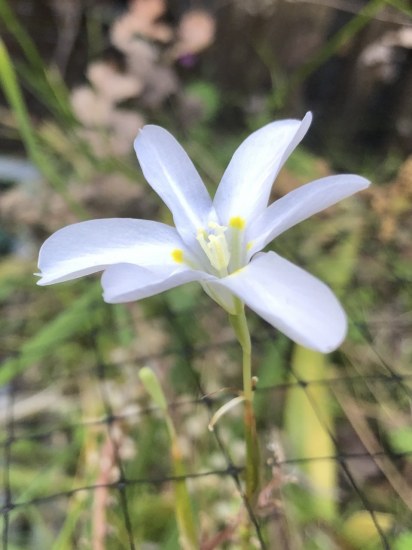
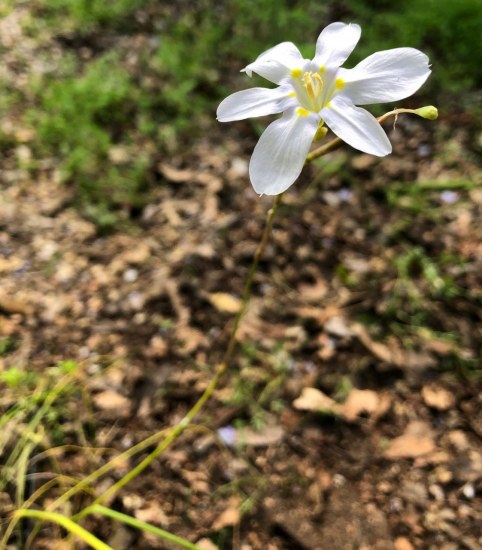
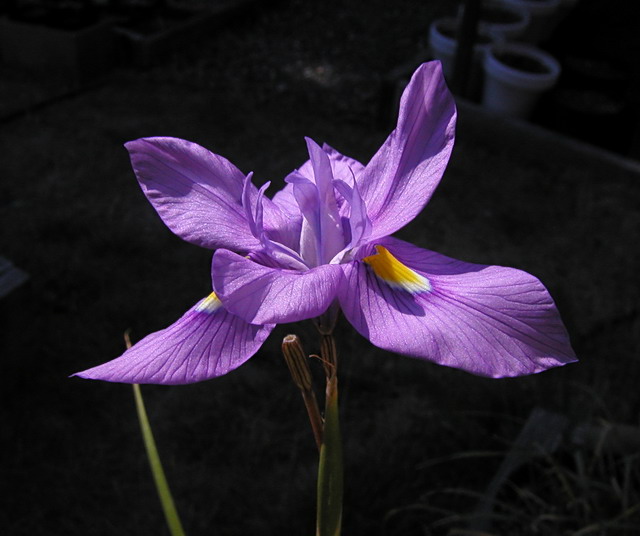
Moraea polystachya (Thunb.) Ker Gawl. is a vigorous species from the winter and summer rainfall areas of southern Africa. Plants are up to 80 cm tall with several furrowed leaves. Flower stems are branched and flowers quite large. Distribution is from the Karoo, the Little Karoo and the Eastern Cape to Namibia where it is found on dry slopes flowering mainly March to July. The South African Wild Flower Guide 6 for the Karoo lists a much broader distribution.
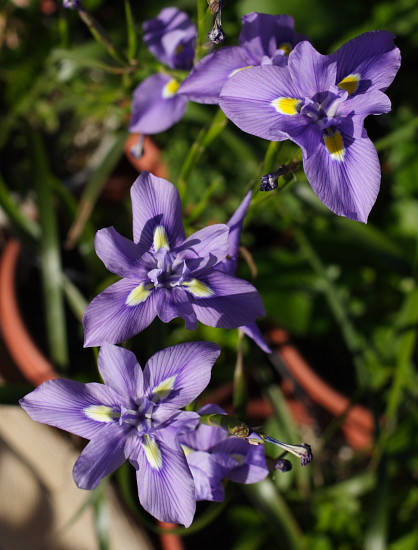
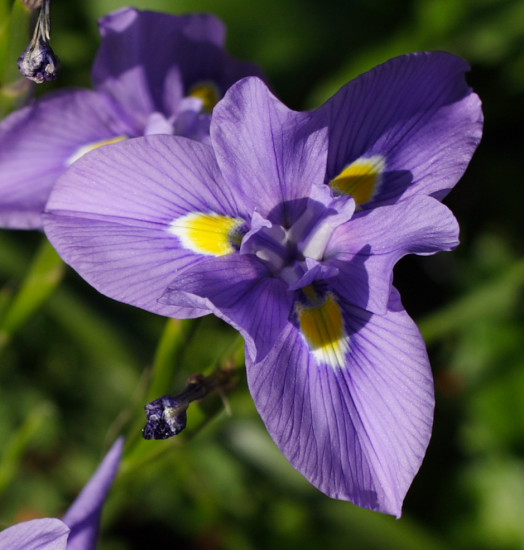
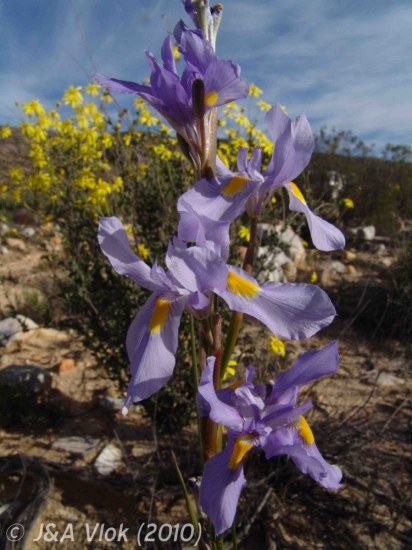
It is beloved by many members of the PBS mailing list who live in Mediterranean climates, because when happy it produces large numbers of short-lived flowers over a long period from fall to early winter, a time when most other moraeas are barely putting up leaves. Unfortunately it's not as successful in very cold climates or those with year-round rain. If you're growing this species in captivity, keep it dry at the start of summer but start watering it in mid-summer to get the longest bloom period (see cultural notes below). This species is reportedly poisonous to livestock, so be careful not to let it escape into the wild (more information here). The first photo was taken by Sheila Burrow, the second by Bill Dijk, and the third by Bob Rutemoeller. The fourth and fifth were taken by Michael Mace. The fourth shows subtle variations in flower shape and nectar guide color.
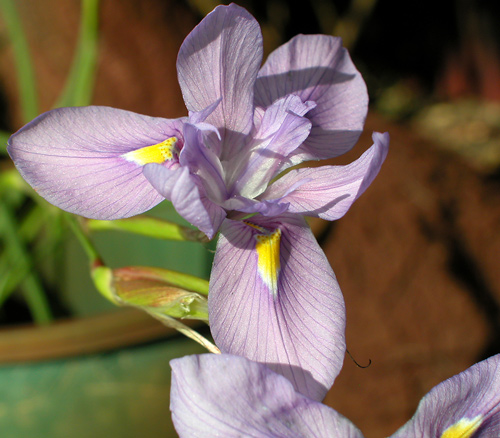
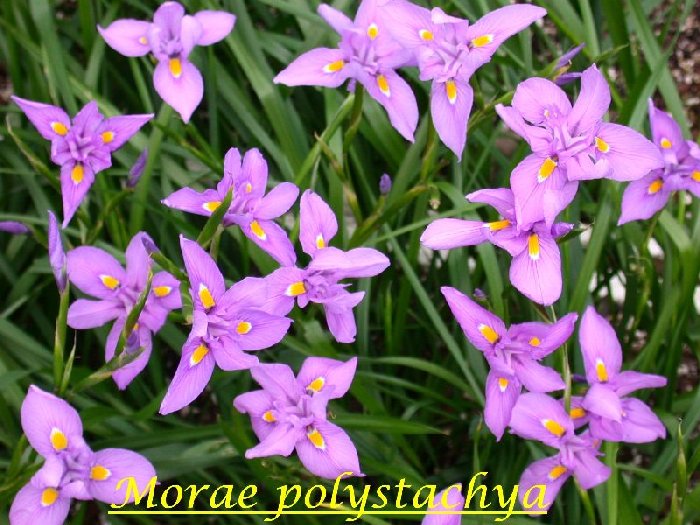
The first photo taken in habitat by Cameron McMaster in the Eastern Cape. The next two photos taken in the Little Karoo are from the book Plants of the Klein Karoo courtesy of Jan and Anne Lise Schutte-Vlok. There are two variants that occur in the region, an autumn flowering one with pale blue flowers and a spring or summer flowering one with dark purple blue flowers.
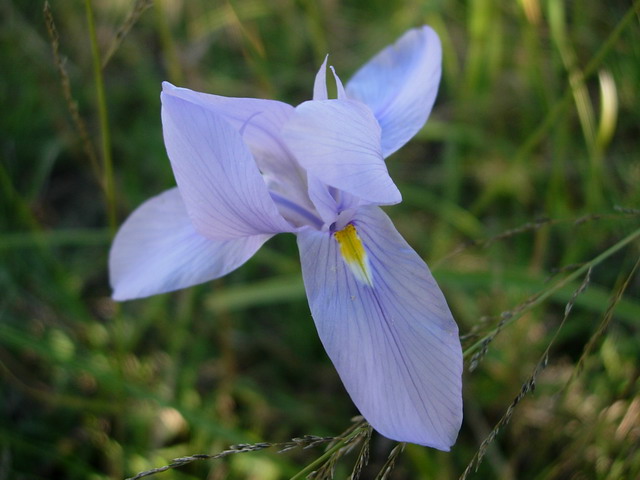

Some growers report considerable success with this species, while others report that it is very inconsistent, blooming well one year and not at all the next. Part of the problem may be that it grows in dry areas scattered across much of South Africa and Namibia, according to Goldblatt's The Moraeas of Southern Africa. So different plants may come from very different climates. The species is typically treated like other winter-growing bulbs, but Goldblatt says that most of its habitat is outside the winter-rain area. Some PBS members report that it grows much more vigorously if given water starting in mid-summer (early August in the northern hemisphere), a watering schedule that would rot many summer-dormant bulbs. With August watering, it can start blooming in October and continue into February, if frost doesn't cut it down. If watering starts in October, the typical start time for a winter-growing bulb, Moraea polystachya will not start blooming until January, and may not bloom at all.
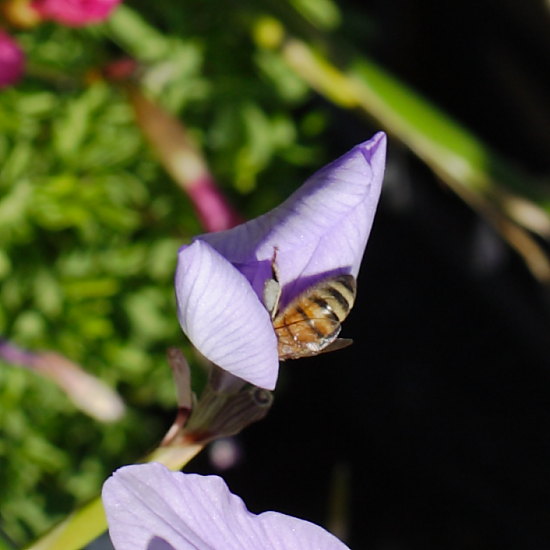
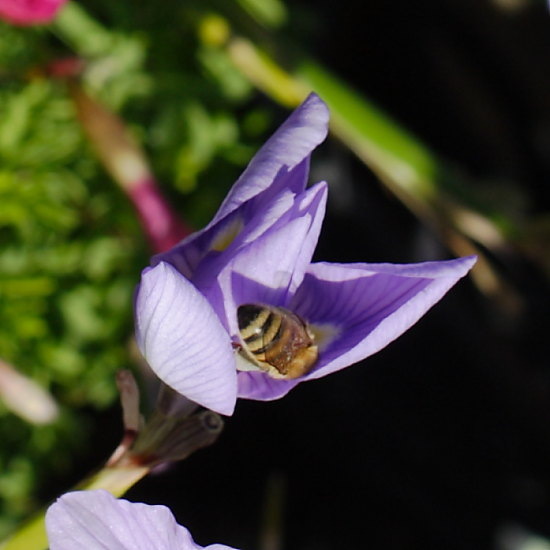
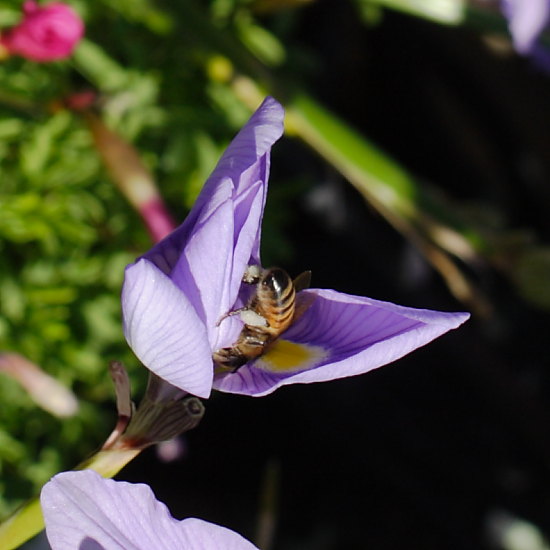
In California, M. polystachya is visited by honeybees with an almost disturbing intensity. There appears to be nectar at the base of the tepals, and the bees shove themselves down into the flower to get it. They sometimes emerge from the flowers coated liberally in pollen. As a result of all this attention, the plants will set copious amounts of seed if allowed to. Removing seed pods before they ripen seems to extend the bloom period. The sequence of photos below shows a honeybee in California, its legs already loaded with Moraea pollen, forcing its way into an unopened bud of Moraea polystachya.
The nectar can also attract Argentine ants in California, which then encourage aphids on the flowers and leaves. It's best to spray the ants and aphids when they start to appear, or they will build up rapidly.
Seeds from Michael Mace via PBS BX295 germinated by M. Gastil-Buhl with warm day / cold night treatment as early as 14 days (only 2 of about 60). Seedlings grew to over 4 cm in their first 2 weeks, in sterile potting soil with Sphagnum moss and 1 tbsp compost tea after their first week. Corms grown from those same seedlings, in photo 4 on a 1 cm grid, were found below 9 cm (3.5 inches) depth growing in a raised box. Note one corm has sprouted. Another seedling from that same lot first bloomed two years from the date sown, shown in photo 5 growing in a 5 inch tall pot. The bloom stalk bends at angles as each bud opens, as shown in photo 6.
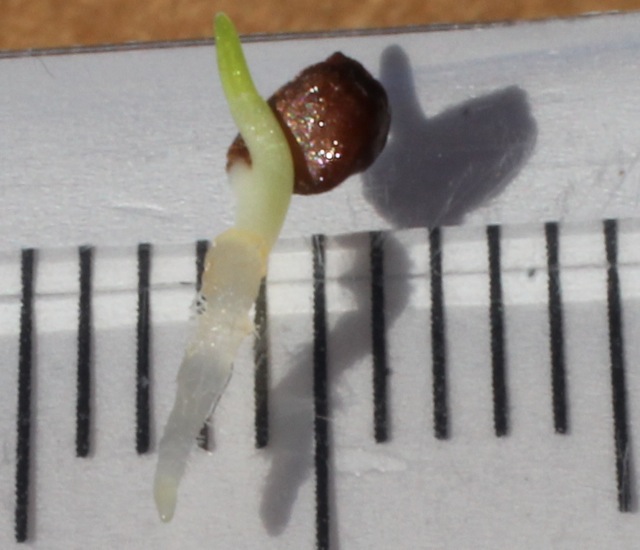
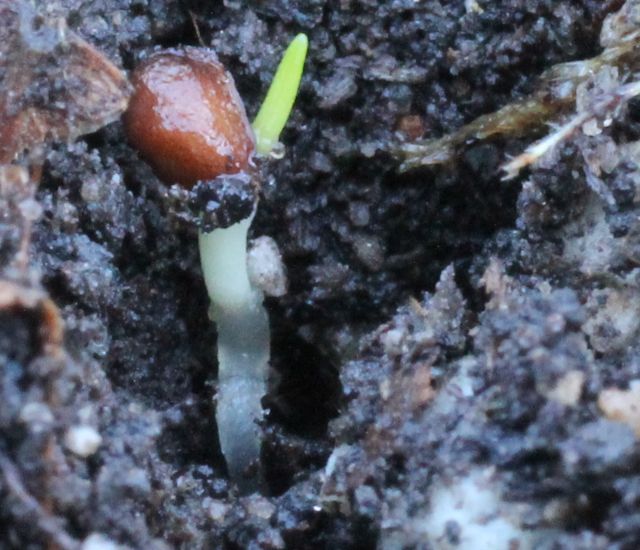
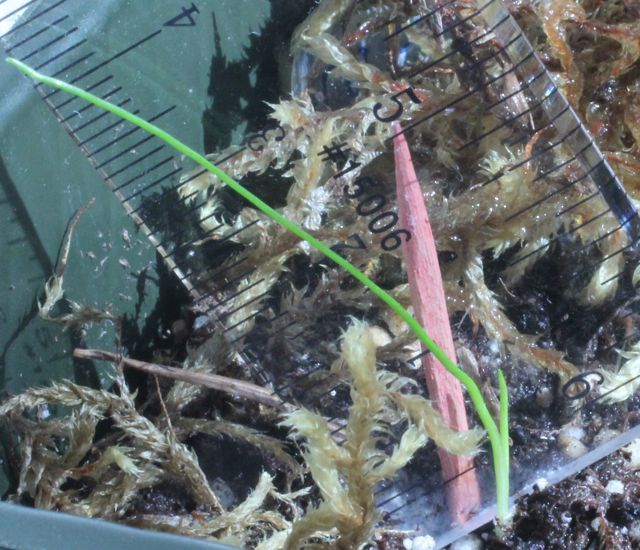


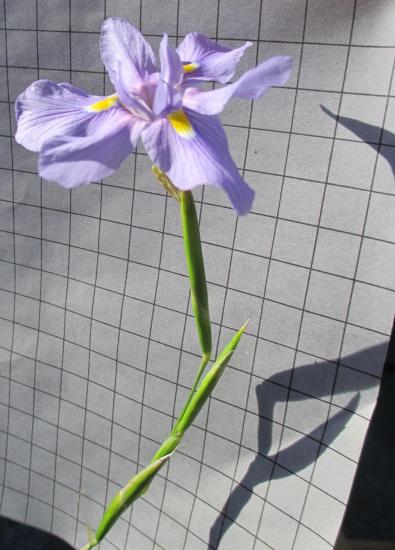
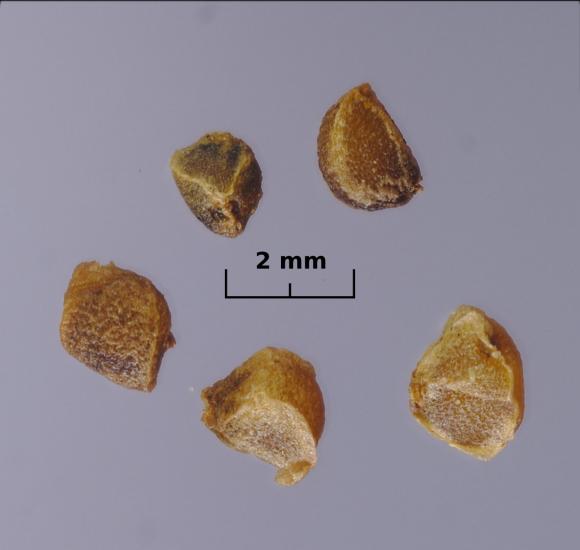
Seed photo from David Pilling.
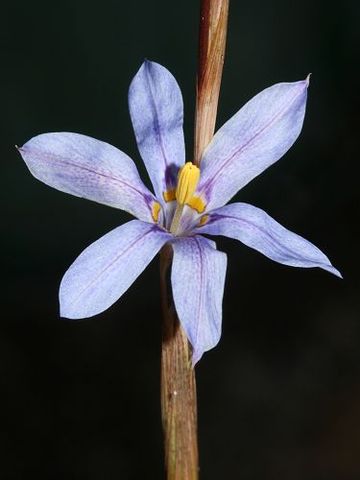
Moraea pseudospicata Goldblatt is found on stony clay slopes in karroid scrub in the Bokkeveld Plateau. It has a long since trailing leaf, often dry at flowering. The stem gets about 40-50 cm tall and the flower is only about 20 mm across. Photo by Andrew Harvie who has seen this flowering only twice in 12 years (6 years apart) he has been growing it. It flowers in midsummer after it has gone dormant. He speculates being late in covering up his winter rainfall bulbs and summer rain helped bring it into bloom in 2012.
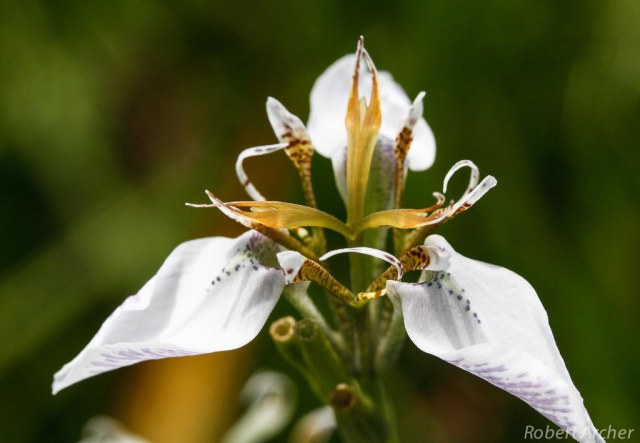
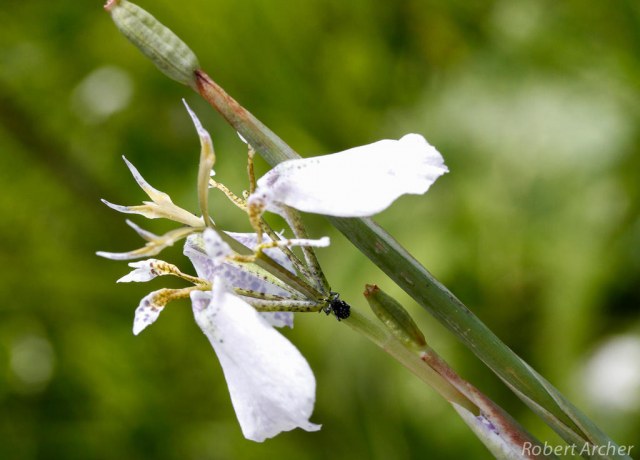
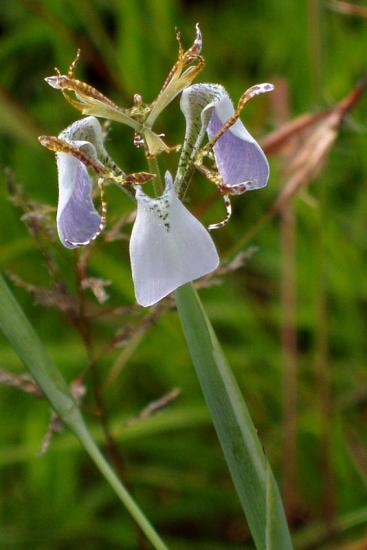
Moraea pubiflora N.E.Br. is a summer-growing species native to Swaziland and the eastern Transvaal, where it grows in mountain grassland. The flowers are white to pale blue, and have unusually long, speckled inner tepals. Height: to about 75 cm. The first two photos from iNaturalist were taken by Robert Archer in January in Mpumalanga and shared under a CC BY-NC license. The last photo by K Braun for the Swaziland National Trust Commission.
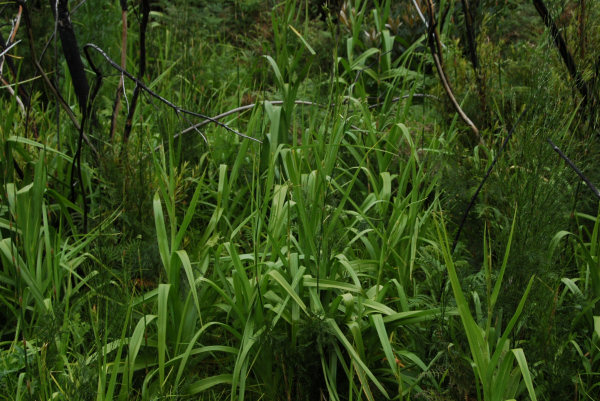
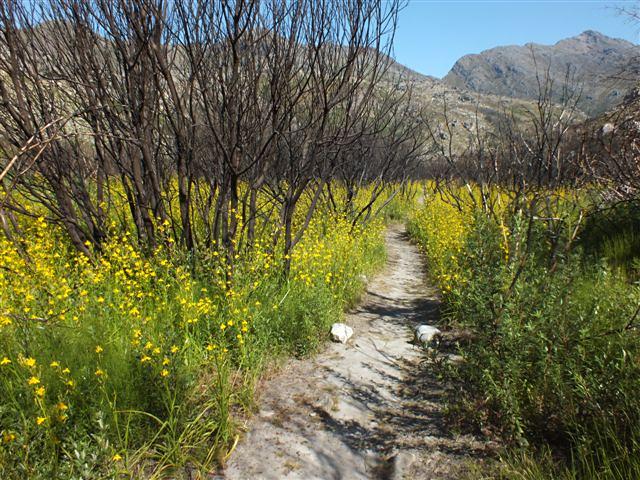
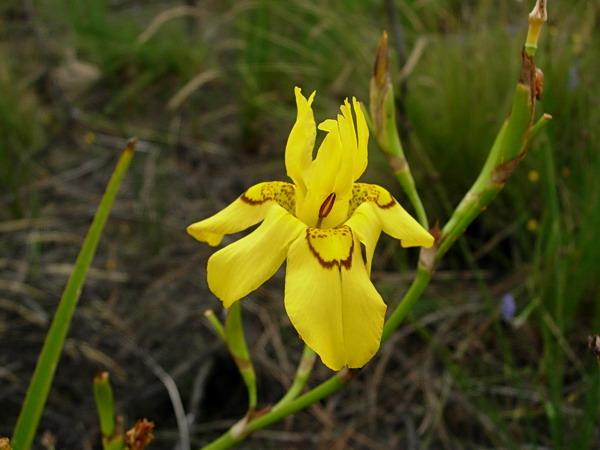
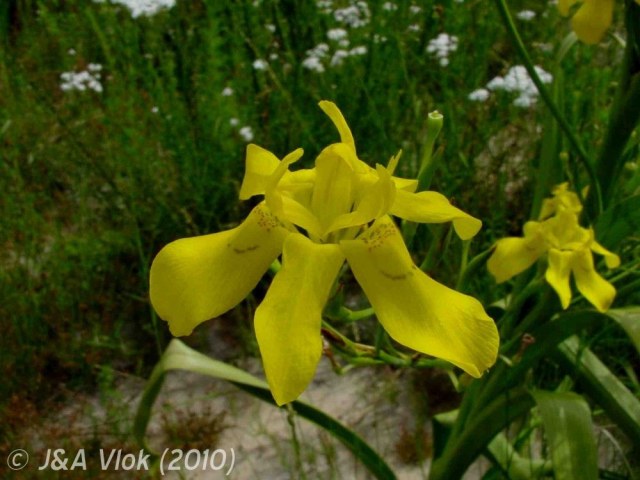
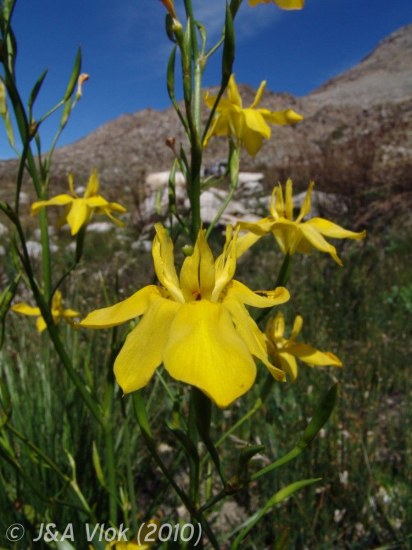
Moraea ramosissima (L.f.) Druce grows on damp sandy or stony flats and slopes from the Gifberg to the Eastern Cape. It is a tall plant (up to 1.2 m) with yellow flowers that flowers spring into summer. Deemed a shy bloomer, it appears to be a plant that responds to fire. The first photo below by Mary Sue Ittner shows leaves appearing after a fire near Bainskloof where there were no signs of this plant in previous years. The second photo by Rachel Saunders shows it blooming in profusion in Bainskloof November 2012 in another year after another fire. The third photo from Cameron McMaster taken near Napier in the Overberg shows the flower. The last two photos from the book Plants of the Klein Karoo courtesy of Jan and Anne Lise Schutte-Vlok.
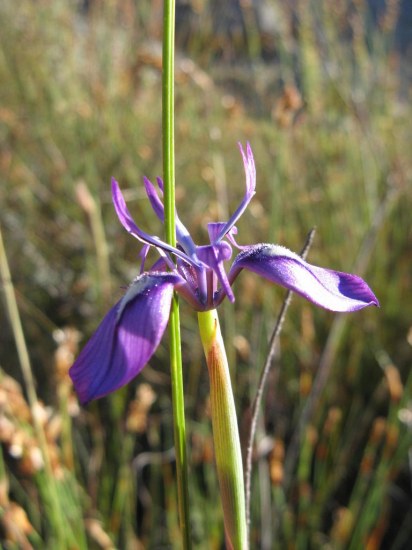
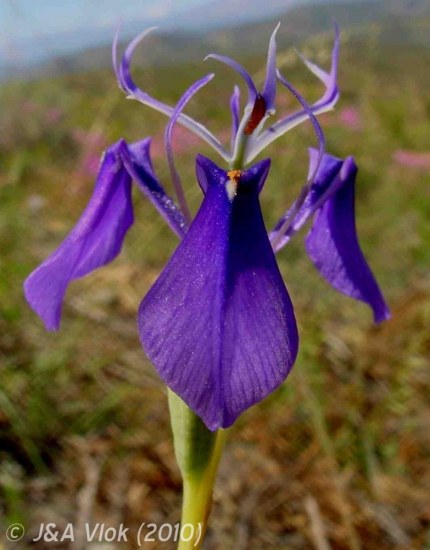
Moraea regalis Goldblatt & J.C.Manning grows to 30 cm and has a single narrow leaf and a striking purple flower with a tiny white nectar guide and elongated crests and inner tepals that look a bit like purple antlers. It's known from a single site on a south-facing rocky slope near the town of De Rust in the Little Karoo. The habitat is reportedly in degraded condition. This species blooms in spring, and is probably related to M. unguiculata and M. algoensis. We're not aware of any reports that it's being grown in cultivation, but if you're lucky enough to obtain it, note that its native climate is a near-desert with almost year-round rainfall. The area may get a brief dry spell in mid-summer for a month or two, but otherwise rainfall is consistent and relatively light throughout the year. Photo from the book Plants of the Klein Karoo courtesy of Jan and Anne Lise Schutte-Vlok.
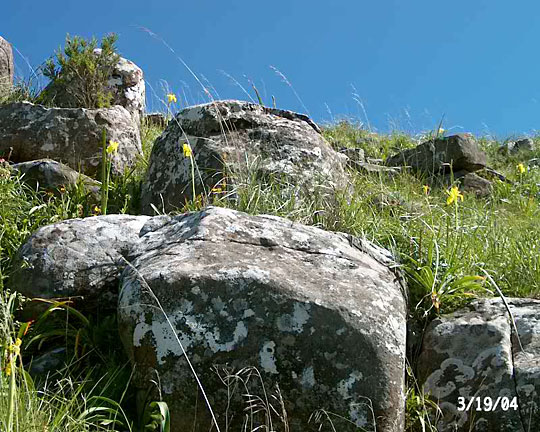
Moraea reticulata Goldblatt has a solitary habit (not clumping like some of the other yellow summer rainfall species.) It has a fibrous network like a fishnet enclosing the base of the stem and bracts. The flowers are bright yellow with orange nectar guides and a few darker veins on the outer tepals. Described first in 1973, it is an Eastern Cape species where it occurs on steep grassy slopes. Photos by Cameron McMaster showing a habitat shot and a close-up of the flower.
Moraea rivulicola Goldblatt & J.C.Manning has cream, greenish, or beige flowers with dull yellow nectar guides. It grows in seasonal stream beds and drainage ditches in the extremely dry winter-rainfall desert of northern Namaqualand, west of the town of Springbok and blooms in spring. The flowers look similar to Moraea unguiculata, but are larger, and the plants grow in wetter areas. You can see the herbarium sheet here.
Galaxia - Gynandriris - Hexaglottis - Homeria a-j - Homeria k-z - Moraea group a - Moraea group b - Moraea group c-e - Moraea group f - Moraea group g-i - Moraea group j-m - Moraea group s - Moraea group t - Moraea group u-v - Moraea hybrids - Moraea index